Jewelry Trends 2026: The Era of Pure Form
Forget everything you thought you knew about "trendy" jewellery. In 2026, the jewellery world is undergoing a tectonic shift, and it has nothing to do with a new gold colour or a fashionable stone cut. It is about form. Pure, self-sufficient, sculptural form that, for the first time in decades, has stopped being merely a shell for precious settings and has become a value in its own right.
This is not a seasonal blip that will evaporate from social media feeds in six months. It is a structural overhaul in thinking: among designers, among buyers, among entire jewellery houses. A piece of jewellery is no longer the sum of its parts, so many grams of gold plus diamonds plus engraving. It has become a single sculptural object, read instantly and as a whole.
Why now? Because the market is exhausted. Exhausted by the excess of mass market, by layering stones for the sake of stones, by logos stamped on every chain link. Decoration has spent years covering up weak constructions, flat shapes, and savings on metal. The new generation of buyers no longer falls for that strategy. They are visually literate, educated, and their eye evaluates the quality of proportions in a fraction of a second, without consciously thinking about it.
The bar has never been higher. If you work with pure form, there is nowhere to hide. Every microscopic error in proportions, wall thickness, or mass distribution is immediately visible. There is nothing to cover it with, nothing to distract from it. That is precisely why this trend ruthlessly clears the market of superficial solutions. Only those who truly know how to work with space and material remain.
In this article, we will examine every facet of the form-centric trend: from its historical roots to practical buying advice. We will discuss the psychology of perception and manufacturing technologies. We will explore how to choose, how to care for, and how to style these pieces. And, of course, we will look ahead: where jewellery design is heading and why the era of pure form is here to stay.
How We Got Here: A Brief History of Jewellery Taste
To appreciate the scale of the transformation, it helps to look back. The path to the era of pure form was not a straight line. It is the story of a pendulum that swung between extremes before finding its equilibrium.
The 2000s: More Is More
The opening of the century was defined by conspicuous luxury. The bigger the stone, the denser the diamond pave, the more visible the brand logo, the "better." Jewellery was created to broadcast status from across the room. Metal was kept to a minimum: why spend gold on structure when the entire budget could go toward maximising the visible area of stones?
Form played the role of silent servant in those years. The simplest settings, thin shanks, basic geometry. Value was measured quantitatively: how many carats, how many stones, how recognisable the label on the box. It was the era of "status jewellery" in the most literal sense.
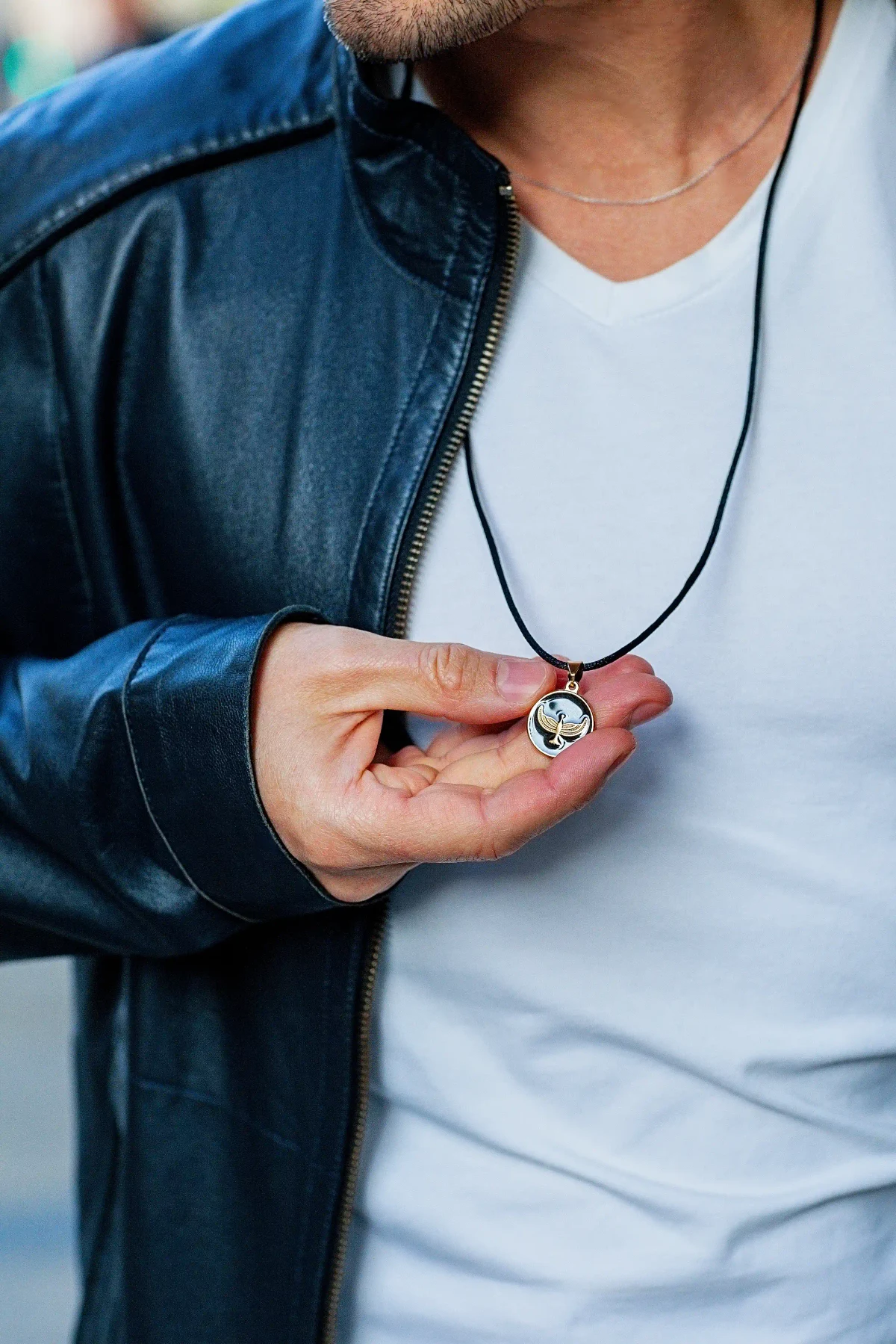
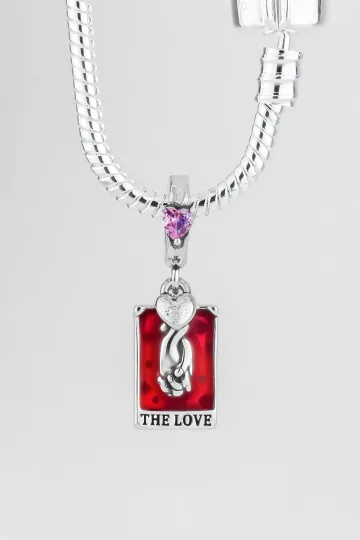
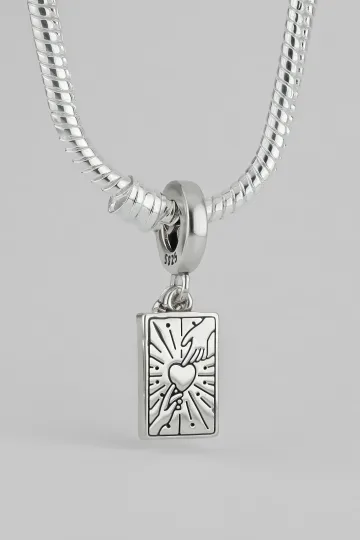
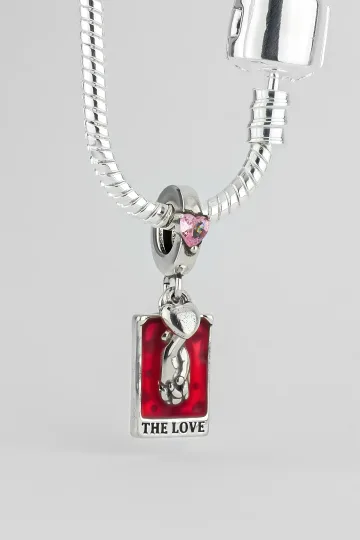
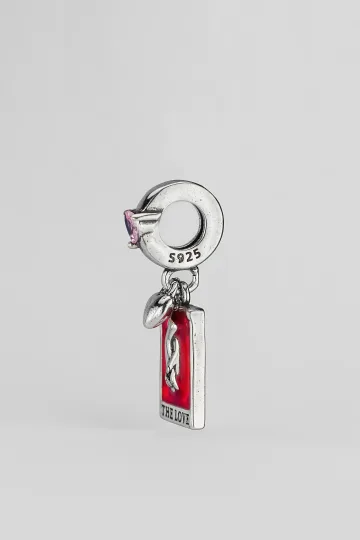
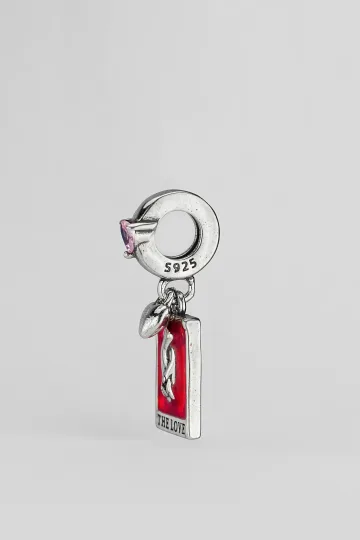
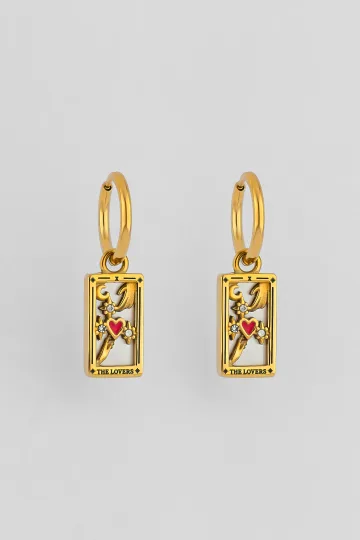
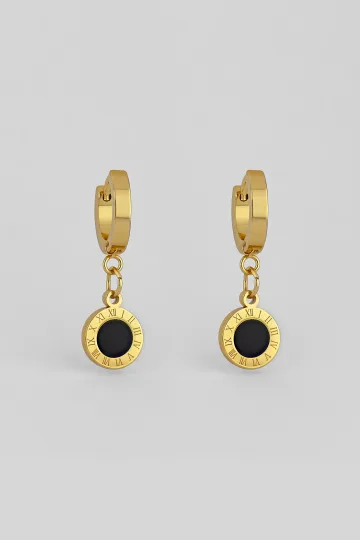
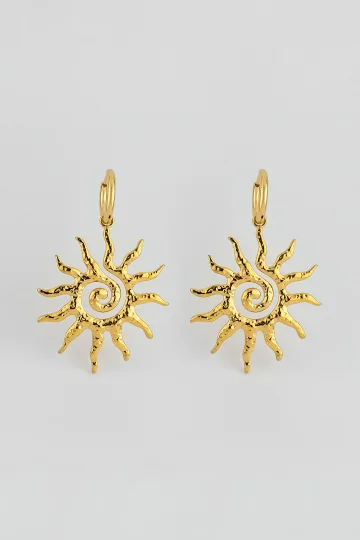
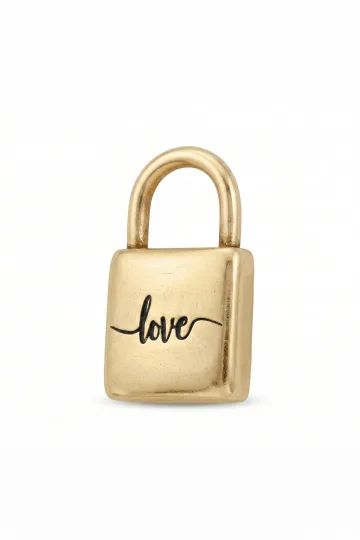
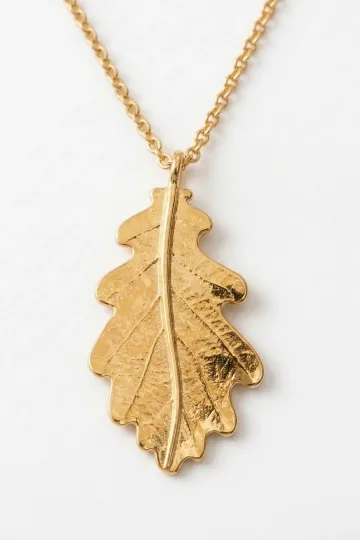
Wear the symbol, don't just read about it. These are in stock:




To be fair, the approach had its own logic. The market was expanding, new buyers wanted clear markers of prosperity. Diamonds and brand hallmarks delivered exactly that. But behind the facade of sparkle lay emptiness: the pieces were essentially interchangeable, differing only in carat count and logo.
Look at the display cases from that era through the eyes of today's buyer and the monotony is striking. Thousands of rings with identical construction: thin shank, centre stone in prong setting, melee scattered on the sides. Thousands of pendants on identical chains. Thousands of earrings distinguished only by stone size. Form was so standardised that you could have swapped catalogues between brands without anyone noticing.
There were exceptions, of course. Individual masters and small ateliers worked seriously with form, creating sculptural, unconventional pieces. But the mainstream did not notice. The market was too busy chasing carats to pay attention to something as subtle as proportions.
The 2010s: The Age of Stories and Symbols
The second decade brought a layer of complication. Jewellery began telling stories. Collections emerged inspired by travel, world literature, mythology, natural phenomena. Each piece was accompanied by a lovely legend explaining what it "meant."
The butterfly symbolised transformation. The little key promised new possibilities. The infinity sign hinted at eternal love. It sounded poetic, but there was a problem: these symbols were stamped by the millions. A butterfly pendant from a boutique on Fifth Avenue looked virtually identical to one from a mall on the outskirts of town. The uniqueness built into the narrative was not confirmed by the form.
The form itself became slightly more complex but continued to serve the symbol rather than living its own life. A step forward from the 2000s, but only a half step.
Interestingly, it was precisely during this decade that a kind of "jewellery inflation of meaning" occurred. Every collection strived to tell a deeper, more beautiful story than the last. Marketing descriptions expanded into small essays. Yet the pieces themselves remained conventional in their construction. The gap between what was said about a piece and how it actually looked became increasingly obvious.
Gradually, buyers began to understand: a beautiful legend does not replace a beautiful form. You can explain at length that this pendant "symbolises a woman's inner strength," but if it looks like a hundred similar pendants in the neighbouring display case, the words lose their weight.
Late 2010s: The Minimalist Revolt
As the decade wound down, the pendulum swung in the opposite direction. Scandinavian and Japanese aesthetics burst into the jewellery world with the idea of radical simplification. Thin gold threads, barely visible chains, microscopic pendants. Jewellery you had to examine up close to even notice.
This first-wave minimalism was an important reference point. It taught the market to value purity and the absence of clutter. But it often bordered on primitivism. Form was reduced to basic geometric figures: circle, square, line. Without volume, without engineering thought, without emotional depth. Beauty was achieved through the purity of the metal and the precision of execution, but frequently left a feeling of emptiness. As though the soul had been removed from the piece and nothing put in its place.
For design-literate audiences, particularly those steeped in the legacy of mid-century modernism, this stripped-down approach felt familiar at first. But true mid-century design was never empty. Think of Charles and Ray Eames, of Isamu Noguchi, of the organic forms that combined function and emotion. The jewellery minimalism of those years borrowed the surface of that tradition but missed its depth.
The distinction is worth elaborating, because it illuminates what makes form-centric jewellery of 2026 different from the minimalism of the late 2010s. Mid-century modernism was not about having less. It was about having exactly the right amount. Every curve in an Eames chair had a reason. Every proportion in a Noguchi lamp was calculated. The simplicity was the result of enormous effort, not the absence of effort.
The jewellery minimalism of the late 2010s, by contrast, often achieved its simplicity through reduction alone. Remove the stones. Remove the decoration. Remove the volume. What remained was clean but often lifeless. It looked like minimalism but felt like austerity.
Form-centric jewellery has learned from this mistake. It takes the mid-century lesson seriously: simplicity is not subtraction. It is distillation. Every millimetre of a form-centric ring is there for a reason. The volume, the curve, the thickness, the void: none of these is accidental. They are the result of the same kind of obsessive refinement that made the Eames lounge chair immortal.
In America, where mid-century modernism is experiencing a seemingly permanent revival (visit any upscale furniture store, scroll any design-focused Instagram feed), this connection gives form-centric jewellery immediate cultural credibility. It is not a foreign import. It is a natural extension of an aesthetic tradition that American consumers already love.
In Britain, the connection runs through a different but equally powerful thread: the Arts and Crafts movement's insistence on honest materials and visible craft. When you hold a form-centric ring and feel the quality of the metal, the precision of the casting, the warmth of the hand-finished surface, you are experiencing exactly what William Morris advocated for: beauty that arises from the integrity of making.
The Australian and New Zealand design scenes also contribute to the conversation. Antipodean designers, influenced by both European and Asian traditions, and working in relative geographic isolation, have developed a distinctive approach to form that tends toward the organic and the tactile. The influence of landscape (the sculpted rock formations of the Australian outback, the volcanic forms of New Zealand) shows in their work, adding another dimension to the global form-centric vocabulary.
2020 to 2024: The Years of Reassessment
The pandemic and the years that followed upended the scale of priorities. Buyers started asking questions that had not been voiced before. How meaningful is this purchase? How long will it last? Will I still wear this in five years? Is there a real connection between me and this object?
In parallel, a technological leap occurred. 3D modelling and 3D printing opened possibilities that would have seemed like science fiction just ten years earlier. Designers gained tools to work with form at an entirely different level of precision and complexity. They could experiment with volume, with the balance of mass and void, with organic structures, without being limited to the possibilities of manual wax carving.
It was precisely then that the best studios began creating the first truly architectural jewellery. Complex, voluminous, three-dimensional, yet without decorative overload. These were the harbingers of what we see in full force today.
The pandemic played another unexpected role: it slowed down time. People locked in their homes started noticing the objects around them more keenly. They learned to value tactile contact with things. They began to think about what is truly lasting and what is disposable. This reconsideration touched every sphere of consumption, and jewellery was no exception.
Simultaneously, self-education grew. Buyers started reading about design, watching documentaries on craft, following jewellers on social media, observing the creation process. This led to a more informed audience, one capable of recognising the quality of a form and distinguishing genuine work from imitation.
By 2024, it was clear: the trend toward form could not be reversed. Too powerful a convergence of factors, technology, culture, psychology, and economics, was driving it forward. All that remained was to watch it unfold at full strength.
2026: Form Takes the Lead
And here we are. Form has finally achieved full autonomy. It is no longer the servant of the stone. Not the carrier of a symbol. Not the simplified geometry of early minimalism. It is self-sufficient, sculptural, mathematically calibrated, and lives by its own rules.
A culmination? Perhaps. But more likely the beginning of a long road. Because the possibilities that the primacy of form opens up are only just beginning to be explored.
Form as the New Currency of Value
In the old paradigm, a piece of jewellery's value was composed of straightforward ingredients. Metal weight, carat count, complexity of handwork, brand markup. The formula was transparent and almost boring.
In the new reality, that formula is being rewritten from the ground up. Form ceases to be a supporting element and becomes the primary source of value. Material and stones submit to geometry, not the other way around. This fundamental shift in thinking brings jewellery design closer to contemporary sculpture, industrial design, and small-scale architecture.
How We Now Evaluate Jewellery
The criteria have changed. The first question used to be "how many carats?" Now the first question (often unconscious, at the level of intuition) sounds different: "how is this designed?"
Unity and monolithic quality. The first glance at a piece should read it as a whole. No sense of being "glued together" from different parts. Even if the piece is technically assembled from several components (which is inevitable), it is perceived visually as a cast, organic object. Like a pebble polished by the ocean. Like a bone grown from a living organism.
A clear example: contemporary statement rings where metal flows seamlessly from one form to another without visible seams. And a counterexample: a ring where a separate stone setting is obviously mounted on a thin shank, with decorative curlicues stuck on the sides "for beauty." The first commands respect. The second prompts you to walk past.
Mass balance. A piece must be balanced physically (so the centre of gravity does not tip it sideways) and visually. This is subtle mathematics that cannot be faked. Either the designer feels proportions or does not.
A ring can be deliberately asymmetric: massive on one side, slender on the other. But if the balance is found correctly, the eye does not perceive this as chaos. On the contrary, a sense of dynamic equilibrium emerges. Like a frozen wave. Like a dancer mid-leap.
Visual weight. This concept comes from typography and graphic design but works brilliantly for jewellery. Visual weight determines how "significant" an object is perceived to be, regardless of its actual weight in grams.
A simple but mathematically calibrated form with the right thickness distribution is perceived as many times more expensive than a thin ring studded with fine diamond chips. The latter, incidentally, now firmly signals budget mass market.
A dense piece of gold at 4 to 5 millimetres thick possesses enormous visual weight and is instantly read as a serious, high-end piece. A thin metal plate with a scattering of small stones looks fragile and cheap, even if it carries a higher price tag.
Why Form Acts So Powerfully on Us
This is not about fashion or marketing. This is about biology.
Millions of years of evolution. The human brain learned to assess proportions and symmetry in a flash long before jewellery boutiques existed. It was a matter of survival: correct proportions signaled the health of a potential mate, the safety of food, the reliability of shelter.
A well-designed form activates those same ancient neural pathways. We read it as "right," "harmonious," "beautiful" before we have time to rationally process what we see. This happens in milliseconds. Poor form (disrupted proportions, skewed balance, "uncomfortable" geometry) triggers subconscious discomfort. A person cannot explain what exactly is wrong but intuitively steers clear.
Tactile imagination. When we look at a curved, voluminous surface, the brain automatically "simulates" a touch. We mentally run a finger along the smooth arc, feel the coolness of the metal, sense the weight in our hand. This phenomenon is called motor resonance, and it explains why some forms trigger an almost physical desire to pick them up while others leave us entirely cold.
The new cultural code. Over recent years, visual culture has undergone a massive transformation. Scandinavian design, minimalist architecture, the cult of clean form in technology products have raised a generation for whom clear lines and thoughtful curves are not luxury but a baseline standard. If your smartphone, your coffee maker, and your car are designed with care for form, why should jewellery be the exception?
English-speaking markets have been particularly receptive to this shift. A generation of consumer technology has shown that form and material can create an almost emotional connection with a mass-produced object, and that has reshaped expectations across every category of design. When a phone can feel like a river stone in your palm, the bar for jewellery is set accordingly.
The influence of architecture cannot be overstated. The Pritzker Prize winners of the last two decades, from Zaha Hadid's fluid dynamism to Tadao Ando's concrete meditation, have trained the public eye to appreciate sculptural form. The High Line in New York, the Tate Modern's Switch House in London, the new Museum of Contemporary Art in Los Angeles: these structures have become cultural touchstones for a generation that now expects the same formal rigour in their personal objects.
The MoMA Design Store in New York, the Design Museum in London, and similar institutions have been central to this education. By presenting everyday objects as worthy of serious aesthetic attention, they have trained millions of visitors to evaluate form with a critical eye. When you spend an afternoon admiring the curves of a Brancusi sculpture, you bring that same visual sensitivity to the jewellery counter.
The influence extends to the media landscape as well. Platforms like Dezeen, Wallpaper, and Architectural Digest have cultivated audiences that think about design across categories. A reader who appreciates a well-proportioned building, a beautifully sculpted chair, and a thoughtfully designed kitchen appliance is already primed to appreciate form-centric jewellery. These publications increasingly cover jewellery as a design discipline, not merely as a luxury goods category, further accelerating the trend.
In the American context, the democratization of design appreciation through mainstream home-goods retailers and their designer collaborations has created a vast audience that understands (at least intuitively) what good form means. These consumers may not be able to articulate the golden ratio, but they can feel when proportions are right. And they bring that feeling to every purchase, including jewellery.
The New Economics of a Jewellery Piece
The cost of design has moved to the foreground. Developing an ideal form takes months of work from a designer, 3D modeler, and engineer. Dozens of iterations, prototype testing, perfecting every line. This is intellectual labour of the highest calibre, and premium brands speak openly about it. Buyers accept it because they see the result.
The quality of execution carries a different price as well. A complex form cannot be cheaply stamped. It requires high-precision casting, jewellery-grade polishing, flawless finishing. The slightest unevenness, a bubble in the metal, an inconsistent wall thickness, destroys the entire magic. This demands master-level craftspeople and serious equipment, but it also guarantees a piece that will bring joy for decades.
And the most important point: jewellery built on pure form loses its relevance far more slowly. It is not tied to fleeting trends, does not rely on the momentary popularity of a particular symbol or pattern. Ten years from now, a perfectly designed ring will look just as fresh as it does today. A ring bearing a "trendy" symbol risks becoming an amusing artifact of its specific era.
Sculpture wants a bare hand, not a scrum of rings. One ring with backbone beats a fistful of sparkle. Don't argue.
Combining Form-Centric Jewellery with Your Wardrobe
On set I keep a sculptural piece on a clean background, because the form is the shot, not a supporting act. Here is what actually works, by occasion.
How do I wear a sculptural ring every day? For daily wear I recommend one expressive ring on a bare hand and a plain top with no print: a white shirt, dense knit, straight jeans. Smooth solid fabric turns the form into the centre of the frame. I suggest setting warm gold against cream, beige and olive, and white metal against graphite or deep navy, so the profile reads sharper.
What goes under a statement necklace? Under a bold necklace I choose a smooth single-tone dress or fine knit and an open neckline. A large form wants empty space around it: the calmer the neckline, the louder the metal speaks. In that case I recommend keeping earrings minimal or leaving them off.
Does form-centric jewellery work at the office? It does, as long as you hold one note. I suggest one sculptural ring and a pair of clean studs, nothing that swings or jingles. I recommend a chain that sits just above the neckline, so the pendant stays a detail rather than a declaration in a meeting.
How do I build an evening look? In the evening you can go louder. I choose a heavy necklace on smooth fabric in a deep colour, wine, emerald or black, or large earrings with hair pulled back. Artificial light lifts the light and shadow of a sculptural form, and the metal plays deeper than by day. One strong accent outweighs a handful of small pieces.
How do I mix metals without overdoing it? You can mix yellow and white gold, but let one tone lead while the other only supports. If you stack rings, keep one visual family: a similar radius, one metal tone. Then the hand reads as a single composition, not a random handful.
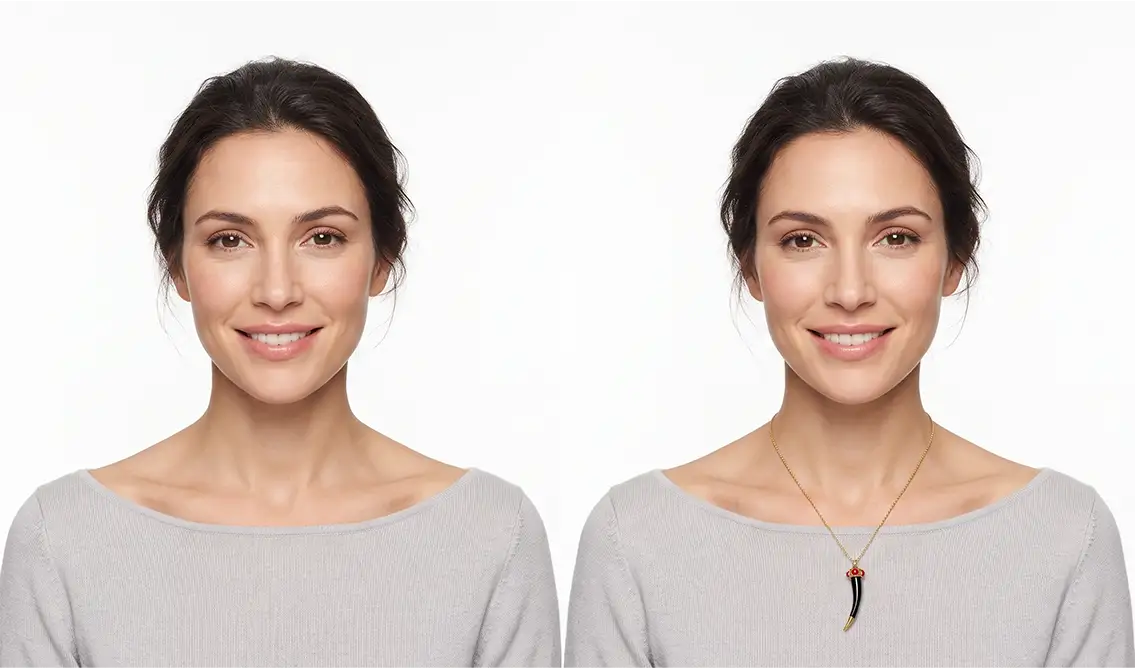
Turn on your camera, pick earrings, a pendant or a ring, and see the piece on yourself in real time.
Switch items in one tap.
Everything runs in your browser: no photo or video is ever uploaded.
Architectural Thinking: Emptiness as Material
The primary source of inspiration for jewellers in 2026 is architecture. Not literally (reproducing building facades in metal would be peculiar). Rather, the borrowing of design principles. A piece of jewellery is now built according to the laws of constructivism and bionics: it has load-bearing supports, stiffening ribs, guide lines, and a logic of load distribution.
Negative Space: When Void Matters More Than Metal
Emptiness in jewellery design has stopped being merely the absence of material. It has become a full-fledged part of the composition. Slots, through-holes, arches, and line breaks are deployed with maximum intentionality and precision.
Functionally, void operates on several levels simultaneously. It lightens a massive form: a ring can look like a weighty chunk of gold but, thanks to thoughtfully engineered cavities inside, weigh half as much as it appears. The result: everyday wearability combined with a visual impression of monumentality.
Void improves air circulation, which is critical for rings and bracelets that sit tight against the skin. Through-openings prevent moisture buildup and irritation. And void opens the door to transformation: some designers create modular jewellery where elements can be rearranged, using voids as locking slots.
The aesthetic dimension is equally important. A sequence of voids of varying size sets a visual rhythm, guides the eye across the piece, creates a sense of movement. Voids cast shadows on the skin and on the piece itself, forming complex patterns that shift with the angle of light. And void can function as a frame, highlighting a specific element: a stone, a texture, a curve of metal.
But working with negative space demands virtuosic skill. You cannot simply "cut out" a chunk of metal and hope for the best. The entire construction must be recalculated to ensure it retains its strength, that no stress concentration points emerge where metal might crack during wear. Casting such forms is its own art: one must calculate how the melt will fill the mould, where defects might occur, how to ensure even cooling.
Controlled Asymmetry: Dynamics Over Mirror Symmetry
Perfect mirror symmetry is retreating into the past, remaining the province of classic engagement rings. In its place comes intentional, mathematically calibrated asymmetry. The form looks alive, as if frozen in a moment of transformation, yet feels absolutely balanced.
There are several types of asymmetry. Axial: the piece is symmetric about one axis but asymmetric about another. For example, a ring that mirrors left to right but has different heights front and back. Radial: elements arranged around a centre at unequal intervals, creating a spiral movement. Shift: two symmetric halves offset from each other, as though a perfectly symmetrical piece had been cut in half and the parts slightly displaced.
The paradox is that the most harmonious asymmetry is built on the golden ratio. When elements relate in a proportion of 1:1.618, a sense of dynamic balance emerges. This is not chaotic, random asymmetry but mathematically precise disproportion that the subconscious reads as "right."
Mastery of asymmetry can be tested simply: if you remove one element from the piece, does the balance collapse? If yes, the asymmetry is precisely calculated and every part is necessary. If not, the design needs more work.
Controlled asymmetry also allows the "direction" of the viewer's gaze. Just as in painting, where composition guides the eye along a particular route, asymmetric elements in jewellery design create a visual trajectory. The gaze begins at one point, follows the form line, and arrives at a climax. This makes perceiving the piece an active process, not passive observation.
Bionics: Nature as the Supreme Engineer
Millions of years of evolution have created forms optimized to perfection. Jewellery designers of 2026 actively study bionics and transfer its principles into metal.
The spiral of the nautilus, built according to a logarithmic law, distributes loads ideally while simultaneously captivating the eye. The internal spongy structure of bone provides strength at minimal weight. The hexagonal geometry of honeycombs delivers maximum strength with minimum material. All these principles find application in new jewellery: from hidden internal structures to external forms inspired by organic objects.
Interestingly, bionic forms often combine organic softness with mathematical precision. Nature works by strict physical laws, yet the result looks alive, warm, far from mechanical coldness. The best jewellery of 2026 achieves the same balance: perfect mathematics under the hood, a feeling of naturalness and organicity on the surface.
Craft Traditions: When History Serves Form
Many principles of the "new" form have deep historical roots. The Spanish jewellery tradition, for example, worked for centuries with volume and metal density. Masters from Toledo and Cordoba were known not for an abundance of stones but for their virtuosic handling of gold and silver itself: chasing, filigree, casting of complex volumetric forms.
The tradition of metalwork in the Castilla-La Mancha region dates back to the Moorish era. There, a unique school developed where Eastern refinement merged with European engineering logic. The masters worked with form as with sculpture: every bend, every transition, every thickening and thinning carried meaning. The city of Albacete in Castilla-La Mancha was historically renowned for the precision of its metalwork, a philosophy that resonates remarkably with what is happening in jewellery design today.
The British Arts and Crafts movement of the late 19th century anticipated many of these ideas. William Morris and his circle argued that the beauty of an object lay in its honest construction, not in applied decoration. That philosophy, which influenced everything from architecture to furniture to the early Bauhaus, is experiencing a powerful revival in today's form-centric jewellery.
The American studio jewellery movement of the mid-20th century, led by figures like Alexander Calder, Art Smith, and Sam Kramer, also laid crucial groundwork. These artists treated jewellery as wearable sculpture, prioritizing form and concept over precious materials. Calder made necklaces from brass wire. Smith worked in silver with organic, biomorphic forms. Their work, once considered fringe, now looks prophetic.
Today, the legacy of these movements converges with cutting-edge technology. A Brooklyn-based designer using Rhino software and a 3D printer is, in some fundamental sense, continuing the work that Morris began in his Red House studio: making beautiful objects whose beauty lies in their form, not their decoration. The tools have changed radically. The philosophy has come full circle.
Similarly, the Italian Renaissance goldsmithing tradition, the Japanese philosophy of wabi-sabi with its cultivation of imperfect beauty, the Scandinavian focus on functionality and clarity, the German Bauhaus synthesis of art and engineering: all these cultural currents, each in its own way, moved toward the same finale. The recognition of form as an independent value.
Volume: The End of the "Foil" Era
Flat, stamped jewellery resembling silhouettes cut from metal sheeting is definitively losing relevance. The form of 2026 reaches into the third dimension: upward, inward, in all directions at once.
The Physicality of Metal
Even within minimalism, jewellery is acquiring noticeable thickness, density, and weight. Pieces are becoming real physical objects that invite tactile interaction.
In an era when the mass market makes pieces as thin as possible (to save on metal), significant thickness itself becomes a premium marker. A ring at 5 to 7 millimetres thick instead of the standard two is already a statement. You feel it on your hand, it has weight, presence. This is luxury in the literal sense: the luxury of "spending" extra metal not on increasing surface area but on increasing density.
Modern technologies allow the creation of forms with continuously varying thickness. A ring can be massive at the top (for visual weight) and taper toward the bottom (for comfort). This requires complex calculations and precise execution, but the result is impressive: a piece that is simultaneously monumental and comfortable.
A separate, paradoxical technique: hollow volumes. The piece is designed as a hollow form with engineered wall thickness. From the outside, it looks like a solid chunk of metal. Inside, it is empty. The piece remains wearable (does not pull the earlobe down, does not press on the finger) while maintaining a powerful visual effect.
Light and Shadow Instead of High Gloss
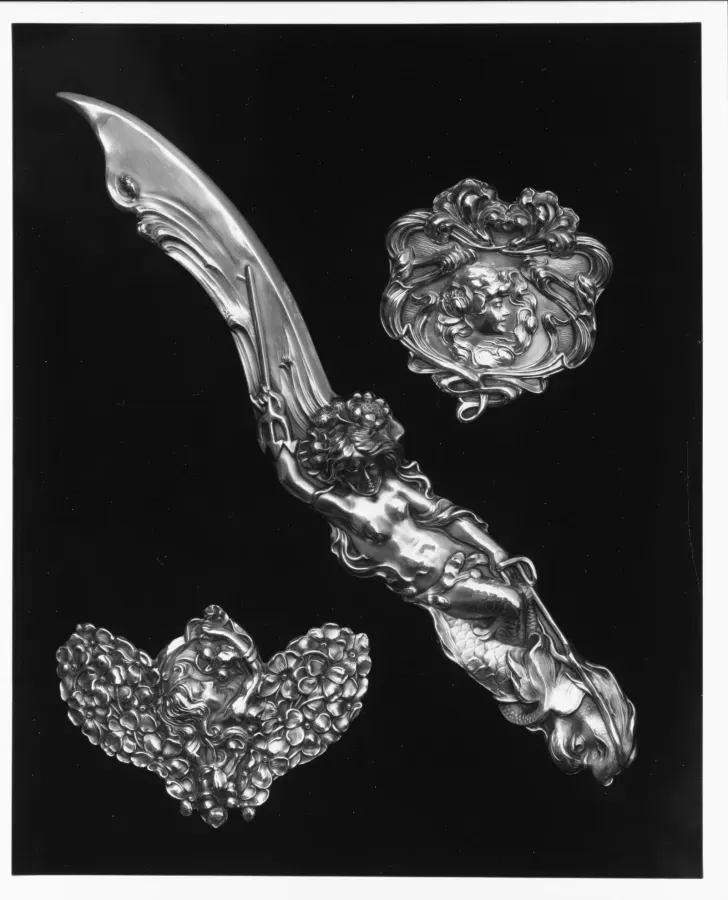
Volume enables an entirely new way of working with light. Curved surfaces, arcs, and hollows begin to interact with the environment. Where sparkle was once achieved through the facets of a stone, now the metal itself does the work: soft gradients, deep shadows, flowing highlights.
Mirror gloss is losing its monopoly. More and more designers are working with matte, satin, and brushed surfaces. On a matte surface of a voluminous form, light creates flowing transitions from bright to dark that emphasise sculptural quality and readability. High gloss, by contrast, produces point reflections that can "eat" the form and make it appear flat.
Particularly interesting is the combination of different finishes on a single piece. Convex parts polished (catching light and gleaming), concave parts matte (creating contrast and depth). Or an alternation of smooth and textured zones, where the texture might be minimal: a slight roughness, barely visible to the eye but detectable by the fingertips.
A voluminous piece truly lives in space. It looks different in daylight and evening light, under natural and artificial illumination. This gives the piece depth and multidimensionality, turning it into something you want to examine again and again.
The Psychology of Reliability
In a world where everything is rapidly migrating to digital (music, photos, books, money), a dense, heavy piece of precious metal subconsciously signals reliability, security, and permanence. It is an anchor in the material world. Something that cannot be deleted with a click.
Perceptible weight on the hand or neck becomes an advantage: a constant physical reminder of the piece's presence, its value, the tactile connection with the object. Naturally, the weight must be balanced: not to the point of discomfort, but enough to feel that the thing is there, on you.
And one more point that buyers grasp intuitively: a voluminous, properly engineered form is stronger than a flat one. This is a physical fact. A thin plate bends and deforms easily. A volumetric form with thoughtfully placed stiffening ribs will survive decades of active wear. Massive means solid, durable, dependable. And that is reality, not mere perception.
Tactility: When Jewellery Is Designed for Fingers, Not for the Camera
In 2026, a piece of jewellery is created for visual perception (read: for social media photos) and for kinesthetic experience. Tactility has become the new synonym for luxury. A piece must feel phenomenally good in the hand.
Edge Softening: The Philosophy of the Pebble
Sharp, aggressive edges are used extremely rarely, only as a deliberate statement. Predominantly, edges are rounded and smoothed, reminiscent of pebbles shaped by ocean waves over millennia.
The fillet radius has become a technical parameter that finally receives its due attention. Too small a radius: the edge stays sharp, catches on clothing, can scratch skin. Too large: the form loses definition, becomes "fuzzy." The ideal radius depends on the scale of the piece, the metal (gold and platinum have different optima), and the intended aesthetic.
The professional technique that distinguishes a master's work from an amateur's: multi-level filleting. The main lines of the form remain clear and graphic. But on the micro level, all edges are softened. Examine a quality piece under a loupe: not a single truly sharp angle. Yet the overall silhouette reads cleanly and definitively.
Special attention goes to transitions between different zones of a piece. Where thin meets thick. Where flat meets curved. An abrupt transition creates a sense of cheapness, of being "assembled" from different parts. A flowing transition speaks of class, unity, and thoughtfulness.
Surfaces: The End of the Mirror's Dictatorship
The perfect "mirror" high gloss is yielding to complex finishes. The market has matured enough for textural diversity.
Satin Finish. Uniform matteness with a light, silky sheen. Achieved through directional grinding. The surface reflects light but diffusely, without mirror reflections. Feels velvety, very pleasant. Visually noble and restrained.
Brushed Texture. Fine parallel lines, as though a stiff brush had been drawn across the metal. Can be horizontal, vertical, or circular. Creates directionality and dynamics. In light, it produces an interesting effect: the lines alternately catch the light and recede into shadow.
Hammered Texture. Imitation of hand-forging marks. Many small dents create a living, irregular surface. References the artisanal roots of goldsmithing. Each piece becomes unique if the texture is genuinely applied by hand.
Sandblasted. Uniform fine-grained matteness. The surface appears almost textile, feels velvety. Practically impervious to scratching, since small marks are invisible against the overall textured background.
The real magic begins when different surfaces are combined on a single piece. The main body satin-matte, a fine line along the edge polished to mirror brightness. Or convex zones polished, concave zones matte. This demands precision of the highest order in execution, but the effect is striking: the piece gains layeredness, depth, and character.
Jewellery as Anti-Stress: Design for Touch
Rings and pendants are increasingly designed to be endlessly turned in the hands, stroked with a finger. This is not a side effect but a deliberate design decision.
Spinner rings with a moving element that can be rotated around the base. Originally from the Tibetan tradition of prayer rings, today they serve as both a fashionable accessory and a stress-relief tool. Rotating the ring helps focus, reduces anxiety, occupies the hands in tense moments.
Pendants and rings following the "worry stone" principle, with a smooth concave surface pleasant to stroke with the thumb. A physical anchor that calms and centres attention.
When a person frequently interacts with an object tactilely, a deep emotional bond forms. The piece stops being just a thing and becomes a personal companion. This increases loyalty to the piece and reduces the likelihood of it being consigned to a drawer a month after purchase.
Form and Ergonomics: Comfort as Part of Beauty
The phrase "beauty demands sacrifice" no longer works. Comfort has stopped being a compromise and has become an integral part of aesthetics. Form is engineered around the biomechanics of the human body.
Anatomical Rings: The Science of Fingers
The internal profile of the ring (comfort fit) has been brought to an absolute. The piece can have a complex sculptural form on the outside while flawlessly tracing the anatomy of the finger on the inside.
The classic comfort fit, the rounding of the inner surface, has already become standard. But the modern approach goes further. Designers analyse finger anatomy: the position of knuckles, zones of soft tissue, how the finger narrows and widens during movement. The result: a ring with variable internal channel width that sits like a glove and does not spin.
Web-fit, an even more advanced technique. Between the fingers there are skin webs. When you make a fist, they tighten. An ordinary ring can press into the web, creating discomfort. A ring with web-fit has a special cutout or thinning precisely in that zone. Visually it may be completely invisible (the cutout is on the inner side), but the comfort difference is enormous.
Another ergonomic technique gaining popularity: the D-shaped profile with a flat inner side and convex outer side. The flat inner side prevents the ring from spinning on the finger, which is especially important for asymmetric designs that should "face" a certain direction. Meanwhile, the convex outer side provides visual volume and tactile appeal.
Rings designed specifically for particular fingers are emerging: index, middle, ring, pinky. Each finger has its own anatomy and biomechanics. The index finger is often extended during gestures, so a ring for it may be asymmetric, with more mass on the outer side. The middle finger, the longest, can carry a large, massive form. The pinky is seen mainly from the side, hence the tendency toward narrow rings with a vertical accent.
Intelligent Weight Distribution
Large earrings are engineered so that their centre of gravity sits as close as possible to the piercing point. They look massive but do not pull on the earlobe.
The lobe is thin and sensitive. Heavy earrings stretch the piercing hole, cause pain, and in the long term deform the ear. The solution: hollow constructions (the earring looks monumental but the main metal mass is concentrated in the upper part, near the attachment), counterweights behind the ear, and the use of light materials like titanium for voluminous elements.
Cuff bracelets are designed with the elliptical shape of the wrist in mind. Not round but slightly oval, with small recesses in zones where bones protrude and additional support points on soft tissue.
Merging with the Body
The best jewellery of 2026 looks as though it grew on the body. It follows the lines of bones, traces the curves of muscles, fits into natural hollows and prominences. Designers study the structure of hand, wrist, and collarbone with no less care than surgeons.
The body is in constant motion. Fingers bend, the wrist rotates, the neck turns. The piece must move with the body without creating obstacles. Rings with hinge elements, bracelets with flexible connections, necklaces with engineered balance that automatically centre when the head turns.
Some designers now draw on insights from sports medicine and orthopedics for their designs. The biomechanics of a finger while typing, the stress patterns on a wrist during a workday, the pressure distribution on an earlobe during different head positions: all of this feeds into the design. Sounds technical, but the result is emotional. A piece you forget you are wearing because it fits so perfectly, yet immediately miss when you take it off.
When a piece is perfectly adapted to the body, the wearer stops "feeling" it in a negative sense (pressure, friction, discomfort), but the tactile connection remains: a pleasant sense of presence. The piece becomes part of the body image, an extension of the self.
Form-Centric Engagement and Wedding Rings
A particularly significant territory for the form-centric approach. Engagement and wedding rings are arguably the most important jewellery in a person's life. They are worn daily, for decades, and become part of one's identity.
A New Understanding of the Engagement Ring
The classic formula of "big diamond in prong setting" is losing its monopoly. More and more couples are choosing engagement rings where the form of the ring itself is the primary expressive element. The stone may be small (or absent entirely), set flush into the metal, or shifted off the central axis.
This is not about saving money. It is a rethinking. A ring with a half-carat stone integrated into a sculptural form can cost the same (or more) than a classic solitaire of greater dimension. Because the cost of form (design, engineering, execution) can exceed the cost of the stone.
For many modern couples, especially in markets like New York, London, and Los Angeles where design literacy is high, this approach aligns more closely with their values: individuality over template, design over "showcase sparkle," a piece with meaning rather than "what is expected."
The shift in engagement ring culture is part of a broader cultural change. The generation currently getting married defines luxury differently from their parents. For them, luxury is not the size of the stone but the quality of the experience. Not what others see but what you yourself feel. The engagement ring is evolving from status object to personal statement.
In the United States, where the engagement ring tradition is deeply entrenched and heavily marketed (the "two months' salary" rule, the emphasis on carat weight), this shift is particularly significant. American couples are increasingly pushing back against the diamond-industrial complex, not by rejecting engagement rings entirely but by reimagining what they can be. A sculptural band in 18K gold with a small, flush-set sapphire can carry as much (or more) emotional weight as a traditional solitaire, while feeling far more personal.
In the United Kingdom, where engagement ring culture blends American influence with a more reserved British sensibility, form-centric rings find a natural audience. British buyers have always been less drawn to ostentatious display and more inclined toward understated quality. A ring whose beauty lies in its form rather than its sparkle speaks directly to this aesthetic.
The conversation is also shifting among jewellers themselves. Forward-thinking jewellers on Hatton Garden in London, in Brooklyn's growing artisan district, and in the studios of downtown Los Angeles are finding that couples who come in asking for "something different" are actually asking for something form-centric. They want a ring that reflects who they are as a couple, not a ring that looks like every other ring on every other hand.
Wedding Bands: Form for Every Day
The wedding band is worn constantly. Every day, from the morning jog to the evening dinner. This makes ergonomics and tactility absolute priorities.
Form-centric wedding bands are typically more restrained than engagement rings: they should not steal attention but must be impeccable in daily contact. Comfort fit is mandatory. The surface must feel pleasant (many choose satinization). Thickness must ensure durability under everyday stress.
An interesting trend: paired wedding bands that differ in form but "rhyme" with each other. Not identical (each person is individual, and the ring should suit them specifically), but sharing a design signature. Same fillet radius. Same texture. Same principle of working with volume, just at different scales.
For those who want to integrate engagement and wedding ring, the form-centric approach offers an elegant solution: two rings are engineered so that worn together they create a single, more complex form. Separately, each is self-sufficient. Together, they gain a new dimension.
Rings for Anniversaries and Milestones
Form-centric jewellery is particularly suited to marking important life stages. Instead of escalating carat count (a bigger stone for the 10th anniversary, bigger still for the 20th), you can build a collection of forms, each marking a specific life moment.
A ring for the birth of a first child. A ring for reaching a significant goal. A ring for overcoming a difficult period. Each with a unique form but from the same "visual family." Together they form a personal history told in the language of geometry.
Some brands offer "life programs": a series of forms, each symbolising a particular stage. Not literally (no daisies and storks) but abstractly: through growing complexity of form, through an increase in volume, through the evolution of proportions. A beautiful concept that turns a jewellery collection into a visual autobiography.
The Era of Specificity: The End of Universal Solutions
A mass product must be universal to suit millions. Modern form is elite precisely because it is specific.
Targeted Design Instead of Compromise
Jewellery no longer strives to fit any finger of any shape. Rings are being designed exclusively for the index finger (taking into account its particular position in the hand) or ear cuffs that require a specific ear shape.
For the pinky: narrow, often with a vertical element, because the pinky is seen mainly from the side. For the ring finger: classic, frequently symmetrical, as it is the "parade" finger for engagement and wedding rings. For the middle finger: large statement rings exploiting the length and strength of the longest finger. For the index finger: often asymmetric, with an accent on the outer side, because the index finger is actively involved in gesticulation. For the thumb: entirely different anatomy, therefore wider rings, often with open construction.
The shape of the ear is also individual. Some people have large lobes, some small. Some ears sit tight to the head, others protrude. A universal ear cuff either holds poorly or pinches. A specialised one accounts for the specific anatomy: the height of the concha, the curve of the helix, the position of the antihelix.
The Psychology of Exclusivity
Remember the tale of Cinderella? The slipper fit only her, creating a sense of destiny, of being meant. The same applies to jewellery. When a ring perfectly fits a specific finger of a specific hand, a magical feeling emerges: "This was made for me." Even if the person rationally understands it is not bespoke, a powerful emotional bond forms.
In a world where mass production has made virtually everything accessible, true luxury is not universality but specificity. "Fits everyone" sounds like a mass-market characteristic. "Fits exactly you" sounds like exclusivity.
Technologies of Customization
The development of 3D scanning and printing allows brands to offer partial customization even in serial production. The client visits a boutique or uploads a hand photo online. The designer analyzes anatomy. The base form of the piece is adapted: radii, proportions, balance are adjusted. A wax model or resin prototype is printed. The client tries it on, final tweaks are made. The final piece is cast.
This is not a fully bespoke design from scratch (which would cost incomparably more) but a sensible adaptation of an existing form to a specific person. The markup over the base price remains moderate.
Upload a photo of your pet, someone you love, or an object. We'll build a 3D model and hand-cast it in pewter.


The Stone in a New Role: From Pedestal to Subordination
Diamonds and coloured stones are no longer the mandatory prerequisite for "expensive" jewellery. Pure form does perfectly well without them. But when stones are used, their role changes radically.
The Stone as Detail, Not Lead Actor
The stone no longer sits on a pedestal in a classic prong setting. It is set flush into the metal, hidden on the inner side of the piece, or shifted off the central axis.
In flush setting, the stone is sunk so that its table sits level with the surface of the piece. It reads as a textural element, a colour accent, a point of sparkle, but not as the main character. The stone is integrated into the form, not elevated above it.
Hidden stones on the inner side of a ring, invisible from outside. An intimate detail, a secret of the wearer. Or stones inside voids, visible only from certain angles, in the gap between form elements. This approach makes the stone not an element of wealth display but a personal talisman, a hidden meaning.
Shifting the stone off centre is also characteristic. In classic design, the stone always sits on axis, centred, symmetrical. The modern approach involves a lateral shift, creating asymmetry. The stone becomes a counterpoint, a point of visual tension. It does not dominate but complements, creates dynamics.
The Stone as Architectural Accent
Imagine a massive gold ring with a through-slot, inside which a stone is set. You look at the ring: a complex form. You peer into the slot: a flash of colour. Or another approach: a perfectly smooth, matte gold surface and one small facet of a diamond. The contrast of textures creates tension.
The stone can be the focal point of the piece, but not because it is large and sparkling, rather because the entire geometry is built to lead the eye precisely to it. It could be a tiny stone of 0.05 carats, positioned at the critical balance point of the form. And it will work more powerfully than a stone scatter across the entire finger.
Honesty Without Cover
This approach makes the design maximally honest. You cannot hide poor workmanship behind the dazzling brilliance of a large stone. When form carries the primary visual load, every error is immediately visible. Uneven surface, unintended asymmetry, rough polish, imprecise wall thickness. This forces manufacturers to work at the maximum of their capabilities.
Without stones, it also becomes obvious how much metal is actually used. Thin stamping versus massive casting: the difference is visible to the naked eye. Gold weight, platinum density cease being mere technical specifications and become aesthetics, a feeling of genuine quality.
The Long Life of a Silhouette: Why Form Does Not Become Outdated
The trend toward conscious consumption has reached its peak. The buyer, spending a significant sum, asks a reasonable question: "Will I still wear this in 10 years? Will this look like an embarrassing relic from 2026?"
Timeless Geometry
Pure form gives an affirmative answer. Unlike specific symbols (which fall out of fashion), logos, or decorative patterns, ideal geometry ages incredibly slowly.
The history of jewellery design confirms this. Some iconic pieces from the past century have not lost their relevance: laconic oval bangles from the 1960s, geometric rings inspired by early 20th-century industrial design, organic cuffs from the 1970s. What unites them? A focus on pure form, not on decoration or symbolism.
What does not age: mathematically correct proportions (golden ratio, Fibonacci numbers), basic geometric forms (circle, oval, arc, spiral), nature-inspired organic forms (but not literal copies), quality work with volume and void, impeccable execution.
What ages quickly: logos and branded patterns, specific symbols (hearts, crowns, stars that follow fashion cycles), complex decorative techniques like filigree (associated with particular eras), trend-dependent colour combinations, and certain stone-setting techniques (micropave seemed revolutionary in the early 2000s but today signals mass market).
The Economics of Longevity
If you look at how much use you actually get, the picture becomes very clear. A quality piece in the mid-to-upper price range, worn for 20 years, gives far more wear per year than a budget piece that bores or goes out of fashion in a season. Timeless form is not just aesthetics: it is a sensible way to spend.
Run the numbers, without citing specific prices. A form-centric gold piece from the upper segment, worn daily for 20 years, costs less per day than your morning coffee. A "fashionable" piece in the lower segment that you stop wearing after six months costs many times that per actual day of wear. This calculation tends to be immediately persuasive.
The concept of "cost per wear" is already well-established in fashion circles, and it applies with even greater force to jewellery, which is worn more frequently and for longer periods than any garment. A capsule of three to five form-centric pieces, each worn hundreds of times per year over decades, represents an extraordinary value proposition, especially compared to a drawer full of trend-driven pieces that collectively cost more but deliver less wear and less pleasure.
Pieces with pure form transfer more easily to the next generation. They are not tied to a specific era, they do not shout about the fashion of a particular year. A grandchild will gladly wear a ring with perfect geometry. They are unlikely to be interested in a ring bearing the logo of a brand that may no longer exist by then.
Pieces with good form also tend to hold people's interest longer. What you appreciate is the metal together with the design and the quality of execution, and that is exactly what a passing trend cannot offer.
Customer reviews
Zevira is a real jewellery shop. Genuine payments, deliveries and customer thank-yous.
🥰🥰🥰 gracias
Ok, ¡gracias! 🙂
Form as Brand DNA
In an era when classic branding methods work less and less effectively (consumers are weary of logomania), form becomes the primary communication language of a jewellery house.
Recognition Without Logos
Every strong brand develops its own visual form language. A specific fillet radius: some create soft, flowing transitions, others prefer crisp but not sharp edges. Characteristic proportions: the ratio of thick to thin, massive to delicate. A signature approach to void: a recognisable form of cutouts, slots, openings. A balance of symmetry and asymmetry: some are always asymmetric, others build on strict symmetry, adding dynamics through volume.
Recognition is built not by stamping logos but through the unique character of working with volume. The best jewellery houses are identified by the silhouette of a piece even from several metres away, without any engraving. This works like the silhouette of an iconic building: the Sydney Opera House or Bilbao's Guggenheim Museum are recognisable by form from any vantage point.
The brain stores forms better than patterns or logos. Especially three-dimensional forms with a characteristic balance of mass and void. Having seen one piece by a certain brand, a person subconsciously stores its form language and recognises subsequent pieces from the same house, even if they are entirely different in type and purpose.
This is why the smartest jewellery brands are investing not in louder marketing but in a more distinctive form language. The brand that develops the most recognisable, most consistent formal vocabulary will own the most valuable asset in the new paradigm: instant recognition without a single logo.
Consider how this works in practice. You see someone's hand across a restaurant table. On their finger sits a ring with a particular quality of curve, a distinctive relationship between thick and thin, a characteristic use of negative space. You do not need to see a hallmark. You do not need to read a brand name. The form tells you everything. That is the power of form as brand DNA.
For emerging brands, this presents both a challenge and an opportunity. The challenge: developing a distinctive form language takes years of sustained creative effort. The opportunity: once established, that language becomes an almost impregnable competitive advantage. It cannot be copied at scale, it deepens with each collection, and it creates a loyalty that no marketing campaign can match.
Form Against Counterfeits
Another advantage: form is orders of magnitude harder to copy than a logo or pattern. To reproduce a quality form, you need 3D scanning of the original, understanding of the construction engineering, high-precision casting, and masters for finishing. Mass counterfeits copy only the external appearance but cannot reproduce the subtleties of proportions, balance, and execution quality. A counterfeit looks "almost right" but does not generate the same emotional response. And a trained eye notices instantly.
The analogy to the watch industry fits perfectly. The case of a fine watch is often recognisable by its silhouette alone, long before you can read any name on the dial. Such designs are copied countless times, yet the original always differs in execution quality, precision of proportions, the "rightness" of form that copyists cannot reproduce. Exactly this is now happening in jewellery.
The form language of a brand accumulates over time. With each new collection, it becomes richer, deeper, more recognisable. After 10 to 20 years, a brand with a consistent form language possesses a "visual heritage" that cannot be copied or stolen. This is the most valuable asset of a jewellery house in the new paradigm.
Materials and Technologies: What Powers the Form Revolution
The revolution of form would have been impossible without a revolution in manufacturing technology. The tools available to jewellers today differ fundamentally from what their predecessors had even ten years ago.
3D Modeling and Printing
Previously, a jeweller drew a sketch on paper and then carved a wax model by hand. This gave a certain organicity but severely limited complexity. Today, design is created in professional 3D programs (Rhino, Matrix, Blender). This provides micrometer-level accuracy, the ability to create dozens of iterations, and the option to change proportions and fillet radii in a few clicks. Programs can simulate stress distribution in metal, predicting weak points in the construction before casting.
3D printing of wax models was a genuine revolution. Instead of manual carving, a printer produces a model with accuracy down to 25 microns. This allows forms of unimaginable complexity: internal cavities unreachable by hand, perfectly smooth organic surfaces, absolute reproducibility from one specimen to the next.
An even more advanced technology: direct metal printing. A laser sinters metal powder (gold, silver, titanium, steel) layer by layer, creating a solid form. Minimal material loss, the ability to create honeycomb structures (light but strong), and a shortened production cycle. However, the surface requires post-processing, the equipment is expensive, and there are size limitations.
New Alloys and Coatings
Titanium. Incredibly light (half the weight of steel) yet strong and hypoallergenic. Difficult to work with (melting point 1668 degrees Celsius) but opens new horizons for voluminous forms. A large titanium earring can be three times lighter than its gold equivalent, enabling truly big statement pieces without any discomfort.
New gold alloys. Beyond the classics (18K yellow, 14K white), unusual variants are emerging. Grey gold (alloy with palladium, somewhere between white and yellow, a warm grey tone). Black gold (with cobalt or PVD coating, matte black, dramatic in character). Rose gold with increased hardness (new alloys with silicon additions are significantly harder than classic formulas).
High-performance ceramics. Not household ceramic but engineering-grade, for premium jewellery. Extreme hardness (virtually scratch-proof), lightness, hypoallergenicity, colour diversity. Drawbacks: brittleness under impact and difficult machining.
Tantalum. An exotic but increasingly popular metal. Heavy (denser than gold!), dark grey with a bluish sheen. Hypoallergenic, incredibly corrosion-resistant. Difficult to work (melting point 3017 degrees Celsius) but the result impresses: tantalum jewellery possesses a unique visual weight and tactile sensation unmistakable for any other metal.
Niobium. A close relative of tantalum but more accessible. Light, strong, hypoallergenic. Its distinctive feature: anodising produces vivid colours (blue, purple, green) without paints or coatings. The colour arises from a thin oxide film on the surface. For form-centric jewellery, this offers an interesting possibility: adding colour accents without stones.
Carbon fibre. Known from the automotive and aerospace industries. Incredibly light, strong, with a characteristic weave texture. In jewellery, it is used in combination with metal: carbon inserts in gold rings, carbon bases with gold overlays. Creates an interesting contrast between the technology of carbon and the warmth of gold.
Surface technologies. PVD coating: deposition of a ultra-thin layer in vacuum, creating coloured, super-durable surfaces. Laser texturing: creation of microscopic patterns that alter the metal's reflective properties. Diamond polishing: finishing for a perfectly mirror surface.
Important to understand: the choice of metal in form-centric jewellery is not only about durability and price. Each metal has its own "character." Gold is warm, soft, classic. Platinum is cool, dense, serious. Titanium is technological, light, modern. Tantalum is mysterious, heavy, unusual. The choice of metal is part of the design decision, influencing how the form is perceived.
How the Form Trend Changes Different Jewellery Categories
The revolution of form touches everything from rings to necklaces. But in each category, it manifests differently.
Rings
Statement rings. Large, occupying a significant portion of the finger. The form becomes a complex sculpture with a balance of mass and void. May be abstract or distantly reminiscent of natural forms. Frequently entirely without stones or with minimal accents.
Thin rings with volume. An apparent paradox: 2 to 3 millimetres wide but with perceptible volume. Achieved through profile height. The ring's cross-section is not a flat rectangle but a convex, sculptural form creating an interesting play of light.
Stacking. Multiple rings designed for wearing together. Each may be a simple form on its own, but together they create a complex, multilayered composition. It is important that the rings fit perfectly against each other, forming a single sculpture on the finger.
Stacking in form-centric jewellery is an art in itself. The best brands design entire ring "families" calculated for joint wearing. Each ring is self-sufficient and works beautifully alone. But when combined, they create a new, more complex form, like building blocks. Two-finger and three-finger rings also belong to form-centric stacking: one piece spanning two or three fingers creates a powerful sculptural effect.
Earrings
Mono-earrings. One large earring (the second absent or minimal). Asymmetry as principle. The form is voluminous, architectural. The earring functions as a sculptural object, not simply "something hanging from an ear."
Ear cuffs. Earrings that embrace the ear, climbing along its curve. The form traces the ear's anatomy and integrates with it. The ear becomes part of the design, not just an attachment point.
Geometric forms. Perfect circles, ovals, arcs. Minimalism with volume: thick metal instead of thin plate, matte or satinated surfaces.
Bracelets
Cuff bracelets. Wide bracelets without a clasp. The form is often open at the front (C-shaped) so the bracelet can spring when put on. The inner surface traces the wrist form, the outer presents a complex sculpture.
Reimagined chains. The traditional chain consists of identical repeating links. The modern interpretation: each link becomes a complex 3D form. Links may vary in size, creating a gradient or rhythm, and be three-dimensional rather than flat.
Minimalist bangles. Thin bangle bracelets. Seems like it cannot get simpler. But the devil is in the details: perfect roundness (not an oval but a true circle), the right metal thickness, and impeccable finishing quality.
Necklaces and Collars
Statement necklaces. Large, voluminous, completely transforming the look. The form is sculptural, often asymmetric. May follow the collarbone line or contrast with it. Multi-segment constructions for flexibility, but perceived visually as a single unit.
Chokers. Sitting close to the neck. The form must precisely trace the neck line, or it will pinch or sag. Modern chokers are not simple bands but architectural constructions with variable width and engineered curves.
Minimalist chains. Thin chains with one small element. But the element is not a traditional symbol pendant but an abstract form. Sometimes simply a thickening of the chain itself at one point, as though the metal had "swelled" in a particular spot.



Craftsmanship and Origin: Why "Made Where" Matters
In the era of form-centric jewellery, the origin of a piece acquires special significance. This is not about snobbery but about real quality.
Jewellery Schools and Their Strengths
Every major jewellery school has its own strengths. Italian masters work virtuosically with chains and complex weaving. German craftsmen are renowned for impeccable precision and an engineering approach. The Pforzheim school in Germany has combined design brilliance with technical perfection for generations. Japanese masters create jewellery of incredible refinement and detail.
The Spanish school combines dramatic form with warmth of execution. Castilian masters historically worked with heavy metal: silver, steel, gold. This shaped the aesthetic: Spanish forms are more massive, more "fleshy," more tactile than Scandinavian ones, for instance. They do not shy away from weight or volume.
The British tradition of silversmithing, with its roots in the Arts and Crafts movement, brings a particular attention to surface quality and the honest expression of material. London's Hatton Garden, New York's Diamond District, and the ateliers of Florence's Ponte Vecchio each contribute their distinctive voice to the global conversation about form.
Knowing these distinctions helps when choosing. If you are drawn to light, airy forms, consider Japanese or Scandinavian designers. If you gravitate toward heavy, sculptural metal, look at Spanish and Italian masters. If flawless precision is your priority, pay attention to the German school. If you value the intersection of tradition and innovation, the British and American independent jewellery scene offers remarkable work.
The American market deserves special mention. While the US does not have a centuries-old goldsmithing tradition comparable to Europe's, it has something equally valuable: a culture of entrepreneurial creativity that attracts talent from around the world. New York, Los Angeles, and increasingly cities like Portland, Austin, and Savannah have become magnets for independent jewellery designers who bring diverse influences together in form-centric work.
The result is a distinctly American form language: bold, confident, often blending multiple cultural references into something new. Where a Scandinavian designer might pursue purity, and an Italian might chase sensuality, an American designer is likely to combine both and add an unexpected twist. This eclecticism, at its best, produces some of the most exciting form-centric work anywhere in the world.
The pricing landscape for form-centric jewellery in the US and UK is broad. At the entry level, independent makers offer thoughtfully designed silver and steel pieces at accessible price points, often through platforms like Etsy (for discovery) and their own websites (for purchase). At the mid-range, emerging designers working in gold and platinum command prices that reflect the design investment without luxury-brand markup. At the high end, established form-centric brands and artist-jewellers operate in a space where pieces are valued for their design pedigree as much as their material content.
What is particularly notable about the English-speaking market is the infrastructure that supports form-centric jewellery. A robust network of design schools (the Royal College of Art in London, Pratt and RISD in the US, RMIT in Melbourne), industry events (Goldsmiths' Fair, LOOT at MAD Museum, Schmuck in Munich), and media outlets (Current Obsession, Klimt02, AJF) creates a ecosystem in which form-centric jewellery is produced and sold, then discussed, critiqued, and historically contextualized. This intellectual infrastructure elevates the field from craft to culture.
Handwork vs. Technology: A False Dichotomy
You often hear: "Handwork is better than machine-made." In form-centric jewellery, this simplification does not hold. The best pieces are created at the intersection of technologies: 3D modelling for design, 3D printing for wax model creation, precision casting, and above all, hand finishing.
It is precisely the finishing (polishing, satinizing, working transitions, rounding edges) that remains the territory of human hands. A machine can print a perfect model, but only a master can bring the surface to tactile perfection. Feel a hand-finished piece and a machine-only piece. The difference is enormous: hand finishing yields a "living" surface that cannot be reproduced mechanically.
The right question, then, is not "handwork or technology?" but "which technologies are used and which steps are done by hand?" The ideal answer: high-tech design and casting plus hand finishing.
Who Buys Sculpture-Jewellery: An Audience Portrait
Understanding the buyer helps understand the trend itself.
Demographics and Values
The core age of the audience: 28 to 55 years. These are millennials and older Generation X. Above-average income. Higher education, frequently in creative or technical fields. Resident in major cities with a developed cultural environment.
By values: quality over quantity, conscious consumption, individuality without provocation, genuine connection with objects instead of mindless accumulation, aesthetics in everyday life. They value minimalism in interiors, are interested in architecture and design, and prefer investing in durable things.
In their relationship with jewellery: they do not collect dozens of pieces but own a few key things they wear constantly. They are willing to save for one quality piece rather than buying many cheap ones. They value the creation story and craftsmanship. They avoid obvious branding.
There is also a growing segment of young buyers (Gen Z, 22 to 27 years) who come to form-centric jewellery through a passion for design, architecture, or technology. For them, jewellery with thoughtful form is a marker of cultural belonging, not merely an accessory. They define themselves through taste and aesthetic choices, and form-centric jewellery fits this pattern.
Purchase Motivation
Self-expression. The piece as an extension of personality, a visual manifestation of taste and values. One chooses a complex form because it resonates with one's worldview.
Longevity. The rational component: a quality piece will last decades, will not go out of fashion, and can be passed down. This is not an impulse buy but a considered, lasting choice.
Emotional connection. That "this is the one" feeling at first sight or first try-on. Instant chemistry between person and object. Irrational but immensely important.
Quiet status. Not loud demonstration through logos and large stones but subtle status through understanding of quality. A code for insiders, for those who appreciate craft and design.
Form Across Price Segments
It would be wrong to think that the primacy of form concerns only the top price tier. This trend penetrates all market levels.
Entry Segment
Even in the affordable price range, buyers pay attention to form. Manufacturers respond with pieces in silver or steel with thoughtful design: simple but with character.
In this segment, form works as a differentiator. When the budget does not allow a large stone or a massive gold piece, an unusual form becomes the piece's "signature." A thin silver ring with an interesting profile can look fresher and more modern than a gold-plated ring with standard construction in a higher price range.
Expectations should be managed, of course. The entry segment cannot achieve the level of form refinement available in premium. But the basic principles hold. Clean lines, thoughtful proportions, absence of superfluous decoration look better (and last longer) than an attempt to imitate luxurious excess on a modest budget.
The growth of direct-to-consumer brands on platforms like Instagram and Etsy has democratized access to well-designed jewellery. Talented designers who might once have been limited to high-end galleries can now reach a global audience at price points that reflect their studio scale rather than a luxury markup. For the buyer, this means extraordinary value: genuine design thinking at accessible prices.
The key in this segment is to look for cast profiles rather than stamped sheet metal. A silver ring with a genuine three-dimensional cross-section, made through lost-wax casting, will feel and look fundamentally different from a stamped ring of the same weight. The casting process allows for the subtle curves, the controlled asymmetries, and the smooth transitions that define form-centric jewellery. Stamping, by its nature, produces flat, uniform results.
Mid-Range: The Golden Field of Opportunity
The middle price segment arguably benefits from the form trend the most. This is exactly where the difference between "beautiful but standard" and "beautiful and distinctive" becomes decisive at the point of purchase.
The mid-range buyer is educated, visually literate, but rational. They are not prepared to pay a premium for a big name but want a piece with genuine design value. A piece with thoughtful form in 14K gold can feel significantly more expensive than a standard piece in 18K gold if the form is working correctly.
Premium: Territory of Perfection
In the upper price range, form becomes the absolute dominant. Competition here is no longer about carat count but about design quality, execution precision, and ergonomics. Every micrometer counts. Every fillet radius is calculated. Every surface transition is brought to perfection.
In the premium segment, the buyer pays for three things: the intellectual labour of the designer (months of work and dozens of iterations), the mastery of execution (high-precision casting, hand finishing), and the uniqueness of form (something that cannot be replicated through simple copying).
High Luxury: Form as Art
In the highest price tier, pieces with form priority enter the territory of collectible art. These are one-of-a-kind or limited-run pieces, each the result of months of work. They are sold not through ordinary channels but through personal presentations, private viewings, and art galleries. Here, form is not merely valued: it is the sole criterion.
For those who think in archetypes rather than runways, the long view on iconic style and jewellery archetypes maps how a small handful of recurring style figures keeps shaping what each generation reaches for, well past whatever the current trend cycle calls itself.
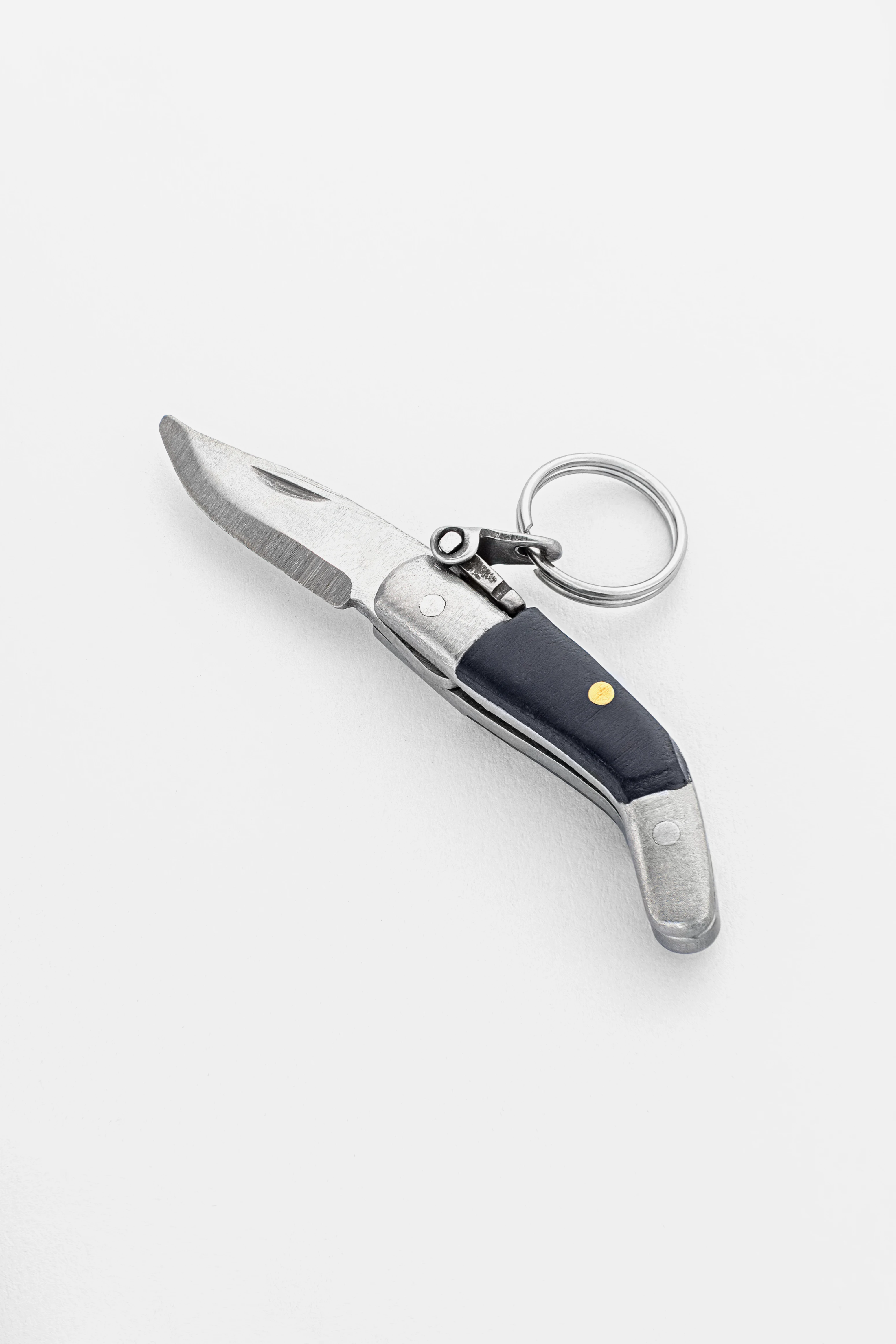
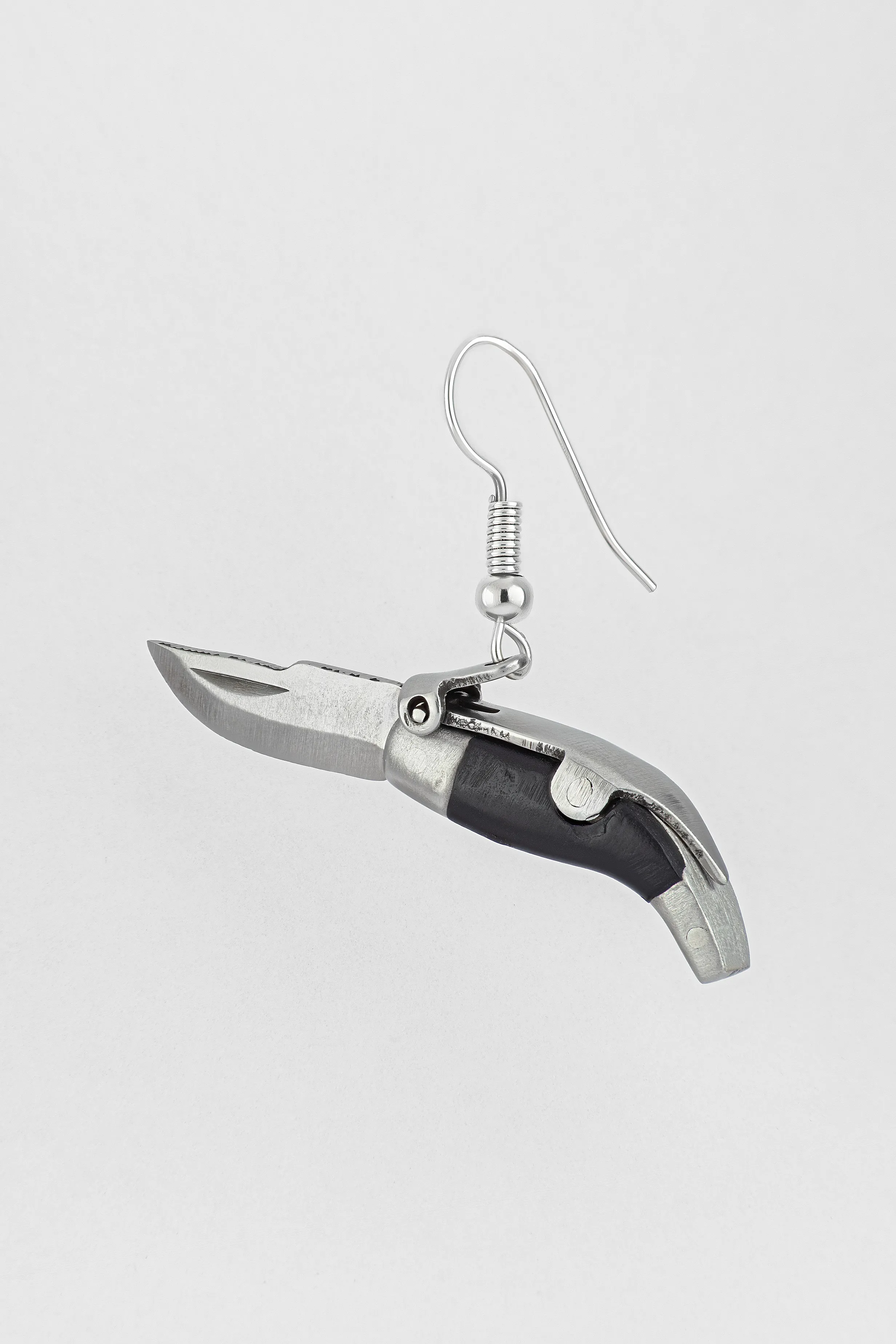
CAPAORA mini knife pendant
The 18th-century Spanish navaja in miniature: 40 mm of stainless steel, a real folding mechanism and a Palanquilla lock that clicks. An affordable gift to remember.
Authentic · Ships from Spain · 14-day returns
Psychology of Choice: Why We Buy What We Buy
The First Impression Comes Fast
Our first aesthetic judgment about an object forms almost instantly, faster than we can consciously process what we see. In that moment, the brain takes in overall form, proportions, and balance. And this first impression tends to be remarkably persistent: even extended viewing rarely overturns the initial reaction.
This is precisely why form is so important. It operates at the level of first impression. Stones, details, and textures are noticed later, upon closer examination. But the "like it / don't like it" feeling has already taken shape.
This has practical consequences for buying: trust your first impulse. If a piece feels right in those first moments, the form is probably working. If the first impulse is neutral or negative, stones, brand names, and discounts will rarely reverse that fundamental feeling.
Tactile Hunger
In the digital age, we spend most of our day touching smooth screens. The same texture, the same temperature, the same sensation. Against this backdrop, a tactilely rich object becomes a source of sensory pleasure.
That is precisely why form-centric pieces with their textures, curves, and metal warmth evoke such strong resonance. They satisfy tactile hunger, offering a diversity of sensations that the digital world cannot provide.
Emotional Attachment
Psychologists have established that emotional attachment to an object forms through three pathways. Through the ritual of use: daily putting on and taking off create habit and connection. Through sensory memory: the specific weight, temperature, and texture of the object become inscribed in body memory. Through narrative: the purchase story, the occasion, the associated memories.
Form-centric pieces are especially strong on the second parameter. Their complex, tactilely rich forms create a unique sensory "imprint" in memory. You can close your eyes and identify your ring by touch alone from a dozen others. That is impossible with a flat, standard piece.
The third pathway, narrative, also works in favour of form-centric jewellery, though in a non-obvious way. The story of the selection itself becomes part of the emotional attachment. The more considered the purchase, the deeper the bond.
Interestingly, the attachment to form-centric pieces often proves stronger than the attachment to pieces with large stones. A stone impresses at the initial stage (the wow effect) but does not create tactile intimacy. Form works more quietly but more deeply: it builds a bond through daily micro-interactions, through the habit of weight and sensation on the skin, through the pleasure of touch.
Research from consumer psychology suggests that objects we interact with physically (not just visually) generate stronger emotional bonds. A form-centric ring that you unconsciously turn on your finger during a meeting, that you slide off and on while thinking, that you stroke with your thumb while reading: these micro-interactions weave the piece into the fabric of your daily life in a way that a look-but-don't-touch piece simply cannot.
Form and the Digital Age: Why the Trend Is Accelerating
Digital Contrast
The more time we spend in virtual space, the more valuable things that exist only in the physical world become. A piece of jewellery with deep form cannot be fully appreciated on a screen. You must hold it, put it on, feel the weight and texture. In an age when everything is available with a click, the necessity of physical presence becomes not a minus but a plus.
The Photogenic Quality of Form
Paradoxically, jewellery with form priority has turned out to be incredibly photogenic. Voluminous, sculptural forms create an interesting play of light and shadow that reads well even on small smartphone screens.
Unlike small stones (which often "die" in photos, turning into a glittery mush), pure form preserves its character at any image size. A statement ring is recognisable in Stories, in Reels, and in small profile pictures. This makes form-centric jewellery ideal for the era of visual content.
The NFT Disappointment and the Return to the Material
The NFT boom and digital art of the mid-2020s promised a revolution in value perception. But for most people, a digital object never became emotionally equivalent to a physical one. Disappointment in "virtual assets" spurred interest in things you can hold in your hands.
Tellingly, even tech entrepreneurs who were recently investing in digital art have begun collecting physical jewellery objects. For them, this is not a departure from technology but a complement. The digital world offers convenience and speed. The physical world offers a sense of reality, tactile pleasure, and emotional depth.
Practical Guide: Choosing Form-Centric Jewellery
Balance
Visual and physical. The piece should look balanced (even if deliberately asymmetric) and feel comfortable. Simple test for rings: put it on, make a fist, move your fingers. Does anything bother you? Does it spin? For earrings: turn your head, lean forward. Earrings should move naturally without pulling the lobe.
Surface Quality
Run your finger over all surfaces. Smooth? No roughness, unevenness? Look at the piece in light from different angles: no dents, bubbles, inconsistent thickness? A quality form must be impeccable from all sides, including the inner (invisible when worn) surface.
What to Ask the Seller
How is this made? Casting or stamping? 3D printing or handwork? What surface treatment? Casting generally produces better forms than stamping.
What exact metal and alloy? Not just "gold" but which karat: 14K or 18K? White gold with what coating? Will the rhodium need renewal?
How do I care for it? Especially important for pieces with complex textures or voids. Can I wear it constantly? Wash hands, shower?
Is there a warranty? What does it cover? What if the piece deforms or loses its lustre? Is there service: cleaning, polishing, repair?
Leave your email, we'll send your discount code. No spam, unsubscribe anytime.
The code arrives by email, valid on your first order.
Care Guide for Complex-Form Jewellery
Regular Home Cleaning
The procedure is simple: warm (not hot) water plus mild soap (baby soap or dish soap without abrasives). A soft toothbrush for hard-to-reach spots (voids, textures). Rinse thoroughly, dry with a soft cloth (microfiber is ideal).
For daily-wear pieces, cleaning every two to four weeks is recommended. For pieces with textures or voids, more frequently, since dirt accumulates faster there.
What never to use: aggressive chemicals (bleach, ammonia), abrasive products (whitening toothpaste, baking soda), ultrasonic baths for pieces with voids or delicate elements (vibration can damage the construction).
Professional Cleaning
Every 6 to 12 months, depending on wearing intensity. A jeweller will perform ultrasonic cleaning (for solid pieces), steam cleaning, polishing to restore lustre, and a structural integrity check for cracks and deformations.
For white gold: the rhodium plating wears off over time (typically 1 to 3 years depending on wearing intensity). Professional rhodium renewal restores the piece's bright white colour.
A professional jeweller also serves an important diagnostic function during cleaning. They will examine the piece for micro-cracks, loosened settings (if stones are present), deformations, and other potential issues. Better to catch them early than to lose a stone or break a ring at the worst possible moment.
Proper Storage
Rule number one: every piece separate. Gold is softer than platinum and can scratch. Voluminous pieces with protruding parts can deform thin ones.
Optimal options: a jewellery box with soft compartments, individual pouches of soft fabric, individual cases for especially valuable pieces. The storage location should be dry, out of direct sunlight, and not in the bathroom (humidity and temperature fluctuations harm many alloys).
For travellers, specialised jewellery rolls or pouches with individual compartments are recommended. These protect pieces from contact with each other and from the jolts of transport. Form-centric jewellery with its exposed surfaces is especially grateful for careful storage.
A tip that many jewellers offer: place an anti-tarnish strip in your jewellery box if you own silver pieces. These small strips absorb sulphur compounds from the air and significantly slow tarnishing. They are not necessary for gold and platinum but do no harm.
Seasonal Rotation
Professional jewellers recommend giving pieces "rest." If you have several favourites, rotate them. This reduces wear on each individual piece and, importantly, prevents "habituation." When you skip wearing a piece for a week and then put it on again, you rediscover its beauty as though seeing it for the first time.
For voluminous, tactile pieces, this is particularly relevant. A ring you turn in your hands every day wears at the points of constant contact over time. Rotating between two or three rings significantly extends the life of each.
Seasonal considerations also play a role. Heavy, voluminous forms feel more natural in cold weather: against the backdrop of sweaters, coats, heavy fabrics. In summer, lighter, openwork forms with voids and fine lines are more appropriate. Though this is not a hard rule: a large gold cuff on a tanned arm with a simple white summer dress looks breathtaking.
When to Remove Jewellery
Always remove: in the shower and bath (soap and shampoo leave residue, chlorinated water damages coatings), swimming in pools (chlorine is aggressive to metals) and in the sea (salt causes corrosion), at the gym (sweat, risk of impact and deformation), during housework (contact with household chemicals), and at night (deformation risk, especially for thin pieces).
Advisable to remove: when cooking (especially with dough, which fills every crevice), during heavy physical work, and when applying cosmetics. The simple rule: perfume and cream first, then jewellery.
Metal-Specific Care
Yellow gold 18K. The most "grateful" metal for care. Does not tarnish, does not oxidise, resists most household chemicals. Main issue: softness. 18K gold scratches easily. Micro-scratches over time create a "patina" that some owners even appreciate.
Yellow gold 14K. Harder and more durable than 18K but may slightly tarnish over time due to higher alloy content. Regular gentle cleaning prevents darkening. Overall, a very practical choice for everyday jewellery.
White gold. Almost always rhodium-plated. Rhodium wears off (faster at friction points), revealing the natural tone of white gold underneath, usually yellowish or greyish. Rhodium renewal every 1 to 3 years is a standard procedure.
Platinum. Incredibly durable but also scratches. Unlike gold, platinum does not lose material when scratched but merely "displaces" (the displacement effect). Over time, platinum develops a characteristic network of micro-scratches called "platinum patina." Many connoisseurs regard it as a mark of nobility.
Silver. The most demanding in care. Tarnishes upon contact with sulphur (present in air, sweat, certain foods). Requires regular cleaning. Best stored in airtight bags with silica gel.
Titanium. Virtually scratch-proof, does not tarnish, causes no allergies. Ideal for daily wear. Only drawback: extremely difficult to straighten if deformed (titanium is very springy). Also cannot be resized, unlike gold.
Common Mistakes: What to Avoid
Mistake One: Confusing Size with Form
A large piece is not necessarily form-centric. A big ring covered in stones and decorative scrollwork is about massiveness, not about form. A true form-centric piece can be small: a thin ring with an interesting cross-section profile, a small earring with thoughtful geometry.
Mistake Two: Ignoring the Try-On
A photograph never conveys the feeling of a piece on the body. If possible, always try on. Walk around with it for at least 10 to 15 minutes. Do ordinary things: pull your phone from your bag, button a shirt, type a message.
Mistake Three: Chasing Micro-Trends
Within the broad trend toward form primacy, micro-trends exist: specific shapes at the peak of popularity this season. Choose a form that resonates with you personally, not the form every blogger is showing this month.
Mistake Four: Underestimating the Inside
At purchase, everyone looks at the outer surface. But the inside is equally important. It touches the skin. Comfort depends on it. The quality of interior finishing is a reliable indicator of overall quality.
Mistake Five: Quantity Over Quality
The temptation to buy five "interesting" rings instead of one truly outstanding one is real. But one masterfully designed ring with ideal proportions makes more of an impression (and delivers more wearing pleasure) than a handful of "pretty good" pieces. Better strategy: buy less often, but better.
Glossary of Form-Centric Jewellery
Comfort Fit. Rounded inner surface of a ring, ensuring comfortable fit and easy sliding on.
Statement Piece. A large, expressive piece that serves as the centre of the look.
Negative Space. Voids, slots, and openings in jewellery that are part of the design, not a defect.
Flush Setting. A technique where the stone is set into the metal so its surface sits level with the piece's surface.
Stacking. Wearing multiple rings or bracelets together, often specifically designed for joint use.
Satin Finish. Surface treatment creating a matte, silky sheen.
Brushed Finish. Treatment creating fine parallel lines on the metal surface.
Cuff. An earring embracing the ear along its curve, or a wide bracelet without a clasp.
Web-Fit. A special inner ring form that accounts for the skin webs between fingers.
Mass Balance. Visual and physical distribution of "weight" in a piece.
Visual Weight. Subjective perception of an object's "heaviness" and significance.
Hollow Form. Technique for creating jewellery that looks massive but is hollow inside.
Golden Ratio. Proportion of 1:1.618, considered the gold standard of harmony in design.
PVD Coating. Deposition of a thin material layer in vacuum.
Lost-Wax Casting. The primary technology for manufacturing complex jewellery forms.
Frequently Asked Questions
Is form-centric jewellery only for young people?
No. The core audience is 28 to 55, and many buyers are considerably older. Pure form, unlike "youth" trends, is not bound to age. A sculptural gold ring looks appropriate and elegant on any hand.
Do I need to understand design to appreciate form-centric jewellery?
No. Good form works at a subconscious level. You do not need to know about the golden ratio to feel the harmony of proportions.
Is form-centric jewellery necessarily expensive?
No. A silver or steel ring with thoughtful form can be very affordable. Naturally, higher price ranges offer more complex forms and finer metals.
Will this trend become outdated?
The trend toward pure form is not a seasonal whim. It is a fundamental shift in the perception of jewellery design, supported by technological development, cultural change, and consumer taste evolution. Specific micro-trends within it will come and go (domes today, waves tomorrow, spirals the day after), but the overall primacy of form over decoration will persist.
Where can I find form-centric jewellery?
In major cities, the number of galleries and boutiques specialising in design-oriented jewellery continues to grow. New York's Lower East Side and Williamsburg, London's East End and Hatton Garden, Los Angeles' Arts District, and Portland's Pearl District all harbour independent studios and concept stores. Online, curated platforms increasingly offer selected form-centric pieces. Many designers also sell directly through their own websites. Industry events like Design Miami, London Craft Week, and TEFAF Maastricht are excellent places to discover emerging talent.
How can I tell good casting from stamping?
Cast pieces generally feel heavier and more "solid." Transitions between different levels flow smoothly rather than ending abruptly. Edges are naturally rounded, not sharp-cut. Stamped pieces are often flatter, lighter, and sometimes you can feel fine burrs at the edges. With massive forms, the difference is immediately tactile: a cast ring feels "whole," while a stamped one feels like an assembled shell.
Can form-centric jewellery be personalised with engraving?
In principle, yes, but with care. An engraving on the inside of a ring is unproblematic and a lovely personal detail. An engraving on the outside of a form-centric piece, however, may disrupt the carefully designed surface. Always discuss this with the designer or jeweller who will perform the engraving. Some designers offer subtler personalisation options: a hidden dot, a variation in texture, a small detail on the inside.
Is form-centric jewellery suitable for men?
Absolutely. The form-centric approach is inherently gender-neutral. Pure geometry, volume, and thoughtful proportions carry no gender. Moreover, men often recognise the value of good form even faster than women, especially if they are familiar with the worlds of design, architecture, or technology.
Sustainability and Ethics: Form as an Ecological Choice
In the context of growing attention to ecology and ethical consumption, form-centric jewellery occupies an advantageous position.
Longevity as the Supreme Ecological Principle
The most ecological approach to consumption is not buying more "green" goods but buying less, yet better. A piece engineered for decades of wear has a significantly smaller ecological footprint than five pieces, each of which bores after six months.
"Buy less, buy better" finds its ideal embodiment in form-centric jewellery.
Recycled Metals
More and more form-centric brands work with recycled gold and silver. In terms of quality, recycled precious metals are indistinguishable from freshly mined ones: gold remains gold regardless of origin. But the ecological footprint is significantly smaller.
For form-centric jewellery, recycled metal is the natural choice. When a piece's value lies in its form and craftsmanship, not in the "newness" of the metal, using recycled materials does not diminish perceived value.
The circular economy is also entering the jewellery space. Some brands offer buy-back and reworking programs: an old piece is returned, the metal melted down, and cast into a new form. For the form-centric approach, this is particularly meaningful, since the value lies in the design, not the metal itself. The possibility of "upgrading" a ring (same gold, but a new, more complex form) is an attractive proposition for buyers who wish to unite sustainability and design.
In the US and UK markets, where conscious consumerism has gained significant traction, these sustainability credentials are increasingly important. Younger buyers in particular are willing to pay a premium for ethically sourced, sustainably produced jewellery. Form-centric brands that can demonstrate their environmental commitment through recycled materials, responsible sourcing, and longevity-focused design gain a significant competitive advantage.
Some brands go further still and publish detailed reports on their ecological footprint: energy consumption in production, water usage, carbon emissions. For the growing cohort of environmentally conscious consumers, such information is not just "nice to have" but can be purchase-decisive.
Lab-Grown Stones and Ethical Materials
When form-centric jewellery includes stones (even in a subordinate role), lab-grown diamonds and sapphires are increasingly used. Physically and optically identical to natural ones, but without the ecological and ethical problems of mining.
In the form-centric paradigm, this carries particular significance. When the stone is not the protagonist but merely an accent or textural element, its "naturalness" loses importance. What matters is only its visual and functional role within the overall form.
The lab-grown diamond conversation has shifted dramatically in English-speaking markets over the past few years. What was once seen as a "lesser" option is now viewed by many as the smarter, more ethical choice. For form-centric jewellery, where the stone plays a supporting rather than starring role, the question becomes almost moot. A flush-set 0.1 carat lab-grown diamond that serves as a focal point within a sculptural gold form does its job just as beautifully as a mined one, and the buyer sleeps better knowing it.
Form and Men's Jewellery: A Separate Conversation
The trend toward form-centricity is particularly visible in men's jewellery, which is experiencing a genuine renaissance.
The Male Approach
Men are historically more rational in their approach to objects. They are interested in construction, material, engineering. Form-centric jewellery hits this paradigm squarely: no "cute" symbols or "romantic" stories. Just form, volume, proportions, technology. A language men read intuitively.
Key Categories
Rings. Wide, with volumetric profiles, often with matte or brushed surfaces. Massive but ergonomic. Without stones or with minimal accents.
Bracelets. Full-metal cuffs, chains with volumetric links, minimalist bangles with character.
Pendants. Abstract forms on a chain or leather cord. No crosses, anchors, or medallions. Pure geometry, volume, tactile appeal.
Cufflinks. The classic men's accessory gains new life in form-centric reading. Instead of flat decorative inserts: volumetric, tactile forms.
Gender-Neutral Design
One of the most interesting developments: form-centric jewellery is increasingly designed without gender assignment. Pure form, by definition, has no gender. The same ring can look organic on any hand, adapting to the context of the wearer's body and style.
Brands are responding to this demand by abandoning the division of collections into "men's" and "women's." Instead, pieces differ by size range and width, not by "gendered" aesthetic.
This shift is particularly pronounced among younger consumers. For millennials and Gen Z, binary gender categories in jewellery are as outdated as they are in fashion design. A form-centric ring "for everyone" is not a compromise but a given.
Couples also increasingly embrace this approach: shared rings that are not divided into "his" and "hers" but exist as variations of the same design, distinguished only by size and perhaps a slight proportional adjustment. This reflects a modern partnership understanding: not identical, but equal and attuned to each other.
The broader jewellery industry is moving in this direction, but form-centric jewellery is the vanguard. When form speaks, gender-specific codes become unnecessary. A geometric ring, a sculptural cuff, an organically shaped pendant: they all communicate through proportions, material, and tactility, not through gendered signals.
Some of the most exciting work in this space is being done by independent designers in cities like Brooklyn, East London, Portland, and Berlin, where the maker community has long embraced fluidity in all its forms. Their work is finding audiences far beyond the traditional jewellery market, attracting buyers from the design, architecture, and tech worlds who view form-centric pieces as extensions of their broader aesthetic commitments.
The Future: What Comes Next
The era of pure form is just beginning. The technologies behind it continue to evolve, and the future promises to be fascinating.
Technological Horizon
The development of 3D metal printing will enable forms that seem like science fiction today. The integration of biometrics will allow creating jewellery precisely adapted to a specific body through 3D scans. Smart materials (shape-memory alloys) may adjust geometry depending on temperature, literally "adapting" to the wearer.
AI is also entering jewellery design, but not as an "automatic designer." Rather, as an optimization tool. AI can calculate ideal wall-thickness distribution for maximum strength at minimum weight, predict how a form will look under different lighting, and optimize the casting process. But the creative decision about what the form should be remains with the human.
Next-Level Personalisation
Not initial engraving (that is yesterday's news) but form mathematically derived from the client's data. A ring whose proportions encode important dates. A bracelet whose wave form replicates the vocal "signature" of a person's name.
Imagine: you visit a boutique, the master scans your hand, analyzes finger proportions, hand shape, bone width. Based on this data, an algorithm generates a ring form perfectly adapted to your anatomy. Not just selected by size but engineered for your specific hand. This sounds futuristic, but all components already exist. It remains only to assemble them into a single, accessible process.
Some forward-thinking studios are already experimenting with parametric design: algorithms that, based on a few personal inputs (finger measurements, aesthetic preferences, wearing habits), generate a range of form variants from which the client selects. The designer curates and refines, but the starting point is data-driven. It is the synthesis of technology and creative vision, and it represents the logical next step for the form-centric movement.
In the American market, where personalisation is already deeply embedded in consumer culture (from custom sneakers to bespoke meal plans), the appetite for personalised form-centric jewellery is strong. Early adopters, typically in the tech and design communities, are already commissioning pieces through this process. As the technology becomes more accessible and the cost comes down, it will spread to the broader market.
The British market, with its strong tradition of bespoke tailoring and commissioned craftsmanship (Savile Row, Jermyn Street), is equally receptive. The concept of having something made specifically for you, at a premium but not an unreasonable one, is deeply familiar to British consumers. Form-centric jewellery fits naturally into this tradition of considered, personal commissioning.
Sustainability Through Form
Optimized constructions using minimum metal for maximum visual effect. Development of recycled metals and alternative materials. And a focus on longevity as the supreme ecological principle: one piece for a lifetime instead of dozens of "fast" jewellery items.
Blurring Boundaries
The boundaries between jewellery and sculpture, between accessory and art object, between functional and conceptual will continue to dissolve. Pieces will emerge that are hard to classify: is this jewellery or a work of art? The answer: both simultaneously.
Form and Social Media: How the Trend Spreads
You cannot discuss modern trends without acknowledging the role of social media. Form-centric jewellery and visual platforms have turned out to be ideal allies.
Video Beats Photography
A static photograph does not convey the primary advantage of a form-centric piece: its volume, tactility, and play with light. Video solves this problem. Short clips in which a hand turns a ring, light glides over a voluminous surface, and fingers trace a texture have become one of the most effective formats for jewellery content.
It is no coincidence that the form-centric jewellery trend coincided with the rise of short video across all platforms. The format is ideal: 15 to 30 seconds, one object, minimal text, maximum visual impact. The voluminous form tells its own story.
The ASMR Effect
Videos in which someone slowly turns a heavy gold ring, strokes its surface, taps a nail against the metal collect millions of views. This works at the intersection of visual aesthetics and ASMR sensitivity. The sound of metal, the rhythm of movements, the tactile imagination: all of it together creates a sensory experience even through a screen.
Form-centric jewellery is ideal for such content because it has something to show. Volume, weight, texture, light and shadow: all of this comes across compellingly in motion. A flat, stone-set ring offers the camera little to work with. A sculptural, voluminous ring is a cinematic protagonist: it changes with every angle, tells a new story with every turn.
The phenomenon extends beyond social media. Brick-and-mortar stores have begun designing their display environments to encourage touch. Progressive jewellery boutiques replace glass cases with open displays where customers can handle pieces freely. Some offer "tactile bars" where visitors can pick up, turn, and feel pieces without any purchase pressure. For form-centric jewellery, this approach is transformative: the moment a potential buyer picks up a ring and feels its weight, the form does the selling.
The audiovisual dimension also matters in person. The satisfying "click" of a well-made ring on a marble countertop. The soft swish of a cuff bracelet being slid onto the wrist. The gentle warmth of gold taking on body temperature. These sensory details, impossible to convey through a screen, become the decisive factor in physical retail. They explain why, despite the growth of e-commerce, physical jewellery retail is surviving and, in the form-centric segment, thriving.
The Aesthetics of Quiet Luxury
The "quiet luxury" visual trend on social media has become a powerful driver of form-centric jewelry. Content with minimal details, calm palette, and a single accent object rhymes perfectly with jewelry whose beauty lies in form rather than sparkle. The full case for quiet luxury jewellery is worth reading on its own: what it is, how it reads to other people who recognise the codes, and why it has displaced logos at the top of the market.
Form-centric brands use this to their advantage. Instead of loud advertising with "70% off" promises, they create atmospheric visuals: a hand slowly turning a ring, a ray of light gliding over a voluminous surface, a close-up of texture. This content does not sell directly. It creates mood, shapes associations, builds an emotional connection with the brand long before any purchase.
User-generated content deserves special mention. When real owners film their jewellery in everyday context (over a coffee cup, at a desk, while travelling), it works more powerfully than any advertisement. Form-centric jewellery looks natural and organic in such content: it integrates into life rather than sticking out as a foreign element.
Educational Content
Another notable trend: the growth of educational content about jewellery. Designers and brands increasingly show the creation process, from 3D model to finished piece. They explain why specific proportions work, how mass balance is calculated, why a particular fillet radius is chosen.
This content shapes a more informed audience. People who understand how much labour and thought stand behind a good form are willing to pay a fair price for it. Education creates demand.
"Before and after" formats are especially popular: the raw casting alongside the finished piece. The difference is striking: the viewer sees how much handwork separates the rough form from tactile perfection. This instantly explains what the premium price pays for.
Even negative content works for the trend. Comparison videos showing "cheap vs. expensive," where the difference in form quality, proportions, and finishing is plainly visible, generate enormous interest. Buyers who have seen this difference can never "unsee" it: their eye is forever calibrated to recognise quality.
The rise of YouTube channels and podcasts dedicated to jewellery craft has created a new generation of informed consumers. Shows like "The Bench" (about goldsmithing technique), Instagram accounts that document the design process from sketch to finished piece, and TikTok creators who demonstrate the difference between good and mediocre casting have collectively built an audience that understands what it takes to create excellent form. For form-centric brands, this educated audience is ideal: they appreciate the work, they understand the pricing, and they become loyal advocates.
Communities and Connoisseur Clubs
Online communities of people who value design and craft are forming around form-centric jewellery. These communities discuss specific designers, compare execution techniques, share discoveries. In their culture, they are closer to watch-enthusiast communities or industrial-design forums than to traditional "jewellery" forums where carats and hallmarks are discussed.
These communities also function as a "quality filter": members share experiences, warn about disappointments, and recommend vetted artisans and brands. In an environment where traditional jewellery criticism barely exists, such communities become the most reliable source of independent assessments.
Platforms like Reddit (r/jewellery, r/designporn), specialised Discord servers, and Facebook groups dedicated to contemporary jewellery are becoming important spaces for discovery and discussion. The conversations in these communities are sophisticated, nuanced, and remarkably generous: experienced collectors mentor newcomers, share their mistakes as freely as their discoveries, and collectively raise the bar for what the market demands.
Over time, these communities may evolve into full-fledged collector clubs, similar to those that exist in the worlds of watches, wine, and contemporary art. With their own ratings, auctions, and value systems. This would give form-centric jewellery additional institutional weight and cultural legitimacy.
Form-Centric Jewellery and the Fashion Industry: Points of Intersection
Jewellery design does not exist in a vacuum. It is closely linked to fashion, and the form-centric trend reflects broader processes in the fashion industry.
The Parallel with Deconstruction in Fashion
In fashion, deconstruction (dismantling conventional constructions, breaking rules, working with body form instead of pattern templates) has been a major theme since the 1990s. The jewellery world arrived at an analogous process two decades later.
Now the jewellery world is exploring the same territory: abandoning templates, taking an individual approach to form, working with the body as a unique "canvas."
Runway Collaborations
More and more fashion houses are engaging form-centric jewellery designers to create accessories for runway collections. These collaborations set the tone: large, sculptural pieces on models form the visual standard that then trickles down to the mass market.
Interestingly, runway jewellery is becoming more realistic. Where runway jewellery was once deliberately impractical (huge, unwearable constructions "for beauty"), designers now strive to create forms that can be adapted for real life. The form-centric approach allows this: a powerful sculpture can be ergonomic.
Minimalism 2.0
If Minimalism 1.0 meant "fewer details," Minimalism 2.0 means "more form." This is an important distinction. Old minimalism simplified. New minimalism does not simplify: it concentrates. Instead of removing elements until nothing remains, it removes the superfluous so that form can resonate at full power.
In the fashion world, this manifests in the return of sculptural silhouettes, voluminous accessories, and tactile materials. Jewellery integrates naturally into this aesthetic, becoming the final chord of a look.
Capsule Wardrobe and Capsule Jewellery
The capsule wardrobe concept (a minimal set of interchangeable pieces) has spawned an analogous approach to jewellery. Capsule jewellery: 5 to 7 key pieces covering all life situations. Each of impeccable quality, with thoughtful form, timeless aesthetic.
An approximate capsule composition: one statement ring with expressive form for everyday wear. A pair of mid-expressiveness earrings suitable for office and evening. One cuff bracelet or minimalist bangle. One thin chain with an abstract element. One or two thin stacking rings for light layering. One pair of statement earrings for special occasions.
Do not build the capsule all at once. It is a process that may stretch over years. And therein lies its charm: every new purchase is considered, every new element fits into the overall story. Haste is the enemy here.
The capsule approach also simplifies daily life. Instead of standing before an overflowing jewellery box wondering "what fits today?", you reach for one of the few pieces that go with everything. Fewer decisions, more enjoyment. Just as with the capsule wardrobe, reduction is not deprivation but liberation.
The concept resonates particularly well in the current cultural moment. The popular decluttering philosophies of recent years, the "buy less, buy better" ethos of conscious consumerism, the growing rejection of fast fashion: all these cultural currents support the idea of a curated, intentional jewellery collection rather than an accumulation of impulse purchases.
For practical purposes, start building your capsule with a ring. It is the piece you see and feel most often: it is constantly in your field of vision, touched by the fingers of the other hand. Choose one ring that becomes the "anchor" of your capsule. Then select the remaining elements, guided by its style: not copying but rhyming. If the anchor ring is soft and organic, the earrings should also be from the "organic" family. If the ring is geometric and crisp, let the earrings support that graphicness.
Over time, you will discover that your small collection provides more joy and more styling possibilities than a drawer full of random purchases would. Each piece earns its place. Each piece tells a story. And together, they tell your story.
Form-Centric Jewellery and Age: Beauty for a Lifetime
One of the greatest advantages of the form-centric approach: it has no age restrictions. Pure form looks appropriate and elegant at any age, adapting to the changing context of body and style.
Youth: Boldness of Form
In young years, more radical, avant-garde forms are affordable. Large statement rings, experimental cuffs, asymmetric earrings. Young skin and a mobile body carry expressive pieces organically. This is the time for experiments and the search for your own formal language.
Maturity: Confidence of Form
With age, preferences often shift toward more confident, calmer forms. No less expressive but with a different intonation: not "shout" but "statement." Classic voluminous forms, laconic lines, noble textures. A mature hand with character (fine lines, expressive joints) often benefits from the contrast with a pure, precise form even more than a young, smooth hand.
This is an area where form-centric jewellery particularly excels. While trend-driven jewellery can feel "too young" on a mature hand (nothing ages a person faster than trying too hard to be current), form-centric pieces are ageless by nature. They do not try to be young or old. They simply are. And they grow more interesting as the hand that wears them accumulates character.
Elegant Age: Wisdom of Form
At a later age, form-centric jewellery acquires special meaning. Pieces become "life companions," objects with history, accumulated patina, and emotional layers. A ring you have worn for 30 years tells more about you than any new acquisition.
Form-centric jewellery at an elegant age is also a form of self-affirmation. It says: "I know what good design is. I do not need trends. I wear what has accompanied me for decades, and it is still relevant." This attitude commands respect and reflects precisely the values the form-centric approach embodies: timelessness, quality, inner confidence.
There is a reason why the most photographed hands in fashion tend to belong to older women: hands with rings they have worn for decades, with the patina of real life, with the quiet authority of long acquaintance. These images resonate because they tell a story that no new purchase can match. Form-centric jewellery, designed to be worn for a lifetime, is designed for exactly these moments.
Passing Down as Heirloom
Form-centric jewellery is ideal for intergenerational transfer. Pure geometry is not tied to the fashion of a particular era. Timeless form looks current even after 50 years. Quality execution guarantees physical longevity.
A piece that passes from grandmother to granddaughter or from father to son becomes a family heirloom. Not because it is "antique" but because it is still beautiful, still comfortable, still delivers tactile pleasure. And carries within it the memory of the person who wore it before you.
The concept of jewellery as legacy has always existed, but form-centric pieces bring a new dimension to it. Traditional heirloom jewellery often carries the weight of obligation: "I should wear grandmother's ring because it was grandmother's, even though it's not really my style." Form-centric heirlooms carry a different weight: "I love wearing grandmother's ring because it's beautiful, it fits perfectly, and it happens to be grandmother's too." The heirloom quality becomes a bonus, not a burden.
For families that are just beginning to build their jewellery legacy, form-centric pieces offer the best possible foundation. A ring chosen in 2026 for the quality of its form, not for the fashion of its moment, will be just as wearable and just as beautiful when it reaches the hands of someone born decades from now. That is a gift of material value and of aesthetic continuity.
Form in the Context of World Cultures: A Global View
The trend toward form primacy is not limited to one geography. It manifests differently across cultural contexts, enriched by local traditions and aesthetic codes.
European Schools
Europe, with its long history of jewellery art, quickly embraced the form-centric approach. Parisian ateliers adapted their mastery to the new aesthetic. Scandinavian brands found themselves in a winning position: their aesthetic of clean lines and functional minimalism aligned perfectly with the new trend.
The Italian school contributed its sensuality: warmer, more "bodily" pieces, as though made for touch. The Spanish tradition added drama and contrast. The combination of massive gold with dark surfaces, the play between rough and refined, the passion for tactility fit organically into the form-centric paradigm.
The German school with its engineering aesthetic, embodied by Pforzheim, the Bauhaus tradition, and a systematic approach to design, proved a natural ally. German designers bring a rigour to working with proportions and materials that other schools do not match in consistency.
The British tradition of silversmithing and the Arts and Crafts legacy bring particular attention to surface quality and honest expression of material. London, New York, and Los Angeles have become hotbeds of independent form-centric jewellery design, with emerging designers pushing boundaries that established houses are only beginning to explore.
Eastern Aesthetics: The Influence of Japan and Korea
Japanese jewellers bring the philosophy of "ma" (space between objects) and the wabi-sabi concept. Their work with negative space is often more refined and poetic than Western counterparts. Every void is considered both structurally and philosophically.
The Korean jewellery school, which has gained strength in recent years, attracts attention with experiments in unexpected forms. Korean designers often work at the intersection of jewellery and textile design, creating forms reminiscent of fabric folds, knots, or waves.
Both traditions value "silence" in design: the moment when form speaks so softly that you must listen closely. This quality is increasingly sought on the global market, weary of "shouting."
The Chinese jewellery market is also transforming. The young generation of Chinese buyers (particularly in Shanghai, Beijing, and Shenzhen) is increasingly moving away from traditional preferences (999-gold, jade, symbolic forms) toward modern design with form priority. This is a massive and rapidly growing market that is beginning to develop its own aesthetic of form-centric jewellery, synthesizing Western design principles with traditional Chinese sensitivity to proportions and void.
The cross-pollination between these cultural traditions is one of the most exciting aspects of the form-centric movement. A designer in Brooklyn might draw inspiration from Japanese ma philosophy. A jeweller in Milan might incorporate biomechanical principles from a Korean design lab. A Spanish master might collaborate with a Japanese metalsmith. These exchanges are producing hybrid forms that no single tradition could have generated alone, and they point toward a truly global form language that transcends cultural boundaries while honouring cultural roots.
The Middle East and India: Adaptation Through Volume
In regions with traditionally rich jewellery cultures, the transition to the form-centric approach proceeds differently. Here, stones and gold carry deep cultural significance, and a complete rejection is impossible. But form-centric thinking penetrates through an emphasis on volume.
New-generation Indian designers create large, sculptural forms, integrating stones as textural elements rather than as an end in themselves. Gold works massively and tactilely. An interesting synthesis: traditional love of luxury plus modern understanding of form.
In the Gulf region, form-centric jewellery has found an audience among young buyers seeking to distinguish themselves from their parents' generation with its classic "more carats equals better" approach.
Latin American jewellers contribute a particular warmth and nature connection to the form-centric trend. Forms inspired by tropical flora, volcanic landscapes, and ocean waves are not literally copied but abstracted through the lens of modern design.
Send a friend a discount code, they save on their first order.
A Longer View: Why Good Form Stays Relevant
For those who think about jewellery as something to keep and enjoy for many years, the form-centric trend has a lot to offer.
Why Form-Centric Jewellery Keeps Its Appeal
Traditionally, a piece's value on the secondary market was determined mainly by metal weight and carat count. Design was practically disregarded: the ring was melted down, the stones extracted and sold separately.
Form-centric jewellery changes this logic. Its value lies not (or not only) in the material but in the design and execution. A well-designed ring by a recognised designer is appreciated for its craftsmanship and authorship, much like product design or small-scale sculpture, and tends to keep its appeal long after trend pieces feel dated.
The Design World Analogy
Consider what happens in product design. A chair by Charles Eames, produced in the 1960s, is worth far more than its material value (plywood and leather). People pay for design, for history, for quality of form. The same logic is beginning to apply in jewellery.
The comparison extends beyond furniture. A vintage Braun radio by Dieter Rams, a first-edition Noguchi coffee table, a Memphis Group vase from the 1980s: these objects command prices that have nothing to do with their material content and everything to do with the quality of their form and the significance of their design moment. Form-centric jewellery is entering this same category.
In the art world, interest in "wearable art" and "art jewellery" has been growing steadily. Contemporary jewellery is increasingly discussed and exhibited alongside other design disciplines, reflecting a growing recognition that a finely crafted gold ring can be as valid a work of art as a bronze sculpture.
Pieces by designers who are currently shaping the language of form-centric jewellery are the kind of work that tends to be remembered and sought out by people who care about design history. There are no promises here, only the simple observation that thoughtful form rarely loses its interest.
Estate and vintage form-centric jewellery is its own small world of discovery. Pieces from designers who helped shape the movement carry the appeal of authorship and craftsmanship, quite apart from their metal content.
Practical Recommendations
Author. Buy from designers with an established reputation and recognisable style. An authorial signature (literal or stylistic) makes a piece more meaningful to own.
Edition. Limited series and unique pieces tend to be cherished more than purely serial ones.
Documentation. Certificates of authenticity, photos of the creation process, packaging: all of this adds to the story of a piece. Keep everything.
Gold and platinum. Precious metals are durable, lasting choices, and the material itself has a recognised price quite apart from the design. Silver and steel are more modest in this respect.
Form-Centric Jewellery and Travel
For frequent travellers, form-centric jewellery offers particular advantages.
Style Universality
Jewellery with pure form is not tied to a specific cultural aesthetic. It looks equally organic in Tokyo and Madrid, in New York and Copenhagen. It is "visual Esperanto," understood at any point in the world. For the traveller who wants to look appropriate in any context, this is a serious advantage.
Compactness and Security
One good form-centric ring and a pair of earrings replace an entire jewellery case of "themed" pieces. Fewer things with you, less risk of loss. Yet each piece is expressive enough to create a complete look.
Buying Jewellery While Travelling
If you buy form-centric jewellery abroad, pay attention to a few points. Karat standards: they vary (14K and 18K in the US, 585 and 750 in Europe). Warranty: does it apply in your home country? Returns: international returns can be complicated and costly. Customs: duties may apply when importing jewellery, check the limits in advance.
The best jewellery finds while travelling happen not in tourist zones but in neighborhoods where local artisans live and work. Small studios and ateliers often offer unique form-centric pieces at more reasonable prices than fashion boutiques in the centre.
Spain, for example, offers a rich palette of jewellery discoveries off the tourist trail. Cities with deep metalworking traditions like Cordoba, Toledo, and Albacete harbour workshops where jewellers in the third and fourth generation work, combining traditional techniques with modern form vision.
Form-Centric Jewellery and Your Skin
The tactile contact with skin is arguably the most important point of interaction between jewellery and body.
Allergy and Sensitivity
Form-centric jewellery, where metal constitutes the primary visual mass (without stones and coatings that mask it), is particularly sensitive to allergy questions. If you have a nickel allergy (the most common jewellery allergen), choose metals with minimal or no nickel content: 18K gold, platinum, titanium, niobium, tantalum.
White gold requires special attention: some alloys contain nickel to achieve the white colour. Alternative: white gold with palladium instead of nickel, entirely hypoallergenic.
Patina and Character
Many form-centric pieces acquire patina over time: a network of micro-scratches, slight darkening in recesses, gentle "smoothing" of textures. This is not a defect but a sign of life. Patina makes the piece unique, "yours."
Some designers deliberately engineer their pieces with patina in mind. They choose textures and finishes that become more interesting over time, not worse. Matte surfaces "break in" more beautifully than mirror finishes. Hammered texture conceals minor damage. Satination softly evolves into a "lived-in" surface.
Whether to embrace or fight patina is a personal choice. But knowing that patina is inevitable and can be beautiful helps build a healthy relationship with your jewellery.
There is a useful concept from the Japanese tradition called "kintsugi": broken ceramics are repaired with gold, and the cracks become the most beautiful part of the piece. Analogously, the patina on a form-centric piece can become its "gold crack," a mark of lived life that enriches the object rather than diminishing it. Many collectors explicitly prefer pieces with natural aging over freshly polished ones.
In American and British culture, where "vintage character" in leather goods and "natural patina" on furniture are positively valued, this concept finds easy acceptance. A gold ring worn for 20 years, showing its history on its surface, possesses a dignity that a new ring cannot.
Climate Influence
Climate affects the interaction between jewellery and skin. In hot, humid climates, metal tarnishes faster (due to sweat and moisture), and skin beneath the piece may become irritated. Form-centric pieces with voids and openings have an advantage here: they provide ventilation.
In cold climates, metal feels icy at first contact. Not a problem (metal warms from the body quickly), but worth considering when choosing between thin and massive forms. Many wearers in northern climates report that the moment of "warming up" their ring on the finger has become a cherished part of the morning ritual: the cool metal gradually taking on body heat, signaling the start of the day.
With sharp temperature fluctuations (stepping from air conditioning into heat, or vice versa), condensation may form on the metal surface. This is not dangerous but can accelerate tarnishing of silver or less resistant alloys. If you live in a climate with extreme fluctuations, factor this into your metal choice: gold and platinum are virtually impervious to temperature changes.
UV light also affects certain coatings and materials. PVD coating is UV-resistant, but rhodium plating on white gold may yellow under constant sun exposure. If you spend a lot of time outdoors, choose metals and finishes that are UV-resistant, or be prepared for more frequent servicing. Many wearers report that the moment of "warming up" their ring on the finger has become a cherished part of the morning ritual.
Buying it as a gift? Each one arrives ready to give.
 A branded Zevira box and a little card come with every order.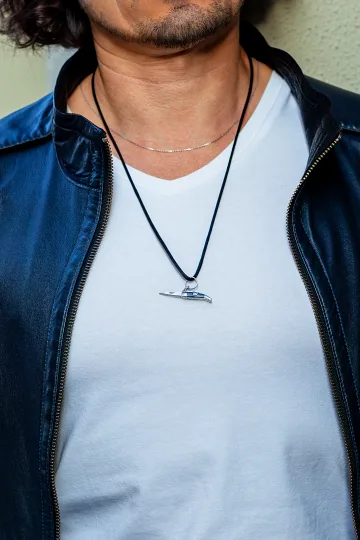
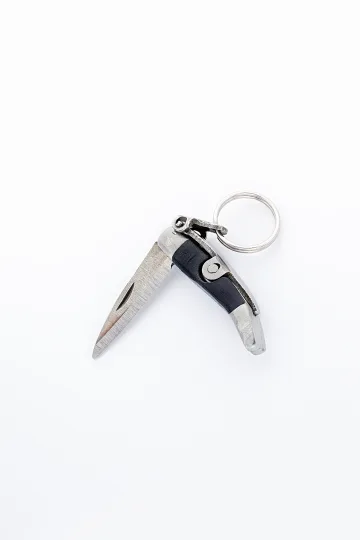


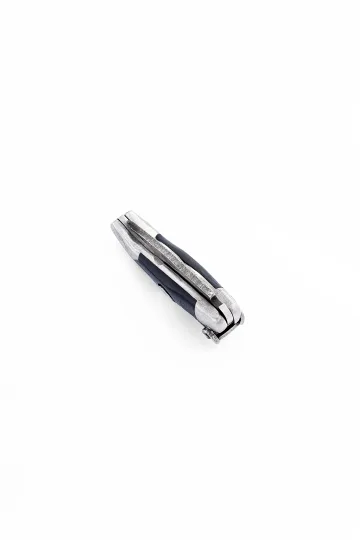

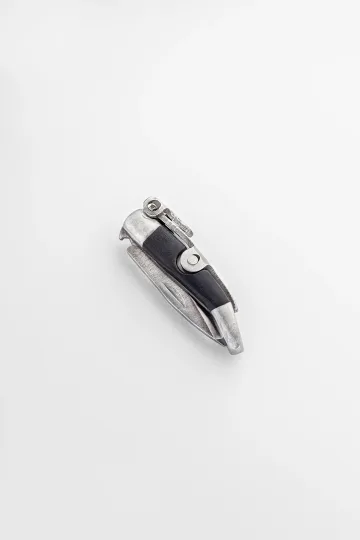
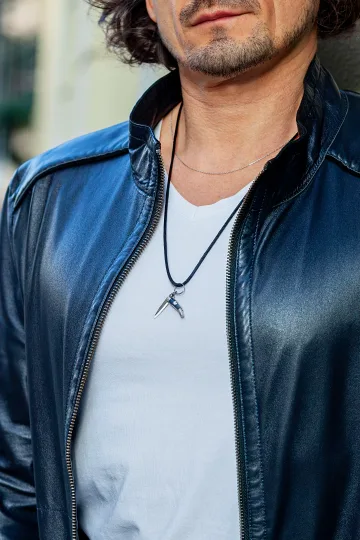

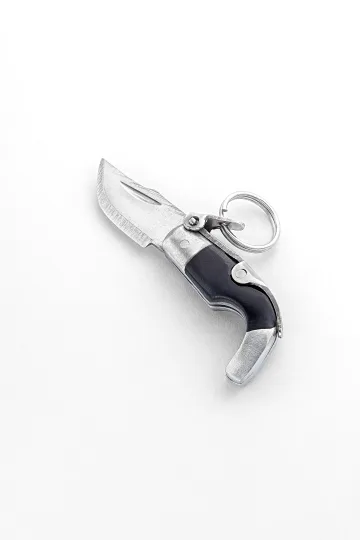
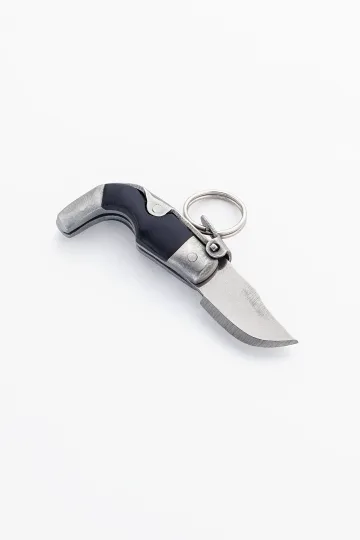
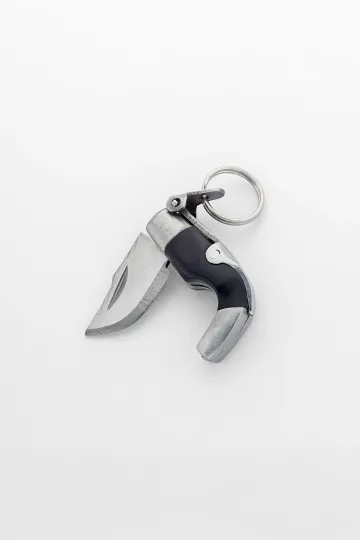
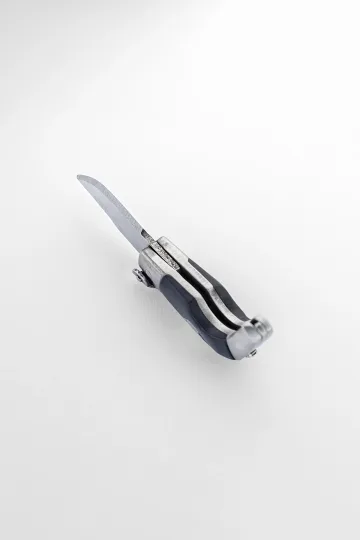
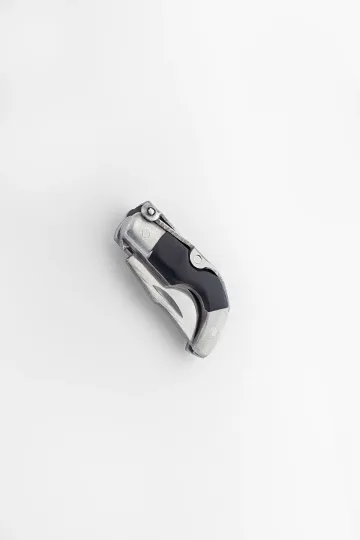
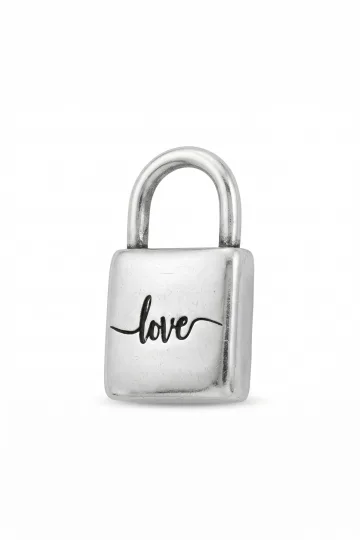
Form-Centric Jewellery as a Gift
Choosing jewellery as a gift is always challenging. Choosing form-centric jewellery is even more so, because form is deeply subjective. But a few principles help avoid missteps.
Universal Forms
If you are unsure of the recipient's taste, choose universal forms: classic ovals, soft arcs, understated rings with comfort fit. These forms appeal to the vast majority because they tap into fundamental aesthetic preferences laid down by evolution.
Avoid overly avant-garde, experimental forms unless you know for certain the recipient will appreciate them.
Size Matters (and Not the Stone Kind)
For rings: find the exact size in advance. This is critical. For earrings: consider whether the person wears earrings regularly (if not, start with light and compact ones). For bracelets: wrist circumference is individual, cuffs are especially size-sensitive.
If you are uncertain about size, consider a pendant or chain. They are less dependent on exact body measurements.
Gift Certificate Is Not a Cop-Out
If you know the person appreciates form-centric jewellery but are unsure about a specific choice, a gift certificate for a quality jewellery boutique is an excellent solution. It provides freedom of choice while demonstrating your understanding of the recipient's taste.
Presentation
For form-centric jewellery, presentation matters especially. Let the recipient take the piece in hand, turn it, feel the weight and texture. Do not rush the try-on. The first tactile contact shapes an impression that is hard to overstate.
Buying Form-Centric Jewellery Online: Practical Notes
E-commerce plays an increasingly important role in jewellery purchases. For form-centric pieces, some special considerations apply.
What Works Well Online
Repeat purchases from a known brand, whose sizing and style you already know, work excellently online. So does exploring new brands and designers: online shops and social media channels offer a convenient overview.
Thin chains and pendants are the easiest category to buy online, as they are less size-dependent than rings. Studs and small earrings also translate well to online purchase.
What Is Difficult Online
Rings are the trickiest category for online purchase. Form-centric rings, especially asymmetric ones or those with variable profiles, are sensitive to exact fit. Half a millimetre of difference can completely change the wearing experience.
Large earrings and cuffs are also problematic: how they sit on a specific ear can only be determined by trying on.
What to Look For
Seek out shops that show videos, not just photos. Videos from different angles, ideally on a hand or ear, give a much better impression than static images.
Read the return policy carefully. Many countries offer consumer protection periods for online purchases, but check the specifics.
Look for detailed product descriptions: material, karat/fineness, dimensions, weight, manufacturing method. The more information a shop provides, the more serious it typically is.
If you discover a piece online that fascinates you, try to find out whether there is a physical retailer near you that carries the brand. The combination of online research and physical try-on is the optimal purchasing strategy for form-centric jewellery.
The best approach is often a hybrid one: use online platforms for discovery and education (following designers on Instagram, reading their process posts, watching studio videos), then visit a physical space for the final decision. Many form-centric brands now offer "virtual try-on" experiences using augmented reality, which can bridge the gap, but nothing truly replaces the feeling of metal on skin.
For American buyers, the growing network of independent jewellery galleries in cities like New York (think the Lower East Side, not Fifth Avenue), Los Angeles (the Arts District), and Portland (the Pearl District) provides excellent opportunities to discover form-centric work in person. These spaces often host the designers themselves for trunk shows and workshops, adding the educational dimension that enriches the purchasing experience.
In the UK, the Goldsmiths' Fair, London Craft Week, and the growing number of design-led jewellery galleries in East London and Hatton Garden offer similar opportunities. The British buying experience tends to emphasise the relationship between maker and buyer, and form-centric jewellery, with its emphasis on craft and intentionality, fits this model perfectly.
Conclusion
The jewellery trends of 2026 mark the industry's coming of age. Form steps out from the shadow of decoration and becomes the absolute dominant. Architectural thinking, dense 3D volume, phenomenal tactility, and deep connection with body anatomy form a new visual language.
It is the language of honest design that needs no special effects. It is calm, self-assured, and built to last decades.
Jewellery of 2026 is not temporary accessories but long-term life companions. Objects with which a deep personal bond forms. An investment in beauty that will not become outdated.
Form triumphs not because designers or marketers decided it should. It triumphs because that is exactly what the mature, discerning, conscious consumer demands. A person who values quality over quantity, craftsmanship over mass production, the timeless over the fashionable.
If you are just beginning your journey into the world of form-centric jewellery, start small. Walk into a jewellery boutique and pick up a ring with thoughtful form. Turn it in your fingers. Feel the weight. Run your fingertip along the rounded edges. Put it on and move your hand. Notice how light creates shadows and highlights on the volumetric surface.
If in that moment you feel that "this is it," congratulations. You understand what this article is about. You understand where the jewellery world is heading.
The era of pure form is just beginning. And it is a wonderful era.
The central message of this trend is surprisingly simple and human: true beauty needs no disguise. It does not hide behind stones, logos, and symbols. It speaks the language of proportions, light, and touch. And that language is understood by everyone willing to listen.
For the English-speaking world, this message carries a particular resonance. In cultures that have produced the Arts and Crafts movement, the Eames legacy, Apple's design revolution, and the quiet luxury movement, form-centric jewellery feels less like an imported trend and more like a homecoming. It connects to deep currents in Anglo-American design culture: the belief that honest materials, thoughtful proportions, and functional beauty are the highest expression of craft.
Whether you are in New York or Nashville, London or Lagos, Tokyo or Toronto, the language of form speaks universally. A well-proportioned ring needs no translation. A perfectly balanced earring needs no explanation. The quality of a beautifully resolved form is evident to anyone who holds it, regardless of cultural background or design education.
The jewellery industry has spent decades telling us that value lives in carats, in brands, in symbols. The form-centric movement tells us something different: value lives in the shape of things. In the way light falls on a curved surface. In the feeling of weight in the palm. In the moment when hand meets metal and something quietly clicks into place.
That is a message worth hearing. And a revolution worth joining.
Wear the symbol, don't just read about it. These are in stock:
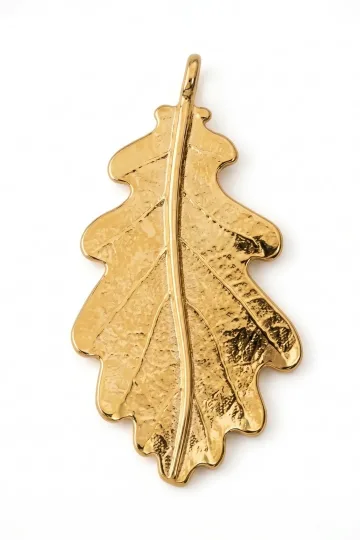
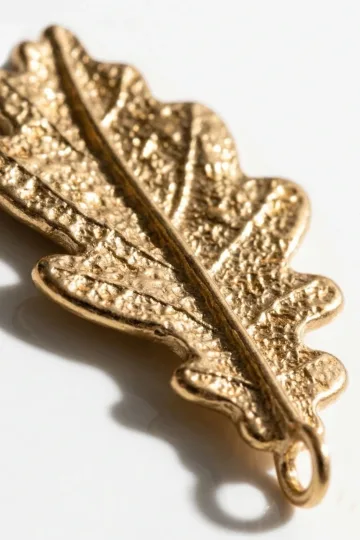
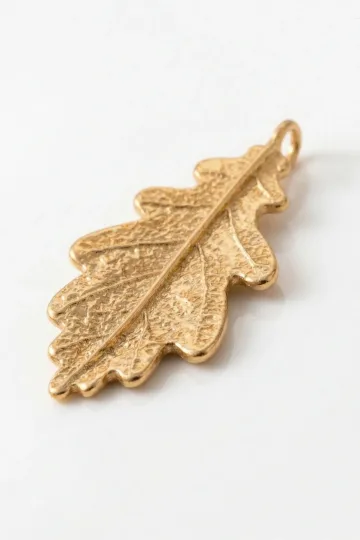
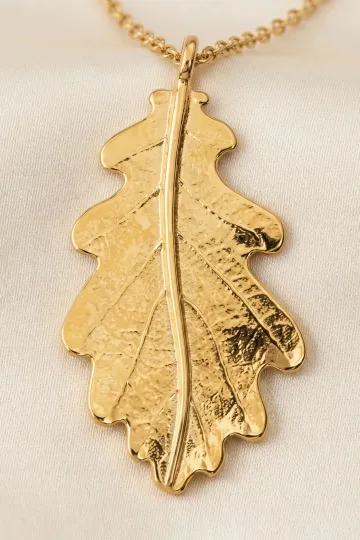
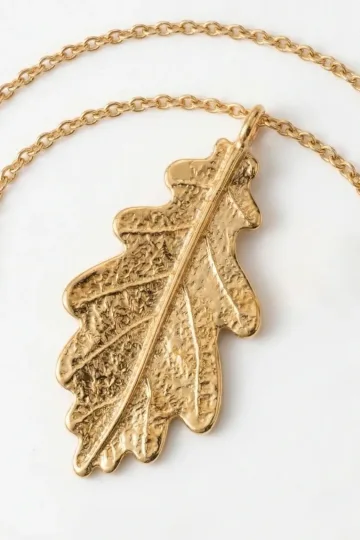
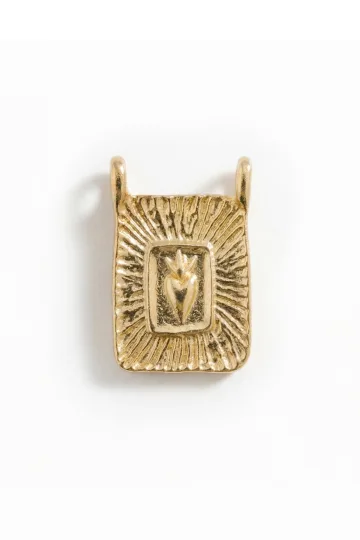
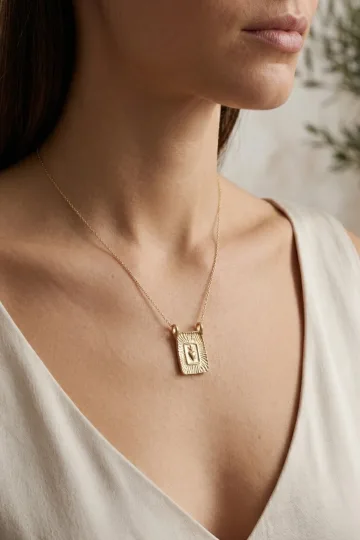
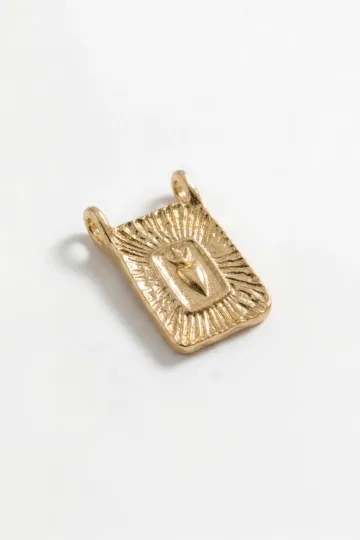
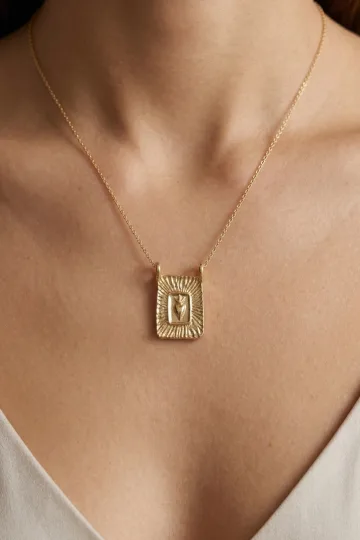
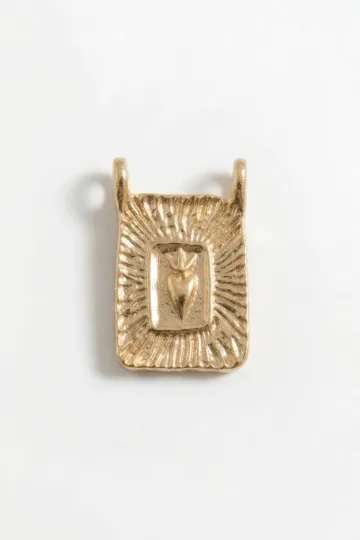
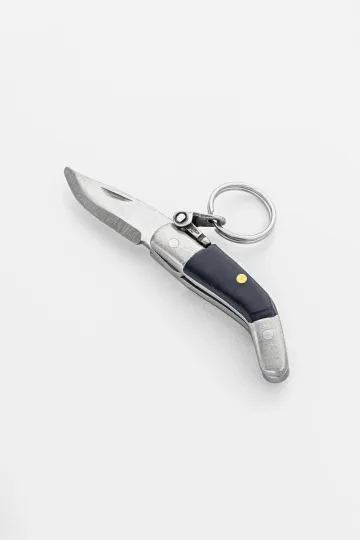
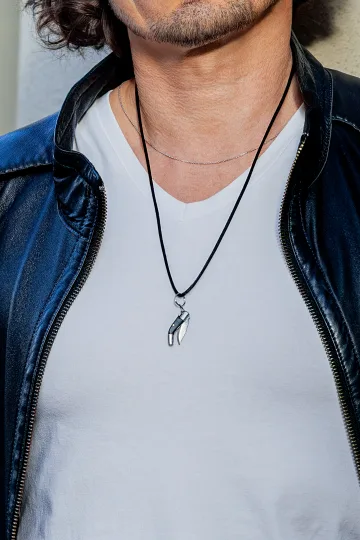
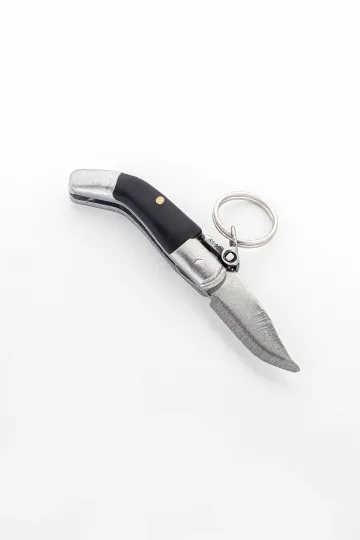
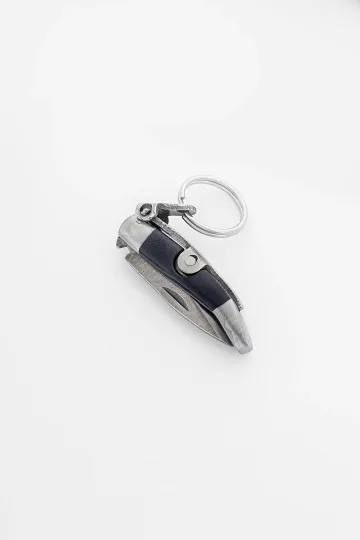
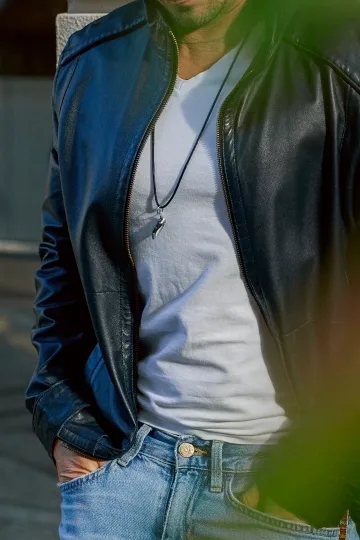
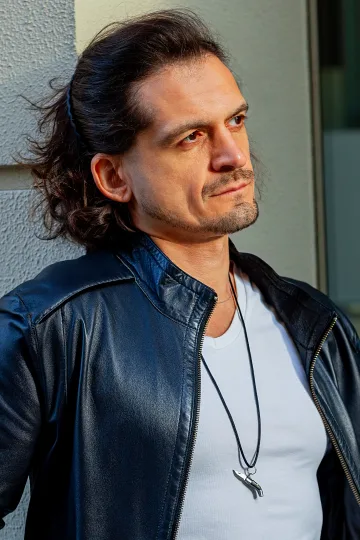
Buyer's Checklist: 10 Principles of Form-Centric Choice
First principle: Form is primary. Evaluate jewellery first by the quality of form, proportions, and balance.
Second principle: Always try on. A photograph does not replace tactile contact.
Third principle: Think in decades. Will you wear this in 10 years? Pure form ages slowly.
Fourth principle: One piece is better than five. Quality over quantity.
Fifth principle: Comfort is not luxury. A piece that presses, interferes, or catches will stop being worn.
Sixth principle: Check the inside. The quality of invisible surfaces is the best indicator of overall quality.
Seventh principle: Do not chase micro-trends. Specific fashionable forms come and go. Fundamental principles of good design are eternal.
Eighth principle: Trust your intuition. If a form does not "resonate" for you, no rational arguments will make you love it.
Ninth principle: Ask questions. How was it made? From what? How to care for it? Is there a warranty?
Tenth principle: Invest in craftsmanship. You are not paying for grams and carats. You are paying for design, engineering, and execution. That is the true value.
Silver and gold jewellery, wedding bands, symbolic pendants, paired sets.
Discover the Perfection of Form
Zevira creates jewellery where form is not simply a shell but the very essence. Every piece is the result of months of work on ideal proportions, the balance of mass and void, tactile perfection.
The heritage of Spanish goldsmithing, combined with modern technologies and architectural thinking, produces jewellery you feel before you see. Every curve is considered. Every gram of metal is in its place. Every surface invites touch.
We do not follow trends. We create forms that will outlast any trend.
About Zevira
Zevira makes jewellery in the artisan tradition of Albacete, Spain. It is a town with a centuries-old metalworking tradition, a place where form, balance, and the weight of the metal have always counted for more than excess decoration. That very school sits at the heart of what this article is about: the priority of clean, sculptural form over a pile of stones.
What you can find with us on the subject of form-centric jewellery:
- Voluminous rings with a thoughtful cross-section profile and a comfortable interior fit
- Pared-back earrings and ear cuffs that lead with form rather than a scatter of stones
- Bracelets and bangles with dense, tactile metal and clean lines
- Pendants built on abstract geometry instead of the usual symbols
- Paired designs and stacking rings engineered to be worn together
- Sterling silver 925 and 14 to 18K gold in matte, satin, and polished finishes
Each piece is made by hand by a craftsperson, with the option of personal engraving. Sterling silver 925 and 14 to 18K gold.
#JewelryTrends2026 #Form #ContemporaryJewelry #ArchitecturalDesign #PureGeometry #Zevira #JewelryArt #Minimalism #TimelessBeauty #LuxuryJewelry #DesignerJewelry