Moissanite vs Lab-Grown Diamond: How to Choose
When a Choice Becomes a Story
Some decisions are made once and stay for a lifetime. Choosing the stone for a ring is exactly that kind of decision. Twenty years from now, nobody will remember how much your wedding suit cost or what colour the napkins were. But the ring will remain. On a finger, in memory, in a family story.
Ten years ago, the choice was simple: a mined diamond or nothing. Today, the landscape has shifted. Lab-grown diamonds offer the same chemistry and physics for less money. Moissanites sparkle more brilliantly than diamonds (yes, you read that correctly) and cost a fraction of the price. Both options are ethical, durable, and beautiful.
If you searched for "moissanite or diamond," "moissanite vs lab-grown diamond," "is moissanite better than a lab diamond," or "what stone should I choose for a ring," you have come to the right place. Here we will examine both stones from every angle: from crystal lattice to how they look on a finger by candlelight. No marketing spin. No pressure. Just facts, nuance, and honest recommendations.
This guide is long. Because the decision you are making deserves complete information, not a three-paragraph advertising leaflet.
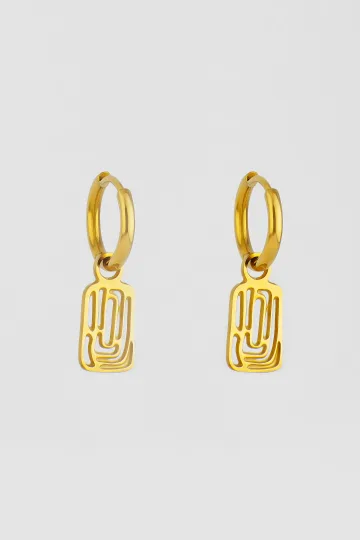
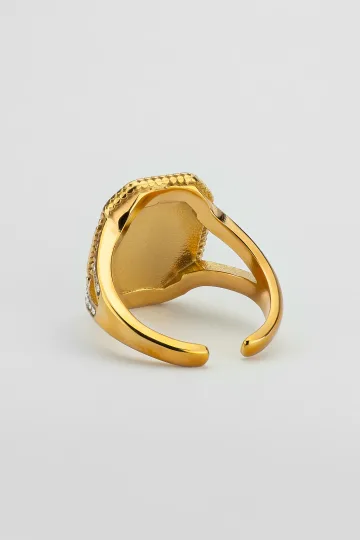
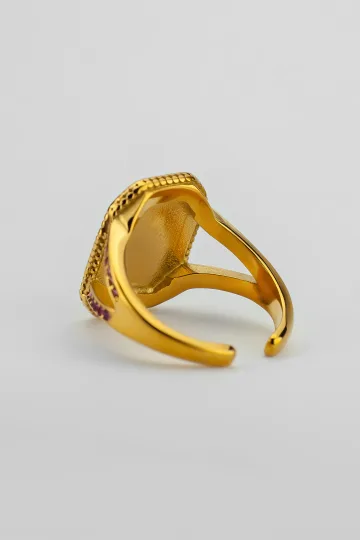
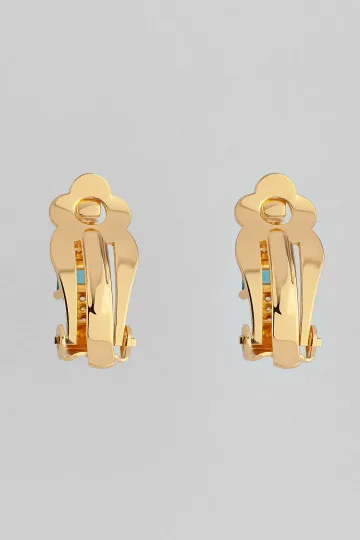
Wear the symbol, don't just read about it. These are in stock:





What Are Lab-Grown Diamonds and Moissanite
Lab-grown diamond: real in every sense
A lab-grown (cultured, synthetic) diamond is a real diamond. Not an imitation. Not a fake. Not a "diamond-like stone." It is crystalline carbon with the same cubic lattice, the same hardness (10 on the Mohs scale), the same thermal conductivity, the same refractive index, and the same dispersion as a stone pulled from a kimberlite pipe.
The only difference is origin. A natural diamond formed 90 to 120 miles beneath the Earth's surface at temperatures of 1,800 to 2,400°F and pressures of 50,000 to 70,000 atmospheres over one to three billion years. A lab-grown diamond grew in a matter of weeks inside a reactor that replicates those same conditions (HPHT method) or deposits carbon from a gas phase (CVD method).
A gemological tester cannot tell a natural and lab-grown diamond apart. A loupe cannot tell them apart. The eye cannot tell them apart. Only specialised spectroscopic equipment can determine origin by analysing the pattern of impurity distribution and crystal growth lines.
Lab-grown diamonds are certified using the same 4C system (cut, colour, clarity, carat weight) as natural diamonds. They receive the same certificates from GIA, IGI, and GCAL. They are graded on the same scales. With the notation "laboratory-grown."
An analogy that helps: ice from a freezer and ice from a glacier are the same ice. H₂O. Same crystal structure. Same melting point. Same taste (which is to say, none). The difference lies in how and where it formed. The same is true of diamonds.
Moissanite: a stone born of stars
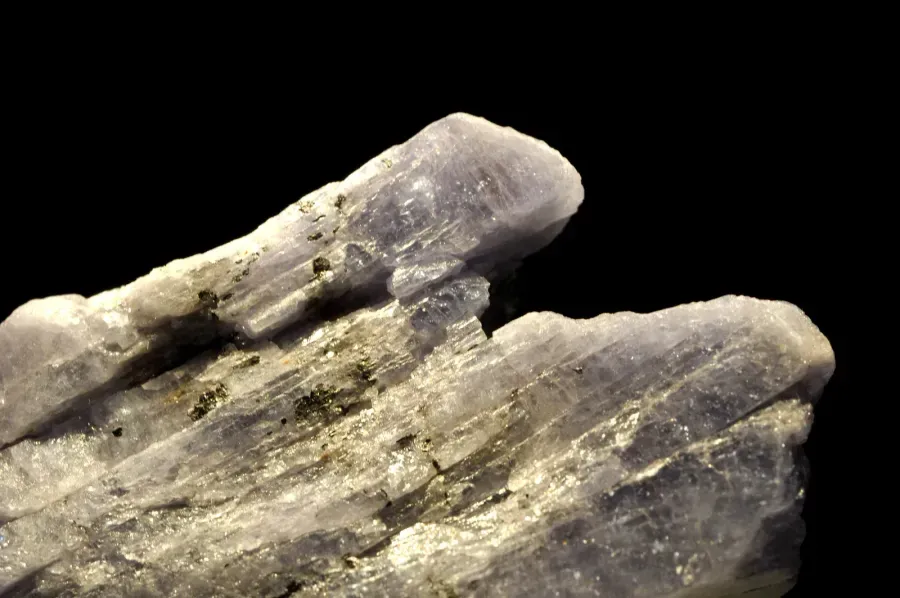
Moissanite (silicon carbide, SiC) has one of the most beautiful origin stories in mineralogy. In 1893, French chemist Henri Moissan was examining rock samples from a meteorite crater in Arizona (Canyon Diablo). Among the fragments, he discovered tiny crystals that he initially mistook for diamonds. They were equally hard and equally brilliant. Only after several years of careful analysis did it become clear that this was an entirely different mineral: silicon carbide.
Natural moissanite is extraordinarily rare. On Earth, it occurs in microscopic quantities in meteorites, kimberlite pipes, and certain types of rock. Crystals suitable for cutting essentially do not exist in nature. If moissanite had never been synthesised in a laboratory, it would have remained an exotic mineralogical curiosity known only to scientists.
All the moissanite you see in jewellery is lab-grown. The technology for commercial production was developed in the late 1990s. Silicon carbide crystals are grown using a sublimation method at temperatures around 2,500°C. The process takes from several days to several weeks depending on size.
The result: a transparent crystal with a hardness of 9.25 on the Mohs scale (second only to diamond), a refractive index of 2.65 to 2.69 (higher than diamond's 2.42), and dispersion of 0.104 (more than double diamond's 0.044).
In plain English: moissanite is harder than everything except diamond, and it sparkles more brilliantly than diamond. That is not marketing. That is physics.
Why "more brilliant than diamond" sounds suspicious but is true
When you hear "sparkles more brilliantly than a diamond," the natural reaction is: "Sure. Marketing." Let us explain why this is not marketing, but optics.
A stone's brilliance is determined by two parameters: refractive index (how much light bounces back toward the viewer) and dispersion (how strongly white light splits into a rainbow).
Diamond's refractive index: 2.42. Moissanite's refractive index: 2.65 to 2.69. Higher means more light returns to the viewer, making the stone appear brighter.
Diamond's dispersion: 0.044. Moissanite's dispersion: 0.104. More than double. This means moissanite splits white light into a rainbow 2.4 times more intensely than diamond. The rainbow flashes (the stone's "fire") are dramatically more pronounced in moissanite.
For some people, this is an advantage: "More sparkle, more rainbow, more beauty!" For others, it is a potential drawback: "Too much sparkle, it does not look like a diamond." Both opinions are valid. This is a matter of taste, not quality.
A practical observation: at sizes up to one carat, the difference in "fire" intensity between moissanite and diamond is only noticeable during direct comparison. At 2+ carats, the difference becomes more obvious: a large moissanite "throws" rainbow flashes across the entire room in bright light. Some people love this. Some find it excessive.
Save the moissanite's rainbow blaze for candlelight, not the Monday meeting. Every sparkle has its hour.
How to wear a moissanite or diamond ring
Over years of styling I have put clear-stone rings with everything from denim to evening silk. Here is what actually works, sorted by occasion.
What do I pair the ring with every day? For daily wear I recommend a calm size and a smooth setting with no raised prongs, so the ring does not catch on sweaters and bags. Light cotton, linen, plain knitwear, sleeve rolled back a touch: the stone catches the daylight by a window and that is enough. I suggest keeping the hand clean, without a pile of other rings.
Is it right for the office? Yes, as long as you keep it restrained. A colourless stone in white metal reads as part of a work look and never puts on a rainbow show across the room. Under a shirt, a blazer or a monochrome blouse I choose a solitaire or a bezel setting. A large moissanite that flashes with every gesture I suggest backing with one slim companion band for meetings, not several at once.
How do I build an evening look? For evening I go for a dark background: an open neckline, silk, velvet, a deep fabric colour such as wine, emerald or black. Against that the stone looks its brightest, and the rainbow flashes under candlelight work for you. Add stud earrings with the same stone and the look pulls together.
And for a special occasion or a proposal? For a proposal or an anniversary I choose the main ring with no competition, let it be the only accent on the hand. A neutral manicure, minimal other jewellery on the wrist, and all the attention on the stone.
How do I match the metal and the shape to me? Warm skin gets on with yellow and rose gold, cooler skin with white metal and platinum. If you want to lengthen the fingers visually, I recommend an oval or a marquise. If you like layers, pair the ring with slim bands in the same metal tone, but keep the stones in one colour family, or the mismatch jumps out.
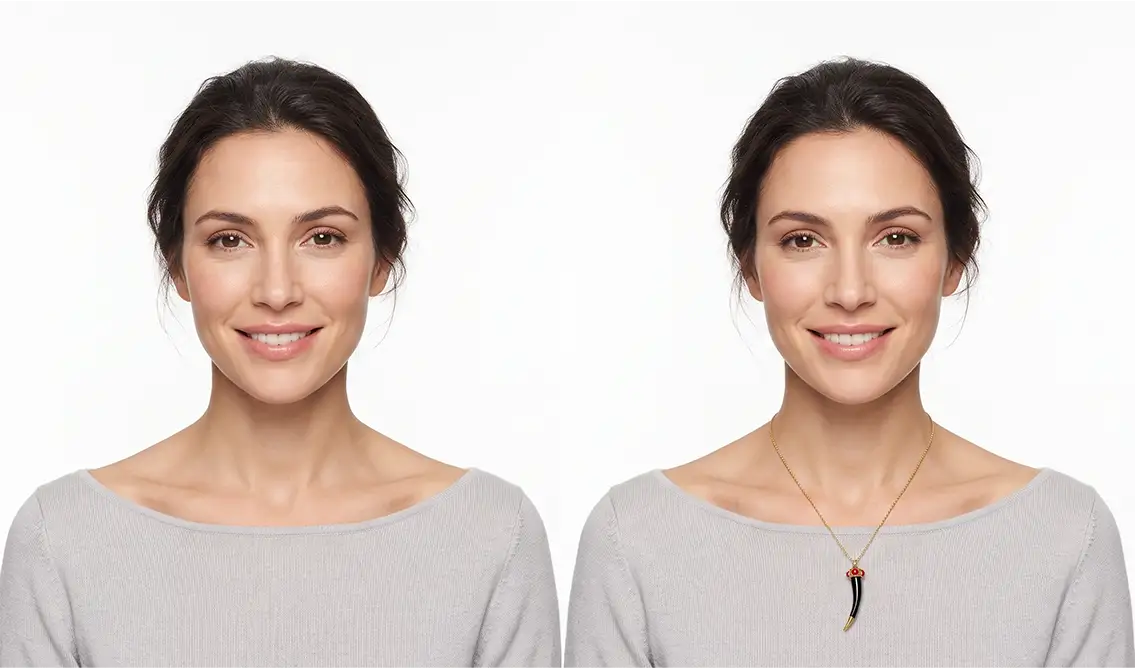
Turn on your camera, pick earrings, a pendant or a ring, and see the piece on yourself in real time.
Switch items in one tap.
Everything runs in your browser: no photo or video is ever uploaded.
Origins: From the Depths of Space to the Laboratory
Born in stars
Carbon and silicon are the fourth and eighth most abundant elements in the universe. Both form inside the cores of stars during nuclear fusion. When a star explodes (supernova), carbon and silicon scatter across the cosmos, forming the dust from which planets are later born.
Diamond (pure carbon) and moissanite (silicon carbide) are, in essence, "stardust" crystallised under pressure. Natural diamond crystallises in the Earth's mantle. Natural moissanite arrives with meteorites. Both stones carry within them a story that begins in the cores of dying stars billions of years ago.
This is not poetic exaggeration. This is astrophysics.
The path to the laboratory
The technology for growing diamonds for industrial purposes has existed since the 1950s. But gem quality only became achievable in the 2000s. The HPHT method (high pressure, high temperature) replicates mantle conditions. The CVD method (chemical vapour deposition) allows a crystal to be grown layer by layer from gaseous carbon.
Commercial production of gem-quality moissanite began in 1998. The technology is based on physical vapour transport (PVT): silicon carbide powder is heated to sublimation, and the vapours deposit on a seed crystal.
Both technologies continue to improve. Stone quality rises. Production costs fall. For the buyer, this means: more beauty for less money, year on year.
Timeline of key events
1893: Henri Moissan discovers silicon carbide in a meteorite crater. Mistakes it for diamond.
1905: The mineral is named "moissanite" in honour of its discoverer.
1950s: First laboratory diamonds grown via HPHT for industrial purposes (abrasives, drill bits).
1990s: CVD technology enables the growth of larger, cleaner diamond crystals.
1998: Commercial production of gem-quality moissanite begins.
2000s: First gem-quality lab-grown diamonds appear on the market.
2010s: Lab-grown diamonds begin to rival natural diamonds in quality.
2020s: Lab-grown stones (diamonds and moissanites) claim a significant share of the engagement ring market.
Mythology and reality
A romantic legend has formed around moissanite: "a stone from a meteorite," "stardust." This is true in the sense that natural moissanite is indeed found in meteorites. But jewellery-grade moissanite grew in a laboratory, not in outer space. That said, the carbon and silicon from which it is made were indeed once part of a star. Just as the carbon in your body was. We are all "stardust." Moissanite is simply more literal about it.
A myth of "inauthenticity" has formed around lab-grown diamonds. This is incorrect. A lab-grown diamond is real by every physical, chemical, and optical measure. The only thing it lacks is a geological history stretching back billions of years. For some people, that matters (romance). For others, it does not (pragmatism). Both approaches have a right to exist.
Women's Moissanite Rings: Brilliance and Elegance
Popular ring styles
Solitaire (single stone). A classic that never goes out of fashion. One stone in the centre, all attention on it. Moissanite in a solitaire shows itself at its very best: no competing stones, no distracting decoration. Just brilliance.
For moissanite, the solitaire is especially flattering because the stone's high dispersion (rainbow flashes) is most visible in a single large stone. If you want the "burst of rainbow" effect on your finger, a moissanite solitaire of one carat equivalent and above will deliver exactly that.
Halo. The centre stone surrounded by a ring of smaller stones. A halo visually increases the centre stone by 30 to 50 percent and adds extra sparkle. For moissanite, a halo creates a genuine "light bomb": the centre stone blazes with rainbow fire while the small stones add white brilliance.
A halo of small diamonds around a centre moissanite is a popular combination. The diamonds give a white, "icy" shimmer, while the moissanite adds rainbow fire. The contrast between two types of sparkle creates a layered visual effect.
Three-stone. A centre stone flanked by two smaller ones. Symbolises past, present, and future. Three moissanites or a combination of "moissanite plus diamonds" create an elegant, symmetrical composition.
Vintage. Filigree, milgrain (fine beading along the edges), openwork side galleries. Moissanite in a vintage setting looks opulent: the rainbow fire of the stone paired with detailed metalwork creates the feel of an antique piece.
Bezel. The stone is completely surrounded by a metal rim instead of prongs. Maximum protection for the stone. A modern, clean look. Suits an active lifestyle.
Recommendations for stone size
Moissanite is visually identical to a diamond of the same diameter, but weighs less (moissanite's density is 3.21 g/cm³ versus 3.52 g/cm³ for diamond). For this reason, moissanites are often described not in carats but in "diamond equivalent weight" (DEW): the diameter in millimetres corresponding to a diamond of a given weight.
A 6.5 mm moissanite is visually equivalent to a 1.0 carat diamond.
A 7.5 mm moissanite is equivalent to a 1.5 carat diamond.
An 8.0 mm moissanite is equivalent to a 2.0 carat diamond.
For engagement rings, the sweet spot is 6.0 to 7.5 mm (equivalent 0.8 to 1.5 carats). The stone is large enough to impress but not so enormous as to look implausible.
For those who want the "wow factor" without constraints: moissanite allows you to afford a stone of a size that in diamond would cost as much as a car. A 2 to 3 "equivalent carat" moissanite looks luxurious and costs sensibly.
Choosing a metal for maximum brilliance
White gold and platinum. Cool white metal highlights the "icy" sparkle of moissanite. Rainbow flashes against a white background appear maximally bright and crisp. The classic choice for engagement rings.
A nuance: top-quality moissanite (DEF colour) in white metal is indistinguishable from a diamond to the naked eye. If visual identity with a diamond matters to you, white metal with a colourless moissanite is your pick.
Yellow gold. Warm metal adds a "honeyed" note to the stone's brilliance. Moissanite in yellow gold looks more "classic," less "icy." Suits those who prefer a warm palette.
An additional plus: in yellow gold, even moissanites with a slight warm tint (GH colour) look excellent. The stone's tint blends with the metal's tone.
Rose gold. A romantic, feminine option. The pink tone of the metal creates a soft, warm context for moissanite's rainbow brilliance. Works especially well with oval and pear cuts.
Men's Rings: Moissanites and Lab-Grown Diamonds
Modern men's designs
Men's rings with stones have come a long way from chunky signet rings. Contemporary designs include elegant bands with channel-set stones, minimalist rings with a single accent stone, and textured surfaces studded with small gems.
Moissanite works just as well in a men's ring as in a women's ring. A hardness of 9.25 makes it resistant to scratches in daily life. The sparkle catches the eye without shouting if the stone is small and sits flush in the setting.
A lab-grown diamond in a men's ring is a more "traditional" choice. For men who value classicism and status, a diamond remains a diamond regardless of origin.
Band width and presence on the hand
Men's rings are typically wider than women's: 5 to 8 mm for wedding bands, up to 10 to 12 mm for statement rings. Width influences stone choice.
Narrow bands (4 to 5 mm) with a single small stone (2 to 3 mm): elegant, understated. Suits someone who wants a stone without drawing attention to it.
Medium bands (6 to 8 mm) with a row of stones or a single medium stone: a balance between expressiveness and masculinity. A popular choice for wedding bands.
Wide bands (8 to 12 mm) with a scatter of stones or a large centre stone: a statement. For confident men who are not shy about jewellery.
Preferences for durable metals
For men's rings with stones, metal durability is especially important: men's hands are subject to more wear and tear.
Platinum. The most durable and long-lasting option. Does not lose metal when scratched (unlike gold, which does). Heavy, solid. Ideal for a "forever" ring.
White gold (14K or 18K). Strong, more affordable than platinum. Requires rhodium replating every one to three years.
Titanium. Lightweight, hypoallergenic, very strong. But setting stones in titanium is more difficult than in gold: titanium is stubborn under a jeweller's tools.
Tungsten. Extremely hard and scratch-resistant. But brittle (it can shatter on impact) and cannot be resized. Stones are usually set in a separate insert of a different metal.
Practical setting types
Channel setting. Stones sit recessed in a channel between two walls of metal. Nothing protrudes. Maximum protection. Ideal for men's rings subjected to daily wear.
Flush (gypsy) setting. The stone is sunk into the ring's surface so its top facet sits level with the metal. Minimal profile. The stone does not catch on anything.
Prong setting. The stone is held by metal "claws." Maximum stone exposure, maximum brilliance. But prongs can snag and bend during physical work.
Which stone for a men's ring
For men's rings, moissanite has a practical edge: a hardness of 9.25 means the stone will endure the rough handling that men's hands face. Men are less likely to remove their ring when working, fixing things, or moving heavy objects. Moissanite will survive all of that. Diamond will too (hardness 10), but moissanite is not far behind in practical terms.
For men who want something special but not "flashy": a black moissanite or black diamond in a channel setting on a brushed titanium band. Understated, masculine, full of character.
For men who do not shy away from sparkle: a row of five to seven moissanites across the top of a white gold band. Noticeable, stylish, modern.
Men's rings and stereotypes
Twenty years ago, a men's ring with a stone was considered exotic outside of signet rings. Today, stones in men's wedding bands are the norm. The boundaries of "masculine" and "feminine" in jewellery are dissolving, and that is a good thing: everyone wears what they like.
If you are wondering whether it will look "manly," the answer is: yes. If the stone is chosen well (the right size, the right setting, the right context), a men's ring with moissanite or diamond looks confident and sharp.
Quality and Comparison: The 4C System and Its Application
Diamond: the full 4C system
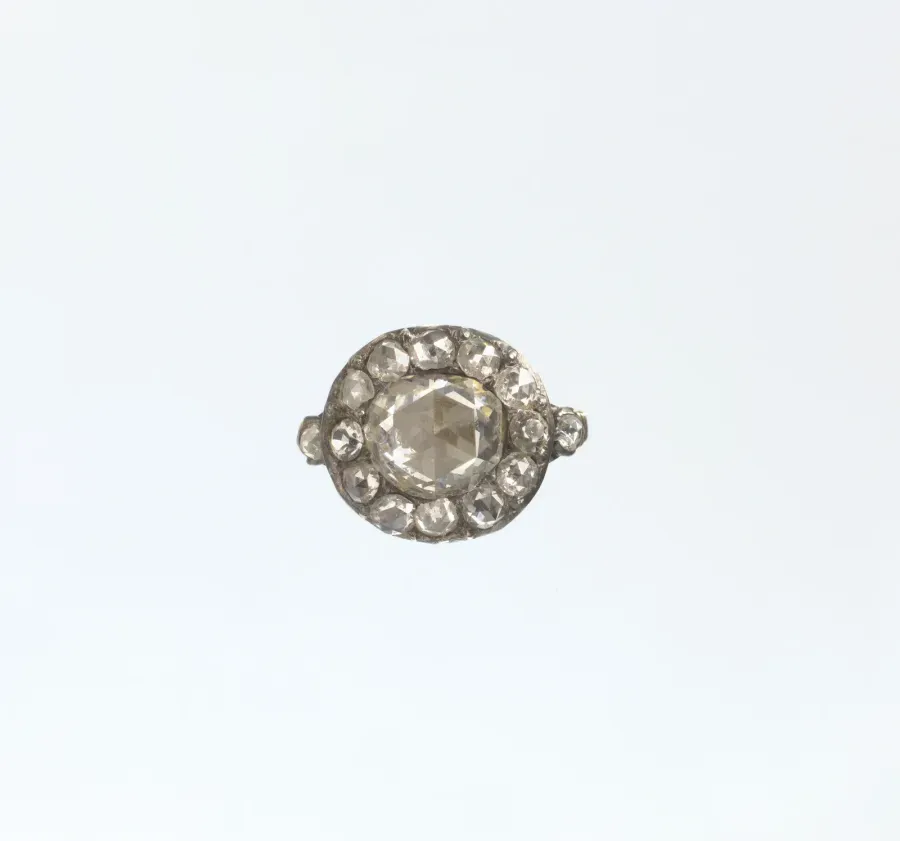
Lab-grown diamonds are evaluated on the full 4C system: cut, colour, clarity, carat weight. Every stone can receive a certificate from a gemological laboratory with a detailed description of all its characteristics. GIA, IGI, and GCAL are the most widely recognised grading bodies.
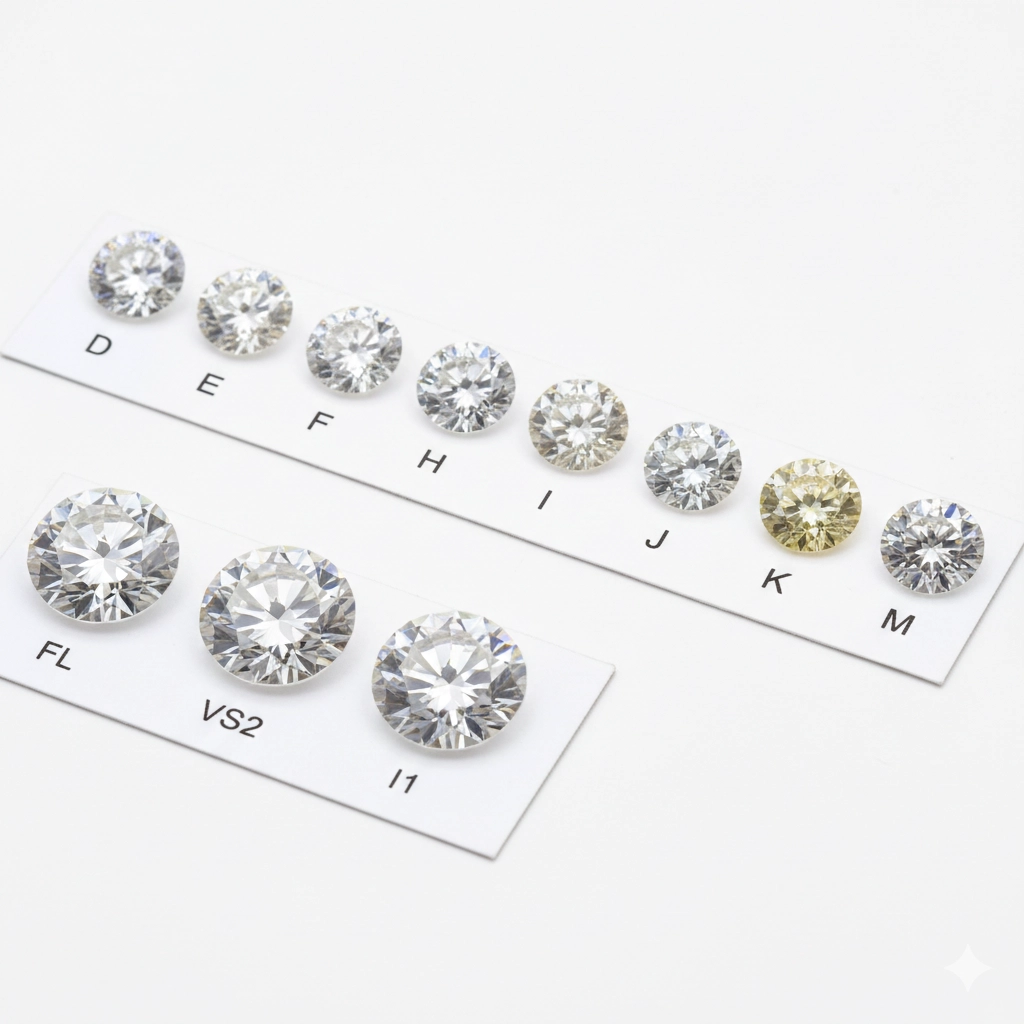
Everything written about colour scales (D to Z) and clarity scales (FL to I3) for natural diamonds applies in full to lab-grown diamonds. The same range of quality. The same recommendations (G to H / VS2 to SI1 / excellent cut for the optimal balance of visual result and cost). For the full picture of how those letters translate into appearance and price, the diamond colour and clarity guide is the reference, and the carat weight guide covers the fourth C with the same level of detail.
One of the beauties of lab-grown diamonds is that technology enables the production of top-grade stones (D to F colour, VVS clarity) more consistently than nature can. The percentage of top-grade stones among lab-grown is higher than among natural. This does not mean every lab-grown diamond is perfect (there are J/SI2 specimens too), but "hitting" the top grades is easier.
Moissanite: an adapted system
Moissanites are also evaluated for colour and clarity, but on a simplified scale.
Moissanite colour. Three main categories:
DEF (colourless). Equivalent to diamond D to F. Completely transparent, no tint. The premium tier. In white metal, indistinguishable from a diamond to the unaided eye. This is the "top shelf" of moissanites, and the one to choose if you want the stone to look maximally "diamond-like."
GH (near-colourless). Equivalent to diamond G to H. A barely perceptible warm tint. An excellent choice for yellow and rose gold. In white metal, it may be slightly warmer than a perfectionist might wish, but for most people it looks wonderful.
IJ (with a hint of warmth). Equivalent to diamond I to J. A noticeable warm tint. Suitable for yellow gold and budget-conscious purchases. In white metal, the tint may be visible.
Moissanite clarity. The majority of moissanites have clarity equivalent to VS and above on the diamond scale. Inclusions in moissanite are rarer than in natural diamond: the controlled growing process minimises defects. This means the question "what clarity?" is less relevant for moissanite than for diamond: virtually all moissanites are "eye-clean."
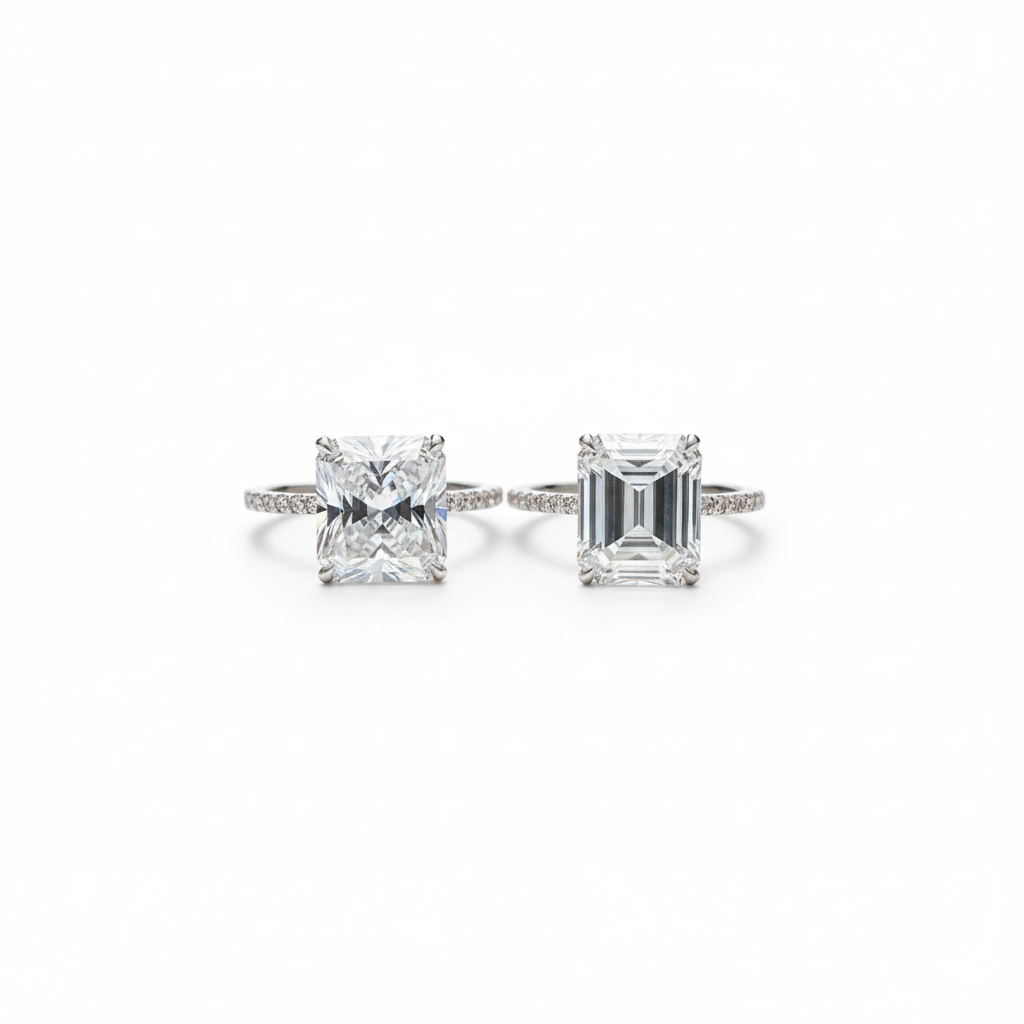
Moissanite cut. Moissanites are faceted to the same standards as diamonds: round, oval, princess, cushion, emerald, marquise, pear, and other shapes. Cut quality is critically important for moissanite because the stone's high dispersion, if paired with a poor cut, can turn from an asset into a liability: light scatters chaotically instead of returning to the viewer in an organised way.
Direct comparison: table
| Characteristic | Lab-Grown Diamond | Moissanite |
|---|---|---|
| Chemical composition | Carbon (C) | Silicon carbide (SiC) |
| Hardness (Mohs) | 10 | 9.25 |
| Refractive index | 2.42 | 2.65 to 2.69 |
| Dispersion | 0.044 | 0.104 |
| Lustre | Adamantine | Above adamantine |
| "Fire" (rainbow) | Moderate | Pronounced (2.4x more) |
| Density | 3.52 g/cm³ | 3.21 g/cm³ |
| Scratch resistance | Maximum | Very high |
| Heat resistance | Up to ~800°C | Up to ~1,800°C |
| Electrical conductivity | No (most) | Yes (some testers react) |
What this table means in practice
Brilliance and "fire." Moissanite sparkles more brilliantly than diamond. This is a fact confirmed by physics: a higher refractive index and dispersion mean more light returned to the eye and more rainbow flashes. For most people, this is an advantage. For those who believe a diamond should not "sparkle too much" (such people exist), moissanite may seem "excessive."
Hardness. The difference between 10 and 9.25 on the Mohs scale sounds small, but the Mohs scale is logarithmic: diamond is roughly four times harder than moissanite in absolute terms. In practice, this means moissanite can be scratched by diamond, but by nothing else in everyday life. For normal wear, 9.25 is more than sufficient. Sapphire (9 on Mohs) has served in engagement rings for centuries, and moissanite is harder still.
Heat resistance. Moissanite withstands temperatures up to 1,800°C; diamond up to roughly 800°C. In practical terms, this matters during setting repair: a jeweller can solder near a moissanite without worrying about damaging the stone.
Electrical conductivity. Some moissanites conduct electricity (a property of silicon carbide). Older diamond testers that identify stones by thermal conductivity correctly identify moissanite as "not a diamond." Modern testers use both thermal and electrical conductivity.
Setting Styles: Security and Aesthetics
Prong
The stone is held by four or six metal claws. Maximum visibility: light enters from all sides, brilliance is at its peak. The most popular choice for engagement rings.
Downside: prongs can catch on fabric, hair, and gloves. Over time they loosen and need tightening by a jeweller (once a year or so).
For moissanite, a prong setting is ideal: the stone receives maximum light and shows off its full "fiery" potential.
Bezel
A metal rim completely surrounds the stone along its perimeter. The stone is protected from impacts and snags. A modern, clean look.
Downside: less light enters the stone from the sides, which can slightly reduce brilliance. For moissanite, with its elevated refractive index, this is less critical than it would be for diamond.
Channel
Stones sit recessed in a channel. Smooth surface, nothing protrudes. Suitable for rings with a row of stones (half-eternity, full band).
Pave (fine scatter)
Dozens of small stones, held by tiny prongs, cover the surface of the ring. The effect is a "cobblestone" of gems. Maximum sparkle over maximum area.
Moissanites in a pave setting deliver a dazzling result: dozens of tiny "rainbows" simultaneously. Diamonds in pave give a more "icy," white brilliance.
Invisible setting
Stones are installed so that no metal is visible: they are held by grooves along their sides. The result is a continuous stone surface with no metal bridges.
A complex and costly technique, but the visual result is striking. Especially effective for rectangular stones (princess, baguette).
Eternity Rings: Moissanite vs Diamond
What is an eternity ring
An eternity ring (eternity band) is a ring fully set with stones around its entire circumference. It symbolises everlasting love: no beginning and no end, just like the ring itself.
Full eternity and half eternity
Full eternity (stones all the way around): maximum visual impact. Sparkles from every angle. But it cannot be resized (the stones on the underside prevent it), so the size must be exact.
Half eternity (stones only on the upper half): more practical. Can be resized. Stones do not press against the palm side of the finger.
Moissanite in an eternity ring
A full circle of moissanites creates an unbroken ring of rainbow fire. The effect is remarkable: the ring sparkles with every movement of the hand, each stone throwing off rainbow flashes.
Moissanite in eternity rings costs significantly less than diamond: the number of stones can reach 15 to 25, and the per-stone price difference is multiplied by the count.
Diamond in an eternity ring
Classic, "icy" brilliance. Less rainbow than moissanite, but more "traditional." For those who want understated elegance rather than a "fire show."
Combination
Alternating moissanites and diamonds in a single eternity ring creates an interesting rhythm: white flash, rainbow burst, white flash, rainbow burst. A "flickering" effect with every movement of the hand.
Upload a photo of your pet, someone you love, or an object. We'll build a 3D model and hand-cast it in pewter.
Choosing the Ideal Ring Width
Women's rings
2 to 3 mm. Delicate, slender. Suits smaller fingers and minimalists. Stones: small (1.5 to 2.5 mm). Pairs well with other rings in a stack.
3 to 4 mm. The standard for engagement and wedding rings. A comfortable width. Stones: small to medium (2 to 4 mm).
4 to 6 mm. Expressive, noticeable. For larger stones (5 to 8 mm). Suits solitaires and halos.
6+ mm. Wide, bold. For those who like to make a statement. Stones: large, or a scatter.
Men's rings
4 to 5 mm. Slim for a men's ring. Elegant, European style. Stone: a single small one or a row of smalls.
6 to 8 mm. The standard. A balance between comfort and presence. Stones: medium, or a row.
8 to 10 mm. Wide, substantial. Stones: large, or a scatter.
The comfort rule
A wide ring feels tighter than a narrow ring of the same inner diameter. If you are accustomed to thin rings and are choosing a wide one, go half a size up.
Matching Sets for Couples
A unified style
Matching rings (for both partners) create visual unity. A shared element: the same stone, the same metal, the same setting style. The difference: width and scale (the men's ring wider, the women's ring narrower).
Moissanite for both
Moissanite in matching rings costs significantly less than a pair of diamond rings. The savings can be redirected into the quality of the metal (platinum instead of gold) or a more intricate design.
Combination: moissanite plus diamond
Her ring with a diamond (or moissanite), his with moissanite (or diamond). The two rings do not need to carry the same stone. What matters more is a shared style and visual harmony.
Pairing Engagement and Wedding Rings
The Fit Problem: Quick Overview
An engagement ring (with a stone) and a wedding band (usually plain or with a channel of stones) are worn on the same finger. They need to work together: not catch on each other, not scratch, and visually complement one another.
Solutions for Ring Pairing
Contour (curved) wedding band. Follows the outline of the engagement ring, "hugging" it. A perfect fit with no gap.
Straight wedding band with a gap. If the engagement ring has a low profile (bezel, flush-set stone), a straight band can sit flush without a gap.
Bridal set. The engagement and wedding rings are designed as a single unit. Maximum compatibility.
Moissanite and Diamond in a Paired Set
An engagement ring with a centre moissanite plus a wedding band with a diamond channel. Or the reverse: a diamond engagement ring plus a moissanite channel band.
Both stones share an adamantine lustre, and when the colour grades are matched (both DEF or both GH), they sit together in visual harmony.
Comparing Metals
Platinum (Pt 950)
Dense, heavy, white. Does not tarnish. Requires no rhodium plating. Hypoallergenic. Over time it develops a "platinum patina" (fine scratches create a satin surface) that many people find beautiful.
Best for: large stones (secure setting), sensitive skin, anyone who wants a "forever" ring with minimal maintenance.
White gold (14K, 18K)
A white alloy of gold with palladium, nickel, or silver. Coated with rhodium for a bright white finish. The rhodium coating wears away in one to three years and needs reapplication.
Best for: most buyers (an optimal balance of price and appearance).
Yellow gold (14K, 18K)
The classic. A warm, sunny tone. Requires no coating. Masks a warm tint in stones (I to J colour).
Best for: lovers of traditional aesthetics, stones with a warmer hue.
Rose gold (14K, 18K)
An alloy of gold with copper. A warm, romantic tone. Its popularity has grown steadily over the past decade. Pairs well with moissanites and diamonds of all hues.
Best for: romantics, those who want something different.
Sterling silver (925)
A cool white tone. Significantly less expensive than gold. Tarnishes (oxidises) and requires regular cleaning. Softer than gold: prongs loosen faster.
Best for: smaller stones, budget purchases, a "second" ring (for travel, exercise).
Customer reviews
Zevira is a real jewellery shop. Genuine payments, deliveries and customer thank-yous.
🥰🥰🥰 gracias
Ok, ¡gracias! 🙂
Personalisation and Unique Designs
Engraving Options
An inside engraving (a date, names, coordinates, a short phrase) turns a ring into a one-of-a-kind object. Laser engraving cannot be felt on the finger. Hand engraving adds a subtle tactile element.
Mixed Stone Combinations
Moissanite in the centre, sapphires on the sides. Diamond in the centre, moissanite halo. Emerald and moissanites. Combining stones allows you to create a ring that nobody else has.
Unusual shapes
Rings with asymmetrical stone placement. Spiral designs. Rings with stones set at an angle. Modern jewellers offer forms that would have been unimaginable twenty years ago.
Non-Standard Metals for Personalisation
Palladium (lighter and less expensive than platinum, equally white). Titanium with gold inlays. Tantalum (dark grey, almost black metal). For those who want to stand out.
Cost Analysis
Moissanite: accessible luxury
Moissanite costs significantly less than diamond. The difference can be five to ten times or more for a comparable visual size.
This means: for the budget that would buy a 0.5 carat diamond, you can have a moissanite equivalent to 2 to 3 carats. Or a 1 carat diamond and a 2 carat moissanite for the same outlay. The arithmetic favours moissanite.
Lab-grown diamond: the middle ground
Lab-grown diamonds cost a fraction of what natural diamonds cost for identical characteristics. But they are more expensive than moissanites.
A lab-grown diamond is the choice for those who want the word "diamond" (chemically accurate) but do not wish to pay for billions of years of geological history.
Natural diamond: the premium choice
For context: a natural diamond, G/VS2, one carat, excellent cut, costs several times more than a lab-grown diamond of the same specifications and an order of magnitude more than a moissanite of equivalent visual size.
Where the money goes
When buying a natural diamond, you are paying for: geological rarity, mining, cutting, certification, and trade margins at every step of the supply chain.
When buying a lab-grown diamond, you are paying for: growing technology, cutting, certification, and margin. No mining and no geological premium.
When buying moissanite, you are paying for: growing technology, cutting, and margin. Certification is simpler. Production is less expensive.
A note on resale
A ring is meant to be worn, not traded. Resale prices for any stone depend on the market at the moment of sale and are impossible to predict. None of these stones should be thought of as a way to make money.
If you are buying a stone to wear (rather than to resell), resale value is irrelevant. A ring on a finger is not a financial instrument.
Cost per visual carat
Here is the most honest way to compare: cost per unit of "visible size."
A natural diamond G/VS2, one carat, costs, let us say, X. A lab-grown diamond of the same specifications costs roughly X/3 to X/5. A moissanite of equivalent visual size costs roughly X/10 to X/15.
If you want "a carat-sized stone on a finger" and you do not mind what is written on the certificate, moissanite delivers the maximum visual result for the minimum spend.
If it matters to you that it is a "real diamond," a lab-grown stone gives you the identical gem for a third to a fifth of the natural price.
Hidden costs
When buying a ring, keep in mind costs that are not included in the price of the stone.
Setting: the cost of metal and labour. Platinum costs more than gold. An intricate design costs more than a simple one.
Certification: for lab-grown diamonds, the certificate is usually included. For moissanites, the manufacturer's certificate is usually included, but a full gemological certificate may cost extra.
Sizing: typically free during the warranty period.
Maintenance: rhodium replating (for white gold), prong tightening, cleaning. Once a year, modest sums.
Insurance: 1 to 2 percent of appraised value per year.
The Ethical Dimension: Why Lab-Grown Stones Deserve Consideration
The environmental footprint
Mining natural diamonds requires moving enormous volumes of earth: from 200 to 1,700 tons of rock per carat of diamond. These are open pits, deep-shaft mines, destroyed ecosystems, enormous water and energy consumption, and carbon emissions.
Laboratory production also consumes energy, but on a vastly smaller scale. The CVD method requires roughly 250 kWh per carat (comparable to running a household air conditioning unit for a month). The HPHT method is more energy-intensive, but still incomparable with mining.
Moissanite production uses even less energy than lab-grown diamond production.
A number of lab-grown stone producers use renewable energy (solar panels, wind turbines), which further shrinks the carbon footprint.
The social dimension
"Conflict diamonds" (diamonds whose mining finances armed conflicts, particularly in parts of Africa) remain a concern despite the Kimberley Process, which was designed to track stone origins. Lab-grown stones eliminate this issue entirely: it is known who, where, and when grew each crystal.
Additionally, working conditions at diamond mines do not always meet modern labour standards. Laboratory production takes place under controlled conditions with full compliance with employment law.
Supply chain transparency
For a lab-grown stone, the full journey can be traced: factory, date of growth, method, cutter. For a natural stone, the supply chain is often opaque despite certification efforts.
Consumer sentiment
Younger generations of buyers increasingly choose ethical stones. For many couples, the origin of a stone is just as important as its beauty. A lab-grown diamond or moissanite lets you wear a beautiful ring without ethical compromises.
There is a pragmatic dimension too: money saved by choosing a lab-grown stone over a mined one can go toward a honeymoon, a house deposit, or simply into savings. Ethics and economy in a single decision.
The counterargument
In fairness: diamond mining provides jobs in a number of countries (Botswana, South Africa, Canada, Australia, Russia). A complete shift away from mined diamonds could negatively affect the economies of mining regions. This is a real argument, and it is worth weighing.



Care and Cleaning
Moissanite: a low-maintenance stone
Moissanite requires virtually no special care. It is resistant to chemicals, unaffected by soap, and does not react to ultraviolet light. It can be cleaned in an ultrasonic bath without restrictions.
Cleaning: warm water, a mild dish soap, a soft brush. Once every week or two to maintain brilliance.
Moissanite "attracts" grease slightly more than diamond does (a property of silicon carbide). A greasy film reduces sparkle. Regular cleaning compensates for this minor quirk. The difference from diamond is minimal and only noticeable during direct comparison.
Moissanite is unaffected by high temperatures. A jeweller can solder the setting near a moissanite without removing the stone. With diamond, this is riskier: at temperatures above roughly 800°C, diamond can be damaged (though in practice this is extremely rare).
Lab-grown diamond: the same care as a natural diamond
Warm water, soap, brush. Professional ultrasonic cleaning once or twice a year. Remove before handling chemicals (not because of the stone, but because of the setting).
Diamond is impervious to everything except a strong directed impact (cleavage chip) and high temperature in the presence of oxygen (at roughly 800°C, diamond begins to combust, turning into CO₂). In practice, neither scenario occurs in everyday life.
General rules for both stones
Store rings with stones separately from one another: diamond can scratch moissanite (hardness difference), and moissanite can scratch gold, silver, and everything else except diamond.
Remove before exercise (impacts, sweat, pressure), manual work (tools, abrasives), swimming in chlorinated water (chlorine damages the setting), and applying cosmetics (creams and lotions collect on the stone).
Have the stone's setting checked by a jeweller once a year. Prongs wear down. Bezels can loosen. It is better to catch a problem during an inspection than to lose the stone.
Cleaning at home: step by step
Step 1: Fill a cup with warm (not hot) water. Add a drop of dish soap.
Step 2: Place the ring in the solution. Wait 10 to 15 minutes.
Step 3: With a soft toothbrush (a child's toothbrush is ideal), gently clean the stone on all sides, paying special attention to the underside (the pavilion). That is where the most grease collects.
Step 4: Clean the setting, the prongs, and the inside of the band.
Step 5: Rinse under warm running water. Important: close the drain! Losing a ring down the plughole during cleaning is a classic.
Step 6: Dry with a soft lint-free cloth (microfibre works perfectly).
You will be surprised how much brighter the stone looks after this simple procedure. If a ring has "gone dull," in 90 percent of cases the culprit is dirt, not the stone.
Protecting Your Investment
Insurance
If the value of the ring is significant to you, insure it. Insurance covers loss, theft, and damage. Cost: typically 1 to 2 percent of appraised value per year.
For insurance you will need: a valuation (from a jeweller or independent appraiser), photographs of the ring, and the stone's certificate (if available). In the US, specialist jewellery insurers offer policies that cover the full replacement cost; in the UK, many household insurance policies can be extended to include specified valuables.
Update the valuation every three to five years: the cost of metals and stones shifts over time.
Warranty
Many jewellers provide a warranty on the setting: complimentary prong tightening, polishing, and rhodium replating within a given period.
Ask about warranty terms before purchasing. A good warranty saves money on maintenance and removes worry.
Certification
Lab-grown diamonds are certified by gemological laboratories. GIA, IGI, and GCAL are the most widely respected internationally. A certificate contains a full description of the stone's characteristics and serves as documentation of what you paid for.
Premium-quality moissanites also come with manufacturer certificates stating colour, clarity, and size.
When buying any stone, ask for documentation. A stone without paperwork is a gamble.
What to do if a stone falls out of the setting
Do not panic. Find the stone (check the floor, clothing, handbag). Place it somewhere secure (a small pouch, a jewellery box). Take the ring and stone to a jeweller. The stone can be reset. If the setting is damaged, the jeweller will repair it.
If the stone is lost, insurance will cover the replacement (if you have it). If you do not have insurance, a jeweller can source a stone of the same size and specification.
Trends 2024 to 2026
The rise of lab-grown stones
The share of lab-grown diamonds and moissanites on the market grows every year. Forecasts suggest that by 2026 to 2027, lab-grown stones could account for more than half of the engagement ring market in a number of countries. In the United States, the shift is well underway; in the UK, it accelerates each season.
Larger stones become the norm
The affordability of moissanites allows buyers to choose stones of a size that until recently seemed "too lavish." Stones of 2 to 3 "equivalent carats" in moissanite are becoming a routine choice for engagement rings. This changes perception: the "normal" size of a centre stone is drifting upward.
Fancy cuts gain popularity
Oval, pear, marquise, and cushion have overtaken the "classic" round. Fancy cuts visually enlarge the stone and create a distinctive look. The oval cut in 2024 to 2025 became the fastest-growing shape by popularity.
For moissanite, fancy cuts are especially flattering: elongated shapes (oval, marquise, pear) create more internal reflections, making the "rainbow fire" even more vivid.
Mixed sets
Moissanite in the centre, diamonds on the sides. Or the reverse. Combining stones in a single piece is becoming the norm rather than the exception. Buyers have stopped treating "purity" of stone type (only diamonds! only moissanites!) as a value. The visual result matters more.
Non-Standard Metals as a Trend
Palladium, tantalum, tungsten, titanium with gold inlays. Men's rings are especially quick to adopt non-traditional materials. For women's rings, rose gold continues to gain ground.
Personalisation
Custom design, engraving, non-standard combinations of stones and metals. Buyers want uniqueness, not a production line. Each ring should be "mine alone."
Conscious consumption
Ethical and environmental considerations increasingly influence choice. Lab-grown stones are perceived as the "responsible" option. Consumers ask not only how a stone looks, but where it came from.
Online purchasing
The share of jewellery purchases made online continues to grow. Virtual try-ons, detailed stone videos, transparent specifications, easy returns. Traditional retailers are adapting, but the internet wins on convenience and the depth of information available to the buyer.
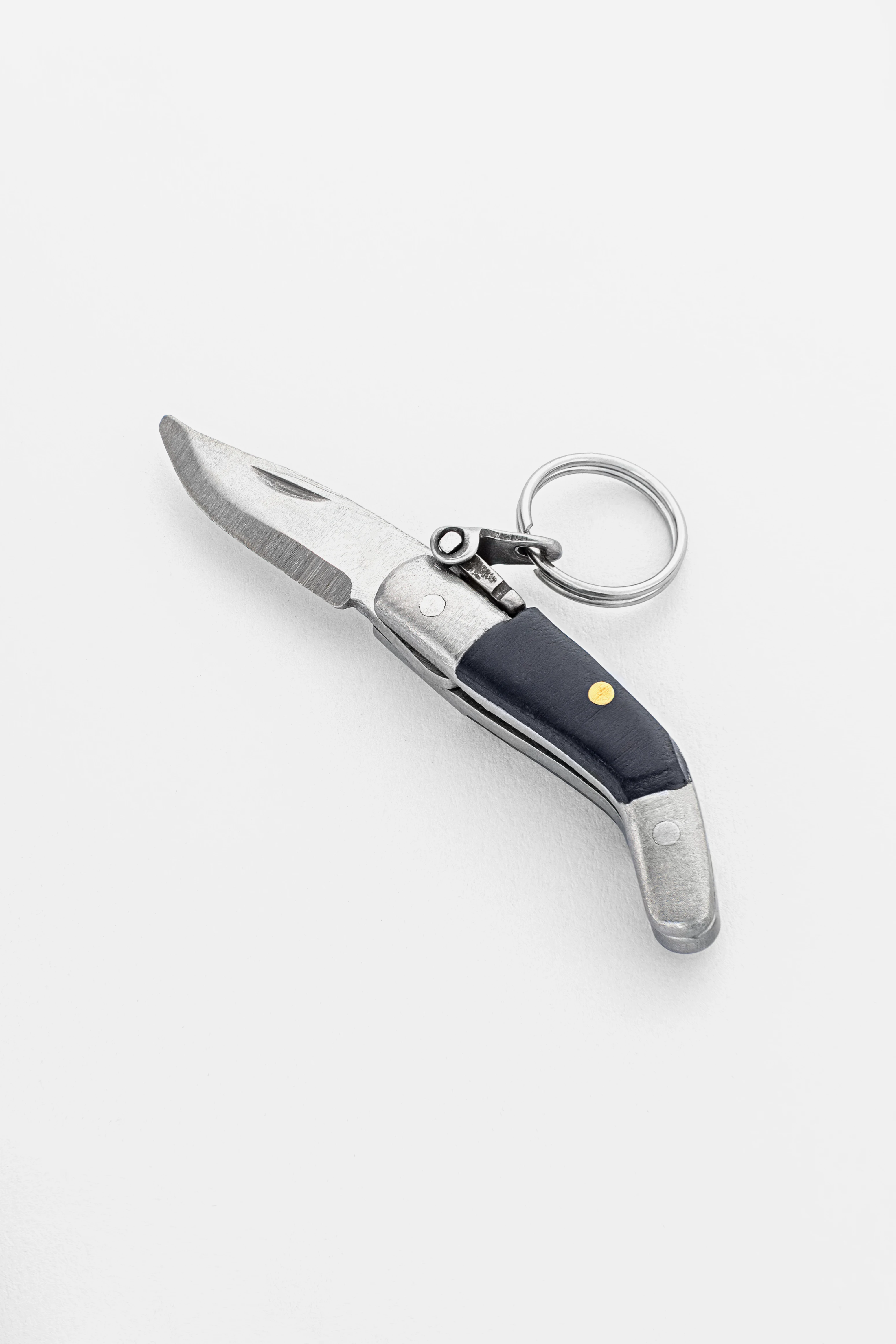
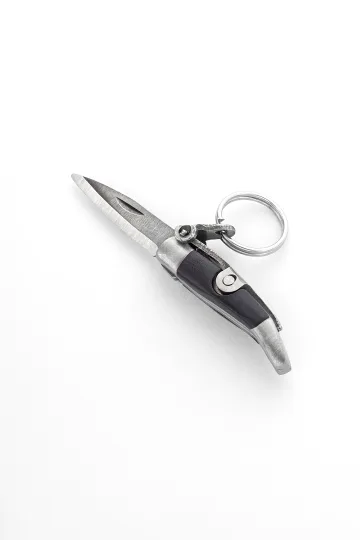
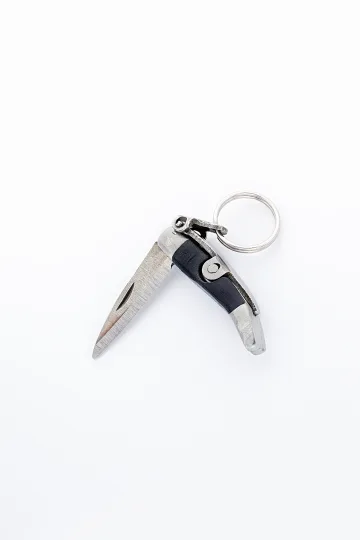
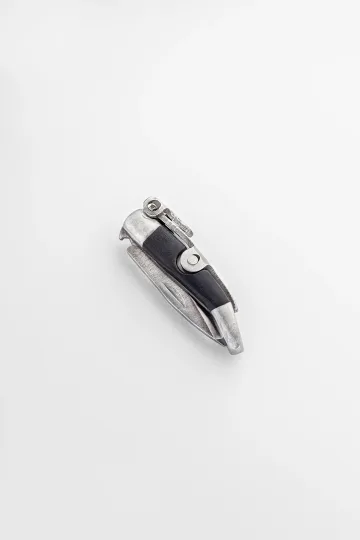
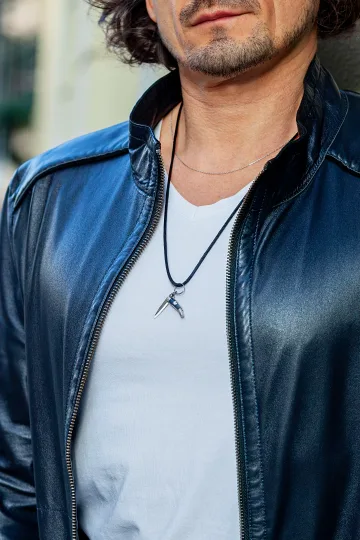
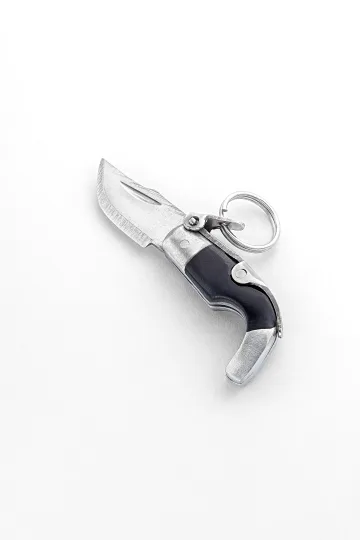
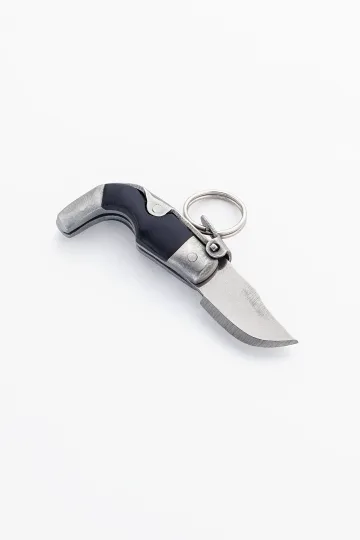
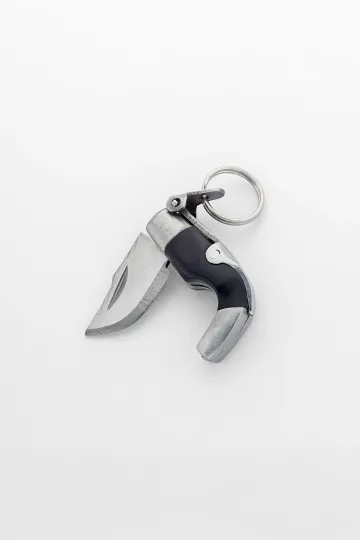
CAPAORA mini knife pendant
The 18th-century Spanish navaja in miniature: 40 mm of stainless steel, a real folding mechanism and a Palanquilla lock that clicks. An affordable gift to remember.
Authentic · Ships from Spain · 14-day returns
Ten Scenarios: Moissanite or Diamond?
1. A proposal. Budget is tight, you want "wow"
Moissanite. For the budget of a modest diamond, you will get an impressive stone.
2. A proposal. Budget is not a constraint, tradition matters
Lab-grown diamond (or natural, if tradition requires "from the ground").
3. A wedding band with a channel of stones
Moissanite. The number of stones multiplies the price difference. Twenty small moissanites cost significantly less than twenty small diamonds.
4. An eternity ring as an anniversary gift
Both options are excellent. A diamond eternity is classic. A moissanite eternity is brighter and more affordable.
5. A men's wedding band with an accent stone
Moissanite. Practicality (9.25 hardness handles daily wear) and affordability.
6. A "second" ring for travel or sport
Moissanite in a silver or steel setting. Affordable, beautiful, and losing it would sting less (though it would still sting, of course).
7. A ring for a couple who both want stones
Moissanite for both. The savings can be invested in metal quality and design.
8. A keepsake to pass down
A natural diamond of top-tier specifications with an international certificate carries the most traditional "heirloom" weight. That said, a ring is a keepsake, not a financial instrument: choose it for what it means, not for what it might be worth later.
9. Replacing a stone in an old ring
Either option. If the setting is valuable (antique, family heirloom), the stone is secondary. Choose by budget.
10. "Simply because it is beautiful"
Moissanite. If you are buying a ring not for an engagement but simply as a piece of jewellery, moissanite delivers maximum beauty for minimum cost. No social expectations. No pressure. Just a beautiful stone on a finger.
And you know what? "Simply because it is beautiful" is one of the best reasons for buying a ring. Not because "you should." Not because "everyone does." But because you love it. That is enough.
Five Things to Do Before You Buy
1. Set a budget. Before you start looking at stones. A written number provides discipline.
2. Define your priority. Size? Status? Sparkle? Ethics? Tradition? A single guiding criterion simplifies the choice.
3. Talk to your partner (if the ring is for both of you). Not about budget. About preferences. Round or oval? White gold or rose? Moissanite or diamond?
4. See the stones in person (or on video). A photograph cannot capture sparkle. Video is better. In person is ideal. If you are in or near London, jewellers along Hatton Garden will let you compare stones side by side. In New York, the Diamond District on 47th Street serves the same purpose.
5. Check the return policy. In case the stone in real life does not match what you saw on screen.
Bonus: note the ring size. Measure in the evening, at room temperature, on the correct finger of the correct hand. Save it in your phone. You will need it more than once.
One more bonus: do not rush. A ring is not milk approaching its expiry date. Good stones do not run out. Good decisions are made calmly.
What Not to Do
Do not be embarrassed about moissanite
Moissanite is not a "cheap substitute." It is a stone in its own right with unique properties. It is not "pretending" to be a diamond: it sparkles differently (brighter, more rainbow-rich), it weighs differently (lighter), and it has its own name.
If someone asks "Is that a diamond?" you can answer: "No, it is moissanite. It sparkles more brilliantly than a diamond." And that will be the truth.
Do not buy without documentation
A stone with no certificate or manufacturer's passport is an unknown quantity. You do not know what you are buying. It might be moissanite. It might be cubic zirconia. It might be glass. Documentation protects you.
Do not choose by photograph alone
A photograph cannot convey the play of light. Video is better, but still not perfect. If you have the chance, see the stone in person. If buying online, make sure a return option exists.
Do not skimp on the setting
The stone can be perfect, but if the setting is crooked, the prongs are thin, and the metal is cheap, the ring will not bring joy. The setting is the "foundation" of the ring. It must be reliable, attractive, and comfortable.
Do not compare with other people's rings
Your ring is your story. It does not matter that a friend has a 2 carat diamond or that a colleague has a moissanite in a platinum setting. What matters is what your ring means to you.
Leave your email, we'll send your discount code. No spam, unsubscribe anytime.
The code arrives by email, valid on your first order.
How Stones Behave in Different Lighting
Sunlight
Both stones are magnificent in sunlight, but in different ways.
Diamond in sunlight gives bright white brilliance with moderate rainbow flashes. The classic "icy" effect. The stone "burns" with white fire accented by touches of rainbow.
Moissanite in sunlight "explodes" with rainbow. The flashes are intense, multicoloured, scattering in all directions. A large moissanite in sunlight literally throws coloured reflections onto surrounding surfaces. Some call this the "disco effect." Some love it; some find it too much.
Incandescent light (warm light)
Both stones take on a "honeyed" hue in warm light. Diamond looks warmer but retains white flashes. Moissanite produces more orange and red flashes (warm-toned dispersion).
LEDs (cool light)
Cool light brings out the "icy" character of both stones. Diamond looks its whitest. Moissanite gives blue and violet flashes alongside the whites. Striking.
Candlelight
By candlelight, the differences between the stones are minimal. Both flicker with a warm, gentle glow. Romantic light in which any stone looks magical.
An overcast day
Diffused light is the least "flattering" for both stones. Sparkle is moderate, dispersion is restrained. But even on a grey day, a well-cut moissanite or diamond continues to "play," just less intensely.
A nightclub (ultraviolet)
If a diamond has fluorescence (around a third of natural and some lab-grown diamonds do), it will glow blue under UV light. Moissanites typically do not fluoresce. This means that in a club with black lights, a diamond may glow while a moissanite will not.
The practical takeaway
If you spend a lot of time outdoors and in the sun, moissanite will reward you with a vivid "fire show" every day. If you prefer understated elegance under any lighting, diamond gives a "calmer" sparkle.
Cut Shape: How It Affects Perception
Round brilliant (57 facets)
The classic for both stones. Maximum brilliance. The most "standard" and recognisable look.
For moissanite, a round cut delivers peak "fire" because each of 57 facets throws its own rainbow beam. The result: intense, even sparkle.
For diamond, the round cut is the "gold standard" for the same reason: 57 facets optimised for maximum light return.
Oval
An elongated shape that visually enlarges the stone by 15 to 20 percent compared with a round of the same weight. Lengthens the finger. Extremely popular for engagement rings.
Moissanite in an oval cut: the elongated shape creates "racing" rainbow flashes along the stone's long axis. A dynamic, lively effect.
Diamond in an oval cut: elegant, svelte sparkle. It can exhibit a "bow-tie" effect (a dark area in the centre due to optical characteristics), which reduces uniformity of brilliance. Choose an oval with minimal bow-tie.
Princess (square)
A modern, geometric look. Good brilliance, but less than round. Corners are vulnerable to chipping.
For moissanite: the square cut creates an intriguing pattern of crisscrossing rainbow flashes. Geometric and beautiful.
For diamond: a popular choice for those who want something different without going entirely off-piste.
Cushion
Square or rectangular with rounded corners. A vintage character. A soft, "enveloping" glow.
Moissanite in a cushion: warm, saturated "fire" with large coloured flashes. Especially good in rose and yellow gold.
Diamond in a cushion: a classic vintage look. Less "icy" than round, more "soulful."
Emerald (step cut)
Rectangular with "staircase" facets. Less sparkle, more "mirror-like" flashes. Shows inclusions and colour more readily than other cuts.
For moissanite: an emerald cut "tames" dispersion, making it less rainbow-rich and more "diamond-like" in character. If the intense rainbow of a round moissanite concerns you, try an emerald cut: it delivers a more restrained but no less beautiful effect.
For diamond: requires high colour (G minimum) and clarity (VS2 minimum), because step-cut facets "open" the stone like a display case.
Marquise
An elongated shape with pointed ends. Maximum visual enlargement of the stone. Stylish and unconventional.
Pear (teardrop)
A blend of round and marquise. Elegant, feminine. Popular for pendants and earrings, but works beautifully in rings too.
Heart
A romantic shape. Requires a larger stone for legibility (from 1 carat equivalent). In moissanite, affordable. In diamond, considerably costlier.
Pairing Engagement and Wedding Rings: A Detailed Guide
The Fit Problem: In-Depth Analysis
An engagement ring (with a stone) and a wedding band (usually plain or with a channel of stones) are worn on the same finger. They must work together: not catch on each other, not scratch, and visually complement one another.
This is a technical problem worth solving before you buy, not after. Many couples purchase the engagement ring first and then struggle to find a wedding band that pairs with it. It is simpler to plan both rings at the same time.
Solutions for Engagement and Wedding Ring Fit
Contour (curved) wedding band. Follows the outline of the engagement ring, "hugging" it. A perfect fit with no gap. Requires bespoke manufacture or purchase as a matched pair with the engagement ring.
Straight wedding band with a gap. If the engagement ring has a low profile (bezel, flush-set stone), a straight band can sit flush without a gap. The simplest solution.
Bridal set. Engagement and wedding rings designed as a single unit. Maximum compatibility. Visual unity. Many jewellers offer sets where both rings "click" together.
Spacer ring. A thin ring (1 to 2 mm) worn between the engagement and wedding rings. Fills the gap, adds a visual element. Can be plain or set with small stones.
Moissanite and Diamond in a Bridal Set
An engagement ring with a centre moissanite plus a wedding band with a diamond channel. Or the reverse. Or both with moissanites. Or both with diamonds.
The key rule: match the colour. If the centre stone is DEF, the channel stones should also be DEF. If the centre stone is GH, the channel should be GH. A mismatch in colour (a white centre and a yellowish channel) catches the eye.
Personalisation: How to Create a One-of-a-Kind Ring
Engraving Techniques and Ideas
Inside engraving: a date, names, coordinates (where you met, where you proposed), a short phrase, a symbol. Laser engraving is invisible during wear. Hand engraving adds a barely perceptible texture.
Outside engraving: patterns, relief, texture. Creates a unique visual character. Especially striking on matte surfaces.
Mixed Stones for Unique Designs
Moissanite in the centre, sapphires on the sides. Diamond in the centre, moissanite halo. Emerald and moissanites. Ruby and diamonds. Combinations of stones allow you to create a ring nobody else has.
Coloured stones (sapphire, ruby, emerald, tanzanite) next to a colourless moissanite or diamond create contrast that makes both stones look brighter. A blue sapphire next to a white moissanite: striking. A red ruby surrounded by small diamonds: a classic.
Unusual setting shapes
Not all rings need to be circular in cross-section. Square, hexagonal, "twisted," split-shank, and open-ring forms create a distinctive look.
Twist designs (two or three "vines" intertwining around the stone) are especially popular for engagement rings. They symbolise the intertwining of two lives.
Metal textures
Polished (mirror finish). Satin (matte sheen). Brushed (directional strokes). Hammered (small dimples, a "forged" look). Sandblast (fine-grained matte).
Combining textures in a single ring: polished prongs on a matte shank, or a satin-finished centre with polished edges. Texture adds depth and individuality without additional stones.
Moissanite and Diamond in Other Types of Jewellery
Earrings
In earrings, moissanite excels. Earrings are in constant motion (swaying, turning with every movement of the head), and moissanite's high dispersion creates a continuous stream of rainbow flashes. Stud earrings with 4 to 5 mm moissanites (equivalent to 0.3 to 0.5 carats each) look impressive and cost sensibly.
For diamonds, earrings are equally a classic format. A pair of diamond studs is a gift that suits any occasion.
Pendants
A single stone on a chain. Moissanite in a pendant sparkles like a small star against the chest. Diamond gives a more restrained, "icy" glint.
For pendants, the stone can be larger without raising eyebrows: a pendant carries none of the social freight of an engagement ring, and a large moissanite pendant looks luxurious rather than "suspicious."
Bracelets
A tennis bracelet (a row of stones along the entire length) in moissanite creates a "river of fire" on the wrist. In diamond, it creates an "icy river." Both are stunning.
A moissanite tennis bracelet costs a fraction of a diamond one (the stone count can reach 30 to 50, and the per-stone price difference multiplies across the full set).
Comparison with Other Stones
Moissanite vs cubic zirconia
Cubic zirconia (CZ) is the cheapest "alternative" to diamond. But it is significantly softer than moissanite (8 to 8.5 on Mohs versus 9.25). CZ scratches, clouds, and loses its sparkle within one to two years of active wear. Moissanite retains its properties for decades.
CZ is fine for costume jewellery and "one-off" pieces. For a ring that will be worn every day, moissanite is incomparably better.
Moissanite vs white sapphire
White sapphire (leucosapphire) has a hardness of 9 (slightly below moissanite). But its refractive index (1.77) is significantly lower than moissanite's (2.65) and diamond's (2.42). White sapphire does not "sparkle" in the familiar sense: it looks more like beautiful glass. For those who value understated brilliance, this can be a plus. For those who want "fire," it is a minus.
Moissanite vs morganite
Morganite (pink beryl) is not an "alternative" to diamond; it is a stone in its own right. A soft pink colour, gentle sparkle, femininity. In rose gold, morganite looks romantic. But its hardness (7.5 to 8) is lower than moissanite's, making it more vulnerable to scratches during daily wear.
Lab-grown diamond vs natural diamond
Physically identical. The difference lies in price (lab-grown costs a fraction) and origin (laboratory vs Earth's mantle).
For wearing: absolutely the same. For ethics: lab-grown is stronger. For budget: lab-grown is stronger.
Stone Size and Perception
"Magic thresholds"
As with diamonds, moissanites have "magic" sizes at which the price takes a jump: 0.5 carat (equivalent), 1.0 carat, 1.5 carats, 2.0 carats. The jump is less pronounced than for diamonds, but it exists.
How visual size depends on cut
A 6.5 mm round stone = equivalent of 1.0 carat. An 8x6 mm oval = equivalent of 1.25 carats (visually larger than a round of the same weight). A 10x5 mm marquise = equivalent of 1.0 carat, but it appears significantly "longer" and "larger" than a round.
If you want maximum visual size: an oval or marquise cut. If you want maximum brilliance: round.
How metal affects size perception
Slim prongs "open" the stone, making it look larger. A substantial bezel "hides" part of the stone behind metal. A halo of small stones visually enlarges the centre stone by 30 to 50 percent.
The Ring as a Family Heirloom
A ring bought today can become a family heirloom over generations. Both moissanite and diamond are chemically stable: a hundred years from now, the stone will look exactly as it did on the day of purchase.
The setting will need maintenance (prong tightening, polishing, possibly resetting after 30 to 50 years). But the stone will endure.
If you think of a ring as a "generational piece," the choice of metal matters more than the choice of stone. Platinum will outlast gold. Gold will outlast silver. The stone (whether moissanite or diamond) will outlast them all.
Passing it down
Diamond is traditionally perceived as an "heirloom" stone. "Grandmother's diamond" sounds more weighty than "grandmother's moissanite." This is a social convention, not a property of the stone. In twenty years, when moissanites are as familiar as today's lab-grown diamonds, this distinction will fade.
If "heirloom" value matters to you and you are confident your grandchildren will share your views on stones, a natural diamond is the "safe" traditional choice. If you believe the world in fifty years will value ethics and beauty above the name on a stone, a moissanite or lab-grown diamond will be received just as warmly.
How to Tell the Story of Your Ring
If it is moissanite
"This is moissanite. A stone first discovered in a meteorite crater in 1893. It sparkles more brilliantly than a diamond. That is physics, not marketing. We chose it deliberately, because beauty matters more to us than a name."
If it is a lab-grown diamond
"This is a diamond grown in a laboratory. The same carbon atoms, the same crystal lattice, the same sparkle. Instead of billions of years in the Earth's mantle, it grew in a matter of weeks. We chose it because it is real in every sense except the geological."
If it is a natural diamond
"This stone formed two billion years ago, ninety miles below the surface. It is older than life on land. We chose it because we wanted a stone with a story longer than any human's."
Each of these stories is beautiful. Each is honest. Each is worthy of a ring that will be worn with love.
Step-by-Step Buying Guide
Step 1: Set a budget
Before looking at stones, decide on a maximum figure. This provides discipline and protects against impulse decisions. The budget covers the stone, the setting, possible engraving, and maintenance.
Step 2: Define your priority
What matters most to you?
Stone size: moissanite delivers the most for the least.
The word "diamond": lab-grown diamond.
Geological history: natural diamond.
Maximum brilliance: moissanite.
Understated elegance: diamond.
Ethics: any lab-grown stone.
Step 3: Choose the cut shape
Round: maximum brilliance, the classic. Oval: visually larger, modern. Cushion: vintage, warm. Princess: geometric, modern. Emerald: restrained, elegant.
For moissanite, if the intense rainbow concerns you: choose emerald or Asscher. They "tame" dispersion.
For moissanite, if you love the rainbow: round or oval. Maximum impact.
Step 4: Choose stone colour
For white metal: DEF (moissanite) or G to H (diamond). For yellow or rose gold: GH (moissanite) or I to J (diamond).
Step 5: Choose the metal
White gold or platinum: classic, cool sparkle. Yellow gold: warmth, tradition. Rose gold: romance, modernity.
Platinum for a "forever" ring. White gold for the best balance of price and appearance. Yellow gold for traditional aesthetics. Rose gold for something different.
Step 6: Choose the setting style
Solitaire: one stone, all attention on it. Halo: visual enlargement, extra sparkle. Three-stone: symbolism, elegance. Vintage: detail, romance. Bezel: protection, minimalism.
Step 7: Determine the ring size
Measure the finger in the evening, at room temperature. Take into account the width of the future ring (for a wide band, go half a size up).
Step 8: Inspect the stone
If buying online: request a video in daylight. Verify the certificate. Confirm the return policy.
If buying in a shop: look at the stone in natural light (near a window). Compare it with neighbouring stones.
Step 9: Inspect the setting
Prongs are even and do not catch on fabric. The shank is smooth with no rough edges. The ring sits comfortably on the finger. The stone does not wobble.
Step 10: Complete the paperwork
Stone certificate (if applicable). Warranty card. Receipt. Exchange and return policy.
Common Purchasing Mistakes
Mistake 1: Choosing by photograph
A photograph cannot convey the play of light. Two stones that look identical in a photo may sparkle entirely differently in life. Ask for video. Or see them in person.
Mistake 2: Skimping on the cut
A stone with a mediocre cut looks dull regardless of colour and clarity. Cut determines sparkle. Do not save money here.
Mistake 3: Buying without documentation
A stone without a certificate or manufacturer's passport is an unknown. You do not know what you are buying. Ask for paperwork.
Mistake 4: Ignoring the setting
A stone can be perfect, but in a crooked, unreliable setting it will not last long. The setting is the foundation. It must be of high quality.
Mistake 5: Guessing the size instead of measuring
A ring that does not fit does not bring joy. Measure the finger properly (in the evening, at room temperature, on the correct hand).
Mistake 6: Buying under pressure
"Last one available in catalogue!" "Sale ends today!" "Just for you!" If a seller is pressuring you, walk away. Good stones do not run out. Good offers do not last a single day. Make the decision calmly, without haste.
Mistake 7: Comparing with other people's rings
Your ring is your story. Size, stone, and metal are chosen by you, not by the standards of friends and colleagues.
Moissanite and Diamond Fifty Years From Now
A forecast
In fifty years, the technology for producing lab-grown stones will be even more refined and even cheaper. Moissanite and lab-grown diamond will be accessible to everyone. Natural diamonds will likely become a niche product for collectors and lovers of the "natural," much as natural pearls are prized today (while cultured pearls dominate the market).
Social perception will change. "Moissanite" will be as familiar a word as "sapphire" or "ruby." Lab-grown diamond will simply be "diamond" (just as cultured pearl long ago became simply "pearl").
The ring you buy today will outlast all these changes. The stone will not change. The setting may require maintenance. But the sparkle and the beauty will remain. And the story you invested in this ring will only grow more precious with the years.
Glossary
Moissanite is a gemstone consisting of crystalline silicon carbide (SiC). Lab-grown. Hardness 9.25 on the Mohs scale.
Lab-grown diamond is a real diamond (crystalline carbon, C) grown under controlled conditions via the HPHT or CVD method.
HPHT stands for the diamond-growing method using high pressure and high temperature.
CVD stands for chemical vapour deposition, a method in which diamond grows layer by layer from a carbon-containing gas.
DEW stands for diamond equivalent weight. Used for moissanites to indicate the size of the diamond that would have the same diameter.
Dispersion is a stone's ability to split white light into a rainbow (spectrum). Moissanite's dispersion is 0.104; diamond's is 0.044.
Refractive index determines how much light a stone reflects back toward the viewer. Moissanite: 2.65 to 2.69. Diamond: 2.42.
The 4C system is the international grading system for diamonds: cut, colour, clarity, carat weight.
Solitaire is a ring with a single centre stone.
Halo is a setting in which the centre stone is surrounded by a ring of smaller stones.
Prongs are the metal "claws" holding a stone in the setting.
Bezel is a setting in which the stone is completely surrounded by a metal rim.
Channel setting is a method in which stones sit recessed in a channel between two walls of metal.
Pave is a setting in which many small stones cover the surface of a ring.
Eternity ring is a ring fully set with stones around its entire circumference.
Fluorescence is a stone's tendency to glow under ultraviolet light.
Fire refers to the rainbow flashes seen when a stone is turned. Caused by dispersion.
Brilliance refers to the reflection of white light from a stone's facets.
Scintillation refers to a stone's flickering as it moves (alternation of bright and dark areas).
Girdle is the "equator" of a stone, the line between the upper part (crown) and lower part (pavilion).
Send a friend a discount code, they save on their first order.
Moissanite and Diamond in Daily Wear: Real-World Experience
The first week
A new ring feels unfamiliar. You notice it on your hand constantly. You turn it, examine it, show it to friends. The stone seems dazzling. This is normal: the "new thing" effect amplifies the impression.
The first month
The ring has "settled." You have adjusted to its weight, shape, and feel. The stone still sparkles, but you have stopped noticing it every second. Occasionally you catch yourself studying it in a shaft of sunlight and smiling.
The first year
The stone has accumulated a thin film of grease (hand cream, lotion, cooking oil). Brilliance has dipped slightly. You clean the ring (soap, brush, warm water), and it sparkles as it did on day one. This moment of "renewal" becomes a small ritual.
The setting has acquired fine scratches (if gold or silver). Platinum has developed its "patina." The stone has not changed.
Five years
Prongs may have loosened slightly. A jeweller tightens them in five minutes. Rhodium plating (if white gold) has been refreshed once or twice.
The stone is exactly as it was on the day of purchase. Neither moissanite nor diamond has changed by a single molecule.
Twenty years
The setting may need restoration: replacement of thinning prongs, polishing, possibly a full reset. The stone is untouched by time.
You look at the ring and you do not remember the carat weight or the colour grade. You remember the moment this ring first slipped onto a finger. And that moment is still warm.
And One More Important Thing
Before we move on to the psychology of choice, it is worth addressing the most common fear among moissanite buyers.
"What if someone asks whether it is a diamond?" Nine out of ten moissanite buyers ask this. The answer has two parts.
First: nobody will ask. People do not walk up to strangers (or even acquaintances) with the question "Is your stone real?" It is rude. In 99 percent of cases, your ring will simply draw compliments: "What a beautiful ring!" And this will be genuine, because a well-cut moissanite truly is beautiful.
Second: if someone does ask, you have a wonderful answer. "It is moissanite. A stone first found in a meteorite. It sparkles more brilliantly than a diamond." This is not a justification. It is an interesting fact that makes your ring even more special.
"What will people think?"
This question comes up more often than one might wish. "What will they think if they find out it is moissanite and not a diamond?"
Honest answer: most people will not distinguish moissanite from diamond and will not ask. Those who do ask are usually driven by curiosity, not judgement. Those who judge... is their opinion worth your money?
Moissanite is not a "cheap imitation of a diamond." It is a distinct stone with its own history, its own properties, and its own beauty. By choosing moissanite, you are not "saving on a diamond." You are choosing a stone that outsparkles diamond, costs sensibly, and carries no ethical baggage.
The paradigm shift
Twenty years ago, choosing "not a diamond" for an engagement ring was considered exotic. Today, it is mainstream. Moissanites, lab-grown diamonds, coloured stones (sapphires, emeralds), even rings with no stone at all: the spectrum of "normal" choices has expanded dramatically.
The tradition of "diamond only" was largely created by a 1940s advertising campaign that tied diamond to engagement. Before that, engagement rings with rubies, sapphires, and emeralds were just as common as those with diamonds.
You are not obliged to follow an eighty-year-old marketing tradition. You can create your own.
The conversation with your partner
The best way to avoid disappointment: discuss the stone choice with your partner before the purchase. Yes, this reduces the element of surprise. But it increases the probability that the gift will be loved.
If your partner dreams of a diamond, buy a diamond (lab-grown if the budget is limited). If your partner does not mind which stone it is, and cares more about size and beauty, moissanite will deliver the maximum result.
If you do not know your partner's preference and would rather not ask: a lab-grown diamond G/VS2 in a classic prong setting of white gold is the "safe" choice that will please the vast majority.
Twenty Facts About Moissanite and Lab-Grown Diamonds
Moissanite is named after Henri Moissan, Nobel laureate in chemistry (1906).
Natural moissanite is found in meteorites.
Moissanite's dispersion is 2.4 times higher than diamond's.
A lab-grown diamond is chemically identical to a natural diamond.
Moissanite is the second-hardest gemstone after diamond.
Moissanite is lighter than a diamond of the same size (density 3.21 vs 3.52).
Moissanite withstands temperatures up to 1,800°C. Diamond up to roughly 800°C.
A lab-grown diamond is produced in weeks. A natural diamond forms over billions of years.
Approximately 90 percent of the world's diamonds are cut in India (the city of Surat).
Moissanite does not fluoresce under ultraviolet light (unlike some diamonds).
DEF moissanite in white metal is indistinguishable from diamond to the naked eye.
Lab-grown diamonds are certified on the same 4C system as natural diamonds.
Moissanite "attracts" grease slightly more than diamond.
An emerald cut "tames" moissanite's rainbow fire, making it more restrained.
A stone of 0.95 "equivalent carats" is visually indistinguishable from 1.00 but may cost less.
The CVD method grows diamond from gaseous carbon at relatively low pressure.
Moissanite was discovered in 1893, but commercial production began only in 1998.
A lab-grown diamond cannot be distinguished from a natural diamond without specialist equipment.
The share of lab-grown stones in the engagement ring market grows by 15 to 20 percent annually.
Both stones are chemically stable and will not change over centuries of wear.
Buying it as a gift? Each one arrives ready to give.
 A branded Zevira box and a little card come with every order.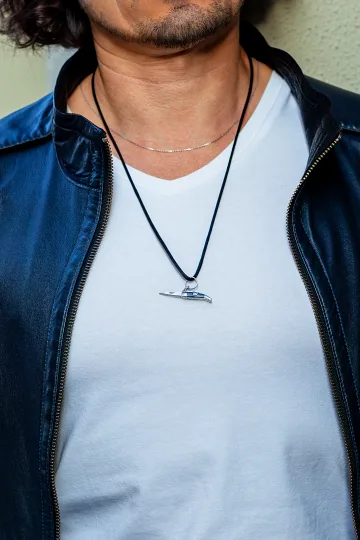




Frequently Asked Questions
Can you tell moissanite from diamond by eye? At sizes up to 1 carat, most people cannot. At larger sizes (2+ carats), a trained eye may notice moissanite's more intense rainbow flashes.
Does moissanite cloud over time? No. It is chemically stable. It does not cloud, yellow, or lose brilliance.
Is a lab-grown diamond "not real"? No. Same atoms, same structure, same properties.
Which is better for an engagement ring? Depends on priorities. "Diamond" as a word and status: lab-grown diamond. Maximum size and sparkle: moissanite.
Will a jeweller be able to tell it is moissanite? Yes, with a tester. This is not a cause for embarrassment.
Does moissanite scratch? In theory, by diamond. In practice, by nothing in everyday life.
Can moissanite be set in an old diamond setting? Yes, if the sizes match.
Do lab-grown diamonds lose value? On resale they do, as do natural diamonds. As production technology becomes cheaper, lab-grown stones may decrease in price over time.
Which stone if money is no object? If "title" matters: natural diamond D/VVS1. If beauty matters: lab-grown diamond or moissanite DEF in platinum.
Which stone if budget is tight? Moissanite. Maximum beauty for minimum cost.
What is DEW? Diamond Equivalent Weight. The size of a moissanite expressed in diamond-equivalent carats. A 6.5 mm moissanite = DEW 1.0 carat.
Can moissanite be ultrasonically cleaned? Yes, without restrictions.
Does black moissanite exist? Yes. It is moissanite with a high concentration of impurities producing a black colour. Used in men's rings and unconventional designs.
Does pink moissanite exist? Yes, though it is rarer than colourless. Usually achieved through coating or treatment.
Which stone if money is no object? If money is not an issue and "title" matters: natural diamond D/VVS1 with an excellent cut. If beauty matters: lab-grown diamond D/VVS1 (save and invest in the setting). If you love "rainbow fire": moissanite DEF in a platinum setting.
Which stone if budget is limited? Moissanite. For a modest budget, you will get a stone that sparkles more brilliantly than diamond, will last decades, and will look luxurious on the hand.
Conclusion: The Stone Does Not Define the Love
Moissanite and lab-grown diamond are two worthy options for a ring that will be with you for years to come. Moissanite sparkles more brilliantly. Diamond carries the weight of tradition. Both are beautiful. Both are durable. Both are ethical.
The choice between them is not a question of "better or worse." It is a question of priorities. What matters more to you: maximum sparkle or classic status? A larger stone or a familiar name? Rainbow fire or icy brilliance?
No stone can create love. No stone can destroy it. A ring is a symbol, not a cause. And the beauty of that symbol is determined not by the price tag or the letters on a certificate, but by what it means to two people.
Choose with your heart. And whatever your choice, it will be the right one.
Final Comparison Table
| Criterion | Moissanite | Lab-Grown Diamond | Natural Diamond |
|---|---|---|---|
| Brilliance | Maximum | High | High |
| "Fire" (rainbow) | Very pronounced | Moderate | Moderate |
| Hardness | 9.25 | 10 | 10 |
| Durability | Decades+ | Centuries+ | Centuries+ |
| Cost | Low | Medium | High |
| Ethical standing | Full | Full | Depends on source |
| Certification | Manufacturer | Gemological lab (GIA, IGI) | Gemological lab (GIA, IGI) |
| Traditional heirloom standing | Emerging | Emerging | Established |
| Distinguishable from diamond? | At 2+ carats by a trained eye | No (without equipment) | The benchmark |
| Visual size per budget | Maximum | Medium | Minimum |
Wear the symbol, don't just read about it. These are in stock:
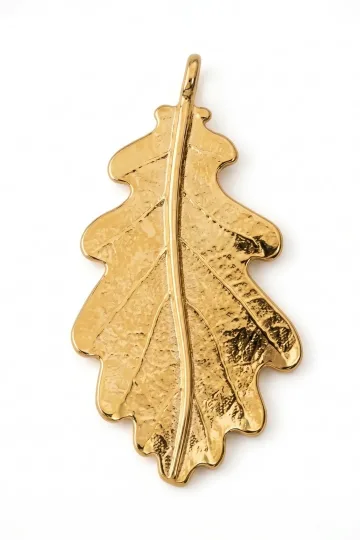
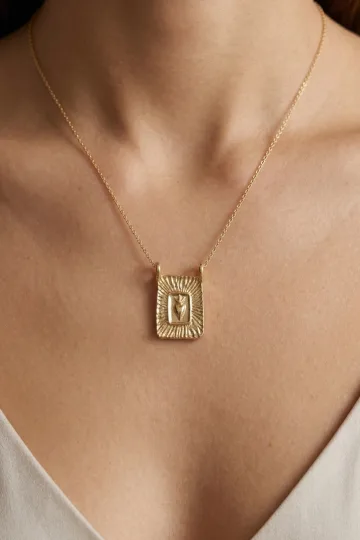
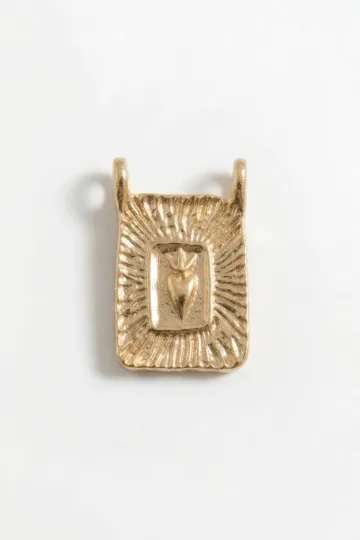
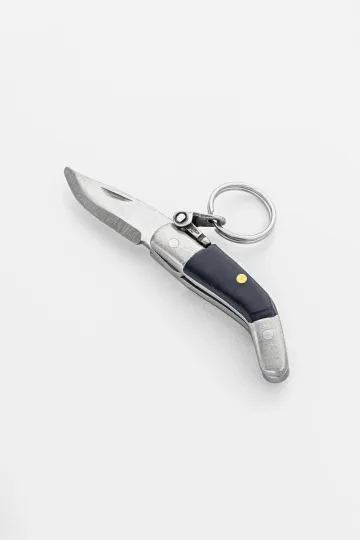
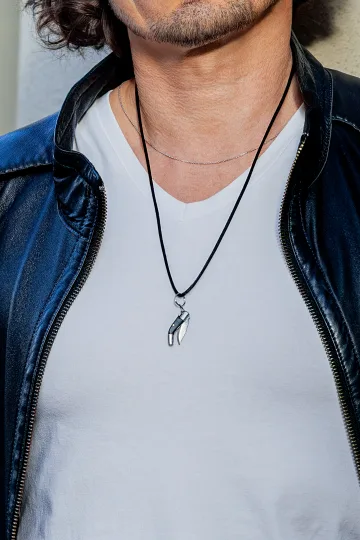
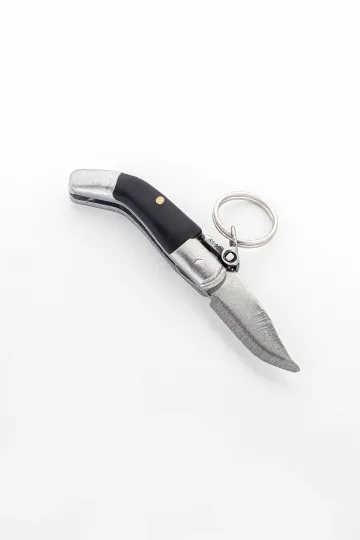
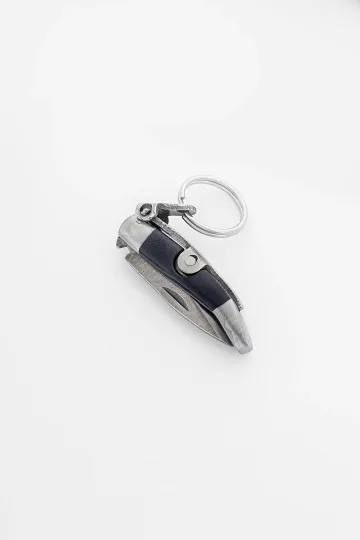
Buyer's Summary
Moissanite: sparkles more brilliantly than diamond, harder than everything except diamond, costs a fraction of the price, ethical, does not cloud, does not scratch.
Lab-grown diamond: a real diamond, chemically identical to natural, costs a fraction of natural's price, certified on the 4C system, ethical.
Natural diamond: a geological rarity, billions of years of history, tradition, status.
For 80 percent of buyers: moissanite DEF or lab-grown diamond G to H / VS2, excellent cut.
For maximum size: moissanite.
For the word "diamond": lab-grown diamond.
For a traditional heirloom: natural diamond D to F / VVS to IF with an international certificate.
For everyone: the stone that makes you smile.
Silver and gold jewellery, wedding bands, symbolic pendants, paired sets.
A Final Word
We have written more than twenty thousand words about two stones. About silicon carbide and crystalline carbon. About refractive indices and dispersion. About prongs and bezels. About platinum and gold.
But in the end, choosing a ring is not about chemistry and not about physics. It is about two people who have decided to be together. The stone on a finger is a visible sign of an invisible decision. It does not create the relationship. It symbolises it.
Moissanite symbolises no less than diamond. Lab-grown diamond symbolises no less than natural. Because a symbol is defined not by its material, but by the meaning you place in it.
Meaning is decided by the wearer. Not by the market. Not by marketing. Not by the neighbours.
Choose what resonates with you. Wear it with joy. And may your ring tell your story.
About Zevira
Zevira makes jewellery in the artisan tradition of Albacete, Spain. We work with moissanites and lab-grown diamonds by choice: for us they are stones free of ethical compromise, with predictable quality and an honest price, the kind that make rings built to last for decades.
What you will find with us related to this article:
- Engagement rings with moissanite in round, oval, cushion, and princess cuts
- Lab-grown diamond rings across colour and clarity grades, set for white and yellow metal
- Solitaires, halos, and three-stone designs
- Matching engagement and wedding ring sets in a single style
- Eternity rings with a channel of stones along the upper half or the full circumference
- Earrings, pendants, and tennis bracelets featuring the same stones
Every piece can be personalised with engraving, with the option of personal engraving. Sterling silver 925 and 14 to 18K gold.
Zevira creates artisan jewellery inspired by Spain. Rings with moissanites and diamonds in limited editions, made from quality materials.
#MoissaniteVsDiamond #MoissaniteOrDiamond #LabGrownDiamond #LabCreatedDiamond #MoissaniteRing #EngagementRing #WeddingRing #MoissaniteReview #LabDiamond #StoneComparison #Jewellery #Zevira #MoissaniteColour #WhatStoneToChoose