Spanish Jewelry Tradition: A Complete Guide to Regions, Techniques and Symbols
Introduction: Why Spain Is a World Apart in Jewellery
When people think of Italian jewellery, they picture Florence, Rome, high-karat gold and lustrous pearls. French jewellery conjures Paris and delicately refined pieces. British jewellery brings to mind Victorian mourning brooches and royal coronations.
Spanish jewellery sits in its own category entirely, and it is considerably more complex than any of those comparisons suggest. This is not one unified school, not one dominant style. It is at least six distinct regional traditions, each with its own techniques, symbols and history. Toledan damasquinado bears no resemblance to Galician azabache. Cordoban filigree silver looks nothing like the Catalan enamelled rosettes. The knife-craft of Albacete is a world away from the Moorish goldsmithing of Granada.
Behind all of it lie eight centuries of Moorish influence that left traces everywhere. Spanish jewellery is a singular blend: Roman, Gothic, Islamic, Reconquista, Empire, New World colonies, Baroque and the present day. No other European school has passed through such a layered cultural history.
For American collectors and travellers who have encountered Spanish pieces, the variety can feel overwhelming. Toledo and Seville alone represent completely different aesthetics and different craft lineages. This guide cuts through that complexity and explains what Spanish jewellery tradition means today, how it divides by region, which techniques are still alive, and what deserves a place in your collection.
Wear the symbol, don't just read about it. These are in stock:






The History of Spanish Jewellery: From Ancient Iberia to the Present
The Iberians and Phoenicians (around 1000 BC)
Long before Rome, the Iberian Peninsula was home to indigenous tribes who worked metal with considerable skill. The Phoenicians, who founded the city of Gadir (present-day Cadiz) around the 11th century BC, brought Levantine metalworking techniques with them and traded them to local craftspeople. From this exchange grew the first distinctly Iberian jewellery tradition.
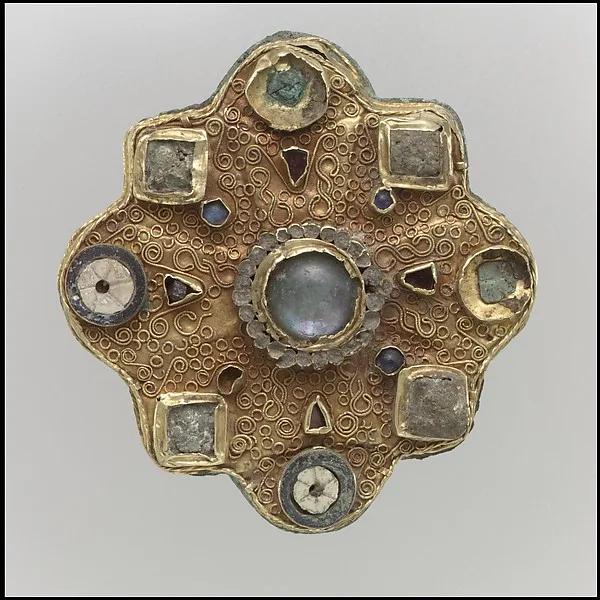
Iberian pieces from this period, fibulae (clasps), torques, pectoral discs, are characterised by high technical quality within seemingly simple geometric forms. Finds from southern Spain show gold pectorals with granulation and fine filigree-like ornament, already showing the preference for intricate surface work that would define Spanish jewellery for three thousand years.
Rome in Hispania (200 BC to 400 AD)
When Rome conquered the peninsula, it found metalworking traditions already in place. Roman jewellers did not displace them but built on top of them. Workshops at Tarraco (modern Tarragona) and Emerita Augusta (modern Merida) served both legionaries and the romanized local aristocracy. Characteristic finds: gold signet rings with carved gemstones, fibulae, pearl earrings, bracelets with serpent motifs. The National Archaeological Museum in Madrid holds an outstanding collection from this period.
Visigoths and the Guarrazar Treasure (500 to 711)
After the fall of the Western Roman Empire, the Visigoths brought their own jewellery tradition to the peninsula. The era produced one of the greatest jewellery hoards in world history: the Guarrazar Treasure, discovered near Toledo in the 19th century.
The hoard contains votive crowns from Visigothic kings of the 7th century. The crown of King Recceswinth (around 653 to 672) is set with sapphires and pearls, and hangs with gold letters spelling out a dedicatory inscription. It is one of the few surviving masterworks of early medieval goldsmithing anywhere in Europe. Copies are displayed at the Prado; the originals are in the Guarrazar Museum in Toledo.
Visigothic style: large metal plates, inlay of coloured glass and stones, eagle fibulae. Heavy, powerful, what later writers called "barbarically beautiful."
Al-Andalus: Moorish Jewellery (711 to 1492)
This is the defining period for Spanish jewellery identity. The Moorish presence transformed Spanish craft irrevocably.
The Cordoban Caliphate of the 9th and 10th centuries was one of the great cultural centres of the medieval world. Cordoban masters commanded filigree, cloisonne enamel, geometric and calligraphic ornament, and the forging of fine steel. Cordoban jewellery was exported across Europe. Workshop pieces from the caliphal court were considered unsurpassable by contemporaries in France, Germany and England.
The Mozarabic style, created by Christian craftspeople working within a Moorish cultural environment, produced a distinctive synthetic aesthetic: Christian symbols in Moorish ornamental frames, gold in Islamic technique carrying Latin inscriptions. This cross-pollination was unique in medieval Europe. Nowhere else did Islamic and Christian visual cultures merge so thoroughly at the level of individual craft objects.
The Reconquista: Synthesis of Traditions (1085 to 1492)
The gradual Christian recapture of the peninsula did not mean the erasure of Moorish craft heritage. On the contrary, something new emerged from the encounter.
The Mudejar style placed Islamic techniques and ornament in the service of Christian themes and patrons. Toledan damasquinado (gold inlay into steel) descends directly from Moorish armorers' workshops. The filigree of Salamanca and Cordoba traces back to the same tradition. Reconquista Spain created a cultural crossroads that no other European country has experienced before or since.
The Habsburg Period: Gold from the New World (1516 to 1700)
Isabella and Ferdinand completed the Reconquista in 1492 with the fall of Granada and in the same year sponsored Columbus. This launched the Spanish Empire and opened the flow of gold and silver from the Americas.
Under Carlos I (Holy Roman Emperor Charles V) and his son Philip II, the Spanish jewellery industry reached heights that no other European court could match. Royal portraits of both monarchs are living documents of 16th-century Spanish jewellery: massive gold chains, Colombian emeralds in high settings, extraordinary pearls, insignia of chivalric orders. Colombian emeralds from the Muzo mines, silver from Potosi, gold from Peru all passed through Seville and into Spanish workshops. The galleon trade delivered metal to Spain at a scale that made gold and silver almost commonplace. This is why Spanish jewellery of the 16th and 17th centuries has a particular heaviness and abundance: not poverty of imagination but richness of material.
The Bourbon Court: French Influence (1700 to 1808)
After the War of Spanish Succession, the French Bourbon dynasty took the throne. Court fashion shifted immediately: Spanish jewellery became lighter, more refined, French forms displacing the heavy Baroque. Neoclassicism brought cameos, fine chains, pastel stones (topaz, citrine, chrysoprase) and smaller scale. Madrid jewellers adapted to Parisian taste without entirely abandoning regional traditions.
Goya's Spain: The Folk Dimension (1800 to 1828)
Francisco Goya, the painter who witnessed both the Enlightenment and the Napoleonic invasion, produced an encyclopedia of Spanish jewellery in his portraits. The maja, the working-class city woman he painted repeatedly, wears criollas earrings, a cross at her throat, and a peineta comb in her hair. The Duchess of Alba in Goya's famous portraits wears pieces that document exactly what Spanish upper-class women chose in the early 19th century.
The Napoleonic Wars (1808 to 1814) damaged Spanish jewellery production severely. Many workshops failed, materials became scarce, commissions dried up. But folk traditions survived: azabache in Galicia, damasquinado in Toledo, silver filigree in Cordoba continued through the crisis.
The Modernista Movement in Barcelona (1885 to 1910)
The Catalan Modernisme (Art Nouveau) movement was the most internationally significant Spanish contribution to world jewellery at the turn of the century. The central figure was Lluís Masriera (1872 to 1958) from the Barcelona jewellery family Masriera.
Masriera worked in plique-a-jour enamel, a technique in which enamel cells have no metal backing and transmit light like stained glass. His fairy brooches, floral pectorals, and pieces with oceanic themes are now museum objects and auction house staples. He absorbed the influence of Rene Lalique but created a distinctly Mediterranean version of Art Nouveau: warmer palette, motifs drawn from southern Spanish nature, a different relationship between figure and ornament.
The Barcelona house of Bagués, founded in 1839, is one of the oldest operating jewellery houses in Spain. During the Modernisme era, it supplied the Barcelona bourgeoisie whose taste was shaped by Gaudi and Domènec i Montaner. The Madrid house of Pedro Duran, founded in 1886, became the symbol of the classical Madrid high-jewellery tradition.
The 20th Century and Democratic Spain
The Spanish Civil War (1936 to 1939) and the Franco era (1939 to 1975) set the jewellery industry back. The regime promoted traditional craft as national identity, which helped preserve damasquinado in Toledo and pilgrimage jewellery in Santiago, but the cultural isolation meant the industry fell behind European trends. After Franco's death and the constitution of 1978, Spain entered a cultural explosion. Regional identities that had been suppressed, Catalan, Galician, Basque, found new expression in craft and jewellery. Independent workshops opened across the country, combining historical techniques with contemporary design.
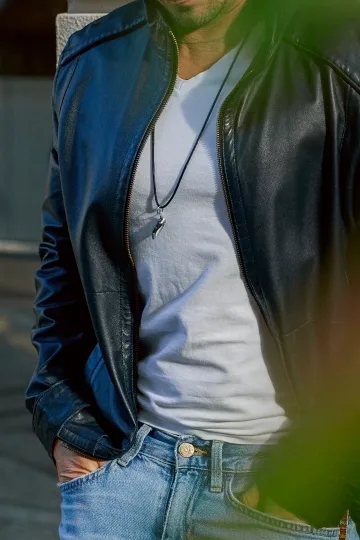
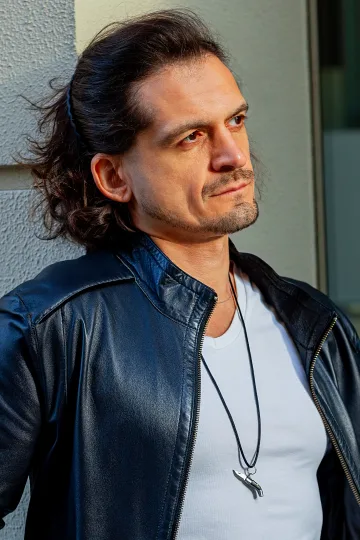
Spanish silver on black cloth and tanned skin. Leave the flimsy trinkets to the tourists.
What to wear Spanish jewellery with
A Spanish piece almost always carries meaning, and I build the look so that meaning reads clearly instead of drowning in shine. Here is what actually works, sorted by occasion.
What do I wear Spanish silver with every day? For daily wear I recommend fine silver filigree or a small damascene pendant on a thin chain over a white shirt or a linen dress. A light top lifts the metal, and the black-and-gold contrast of damascene reads as a crisp, almost graphic accent. I suggest keeping to one symbol rather than a stack: a Spanish piece likes air around it.
And where does black azabache go? Azabache I suggest with dark or muted clothing: burgundy, graphite, deep blue, black. On oxidised silver the black stone looks like a ready-made severe accent, almost gothic. Tanned skin carries it especially well, so in summer I more often choose azabache over pale pearl.
How do I build an evening look? For evening I choose a filigree medallion under an open neckline and add a second layer: a thin chain higher up, the medallion lower down. The Spanish tradition happily mixes metals, so oxidised silver and gilded highlights sit naturally in one set rather than by accident. A dark dress in a rich colour works better here than pastel.
And for a fiesta or a wedding? For a fiesta, a flamenco evening or a family celebration I recommend playing at full volume: large pendientes earrings with hair pinned up, pearls in several strands, a bold medallion. Big earrings ask for a bare neck and gathered hair, or they get lost. If the look has black lace or a mantilla, silver and azabache support it more precisely than gold.
Who does Spanish jewellery actually suit? Anyone who loves a piece with weight and history rather than light seasonal costume jewellery. Two rules that never fail. First: I match length to the neckline, a short pendant to a high collar, a long one to an open one. Second: no more than two symbols in one look, or each one loses its voice.

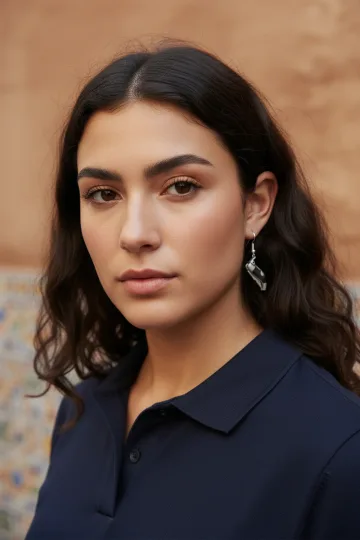
Turn on your camera, pick earrings, a pendant or a ring, and see the piece on yourself in real time.
Switch items in one tap.
Everything runs in your browser: no photo or video is ever uploaded.
Regional Traditions in Depth
Galician Filigree and Azabache
Galicia's jewellery tradition is the most Celtic in character of any Spanish region. Its two signature materials are azabache (black jet, a fossilised wood mined in Asturias) and silver, worked in the particular flat-patterned filigree that differs from the rounder Cordoban style.
Galician filigree tends toward wider, more spread-out compositions, as if the craftsperson is working to fill a defined flat surface. The filigree of Santiago de Compostela is closely tied to the pilgrimage tradition: scallop shells, pilgrim staffs, the Cross of Santiago rendered in fine silver wire. The city's goldsmiths have maintained unbroken lineages since the 12th century, when the pilgrimage trade first created demand for devotional jewellery.
Azabache carving is a separate specialty. The carved pieces, higas (protective fists), animals, faces, miniature pilgrims, require different skills from metalwork. The stone is relatively soft and responds well to detail carving, but it is brittle and fractures if dropped. Azabache masters in Santiago still produce pieces using tools and methods that have not fundamentally changed in five hundred years.
Cordoban Silverwork
Cordoba was the capital of Islamic Spain from the 8th to the 11th century, and the city's craft tradition bears that legacy directly. Cordoban silver filigree is the most technically sophisticated version of the technique anywhere in Spain. The wire is finer, the compositions denser, the three-dimensional structures more complex than in other regional schools.
The historic Jewish quarter of Cordoba, the Juderia, is where most surviving traditional silverwork workshops are concentrated. The annual Feria de la Plata (Silver Fair) draws buyers and craft enthusiasts from across Spain. A certified Cordoban filigree piece carries marks from the local guild that trace back to craft regulations established in the 13th century.
Toledo Damasquinado
Toledo's name is inseparable from the art of damasquinado: the inlay of gold and silver wire into blackened steel. The technique arrived via Moorish metalworkers and was refined over centuries in Toledo's blade-making tradition. Toledo steel was famous across Europe for its quality. The same workshops that forged swords also developed the inlay work that decorated them.
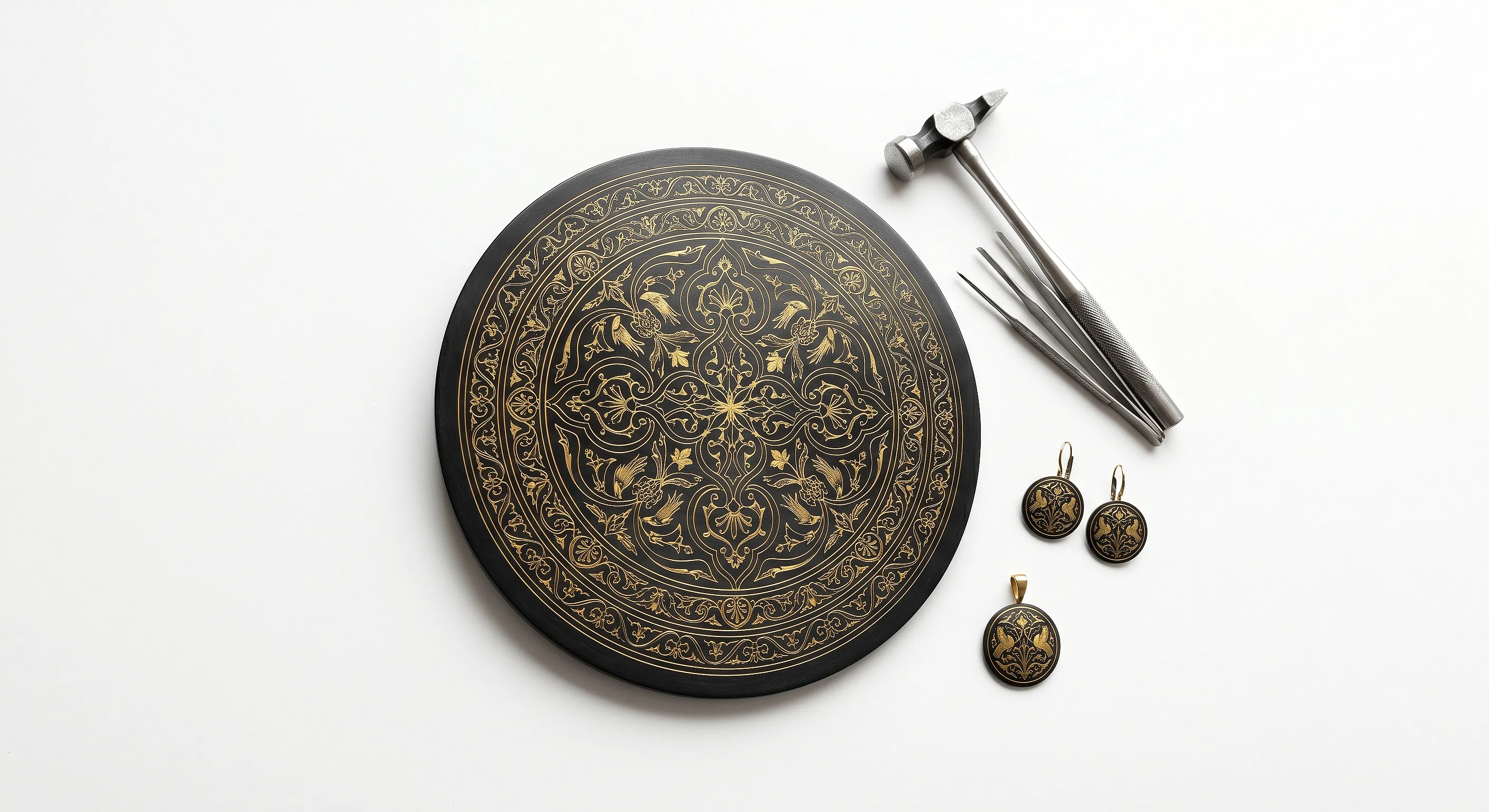
A genuine Toledo damasquinado piece begins with a steel plate that is lightly scored in a crosshatch pattern. Gold wire is then hammered into the surface along these channels, and the steel is subsequently blackened through oxidation. The result is a permanent bond: the gold cannot be removed without destroying the base. This distinguishes authentic damasquinado from printed imitations, where the pattern simply sits on the surface.
Authentic Toledo damasquinado carries a certification from the Toledo chamber of commerce. The "hecho en Toledo" mark is the standard to look for. Pieces without it may be replicas made in India or Pakistan with printed patterns rather than inlaid wire.
Ibizan and Balearic Folk Jewellery
The Balearic Islands have a jewellery tradition that sits apart from mainland Spain. The most internationally famous product is Majorcan simulated pearl, developed in the late 19th century by a Mallorcan craftsman who discovered that coating glass beads with a specific fish-scale solution produced a lustre nearly indistinguishable from natural pearl. The technique was refined over generations and became a genuine island industry.
Beyond the pearl industry, Ibiza and Mallorca have a folk jewellery tradition tied to local costume. The emprendada, a layered necklace of gold and coral worn with traditional Ibizan dress, is among the most distinctive regional jewellery forms in Spain. These pieces were assembled over generations in individual families, each coral bead and gold fitting added by successive wearers. The emprendada has become a symbol of Ibizan cultural identity, worn at festivals and important family events.
Andalusian Pieces
Southern Spain's jewellery tradition is the one most visible in the international imagination of Spain. Flamenco dress requires specific jewellery: large criollas hoop earrings, the peineta high comb, pearl chokers, medallions. The aesthetic is one of maximum decorative presence matched to dramatic visual impact.
Seville and Granada each have distinct silver traditions. Seville's jewellery is tied to the feria and Holy Week processions: the images of the Virgin that are carried through the streets during Semana Santa wear extraordinary crowns, mantles and jewellery that represent centuries of devotional donation. Seville's jewellers have long specialised in the religious pieces that surround these images, and the skills required for that work feed back into secular production.
Granada preserves a direct line to its Moorish heritage. The city's jewellery tends toward geometric patterns, eight-pointed stars, and calligraphic ornament derived from the arabesque decoration of the Alhambra. Workshops in the Albaicin neighbourhood, the old Moorish quarter, are the most direct inheritors of this tradition.
Moorish and Visigothic Influence
The influence of Al-Andalus on Spanish jewellery cannot be overstated. Filigree came to Spain from the Middle East via North Africa and was so thoroughly absorbed that it now feels native. Damasquinado began as a technique from Damascus. The geometric star patterns that appear in Toledan and Granadan jewellery derive from Islamic tile and stucco decoration translated into metal.
The Visigothic contribution is less visible today but equally significant historically. The Visigoths introduced cloisonne enamel to the peninsula and established the tradition of large devotional gold objects that the Moorish craftspeople then built upon and refined.
What makes Spanish jewellery singular is that these two pre-medieval layers, Islamic and Visigothic, were never fully erased by later Christian European influence. France adopted Gothic forms wholesale. England developed its own insular craft tradition. Spain retained, beneath its European surface, the more complex aesthetic inherited from multiple conquests and cultures.
Religious Jewellery Traditions
Spain's Catholic heritage is woven into its jewelry in ways that go well beyond crosses and saints' medals. The Reconquista, the seven-century project of reclaiming the peninsula for Christianity, generated a whole genre of military-religious jewelry: crosses that are also swords, insignia of chivalric orders, devotional pendants tied to specific shrines and relics.
The Cruz de Caravaca is among the most widely worn religious pieces in Spain. A double cross form associated with the town of Caravaca de la Cruz in Murcia, it is believed to protect against illness and misfortune. The story behind it involves a fragment of the True Cross supposedly brought to Spain in the 13th century, though the specific form of the double cross appears earlier in Byzantine tradition.
The scapular is another specifically Catholic jewellery form that is deeply embedded in Spanish devotional culture. Two small squares of cloth or medals connected by cords, worn front and back, the scapular signals membership in a Marian confraternity and is given to children at their first communion in many Spanish families. Jeweled versions in gold and silver, replacing cloth with precious materials, have been produced for wealthy patrons since the 17th century.
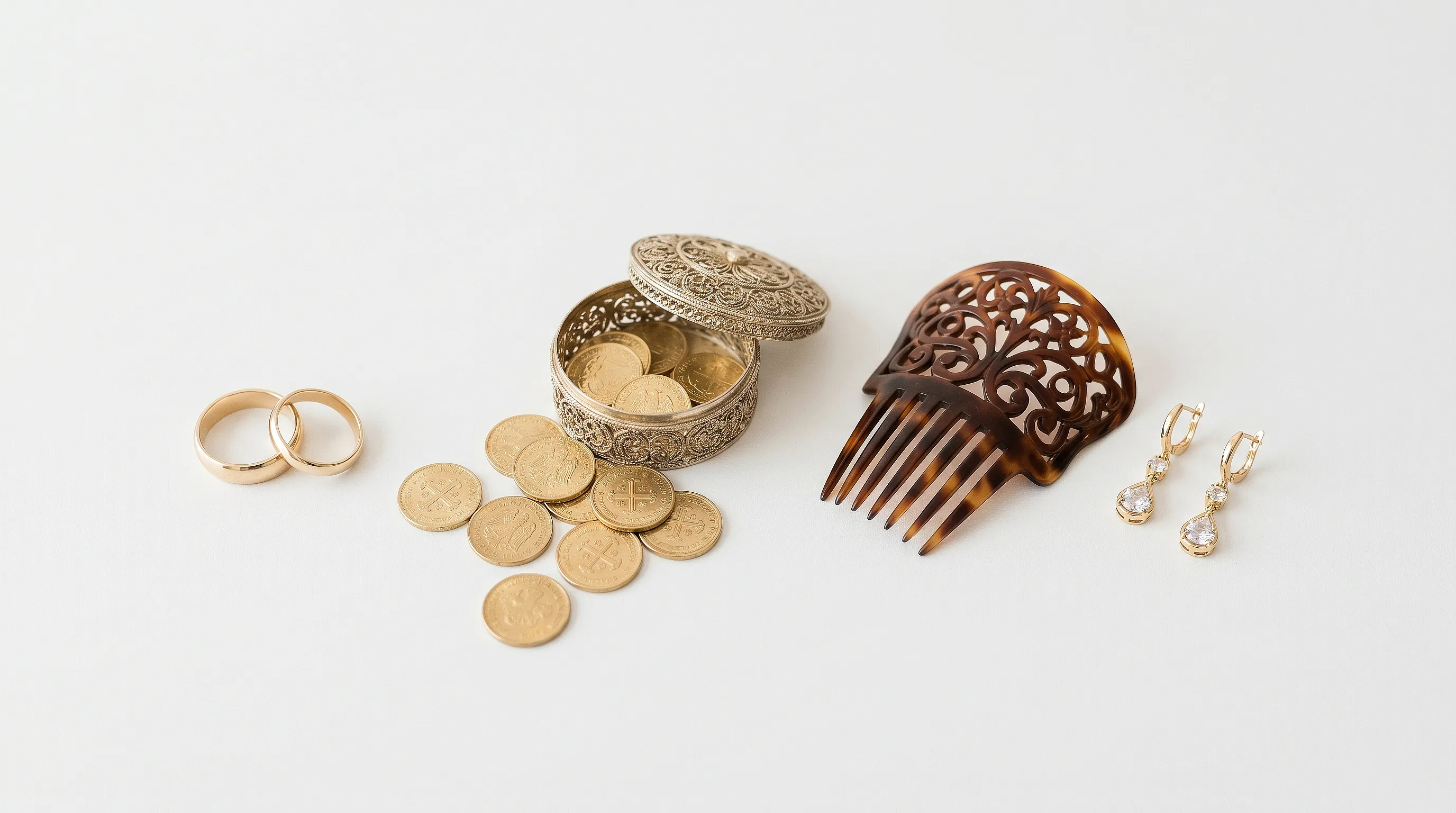
The arras matrimoniales, thirteen gold coins exchanged between bride and groom at a Spanish wedding, are simultaneously a legal tradition dating to Roman Hispania and a religious sacrament blessed by the priest. The silver or gold caskets designed to hold the arras are a separate jewellery genre. Their production in Toledo and Seville dates back to the 17th century.
Holy Week (Semana Santa) is the most spectacular display of Spanish religious jewellery. The brotherhood floats that process through Seville, Malaga, Granada and dozens of other cities carry images of the Virgin and Christ under crowns, halos and mantles encrusted with donated gems and goldsmiths' work accumulated over centuries. This devotional jewellery is the most important client work that Andalusian goldsmiths produce.
Customer reviews
Zevira is a real jewellery shop. Genuine payments, deliveries and customer thank-yous.
🥰🥰🥰 gracias
Ok, ¡gracias! 🙂
Materials and Techniques
Silver
Silver dominates Spanish folk jewellery. It is the material of choice in Galicia, Andalusia, Salamanca, Albacete. Spanish sterling (925 standard) has been the norm since the 19th century. The jewellery guilds of Cordoba and Seville historically specialised in silver and developed their techniques around it. Oxidised silver, darkened through controlled chemical treatment, gives many Spanish pieces their characteristic contrast between bright highlights and dark backgrounds.
Gold
In Catalonia and Madrid, gold has always been preferred for high-end work. 18-karat gold (750 standard) is the Spanish standard for serious commissions. The gold tradition in Spain was dramatically enriched by the colonial trade: from the 16th century onward, Spanish jewellers had access to gold at a scale and price point unavailable elsewhere in Europe.
Jet (Azabache)
Fossilized wood, mined in Asturias, black, light and capable of taking a high polish. Galician and Asturian craft made it into a distinct specialty. The protective properties attributed to azabache, specifically its supposed ability to deflect the evil eye, made it the material of choice for children's amulets across Spain and Latin America for centuries.
Coral
Mediterranean red coral was historically the material for children's amulets and women's necklaces along the Levantine coast and in the Canary Islands. A coral branch in silver, given to an infant as a first protective object, appears in Spanish portrait painting from the 16th century onward. Today Mediterranean red coral is a protected and strictly regulated material, so this is best understood as a historical practice rather than a basis for new pieces. Antique and family heirloom coral survives in households that maintain older devotional traditions.
Enamel
Cordoba produced cloisonne enamel during the caliphate period. Catalan Art Nouveau produced the most technically demanding enamel in Spain: plique-a-jour, in which translucent coloured enamel fills wire cells with no metal backing, so that light passes entirely through the piece. The technique is extraordinarily labour-intensive and the results are fragile. Authentic Masriera-school plique-a-jour pieces are now extremely rare and correspondingly valuable.
Majorcan Pearl
The Majorcan pearl industry, established in the 1890s, produces a simulated pearl of genuine quality. The technique involves coating glass or ceramic beads with essence d'Orient, a solution derived from fish scales, in multiple layers. The resulting lustre is close to natural pearl, and the spherical consistency achieves a uniformity that natural pearls rarely attain. Majorcan pearl is a legitimate product with its own craft tradition, not merely an imitation.
Upload a photo of your pet, someone you love, or an object. We'll build a 3D model and hand-cast it in pewter.
Jewellery in Spanish Folk Dress
Regional folk costume in Spain is inseparable from its jewellery. Each region had a specific ensemble of pieces worn with traditional dress at festivals, weddings and religious celebrations.
Andalusian traje de flamenca requires its specific jewelry. The criollas earrings, large gold hoops that can reach several centimeters in diameter, frame the face dramatically. The peineta, a tall ornamental comb that anchors the mantilla lace veil, is itself a jewelry object: the finest peinetas were carved from tortoiseshell and inlaid with gold. Strands of pearls, worn in multiples, complete the look.
Galician traditional dress pairs with silver filigree in the regional style: flat, openwork compositions in cross and shell motifs. The complete bridal ensemble from some Galician villages includes a silver filigree necklace, matching earrings, a cross pendant, and a decorative pin.
Aragonese regional dress uses gold pieces with specific local forms, including an elaborate pendant brooch called the joya aragonesa that appears in regional portrait paintings from the 17th century onward.
Ibizan traditional dress centres on the emprendada necklace: multiple strands of coral and gold assembled over generations, worn only at the most important family and community occasions. An old emprendada can represent the combined jewellery acquisition of four or five generations of women in a family.
The traje regional of Salamanca includes elaborately worked silver buttons (botones salmantinos) that covered the front of the jacket and the sides of the trouser leg. These buttons, cast in low-relief silver with specific regional motifs, are considered the most characteristic folk jewellery of the Castilian plateau. Antique sets of Salamanca buttons are among the most sought-after Spanish jewellery collectibles.
Famous Historic Pieces and Craftsmanship
The Guarrazar Treasure, discussed above in the history section, represents the highest surviving achievement of early medieval Spanish goldsmithing. The crown of King Recceswinth is without question one of the finest pieces of goldsmithing from any culture in the 7th century.
The Order of the Golden Fleece collar, as worn by the Spanish Habsburgs, is another benchmark. While the original order was Burgundian, the Spanish version of the collar became distinctly Spanish in its execution and accumulation of devotional pendants and heraldic elements. The Habsburg collection, much of which ended up in the Vienna Kunsthistorisches Museum, documents the peak of Spanish court jewellery production.
Lluís Masriera's plique-a-jour pieces from around 1900 to 1920 represent the most technically ambitious work in Spanish Art Nouveau. His fairy pendants, particularly the series depicting winged female figures in translucent blue and green enamel against gold, are considered masterworks of the international Art Nouveau period rather than merely regional examples.
The silver altar frontals of Cordoba cathedral, and the jewellery accumulated on the image of the Virgen de la Macarena in Seville, demonstrate the continuity of Spanish religious goldsmithing from the medieval period to the 20th century. The Macarena's jewellery collection includes pieces donated by bullfighters, nobles and devotees across five centuries.
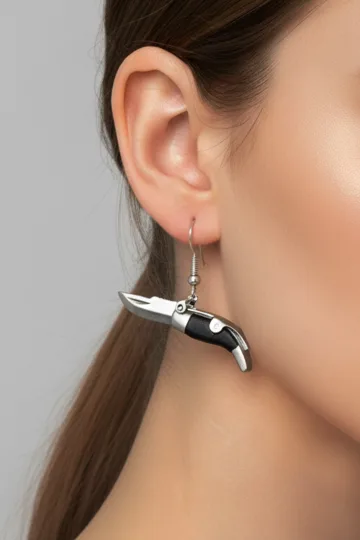
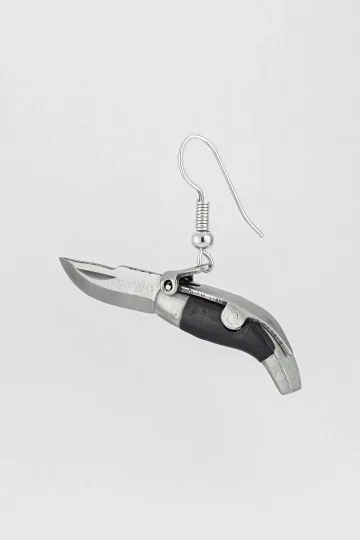
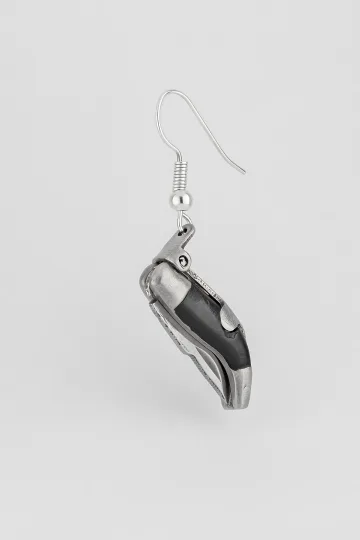
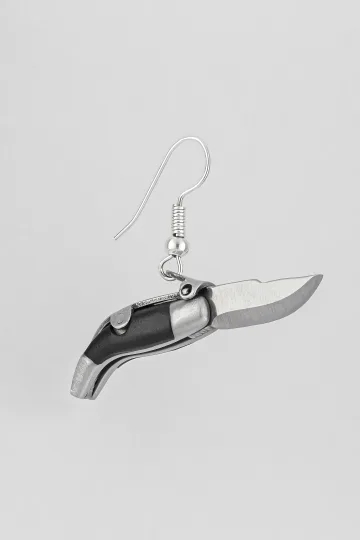
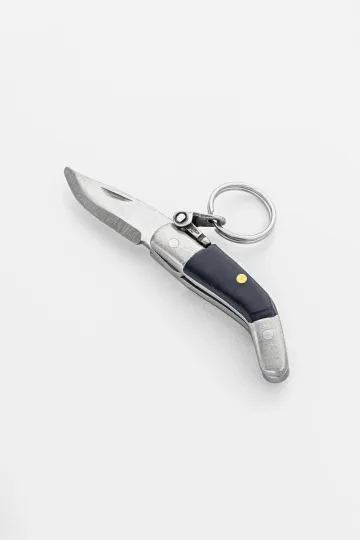
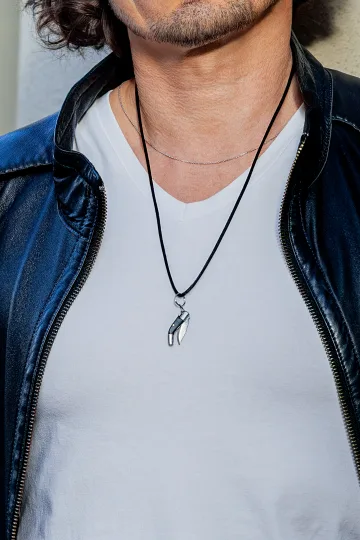
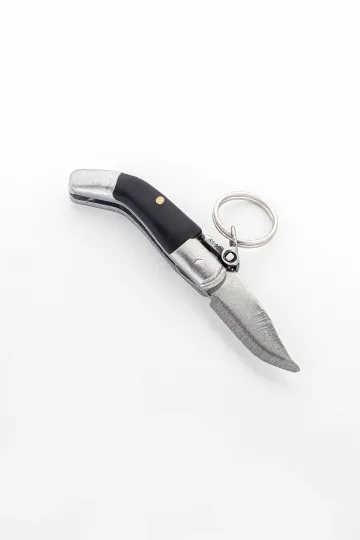
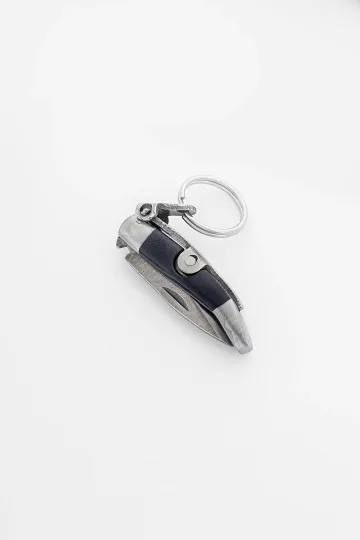
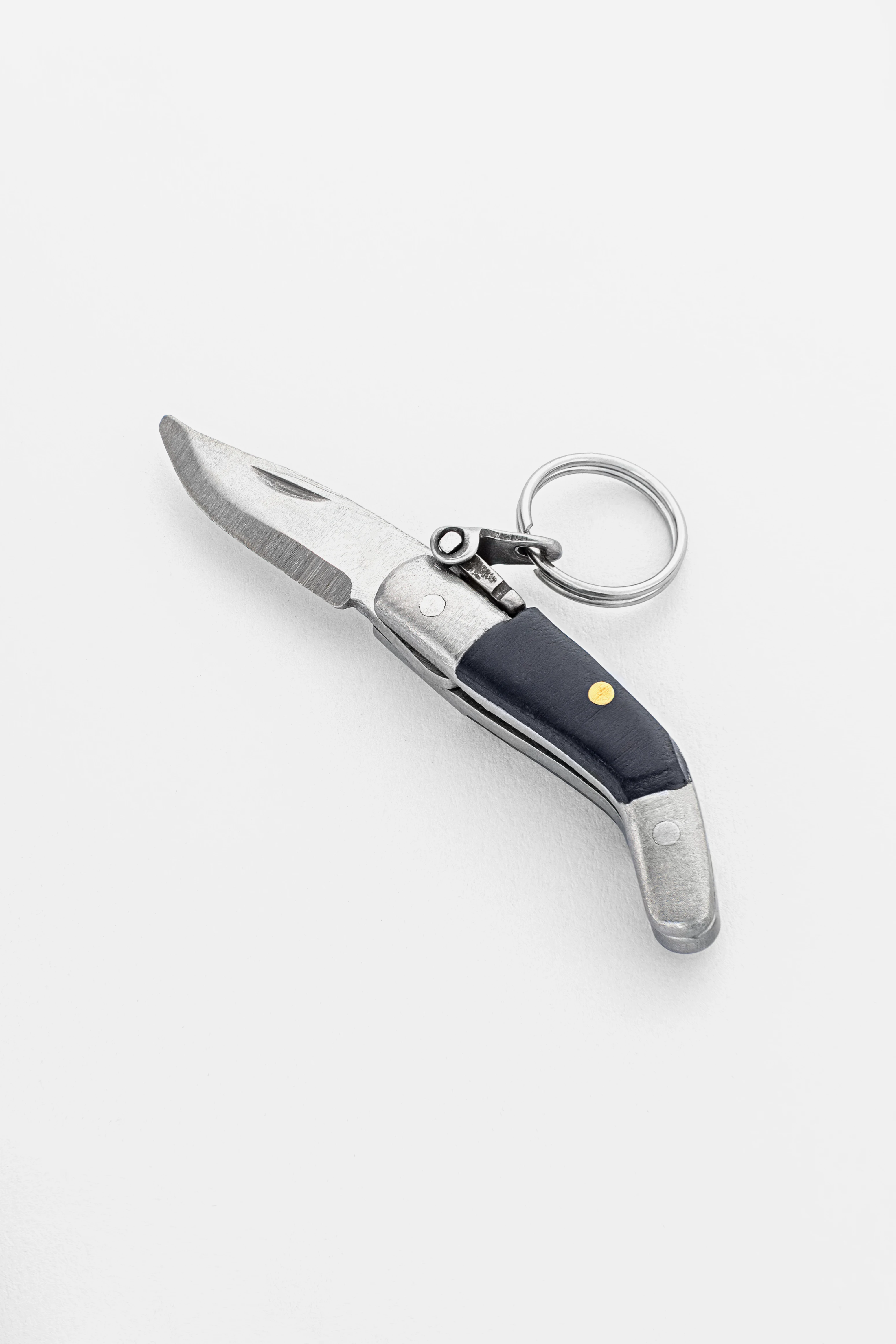
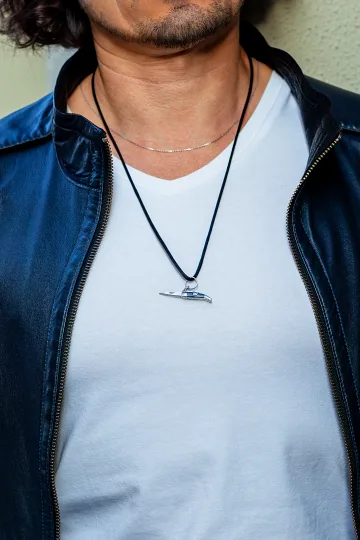
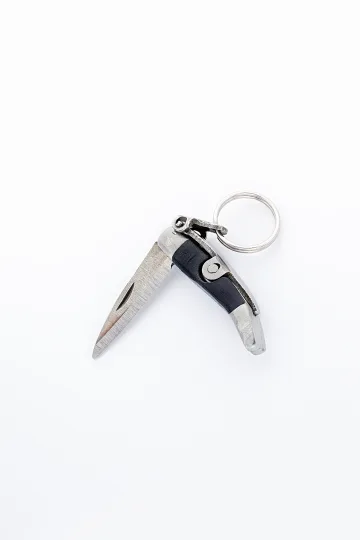
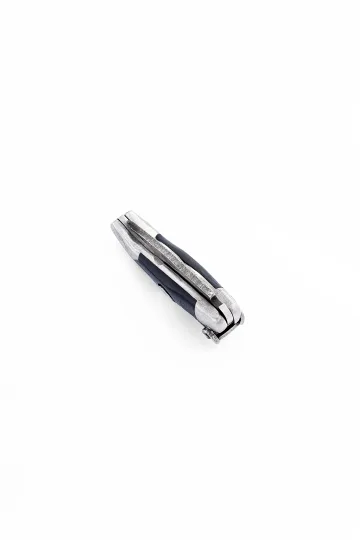
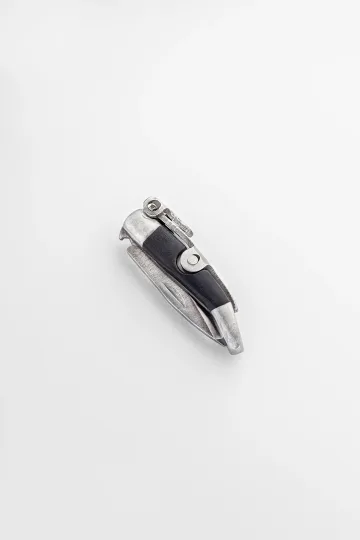
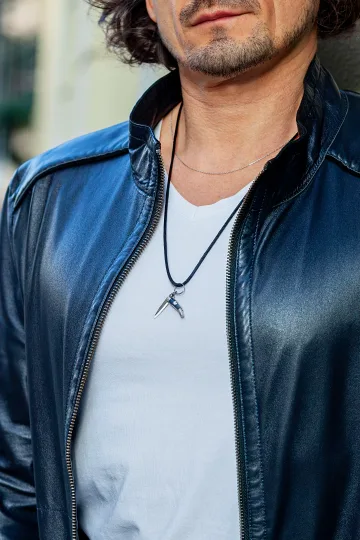
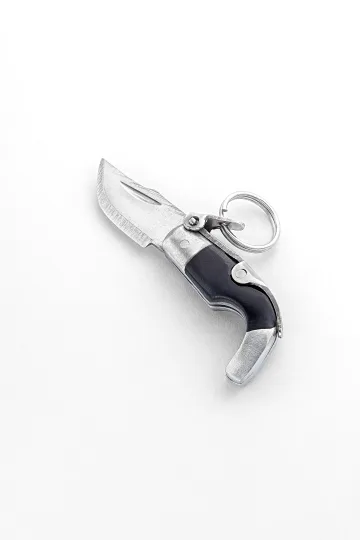
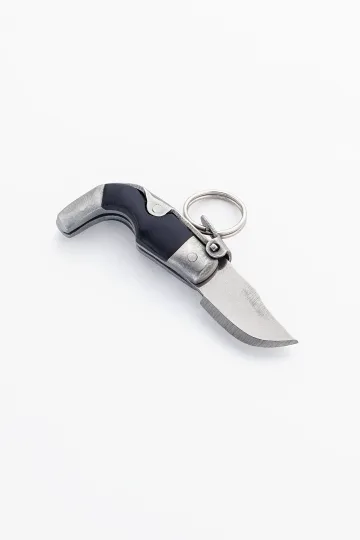
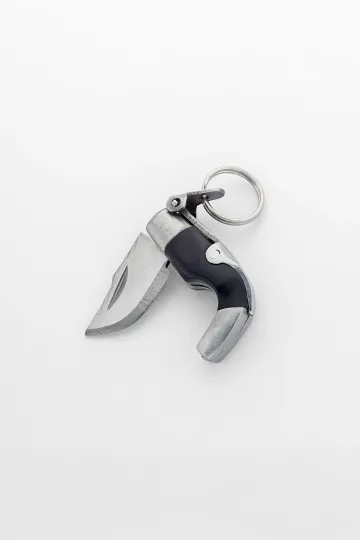
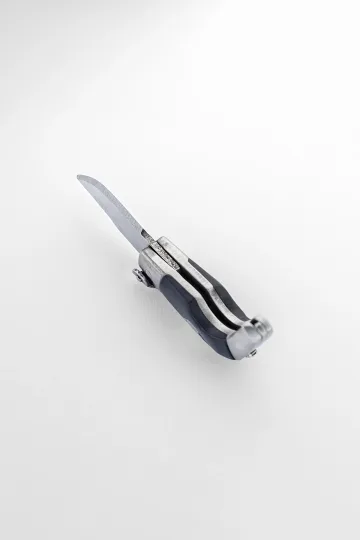
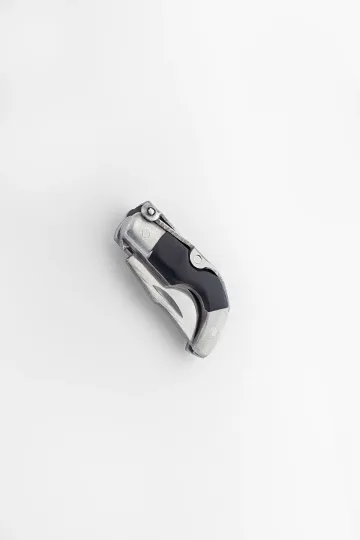
CAPAORA mini knife pendant
The 18th-century Spanish navaja in miniature: 40 mm of stainless steel, a real folding mechanism and a Palanquilla lock that clicks. An affordable gift to remember.
Authentic · Ships from Spain · 14-day returns
What Makes Spanish Jewellery Recognizable Today
Several visual characteristics distinguish Spanish jewellery from other European traditions.
The preference for strong contrast. Black and gold, whether in damasquinado's steel-and-inlay or in oxidised silver with gilt highlights, appears repeatedly. Where French jewellery tends toward harmony and Italian jewellery toward refinement, Spanish jewellery often creates visual tension between opposing elements.
The persistence of symbolic content. Spanish jewelry carries meaning in a way that much contemporary Western jewelry has abandoned. The symbols used, scallop shells, Moorish stars, Celtic spirals, folding knife forms, are not purely decorative. Each refers to a specific regional, religious or historical identity. Wearing a Cruz de Santiago or an azabache higa is a statement about belonging.
The Moorish geometric vocabulary. Eight-pointed stars, interlaced polygons, arabesque tracery appear in Toledo, Granada and Cordoba work in a form that has been continuous since the caliphate period. A piece of Granadan jewellery today can look unmistakably like a medieval Islamic object because the visual lineage connecting them is unbroken.
The regional specificity. Spanish jewellery is intensely local in a way that most national craft traditions are not. You are never just buying "Spanish jewellery." You are buying Toledo, or Galician, or Basque, or Catalan jewellery. Each regional style carries markers that are immediately legible to a knowledgeable observer.
Jewellery in the Spanish Tradition: What to Look For
By Region
Toledo: Damasquinado and Gold on Steel
Toledo has been a centre of metalworking since Roman times. Its signature technique is damasquinado: the inlay of gold or silver wire into blackened steel. Black ground plus gold or silver lines produces a dramatic pattern that never fades.
- Pendant with Moorish geometric ornament. Arabesques recognisable at a glance. Mid-range segment.
- Earrings with floral motifs. The Spanish floral tradition. Mid-range segment.
- Brooch with heraldic design. Suited to a vintage aesthetic. Mid to premium segment.
The technique is covered in more detail in the article on Toledan damasquinado.
Cordoba: Filigree Silver
Since the Caliphate period (8th to 11th centuries), Cordoba has been the capital of filigree: a wire technique in which fine silver threads are twisted and soldered into open lacework patterns.
- Medallion pendants in filigree. As airy as snowflakes. Mid-range segment.
- Bellows bracelets in fine wire. Traditional Andalusian. Mid-range segment.
- Earrings with arabesque filigree. Moorish heritage. Mid-range segment.
Granada: Moorish Jewellery
Granada was the last Moorish city in Spain, surrendering in 1492. Its tradition retained a direct connection to Islamic art: geometric patterns, calligraphy, eight-pointed stars.
- Calligraphy pendants. Arabic script as ornament. Mid-range segment.
- Moorish star earrings. Eight-pointed or six-pointed. Mid-range segment.
- Rings with geometric patterns. Highly detailed, often set with stones. Mid to premium segment.
Galicia: Azabache and the Santiago Shell
North-western Spain carries a Celtic and pilgrimage culture. Two materials dominate: azabache (black jet) and silver bearing the scallop shell of Santiago.
- Higa pendant in azabache. Protection against the evil eye, a traditional child's amulet. Mid-range segment.
- Santiago shell pendant. Symbol of the Camino pilgrimage, in silver or oxidised silver. Budget to mid-range segment.
- Triskelion in silver. Galician Celtic heritage. Mid-range segment.
Azabache is covered in more depth in the dedicated article.
Albacete: The Navaja and Knife Jewellery
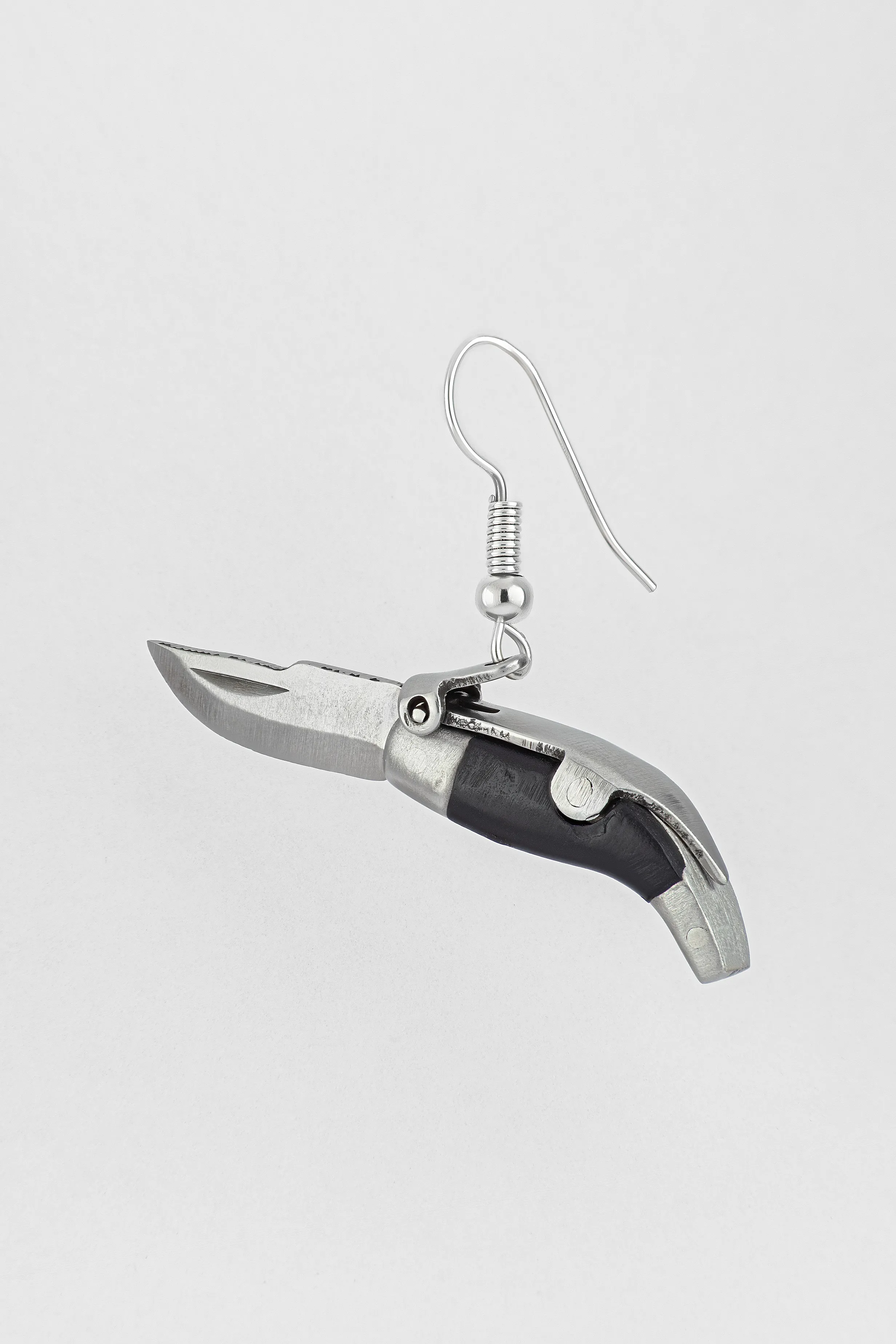
Albacete, the home city of Zevira, has been a knife-making centre for centuries. The tradition of the navaja (folding knife) gave rise to a distinctive jewellery school: miniature navaja pendants, knife-shaped charms, cufflinks with blade motifs.
- Miniature navaja pendant. A silver version of the traditional folding knife. Mid-range segment.
- Ring with engraved blade motif. Masculine aesthetic. Mid-range segment.
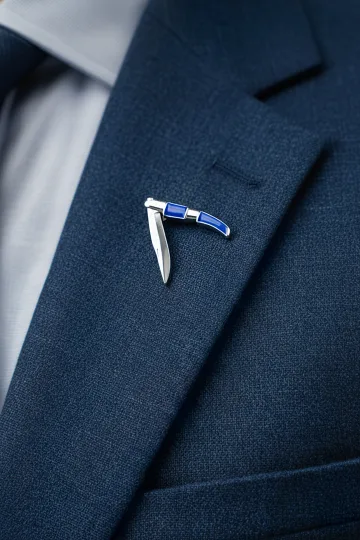
- Navaja brooch. Vintage, sometimes with enamel. Mid-range segment.
Catalonia: Enamel and Art Nouveau
Barcelona became a jewellery capital during the Modernista movement (Art Nouveau). Catalan masters of the period worked in plique-a-jour enamel, which transmits light like a stained-glass window.
- Butterfly brooches in plique-a-jour enamel. Masterpieces of the movement. Luxury segment (originals at auction).
- Contemporary enamel replicas. Accessible versions. Mid to premium segment.
- Pieces in the Catalan Modernista style. Organic forms. Mid-range segment.
The Basque Country: Lauburu and the Ornament of Guernica
Basque tradition stands apart, with its own motifs: the four-headed cross lauburu, the plough, oak leaves, the Basque star.
- Lauburu pendant. The Basque cross. Mid-range segment.
- Rings with Basque motifs. Distinctly regional. Mid-range segment.
By Technique
Damasquinado
Gold or silver inlaid into blackened steel. The Toledan school. Dramatic black-and-gold contrast.
Filigrana (Filigree)
Fine wire technique. Cordoba, Salamanca, Seville. Galician filigree is a separate tradition with a flatter, more spread-out pattern.
Esmalte (Enamel)
Coloured enamel on metal. Catalonia, especially the Modernista plique-a-jour.
Forja (Forge Work)
Blacksmith tradition, characteristic of Albacete and Toledo. Navaja and blade motifs.
Engaste / Pedreria (Stone Setting)
Gemstone setting. Particularly developed in Madrid and Barcelona. Traditional stones include ruby, emerald, sapphire and Spanish garnet.
Oficio Antiguo (Traditional Handcraft)
Small-scale hand production in village workshops, especially Asturias and Cantabria. Simple, functional pieces.
Leave your email, we'll send your discount code. No spam, unsubscribe anytime.
The code arrives by email, valid on your first order.
The Main Symbols of Spanish Jewellery
The Santiago Shell (Concha de Santiago)
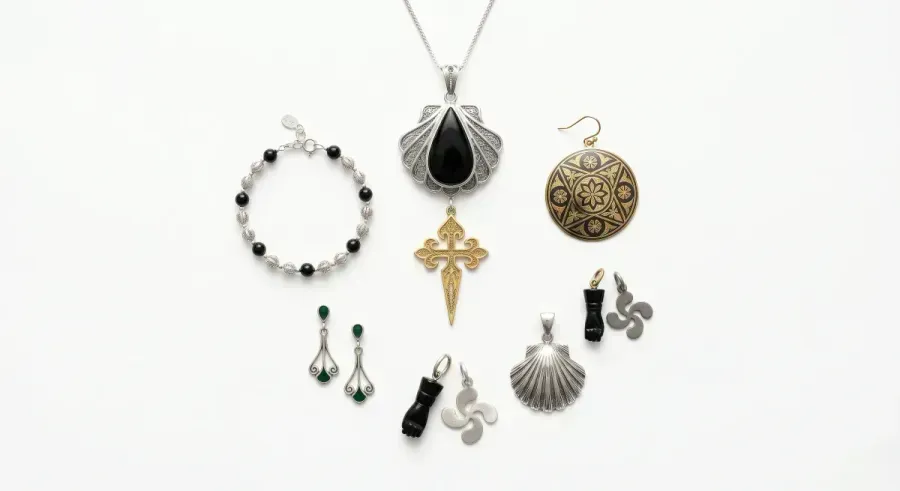
The scallop shell, symbol of the pilgrimage to Santiago de Compostela. Every year more than 300,000 people walk the Camino de Santiago, and many bring back or buy a shell pendant as a keepsake of the journey.
The Cross of Santiago (Cruz de Santiago)
A red cross with lily-shaped ends and a sword-like lower portion. The emblem of the military-monastic Order of Santiago, the knights of the Reconquista. Usually rendered in red enamel on a silver base.
The Navaja
The folding knife as part of Andalusian and Manchegan identity. In jewellery form: a miniature navaja as a pendant or brooch.
The Higa
A small fist with the thumb tucked between index and middle fingers. A Mediterranean amulet against the evil eye. Made in azabache and silver.
The Lauburu
The Basque four-headed cross (superficially similar to a swastika but an entirely independent symbol). Represents the sun and the cycle of life.
The Triskelion (Triskele)
The Celtic knot of three spirals. Galicia's heritage stretching from the Celts to the Romans.
Flamenco Roses and Thorns
The rose in flame, with thorns, with olive leaves. Symbol of the flamenco tradition and Andalusian passion.
The Cruz de Caravaca
The double cross of Murcia, worn as a protective amulet believed to guard against illness and misfortune.
The Escapulario
Two small medals or cloth squares connected by cords and worn front and back. Given to children at first communion. Gold and silver versions replace the cloth with precious materials.
Sword and Cross
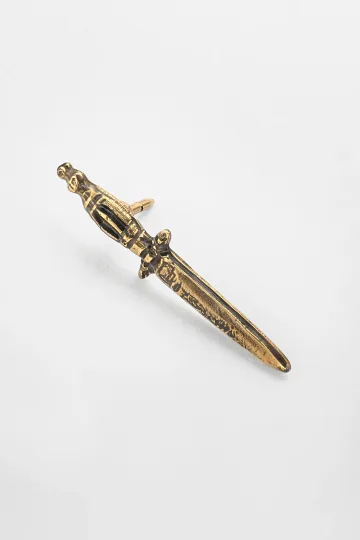
The combined symbol of the Reconquista: a sword whose hilt forms a cross. Particularly associated with Toledo and Albacete.
Spanish Jewellery in Its Regional Contexts
Andalusia: Flamenco Aesthetic
Southern Spain, home of flamenco. Jewelry: large hoop earrings (criollas), hair combs (peinetas), medallions, pearls. Red and black tones, gold, pearl. The archetypal "Spanish woman" in the foreign imagination is Andalusian, and her jewelry is the most internationally recognized image of Spanish craft.
Madrid: Royal and Bourgeois
The capital since the 16th century. Centre of bespoke jewellery for the aristocracy and the rising middle class. Forms are more classical and European in character. The Calle de la Plateria (Silversmiths' Street) in the historic centre has been a jewellery district since the Habsburg era.
Catalonia: Modernisme and Design
Barcelona as one of Europe's capitals of Art Nouveau. Catalan Modernista masters and contemporary Catalan design. Plique-a-jour enamel, organic forms, motifs drawn from nature. The Born neighbourhood in Barcelona is the contemporary centre of craft jewellery in the city.
The Basque Country: Ethnic Identity
Basque identity is closely bound to craft tradition. Distinctive symbols: lauburu, eguzkilore (sun-thistle), the oak leaf of Guernica. Local workshops in Bilbao and San Sebastian.
Galicia: Celtic Heritage
The north-west, Celtic inheritance. Azabache, the Santiago shell, triskelion, wolf motifs (echoes of an ancient totem). Pilgrimage tourism sustains the industry and has done so since the 12th century.
Asturias: Rural Simplicity
Plainer and more traditional. Round brooch-roses, baptismal pendants, simple wedding rings. The Salamanca button tradition technically belongs to neighbouring Castile but overlaps here at the margins.
The Canary Islands
A particular tradition at the crossroads of Spanish, African, Portuguese and South American influence. Shell and tortoiseshell as the dominant local motifs. The islands were a stopping point for the galleon trade and absorbed craft influences from every direction.
Mallorca and the Balearics
Majorcan pearl (simulated but of genuine quality) is a world-recognised brand in its own right. There is also a tradition of enamelled silver and the folk emprendada necklace of Ibiza.
The Main Centres of Spanish Jewellery
Toledo
Centre of damasquinado from the Moorish era. Dozens of working workshops in the historic centre. The "hecho en Toledo" certificate is the mark of authenticity to look for. Toledo's knife museum documents the broader metalworking tradition that gave rise to damasquinado.
Cordoba
Centre of silver filigree. Workshops in the historic Jewish quarter, the Juderia. The annual Feria de la Plata is the main trade event for Cordoban silverwork. Guild certification marks trace back to regulations established in the 13th century.
Santiago de Compostela
Centre of azabache and pilgrimage jewellery. Master carvers of jet stone maintain lineages of transmission that have been continuous for centuries. The cathedral museum holds a collection of historic devotional jewellery donated by pilgrims.
Barcelona
Catalan capital of Art Nouveau. The Masriera family workshop continues to operate. The Born neighbourhood as the contemporary craft jewellery district.
Madrid
The historic Calle de la Plateria. Antique houses with stock from the 18th and 19th centuries. High jewellery for buyers with international taste.
Albacete
Knife and jewellery tradition of La Mancha. The knife museum documents the craft lineage. Living craft workshops continue the navaja jewellery tradition. Zevira works within this tradition, not alongside it.
Choosing a Piece in This Tradition
Level 1: Starter (One Piece)
Begin with one characteristic Spanish symbol:
- A Santiago shell in silver (for pilgrimage lovers or those drawn to maritime themes)
- A higa pendant in azabache (for protective symbolism)
- A slender Cross of Santiago (for Spanish identity)
Level 2: Regional Set (Three to Five Pieces)
Choose one region and build within it:
- Andalusian: earrings, a chain and a medallion in one style (pearl and gold)
- Toledan: damasquinado pendant, matching earrings, bracelet in the same technique
- Galician: shell, triskelion, azabache piece
Level 3: Thematic Mix
Combine symbols from different regions around a theme:
- Protective: higa (azabache) plus Cross of Santiago (silver) plus a traditional amulet
- Pilgrim: Santiago shell plus Tower of Hercules plus triskelion
- Warrior: sword-cross from Toledo plus heraldic shield plus Albacete navaja
Level 4: Collector's Pieces
Investment purchases: antique pieces with provenance (genuine Catalan Modernista, 19th-century filigree), authentic damasquinado with a Toledo Camara de Comercio certificate.
Caring for Traditional Pieces
Different materials and techniques require different care.
Damasquinado is among the most durable Spanish jewellery forms. The gold wire is mechanically bonded to the steel base and will not lift or separate under normal wear. Wipe with a dry or slightly damp cloth. Avoid harsh chemical cleaners that could affect the steel's oxidised surface. Do not store in humid conditions.
Azabache is fragile. The stone is organic material, a form of fossilised coal, and it fractures under impact. Do not knock it against hard surfaces. Clean with a soft dry cloth. Avoid prolonged exposure to water, which can dull the surface over time.
Filigree requires gentle handling. The fine silver wire can be bent out of shape if the piece is squeezed or subjected to pressure. Store filigree pieces individually wrapped so they do not catch on other jewellery. Clean with a silver polishing cloth, working carefully along the wire rather than across it.
Enamel, particularly plique-a-jour, is the most fragile category. The coloured glass cells can crack if the piece is dropped or bent. Store in a padded case. Keep away from sharp temperature changes, which can cause differential expansion between the metal frame and the glass fill.
Sterling silver oxidises naturally over time, developing a patina that many wearers find attractive. To maintain a polished surface, use a standard silver polishing cloth. To deepen an intentional oxidised finish, leave the piece unwrapped in open air for a period, then wipe away surface dust. Do not use abrasive polishes on pieces where the oxidised dark areas are part of the design.
Who Spanish Jewellery Suits
Travelers and enthusiasts of Spain and its culture. Direct identification with a place and its history.
Camino de Santiago pilgrims. The shell is an obligatory symbol of the journey.
Admirers of the flamenco aesthetic. Andalusian jewellery.
Those drawn to Moorish art. The Granada and Cordoba schools.
Lovers of gothic style. Azabache as a central material.
Collectors of handcraft. Damasquinado, filigree, enamel.
Spanish-themed weddings. Large earrings, pearls, gold.
Spaniards abroad. Symbols of national identity.
A meaningful gift from a journey through Spain. A souvenir with real depth.
Send a friend a discount code, they save on their first order.
What Jewellery Is Spain Known For
Spain is known above all for filigree, the lace like silverwork perfected in Cordoba and Galicia, and for the black jet the Spanish call azabache, carved into figas and pilgrim shells in Santiago de Compostela. Toledo adds damascene, gold and silver threads hammered into blackened steel, a craft the city has kept alive since the caliphate. The Balearic coast gave the world the Mallorca pearl, and the Mediterranean provinces of Murcia and Valencia are known for red coral. Each region carries its own signature: Andalusian flamenco earrings, Basque lauburu pendants, Catalan enamel from the Modernista workshops. Put together, these crafts make Spanish jewellery a patchwork of local schools rather than a single national style.
Spanish Jewellery by Region: Galicia, the Basque Country and Iberian Roots
Galician Jewellery
Galician jewellery is built around azabache, the fossilised jet mined near Santiago de Compostela and sold to pilgrims for eight centuries. Artisans on the Rua da Acibecheria carved it into the higa, a small clenched fist worn against the evil eye, and into scallop shells, the badge of the Camino. Silver filigree is the region's second signature, often paired with jet or with the scallop motif. The style leans dark, protective and Celtic, echoing the triskelion and torc shapes dug from local Iron Age sites. A Galician piece tends to read as a talisman first and an ornament second.
Basque Jewellery
Basque jewellery is sober, silver and deeply symbolic. Its emblem is the lauburu, the four headed curved cross carved on Basque farmhouses, gravestones and chests, then miniaturised into pendants and cufflinks. Silversmiths also work the eguzkilore, the thistle flower nailed to doors as a sun charm, and the simple hoop earrings worn with regional dress. Unlike the ornate Andalusian style, Basque pieces favour clean geometry, matte silver and a restrained, almost architectural line. They are worn as markers of identity as much as decoration, which is why the lauburu remains the single most requested motif from workshops in Bilbao and San Sebastian.
Iberian Jewellery
Iberian jewellery refers to the goldwork of the peoples who lived in the peninsula before Rome. The Treasure of El Carambolo near Seville, dated to roughly the seventh century BC, holds gold plaques and a necklace worked in fine granulation, evidence that Tartessian and Iberian smiths mastered soldering tiny gold beads long before the Romans arrived. Torcs, rigid neck rings of twisted gold, and elaborate diadems survive from tombs across the Meseta. These ancient pieces are the deep root of the Spanish taste for worked surface and dense ornament, and museums in Madrid and Seville display them as the starting point of the whole tradition.
Handmade Jewellery in Seville
Seville concentrates much of Andalusia's handmade jewellery trade around the old silversmith quarter near Calle Sierpes. Workshops here supply the coral and pearl earrings worn with the traje de flamenca during the Feria de Abril, the heavy processional adornment lent to Virgin statues during Semana Santa, and filigree crosses sold year round. Buying handmade in Seville usually means small family talleres rather than large stores, where a maker will set coral or engrave a medallion to order. The city pairs this craft with a strong costume culture, so demand for authentic, locally made pieces stays high all through the festival calendar.
Frequently Asked Questions
What jewellery is Spain known for?
Spain is known for a set of regional specialities rather than one national style. Toledo is famous for damasquinado, gold and silver wire inlaid into blackened steel. Cordoba is the historic capital of silver filigree, Galicia for azabache (black jet) and the Santiago scallop shell, and Mallorca for its simulated Majorcan pearl. Add to that Catalan Art Nouveau enamel, Andalusian flamenco pieces, and religious jewellery such as the Cross of Santiago and the Cruz de Caravaca, and you have the range that defines Spanish craft.
What is traditional Spanish jewellery?
Traditional Spanish jewellery is organised by region, each with its own materials, techniques and symbols. Toledan damasquinado, Cordoban filigree, Galician azabache carving, Ibizan emprendada coral necklaces, and Salamanca silver buttons all count as distinct folk traditions. Much of it carries meaning beyond decoration: the higa fist wards off the evil eye, the scallop shell marks the Camino de Santiago, and the Cross of Santiago recalls the Reconquista orders. The materials lean toward silver, 18-karat gold, jet, coral and enamel, worked with techniques that descend directly from Moorish, Visigothic and colonial-era craft.
What makes Spanish jewellery unique?
Spanish jewellery is shaped by eight centuries of Moorish presence layered over Roman, Visigothic, Christian and New World influences, a mix no other European tradition passed through. That history shows up as arabesque geometry, eight-pointed stars and filigree that feel native even though they arrived from the Islamic world. Two visual habits stand out: strong contrast, such as black steel against gold in damasquinado or oxidised silver with gilt highlights, and symbolic content, where a shell, a higa or a navaja signals a specific regional or religious identity. It is also intensely local, so you are always buying Toledo, Galician, Catalan or Basque work rather than a generic national style.
What is the difference between Spanish and Italian jewellery?
Italian jewellery is more focused on high-karat gold (18ct, 24ct), minimalist forms and the classical Roman-Etruscan aesthetic. Spanish jewellery is more regionally varied: Moorish arabesque, damasquinado, azabache, Catalan enamel. Spain also uses more distinctive symbols (the Santiago shell, the Cross of Santiago, the higa) that Italian jewellery does not share.
Where can I buy authentic Spanish jewellery in the USA?
Outside Spain, look for marketplaces featuring independent makers based in Spain with the workshop location listed, the workshops' own websites that ship internationally, and specialty retailers who stock certified Spanish craft. For Toledo damasquinado specifically, the piece should have a chamber of commerce certification card included with it.
What Spanish jewellery is most expensive?
Certified antique pieces (genuine Catalan Modernista, 19th-century filigree) reach luxury-level prices at auction. New handmade work from Toledo or Catalonia sits in the mid to premium segment. Mass-market pieces from larger brands occupy the budget-to-mid range.
Is damasquinado only from Toledo?
Yes. Genuine hecho en Toledo pieces with a certificate come only from Toledo. Replicas from other countries (India, Pakistan) are cheaper, but the difference is visible: printed patterns, uniform and thin wire, light-weight metal.
Can Spanish jewellery be worn every day?
Yes, especially silver and damasquinado. Azabache needs careful handling: it does not withstand impact. Filigree is delicate and better suited to special occasions.
Is the Santiago shell only for pilgrims?
No. It is a symbol of Galicia and maritime culture more broadly. It can be worn for its seagoing associations or simply for its aesthetic appeal. Most Spaniards will read it as a pilgrimage symbol.
Is the higa a piece of jewellery or an amulet?
Both. Traditionally, a higa in azabache was given to children as a protective charm against the evil eye. In jewellery form it retains that function, while also working as a purely aesthetic element.
What should one wear to a flamenco show?
Large criollas earrings, a peineta comb with a mantilla, a substantial medallion. Red, black and gold in the clothing. This is a special dress for the occasion, not an everyday look.
Is the Cross of Santiago a Catholic symbol?
It was originally military-monastic (the Order of Santiago, knights of the Reconquista), but today it is widely worn as a Galician or Spanish symbol without strict religious meaning. It suits Catholics particularly, but non-believers wear it equally for its aesthetic.
Which Spanish jewellery is the most "authentic"?
It depends on what you are looking for:
- Mass-market: large Spanish brands with ready-made collections
- Pearl: the Majorcan school of simulated pearl
- Boho silver: the Madrid designer scene
- High jewellery: ateliers that supplied the Royal Household
- Modernista: Catalan workshops continuing the plique-a-jour tradition
- Craft: any workshop holding a local Camara certificate
Buying it as a gift? Each one arrives ready to give.
 A branded Zevira box and a little card come with every order.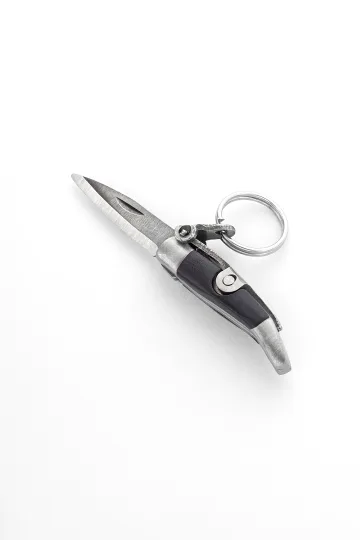




Conclusion
Spanish jewellery tradition is not one school but a vivid mosaic of regional traditions, historical periods and cultural layers. Toledo with its damasquinado. Cordoba with its filigree. Granada with its Moorish inheritance. Galicia with azabache and the shell. Albacete with its navajas. Catalonia with Modernisme.
That variety is the defining quality of Spanish jewellery. You are not buying "Spain" as an abstraction. You are buying a specific region, a specific technique, a specific symbol, each carrying thousands of years of history with it.
About Zevira
Zevira is based in Albacete, at the heart of the Manchegan jewellery tradition. The region is known for navaja pendants: miniature versions of the celebrated Albacete folding knife, which became a jewellery amulet in their own right. As a maker rooted in this tradition, Zevira is part of the living Spanish craft landscape.
From the Spanish tradition, you can find at Zevira:
- Navaja pendants: our regional symbol
- Crosses of Santiago in the Galician tradition
- Higa (evil eye amulets) from Castile
- Azabache: the Galician jet stone, stone of pilgrims
- Triskelions and Celtic symbols from northern Spain
- Mediterranean amulets (shell, sun)
Each piece is handcrafted, with the option of personal engraving. We work in 925 sterling silver and 14 to 18ct gold.