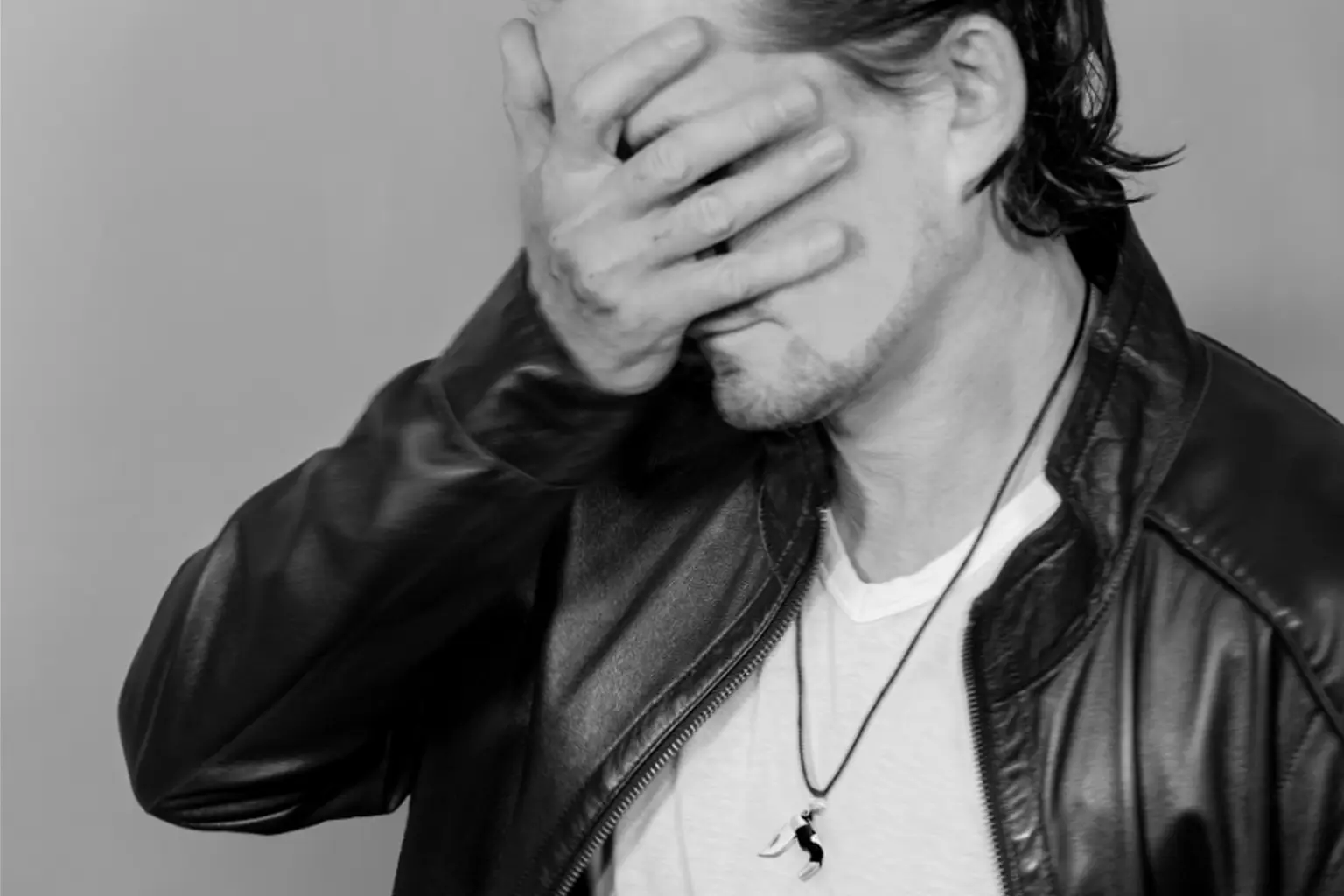
The Sword in Jewellery: Meaning, History and Symbolism
A Symbol That Outlasted Every Empire
There is a stretch of countryside in the English Midlands where, on a clear morning, you can walk through fields that once witnessed some of the most decisive battles in British history. The men who fought there carried blades. The men who commissioned the finest of those blades understood that a sword was never merely a weapon.
At Sutton Hoo, archaeologists unearthed a seventh-century sword with a gold and garnet-inlaid pommel. Nobody buried it with its owner because it was useful. They buried it because it was the man himself expressed in iron and gold. Status, lineage, the right to rule, the obligation to protect: everything a person was could be read in the blade they carried.
Sword jewellery carries that same freight today, though you will not find it on a battlefield. A small pendant worn under a shirt, a signet ring with an engraved blade, a pair of dagger-shaped studs: each of these is a quiet statement about the person wearing them. This guide unpacks what that statement actually means, where it comes from, and how to carry it well.
Wear the symbol, don't just read about it. These are in stock:








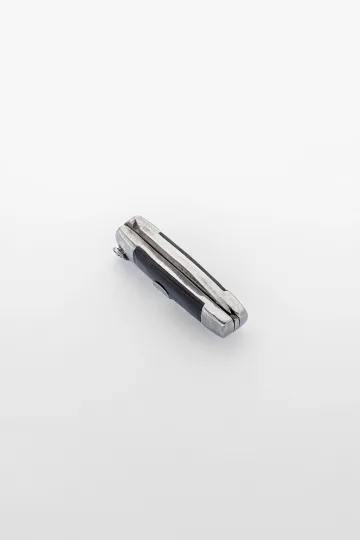
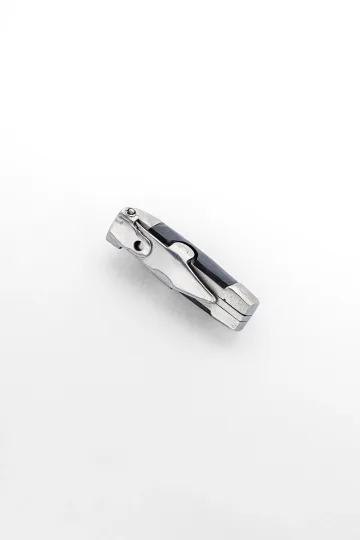
Sword Jewellery: What to Choose
Pendants
The most versatile category and the most popular starting point.
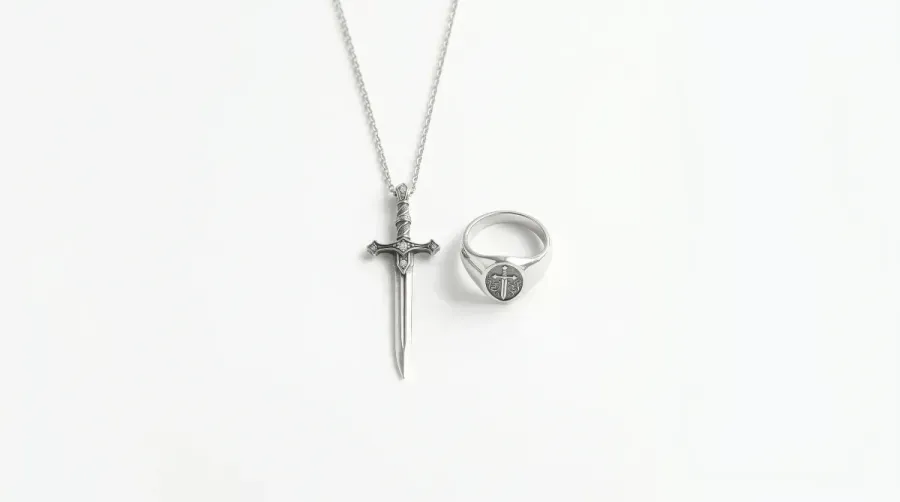
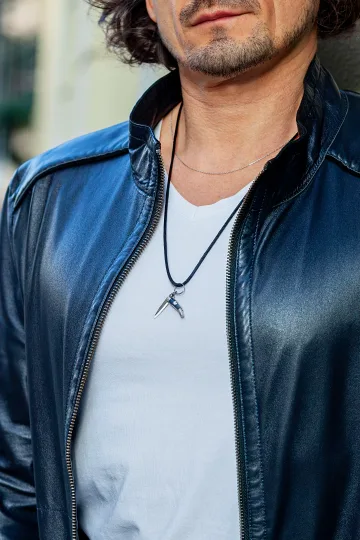
- A small blade 3 to 5 cm on a fine chain for everyday wear. Works under a collar or over a T-shirt. Entry-level price point.
- A mid-sized pendant 5 to 7 cm with blade and hilt detail makes a considered accent piece. Mid-range.
- A larger piece 7 to 10 cm for gothic, military or historical aesthetics. Mid to premium.
- A sword-cross pendant where the crossguard forms a Latin cross. A long-chain piece with genuine heritage. Mid to premium.
- A named legendary sword (Excalibur, Durandal) for fans of mythology or fiction. Mid-range.
Rings
- A signet ring with an engraved blade is the classic male choice. Serious, considered. Mid to premium.
- A statement ring with a blade as the main sculptural element is rarer and more striking. Premium segment.
Most often worn by men, often as a personal reminder rather than a declaration.
Earrings
Unusual and very specific in register.
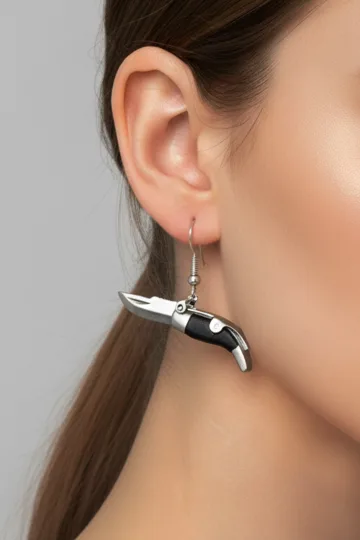
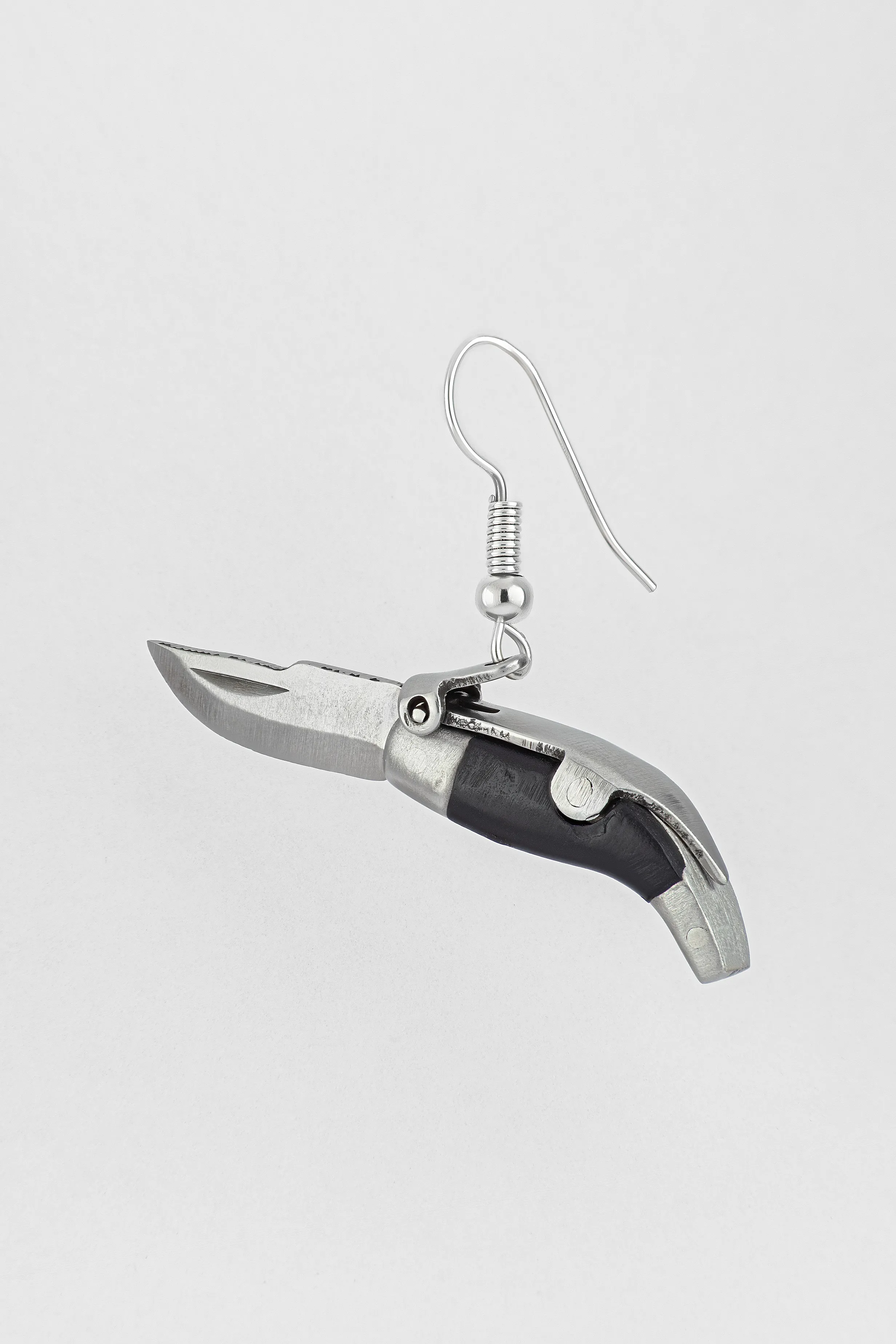
- Small blade drops suit gothic, punk or metal aesthetics.
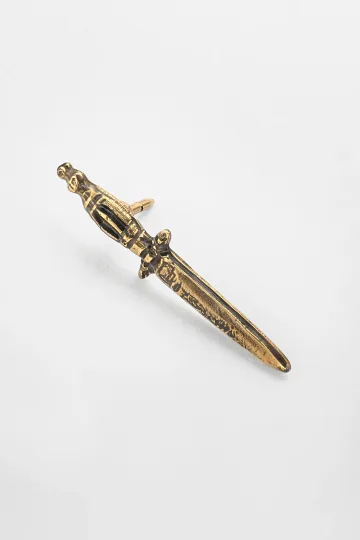
- Matching stud daggers offer a minimal alternative.
Cufflinks
For men who enjoy historical detail or re-enactment: silver or gold blade cufflinks are an understated conversation piece. Mid to premium segment.
Bracelets
A rarer form. Either a chain bracelet with a blade pendant or a cuff with sword-inspired relief work.
Tie Pins and Brooches
A slim blade tie pin is a Victorian officer's tradition that passed into civilian wear. A brooch combining a blade with a family crest or heraldic device is a less common but historically grounded choice.
A blade goes on bare skin, on a clean chain, always alone. Over a jumper in a pile of pendants it is a keyring, not a sword.
How to Wear a Sword
A blade is easier to build into an outfit than people think. After years on shoots I have run the sword through dozens of looks, and here is what actually works, by occasion.
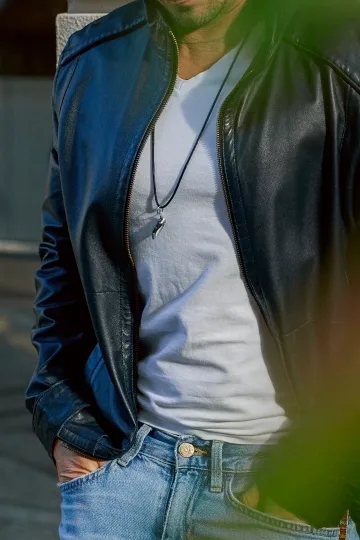
How do I wear a sword every day? For everyday I recommend a small 2-3 cm blade pendant on a fine chain. It slips under a shirt or a T-shirt and works as a personal talisman: only you see it. A dark palette, grey, graphite, black, leather and vintage carry it best. Under an open collar I suggest showing the blade halfway, so it reads as a quiet accent rather than a statement.
Is a sword right for the office? It is, as long as you keep it restrained. For a work look I choose minimalism: a thin outline blade under a tie, or a signet ring with an engraved blade. Silver holds a formal silhouette more evenly, gold adds warmth to a brown and beige palette. One rule: one visible piece per look, mute the rest.
How do I put together an evening look? For the evening I recommend a larger 5-7 cm pendant over a plain shirt or a fine jumper. Here the blade becomes the centre, so I suggest removing competing jewellery and leaving a clean neckline so the silhouette reads. Oxidised silver with a dark patina sits well on black and wine.
How do I wear a sword in layers? Layers are a pleasure of their own. A blade with a cross on chains of different lengths gives the Spanish set, a blade with a shield reads as paired symbolism. I suggest keeping metals in one family, silver to silver, gold to gold, or playing contrast on purpose with a two-tone piece. I space the chains 4-6 cm apart so the pendants do not collide.
Who suits a blade, and how do I pick the length? The sword loves those who are not afraid of character: it strengthens a dark, military, gothic or historical aesthetic, while a soft romantic style asks for it in miniature or paired with a rose. On length the advice is simple: a short 45-50 cm chain holds the blade high and tight, a long 60-70 cm one drops it onto the chest and reads more freely.

Turn on your camera, pick earrings, a pendant or a ring, and see the piece on yourself in real time.
Switch items in one tap.
Everything runs in your browser: no photo or video is ever uploaded.
Famous Swords: Legends That Shaped the Symbol
Certain named swords have had an outsized influence on what the symbol means in Western culture. Several of them are specifically British or central to British literary and historical tradition.
Excalibur. The sword of King Arthur, drawn from the stone or given by the Lady of the Lake depending on which account you read. The blade represents legitimate authority, a power that cannot be seized by force alone. In jewellery it almost always appears as a sword plunging into stone, the moment before the king pulls it free. A powerful motif for anyone who feels they are standing on the threshold of something significant.
It is worth knowing that the two Excalibur stories are separate and were joined late. Geoffrey of Monmouth, writing in the 1130s, calls the blade Caliburnus and says only that it was forged in Avalon, with no stone and no lake. The sword in the stone belongs to a French verse romance of around 1200, where the test of drawing it proves rightful birth rather than strength. The Lady of the Lake, who gives Arthur a second and different sword after the first breaks, arrives in the prose cycles of the thirteenth century. Malory, working in English in the 1460s, inherited all three strands and let them sit side by side without resolving the contradiction, which is why the modern version contains a sword that is both pulled from a rock and handed up out of a lake. For a symbol this matters: one blade stands for legitimacy proven publicly, the other for authority conferred from somewhere beyond human politics, and a pendant can lean towards either reading.
Claíomh Solais. The Sword of Light from Irish mythology, one of the Four Treasures of the Tuatha De Danann. Less well known than Excalibur but older, and a reminder that the British Isles had sword mythology long before any medieval romance.
Gram. The sword of Sigurd (Siegfried), who slew the dragon Fafnir. Norse mythology saturated the Viking-period cultures of Britain, from Orkney and the Northern Isles down through the Danelaw. Gram appears on jewellery pieces aimed at those interested in that heritage.
Durandal. Roland's sword, said to contain a relic of the Virgin Mary in its hilt. The Song of Roland gave Western chivalric literature much of its emotional vocabulary. The blade is associated with unbreakable loyalty.
Joyeuse. Charlemagne's sword, used in French coronation ceremonies and now kept in the Louvre. Its fame spread across medieval Europe through the chansons de geste.
Tyrfing. The cursed sword of Norse legend, from the Hervarar Saga: a blade that could never be drawn without killing. It represents the dangerous dimension of strength, the idea that great power carries unavoidable consequence. Not all sword symbolism is triumphant.
The Modern Fantasy Blade. Twentieth-century fantasy literature gave its named swords a fresh lease of life by drawing directly on older traditions. Writers steeped in Old and Middle English scholarship built their invented legendary blades on the naming conventions of Anglo-Saxon poetry. Fantasy-themed sword jewellery remains a steady favourite among readers of the genre.
The Archangel Michael's Sword. In Christian iconography, the archangel who defeats the dragon carries a blazing blade. This remains one of the most recognisable religious motifs in British church art, from Norman carvings to Victorian stained glass.
Types of Sword in Jewellery
The Knightly Sword (Cruciform)
The shape most people picture: a straight double-edged blade, a crossguard, a simple grip. This is the sword of twelfth to fifteenth-century Western Europe. The hilt forms a cross, which is precisely why it was used for oaths. A universal silhouette.
The Viking Sword
Slightly shorter than the later knightly blade, typically around 85 to 95 cm in its original form, with a distinctive lobed pommel and rounded crossguard. Often paired in jewellery with runic inscriptions. The ULFBERHT swords, Frankish-made but widely traded into Viking territories including Britain, are the most celebrated examples of this type.
The Rapier
By the sixteenth century, the rapier had become the weapon of Spanish and Italian gentlemen and then spread across Europe. The elaborate swept hilt distinguishes it immediately. Toledo became the acknowledged centre of production. In jewellery, the rapier has a more courtly, literary register than the war sword.
The Gladius
The short Roman sword carried by legionaries. Compact and direct, it appears less frequently in jewellery but suits Roman-themed collections or anyone drawn to classical civilisation.
The Longsword
The large two-handed blades of the fourteenth to sixteenth centuries. Visually imposing but proportionally tricky in miniature. Appears mainly in historical re-enactment circles.
The Katana
The Japanese long sword. Celebrated enough in Western popular culture to stand on its own, especially among martial arts practitioners and fans of anime and manga.
The Scimitar
The curved blade associated in the Western imagination with the Middle East, Central Asia and the Islamic world. Used in jewellery with an Eastern aesthetic.
The Jian
The straight Chinese sword of the Confucian tradition. In Chinese culture it is the sword of the scholar rather than the soldier: balance, intellect, restraint.
What the Sword Symbolises
This symbol in jewellery is not a single meaning but a cluster, and different wearers draw on different parts of it.
Strength. The direct reading. A blade gives you the power to act. In jewellery this usually means: I can look after myself.
Justice. Since Roman times the sword has been an attribute of the judiciary. Justitia holds scales in one hand and a blade in the other. Lawyers, judges and human rights advocates often choose this symbolism.
Honour. The chivalric code was inseparable from the sword. In jewellery the idea translates as: I have a code and I live by it.
Truth. The sword of truth runs through Christian tradition. In Revelation, a blade issues from the mouth of the risen Christ and cuts through falsehood.
Power. A coronation sword symbolises spiritual and temporal authority simultaneously. The blade was not only a weapon but a sceptre.
Overcoming. Archangel Michael's sword defeats the devil. Perseus's blade kills Medusa. The sword is the instrument of decisive action in the face of something overwhelming.
The Spiritual Path. In Christianity, in Buddhism (the sword of Manjushri) and in Hinduism, the blade often represents the severing of illusion.
Sacrifice. The warrior who falls in battle also carries a sword. Readiness to give one's life for what matters is the other side of the same coin. Inverted blades on military graves speak to this willingly accepted sacrifice.
Silver, gold, wedding rings, symbolic jewellery, paired sets.
Customer reviews
Zevira is a real jewellery shop. Genuine payments, deliveries and customer thank-yous.
🥰🥰🥰 gracias
Ok, ¡gracias! 🙂
The Sword in British and European History
The Bronze Age: First Blades
Around 1700 BCE, the Aegean world produced the first true swords: bronze blades of 60 to 90 cm, worn by Mycenaean aristocracy. Britain had its own bronze sword tradition by 1300 BCE. Some of the finest examples survive in the British Museum. These early swords were not mass-produced weapons but prestige objects. Bronze was expensive, and a good blade placed its owner visibly above the people around him. Several British bronze swords of this period have been found in rivers and marshes, deliberately deposited, which tells us they had ritual value from the very beginning.
The Gladius
Short, efficient and deeply associated with Roman expansion across Britain. The legions who built Hadrian's Wall wore these at their hips. The word gladiator derives directly from gladius. When Rome withdrew from Britain in the early fifth century, the gladius went with it, but the Roman idea of the sword as an emblem of state authority remained embedded in the culture.
The Spatha
The longer Roman cavalry sword, roughly 90 cm, which outlasted the empire. After Rome withdrew from Britain, the spatha became the ancestor of the early medieval European sword. The blades of the Sutton Hoo burial descend from this tradition.
The Anglo-Saxon and Viking Blade
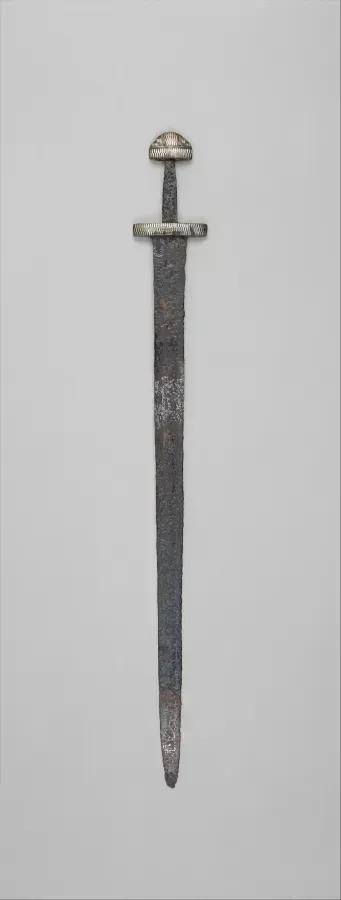
The blade buried at Sutton Hoo was not simply a weapon: it was a statement of dynastic legitimacy. The Vikings who settled extensively in Britain (the Danelaw covered much of eastern England) brought their own sword traditions. ULFBERHT blades, forged using techniques not fully understood until the nineteenth century, have been found in graves across Northern Europe. The quality of these Frankish-made swords was exceptional: metallurgical analysis has revealed a steel composition that suggests crucible methods two centuries ahead of what European smiths were thought capable of at that time.
The Medieval Knightly Sword
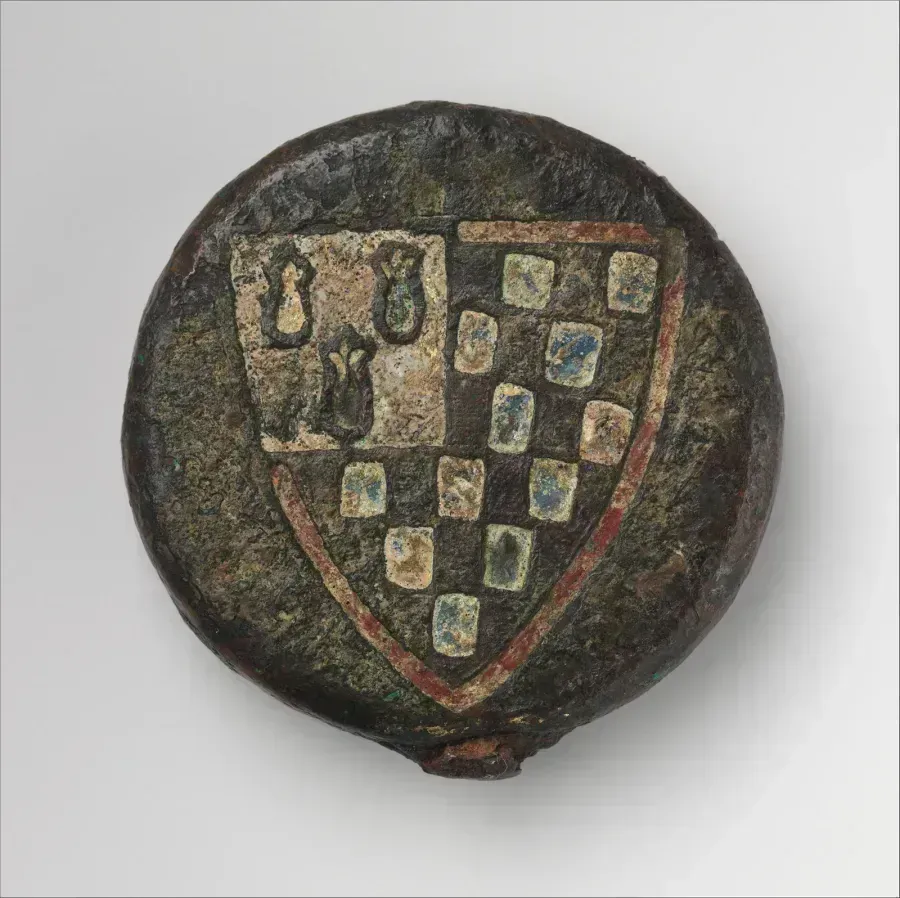
The sword that defines the popular image of medieval Britain. Knights were dubbed with a sword. Oaths were sworn on the crossguard, the hilt forming a cross on which the relics of saints were sometimes carried. The weapon and the code were inseparable.
The Longsword and the Renaissance
By the fourteenth century, blades had grown. The longsword required two hands, or a very large one. The surviving manuals of the fifteenth century (Fiore dei Liberi, Hans Talhoffer) describe a sophisticated system of blade work that modern Historical European Martial Arts practitioners are now reconstructing.
The Rapier and the Elizabethan Period
The rapier arrived in England from Spain and Italy in the mid-sixteenth century. By the Elizabethan period it was the fashion weapon of English gentlemen. Shakespeare's plays are full of rapier duels: Tybalt, Laertes, Osric. The blade had become a literary prop.
Blades Out of British Ground
Britain has an unusually rich archaeological sword record, and a good deal of it sits within a day's travel of London. If you wear a blade at the chest, it is worth knowing what the real objects behind the motif look like, because almost every ornamental convention in modern sword jewellery derives from something a smith actually did.
Sutton Hoo
The ship burial excavated in Suffolk in 1939 produced the finest early medieval sword assemblage found in this country. The blade itself was pattern-welded, made by twisting and forge-welding rods of iron of differing carbon content, then grinding the surface back to reveal a herringbone or serpentine figure running the length of the steel. This was not decoration applied afterwards. The pattern is the structure of the metal showing through, and it was the making of a good blade rather than a coating on a plain one.
The fittings are what jewellers look at. The gold and garnet cloisonne on the pommel and scabbard bosses is cut so precisely that individual garnets sit flush in cells barely a millimetre across, over hatched gold foil that throws light back through the stone. The technique demands eyesight, patience and a tolerance for failure that most modern workshops would not accept. Anyone who has looked at those fittings in the British Museum understands why the hilt, not the edge, is where the jewellery tradition of the sword actually lives.
The Thames and the river finds
An extraordinary quantity of weaponry has come out of British rivers, and the Thames above all. The concentration is far too high to be accidental loss. The prevailing reading is deliberate deposition: swords given to water as an offering, at bends, fords and confluences, in a practice running from the Bronze Age through the Iron Age and into the early medieval period.
Bronze Age leaf-shaped blades, Iron Age scabbards with flowing La Tene decoration, Anglo-Saxon pattern-welded swords and Viking-period blades have all been lifted from the same river. The Battersea shield and the Waterloo helmet came from the Thames as well, and both are on display in the British Museum alongside the swords. The habit is old, widespread and quite consistent, which is one reason the Arthurian image of a blade received from and returned to a lake feels so settled in this country. The story may well be a literary memory of something people here genuinely did for two thousand years.
Where to see them
The British Museum holds the Sutton Hoo material and a very large part of the river finds. The Royal Armouries in Leeds has the national collection of arms and armour, including a deep sequence of medieval and Renaissance swords displayed as working objects. The Wallace Collection in London holds one of the best European arms collections anywhere, particularly strong on Renaissance hilt work, which is the single most useful room in Britain for anyone interested in how a guard becomes ornament. All three are free to enter. Half an hour in any of them will teach you more about blade proportion than any amount of reading.
Upload a photo of your pet, someone you love, or an object. We'll build a 3D model and hand-cast it in pewter.



Ceremonial Swords of the City of London
Britain kept the sword alive as an object of civic ritual long after it stopped being a weapon, and the City of London preserves the most complete version of that survival anywhere. It is a useful corrective to the idea that a sword symbol is necessarily about violence: here it stands for jurisdiction, for the limits of authority, and for a set of relationships that a mace or a seal could not express as clearly.
The City's swords
The Corporation keeps a set of ceremonial swords, each carried in different circumstances and each meaning something specific. The Pearl Sword, so called for the pearls set into its scabbard, is carried before the Lord Mayor on the most formal occasions and is by tradition the sword presented at Temple Bar when the monarch enters the City. The Sword of State is the everyday sword of office, carried before the Lord Mayor at meetings of the Court of Common Council. A black-scabbarded sword is used during periods of mourning, and a plainer one at Old Bailey sessions. The same office, four different statements, distinguished only by the dress of the blade.
The ritual at Temple Bar is the point of the whole system. The sovereign entering the City is met by the Lord Mayor, who offers the sword hilt first. It is touched and returned. Nothing is surrendered and nothing is seized, and the gesture states that the City's authority is real, that it is acknowledged, and that it yields willingly rather than by compulsion. A sword offered hilt first is one of the oldest and clearest ways of saying that.
Why this matters for a pendant
Civic ceremonial explains why so much sword jewellery reads as dignified rather than aggressive. Point down is the resting position, the sword at ease, carried by an office rather than raised by a fighter. Point up is presentation and readiness. Hilt outwards is trust. These are not invented conventions from fantasy illustration. They come from a living ceremonial grammar you can watch in the street at the Lord Mayor's Show each November, and knowing it lets you choose the orientation of a piece deliberately rather than by chance.
The Sword in Different Cultures
Britain: Arthurian Legend and the Anglo-Saxon World
The Arthurian cycle is the defining sword mythology of British culture. Whatever the historical kernel, the literary tradition built around Arthur and Excalibur gave Britain one of the most enduring sword stories in world literature. Malory, Tennyson, T. H. White and many others kept it alive. The sword in the stone is a symbol understood from Inverness to Cornwall.
The Norse World
The Norse sagas gave their swords names, personalities and almost family relationships. Gram, Tyrfing, Skofnung: each blade had a history that mattered as much as its sharpness. The Norse settlers in Britain brought this attitude with them. It sits beneath the surface of a great deal of English-language literature, not least Tolkien's.
Medieval Europe: Chivalry

The chivalric code built an entire ethical system around the sword. The accolade, the ritual touch of the blade on each shoulder, created a knight. The sword was simultaneously a weapon, a symbol of spiritual authority and a moral contract.
Japan: Bushido and the Blade as Soul
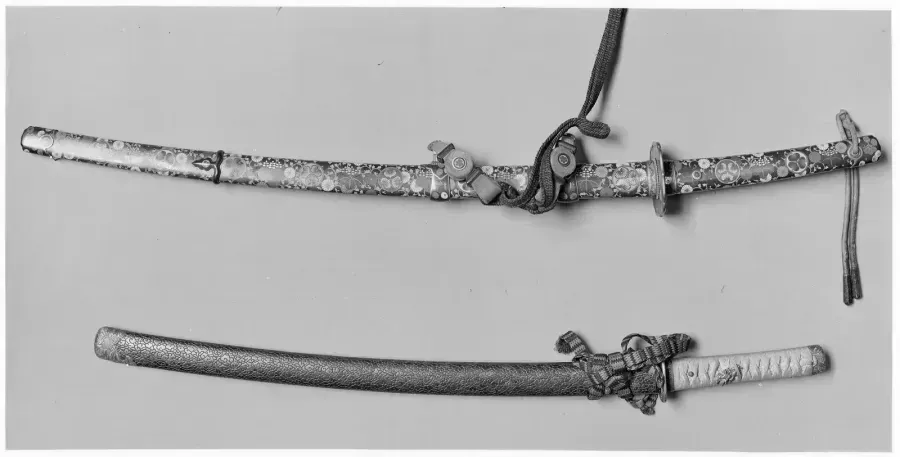
The Japanese sword tradition is distinctive in that the blade was genuinely understood as a soul object. The katana passed from father to son and its lineage mattered as much as the owner's. Seppuku, the ritual act of self-destruction to preserve honour, required the blade. Nothing in Western tradition quite matches this level of identification between person and weapon.
Rome: Power and Law
Roman civilisation used the sword as an administrative symbol as well as a military one. The fasces and the blade together represented the state's power to compel and to execute. Justitia's sword established a lineage of legal symbolism that runs all the way to modern courtroom iconography.
The Islamic World and the Curved Blade
The sword holds significant symbolic weight in Islamic tradition. The two-edged blade is a recurring image in the Quran as an expression of divine justice. The famous Zulfiqar, the bifurcated sword said to belong to the Imam Ali, is one of the most recognised symbols in Shia Islam and appears widely in Islamic calligraphy and metalwork. The curved blade, the scimitar and the shamshir, were refined by Persian and Turkish smiths to a high art.



The Sword and the Cross: The Spanish Combination
Spain produced a version of sword symbolism that fused the blade and the cross more completely than anywhere else in Europe, and it did so over the seven centuries of shifting frontiers usually filed under the Reconquista. The cruciform hilt was standard across Christian Europe, but in Iberia the identification became explicit: military orders took the sword as their emblem, the sword of Santiago with its lily-shaped cross-guard became a badge worn on the chest, and knights swore on the hilt as a matter of course because the hilt was the cross to hand.
Toledo built its reputation on this. Steel had been worked there since Roman times, and by the medieval period Toledo blades were traded across the continent on the strength of the smiths' control of carbon content and quenching. The city's speciality became the fine thrusting sword and the court rapier, blades whose value lay in resilience and balance rather than mass. Albacete, a hundred and fifty miles east, took the other road and built its trade on working steel: the navaja, the field knife, blades made to be used daily rather than displayed. Both traditions are still alive, and both are the reason Spanish sword and blade motifs in jewellery carry a weight that decorative quotation does not.
The practical legacy for jewellery is the shape itself. A short cruciform pendant is legible as a sword and as a cross at the same time, and it always was: this is not a modern design trick but the reason the medieval hilt looked the way it did. Wearers who want the protective and the martial reading together, without choosing one, tend to gravitate to exactly this form.
The Sword in Religion
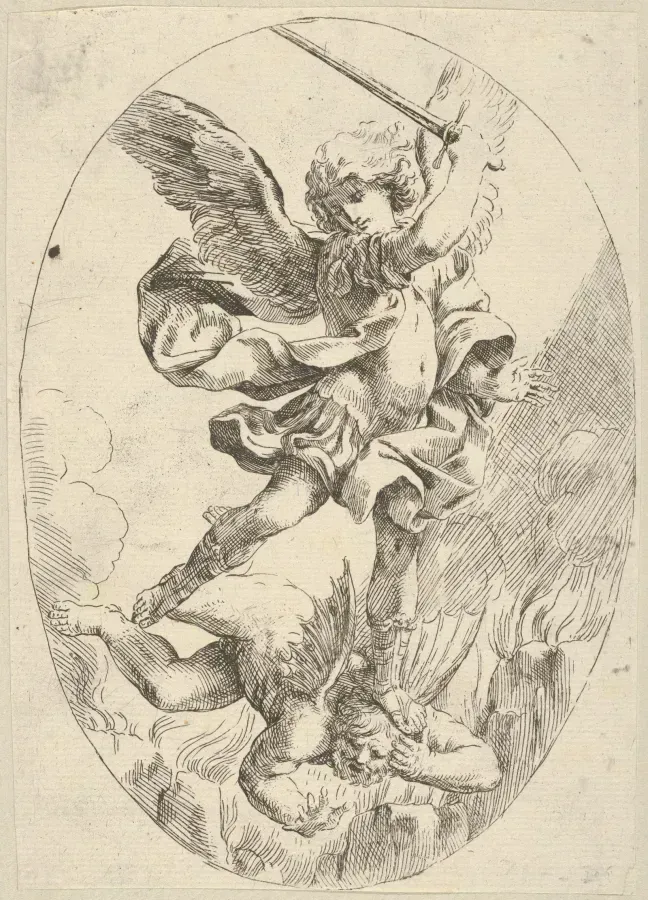
Archangel Michael. The chief warrior angel, depicted throughout Christian art with a blazing sword defeating the dragon. In English churches this image appears in Norman stonework, medieval manuscripts, Victorian stained glass and modern devotional art.
The Sword of Christ. In Revelation, the risen Christ appears with a two-edged sword issuing from his mouth. This is not a physical weapon but the Word: the Logos that cuts through confusion and falsehood.
The Sword of the Spirit. "And take the helmet of salvation, and the sword of the Spirit, which is the word of God" (Ephesians 6:17). The arming of the Christian is entirely metaphorical here, but the metaphor is powerful.
The Seven Swords of the Sorrowful Mother. In Marian iconography, the Virgin Mary is depicted with seven swords piercing her heart, each representing one of her sorrows. This is a symbol of extraordinary emotional depth: the blade as the embodiment of grief rather than force.
The Kirpan. In Sikh tradition, the kirpan (a small ceremonial blade) is obligatory for initiated Sikhs. It represents justice, the defence of the vulnerable and the duty to resist oppression. Not a weapon in any practical sense: a commitment.
The Sword of Manjushri. In Buddhist iconography, Manjushri, the bodhisattva of wisdom, holds a flaming sword in his right hand. This blade cuts through ignorance and delusion. It does not kill, it clarifies.
Leave your email, we'll send your discount code. No spam, unsubscribe anytime.
The code arrives by email, valid on your first order.
The Sword in Tarot and Heraldry
The Suit of Swords in Tarot
The tarot deck divides into four suits, each corresponding to an element. Swords correspond to air: the element of thought, language, decision, conflict and the rational mind. The suit covers the full range of mental life, from clear-headed analysis at one end to anxiety and paralysis at the other.
The Ace of Swords shows a single upright blade emerging from a cloud: breakthrough, clarity, a new understanding cutting through confusion. It is one of the most decisive cards in the deck, a beginning that requires courage rather than comfort. The Two of Swords is a blindfolded figure with two crossed blades, a choice that cannot be avoided forever. The Five of Swords shows a battlefield aftermath: victory without honour, the hollow feeling of winning by the wrong means. The Ten of Swords is the most dramatic image in the suit: a figure face-down with ten blades in the back. This is not death in any literal sense but the end of a way of thinking, the point beyond which the old strategy cannot continue.
Wearing a sword pendant for tarot reasons is an intellectual statement. It says: I take my thinking seriously. I am willing to face difficult truths.
The Sword in Heraldry
Heraldry was the first systematic visual coding system in European history, and the sword took a central place in it. The rules governing how a sword could appear in a coat of arms were precise and carried specific meaning.
Crossed swords on a shield identified a martial family. A sword held point upward in the hand of a knight indicated active service. Point down, resting against the ground, signalled peace or the voluntary laying down of authority. A sword piercing a crown from below indicated submission to a higher power. Sword and scales together indicated judicial office.
In English heraldry the sword appears in royal arms, city arms and family crests across eight centuries. The City of London's arms includes two swords: the Sword of St Paul in the upper left quadrant. Bristol's arms shows a ship alongside a sword-bearing hand. Countless English noble families incorporated blades into their crests as marks of military service or judicial appointment.
The orientation and colour of the blade in a coat of arms also carried meaning. A silver blade on a dark field suggested one reading; a gold blade on silver another. Heraldic rules that were codified by the College of Arms in the fourteenth century remain the official standard today. A jewellery piece using a genuine heraldic design rather than a generic blade carries this entire vocabulary of meaning.
The Sword Today: Pop Culture and What It Has Done
The last forty years have given the sword symbol a string of new contexts, many of which have introduced it to people who would not otherwise have encountered it.
The Lord of the Rings. Tolkien's Narsil, Anduril, Sting, Glamdring and Orcrist gave each sword a biography. His named blades are among the most recognisable fictional objects in English literature.
Game of Thrones. Longclaw, Ice, Needle, Lightbringer. The television series created a generation of viewers with strong opinions about specific blades.
Star Wars. The lightsabre is technically not a sword, but it functions as one in every symbolic sense. The weapon defines its wielder's alignment and is passed from master to student.
Historical European Martial Arts. The HEMA movement has revived serious interest in medieval and Renaissance swordplay across Britain and Europe. The practitioners are scholars as much as athletes. Some of the foundational texts of this tradition, the Liechtenauer manuscripts, the manuals of Hans Talhoffer and Fiore dei Liberi, describe combat systems of genuine complexity that modern practitioners have spent decades reconstructing from fourteenth and fifteenth-century sources.
Tattoo Culture. The sword is one of the most requested tattoo motifs. Blade with roses, blade in stone, blade through a heart, blade with a serpent coiled around it: each combination carries its own weight of meaning.
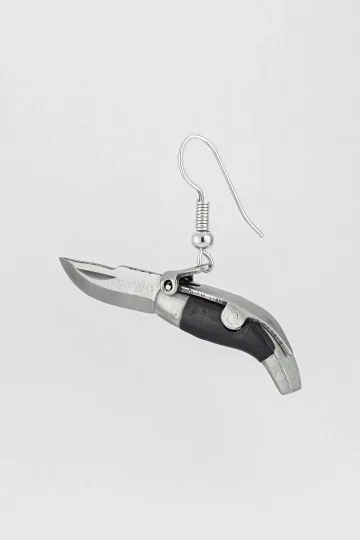
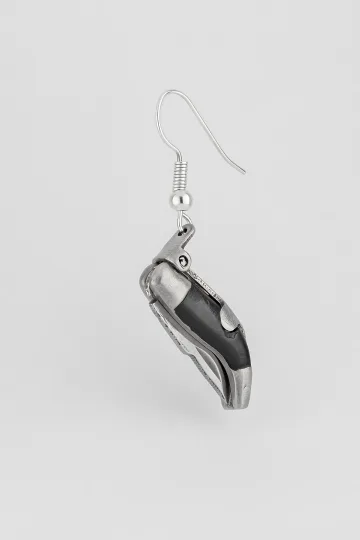
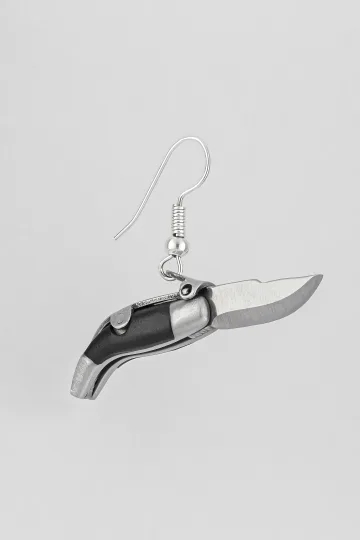
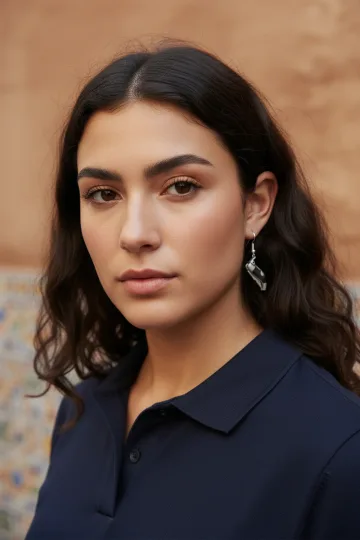
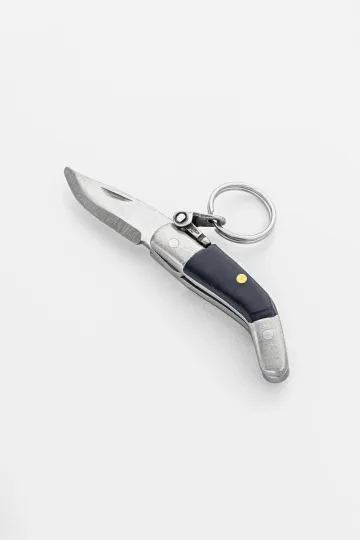
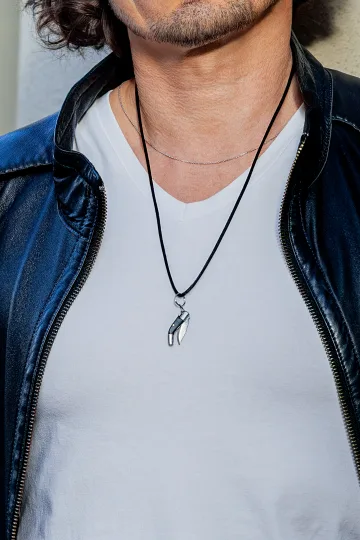
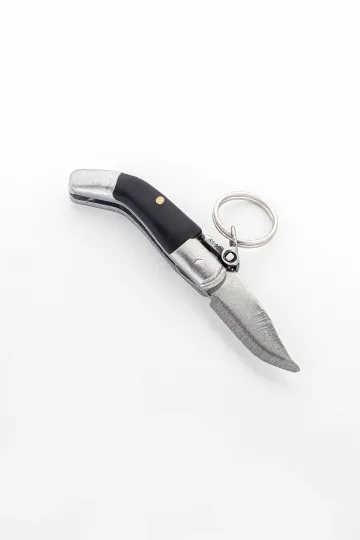
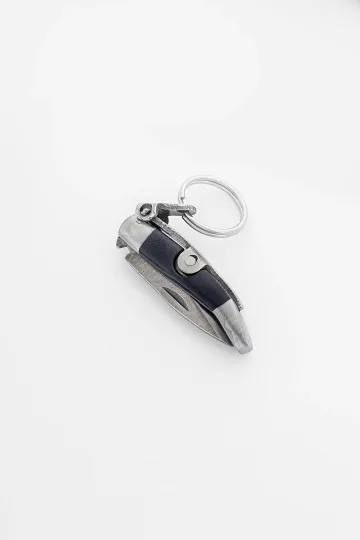
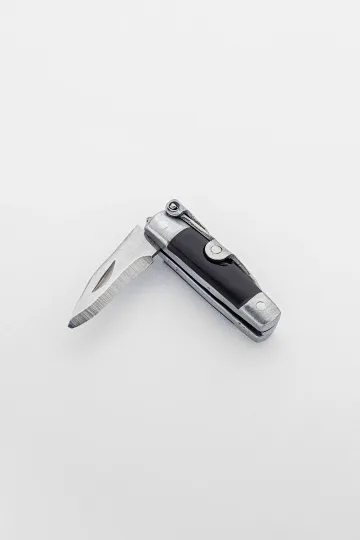
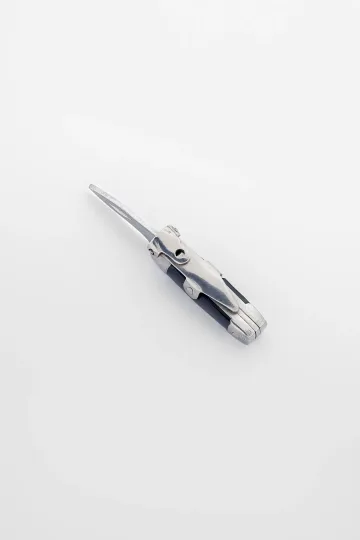
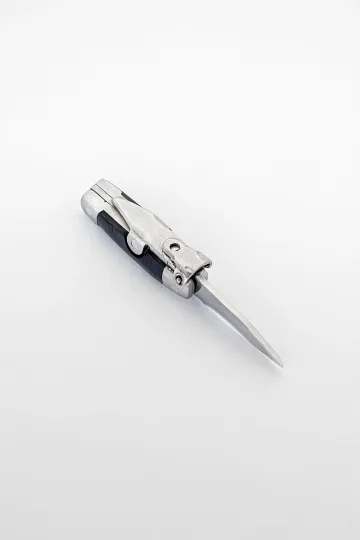
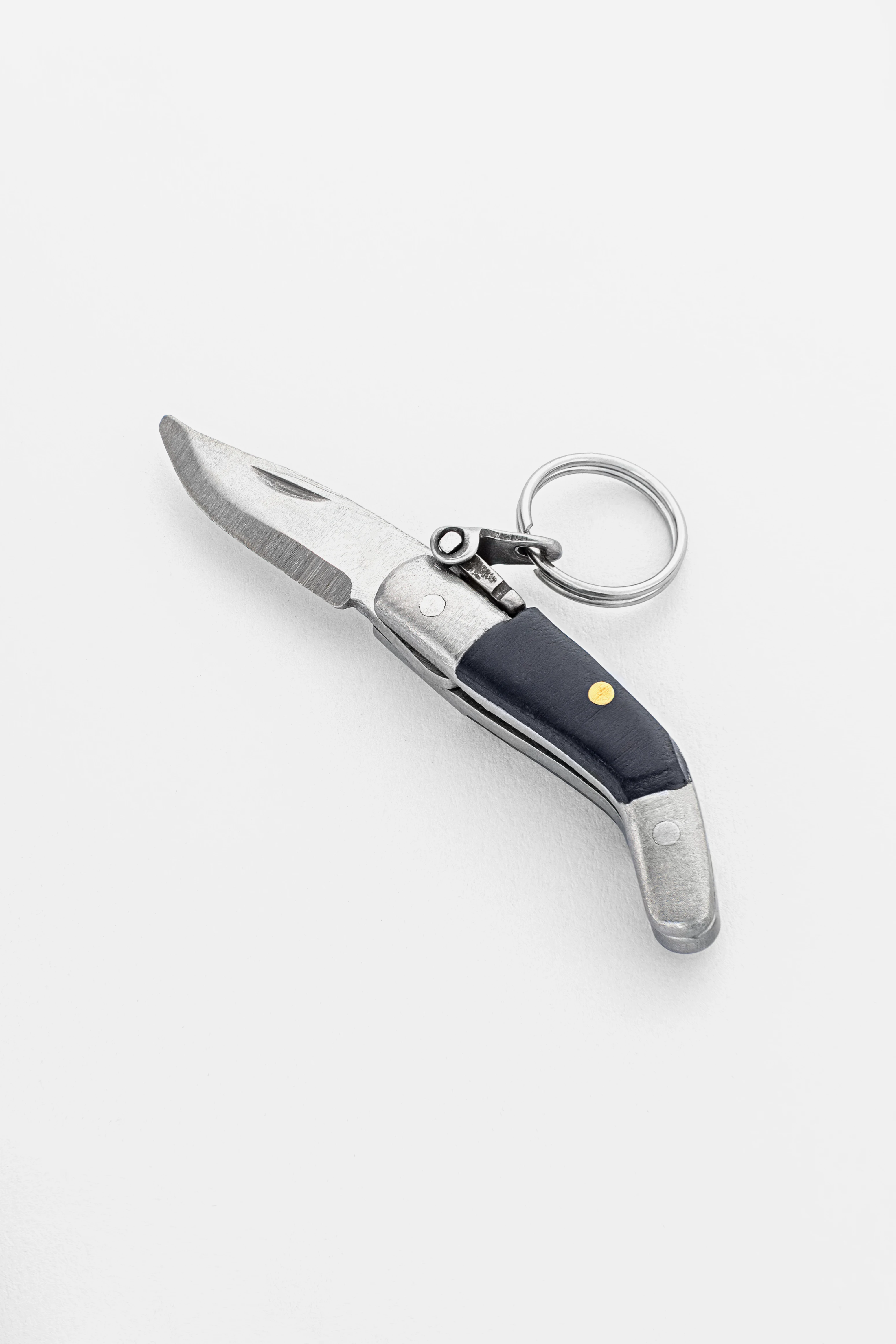
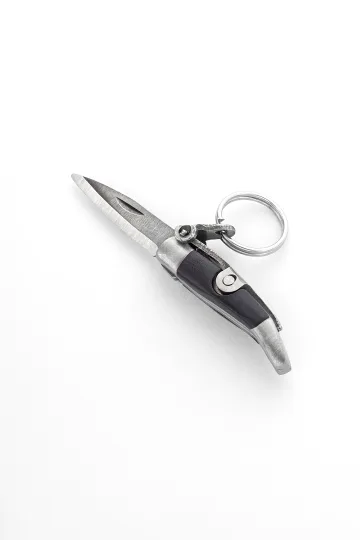
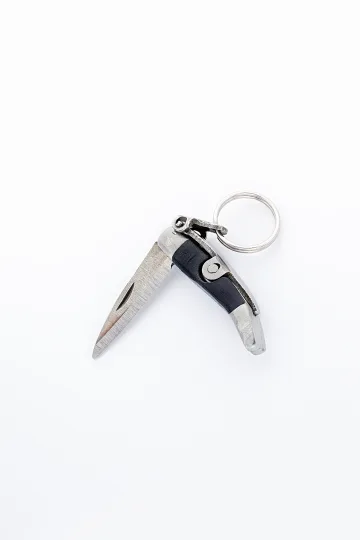
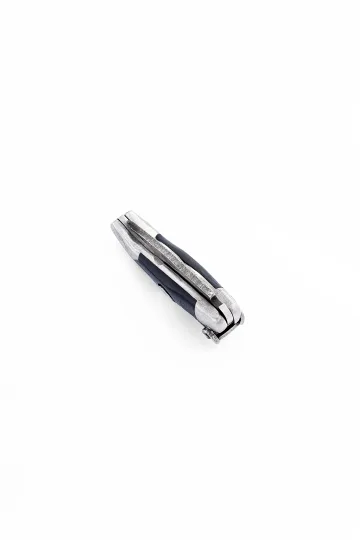
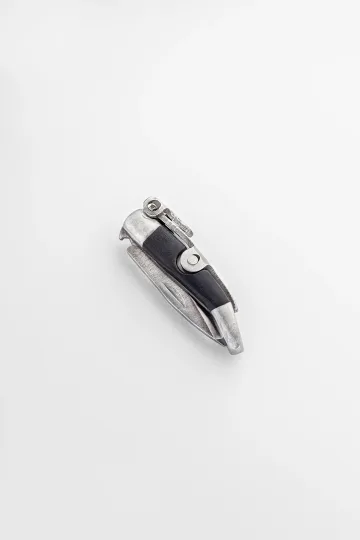
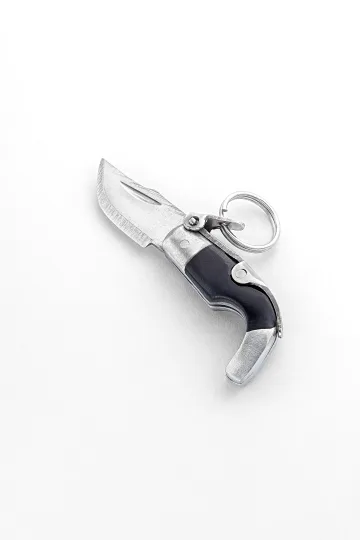
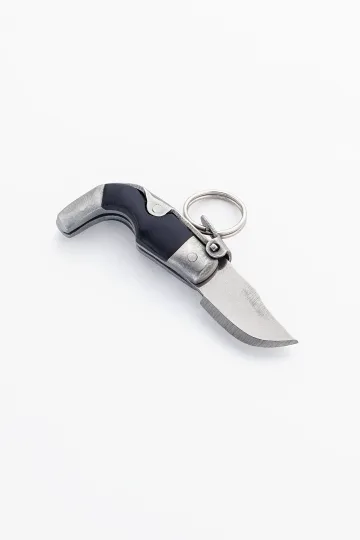
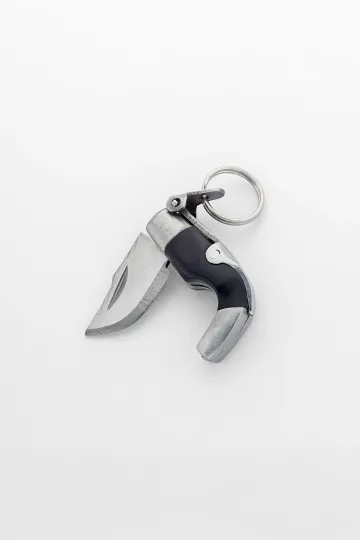
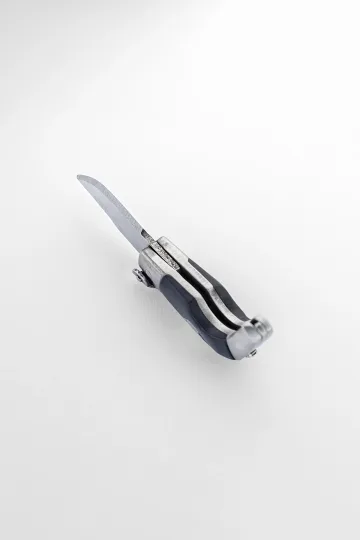
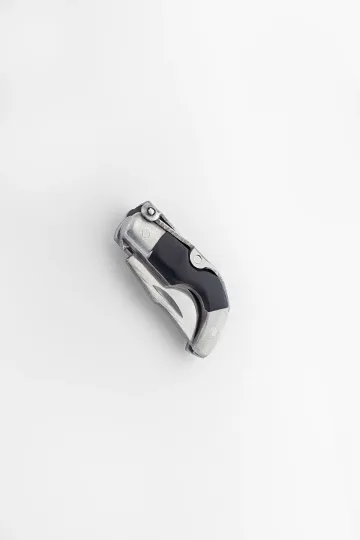
CAPAORA mini knife pendant
The 18th-century Spanish navaja in miniature: 40 mm of stainless steel, a real folding mechanism and a Palanquilla lock that clicks. An affordable gift to remember.
Authentic · Ships from Spain · 14-day returns
Materials
- Sterling silver is the universal choice, holds detail well and suits any aesthetic
- Yellow or rose gold for a warmer, more courtly register
- Oxidised silver for gothic and dark aesthetics, gives a sense of age
- Blackened steel for military and industrial
- Enamel for heraldic detailing, especially where colour matters
- Damascus steel for premium pieces where the pattern of the metal is itself the statement
- Two-tone combinations (gold hilt, silver blade) for visual contrast that echoes the original materials of medieval swords
Care
The point of a blade pendant can scratch other pieces in storage. Keep it separately or in a soft pouch.
Polish only the flat of the blade, not the engraving on the hilt: the detail stays sharper that way.
Use a soft brush in the angles of the crossguard and pommel where dust and dark patina accumulate. Whether to remove this is a matter of preference: some people value the aged look it gives.
Who Suits Sword Jewellery
People in protective roles. Armed forces, police, firefighters, paramedics, security.
Legal professionals. The sword of justice is an ancient image. A classic gift for someone called to the bar or appointed to the bench.
People of faith, particularly Christians. The sword-cross, Archangel Michael's blade. Christian protective symbolism with deep historical roots in British culture.
Martial artists and fencers. HEMA practitioners, kendo, fencing.
Readers and enthusiasts. Tolkien, Arthurian legend, Norse sagas, historical fiction. If you have a relationship with a particular literary or historical sword tradition, wearing the symbol makes complete sense.
Young men at a turning point. The sword has long been a transition marker. It says: you are capable of standing for something.
Partners in a pair. Blade and shield as complementary pieces: we protect each other. The shield as a symbol of defence and family honour carries its own depth and is the natural counterpart to the sword.
The archer rather than the swordsman. Where the blade is close-quarters resolve, the arrow as a symbol in jewellery carries direction and aim, a different kind of warrior emblem for those who prefer focus over force.
Women who connect with the warrior archetype. This is not a male symbol. Boudicca, Athena, the Valkyries, Jeanne d'Arc: the female warrior is as ancient as the male one.
Tarot practitioners and those drawn to the intellectual dimension of the symbol. The suit of swords is one of the most nuanced in the deck. A blade pendant chosen from this angle is a statement about the life of the mind.
Women and the Sword
The sword is often assumed to be exclusively male, but this misreads both history and myth.
Boudicca. The Iceni queen who led the most significant uprising against Roman rule in Britain in 60 or 61 CE. She is one of the most recognisable warrior figures in British history.
Athena. Goddess of wisdom and military strategy. The warrior who wins through intelligence rather than brute force.
The Valkyries. Norse choosers of the slain, depicted with spears and swords. Deep in the same cultural tradition that gave Britain much of its early mythology.
Jeanne d'Arc. Received a sword said to be hidden behind the altar at Sainte-Catherine-de-Fierbois and carried it through the relief of Orleans. The Maiden of Orleans remains one of the most powerful images of female authority in Western history.
Modern fictional warriors. Eowyn in Tolkien (who is specifically British in her literary DNA), Brienne of Tarth. These characters have given the female sword-wearer a contemporary frame of reference.
Women's sword jewellery tends towards finer, smaller pieces. Small blade pendants, stud earrings, rings with a miniature sword detail. The symbolism is no different.
Send a friend a discount code, they save on their first order.
The Sword in Ritual and Ceremony
The Accolade. The ritual touch of a blade on each shoulder that creates a knight. Surviving in modified form in the modern honours system.
Coronation Swords. The Sword of State, the Sword of Mercy, the Sword of Spiritual Justice, the Sword of Temporal Justice: four swords are carried at a British coronation, alongside the crown itself. No other European monarchy uses swords to this extent in its public ceremonies, and the symbolism only works in dialogue with what the crown stands for.
Military Weddings. The arch of swords or sabres beneath which a newly married couple walks. A living ritual still practised in British armed forces ceremonies.
Masonic Rites. The blade appears in several degrees of Freemasonry as an instrument of the oath.
The Sword as a Cross: Oath and Consecration
One aspect of the sword's symbolic life that often goes unnoticed in contemporary discussion is the direct connection between the shape of the knightly sword and the Christian cross. The crossguard of the medieval sword forms a perpendicular bar that, together with the blade and grip, makes an unmistakable cross shape. This was not accidental.
When a medieval knight swore an oath, he typically swore on the crossguard rather than on a separate crucifix. The hilt of many medieval swords contained relics of saints sealed inside the pommel or grip. The sword was, in this sense, a portable sacred object, a reliquary in the shape of a cross that could be drawn and used if necessary. This is why the sword appears so often in consecration ceremonies, knighting rituals, and political oaths throughout medieval and early modern Europe.
This double identity, weapon and sacred object, gives the sword-cross pendant a specific theological depth that a plain cross or a plain weapon would not carry alone. For people from Christian traditions, the combination of blade and cross in a single piece of jewellery can carry both meanings simultaneously without one overriding the other.
Frequently Asked Questions
Point up or point down: does it matter?
In jewellery, the blade is most often depicted point down, the resting position. Point up suggests readiness or aggression. In heraldry, point up signifies active force; point down is associated with peace or mourning. Most wearers do not think about this consciously, but the choice is there if it matters to you.
Is this symbol only for men?
Not at all. Female warrior archetypes are as old as male ones. The symbol reads differently in women's jewellery because the pieces tend to be smaller and the aesthetic lighter, but the underlying meaning is the same.
What does a broken blade mean?
Grief, the end of an era, peace after conflict. In heraldry it can signal defeat or the voluntary laying down of arms.
Blade with a rose: what does it mean?
Warrior and beloved. Strength in service of love. Popular in both historical and contemporary jewellery. The combination has roots in Spanish and Italian craft traditions where rose and blade motifs were paired for weddings and memorial pieces.
The sword-cross in Christian symbolism?
The crossguard forms a Latin cross, which is why the knightly sword was used for oaths on relics. It points simultaneously to martial protection and Christian faith.
Katana versus European sword: any symbolic difference?
The European blade carries ideas of strength, authority and justice, shaped by Roman law, chivalric codes and Christian tradition. The katana carries honour, discipline and the concept of a path, shaped by Bushido, which fused military virtue with Zen and Confucian ethics. Both are legitimate and distinct.
Can you give a sword pendant as a gift?
Yes, and it has a long history as a meaningful gift in Western and Japanese culture. It says something specific: I respect this person's strength.
In a relationship, what does it mean?
Paired with a rose: love and protection. Paired with a shield: two people who protect each other.
What does the suit of swords in tarot represent?
The intellectual and communicative dimension of human experience: thought, decision, argument, clarity and the pain that sometimes comes with honesty. The suit is associated with the air element and covers everything from breakthrough insight to mental exhaustion. Wearing a sword for this reason is an intellectual rather than a martial statement.
What is the difference between a sword pendant and a dagger pendant?
A sword is a dedicated weapon of war, associated with authority, knighthood and military honour. A dagger is a shorter, more personal blade, historically carried as a secondary weapon or a tool, associated with intimacy, personal defence and sometimes treachery. In jewellery, daggers tend to carry a more personal, darker register than swords.
How should I store sword jewellery?
Separately from other pieces, in a soft pouch or padded box. The point of the blade can scratch adjacent pieces. Silver sword jewellery benefits from occasional polishing to maintain its finish, though many people prefer the darker patina that develops with age on oxidised or simply worn pieces.
What does a sword pendant say to other people who notice it?
It depends on the size and how it is worn. A small blade under a collar says nothing at all to anyone except you. A visible mid-sized pendant invites conversation. The symbol is widely enough understood that most people will make one of three connections: mythology and fantasy, military or heritage interest, or personal strength and resilience.
The Sword in Literature: An English Thread
The English literary tradition is soaked in sword symbolism, often in ways that are not immediately obvious.
Beowulf. The oldest substantial work in Old English is full of named blades. Hrunting and Naegling are not interchangeable props: they have character, and their failure or success shapes the poem's meaning. When Naegling breaks in the dragon fight, it is not simply a plot device but a statement about the limits of all human resources.
The Arthurian Cycle. From Geoffrey of Monmouth in the twelfth century through Malory's Morte d'Arthur in the fifteenth to Tennyson's Idylls of the King in the nineteenth, the sword of Arthur runs as a continuous thread through English literature.
Shakespeare. The Elizabethan stage was obsessed with the rapier. Hamlet's fatal duel, the sword-fight between Romeo and Tybalt, Macbeth's blade: the sword drives the action in play after play.
Tolkien. As a scholar of Old and Middle English, Tolkien built his invented sword mythology on Anglo-Saxon foundations. When he named a sword Narsil, he was working in a tradition stretching back to Beowulf. The breaking and reforging of Narsil into Anduril follows a structure of loss and restoration that appears in Old Norse and Old English poetry alike.
Contemporary Fantasy. The tradition is unbroken. Recent epic fantasy series and their television adaptations still give their blades proper names, distinct histories and named steels, and readers still keep track of which sword is which. The named sword with specific properties and a lineage of owners remains a living convention of the genre, and it is the single most common reason a person under thirty walks into a shop looking for a sword pendant.
Why the literary thread matters for a pendant. All of this affects how a sword worn at the chest is read by other people in Britain. It is not primarily understood as a weapon reference here, because the dominant cultural associations are poetic rather than martial: a blade in a lake, an oath sworn on a hilt, a broken sword reforged. That is a considerable advantage for anyone who likes the symbol but does not want it taken as aggression.
Buying it as a gift? Each one arrives ready to give.
 A branded Zevira box and a little card come with every order.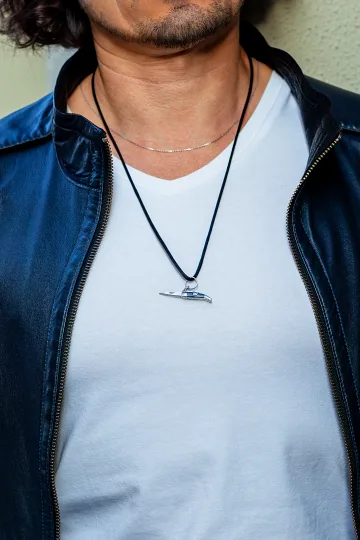




About Zevira
Zevira makes jewellery in the artisan tradition of Albacete, a city with a centuries-long tradition in blade-craft. Albacete and Toledo are the two historical centres of Spanish swordmaking. While Toledo became famous for court rapiers and dress swords, Albacete built its reputation on working blades: the navaja, the albaceteno, the cordobes.
That history is present in everything Zevira makes with sword and blade motifs. These are not decorative quotations of someone else's tradition. They come from a place where metalworking has been continuous craft practice for five hundred years. The workshop is still in the same city. The hands working the metal learned from people who learned from people who did this before.
If any of the symbolism in this article resonates with you, Zevira's catalogue is a natural next step.
Conclusion
The sword is one of those symbols that survives every political upheaval and every shift in fashion. Civilisations change, codes of honour are rewritten, the nature of conflict transforms, but the blade persists. Beneath all the cultural layering it keeps pointing at something fundamental: the willingness to stand for something, to protect what matters, to cut through what is false.
Wearing sword jewellery today is not a statement about actual weapons. It is about that interior position. I am capable of acting. I will not betray what I believe in. A small blade worn at the chest or on a finger says all of this without making a speech.