Love Symbols in Jewellery: Locks, Hearts, Rings and What They Really Mean
A couple stands on the Pont des Arts in Paris. He pulls a padlock from his coat pocket. She writes their initials in permanent marker. They lock it to the railing, toss the key into the Seine, and kiss while a stranger takes their photo. Thousands of people have done the same thing on that bridge, and on bridges across Seoul, Rome, Cologne, and dozens of other cities.
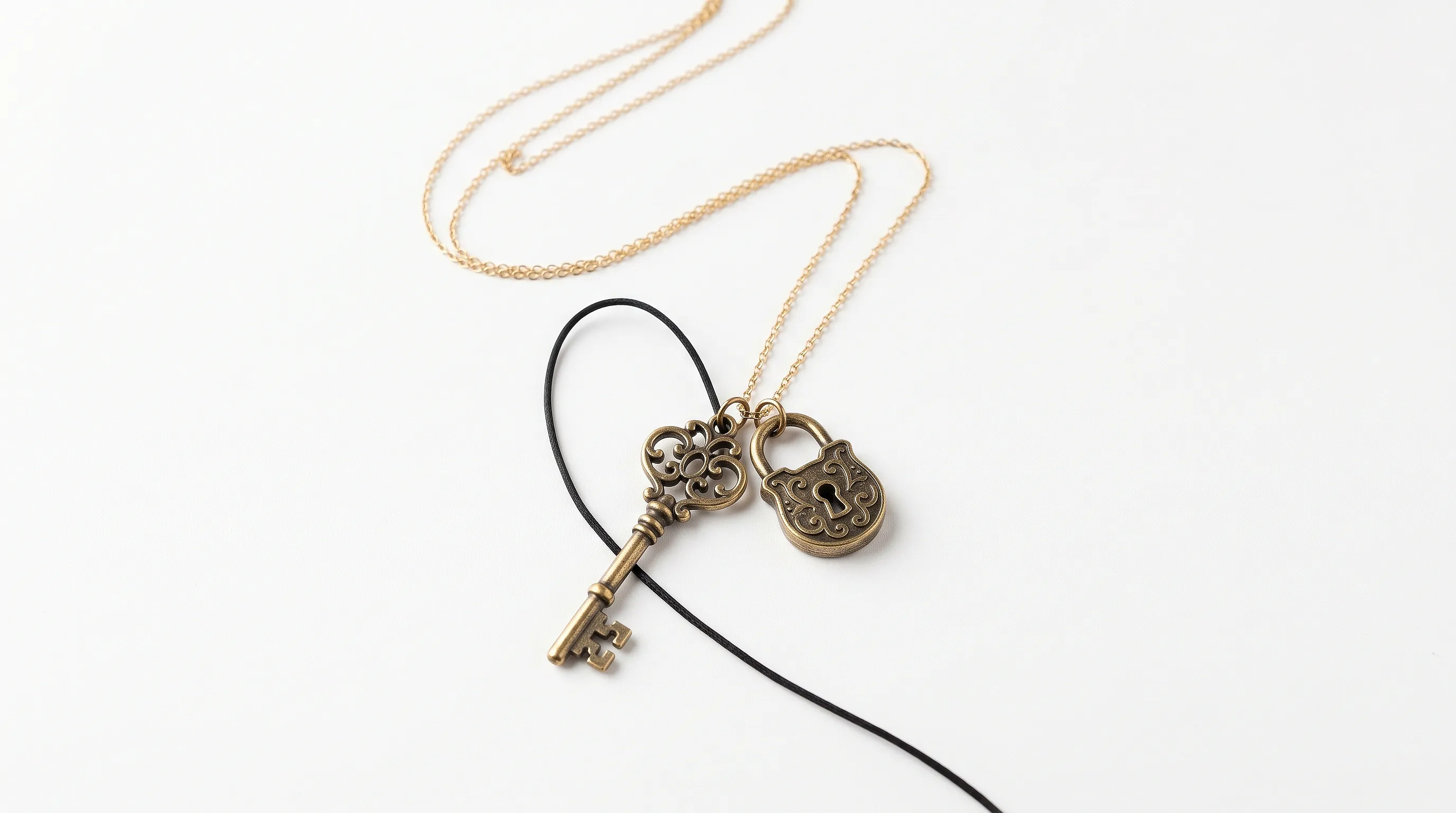
Now imagine her, six months later, back home. She's getting ready for work. She reaches for a small pendant around her neck, a miniature gold lock no bigger than her thumbnail. She doesn't think about Paris every time she touches it. But sometimes she does. And that's enough.
That's what love symbols in jewellery actually do. They don't shout. They sit quietly against your skin and carry a weight that only you understand.
This guide is about those symbols: the locks, the hearts, the rings, the flames. Where they came from, what they mean, and why people keep choosing them to say things that words struggle to express. Looking for a romantic gift, or something meaningful for yourself? There's a symbol here that fits.
What are love symbols in jewellery?
Love symbols are visual shorthand for emotions that resist simple explanation. A heart on a necklace doesn't just say "love." It says something about the wearer: what they value, how they express affection, who they're connected to.
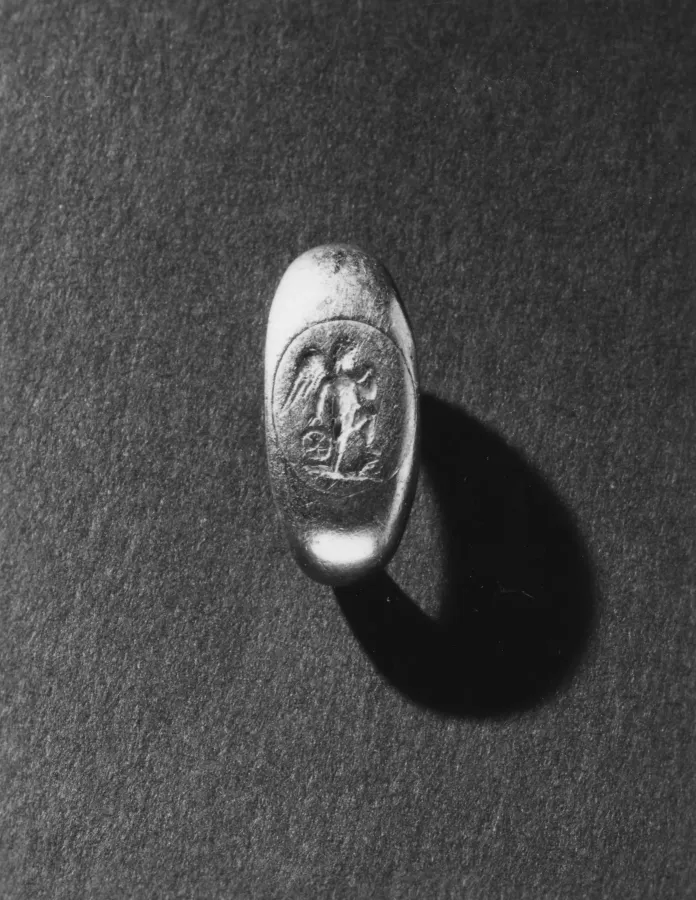
These symbols have survived centuries because they work. The ancient Romans wore rings to signal commitment. Medieval Europeans exchanged heart-shaped brooches. Victorian lovers communicated through an entire language of jewellery symbols, where every gem and every motif carried a secret message.
Wear the symbol, don't just read about it. These are in stock:




Today, love symbols in jewellery serve a different purpose. We don't need coded messages anymore. But we still need objects that hold meaning. Things we can touch when the person who gave them to us is far away, or things we bought for ourselves to mark a moment we don't want to forget.
The main love symbols you'll find in contemporary jewellery include:
- The love lock: commitment and unbreakable bonds
- The heart: love in all its forms, from romantic passion to self-acceptance
- The ring or circle: eternity, wholeness, promises without an end
- The flame or sacred heart: passion, transformation, devotion that burns
Each of these has a story. Each means something slightly different depending on who's wearing it and why. Let's start with the one that went from a bridge tradition to a jewellery phenomenon.
The love lock: from bridges to pendants
If you've been to any major European city in the last two decades, you've seen them. Padlocks, hundreds or thousands of them, clustered on bridge railings, fence wires, monument gates. Names, dates, hearts drawn in marker. Keys thrown into the water below. It's one of the most visible love rituals of the modern world.
But where did this actually start?
Ponte Milvio, Pont des Arts, Seoul Tower
The modern love lock tradition traces to a 2006 Italian novel called "Ho Voglia di Te" (I Want You) by Federico Moccia. In the book, a couple locks a padlock to a lamppost on Ponte Milvio in Rome. The novel became a film, the film became a cultural moment, and suddenly thousands of real couples started doing the same thing.
Rome was first. Then the tradition spread to the Pont des Arts in Paris, where the locks became so heavy that a section of the bridge railing collapsed in 2014. The city removed over a million locks, weighing 45 tonnes. In Seoul, N Seoul Tower became another hub. In Cologne, the Hohenzollern Bridge gathered locks by the tens of thousands.
There were earlier precedents, though. In Serbia, the tradition of love locks on Most Ljubavi (Bridge of Love) in Vrnjacka Banja dates back to World War I. A local schoolteacher named Nada attached a lock to the bridge after her lover left for war and never returned. Women in the town began locking their own padlocks to the bridge to protect their relationships. So the tradition has roots deeper than a 2006 novel. It just needed that novel to go global.
Why the lock became jewellery
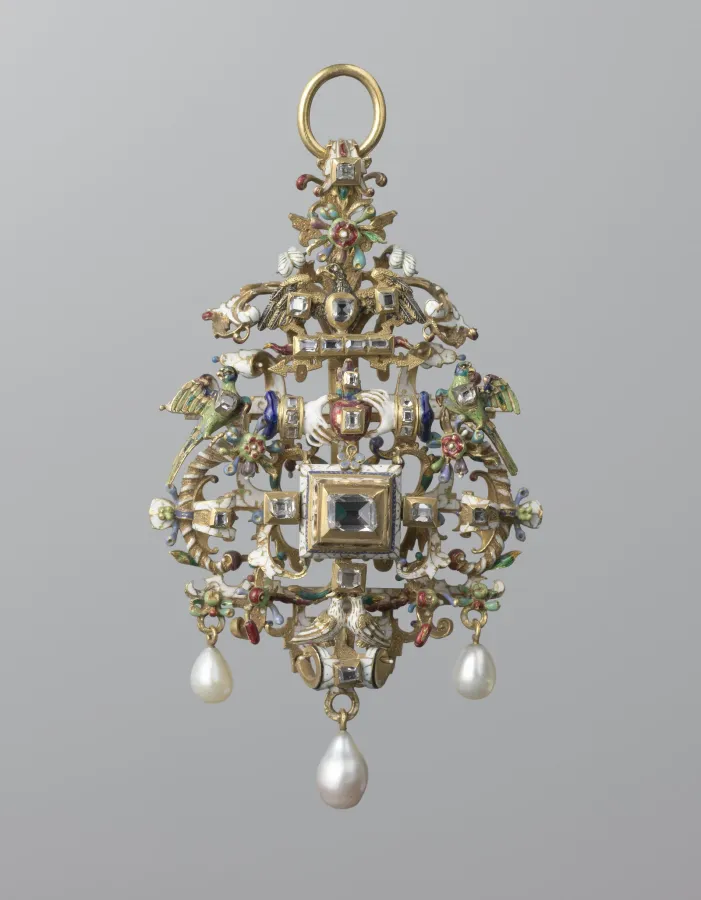
Bridge locks are powerful symbols, but they have a problem: you leave them behind. You go home, and your lock stays on a bridge in another city, slowly rusting, possibly removed by authorities. The symbol is fixed in one place while your love goes with you everywhere.
That's why the love lock became a pendant. A miniature padlock worn around the neck carries the same symbolism (security, commitment, a bond that can't be easily opened), but it travels with you. You don't need a bridge. You don't need a key ceremony. You just need the object against your skin.
The padlock as jewellery also shifted the meaning slightly. A bridge lock is public, performative, meant to be seen by strangers. A lock pendant is private. It's between you and whoever (or whatever) you locked it for. That privacy makes it more intimate, in some ways more honest.
What it means to gift a love lock pendant
When you give someone a lock pendant, you're saying something specific. Not just "I love you." That's what flowers do. A lock says "this is secure." It says "I'm not going anywhere, and neither is this bond between us."
There's a reason the lock resonates especially with people who've been through something difficult together: long-distance relationships, periods of uncertainty, rebuilding trust. The lock doesn't represent the easy, effortless part of love. It represents the part where you choose to stay.
For couples who can't make it to a bridge in Paris or Rome, a love lock pendant becomes their own version of the tradition. Smaller, quieter, and arguably more meaningful because it stays close.
Some people engrave them with initials, dates, coordinates of a meaningful place. Others leave them blank, because the meaning is already inside.
One heart at the collarbone, on bare skin. Five at once is a jumble sale, not romance.
How to wear love symbols
Hundreds of heart pendants, love locks and commitment rings have passed through my hands on shoots. Here is what actually works, sorted by occasion.
What do I wear a love symbol with every day? For daily wear I recommend one small pendant on a thin chain: a smooth heart or a lock the size of a fingernail. It settles into the neckline of a tee, a roll-neck or a plain shirt and argues with nothing. A light top lifts the metal, a dark one turns the pendant into the accent. The quieter the piece, the more personal it reads.
Is it right for the office? Yes, as long as you keep it restrained. I suggest silver or a matte finish, 45 to 50 cm, so the pendant stays at the collarbone and does not dive under a buttoned collar. A slim spiritual-love ring or an engraved signet works better here than a large heart. Under a jacket the symbol reads as a quiet detail, not a loud accent.
How do I build an evening look? For evening I choose an open neckline and a smooth fabric in a deep colour: wine, emerald, black. A larger hammered heart, an enamel lock or a flaming heart belongs here as the single accent. A longer chain draws the silhouette out, and one bold piece beats three middling ones.
How do I wear several symbols together? Two or three chains at different lengths, one meaningful pendant with a pair of thin plain ones beside it. The symbol stays the lead, the rest supports it. Metals get along if you repeat each one twice rather than wearing one of each. Rings I stack on one hand: the love ring sets the tone, the neighbours stay smooth.
How do I match it to someone's style? If you are choosing a gift, I first look at what the person already wears: warm or cool metal, delicate or bolder pieces, pendant or ring. Landing in their usual metal matters more than an original design. A lock or a hammered heart suits those who love texture and a story; a smooth heart and a thin ring suit clean lines.

Turn on your camera, pick earrings, a pendant or a ring, and see the piece on yourself in real time.
Switch items in one tap.
Everything runs in your browser: no photo or video is ever uploaded.
Customer reviews
Zevira is a real jewellery shop. Genuine payments, deliveries and customer thank-yous.
🥰🥰🥰 gracias

Ok, ¡gracias! 🙂

The heart: the oldest love symbol in the world
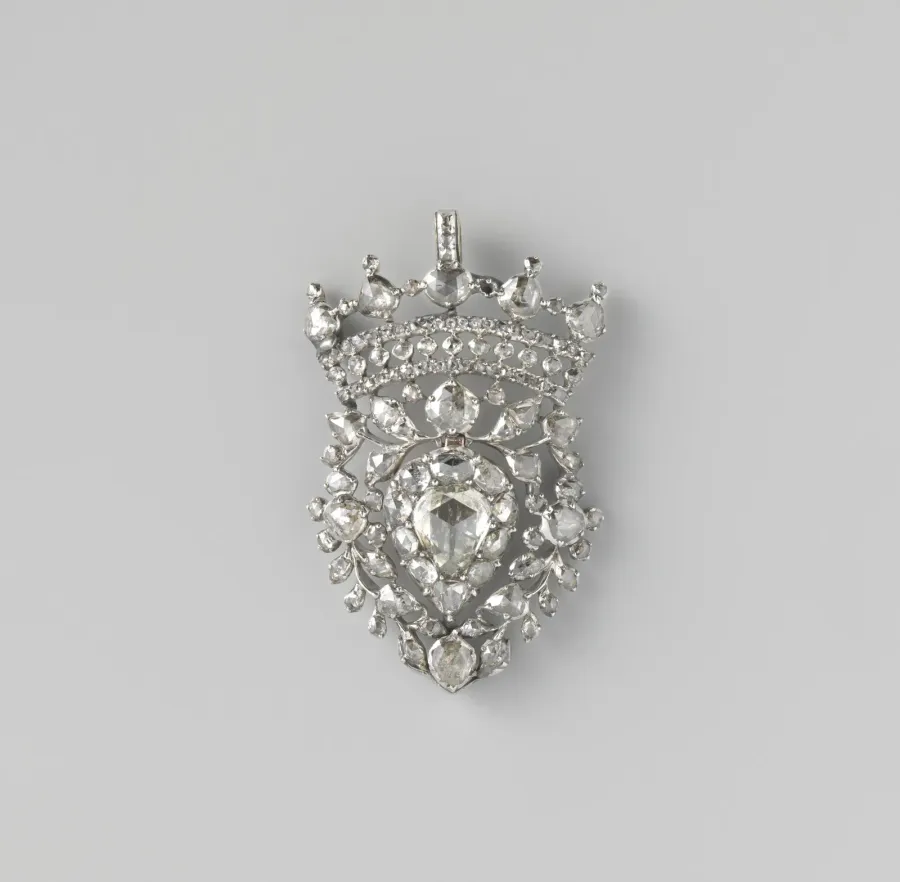
Every culture recognises the heart shape. Every child can draw one. It appears on playing cards, candy boxes, text messages, and yes, on more jewellery than probably any other symbol in human history. The heart is everywhere, which makes some people dismiss it as overdone.
But the heart earned its place. And its story is stranger than you might think.
The heart shape has nothing to do with the actual organ
A human heart looks nothing like the symmetrical shape we draw. The real organ is lopsided, messy, and covered in arteries. So where does the iconic heart shape come from?
There are several theories, and historians don't fully agree. One popular explanation points to the silphium plant, used as a contraceptive in ancient Cyrene (modern Libya). The plant's seedpod was heart-shaped, and it appeared on Cyrenaic coins. Some scholars argue that the association between the seedpod shape and romantic love (through its contraceptive use) stuck around long after the plant went extinct.
Another theory connects the shape to the work of Galen, the ancient Greek physician, who described the heart as having three chambers with a dent in the middle. Medieval artists, working from written descriptions rather than actual dissections, may have stylised this into the shape we know.
By the 13th and 14th centuries, the heart shape was firmly established in European art. It appeared in manuscripts, playing cards, and heraldry. And from there, it was a short step to jewellery.
Hammered hearts, flaming hearts, sacred hearts
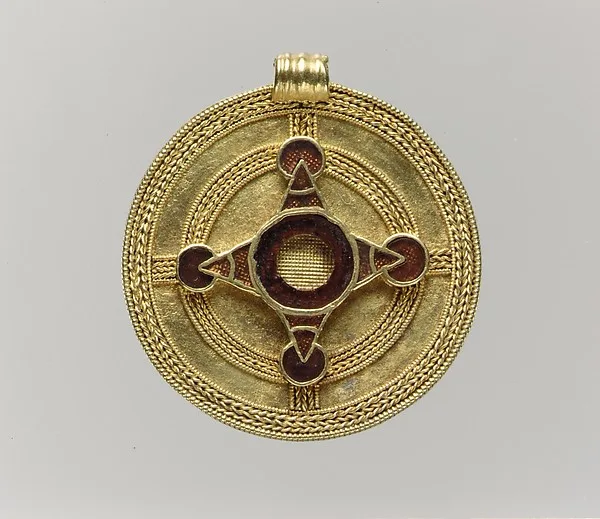
Not all heart jewellery is the same, and that's exactly the point. The execution changes the meaning entirely.
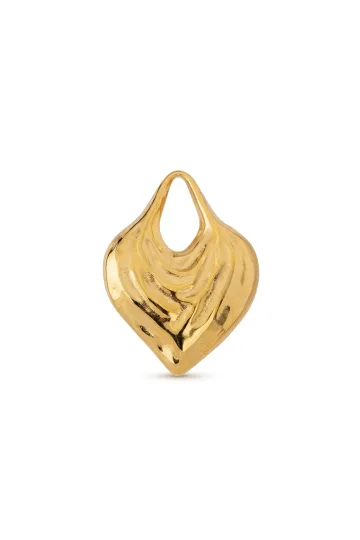
A hammered heart, textured and imperfect, with visible tool marks, suggests raw honesty. It's love that isn't polished or performed. It's the kind of heart you'd give someone who values authenticity over perfection, or that you'd wear as a reminder that being real matters more than being pretty.
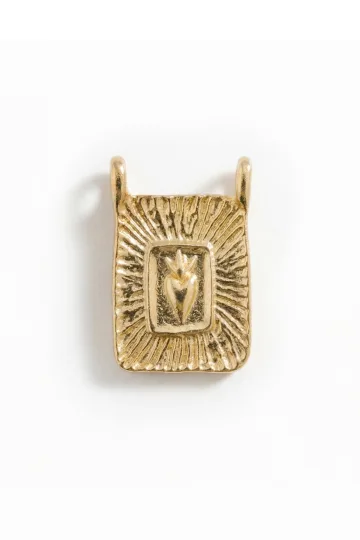
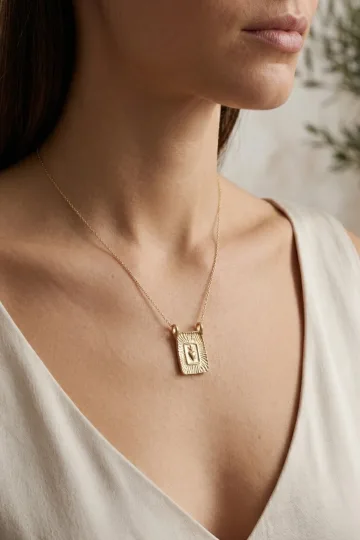
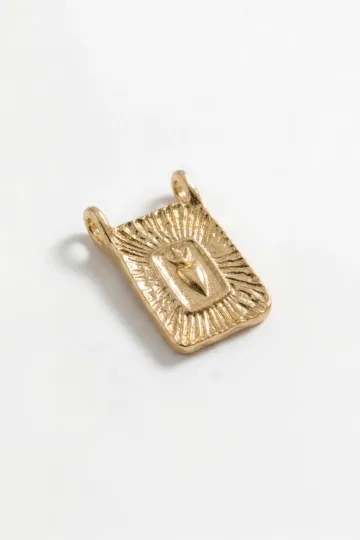
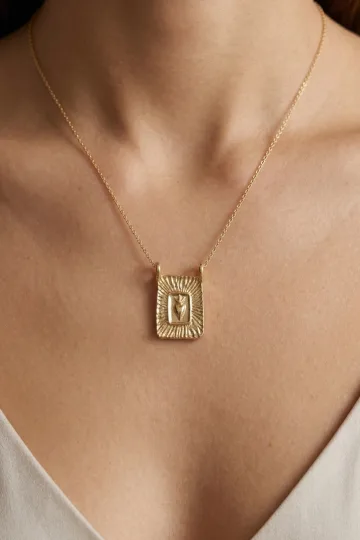
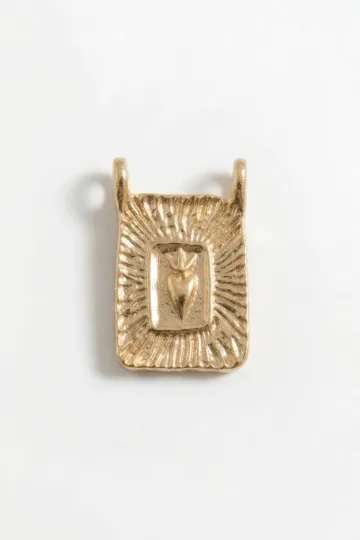
A flaming heart or sacred heart carries a much heavier symbolism. The sacred heart originates in Catholic devotional art: the heart of Jesus, surrounded by flames, crowned with thorns, radiating divine love and suffering. In jewellery, the sacred heart has been adopted far beyond its religious origins. It represents passionate devotion, love that transforms through pain, and the willingness to be vulnerable. The flames say: this love costs something, and it's worth paying. You can explore the full history and meaning in our guide to sacred heart jewellery.
An anatomical heart, realistic and almost medical, appeals to people who want to acknowledge that love is biological as much as it is spiritual. It's popular among medical professionals, science enthusiasts, and anyone who finds the traditional heart too sweet for their taste.
And a simple, clean heart, smooth lines with no texture and no flames, remains the most versatile. It can mean everything or nothing, depending on who wears it. That's its strength.
The heart as self-love, not just romance
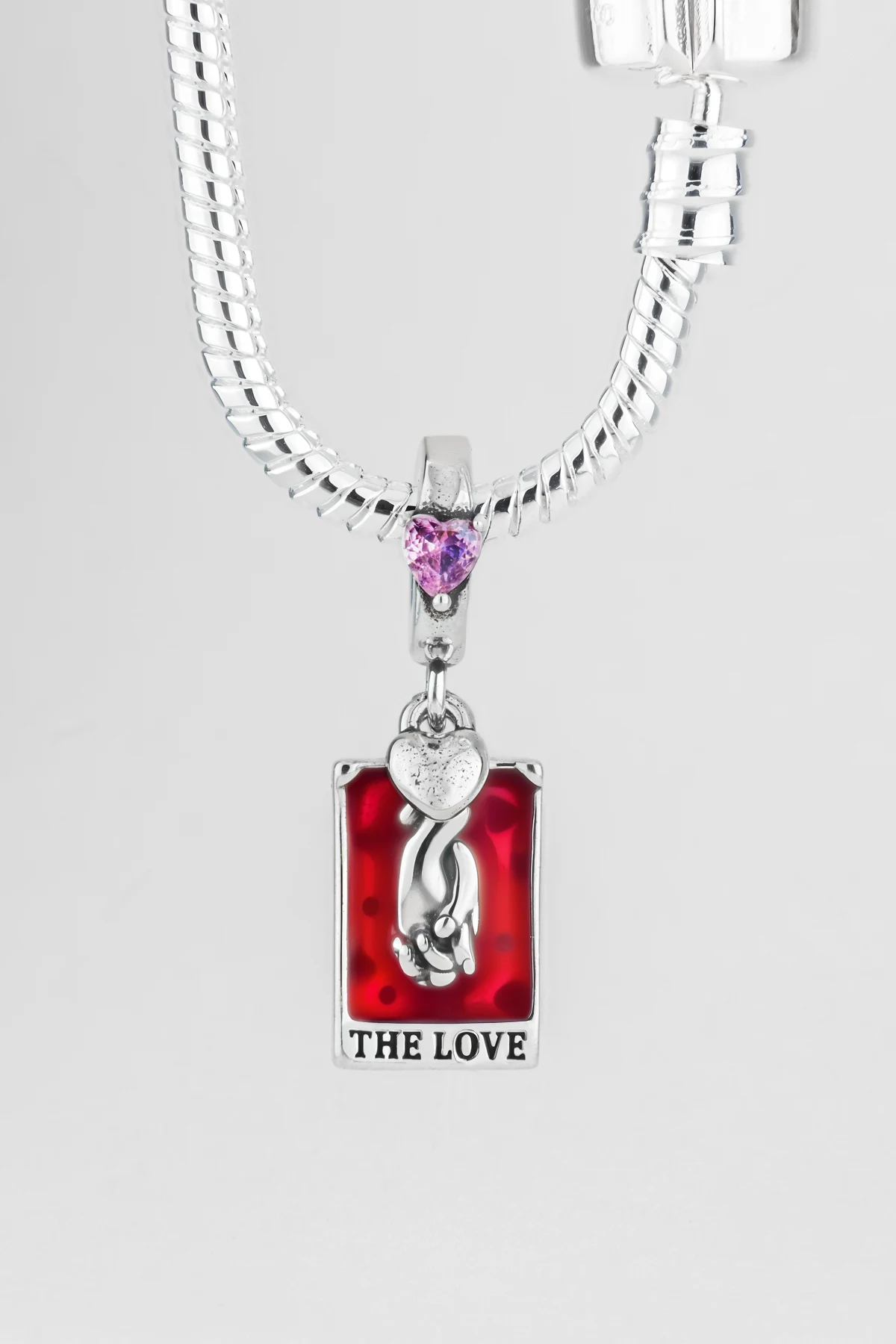
For a long time, heart jewellery was assumed to be a romantic gesture, something you received from a partner. That's shifted significantly in recent years. People buy heart pendants and heart rings for themselves, not as a consolation prize for being single, but as a deliberate statement: I matter to myself.
The self-love heart is often more interesting design-wise. It's hammered, or oversized, or worn in unexpected ways: a heart ring on the index finger instead of the ring finger, a heart pendant layered with other chains instead of worn alone. It says: this isn't about you. This is about me.
That shift hasn't diminished the heart's romantic power. If anything, it's strengthened it. When a symbol means "love" in every direction, toward others, toward yourself, toward life in general, it becomes more powerful, not less.
Rings and circles: eternity, commitment, and the shape that never ends
The circle is the simplest geometric shape and one of the most profound symbols in human culture. It has no beginning and no end. It encloses and protects. It represents cycles: birth, death, rebirth, seasons, the orbit of planets.
When you wear a ring, you're wearing an unbroken circle. And that shape carries meaning whether you think about it or not.
Why circles symbolise forever
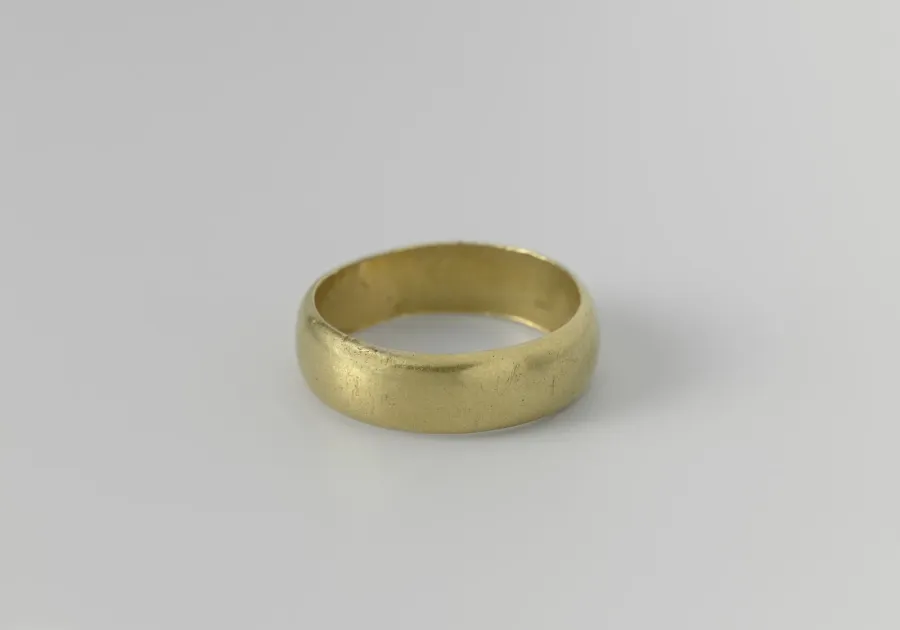
In mathematics, a circle is defined by its continuity. Every point on the circumference is equidistant from the centre. There are no corners, no sharp turns, no interruptions. This quality made it a natural symbol for eternity in ancient cultures.
The ancient Egyptians are often credited with starting the ring-as-love-symbol tradition. They believed the "vena amoris," the vein of love, ran directly from the fourth finger of the left hand to the heart. Modern anatomy has disproved this (there's no special vein in that finger), but the tradition stuck for thousands of years.
Romans formalised the practice with the "annulus pronubus," a betrothal ring given to a woman as a public pledge. Early rings were iron. Later, gold became standard. The circular shape was never accidental. It was specifically chosen to represent a promise without end.
But rings aren't only about romantic commitment. In many cultures, rings represent membership, authority, identity. Bishops wear rings. Graduates receive class rings. Mothers wear rings stacked for each child. The circle adapts to whatever bond you place inside it.
The spiritual love ring
Beyond traditional commitment rings, there's a growing category of rings designed specifically around spiritual and self-directed love. These often feature minimal design: thin bands, subtle textures, sometimes a small symbol like an infinity mark or a single stone.
A spiritual love ring isn't about promising yourself to another person. It's about promising yourself to your own growth, your own values, your own path. People wear them after completing a difficult period (recovery, grief, a major life transition) as a physical marker that says: I came through this. I'm still here.
The ring format works perfectly for this kind of meaning because you feel it constantly. A pendant you might forget about. A bracelet slides around. But a ring sits on your finger every time you type, every time you hold a cup, every time you reach for someone's hand. The contact is continuous, and so is the reminder.
Upload a photo of your pet, someone you love, or an object. We'll build a 3D model and hand-cast it in pewter.




Love jewellery for different relationships
One of the biggest misconceptions about love-themed jewellery is that it's exclusively romantic. Hearts, locks, rings: people assume these are Valentine's Day territory and nothing else. The reality is much broader.
Romantic partners
This is the obvious one, and it's obvious for a reason. Love symbols work beautifully between romantic partners because they communicate without requiring words. A love lock pendant for an anniversary. A heart bracelet slipped into a birthday card. A ring exchanged not as an engagement, but as a quiet "I choose you" that doesn't need a ceremony.
The key with romantic love jewellery is personal relevance. A heart pendant is nice. A heart pendant in the exact shade of green that reminds your partner of the lake where you had your first holiday together. That's something else entirely. The symbol matters, but the specific choice matters more.
Best friends
Friendship-themed jewellery has evolved well beyond the "best friends" split-heart necklaces of the 1990s (though there's something charming about those too). Modern friendship pieces use the same love symbols but interpret them differently.
Two matching lock pendants, one for each friend, carry the same "unbreakable bond" meaning as the romantic version, without the romantic connotation. Heart earrings gifted for a milestone birthday acknowledge that friendship is a form of love, full stop. Matching rings worn on the middle finger say "we chose each other" in a way that has nothing to do with romance and everything to do with loyalty.
Parent and child
The parent-child bond might be the most intense form of love that exists, and jewellery captures it in specific ways. A mother's heart pendant, often personalised with a child's birthstone or initial, is one of the most commonly gifted pieces of jewellery worldwide. But it works in the other direction too. Adult children gift their parents love symbol jewellery as a way of saying: the love you gave me, I carry it with me. Here's proof.
Lock pendants work particularly well for parent-child gifts because the symbolism is so apt. A parent's love is protective. It holds secure. It locks tight around the person who matters most.
Self-love
We covered this briefly with hearts, but it deserves its own section. Buying love jewellery for yourself is not a compromise or a consolation. It's an assertion. It's choosing to mark your own worth with a physical object that you wear every day.
Self-love jewellery tends to be chosen more carefully than gifted pieces, because you know exactly what you want and what it means to you. A hammered heart that reflects your own imperfect journey. A ring that marks the day you made a decision to prioritise yourself. A lock pendant that represents a promise you made to your own future.
These aren't participation trophies. They're monuments, worn on the body, to the hardest and most important relationship any person has, the one with themselves.







Materials and styles
Love symbols appear across every price point and material in the jewellery world. Your choice of material changes the look, the feel, and sometimes even the meaning.
Gold-plated pieces offer warmth and richness. The gold tone naturally pairs with romantic symbolism: there's a reason gold has been associated with love and devotion across cultures. Gold-plated sterling silver gives you the look of gold with the durability of a solid base. These work especially well for heart pendants and love lock designs where the warm colour enhances the emotional tone.
Silver pieces carry a cooler, more modern energy. Silver hearts and locks feel more contemporary and understated. They layer well with other silver jewellery and suit people who prefer a quieter aesthetic. If the person you're buying for wears mostly silver-toned jewellery already, matching their existing style shows you pay attention: and that's romantic in itself.
Pieces with enamel or stones add colour and dimension. A love lock with green pearlescent enamel, for example, shifts the piece from purely symbolic to visually striking. Coloured elements can personalise the symbol: choosing a colour that means something to the recipient adds another layer of intention.
Hammered and textured finishes change the personality of any symbol. A smooth, polished heart says classic romance. A hammered heart says real, earned, imperfect love. A brushed-finish ring says quiet strength. Texture is an underrated way to communicate what kind of love you mean.
When choosing between styles, think about how the person wears jewellery. Do they stack and layer, or do they wear one statement piece? Do they prefer delicate chains or chunkier designs? The symbol is the starting point. The style makes it personal.
CAPAORA mini knife pendant
The 18th-century Spanish navaja in miniature: 40 mm of stainless steel, a real folding mechanism and a Palanquilla lock that clicks. An affordable gift to remember.
Authentic · Ships from Spain · 14-day returns
How to choose and gift love jewellery
Choosing love jewellery for someone else requires a different approach than buying it for yourself. When you buy for yourself, you know exactly what you want. When you buy for someone else, you're interpreting their taste, their personality, and the specific message you want to send.
Here are the practical considerations:
Start with the relationship. A love lock pendant says something different to a romantic partner than it does to a best friend. A heart says something different to your mother than to your girlfriend. Choose the symbol first, based on what it means between you and this specific person.
Consider their existing jewellery. Look at what they already wear. Gold or silver tone? Delicate or bold? Pendant or ring? Matching their existing style shows thoughtfulness. Introducing a new style can also work: but only if you're confident they'll appreciate the stretch.
Think about daily wearability. The best gifted jewellery gets worn often: ideally every day. That means considering practical factors: does the chain length work with their wardrobe? Is the ring comfortable for daily wear? Can the pendant handle a shower or a workout? Love jewellery that lives in a drawer misses the point entirely.
Skip the calendar pressure. Valentine's Day gifts are expected. Anniversary gifts are expected. A love pendant given on a random Wednesday in March? That's a story. The unexpectedness of the timing amplifies the meaning. Don't wait for an occasion. Be the occasion.
Let the symbol carry the weight. You don't need to write a novel in the card. Sometimes "I saw this and thought of you" is more powerful than three paragraphs about what the person means to you. The jewellery speaks. Let it.
If you're stuck between options, the table and myth sections below might help clarify what fits your situation.
Leave your email, we'll send your discount code. No spam, unsubscribe anytime.
The code arrives by email, valid on your first order.
Love Lock Bridges Around the World
The love lock tradition has spread to every continent, and some bridges have become pilgrimage sites for couples.
Pont des Arts, Paris. The most famous love lock bridge, though the locks were removed in 2015 after a railing collapsed under 45 tonnes of metal. The city replaced the railings with glass panels. Couples still try to attach locks, but security guards discourage it. The tradition has moved to other Paris bridges, including the Pont de l'Archeveche near Notre-Dame.
Hohenzollern Bridge, Cologne. This railway bridge over the Rhine has become the unofficial love lock capital of Europe since Paris removed its locks. Tens of thousands of padlocks cover the fencing alongside the railway tracks. The city of Cologne has been more tolerant than Paris, allowing the tradition to continue. The bridge connects the main train station with the old town, so every tourist passing through Cologne walks past the locks.
Pont Milvio, Rome. Where the modern tradition started, inspired by the 2006 novel. The original lamppost where the fictional couple locked their padlock has been reinforced multiple times.
N Seoul Tower, Seoul. The terrace around Seoul Tower has been covered in love locks since the early 2000s, predating the European trend. The tradition was boosted by Korean dramas that featured the location.
Butcher's Bridge, Ljubljana. Slovenia's capital has embraced the tradition with characteristic style. The modern footbridge was designed with wire mesh sides, almost as if anticipating the locks.
Brooklyn Bridge, New York. Locks appear regularly on the walkway cables. The city removes them, citing safety concerns (a falling lock could injure a pedestrian below), but new ones appear constantly.
The love lock tradition illustrates something interesting about how symbols work. A novel from 2006 tapped into a desire that was already latent. People wanted a physical, visible, permanent way to mark a relationship. The bridge lock answered that desire. The love lock pendant answers it more elegantly, because it travels with you rather than rusting on a railing in a city you visited once.
The Claddagh Ring: Ireland's Love Symbol
No discussion of love symbols in jewellery is complete without the Claddagh ring, one of the most specific and enduring love tokens in Western culture.
The Claddagh ring features three elements: two hands (friendship), a heart (love), and a crown (loyalty). It originated in the Claddagh fishing village near Galway, Ireland, in the 17th century. The most commonly told origin story involves Richard Joyce, a fisherman captured by Algerian pirates and enslaved to a Moorish goldsmith. During his captivity, Joyce learned the goldsmith's craft and created the ring design. When he was freed and returned to Galway, he gave the ring to the woman who had waited for him.
The Claddagh ring has a unique wearing convention. On the right hand with the heart pointing outward: the wearer is single and looking for love. On the right hand with the heart pointing inward: the wearer is in a relationship. On the left hand with the heart pointing inward: the wearer is married. This is one of the few pieces of jewellery where the wearing position carries specific, universally agreed-upon meaning.
Irish emigrants brought the Claddagh ring worldwide, and it remains one of the most popular love gifts in Irish and Irish-descended communities. Unlike many symbols that have lost their specific meanings over time, the Claddagh's three-part symbolism (friendship, love, loyalty) is still widely known and intentionally invoked.
Love Symbols in History
The idea of wearing love symbols is not modern. Every civilisation with metalworking technology has produced jewellery intended to represent romantic bonds.
Ancient Egyptian love rings. Signet rings with intertwined lotus flowers have been found in Egyptian tombs dating to 1500 BCE. The lotus was associated with rebirth and eternal life. A ring featuring two lotuses intertwined was a statement about love that transcends death.
Roman "fede" rings. The Romans popularised rings showing two clasped hands (fede means faith or trust in Italian). These evolved during the Middle Ages into "gimmel" rings, which consisted of two or three interlocking bands that fit together into a single ring. Each partner wore one band during the engagement period, and the bands were reunited at the wedding ceremony. The physical joining of the bands became a metaphor for the joining of lives.
Victorian acrostic jewellery. The Victorians encoded love messages in gemstones. A ring set with a Diamond, Emerald, Amethyst, Ruby, Emerald, Sapphire, and Topaz spelled D-E-A-R-E-S-T. This practice, known as acrostic jewellery, allowed lovers to send coded messages during an era when open expressions of romantic interest were socially constrained. Other common words included REGARD (Ruby, Emerald, Garnet, Amethyst, Ruby, Diamond) and LOVE (Lapis, Opal, Verde/Peridot, Emerald).
Mizpah jewellery. In the late 19th century, "Mizpah" jewellery became enormously popular. The word comes from Genesis 31:49 and means "the Lord watch between me and thee, when we are absent one from another." Mizpah brooches, lockets, and rings were exchanged between people who would be separated by distance, often by soldiers going to war or by emigrants leaving for new countries. The tradition faded in the 20th century but is experiencing a small revival.
These historical examples show that the impulse to encode love in wearable objects is deeply human. The specific symbols change. The need behind them does not.
The Sacred Heart: Love Through Fire
The sacred heart deserves deeper exploration because it represents a fundamentally different kind of love symbol than hearts, locks, or rings.
A regular heart says: I love. A sacred heart says: I love, and it costs me something, and I would do it again.
The image originated in Catholic mysticism. In the 17th century, French nun Saint Margaret Mary Alacoque described visions of Christ's heart, surrounded by flames, crowned with thorns, pierced by a lance, radiating divine light. The image became one of the most important devotional symbols in Catholicism, representing Christ's suffering love for humanity.
But the sacred heart has travelled far beyond its religious origins. In Latin American and Southern European culture, the sacred heart appears on everything from church walls to tattoos to punk rock album covers. It has been adopted by artists, activists, musicians, and fashion designers who may have no religious connection at all. What they connect with is the core idea: love that burns. Love that bleeds. Love that is willing to be wounded and still keeps burning.
In jewellery, the sacred heart typically features the anatomical heart shape surrounded by flames, sometimes with a crown of thorns, sometimes without. The flames are the crucial element. They transform the heart from a passive symbol of feeling into an active symbol of devotion. This is not quiet love. This is love that consumes, that demands, that transforms both giver and receiver.
The sacred heart pendant is a strong choice for people who have loved fiercely and survived. People who have been through the fire of a difficult relationship, a profound loss, or a personal transformation. The symbol does not sugarcoat love. It acknowledges that love hurts, and it says: the burning is worth it.
Send a friend a discount code, they save on their first order.
Frequently asked questions
What does a love lock pendant symbolise?
A love lock pendant represents a secure, committed bond, the same symbolism as locks on bridges, but personal and portable. It says "this connection is locked in place." It's most commonly associated with romantic relationships, but the meaning extends to any bond worth protecting: friendship, family, or self-commitment.
Is heart jewellery appropriate for non-romantic gifts?
Absolutely. Hearts represent love in its broadest sense. Gifting heart jewellery to a friend, parent, sibling, or child is completely appropriate and increasingly common. The context and presentation make the meaning clear. A heart pendant for your mother on her birthday is obviously not romantic. It's an acknowledgement of the deepest kind of love there is.
What finger should I wear a love ring on?
It depends on the meaning. The ring finger (fourth finger, left hand) traditionally signals romantic commitment in Western cultures. The middle finger is a neutral, stylish choice with no specific romantic connotation. The index finger suggests confidence and self-direction. For self-love rings, any finger other than the traditional ring finger works well, and it makes a clear statement that this ring is for you, not for a relationship.
Can men wear love symbol jewellery?
Yes, and increasingly they do. Minimalist love lock pendants, thin chain necklaces with small heart charms, and understated rings work well across all gender expressions. The idea that love symbols are "feminine" is outdated. Love doesn't have a gender, and neither should the symbols that represent it.
What's the difference between a sacred heart and a regular heart in jewellery?
A regular heart is a universal symbol of love with no specific cultural or religious attachment. A sacred heart, typically shown with flames, a crown of thorns, or radiating light, originates in Catholic devotional tradition and represents passionate, sacrificial love. In modern jewellery, the sacred heart has been widely adopted as a symbol of intense devotion and emotional depth, often without religious intent. It's a bolder, more dramatic choice.
How do I choose between a pendant, bracelet, or ring as a love gift?
Pendants are the safest choice: no sizing required, easy to layer with existing jewellery, and they work with almost any wardrobe. Bracelets are a good middle ground, more visible than pendants but easier to size than rings. Rings require knowing the recipient's size and preferred finger, but they carry the strongest sense of commitment. Choose based on how bold a statement you want to make and how confident you are in the practical details.
Do love symbols in jewellery lose meaning if they're common?
Common doesn't mean meaningless. Billions of people say "I love you" and the words still carry weight every time. The heart, the lock, the ring: they're common because they work, because humans keep needing them. What makes a particular piece meaningful isn't the uniqueness of the symbol. It's the story between the giver and the wearer, the moment it was chosen, and the reason it was given.
Is it appropriate to buy love jewellery for yourself?
Not just appropriate. Recommended. Buying yourself a piece of love jewellery is an act of self-acknowledgement. You don't need to wait for someone else to declare that you deserve beautiful things. A heart pendant you chose for yourself, a ring you bought to mark a personal milestone: these are among the most meaningful pieces in any collection because the intention behind them is entirely your own.
Silver and gold jewellery, wedding bands, symbolic pendants, paired sets.
Buying it as a gift? Each one arrives ready to give.
 A branded Zevira box and a little card come with every order.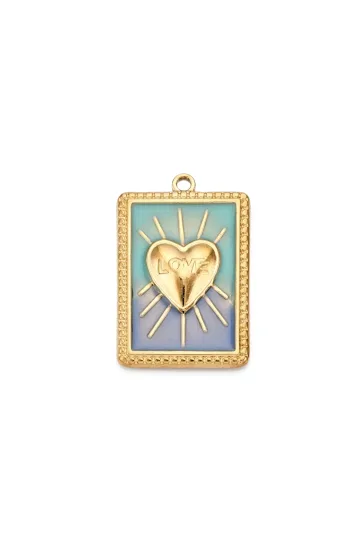














The symbol is yours to fill
Love symbols have survived millennia not because they're clever marketing, but because they solve a real problem: how do you make something invisible (a feeling, a bond, a promise) into something you can hold? A lock. A heart. A ring. A flame. These shapes carry centuries of meaning, but the meaning that matters most is the one you put into them today.
The couple on the bridge in Paris wasn't really locking their love to a metal railing. They were making a moment physical, turning an emotion into something they could point to and say: that's us. That's real.
A pendant around your neck does the same thing. Quieter. Closer. Always there.
Whatever love looks like for you, fiery or steady, given or chosen, directed at someone else or turned inward toward yourself, there's a symbol that fits. And there's a piece of jewellery waiting to carry it.
If you're looking for pieces with symbols that speak to your own story, you might also enjoy our guide to celestial jewellery and what sun, moon and star symbols mean.
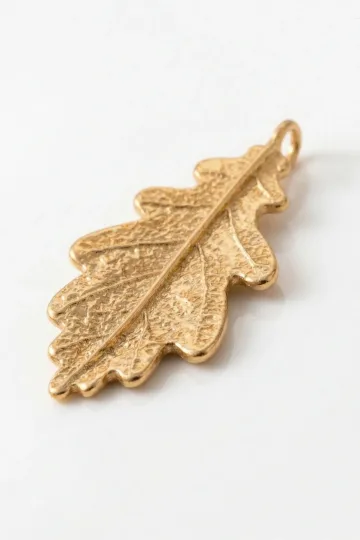
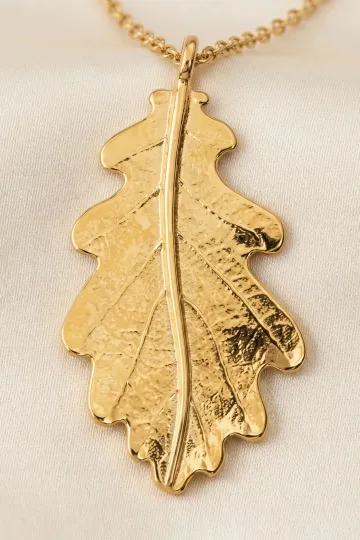
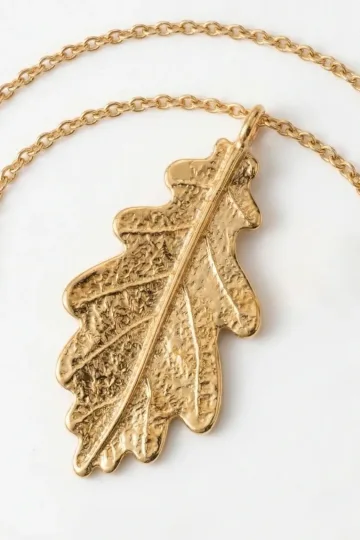
Wear the symbol, don't just read about it. These are in stock:
About Zevira
Zevira makes jewellery in the artisan tradition of Albacete, Spain. Love symbols run through many of our collections, from lock pendants that echo the bridge tradition to hammered hearts and rings of fidelity. The idea is simple: turn a feeling into something you can hold in your hand and wear every day.
What you'll find with us on the theme of love symbols:
- Lock pendants in silver and gold plate, engraved with initials, dates or coordinates
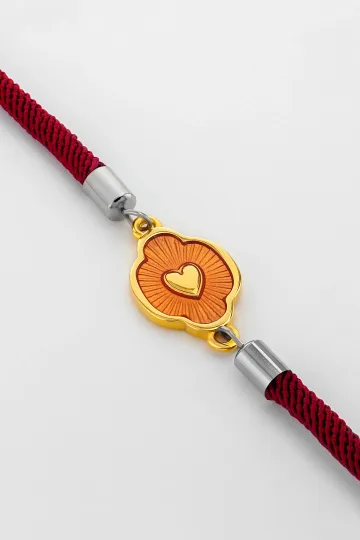
- Heart pendants: smooth, hammered, or finished with coloured pearlescent enamel
- Fidelity rings and spiritual love rings, to give to someone else or to yourself
- Sacred heart and flaming heart pieces for those who want a bolder symbol
- Paired sets for couples and friends: key and lock, two halves of a heart
- Understated pieces for men: thin chains, signet rings, bracelets with a small lock charm
Every piece can be personalised with engraving, with the option of personal engraving. Sterling silver 925 and 14-18K gold.