Sacred Heart (Sagrado Corazon): Meaning, History & Why It's the Most Powerful Symbol in Jewellery
A heart on fire in a coffee shop
She was sitting two tables away. Black coffee, silver rings, a worn leather jacket. Nothing unusual. But there was something around her neck that I couldn't stop looking at. A pendant. A heart, but not the cute Valentine's kind. This one was wrapped in thorns, crowned with flames, and it had a kind of radiance that made it look almost alive. Like it was breathing.
I'm not the type to talk to strangers. But I asked anyway. "What is that?"
She looked down at the pendant, smiled, and said something I didn't expect. "It's a sacred heart. My grandmother had one just like it. She was from Oaxaca. She said it would protect me, but honestly, I just think it's the most beautiful thing I've ever seen."
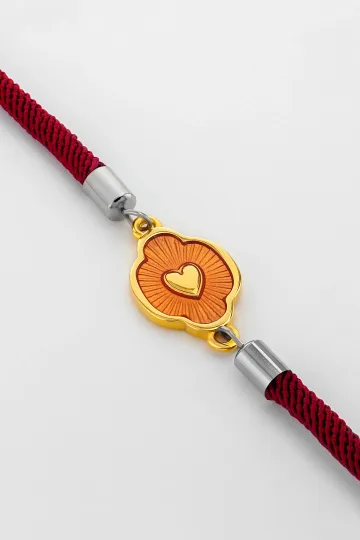
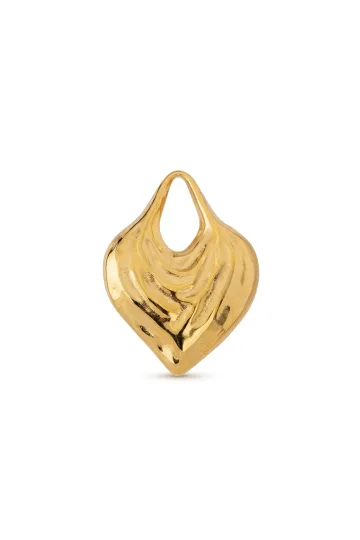
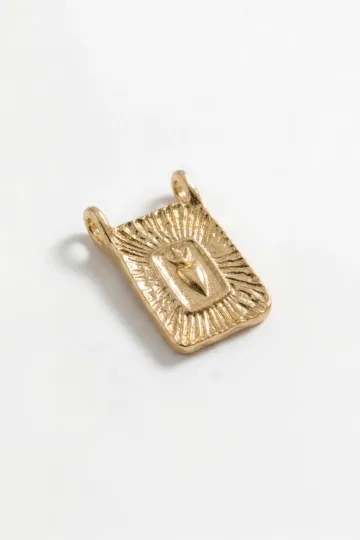
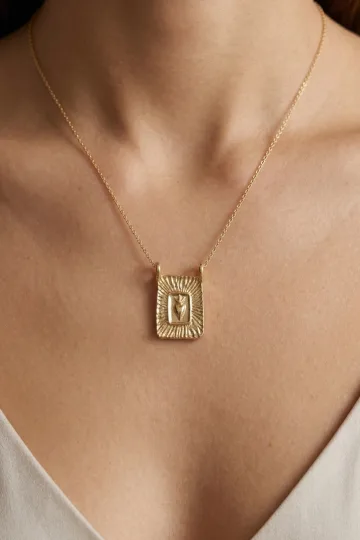
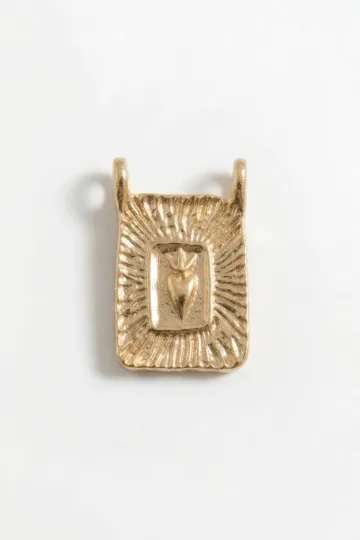
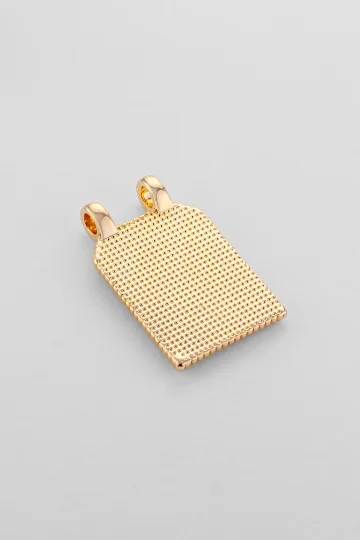
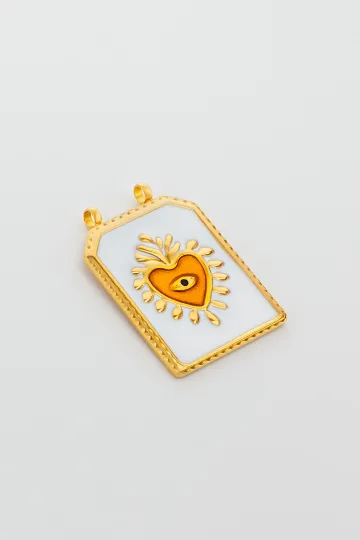
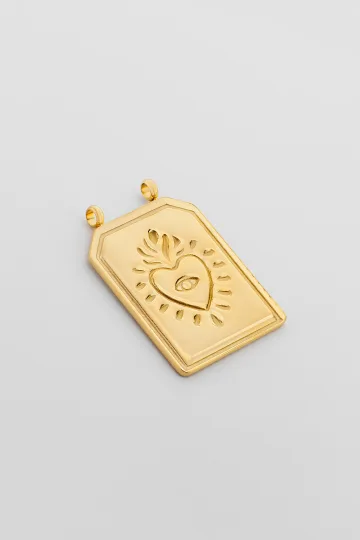
Wear the symbol, don't just read about it. These are in stock:


That was three years ago. Since then, I've seen the same motif everywhere. On the necks of fashion editors in Milan. Tattooed on the arms of musicians in Brooklyn. Hanging from the rearview mirrors of cabs in Mexico City. Embroidered on vintage jackets in Tokyo thrift shops. Painted on murals in the streets of Barcelona.
The flaming heart is one of those rare symbols that crosses every boundary. Religion, culture, geography, subculture. It belongs to Catholic grandmothers and punk rockers. To folk painters and high-fashion designers. To people who pray the rosary and people who have never stepped inside a church.
This article is about that symbol. Where it came from, what it means, why it keeps showing up in jewellery, and why people who wear it tend to feel something they can't quite explain.
What is the Sacred Heart
The Sacred Heart (Sagrado Corazon in Spanish, Sacre Coeur in French, Sacro Cuore in Italian) is a symbol depicting a human heart surrounded by flames, often encircled by a crown of thorns, and sometimes topped with a cross or a small flame. In some versions, the heart appears wounded, with drops of blood. In others, it radiates light.
At its core, this emblem represents a love so intense that it literally burns. Not the soft, comfortable love of greeting cards, but the kind that endures pain, survives betrayal, and keeps burning anyway. That's what makes the motif so compelling. It doesn't pretend that love is easy. It acknowledges the thorns.
In Catholic tradition, the image specifically represents the heart of Jesus Christ: his divine love for humanity, his suffering, and his sacrifice. But the symbol has grown far beyond its religious origins. Today, millions of people wear it as jewellery, get it tattooed, or hang it in their homes without any connection to Catholicism. The meaning has expanded.
A simple heart says "love." A flaming heart says "love that has been tested." That distinction matters, and that's why this particular motif resonates so deeply.
The visual language of the emblem is rich and layered. Each element carries its own meaning:
- The heart itself: love, the centre of emotion, the seat of the soul
- Flames: passion, transformation, spiritual energy, purification
- Crown of thorns: suffering, sacrifice, the price of love
- Cross: faith, spiritual connection, transcendence
- Wound or drops of blood: vulnerability, the courage to stay open
- Radiating light: divine energy, hope, inner strength
You can have any combination of these elements. A heart with flames only. A heart with thorns and no cross. An anatomical heart wrapped in barbed wire. The symbol is endlessly adaptable, which is one reason it has survived for centuries and keeps evolving.
Names across languages and cultures
Different cultures have their own names for the motif, and each carries slightly different connotations:
- Spanish: Sagrado Corazon (the most culturally loaded version, deeply tied to Mexican and Latin American identity)
- French: Sacre Coeur (inseparable from the famous Basilica in Paris, but also a powerful devotional symbol)
- Italian: Sacro Cuore (connected to Italian Catholic tradition, Renaissance art, and Southern Italian folk culture)
- Portuguese: Sagrado Coracao (prominent in Brazilian culture and Portuguese Catholicism)
- German: Heiligstes Herz Jesu (more formal, more explicitly religious)
- English: Sacred Heart (the broadest usage, ranging from devotional to purely decorative)
In tattoo culture, people simply call it "the flaming heart" or "the burning heart." In the fashion world, it's often referred to as "the Sagrado Corazon look" or "the ex-voto heart," referencing the Mexican tradition of offering heart-shaped votives to saints.
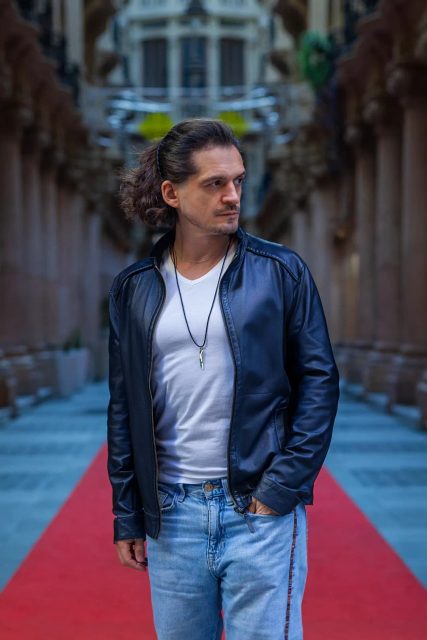
A flaming heart wants bare skin and nerve. Under a buttoned collar, never.
How to wear the Sacred Heart
I have styled the flaming heart across dozens of shoots and fittings. Here is what actually works, by occasion and by style.
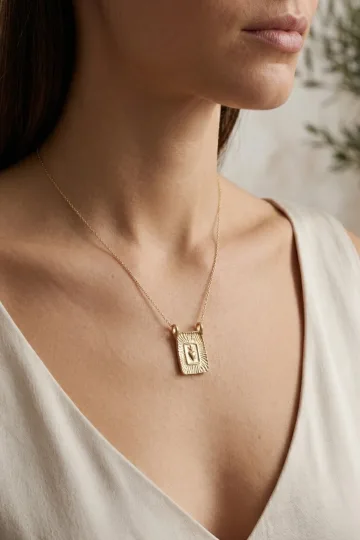
How do I wear the heart every day? For everyday I recommend a medium gold or silver heart on a 45-50cm chain, over a plain tee or shirt. A light top lifts the metal, a dark one makes the heart the centre of the picture. The symbol loves an open neck, so a V-neckline is where it sits best.
Can it work at the office? It can, once you take the volume down. I suggest silver or matte gold, a smaller pendant, 45cm so the heart slips under the top button. Under a blazer it reads as a quiet detail, not a declaration. If you want it truly discreet, I move it to a bracelet.
How do I build an evening look? For evening I choose a larger heart and an open neckline in a rich colour: wine, black, emerald. Gold catches warm candle and restaurant light, blackened silver adds an edge. Against bare skin at the collarbone the symbol reads best of all.
How do I layer the heart? When I build layers I recommend keeping the heart the longest or most prominent link, with finer pieces around it: a plain chain, a cross, a coin or a nazar eye. I space the neighbouring chains a couple of centimetres apart so nothing tangles.
Who does it actually suit? Anyone who wants a piece with a story and some nerve, not faceless shine. Two rules that never fail. First: size follows the neckline, a large heart wants an open zone, a small one lives on a choker. Second: one strong heart beats a bundle of matching pendants, so I keep only thin chains beside it, nothing that competes.

Turn on your camera, pick earrings, a pendant or a ring, and see the piece on yourself in real time.
Switch items in one tap.
Everything runs in your browser: no photo or video is ever uploaded.
Customer reviews
Zevira is a real jewellery shop. Genuine payments, deliveries and customer thank-yous.
🥰🥰🥰 gracias
Ok, ¡gracias! 🙂
History: from altars to runways
Catholic origins
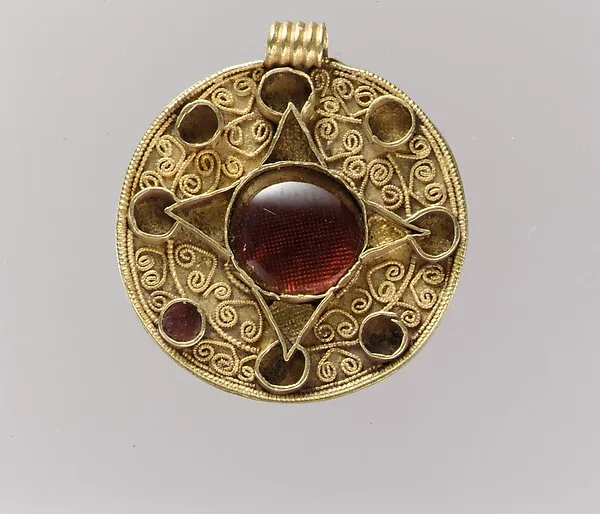
The devotion to the Sacred Heart as a formal practice in Catholicism traces back to the 17th century, though the imagery itself is older. The key figure is Saint Margaret Mary Alacoque, a French Visitation nun who lived from 1647 to 1690. Between 1673 and 1675, she reported a series of visions in which Christ appeared to her and revealed his heart, burning with love, encircled by thorns, surmounted by a cross.
The message, as she described it, was straightforward. Christ's heart burned for humanity, and humanity was indifferent. The thorns represented the sins of the world. The flames represented his unquenchable love. He asked that a feast be established in honour of his heart, and that people practice specific devotions to make reparation for their ingratitude.
This wasn't immediately popular. The theological establishment was sceptical. The Jansenists, who dominated French Catholic thought at the time, were actively hostile. They saw the devotion as sentimental, excessive, and dangerously focused on emotion rather than reason. It took nearly a century for the practice to gain official approval. Pope Clement XIII authorised the feast in 1765. Pope Pius IX extended it to the entire Catholic Church in 1856.
But here's the interesting part. While theologians debated, ordinary people had already adopted the symbol. By the early 1700s, images of the flaming heart were appearing in churches, homes, and on personal objects across Catholic Europe. People embroidered it on clothing. They carved it into doors. They wore medals stamped with the image. The symbol had an emotional power that transcended theological arguments.
The Sacred Heart became especially prominent in France. During the French Revolution, royalist rebels in the Vendee region sewed the emblem onto their clothing as a badge of resistance against the anti-clerical revolutionary government. This is significant because it's the first recorded instance of the symbol being used as an act of rebellion, a theme that would echo through centuries.
In the 19th century, the devotion exploded in popularity. The construction of the Basilica of Sacre Coeur in Paris (begun in 1875, completed in 1914) cemented the image in French national consciousness. Churches dedicated to the Sacred Heart were built across Europe and the Americas. Religious art featuring the motif reached its peak, with the image becoming one of the most widely reproduced in Catholic visual culture.
The devotion also spread through missionary work. From the Philippines to Brazil, from Ireland to the Congo, the flaming heart travelled wherever Catholicism went. Each culture adapted it, added local flavours, and made it their own.
Mexico and Latin America
If there's one place where the Sacred Heart transcended religion and became part of the cultural DNA, it's Mexico.
The story starts with the Spanish colonisation. Franciscan and Jesuit missionaries brought the image to the Americas in the 16th and 17th centuries. But indigenous peoples didn't just passively receive it. They merged it with their own symbolism. In Aztec cosmology, the heart was already a sacred object. The Aztecs practised ritual heart sacrifice because they believed the heart was the seat of a person's life force. When they encountered the Catholic image of a heart on fire, surrounded by thorns and dripping blood, the resonance was immediate and powerful.
This fusion created something unique. The Mexican Sagrado Corazon is not purely Catholic and not purely indigenous. It's both, and it's something entirely new. You see this in the art. Mexican sacred hearts are often more vivid, more visceral, and more decorated than their European counterparts. They feature bright colours: red, gold, turquoise. They're surrounded by flowers, especially marigolds (the flower of the dead). They're paired with skulls, with the Virgin of Guadalupe, with angels and thorny roses.
Dia de los Muertos (Day of the Dead) gave the symbol another layer. During the celebration, the heart becomes connected to remembrance, to the idea that love doesn't end with death. You'll see flaming hearts on ofrendas (altars for the dead), on sugar skulls, on papel picado (perforated paper decorations). The motif represents the love that persists between the living and the dead.
And then there's Frida Kahlo. No single artist did more to launch the emblem into the global consciousness than Kahlo. Her 1937 painting "Memory (The Heart)" features an oversized heart lying on the ground, bleeding, while Frida stands with a metal rod through her body where the heart should be. Her 1938 painting "The Two Fridas" shows two versions of herself, one with an exposed, bleeding heart. The imagery is raw, personal, and unforgettable.
Kahlo didn't paint the traditional Catholic heart. She painted her own heart, broken, exposed, still beating. She took a religious symbol and made it intensely personal. This is exactly what millions of people now do when they wear the motif as jewellery or get it tattooed. They're not necessarily making a religious statement. They're saying: this is my heart, this is what it's been through, and it's still here.
The influence of Mexican culture on the global popularity of the flaming heart can't be overstated. Mexican folk art, Chicano art, Dia de los Muertos aesthetics, and Kahlo's paintings have collectively created a visual vocabulary that the entire world now draws from.
Tattoo culture and rebellion
The flaming heart entered tattoo culture through two channels: sailor tattoos and prison tattoos.
In the early 20th century, American sailors commonly got heart tattoos, often with flames, a banner reading "Mom," and sometimes an anchor. These were simple, bold designs meant to represent love and loyalty. The heart was something a sailor carried with him across the ocean, a reminder of who waited for him back home.
But the more interesting story is the prison connection. In both American and Latin American prison culture, the flaming heart took on a specific meaning: suffering endured, loyalty proven. A heart wrapped in barbed wire (a modern update on the crown of thorns) meant time served. A heart with a dagger through it meant betrayal survived. A heart in flames meant passion that couldn't be contained, not by walls, not by distance, not by anything.
The Chicano tattoo tradition, which developed in Mexican-American communities in Southern California from the 1940s onwards, made the Sagrado Corazon one of its signature images. These tattoos were works of art: detailed, shaded, emotionally charged. They combined Catholic imagery with gang culture, personal history, and family pride. A man might have the Sacred Heart tattooed on his chest alongside the name of his mother, his neighbourhood, and a portrait of the Virgin of Guadalupe.
From Chicano culture, the flaming heart moved into mainstream tattoo culture. By the 1990s, neo-traditional tattoo artists were creating their own versions. Japanese tattoo artists incorporated it into their style. European tattooers reimagined it. Today, the motif is one of the most frequently requested tattoo designs worldwide.
The tattoo connection is important for understanding why the symbol appears so often in jewellery. Many people who wear a flaming heart pendant also have one tattooed on their skin. The jewellery and the tattoo reinforce each other. They're both expressions of the same idea: I have loved deeply, I have suffered, and I am still here.
Modern fashion
The leap from tattoo parlours and churches to high fashion happened gradually, then all at once.
Major fashion houses began to fully embrace the Sagrado Corazon aesthetic in the mid-2010s. Runway collections were drenched in it. Heart-shaped earrings wrapped in golden thorns. Embroidered hearts on silk dresses. Heart pendants with rubies and garnets representing flames. Much of it drew on Southern European Catholic devotion, and it was a sensation. Critics called it "baroque maximalism." Customers called it irresistible.
And the trend spread widely. Accessory designers released sacred heart bags. Luxury labels worked the motif into romantic, eclectic collections. Others used it in feminist reinterpretations of Catholic imagery. Even streetwear labels released heart-themed pieces.
The pattern is clear. The fashion industry treats the flaming heart as one of those eternal motifs that can be reinvented every few years without ever feeling stale. Unlike trend-driven symbols that have a shelf life of one or two seasons, this emblem taps into something permanent. Love, pain, passion, resilience. These aren't seasonal themes. They're human themes.
Independent jewellery designers have been particularly drawn to this symbol. It's the perfect design element: instantly recognisable, emotionally loaded, and endlessly adaptable. You can make it minimalist (a simple heart outline with a tiny flame) or maximalist (a fully detailed anatomical heart with thorns, flames, roses, and gemstones). It works in gold, in silver, in enamel, in mixed metals. It works as a pendant, a ring, a brooch, a pair of earrings.
The indie jewellery movement has also democratised the symbol. You no longer need to buy a designer runway piece to own a beautifully crafted flaming heart. Smaller brands create pieces that are just as detailed and meaningful, at a fraction of the price. This accessibility has driven a second wave of popularity, particularly among millennials and Gen Z.
Social media has amplified this. On Instagram, #sacredheart has millions of posts. On TikTok, videos about the meaning behind sacred heart jewellery regularly go viral. The algorithm favours content with emotional depth, and few symbols deliver that as reliably as a heart on fire.
Upload a photo of your pet, someone you love, or an object. We'll build a 3D model and hand-cast it in pewter.


Meaning and symbolism
Passion and love (not just romantic)
When most people see a heart, they think romance. The flaming version pushes further. It represents passion in the broadest sense, the fire that drives you to create, to fight, to devote yourself entirely to something.
The flames on the emblem aren't destructive. They're transformative. In alchemical tradition, fire purifies. It burns away what's unnecessary and leaves behind what's essential. A heart on fire isn't being destroyed. It's being refined.
This is why artists, musicians, and writers are so often drawn to the motif. It's the creative impulse made visible. The thing that keeps you up at night working on your craft. The obsession that your friends don't understand but that you can't let go of. That's the flame.
And yes, it also represents romantic love. But not the butterflies-and-roses kind. The kind where you've seen someone at their worst and you stayed. The kind that survives arguments, distance, illness, failure. The kind that has thorns and scars and burns anyway.
In Latin American culture, giving someone a Sagrado Corazon pendant is one of the deepest declarations of love you can make. It's not "I love you." It's "I will burn for you." That intensity is not for everyone. But for those who feel it, no other symbol comes close.
Suffering and resilience (the thorns, the flame)
The crown of thorns is the most emotionally charged element. It references the crown placed on Christ's head before the crucifixion, but its meaning extends far beyond that specific story. Thorns represent the pain that comes with deep attachment. You can't love fully without risking hurt. The thorns are the risk. The heart beats anyway.
For many people who wear this pendant, the thorns have a deeply personal meaning. They represent something specific: a loss they survived, a relationship that broke them, a period of illness, a struggle with addiction, a family that wasn't kind. The thorns are their scars, and wearing them visibly is an act of both honesty and defiance.
The flames add another dimension. If thorns are the pain of the past, flames are the energy of the present. The heart is burning not because it's being destroyed, but because it's alive. It refuses to go cold. It refuses to shut down. It refuses to become cynical.
There's a concept in psychology called "post-traumatic growth," the idea that people who go through severe difficulties can emerge not just healed, but transformed. Stronger. More compassionate. More alive. The flaming heart is the visual representation of that concept. It's not a symbol for people who have avoided pain. It's a symbol for people who have gone through it and come out burning.
This is why the emblem is particularly popular among people in recovery. Whether from addiction, grief, illness, or trauma, the motif says: I have known the thorns, and I am still on fire.
Devotion and sacrifice
In its original Catholic context, devotion meant total surrender to divine love. But the concept applies more broadly. Devotion is what a parent feels for a child. What an artist feels for their work. What a soldier feels for their comrades. What a friend feels for the people they would die for.
The sacrifice element is crucial. This pendant doesn't represent love that costs nothing. It represents love that costs everything and is given freely anyway. The wound in the heart isn't a complaint. It's proof.
In Mexican tradition, the concept of "entrega total" (total surrender) is closely associated with this motif. It means giving all of yourself to someone or something, holding nothing back, keeping no reserves, no exit plan. This is terrifying and beautiful in equal measure. The Sagrado Corazon is for people who live at that level.
It's worth noting that this meaning resonates strongly with people in military service, healthcare, and other professions that require personal sacrifice. Nurses, firefighters, first responders, people who literally put their hearts on the line for others, often feel a deep connection to the motif. Not because they're particularly religious, but because the image captures something true about their lives.
Rebellion and counterculture
Here's where the story gets unexpected. A Catholic devotional symbol became a badge of rebellion. How?
It started in the French Revolution, as mentioned earlier. The Vendee rebels used the emblem to declare that their faith, and their resistance, would not be extinguished. The government could burn their churches, but it couldn't burn the fire in their hearts.
This rebellious energy resurfaced in Chicano culture. For Mexican-Americans in the 1950s and 60s, wearing or tattooing the Sagrado Corazon was an act of cultural pride in a society that often devalued Mexican identity. It was a way of saying: this is who I am, and I'm not hiding it.
In punk and post-punk culture, the sacred heart became an ironic-sincere symbol. Punks adopted Catholic imagery as a provocation, wearing rosaries and crucifixes to shock. But the flaming heart was different. It was hard to make it ironic. The image is too raw, too honest, too obviously about vulnerability. So punks ended up wearing it sincerely, which was perhaps the most rebellious thing of all.
Today, the counterculture meaning persists. In a world that often tells people to be cool, detached, and ironic, wearing a burning heart is a radical act. It says: I feel things deeply, and I'm not apologising for it. In a culture of emotional suppression, that's punk as hell.
The symbol also resonates with LGBTQ+ communities, where it represents love that society tried to suppress but that burned too brightly to be hidden. A heart on fire, wrapped in thorns, refusing to die. It's a perfect metaphor for the queer experience across centuries.



Variations of the Sacred Heart
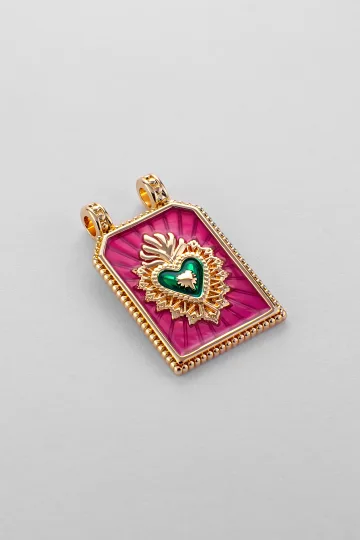
The motif has spawned dozens of variations over the centuries. Each carries its own emphasis and energy. Here are the main ones you'll encounter in jewellery:
Heart with flames only
The simplest version. A heart with fire rising from the top. No thorns, no cross, no wound. This is the most universal and least explicitly religious variation. It emphasises passion, energy, and transformation. Popular with people who connect to the emotional intensity of the symbol but not its Catholic specifics. Works well as minimalist jewellery: a small pendant, a delicate ring.
Heart with flames and thorns
The classic. The thorns wrap around the heart, and flames rise above them. This is the version most people picture when they hear "sacred heart." It balances passion and pain, love and suffering. The most popular variation for pendants and medallions.
Heart with crown and cross
The full Catholic version. Heart, flames, thorns, a small cross on top, sometimes rays of light emanating outward. This version is explicitly devotional. People who wear it are usually making a faith statement, though not always. Some simply love the elaborate aesthetics.
Heart with Eye of Horus
A modern fusion. The ancient Egyptian Eye of Horus placed in the centre of the flaming heart. This combination merges two powerful protective symbols: the heart represents love and vulnerability, while the Eye of Horus represents protection, wisdom, and divine sight. It's become popular in the "spiritual but not religious" community as a symbol that draws from multiple traditions without being bound to any single one.
Anatomical heart
Instead of the stylised, symmetrical heart shape, this variation uses a realistic, anatomical heart with chambers, arteries, and all. The flames and thorns are added to this realistic form. It's visceral, slightly unsettling, and very popular in tattoo culture. In jewellery, anatomical heart pendants tend to be detailed and substantial. They're conversation pieces.
Heart with roses
Roses replace or accompany the thorns. This version emphasises beauty alongside pain (roses have their own thorns, after all). Common in Mexican folk art and Chicano tattoo tradition. The combination of the heart, flames, and roses creates a romanticism that's lush without being saccharine.
Milagro heart
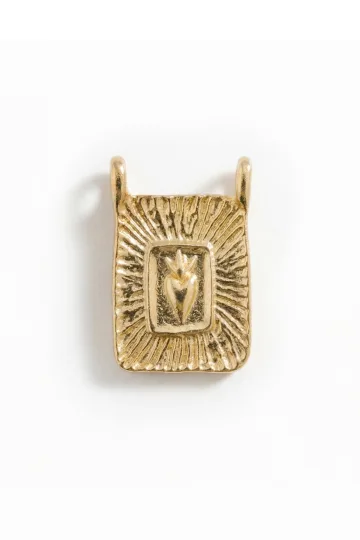
"Milagro" means "miracle" in Spanish. Milagro hearts are small, flat, pressed-metal charms traditionally used as votive offerings in Mexican and Latin American Catholic practice. People pin them to saint statues or leave them at shrines, usually as a prayer for healing or gratitude for healing received. In jewellery, the milagro style has become popular as a folk art aesthetic: simple, slightly rough, full of character.
Modern abstract
Contemporary designers have stripped the motif down to its essence: a heart silhouette with a single flame rising from it, rendered in clean, geometric lines. This version removes all the religious references and keeps only the emotional core. Popular in Scandinavian and Japanese-influenced minimalist design.
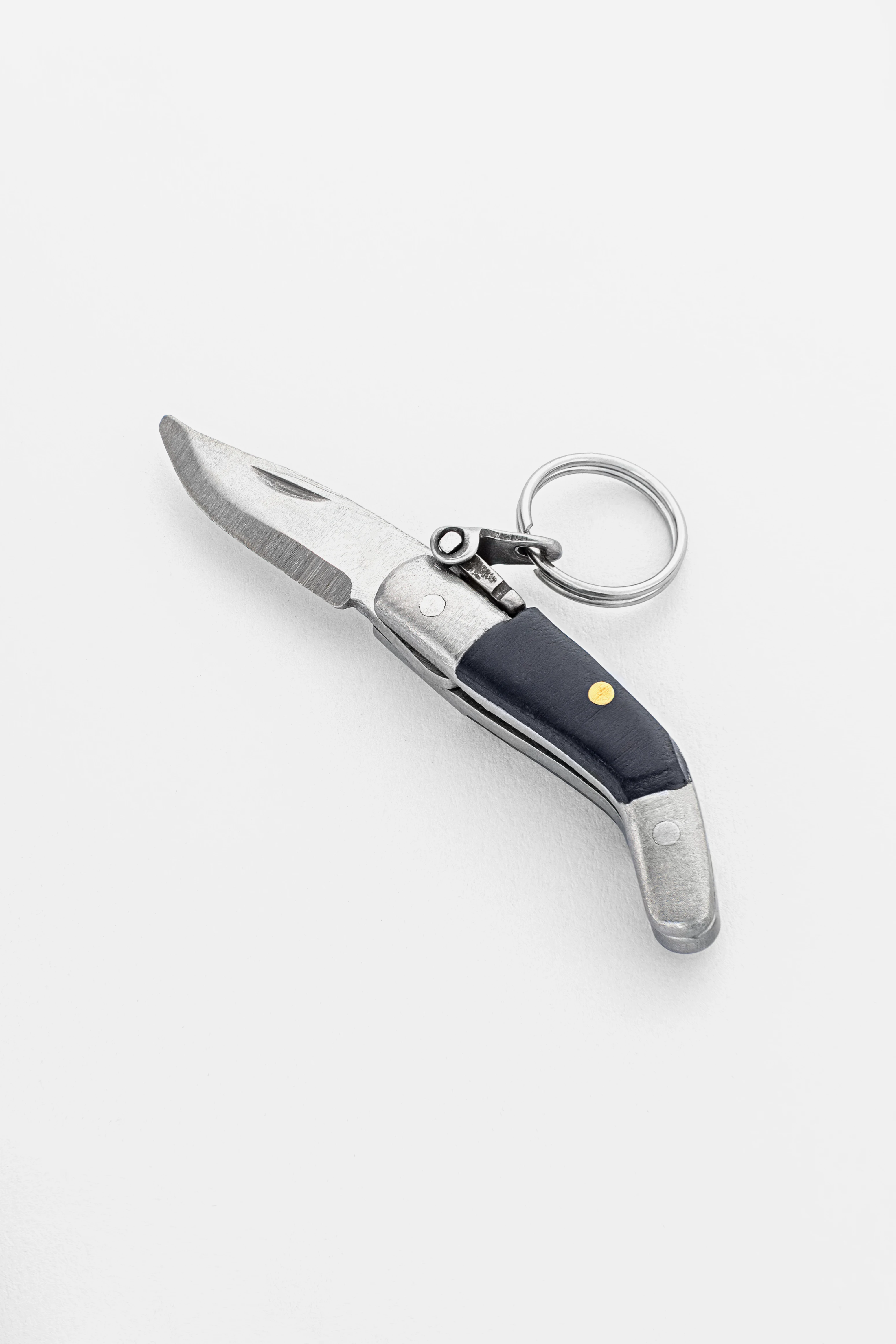
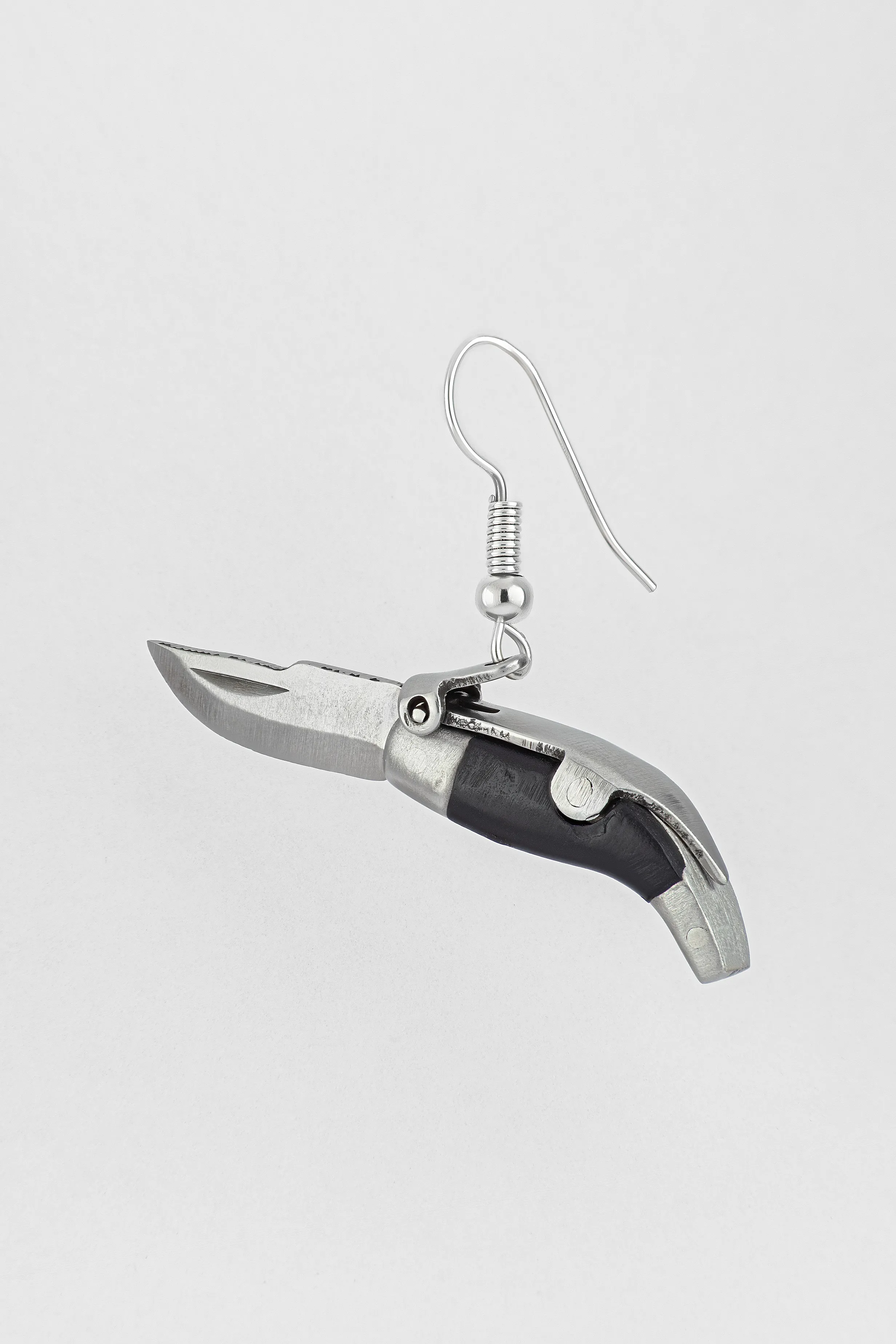
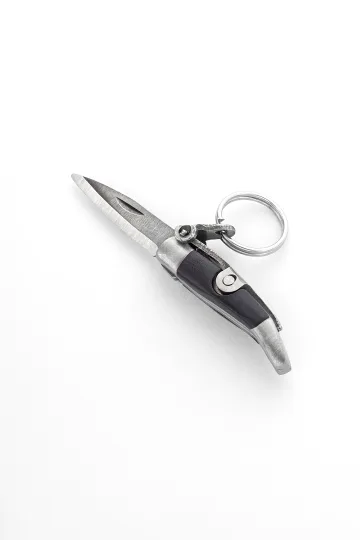
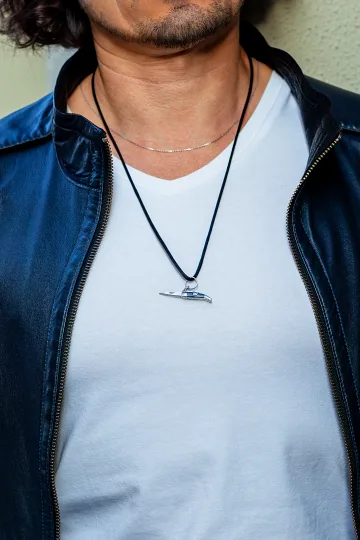
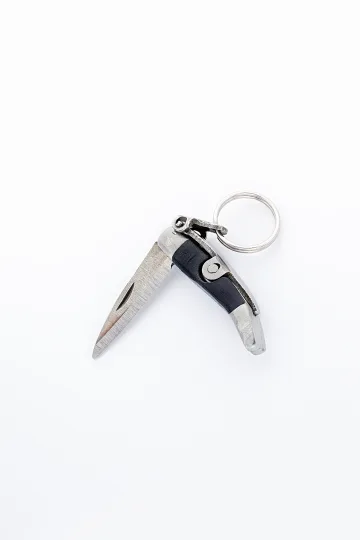
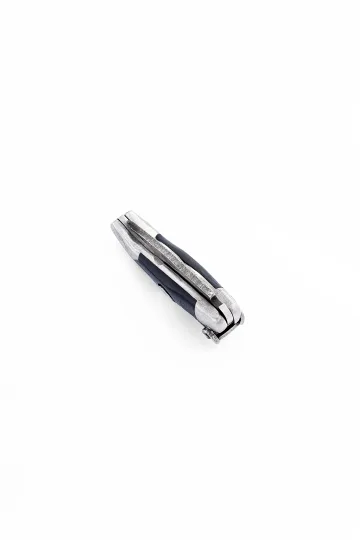
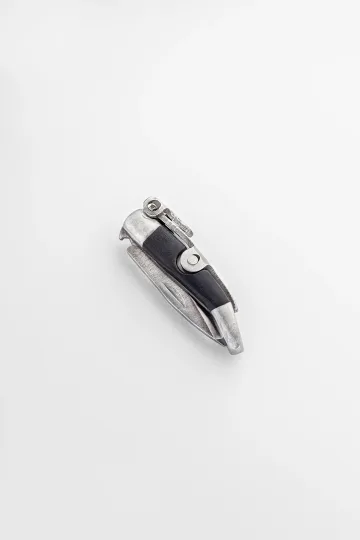
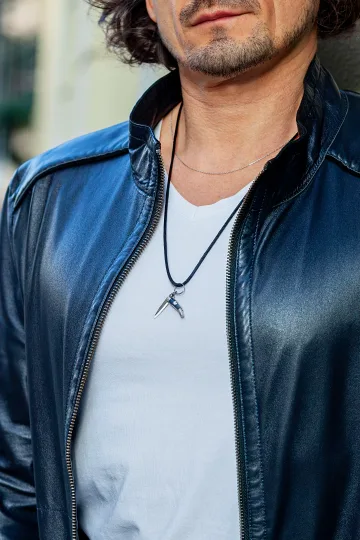
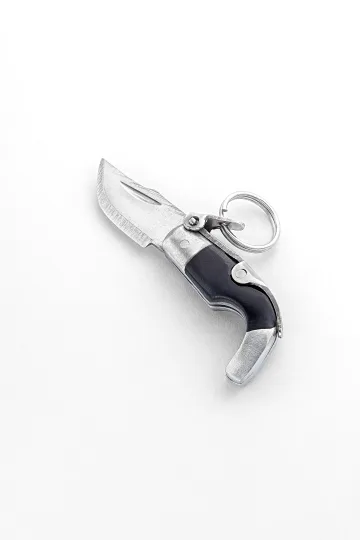
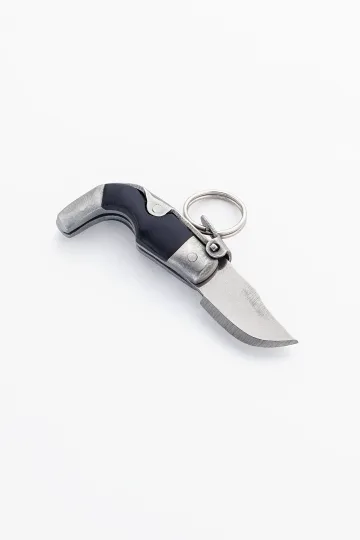
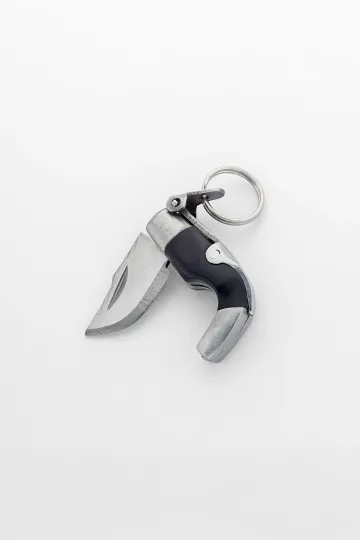
CAPAORA mini knife pendant
The 18th-century Spanish navaja in miniature: 40 mm of stainless steel, a real folding mechanism and a Palanquilla lock that clicks. An affordable gift to remember.
Authentic · Ships from Spain · 14-day returns
Materials
The material of a flaming heart pendant changes not just how it looks, but how it feels to wear it. Here's what you need to know.
Gold and gold-plated metals
Gold is the traditional material for sacred heart jewellery, and there's a reason for that. The warm colour echoes the flames. In Catholic art, gold represents the divine, the eternal, the untouchable. A golden flaming heart pendant has a richness and warmth that feels appropriate for a symbol about passionate love.
Solid gold is the premium choice. It won't tarnish, it develops a beautiful patina over decades, and it carries genuine material value. But gold-plated options have come a long way. Modern PVD (Physical Vapour Deposition) and high-quality electroplating techniques create gold-plated pieces that look beautiful and last for years with proper care. If you love the golden look but want a more accessible price point, gold-plated stainless steel is an excellent option.
Sterling silver
Silver gives the motif a different mood entirely. Where gold is warm and devotional, silver is cool and contemporary. A silver flaming heart pendant leans more toward the punk and counterculture side of the symbol's history. It pairs naturally with leather, denim, and all-black outfits.
Sterling silver (925) is the jewellery standard. It's durable enough for everyday wear, and it ages gracefully. Some people prefer it slightly oxidised, which darkens the recesses and emphasises the detail of thorns and flames. Others keep it polished bright.
Enamel and mixed materials
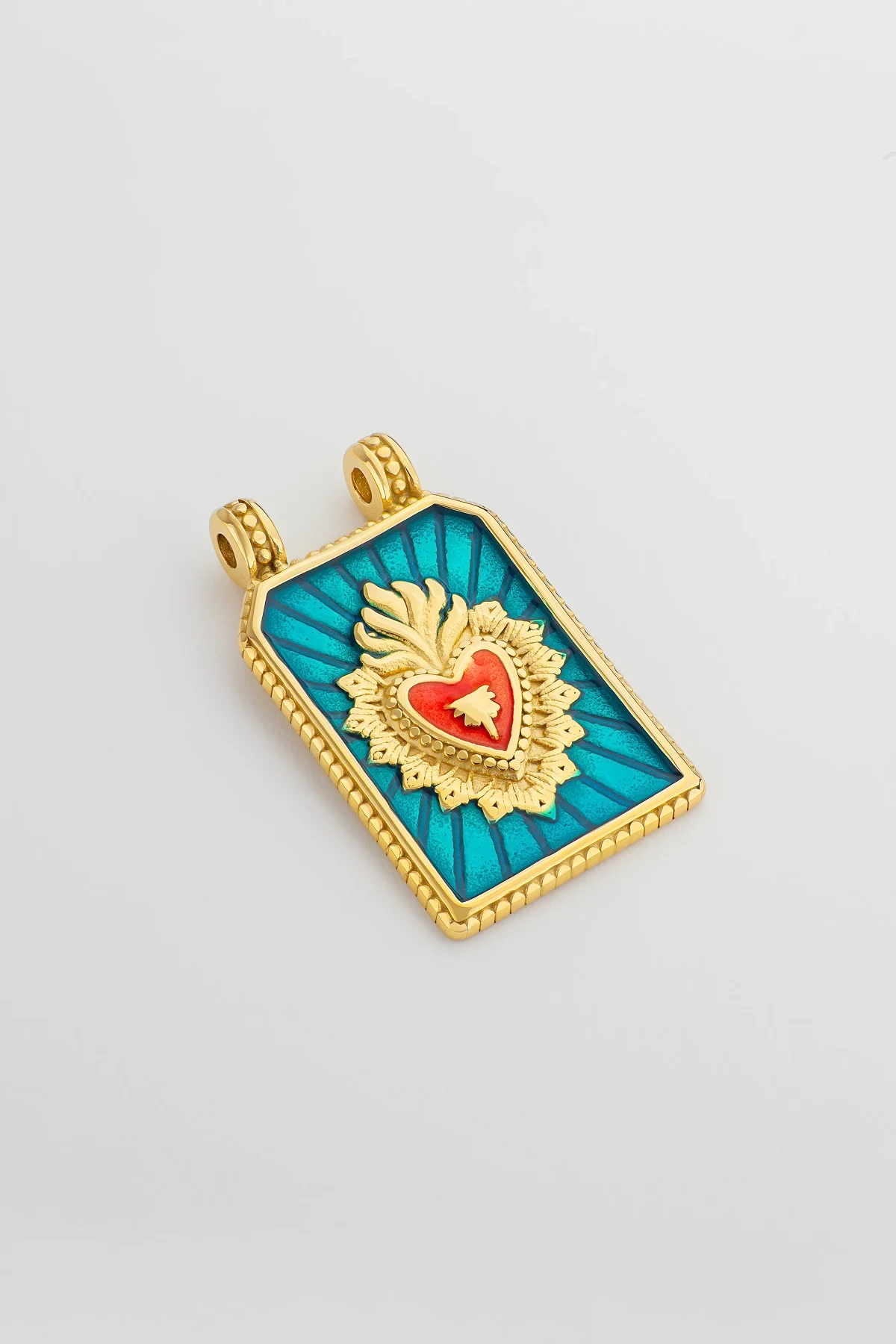
Enamel allows for the vivid colours that the Mexican tradition demands. Red hearts, orange and yellow flames, green thorns. Enamel on metal creates pieces that look like wearable folk art. This approach works especially well for the Milagro style and for designs inspired by Kahlo and Day of the Dead aesthetics.
Modern enamel techniques are remarkably durable. Fired enamel on stainless steel can last for years without chipping. Epoxy enamel is softer but allows for more intricate colour gradients.
Gemstones and embellishments
Rubies and garnets for the heart. Citrine or yellow sapphire for the flames. Green tourmaline or tsavorite for the thorns. Diamonds or cubic zirconia for the radiating light. Gemstones add another layer of meaning and visual impact.
Even at the more accessible end, small cubic zirconia accents can catch light in a way that brings the motif to life. A tiny sparkle at the top of the flame makes the whole piece feel dynamic.
Stainless steel
The practical choice. Stainless steel won't tarnish, won't cause allergic reactions, and is almost impossible to damage through normal wear. For people who want to wear their pendant every single day, in the shower, at the gym, in the ocean, stainless steel is the material that can take it. It also allows for very precise casting, which means the detail on thorns and flames can be exceptionally fine.
Silver and gold jewellery, wedding bands, symbolic pendants, paired sets.
Leave your email, we'll send your discount code. No spam, unsubscribe anytime.
The code arrives by email, valid on your first order.
Who it suits
People who feel deeply
This is not jewellery for people who keep everything surface-level. The burning heart is for those who experience emotions at full volume. If you're the kind of person who cries at films, falls in love hard, and feels the weight of the world on some days, this pendant will feel like it was made for you.
People with a story
The thorns aren't decorative. They mean something. If you've survived something (a breakup that nearly destroyed you, a health scare, the loss of someone you loved, a period of your life you wouldn't wish on anyone), the motif becomes deeply personal. Many people who wear it can point to a specific moment in their lives when they felt their heart was literally on fire with pain, and they kept going. The pendant is a reminder of that survival.
People who value authenticity
In a world of mass-produced symbols and disposable trends, the flaming heart stands out because it demands sincerity. You can't wear this ironically. It's too loaded, too specific, too raw. People who value genuine expression over curated coolness tend to gravitate toward it.
Cultural connection
For people of Mexican, Latin American, Italian, French, Spanish, or Portuguese heritage, the Sacred Heart often carries a family connection. Grandmothers had them in their kitchens. Mothers wore them as medals. Churches in the old neighbourhood had them painted behind the altar. Wearing the emblem is a way of staying connected to that heritage, even if you've moved across the world.
Couples and partners
A pair of matching flaming heart pendants is one of the most meaningful couple gifts you can find. It goes beyond "I love you" into "I will go through fire for you." For anniversaries, engagements, or simply as a declaration of committed love, this motif carries weight that no generic heart pendant can match.
People recovering from something
As mentioned earlier, the motif resonates powerfully with people in recovery. Whether it's addiction, grief, illness, or trauma, the burning heart says: I was hurt, and I am healing, and the fire hasn't gone out. Recovery communities, particularly in Latin America and the American Southwest, have long used the image as a symbol of hope and perseverance.
Gift giving
The emblem makes a particularly powerful gift because of its layered meaning. For a mother, it says gratitude and sacrifice. For a partner, it says devotion and passion. For a friend who's been through hell, it says: I see what you survived, and I'm proud of you. For a graduate or someone starting a new chapter, it says: carry this fire with you.
Sacred Heart vs other heart symbols
Not all hearts are created equal. Here's how the burning heart compares to other heart motifs in jewellery.
Sacred Heart vs simple heart
A simple heart is universal and uncomplicated. It means love, full stop. The flaming heart adds layers: suffering, resilience, passion that has been tested. A simple heart is a greeting card. A flaming heart is a letter written at 3 AM when you can't sleep because your chest is too full.
If you want something light and everyday, go with a simple heart. If you want something that means something, choose the burning version.
Sacred Heart vs anatomical heart
The anatomical heart (realistic, with chambers and arteries) has a slightly different emphasis. It's about the physical, the biological, the literal. It says: this is the real organ that keeps me alive, stripped of all romanticism. The Sacred Heart is the opposite. It takes the idealised heart shape and adds spiritual and emotional meaning. Some designers merge the two: a realistic heart wrapped in flames and thorns. That combination is probably the most powerful of all.
Sacred Heart vs Claddagh heart
The Irish Claddagh (heart held by two hands, topped with a crown) represents love, loyalty, and friendship. It's a wonderful symbol, but it's culturally specific and relatively contained in meaning. The flaming heart is broader, deeper, and more intense. The Claddagh says "I give you my heart." The burning emblem says "I give you my heart, and it's on fire, and the thorns can't stop it."
Sacred Heart vs locket
A locket holds something inside: a photo, a lock of hair, a secret. It's private. The flaming heart is the opposite: it displays its contents openly. The wounds are visible. The flames are visible. Nothing is hidden. Lockets are about keeping love safe. The burning heart is about letting love be seen.
Sacred Heart vs evil eye heart
The evil eye combined with a heart shape creates a protective love talisman. It's about shielding love from jealousy and negative energy. The flaming heart is about the love itself, not its protection. These two symbols actually complement each other beautifully: the burning heart represents the love, while the eye protects it.
Frequently asked questions
Is the Sacred Heart only for Catholics?
No. While the symbol originated in Catholic devotion, it has grown far beyond those boundaries. Millions of people wear it with no religious affiliation whatsoever. In tattoo culture, fashion, and modern jewellery, the motif represents passion, resilience, and deep love: universal human experiences that belong to no single religion. Wear it for whatever it means to you.
Can men wear a flaming heart pendant?
Absolutely. The idea that heart jewellery is "feminine" is a recent and culturally limited notion. For centuries, men have worn heart symbols. Catholic men wear Sacred Heart medals. Mexican men have Sagrado Corazon tattoos covering their entire chests. Rockers and punks of all genders have embraced the motif. There's nothing gendered about the burning heart. It's about the intensity of your feelings, not your gender.
Does the number of flames or thorns mean something?
In strict Catholic iconography, specific numbers can have meaning (three flames for the Trinity, for example). But in jewellery and tattoo culture, the number of flames or thorns is generally an aesthetic choice rather than a symbolic one. Some designs have a single large flame. Others have a crown of many small flames. Both are valid. Choose what looks right to you.
Is it disrespectful to wear the Sacred Heart if I'm not religious?
This is a thoughtful question, and the answer is: it depends on your intent. Wearing the motif out of genuine appreciation for its beauty and meaning is not considered disrespectful by most people, including many Catholics. What would be disrespectful is wearing it mockingly or using it in a deliberately provocative way. If you wear it with sincerity, you're on solid ground.
What's the difference between a Sacred Heart and an ex-voto heart?
An ex-voto (from Latin "from a vow") is an offering made in fulfilment of a promise to a saint. Ex-voto hearts are typically small, flat, metal hearts (often in silver or tin) left at shrines. In jewellery, the "ex-voto" or "milagro" style refers to pieces inspired by this folk tradition. They tend to be simpler, flatter, and more folk-art in feel compared to the fully detailed Sacred Heart with its flames, thorns, and cross.
Can I wear it with other symbols?
Yes. The burning heart combines beautifully with many other symbols. Common pairings include: crosses (reinforces the spiritual meaning), the evil eye (adds protection), roses (emphasises romance), skulls (adds the life/death duality, very Mexican), stars (adds a cosmic dimension), and the Italian horn (combines passion with luck). There are no rules about mixing symbols. Your jewellery tells your story.
How do I care for my Sacred Heart pendant?
It depends on the material. Gold and stainless steel are low-maintenance: mild soap and water, dry with a soft cloth. Silver may need occasional polishing if it oxidises (though some people prefer the aged look). Enamel pieces should avoid harsh chemicals and sharp impacts. Gemstone pieces should be stored separately to avoid scratching. The universal rule: take it off before swimming in chlorinated pools and before applying perfume or lotion.
Why is the Sacred Heart often shown with a wound?
The wound represents vulnerability. In Catholic tradition, it specifically references the lance wound in Christ's side. In broader symbolism, it means that the heart has been hurt, it has been opened, and it keeps beating. The wound is not a weakness. It's proof of courage. It takes more bravery to keep your heart open after being hurt than to close it off forever. The wound is what makes the symbol so powerful. It admits pain while demonstrating survival.
Send a friend a discount code, they save on their first order.
Conclusion
The flaming heart has been around for centuries, and it's not going anywhere. It's survived the French Revolution, crossed the Atlantic, been painted by Frida Kahlo, tattooed on a million arms, walked down fashion runways in Milan, and ended up around the necks of people on every continent. That kind of staying power doesn't come from trends or marketing. It comes from truth.
The symbol endures because it captures something real. Love hurts. Love burns. And the best love, the kind worth having, does both, and you don't want it to stop.
Whether you wear it as a pendant, a bracelet charm, or a pair of earrings, whether you connect to its Catholic roots or its counterculture energy, whether you see it as a tribute to your heritage or a statement about your own resilience, the flaming heart will say something about you that words can't. That's what the best symbols do.
And if someone stops you in a coffee shop and asks about your pendant, you'll know exactly what to tell them.
Flaming heart pendants, earrings and rings in sterling silver and gold.
Buying it as a gift? Each one arrives ready to give.
 A branded Zevira box and a little card come with every order.




About Zevira
Zevira makes jewellery in the artisan tradition of Albacete, Spain. The flaming heart is one of the most expressive symbols we work with, and we treat it that way. Every line of flame, every thorn and every drop of light is shaped by a maker so the image reads as something alive, not something stamped out by a machine.
Here's what you can find with us around the sacred heart theme:
- Flaming heart pendants in different versions: flames only, a heart with thorns, the full devotional design with a cross
- Minimalist heart pendants with a single tongue of fire, made for everyday wear
- Pieces with coloured stones: ruby and garnet for the heart, citrine for the flames, cubic zirconia for the radiating light
- Earrings and rings with the heart motif for anyone who wants to step away from the classic pendant
- Matching pairs of pendants for the most meaningful gift about devotion
- Silver versions with a light oxidised finish that brings out the detail in the thorns and flames
Each piece is handmade by a craftsperson, with personal engraving available. Sterling silver (925) and gold (14-18K).
Wear the symbol, don't just read about it. These are in stock: