Tarot Card Meanings in Jewellery: The Sun, The Moon, and The Lovers Decoded
The card she never takes off
My friend Elena has worn the same pendant for three years. It's a small oval with The Moon card engraved on it - the full Rider-Waite image, towers and all. One evening, someone at a dinner asked her what it meant. She thought about it for a second and said, "It reminds me to trust my gut. Even when I can't explain why."
That stuck with me. Not the spiritual angle - the practical one. Here was a woman who runs a logistics company, makes data-driven decisions all day, and yet the piece of jewellery she reaches for every morning is about intuition. About the things you know but can't prove.
That's the pull of tarot imagery. Not fortune telling. Not mysticism. Something more grounded than that. Each card in the Major Arcana is basically a compressed life lesson, and some of those lessons are things you want close to your skin every day.
This article goes deep on three specific cards: The Sun (XIX), The Moon (XVIII), and The Lovers (VI). Not a surface-level overview - if you want that, we've already written a broader guide to tarot jewellery. This one is different. We're going to look at the actual imagery on each card, break down what every symbol means, cover upright and reversed interpretations, and talk honestly about what wearing each card says about the person wearing it.
If you've ever looked at a tarot-inspired piece and felt something you couldn't quite name, this is where we put that feeling into words.
Where Tarot Actually Came From (It's Not What You Think)
There's a popular story that tarot cards are ancient Egyptian wisdom, encoded in symbolic images by priests who foresaw the burning of the Library of Alexandria. It's a great story. It's also completely made up.
The real origin is far less exotic but honestly more interesting. Tarot cards were invented in northern Italy in the early 1400s. They were playing cards. Literally just a game - a more elaborate version of what you'd use for poker night, with 22 extra "trump" cards that featured allegorical figures.
The Italian game decks
The oldest surviving tarot cards belong to the Visconti-Sforza family, commissioned around 1440 for the Duke of Milan. These were luxury items, hand-painted with gold leaf. The imagery drew from medieval Christian symbolism and Renaissance allegory: The Pope, The Emperor, The Wheel of Fortune, The Hermit. Every educated Italian would have recognised these figures. They weren't mysterious. They were cultural shorthand.
For about 350 years, that's all tarot was. A card game that spread across Europe, spawned regional variants (French Tarot, Austrian Tarock, Italian Tarocchini), and got played in cafes and courts alike. Nobody was reading futures. Nobody was laying out spreads.
The occult turn
The mystical layer got added much later. In 1781, a French writer named Antoine Court de Gebelin published an essay claiming that tarot cards were secretly encoded with ancient Egyptian wisdom. There was zero evidence for this - he made it up based on vibes and speculation. But the idea was magnetic. Mysterious ancient knowledge hidden in a deck of cards? The intellectual salons of Paris ate it up.
Over the next century, French occultists like Eliphas Levi and Papus built elaborate systems connecting each card to Hebrew letters, astrological signs, and kabbalistic concepts. By the late 1800s, tarot had fully transitioned from parlour game to spiritual tool.
1909: The deck that changed everything
The single most important event in tarot's visual history happened in 1909, when Arthur Edward Waite hired a young artist named Pamela Colman Smith to illustrate a new deck. The result - the Rider-Waite-Smith deck - is still the default image most people see when they think of tarot.
Smith's genius was in making every card a scene. Before her, the Minor Arcana cards (the 56 "regular" cards) just showed geometric arrangements of cups, swords, wands, and coins. Smith gave each one a human story. And for the Major Arcana, she created images so vivid and symbolically dense that people are still finding new details in them over a hundred years later.
When you see tarot imagery on jewellery, clothing, or tattoos today, it's almost always based on Pamela Colman Smith's illustrations. She was paid a flat fee and received no royalties. Her name wasn't even on the deck until recently. That's a different article, but it's worth knowing.
From spiritual tool to cultural symbol
The 1960s and 70s brought tarot into the counterculture. The 2010s brought it to Instagram. The 2020s brought it to fashion runways (Dior's 2021 Haute Couture collection was entirely tarot-themed). And now, in 2026, tarot imagery is everywhere - from phone cases to fine jewellery.
The thing is, the symbols have stayed remarkably stable through all these transitions. The Sun still means joy. The Moon still means intuition. The Lovers still means choice. Six hundred years of cultural evolution, and the core meanings haven't shifted. That kind of staying power is rare, and it's exactly why these images work so well as wearable symbols.
The Rider-Waite Deck: Why It Still Defines Tarot Imagery
Before we get into the three cards, a quick note on why we keep referencing the Rider-Waite-Smith (RWS) deck specifically.
There are thousands of tarot decks in circulation. Modern ones, minimalist ones, anime-themed ones, abstract ones. But when jewellery designers create tarot-inspired pieces, they almost always start with the Rider-Waite imagery. There are a few reasons for this.
First, recognition. The RWS images are the most widely known tarot visuals in the world. When someone sees a naked child riding a white horse under a giant sun, they immediately think "tarot." That instant recognition matters for wearable art.
Second, symbolic density. Each RWS card is packed with deliberate symbols - colours, animals, plants, numbers, body positions - that all carry specific meanings. This gives jewellery designers a rich vocabulary to work with, whether they're reproducing the full card or extracting key elements.
Third, the images are in the public domain. Smith's illustrations from 1909 can be freely referenced by any artist or designer. This is why you'll see her compositions echoed in everything from high-end pendants to mass-market prints.
For each of the three cards below, we'll start with what you actually see on the RWS image, then unpack what each element means. Think of it as reading the card visually before reading it symbolically.


The Sun (XIX): Joy, Clarity, and the Courage to Be Seen
If there's one card in the entire Major Arcana that makes people smile, it's this one. The Sun is the "yes" card. The green light. The moment when the fog clears and everything makes sense.
It sits at position XIX (19) in the Major Arcana sequence, near the very end of what tarot readers call "The Fool's Journey" - the symbolic path from innocence (The Fool, card 0) through various life lessons to completion (The World, card XXI). By the time The Fool reaches The Sun, they've been through darkness, doubt, destruction, and rebirth. The Sun is the reward. It's clarity earned through experience.
What You See on the Card
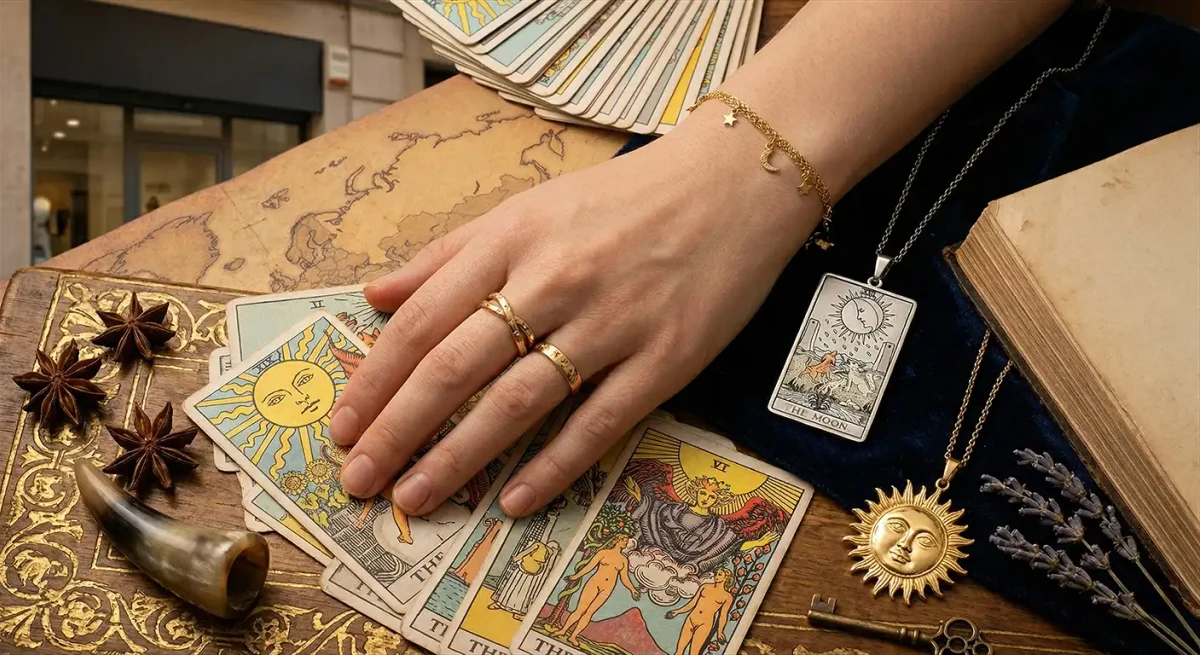
The Rider-Waite Sun card shows a naked child sitting on a white horse. Behind them, an enormous sun with a face dominates the sky, shooting alternating straight and wavy rays in every direction. A field of tall sunflowers grows behind a grey stone wall.
Every element here is deliberate.
The child. Naked, open-armed, crowned with a wreath of flowers and a single red feather. This isn't just any child - it's innocence regained. Not the naive innocence of someone who hasn't experienced anything, but the earned innocence of someone who went through the hard stuff and came out the other side still capable of joy. The nakedness means there's nothing to hide.
The white horse. In the RWS system, white horses represent purified energy and noble instincts. The child rides without a saddle or reins - no need for control. The energy is flowing naturally.
The sun. Twenty-one rays (some straight, representing conscious understanding; some wavy, representing intuitive understanding). The face is calm, almost parental. It watches but doesn't judge. It's just there, radiating.
The sunflowers. Four of them, facing the child rather than the sun. In real life, sunflowers face the sun. Here, they face the child. The message: the child has become a source of light.
The wall. A low stone wall separating the child from the flowers. This represents the boundary between the conscious mind and the garden of the subconscious. But it's low - easily crossed. The child has access to both worlds.
The red banner. The child holds a red banner (sometimes orange in different printings), a symbol of action, vitality, and the physical world. Even in this moment of spiritual clarity, the connection to earthly life remains.
Upright Meaning: Radiance Without Apology
When The Sun appears upright in a reading, it's one of the most positive cards you can draw. The core meanings are:
Joy. Not the fleeting kind. Deep, bone-level happiness that comes from alignment - being in the right place, doing the right thing, surrounded by the right people.
Success. Particularly after a period of difficulty. The Sun is the payoff card. If you've been grinding, struggling, questioning - this card says the breakthrough is here or very near.
Vitality. Physical energy, health, enthusiasm. The Sun is associated with - surprise - the actual sun, and by extension with Leo, the zodiac sign that rules self-expression, creativity, and the heart.
Clarity. The fog clears. Confusion resolves. Truths come to light - sometimes your own truth, sometimes someone else's. The Sun is a terrible card for liars. Everything becomes visible.
Innocence reclaimed. The ability to approach life with openness and wonder, even after experiencing pain. This is perhaps the deepest meaning of the card. Not naivety. Wisdom that still knows how to play.
In practical readings, The Sun often points to celebrations, achievements, positive outcomes in health questions, and moments of creative breakthrough. It's the card readers are happiest to see.
Reversed Meaning: When the Light Dims
A reversed Sun doesn't flip from positive to negative - it dims. The energy is still there, but it's blocked or muted.
Delayed joy. The good thing is coming, but not yet. There might be an obstacle, a lesson that still needs completing, or simply bad timing.
Overexposure. Too much visibility, too much attention, burnout from being "on" all the time. Some people who need The Sun reversed aren't lacking light - they're drowning in it and need shade.
Inner child issues. Difficulty accessing spontaneity, playfulness, or authentic self-expression. Something from the past is keeping the wall high.
Ego without substance. In rare cases, The Sun reversed can indicate someone who projects confidence without backing it up - all heat, no warmth. Brightness used as a performance rather than an expression.
The reversed Sun isn't scary. It's more like a cloudy day - the sun is still up there, you just can't feel it yet. Most readers interpret it as "almost there" rather than "things are bad."
Wearing The Sun: What It Says About You
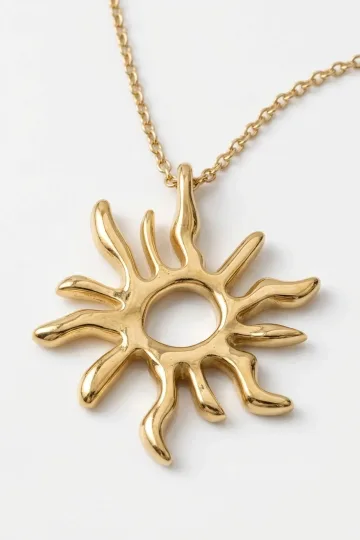
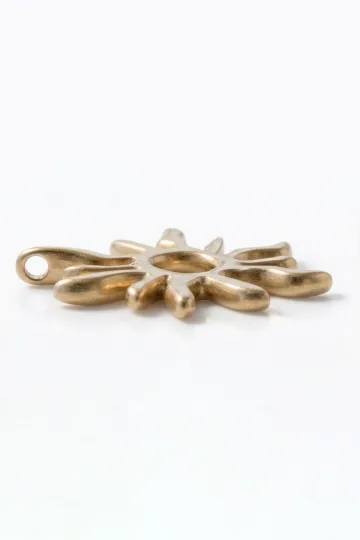
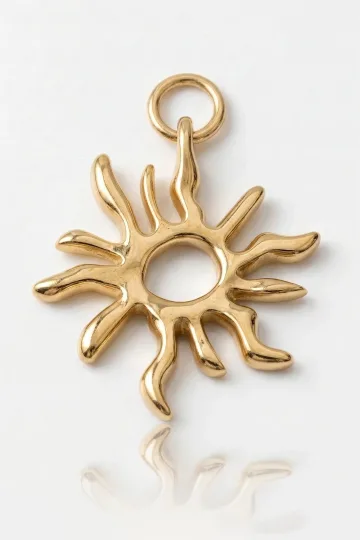
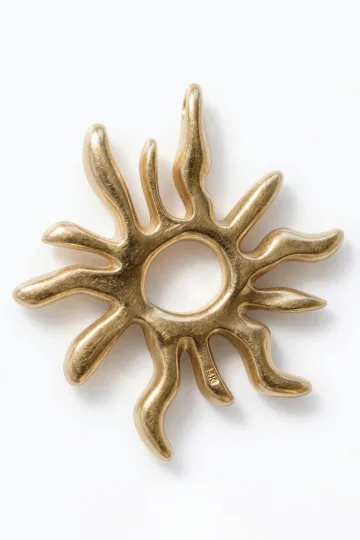
Choosing to wear The Sun as a daily piece is a statement, even if you never explain it to anyone. It says: I choose to orient toward light. Not in a Pollyanna, everything-is-fine way. In a conscious, deliberate way.
People who gravitate toward Sun jewellery tend to be:
- Naturally optimistic, or actively working on becoming more so
- Coming out of a difficult period and wanting a reminder that they made it through
- Drawn to warmth, both literal and emotional
- Comfortable with visibility - they don't shrink from attention
- Creative types who value self-expression
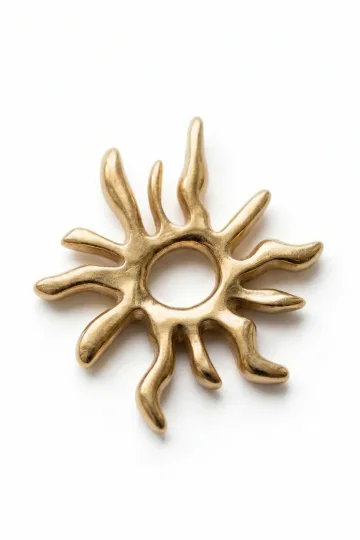
A Sun pendant or charm works as a daily anchor. On mornings when you don't feel particularly radiant, touching a piece that represents radiance can be a small but real act of self-direction. It's not magical thinking. It's intentional symbolism. The same way someone might wear a ring from their grandmother to feel connected to family, wearing The Sun is a way to stay connected to your own capacity for joy.
The Sun pairs naturally with celestial jewellery - star motifs, crescent moons, planetary symbols. The visual language is consistent and the effect is striking.
Who The Sun Is For
If you're buying for yourself: choose The Sun if it's the energy you want more of, or the energy you already carry and want to honour. Both reasons are equally valid.
If you're buying as a gift: The Sun is perfect for someone who's just achieved something significant (graduation, promotion, recovery, a personal breakthrough), someone who radiates warmth naturally, or someone going through a grey period who needs a symbolic nudge toward light.
It's also a strong choice for summer birthdays, Leo season gifts, or anyone who's told you "I just need things to get brighter."

The Moon (XVIII): Intuition, Dreams, and What Lives Beneath
If The Sun is the card everyone smiles at, The Moon is the one that makes people go quiet. It's uncomfortable. It's beautiful. It asks you to trust things you can't see.
The Moon sits at position XVIII, one step before The Sun in the Major Arcana sequence. In the Fool's Journey, this is the night before the dawn. The territory of dreams, fears, the subconscious mind, and the kind of knowing that doesn't come with evidence or explanation.
It's also, not coincidentally, one of the most popular cards in jewellery. Something about The Moon draws people who don't want the obvious. Who prefer depth to brightness. Who know that the most important truths aren't always the loudest ones.
What You See on the Card
The Rider-Waite Moon card is haunting. A large moon hangs in a dark sky, face in profile, both serene and slightly unsettling. Drops fall from the moon (or perhaps rise toward it) - fifteen drops arranged in two columns. In the foreground, a narrow path winds from a pool of water between two towers and off into distant mountains.
A crawfish (or crayfish) emerges from the pool. On either side of the path, a dog and a wolf sit howling at the moon.
The moon. Unlike The Sun, which radiates its own light, the moon reflects. It illuminates but not fully - things are visible in moonlight, but distorted, unfamiliar. The profile face suggests something that only shows one side. There's always more you're not seeing.
The fifteen drops. These represent Yods - Hebrew letters symbolising divine energy descending from the spiritual realm into the material one. They appear on several RWS cards. Here, they suggest that the subconscious mind receives information from a source beyond ordinary perception.
The crawfish. Emerging from the water (the subconscious) onto land (the conscious mind), it represents the earliest, most primitive form of awareness. Raw instinct. The part of you that reacts before you think.
The dog and the wolf. The dog is the domesticated mind - your socialised, civilised self. The wolf is the wild mind - instinct, hunger, primal emotion. Both howl at the moon, which means both are activated by subconscious energy. The card asks: can you hold space for both?
The two towers. Guardians of the path, representing the boundary between the known and the unknown. They echo the pillars in several other tarot cards (The High Priestess, Justice, The Hierophant). To travel the moon's path, you pass between them.
The path. Narrow, winding, disappearing into mountains. The Moon doesn't offer a straight road. It offers a path that requires trust, patience, and willingness to walk without seeing the destination clearly.
The water. The pool at the bottom is the subconscious mind itself - deep, still, containing things that only emerge when they're ready.
Upright Meaning: Trusting What You Can't Prove
The Moon upright is not a simple card. It carries multiple layers, some of them contradictory, which is fitting for a card about the subconscious.
Intuition. Your inner knowing is activated. You're picking up on things that logic can't explain - a feeling about a person, a hunch about a decision, a dream that keeps recurring. The Moon says: pay attention. Your gut is working overtime for a reason.
The subconscious surfacing. Buried emotions, forgotten memories, suppressed truths - they're coming up. This can be uncomfortable but it's necessary. You can't heal what you won't look at.
Illusion and deception. Not everything is what it seems. The Moon warns that someone or something in your environment may not be showing its true face. This could be external (a person being dishonest) or internal (a story you're telling yourself that isn't accurate).
Fear. Specifically, the fears that live in the dark. The ones you don't examine in daylight. The Moon illuminates them just enough to see their shape, which is the first step toward moving past them.
Creativity and dreams. The Moon's territory - nighttime, water, the unconscious - is the source of artistic inspiration, vivid dreams, and the kind of ideas that arrive whole, without being assembled logically. If you're in a creative field, this card is a signal that your subconscious is cooking something.
Cycles. Like the actual moon, this card is about phases. Things wax and wane. What's hidden now will be revealed later. What's full now will eventually empty. Patience with natural rhythms.
Reversed Meaning: Fog Lifting
The Moon reversed is actually often experienced as relief. The confusion, anxiety, or deception indicated by the upright Moon begins to clear.
Clarity emerging. The truth comes out. What was hidden becomes visible. Illusions dissolve. If you've been in a confusing situation, the reversed Moon says the fog is lifting.
Release of anxiety. Irrational fears lose their grip. You start to distinguish between genuine intuition and anxiety-driven paranoia. This is a significant distinction - The Moon upright can sometimes amplify both equally.
Ignoring intuition. In some readings, the reversed Moon warns against overriding your gut feelings with logic. Your rational mind is insisting everything is fine, but something deeper disagrees. Listen.
Repression. Pushing subconscious material back down instead of dealing with it. The crawfish retreats into the pool. The dreams stop. The feelings go numb. This is a temporary fix that creates bigger problems later.
Wearing The Moon: What It Says About You
Choosing The Moon as your daily piece is a very different statement than choosing The Sun. It says: I value depth over brightness. I trust what I feel. I'm comfortable with not having all the answers.
People who wear Moon jewellery tend to be:
- Highly intuitive - they process the world through feeling before thinking
- Night people, both literally and metaphorically
- Drawn to mystery, complexity, and nuance
- Creative - writers, artists, musicians, designers
- Introspective - they spend real time in their inner world
- Comfortable with ambiguity and open-ended questions
The Moon pendant is for the person who reads the room before entering a conversation. The one who notices when something is off before anyone else does. The one whose advice starts with "I have a feeling that..." and is almost always right.
It's also a powerful piece for anyone doing inner work - therapy, meditation, journaling, shadow work. The Moon is the patron card of going inward, and wearing it can serve as a quiet commitment to that process.
If you're into celestial symbolism, The Moon sits perfectly in that visual world. Crescent motifs, star clusters, night-sky aesthetics - they all speak the same language.
Who The Moon Is For
For yourself: choose The Moon if you want to honour your intuitive side, if you're in a period of deep self-exploration, or if you simply feel drawn to its energy without being able to explain why. That last one is very on-brand for a Moon person.
As a gift: ideal for someone who's deeply thoughtful, artistically inclined, or going through a period of introspection. People who journal, who meditate, who read psychology books for fun. Also perfect for Pisces placements (The Moon's astrological correspondence) or anyone born under a full moon.
Avoid giving The Moon to someone who's currently anxious or confused unless you know they have a positive relationship with the card. For some people, the reminder to "sit with uncertainty" is empowering. For others, it's the last thing they need.
The Lovers (VI): Choice, Alignment, and the Real Meaning of Union
Here's where most people get it wrong. They see "The Lovers" and think: romance. Soulmates. Finding your perfect match. And while romantic love is part of the card's meaning, it's honestly not the main event.
The Lovers is fundamentally a card about choice. Specifically, about choices that align your actions with your deepest values. It's card VI (6) in the Major Arcana, appearing early in the Fool's Journey - the first time The Fool encounters a decision that can't be made with logic alone. Head says one thing. Heart says another. The Lovers asks: which will you follow?
What You See on the Card
The Rider-Waite Lovers card shows two figures - a man and a woman - standing naked beneath a large angelic figure with red wings. The angel's arms are spread wide. Behind the woman, a tree with fruit and a serpent coiled around it. Behind the man, a tree with twelve flames instead of leaves. Above, the sun blazes.
This is one of the most symbolically layered cards in the deck.
The two figures. Naked, facing each other but both looking upward toward the angel. Their nakedness represents vulnerability, honesty, and the absence of pretence. They have nothing to hide from each other or from the divine.
The angel. Usually identified as Raphael, the archangel of healing and communication. Their position above the couple suggests a higher perspective - the view from which individual desires and choices make sense as part of a larger pattern. The purple cloak represents spirituality. The spread arms suggest blessing or embrace.
The tree behind the woman. That's the Tree of Knowledge from Genesis, complete with forbidden fruit and serpent. The woman represents conscious desire, emotional intelligence, and the willingness to reach for something even when it carries risk. She looks up at the angel rather than at the fruit - she's choosing from a place of higher awareness, not blind appetite.
The tree behind the man. Twelve flames - one for each zodiac sign - representing the full spectrum of human passion and aspiration. The man represents the rational, structural mind. He looks at the woman, not the angel. His access to the divine comes through connection with another person.
The mountain. A phallic peak between them in the background, representing the raw, primal force that drives union - physical attraction, yes, but also creative energy, ambition, and the urge to merge with something greater than yourself.
The sun. Direct overhead, illuminating everything equally. No shadows. The Lovers is a card of full disclosure. Whatever choice is being made here, it's made in the light.
Upright Meaning: Choosing With Your Whole Self
The Lovers upright carries several interrelated meanings:
Values-based choice. A decision is in front of you, and it requires alignment between what you want, what you believe, and what you'll commit to. This isn't about picking the practical option. It's about picking the true one.
Union. Two things coming together to create something greater than either alone. This can be romantic partnership, creative collaboration, business partnership, or the union of different parts of yourself (head and heart, logic and intuition, desire and responsibility).
Authenticity in relationships. Showing up as your real self, without armour or performance. The nakedness on the card isn't sexual - it's emotional. The Lovers demands honesty, and offers deep connection as the reward.
Harmony. The state that results from making aligned choices. When your actions match your values, there's an inner peace that's hard to describe but impossible to miss.
Attraction. Yes, including romantic and physical attraction. The card isn't anti-romance. It just insists that attraction be grounded in something real rather than projection.
Moral crossroads. Some traditional readings emphasise the "temptation" aspect - the serpent on the tree, the choice between higher and lower paths. The Lovers doesn't judge, but it does ask: are you choosing from integrity or from appetite?
Reversed Meaning: Misalignment and Inner Conflict
The Lovers reversed points to the consequences of choices made poorly, or choices not yet made.
Disharmony. Something in your life is out of alignment. Your actions and your values are pointing in different directions. This creates a subtle but persistent discomfort - the feeling that something is off even when things look fine on the surface.
Avoidance. Refusing to make a necessary choice. Sitting on the fence. Keeping options open past the point where openness becomes paralysis. The Lovers reversed says: you know what you need to do. Do it.
Imbalance in relationships. One person giving more than the other. Power dynamics that aren't acknowledged. Love that's conditional, transactional, or based on who each person pretends to be rather than who they are.
Self-betrayal. Making a choice that goes against your deeper values because it's easier, safer, or more socially acceptable. The Lovers reversed often appears when someone has compromised themselves in a way they haven't fully acknowledged yet.
Codependency. Losing yourself in a relationship or partnership. When "union" becomes "dissolution," the card reverses. Healthy Lovers energy is two whole people choosing each other. Reversed, it's two incomplete people trying to fill their gaps with each other.
Wearing The Lovers: What It Says About You
The Lovers as a daily piece says something quite specific: I believe in choosing with integrity. Not just in romance - in everything. Work, friendships, how you spend your time, what you commit to.
People who gravitate toward Lovers jewellery tend to be:
- Relationship-oriented - they find meaning through connection
- Values-driven - they have a strong internal compass
- Romantic, but not naive - they know love requires choice, not just feeling
- Going through a period of important decisions
- Interested in partnership as a path to personal growth
There's a common misconception that Lovers jewellery is only for couples. It's not. Single people wear The Lovers to represent self-love, the integration of different parts of their personality, or as a signal that they're ready for a connection built on authenticity.
Couples do love it, though. Matching Lovers charms are one of the most popular couples' pieces, and for good reason. The symbolism is richer than a standard heart or infinity symbol. It says: we chose each other consciously. We show up honestly. We're in this with our whole selves.
For more on symbolic pieces for relationships, take a look at our guide to love symbols in jewellery.
Who The Lovers Is For
For yourself: choose The Lovers if you're in a period of significant decision-making, if you want to honour a relationship that matters deeply to you, or if you're committed to living in alignment with your values.
As a gift: ideal for partners, obviously. But also great for someone who's just made a brave choice - leaving a job that wasn't right, ending a relationship that wasn't healthy, starting something that scares them. The Lovers honours the act of choosing, not just the outcome.
Anniversary gifts, engagement gifts, or "just because" gifts for someone you want to acknowledge as your person. Also works beautifully for a close friend - The Lovers isn't exclusively romantic.





How to Choose Your Tarot Card (Without Overthinking It)
There are three ways to pick your card, and none of them is wrong.
The intuitive method
Look at all three cards. Read their meanings. Then notice which one you keep coming back to. Not which one you think you "should" pick. Which one your eyes return to.
If you looked at The Moon section and thought "that's me" before even finishing it - that's your card. If The Sun made you feel something warm in your chest - there's your answer. If The Lovers made you think of a specific person or a specific choice - you know what to do.
Trust the pull. This is, after all, what The Moon would tell you to do.
The astrological method
Each Major Arcana card has traditional astrological correspondences:
- The Sun (XIX) - The Sun (the celestial body). Associated with Leo.
- The Moon (XVIII) - The Moon (the celestial body). Associated with Pisces.
- The Lovers (VI) - Mercury. Associated with Gemini.
If you're into astrology, you might choose the card that corresponds to your sun sign, moon sign, or rising sign. A Pisces with a strong Pisces Moon has a natural affinity for The Moon card. A Leo rising might feel The Sun deeply. A Gemini dealing with a major choice would resonate with The Lovers.
But again - these are associations, not rules. A Scorpio can wear The Sun. A Capricorn can wear The Lovers. The zodiac connection adds a layer of meaning, but it doesn't gatekeep.
The situational method
Choose based on where you are right now.
- Recovering from a hard time? Coming into a good period? The Sun.
- Doing deep inner work? Developing your intuition? In a phase of uncertainty? The Moon.
- Facing a big decision? Building a meaningful relationship? Aligning your life with your values? The Lovers.
Your card might change over time. That's normal. Some people cycle through different arcana pieces as their life evolves. Others find one card and stick with it for years because the meaning deepens rather than changes.
Tarot in Modern Culture: From TikTok to the Runway
Tarot's presence in contemporary culture has exploded in the past decade, and it's worth understanding why - because it directly explains why tarot jewellery has become so popular.
The digital tarot boom
TikTok's #tarot hashtag has over 35 billion views. Instagram tarot readers have audiences in the millions. YouTube "pick a card" videos routinely cross a million views. The platforms changed how people encounter tarot - instead of needing to visit a reader or buy a deck, anyone could get a daily dose of card-based self-reflection in their feed.
What's interesting is that most digital tarot content isn't about prediction. It's about self-reflection. "What does this card mean for your week?" is really asking "What theme should you pay attention to?" It's closer to a journaling prompt than a prophecy.
This reflective, accessible approach is exactly what made tarot imagery so wearable. People weren't buying into a belief system. They were connecting with symbols that helped them think about their own lives.
Fashion's love affair with arcana
Dior's Spring 2021 Haute Couture collection, themed entirely around tarot, was a turning point. Maria Grazia Chiuri commissioned artist Pietro Ruffo to create card-inspired prints for the entire collection. It was a visual statement: tarot imagery is high culture.
Since then, tarot motifs have appeared in collections from Alexander McQueen, Dolce & Gabbana, and numerous independent designers. The aesthetic is a perfect fit for fashion - bold graphic imagery, rich symbolism, and an aura of mystery that photographs beautifully.
Why it sticks
Most fashion trends burn bright and fade. Tarot has been culturally relevant for six centuries. The reason is structural: the Major Arcana depicts universal human experiences. Joy, fear, love, change, death, rebirth, hope, power, solitude, union. These aren't trends. They're the permanent furniture of human life.
That's why a tarot-inspired ring or pendant doesn't feel dated. The Sun won't become "last season." The Moon won't go out of style. These symbols have been meaningful since the 1400s and they'll be meaningful in the 2400s.
Wearing Tarot Jewellery Every Day: Practical Notes
A few honest thoughts on actually living with these pieces.
Layering and combining
Sun and Moon pieces pair naturally - they're cosmic opposites, and wearing them together creates a sense of wholeness and balance. A Sun and Moon ring on one hand, a Lovers charm on a bracelet - that's a complete symbolic vocabulary right there.
Tarot pieces also mix well with other symbolic jewellery. A Moon pendant with an evil eye bracelet. A Sun charm alongside celestial hoops. The visual languages are compatible because they draw from the same well of human archetypes.
When people ask what it means
They will ask. Tarot imagery is distinctive enough that people recognise it (or at least recognise that it means something). You have options:
- The short answer: "It's The Sun tarot card. It means joy and clarity."
- The medium answer: "It's a Major Arcana card from the tarot deck. I wear it because the symbolism resonates with me."
- The redirect: "It's from the tarot. What do you know about tarot?" (People love to share, and this takes the pressure off you.)
- The honest answer: Whatever your personal reason is. That's always the best one.
Intention setting (optional, but worth mentioning)
Some people set an intention when they first put on a tarot piece. Nothing elaborate - just a moment of "Today I'm choosing joy" or "Today I trust my intuition" or "Today I make aligned choices." It takes three seconds and it can genuinely shift your mindset for the day.
This isn't magic. It's psychology. The piece becomes an anchor for a specific intention, and every time you notice it during the day - touching it, catching it in a mirror, someone commenting on it - you're reminded.
Care and longevity
Tarot pieces with detailed engravings should be treated like any detailed jewellery. Keep them dry, store them separately to prevent scratching, and clean them gently. The detail is what makes these pieces special - you want to preserve those fine lines and engravings.
Frequently Asked Questions
Do I need to believe in tarot to wear tarot jewellery?
Not at all. Tarot cards started as a card game, and the symbols on them - suns, moons, angels, human figures - carry universal meaning regardless of whether you practice divination. Wearing a Sun pendant for joy is no different from wearing an anchor pendant for stability. It's symbolic, not religious.
What's the difference between this article and the general tarot jewellery guide?
Our tarot jewellery guide covers the broad landscape - what tarot jewellery is, why people wear it, and a quick look at many popular cards. This article goes much deeper into three specific cards: their full Rider-Waite imagery, upright and reversed meanings, and detailed guidance on who each card is for.
Can I wear more than one tarot card at a time?
Absolutely. Sun and Moon together is a classic combination representing balance between outer radiance and inner depth. Some people wear all three - Sun, Moon, and Lovers - on different pieces. The cards complement rather than contradict each other.
Is it true that reversed tarot cards are always negative?
No. A reversed card shifts or softens the upright meaning, but it doesn't flip it to its opposite. The Sun reversed can mean "joy is coming, but not yet" rather than "joy is gone." The Moon reversed often means clarity emerging from confusion - which is actually positive. Reversed cards add nuance, not doom.
Which card should I pick if I'm not sure?
Start with the one that caught your attention most while reading. If you're still torn, try the quiz at the top of this article. Or simply go with your gut - The Moon would approve.
Are tarot card meanings the same across all decks?
The core meanings have been remarkably stable across six centuries and thousands of deck variations. Different decks may emphasise different aspects or use different imagery, but The Sun means joy, The Moon means intuition, and The Lovers means choice in virtually every tradition. The Rider-Waite-Smith deck is the most common reference point for jewellery.
Is tarot jewellery appropriate as a gift?
Very much so. The key is matching the card to the person. The Sun for someone who radiates warmth or needs more light in their life. The Moon for someone thoughtful and intuitive. The Lovers for a partner, or for someone who's made a brave choice. The symbolism makes it a more meaningful gift than generic jewellery.
Does the material of the jewellery affect the card's meaning?
From a symbolic standpoint, no - the meaning comes from the imagery, not the material. From a practical standpoint, choose quality pieces with clear, detailed engravings. The beauty of tarot imagery is in the details, and a well-crafted piece does justice to Pamela Colman Smith's original illustrations.
Silver and gold jewellery, wedding bands, symbolic pendants, paired sets.
The card you keep thinking about
Here's the thing about the three cards we've covered: if you've read this far, one of them has been tugging at you. Maybe since the beginning. Maybe since a specific paragraph where you thought, "That sounds like me."
That pull? That's the point. Tarot imagery works - as art, as symbolism, as wearable meaning - precisely because it connects to something you already know about yourself. The cards don't tell you who you are. They reflect it back.
The Sun, with its unguarded joy and hard-won clarity. The Moon, with its quiet knowing and comfort in the dark. The Lovers, with their conscious choice and vulnerability without armour.
Three cards. Three aspects of being human that never go out of style.
Whatever drew you here - curiosity, a specific card you've been eyeing, a gift for someone who matters - you now have the full picture. The history, the imagery, the meanings, and the personal significance of wearing them.
The only question left is which one goes home with you.