Celestial Jewellery: The Meaning of Sun, Moon and Stars in What You Wear
There is a moment, usually at night, usually when you are not expecting it, when you look up and the sky stops you. Maybe it is a full moon hanging low over rooftops, so bright it casts shadows. Maybe it is a scatter of stars through a gap in the clouds. Or that particular shade of gold the sun makes just before it dips below the horizon.
People have been stopped by that sight for tens of thousands of years. And for almost as long, they have tried to capture it. In paint, in stone, in metal worn close to the skin.
That moon pendant you saw in someone's neckline at a dinner last week? It carries about 30,000 years of human symbolism. The tiny gold sun on a chain your mother wears? Same story. These are not just shapes. They are among the oldest symbols humans have ever used, and they still mean something today.
This guide is about what they mean. Not vague astrological claims or new-age platitudes, but the actual historical, cultural, and personal significance of wearing the sun, moon, and stars on your body. Whether you already own a piece of celestial jewellery or are thinking about your first one, this will give you the full picture.
What Is Celestial Jewellery?
Celestial jewellery is any piece that features symbols from the sky: the sun, moon, stars, planets, constellations, or cosmic motifs. It is one of the oldest categories of adornment in human history, and it is also one of the most consistently popular in modern fashion.
The appeal is not hard to understand. These symbols are universal. Every human culture, on every continent, has looked up at the same sky and drawn meaning from it. A sun pendant does not need explanation. A crescent moon reads immediately. Stars speak for themselves. Unlike many symbols in jewellery, celestial motifs cross cultural and religious boundaries with unusual ease.
In practical terms, the category includes everything from delicate star studs to bold sun statement necklaces, from tiny crescent charms to elaborate celestial cuff bracelets. The designs range from hyper-realistic astronomical depictions to abstract, artistic interpretations. Some pieces mix multiple celestial elements, such as a sun-and-moon pendant, or a constellation bracelet dotted with star-shaped stones.
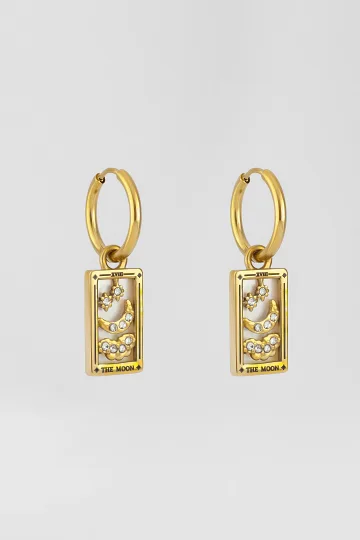
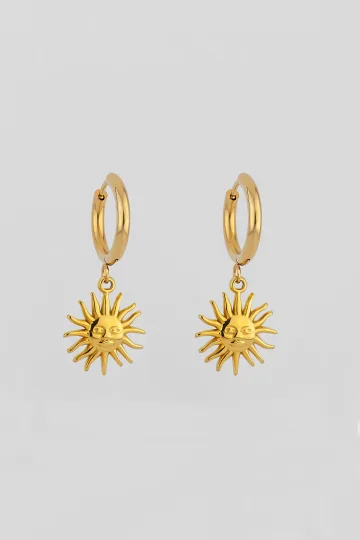
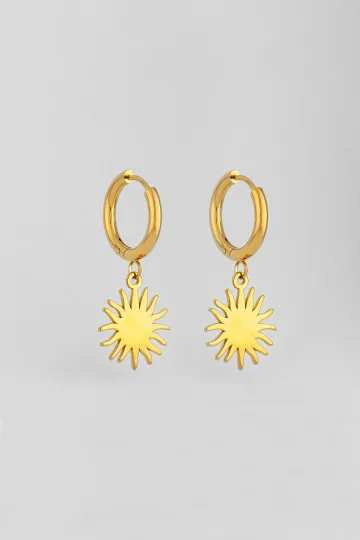
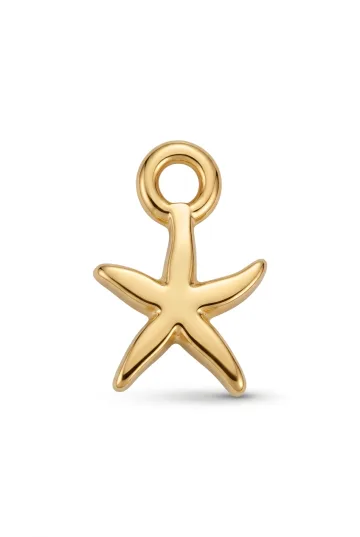
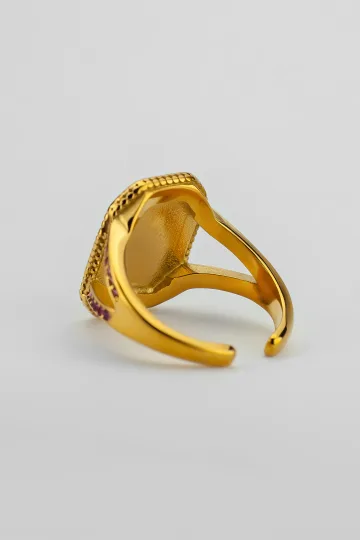
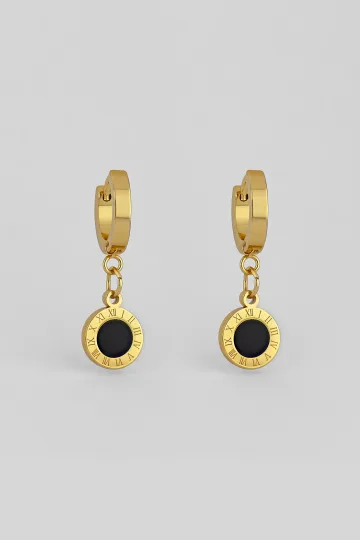
Wear the symbol, don't just read about it. These are in stock:
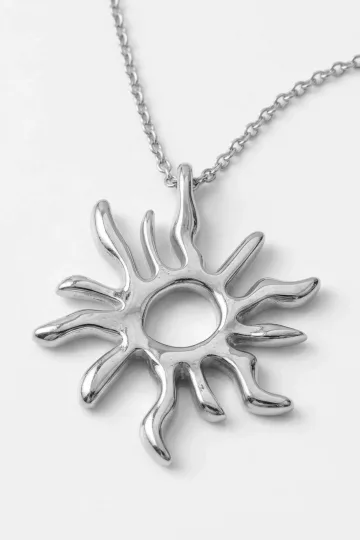
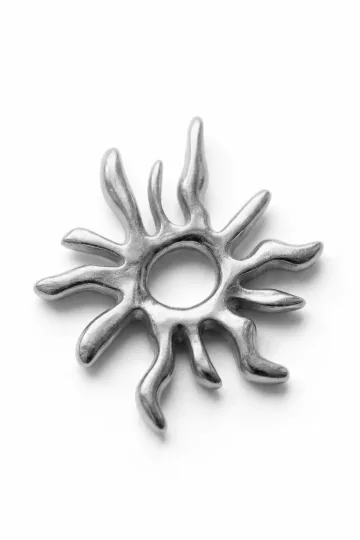
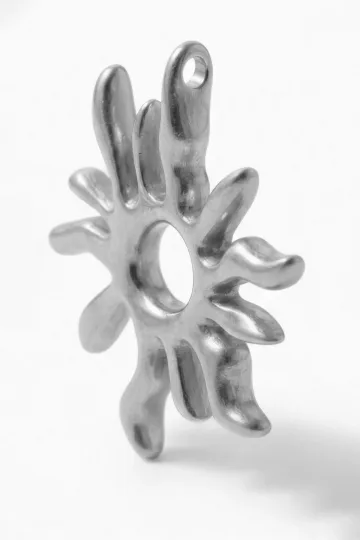
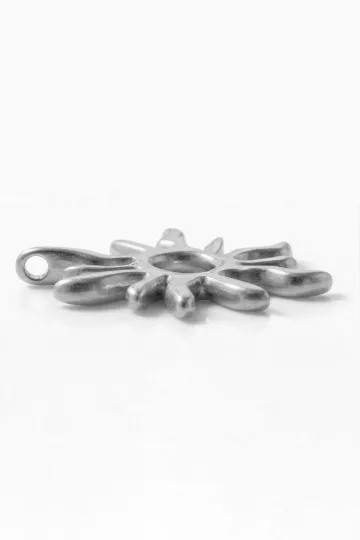
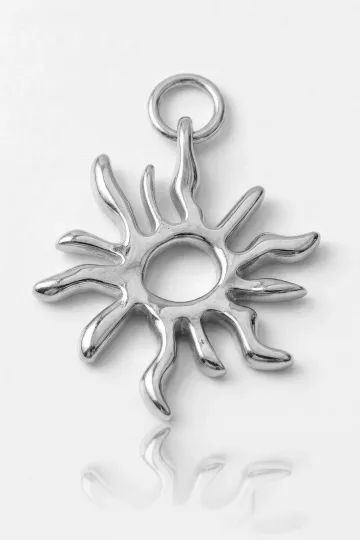



What sets celestial jewellery apart from purely decorative pieces is that it almost always carries meaning. When someone chooses a moon necklace over a geometric pendant, they are usually drawn to what the moon represents, not just how it looks. That symbolic dimension is what makes these pieces feel personal in a way that abstract designs often do not.
The modern celestial jewellery movement blends ancient symbolism with contemporary aesthetics. You will find pieces that reference Egyptian solar discs alongside minimalist gold-plated crescent moons that would look at home on a Scandinavian fashion blogger. The symbols are ancient. The styling is current. That combination is exactly why this category continues to grow.
Upload a photo of your pet, someone you love, or an object. We'll build a 3D model and hand-cast it in pewter.



The Sun: Warmth, Vitality, Masculine Energy
If the moon whispers, the sun shouts. It is the most powerful symbol in the sky, literally the source of all life on Earth, and wearing it makes a statement about who you are.
Ancient Solar Worship: Ra, Apollo, Surya
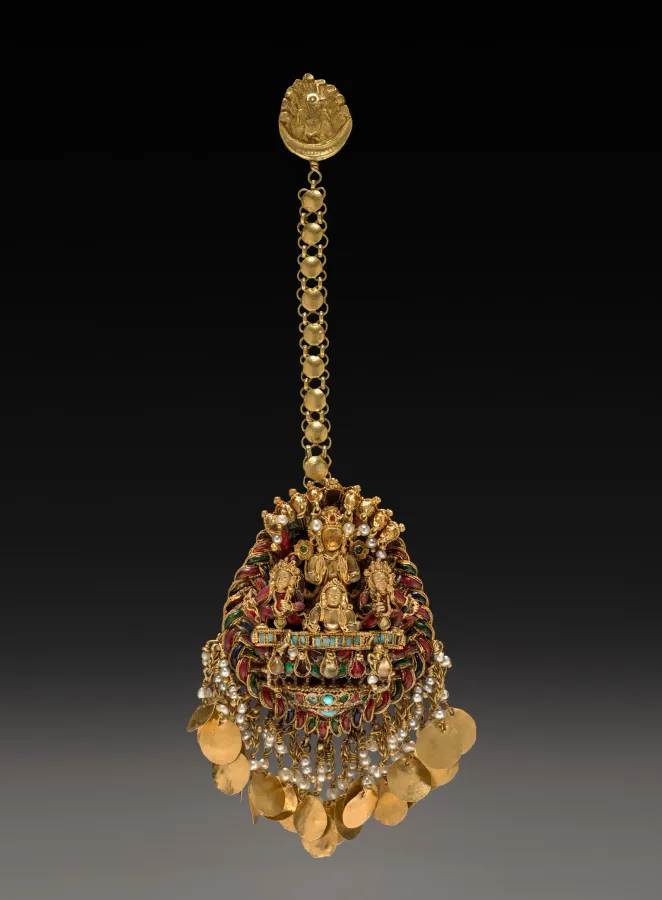
Every major civilisation built its identity partly around the sun. The Egyptians worshipped Ra, the sun god who sailed across the sky each day in a golden boat and travelled through the underworld each night. The pharaohs wore sun discs (gold circles representing Ra's eye) as both jewellery and symbols of divine authority. Tutankhamun's burial mask features solar imagery throughout, because the dead pharaoh was expected to join Ra on his eternal journey.
The Greeks had Apollo (later merged with Helios), driving a chariot of fire across the heavens. Apollo was not just the sun god. He was the god of truth, music, healing, and prophecy. The sun meant clarity, rational thought, and creative power. Greek jewellery from the classical period features sun rays and solar discs, particularly in gold work from regions around modern-day Turkey and southern Italy.
In Hinduism, Surya rides a chariot pulled by seven horses, each representing a day of the week. The Surya temples of India, particularly the magnificent one at Konark, shaped like a massive chariot, show how deeply the sun was embedded in daily worship and artistic expression. Solar jewellery in the Indian tradition often features radiating rays or circular mandala patterns.
The Inca civilisation called gold "the sweat of the sun" and created stunning solar jewellery that Spanish conquistadors melted down for its material value, blind to its symbolic worth. In Japan, Amaterasu, the sun goddess, is the supreme deity of Shinto and the mythological ancestor of the Imperial family. Interestingly, in Japanese tradition, the sun is feminine, one of many reminders that these associations are cultural, not fixed.
The Norse mythology gave us Sol, a goddess who drove the sun chariot while being chased by a wolf. The Celts represented the sun with a wheel or a spiral, and Celtic sun brooches and pendants survive from as early as the Bronze Age.
The thread that connects all these traditions: the sun represents life itself. Without it, nothing grows, nothing sees, nothing warms. That raw power translates into jewellery that feels bold, confident, and life-affirming.
The Sun in Jewellery Through the Ages
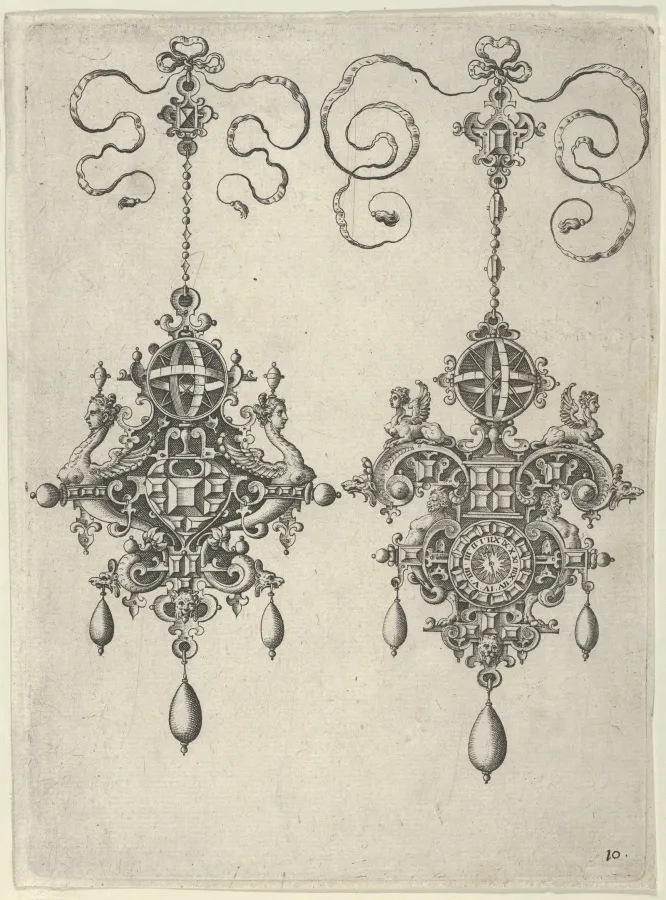
Sun motifs in jewellery have never really gone out of style. They have, however, changed in meaning and presentation.
In ancient Egypt and Mesopotamia, solar jewellery was primarily religious and royal. Only priests, pharaohs, and high-ranking officials wore sun discs. The materials were gold and precious stones: lapis lazuli for the sky, carnelian for the sunset, turquoise for the morning.
During the Renaissance, sun imagery surged back. Louis XIV of France styled himself the "Sun King" and surrounded his court with solar motifs. Jewellery from his era features elaborate sun brooches with radiating rays, often set with diamonds meant to mimic the sparkle of sunlight. This was jewellery as political statement.
The Victorian era brought a softer interpretation. Sun-shaped lockets, brooches with sunburst patterns, and morning jewellery (worn during periods of mourning, featuring suns as symbols of hope and rebirth) became common among the middle and upper classes. The Victorians loved their symbolism, and the sun stood for everything from constancy in love to the promise of a new day.
Art Nouveau designers in the early 1900s created some of the most beautiful solar jewellery ever made. Think Rene Lalique's enamel and gold sunburst pieces: organic, flowing designs where the sun was part of a natural scene rather than an isolated symbol.
The 1960s and 70s brought celestial themes into mainstream fashion jewellery. Oversized sun pendants, sun-shaped belt buckles, and solar earrings became staples of the bohemian aesthetic. This is when celestial jewellery truly democratised. You did not need royal blood or priestly status to wear the sun.
Today, sun jewellery spans every price point and style. From delicate gold-plated pendants perfect for layering to bold statement earrings that catch light like the real thing, the sun remains one of the most versatile and universally appealing motifs in jewellery design.
What a Sun Pendant Says About You
People who gravitate toward sun jewellery tend to share certain qualities. They are generally warm, open, and energetic. They are often the person in a group who sets the mood, who draws others in. Sun wearers tend to value authenticity and are comfortable being visible.
A sun pendant on a chain is one of the most direct symbolic statements you can make with jewellery. It says: I am here. I am present. I carry my own light. There is nothing passive or hidden about it.
Sun earrings, particularly larger or dangling styles, suggest confidence and a willingness to stand out. Sun rings make a bolder personal statement because rings are seen more often and more closely than necklaces.
If you find yourself drawn to solar motifs, it might be worth reflecting on what the sun means to you personally. Is it energy? Optimism? A connection to a specific culture or tradition? The beauty of symbols is that they hold space for personal meaning alongside their historical weight.
A silver crescent wants a bare collarbone, not a buttoned collar. The moon shows up for open necks only.
How to wear celestial jewellery
Over years on shoots, celestial motifs have passed through dozens of looks with me: the sun, the moon and the stars each land differently. Here is what actually works, sorted by occasion.
What do I wear a celestial piece with every day? For daily wear I recommend a tiny sun or crescent on a thin chain over a white tee, a linen shirt or a basic turtleneck. Under a high neckline I suggest a shorter chain so the pendant rests on the collarbones; under a V-neck, a longer one so it drops into the open zone. Small star studs go with absolutely everything.
Is it right for the office? Yes. I choose a calm metal and a medium size: crescent earrings or a single star pendant over a shirt or knit in a neutral colour. Celestial motifs are apolitical and non-denominational, so they gather compliments rather than questions.
How do I build an evening look? For evening I suggest an open neckline and a smooth fabric in a deep colour: wine, emerald, black. A larger piece belongs here, a coin-sized sun pendant or earrings with stars and a moon that catch artificial light. Satin and velvet play beautifully with gold and silver.
Can I mix sun, moon and stars in layers? Yes, and it is my favourite move. I build a celestial story: a star choker, a moon pendant at mid-length and a long chain with a sun. I mix lengths and even metals, gold for the sun and silver for the moon, so the duality reads through the material itself.
How do I choose between the sun, the moon and a star? I start from character. For the warm and outgoing I recommend the sun in gold; for the thoughtful and quiet, a silver crescent; for dreamers, a star that goes with everything. One rule: let a single expressive piece lead, and keep the rest minimal.

Turn on your camera, pick earrings, a pendant or a ring, and see the piece on yourself in real time.
Switch items in one tap.
Everything runs in your browser: no photo or video is ever uploaded.
Customer reviews
Zevira is a real jewellery shop. Genuine payments, deliveries and customer thank-yous.
🥰🥰🥰 gracias
Ok, ¡gracias! 🙂
The Moon: Intuition, Cycles, Feminine Energy
The moon is the sun's quiet counterpart. Where the sun blazes, the moon glows. Where the sun demands attention, the moon rewards those who look up at the right moment. In jewellery, moon motifs carry a completely different emotional register: softer, more intimate, and deeply connected to inner life.
Lunar Worship: Selene, Artemis, Thoth
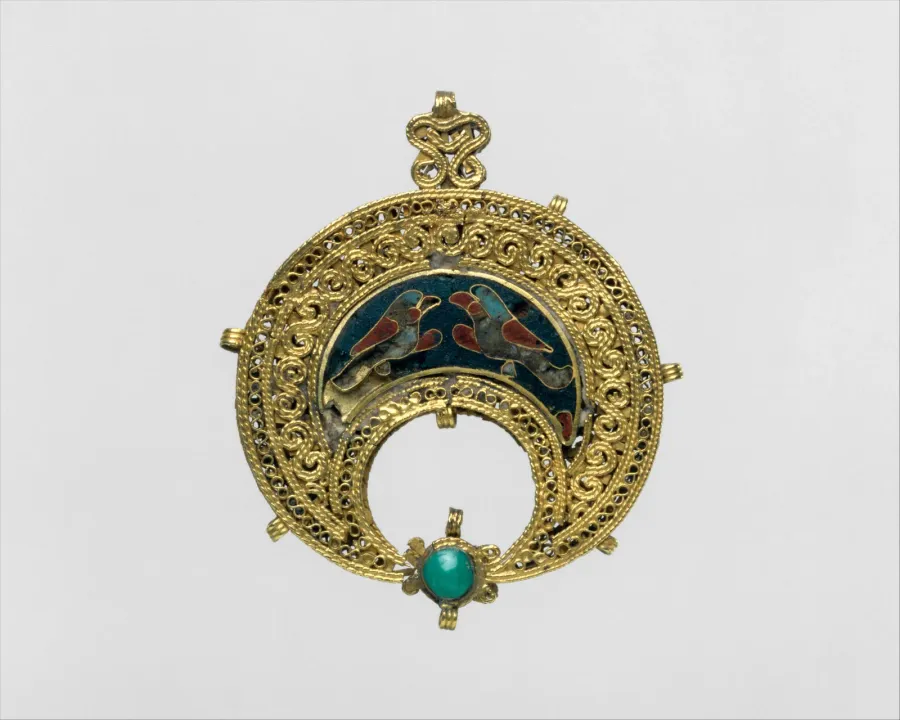
The ancient Greeks had multiple moon deities. Selene was the moon personified, a beautiful woman driving a silver chariot across the night sky. Artemis, goddess of the hunt and the wilderness, was also associated with the moon, particularly the crescent. Her Roman counterpart, Diana, wore a crescent moon crown and was fiercely independent, a protector of women and a symbol of untamed nature.
In Egypt, Thoth wore a crescent moon headdress and governed wisdom, writing, and the measurement of time. The connection between the moon and time-keeping is ancient and practical. Before clocks, the moon's phases were the most reliable calendar available. Lunar months still structure Islamic and Jewish calendars, Chinese New Year, and Easter's date.
Hinduism has Chandra, the moon god who rides a chariot across the night sky. The Chandramukhi (moon-faced) is a term of beauty in Indian culture, and moon-shaped jewellery has deep roots in South Asian adornment traditions, from nose rings shaped like crescent moons to elaborate forehead ornaments.
In many Indigenous American cultures, the moon is Grandmother Moon, a wise, nurturing presence who governs water, tides, and women's cycles. This association between the moon and water (the moon literally controls ocean tides through gravity) adds depth to the symbol: it represents not just light in darkness, but the hidden forces that shape our world.
Japanese culture holds the moon in particular reverence. Tsukimi, the moon-viewing festival, has been celebrated since the Heian period (794-1185). The Japanese appreciation of the moon focuses on its beauty in impermanence: a full moon is stunning precisely because it will wane.
Moon Phases and Their Meaning in Jewellery
One of the most fascinating aspects of moon jewellery is that different phases carry different meanings. This is not arbitrary. The associations have developed over millennia of human observation.
New moon (dark circle or thin sliver): New beginnings, setting intentions, starting fresh. Jewellery featuring the new moon is often chosen by people going through transitions: new jobs, new relationships, new chapters. It is a quiet symbol of potential.
Waxing crescent (growing curve): Building momentum, growth, creativity. This is the most common moon shape in jewellery: the classic crescent, partly because it is visually distinctive and partly because its associations are universally positive.
Full moon (complete circle): Completion, illumination, maximum power. Full moon pendants and charms represent a moment of fullness, of things coming to fruition. Some people wear them as a reminder that cycles complete: that whatever you are working toward will eventually reach its peak.
Waning moon (shrinking curve): Letting go, releasing, gratitude. Less common in jewellery but increasingly popular in spiritual and wellness communities. Wearing a waning moon is a way of saying: I am at peace with what I am leaving behind.
Moon phase sequences (all phases in a row): The complete cycle of change. Popular in bracelets and bar necklaces, these pieces show all the phases together and represent acceptance of change, the understanding that everything has seasons.
If you are choosing a moon piece, consider which phase speaks to where you are in life right now. A crescent works for almost anyone, but a specific phase adds a layer of personal meaning that makes the piece truly yours.
What a Moon Pendant Says About You
Moon-wearers are often deeply intuitive people. They tend to be empathetic, reflective, and drawn to the inner world as much as the outer. Where sun-wearers light up a room, moon-wearers are the ones you find having a deep conversation in the corner, and those conversations are often the most memorable of the evening.
A crescent moon necklace is one of the most popular choices in all of jewellery, and for good reason. It is elegant, timeless, and meaningful without being heavy-handed. It sits beautifully at almost any necklace length and works with everything from a plain t-shirt to a formal dress.
There is also something beautifully private about a moon pendant. Unlike the sun, which announces itself, the moon is a personal symbol. It speaks to the wearer's inner life. Many people choose moon jewellery during transformative periods (after a breakup, during pregnancy, when starting a creative project) because the moon represents the part of us that is always changing but always returning.


Stars: Guidance, Hope, Destiny
If the sun is power and the moon is feeling, the star is direction. Stars have guided travellers, inspired dreamers, and symbolised hope across every culture that has ever looked up on a clear night.
Stars in Navigation and Mythology
Before GPS, before compasses were widely available, before maps covered the whole world, there were stars. Polynesian navigators crossed thousands of miles of open Pacific Ocean using nothing but star positions, wave patterns, and bird behaviour. Their knowledge was so precise they could locate tiny islands in a vast ocean, and star patterns were the backbone of their system.
The North Star (Polaris) has served as a fixed point for navigation in the Northern Hemisphere for thousands of years. For enslaved people escaping through the American South, it literally pointed the way to freedom. The "Follow the Drinking Gourd" tradition used the Big Dipper constellation (which points to Polaris) as a navigational tool on the Underground Railroad. The star as a symbol of hope and liberation runs deep.
In Greek mythology, the stars were often mortals or heroes placed in the sky by the gods: Orion the hunter, Cassiopeia the queen, the twins Castor and Pollux. Being transformed into a constellation was a form of immortality, which gave stars their association with eternal fame and legacy.
The Star of Bethlehem guided the Magi in the Christian tradition. The Star of David represents Judaism. The Islamic crescent often appears alongside a star. The star-and-crescent appears on the flags of multiple nations. Stars carry political, spiritual, and cultural weight that few other symbols can match.
In astrology, regardless of whether you believe in it, your "star sign" is considered a map of your personality and destiny. This connection between stars and personal fate drives a massive portion of the modern star jewellery market. Constellation pendants showing your zodiac stars, birthstone-studded star pieces, and astrology-themed designs all tap into this ancient association.
The Star as Universal Symbol
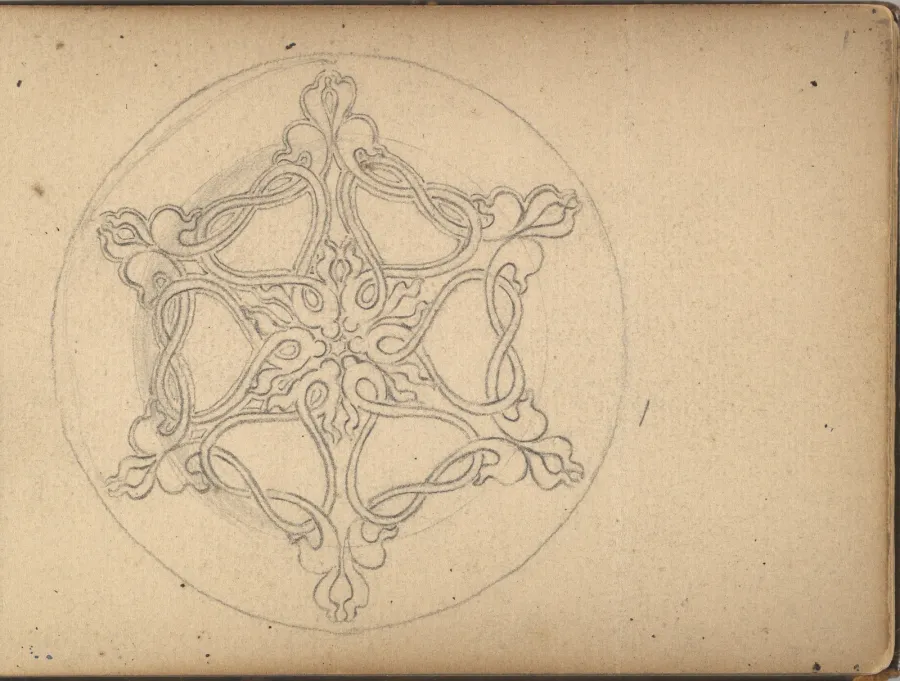
What makes stars so effective as symbols is their versatility. A star can mean almost anything positive. Hope. Achievement. Guidance. Protection. Uniqueness ("you are a star"). Aspiration ("reach for the stars"). Memory ("a star in the sky" for someone passed). Dreams. Magic. Navigation. Excellence.
This flexibility is why star jewellery works in so many contexts. A small star stud is perfect for everyday wear, subtle but meaningful. A statement star pendant works for occasions. Constellation pieces feel personal and specific. Cluster designs (multiple small stars) create texture and visual interest while carrying all that symbolic weight.
Star motifs pair exceptionally well with other celestial elements. Stars with moons create night sky scenes. Stars with suns suggest cosmic completeness. Stars alone feel independent, self-directed, and quietly confident.
Sun and Moon Together: Balance, Duality, Completeness
Some of the most powerful celestial jewellery combines the sun and moon in a single piece. This is not just an aesthetic choice. It taps into one of the deepest symbolic traditions in human culture.
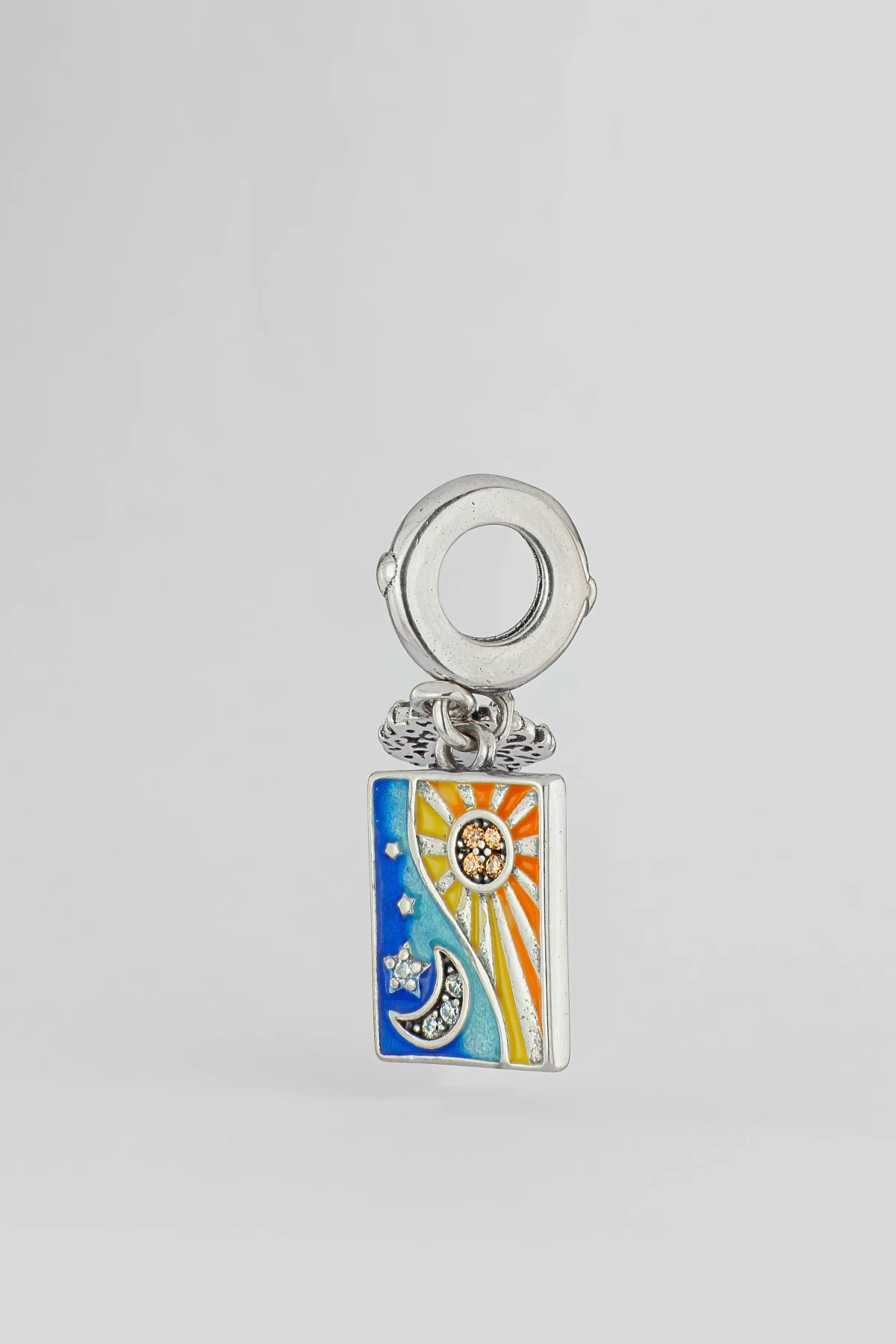
The sun and moon together represent balance. Day and night. Active and receptive. Rational and intuitive. Visible and hidden. In many traditions, this duality is seen as the fundamental structure of reality itself. The Chinese yin-yang concept maps closely onto sun-moon duality, with the sun representing yang (active, bright, warm) and the moon representing yin (passive, cool, reflective).
Alchemical tradition uses the sun and moon as symbols for gold and silver, masculine and feminine principles, and the conscious and unconscious mind. The goal of alchemy was the "great work" of uniting these opposites into something whole. A sun-and-moon pendant is, symbolically, a piece of completed alchemy.
In terms of personal meaning, wearing sun and moon together often represents self-acceptance, the acknowledgement that you contain both energies. You can be bold and gentle, logical and intuitive, outgoing and introspective. The piece says: I am whole. I do not need to choose one side.
Sun-and-moon jewellery is also enormously popular as a couples' symbol. One partner wears the sun, the other wears the moon. Together, they are complete. This has roots in ancient mythology: many cultures tell stories of the sun and moon as lovers who can never occupy the sky at the same time, forever chasing each other across the horizon. During eclipses, when the sun and moon finally align, ancient peoples saw a moment of divine union.
For modern wearers, this romance narrative gives sun-and-moon pieces a particular emotional resonance. They are popular anniversary gifts, Valentine's Day presents, and friendship tokens. The message is clear and beautiful: you are my other half.
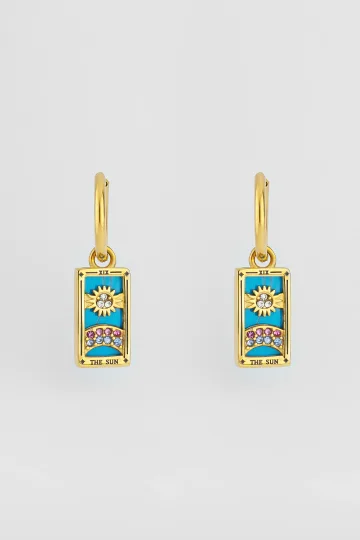
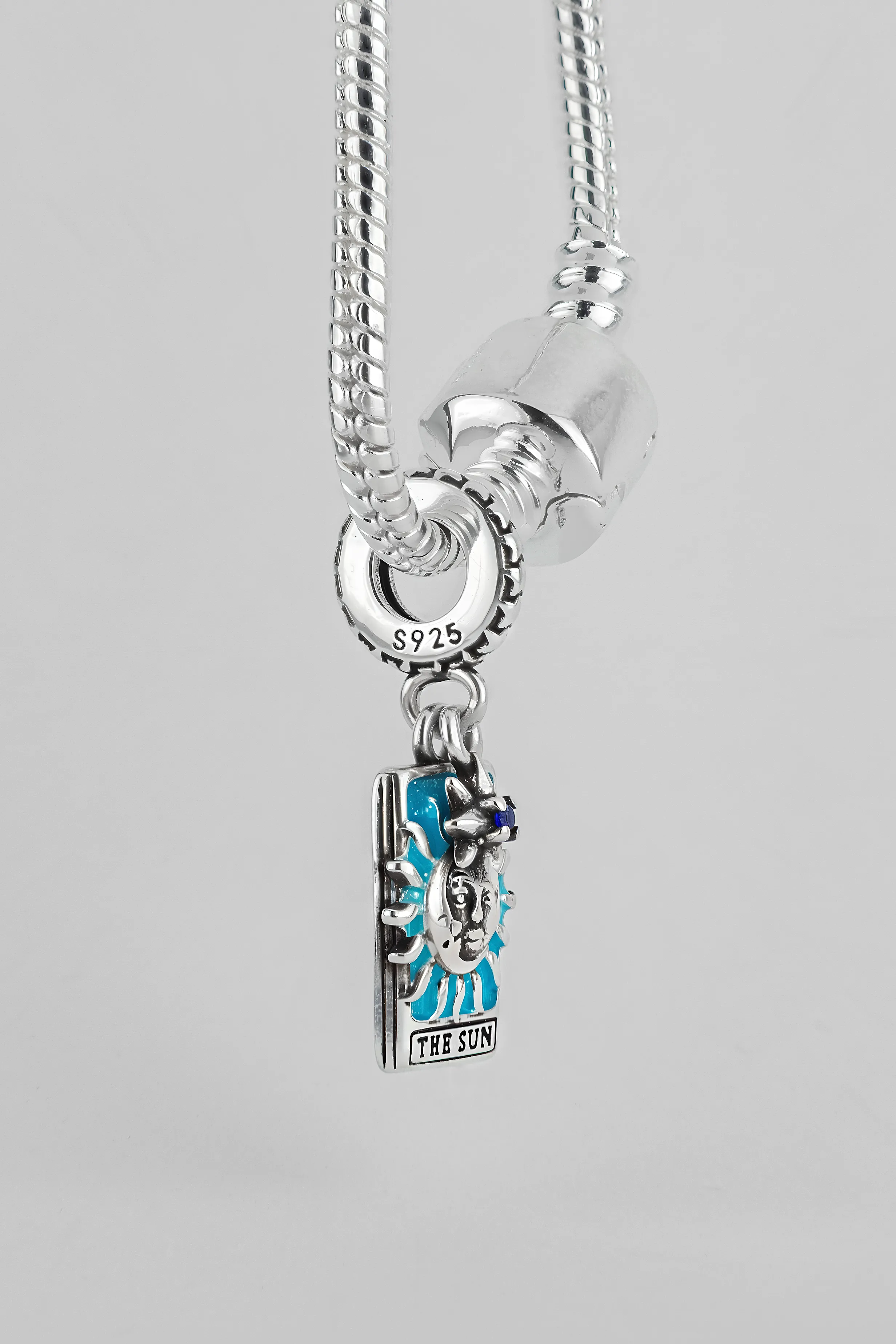
If you are interested in the connection between celestial symbolism and the Tarot tradition, where The Sun and The Moon are both Major Arcana cards with deep meanings, you might enjoy our guide to Tarot jewellery and its symbolism.
Leave your email, we'll send your discount code. No spam, unsubscribe anytime.
The code arrives by email, valid on your first order.
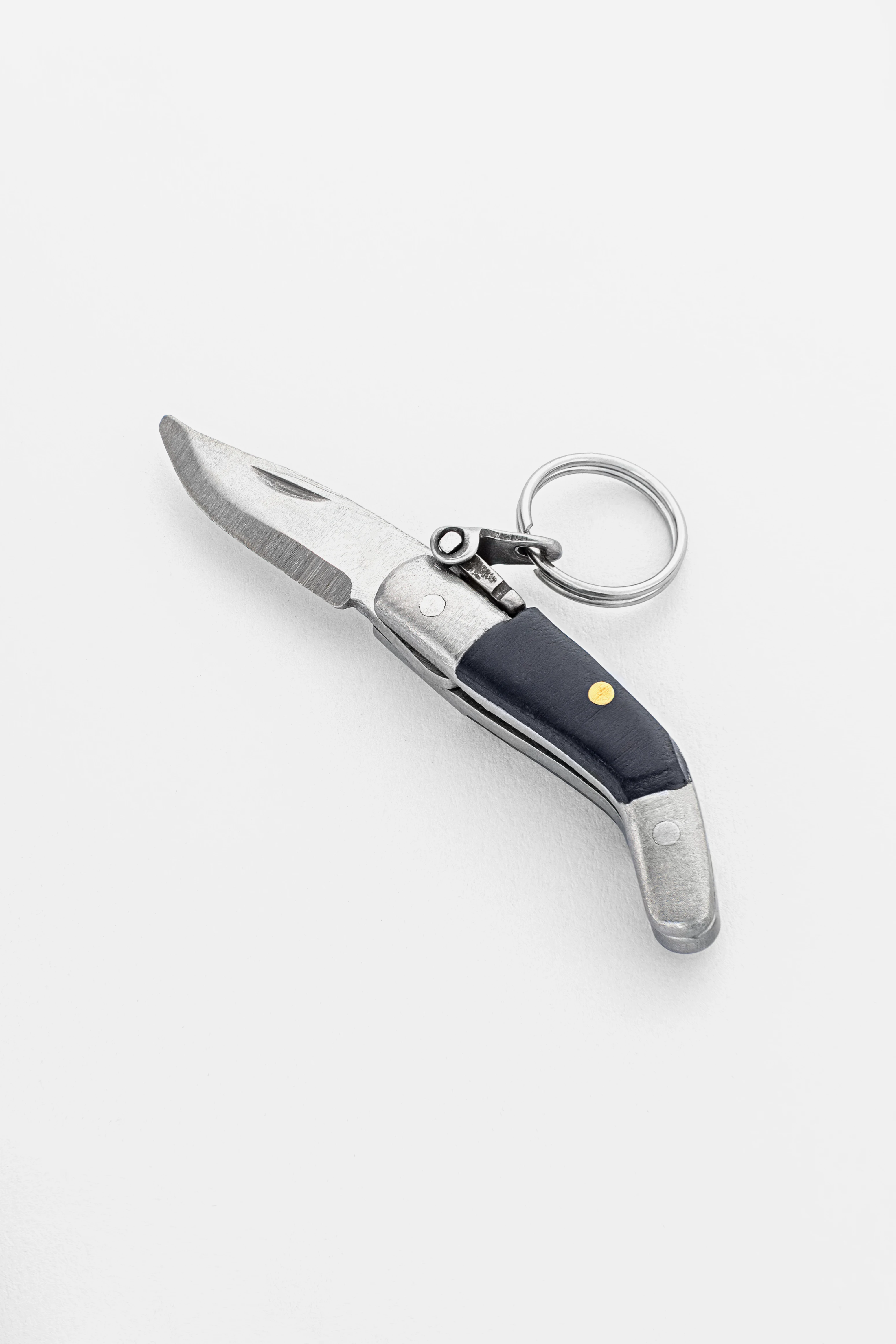
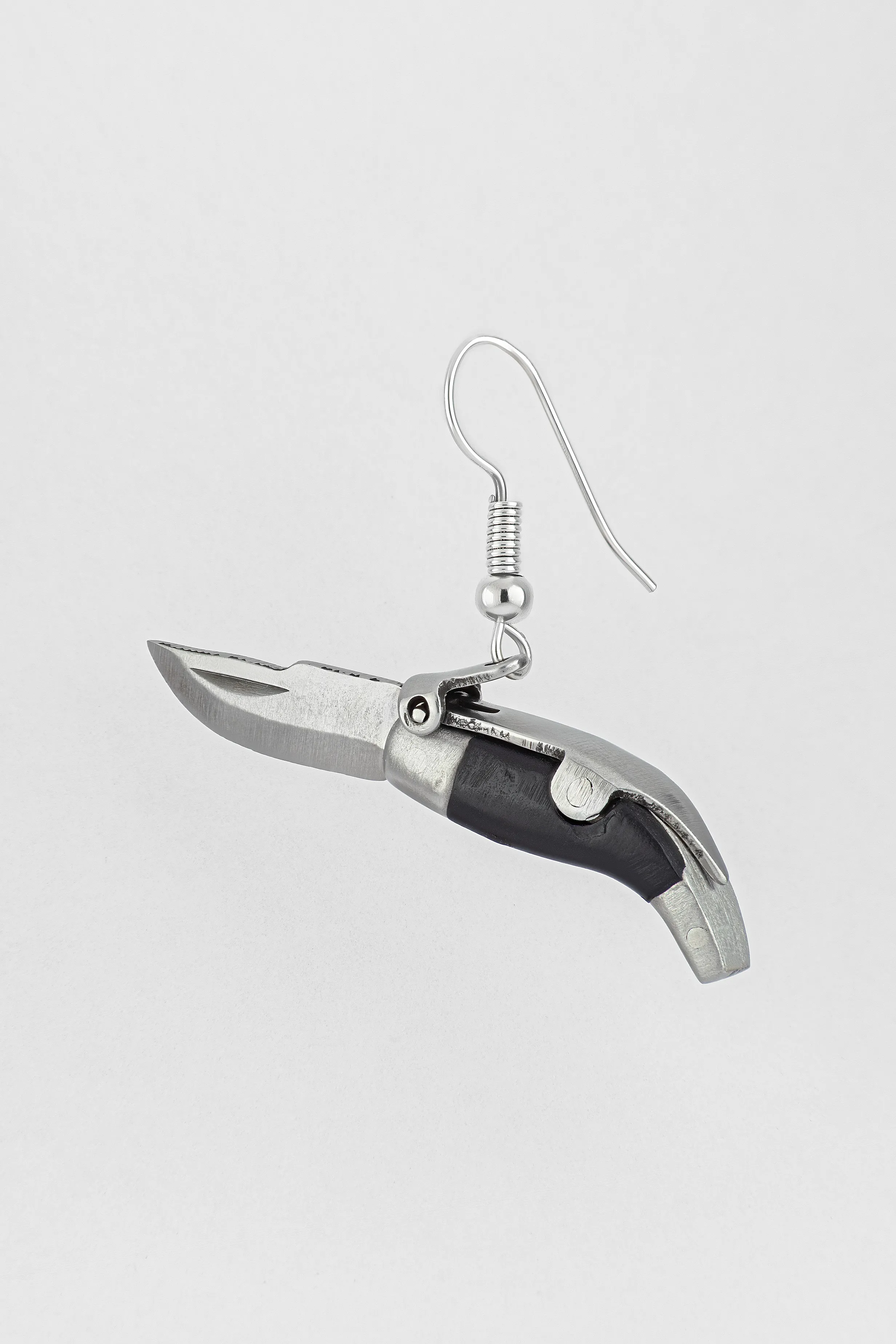
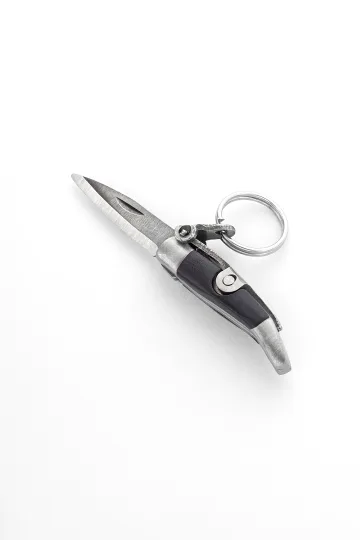
CAPAORA mini knife pendant
The 18th-century Spanish navaja in miniature: 40 mm of stainless steel, a real folding mechanism and a Palanquilla lock that clicks. An affordable gift to remember.
Authentic · Ships from Spain · 14-day returns
Materials and Styles for Celestial Pieces
The material you choose for celestial jewellery matters both practically and symbolically. Different metals and finishes interact with celestial motifs in different ways.
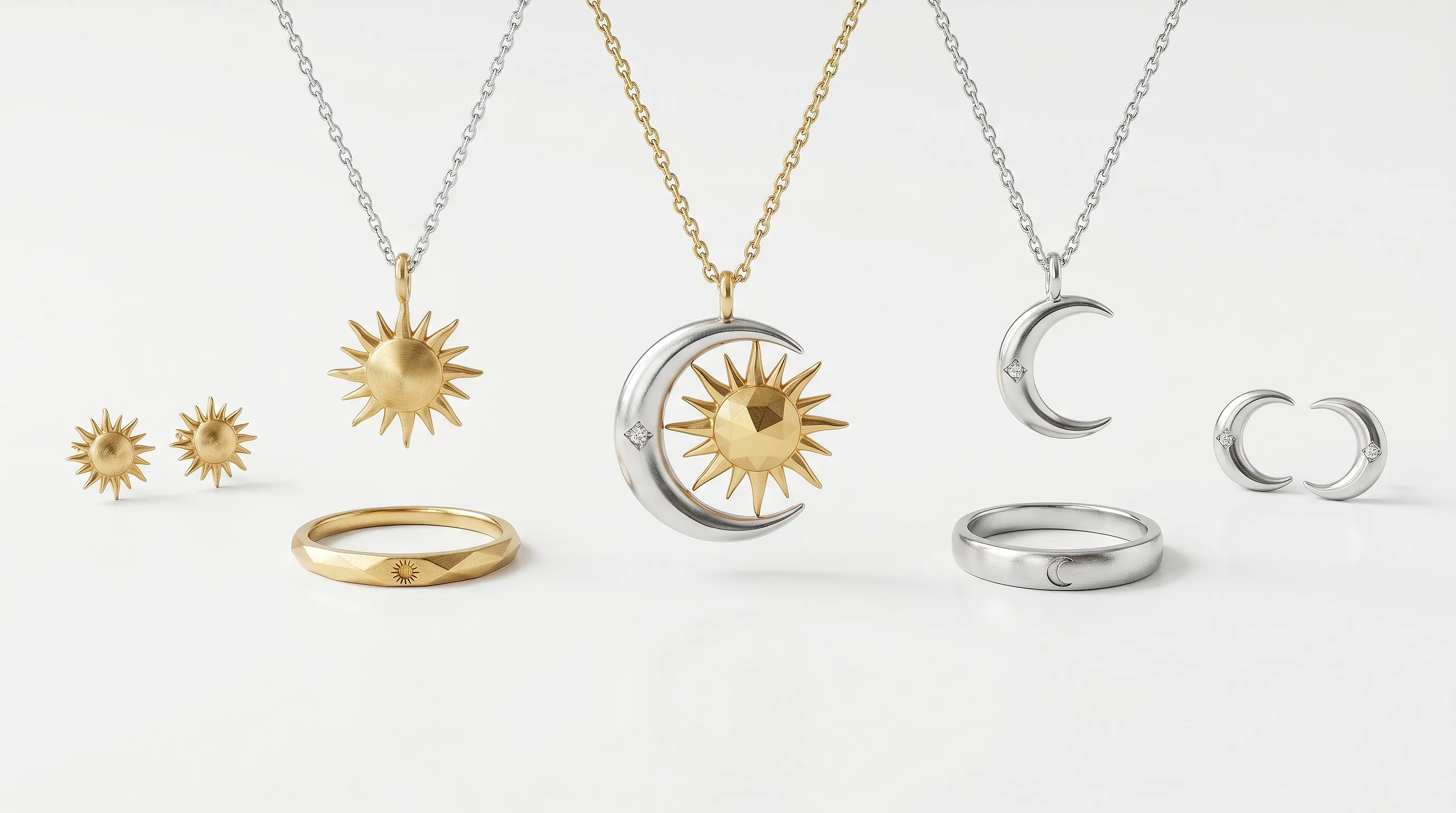
Gold tones are the natural match for sun pieces. Gold has been associated with the sun since the earliest civilisations: the Incas called it "sweat of the sun," and Egyptian solar discs were always gold. A gold-plated sun pendant feels historically and symbolically coherent. It catches light the way the real sun catches on water.
Silver tones are the natural partner for moon pieces. Silver has been called "the moon's metal" across multiple traditions. Moonlight is silver-white, and silver jewellery reflects light in that same cool, luminous way. Sterling silver, with its slightly warmer tone, is particularly beautiful for crescent moons. If you want to learn more about silver and its properties, our guide to Sterling Silver 925 covers everything you need to know.
Rose gold adds warmth without the intensity of yellow gold. It works beautifully for celestial pieces that blend multiple motifs: a rose gold pendant with both sun and moon elements feels balanced and modern.
Mixed metals are increasingly popular for celestial jewellery because the concept lends itself to contrast. A gold sun with a silver moon on the same chain captures the duality of the symbol through the materials themselves.
In terms of styles, celestial jewellery spans the full range:
Minimalist: thin line designs, small studs, delicate chains with tiny charms. These pieces whisper rather than shout. A 10mm crescent on a fine chain. A single star stud in one ear. A thin sun disc the size of a fingernail. This style works for daily wear, professional settings, and layering.
Statement: larger pendants, bold earrings, chunky rings. A sun pendant the size of a coin on a thick chain. Chandelier earrings with dangling stars and moons. A wide cuff bracelet stamped with celestial patterns. These pieces are event-ready and conversation-starting.
Bohemian: mixed motifs, layered chains, natural-feeling textures. Multiple celestial charms on a single bracelet. Layered necklaces at different lengths, each with a different celestial symbol. This style is the direct descendant of 1970s celestial fashion and continues to thrive.
Modern spiritual: designs that explicitly reference astrology, Tarot, chakras, or cosmic spirituality. Constellation maps, zodiac wheel pendants, pieces incorporating specific stones associated with celestial bodies (moonstone for the moon, citrine or amber for the sun, clear quartz for stars).
Who It Suits and Gifting Ideas
Celestial jewellery has an unusual advantage as a gift: it works for almost everyone. The symbols are positive, non-denominational, and universally recognisable. That said, matching the right celestial symbol to the right person elevates the gift from nice to meaningful.
For the confident, outgoing personality: sun pieces. Someone who lights up rooms, who leads, who energises others. A sun pendant or bold solar earrings acknowledge their radiance. Gift this for birthdays, promotions, or whenever you want to celebrate someone's positive energy.
For the thoughtful, introspective personality: moon pieces. Someone who listens deeply, who navigates by feeling, who values inner life. A crescent necklace or moon phase bracelet honours their reflective nature. Perfect for intimate occasions: anniversaries, personal milestones, self-care moments.
For the dreamer, the traveller, the free spirit: star pieces. Someone who is always looking ahead, who values independence, who charts their own course. A star pendant or constellation piece says "your path is uniquely yours." Ideal for graduations, bon voyage gifts, or marking life transitions.
For couples: matching sun and moon pieces. One partner takes the sun, the other takes the moon. Together, they represent completeness. This works for Valentine's Day, anniversaries, or as a spontaneous gesture of connection.
For someone going through change: moon phase jewellery. The message is: change is natural, cycles complete, and every dark phase leads back to light. Thoughtful for someone navigating a difficult period.
For someone you do not know well: a simple star stud or minimal celestial pendant. Universal, elegant, and impossible to find offensive. Safe without being boring.
For yourself: whichever symbol resonates most when you look at it. Do not overthink it. The piece that draws your eye is usually the one that matches where you are in life right now.
Frequently Asked Questions
What does wearing a sun pendant mean?
A sun pendant symbolises vitality, warmth, confidence, and life-giving energy. Historically, it connected the wearer to solar deities like Ra, Apollo, and Surya. In modern context, it is worn as a statement of personal power, optimism, and an open-hearted approach to life. It does not carry any specific religious obligation.
Is moon jewellery only for women?
Not at all. While the moon has traditionally been linked to feminine energy in many Western cultures, this is a cultural association rather than a rule. In several traditions, including Egyptian (Thoth) and Hindu (Chandra) mythology, the moon is associated with male deities. Crescent pendants and moon rings are increasingly popular across all genders. Wear what resonates with you.
Can I wear sun and moon jewellery together?
Yes, and many people do specifically because the combination is symbolically powerful. Sun and moon together represent balance, wholeness, and the unity of opposites. You can wear them as separate pieces (a sun pendant with moon earrings) or look for designs that incorporate both symbols in a single piece.
What is the best metal for celestial jewellery?
Gold tones are traditionally associated with the sun, silver with the moon. But there are no hard rules. Gold moon pendants look stunning, and silver sun pieces have their own cool elegance. Choose based on what complements your skin tone and existing wardrobe. Mixed-metal celestial pieces that combine both are a popular modern choice.
Does the number of points on a star matter?
Yes, different star shapes carry different cultural significance. A five-pointed star (pentagram) has associations with protection and the five elements. A six-pointed star (hexagram) connects to Judaism and Hinduism. An eight-pointed star relates to Ishtar and the compass rose. A simple four-pointed star often represents the cardinal directions. For purely decorative or spiritual purposes without specific cultural ties, any star shape works well.
Is celestial jewellery appropriate for professional settings?
Absolutely. Celestial symbols are among the most workplace-friendly motifs in jewellery. They are positive, non-political, and non-denominational. A small sun pendant, crescent moon studs, or a delicate star necklace add personality without controversy. If anything, celestial pieces tend to generate compliments and positive conversations.
How do I choose between a sun, moon, or star piece?
Consider what you want the piece to represent. If you want to express confidence and energy, lean toward the sun. If you connect with intuition and emotional depth, the moon might be your match. If you value guidance, independence, or aspiration, stars speak that language. Many people own all three and rotate based on mood or intention. Our quiz at the top of this article can also help guide your choice.
Can celestial jewellery be considered spiritual or just fashion?
Both, and that is the beauty of it. You can wear a moon pendant purely because you love the crescent shape, or you can wear it as a meaningful connection to lunar energy, goddess traditions, or personal cycles. The piece does not judge your intention. Some wearers set intentions with their celestial jewellery. Others simply think it looks beautiful. Both approaches are completely valid.
Silver and gold jewellery, wedding bands, symbolic pendants, paired sets.
Send a friend a discount code, they save on their first order.
Conclusion
The sun, moon, and stars are not trendy symbols. They are permanent ones. They were meaningful when the first humans scratched solar spirals into cave walls, and they will still mean something long after every fashion cycle has turned.
That is the real appeal of celestial jewellery. It does not date. A sun pendant you buy today will look and feel relevant in ten years, in twenty, in fifty. The symbols connect you to something larger: to the sky above you, to the thousands of generations who looked at the same sky, and to whatever you personally find when you look up.
Whether you are drawn to the sun's boldness, the moon's mystery, or a star's quiet promise that there is always a direction worth following, there is a piece of celestial jewellery that speaks your language. The sky has been speaking it all along. All you have to do is listen.
Buying it as a gift? Each one arrives ready to give.
 A branded Zevira box and a little card come with every order.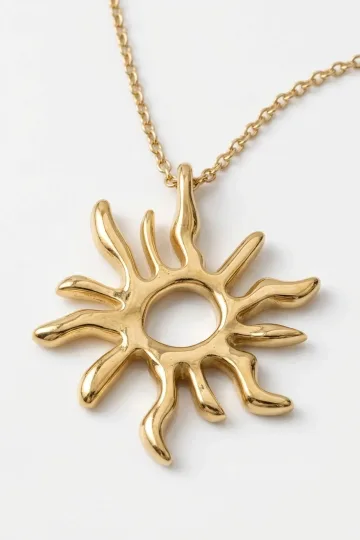


About Zevira
Zevira makes jewellery in the artisan tradition of Albacete, Spain. Celestial symbolism is one of our favourite themes: the sun, moon, and stars get translated into metal the same way artisans did thousands of years ago, except now the piece tells your personal story rather than belonging to a temple.
Here is what you can find with us on the celestial theme:
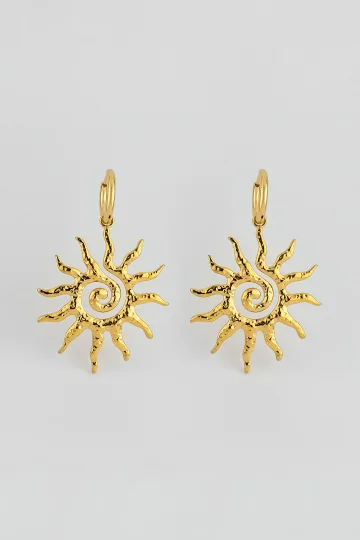
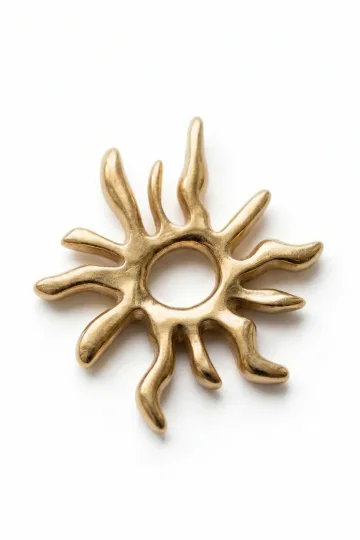
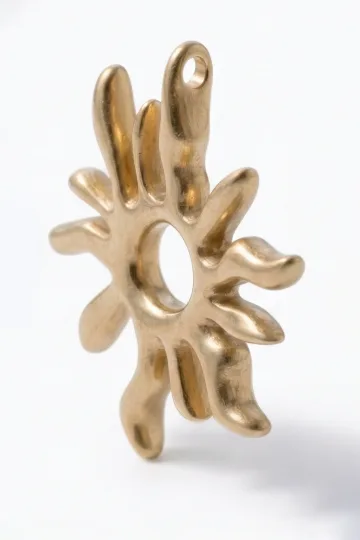
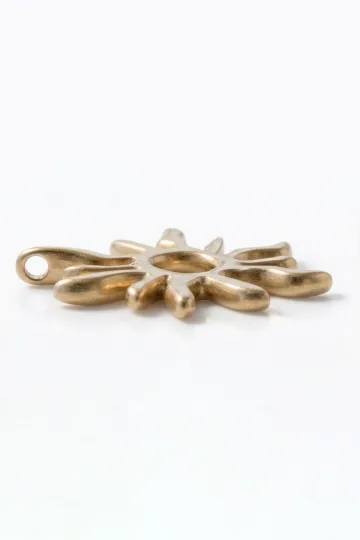
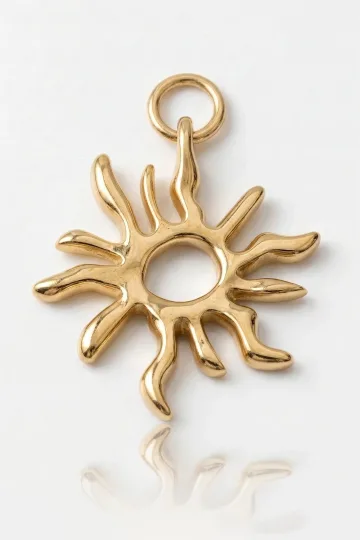
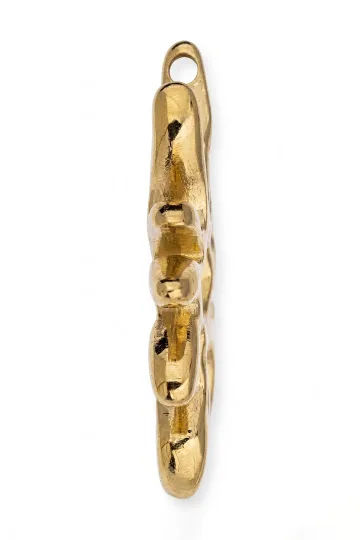
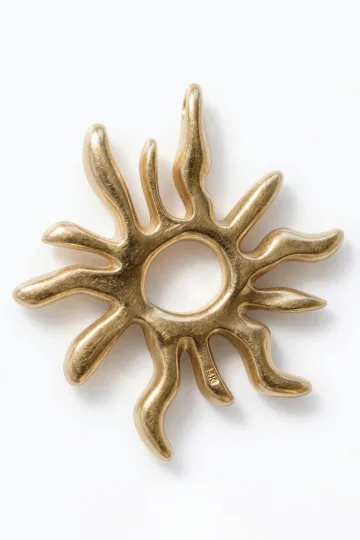
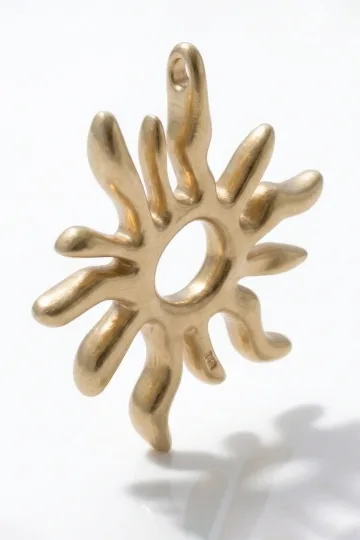
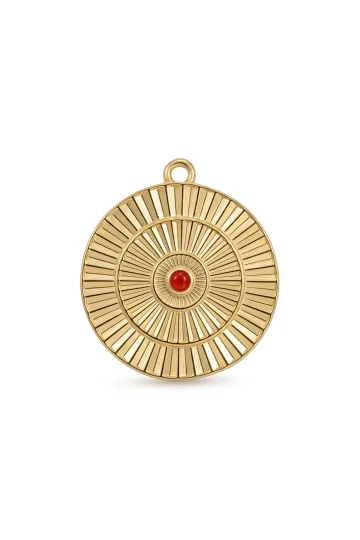
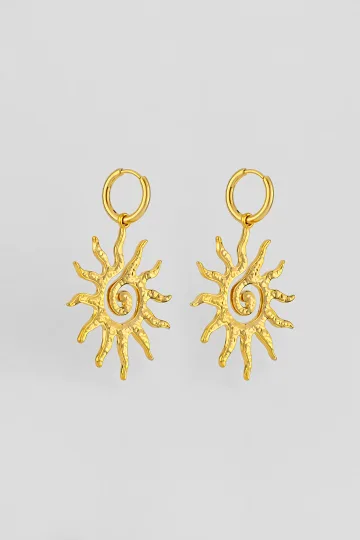
- Sun pendants in gold tones, with radiating rays and solar spirals
- Crescent moons and moon-phase charms in sterling silver 925
- Star studs and star hoops for everyday wear and for nights out
- Matching sun-and-moon sets as a symbol of a couple and of balance
- Minimalist celestial charms made for layering and stacking
- Pieces with stones: moonstone for the moon, amber and citrine for the sun
Every piece can be personalised with engraving, with the option of personal engraving. Sterling silver 925 and 14-18K gold.
Wear the symbol, don't just read about it. These are in stock: