Nature Symbols in Jewelry: Leaves, Bees, Butterflies & What They Mean
Introduction
I found the pendant in my grandmother's jewellery box after she passed. A tiny gold acorn, no bigger than my thumbnail, tucked inside a velvet pouch that had gone soft with age. I didn't know what it meant at the time. I just knew she wore it every day for as long as I could remember.
Turns out she bought it in the 1970s, when she was starting her first business. A friend told her acorns stood for potential, the idea that something small could grow into something enormous. She wore it through every board meeting, every tough quarter, every success. It wasn't superstition. It was a reminder.
That's the thing about nature symbols in jewellery. They're not random decorations. Every leaf, every bee, every butterfly carries centuries of meaning. And once you know the stories, you start seeing them differently. This guide covers the seven most popular nature motifs in jewellery: where they come from, what they mean, and how to wear them so they actually say something about you.
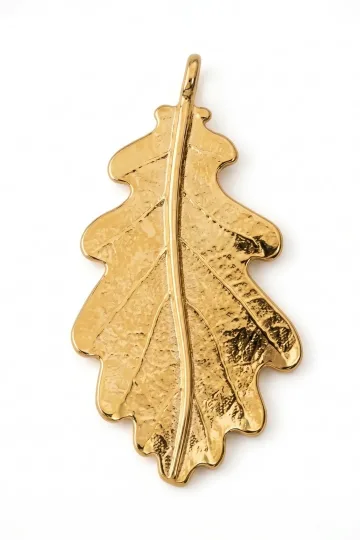
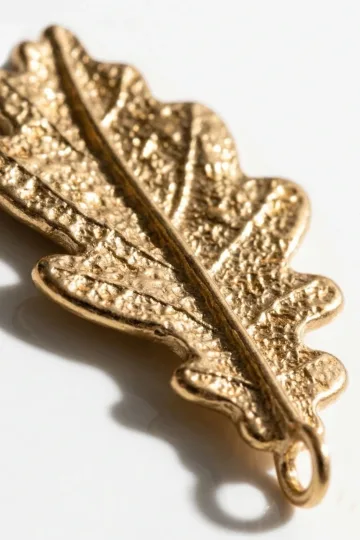
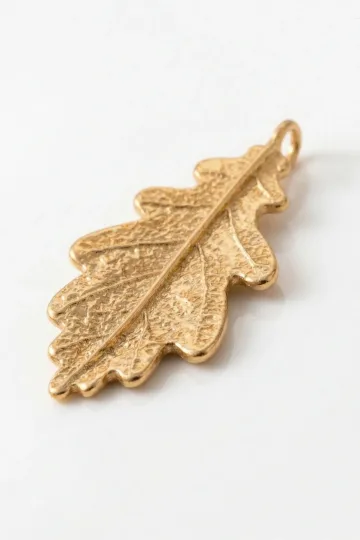
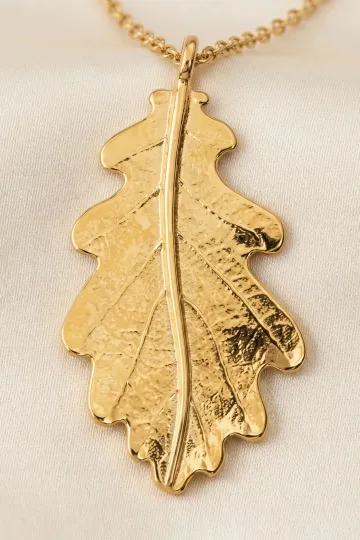
Wear the symbol, don't just read about it. These are in stock:



Customer reviews
Zevira is a real jewellery shop. Genuine payments, deliveries and customer thank-yous.
🥰🥰🥰 gracias
Ok, ¡gracias! 🙂
Why We Wear Nature
Humans have been turning nature into jewellery since before we had written language. Archaeological digs have pulled up shell necklaces that are over 100,000 years old. Bone pendants shaped like animals date back 40,000 years. We've always wanted to carry a piece of the natural world on our bodies.
But why? It's not just aesthetics.
There's a psychological concept called biophilia, the idea that humans have an innate connection to nature and other living things. E.O. Wilson popularized the term in 1984, but the instinct is ancient. We're drawn to organic shapes, flowing lines, and living forms because our brains are literally wired for it. Studies show that exposure to natural forms reduces stress and increases feelings of wellbeing.
Jewellery takes this one step further. When you wear a leaf pendant or a bee charm, you're not just looking at nature. You're carrying it with you. It becomes part of your personal story, a physical object that holds meaning.
There's also the symbolic dimension. Throughout human history, different cultures assigned meanings to plants and animals based on their observed behaviours. Bees became symbols of hard work because, well, look at them. Turtles became wisdom because they live for centuries. Butterflies became transformation because their entire life cycle is a metamorphosis visible to the naked eye.
These meanings aren't arbitrary. They're based on thousands of years of human observation. And when you wear them, you're tapping into something much older than fashion.
The modern wave of nature-inspired accessories actually reflects a broader cultural shift. As our lives become more digital and urban, many people feel a pull back toward the natural world. Wearing a botanical pendant or an animal charm is a quiet way of saying: I haven't forgotten where we come from.
A butterfly lands on smooth silk, not on a floral print. Two gardens in one outfit is a crowd, and don't argue.
What to Wear Nature Symbols With
Dozens of looks with leaves, bees, and butterflies have passed through my hands. Here is what actually works, sorted by occasion and by the symbols themselves.
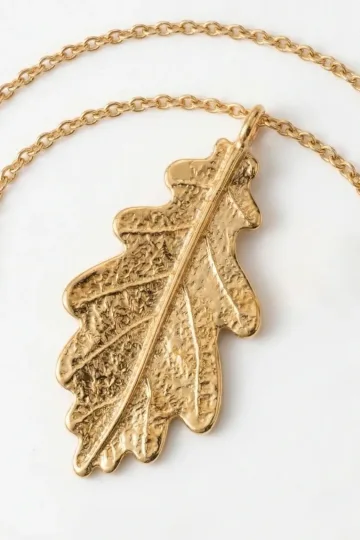
How do I wear a nature pendant every day? For daytime I recommend a thin gold leaf or a small bee on a short chain over a white tee, a linen shirt, or beige knitwear. The calmer the clothing colour, the louder the symbol reads, so a solid top always beats a print. An acorn or an oak leaf sits especially well here; there is a restrained seriousness to them.
Does a piece like this work at the office? It does. I suggest one clean piece at the neckline of a blouse or sweater, no shine and no clutter. A leaf, an acorn, or a bee in matte silver or gold reads as a quiet detail rather than a loud accent. I recommend a 45-50 cm length so the symbol tucks under the top button.
How do I build an evening look? For evening I choose one bright accent and keep everything else out of the way. An enamel butterfly on a solid dress, a coral pendant in a deep V-neck, a larger turtle on black. A deep neckline asks for a longer length; a high collar, a shorter chain. Silk and satin lift the shine of the metal, while dense knits soften it.
How do I wear several symbols at once? When I build layers I mix scale and length: a small, detailed leaf on a short chain and a larger, more abstract piece just below. I keep one finish, all gold or all silver; an intentional mix of metals is fine, a random one looks careless. That way the symbols do not argue; they add up to one story.
How do I choose the right symbol for me? I suggest starting from the story, not the shine. For those who love quiet elegance I recommend the leaf and the acorn in gold. For a little boldness, the butterfly and the monstera in enamel or silver. Coral and the bee suit a romantic mood; the turtle, a thoughtful and patient one.
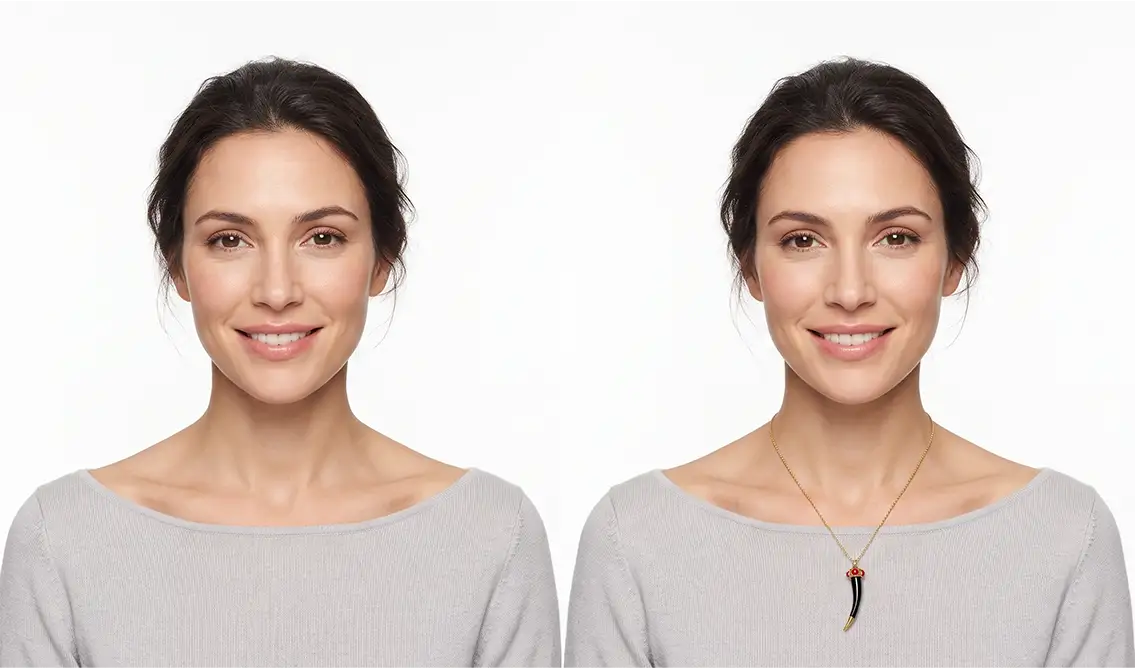
Turn on your camera, pick earrings, a pendant or a ring, and see the piece on yourself in real time.
Switch items in one tap.
Everything runs in your browser: no photo or video is ever uploaded.
Upload a photo of your pet, someone you love, or an object. We'll build a 3D model and hand-cast it in pewter.
Nature Symbols and Their Meanings
Leaf and Oak Leaf: Strength, Cycles, Grounding
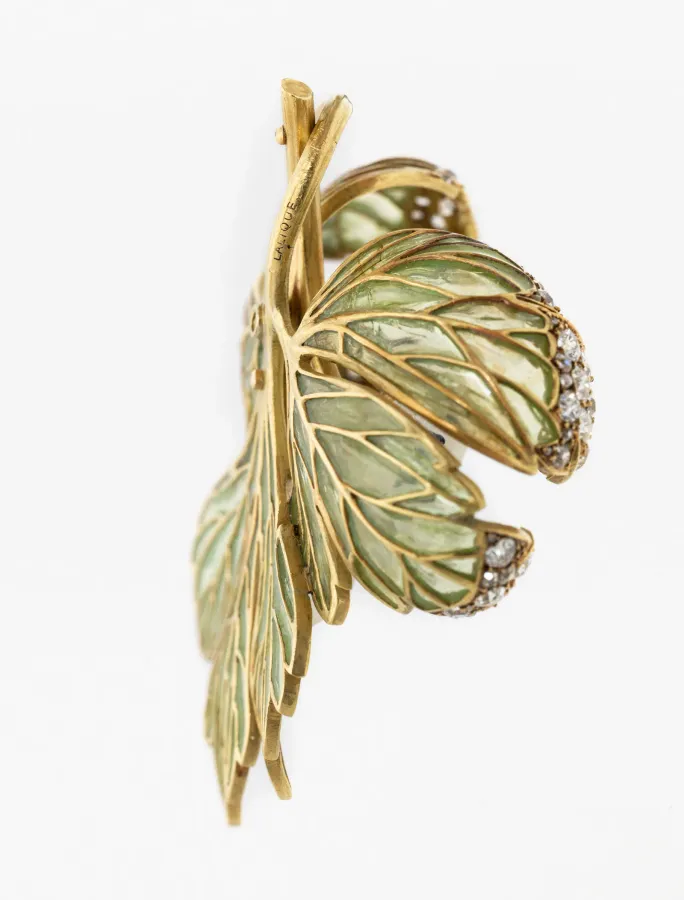
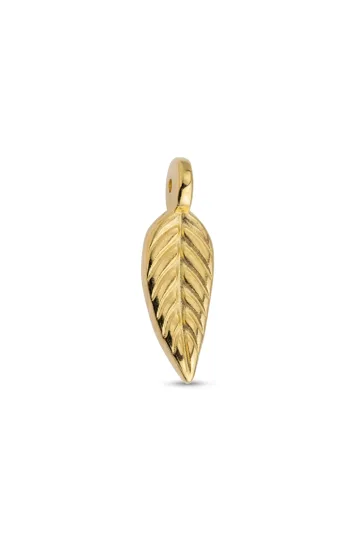
The leaf is one of the most universal symbols in jewellery, and it's been that way for millennia. Ancient Greeks awarded golden laurel wreaths to Olympic champions. Celtic druids considered oak leaves sacred. In Chinese art, the leaf represents happiness and prosperity.
But the symbolism goes deeper than any single culture.
Leaves are fundamentally about cycles. They grow, they change colour, they fall, and they return. Every year, without fail. A leaf pendant is a reminder that change is natural, that letting go is part of growth, and that there's always another spring coming.
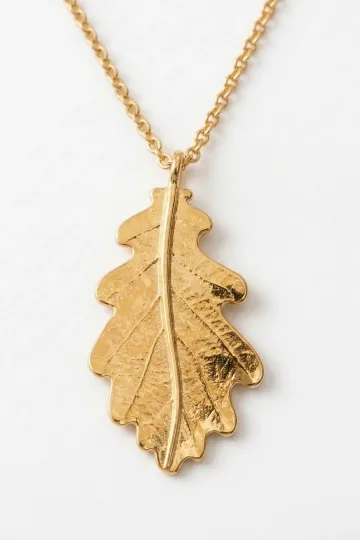
The oak leaf, specifically, carries extra weight. Oaks are among the longest-living trees on Earth. Some specimens are over a thousand years old. They survive storms, droughts, and centuries of weather because their root systems are massive and their wood is dense. In Roman culture, a crown of oak leaves (the civic crown) was awarded for saving a citizen's life in battle. It was considered more prestigious than a gold crown.
Wearing an oak leaf in jewellery says something about resilience. It's for people who understand that real strength isn't flashy. It's quiet, rooted, and enduring.
Different leaf shapes carry their own nuances. Maple leaves represent balance and promise (and yes, Canada). Ginkgo leaves, with their distinctive fan shape, are symbols of longevity (the ginkgo tree has existed virtually unchanged for 270 million years). Ivy leaves represent fidelity and eternal connection.
For most people, though, a leaf pendant is simply about connection to nature. It's grounding. In a world of screens and concrete, it's a small, beautiful reminder of the world outside.
Bee and Honeycomb: Community, Hard Work, Sweetness of Life
If any creature deserves its symbolic reputation, it's the bee.
A single honeybee visits up to 2,000 flowers per day. A hive collectively flies the equivalent of three orbits around the Earth to produce one pound of honey. They communicate through dance, build geometric perfection in their combs, and maintain a society so organised that humans have studied it for thousands of years.
No wonder the bee has symbolised industriousness, cooperation, and the sweet rewards of hard work across virtually every culture that encountered it.
In ancient Egypt, the bee was a symbol of royalty. The pharaoh's title literally included the word "bee." In Greek mythology, bees were sacred to Artemis and were believed to bridge the natural and supernatural worlds. The Celts saw bees as messengers between our world and the spirit realm, which is why the Irish tradition of "telling the bees" (informing your hive about births, deaths, and marriages) persisted well into the 20th century.
Napoleon Bonaparte adopted the bee as his imperial emblem, replacing the Bourbon fleur-de-lis. His coronation robe was embroidered with golden bees. It was a calculated choice: the bee represented a meritocracy where everyone worked for the common good, as opposed to aristocratic privilege.
In modern jewellery, bee motifs have exploded in popularity. This isn't just because they look beautiful (they do). It's also connected to growing awareness about bee conservation. Wearing a bee pendant or honeycomb earrings has become a quiet statement of environmental consciousness.
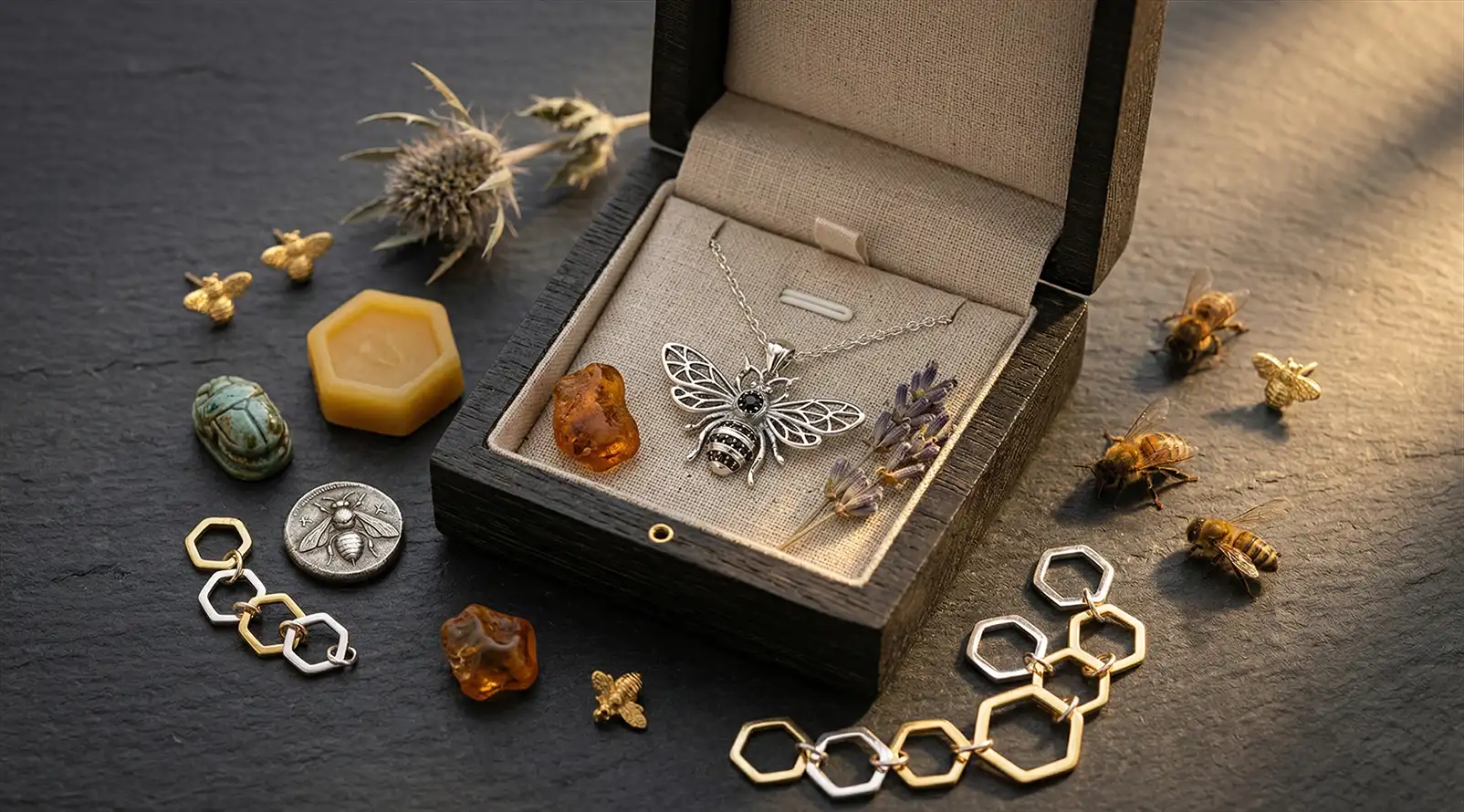
The honeycomb pattern itself is fascinating from a design perspective. It's a naturally occurring hexagonal structure, the most efficient way to divide a surface into equal areas with the minimum total perimeter. Mathematicians proved this in 1999, but bees figured it out millions of years ago. Honeycomb jewellery carries associations with precision, efficiency, and natural intelligence.
For the wearer, a bee charm or honeycomb pendant tends to represent one of two things: either a dedication to hard work and community, or a reminder to enjoy the sweetness that comes from that effort. Often both.
Butterfly: Transformation, Freedom, Beauty
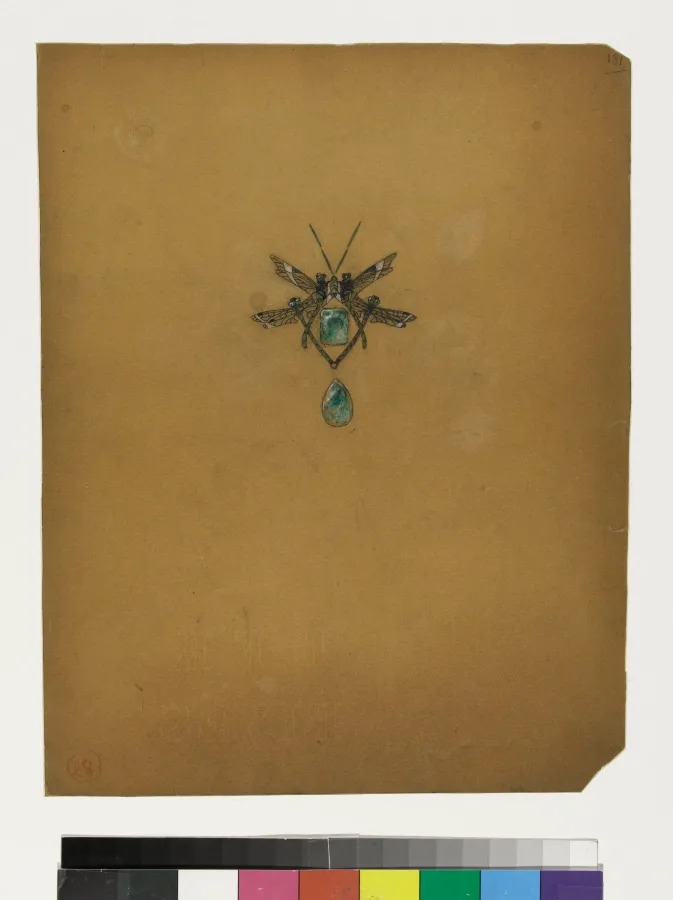
The butterfly might be the most emotionally loaded nature symbol in jewellery. And for good reason.
Its life cycle is essentially a resurrection story. A caterpillar dissolves almost entirely inside its chrysalis (its body literally breaks down into a kind of cellular soup) before reorganizing into a completely different creature. Wings where there were no wings. Flight where there was only crawling. It's one of the most dramatic transformations in all of biology.
Every major civilisation noticed. In ancient Greece, the word for butterfly was "psyche," the same word for soul. The Greeks believed butterflies were human souls in transit. In Aztec culture, butterflies represented the souls of fallen warriors returning to Earth. In Japan, a butterfly is the soul of a living or dead person. In China, the philosopher Zhuangzi's famous thought experiment ("Am I a man dreaming I'm a butterfly, or a butterfly dreaming I'm a man?") used the butterfly to question the nature of reality itself.
In Christianity, the butterfly's three stages (caterpillar, chrysalis, butterfly) came to represent life, death, and resurrection.
Modern wearers typically connect with the transformation angle. A butterfly necklace or pendant is often chosen during or after a major life change: a recovery, a breakup, a career shift, a personal reinvention. It's not just decorative. It's a statement: I went through something, and I came out different. Better.
The butterfly also represents freedom and lightness. Its movement is unpredictable, floating, impossible to control. For people who value independence and spontaneity, butterfly jewellery resonates on that level too.
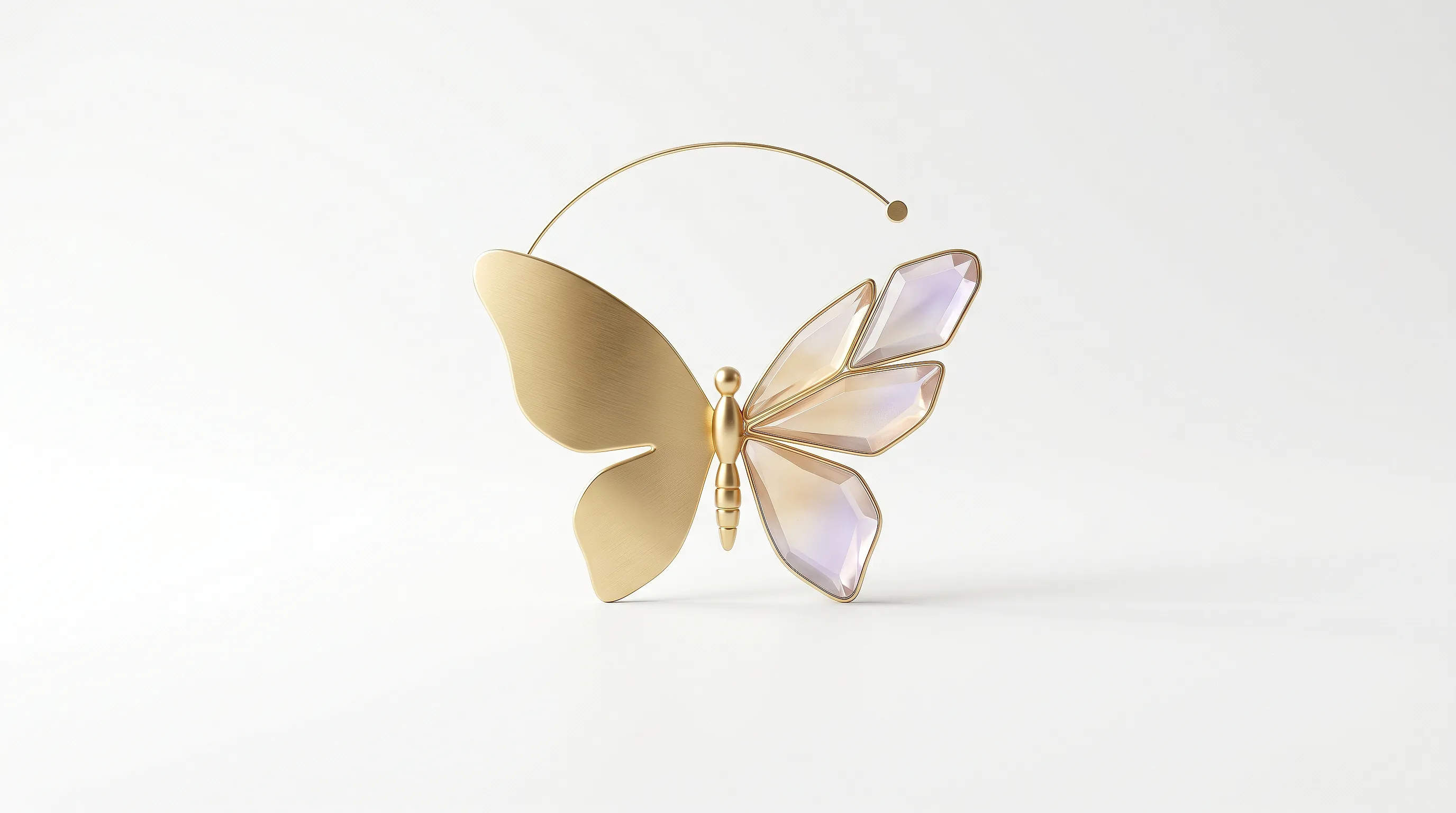
From a design standpoint, butterflies offer incredible versatility. Their wings are naturally symmetrical, they come in every colour combination imaginable, and they scale beautifully from tiny studs to statement pendants. Enamel work on butterfly jewellery can be particularly stunning, reproducing the iridescent quality of real wings.
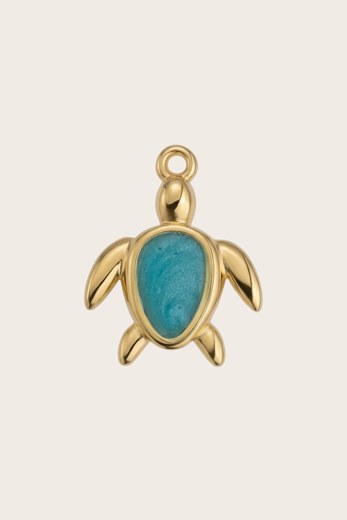
Turtle: Wisdom, Patience, Longevity
The turtle moves slowly. That's the first thing everyone notices, and it's exactly the point.
In a culture obsessed with speed, hustle, and instant results, the turtle is a counter-argument. It says: take your time. Think before you act. You'll get there.
But turtle symbolism goes far beyond the old fable about the tortoise and the hare. In many creation myths, the turtle literally carries the world. In Hindu cosmology, the Earth rests on the back of a giant turtle. Many Native American traditions refer to North America as "Turtle Island," believing the continent was formed on a turtle's shell. In Chinese mythology, the Black Turtle is one of the Four Symbols, guarding the north.
Turtles are also one of the oldest creatures on Earth. The turtle lineage goes back over 200 million years; they predate dinosaurs. Some individual sea turtles live over 150 years. In Japanese culture, the turtle (kame) represents 10,000 years of happiness. In Hawaiian tradition, the green sea turtle (honu) is a guardian spirit that brings good luck.
The turtle's shell adds another layer of meaning. It's a home you carry with you, a built-in protection against the world. For people who value self-reliance, who feel at home wherever they are, or who simply want a symbol of personal boundaries and safety, the turtle resonates deeply.
Turtle jewellery tends to attract a specific kind of person: someone who values depth over flash, patience over speed, and wisdom over cleverness. It's a quiet symbol, and that's part of its appeal.
The Polynesian and Hawaiian traditions have particularly rich turtle imagery. Tribal turtle designs often incorporate ocean waves, sun patterns, and family symbols into the shell pattern, creating jewellery that tells a complete story.
Acorn: Potential, Growth, New Beginnings
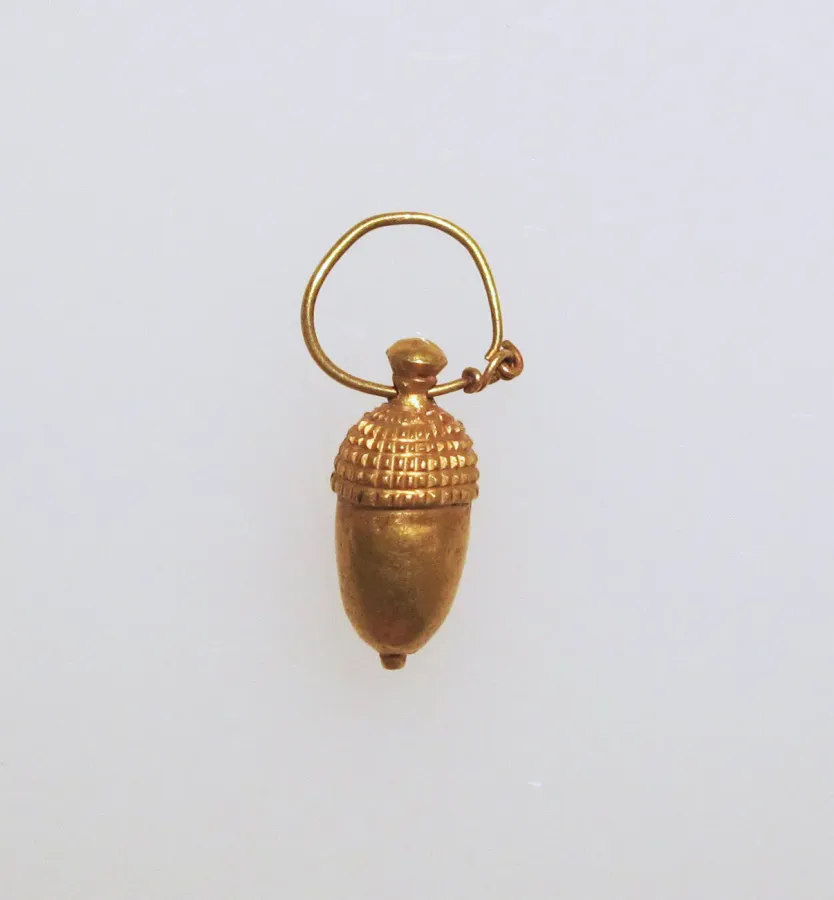
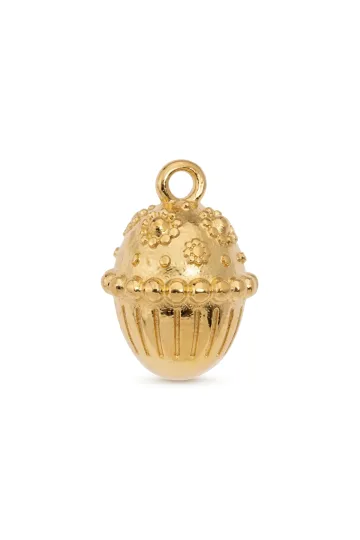
Here's a fact that still amazes me: a single acorn weighs about 3.4 grams. The oak tree it can become can weigh over 10 tons and live for a thousand years. That's the entire symbolism right there.
The acorn is about potential. Raw, unrealized, enormous potential packed into something you could hold between two fingers.
Celtic cultures revered the acorn. Druids (the word "druid" may actually derive from the Celtic word for oak) carried acorns as talismans. In Norse mythology, the oak was sacred to Thor, and acorns were placed on windowsills to protect homes from lightning. The Scandinavians believed Thor sheltered under an oak during a thunderstorm and blessed the tree in return.
In English folk tradition, carrying an acorn was believed to bring good luck and protect against illness. Young women would carry them for fertility and youthful appearance. Sailors carried them for safe voyages.
But the acorn's deepest meaning is about beginnings. About the moment before growth happens, when everything is possible. An acorn pendant is a popular gift for graduates, new parents, entrepreneurs, and anyone starting a new chapter. It says: you have everything you need inside you. Now grow.
The textures of acorn jewellery are worth noting too. Designers often emphasise the rough, natural cap of the acorn against the smooth body, creating pieces that feel organic and tactile. Gold acorn pendants, especially textured ones, have a warmth and weight that feels grounding, almost like holding a piece of the forest.
In modern culture, the acorn has also become associated with environmental awareness and rewilding movements. Planting oaks from acorns is one of the simplest acts of reforestation, and wearing the symbol carries that association.
Coral: Protection, Life Force, Ocean Energy
Coral occupies a unique position in the nature symbol hierarchy. It's not a plant, it's not a stone, and it's not an animal in the way most people understand the term. Coral is a colony of tiny living organisms that build calcium carbonate structures over decades and centuries. It exists at the intersection of the mineral and the living.
This in-between status gave coral powerful symbolic weight throughout history. Ancient Romans hung coral branches around children's necks to protect them from harm. In Italian folk tradition (the same tradition that gave us the cornicello), red coral was believed to ward off the evil eye. Mediterranean sailors carried it for protection at sea.
In Tibetan and Nepalese culture, red coral is one of the most prized jewellery materials, representing life force, blood, and vital energy. It's commonly set in silver alongside turquoise and amber. In Native American jewellery traditions, especially among the Zuni and Navajo peoples, coral represents one of the four sacred directions.
The colour is key. Red coral, in particular, carries associations with passion, vitality, and the life force of blood. It's been used in jewellery for over 5,000 years; coral beads have been found in ancient Egyptian tombs and Sumerian graves.
Natural red coral (Corallium rubrum) is now a protected material. Its trade is tightly restricted under CITES and EU, UK, and US rules, and wild harvesting has pushed many coral systems into decline. Responsible jewellery today recreates the coral look through reconstructed coral, glass, or red enamel rather than freshly harvested branches, so the symbol can be worn without contributing to reef damage. Any antique coral that does change hands should come with documentation of its origin.
For the wearer, the coral motif represents connection to the ocean and a kind of primal protection. It's one of the oldest amulets in human history, and a coral-coloured piece in enamel or reconstructed material lets you carry that tradition forward without harvesting from the reef.
Monstera: Exotic Beauty, Wanderlust
The monstera deliciosa, with its distinctive split leaves and dramatic holes, went from houseplant to cultural icon in the span of about five years. And jewellery designers noticed.
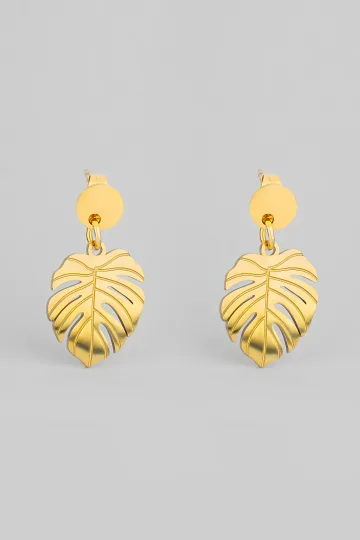
The monstera leaf has become one of the most recognisable botanical motifs in contemporary jewellery. Its appeal is partly aesthetic (the fenestrated leaf is visually striking and instantly recognisable), but there's symbolism too.
In its native Central and South American habitats, the monstera grows aggressively, climbing toward light, adapting to its environment, and thriving in conditions that would defeat other plants. It's a survivor and an adventurer.
Monstera jewellery carries associations with tropical wanderlust, a love of travel, and an appreciation for exotic beauty. It's popular among people who've travelled to tropical destinations and want to carry that memory, and among plant lovers who see their indoor jungle as part of their identity.
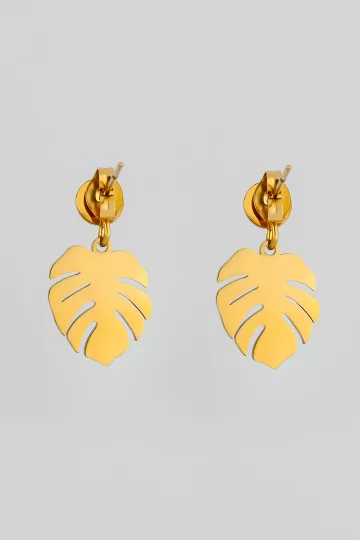
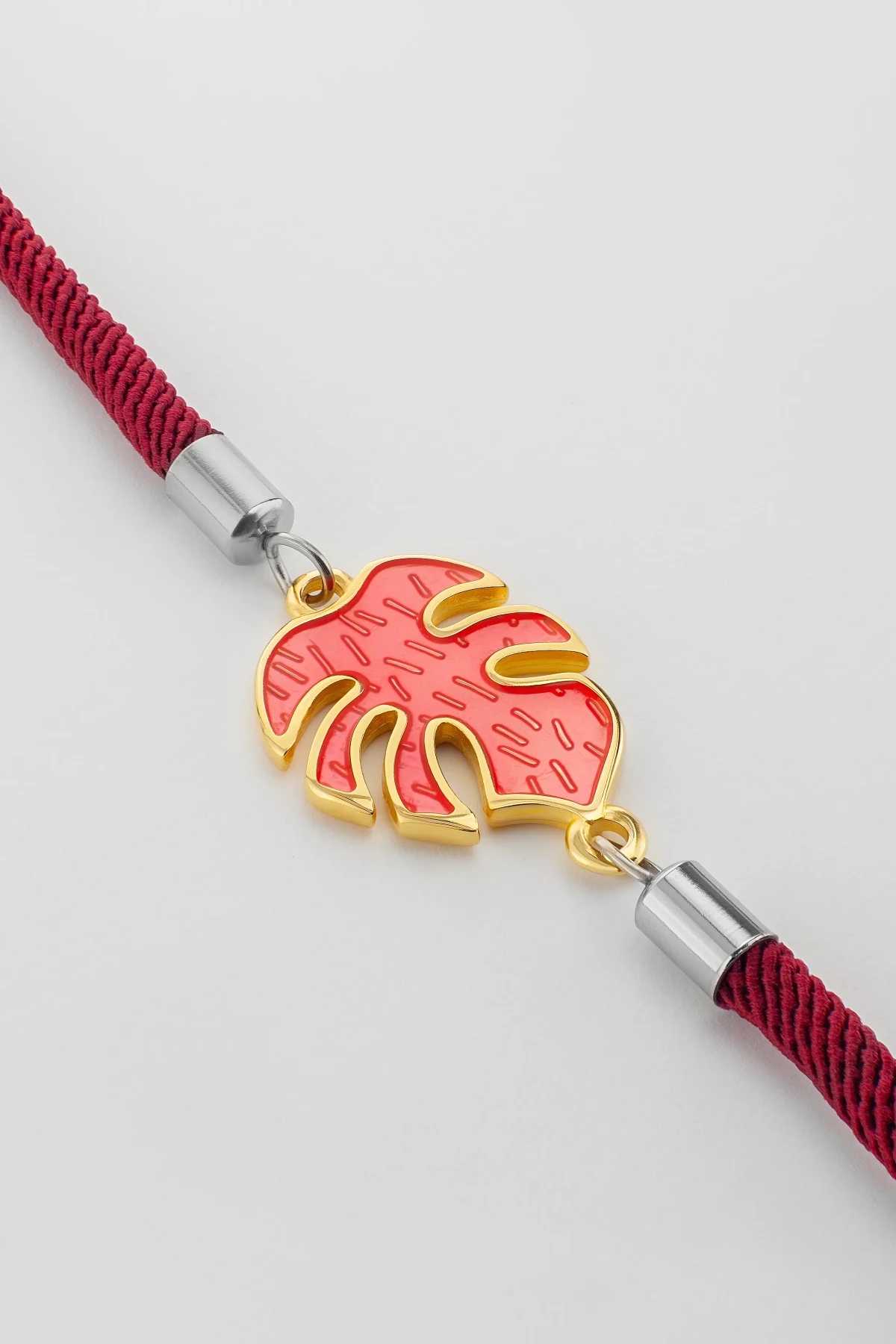
From a design perspective, the monstera leaf's natural holes and splits create interesting negative space in jewellery. Earrings, pendants, and brooches can play with cutouts and openwork, creating pieces that are simultaneously bold and delicate.
The monstera is newer to the jewellery world than the other symbols on this list. It doesn't carry millennia of mythological weight. But it represents something very current: the merging of nature aesthetics with modern lifestyle, the idea that you can bring the jungle into the city, that wildness and sophistication aren't opposites.


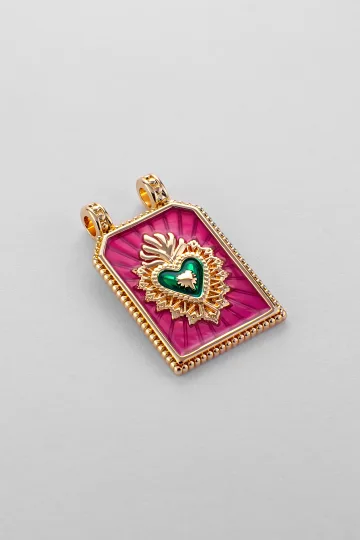

History of Botanical and Animal Motifs in Jewellery
Ancient Civilisations
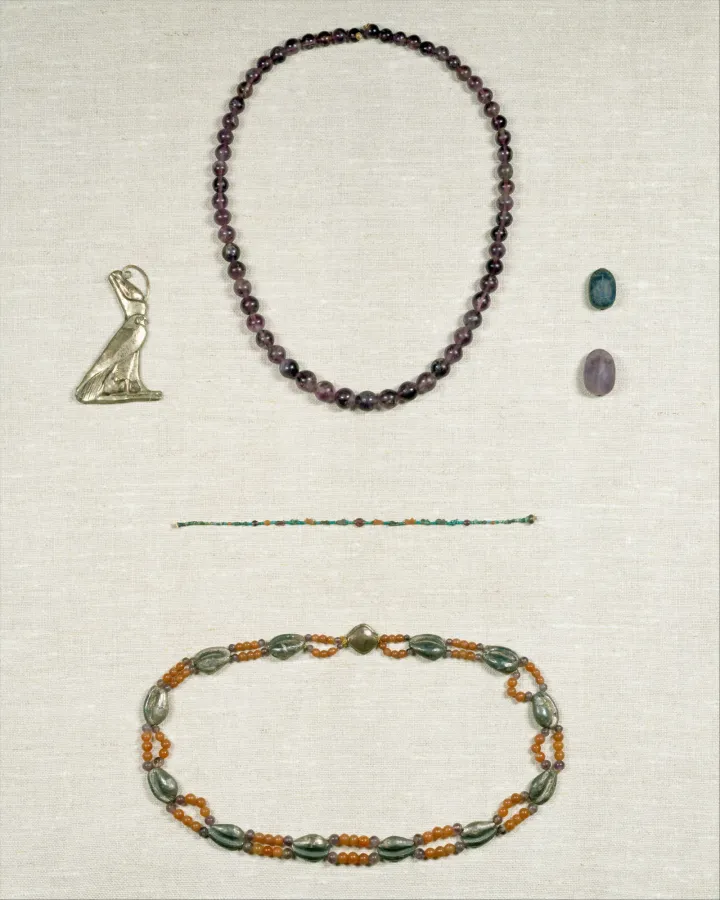
Nature motifs in jewellery are literally as old as jewellery itself. The earliest known ornaments (shells, bones, seeds, and feathers) were nature in its raw form, worn directly on the body.
By the time metalworking emerged, artisans were already replicating natural forms. Ancient Egyptian jewellers created incredibly detailed lotus flowers, scarab beetles, and falcon motifs in gold and enamel. The Minoans on Crete made exquisite bee pendants in gold, dating to around 1700 BC, one of the most famous pieces of ancient jewellery ever found.
Greek and Roman jewellers refined botanical motifs to a high art. Gold olive wreaths, vine-leaf diadems, and serpent rings were common. The Romans particularly loved naturalistic designs; their gold work included incredibly lifelike flowers, insects, and marine creatures.
Celtic and Norse Traditions
The Celts developed a deeply symbolic relationship with the natural world that profoundly influenced jewellery design. The oak, the stag, the salmon, the raven: each carried specific meanings within the Celtic spiritual system.
Celtic knotwork, which often incorporates leaf and vine patterns, was never purely decorative. The unbroken lines symbolised the interconnectedness of all living things. This design tradition survives today in Celtic-inspired nature jewellery, where leaves, trees, and animals are rendered in interlocking patterns.
Norse jewelry similarly drew from nature, with wolves, ravens, serpents, and the great tree of life (Yggdrasil) appearing in brooches, arm rings, and pendants.
Art Nouveau: Nature's Golden Age in Jewellery
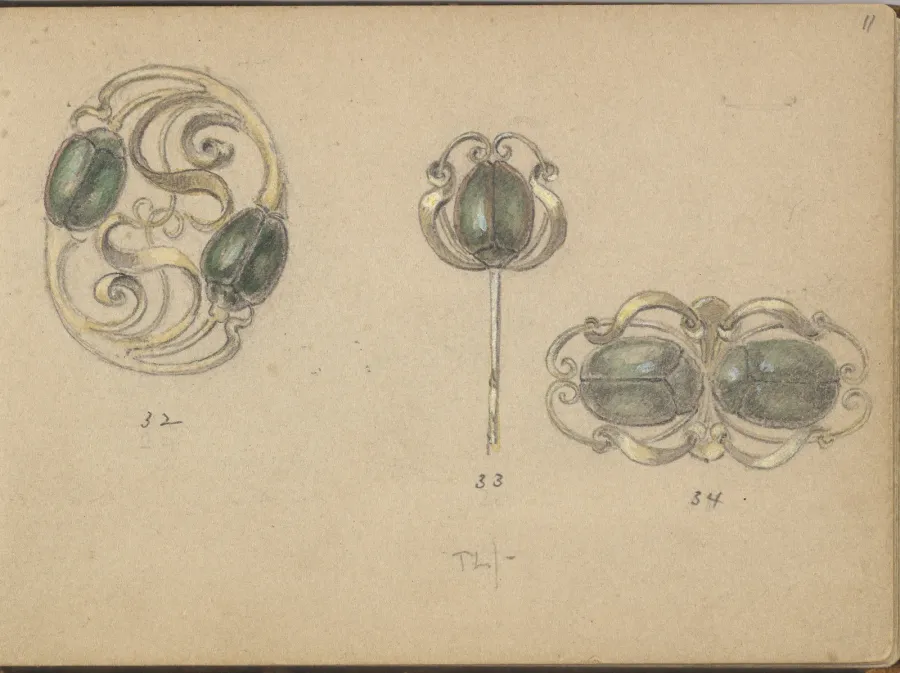
If there's one period that completely transformed nature jewellery, it's Art Nouveau (roughly 1890-1910). Artists like Rene Lalique, Georges Fouquet, and Philippe Wolfers rejected the geometric rigidity of previous styles and dove headfirst into the natural world.
Lalique's work is particularly remarkable. He created dragonfly brooches with enamel wings, orchid hair combs in gold and horn, and serpent necklaces that wrapped around the throat. He used materials that "serious" jewellers of his time ignored: horn, enamel, glass, and semi-precious stones. What mattered wasn't monetary value but artistic expression.
Art Nouveau jewellery featured butterflies, beetles, lizards, flowers, leaves, peacock feathers, and every imaginable natural form. The style was organic, flowing, and often asymmetrical, mimicking the way plants actually grow rather than imposing geometric order.
This movement didn't just influence its era. It set the template for every nature-inspired jewellery movement that followed. When you see a modern leaf pendant with flowing, organic lines, you're looking at Art Nouveau's legacy.
Victorian Sentimentality
The Victorians turned nature jewellery into a secret language. In the 19th century, when direct emotional expression was considered improper, flowers and plants became a code. Giving someone a piece of ivy jewellery meant fidelity. An oak leaf meant bravery. Forget-me-nots meant exactly what you'd think.
This "language of flowers" (floriography) was taken seriously enough that entire books were published to decode it. Queen Victoria herself was a devoted wearer of nature-themed jewellery, which made the style aspirational for the entire British Empire and beyond.
Victorian insect brooches deserve special mention. Butterflies, bees, beetles, dragonflies, and spiders were rendered in precious metals and gemstones with stunning detail. These weren't just pretty; they carried specific meanings. A butterfly brooch might be worn during mourning to represent the soul's journey. A bee brooch signaled industriousness and loyalty.
Modern Revival
Today's nature jewellery draws from all of these traditions while adding contemporary sensibility. Sustainability, ethical sourcing, and environmental consciousness have become part of the narrative. Many modern nature jewellers use recycled metals, lab-grown stones, and sustainable practices.
The designs themselves range from photorealistic (exact replicas of leaves and insects) to highly stylised (geometric interpretations of natural forms). There's room for everyone, from the person who wants a delicate gold leaf on a chain to the one who wants a bold enamel butterfly statement piece.
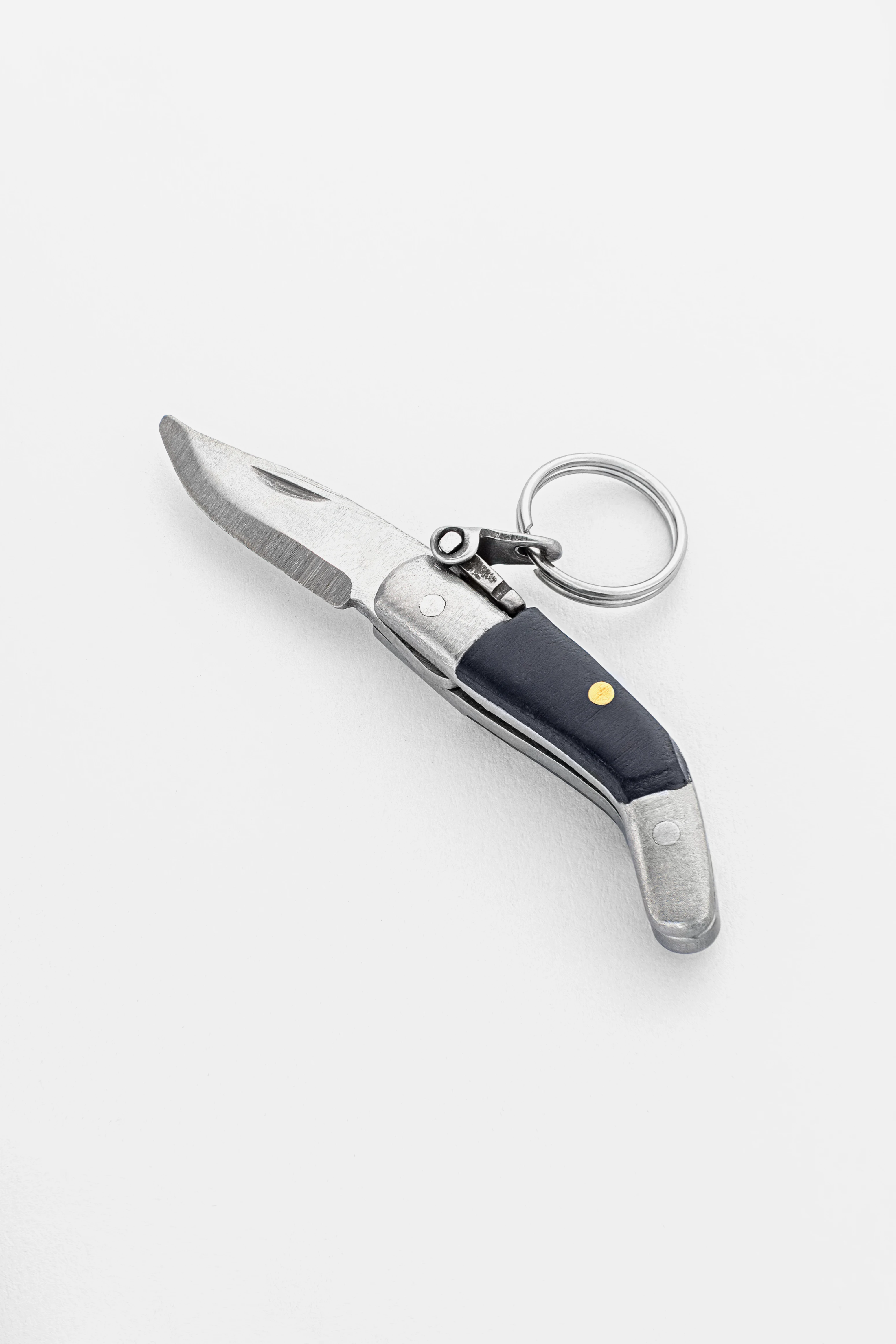
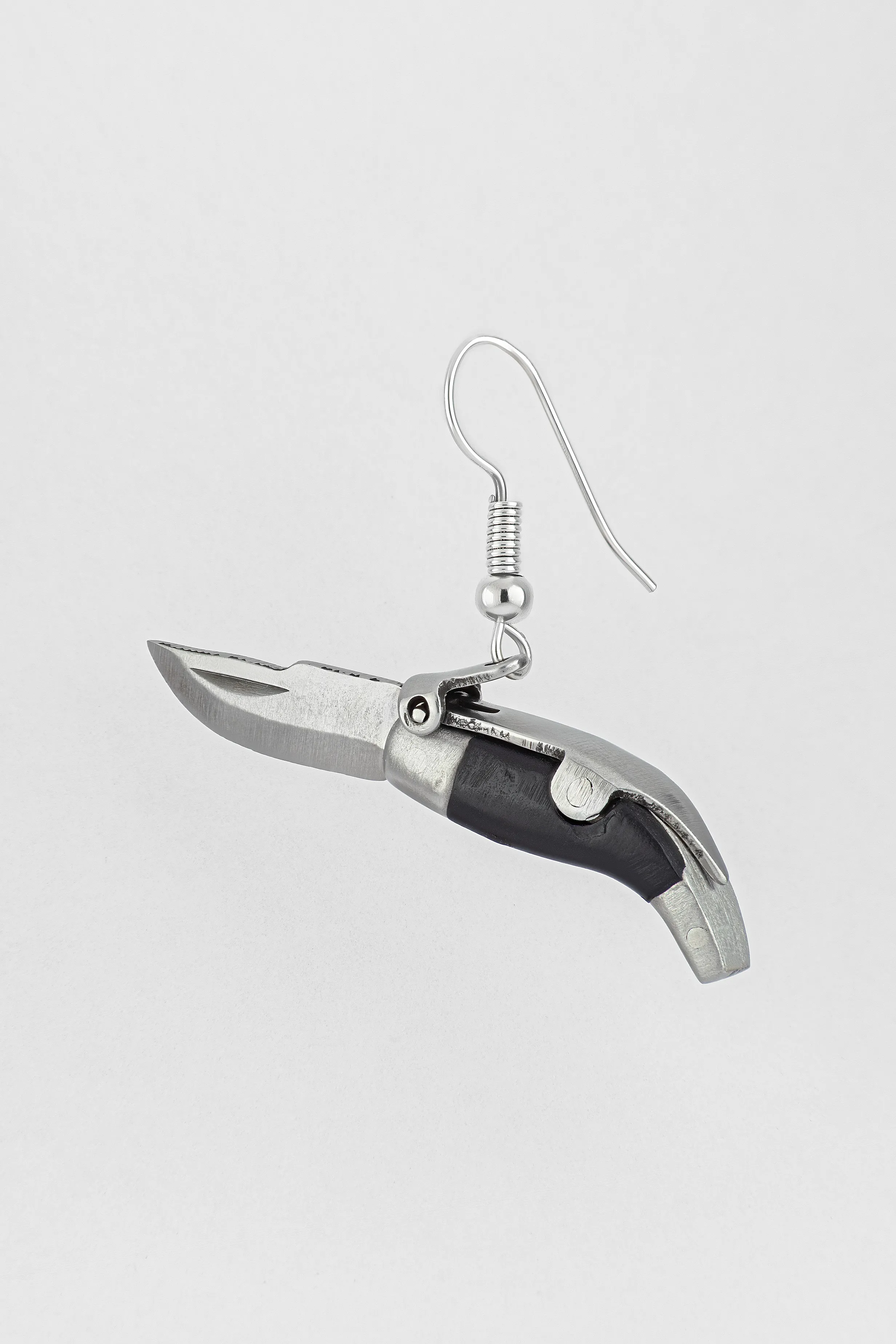
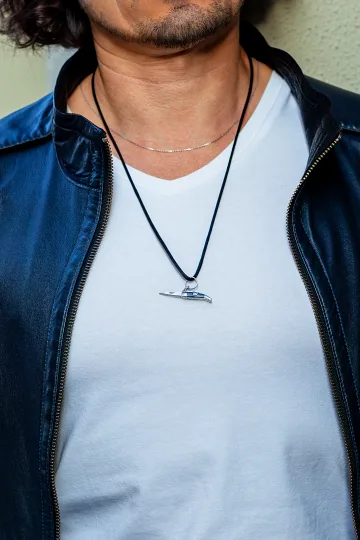
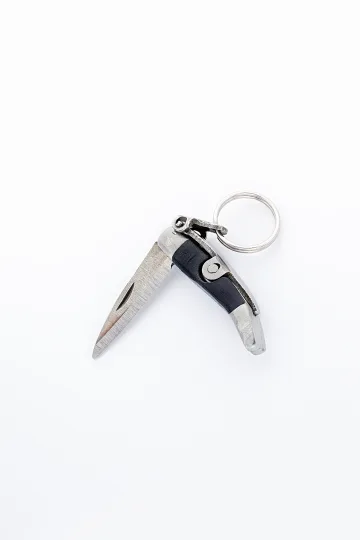
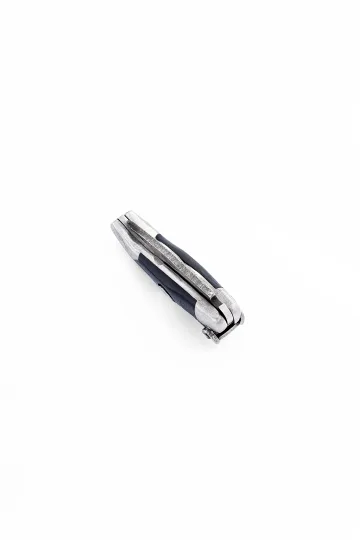
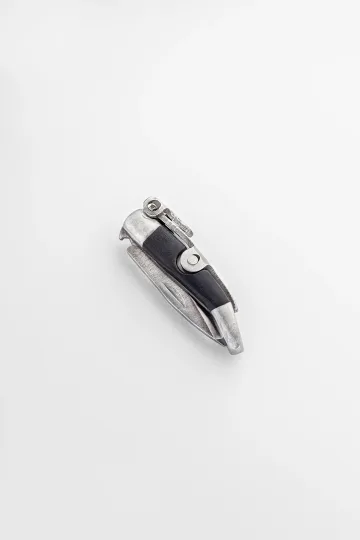
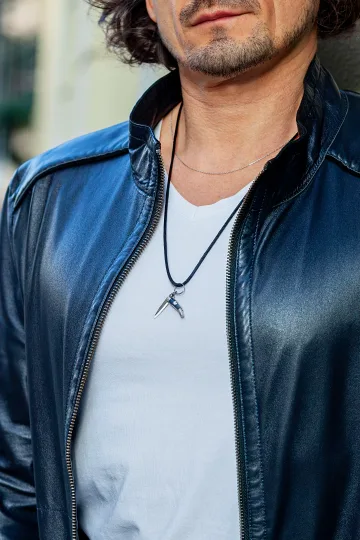
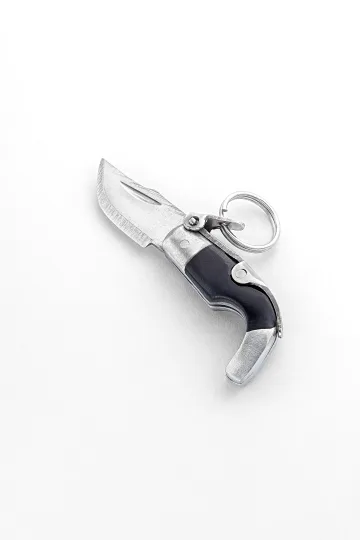
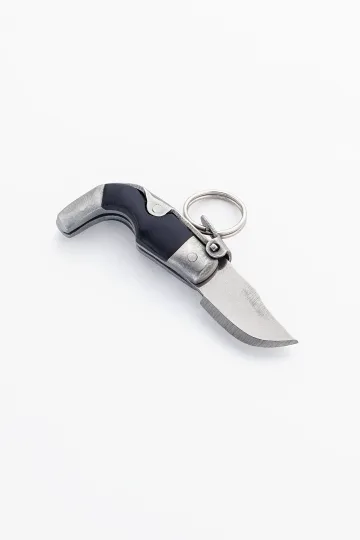
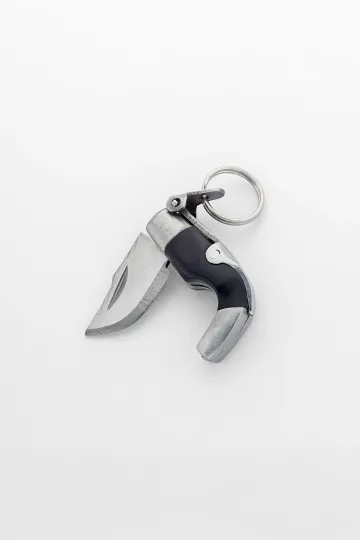
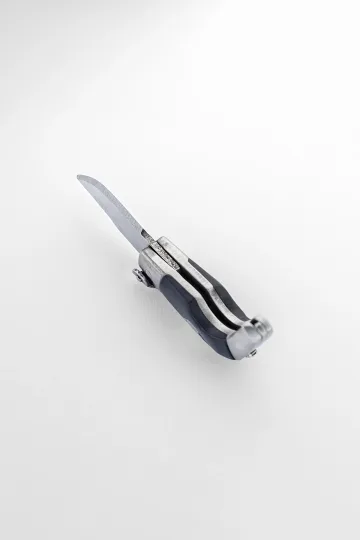
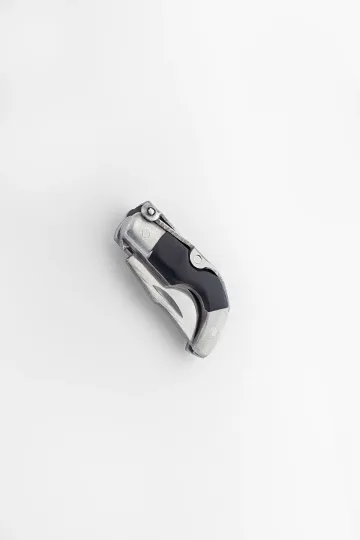
CAPAORA mini knife pendant
The 18th-century Spanish navaja in miniature: 40 mm of stainless steel, a real folding mechanism and a Palanquilla lock that clicks. An affordable gift to remember.
Authentic · Ships from Spain · 14-day returns
Materials: What Nature Jewellery Is Made Of
The material matters, not just for durability, but for meaning.
Gold is the classic choice for nature jewellery. Its warm colour naturally complements organic shapes, and gold doesn't tarnish. A gold leaf pendant or bee charm develops a beautiful patina over years of wear, making it look more natural with time. Gold plating over stainless steel or brass offers the same aesthetic at a more accessible price point.
Sterling Silver (925) gives nature motifs a cooler, more contemporary feel. Silver works exceptionally well for detailed pieces, like leaf veins, honeycomb textures, and butterfly wing patterns, because it holds fine detail beautifully. It's also lighter than gold, which matters for earrings and larger pendants.
Enamel is perhaps the most important material in nature jewellery. Coloured enamel lets designers reproduce the actual colours of nature: the green of a leaf, the red of coral, the iridescent blue of a butterfly wing. Cloisonne and plique-a-jour techniques create effects that other materials simply can't match. Plique-a-jour, in particular, allows light to pass through coloured enamel, mimicking the translucent quality of real butterfly wings or flower petals.
Gemstones add another dimension. Emeralds and peridot amplify the green of botanical pieces. Amber, with its fossilised tree resin origins, has a direct connection to the plant world. Turquoise pairs naturally with turtle and ocean-themed designs.
Natural materials like mother of pearl and shell connect the jewellery directly to its source. They bring their own textures and colours that synthetic materials can't perfectly replicate. For coral tones, reconstructed coral, glass, and enamel give the same warmth while keeping protected wild coral off the bench.
Stainless steel is increasingly popular for nature motifs, especially in more modern, minimalist designs. It's durable, affordable, and can be finished in gold, rose gold, or silver tones.
Leave your email, we'll send your discount code. No spam, unsubscribe anytime.
The code arrives by email, valid on your first order.
How to Wear Nature Jewellery
Layering
Nature jewellery layers well because organic shapes do not compete the way geometric patterns do. A delicate leaf pendant on a short chain sits comfortably beside a longer bee pendant; they occupy different visual space and tell stories that complete each other rather than argue. Two crisp geometric pendants at similar lengths will always look like a clash. Two leaves at different heights look like a branch.
The key to layering is variety of scale. Pair a small, detailed charm with a larger, more abstract piece. A tiny bee stud in one ear with a bigger leaf drop in the other. A fine vine bracelet next to a chunkier coral bangle. The eye needs somewhere to rest, and a small piece next to a large one gives it exactly that.
Chain texture matters as much as length. A snake chain, a cable chain and a fine box chain worn together read as deliberate because the surfaces catch light differently. Three identical chains at three lengths, on the other hand, read as indecision.
Combining Symbols
There is no rule against mixing different nature symbols. In practice it usually looks better. A leaf pendant with butterfly earrings creates a garden mood without spelling it out. A turtle bracelet with coral accents calls up the coast. Bees and honeycombs sit naturally with floral motifs, since that is exactly where a bee spends its day.
The one rule worth keeping is finish. Everything in gold, everything in silver, or a deliberate metal mix that repeats at least twice so it reads as a choice. Accidental mixing looks careless rather than styled, and the difference between the two is repetition. If you wear one gold piece among four silver ones, add a second gold accent somewhere and the whole stack settles.
Watch the level of realism too. A highly detailed, almost botanical leaf and a flat, stylised silhouette bee can look like they came from different decades. Keep the pieces roughly in the same visual language and the pairing holds together.
Day and Evening
Nature jewellery moves between day and evening more easily than most symbolic pieces. A gold leaf pendant works with a tee and jeans on Saturday and with a blouse on Monday, because the shape carries no formality of its own. Butterfly earrings lift a plain black dress without competing with it.
For evening, choose one strong nature piece and keep everything else quiet. A bright enamel butterfly brooch on a plain blazer. A coral pendant with a deep neckline. Let the symbol do the talking and resist the urge to add a second focal point; two loud pieces cancel each other out under artificial light.
Dressing for the Season
Here nature jewellery has an advantage nothing else offers: you can match it to the calendar and it never feels forced. Leaf and acorn pendants belong to autumn, and warm gold tones sit well with wool and tweed. Bees and butterflies come alive in spring and summer, when there is skin and linen to show them against. Coral belongs to the beach months. Turtles work all year but feel best on holiday.
Enamel colour is the quickest seasonal lever. Deep greens and ambers for the colder half of the year, clear blues and soft pinks for the warmer half, with the same shapes underneath. If you own one leaf pendant in gold and one in silver, you effectively own an autumn piece and a winter piece.
Nature Jewellery as a Gift
Nature symbols make exceptional gifts because they carry built-in meaning that doesn't require explanation.
For a graduate: An acorn pendant. "You have everything you need to grow into something amazing." The symbolism lands instantly.
For a new parent: A turtle charm. Patience, wisdom, protection: everything a parent needs. Plus, turtles carry their homes with them, just like parents carry their families.
For someone going through change: A butterfly pendant. Transformation, freedom, the promise that what comes next will be beautiful. This is one of the most meaningful gifts you can give someone in recovery, in a career transition, or after a breakup.
For a hard worker: A bee pendant or honeycomb earrings. Recognition of their effort, their dedication, and the sweet things their work creates.
For a nature lover: A leaf pendant, especially an oak leaf. Connection to the natural world, strength, and the beauty of organic forms.
For a traveller: A monstera leaf pendant or earrings. Wanderlust, exotic beauty, and the adventure of exploring new places.
For an ocean lover: A coral-motif piece in enamel or reconstructed coral. Ocean energy and the deep mystery of the sea, without harvesting from the reef.
The advantage of nature gifts is that they're personal without being presumptuous. You're not making assumptions about someone's style preferences or taste in stones. You're giving them a symbol that connects to who they are.
Frequently Asked Questions
What does a leaf pendant symbolise?
A leaf pendant symbolises growth, renewal, and connection to nature. Specific leaf types carry additional meanings: oak leaves represent strength and endurance, maple leaves represent balance, ginkgo leaves represent longevity, and ivy leaves represent fidelity. In general, leaf jewellery is about cycles, the understanding that growth, change, and renewal are natural processes.
Is bee jewellery just a trend, or does it have real meaning?
Bee motifs in jewellery have been around for thousands of years; gold bee pendants from Minoan Crete date to 1700 BC. The symbolism (hard work, community, the sweetness of life) is ancient and cross-cultural. Napoleon used the bee as his imperial symbol. The current popularity is connected to both timeless symbolism and modern environmental awareness, but it's far from a passing fad.
Can men wear nature-themed jewellery?
Absolutely. Nature motifs in jewellery have historically been worn by all genders. Oak leaf signet rings, bee cufflinks, and turtle pendants have long traditions in men's jewellery. Napoleon's bee, Celtic leaf knotwork, and Norse animal motifs were all originally masculine symbols. The key is choosing the right scale and style: a hammered oak leaf ring or a simple bee pin on a lapel works perfectly.
What does butterfly jewellery mean as a gift?
A butterfly gift typically says: "I see you transforming, and it's beautiful." It's one of the most emotionally resonant gifts in nature jewellery. It's commonly given after major life changes: recovery, graduation, divorce, career shifts. In some Asian cultures, butterfly gifts carry romantic connotations (especially paired butterflies in Chinese tradition). In Mexican culture, monarch butterflies are connected to remembrance of ancestors.
How do I choose between different nature symbols?
Start with what resonates personally. If you value stability and grounding, look at leaf motifs. If you're proud of your work ethic and community, consider bee jewellery. Going through a transformation? Butterfly. Value patience and wisdom? Turtle. Starting something new? Acorn. Love the ocean? Coral. The best nature jewellery choice is the one whose meaning aligns with your current story.
Does turtle jewellery bring good luck?
In many cultures, yes, turtle imagery is associated with good fortune. Feng Shui practitioners place turtle figures in specific home positions for luck and protection. Hawaiian culture considers the sea turtle a guardian spirit. Japanese tradition associates turtles with 10,000 years of happiness. Whether it literally brings luck depends on your beliefs, but the cultural association is real and widespread.
What materials work best for nature jewellery?
Gold (solid or plated) suits nature motifs beautifully because its warm tone complements organic shapes. Sterling silver works well for detailed pieces where you want crisp definition. Enamel is essential for reproducing natural colours: butterfly wings, leaf greens, coral reds. The "best" material depends on your budget, sensitivity to metals, and how you plan to wear the piece.
Can I combine nature jewellery with other symbolic pieces?
Yes. Nature symbols pair naturally with other meaningful motifs. A leaf pendant with a tree of life bracelet creates a cohesive botanical story. A turtle charm alongside a wave ring tells an ocean narrative. The main thing to avoid is overloading: pick two or three symbols that connect, rather than wearing every nature motif at once.
Silver and gold jewellery, wedding bands, symbolic pendants, paired sets.
Send a friend a discount code, they save on their first order.
Conclusion
Nature symbols in jewellery aren't just about aesthetics, though they are beautiful. They're about carrying meaning, ancient, tested, personal meaning, on your body every day.
An acorn pendant reminds you that potential lives inside small things. A bee charm celebrates the work you're putting in. A butterfly necklace marks the transformation you've been through. A leaf pendant grounds you. A turtle charm tells you to slow down. Coral connects you to the ocean's deep energy. And a monstera earring says you're not done exploring.
The best part about nature jewellery is that it doesn't need explanation. The symbols speak for themselves, across cultures, across centuries, across languages. You don't have to tell anyone what your pendant means. But you'll know. And on the days when you need that reminder, you'll reach for it.
Buying it as a gift? Each one arrives ready to give.
 A branded Zevira box and a little card come with every order.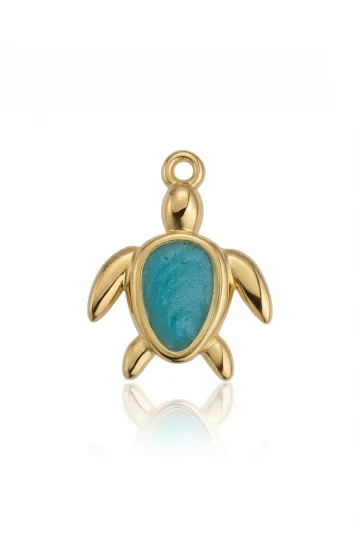




About Zevira
Zevira makes jewellery in the artisan tradition of Albacete, Spain. Nature motifs are one of the main languages our collections speak: behind every leaf, bee, and butterfly there's a specific meaning, and we try to get it right rather than approximate it, leaning on the real history of each symbol.
What you'll find with us around nature symbols:
- Leaf and oak-leaf pendants with carefully worked vein texture
- Bee charms and honeycomb pendants with their hexagonal pattern
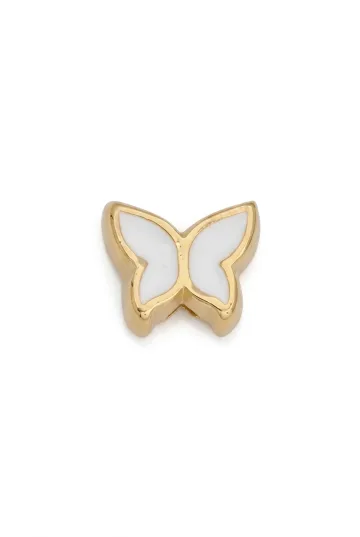
- Butterflies in silver, gold, and coloured enamel
- Turtle and acorn pendants for those who choose a symbol to match their own story
- Coral-toned accents and ocean symbolism
- Monstera earrings and pendants for plant lovers and travellers
Every piece can be personalised with engraving by a craftsperson, with the option of personal engraving. Sterling silver 925 and 14-18K gold.
Wear the symbol, don't just read about it. These are in stock: