Ocean Jewellery Collection: A Complete Guide to Symbols and Styling
Ocean Jewellery Collection: A Complete Guide to Symbols and Styling
The Sea in Silver and Gold
On a grey morning in Cornwall, before the fog lifts, a fisherman's wife fastens an anchor pendant at her throat. She has worn it for twenty years. Visitors to the harbour assume it is decorative. It is not. It is a record of two decades of waiting and returning, of tides obeyed and survived.
The British relationship with the sea is not romantic in the continental sense. It is practical, habitual, and deeply personal. The coast of England, Wales, Scotland, and Ireland has always produced people who wore the ocean as identity rather than ornament: the working harbours of Whitby, the sailing communities of the Solent, the pearl-divers' legacy of the Isle of Wight's Victorian jewellery tradition, the mother-of-pearl buttons on a fisherman's Sunday jacket in Newlyn.
This guide covers what ocean jewellery means, what the Zevira collection includes, and how to wear it across all seasons.
The Core Symbols
Anchor
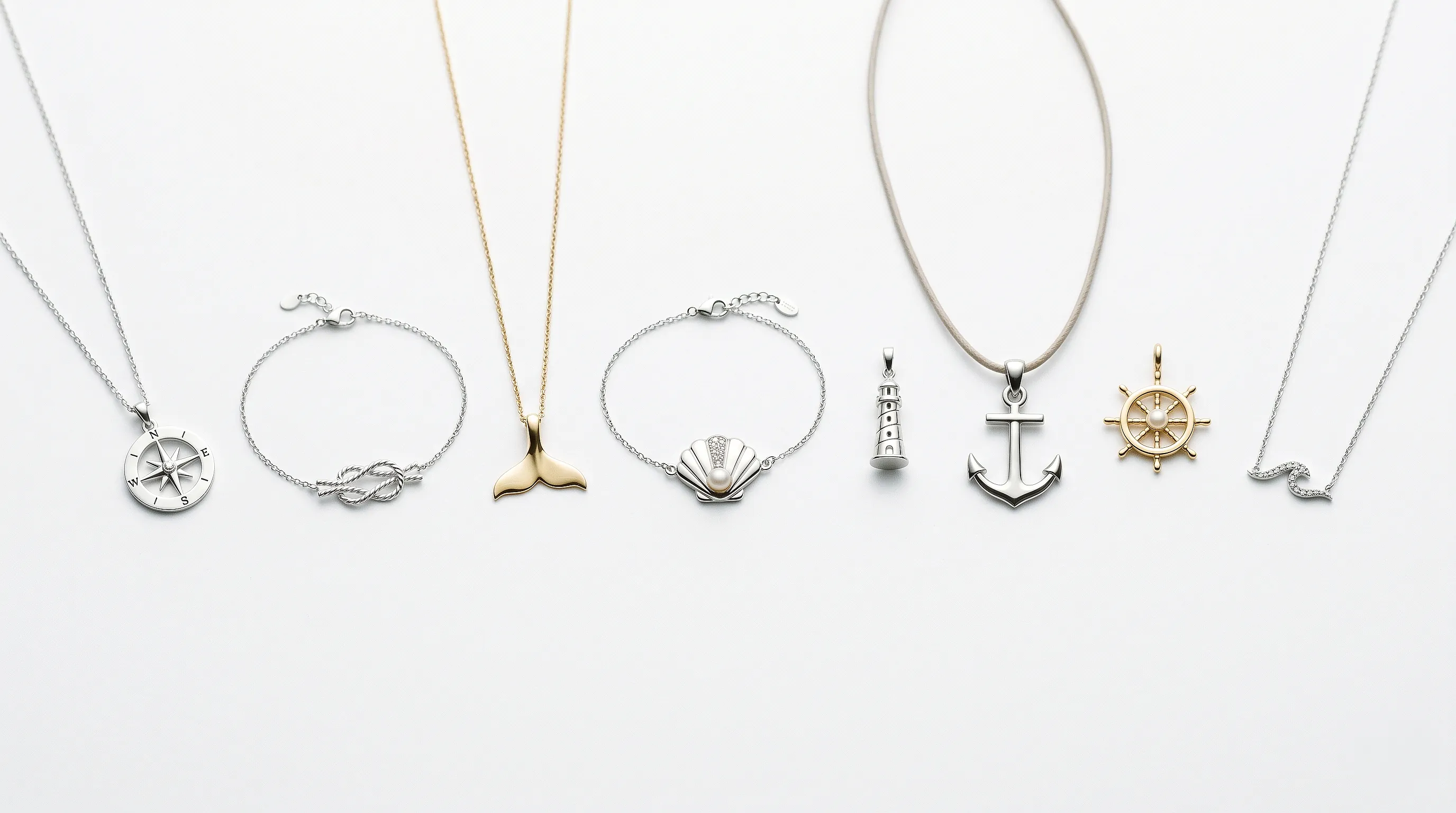
The anchor is the most universally understood symbol in this tradition. In Christian iconography it stands for hope, often depicted with a small cross at its base. For sailors it means the security of port, the right to rest after passage. In contemporary wear it has expanded to anyone who needs a grounding emblem: stability, commitment, the idea of being anchored to a person or a place.
Works on two levels simultaneously. Wear it as coastal aesthetic in summer, keep it as a personal metaphor through winter. Neither reading cancels the other.
Sailor's Knot
Knots carry the most varied vocabulary of any nautical symbol. The reef knot speaks of binding and release. The love knot, also called the true lover's knot, has been exchanged between British sailors and their partners since at least the seventeenth century. The Turk's head knot, worked into bracelets, was traditionally a rank symbol aboard ship.
In jewellery, a knot motif reads as connection, loyalty, and craft. The form is inherently geometric and works well in sterling silver or white gold.
Whale Tail
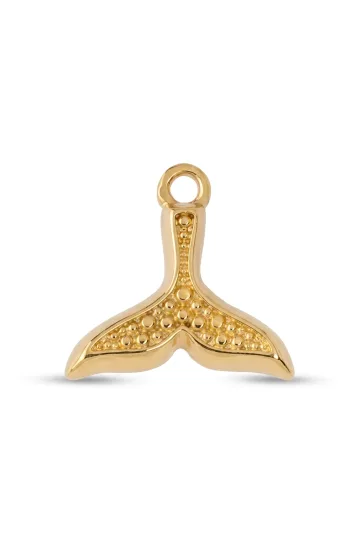
The whale tail entered British coastal culture through the whaling ports of Whitby and Hull. The sperm whale was a creature of genuine economic importance for generations of Yorkshire families. Today the symbol has shed its industrial context entirely and carries only the meaning of the ocean itself: scale, depth, natural power. Also associated with care and migration, as whales famously travel across entire oceans to return to the same feeding grounds each year.
Seashell
On the southern coast of Britain, the scallop shell carries the double weight of the Camino de Santiago pilgrimage tradition (many English pilgrims began their walk from Winchester or London) and the simple pleasure of beach-combing. The shell in Victorian jewellery was often rendered in mother-of-pearl or gold, worn by women of the coastal gentry as a quiet signal of summers at the shore.
Spiral shells, cowries, and nautilus forms all appear in the collection. Each reads slightly differently: the nautilus is associated with mathematical beauty and growth; the cowrie with protection and, in older traditions, fertility.
Starfish
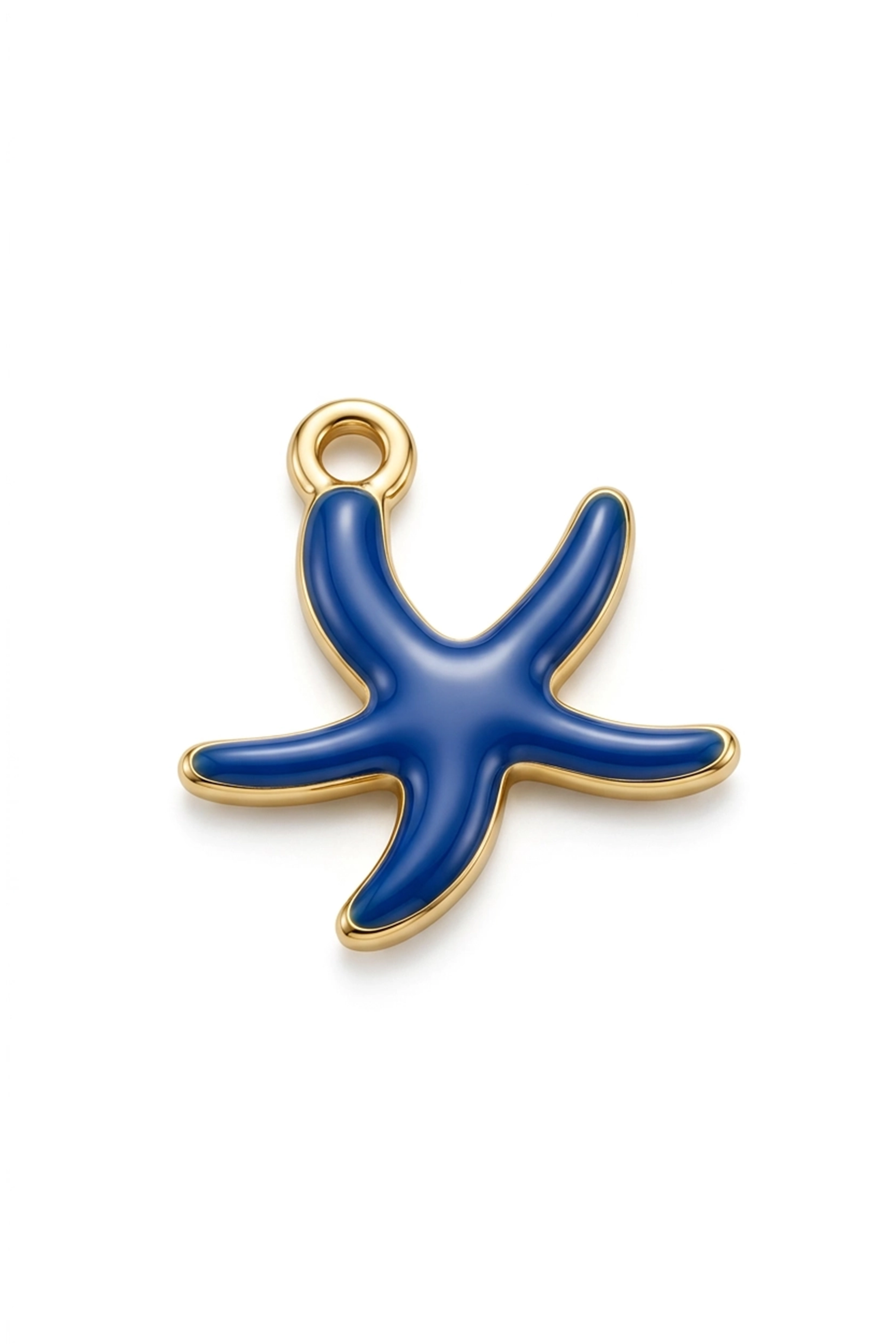
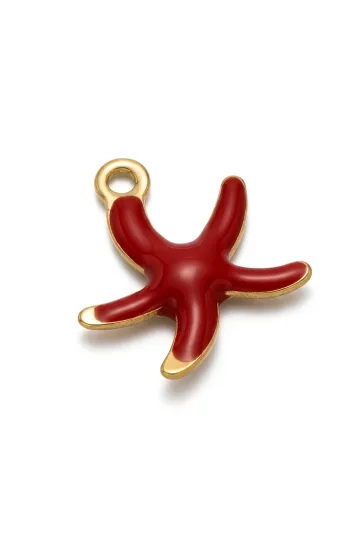
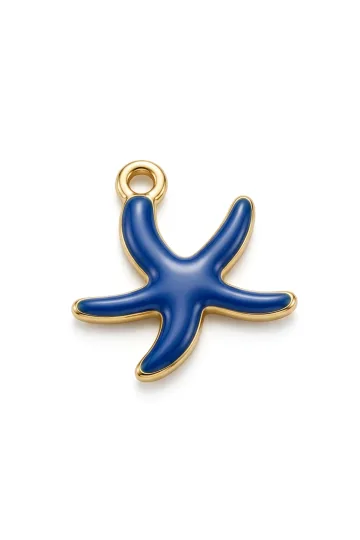
Five-pointed symmetry makes the starfish read simultaneously as a sea creature and as a star shape. In British coastal symbolism, starfish found in rock pools were regarded as lucky finds. The regenerative quality of the creature (it regrows lost limbs) gives it an association with resilience and recovery.
Compass Rose
Navigation. The compass rose is the British sailor's emblem par excellence. Since the Elizabethan age of exploration, it has meant direction-finding, the confidence to leave known waters, and the skill to return. In jewellery it pairs naturally with an anchor: the anchor holds you here, the compass points you outward.
Helm (Ship's Wheel)
The ship's wheel as a symbol carries authority over course and direction. In Victorian maritime tradition, it appeared on the personal objects of officers and captains. Today it reads as a symbol of self-determination: you steer your own life.
Lighthouse
The lighthouse carries the most emotional charge of any maritime symbol. For those who have waited on shore for a vessel to return, the lighthouse meant life. In Cornwall and Northumberland, entire communities were organised around lighthouse-keeping as occupation and identity. As jewellery, the lighthouse means guidance, hope, and being a point of orientation for others.
Fish
In Britain the fish carries a long Christian weight (the ichthys symbol appears in church architecture from Northumbria to Kent), and also a vernacular coastal meaning: sustenance, luck, the sea's generosity. A silver fish pendant reads differently in a fishing village in Whitby than in a London gallery, but both readings are valid.
Seahorse
The seahorse is the mascot of several British naval and maritime heritage institutions. Its unusual appearance (upright posture, prehensile tail, male pregnancy) gives it an association with nature's quiet defiance of expectation. Delicate and unusual as a pendant form.
Dolphin
The dolphin's connection with Britain runs from Roman-era mosaics found in Bath to the heraldic traditions of the Cinque Ports. Associated with Apollo in classical tradition, and in British folklore with benevolent guidance of sailors. A dolphin pendant reads as playful intelligence and natural grace.
Ocean Jewellery by Cultural Tradition
British: Cornwall, Solent, Whitby
The British coastal tradition draws on three distinct sources. The working fishing communities of Cornwall and Yorkshire produced a plain, functional aesthetic: anchor, knot, fish, rendered in unadorned silver or polished steel. The Victorian seaside-resort culture of the south coast added shell jewellery, mother-of-pearl, and fine filigree. And the naval tradition, centred on Portsmouth and the Solent, contributed the compass rose, the helm, and the fouled anchor.
Celtic (Ireland, Scotland, Wales)
Knotwork patterns developed in Celtic manuscript tradition translate naturally to maritime jewellery. The Trinity knot works as a seashell ornament; Claddagh rings, originating in Galway, combine a heart, crown, and hands into a single piece of relational symbolism that has been worn by Irish fishing communities for over three centuries.
Isle of Wight Victorian
The Isle of Wight became the premier holiday destination for Victorian aristocracy and the Queen herself. The local jewellery tradition responded with exceptionally fine shell cameos, mother-of-pearl brooches, and gold pendants in coral and seed pearl. This tradition, largely forgotten today, is the origin point for British maritime jewellery at its most refined.
Nordic Influence
The Norse and Viking maritime tradition has left a permanent mark on northern British coastal culture. Knotwork, raven symbols, longship motifs, and the anchor combined with runic lettering appear in Orkney and Shetland jewellery. Oxidised silver is the natural material choice, giving pieces a look of age and sea-weathering.
Building Your Collection
Starting Set (3 Pieces)
Anchor pendant plus knot bracelet plus small stud earrings in a shell or starfish motif. This combination works across contexts, from the beach to the office.
Full Collection (5 to 7 Pieces)
Add: whale tail ring, compass pendant, water-element bracelet, star ring. At this point the set has a clear internal logic and reads as a curated collection rather than accumulated decoration.
Paired Pieces
Anchor plus helm (one partner grounds, one steers). Or matching knot rings with a single continuous design. The Claddagh ring tradition, worn facing inward for a committed relationship, is the most well-established British example of paired maritime jewellery.
Family Set
Each family member takes a symbol. Classic British choices: anchor for the parent who organises the household, lighthouse for the parent who guides, starfish for the children.
Materials
Sterling silver is the natural material for British ocean jewellery. The cool, grey sheen of silver corresponds to the colour of the North Sea and the English Channel, not the warm blue of the Mediterranean. It also ages well: a sterling silver anchor pendant tarnishes slightly with sea air, and many wearers prefer the patinated version to the polished one.
Gold, particularly yellow gold, shifts the aesthetic toward summer and the south. A gold seahorse or dolphin pendant reads as a holiday piece, lighter and warmer.
Rose gold is a modern preference, feminine and warm, suited to shell and starfish motifs.
Oxidised silver produces the visual effect of a piece found on the seabed, which is highly desirable in the northern coastal tradition.
Blue stones, particularly aquamarine, blue topaz, and sapphire, reinforce the oceanic reading. Mother-of-pearl is the quintessential British choice: the Victorian heritage of Isle of Wight jewellery makes it entirely at home here.
Pearl, both cultured and freshwater, is the organic sea material. Freshwater pearl from Scottish rivers has been prized since Roman times. Pearls from the Solent have been gathered since at least the medieval period.
Red and pink coral carries an Italian rather than British association, but has appeared in British jewellery since the eighteenth century when it was imported through the Livorno and Genoa trade routes.
Wearing It
With Casual Coastal Wear
A navy fisherman's jumper, linen trousers, deck shoes: this is the natural context for a sterling silver anchor or knot piece. The clothing already speaks the language; the jewellery makes it specific.
On the Beach
Sterling silver survives contact with salt water, but prolonged exposure will accelerate tarnishing. A 316L stainless steel piece is the better choice for active beach wear. Avoid pearls and coral in water. Avoid fine chains that can be lost in waves.
With Business Dress
A small anchor pendant under a shirt collar is the most invisible way to carry the sea theme into a professional environment. A knot bracelet in polished silver sits appropriately alongside a watch. Neither demands attention; both repay it.
For Evening
Yellow gold whale tail pendant over a dark silk dress. Pearl drop earrings. A compass ring in rose gold. These elevate the maritime aesthetic from beach to yacht, from coastal to coastal-elegant.
Silver, gold, wedding rings, symbolic pendants, and paired sets.
Who This Collection Is For
People who live on the coast, for whom maritime symbols are identity rather than decoration.
Sailors, yachtspeople, divers, and those whose work takes them to sea.
People who grew up by the water and now live inland, for whom ocean jewellery keeps a connection alive.
Travellers who want a piece that is not a souvenir but carries a place.
Couples who met at the sea, or who mark anniversaries with coastal significance.
Anyone who has found that the sea functions as a place of emotional resetting, and wants to carry a fragment of that state with them.
Common Questions
Is this jewellery only for summer?
No. The heavier symbols, anchor, helm, lighthouse, work well through all seasons. The British climate invites ocean jewellery year-round precisely because the sea is not a summer phenomenon here. A piece worn against a winter coat in Whitby makes complete sense.
Is it only for women?
No. The anchor, helm, compass, and knot bracelet have long histories as male jewellery in British naval and fishing tradition. The conventions around men's jewellery have also relaxed considerably. A silver anchor pendant is entirely unremarkable on a man in any coastal British context.
Does sterling silver corrode in salt water?
Sterling silver tarnishes with prolonged salt exposure but does not corrode structurally. A brief swim will cause minimal change; daily beach wear without cleaning will darken the metal over time. Rinse with fresh water after contact with the sea and dry thoroughly. If you want zero maintenance in water, choose 316L stainless steel.
What makes a good gift for someone who loves the ocean?
The anchor is the safest choice: universally understood, wearable by any gender, available in every size. If you know their specific relationship with the sea, you can go further: compass for a traveller, lighthouse for a person who guides others, whale tail for someone who loves the deep ocean, starfish for someone rebuilding after difficulty.
Can I wear more than one piece at once?
Yes. Layering is part of the British coastal tradition: a knot bracelet, an anchor pendant, small stud earrings. The rule is internal coherence. If the pieces speak the same material language (all silver, similar finish), they work together. Mixing gold and silver is possible but needs intention: one anchor in silver, one compass in gold, both on the same chain.
A Brief History of Ocean Jewellery
The sea has been translated into metal and stone for as long as human beings have lived near the water. The story begins in Phoenicia, on the Lebanese and Syrian coast, where craftspeople were making fish-shaped pendants in the tenth century BCE. The Phoenicians were also the source of Tyrian purple, extracted from the murex sea snail: a substance so precious it eventually became the legal property of Roman emperors.
The Greeks elevated marine symbolism to the level of mythology. The dolphin was sacred to Apollo; coins from Tarentum (modern Taranto, southern Italy) showed a rider on a dolphin as the city's founding emblem. Bronze rings set with carnelian intaglios of dolphins and octopus have been found across the Aegean. The Greek term for the sea, thalassa, was itself a goddess, and the objects that referenced her were not decorative but devotional.
In Roman Britain, sea-themed jewellery followed the legions to the northern provinces. Jet from Whitby, worked into pendants and hairpins, was exported across the empire. Yorkshire jet had the significant advantage of being lightweight and deeply black, qualities that made it ideal for mourning jewellery, a function it would retain through the centuries.
The medieval tradition is largely about pilgrimage. The scallop shell of St James became the most widely recognised symbol in western European material culture from the twelfth century onward. English pilgrims who walked to Compostela from Winchester or London wore pressed lead shells on their cloaks, and silversmiths in Canterbury and London produced silver versions for wealthier travellers. These pilgrim badges were the first mass-produced maritime jewellery in British history.
Victorian England saw two distinct strands emerge. The first was the mourning tradition: when Prince Albert died in 1861, strict mourning protocols limited the jewellery a woman could wear. Mother-of-pearl, jet, and freshwater pearl were among the permitted materials. The Isle of Wight, already the most fashionable holiday destination in England, developed a cottage industry of exceptionally fine shell and mother-of-pearl pieces, sold to aristocratic visitors and worn as quiet identifiers of coastal connection.
The second Victorian strand was the seaside resort culture. Brighton, Eastbourne, Scarborough, and Whitby all developed local jewellery traditions tied to their particular coastal identity. Whitby jet, carved into full floral mourning pieces or into simpler anchor and knot pendants, was exported worldwide. At its peak in the 1870s, the Whitby jet industry employed over two hundred craftspeople in the town.
Art Nouveau at the turn of the twentieth century brought ocean forms into high jewellery for the first time. The movement's preoccupation with natural forms found the sea irresistible: waves, seaweed, jellyfish, mermaids, and the iridescent surface of abalone shell all appeared in the work of continental and British jewellers of the 1890s to 1910s. The organic line, the refusal of straight edges, the play of colour in enamel and mother-of-pearl: all of these came naturally from the observation of the sea's own surfaces.
Materials in Detail
Mother-of-pearl is the iridescent inner layer of certain mollusk shells, most commonly the oyster. The material is aragonite, a form of calcium carbonate, arranged in microscopic layers that interfere with light and produce the characteristic shimmer. In British jewellery it has appeared continuously since at least the medieval period. The Victorian Isle of Wight pieces are its highest expression in British tradition: buttons, brooches, and pendants carved from the shells of pearl oysters and polished until they show every colour of the spectrum.
Abalone (also called paua, particularly in its New Zealand form) produces the most vivid iridescence of any shell material. The colours range from electric blue-green through purple to pink, with no two pieces identical. New Zealand paua was brought to British shores through trade routes and became fashionable in the mid-twentieth century as a bold alternative to the subtler mother-of-pearl.
Whitby jet is fossilised wood, specifically the monkey puzzle tree, compressed over millions of years into a dense, black, warm material that carves beautifully and takes a high polish. It has been worked on the Yorkshire coast since the Bronze Age. Its particular quality, compared to glass or plastic imitations, is that it is warm to the touch: it does not feel cold against the skin as glass does.
Freshwater pearl, from the rivers of Scotland and Ireland, has been harvested since Roman times. Scottish freshwater pearls from the River Tay and River Spey were considered the finest in Britain and found their way into royal jewellery collections for centuries. The industry has been protected since 1998, but the historical legacy is present in the pearl-set pieces of Scottish Highland jewellery.
Blue topaz and aquamarine are the two blue stones most closely associated with ocean jewellery in the British tradition. Aquamarine, whose name comes from the Latin for seawater, was traditionally carried by sailors as a protective talisman. The blue of aquamarine matches the cold North Sea more accurately than the warmer Mediterranean turquoise.
Cornwall, Whitby, Brighton: Three British Coastal Traditions
British coastal culture is not uniform. Three distinct traditions shaped what ocean jewellery looks like in this context.
Cornwall developed a tradition rooted in fishing and mining communities. Cornish jewellery draws on the peninsula's Celtic heritage, its working relationship with the Atlantic, and its particular light. The influence of Celtic knotwork from Ireland and Wales meets the directness of fishing-community aesthetics: anchor pendants in heavy silver, knot bracelets in rope-like patterns, the mermaid as the quintessential Cornish coastal emblem. The Mermaid of Zennor, carved in the Church of St Senara, is one of the oldest surviving mermaid images in Britain and has influenced local jewellery design for generations.
Whitby produced the most distinctively British form of coastal jewellery. The combination of jet and pearl, the anchor and cross motifs, the functional plainness of the working piece alongside the elaborate Victorian mourning parure: Whitby jewellery spans an enormous range within a coherent visual identity. The Abbey ruins above the harbour give the town its particular gothic quality, and Whitby pieces often carry that slightly melancholy weight: beautiful but not cheerful, substantive and dark.
Brighton and the south coast represent the holiday tradition. Seaside jewellery from Brighton was always lighter in spirit: shell cameos, seed pearl brooches, tiny silver fish and starfish. The Victorian middle class came to Brighton on the new railways and bought pieces that signified their new leisure identity. This tradition is the source of what we now call "holiday jewellery": decorative, light, associated with pleasure rather than labour.
Layering and Styling the British Way
The British approach to layering ocean jewellery is instinctively restrained. It favours coherence of material over variety of form: three silver pieces work together because they share a metal; a silver and gold combination requires deliberate justification.
The classic British three-piece set for coastal wear is anchor pendant on a medium chain, knot bracelet, and small stud earrings in a shell or starfish form. This combination reads across all contexts without demanding attention.
For summer, the palette expands. A navy striped top, white linen trousers, and a full set of silver ocean pieces is the quintessential Solent sailing aesthetic. The same pieces over a silk dress and bare feet reads as Cornish summer evening. The clothing shifts; the jewellery anchors the mood.
For professional environments, the anchor pendant worn inside a shirt collar is almost invisible but present. A knot bracelet in highly polished silver sits naturally alongside a watch. Neither piece is read as beach jewellery in a professional context: the symbolism is subtle enough to carry both meanings simultaneously.
For evening, yellow gold shifts the register significantly. A whale tail pendant in yellow gold over dark silk is coastal elegance rather than coastal practicality. Pearl drop earrings, a compass rose ring in rose gold: these complete an ocean set that would be appropriate for a formal dinner at a harbour hotel or on a yacht.
Engraving and Personalisation
The British tradition of personalising maritime jewellery goes back at least to the seventeenth century, when sailors leaving on long voyages gave engraved tokens to their families. The inscription tradition in ocean jewellery includes several specific forms.
Coordinates of a significant place: the latitude and longitude of a beach, a harbour, a cove where something important happened. These numbers mean nothing to anyone else and everything to the wearer.
A date at sea: the date of a wedding on the coast, a first sailing trip, the day a child was brought to the beach for the first time. Numbers carved into silver are the most compact form of personal record.
The name of a vessel: boats, yachts, and working vessels in British tradition all carry names, and engraving the name of a significant boat onto an anchor or helm pendant is one of the oldest forms of maritime personalisation.
A single word: the name of a bay, a cape, a harbour town. "Mousehole" on a Cornish piece, "Whitby" on a jet pendant, "Solent" on a compass ring. One word carries an entire landscape.
Frequently Asked Questions (Extended)
Can I wear ocean jewellery swimming?
It depends on the material. Sterling silver survives brief salt water contact but tarnishes with prolonged exposure. Rinse with fresh water after swimming. 316L stainless steel is the correct choice for regular swimming: it is the same grade used in marine engineering and is unaffected by salt water. Avoid wearing pearls, mother-of-pearl, or coral in water of any kind: the material can delaminate or dull with regular moisture and salt contact.
Is there any concern about allergies with shell or pearl materials?
A genuine allergy to shellfish does not transfer to shell or pearl jewellery. Shellfish allergies are reactions to proteins in the flesh of the animal, not to the shell material (calcium carbonate) or to pearl. There is no medical basis for concern about wearing mother-of-pearl or pearl jewellery if you have a shellfish food allergy.
How does mother-of-pearl change over time?
Cared for correctly, mother-of-pearl is stable over decades. Avoid hot water, perfume, and hair products applied directly to the material. Store mother-of-pearl pieces wrapped in soft cloth rather than loose in a jewellery box where harder materials can scratch the surface. The iridescence is structural, not a coating, so it does not wear off: but surface scratches do reduce the visual effect.
What is the difference between pearl and mother-of-pearl?
Pearl forms when an irritant enters the shell and the mollusk coats it in layers of nacre (the same material as mother-of-pearl). Mother-of-pearl is the inner lining of the shell itself. Both are nacre; the difference is form. Pearl is a sphere or near-sphere formed around a nucleus; mother-of-pearl is a flat layer harvested from the shell. Pearl is typically used for beads, drops, and cabochons. Mother-of-pearl is used for flat inlays, thin disc pendants, and the surface of larger pieces.
About Zevira
Zevira makes jewellery by hand in Albacete, Spain. While Albacete is an inland city, the Spanish coastal tradition from Galicia to the Levant is part of the culture our craftspeople grew up in, and the maritime symbols in this collection are drawn from authentic traditions, not tourist imagery.
What you will find in the ocean collection:
- Anchor pendants in multiple sizes and finishes
- Compass roses and wind roses for those who navigate
- Sailor's knot pieces as symbols of connection
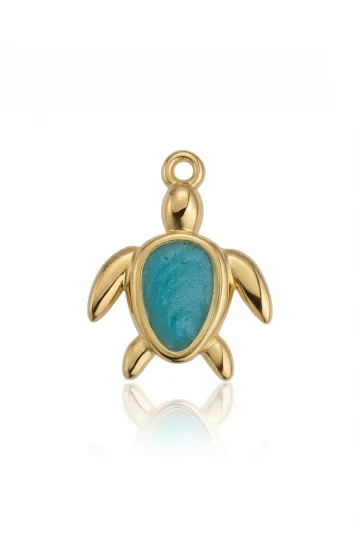
- Whale tails, seashells, and starfish in silver and gold
- Lighthouses, helms, and ship symbols
- 316L stainless steel options for active sea wear
Each piece is made by hand, with personal engraving available. We work in 925 sterling silver and 14 to 18 karat gold.