Ocean Jewellery Symbols: Whale Tails, Seahorses, Starfish, Anchors and What They Mean
The moment you understand
I was on a boat off the coast of Kaikoura, New Zealand. Cold wind, grey water, a horizon that blurred into nothing. Everybody was scanning the surface, cameras ready, waiting. And then it happened. A sperm whale, maybe fifteen metres long, lifted its tail out of the water in one slow, deliberate arc before diving deep. The fluke hung in the air for two, maybe three seconds. Black against grey sky. Then gone.
The woman next to me grabbed the pendant around her neck. A small silver whale tail on a chain. She didn't say anything. She didn't need to. That gesture said everything: this is why I wear it. This is what it means to me.
Wear the symbol, don't just read about it. These are in stock:
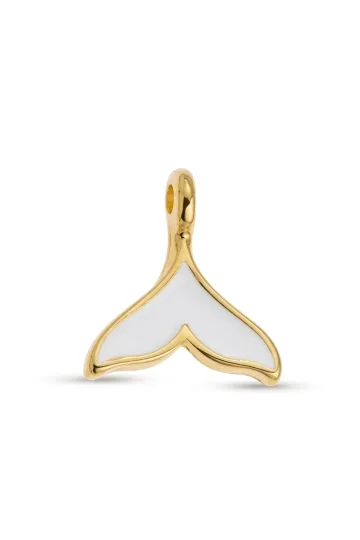
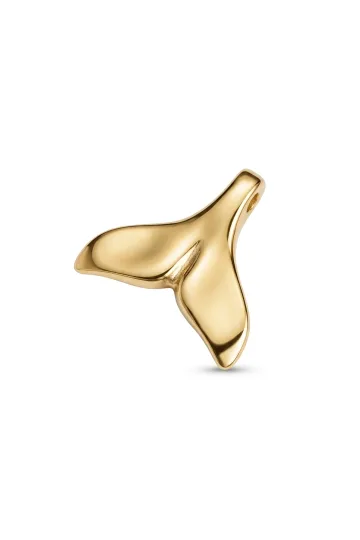
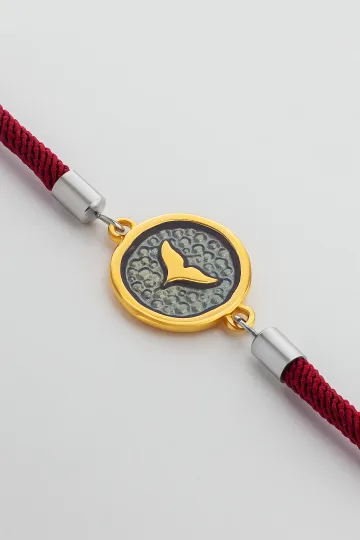
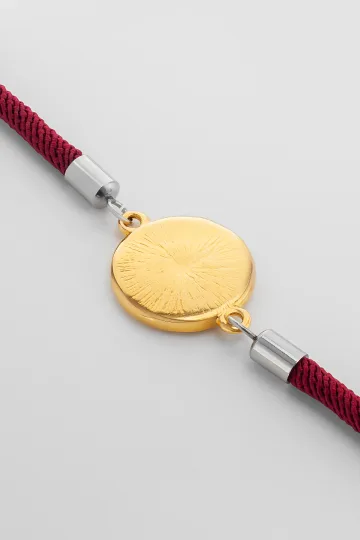
That trip changed the way I think about jewellery with sea motifs. These aren't decorations. They're compressed stories. A seahorse pendant might look like a pretty trinket until you learn that the person wearing it survived something difficult and chose that symbol for its meaning of regeneration and patience. An anchor on someone's wrist might just be fashion, or it might be a promise they made to themselves to stay grounded through a rough year.
The ocean covers seventy percent of our planet, and humanity has been pulling meaning from it since we first stood on a shoreline and wondered what lay beyond the waves. Sailors carved symbols into their ships. Polynesian warriors wore whale bone. Greek fishermen hung seahorse charms on their nets. Medieval pilgrims stitched scallop shells onto their cloaks.
Today those same symbols show up in gold, sterling silver, and precious stones. They hang from chains, wrap around wrists, and sit in ring settings. But the meaning underneath hasn't changed much. This guide covers the six most popular sea symbols in modern jewellery: what they mean, where they come from, and how to wear them.
Why ocean symbols in jewellery
The sea has always been humanity's greatest mirror. We look at it and see ourselves reflected: our fears, hopes, desire for freedom, need for stability. That's exactly why maritime symbols work so well as personal talismans.
Think about it. You don't choose an ocean pendant the way you choose a plain gold chain. You choose it because something in that symbol speaks to a specific part of your life. A whale tail for someone craving freedom. An anchor for someone who needs to feel grounded. A starfish for someone rebuilding. These choices are never random.
There's also the universality factor. Unlike religious or cultural symbols that carry specific associations, sea creatures and nautical motifs belong to everyone. The ocean doesn't care about your nationality, religion, or background. A fisherman in Portugal and a surfer in Australia both understand what the sea represents, even if their relationship to it looks completely different.
From a design perspective, ocean forms are naturally elegant. The curve of a whale's fluke, the spiral of a seahorse's tail, the five-pointed symmetry of a starfish. Nature already did the hard work. Jewellery designers just translate these organic shapes into metal and stone.
The market reflects this. Sea-themed pieces have been among the steadiest sellers in the jewellery world for over two decades. They're not trend-dependent the way some motifs are. People bought anchor bracelets in 2005, and they're still buying them in 2026. The forms are timeless because the meanings are timeless.
And there's something else. Wearing a piece of the ocean when you're far from it creates a kind of portable calm. Many people find that water imagery feels soothing, and a small seahorse or shell pendant resting against your skin can work on a similar principle. It's a sensory anchor (no pun intended) that connects you to something vast and peaceful, even in the middle of a busy city.
A whale tail wants a bare collarbone and linen, never a buttoned-up collar. The sea does not do meetings, and that is final.
What to wear ocean symbols with
Ocean symbols belong on an outfit, not in a box. Here is what actually works for me on shoots and with clients, sorted by occasion.
What do I wear an ocean pendant with every day? For daily wear I recommend a single symbol on a thin chain over plain fabric: a cotton tee, light knit, an open-collar shirt. I suggest a small anchor, starfish or whale tail so the tone stays easy. Under a V-neck it lands right at the collarbone, its strongest position.
Which metal should I choose for my skin tone? For a cool undertone I choose silver or steel; they sit well with grey, navy and white. For a warm undertone I recommend gold or gold plating, which pick up beige, sand and coffee tones. If both suit you, I suggest mixing them: a silver anchor next to a gold star reads like two glints of the same water.
How do I build an evening ocean look? For evening I suggest a stone and some contrast: a blue topaz or aquamarine pendant on an open neckline, smooth silk or satin in a deep colour. I recommend a shorter length, 40 to 45 cm, so the symbol works at the throat. A larger shape is welcome after dark; in soft light it reads as an accent, not a shout.
Is ocean jewellery right for the office? Yes, as long as you keep the scale in check. I recommend a small gold seahorse stud or a thin chain with a mini starfish under a blazer. The rule is simple: one visible piece, the rest stays quiet. Under a turtleneck I suggest a larger symbol on the chest; under a shirt, a miniature by the top button.
How do I layer ocean symbols? I build the stack by length: a thin chain at the collarbone, a medium one on the chest, a longer one with a larger pendant. Smaller higher, larger lower, so the symbols do not compete. For summer I suggest adding a couple of thin bracelets with one ocean accent. Mixing metals here is not a mistake, it is the method.

Turn on your camera, pick earrings, a pendant or a ring, and see the piece on yourself in real time.
Switch items in one tap.
Everything runs in your browser: no photo or video is ever uploaded.
Customer reviews
Zevira is a real jewellery shop. Genuine payments, deliveries and customer thank-yous.
🥰🥰🥰 gracias

Ok, ¡gracias! 🙂

The most popular ocean symbols
Whale tail: freedom, deep emotions, protection
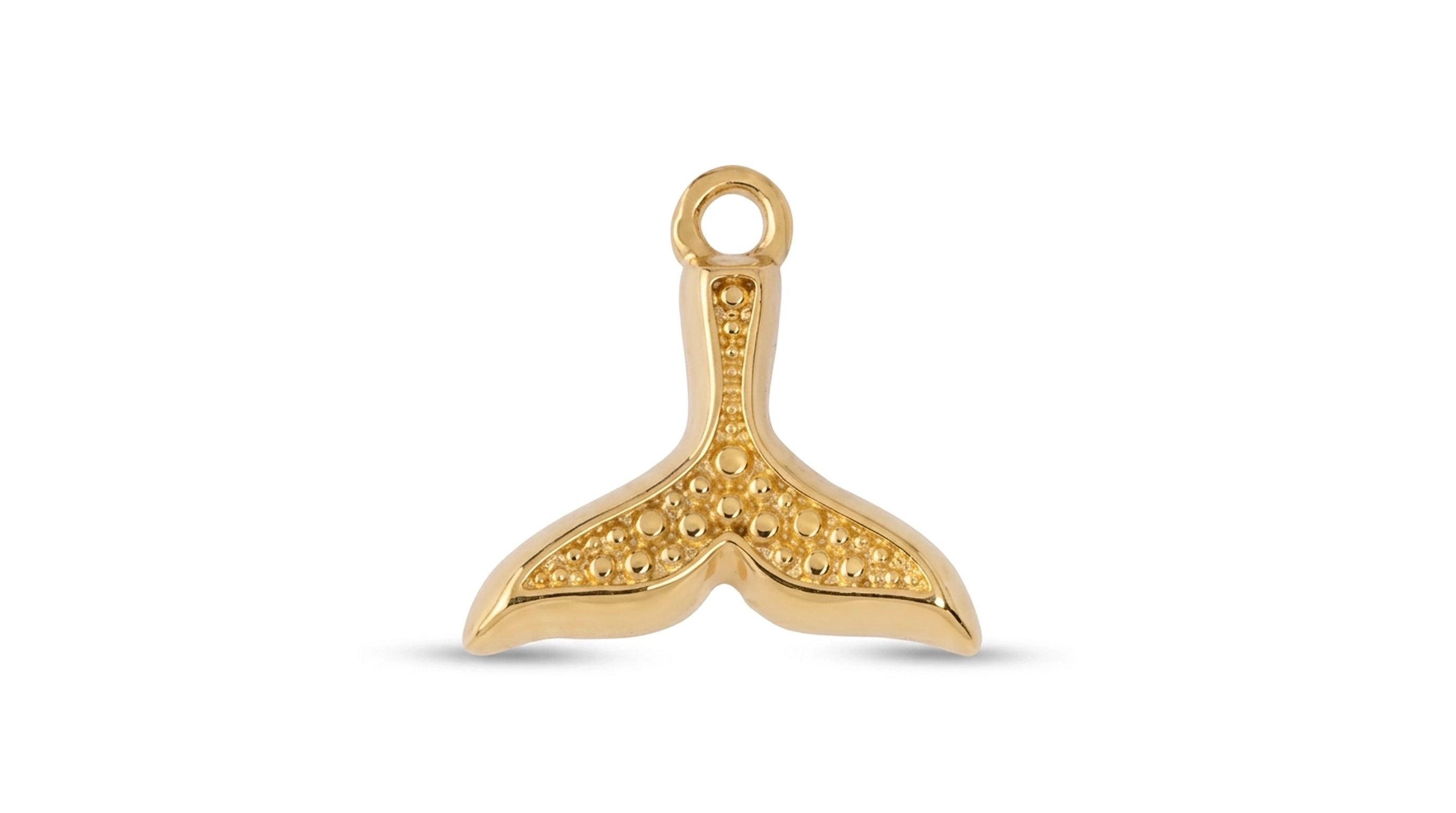
The whale's fluke breaking the surface is one of the most dramatic sights in nature. That image (a dark tail rising from the water, pausing, then disappearing into the deep) has become one of the most recognisable symbols in maritime jewellery.
What it means. The whale tail carries several layers of symbolism, and they all connect to the nature of whales themselves. These are creatures that dive to depths no human can reach, communicate across entire ocean basins through song, travel thousands of kilometres in annual migrations, and protect their young with fierce devotion. The fluke pendant captures all of that in a single, clean shape.
Freedom is the primary association. When a whale raises its tail before a deep dive, it's choosing to go where nothing else can follow. For the wearer, this translates to independence, the courage to go your own way, and comfort with emotional depth.
Protection is the second layer. Whale mothers are legendarily protective of their calves. In many cultures, carrying a whale symbol is believed to invoke that same fierce, unconditional guardianship. Parents often choose this pendant for this reason.
Deep emotion is the third thread. Whales are among the most emotionally complex animals on the planet. Their songs, their social bonds, their mourning behaviour all point to a rich inner life. The fluke pendant speaks to people who value emotional depth over surface-level interactions.
In Maori culture, the whale tail (known as "mau") holds sacred status. It represents strength, speed, and safe passage over water. Maori traditionally carved whale tail pendants from bone or pounamu (greenstone/jade), and these pieces are still given as gifts to mark important life transitions. Receiving a whale tail pendant in Maori tradition is a serious honour, not a casual accessory choice.
In Hawaiian culture, whales are considered 'aumakua: ancestral spirits that guide and protect. Wearing a whale symbol connects you to your lineage and to the spiritual guardians of the sea.
A well-crafted whale tail pendant works in almost any context. The shape is organic enough to feel natural with casual clothes, but structured enough to hold its own with more polished outfits. It pairs particularly well with blue stones like topaz, aquamarine, or sapphire, which echo the colours of the whale's habitat.
Seahorse: patience, persistence, uniqueness
The seahorse is one of nature's strangest and most beautiful creations. It swims upright. The male carries and births the young. It uses its tail to grip seagrass and coral, refusing to be swept away by currents. It moves slowly, deliberately, navigating complex reef environments with a patience that would make a Buddhist monk envious.
What it means. The seahorse pendant carries a rich web of symbolism that starts with patience and persistence. In a world that rewards speed and aggression, the seahorse represents a different approach: slow, steady, observant, and impossible to dislodge once it's decided where to be. For people who feel they don't fit the "hustle culture" mould, a seahorse pendant is a quiet rebellion.
Uniqueness is another strong association. There are over forty species of seahorse, each with distinct patterns and colours. No two look exactly alike. Wearing a seahorse is a statement about valuing individuality over conformity.
Fidelity runs deep in seahorse symbolism. Many species form pair bonds, performing elaborate daily greeting dances with their partner. In some cultures, giving someone a seahorse pendant is a statement about commitment and faithfulness.
In ancient Greece, the creature called hippocampus (literally "horse-sea-monster") was believed to pull Poseidon's chariot. This wasn't a cute little animal: it was a powerful mythological being, half horse, half fish, associated with the god of the seas himself. Greek and Roman sailors wore hippocampus amulets for safe passage. The word "hippocampus" later gave its name to a part of the human brain associated with memory and navigation, a fitting connection for a symbol of guidance.
In Chinese culture, the seahorse (hai ma) has been a symbol of power and good fortune for centuries. Traditional Chinese medicine attributed healing properties to dried seahorses, and jade seahorse carvings were considered lucky charms for merchants and travellers.
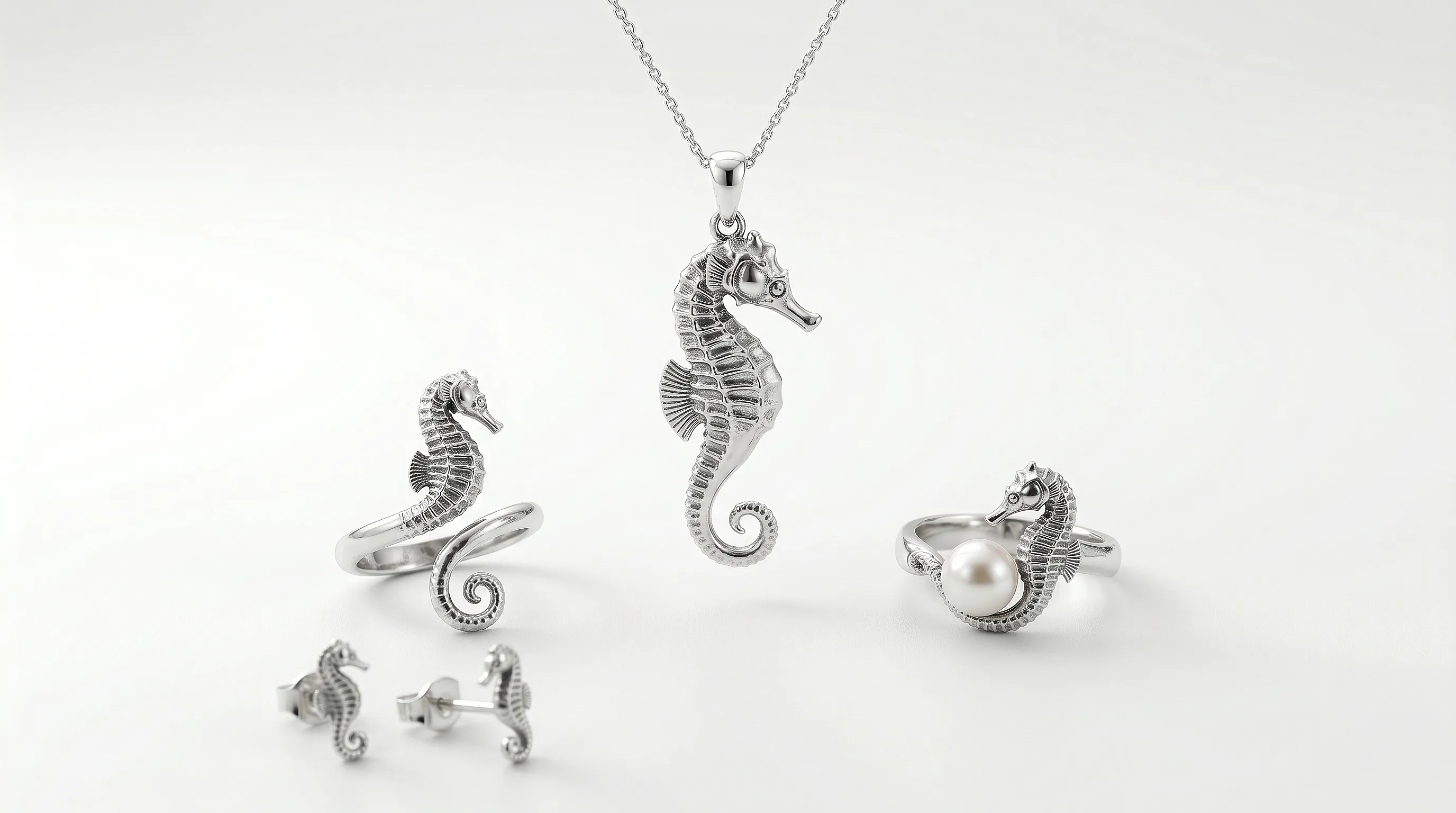
In jewellery, the seahorse's natural form offers incredible detail: the curved snout, the ridged body, the coiled tail. These features translate beautifully into metalwork, especially when combined with enamel or small gemstones for the eyes. A gold seahorse pendant with a tiny sapphire eye is one of those pieces that draws questions and compliments every time you wear it.
Starfish: regeneration, guidance, intuition
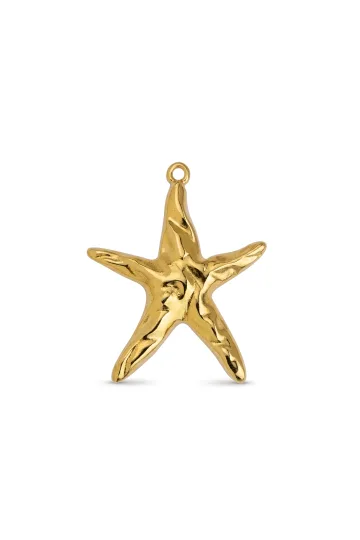
Here's something that sounds impossible but isn't: if a starfish loses an arm, it grows a new one. Some species can regenerate their entire body from a single severed limb. This biological fact is the foundation of everything the starfish symbolises in jewellery.
What it means. Regeneration and resilience are the primary associations. The starfish pendant is for people who have been through loss, trauma, or major life changes and have rebuilt. It's a symbol that says: I was broken, and I came back. Not just survived, but regenerated. Grew new parts of myself. Became whole again in a different way.
Guidance is the second layer. The five points of the common starfish have been compared to the points of a compass rose, and for centuries sailors used star-shaped markers to navigate. The starfish, sitting at the boundary between land and sea, became a symbol of finding your way, especially during transitions between one phase of life and another.
Intuition completes the triad. Starfish don't have brains in the conventional sense, yet they navigate complex tidal environments with remarkable precision. They sense their surroundings through thousands of tiny tube feet. For the wearer, this translates to trusting your body, your instincts, your gut feelings over pure logic.
In Native American traditions, particularly among Pacific Northwest coastal peoples, the starfish was considered a guide between worlds. It lives in the intertidal zone, neither fully land nor fully sea, which makes it a natural symbol of threshold spaces and transitions.
In Christian symbolism, the starfish has been associated with the Virgin Mary (Stella Maris, "Star of the Sea"), representing divine guidance and celestial love. Medieval churches along the Mediterranean coastline often featured starfish motifs in their stonework.
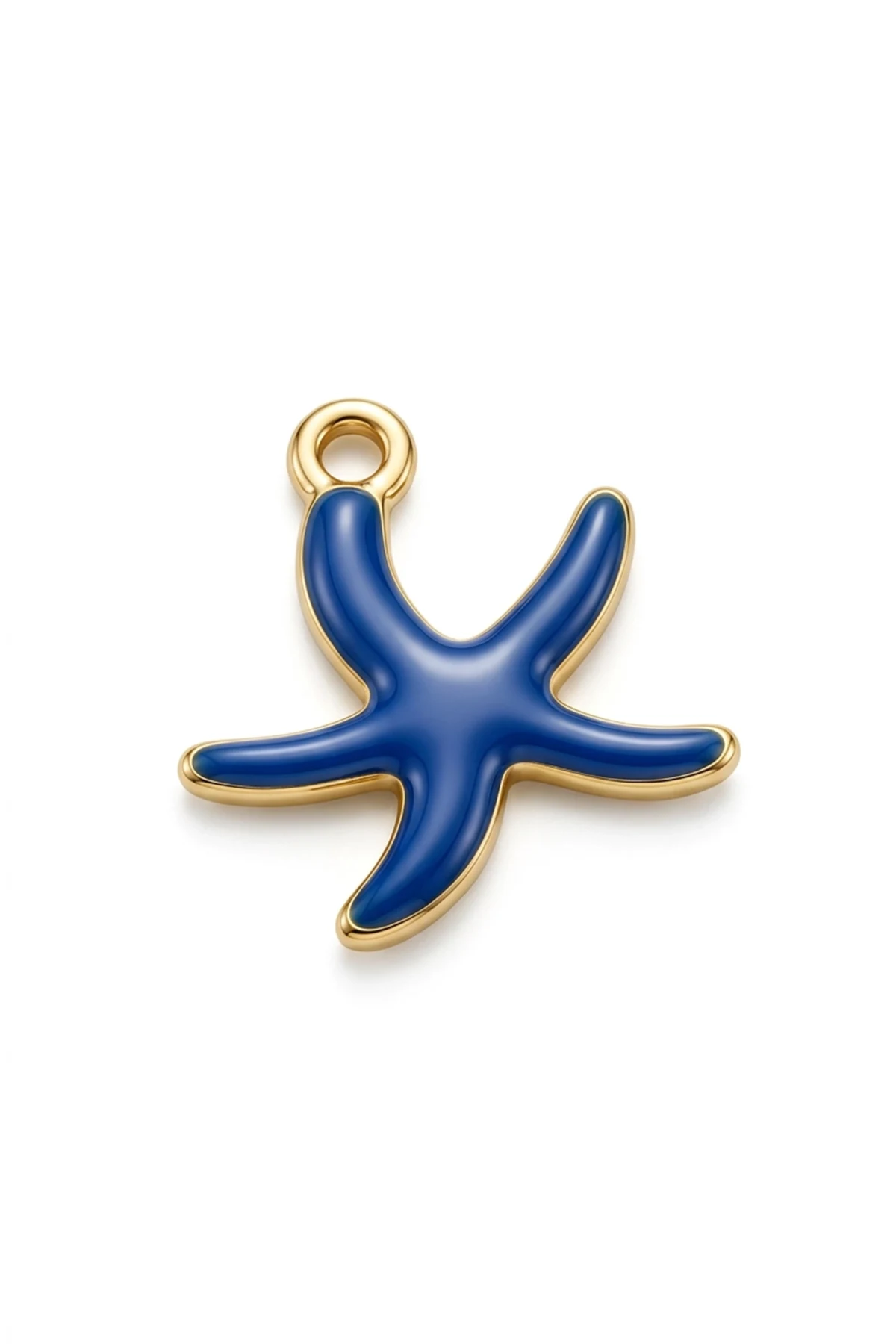
The five-pointed form of the starfish makes it one of the most versatile shapes in jewellery design. It works as a pendant, a ring motif, an earring, a bracelet charm. Its symmetry gives it a balanced, calming visual quality. Mini starfish pendants in gold or silver are particularly popular as layering pieces, small enough to combine with other necklaces without competing for attention.
Anchor: stability, hope, grounding
If you had to choose one symbol to represent "holding steady when everything around you is moving," the anchor would be it. The image is immediate and visceral: a heavy metal shape that digs into the seabed and refuses to let the ship drift. As a jewellery symbol, it carries exactly that energy.
What it means. Stability is the obvious first layer. An anchor pendant is chosen by people who value constancy, reliability, and staying true to their commitments even when circumstances push them off course. It's the opposite of the whale tail in some ways: where the fluke represents diving into the unknown, the anchor represents staying put and holding ground.
Hope is the less obvious but historically deeper meaning. Early Christians used the anchor as a secret symbol during periods of persecution, based on Hebrews 6:19: "We have this hope as an anchor for the soul, firm and secure." The anchor-cross was one of the earliest Christian symbols, predating the widespread use of the cross itself. To this day, many people wear anchor pendants as a symbol of faith and hope rather than anything nautical.
Grounding is the practical, modern layer. In a world of constant motion, notification pings, and schedule overload, the anchor pendant serves as a physical reminder to stay grounded. To not lose yourself in the chaos. To remember what matters.
In sailor culture, anchors had intensely personal meanings. A tattoo or pendant of an anchor meant you had successfully crossed the Atlantic Ocean. Two crossed anchors indicated a boatswain's mate. An anchor with a rope wrapped around it symbolised a seasoned sailor. These traditions are centuries old and still influence how we read the anchor symbol today.
In heraldry, the anchor appears on hundreds of coats of arms, city flags, and naval insignia worldwide. It represents maritime power, safety, and commercial prosperity. The anchor is a symbol that governments, navies, and cities trust to represent their most important values: which tells you something about its weight.
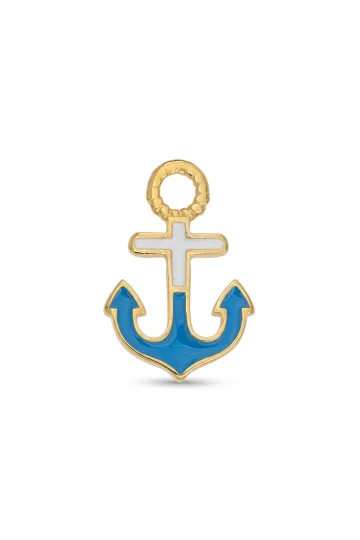
Anchor pendants work beautifully in both delicate and bold styles. A fine gold anchor on a thin chain reads as elegant and subtle, perfect for layering with other pieces. A larger silver anchor with blue enamel detailing makes a stronger visual statement. The shape combines curves and straight lines in a way that's both strong and graceful, which is exactly the kind of personality it tends to attract.
Shell and scallop: beauty, femininity, Camino de Santiago
Shells are the oldest decorative objects in human history. Perforated shells used as beads have been found in archaeological sites dating back over 100,000 years. Long before anyone worked metal or cut stones, humans were stringing shells on cord and wearing them. There's something in us that has always recognised the shell as beautiful, and worth carrying.
What it means. Beauty and femininity are the most immediate associations. The birth of Aphrodite (Venus in Roman mythology) from the sea, emerging on a giant scallop shell, is one of Western art's most iconic images. Botticelli painted it. Countless jewellers have referenced it. The shell, particularly the scallop, became permanently linked to female beauty, love, and the creative power of the feminine.
Protection is a secondary meaning. A shell is, after all, a home. A creature's armour. In jewellery, shell pendants can symbolise the idea of carrying your protection with you, of being safe within your own boundaries.
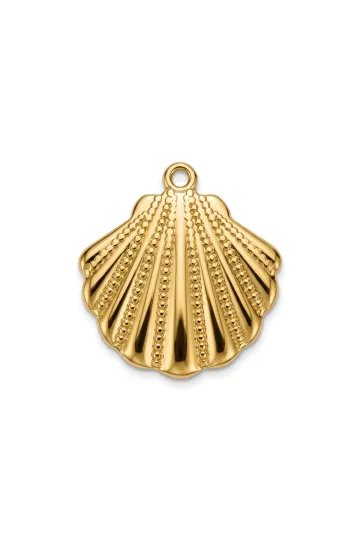
The scallop shell has a very specific additional meaning: it's the symbol of the Camino de Santiago, the ancient pilgrimage route across Spain. Pilgrims have worn scallop shells since the Middle Ages as proof that they completed the journey to the Cathedral of Santiago de Compostela. Today, thousands of people still walk the Camino every year, and many carry the shell as a pendant long after the walk is over. For them, it represents not just the physical journey but a spiritual transformation.
In Japanese culture, shells (especially the clam) symbolise fidelity and marital harmony, because the two halves of a shell only fit together perfectly with their original partner. Shell-matching games (kai-awase) were popular among Japanese aristocracy for centuries.
In Hindu tradition, the conch shell (shankha) is one of the most sacred objects. It's associated with Vishnu and represents the primordial sound of creation. Blowing a conch shell is believed to purify the environment of negative energy.
Shell pendants come in an extraordinary range of styles. There are realistic cast shells that capture every ridge and curve. There are abstract, minimalist shell forms in polished gold. Scallop shells with pearl accents combine two ocean elements in one piece. And cowrie shells (long associated with wealth and fertility in African cultures) have become a major trend in contemporary jewellery design.
Fish: abundance, adaptability, faith
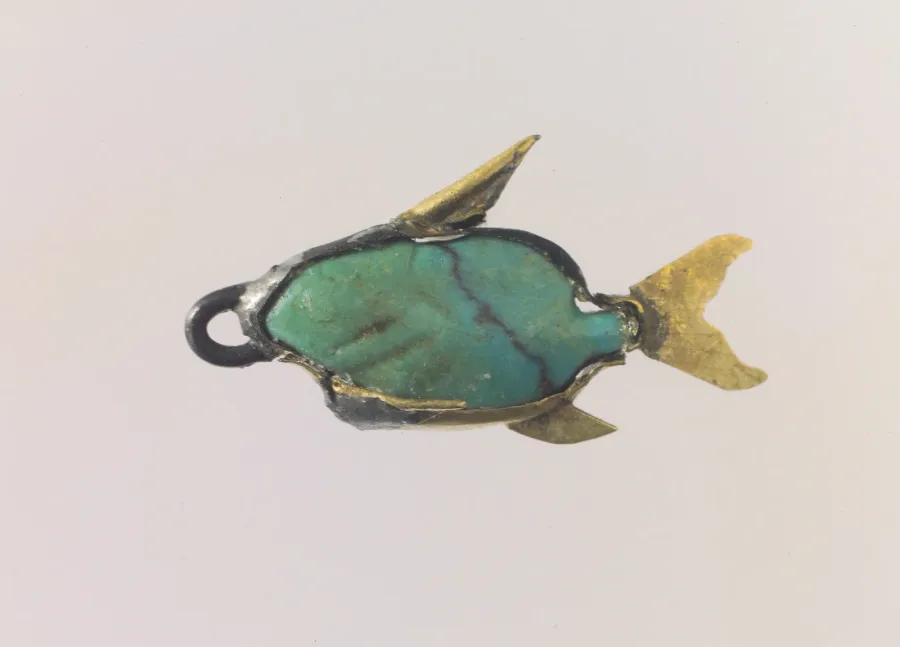
The fish might be the most ancient of all ocean symbols in human jewellery and art. Fish bones and fish-shaped amulets appear in some of the earliest human settlements ever discovered. The reason is simple: fish meant survival. Where there were fish, there was food. And where there was food, there was life.
What it means. Abundance is the foundational layer. Fish swim in schools, they reproduce prolifically, they fill the nets. In virtually every coastal culture on Earth, the fish has been a symbol of plenty, prosperity, and the assurance that the sea will provide.
Adaptability is the second meaning. Fish live in every aquatic environment on the planet, from deep ocean trenches to mountain streams, from tropical reefs to Arctic waters. They adapt. They evolve. They find a way. For the wearer, a fish pendant can represent flexibility, the ability to thrive in changing circumstances, and the wisdom to go with the flow rather than fight the current.
Faith is the specifically Christian layer. The ichthys, the simple fish outline, was one of the earliest symbols used by Christians. During Roman persecution, believers would draw one arc of the fish in the sand; if the other person completed the shape, they identified themselves as fellow Christians. The Greek word ICHTHYS (fish) formed an acronym: Iesous Christos Theou Yios Soter (Jesus Christ, Son of God, Saviour). Today, the fish remains one of the most widely recognised Christian symbols in the world.
In Chinese culture, the fish (yu) is a powerful prosperity symbol because the word sounds identical to the word for "surplus" or "abundance." Fish motifs appear on everything from New Year decorations to wedding gifts. Koi fish specifically represent perseverance and ambition: the legend says a koi that swims upstream and leaps the Dragon Gate waterfall transforms into a dragon.
In Celtic tradition, the Salmon of Knowledge (Bradán Feasa) was a mythical fish that ate the hazelnuts of wisdom and contained all the world's knowledge. The young hero Fionn mac Cumhaill gained infinite wisdom by tasting the salmon's flesh. Fish pendants in Celtic-influenced designs carry this association of wisdom and intuitive knowledge.
Fish pendants range from hyper-realistic to completely abstract. Some of the most striking designs use coloured enamel or gemstones for the eyes, creating a piece that feels alive. Koi fish designs often incorporate movement and flow, with curved bodies that suggest swimming. Simple ichthys outlines work as subtle, understated faith symbols. The variety is enormous.
Upload a photo of your pet, someone you love, or an object. We'll build a 3D model and hand-cast it in pewter.




Other ocean motifs
The six core symbols above cover most of what people search for, but the ocean vocabulary is wider. A handful of shapes appear less often yet carry their own weight and deserve their own line.
Lighthouse
Light in the dark, direction, hope. For a sailor a lighthouse meant rescue and the way home; for those waiting on shore, the confirmation that the journey was possible. The lighthouse is chosen by people who guide others: leaders, parents, mentors. It also reads well for someone who has come through their own dark stretch and found a way out.
Sailor's knot
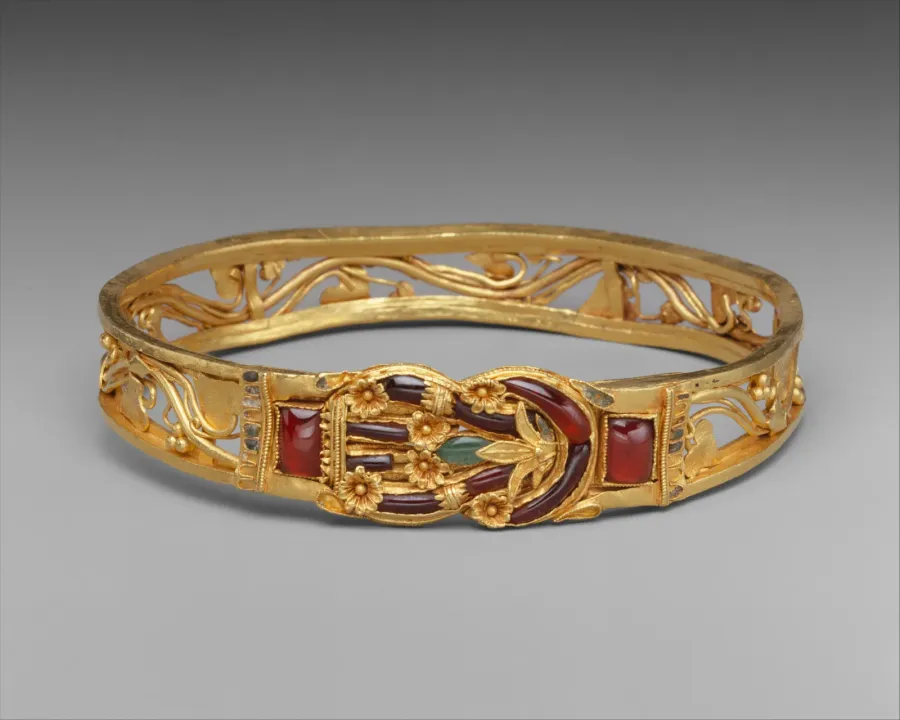
Connection, durability, fidelity. Reef knot, lover's knot, figure-of-eight, Turk's head, each with its own story. Sailors historically knew dozens of knots, each solving a specific task: the reef knot joined ropes of the same thickness, the figure-of-eight worked as a stopper, the Turk's head was both decoration and rank marker. In jewellery the knot keeps that precision: nothing extra, only what holds.
Compass and wind rose
The compass means direction, the path, finding your own north star. It often pairs with an anchor. The wind rose is the more decorative version with eight points and is popular among frequent travellers: the suggestion is that the wearer carries every direction at once. The sextant, the older navigation instrument that read the stars, became a symbol of precision and the intellect of the explorer era.
Ship's wheel
The helm stands for control over your own course, leadership, captain-grade responsibility. Anchor plus helm is a classic couples pairing: one stabilises, one steers.
Octopus
Intelligence, flexibility, multitasking. Where the whale carries calm wisdom, the octopus carries adaptive, distributed thinking. A creature with eight arms, a central and a peripheral nervous system, that solves puzzles, changes colour and escapes almost any container. As a motif it suits people who take pride in their ability to hold several threads at once and find an exit where others get stuck.
Dolphin
The Greeks saw the dolphin as a messenger of the gods: a pod accompanying a ship was a sign that the gods favoured the voyage. In Christian iconography a dolphin wrapped around an anchor stood for speed plus reliability. In jewellery the dolphin reads as protection, play, and natural intelligence.
Turtle
Longevity, wisdom, patience. In Polynesian tradition the turtle is a guide between worlds. In Hindu mythology the Kurma avatar holds the world on its shell. The turtle is chosen by people who value the long view and steady ground.
Jellyfish
A rare but strong symbol. Dangerous beauty, mysterious femininity. A creature with no rigid structure, carried entirely by currents, and one of the most resilient organisms on the planet. Art Nouveau jewellers loved it precisely for that contradiction: the fragility of the form and the stubbornness of the species.
Crab and shrimp
The crab reads as protection by sidestepping, observation, lateral thinking. In Japanese and Chinese symbolism, and astrologically as Cancer, it means protection of family and home and a sensitive temperament. The shrimp in Asian tradition is tied to transformation: its colour change in cooking is read as a metaphor for transition.
Coral
Historically considered a protective amulet across the Mediterranean. In Italian tradition red coral was hung on children's necks to ward off the evil eye. In jewellery coral reads as vital force, protection, and Mediterranean inheritance.








History of ocean symbols in jewellery
Polynesian roots: the whale tail
The story of the whale tail in jewellery begins in Polynesia, specifically with the Maori people of New Zealand. For centuries, Maori artisans carved pendants from whale bone, whale ivory, and pounamu (greenstone). The whale tail shape, called "mau", wasn't decorative. It was deeply spiritual. It represented the connection between the physical world and the spiritual world, between the land and the sea, between the living and their ancestors.
Maori whale tail pendants were (and still are) traditionally given, not bought for yourself. Receiving a whale bone pendant means someone is entrusting you with a piece of their lineage and their mana (spiritual power). This tradition of gifting is one reason the whale tail became such a popular present worldwide. The idea that someone chose this specifically for you carries emotional weight that goes beyond ordinary jewellery.
The whale tail crossed into Western jewellery in the 1970s and 1980s, driven partly by the growing whale conservation movement. As "Save the Whales" became one of the first global environmental campaigns, the whale tail became a symbol not just of the animals themselves but of environmental awareness. Wearing a whale pendant said: I care about the ocean. By the 1990s, whale tails in silver and gold had become mainstream in coastal jewellery shops from California to Queensland.
Greek and Roman seahorses
In the ancient Mediterranean, the seahorse occupied a fascinating space between the real and the mythological. Real seahorses were known to fishermen, who considered them good luck charms. But the mythological hippocampus, a creature with the front of a horse and the tail of a fish, was something much grander.
Hippocampi pulled the chariot of Poseidon (Neptune in Roman mythology). They appeared on coins, mosaics, pottery, and carved gems throughout the Greek and Roman world. The famous mosaic floors of Pompeii and Herculaneum feature stunning hippocampus designs that still influence jewellery makers today.
Roman women wore hippocampus brooches and pendants as symbols of safe travel across water. Merchants who traded by sea carried seahorse amulets for protection. The association between the seahorse and maritime safety was so strong that the symbol appeared on lighthouse structures and harbour entrances across the empire.
The Christian fish
The ichthys story is one of the most remarkable in the history of symbols. In the first and second centuries CE, when Christianity was illegal under Roman law, believers needed a way to identify each other without alerting authorities. The fish served perfectly. It was common enough to be inconspicuous (fish imagery was everywhere in the Roman world) but carried a hidden meaning that only initiated Christians would recognise.
The practice of drawing the fish in sand or dust became widespread. Early Christian rings, pendants, and seal stones often featured fish motifs. The catacombs of Rome are filled with fish imagery. And unlike many early Christian symbols that faded from use, the ichthys has endured for nearly two thousand years.
Sailor tattoos and anchor culture
The golden age of sailing (roughly 1500-1900) created an entire vocabulary of nautical symbols, many of which migrated directly into jewellery. Sailors lived and died by their tattoos and charms. An anchor tattoo meant you'd crossed the Atlantic. A swallow meant you'd sailed 5,000 nautical miles. A turtle meant you'd crossed the equator.
Sailors' wives and lovers wore anchor brooches and pendants as symbols of faithfulness and hope for safe return. The phrase "hope anchors the soul" became deeply embedded in naval communities. Scrimshaw (carved whale bone and ivory) was both art and currency among sailing crews. Many of those scrimshaw designs directly influenced modern ocean jewellery aesthetics.
The shell, particularly the cowrie, has its own extraordinary history. Cowrie shells were used as currency across Africa, South Asia, and the Pacific Islands for thousands of years. They were one of the first forms of money. Their association with wealth and commerce predates coins by millennia. In West African traditions, cowrie shells symbolise fertility, femininity, and connection to the water spirits. This cultural weight still resonates in contemporary shell jewellery.
The Camino scallop
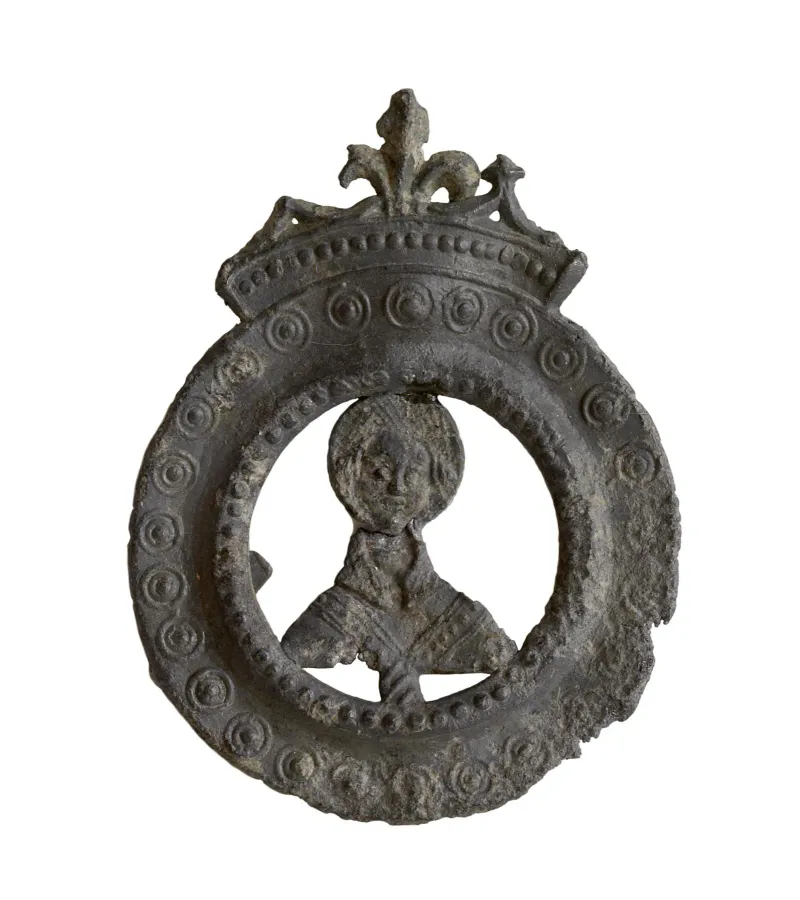
The scallop shell's association with the Camino de Santiago goes back at least to the 9th century. One theory holds that pilgrims originally picked up scallop shells from the beaches near Santiago de Compostela as proof of arrival. Another connects the shell to Saint James himself, who is often depicted with a scallop in religious art. Regardless of origin, the scallop became the universal badge of the Camino pilgrim, as recognisable as the yellow arrows that mark the route today.
Over a million people walk some portion of the Camino every year. Many continue to wear the scallop shell as a pendant long after they return home. For them, it's not just a souvenir. It's a marker of personal transformation. The Camino changes people, and the shell holds that change.
Phoenicians, Greeks and Romans
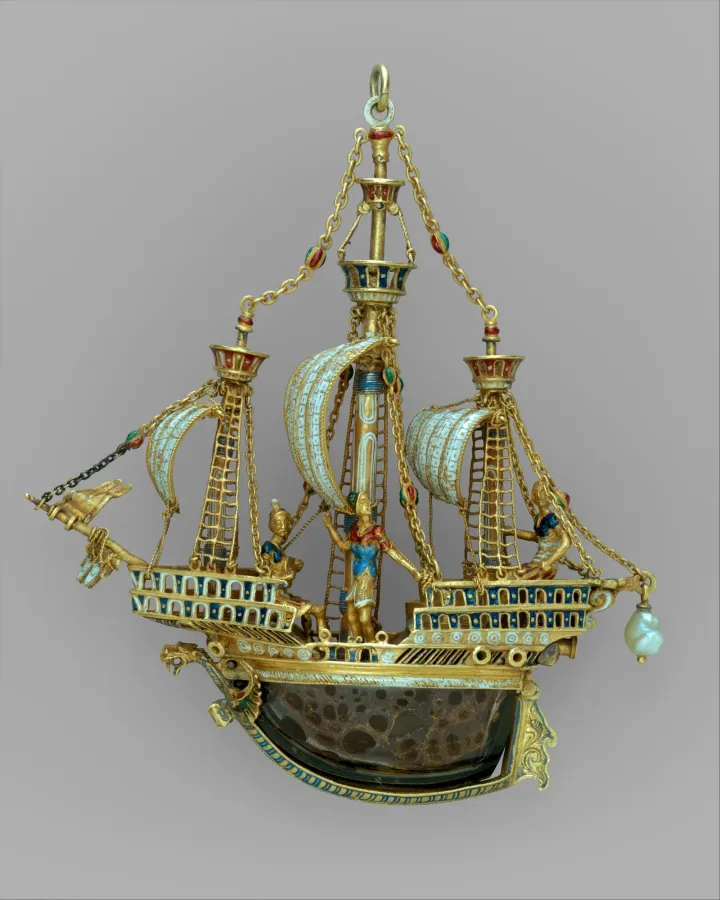
Ocean jewellery is older than most other jewellery traditions. The Phoenicians, the best sailors of the ancient world, made fish-shaped pendants in bronze and gold as early as the 10th century BCE. They also harvested the murex sea snail to extract Tyrian purple, the dye that would later become the legal property of Roman emperors.
The Greeks tied the sea to their gods directly. Coins from Tarentum (modern Taranto) showed Taras, son of Poseidon, riding a dolphin. Bronze rings set with carnelian intaglios of dolphins and octopus have been found across the Aegean. The Romans absorbed and extended this vocabulary: brooches and bracelets in the shape of seahorses, pearl earrings from the Persian Gulf, and pendants with anchors have all been excavated at Pompeii.
The Norse coastal layer
The Scandinavian north added its own chapter. The Vikings, the best sailors of the early medieval period, wore amulets with longships, anchors and navigation marks, and their trade routes linked the Baltic with the Caspian and the Black Sea. Out of that lineage grew a northern strand where ocean motifs sit alongside runic lettering and oxidised silver. Oxidised silver in coastal jewellery still carries that look of metal that has been salt-aged for years.
Art Nouveau: the sea held in metal
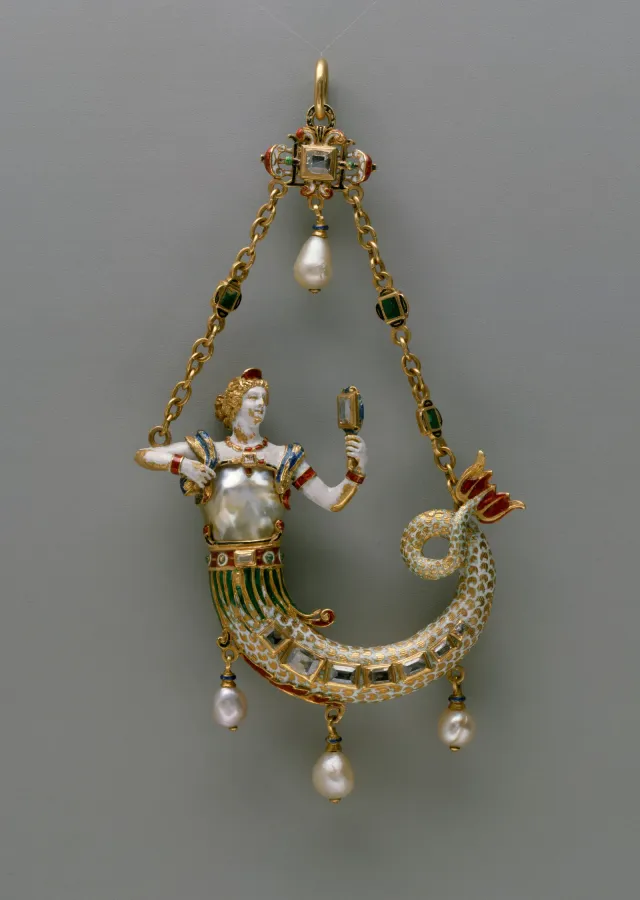
Art Nouveau at the turn of the twentieth century brought ocean forms back into high jewellery. The movement was in love with natural shapes: seaweed, waves, jellyfish, mermaids, and the iridescent surface of abalone. Rene Lalique built pieces where seawater seemed to set in metal. An octopus became a brooch, a wave became a necklace, a pearl floated in golden foam.
The modern revival of ocean jewellery began in the 1970s, when the ocean became the headline environmental cause. The symbolism shifted from the sea as heroic to the sea as fragile and precious. The whale, once a hunting target, became a symbol of protection.
CAPAORA mini knife pendant
The 18th-century Spanish navaja in miniature: 40 mm of stainless steel, a real folding mechanism and a Palanquilla lock that clicks. An affordable gift to remember.
Authentic · Ships from Spain · 14-day returns
Materials: what ocean jewellery is made of
The material of a sea-inspired pendant matters more than you might think. It affects how the piece looks, how long it lasts, and even what symbolic layer it adds.
Sterling silver
Sterling silver (925) is the classic choice for maritime-themed pieces. There's an obvious visual connection: silver echoes the colour of the sea under grey skies, of fish scales catching light, of moonlight on water. Silver also develops a natural patina over time, which can actually enhance ocean-themed designs. A slightly oxidised silver anchor or seahorse gains depth and character that a brand-new polished piece doesn't have.
Practical considerations: silver is durable enough for everyday wear, hypoallergenic for most people, and sits in the accessible price range. It's the workhorse of ocean jewellery.
The downside: silver can tarnish, especially in humid or salty environments. If you're actually near the sea frequently, silver pieces need regular cleaning. A soft polishing cloth works for maintenance between deeper cleans.
Gold and gold plating
Gold brings warmth and contrast to sea-inspired designs. There's something gorgeous about a gold whale tail or starfish against sun-kissed skin. The yellow metal echoes summer, beaches, and the golden hour light that makes the coast so photogenic.
Solid gold pieces (9k, 14k, or 18k) are an investment. They won't tarnish, won't react with salt water, and will last essentially forever with basic care. If you plan to wear your ocean pendant every single day, including at the beach, solid gold is the most practical choice.
Gold-plated pieces offer the look at a lower price point, but the plating will wear over time, especially with regular exposure to water, sweat, and friction. Be honest with yourself about how you'll wear the piece. Daily and rough? Go for solid gold or silver. Occasional and careful? Plating is fine.
Blue stones and enamel
This is where ocean jewellery really comes alive. The right blue stone or enamel detail transforms a metal pendant from "nice" to "this looks like it holds a piece of the actual ocean."
Blue topaz is the most common choice: affordable, brilliant, and available in shades from pale sky blue to deep London blue. Swiss blue topaz is particularly popular for ocean pieces because its colour sits right in the sweet spot between tropical water and deep sea.
Aquamarine (the name literally means "sea water") is the gemologist's ocean stone. Its clear, slightly greenish-blue colour is almost supernaturally close to the colour of shallow tropical water. It's also the traditional birthstone for March, making it a meaningful choice for spring birthdays.
Lab-created blue sapphire offers intense, saturated colour at accessible price points. It works especially well as an accent. A single blue sapphire eye on a gold fish pendant, for example, creates a striking focal point.
Enamel is the unsung hero of sea jewellery. Skilled enamelwork can reproduce the exact gradient from shallow turquoise to deep navy that you see looking out from a beach. Enamel also allows for colour on shapes where setting a stone would be impractical, like a blue enamel anchor, or a seahorse with a gradient body.
Pearl accents are a natural fit for shell and ocean designs. A shell pendant with a single freshwater pearl sitting where the natural pearl would form is one of those details that feels both clever and beautiful. Pearl also adds a soft, organic luminosity that complements the maritime theme.
Mother-of-pearl, abalone, sea glass
Mother-of-pearl is the iridescent inner layer of certain mollusk shells, most commonly the oyster. The material is aragonite, a form of calcium carbonate, arranged in microscopic layers that interfere with light and produce the characteristic shimmer. It is one of the oldest jewellery materials in existence and has been worked continuously since at least the medieval period. In a piece it reads as light, change, iridescence.
Abalone (also called paua in its New Zealand form) produces the most vivid iridescence of any shell material. The colours range from electric blue-green through purple to pink, with no two pieces identical. In Maori culture paua is a sacred material used for inlays in wood carving and jewellery. It is harder to work than ordinary mother-of-pearl and delivers a stronger optical effect.
Sea glass is fragments of glass tumbled smooth and matte by the ocean. Green is most common, blue is rare, white and brown round out the palette. It is an environmentally interesting story: waste transformed by the sea into a usable material. It suits anyone looking for a sustainable angle on ocean jewellery.
Conch shell, with its characteristic pink interior, has been used in rings, brooches and cameos. Caribbean tradition and nineteenth-century Italian cameo work both rely on it.
Other ocean stones
Turquoise is one of the oldest ocean amulets in the world. Egyptian tradition tied turquoise to the waters of the Nile. In Native American coastal traditions it read as sky and water at once. The colour of turquoise matches shallow Caribbean water with uncanny accuracy.
Lapis lazuli is the deep ocean blue. Egyptian tradition used lapis as the principal blue pigment and as a jewellery material. Lapis pieces have been found in pharaohs' tombs.
Larimar is a pale blue stone from the Caribbean. The only deposit in the world is in the Dominican Republic, which keeps it rare and expensive. It is sometimes called the Atlantis stone because its colour mimics the cartographic blue of a sunken continent.
316L stainless steel
The best choice for active wear in water. This grade of steel is used in marine engineering and underwater hardware. It does not tarnish, does not rust, and does not react with salt or pool chlorine. If you plan to wear an anchor pendant surfing, diving or in a daily swim, 316L removes every question about maintenance.
Leave your email, we'll send your discount code. No spam, unsubscribe anytime.
The code arrives by email, valid on your first order.
How to wear ocean jewellery
Layering ocean pieces
One of the best qualities of ocean jewellery is how willingly the symbols share a neckline. A whale tail and a starfish on chains of different lengths build a layered look that reads like a sentence rather than a pile. The trick is to vary two things at once: chain length and pendant size. Put the smaller piece on the shorter chain, around the collarbone at 35 to 40 cm, and the larger one on the longer chain at 45 to 55 cm. That spacing gives visual depth and, just as usefully, keeps the chains from tangling every time you pull on a jumper.
Three is the working number for ocean layering. Try a fine chain with a tiny anchor at the collarbone, a medium chain with a seahorse mid-chest, and a longer one carrying a shell. The combination reads as considered rather than crowded, and it survives the mirror test: you can name why each piece is there.
Mixing metals suits this theme better than almost any other. A silver anchor beside a gold star looks natural, not mismatched, like two different glints off the same water. The sea does not colour-match, and neither should you. If the mix feels uneasy, let one metal dominate and use the second only once, as a highlight.
Beach and holiday wear
This is the obvious context and it works beautifully. A single pendant on a long chain over a white linen shirt or a simple sundress gives you easy elegance with no effort. A stack of ocean bracelets against a swimsuit reads bohemian in the good sense. Shell earrings with a messy ponytail and sunglasses turn a plain outfit into a look that photographs well without trying.
The rule by the water is that less carries further. One or two meaningful pieces beat a full collection every time. Let the actual sea be the backdrop and keep your pendant as the personal note. Anything that jingles, catches on a towel or needs adjusting will annoy you by the second day.
A practical warning that saves regret: if you swim in salt water or a chlorinated pool, wear solid gold, platinum or 316L steel, and rinse everything in fresh water afterwards. Leave gold plating, plated brass, freshwater pearls and anything glued rather than set at the hotel. Sun cream is the quiet villain here; it dulls silver and works its way into settings, so put jewellery on after the lotion has soaked in, not before.
Everyday and office wear
This is where ocean jewellery surprises people. A small gold anchor with a blazer looks composed and entirely professional. A delicate seahorse stud is discreet enough for any workplace, including the conservative ones. A fine chain with a mini starfish adds character to business dress without becoming the thing anyone comments on in a meeting.
The whole trick is scale. In professional settings keep ocean pieces small and fine, and let the symbol speak rather than the size. A one-centimetre gold whale tail on a thin chain says you have interesting taste and a life outside the office. A five-centimetre statement piece says something quite different, and in some rooms it says it louder than you intended.
Necklines do half the work. Under a crew neck a pendant sits on fabric and reads as a small graphic detail. Under an open-collar shirt it falls into the gap and looks deliberate. Under a polo neck, go larger and higher on the chest, because a tiny symbol simply disappears into the knit.
Pairing with other symbolic jewellery
Ocean pendants play well with other meaningful symbols. A whale tail alongside a tree of life pendant builds a nature-minded pairing that feels coherent rather than random. An anchor beside a compass rose is the classic nautical pair and has been for two centuries. A starfish with a moon or star pendant links the ocean to the sky, which is exactly how sailors navigated before instruments.
What to avoid is combining ocean pieces with symbols carrying conflicting energy. A delicate seahorse can look odd next to a heavy skull ring, not because the meanings clash on paper but because the visual weights do. That is a general styling principle rather than a hard rule, though. If you genuinely like both, wear both, and the confidence will read as intention.
Silver, gold, wedding bands, symbolic pieces, matching sets.
Who it suits and gifting occasions
By personality
The whale tail suits adventurers, travellers, people who need open spaces, ocean lovers, surfers, divers, and anyone who values emotional depth over surface-level living. It's the pendant for the friend who books flights on impulse and comes back with stories you can't believe.
The seahorse suits artists, writers, musicians, patient people, detail-oriented minds, introverts who observe more than they speak, and anyone who prides themselves on being unapologetically different. It's for the person who notices the small things everyone else walks past.
The starfish suits healers, therapists, yoga practitioners, survivors of difficult experiences, people in transition, and anyone with strong intuition. It's for someone who has been knocked down and got back up: possibly more than once.
The anchor suits leaders, parents, partners, military and naval personnel, people in demanding careers, and anyone who prides themselves on being the reliable one in their circle. It's the pendant for the person everyone calls in a crisis.
The shell suits romantics, aesthetes, pilgrims (literal and metaphorical), brides, beach lovers, and anyone with an eye for natural beauty. The scallop specifically suits anyone who has completed a significant personal journey.
The fish suits people of faith, optimists, adaptable personalities, foodies and culinary professionals (it sounds odd but it's true: chefs love fish pendants), and anyone born under the Pisces zodiac sign.
Gifting occasions
Graduation: The whale tail (dive into the deep end of life) or anchor (stay grounded as you navigate new waters).
Birthday: Match the symbol to the person's personality. A starfish for a March birthday is especially fitting because aquamarine is the birthstone.
New job or promotion: An anchor (stability in your new role) or a fish (adaptability and abundance in your career).
After a difficult period: A starfish (regeneration, coming back stronger) or seahorse (patience rewarded, quiet strength).
Wedding or anniversary: A shell (the Aphrodite connection, beauty of partnership) or paired anchors (the idea of two people holding each other steady).
For a traveller: A whale tail (freedom, safe passage) or seahorse (curiosity, exploration of the unknown).
Baby shower or new parent: A seahorse (the ultimate symbol of devoted parenthood: the male seahorse literally carries and births the young).
Camino de Santiago completion: A scallop shell pendant. Full stop. There is no other option. The person earned it.
Engraving an ocean pendant
The ocean theme opens unusual room for personalisation. The symbols already carry stories, and a small inscription on top makes the story yours.
Coordinates of a place. The latitude and longitude of a beach, a cove, a harbour where something significant happened. The numbers mean nothing to anyone else and everything to the person wearing them. A wedding on the coast, the day you first saw the sea at night, the cove of a first family holiday.
A date by the water. Numbers cut into silver or gold are the most compact diary that exists: one page, but the page is exact.
The name of a vessel. If there is a boat in the picture (yacht, sailboat, fishing skiff), engraving the name on an anchor or helm pendant is one of the oldest forms of maritime personalisation.
A single word from the language of the coast. Portuguese saudade for the ache of something distant and loved. Greek thalassa for the sea, simply the sea. Galician morrina for homesickness for your own shoreline. Latin fluctuat nec mergitur, the motto of Paris: it is tossed by the waves but does not sink. One short phrase can carry an entire landscape.
Send a friend a discount code, they save on their first order.
Frequently asked questions
Can I wear ocean jewellery if I've never been to the sea? Absolutely. Ocean symbols carry universal meanings (freedom, stability, patience, renewal) that have nothing to do with geography. Millions of people wear anchor pendants without ever having sailed. The symbol resonates with the meaning, not the literal ocean. That said, many people find that wearing a marine pendant makes them want to get to the coast. Consider it a gentle push from the universe.
What's the most popular ocean symbol for men? The anchor is the most common choice for men, followed closely by the whale tail. Both carry a sense of strength without being aggressive. But there's genuinely no gender rule here. Seahorse and fish pendants work beautifully on men. Starfish designs in silver or dark metals suit masculine aesthetics perfectly. Wear what speaks to you.
Can I wear my ocean pendant in actual salt water? It depends on the material. Solid gold (any karat) and platinum handle salt water without issue. Sterling silver will survive occasional exposure but may tarnish faster. Gold-plated pieces should be removed before swimming. Gemstones vary. Most are fine, but softer stones like pearl can be damaged by salt. When in doubt, rinse any piece with fresh water after ocean exposure and pat dry.
What does it mean when someone gives you an anchor pendant? Traditionally, it means "you are my anchor" or "stay strong and grounded." It's a symbol of support and stability. In romantic contexts, it often means "I'm committed to you" or "you keep me steady." In friendship, it's usually "I'm here for you, no matter what." The anchor is one of the most emotionally loaded gift-symbols in jewellery, so the giver probably chose it carefully.
Are whale tail pendants cultural appropriation? This is a fair question. The whale tail has deep roots in Maori and Polynesian cultures. The respectful approach is to appreciate the symbol's origins, learn about its cultural significance, and avoid claiming it as your own cultural heritage if it isn't. Buying from artists and brands who acknowledge the symbol's Polynesian roots is better than buying a mass-produced piece with no context. Most Maori cultural experts say that wearing a whale tail with respect and awareness is perfectly acceptable, and what matters is the intention and the knowledge behind it.
Which ocean symbol is best for layering with other necklaces? The starfish and shell are the easiest to layer because their shapes are compact and don't tangle easily with other pendants. The anchor is also good for layering because its shape lies flat against the chest. Seahorses and fish can be trickier because of protruding details. If you're layering three or more chains, put the most detailed pendant on the longest chain where it has the most space.
Do ocean symbols have zodiac connections? Several. Fish are an obvious match for Pisces (February 19 to March 20). Shells connect to Cancer (June 21 to July 22), a water sign ruled by the moon and associated with home/protection, exactly what a shell represents. The whale tail resonates with Scorpio (October 23 to November 21), another water sign known for emotional depth. The anchor suits Taurus (April 20 to May 20), an earth sign all about stability and grounding.
How do I choose between multiple ocean symbols I like? Start with the one whose meaning connects most strongly to where you are in your life right now. If you're in a period of change, the starfish. If you need grounding, the anchor. If you're craving freedom, the whale tail. You can always add more pieces later and build a collection. Many people end up with three or four ocean symbols that they rotate depending on their mood and the season.
Will mother-of-pearl or pearl jewellery trigger a shellfish allergy? No. A food allergy to shellfish does not transfer to shell or pearl jewellery. Shellfish allergies are reactions to proteins in the flesh of the animal, not to the shell material (calcium carbonate) or to pearl (also calcium carbonate). There is no medical basis for concern.
How do you look after mother-of-pearl? Soft cloth and warm water, never hot. No harsh soaps, no ultrasonic baths, no household chemicals. The iridescence is structural, not a coating, so gentle cleaning will not wear it off. What does reduce the effect is surface scratching, so store mother-of-pearl pieces wrapped in cloth, away from harder metals.
What is the difference between pearl and mother-of-pearl? Pearl forms when an irritant enters the shell and the mollusk coats it in layers of nacre, which is the same material as mother-of-pearl. Mother-of-pearl is the inner lining of the shell itself. Both are nacre; the difference is form. Pearl is a sphere or near-sphere formed around a nucleus; mother-of-pearl is a flat layer harvested from the shell. Pearl is used for beads, drops and cabochons. Mother-of-pearl is used for flat inlays, thin disc pendants and the surface of larger pieces.
Can I wear an ocean pendant in winter? Yes, and the heavier symbols (anchor, helm, lighthouse) often work best in colder months. In coastal towns a November sky and a grey sea make a silver anchor under a wool sweater feel more natural than a summer beach look. The ocean theme is not seasonal, it is continuous.
Buying it as a gift? Each one arrives ready to give.
 A branded Zevira box and a little card come with every order.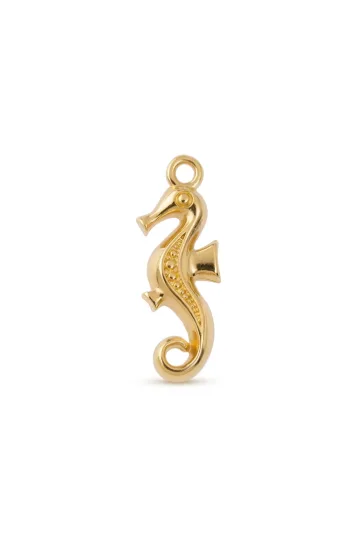








Conclusion
The ocean holds more stories than any library. Humanity has been reading its symbols for a hundred thousand years, and we haven't stopped. The whale tail, the seahorse, the starfish, the anchor, the shell, the fish. Each one is a chapter from a book that keeps being written.
What draws people to these symbols isn't nostalgia or fashion. It's something older and quieter than that. It's the recognition that the sea already contains every human experience in symbolic form. Freedom in the open water. Patience in the reef. Resilience in the tide pools. Hope in the harbour. Beauty on the shore. Faith in the depths.
Choosing an ocean pendant is choosing which of those experiences you want to carry with you. Not as a souvenir of a beach holiday, but as a statement about who you are and what you value. That's why these symbols endure while trends come and go. They mean something real.
The sea isn't going anywhere. And neither are the people who carry a piece of it around their neck.
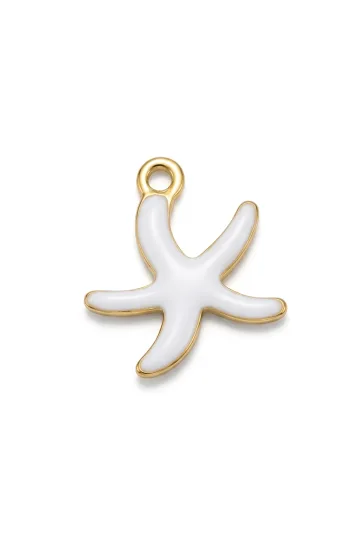
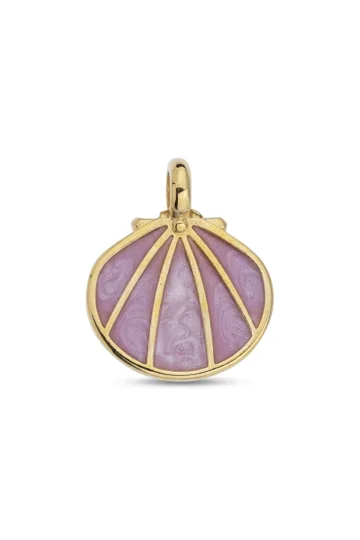
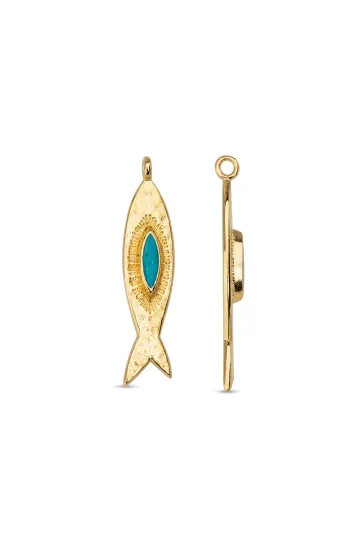
Wear the symbol, don't just read about it. These are in stock:
About Zevira
Zevira makes jewellery in the artisan tradition of Albacete, Spain. Ocean symbols aren't a seasonal capsule for us, they're a line of their own with its own meaning. Every pendant is cast and finished by a maker so that the curve of a whale's fluke or the spiral of a seahorse reads as alive, not stamped out.
Here's what you'll find in our ocean range:
- Whale tail pendants in sterling silver 925 and 14-18K gold, some set with blue stones
- Seahorse, starfish and anchor pendants in different sizes for layering
- Shells and scallops, including pieces with pearl and mother-of-pearl accents
- Designs with aquamarine, blue topaz and enamel in shades that run from shallow water to the deep
- Paired sets (anchor and helm, two anchors) for couples and people close to you
- Salt-resistant options built for active wear in the water
Each piece is made by hand, with the option of personal engraving: the coordinates of a favourite shoreline, a date by the water, the name of a boat, or a single word in your own language. Sterling silver 925 and 14-18K gold.