Mystic & Eye Symbols in Jewellery: Meaning, History & How to Wear Them
A pendant starts a conversation
Someone at a dinner party noticed the pendant around my friend's neck. A gold eye, stylised, with a teardrop line curving beneath it. "Are you into that stuff?" he asked, half joking, half genuinely curious. My friend touched the pendant and said, "Into what, exactly?" The guy stumbled. He didn't know if he meant Egyptian history, occultism, conspiracy theories, or just unusual jewellery. That's the thing about mystic symbols. They pull people in before anyone can agree on what they actually mean.
That pendant was an Eye of Horus. But it could have been a dozen other things: an All-Seeing Eye in a triangle, a compass rose pointing in eight directions, a spiralling labyrinth, a swinging pendulum frozen mid-arc. These symbols have been carved into temple walls, printed on banknotes, tattooed on forearms, and hung from chains around necks for centuries. Sometimes thousands of years. And they keep showing up because they scratch an itch that purely decorative jewellery doesn't touch.
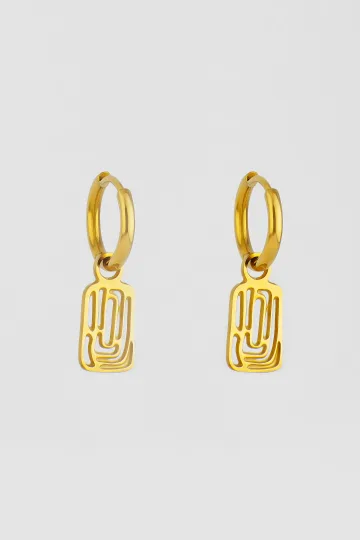
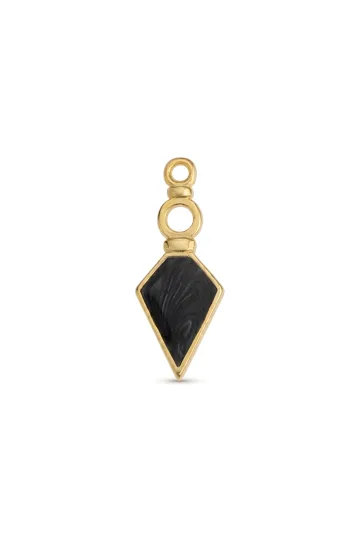
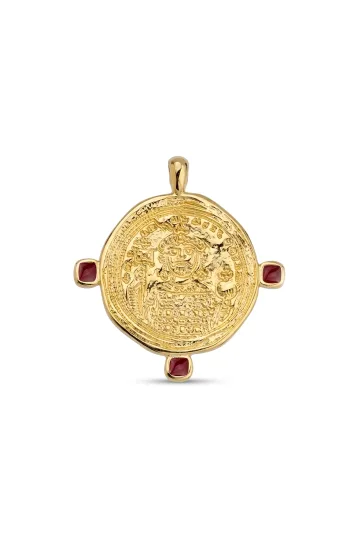
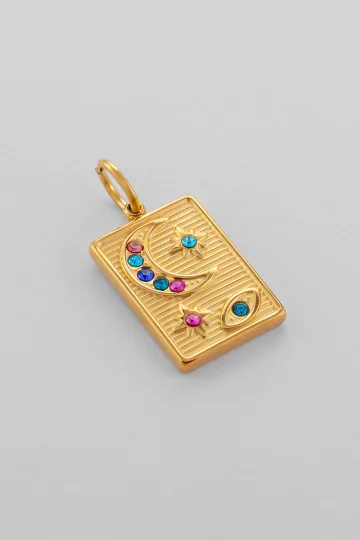
Wear the symbol, don't just read about it. These are in stock:
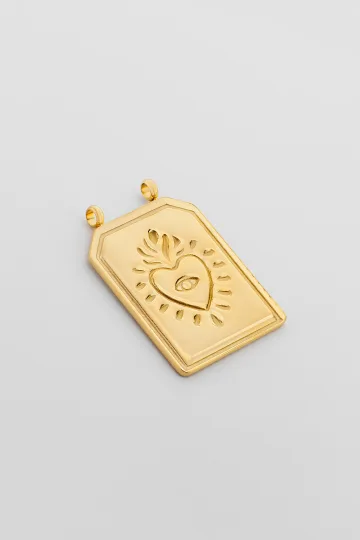

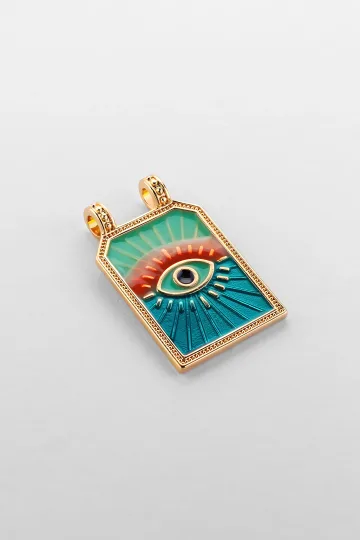
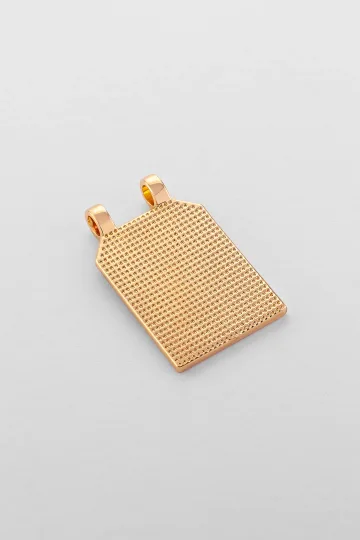
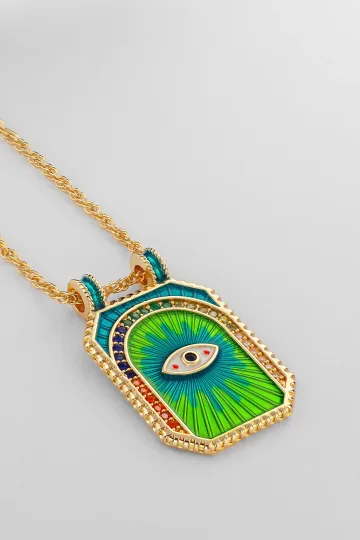
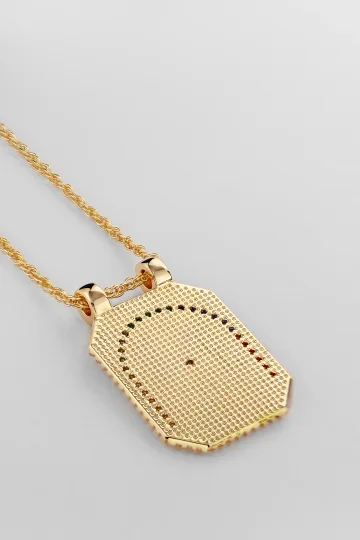

They mean something. And that meaning is layered, debated, personal, and often misunderstood.
This guide covers seven mystic and eye symbols that appear most often in modern jewellery: the All-Seeing Eye, the Eye of Horus, the Eye of Isis, the compass rose, the labyrinth, the pendulum, and the Saint Benedict medal. For each one, you'll get the actual history (not the Instagram version) plus what it represents, who wears it, and how to style it without overthinking things.
Let's start with the one that tends to make strangers ask questions at dinner parties.
Customer reviews
Zevira is a real jewellery shop. Genuine payments, deliveries and customer thank-yous.
🥰🥰🥰 gracias
Ok, ¡gracias! 🙂
Why Mystic Symbols Attract Us
There's a reason people don't react to a plain gold chain the way they react to an Eye of Horus pendant. A plain chain is beautiful. An eye pendant is beautiful and it's saying something. It's broadcasting a signal, even if the wearer hasn't fully articulated what that signal is.
Humans have used symbols since before we had written language. Cave paintings, carved bones, scratched stones: the earliest evidence of symbolic thinking dates back over 100,000 years. We're wired for it. We see a shape and we feel something before we think something. A circle feels complete. A triangle feels stable. An eye feels watched over, or watched.
Mystic symbols tap into something deeper than aesthetics. They connect the wearer to a tradition, a belief, a question. Not everyone who wears an All-Seeing Eye pendant believes in spiritual awakening. But almost everyone who wears one feels a quiet charge from it, a sense that they're carrying something older and bigger than a piece of metal.
That's the pull. Not faith, necessarily. Not superstition. Just the human desire to wear meaning on your body, to choose a symbol that reflects something true about who you are or who you want to become.
And the seven symbols in this guide are among the most powerful, most historically rich, and most misunderstood in the entire jewellery world.
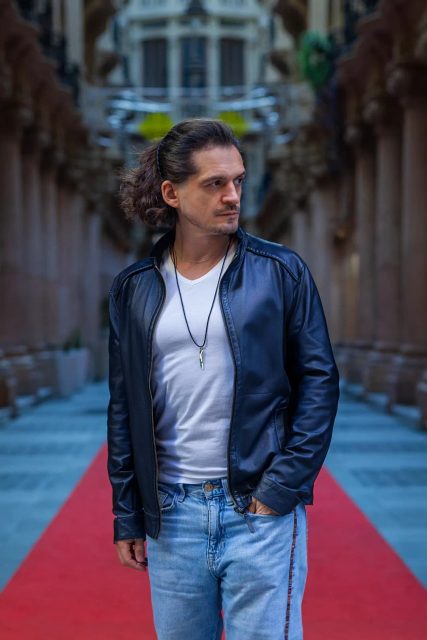
The All-Seeing Eye wants a black turtleneck, not a floral print. One eye, bare collarbone, and don't you dare pile five more on top.
How to wear mystic symbols
Over years of styling I have put these pendants on everyone, from a bare collarbone to a black turtleneck. Here is what actually works, sorted by occasion, no crystal ball required.
What do I wear a mystic pendant with every day? For daily wear I recommend one symbol on a fine chain over a plain top: a white or grey crew-neck tee, a light knit, an open shirt. An Eye of Horus or a compass rose in silver sits on the skin and argues with neither a print nor a collar. A light top lifts the metal, a dark one turns the symbol into the accent. Keep the fabric simple and the pendant gets the room it needs to be noticed.
Is a mystic symbol right for the office? Yes, as long as you keep it restrained. I suggest polished silver or matte gold, 45 to 50 cm, so the pendant lands just under a shirt's top button or along a V-neck. An Eye of Horus in a quiet metal reads as a detail of character, not a loud statement. Ease off the ring stack and earrings that day: one accent per look, the rest minimal.
How do I build an evening look? For evening I choose a dark, smooth background: a black turtleneck, silk, velvet, a deeper neckline. Dark fabric makes the outline of the symbol graphic, especially an All-Seeing Eye in black enamel or a pendulum on a long drop. Layers belong here, two or three pendants at different lengths with at least five centimetres between them. Keep the metal in one tone and the look holds together.
How many symbols can I wear at once? My limit is three, and only for the right occasion. I recommend at least five centimetres between chain lengths so the pendants do not clump. Keep the metal tone single: gold with gold, silver with silver. Mystic symbols also pair well with protective amulets, an Eye of Horus beside a nazar, a compass rose with a hamsa. Beyond three at once a meaningful look turns into a cluttered one.
Which symbol and metal will suit me? It follows your mood. Warm gold I suggest for anyone who likes weight and authority in a look: the All-Seeing Eye, the compass rose, the Saint Benedict medal. Cool silver is closer to contemplative, intuitive types, and it flatters the Eye of Isis and the labyrinth. Keep the length between 45 and 60 cm so the pendant lands in the open zone, and choose the one symbol that is genuinely about you rather than the one that simply looks pretty.

Turn on your camera, pick earrings, a pendant or a ring, and see the piece on yourself in real time.
Switch items in one tap.
Everything runs in your browser: no photo or video is ever uploaded.
Upload a photo of your pet, someone you love, or an object. We'll build a 3D model and hand-cast it in pewter.


The Symbols and Their Meanings
The All-Seeing Eye (Eye of Providence)
You've seen it. A single eye, usually open and unblinking, set inside a triangle, often with rays of light emanating outward. It's on the US one-dollar bill. It's carved into church facades across Europe. It shows up in Renaissance paintings, on Masonic aprons, in music videos, and on the pendants of people who like their jewellery to start conversations.
The All-Seeing Eye represents awareness, truth, and spiritual vigilance. The triangle around it historically represents the Holy Trinity in Christian iconography, but the symbol predates Christianity by a long stretch. Ancient Egyptians had the concept of the "eye of the divine" watching over humanity thousands of years before any European painter put it on canvas.
In its simplest reading, the All-Seeing Eye says: someone, or something, is paying attention. You can interpret that as God, the universe, your own higher consciousness, or simply the idea that truth has a way of surfacing no matter how deeply it's buried.
For jewellery wearers, the symbol tends to attract two overlapping groups. First, people drawn to esoteric traditions like Freemasonry, Hermeticism, occult philosophy. Second, people who simply love the bold graphic power of the image. An eye in a triangle is striking. It looks good in gold, in silver, in black enamel on a matte background. It's simultaneously ancient and modern, which is exactly why it keeps appearing in contemporary jewellery collections.
What it's not: an Illuminati membership badge. We'll get into that in the myths section.
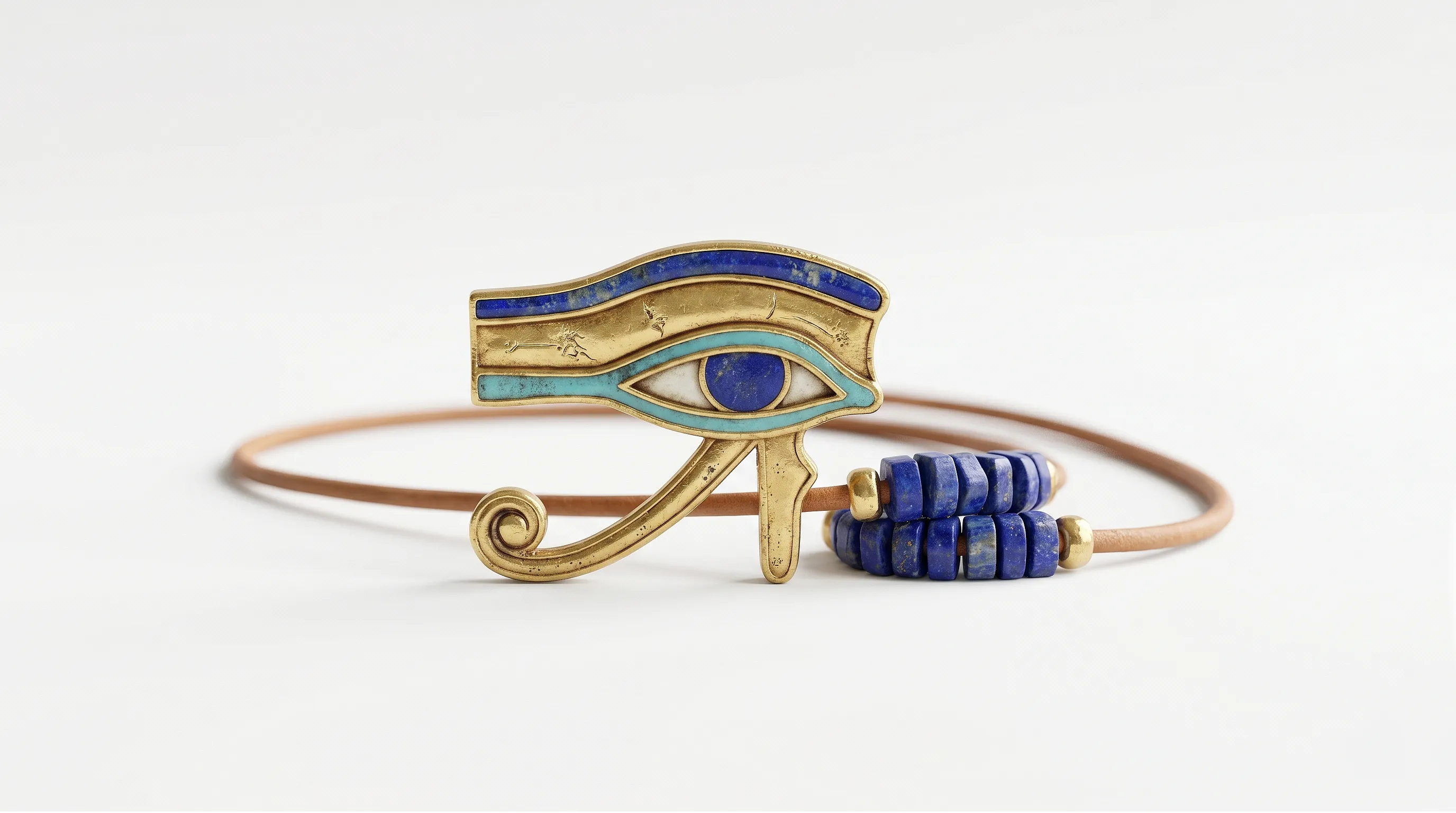
The Eye of Horus / Eye of Ra
If the All-Seeing Eye is the philosopher's symbol, the Eye of Horus is the warrior's. It comes from ancient Egypt, and its origin story involves violence, sacrifice, and magical healing.
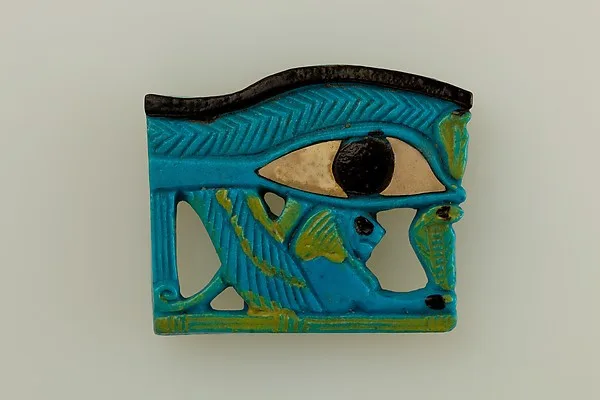
Horus was the falcon-headed god of the sky. His father, Osiris, was murdered by his brother Set (the god of chaos, storms, and generally bad ideas). Horus fought Set to avenge his father, and during the battle, Set ripped out Horus's left eye. The god Thoth, patron of wisdom and magic, restored the eye, making it whole again. The restored eye became known as Wedjat, meaning "the whole one," and it became the most powerful protective amulet in Egyptian culture.
The symbol itself is distinctive: an eye with a teardrop line descending from the outer corner and a spiral curl beneath. Each part of the eye was associated with a fraction (1/2, 1/4, 1/8, 1/16, 1/32, 1/64), and all six parts together represented wholeness. Egyptian doctors used these fractions to measure ingredients for medicines, which is why the Eye of Horus is also associated with healing and mathematical precision.
In jewellery, the Eye of Horus is probably the single most popular Egyptian symbol worldwide. It carries layers of meaning: protection from harm, recovery after trauma, the idea that what's been broken can be made whole. People wear it after surviving difficult periods, after health scares, or simply because they want a guardian symbol that's backed by five thousand years of continuous cultural use.
It's worth noting the difference between the Eye of Horus (left eye, moon, protection, healing) and the Eye of Ra (right eye, sun, destruction, power). In modern jewellery, the two are almost always conflated. Most pieces labelled "Eye of Horus" actually blend elements of both, and that's fine. The Egyptians themselves blurred the line over time.
The Eye of Isis / Light of Isis
Isis was arguably the most important goddess in the Egyptian pantheon, and later, across the entire Roman Empire. She was the goddess of magic, healing, fertility, and death. She was also the wife of Osiris and the mother of Horus, which puts her at the heart of the most important mythological cycle in Egyptian religion.
The Eye of Isis, sometimes called the Light of Isis, is less commonly known than the Eye of Horus but carries its own distinct energy. Where Horus's eye is about protection and restoration, Isis's eye is about intuition, feminine power, and the ability to see what's hidden. Isis was famous in mythology for her magical knowledge. She tricked the sun god Ra into revealing his secret name, which gave her power over him. She reassembled her husband's body after Set scattered the pieces across Egypt. She was not passive. She was strategic, fierce, and deeply magical.
In jewellery, the Eye of Isis or Light of Isis pendant appeals particularly to women drawn to goddess symbolism, lunar energy, and the idea of feminine wisdom as a quiet, transformative force. The designs often incorporate crescent moons, lotus flowers, or softer flowing lines compared to the sharper geometry of the Eye of Horus.
If the Eye of Horus says "I am protected," the Eye of Isis says "I see what others can't."
The Compass Rose
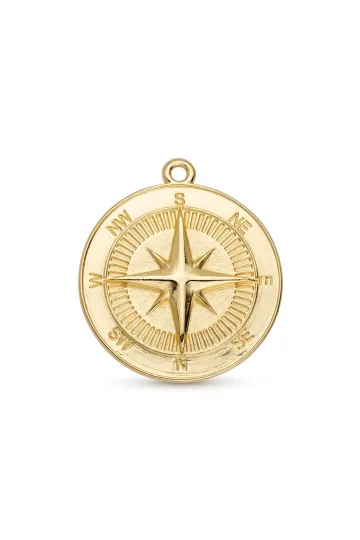
Shift continents and centuries, and you land on the compass rose. No pyramids here. No gods with animal heads. Just a simple, elegant star pattern that first appeared on Mediterranean navigation charts in the 1300s, telling sailors which way the wind blew.
The compass rose (also called a wind rose) typically shows four cardinal directions (N, S, E, W) and four intermediate directions, forming an eight-pointed star. Some elaborate versions show sixteen or even thirty-two points. The design is functional at its core (it was literally a tool for not getting lost at sea) but it picked up symbolic weight quickly.
By the Age of Exploration, the compass rose had become a symbol of guidance, purpose, and the courage to sail beyond the known world. Sailors got it tattooed to ensure a safe return home. Cartographers turned it into an art form. And over time, it migrated from maps to jewellery, carrying with it all the romance of sea voyages, exploration, and the search for direction in life.
Today, the compass rose pendant is one of the most popular symbolic pieces in travel and adventure-themed jewellery. It appeals to people who've moved far from home, who are starting a new chapter, or who simply like the idea that there's always a direction worth heading toward, even when you can't see the horizon.
It's less "mystical" than the eye symbols and more "philosophical," but the question it asks is just as deep: Do you know which way you're going?
The Labyrinth
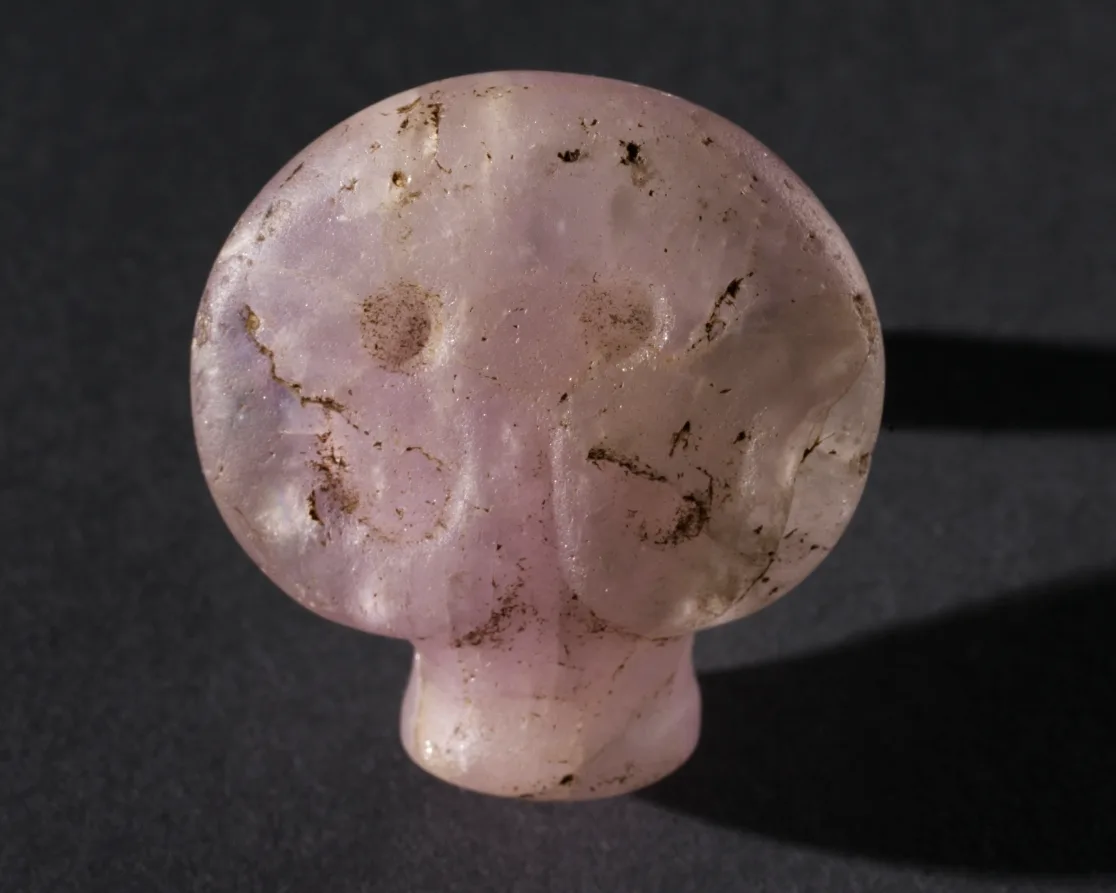
The labyrinth is one of the most misunderstood symbols in the entire mystic tradition. People confuse it with a maze. They're not the same thing. A maze has dead ends, false turns, and is designed to trick you. A labyrinth has a single path. It winds and turns, yes, but there's only one way through, and it always leads to the centre.
The oldest known labyrinth symbol appears on a clay tablet from Pylos, Greece, dating to around 1200 BC. But the symbol's most famous association is with the Minotaur myth on Crete, where Theseus navigated the labyrinth beneath King Minos's palace to slay the half-man, half-bull monster at its centre.
The medieval church adopted the labyrinth enthusiastically. The floor of Chartres Cathedral in France features a massive labyrinth laid in stone around 1205. Worshippers walked it on their knees as a substitute for making the pilgrimage to Jerusalem. The winding path represented the spiritual journey: confusing from within, but always progressing toward God at the centre.
In modern contexts, labyrinths have been embraced by therapists, meditation teachers, and wellness practitioners. Hospitals install them in gardens. Schools use them for conflict resolution. The symbol represents the inner journey: the idea that the path to understanding isn't straight, but it is singular. You can't get lost in a labyrinth. You can only keep walking.
As jewellery, the labyrinth tends to be a quiet, contemplative choice. It's popular with meditators, psychologists, yoga practitioners, and anyone who's been through a complicated period and come out the other side with more self-knowledge than they expected.
The Pendulum
A pendulum is gravity made visible. A weight on a string or chain, responding to the slightest influence, always seeking equilibrium. It's one of the simplest physical objects in existence and one of the most symbolically loaded.
In esoteric traditions, the pendulum is a divination tool. You hold it still, ask a question, and interpret its movement: clockwise for yes, counter-clockwise for no, back and forth for maybe. Dowsers used pendulums to find water. Spiritualists used them to communicate with the dead. Energy healers use them to detect blockages in the body's energy field.
You don't have to believe in any of that for the pendulum to resonate as a symbol. It represents balance, the search for answers, and the tension between stillness and motion. A pendulum at rest is potential energy. A pendulum in motion is decision in progress. It captures that moment between not knowing and knowing, between question and answer.
In jewellery, pendulum-inspired designs often feature an elongated drop or point, sometimes with a chain-within-a-chain effect that allows subtle movement. They're elegant, slightly witchy, and unmistakably intentional. People who wear them tend to be interested in tarot, energy work, astrology, or simply the aesthetic of objects that look like they could tell you something if you held them still enough.
The Saint Benedict Medal
And then there's the symbol that doesn't come from Egypt, Greece, or a navigation chart. The Saint Benedict medal is Catholic, through and through, and it's been one of the most popular protective amulets in Christianity for centuries.
Saint Benedict of Nursia (480-547 AD) founded the Benedictine monastic order and wrote the Rule of Saint Benedict, which shaped Western monasticism. Legend says he survived multiple assassination attempts (poisoned bread, poisoned wine) by making the sign of the cross, causing the poison to lose its power. His medal, formalized in the 17th century, carries Latin inscriptions that are essentially exorcism prayers in miniature.
The front of the medal shows Benedict holding a cross and the Rule. The back features a cross surrounded by the letters C S S M L, N D S M D, standing for "Crux Sacra Sit Mihi Lux, Non Draco Sit Mihi Dux" ("May the holy cross be my light; let not the dragon be my guide"). Around the edge: V R S N S M V, S M Q L I V B, standing for "Vade Retro Satana, Numquam Suade Mihi Vana, Sunt Mala Quae Libas, Ipse Venena Bibas" ("Begone Satan, never suggest vain things to me; what you offer is evil, drink your own poison").
Heavy stuff for a pendant. But that's exactly why people wear it. The Saint Benedict medal is specifically about protection against evil, spiritual attack, and temptation. Catholics have it blessed by a priest. Non-Catholics sometimes wear it as a powerful cultural symbol of spiritual armour. In Latin America and Southern Europe especially, you'll see it alongside other protective symbols, often layered with an evil eye or a cross on the same chain.



History: From Egyptian Temples to Modern Jewellery Boxes
Ancient Egypt: where it started
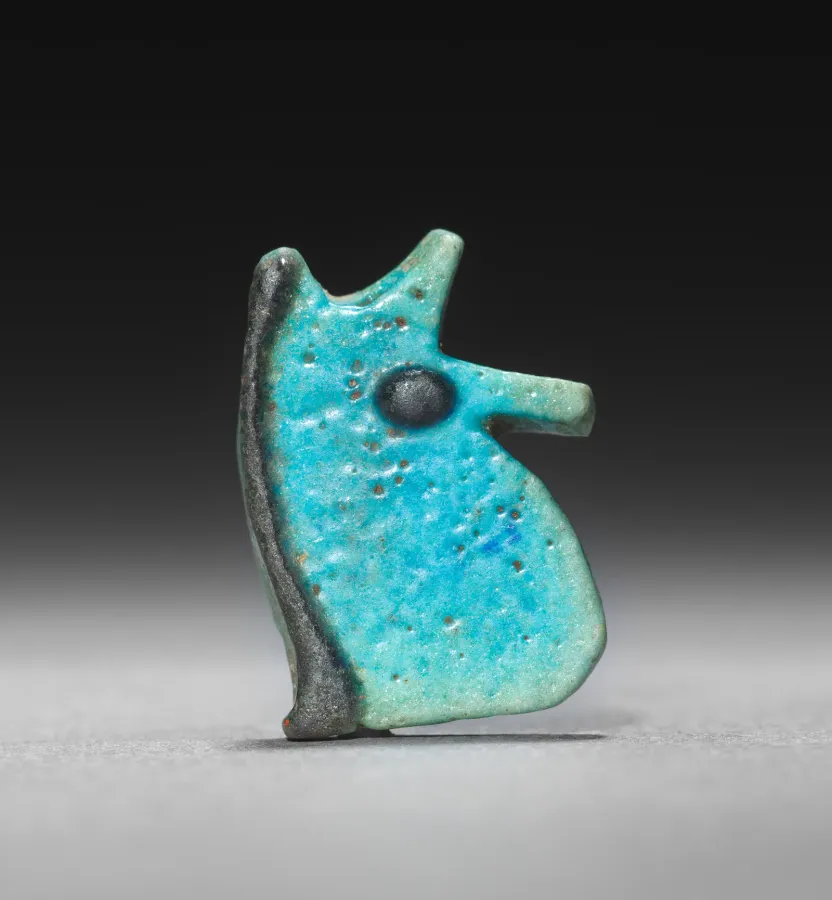
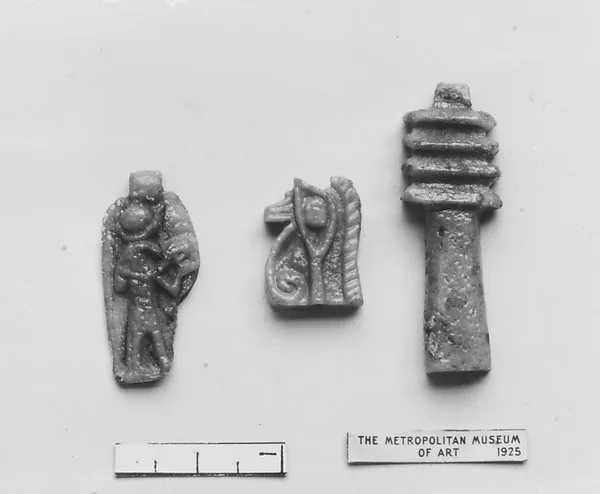
The Egyptians didn't just use eye symbols. They industrialised them. The Wedjat (Eye of Horus) appeared on everything: temple walls, coffin lids, papyrus scrolls, ship prows, and personal amulets worn by everyone from pharaohs to farmers. Archaeologists have found thousands of Wedjat amulets in burial sites across the Nile Valley, made from faience, gold, lapis lazuli, carnelian, and glass.
The mass production of protective eye amulets in ancient Egypt was essentially the first jewellery industry. Workshops in Memphis and Thebes produced them at scale. The wealthy got gold and semi-precious stones. The poor got glazed clay. But everyone got the same symbol, because protection from evil was considered a universal need, not a luxury.
Isis worship spread the Eye of Isis across the Mediterranean. By the time of the Roman Empire, Isis temples existed from Britain to Iraq, and her symbols (the tyet knot, the throne headdress, the lunar eye) were worn as amulets across three continents.
Masonic and Enlightenment era
Jump forward to the 1700s. The Age of Enlightenment was obsessed with ancient Egypt, or rather, with what they imagined ancient Egypt to be. Freemasons adopted the All-Seeing Eye as a symbol of the Great Architect of the Universe, their term for a non-denominational divine intelligence. It appeared on Masonic lodges, aprons, certificates, and personal jewellery.
Around the same time, the Eye of Providence showed up in Christian art with increasing frequency. Pontormo painted it. The Jesuits used it. The back of the Great Seal of the United States, designed in 1782, placed it above an unfinished pyramid with the Latin motto "Annuit Coeptis," meaning "He has favoured our undertakings."
This is where the conspiracy theories start. But the truth is simpler and less dramatic. The Eye of Providence was a mainstream Christian and Enlightenment symbol long before the Illuminati existed, and its use on the dollar bill was about divine providence, not secret cabals.
Medieval navigation and sacred geometry
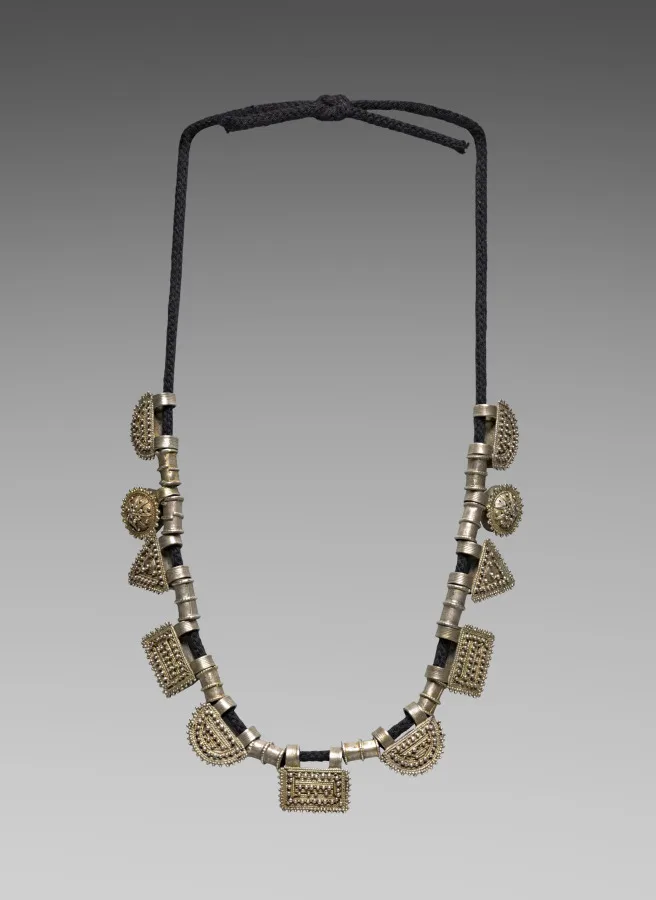
The compass rose emerged in the 1300s on portolan charts, the first accurate navigation maps of the Mediterranean. The earliest known example appears on the Carta Pisana from around 1290. By the 1400s, compass roses had become elaborate works of art, with gold leaf, multiple colours, and increasingly complex geometry.
Meanwhile, the labyrinth was having its own medieval moment. The Chartres labyrinth (circa 1205) is the most famous, but labyrinth patterns appear in churches across Italy, France, and Scandinavia. They represented the pilgrim's journey, the winding path of faith, and the idea that reaching God requires patience, not shortcuts.
The modern occult revival
The 19th and early 20th centuries saw a massive revival of interest in mystic symbols. The Hermetic Order of the Golden Dawn (1888-1903) drew on Egyptian, Kabbalistic, and Greek traditions. Aleister Crowley, regardless of what you think of him, popularised Egyptian eye symbolism in Western occultism. The pendulum entered mainstream esoteric practice during this period, adopted by dowsers, spiritualists, and early New Age practitioners.
By the mid-20th century, these symbols had migrated from occult lodges to pop culture. The eye symbols appeared in album art, fashion, and eventually, mainstream jewellery. The compass rose rode the wave of travel culture. The labyrinth was rediscovered by the wellness movement. And the Saint Benedict medal, always popular in Catholic communities, found new audiences among non-Catholics seeking powerful protective symbolism.
Today, all seven symbols coexist in the jewellery market, worn by people whose beliefs range from devout Catholicism to casual agnosticism to dedicated occult practice. The symbols don't care who wears them. They just keep meaning things.
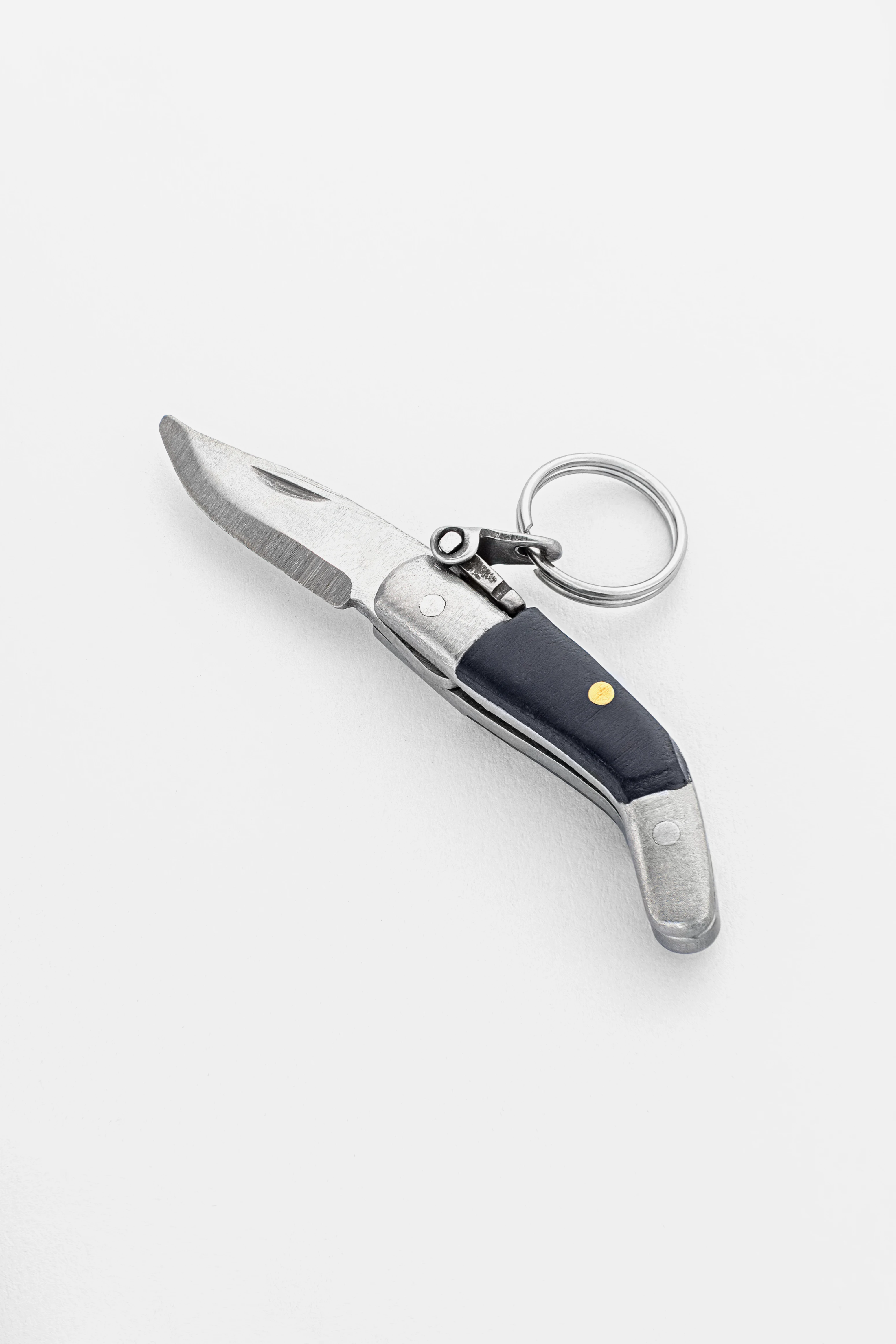
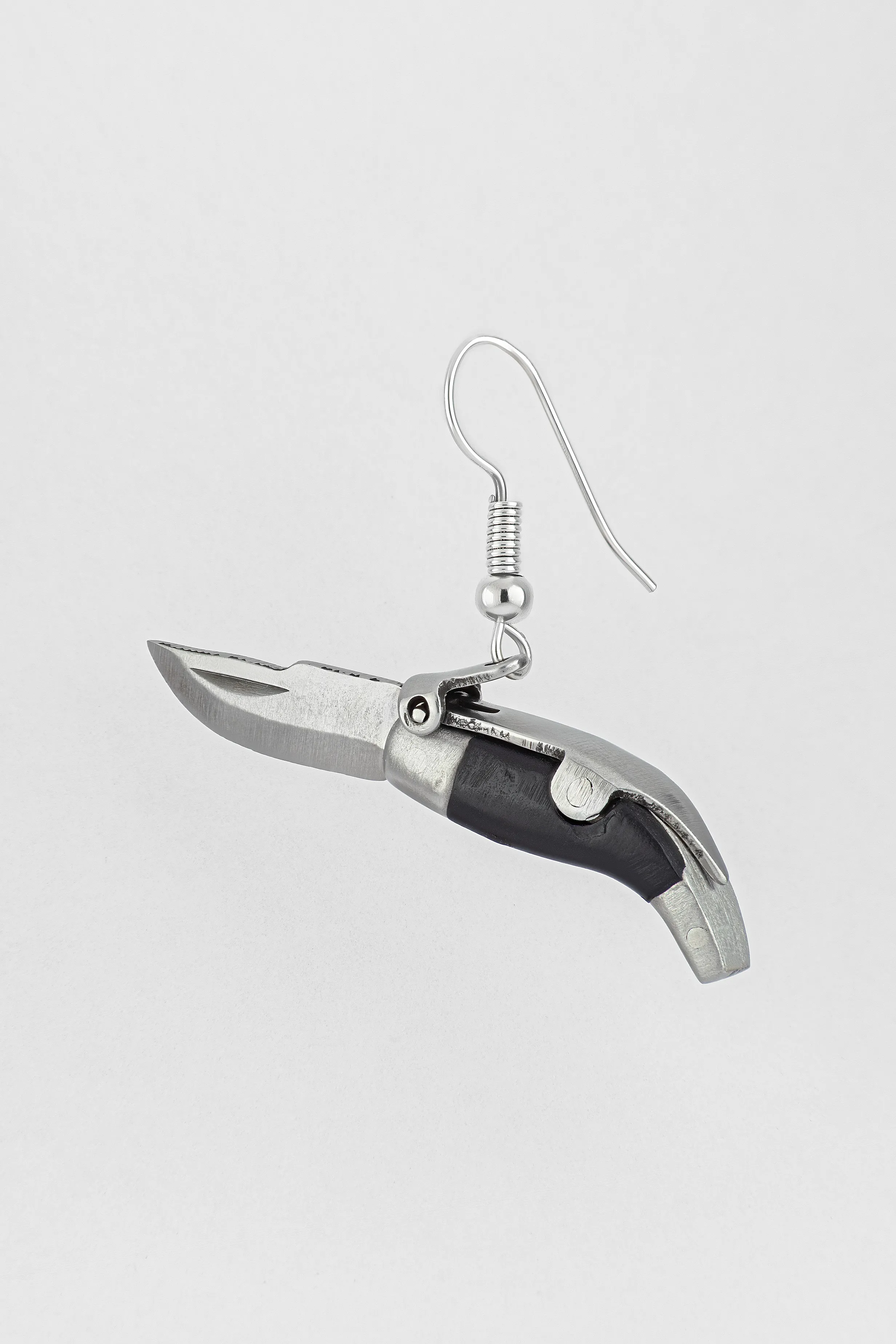
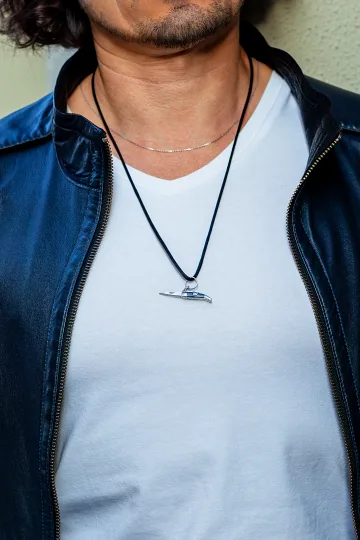
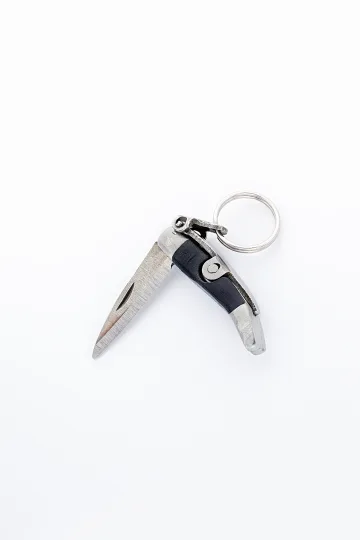
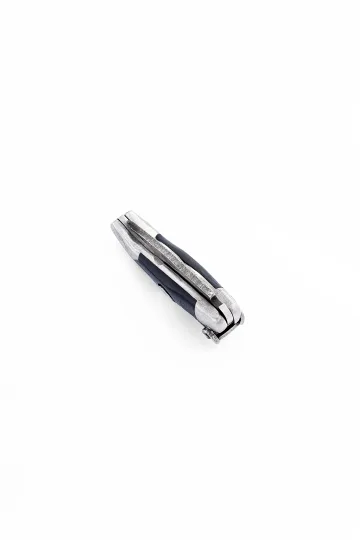
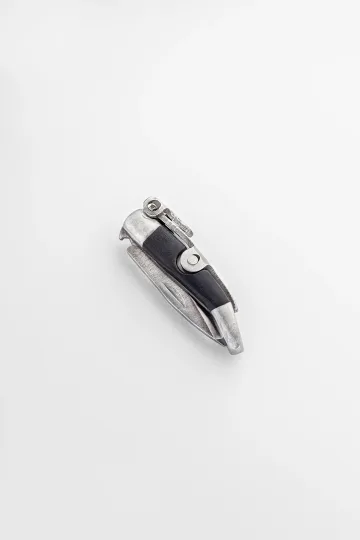
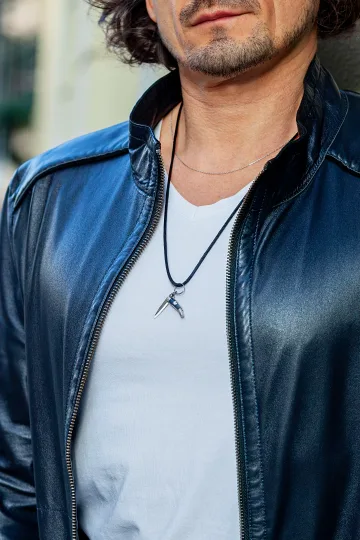
CAPAORA mini knife pendant
The 18th-century Spanish navaja in miniature: 40 mm of stainless steel, a real folding mechanism and a Palanquilla lock that clicks. An affordable gift to remember.
Authentic · Ships from Spain · 14-day returns
Materials: What Mystic Jewellery Is Made Of
The material you choose for a mystic symbol pendant isn't just about aesthetics. Different traditions associate specific materials with specific energies, and even if you're not particularly esoteric, the material affects how the piece looks, feels, and wears over time.
Gold and gold-plated metals. Gold has been associated with the sun, divinity, and incorruptibility since ancient Egypt. The Eye of Horus was most commonly rendered in gold for royalty and clergy. In modern jewellery, gold-plated stainless steel or brass offers the visual warmth of gold at an accessible price point. Gold tones work especially well with the All-Seeing Eye, the compass rose, and the Saint Benedict medal: symbols that benefit from a sense of weight and authority.
Sterling silver and silver-plated metals. Silver is the moon's metal, connected to intuition, feminine energy, and protection. If you're choosing an Eye of Isis or a labyrinth, silver-toned pieces tend to match the symbol's contemplative energy. Silver also ages beautifully, developing a patina that gives mystic jewellery an authentic, lived-in quality. For more on silver quality, check out our guide to sterling silver 925.
Black and dark finishes. Black enamel, blackened metal, or dark oxidised finishes add an edge that suits the more esoteric symbols: the All-Seeing Eye, the pendulum, the Eye of Horus. There's a reason gothic and occult-adjacent jewellery gravitates toward dark tones. They suggest mystery, depth, and a willingness to look into shadows.
Enamel and colour. Traditional Egyptian amulets used vibrant blue (lapis lazuli), green (malachite), and red (carnelian). Modern enamel jewellery can capture these colours in durable, eye-catching ways. Coloured enamel works particularly well for Eye of Horus and compass rose pieces, adding a visual pop that makes the symbol stand out from a standard metallic pendant.
Natural stones. Lapis lazuli for wisdom. Turquoise for protection. Amethyst for spiritual awareness. Carnelian for courage. The stone you pair with a mystic symbol can amplify its intended meaning: or simply add beauty.
Leave your email, we'll send your discount code. No spam, unsubscribe anytime.
The code arrives by email, valid on your first order.
Who It Suits
The All-Seeing Eye suits independent thinkers, philosophy enthusiasts, art history buffs, and anyone drawn to the intersection of the sacred and the mysterious. It's popular with both men and women and skews slightly toward those who enjoy provoking questions.
The Eye of Horus is universal. It appeals to Egypt enthusiasts, history lovers, people recovering from difficult periods, and anyone who wants protection symbolism backed by ancient pedigree. It's one of the most gifted mystic symbols because its meaning, "I want you to be safe," is unambiguous.
The Eye of Isis resonates most strongly with women, particularly those interested in goddess spirituality, lunar cycles, witchcraft, or feminine empowerment. It makes a meaningful gift for someone going through a transformative period.
The Compass Rose fits travellers, adventurers, sailors, pilots, graduates heading into the unknown, and anyone at a crossroads. It's the most universally giftable symbol on this list because almost everyone, at some point, needs a reminder that direction exists even when you can't see it.
The Labyrinth attracts meditators, therapists, yoga practitioners, introverts, and people who've navigated complicated personal journeys. It's introspective rather than outward-facing, which makes it a deeply personal choice.
The Pendulum appeals to tarot readers, energy healers, astrology enthusiasts, and anyone drawn to the aesthetic of divination tools. It's the most niche symbol on this list but also one of the most visually elegant.
The Saint Benedict Medal suits Catholics, Christians from other traditions who appreciate Benedictine history, and non-religious people who simply want the strongest protective symbol the Western tradition has to offer.
Mystic Symbols vs Protective Amulets
If you've read our guides to the nazar, hamsa, and cornicello, you might wonder how the symbols in this article relate to those protective amulets.
The short answer: there's overlap, but they're not the same category.
Protective amulets like the nazar, hamsa, and cornicello are primarily defensive. Their job is to block something: the evil eye, jealousy, bad luck, negative energy. They're shields. You wear them to keep harm away.
Mystic symbols are broader. The Eye of Horus is protective, yes, but it's also about healing and wisdom. The All-Seeing Eye is about awareness and truth, not blocking anything. The compass rose is about direction. The labyrinth is about inner exploration. The pendulum is about finding answers. These symbols do more than defend. They illuminate, guide, and transform.
The Saint Benedict medal sits in both categories. It's explicitly protective (the Latin inscriptions are exorcism prayers) but also deeply spiritual (it connects the wearer to the Benedictine tradition of prayer, work, and contemplation).
In practice, many people mix both categories on the same chain or in the same jewellery rotation. An Eye of Horus paired with a nazar. A compass rose stacked with a hamsa. A Saint Benedict medal layered with a cornicello. The traditions are different, but the human impulse behind them is the same: wear something that means something. Carry your beliefs close to your body. Let the symbols do what symbols have always done: remind you who you are and what you value.
Frequently Asked Questions
Is it disrespectful to wear an Eye of Horus if I'm not Egyptian?
The Eye of Horus has been worn across cultures for thousands of years. Greek, Roman, and Phoenician traders adopted it. It appears in archaeological sites from Britain to Afghanistan. The symbol moved beyond exclusively Egyptian use millennia ago. Wear it with respect for its origins, but know that cultural sharing of protective symbols has ancient precedent.
Can I wear multiple mystic symbols together?
Absolutely. There's no tradition that says mystic symbols cancel each other out. Egyptian amulets were routinely worn in groups. Modern layering of multiple symbols (an Eye of Horus with a compass rose, for example) is both aesthetically pleasing and symbolically rich. Just keep the styling cohesive.
Does the All-Seeing Eye have negative connotations?
The symbol itself is ancient and positive: divine awareness, truth, spiritual protection. The negative associations come from modern conspiracy theories linking it to the Illuminati, which lasted only nine years in the 18th century. The symbol's actual history spans thousands of years of positive religious and philosophical use. Context matters, but the symbol itself carries no inherent negative energy.
What's the difference between a labyrinth and a maze?
A maze has multiple paths, dead ends, and is designed to confuse. A labyrinth has a single continuous path that always leads to the centre and back out. You can't get lost in a labyrinth. It's a meditation tool, not a puzzle.
Is the Saint Benedict medal only for Catholics?
The medal is a Catholic sacramental and has the most power within Catholic tradition when blessed by a priest. But many non-Catholics wear it as a cultural symbol of protection against evil. In fashion and symbolic jewellery, it's appreciated for its powerful imagery and Latin inscriptions regardless of the wearer's faith.
Which mystic symbol is best for protection?
The Eye of Horus is the most universally recognised protective mystic symbol, with five millennia of continuous use. The Saint Benedict medal is the strongest protective symbol in the Christian tradition. For maximum coverage, some people layer both.
Can men wear Eye of Isis jewellery?
The Eye of Isis carries feminine energy, but there's no rule against men wearing it. In ancient Egypt, Isis was worshipped by everyone regardless of gender. If the symbol resonates with you, with its intuition, its magic, its transformative power, then gender isn't a barrier.
Do these symbols work if I don't believe in their spiritual meaning?
Symbols work on multiple levels. Even without spiritual belief, wearing a meaningful symbol creates a psychological anchor, a reminder of your values, intentions, or the qualities you want to embody. Psychologists call this "enclothed cognition." The object on your body influences how you think and feel, regardless of whether you believe in its supernatural properties.
Silver and gold jewellery, wedding bands, symbolic pendants, paired sets.
Send a friend a discount code, they save on their first order.
Conclusion
Seven symbols. Thousands of years. Millions of wearers. And still, every time someone puts on an Eye of Horus pendant or a compass rose necklace, the symbol is doing what it's done since the first Egyptian craftsman pressed a Wedjat into wet clay: it's making the invisible visible. It's turning an idea (protection, truth, direction, inner peace, balance, faith) into something you can touch, wear, and carry with you.
Mystic jewellery doesn't require initiation, belief in the supernatural, or a degree in Egyptology. It requires the same thing all meaningful jewellery requires: that you choose it because it says something you want said. Something about who you are. Something about what you've been through. Something about where you're headed.
The symbols are patient. They've been waiting for you longer than you've known they existed.
Buying it as a gift? Each one arrives ready to give.
 A branded Zevira box and a little card come with every order.





About Zevira
Zevira makes jewellery in the artisan tradition of Albacete, Spain. Mystic and eye symbols are part of our permanent collection: we work with the same imagery that artisans carved into amulets for centuries and translate it into a contemporary form.
What you'll find with us around mystic symbols:
- Eye of Horus and Eye of Ra pendants in sterling silver 925 and gold
- The All-Seeing Eye in a triangle, polished or with black enamel
- Light of Isis and pendants with lunar symbolism
- Compass rose pieces for anyone on the road or at a crossroads
- Labyrinth and pendulum designs for a contemplative look
- Layerable amulets for stacked protection combinations
Every piece can be personalised with engraving, with the option of personal engraving. Sterling silver 925 and 14-18K gold.
Wear the symbol, don't just read about it. These are in stock: