Hamsa Meaning: The Hand of Fatima Protective Symbol
Hamsa (from the Arabic khamsa, meaning "five") is a symmetrical open hand amulet with five fingers, worn for over 3,000 years to deflect the evil eye and attract blessings. In Islamic tradition it is called the Hand of Fatima, in Judaism the Hand of Miriam, in Middle Eastern Christianity the Hand of Mary. The number five is fundamental: five fingers, five pillars of Islam, five books of the Torah, five senses. The classic design features an eye in the centre of the palm for double protection.
Introduction: the hand that stops everything bad
In a tiny jewellery shop in Jerusalem's Old City, an elderly woman reached across the counter and pressed a small silver pendant into my friend's hand. It was a hand: five fingers, an eye in the centre of the palm. "For the baby," she said, glancing at the stroller.
My friend hadn't asked for it. She hadn't been browsing protection amulets. She was looking at earrings. But the woman insisted. "Every child needs one. It stops the looks." She meant the envious glances that strangers cast on a beautiful baby. In the Middle East, that kind of attention can be dangerous, or so the tradition holds.
That was four years ago. The pendant still hangs above the crib. My friend isn't particularly spiritual, doesn't follow any specific faith, and would laugh if you called her superstitious. But she won't take it down. "I don't believe in it, exactly," she told me once. "But I also don't not believe in it."
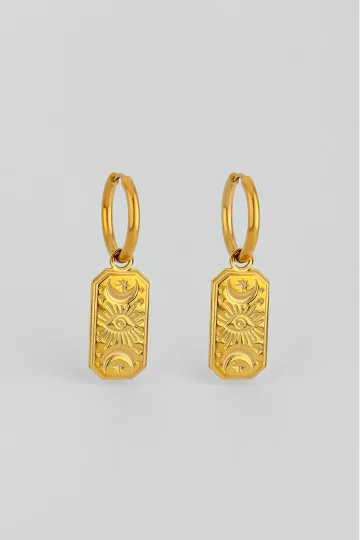
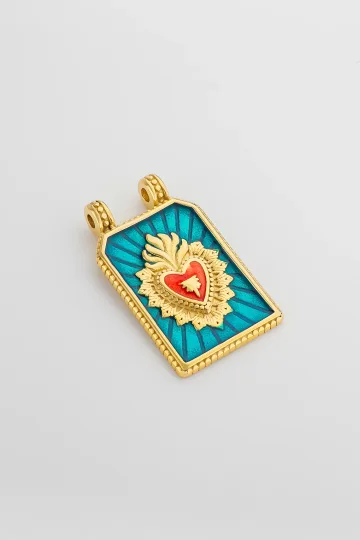
Wear the symbol, don't just read about it. These are in stock:
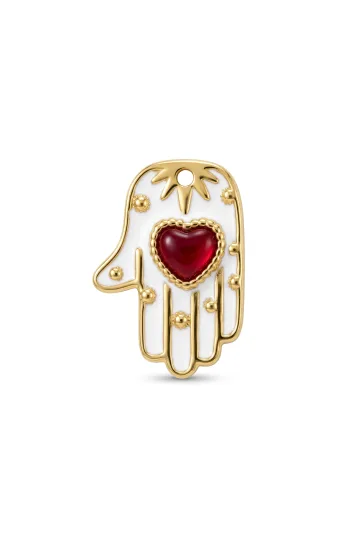
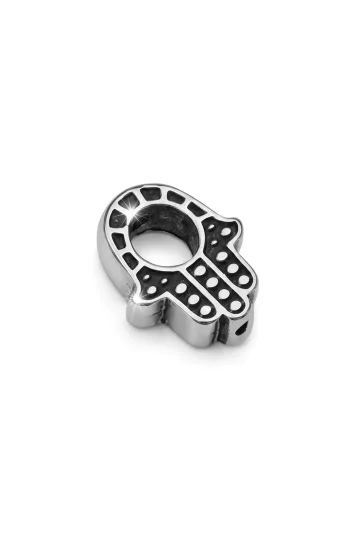
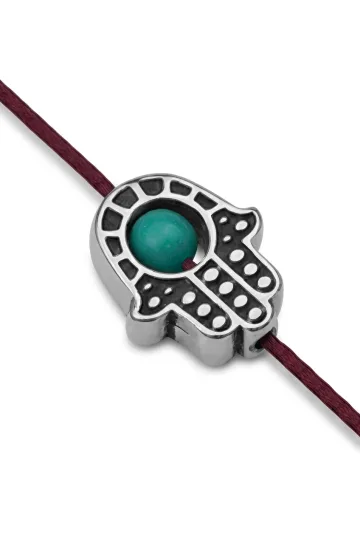
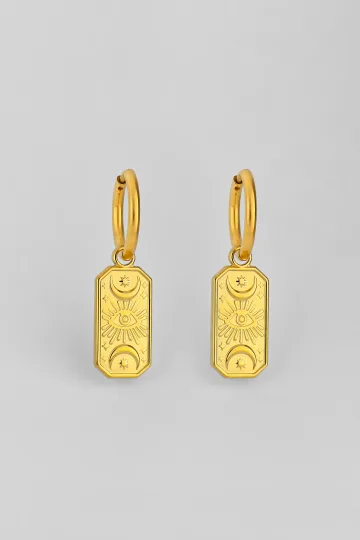
That's the hamsa in a nutshell. A symbol so old, so widespread, and so deeply embedded in human culture that even sceptics give it a nod. An open hand, raised toward the world, saying: "Stop. No further."
Why this symbol endures
The protective hand is one of those rare symbols that belong to everyone and no one. Muslims call it the Hand of Fatima. Jews call it the Hand of Miriam. Christians in the Middle East call it the Hand of Mary. And for millions of people who don't align with any faith, it's simply a beautiful, meaningful talisman that has worked for three thousand years and shows no signs of stopping.
In the jewellery world, this amulet is experiencing a genuine boom. Designers create versions ranging from minimalist pendants to extravagant statement pieces. Social media hashtags collect tens of millions of posts. Celebrities from Hollywood actresses to pop stars have been spotted wearing it. But unlike some trends that burn bright and fade, this one has staying power, because it isn't really a trend at all. It's something much older than trends.
In this article, we'll cover everything: where the symbol came from, what it means across different traditions, what it's made of, how to wear it (spoiler: the direction of the fingers matters), who to gift it to, and how it compares to the nazar and cornicello.
What Is the Hamsa
Definition and names
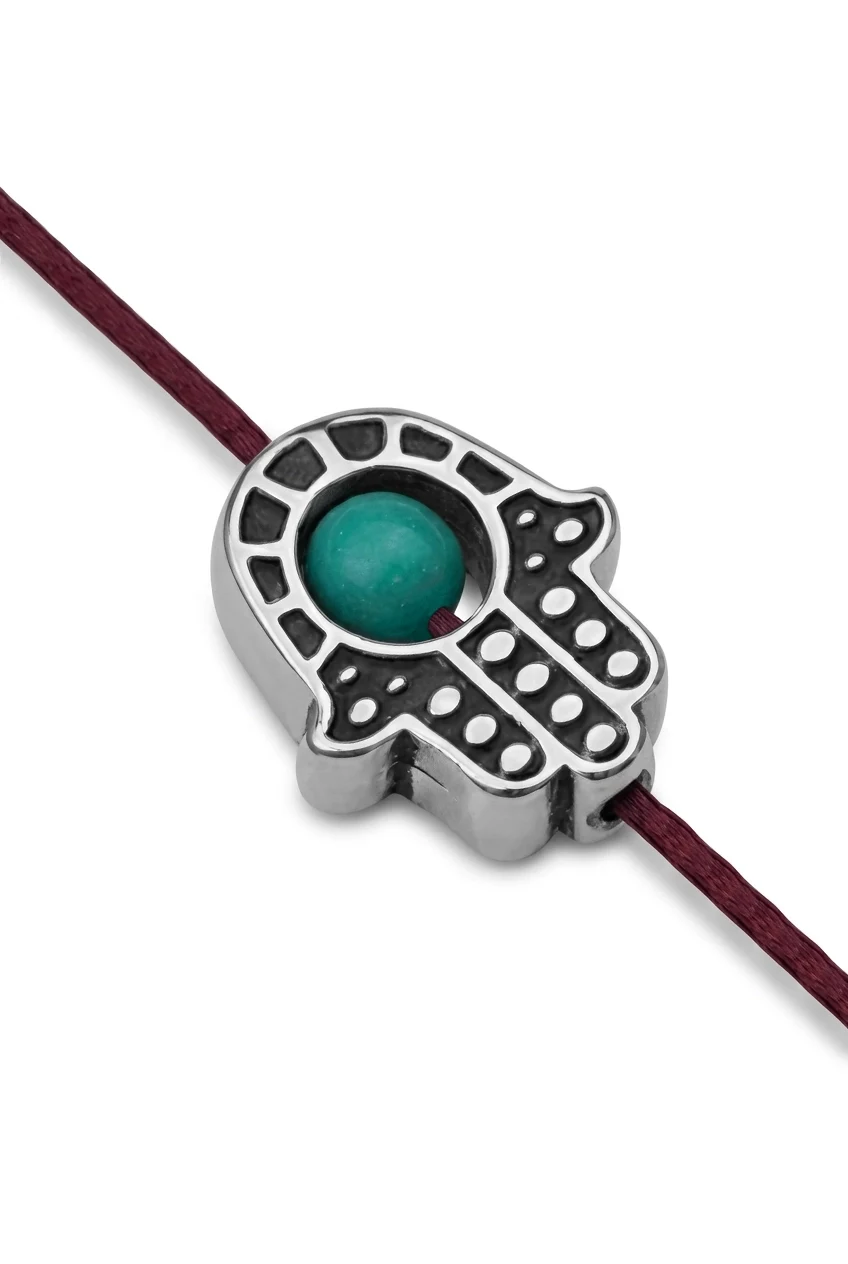
The protective hand amulet (from the Arabic "خمسة", meaning five) is a symmetrical open hand with five fingers, often featuring an eye or other symbol in the centre of the palm. The number five is fundamental. It underpins everything: five fingers, five pillars of Islam, five books of the Torah, five senses.
Different cultures and traditions give it different names:
- Arabic world: "khamsa" (خمسة), literally "five." The most widespread, culturally neutral term
- Islam: "Hand of Fatima" (كف فاطمة), after Fatima Zahra, daughter of the Prophet Muhammad
- Judaism: "Hand of Miriam" (יד מרים), after Miriam, sister of Moses and Aaron
- Middle Eastern Christianity: "Hand of Mary," after the Virgin Mary
- North Africa: "khumsa" or "tafust" (Berber), linked to fertility and feminine strength
- Turkey: often combined with the nazar (blue eye)
- English-speaking world: "hamsa hand" or "Hand of Fatima"
A common question: are the hamsa and the Hand of Fatima the same thing? Visually, yes: same symmetrical open palm. But the cultural context differs. "Hand of Fatima" specifically refers to the Islamic interpretation. "Hand of Miriam" is the Jewish one. "Hamsa" is the most universal term, used regardless of religious affiliation.
What the classic hamsa looks like
The classic form is a symmetrical hand with two large thumbs on either side and three middle fingers of equal length. Notice: it doesn't replicate the anatomy of a real hand. The thumb and pinkie mirror each other perfectly. This isn't a design error. It's intentional. Symmetry strengthens the protective effect.
Key visual elements:
Five fingers: the foundation. Sometimes spread apart, sometimes close together, sometimes slightly curved. But always five. Four or six would be a different symbol entirely.
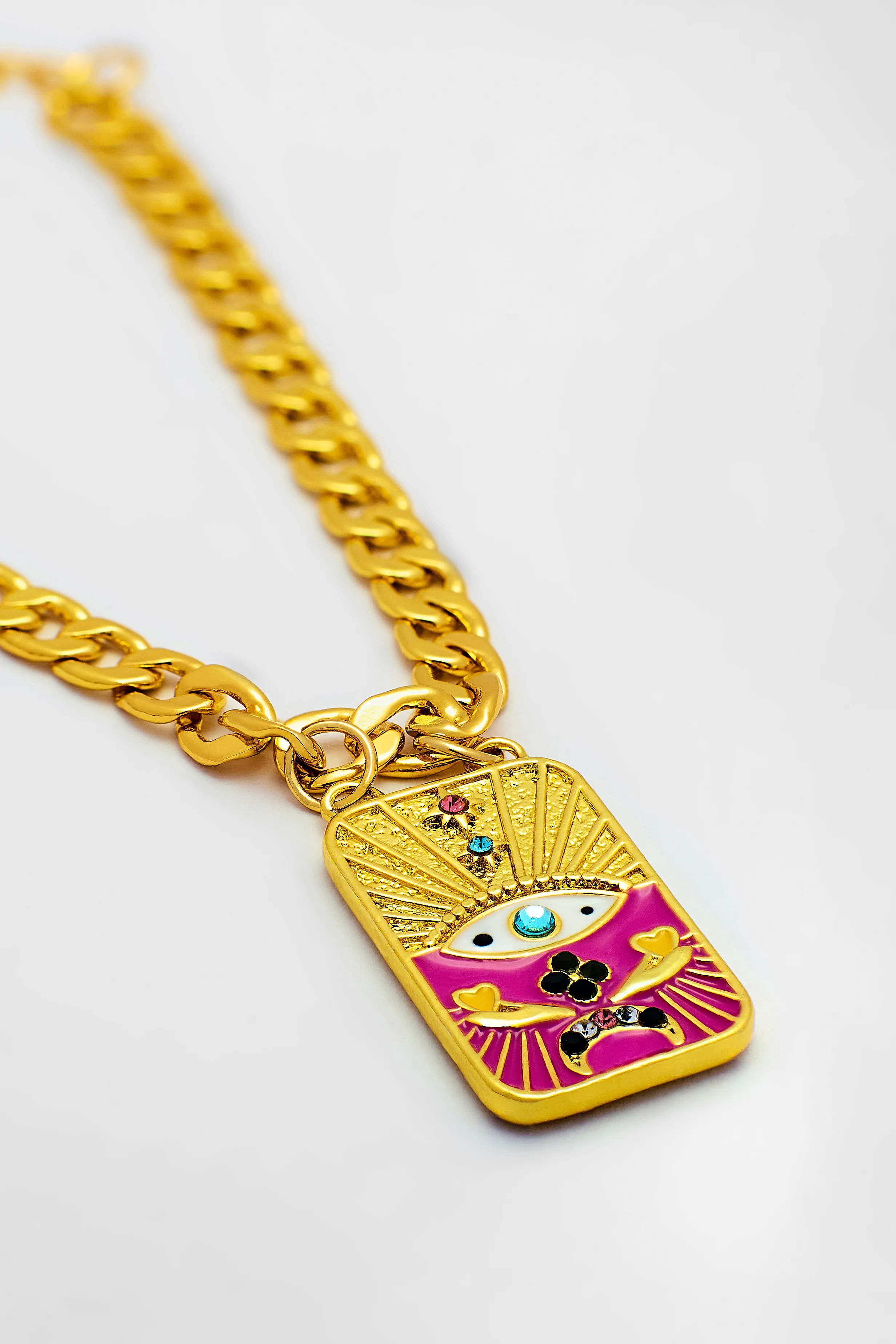
Eye in the centre of the palm: the most popular element, but not mandatory. Usually it's a nazar (blue evil eye). Combining two protective symbols creates, according to tradition, double protection. The eye spots evil; the hand stops it.
Ornamentation: filigree, engraving, enamel, gemstone inlay. Traditional motifs include fish (a symbol of luck in Judaism), the Star of David, Arabic calligraphy, floral patterns. Modern designs add hearts, trees of life, moon phases.
Orientation: the hand can point up (fingers upward) or down (fingers downward). This isn't just aesthetics. Direction changes the meaning. More on that in the "How to Wear" section below.
Sizes
Like any protective amulet, the hand comes in various sizes:
Miniature (10-15 mm): tiny pendants for bracelets and delicate chains. Subtle, understated, ideal for everyday wear. Often incorporated into layered necklaces.
Standard (20-35 mm): the classic pendant size. Noticeable enough to be appreciated, but not so large as to look over the top. The most popular option for jewellery.
Large (40-70 mm): statement pendants and brooches. A declaration, not a hint. Suited to evening looks or people who don't shy away from bold accessories.
Wall-sized (100-500 mm and beyond): decorative home amulets. Hung above doors, near entrances, in living rooms. In the Middle East and North Africa, enormous ceramic or metal hands are standard in every home.
Colours and what they mean
Colour is not decoration in this tradition, it is a second layer of the message, and the same hand reads differently depending on what fills it.
Blue is the default. Cobalt, turquoise, lapis: the whole Mediterranean and Middle Eastern colour vocabulary of protection lives in this range, for the simple reason that blue is the colour of the nazar and of the sky above the roof. A blue enamel eye set in a silver palm is the most common hamsa on earth.
Green carries growth, health and, in Islamic contexts, a particular dignity, since green is the colour associated with the Prophet. Berber work uses green enamel freely alongside blue.
Red is the colour of vitality and of the blocked gaze. Red thread tied around the wrist and a red-stoned hamsa do the same job in folk practice, and coral, which is red and marine at once, has been treated as protective around the Mediterranean since antiquity.
White and silver mean clarity and a clean start, which is why a plain unenamelled silver hand is the usual gift for a newborn or a bride.
Gold stands for permanence rather than wealth in this context. A gold hamsa is what a family hands down, and it is the version people choose when the piece is meant to outlive them.
Black appears mostly in contemporary design, where oxidised silver gives the hand a graphic, almost architectural look. It carries no traditional meaning, which makes it a good choice for anyone who wants the shape without the folklore.
Why five, and not any other number
The name says it outright: hamsa is simply the Arabic for five, and khamsa in Hebrew is the same word from the same Semitic root. The number is doing real work here.
Five fingers, five senses, and in Islam five daily prayers and five pillars. In Jewish practice the five books of the Torah sit behind the number, and the Hand of Miriam is counted as the fifth in the line of the family of Moses. Five appears in the Moroccan phrase khamsa wa khamis, five and five, spoken to deflect a compliment that has gone too far and might attract the eye.
There is a practical layer too. Amulets built on odd numbers are widespread across folk traditions because an odd number cannot be split evenly, and a thing that cannot be halved cannot, by the logic of the charm, be taken apart by whatever is trying to harm you. Five is the smallest odd number that maps onto a human hand, which is why it, and not three or seven, ended up as the hand's number.
The palm points up and rides an open collar. Hide it under a buttoned shirt and it sulks. No arguments.
What to Wear a Hamsa With
The hand has passed through dozens of looks with me, from jeans to evening silk. Here is what actually works, sorted by occasion.
What do I wear a hamsa with every day? For daily wear I recommend a silver hand on a thin chain over a white tee or a cotton shirt. The amulet sits at the collarbone and reads as a personal detail, not a piece you have to explain. Plain clothes in calm tones (beige, grey, olive, graphite) let the symbol come through, a busy print drowns it. Under a deep V-neck I suggest a slightly longer chain, under a round neck or a turtleneck a shorter one.
Is it right for the office? Yes, as long as you keep it minimal. I recommend a silver or gold hand on a thin chain under a blazer or a crisp shirt, as the single accent, nothing piled on. Keep the metal to one tone: cool silver with silver in your earrings and watch, warm gold with gold. That way the look reads composed and never distracts.
How do I build an evening look? For evening I choose a larger hand on a long chain over silk, velvet or a smooth off-shoulder dress. A dark fabric (wine, emerald, black) turns the metal and enamel into a jewel of a detail. For a special occasion I build a stack of two or three chains at different lengths: the hand on one, a nazar or a tree of life on the next.
Fingers up or down for the look? In meaning, up is protection and down is drawing luck in, but there is a styling difference too. A hand with fingers up reads sharper and more graphic, so I suggest it for minimal and office looks. Fingers down is softer and leans ethnic, which I choose for layers and evening. If you are unsure, start fingers up: it is the classic position.
Who does it actually suit? Almost everyone, but especially anyone who likes pieces with meaning and is not shy of ethnic detail. If you want grounding and calm, choose silver and a restrained size. If you want to make a statement, go for a gold tone and a larger shape. Two rules that never fail: choose the chain length for the neckline, not the other way round, and keep one meaningful amulet in focus with the rest in support.

Turn on your camera, pick earrings, a pendant or a ring, and see the piece on yourself in real time.
Switch items in one tap.
Everything runs in your browser: no photo or video is ever uploaded.
History: From Ancient Mesopotamia to Modern Jewellery
Prehistoric roots: the hand as humanity's first symbol
The hand is one of the earliest symbols in human history. Long before people learned to write, they left handprints on cave walls. The Cueva de las Manos in Argentina is covered with thousands of palm prints dating back 9,000-13,000 years. Similar prints appear in caves across Europe, Asia, and Africa.
Why did they do it? Scholars still debate. One theory: the hand is a declaration of presence. "I'm here. I exist." Another: the handprint is a magical gesture connecting the person to the spiritual world. A third: it's protection. An open palm pushes back evil spirits.
Whatever the true reason, the fact remains: humans have associated the open hand with something greater than just a body part for millennia. And it's from this ancient association that the symbol we now wear around our necks grew.
Ancient Mesopotamia and Carthage (3000-500 BCE)
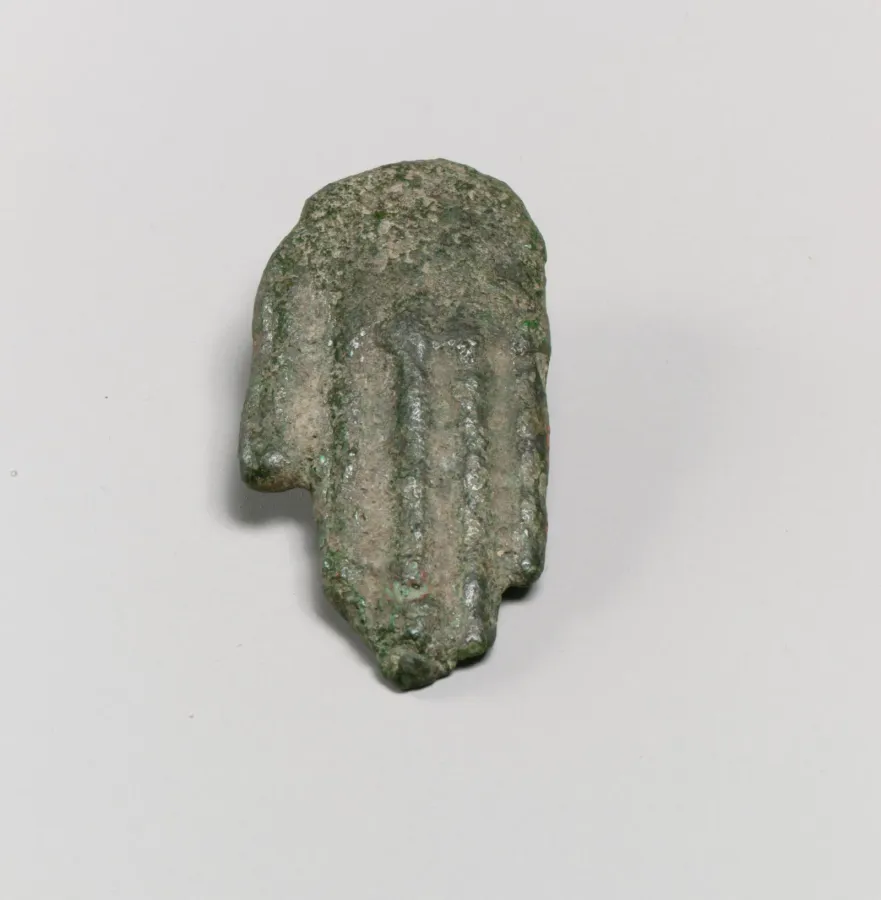
The first amulets in the form of an open hand appeared in the Middle East and North Africa long before Islam, Christianity, or even Judaism in its modern form.
Inanna and Ishtar: in Mesopotamia, the open hand was linked to the goddess Inanna (Sumerian) and Ishtar (Akkadian/Babylonian). This goddess embodied love, fertility, and war simultaneously. Her open palm meant both blessing and warning. Hand-shaped amulets have been found in the ruins of Ur, Babylon, and Nineveh.
Carthage and Tanit: the Phoenicians and Carthaginians associated the open hand with Tanit, patron goddess of Carthage. Archaeologists have found thousands of clay and metal hand-amulets in Punic burial sites across the Mediterranean: from Tunisia to Sardinia, from Sicily to southern Spain. Tanit was a goddess of fertility and celestial protection, and her open palm symbolised divine patronage.
This matters: the protective hand wasn't invented by any single culture or religion. It emerged independently in multiple civilisations simultaneously. Which suggests it's something deep, archetypal, hardwired into human consciousness at a fundamental level.
Jewish tradition: the Hand of Miriam
In Judaism, the hand amulet bears the name Hand of Miriam, after Miriam, elder sister of Moses and Aaron. Miriam is a central figure in the Exodus narrative. Tradition holds that she watched over the infant Moses when he was placed in a basket on the Nile. She brought his mother as a wet nurse to Pharaoh's daughter. Later, she became a prophetess and leader alongside her brothers.
The five fingers in Jewish tradition are often linked to the five books of the Torah (Pentateuch): Genesis, Exodus, Leviticus, Numbers, Deuteronomy. Wearing the amulet means carrying sacred knowledge and divine protection with you.
In the Jewish communities of North Africa and the Middle East (Mizrahi and Sephardi Jews), the hand amulet was enormously popular long before modern Israel. Silver hands adorned house doors, Torah scrolls, marriage contracts (ketubot), and children's cradles. In Morocco, Tunisia, and Yemen, jewellery hands were an essential part of a bride's dowry.
After the founding of Israel in 1948, the symbol gained new life. Mizrahi and Sephardi Jews brought their hand-wearing tradition with them, and gradually it became one of Israel's unofficial symbols. Today, you'll find the talisman in every jewellery shop in Tel Aviv and Jerusalem, often combined with the Star of David, chai (the Hebrew letter meaning "life"), or a nazar.
Islamic tradition: the Hand of Fatima
In Islamic tradition, the amulet is associated with Fatima Zahra, the youngest daughter of the Prophet Muhammad and his wife Khadija. Fatima is regarded as one of the most revered women in Islam, a model of patience, faith, and virtue.
The legend behind the name goes like this: one day Fatima was cooking when her husband Ali entered the house with a new wife (polygamy was standard in that era). Shocked and distressed, Fatima didn't notice she'd dropped the spoon and continued stirring the boiling soup with her bare hand. She felt no pain because of the intensity of her emotions. Ali, seeing this, sent the second wife away and remained faithful to Fatima.
The story itself is debated, and different Islamic scholars interpret it differently. But the image of Fatima's hand (a hand that endures, protects, and holds firm no matter what) became a powerful symbol of resilience and feminine strength.
The five fingers in the Islamic context are linked to the five pillars of Islam: shahada (declaration of faith), salat (prayer), zakat (almsgiving), sawm (fasting), and hajj (pilgrimage). Each finger represents one pillar of faith.
A caveat: some Muslim theologians have an ambivalent attitude toward talismans. Certain strict schools consider all amulets a form of shirk (associating partners with God). But in practice, across Morocco, Tunisia, Algeria, Turkey, and beyond, the Hand of Fatima is ubiquitous. It hangs in homes, shops, taxis, on pushchairs. Folk tradition proved stronger than theological debate.
Berber tradition
The Berbers (Amazigh) of North Africa have their own, often underappreciated connection to this symbol. For them, the open hand ("tafust") relates to fertility, feminine power, and harvest protection. Berber silver hands differ from Arab and Jewish ones: they're more geometric, with characteristic dots, triangles, and zigzag patterns.
The Berber tradition may be the oldest living one. The Amazigh inhabited North Africa long before the arrival of Arabs, and their protective symbols trace back to prehistoric times. When you see a particularly "raw" or geometric version from Morocco, that's likely Berber influence.
Spain and the Al-Andalus period (711-1492)
When the Moors brought Islam to the Iberian Peninsula, the hand symbol came with it. In the mosques, palaces, and homes of Al-Andalus, the open hand was everywhere. The Alhambra in Granada features the famous Gate of Justice with a large hand carved into the keystone of the arch. The five fingers symbolised the five pillars of faith.
After the Reconquista (1492), use of the open hand was banned by decree. The Spanish Inquisition viewed the amulet as evidence of secret adherence to Islam or Judaism. Moriscos (Muslims who had converted to Christianity) and conversos (converted Jews) faced serious punishment for possessing it.
But the symbol didn't vanish. It went underground. Hidden in walls, sewn into clothing, shrunk to tiny sizes. Some historians suggest that the modern popularity of the symbol in Spain is, in part, a return of what was violently taken away 500 years ago.
20th-21st centuries: from ethnic keepsake to global phenomenon
In the 20th century, the palm amulet travelled with migrants from North Africa and the Middle East. Jewish and Arab diasporas brought it to France, Canada, Latin America, Australia. Each community preserved its own version and its own story.
The global tipping point came in the 2000s, when the fashion for meaningful accessories collided with the boom in yoga, meditation, and "spirituality without religion." The protective hand was the ideal symbol for this movement:
- Visually striking and instantly recognisable
- Rich in meaning but not tied to one religion
- Accessible across every price range
- Photogenic (ideal for social media)
- Tells a story
Hollywood and pop culture sealed the deal. The wave of interest in Kabbalah from the late 1990s onward brought the amulet into the public eye, and over the years many performers and public figures have been seen with hand pendants and bracelets. But as with the nazar, celebrity attention didn't make the symbol popular. It simply joined an existing wave.
Today, the market for hand-symbol jewellery is enormous. From mass-market to luxury houses. From minimalist silver pendants to diamond brooches. The symbol adapts to any taste and budget without losing its meaning.
Hamsa Meaning: How the Open Palm Blocks Negative Energy
Protection from the evil eye
The first and primary function is protection from the evil eye. The concept of the evil eye (Arabic "al-ayn", Hebrew "ayin hara", Turkish "nazar") is the belief that an envious or admiring gaze can cause harm. The open palm literally says to that gaze: "Stop."
The mechanism (within the tradition) works differently from the nazar. The nazar acts as a mirror: it reflects a negative gaze back to its source. The hand works as a shield: it blocks negativity, preventing it from going further. It doesn't reflect; it stops.
If you add an eye to the centre of the palm (one of the most popular designs), you get double protection: the eye spots the threat, and the hand blocks it. Scout and shield. Two in one.
The evil eye in this tradition isn't necessarily deliberate malice. You can cast it accidentally. A mother gushing too enthusiastically about a neighbour's child. A colleague who's genuinely impressed by your new car. A friend who says "everything's going so well for you." The intention might be kind, but the energy of admiration mixed with a drop of envy (and it's always there, the tradition says) can cause harm.
The amulet absorbs that blow. It stands between you and the world, filtering energy. Good stuff passes through; bad stuff gets stopped. Like a customs checkpoint, but for emotions.
Blessings and abundance
Protection from evil is only one side of the coin. The other, equally important, is attracting good.
In Jewish tradition, the open palm is associated with the priestly blessing of the kohanim. When a kohen blesses the congregation, he raises his hands with fingers spread. This gesture directly parallels the hand amulet. Wearing it means carrying a blessing with you, constantly.
In Islamic tradition, the open hand relates to generosity and giving. "The hand that gives is above the hand that receives" is a well-known hadith. The open hand symbol recalls this principle and, according to belief, attracts abundance to the wearer.
In Berber culture, the open palm symbolises fertility. It was painted on granaries, hung above house entrances, applied to grain storage vessels. The idea is simple: the open hand invites abundance to enter and stay.
Many modern wearers choose the amulet precisely to attract positive things. Not so much "protect me from bad" as "bring me good." And the direction of the palm (up or down) matters a great deal here. More on that in the "How to Wear" section.
The hand across cultures and faiths
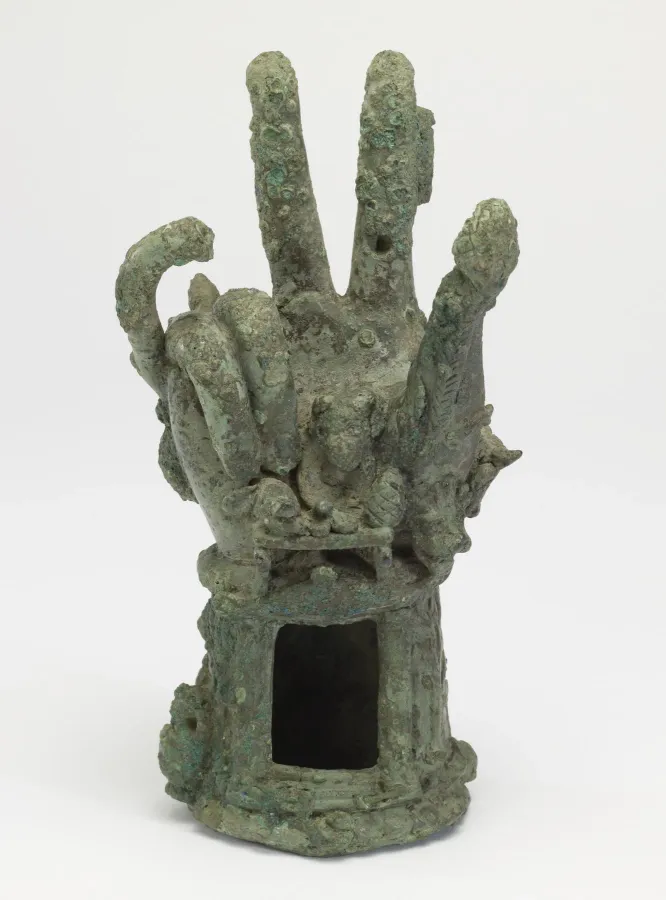
Something remarkable: the open hand as a symbol of protection and blessing appears in virtually every major civilisation. This can't be coincidence.
Hinduism and Buddhism: the abhaya mudra (gesture of fearlessness) is an open right palm facing the viewer. Buddha and Shiva are depicted with this gesture. It means: "Don't be afraid. I protect you." The parallel with the Middle Eastern hand is obvious, though there may be no historical connection. People on different sides of the planet simply reached the same conclusion: open hand = safety.
Christianity: the blessing hand of a priest in Orthodox and Catholic traditions. The Hand of God (Manus Dei) in medieval art: clouds part and an enormous open palm emerges. In Coptic Christianity, the hand-with-cross is used as a protective sign.
Ancient Egypt: beyond the Eye of Horus, Egyptians used hand-shaped amulets. The "Hand of Atum" symbolised the creative power of the creator god.
Aztecs and Maya: an open hand with an eye in the palm appears in Mesoamerican art. This is one of those puzzles without a simple explanation. There was no contact between Mesoamerica and the Middle East before Columbus. Yet the symbol is the same.
Australian Aboriginal cultures: handprints in rock art, often interpreted as spiritual protection and connection to ancestors.
All these parallels point to one thing: the open hand is an archetype. Something so deeply embedded in human consciousness that it surfaces again and again, regardless of geography, era, or culture. Perhaps because the first thing a mother does when protecting her child is to put her hand forward.
Materials: What the Hamsa Is Made Of
Sterling silver: the traditional choice for hamsa pendants
Silver is the classic, most traditional material for the protective hand. In the Middle East and North Africa, silver has always been considered a "pure" metal with its own protective properties. In Berber and Sephardi Jewish traditions, silver amulets held special status: gold was for beauty, silver was for protection. A sterling silver hamsa pendant carries that lineage.
Sterling silver (925) is the modern standard for hamsa hand pendants and evil eye jewellery. 92.5% silver and 7.5% copper for durability. Strong enough for daily wear while maintaining that characteristic cool lustre that pairs so well with the blue enamel of an evil eye centre.
A hamsa hand sterling silver pendant with an evil eye in the centre is probably the most popular protection amulet combination in the world right now. Two symbols, two methods of defence, one piece. The silver gives it weight and seriousness. The enamel gives it colour and tradition.
Look for the "925" hallmark on the bail (the loop where the chain goes through) or on the back of the pendant. If there is no stamp, it is likely silver plated, not solid. Plated pieces look identical at first but the coating wears off within months.
Pros: affordable, traditional, hypoallergenic (in most cases), ages beautifully (patina can add character). Cons: tarnishes over time (needs occasional cleaning), softer than gold, can scratch.
Gold and gold plating
Gold versions are a step up. Yellow, white, and rose gold, each with its own character. Yellow gold is classic, particularly popular in Arab and Indian jewellery traditions. White gold is more modern, more European. Rose gold is the trend of recent years, popular with younger wearers.
Important distinction: solid gold (of various karats) versus gold plated. Plated pieces look golden, but a thin layer of gold covers a base metal. More affordable, but the coating wears off over time. If the seller doesn't specify, ask.
Enamel
Vibrant enamel colours make the amulet especially eye-catching. Traditional colours: blue (protection), red (love and passion), green (health and growth), white (purity). Cloisonne enamel creates a luxurious look, hot enamel is the most durable, and cold enamel is the most affordable.
Ceramics and clay
For wall amulets, ceramics are the ideal material. They allow large forms with rich detail. A Moroccan ceramic hand with traditional painting is a work of art in its own right. Glazed ceramics resist moisture and last decades.
Semi-precious stones
Turquoise, lapis lazuli, moonstone, amethyst: stones are often set into the centre of the palm or used for the eye. Each stone brings its own energy (if you follow crystal healing): turquoise protects, lapis lazuli brings wisdom, moonstone connects to intuition. But even without the esoterics, a stone in the centre of the palm simply looks beautiful.
Wood
Wooden amulets are a budget-friendly but stylish option, especially for decor. Olive wood (symbolic for the Middle East), walnut, ebony. Carved wooden hands are common finds at bazaars in Marrakech, Fez, and Jerusalem.
Glass and crystal
Murano glass, Bohemian crystal, handblown glass from Hebron: all these techniques are used to create vivid, translucent amulets. A glass hand with a nazar in the centre is one of the most popular souvenirs from the Middle East.
Caring for your amulet
Silver tarnishes, and a hamsa worn daily will darken first in the recesses between the fingers and inside the engraving. That is not damage. Many owners prefer it, because the contrast makes the pattern legible. If you want the shine back, a soft silver cloth along the flat surfaces is enough, and a soft toothbrush with warm soapy water clears the grooves. Silver dips strip everything including the intentional oxidation, so keep them away from filigree work.
Enamel dislikes sudden temperature change and hates ultrasonic cleaners, which can crack the glass layer or lift it off the metal. Wipe enamel with a damp cloth and dry it at once. Turquoise, coral and lapis are all porous, so perfume, hairspray and hand sanitiser will dull them over time. Put the amulet on last and take it off first.
Hard water is the quiet enemy in much of Britain, particularly across the south and east, where limescale leaves a grey film in the engraved lines. A rinse in cooled boiled water after cleaning solves it. Store the piece flat in a soft pouch rather than looped over a hook, since a fine bail can distort under its own chain over years.
Hallmarks and what they tell you
British buyers have an advantage here. Silver sold in the UK above the weight threshold must carry a hallmark from an Assay Office, and the marks from London, Birmingham, Sheffield and Edinburgh give you the metal fineness, the office and the date letter. A "925" stamp on its own is a maker's claim; a full hallmark is an independent test.
Imported pieces from Morocco, Tunisia or Israel often carry only a maker's stamp or nothing at all, which does not make them fake. Traditional workshops have never worked to a British assay system. What it does mean is that you are trusting the seller rather than a laboratory, so ask directly what the alloy is. Anything sold as "silver-tone", "silver-plated" or "German silver" contains no silver at all in the last case, since German silver is a copper-nickel-zinc alloy, and nickel matters if you react to it. Within the EU and the UK, nickel release from jewellery is limited under the REACH regulation, which is worth knowing when you buy an unmarked amulet abroad.
Customer reviews
Zevira is a real jewellery shop. Genuine payments, deliveries and customer thank-yous.
🥰🥰🥰 gracias
Ok, ¡gracias! 🙂
How to Wear the Hamsa
Fingers up vs fingers down
This is one of the most common questions. And the answer matters.
Fingers up: the classic protective position. A hand facing upward says "stop." It blocks negative energy, repels the evil eye, creates a barrier between you and external threats. This is a defensive gesture. If your primary goal is protection from envious glances, gossip, and negativity, choose fingers up.
In tradition, this is considered the "stronger" position. The palm is raised like a traffic officer's hand: "Stop. You shall not pass." Many classic Middle Eastern amulets are depicted this way, with fingers pointing upward.
Fingers down: attracting the positive. An inverted palm "scoops" blessings from the universe: luck, love, health, fertility, financial wellbeing. This isn't protection. It's an invitation. The hand says: "Give me good things."
If you're acquiring an amulet during a period when you need to attract more than defend (new job, new relationship, planning a family), fingers down may be the right choice.
Both at once: why not? Some people wear two pieces: one with fingers up (protection), another with fingers down (attraction). A pendant plus a bracelet, for instance. A dual approach for those who don't want to choose.
Necklaces, bracelets, earrings
Pendant on a chain: the most popular method. The hand hangs close to the heart, guarding what matters most. A thin chain with a small pendant for minimalists. A chunky chain with a large amulet for those who want to make a statement. Layered chains with the hand alongside other pendants (nazar, tree of life, crescent moon) for layering enthusiasts.
Bracelet: the second most popular option. A delicate chain bracelet with a small charm. Or a solid bangle with a relief hand. Or a string with several beads. The wrist is an excellent spot for an amulet: it's always visible, you touch it several times a day, and it reminds you of protection every time you glance at your watch.
Earrings: less traditional but increasingly popular. Small drop earrings with the hand look graceful and unusual. Asymmetric earrings (one hand, one eye) are a fashionable touch in recent years.
Ring: for those who prefer subtlety. A ring with a relief or engraving of the hand on the inner surface, a secret only you know.
Brooch: an overlooked but powerful option. A large hand brooch on a jacket lapel or scarf. Especially striking in an ethnic style.
Anklet: a summer option. A delicate chain with a small hand on the ankle. Protection that only you know about (and anyone looking at your feet).
In your home
The hand amulet in the home is a tradition as old as wearing it on the body. And there are guidelines:
Above the front door: the classic placement. The hand greets everyone who enters. Any negativity stays on the doorstep. Like a doorman checking every guest's intentions. Fingers usually point up, the "stop" position.
In the hallway: if you'd rather not hang something above the door (not all landlords approve), place it in the hallway. A shelf, console, or wall near the mirror. Same effect, just slightly inside.
In the nursery: the tradition of hanging an amulet above a child's cot is shared across all three Abrahamic religions. Children are considered especially vulnerable to the evil eye (because strangers frequently compliment them).
In the home office: protection from professional envy. Colleagues, competitors, "well-wishers": the work environment is full of potential negativity sources. A small hand on the desk or office wall works as a silent guard.
In the car: hanging from the rear-view mirror. Protection on the road. Especially popular in the Middle East and Mediterranean, where every other taxi is decorated with a protective charm.
Not in the bathroom or toilet: this is the only strict restriction. Amulets aren't placed in "impure" spaces. This rule is shared across most cultures that use protective symbolism.
Pairing with other jewellery
A hamsa is a figurative pendant with a strong outline, so it behaves like a focal point whether you intend it to or not. The simplest approach is to let it lead: one hand on a fine chain, everything else quiet.
Layering works if you stagger the lengths by at least four or five centimetres so the pieces do not collide and tangle. A short chain with a small hamsa over a longer plain chain reads deliberate. Two pendants at the same drop reads accidental.
Mixing protective symbols is traditional rather than transgressive. Hand plus eye is the single most common combination in the world, and hand plus horn is standard in southern Italy. Adding a third symbol is where it starts to look like a collection rather than a choice.
On metals, keep the hamsa and the chain in the same family unless you are mixing deliberately across several pieces. Oxidised silver sits well against black, charcoal and denim; yellow gold lifts warm neutrals, camel and cream. If the amulet is enamelled, treat the enamel colour as part of the outfit rather than as a neutral, because a cobalt blue eye against a bright print fights for attention.
Who Should Wear a Hamsa
A universal gift
Unlike many protective symbols tied to a specific religion or culture, the hand amulet is one of the most universal gifts. It suits:
New mothers: protection for mum and baby. The tradition of gifting an amulet at a child's birth is alive in Jewish, Arab, and Berber communities. But beyond those, it's a wonderful gesture: "I wish you both protection and health."
People starting a new chapter: new job, relocation, wedding, university. Any transitional period when a person is especially vulnerable and needs support.
Travellers: before a long journey. In Arab and Jewish traditions, it's customary to gift an amulet before a trip, to protect from the dangers of the road.
People who've been through a tough time: illness, divorce, job loss, bereavement. The amulet as a symbol of new beginnings and protection from further blows.
Lovers of ethnic jewellery: simply because it's beautiful. Not everyone who wears the hand around their neck believes in mysticism. For many, it's primarily a stylish accessory with a deep history.
Yourself: and that's perfectly fine. Unlike some Slavic charms that "must be gifted," this amulet can and should be bought for yourself. Choosing your own protection is your personal right.
How to give one
There is no ceremony attached, and inventing one usually makes the moment stiffer than it needs to be. A few practical points do help.
Say what you mean plainly when you hand it over. The traditional formula is a wish rather than an explanation: protection, health, an easy road. Long speeches about the evil eye tend to land badly on people who do not share the belief.
Give it unworn and clean, in its own pouch or box, and let the recipient be the first to put it on. If you know the person's metal, match it, because a silver wearer rarely converts to gold on the strength of a gift. If you do not know, silver is the safer default and the more traditional one.
Do not attach conditions. An amulet given with instructions about which way up to wear it, or a warning that it stops working if removed, turns a present into an obligation. Hand it over and let them decide.
Occasions that suit the gift
A birth. The oldest use of all, and still the most common one across Jewish, Arab and Berber communities. A small silver hand for the pram or the nursery wall rather than for the baby.
A wedding. Sephardic families have passed hamsas down the female line for generations as part of the dowry, and the piece often gains a stone or an engraved date at each handover.
A housewarming. A wall hamsa above the door is the standard version. It is one of the few amulets that reads as decor to guests who do not know the tradition, which makes it an easy gift for a mixed household.
A new job, a move, a first term at university. Transition points are exactly where the amulet is traditionally used, and the gesture translates well even to a sceptic.
Recovery, or the end of a hard stretch. Given quietly, without commentary. The symbolism does the talking.
A milestone birthday. Gold is the usual choice here, since the point is permanence rather than protection from any particular threat.
Who might want to think twice
Despite its universality, there are nuances:
Strictly religious people: some branches of Islam and Judaism don't approve of amulets. If you're gifting to a deeply devout person, make sure they won't take it as an affront. Better to ask first.
People sensitive to cultural appropriation: it's a complex topic. On one hand, this symbol is used by multiple cultures and belongs exclusively to none. On the other, some people react strongly to "their" symbol being worn by outsiders. Context matters.
Upload a photo of your pet, someone you love, or an object. We'll build a 3D model and hand-cast it in pewter.



Hamsa, Nazar, and Cornicello: What's the Difference
Three of the most popular protective amulets from the Mediterranean and Middle East. They're often displayed side by side in jewellery shop windows, and it's not always clear how they differ. Let's break it down.
Hamsa (Hand of Fatima / Hand of Miriam)
- Shape: open hand with five fingers
- Origin: Middle East, North Africa (3,000+ years)
- Mechanism: blocks negative energy like a shield
- Religions: Islam, Judaism, Christianity, Berber tradition
- Bonus: attracts blessings and abundance
- Material: silver, gold, ceramic, enamel
- Read more: you're already here
Nazar (evil eye amulet)
- Shape: concentric circles forming an eye (blue, white, light blue, black)
- Origin: Turkey, Greece, Middle East (5,000+ years)
- Mechanism: reflects the evil gaze back to its source, like a mirror
- Religions: folk tradition, not tied to a specific faith
- Bonus: "sees" hidden intentions
- Material: coloured glass, enamel, gemstones
- Read more: Nazar: everything about the evil eye amulet
Cornicello (Italian horn)
- Shape: curved horn or chilli pepper
- Origin: Italy, Ancient Rome (2,500+ years)
- Mechanism: pierces negative energy with its pointed tip
- Religions: pre-Christian Roman, Italian folk tradition
- Bonus: attracts luck, especially in business
- Material: red coral, gold, silver, horn
- Read more: Cornicello: the Italian horn of luck
Can you combine them?
Absolutely. And it's not just "possible." It's one of the most popular practices. A hand with a nazar in the centre is arguably the best-selling protective jewellery design in the world. The eye spots the threat; the hand blocks it. Two symbols, two mechanisms, double protection.
Hand plus horn is a less common but perfectly valid combination. Especially popular in southern Italy, where both symbols have deep roots.
All three together, for those who want maximum coverage. Layered bracelets or necklaces with three charms: hand, eye, horn. It might seem like overkill, but if you believe in the power of symbols, better to over-protect than under-protect.
Which one to choose
If you are picking one rather than collecting all three, the decision usually comes down to how visible you want the symbol to be and which tradition you have some connection to.
Choose the hamsa if you want the broadest, least sectarian option. It is shared across Islam, Judaism, Middle Eastern Christianity and Berber practice, it works at any size from a charm to a wall piece, and its outline reads as ornament to anyone who does not recognise it.
Choose the nazar if you want the symbol at its most compact and most portable. A blue glass eye is instantly recognisable across the entire eastern Mediterranean, costs little, and is traditionally replaceable rather than precious, since a cracked nazar is understood to have done its work.
Choose the cornicello if your roots or your affection are Italian. The horn is specific in a way the other two are not, and worn outside that context it often needs explaining.
Choose a combination if you cannot decide, which is what most of the region does anyway. Hand with an eye in the palm is the classic pairing and the best-selling protective design in jewellery worldwide.



Frequently Asked Questions
What is a hamsa?
A hamsa is a symmetrical open-hand amulet with five fingers, often featuring an eye in the centre of the palm. It originates in the Middle East and North Africa and is shared across Islam, Judaism, Middle Eastern Christianity, and Berber tradition. The word "hamsa" comes from the Arabic for "five," referring to the five fingers. The amulet is used for protection against the evil eye and to attract blessings. It is one of the oldest and most universal protective symbols in human history, with roots going back at least three thousand years.
How do you wear a hamsa?
You wear a hamsa as a pendant on a chain, as a charm on a bracelet, as an earring, or as a wall amulet at home. The most important consideration is the direction of the fingers. Fingers pointing up means active protection: the hand "stops" negative energy. Fingers pointing down means attracting positive energy: the hand "scoops" blessings. There is no rule about which is correct. Both are traditional, and the choice depends on what you want from the amulet at the moment you wear it. Many people own one of each.
What's the difference between the Hand of Fatima and the Hand of Miriam?
Visually, none. They are the same symbol. The difference is cultural and religious. "Hand of Fatima" is the Islamic name, referring to Fatima Zahra, the daughter of the Prophet Muhammad. "Hand of Miriam" is the Jewish name, referring to Miriam, sister of Moses and Aaron. Middle Eastern Christians call it the Hand of Mary, after the Virgin. "Hamsa" itself is the most neutral, culturally universal term, simply meaning "five" in Arabic and Hebrew. The amulet predates all three Abrahamic religions, and each tradition has adopted it under its own name.
Is the hamsa a Muslim symbol?
No, not exclusively. It's used by Muslims (Hand of Fatima), Jews (Hand of Miriam), Middle Eastern Christians (Hand of Mary), and people without a specific faith. The symbol itself is older than all three Abrahamic religions. "Hamsa" from the Arabic for "five" is the most neutral, universal term.
Can I wear a hamsa if I don't believe in the evil eye?
Of course. Millions of people wear the amulet as a beautiful piece of jewellery with a long history, without any mystical component. It's like wearing a cross without being Christian, or a Claddagh ring without being Irish. A symbol can simply be a symbol.
What should I do if my hamsa breaks?
Depends on your beliefs. Some traditions hold that a broken amulet "took a hit for you," so thank it and replace it with a new one. Others see it as just breakage, nothing supernatural. The rational approach: if it's broken, you need a new one. Don't glue it, don't repair it. An amulet should be whole.
Does the hamsa need to be gifted, or can I buy one myself?
Either is fine. Unlike some traditions where a charm "must be gifted," there's no such rule here. Buying one for yourself is perfectly normal. A gifted one is considered slightly "stronger," but that's a subtle nuance, not a rigid requirement.
Which hand should I wear a hamsa bracelet on?
The left, according to tradition. In Kabbalah and many Middle Eastern practices, the left side of the body is the "receiving" side, and the right is the "giving" side. A protective bracelet on the left wrist filters incoming energy. But it's not a strict rule. Wear it on whichever wrist is more comfortable. It works either way.
Can I wear a hamsa with a cross or Star of David?
Yes. In Israel, the hand amulet with a Magen David (Star of David) is one of the most popular designs. Across the Middle East, the hand talisman with Islamic calligraphy or Quranic verses is commonplace. Combining protective and religious symbols is a centuries-old practice, not a modern invention.
Why does the hamsa have two thumbs?
Because it's symmetrical. It's not a depiction of a real hand. It's a stylised symbol. Symmetry strengthens the protective properties (according to tradition) and makes the form more visually harmonious. The thumb and pinkie mirror each other, creating a stable, balanced shape. Like two wings of a bird or two pillars of a temple.
Does the hamsa work for home protection?
Yes, and it's one of the oldest applications. Wall-mounted hand amulets are hung above doors, in hallways, in nurseries, in home offices. In the Middle East and North Africa, a home without one is the exception, not the rule. Ceramic, metal, wooden, mosaic: the options are endless.
Can I wear several hamsas at once?
Yes, and in North Africa it is common: a pendant, a bracelet charm and a hand above the front door in the same household. On the body, two is usually the visual limit before the effect turns from intentional to cluttered. Traditionally there is no idea of amulets cancelling each other out or competing.
Are there "fake" hamsas?
Not in the sense of forgery, because no authority certifies the symbol and no workshop owns it. There are dishonest materials, though. A "silver" hand that is plated base metal, a "turquoise" that is dyed howlite, or an "enamel" that is coloured resin are all things sellers misdescribe. Ask what the alloy is, look for a hallmark or at least a fineness stamp, and be wary of anything sold as sterling at a price that makes no sense.
Does it matter who made the amulet?
Folk tradition says a gifted amulet carries the giver's good wishes, and some practitioners extend that to the maker. In practice, the answer most workshops in Fez or Jerusalem will give you is that intention belongs to the wearer. What the maker genuinely affects is quality: hand-finished filigree, properly soldered joints and a bail that will not wear through in five years.
Can I give a hamsa to someone of another religion?
Usually yes, since the symbol has never belonged to one faith and is worn by Muslims, Jews, Christians and secular people alike. The exception is a strictly observant recipient, because some branches of both Islam and Judaism disapprove of amulets on theological grounds. If you are unsure, ask someone close to them first.
My hamsa turned black. Is that a bad sign?
It is chemistry, not an omen. Silver reacts with sulphur compounds in air, cosmetics and sweat, and darkens fastest in humid conditions. The folk reading of a suddenly blackened amulet as a warning is old and widespread, but the actual variable is usually a new perfume or a summer heatwave.
Should the hamsa touch the skin?
Nothing in the tradition requires it. Wearing it under clothing is common for people who want the amulet without the conversation, and wearing it over a jumper is equally normal. The one practical argument for skin contact concerns porous stones like turquoise, which change colour slowly with body oils, and some owners like that ageing.
Can children wear one?
Small children are the classic recipients, but not around the neck. Tradition and modern safety agree here: pin the amulet inside the pram, hang it above the cot, or attach it to a bag. Chains and infants do not mix, and a wall piece does the same job.
Silver and gold jewellery, wedding bands, symbolic pendants, paired sets.
Hamsa Symbolism in Middle Eastern Culture: More Than an Amulet
To understand the hamsa, you have to understand the cultural function of the open palm across the entire Middle East and North Africa. This is a recurring visual motif in architecture, manuscript illumination, textile design, and folk craft, stretching from the doors of Berber houses in the Atlas Mountains to the silver work of Yemenite Jewish craftsmen.
The amulet sits at the intersection of folk practice and high religion. In strict theological terms, both Sunni Islam and Orthodox Judaism have complicated relationships with amulets in general. Some scholars view them as bordering on shirk (idolatry) or avodah zarah (foreign worship). But folk tradition has consistently overridden these official positions. Walk through any souk in Marrakech, Tunis, Cairo, or Aleppo, and you will see hamsas in every direction. Walk through the alleys of the Jewish Quarter in Jerusalem, and the same thing.
This tension between folk practice and religious orthodoxy is part of what gives the hamsa its quiet power. The amulet survives across centuries not because religious authorities promote it, but because people insist on it. Mothers buy them for newborns. Bridegrooms gift them to brides. Shop owners hang them above cash registers. The amulet is woven into the texture of daily life so deeply that no theological argument has managed to dislodge it.
In Moroccan culture, the hamsa is particularly associated with the protection of children and the home. The "khamsa wa khamis" (five and five) is a phrase used in Arabic conversation to deflect compliments or expressions of envy. If someone praises a child too enthusiastically, a Moroccan grandmother might say "khamsa wa khamis fi 'ainek" (five and five in your eye), a verbal version of the hand amulet aimed back at the source of the gaze.
In Tunisian and Algerian tradition, the hamsa is often paired with the fish, another protective symbol with deep Mediterranean roots. Together they form a "double guard" of sorts: the hand stops the gaze, the fish brings abundance. Wall amulets that combine both motifs are common decorative pieces in older homes.
In the Sephardic Jewish tradition, the hamsa has been a wedding gift for centuries. Brides receive hand-shaped pendants from their mothers and grandmothers as part of the dowry. Many Sephardic families still have hamsas that have been passed down for four or five generations, often modified or extended with new jewels added at each transfer.
In Mizrahi (Eastern) Jewish communities, the hamsa is integrated into Torah scrolls and ketubot (marriage contracts). A scroll cover decorated with a silver hamsa is a sign of family wealth and devotion combined. The amulet has been adopted into deeply sacred Jewish contexts in a way that would surprise European Ashkenazi Jews, for whom the symbol was historically less prominent.
The cultural sweep of the hamsa is what makes it remarkable. It is one of the few symbols on earth that has been independently adopted by every major Abrahamic religion, every major Middle Eastern ethnic group, and most pre-Islamic and pre-Jewish cultures of the region. It belongs to nobody and to everybody at the same time.
Leave your email, we'll send your discount code. No spam, unsubscribe anytime.
The code arrives by email, valid on your first order.
How a Hamsa Is Made: From Material to Finished Charm
The traditional process for making a silver hamsa has been refined over centuries in workshops across Morocco, Tunisia, Yemen, and Israel. Modern jewellers in Europe and the Americas have adapted these techniques for industrial scale, but the hand-made version is still considered the most authentic and is the one collectors prize.
It starts with the silver. Traditional hamsas use sterling silver (92.5% pure) or, in older Yemenite work, a slightly higher silver content alloyed with copper for hardness. The silver is melted in a small clay crucible heated by a flame, then poured into a clay or sand mould carved with the hamsa design. The result is a rough silver cast that needs significant finishing work.
The next stage is filigree. Yemenite Jewish silversmiths developed one of the most refined filigree traditions in the world, using thin twisted silver wires soldered into intricate patterns. A traditional Yemenite hamsa might have hundreds of tiny filigree elements: spirals, granulation dots, miniature flowers, geometric patterns. Each element is placed by hand under a magnifying lens, then soldered with a small torch. This is slow work. A serious filigree hamsa can take a week of full-time labour.
Engraving comes next. The hamsa is held in a small pitch bowl that softens slightly with heat, allowing the silversmith to push the design without breaking the metal. Engraving tools (gravers) cut fine lines: Hebrew or Arabic text, decorative borders, geometric patterns.
For hamsas with enamel work, the enamel is applied in stages. Each colour is fired separately at high temperature, with cooling time between firings. A four-colour hamsa with intricate enamel work might require eight to twelve firings.
Stone setting is the final stage. Turquoise, coral, lapis lazuli, garnet, or amethyst are pressed into pre-cut recesses and held with small silver prongs. Traditional pieces use bezel settings (a silver collar around the stone) for a flush, antique look. Modern pieces sometimes use prong settings for more sparkle.
Industrial production now exists at scale, particularly in Israeli factories that produce hamsas for the international jewellery market. These pieces are cast from moulds (lost-wax or pressure-cast), finished by machine, and shipped worldwide. They are perfectly serviceable as protective amulets but lack the irregular character of hand-made work.
For the Jewish community, particular workshops in the Old City of Jerusalem and in the Mahane Yehuda market remain important sources of hand-made hamsas. For Arab and Berber traditions, workshops in Fez, Marrakech, Essaouira, Tunis, and Aleppo (where the war has displaced much of the trade) preserve older techniques. Authenticity is not guaranteed by location alone, but knowing your maker helps.
The price range is wide. A basic stamped silver hamsa can cost the same as a cinema ticket. A serious hand-made Yemenite filigree piece with stone inlay can cost as much as a weekend trip abroad. A museum-quality antique hamsa with provenance can run into territory where you would budget for a serious holiday. Across this entire range, the protective meaning of the amulet remains constant. The price reflects craft, not power.
Material
Pick the piece up before you look at anything else. Sterling silver has weight and a slightly cool, dense feel; plated base metal feels light and warms in the hand within seconds. Look for a fineness stamp, and in Britain for a full Assay Office hallmark. On enamelled work, check whether the colour is fired glass or cold resin: fired enamel is glassy and slightly uneven under a lens, resin looks like plastic because it is.
Finish and detail
Turn it over. A well-made hamsa is finished on the back, not only on the face, and the reverse should be smooth rather than pitted with casting bubbles. Under magnification, cast copies of filigree show soft, rounded wire that never quite separates from the background, while real filigree has individually soldered wires with visible gaps between them. Engraved lines should be crisp and cut, not shallow and blurred, which is the giveaway of a mould taken from another finished piece.
Findings and clasps
The bail is where cheap pieces fail. It should be soldered rather than glued, thick enough not to saw through under the chain, and smooth on the inside edge. Open jump rings that have been closed by hand will pull apart eventually; soldered rings will not. On bracelets, check the clasp mechanism a dozen times in the shop, because a lobster clasp with a weak spring loses amulets.
Weight
Weight is the fastest honest test. A standard pendant-sized solid silver hamsa has a definite heft, and a piece of the same dimensions that feels like nothing is hollow, plated or both. Hollow does not mean bad, since large statement hands are often made hollow deliberately so they can be worn at all, but it should be a stated design choice rather than a surprise you discover later.
Packaging and paperwork
Serious workshops document their work. For a hand-made piece expect at minimum a card naming the workshop and the materials, and for higher-value pieces a description of the stones and the treatment they have had. Turquoise in particular is routinely stabilised, which is normal and should simply be declared. A seller who cannot say where a piece was made or what is in it is not necessarily selling you something bad, but you are buying on trust alone.
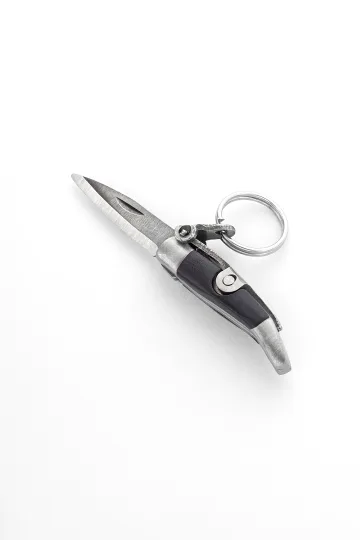
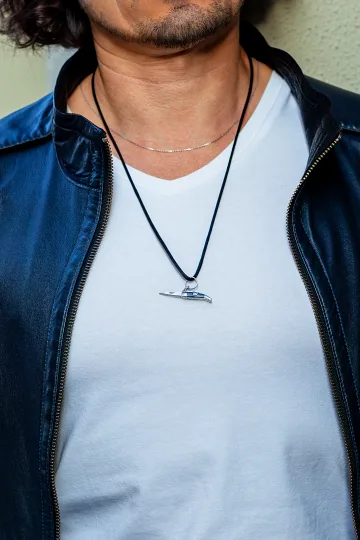
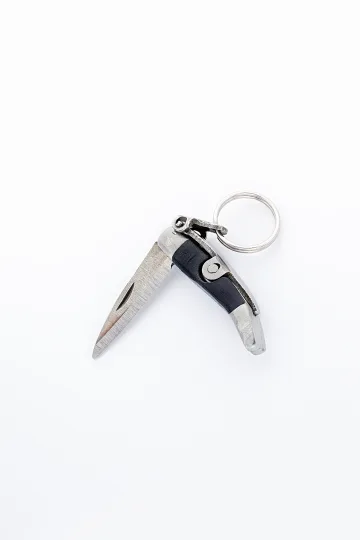
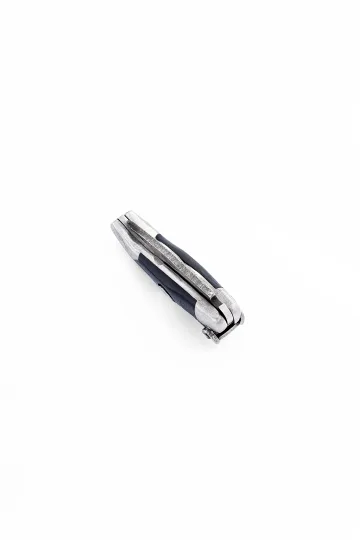
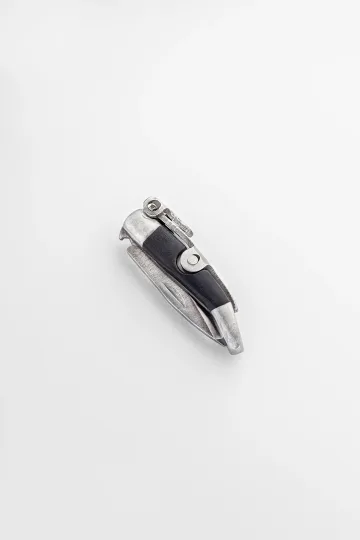
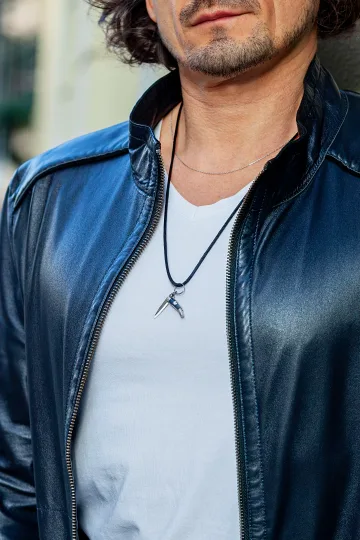
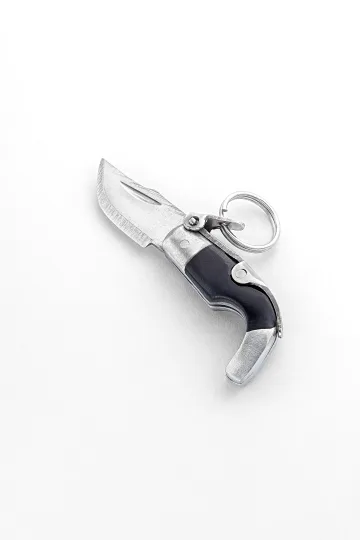
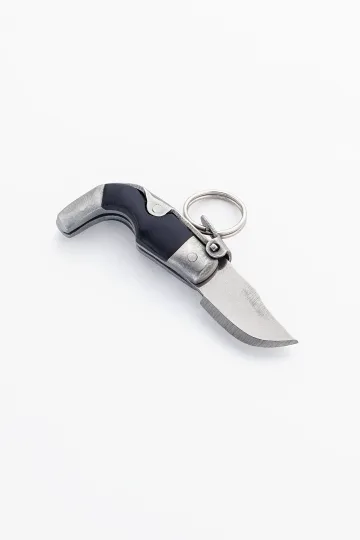
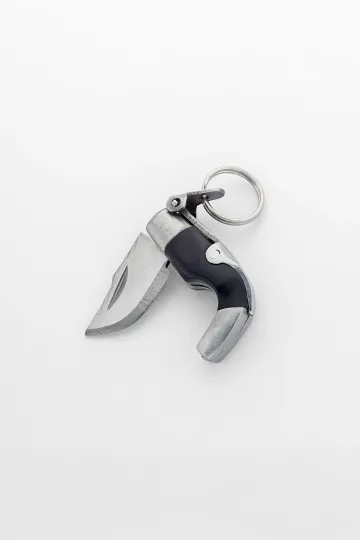
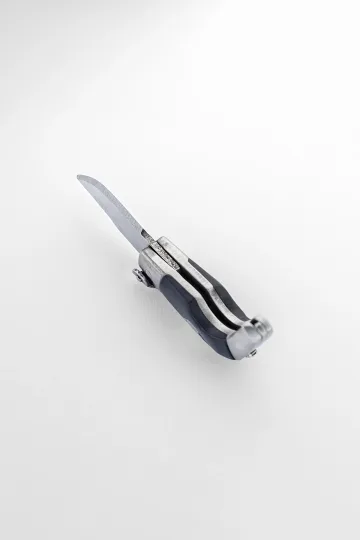
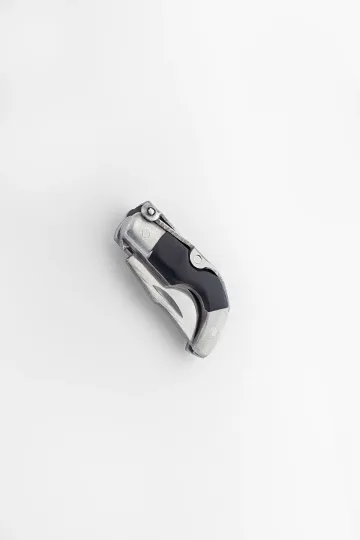
CAPAORA mini knife pendant
The 18th-century Spanish navaja in miniature: 40 mm of stainless steel, a real folding mechanism and a Palanquilla lock that clicks. An affordable gift to remember.
Authentic · Ships from Spain · 14-day returns
The Psychology of Wearing a Hamsa
The hamsa is one of the most psychologically interesting protective objects ever produced by human culture, because it operates on multiple simultaneous mental levels.
The first is the most obvious: the open hand is a primal "stop" gesture. Across nearly all human cultures, raising an open palm signals halt. Traffic officers do it. Parents do it. Buddhist statues do it. The gesture is so deeply embedded in human cognition that even infants react to it. The hamsa amulet is a portable, permanent version of this gesture. Wearing it places the "stop" signal between the wearer and the world at all times.
The second level is anchoring. The amulet provides a physical object that the wearer can touch when anxious. Running a thumb over the hamsa's surface is a self-soothing ritual, similar to a worry stone or a fidget toy. For some people, the repeated, focused tactile sensation helps interrupt anxious thoughts and brings them back into the present moment. Many wearers describe a grounding object like this as a simple way to settle themselves in tense moments.
The third level is identity. For many wearers, the hamsa is a marker of cultural or religious belonging. A Sephardic Jewish woman wearing a Yemenite hamsa is making a statement about her heritage. A Moroccan-born French citizen wearing a North African hamsa is connecting to ancestry. A secular American wearing a hamsa as a fashion piece is participating, perhaps unconsciously, in a global aesthetic vocabulary that signals "I am open to spiritual depth without being doctrinaire."
The fourth level is the sense of agency. Many people who carry "lucky" or "protective" objects say they feel steadier under stress. The object does not need to have any actual properties. For some wearers, the belief that it helps is enough to feel calmer and more focused in tense moments. The hamsa, with three thousand years of tradition behind it, can feel like a particularly meaningful anchor because the belief is so well-supported by historical and cultural context.
The fifth level is social signalling. Visible protective amulets communicate to others that the wearer is paying attention to the possibility of envy and ill will. People around a hamsa-wearer often unconsciously moderate their behaviour. They are less likely to make pointedly envious comments, more likely to soften their compliments with verbal cushions like "no offence" or "I don't mean to overdo it." For some wearers, this can ease the amount of negativity that comes their way.
When you stack these five effects, you get a charm that can feel meaningful regardless of any metaphysical commitment. A scientist who wears a hamsa is not being inconsistent. For many wearers the amulet brings a sense of reassurance, none of which depends on the literal existence of an evil eye.
This is also why arguments about whether protective amulets are "rational" miss the point. The question is not whether the underlying mythology is empirically true. The question is whether the practice produces well-being. By that measure, the hamsa is one of the most successful psychological technologies humans have ever developed.
Hamsa in Middle Eastern Cinema and TV
The hamsa appears constantly in Middle Eastern cinema, often as a visual marker of tradition, family, and protection that does not need explanation for regional audiences.
In Egyptian cinema, the hamsa has been a recurring background element since the golden age of the 1950s and 60s. The films of Youssef Chahine, the country's most internationally celebrated director, often featured hamsas in domestic scenes: hanging above doorways in old Cairo apartments, pinned to the swaddling of babies, embroidered onto the clothing of rural characters. Chahine used the amulet not as exotic decoration but as a sign of cultural continuity in a country undergoing rapid modernisation.
Moroccan cinema, which has grown substantially over the last two decades, treats the hamsa as a near-universal household object. Films by Nabil Ayouch ("Casablanca Beats," "Much Loved") and Maryam Touzani ("Adam," "The Blue Caftan") feature the amulet repeatedly in domestic settings, often in scenes that emphasise the transmission of tradition between generations. A grandmother teaching a granddaughter to recognise the hamsa is a recurring image.
Israeli cinema uses the hamsa to mark Mizrahi and Sephardic identity specifically. Films like "Late Marriage," "Turn Left at the End of the World," and "The Wedding Plan" all use the amulet as visual shorthand for non-Ashkenazi Jewish characters. The amulet appears in homes, on jewellery, in shop windows, and the presence or absence of it tells the careful viewer something about the social positioning of the family being depicted.
Lebanese cinema, particularly the films of Nadine Labaki, integrates the hamsa as part of the visual texture of Beirut. In "Where Do We Go Now?" and "Caramel," the amulet appears in homes, salons, and small businesses, marking spaces as authentically Lebanese without requiring any verbal explanation.
Beyond regional cinema, the hamsa has crept into international productions set in or about the Middle East. The Israeli TV series "Shtisel," which became a global Netflix hit, includes hamsas in family scenes. "Fauda" features the amulet as part of the lived environment of its Israeli and Palestinian characters. The Egyptian-American series "Ramy" places the hamsa in the New Jersey home of an Arab-American family, marking the persistence of tradition in the diaspora.
The amulet has also entered Hollywood, usually in films set in the Middle East or featuring Jewish or Arab characters. "Munich" (2005) includes hamsas in domestic Israeli scenes. "Lawrence of Arabia" had them in the background of Bedouin tents. Even Disney's "Aladdin" (2019 live action) included hamsas in market scenes, though the symbol was used loosely as generic "Middle Eastern" decoration.
In music videos, the hamsa appears in everything from Mediterranean pop to international hip-hop. The symbol's visual strength makes it ideal for high-contrast camera work: a hand held up against a textured background, palm out, eye in the centre, is one of the most photogenic protective symbols ever designed.
The Hamsa in Popular Culture
The hamsa has long been part of public life far beyond the Middle East and North Africa. It appears regularly in fashion, on stage, and on red carpets, worn by performers, designers, and public figures across many nationalities, religions, and industries.
Its rise in Western popular culture owes a lot to the wave of interest in Kabbalah and "spirituality without religion" that took hold from the late 1990s onward. Musicians and actors helped bring the amulet into mainstream wardrobes, often paired with a red string or other protective charms. From there it spread through music videos, magazine shoots, and social media.
The pattern across these wearers is broad: women and men, people with Mediterranean, Middle Eastern, or Jewish roots alongside cultural outsiders drawn to the symbol's meaning and look. For many of them, the hamsa is not a costume piece but everyday jewellery carried with genuine attachment.
Hamsa Tattoos: A Permanent Form of the Amulet
The hamsa tattoo has become enormously popular in the last fifteen years, particularly outside the cultures of origin. The reasons are clear: the design is visually striking, the meaning is widely understood, and the permanence appeals to people who want their protective symbol to be permanent rather than removable.
Common placements include the inside of the forearm (where the wearer sees it daily), the upper back between the shoulder blades, the side of the ribcage, the back of the neck, the inner wrist, and the side of the calf. Larger pieces work as back tattoos or chest tattoos. Smaller pieces work as wrist or ankle tattoos.
The design language of hamsa tattoos is varied. Some artists reproduce the classic Middle Eastern style with full filigree-inspired ornamentation, eye in the centre, fish or floral motifs around the edges. Others go minimalist: a simple line drawing of the hand, no fill, no ornament. Others combine the hamsa with other symbolic elements: roses, mandala patterns, geometric line work, dotwork tradition, religious calligraphy.
In Israel, the hamsa tattoo is common across both Jewish and Arab communities. In secular Tel Aviv, the amulet appears on the arms of military veterans, club kids, and yoga teachers alike. In religious neighbourhoods, the practice is more contested: traditional halakhic Judaism prohibits tattoos, and the hamsa as ink rather than amulet raises eyebrows. Younger Jews often get the tattoo as a deliberate statement of secular identity within Jewish tradition.
In North Africa, hamsa tattoos appear in henna form much more often than in permanent ink. Henna patterns featuring the hand are a standard part of wedding preparation in Moroccan, Tunisian, and Algerian tradition. The bride's hands are decorated with hamsa motifs in henna paste that fades over a few weeks. This is the traditional version of the practice, and it allows the protective symbolism without the permanence of a tattoo.
The cultural conversation around hamsa tattoos outside the cultures of origin is mostly generous. The symbol has been adopted so widely and shared so freely across cultures throughout history that complaints about appropriation are relatively muted. The main expectation is that wearers understand what the symbol means and treat it with basic respect. Cosmetically using a hamsa as decoration without any awareness of its meaning is the practice that draws criticism. Engaged, informed use is welcomed.
Practical considerations: detailed hamsa tattoos with filigree elements require a skilled artist. The fine lines that make Yemenite or Moroccan-style ornament beautiful can blur over time if not executed with precision. Booking with a tattoo artist who has experience with Middle Eastern ornamental styles is worth the extra cost. Black-and-grey hamsa tattoos age better than full-colour ones, particularly if the design includes fine detail.
Hamsa in Festivals and Rituals
Several cultural and religious moments throughout the year are tied closely to the hamsa.
Mimouna. This Moroccan Jewish festival, held the day after Passover, celebrates the end of the dietary restrictions of the holiday and the return to ordinary food. Mimouna celebrations feature elaborate displays of pastries, dried fruits, and symbolic foods, and the hamsa appears prominently in the decoration: hung above doorways, embroidered on tablecloths, integrated into the gold and silver jewellery worn by celebrants. The festival is a vivid expression of Mizrahi Jewish identity, and the hamsa is one of its central visual symbols.
Henna nights. In Moroccan, Algerian, Tunisian, and Yemenite Jewish wedding traditions, the bride's hands and feet are decorated with henna in elaborate patterns the night before the wedding. The hamsa motif is one of the most common designs. Each line of henna is applied with a fine cone or stick, and the patterns can take several hours to complete. The bride wears the henna patterns for several weeks after the wedding, gradually fading as the marriage settles into daily life.
Eid al-Fitr and Eid al-Adha. During the major Muslim festivals, the hamsa often appears in greeting cards, decorative items for the home, and new jewellery purchased for the celebrations. Children receive small hamsa pendants as Eid gifts from grandparents in many families.
Hanukkah. The Jewish festival of lights includes the practice of placing the menorah in a window, and many families place hamsas alongside the menorah as a protective measure. The two symbols work together: the menorah carries spiritual significance, the hamsa carries protective function.
Mawlid al-Nabi. The Muslim celebration of the Prophet's birth includes processions, feasting, and the giving of sweets. In Egyptian and Moroccan tradition, hamsa-decorated sweets (often shaped or stamped with the hand motif) are sold in markets during this period.
Tu B'Shevat. The Jewish "new year of trees" is a smaller festival, but it includes the tradition of planting and decorating with natural elements. In Sephardic communities, hamsa-shaped fruit arrangements are sometimes prepared.
Newborn celebrations. Across the entire Middle East and North Africa, the celebration of a new baby includes the gift of a hamsa, pinned to the swaddling, hung over the cradle, or attached to a tiny gold chain to be worn from birth. The eight-day brit milah ceremony in Jewish tradition often includes a hamsa as a gift to the family. The forty-day akika ceremony in Muslim tradition often includes the same.
Housewarming. A new home is not considered fully blessed until a hamsa is hung above the entrance. The owner often performs a small ceremony with family present, fixing the amulet to the wall as a marker of the home being ready for life.
Send a friend a discount code, they save on their first order.
Hamsa Meaning in Different Regions
The hamsa is recognisable across the Middle East and North Africa, but its specific meaning and visual style shifts depending on the region.
Morocco. The Berber tradition produces some of the most distinctive hamsas, with strong geometric patterns, dotted triangles, and zigzag borders. Moroccan hamsas often feature an eye in the palm, sometimes paired with fish or stars. The amulet is integrated into both Berber tribal silver work and urban Sephardic Jewish jewellery, and the lines between these traditions have blurred over centuries.
Tunisia. Tunisian hamsas often combine the hand with the fish motif (poisson), creating a double-protection symbol. Silver work is fine and elaborate. The Jewish community of Djerba, one of the oldest Jewish communities in North Africa, produces hamsas with characteristic features that are different from mainland Tunisian work.
Algeria. Heavy silver hamsas with bold filigree are typical. The Kabyle Berber population has its own distinctive style, often more geometric than the Arab Algerian style.
Egypt. Egyptian hamsas tend to be larger and more decorative, with strong influence from pharaonic visual traditions. The eye in the centre often resembles the Eye of Horus rather than the Turkish nazar, reflecting Egypt's deep continuity with its ancient past.
Israel. Modern Israeli hamsas blend Mizrahi, Sephardic, and contemporary Israeli design sensibilities. The "hamsa hamsa hamsa" verbal formula (said three times to deflect the evil eye) is part of daily Israeli Hebrew. Israeli jewellery designers have made the hamsa a cornerstone of the country's design identity, and Tel Aviv and Jerusalem are now major centres of hamsa production.
Yemen. Yemenite Jewish silversmiths produced some of the most refined hamsas in history, with elaborate filigree, granulation, and stone inlay. After the mass emigration of Yemenite Jews to Israel in the early 1950s (Operation Magic Carpet), much of this tradition transferred to Israel, where it continues today.
Lebanon and Syria. Levantine hamsas tend toward the elegant: clean lines, refined filigree, often combined with calligraphy. The Damascene metalwork tradition has produced exceptional hamsas for centuries.
Iraq. Iraqi Jewish and Iraqi Muslim communities both used the hamsa extensively. The Iraqi Jewish community, displaced after 1950, brought hamsa traditions to Israel and to Western diasporas.
Iran. The hamsa is less prominent in Iran than the nazar, but it does appear, particularly in regions with strong Arab cultural influence (Khuzestan). Persian Jewish communities have produced hamsas with distinctive Persian filigree style.
Diaspora. In Western European cities with significant North African and Middle Eastern populations (Paris, London, Marseille, Brussels), the hamsa has become a visible part of urban jewellery culture. In American cities with strong Sephardic or Mizrahi Jewish communities (New York, Los Angeles, Miami), the same is true.
The visual variation across regions is significant. But the underlying symbol, an open hand with five fingers, often with an eye, remains constant. The hamsa is one of those rare symbols that has maintained its essential form across thousands of years and dozens of cultures.
Buying it as a gift? Each one arrives ready to give.
 A branded Zevira box and a little card come with every order.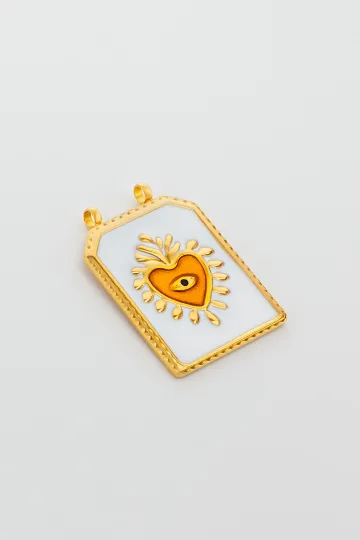




Choosing the Right Hamsa: A Buyer's Guide
If you are considering buying a hamsa for yourself or as a gift, here are the questions worth thinking through before you commit.
Material first. For everyday wear, sterling silver is the workhorse choice. It is durable, traditional, takes a beautiful patina, and pairs well with the blue enamel that traditionally fills the eye in the centre. Gold is the upgrade choice, more durable than silver and traditionally considered more "permanent" in protective symbolism. Mixed-metal pieces (silver hamsa with gold accents) are increasingly popular in contemporary jewellery.
Hand orientation. Decide whether you want fingers up or fingers down. Fingers up means active protection: the hand stops negative energy. Fingers down means attracting positive energy: the hand draws in blessings. There is no rule about which is correct. Many people own both. Some hamsas can be worn either direction depending on how you orient the chain.
Size and visibility. For everyday jewellery, a hamsa between 15 and 25 mm is the standard pendant size. Larger pieces (30 mm+) become statement pieces, suitable for evening or for people who want the amulet to be the focal point of their outfit. Smaller pieces (10 mm or less) work as charm bracelet additions or as discreet wrist amulets.
Traditional vs contemporary design. Yemenite filigree hamsas have the highest level of craft tradition behind them, but they can look heavy or ornate to modern eyes. Contemporary Israeli designs often simplify the form, using clean lines and minimal ornament. Both are valid. The traditional version connects you to centuries of practice. The contemporary version fits more easily into a minimalist wardrobe.
Eye in the centre or no eye. An eye in the centre of the palm provides "double protection": the eye spots the threat, the hand blocks it. Hamsas without the eye are equally valid traditionally and may be preferred by people who find the eye visually intense.
Stone work. Turquoise, lapis lazuli, and coral are the traditional stones for hamsas, each carrying its own associations. Turquoise is particularly common in Yemenite and Berber work. Lapis suggests wisdom and royalty. Coral, in the Mediterranean tradition, is itself protective and pairs naturally with the hamsa. Diamond and gemstone-set hamsas are the luxury option.
Where to buy. The most authentic hamsas come from workshops in Morocco, Tunisia, Yemen (via Israel since the 1950s), Egypt, Lebanon, Syria, and Israel itself. The Old City of Jerusalem, Mahane Yehuda market in Jerusalem, Carmel market in Tel Aviv, the Fez and Marrakech medinas, and the Khan El-Khalili in Cairo are all major sources. Outside the cultures of origin, look for jewellery boutiques that specialise in Mediterranean and Middle Eastern designs. Avoid generic gift shops with vague provenance.
Hallmarks and authentication. Sterling silver should be stamped "925" on the bail or back. Gold should be stamped with its karat (14k, 18k, 22k). Hand-made pieces should come with some documentation from the workshop, particularly for higher-value pieces.
Gifting considerations. Unlike some traditions where amulets must be gifted, the hamsa can be bought for yourself or gifted, and both are equally valid. A gifted hamsa is considered slightly more "powerful" because it carries the giver's good wishes. Appropriate gifting occasions include the birth of a child, weddings, housewarmings, new jobs, recovery from illness, the start of school, and significant birthdays.
Budget reality. A simple silver-plated hamsa charm can cost the same as a coffee. A solid sterling silver hamsa with hot enamel runs to about the price of a nice meal out. A serious Yemenite filigree piece with stone inlay can cost as much as a weekend break. An antique hamsa with provenance can cost as much as a significant holiday. The protective meaning does not scale with price. A budget piece worn with intention works as well as a museum piece worn casually.
The best hamsa for you is the one that fits into your daily life. A beautiful charm that lives in a jewellery box is doing no work. Choose something you will actually wear, in a style that suits your other jewellery, in a size that works with your collar, and the amulet will do its job.
Conclusion
An open palm, facing the world, is one of the oldest and most universal gestures in human history. Long before religions and nations existed, people raised their hand to say: "Stop. I'm here. You shall not pass."
Three thousand years later, that gesture remains surprisingly relevant. It's no longer a clay bead on a string but a silver pendant on a chain, yet the essence is the same. Protection. Blessing. Peace of mind.
Whether you believe in the power of amulets literally or wear them as beautiful pieces of jewellery with a story, that's your call. But there's something remarkable about a symbol conceived (or discovered) thousands of years ago that continues to work. Not necessarily mystically. Perhaps just psychologically. Touching the pendant when you're nervous. Glancing at the amulet above the door as you leave the house. A small anchor of calm in a noisy world.
Three thousand years is a solid track record. If this symbol has endured that long, there must be something in it that people need. Something that technology, science, and progress haven't managed to replace. The need for protection. The need for blessing. The need to believe that between you and chaos stands something greater than yourself.
Even if it's just an open hand.
Wear the symbol, don't just read about it. These are in stock:
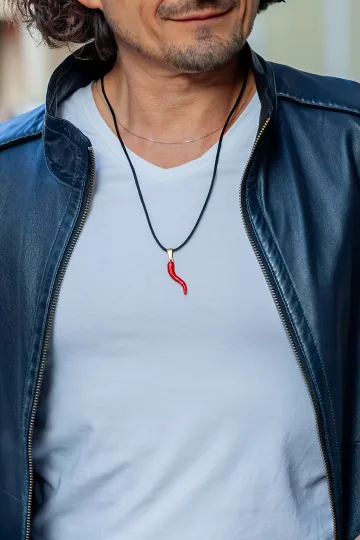
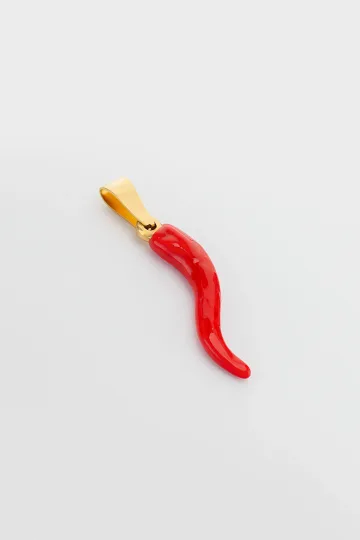
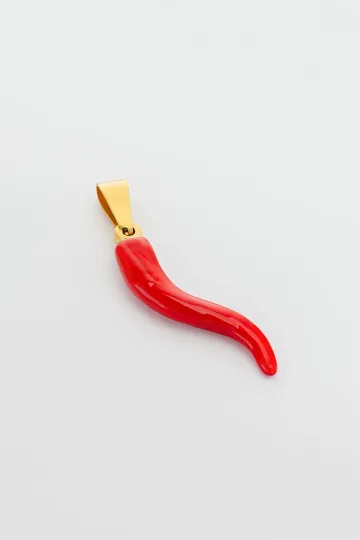

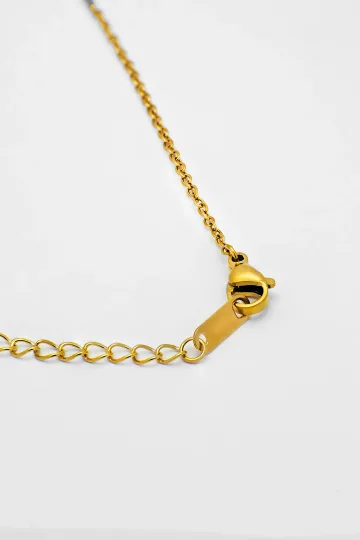
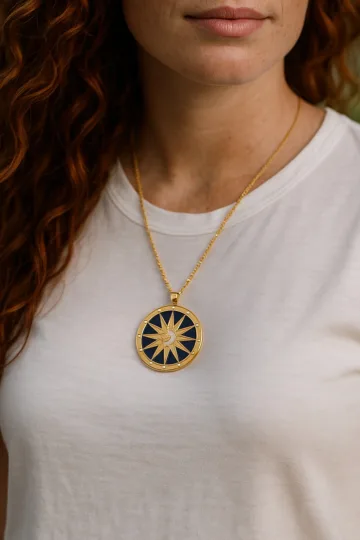
About Zevira
Zevira makes jewellery in the artisan tradition of Albacete, Spain. Protective symbolism like the hamsa sits at the heart of our talisman collection: we carry the thousand-year-old motifs of the open palm and the evil eye into pieces made to be worn every day.
What you'll find with us on the theme of the hamsa and protective amulets:
- Hamsa pendants in sterling silver (925) with a blue eye in the centre of the palm
- Nazar pendants and "hand plus eye" pairings for double protection
- Bracelets with small protective charms for everyday wear
- Paired amulets to gift for a wedding, a new baby, or a housewarming
- Tree of life, heart, and crescent moon pieces for layered looks
- Silver and gold-plated versions to suit different skin tones and styles
Every piece can be personalised with engraving, with personal engraving available. Sterling silver (925) and 14-18K gold.