Tree of Life: Meaning, History & Symbolism in Jewellery
Introduction: the pendant that carries a whole family
My grandmother had a silver pendant she never took off. A tree, no bigger than a thumbnail, with roots that curled into themselves and branches that reached outward like open arms. She wore it through two pregnancies, a cross-country move, three decades of marriage, and a lot of ordinary Tuesdays in between. When she passed, my mother found it in a small velvet pouch with a note tucked inside: "Give this to whoever needs roots."
I didn't understand what that meant until years later, when I was living in a new city, knowing nobody, eating dinner alone most nights. My mother mailed me the pendant without warning. No card, no explanation. Just the tree in its pouch. I put it on and, for reasons I can't fully explain, felt a little less untethered.
Wear the symbol, don't just read about it. These are in stock:


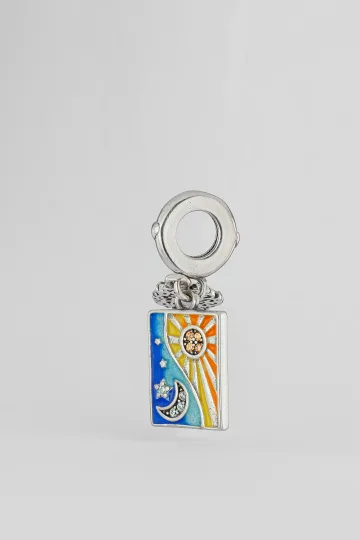
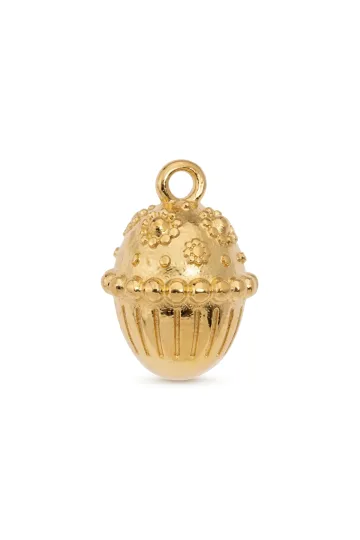
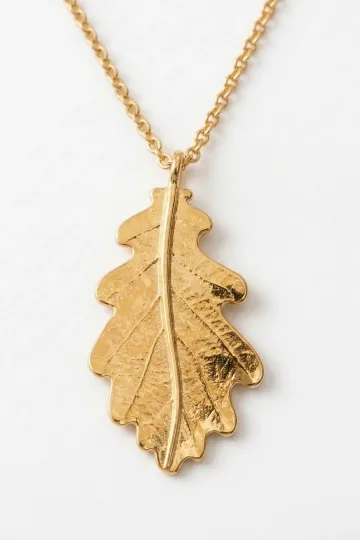
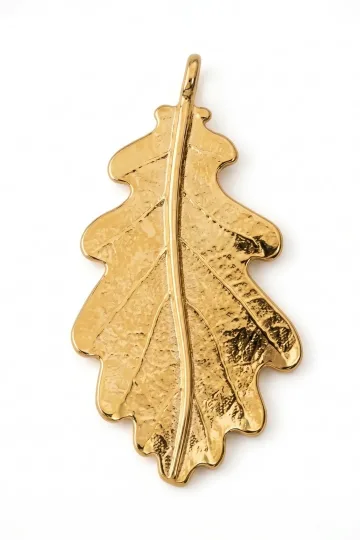
That pendant was a Tree of Life. And if you've ever seen one in a shop window, on someone's neck at a coffee shop, or pinned to a scarf at a family gathering, you already know it carries something heavier than its weight in silver. You just might not know exactly what.
This is a symbol that shows up everywhere. Celtic knotwork, Norse sagas, Jewish mysticism, Buddhist temple carvings, Christian manuscripts, Egyptian tomb paintings. The shape changes, the name changes, the story changes. But the core idea stays constant: a tree whose roots go deep and whose branches reach high, connecting what's below to what's above, connecting the past to the future, connecting you to everyone who came before and everyone who'll come after.
In jewellery, the Tree of Life has become one of the most recognisable and best-selling symbolic motifs on the planet. Not because of marketing. Because the symbol does what good symbols do. It means something different to everyone who wears it, and yet something universally true.
Let's get into why.
Customer reviews
Zevira is a real jewellery shop. Genuine payments, deliveries and customer thank-yous.
🥰🥰🥰 gracias
Ok, ¡gracias! 🙂
What Is the Tree of Life
The symbol in a nutshell
The Tree of Life is an ancient archetype, a universal image that appears independently in cultures across every inhabited continent. At its most basic, it's a tree with visible roots, a sturdy trunk, and spreading branches, usually enclosed in a circle. That circle matters. It represents wholeness, the cycle of life, the idea that everything connects back to itself.
But the symbol is more than a pretty picture. It's a map. Roots represent ancestry, heritage, the ground you stand on. The trunk represents your life right now: the present, your strength, the way you hold up under pressure. The branches represent growth, possibilities, the directions you can reach. And the circle that holds it all together says: none of these exist in isolation.
Names around the world
Different cultures gave this symbol different names, and each name reveals a slightly different emphasis:
- Celtic: Crann Bethadh (literally "tree of life"), centred on the oak
- Norse: Yggdrasil, the world-ash that holds nine realms
- Hebrew/Kabbalistic: Etz Chaim, a diagram of divine creation with ten spheres
- Arabic: Shajarat al-Hayat, referenced in the Quran
- Sanskrit: Ashvattha, the cosmic fig tree in Hindu scripture
- Latin: Arbor Vitae, used in Christian and philosophical texts
- Egyptian: The sycamore of Nut, goddess of the sky
- English: Tree of Life, the name most jewellery wearers know
What's remarkable is not that these names exist, but that they emerged independently. The Celts in Ireland didn't borrow from the Kabbalists in Spain. The Norse didn't copy from the Egyptians. The same symbol arose again and again because the observation behind it is universal: trees are the most visible, most enduring, most structured living things on earth. If you want a metaphor for life itself, a tree is the obvious choice.
What it looks like in jewellery
In a pendant, ring, or bracelet, the symbol typically appears as a stylised tree within a round frame. The roots mirror the branches, creating a sense of symmetry and balance. Variations abound:
- Celtic style: interlaced knotwork, continuous lines with no beginning or end
- Naturalistic style: detailed leaves, textured bark, organic curves
- Minimalist style: thin wire branches, clean lines, negative space
- Family style: birthstones set into the branches, each representing a loved one
- Kabbalistic style: the ten sephiroth arranged in the traditional diagram
The most popular version in modern jewellery is the Celtic-influenced circular tree, but all of these styles carry the same root meaning. Pun intended.
A Tree of Life wants a proper medallion, not a crumb. If the roots and crown do not read, why bother.
How to wear a Tree of Life pendant
Over years as a stylist the Tree of Life has passed through hundreds of shoots and family portraits with me. Here is what actually works, sorted by occasion, size and metal.
What medallion size should you choose? I recommend a large round medallion so the roots and the crown both read. A small tree seen from any distance turns into a vague little circle and the whole point of the symbol is lost. A medium size, 25-30 mm, I suggest as the sweet spot for every day, and a large one, 35-45 mm, I choose when the tree is meant to lead the look.
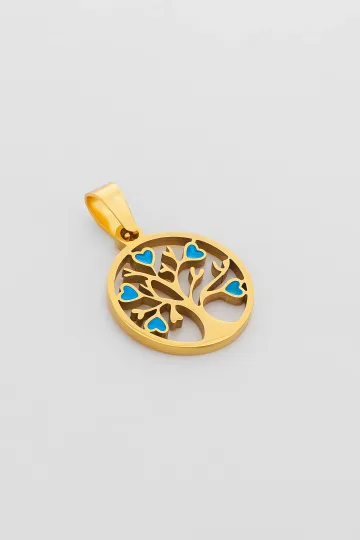
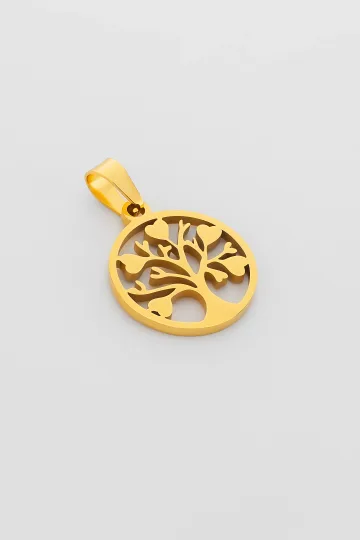
Openwork tree or one with a stone? Openwork and filigree I suggest for those who like a piece to work on its own: the fine carving catches the light and holds a large shape without a single stone. A tree with a gemstone in the crown I choose for a family story, since the stone reads as one specific loved one, especially when it is a birthstone. The smooth, minimal version I recommend for a calm everyday style.
Silver or gold? Silver I suggest for a cool skin undertone and a casual wardrobe: it stays quiet, does not fight your clothes and is right for every day. Warm gold I recommend for a warm undertone and a celebration, since it turns the tree into an heirloom you want to pass on. One metal in a look always reads cleaner than a mix of silver and gold.
What do you gift parents or for a new baby? For a birth I choose a tree with a single stone in the crown: a new branch of the family, and the stone as the child. For parents and grandparents I recommend a larger medallion where several gems sit in the branches, one for each loved one. That is lineage in its purest form, so I suggest gold or solid silver that will last more than one generation.
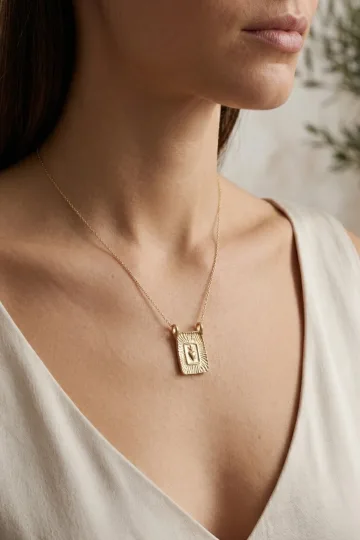
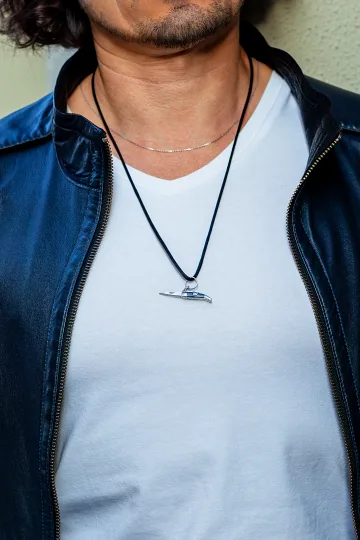
How do you wear it every day? For daily wear I recommend a 50-55 cm chain, so the tree rests on the sternum and opens up under a round or V-neck. A light top lifts the metal, a dark one turns the tree into the accent. The tree sits equally well on any neck regardless of gender, so I suggest starting from the neckline and skin undertone rather than from rules.
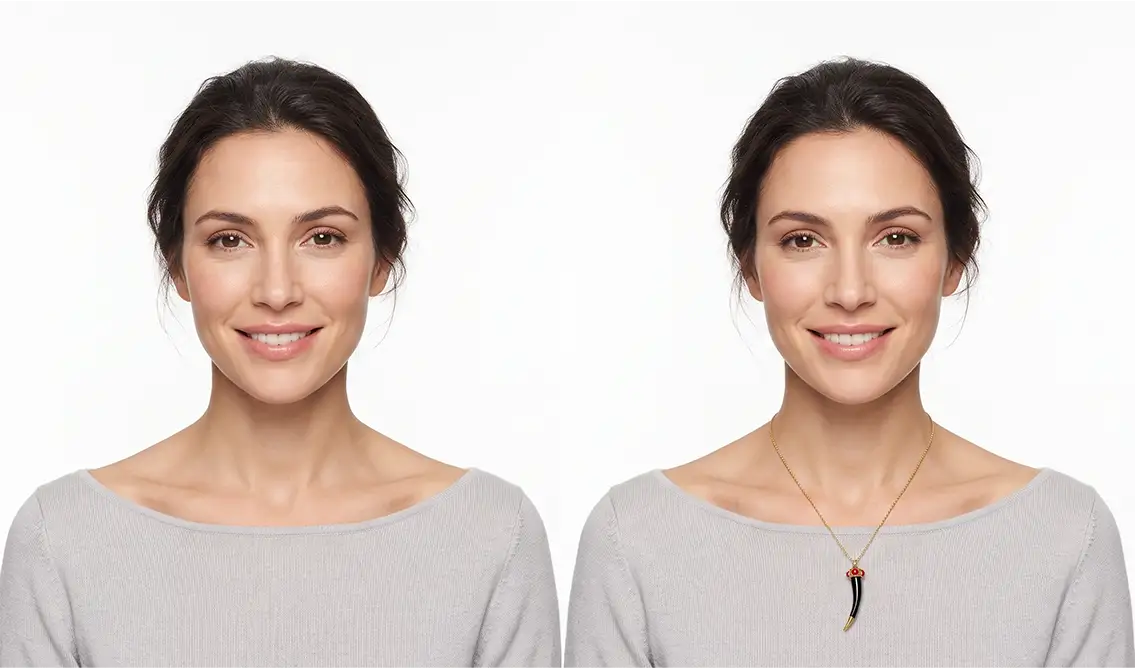
Turn on your camera, pick earrings, a pendant or a ring, and see the piece on yourself in real time.
Switch items in one tap.
Everything runs in your browser: no photo or video is ever uploaded.
Upload a photo of your pet, someone you love, or an object. We'll build a 3D model and hand-cast it in pewter.

History: From Ancient Roots to Modern Pendants
Celtic Crann Bethadh
For the Celtic peoples of Ireland, Scotland, Wales, and Brittany, trees were not decoration. They were infrastructure. When a Celtic tribe claimed new territory, the first thing they did was identify the largest, most central tree (usually an oak) and declare it the Crann Bethadh, the tribal tree of life. Everything radiated outward from this tree. Gatherings happened under it. Chieftains were crowned beside it. Disputes were settled in its shade.
Cutting down an enemy tribe's Crann Bethadh was considered the ultimate act of war. Not because it was tactically useful, but because it severed the spiritual connection between the people and their land. Without their tree, a tribe was rootless, directionless, symbolically dead.
The Celts believed their sacred trees served as doorways between three worlds: the lower world (roots), the middle world (trunk), and the upper world (branches). This vertical cosmology mirrors what dozens of other cultures believed, but the Celts added their own twist. They wrapped the tree in knotwork. Those interlaced lines have no beginning and no end, representing the eternal cycle of life, death, and rebirth.
In jewellery, Celtic Tree of Life designs are instantly recognisable: the circular frame, the knotted roots merging into knotted branches, the sense that the whole thing could spin forever without breaking. It's the most popular style for pendants, and it's been that way for decades.
Norse Yggdrasil
The Norse didn't just have a tree of life. They had a tree of everything. Yggdrasil, the world-ash, was the cosmic backbone of Norse mythology. Its roots reached into three wells: one of wisdom (Mimir's Well), one of fate (the Well of Urd, where the Norns weave destiny), and one leading to the frozen realm of Niflheim, where the dragon Nidhogg gnawed at the root endlessly.
Nine realms hung from its branches like fruit: Asgard (home of the gods), Midgard (home of humans), Alfheim (light elves), Svartalfheim (dark elves), Vanaheim (the Vanir gods), Jotunheim (giants), Muspelheim (fire), Niflheim (ice), and Helheim (the dead). An eagle sat at the top, Nidhogg lurked at the bottom, and a squirrel named Ratatoskr ran up and down the trunk carrying insults between them.
It's wild mythology. But beneath the fantastical creatures, the structure is deeply logical. Yggdrasil is a model of interconnection. Everything in existence hangs on the same tree. Harm one realm, and the others feel it. The same root that feeds wisdom also feeds fate also feeds death. You can't have one without the others.
For modern jewellery wearers, Yggdrasil-inspired pieces tend to be bolder and more dramatic than Celtic versions. Think heavy silver, angular branches, runic inscriptions, and a sense of raw power. They appeal to people drawn to Norse mythology, Viking heritage, or the idea that strength and vulnerability share the same roots.
Kabbalah: Etz Chaim
The Kabbalistic Tree of Life looks nothing like a botanical tree. It's a diagram: ten circles (called sephiroth) connected by twenty-two paths, arranged in three columns. Each sephirah represents a divine attribute: wisdom, understanding, mercy, severity, beauty, eternity, splendour, foundation, sovereignty, and at the top, the crown, the infinite, unknowable source.
This isn't decorative art. It's a map of creation itself, according to Jewish mystical tradition. The idea is that divine energy flows from the crown downward through each sephirah, becoming more defined and more material as it descends, until it reaches Malkuth (sovereignty/kingdom) at the bottom, the physical world we inhabit.
For Kabbalists, studying the Tree of Life is a lifetime practice. Each path between sephiroth corresponds to a Hebrew letter, a tarot card (in later Western interpretations), and a specific spiritual lesson. The whole structure is meant to be climbed, metaphorically, as a path back toward the divine.
In jewellery, the Kabbalistic tree appears as the geometric diagram: circles connected by lines, sometimes with Hebrew letters inscribed along the paths. It's distinctly different from the Celtic or Norse versions and appeals to a more spiritually focused audience. Madonna famously wears one. So do millions of people who study Kabbalah or simply find the geometry beautiful.
Christianity and Islam
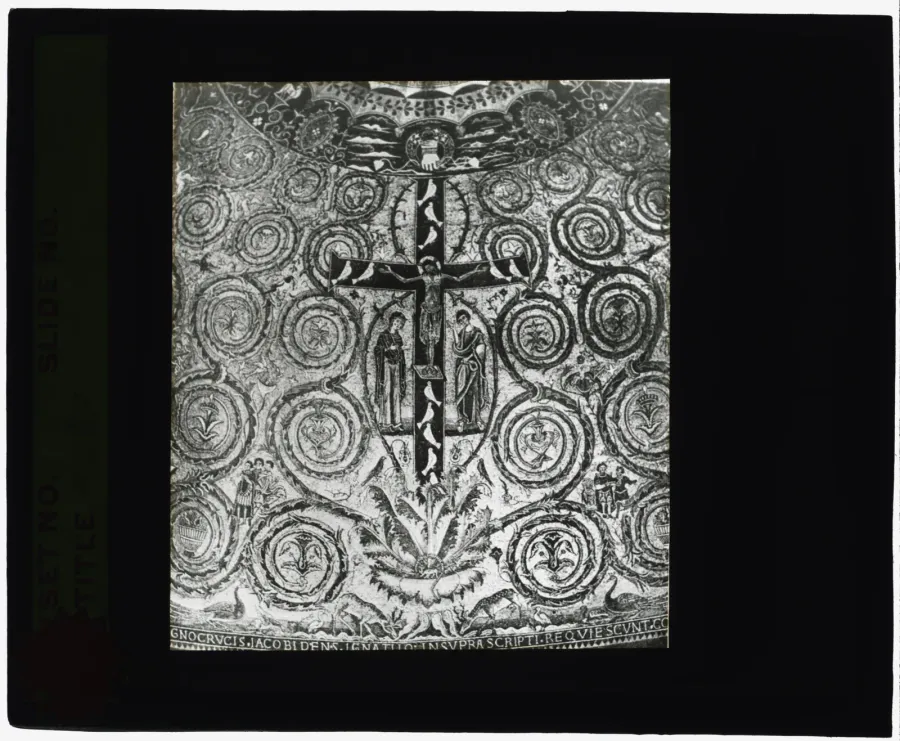
In the Book of Genesis, the Tree of Life stands in the Garden of Eden alongside the Tree of Knowledge. After Adam and Eve eat from the tree of knowledge, they're expelled from the garden and cut off from the tree of life, which grants immortality. In the Book of Revelation, the tree of life reappears in the heavenly city, bearing twelve kinds of fruit and offering its leaves "for the healing of nations."
For Christians, the symbol often connects to the cross itself, a tree of sacrifice that leads to eternal life. Some medieval manuscripts depict the cross as a living tree with branches and fruit, bridging the Old Testament's garden with the New Testament's promise of resurrection.
In Islam, the Quran references a tree in paradise (Tuba) and a cursed tree in hell (Zaqqum). The Lote Tree (Sidrat al-Muntaha) marks the boundary beyond which no creation can pass, near the throne of God. The prophet Muhammad is said to have encountered it during his night journey. Islamic art, which avoids depicting living figures, developed extraordinarily detailed tree motifs in architecture, tilework, and calligraphy. The Tree of Life appears repeatedly in Ottoman, Persian, and Mughal design traditions.
Buddhism: The Bodhi Tree
The Bodhi Tree is not a mythological concept. It's a real species (Ficus religiosa), and there's a real tree in Bodh Gaya, India, believed to be a direct descendant of the one under which Siddhartha Gautama sat and achieved enlightenment roughly 2,500 years ago.
The heart-shaped leaves of the Bodhi tree became a powerful symbol in Buddhist art. They represent wisdom, patience, and the moment of awakening when confusion drops away and clarity arrives. Pilgrims still visit the tree (or rather, its descendant) in Bodh Gaya, and Bodhi leaf pendants are popular across Southeast Asia.
In jewellery, Bodhi-inspired designs tend to be serene and minimal: a single leaf, a simplified tree, or a meditation figure beneath spreading branches. They carry a different emotional weight from Celtic or Norse designs. Less about heritage and power, more about stillness and insight.
Ancient Egypt
The ancient Egyptians associated the sycamore tree with the goddess Nut (and later Hathor), who was depicted offering food and water to the souls of the dead from within its branches. The sycamore was also linked to Osiris, whose coffin was said to have been enclosed inside a great tree. The Persea tree (Ished) was sacred too, with the gods writing the pharaoh's name on its leaves to grant him eternal life.
Egyptian tree symbolism influenced later traditions through Greece and Rome, eventually feeding into the broader Mediterranean visual language that shaped early Christian and Islamic art.



What the Tree of Life Symbolises
The tree motif carries multiple layers of meaning, and most people who wear it connect with at least one of these. Some connect with all of them simultaneously, which is part of what makes the symbol so enduringly popular.
Family and Roots
This is the most common reason people buy a tree pendant. The tree, with its visible root system, is the most intuitive visual metaphor for family. Roots go deep. Branches spread wide. New growth appears every season. And the whole thing stands because everything is connected: grandparents to parents to children to grandchildren.
Family tree pendants often include birthstones, one for each family member, set into the branches. A mother of three might wear a pendant with three coloured stones among the leaves. A grandmother of seven might have a larger piece with seven. It becomes a wearable family portrait, personal and specific.
But even without birthstones, the bare symbol carries this meaning. Wearing a tree says: I know where I come from, and that matters to me. In a world where people move constantly, change jobs, change cities, change countries, a small silver tree around the neck is an anchor to belonging.
Personal Growth
A tree doesn't grow fast. An oak takes decades to reach full height. A redwood takes centuries. But the growth is constant, visible, measurable. Year after year, new rings form inside the trunk. New branches extend from the canopy. The tree never stops until it dies.
People going through transitions (a new career, a divorce, a move, recovery from illness) often reach for this symbol. It says: I'm not done. I'm still building. The roots are holding even if the branches look bare right now. Wait for spring.
This interpretation is popular among younger wearers and people in their 30s and 40s who are actively reshaping their lives. The tree becomes a kind of personal cheerleader worn around the neck: a reminder that growth is slow but real.
Connection Between Worlds
This is the oldest meaning, and the most mystical. Nearly every culture that adopted the tree symbol saw it as a bridge. Roots in the underworld. Trunk in the middle world. Branches in the heavens. The tree connects what's below to what's above, the material to the spiritual, the dead to the living.
For Celtic druids, the tree was literally a portal. For Norse thinkers, Yggdrasil held all of reality. For Kabbalists, the tree maps the flow of divine energy from the unknowable infinite down into the physical world we touch.
In modern jewellery, this meaning appeals to people with spiritual practices (meditation, yoga, energy work) who see the pendant as a reminder that there's more to existence than what's immediately visible. You don't have to subscribe to any specific tradition. The symbol works on a gut level: life goes deeper than what you can see.
Cycles and Renewal
Trees are the most visible markers of seasonal change. Leaves appear, turn green, darken, change colour, fall. Branches go bare. Snow covers them. And then, without fail, spring returns and the process starts again. The tree doesn't die in winter. It waits. It conserves. And when conditions are right, it comes back stronger.
This interpretation resonates with people who have been through difficult periods and emerged. The pendant becomes a symbol of resilience: I've had winters, and I'm still here. It's also popular among people who believe in cyclical time rather than linear time, the idea that life moves in seasons and spirals rather than a straight line from birth to death.
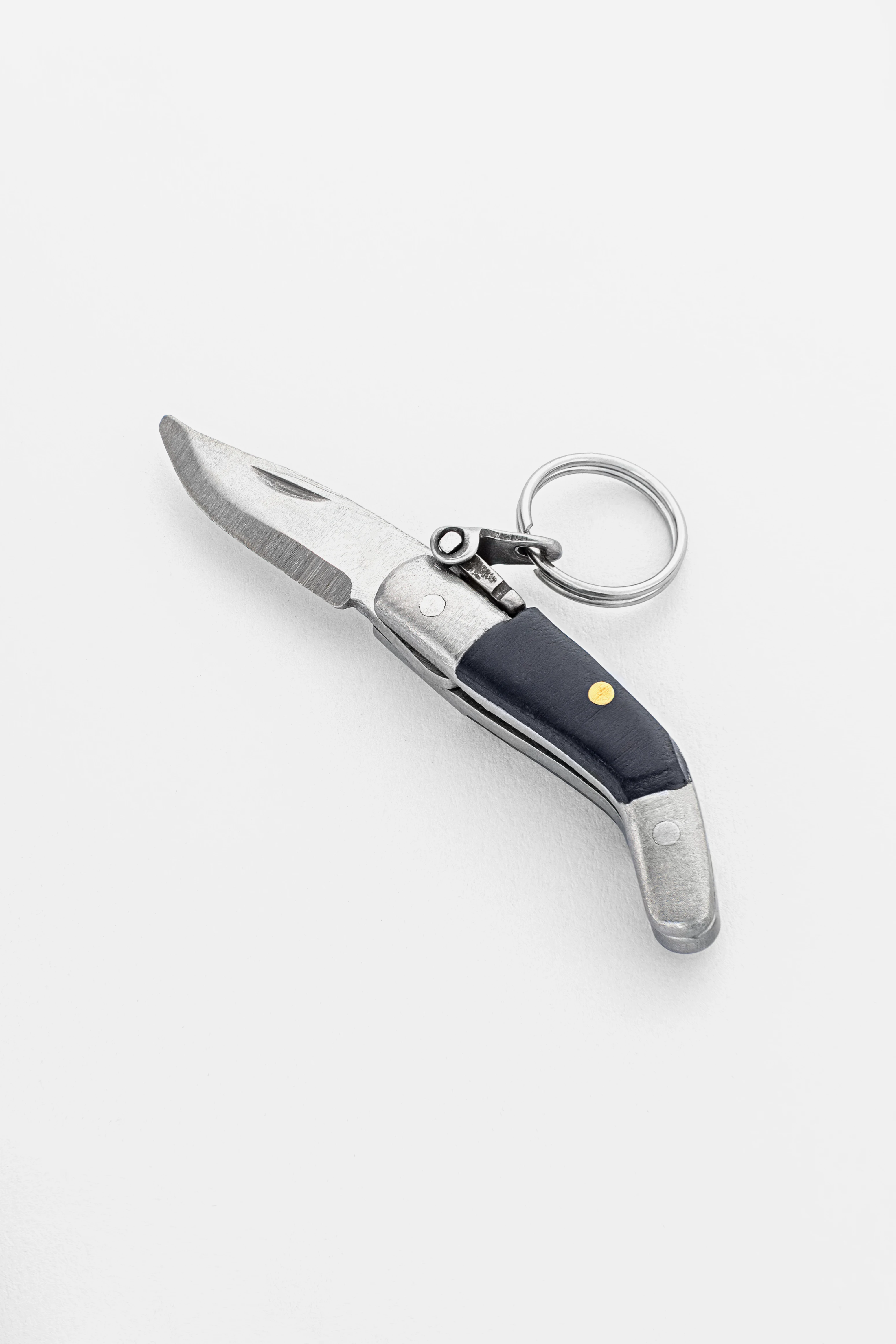
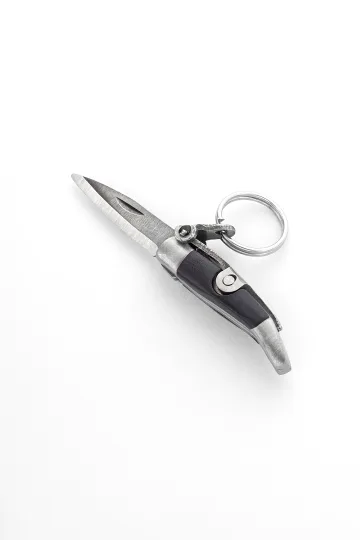
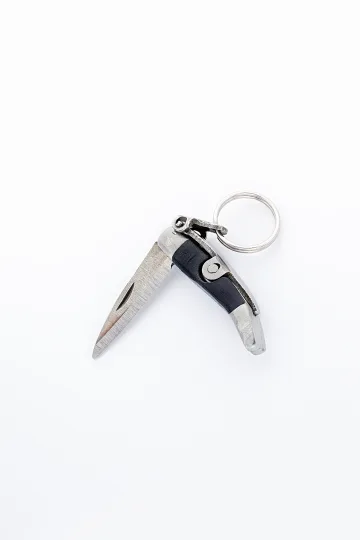
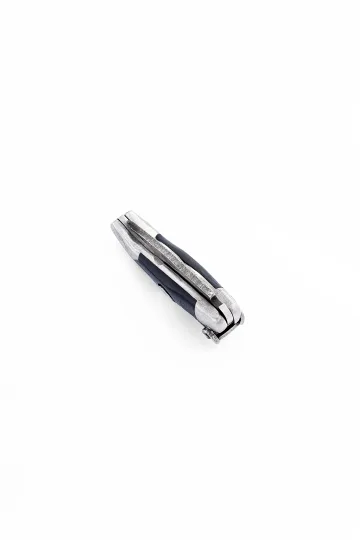
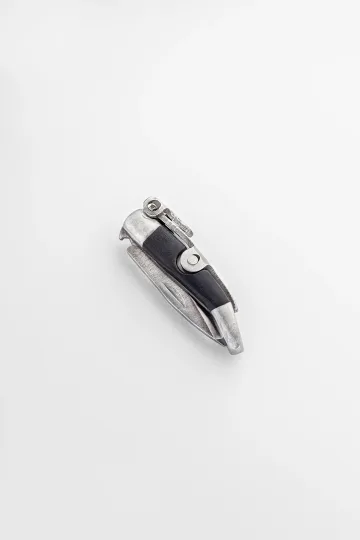
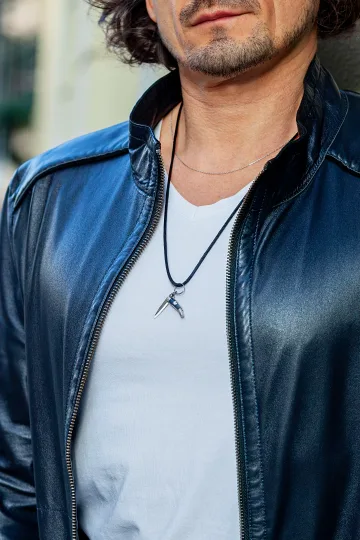
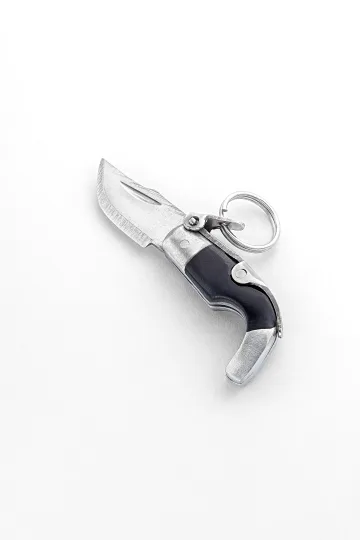
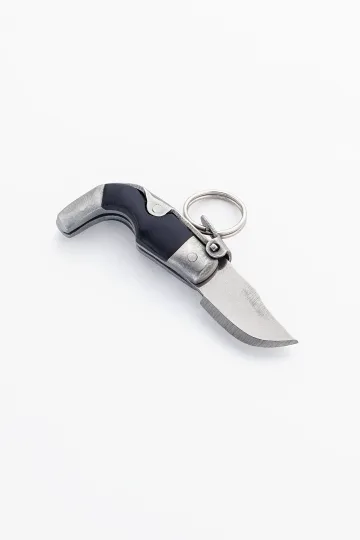
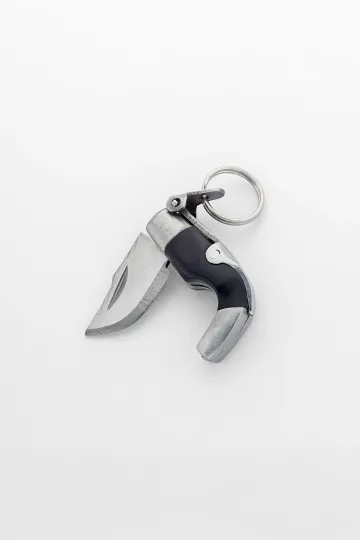
CAPAORA mini knife pendant
The 18th-century Spanish navaja in miniature: 40 mm of stainless steel, a real folding mechanism and a Palanquilla lock that clicks. An affordable gift to remember.
Authentic · Ships from Spain · 14-day returns
Materials: What Tree of Life Jewellery Is Made Of
Sterling silver (925)
The most popular material for symbolic pendants, and for good reason. Sterling silver is durable, affordable relative to gold, and has a neutral tone that works with everything. For the Tree of Life specifically, silver's cool lustre evokes moonlight filtering through branches, which feels right for a nature-based symbol.
Silver pendants range from simple stamped designs to hand-carved pieces with three-dimensional branches and textured bark. The metal takes detail well, which matters when you're trying to capture the intricacy of interlaced Celtic knotwork or the gnarled roots of an ancient oak.
Care notes: Silver tarnishes over time, especially in humid environments. A polishing cloth and proper storage keep it looking fresh. Some wearers actually prefer the slightly oxidised look: it adds depth to the details and makes the tree appear more ancient.
Price range: Affordable to mid-range. One of the best value options for meaningful jewellery.
Gold and gold-plated
Gold adds warmth and perceived value. A gold Tree of Life pendant feels more like an heirloom, more like something you'd pass down. Solid gold (9ct, 14ct, 18ct) is an investment piece, while gold-plated silver offers the warm colour at a friendlier price point.
Important distinction: a gold-plated pendant is not a gold pendant. The base is silver or another metal, with a thin layer of gold bonded to the surface. It looks beautiful but the plating can wear over time, especially on pieces that get daily use. If you're buying as a long-term keepsake, solid gold lasts longer. If you're buying for the look, plating works fine.
Gold tones and the tree: Yellow gold has an autumnal, harvest feel. Rose gold adds a romantic, feminine touch. White gold sits close to platinum in appearance and pairs well with minimalist designs.
Gemstones and birthstones
Adding stones to a tree pendant transforms it from a general symbol to a personal one. The most popular approach: birthstones in the branches, one per family member. January is garnet, February is amethyst, March is aquamarine, and so on through the calendar.
Other gemstone approaches include:
- All green stones (peridot, emerald, green tourmaline) for a lush, living tree look
- Mixed colours for a "four seasons" effect
- A single centre stone: often a moonstone, opal, or mother of pearl, for a minimalist version
- Cubic zirconia for sparkle at an accessible price (not diamonds: always check what you're buying)
Wood, enamel, and mixed media
Some tree pendants incorporate actual wood inlays, especially pieces made by independent artisans. Others use coloured enamel to fill the branches with green, red, gold, or seasonal hues. These mixed-media pieces tend to be more artistic and less traditional, appealing to people who want something visually distinctive.
Wire-wrapped tree pendants, where the tree is formed from actual twisted wire around a stone cabochon, are a whole subgenre of handmade jewellery. They're unique, organic, and no two are exactly alike.
Leave your email, we'll send your discount code. No spam, unsubscribe anytime.
The code arrives by email, valid on your first order.
Who It Suits and When to Gift It
New mothers
A Tree of Life pendant with a single birthstone makes a beautiful push present (a gift given to a new mother after birth). The tree represents the new family branch. The birthstone represents the child. As the family grows, new stones can sometimes be added to the same pendant, or a new, larger tree can replace the original.
Mothers and grandmothers
This is the core market for family tree jewellery, and for good reason. A pendant with multiple birthstones becomes a wearable map of everything a mother or grandmother has built. It says: look at this family I've grown. Some women collect tree pendants as their families expand, one for each stage of life.
People going through change
Starting a new job. Recovering from illness. Moving to a new country. Leaving a relationship. Beginning one. The tree works for all of these because its meaning is flexible enough to hold whatever transition you're in. Roots say: you have a foundation. Branches say: you're reaching for something new. The whole tree says: this is how growth looks.
Graduates
A small tree pendant as a graduation gift says more than "congratulations." It says: you've put down roots of knowledge, and now your branches can reach wherever they want. Subtler than a diploma frame. More lasting than flowers.
Couples and anniversaries
The intertwined branches of a Celtic tree work perfectly for couples. Two trees growing together, roots tangled, branches reaching in the same direction. Anniversary editions with date engravings or interlocking designs turn the symbol into a love story.
Anyone who values meaning over flash
The Tree of Life is not a showoff piece. It doesn't scream wealth or status. It whispers something quieter: I know what matters to me. For people who choose jewellery based on personal resonance rather than brand recognition, this symbol is a natural fit.
Tree of Life vs Hamsa, Nazar, and Cornicello
These four symbols often share shelf space in jewellery shops, and all four carry deep meaning. But they serve different purposes.
Nazar (Evil Eye): A defensive symbol. The blue eye reflects negative energy back at its source. It's reactive: something bad comes toward you, and the nazar intercepts it. The Tree of Life, by contrast, isn't about defence. It's about identity, growth, and connection.
Hamsa (Hand of Fatima): A protective shield. The open palm blocks negativity before it reaches you. Like the nazar, it's protective, but more spiritual and less reactive. The hamsa says "stop" to bad energy. The Tree of Life doesn't engage with negative energy at all. It's a positive, constructive symbol.
Cornicello (Italian Horn): An active talisman for luck and deflection. The pointed horn pierces through negativity. It's aggressive where the hamsa is passive and the nazar is reflective. The tree? The tree just grows. It doesn't fight anything.
In combination: Many people wear two or more of these symbols together. A common pairing is the Tree of Life with a hamsa or nazar: combining identity/growth with protection. The tree says who you are; the other symbol guards it.
Key difference: The nazar, hamsa, and cornicello all address external threats. The Tree of Life addresses internal truth. It's not about what the world does to you. It's about what you are.
Frequently Asked Questions
What does the Tree of Life symbolise?
The symbol carries multiple layers: family and ancestry (roots), personal growth (branches), connection between the physical and spiritual worlds (trunk bridging earth and sky), and the cyclical nature of life (seasons of the tree). Which meaning resonates most depends on the wearer. Many people connect with all of them simultaneously.
Is the Tree of Life religious?
It appears in Christianity (Genesis, Revelation), Judaism (Kabbalah), Islam (Quran), Buddhism (Bodhi Tree), and Norse and Celtic paganism. But it's not exclusive to any faith. The symbol predates organised religion and functions as a universal archetype. Millions of non-religious people wear it for its family, growth, or nature symbolism without any spiritual connotation.
Can men wear a Tree of Life pendant?
Absolutely. The symbol has no gender association. In Celtic and Norse traditions, the tree was a communal symbol for entire tribes, men and women alike. Modern men's versions tend toward bolder designs: larger pendants, thicker chains, darker finishes (oxidised silver, gunmetal, blackened steel). But there's no rule. Wear what speaks to you.
What's the best material for a Tree of Life necklace?
Sterling silver is the most popular and versatile choice. It's durable, affordable, and pairs with everything. Gold works beautifully for heirloom pieces. If you want something personal, look for designs with birthstones. For everyday wear, silver with a simple design holds up best.
Can I add birthstones to an existing Tree of Life pendant?
Some designs are made to hold stones and can be customised. Others are solid pieces where adding stones would require modification by a jeweller. If you want a family tree pendant with birthstones, it's usually best to buy a design intended for them from the start.
Does the Tree of Life pendant bring luck?
In most traditions, the symbol isn't about luck in the way the cornicello or a four-leaf clover is. It's about meaning, rootedness, and growth. Some people believe it carries protective energy by reinforcing your connection to family and heritage. Whether you call that luck, intention, or comfort depends on your perspective.
What's the difference between the Celtic Tree of Life and the Kabbalistic one?
They look completely different and come from different traditions. The Celtic version is a natural, organic tree with interlaced branches and roots inside a circle. The Kabbalistic version (Etz Chaim) is a geometric diagram with ten circles (sephiroth) connected by twenty-two paths. Both are called "Tree of Life," but visually and philosophically, they're distinct. Celtic focuses on nature, balance, and cycles. Kabbalah focuses on divine emanation and the structure of creation.
How do I care for a Tree of Life silver pendant?
Store it in a dry place, ideally in a small pouch or box to prevent scratching. Clean it with a silver polishing cloth every few weeks if you wear it daily. Avoid exposing it to chlorine (swimming pools), perfume, or harsh chemicals. If it tarnishes heavily, a jeweller can professionally clean it. Some people prefer a slightly tarnished look, since it makes the tree's details more visible.
Silver and gold jewellery, wedding bands, symbolic pendants, paired sets.
Send a friend a discount code, they save on their first order.
Conclusion
A Tree of Life pendant is one of those rare pieces of jewellery that manages to be both deeply personal and universally understood. It's not trendy in the way that fashion jewellery is trendy. It doesn't come and go with seasons. It sticks around because what it represents (family, growth, connection, renewal) never goes out of style.
Whether you wear it for your grandmother, your children, your own journey, or simply because you find the shape beautiful, the symbol holds. It has held for five thousand years across dozens of cultures and millions of wearers. A small silver tree, and an enormous amount of meaning packed into its branches.
Sometimes the most powerful symbols are the quietest ones.
Buying it as a gift? Each one arrives ready to give.
 A branded Zevira box and a little card come with every order.







About Zevira
Zevira makes jewellery in the artisan tradition of Albacete, Spain. The Tree of Life is more than a pretty shape to us. It stands for roots and growth, so we carve each pendant to let the wearer feel their own family and their own path in it.
Here is what you will find with us around the tree of life and family symbolism:
- Tree of Life pendants set in a Celtic circle, in sterling silver and gold
- Birthstone pendants you can build to match your family
- Minimalist little trees on thin branches for everyday wear
- Couple and anniversary versions with intertwined branches
- Matching charms (hamsa, nazar) to layer alongside the tree
- Chains in different lengths so the pendant sits exactly where you want it
Every piece is handmade by an artisan, with personal engraving available. Sterling silver 925 and 14 to 18K gold.
Wear the symbol, don't just read about it. These are in stock: