Thor's Axe in Jewelry: The Thunder God's Weapon Beyond Mjolnir
The axe is among the oldest metal objects human hands ever shaped. Long before iron smelting spread across northern Europe, miniature bronze axes appeared in ritual deposits: buried in bogs, placed at river crossings, laid in graves. These were not working tools. They were too small, too carefully made, entirely without wear on the blade. Archaeologists read them as votive objects, offerings made to a force the living did not fully understand but felt it necessary to acknowledge.
The connection between axe and thunder god is one of the most persistent patterns in Indo-European religious history. Wherever that family of cultures spread, from the North Sea to the Indian subcontinent, a storm deity appears holding a striking weapon, and that weapon is almost always some variant of hammer, axe, or thunderbolt. The Norse god Thor, whose cult is documented across Scandinavia, the British Isles, and Iceland through the eighth to eleventh centuries, carries Mjolnir, his famous hammer. Yet the archaeological record alongside the hammer pendants is full of small axe-shaped amulets, worn on cords around the neck in the same graves, at the same sites, during the same centuries.
This article follows that history: the axe amulets of Viking-age Scandinavia and the broader Germanic tradition they belong to, the Eddic sources that describe the thunder god and his weapons, and what all of this means when a silversmith today works a miniature blade in 925 silver. It does not promise magical protection or spiritual activation. A medieval amulet was a religious object in its own time. Today the same form is a piece of historical memory and a clear graphic statement.
Thor's Axe in the Norse and Germanic Tradition
The primary written sources for Norse mythology, the Elder Edda compiled in Iceland probably in the thirteenth century and the Prose Edda of Snorri Sturluson written around the 1220s, describe Thor's main weapon as Mjolnir, a hammer. The Thrymskvida, one of the most complete mythological poems, turns entirely on the theft of that hammer and its recovery. Mjolnir is named, described, and treated as the defining attribute of the thunder god.
Yet axe amulets appear throughout the Viking-age archaeological record alongside the famous hammer pendants. Small cast bronze or iron axes, two to four centimetres long, with a suspension hole in the upper body, have been recovered from graves in Birka, on the Danish islands, in York, and along the entire eastern trade route the Norse followed from the Baltic to Constantinople. The dating places them firmly in the ninth to eleventh centuries, the heart of what historians call the Viking Age.
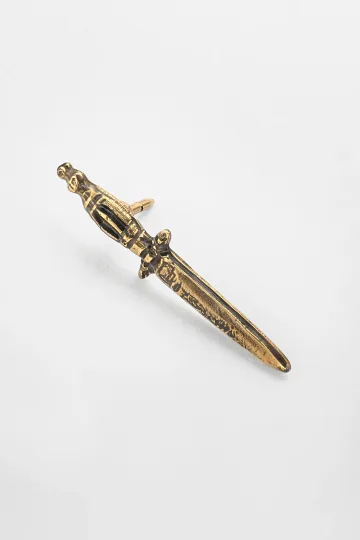
Wear the symbol, don't just read about it. These are in stock:







A group of finds sometimes called "axe-hammer" pendants illustrates the fluid boundary between the two weapon types in popular cult. These pieces combine the blade profile of an axe with the short thick handle characteristic of a hammer. Found in Denmark and southern Sweden, they suggest that the category of thunder weapon was broader than a strict reading of the Eddic texts might imply. What mattered was the striking weapon associated with the sky; its precise form remained somewhat open.
The Germanic world before the Norse provides additional background. The Anglo-Saxon name for the thunder god was Thunor, cognate with Old Norse Thor and with the German Donar. Thursday, Donnerstag in German, Donderdag in Dutch, preserves these names across the week. Anglo-Saxon heathenry, largely suppressed by the tenth century but leaving traces in place-names and in Old English literature, treated Thunor with the same combination of awe and familiarity that characterises the Norse depiction of Thor: a deity close to ordinary people, defender against giants and monsters, invoked at harvests and at sea.
A specifically American angle on this tradition runs through the large Scandinavian diaspora of the nineteenth century. Between roughly 1850 and 1930, more than a million Norwegians emigrated to the United States, followed by substantial waves from Sweden and Denmark. They settled the upper Midwest, from Minnesota and Wisconsin through the Dakotas, and brought with them a living connection to the Old Norse cultural inheritance. The interest in Norse mythology and Viking-age material culture that persists in American popular culture, from the name of a professional football team to the museums of the Twin Cities, has its roots in this settlement history. When Americans buy Norse-themed jewellery today, they are often, consciously or not, touching something that connects to real ancestral history on this continent.
Snorri Sturluson's account of the axe's mythological context comes through the Prose Edda's description of the dwarves Brokkr and Sindri, who forged Mjolnir for Thor. The short handle, traditionally explained as a flaw caused by Loki's interference during the forging, became in later tradition a fixed feature. The axes that appear in burial contexts are not presented as inferior to the hammer; they seem to belong to the same semantic field, weapons of consecration and protection against the forces that threaten the ordered world.
The end of the pre-Christian Norse cult came with the Christianization of Scandinavia between the late tenth and early twelfth centuries. Thor's sanctuaries were destroyed, the hammer and axe pendants disappear from Christian burials, and the myths survive only because Icelandic scholars of the thirteenth century, particularly Snorri Sturluson, chose to preserve them. This preservation is itself historically remarkable. We know the stories because literate Christians in Iceland considered the old tradition worth recording.
Axe vs. Hammer: What the Difference Means for a Buyer
The hammer Mjolnir is the canonical symbol. Every literate treatment of Norse mythology, from the thirteenth-century Eddas to modern academic editions, centres on the hammer. The tens of thousands of miniature hammer pendants excavated from Viking-age graves are the most numerous surviving class of Norse amulet, and they are what most people picture when they hear "Thor's symbol."
The axe sits in a different position. It is archaeologically well documented, appearing in the same graves and at the same sites, but it is less numerous and less textually prominent. Scholars continue to debate whether the axe amulets represent a direct reference to Thor or a broader tradition of sacred striking weapons that predates the specifically Norse mythological framing. Both interpretations have merit; neither has been definitively settled.
For a buyer, this translates into a practical distinction. The hammer Mjolnir has saturated popular culture through film, comics, and mass-market production. The axe pendant is less ubiquitous and tends to attract buyers who are specifically interested in the archaeological record rather than the popular image. Choosing the axe over the hammer is generally a more deliberate decision, and the piece reads accordingly.
The Slavic tradition of Perun's axe adds a third term to this comparison. Unlike Mjolnir or the Norse axe, the Slavic axe amulet is almost entirely unknown outside the countries where Eastern Slavic archaeology is actively practised. That relative obscurity is part of its appeal for those who know it: a well-documented historical form that has not been diluted by mass reproduction. The morphological difference between a Norse axe pendant and an East Slavic one is real and visible to anyone who studies the typology, and knowing that difference is part of wearing either piece with integrity.
An axe wants a leather cord and a wool collar, not a shiny chain. Wear it like you mean it, or leave it in the drawer.
How to Wear It
Over years on shoots and at reenactment events I have run this pendant through dozens of looks. Here is what actually works, by occasion.
How do I wear the axe every day? For daily wear I recommend a small two to three centimetre axe on a leather cord over a heavy dark tee or a grey wool sweater. It shows in an open collar and does not fight your clothes. The quieter the fabric in colour and texture, the sharper the blade's silhouette reads.
Does it work at the office? It does, if you keep it restrained. I suggest the same small size under a buttoned shirt: nearly invisible, and in an open collar it gives a quiet accent that stays inside a business code. Oxidised silver serves you better here than shine.
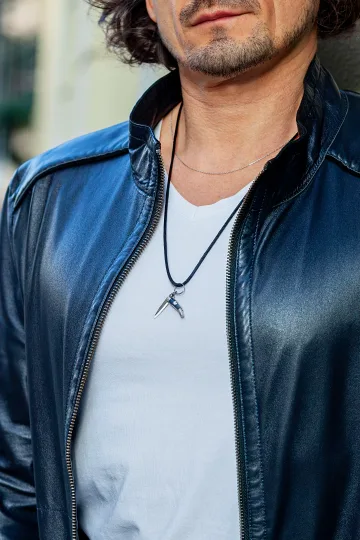
How do I build an evening or festival look? For going out I choose a larger size: a medium or big axe over a chunky black knit, a leather jacket or a dark coat carries the whole look. At a historical event I pick a full-size axe on a thick cord with heavy linen, wool and leather, where the piece is finally in its element.
What about metals and layering? I suggest keeping oxidised silver and bronze in a warm, natural palette: earthy, ochre, deep green, grey tones, away from gloss and glitter. If you already wear silver, keep it in the same tone as the axe. I allow layering, but sparingly: the axe plus one plain leather band reads as a look, a full kit turns into costume.
Who suits this axe? Anyone drawn to graphic weight and silhouette rather than fine linework. It sits on a calm, confident way of dressing. For a feminine look I recommend the miniature version on a thin chain, where the blade works as a clean geometric motif. Two rules to close: keep the cord or chain forty-five to fifty-five centimetres, and wear one strong piece at a time.

Turn on your camera, pick earrings, a pendant or a ring, and see the piece on yourself in real time.
Switch items in one tap.
Everything runs in your browser: no photo or video is ever uploaded.
Jewellery Formats for the Axe Motif
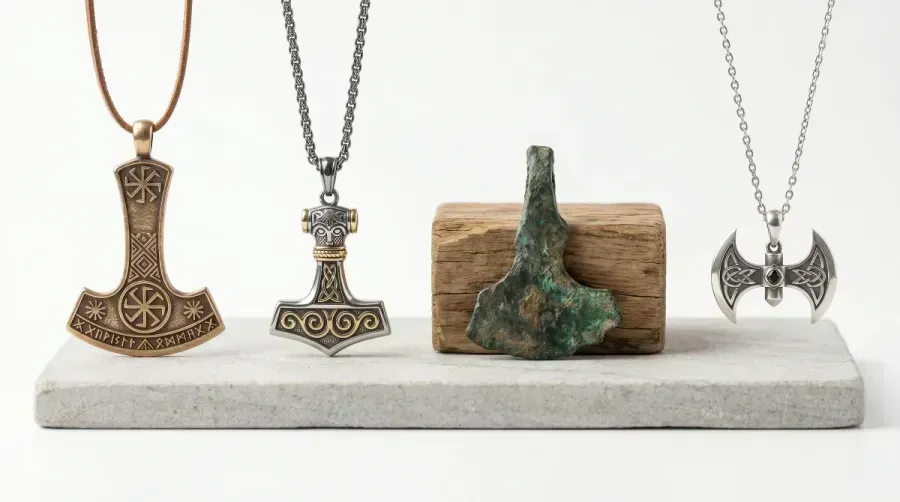
The dominant format is the pendant, a miniature axe or hatchet worn on a cord or chain at the neck. This follows the direct archaeological evidence: the medieval amulets were pendants, and modern reconstructions repeat that basic form. Scale varies considerably. A small piece of two to three centimetres sits quietly under a collar and reads as a personal detail rather than a declaration. A larger piece of five to six centimetres, closer to the dimensions of actual finds, becomes a statement when worn over a heavy knit or an open-collared shirt.
Two morphological families divide the field. The Scandinavian type tends toward a short haft, a compact blade that is nearly square, sometimes with a pronounced lower projection called a beard, and a suspension loop through or above the butt. The blade surface is occasionally engraved with Elder Futhark runes or with simple geometric patterns. This type closely mirrors the excavated examples from Birka and the Danish island sites.
Earrings with the axe form exist but are rare, generally limited to very small stud-sized pieces for those who want a sharp graphic detail on the ear. Larger axe earrings are uncommon in serious work because the visual weight is difficult to balance against a face. Cufflinks with an axe silhouette work well, the compact blade profile reads neatly on a cuff without aggressive emphasis.
Male bracelets occasionally incorporate an axe motif at the clasp or as a small pendant attached to a leather band. This is a more emphatically field-register choice, better suited to heavy clothing. Signet rings with a raised axe blade in relief appear occasionally and avoid the problem of three-dimensional bulk on a finger.
Key fobs and belt pendants deserve a mention here. Historical Norse belt assemblages often included multiple small suspended objects alongside the knife and fire-striker, and a small axe amulet in this position is entirely documented. For a buyer who wants the historical form but not the neckwear commitment, a small axe on a key ring or a belt fob is a legitimate option.
Engraved pieces deserve separate mention. On the Scandinavian reconstructions, rune inscriptions from the Elder Futhark are the standard decorative choice. The runic alphabet in use during the Viking Age was a working script, used on memorial stones, on weapons, and on personal objects, not an occult cipher. Using genuine runes rather than invented pseudo-runic decoration is a question of basic historical accuracy.
The History of the Axe Amulet
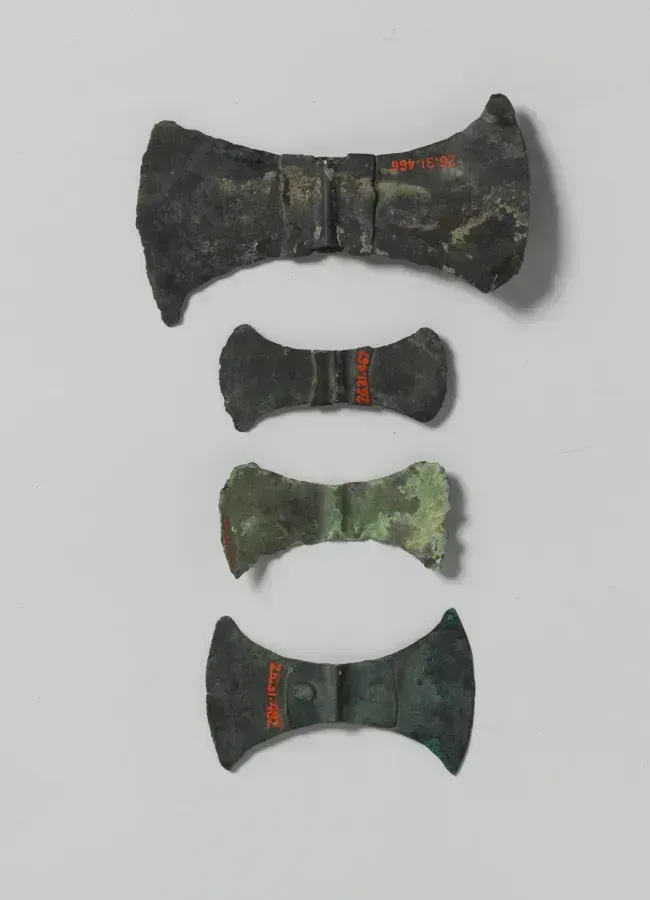
The symbolic axe is considerably older than the Norse tradition. In the European Bronze Age, roughly two thousand to eight hundred years before the common era, miniature bronze axes appear in exactly the same votive contexts as later Iron Age and medieval examples: hoards, river deposits, bog offerings, grave goods. Archaeologists find them too small and too perfectly finished for practical use. They were made to be given away, not used.
The Minoan civilisation on Crete, in the second millennium before the common era, used the labrys, a double-headed axe, as a major religious symbol. The labrys has a different morphology from the single-bladed Norse axe and belongs to an entirely different cultural system, but its presence demonstrates how deeply the sacred axe runs in European prehistory. The convergence is not explained by direct contact; it reflects a more general pattern in which striking implements become symbols of divine power.
The Indo-European thunder god complex is one of the more securely established reconstructions in comparative mythology. The Norse Thor, the Old English Thunor, the German Donar, and the Vedic Indra with his thunderbolt vajra all occupy the same structural position: a powerful defender who uses a striking weapon to maintain cosmic order against forces of chaos. The similarity across these traditions, which diverged from a common ancestor many thousands of years before any of them was recorded in writing, suggests that the association between thunder and striking weapon is genuinely archaic.
The Slavic thunder god Perun and the Baltic Perkunas belong to this same family. Their names share a root with the Latin quercus, oak tree, because the oak was considered the tree of the thunder god across multiple Indo-European cultures; it is struck by lightning more often than most other trees, and that observable fact became the basis for an entire layer of religious symbolism. East Slavic axe amulets, dated to the ninth through twelfth centuries, have been systematically published by Soviet and Russian archaeologists since the mid-twentieth century. The most comprehensive treatment is in B. A. Rybakov's Paganism of the Ancient Slavs, published in 1981. These pieces are closely related to the Scandinavian type in function, but morphologically distinct: broader blade, often slightly asymmetric, with a short haft and fine linear ornament on the surface.
A specifically Germanic angle comes through the Roman-era evidence. Tacitus, writing his Germania in 98 CE, describes Germanic religious practice in general terms, including the veneration of a deity he identifies with Hercules. Later scholarship identifies this as Donar/Thor. Roman-period Germanic metalwork includes a number of axe forms, and while the chain of evidence from Roman-era Germanic practice to Viking-age Norse is not unbroken, it is suggestive of a continuous tradition across nearly a millennium.
After the Christianization of Scandinavia, axe and hammer pendants disappear from the archaeological record in Christian contexts. But they do not vanish entirely from folk practice. Ethnographic records from Scandinavia and the Germanic lands note folk beliefs about thunder-axes and the protective power of axe-shaped objects well into the early modern period. The academic study of these survivals begins in the nineteenth century with Scandinavian folklorists and gains systematic archaeological grounding in the twentieth.
Today the axe amulet returns through two routes: the serious historical reconstruction movement, which works from museum publications and dated archaeological types, and the wider market in Norse-themed jewellery that draws on the same imagery more freely. Both exist, serve different needs, and are not necessarily in conflict, though the difference between a documented archaeological replica and a generic Viking-style piece is worth knowing before you buy.
Customer reviews
Zevira is a real jewellery shop. Genuine payments, deliveries and customer thank-yous.
🥰🥰🥰 gracias
Ok, ¡gracias! 🙂
What the Axe Symbolizes
The primary layer is force, not in any mystical sense, but literally. An axe cleaves wood and penetrates armour. That physical reality made it early into a metaphor for decisive action and direct engagement with problems, in contrast to the cunning or indirect approach. In Norse literary culture, the axe man is the straightforward man; the schemer uses other means.
The second layer is household protection. Before the age of specialised domestic tools, the axe performed multiple functions in the Norse home: it split firewood, served as a weapon in extremis, and occupied a central place in the organisation of the household. Ethnographic survivals record the placement of iron axes at thresholds, under beds, and near newborn infants as protective gestures across Scandinavian and Germanic folk practice. The household meaning is older than any mythology attached to it.
The third layer connects to thunder as a manifestation of cosmic order. In Norse cosmology, Thor's role is not to destroy but to defend: he kills the giants and serpents that threaten Midgard, the world of human beings. The storm is terrifying but it brings rain and ends drought. The thunder weapon in this reading is not aggression but maintenance, the force that keeps chaos at bay so ordinary life continues. An axe amulet carries this layer whether or not the wearer is aware of it.
The fourth layer is craft. The Norse smith held a position of social importance comparable to that of a warrior; the ability to transform ore into a cutting edge was close to magic in the eyes of people for whom metal technology was not mundane. Mjolnir itself, according to Snorri, was forged by the dwarves Brokkr and Sindri in an underground forge under difficult conditions. When a contemporary silversmith works a miniature axe in lost-wax silver, they are placing themselves in this long tradition of metalworkers, not performing mythology but enacting craft.
A fifth layer is legal authority. The Roman lictor carried the fasces, a bundle of rods enclosing an axe, as the formal emblem of magisterial power and the right to punish. Medieval European iconography associates the executioner's axe with formal, state-sanctioned rather than private violence. The Norse tradition is less explicit on this point, but the broader European pattern of axe as sign of legitimate force exists as context.
A sixth layer rarely discussed: the axe as a marker of adult male status. In multiple northern European traditions, a young man received his first small axe when he crossed from boyhood into adult standing, and that axe travelled with him through his life and into his burial. This ritual dimension is largely gone, but the underlying tone of the axe as a personally significant, non-casual object persists. That is why an axe pendant works poorly as an impulse purchase and well as a deliberate choice.
One honest caveat is required here. A silver axe pendant does not protect its wearer from lightning, from physical harm, or from misfortune. The protective function of the medieval amulet belonged to a system of belief shared by the community that made and wore it. That system does not operate today. What the piece carries now is historical reference, craft quality, and the visual language of a specific archaeological tradition. That is a genuine and substantial meaning, but it is a different meaning from the medieval one.
Materials and Techniques
Sterling silver, 925 parts per thousand, is the standard material for historical reconstruction work. The choice is partly practical: silver takes a sharp impression from a mould, holds detail well in surface engraving, and ages gracefully. It is also historically appropriate. Viking-age silverwork is well documented, and the prestige associated with silver in Norse culture is clear from the archaeological and textual record.
Oxidised or blackened silver is the most common finish for axe pendants in the reconstruction tradition. Chemical oxidisation darkens the recessed areas of the relief, leaving the raised surfaces bright, and gives the piece the appearance of age and of something recovered from the ground. This finish requires less maintenance than a high polish and gains character over time as handling brightens the high points further.
Bronze and brass are used where the client wants material that matches the original as closely as possible. Many of the excavated Viking-age axe amulets are bronze, and a bronze replica gives the piece the specific colour, weight, and patina character of the historical object. Bronze darkens naturally and patinates with handling in a way that reads as genuinely old.
Gold plating over silver shifts the piece into a different register: more prestigious, further from strict reconstruction, closer to a contemporary interpretation of a historical form. A gold-plated axe pendant on a heavy leather cord works as a city accent piece rather than as a field reconstruction.
The dominant production technique is lost-wax casting. The smith sculpts the axe in wax, builds a plaster or ceramic mould around it, burns out the wax, and pours molten silver into the space. Lost-wax casting is a technique older than the Norse period, used across the ancient world, and produces the slight surface irregularity that marks handmade objects and distinguishes them from machined production. After casting, hand engraving adds runic inscriptions or geometric ornament. Final oxidisation is applied by controlled chemical treatment, timed to achieve the desired depth of darkening in the recesses.
Size and weight deserve a word. Historical finds range from about one and a half to eight centimetres. The smaller pieces were likely worn constantly; the larger ones were occasional pieces or grave goods. A smith working from archaeological sources will typically offer several size options reflecting this range. Choosing by intended use, daily wear versus occasional statement, is more useful than choosing by visual impact alone.
Upload a photo of your pet, someone you love, or an object. We'll build a 3D model and hand-cast it in pewter.



Caring for Your Piece
Oxidised silver requires minimal but consistent care. Remove the piece before swimming, especially in chlorinated pools or salt water: both accelerate the breakdown of the oxidised surface layer. Store in a soft cloth pouch, separately from other jewellery, to avoid surface scratching. Wipe with a soft dry cloth rather than a polishing compound; polishing agents remove the oxidised patina that provides most of the visual effect.
If the patina wears off at the high points and the piece starts to look uniformly bright, a jeweller or the original smith can re-apply the oxidisation. This is a simple procedure and restores the original appearance. A piece that has been worn for years and shows differential patina, dark in the recesses and burnished at the edges, has developed its own character and does not necessarily need restoration.
A leather cord will darken, soften, and eventually need replacement. This is normal and expected. Replacing the cord every year or two is part of the maintenance cycle for this style of wearing, and some owners consider a worn, well-used cord an aesthetically positive feature.
How to Choose and Order
The first question worth settling before you buy is which matters more to you, archaeological accuracy or free interpretation. This is not a question of one being better than the other, since both are perfectly legitimate approaches, but they lead to different decisions further down the line. A reconstruction based on a specific museum example demands documentary groundwork from the maker and a working knowledge of typology, so that kind of work takes longer and costs more. A free artistic interpretation leaves room for the maker's own decisions and is usually available immediately, off the shelf.
The second question is the metal. If historical accuracy in the material matters to you, bronze deserves serious consideration, because it sits closest to the majority of genuine excavated finds. If durability and resistance to oxidation matter more, oxidised sterling silver remains the practical answer, and it takes engraving better than bronze does. Gold plating adds visual status but asks for gentler handling and will not survive daily wear for long.
The third question is size, and it should be answered against a specific scenario rather than in the abstract. A piece meant for daily wear is more comfortable small: it does not catch on collars, does not need managing, and never becomes the thing you have to think about. A piece intended for an event, a festival, or a re-enactment weekend can afford to be larger, because at that size it holds its own in the space around it.
The fourth question is cord or chain. A leather cord is historically correct, ages far more attractively, and reads well against natural fabrics such as linen and heavy wool. A chain lets you adjust the length precisely and works better with a modern urban wardrobe. Some makers offer both options at the point of ordering, and if you cannot decide, taking both is a sensible way to keep the piece flexible across contexts.
A last, quieter question is what you want the piece to do in ten years. Bronze and leather will show their age visibly and turn into something with a history of its own. Oxidised silver holds an even appearance for far longer with only occasional attention. Neither answer is wrong, but people are usually happier when they have chosen the ageing behaviour deliberately instead of discovering it by accident.
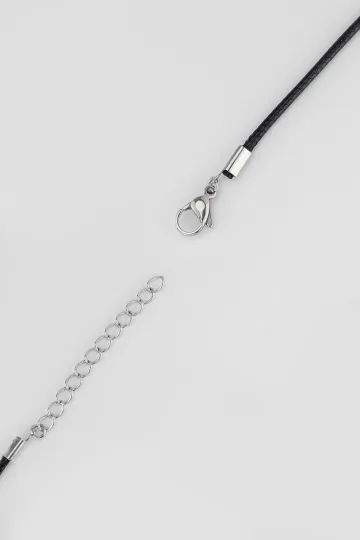
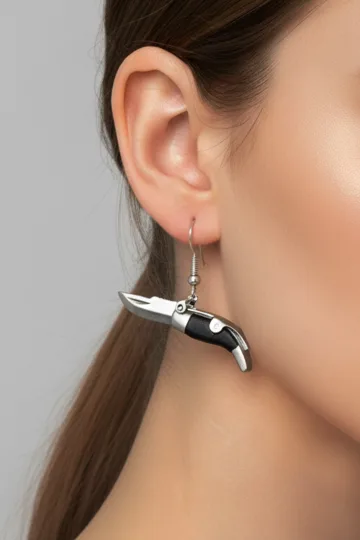
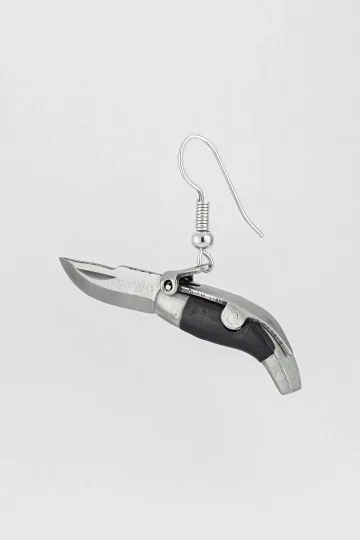
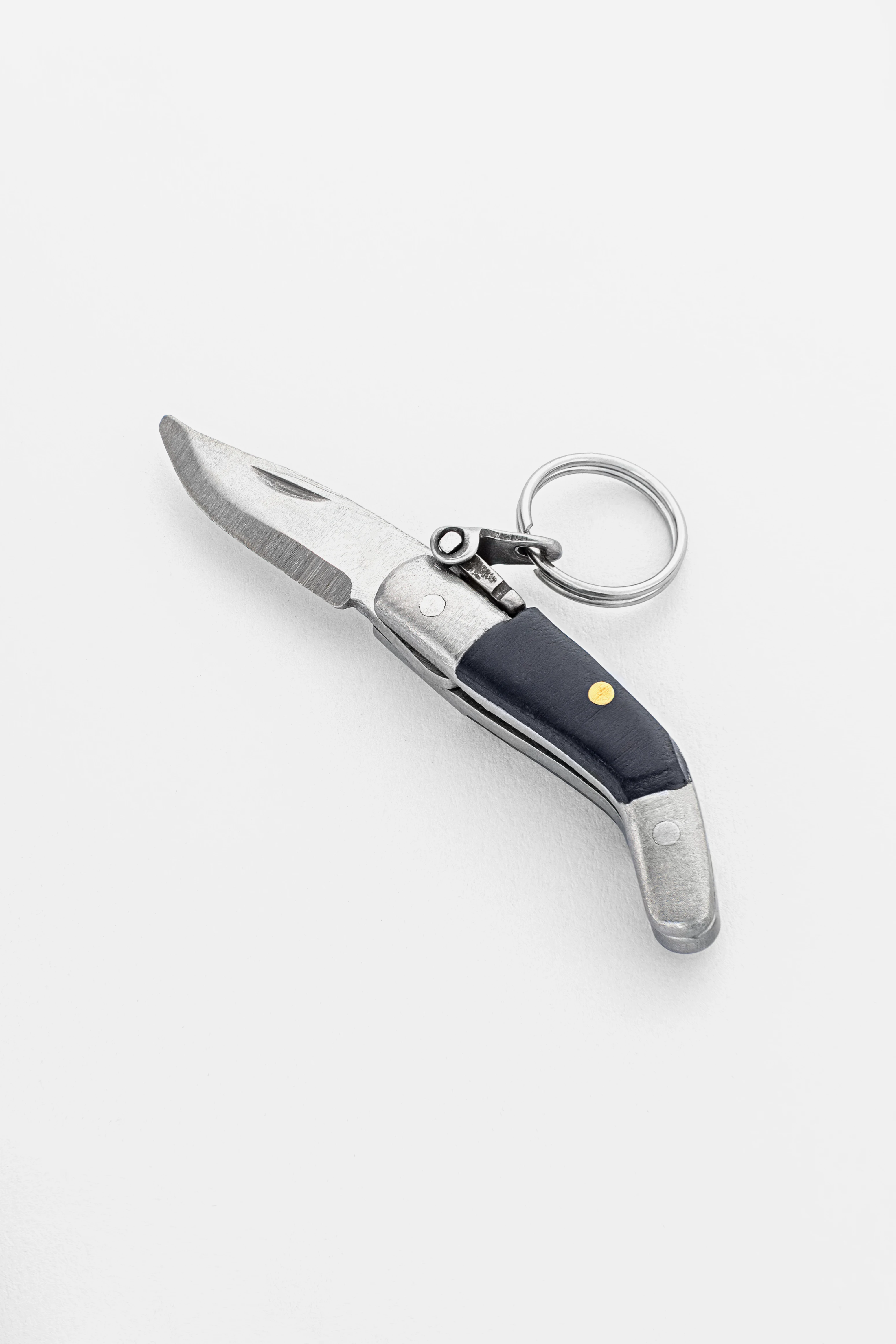
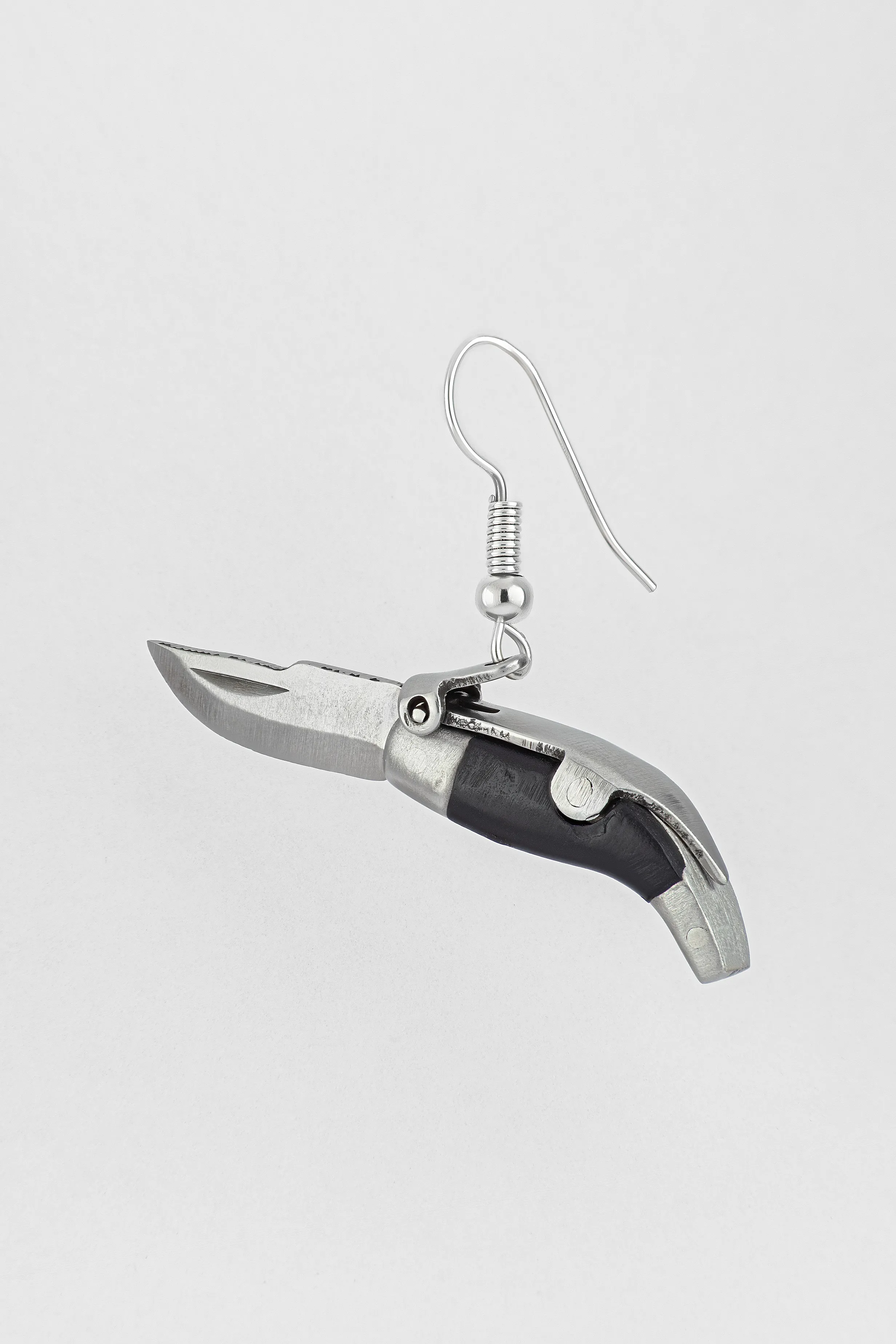
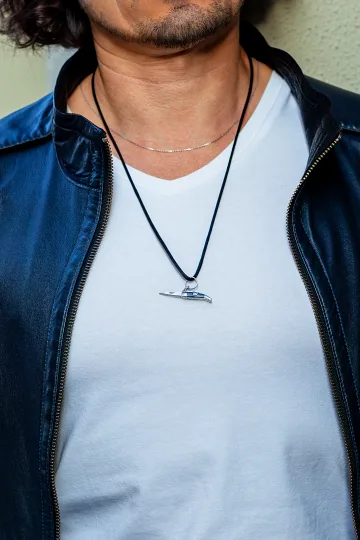
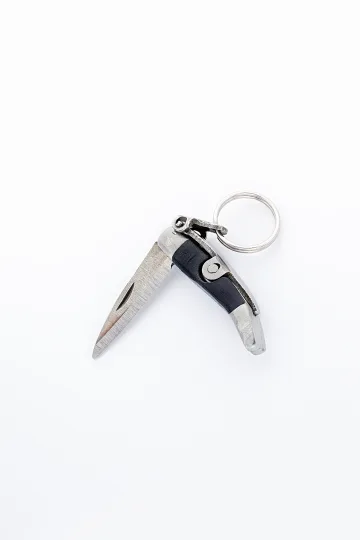
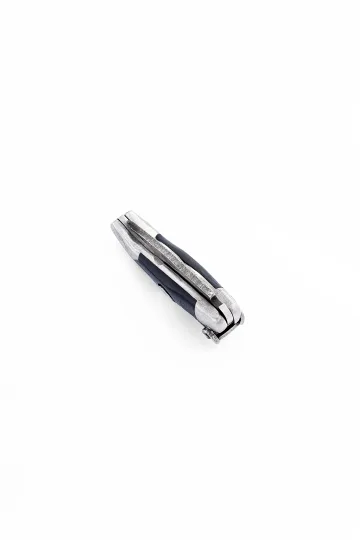
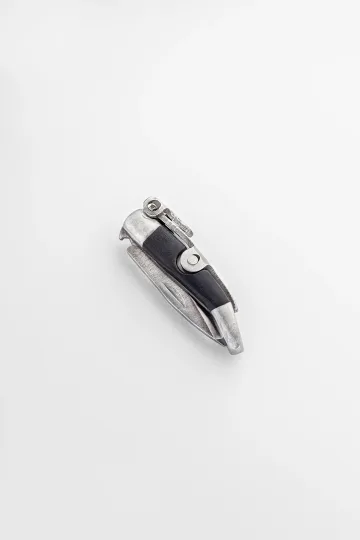
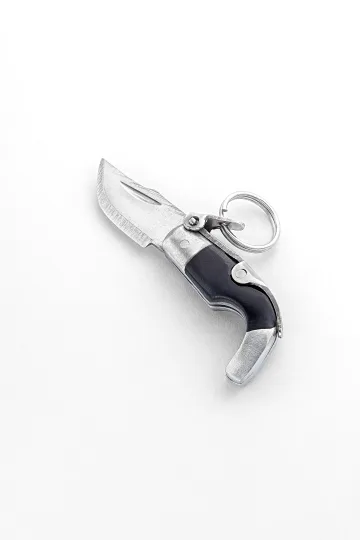
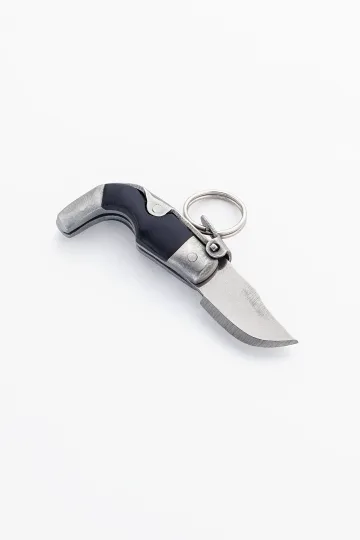
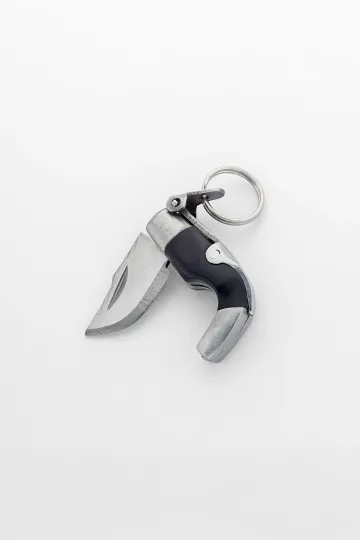
CAPAORA mini knife pendant
The 18th-century Spanish navaja in miniature: 40 mm of stainless steel, a real folding mechanism and a Palanquilla lock that clicks. An affordable gift to remember.
Authentic · Ships from Spain · 14-day returns
Who Wears It
The clearest fit is the person with a genuine interest in Norse or Germanic history and archaeology. For a reader of the sagas, a student of the Migration Period, or a regular visitor to the Viking-age collections in the Smithsonian, the Metropolitan Museum, or the major Scandinavian museums, the axe pendant is a quiet visual continuation of an existing intellectual engagement. It is not a costume; it is a personal marker of a specific interest.
Historical re-enactors working the ninth-to-eleventh-century period have an obvious use for accurately documented pieces. Events across Scandinavia, the British Isles, and North America regularly bring together people working within a full period kit, and a silver axe pendant on a leather cord is entirely appropriate in that context.
Readers of the Elder Edda, the Prose Edda, and the Icelandic family sagas form a natural audience. These are living texts for the people who know them, and the axe pendant works as a small material acknowledgment of an ongoing engagement with that literary tradition.
Musicians and listeners engaged with folk and neo-folk genres have worked with Norse and Germanic visual material for decades in a context that is fundamentally about aesthetic and musical vocabulary, not political assertion.
People who work with metal, whether as smiths, jewellers, or fabricators, sometimes find in the axe pendant a craft emblem rather than a mythological one: a reference to the historical status of the metalworker and to the long line of hands that shaped and smelted before them.
As a gift, the axe pendant works well when the recipient has a clear and known interest in the subject. A person who reads Norse history, builds period-accurate gear, or has Scandinavian family history will likely find the piece meaningful. For someone without that specific context, a more general piece is usually the safer choice.
A practical note on context: some contemporary political subcultures, particularly in Europe and North America, use Thor's hammer and related Norse imagery for purposes that have nothing to do with archaeology or mythology. This does not invalidate the historical symbol or make it impossible to wear. Awareness of the contemporary context is part of wearing any historically complex piece. The difference between an axe pendant worn in full knowledge of its archaeological origin and one worn without that background is a real difference, and it is the wearer who determines it.
The Axe in Slavic Mythology: Perun and His Weapon
The Norse axe tradition does not exist in isolation. East Slavic archaeology has produced a parallel corpus of axe amulets that belongs to the same broad Indo-European pattern, though it developed independently in its own cultural context.
Perun, the East Slavic thunder god, occupied the highest position in the pre-Christian Slavic pantheon. The Primary Chronicle, compiled in Kyiv around the early twelfth century, describes the religious reform of Prince Vladimir of Kyiv in 980, when wooden idols of several gods were erected in the city. Perun is listed first, described with a silver head and golden moustache. In 988, after Vladimir's conversion, the same chronicle records that the idol of Perun was dragged through the streets and thrown into the Dnieper River. This dramatic narrative marks both the formal end of the official cult and the beginning of its long underground continuation.
The archaeological signature of Perun's axe is a class of small bronze amulets found across the territory of what is now Russia, Ukraine, Belarus, and adjacent parts of Poland. They date primarily to the ninth through twelfth centuries. The typical piece is three to five centimetres long, with a relatively wide and slightly asymmetric blade, a short haft, and a suspension hole at the top. The surface is often decorated with simple linear ornament: parallel lines, small triangles, and hatching patterns. These are not representations of the tools used by craftsmen or warriors; the scale and the consistent decorative treatment place them in the same votive category as their Scandinavian counterparts.
The Baltic thunder god Perkunas, whose name is the closest linguistic relative to Slavic Perun, survived in active folk tradition far longer. Lithuania was formally Christian only from the late fourteenth century, and chronicles of the Teutonic Order record active veneration of Perkunas as late as the fifteenth century. The Baltic tradition therefore offers a window into what the Slavic thunder cult may have looked like when it was still living rather than archaeological.
For a buyer familiar only with Norse symbolism, the East Slavic axe pendant offers something genuinely different: a well-documented archaeological type with its own distinct morphology, its own ornamental vocabulary, and a rich body of scholarship that is largely inaccessible to those who do not read Russian. The piece is less commercially reproduced, which means that owning a careful replica is itself a form of engagement with a tradition that popular culture has largely overlooked.
Leave your email, we'll send your discount code. No spam, unsubscribe anytime.
The code arrives by email, valid on your first order.
Archaeology, Museums, and the Scholarly Record
The academic treatment of axe amulets differs substantially between the Scandinavian and the Slavic traditions, reflecting the different histories of archaeology in each region.
For the Norse material, the key collections are distributed across the museums of Copenhagen, Stockholm, Oslo, and Helsinki, with additional holdings in York, the British Museum in London, and the Smithsonian's National Museum of Natural History. Published catalogues of the Birka finds, the excavations at Hedeby, and the rich Danish island sites give the Scandinavian axe pendants a well-documented typological framework. Erwin Paulsen's work from the mid-twentieth century established a classification of pendant types that remains a reference point, though it has been refined and extended by subsequent researchers.
For the East Slavic material, the key publications are in Russian. Boris Rybakov's Paganism of the Ancient Slavs, published in 1981, remains the most comprehensive attempt to synthesise the mythological and archaeological evidence. The paired study by Vyacheslav Ivanov and Vladimir Toporov, Research in the Field of Slavic Antiquities, published in 1974, provides the comparative linguistic and mythological framework. Regional museum collections in Moscow, Kyiv, Minsk, Novgorod, and Smolensk hold the physical specimens, and the archaeological literature continues to grow as new excavations produce new finds.
What both traditions share, across the scholarly divide, is the interpretation of these small objects as personal religious items: not luxury goods, not purely decorative pieces, but things that carried a specific meaning for the person who wore them. The challenge for the modern buyer is to engage with that meaning at a level of accuracy that the scholarship supports, rather than at the level of general cultural atmosphere that commercial production typically offers.
Pairing and Layering: Building a Norse or Slavic Set
The single-accent rule discussed in the wearing section does not mean you cannot own multiple pieces in the same tradition. It means you should not wear them all at once. Building a considered collection in this area takes time and involves thinking about what each piece represents individually.
A Scandinavian axe pendant pairs naturally with other well-documented Viking-age forms: a simple arm ring of round-section silver, a plain oval brooch of the type found in Birka graves, or a small Valknut pendant for those who have read the mythological context and find it personally meaningful. The constraint is that every piece should be chosen with the same historical seriousness that the axe pendant demands. A carefully reconstructed Norse axe pendant next to a mass-produced fantasy Viking ring produces a visual and intellectual mismatch that weakens both.
The East Slavic axe pendant works with different companions. The ornamental language of Kievan Rus jewellery includes distinctive forms of filigree and granulation, enamel work in cloisonne technique, and lunula-shaped breast ornaments. A Perun axe pendant alongside a small lunula in oxidised silver draws on a coherent visual and cultural vocabulary without requiring explanation.
Both traditions can coexist in a collection, but the simplest rule for daily wear remains: one piece at a time, chosen intentionally.
The Gift Question
An axe pendant is a considered gift for a specific category of recipient and a puzzling one for anyone outside that category. Getting this right involves knowing something real about the person you are buying for.
The recipient who will genuinely appreciate this piece is someone who has already demonstrated an interest in the relevant history: a person whose bookshelves include works on Norse mythology or Viking-age archaeology, someone who has travelled to relevant museum collections, a craftsperson who works with metal and thinks about the historical lineage of their trade, or a participant in historical reenactment who works the relevant period. For this person, the axe pendant is not a random object but a specific acknowledgment of a specific interest, and the thought behind the choice will be visible to them.
For anyone without that background, the piece will likely read as a generic Viking-themed accessory, indistinguishable in the recipient's mind from the mass-produced items available everywhere. The intent behind the gift will be lost. In that case, a more versatile piece, something in the same quality register but with less specific cultural content, is likely to serve better.
If the gift is for someone you know to be interested in the field but you are uncertain about the precise archaeological nuance, the safest approach is to buy from a maker who provides documentation: information about the specific type being reproduced, the museum parallels, and the historical date range. A piece that comes with that context gives the recipient something to engage with beyond the object itself.
Thunder-god axe pendants in sterling silver. Lost-wax cast, hand-oxidised, faithful to Viking-age archaeological types.
On Authenticity and the Market
The historical reconstruction market for Norse and Slavic jewellery occupies a small but serious niche within the wider jewellery industry. At one end of the spectrum are craftspeople who work from published archaeological catalogues, produce limited runs, and provide documentation with each piece. At the other end are manufacturers who produce millions of identically stamped pieces branded as "Viking" or "Norse" or "Celtic" with no connection to any specific historical type. Both exist, both serve their audiences, and the difference between them is real.
For a buyer whose interest is genuine historical engagement, the markers of serious work are practical and checkable. A maker who cites the specific archaeological type, names the relevant publication or museum collection, describes the morphological features that distinguish that type, and can explain why the piece looks the way it does is making a fundamentally different product from one who simply applies a Nordic-sounding label to whatever sells.
This does not mean the careful historical piece is always ten times more expensive than the mass-produced one. Sometimes it is; sometimes a skilled craftsperson working in lower-cost production contexts can offer well-documented work at competitive prices. The price is less reliable as a signal than the documentation itself.
A second practical point: the best place to learn to distinguish types before buying is in a museum collection rather than from seller descriptions. An afternoon with the Viking-age holdings at a good natural history or archaeology museum gives you a visual baseline that no amount of reading about the pieces fully replaces.
Send a friend a discount code, they save on their first order.
The Written Sources: Where the Myths Actually Come From
For anyone who wants to understand a symbol before wearing it, the best route starts not with the jewellery but with the texts. For the Norse material that means the Poetic Edda and the Prose Edda of Snorri Sturluson, both written down in Iceland in the thirteenth century and both available in English in more than one form. Older translations by Benjamin Thorpe and by Olive Bray, and the Prose Edda in the version by Arthur Gilchrist Brodeur, are out of copyright and free to read online, which makes this the least expensive research any collector will ever do. Modern annotated editions are easy to find in any decent bookshop in Britain and are worth the outlay for the notes alone. A few hours with these texts gives a far more accurate picture of who Thor is and what Mjolnir means than any quantity of articles about "Viking symbolism".
Two further sources fill out the picture from the outside. Saxo Grammaticus, writing in Denmark around 1200, gives a Latin retelling of the same material with a different set of emphases, which is useful precisely because it disagrees with the Icelandic version in places. Adam of Bremen, writing about a century earlier, describes the temple at Uppsala and the god he calls Thor from the position of a Christian churchman who found the whole thing alarming. Read together, these accounts show how much of what we call Norse mythology reaches us through people who were writing it down after conversion, with their own reasons for shaping it as they did.
For the East Slavic material the sources are thinner and harder to reach. The Primary Chronicle, compiled in Kiev in the twelfth century, survives in English translation and reads more easily than its reputation suggests: it contains both the description of Vladimir's pantheon and the account of the conversion. Beyond that, a reader in English is largely dependent on academic monographs, and the scholarship here is genuinely contested. Some twentieth-century reconstructions of Slavic mythology drew heavily on folklore recorded eight hundred years after the fact, and later scholars have pushed back hard on how much of that can honestly be projected onto the pagan period. Knowing that the argument is live is itself useful, because it stops you treating any single account as settled.
For readers drawn to language, the comparative and etymological work on Indo-European thunder gods is a rewarding way in. It connects Thor, Perun, the Baltic Perkunas, and the Vedic Indra through a shared linguistic root associated with striking and with the oak. That line bears directly on the axe: the name states the function, the function explains the weapon, and the weapon explains the amulet. Understanding that chain is what separates wearing a symbol from simply wearing a shape.
Frequently Asked Questions
What is the difference between Thor's axe and Mjolnir? Mjolnir is Thor's hammer as described in the Eddic texts and represented by the large number of miniature hammer pendants recovered from Viking-age graves. The axe amulets are a separate but contemporary archaeological type, found in the same periods and regions as the hammer pendants. Scholars debate whether the axe amulets represent Thor's weapon specifically or a more general thunder-weapon symbol that predates the Norse mythological tradition. Both types existed simultaneously and were likely read as belonging to the same symbolic field.
Are these symbols connected to extremist groups? Some contemporary political movements in Europe and North America use Norse symbols, including hammer and axe forms, for their own identification. The symbols themselves belong to the broad archaeological and cultural heritage of northern Europe and carry no inherent political meaning. Wearing a historically documented axe amulet does not signal political affiliation automatically, in the same way that wearing a Greek meander does not signal classical paganism. Awareness of the contemporary social context is nonetheless part of making an informed choice about what to wear.
Is it appropriate for women to wear the axe pendant? The symbol has no formal gender restriction, historical or contemporary. Archaeological evidence includes axe amulets in burial assemblages that are identified as female or indeterminate. The dominant contemporary association is with men, largely because weapon imagery is culturally associated with male identity, but this is a modern convention rather than an ancient rule.
What metal is most appropriate for a historically accurate piece? Bronze is technically closest to the majority of surviving excavated examples. Sterling silver is appropriate for the upper register of Viking-age metalwork and produces a better surface for engraving. Iron exists in the archaeological record but is rarely used for modern jewellery because it corrodes. For a reconstruction-focused choice, bronze or oxidised sterling silver are both defensible. For a piece intended primarily as jewellery that references the tradition, sterling silver is the standard option.
Can the piece be engraved with runes? Yes, and this is historically appropriate. The Elder Futhark, the runic alphabet used across the Germanic world from roughly the second to seventh centuries CE, and the Younger Futhark, the simplified sixteen-character version used during the Viking Age, both appear on excavated metalwork. Inscriptions on amulets typically invoke protection or blessing. Using actual historical rune forms rather than invented pseudo-runic decoration is a basic question of accuracy.
How should I care for an oxidised silver axe pendant? Avoid chlorinated water and salt water, both accelerate oxidation loss. Store separately in a soft pouch. Polish only with a dry soft cloth, not with polishing compounds. If the dark patina wears off the high points over time, it can be professionally re-applied. The leather cord will need periodic replacement; this is normal and expected maintenance.
Choosing Metal and Size: A Practical Comparison
Material is usually chosen on the basis of which looks nicer, when it would be better chosen on the basis of what the piece is for. Here are the three main options with what each actually does in wear.
Oxidised sterling silver. Durable, resistant to scratching, and the standard choice for daily wear. The dark patina settling into the recesses is what makes the relief readable at arm's length, so an axe head with any depth of carving benefits from it considerably. It needs an occasional wipe to clear fingerprints and nothing more elaborate than that. Prolonged contact with sea water or a chlorinated pool will gradually lighten the oxidised surface, though a jeweller can restore it in minutes.
Bronze. The closest of the three to the material of genuine excavated finds, and the obvious answer for anyone building a period-accurate kit. It is heavier than silver and sits differently in the hand, which people notice more than they expect to. Bronze develops its own patina along different lines, warmer in tone, with greenish notes settling into the recesses. It asks for slightly more attention, because bronze reacts readily with sweat and salt, and it looks its best on a leather cord rather than a chain.
Gold-plated silver. The dress option. A gold layer of one to three microns looks handsome, but on the raised surfaces it wears through in roughly a year or two of constant wear, and rather faster if the piece is worn under a shirt collar. An amulet finished this way is better kept for occasions than pressed into everyday service.
On size, the rule of thumb is straightforward. An axe head of two to three centimetres is appropriate anywhere and draws no attention to itself. Four to five centimetres is the standard declared format, worn outside the clothing where it can be seen. Anything above five centimetres is a deliberate object with a deliberate presence, and it should be chosen as such rather than by accident.
Buying it as a gift? Each one arrives ready to give.
 A branded Zevira box and a little card come with every order.




Size, Weight, and Proportions: The Practical Details
The size of a pendant shapes the whole look it sits in, and it is worth knowing what actually drives that choice in practice rather than guessing at it from a photograph on a screen.
An axe head of two to three centimetres usually weighs between four and eight grams in sterling silver. This is the format that disappears under a buttoned collar, catches on nothing, and never becomes irritating in movement. It is the sensible choice for daily wear, including working days in an office.
Four to five centimetres brings the weight to somewhere between ten and twenty grams depending on how thickly the piece is cast. At this size the pendant is visible at an open collar and reads clearly over a jumper. This is the standard declared format: people notice it, it takes part in the outfit, and it does not overwhelm anything around it.
Six to eight centimetres is an object with a strong character that demands a conscious decision. It works well at a festival or as part of a re-enactment kit, and it sits awkwardly in most everyday professional settings. Weight becomes a real consideration at this size, particularly on a thin cord, which will start to mark the back of the neck over a long day.
On cord length, the useful range is forty-five to fifty-five centimetres, which drops the pendant onto the chest rather than leaving it sitting on the collarbone. Too short a cord creates a visually constricted effect around the throat. Too long a one lets the piece swing about in movement and knock against whatever you are leaning over.
The material of the cord or chain shifts the register of the whole look more than most people expect. A leather cord of one millimetre in diameter is the quiet, historically correct option. Two millimetres makes the cord itself a visible part of the outfit. A flat-link silver chain moves the piece firmly into an urban register. Choosing between them is, at bottom, choosing between the logic of the re-enactor and the logic of the city.
About Zevira
Zevira is a Spanish jewellery brand based in Albacete. The historical and archaeological line includes thunder-god axe pendants alongside other pieces from documented Viking-age and early medieval traditions. Current availability and details are in the catalogue.