Witchy Jewellery: A Complete Guide to Occult Symbols, Wiccan Aesthetics and Magical Collections
Why This Aesthetic Is Everywhere Right Now
In 2017, searches for "witchy jewellery" were modest. By 2023, the numbers had grown exponentially. Short-form video hashtags tied to the witch community accumulated tens of billions of views. Each wave of occult films and series added fresh interest. Books on spellcraft entered bestseller charts. New moon and full moon rituals became regular fixtures in social media stories.
The jewellery industry adapted accordingly. Magical pieces featuring pentagrams, moon phases, crystals and tarot imagery became a recognised category in their own right. What was an ultra-alternative niche in 2010 is now a straightforward collection stocked by independent makers and mainstream jewellery shops alike.
Britain has its own long relationship with this world. The Pendle Witches of Lancashire, tried in 1612, are among the most documented witch trials in English history. Cornwall had its pellars, cunning folk who worked with herbs, protective charms and talismans for paying customers well into the nineteenth century. Glastonbury in Somerset has been a centre of pagan and New Age practice for decades. When Gerald Gardner formalised Wicca in the 1950s, he drew on these islands' own folk-magic inheritance as much as on ceremonial traditions. That continuity is real, and it shapes the kind of symbolism that resonates with a British audience.
This guide covers what belongs in a witchy collection, how to build one and how to wear it with intention.
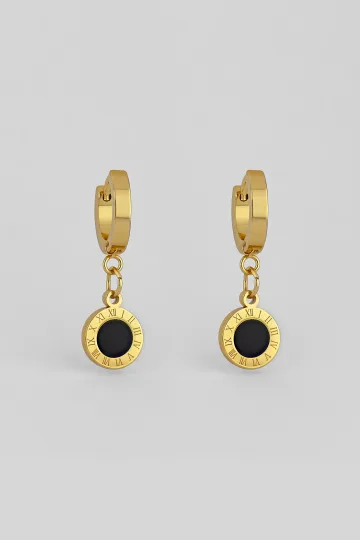
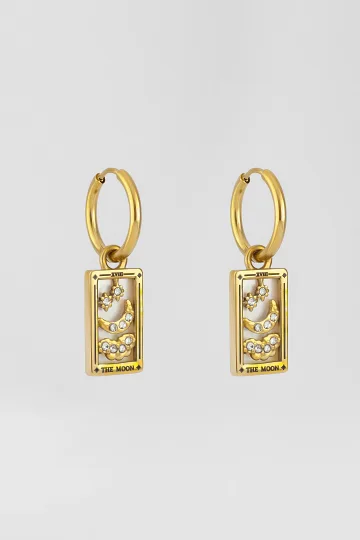
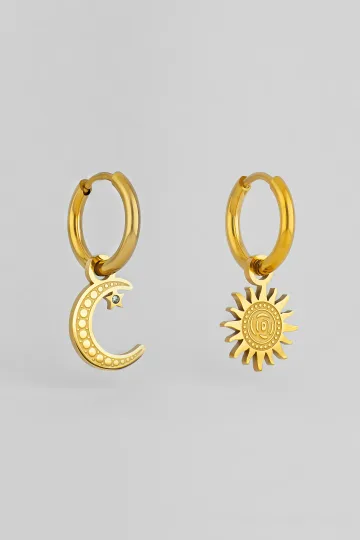
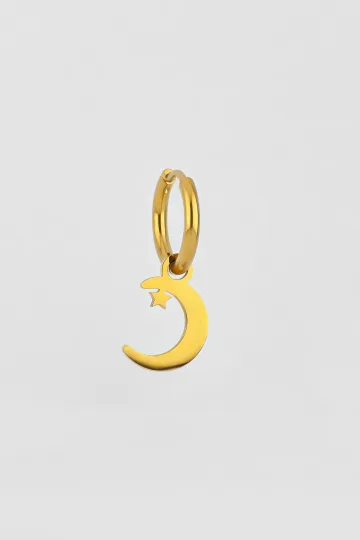
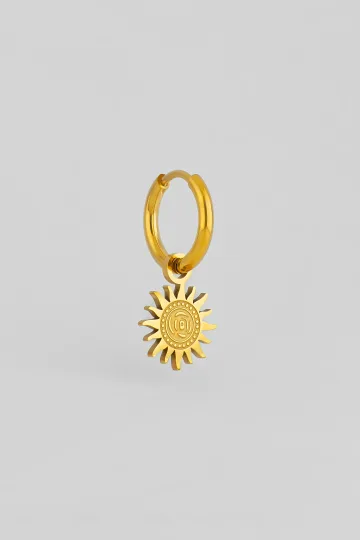
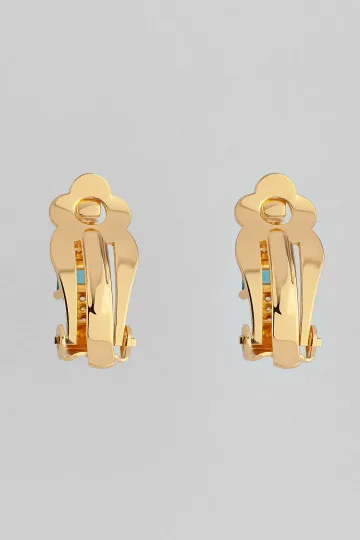
Wear the symbol, don't just read about it. These are in stock:




The Historical Background: Where This Tradition Comes From
The Pendle Witches (Lancashire, 1612)
The Pendle witch trials are among the best-documented in English history. Twenty people from the Pendle Hill area of Lancashire were arrested on charges of witchcraft. Ten were executed. The case was recorded in detail by clerk Thomas Potts in his Wonderfull Discoverie of Witches. What the records reveal is that most of the accused were simply local folk-practitioners: healers who used herbs, knotted cords, stones with natural holes and simple amulets. Their tools were protective, not malicious. The hag stones, knotted threads and carved pendants they used are ancestors of the objects that define the witchy aesthetic today.
The Cornish Pellars
In Cornwall, the pellars occupied a recognised and openly commercial social role. The word derives from "expeller" or "repeller," meaning someone who repelled evil influences. They diagnosed bewitchment, prescribed remedies and sold protective charms. Their equipment commonly included iron rings, silver pendants, knotted cords and charm bags incorporating herbs and natural materials. They were not marginal figures. They were consulted by ordinary people across the county, and their practice continued well into the Victorian era.
Glastonbury and the Living Tradition
Glastonbury has been a focal point for British paganism and Wiccan practice for several decades. The town draws practitioners from across the country for festivals tied to the Wheel of the Year, and its independent shops have stocked witchy jewellery for far longer than the aesthetic has been trending on social media. The town's character, shaped by its connection to Celtic Christian and pre-Christian traditions, gives it a particular resonance.
Salem (Massachusetts, 1692)
The Salem trials lasted less than a year but left a lasting mark on how the English-speaking world relates to the figure of the witch. Nineteen people were hanged. Historians attribute the episode to a combination of social conflict, religious fervour and, in some accounts, ergot poisoning of the rye crop. None of those convicted were actual practitioners of any kind. Salem has since become a reference point for self-identifying modern witches, who reclaim the accused as symbols of unjust persecution.
Bamberg and Würzburg (Germany, 1626-1631)
The Bamberg witch trials, which ran from 1626 to 1631, resulted in the execution of more than three hundred people, including the city's own mayor. The trials spread to Würzburg in parallel, with similarly catastrophic numbers. They ended only after imperial commissioners intervened. These events are among the most extensively researched episodes of early modern witch persecution.
Zugarramurdi (Spain, 1610)
The Inquisition of Navarre staged one of the largest autos-da-fé on the Iberian peninsula in 1610. The Logroño proceedings concerned the inhabitants of the Basque village of Zugarramurdi, where local tradition held that a coven met with rituals of its own. The inquisitor Alonso de Salazar afterwards conducted his own investigation and concluded that he had found no genuine evidence of witchcraft in any of the cases. His report stands as one of the earliest sceptical official documents on witch trials anywhere in Europe.
Loudun (France, 1632-1638)
The affair of the possessed nuns at Loudun was as political as it was religious. The town's parish priest, Urbain Grandier, was accused of afflicting an Ursuline convent. The trial was widely publicised and its details drew spectators from across Europe. Historians examined the case in detail in the nineteenth century, and Loudun is now treated as a textbook example of how political intrigue and religious panic became entangled in the early modern period.
The Witches of Benevento (Italy, folk tradition)
Unlike the legal proceedings, the story of the witches of Benevento in Campania survives as folk tradition rather than as court record. By that tradition, witches gathered under a walnut tree by the river Sabato for night-time dances and rites. The image entered Italian folklore and shaped the late medieval iconography of the sabbath, which in turn shaped almost everything the modern aesthetic thinks a witches' gathering looks like.
Norwegian and Icelandic Witches (Scandinavia, seventeenth century)
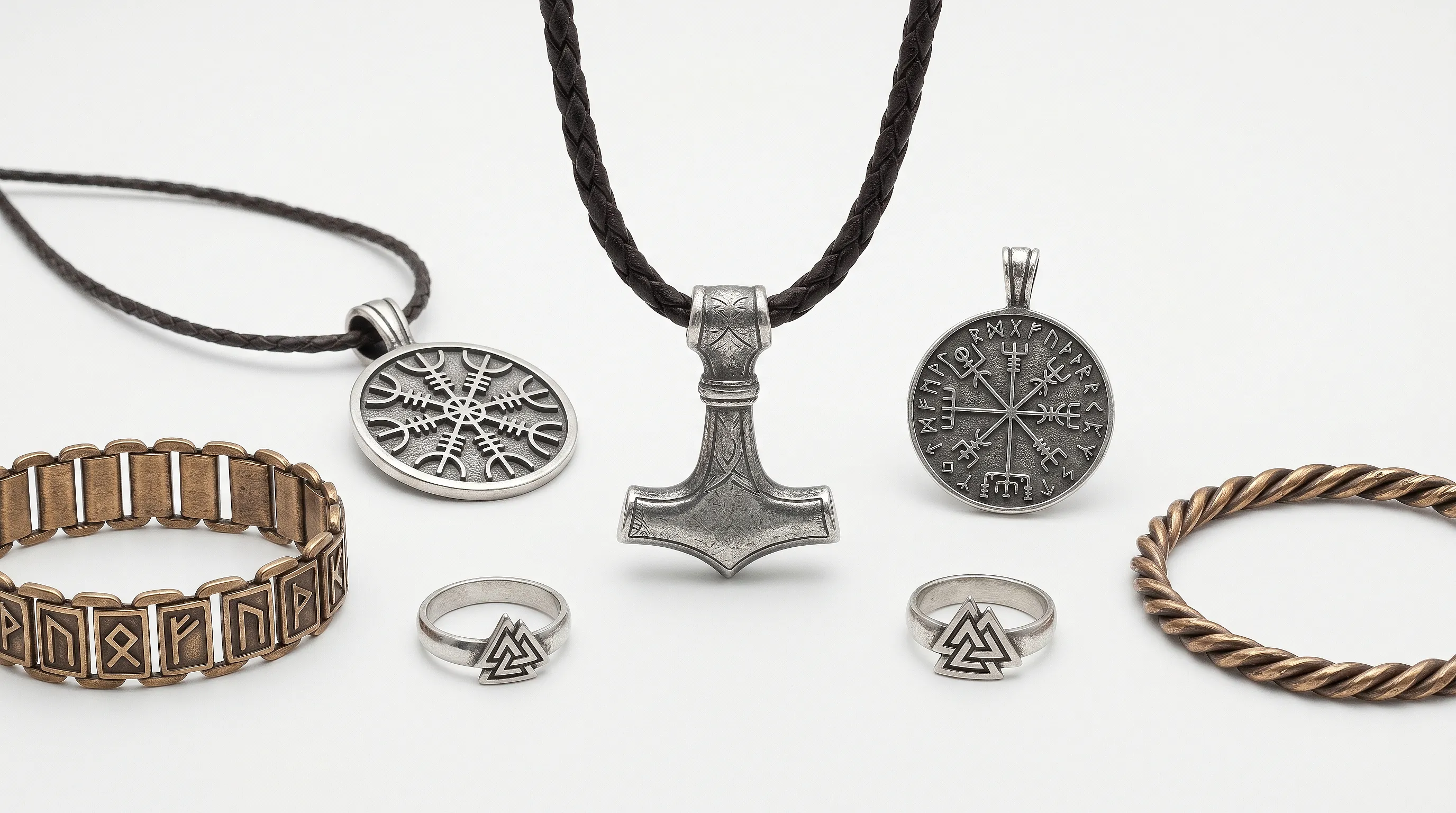
The Scandinavian trials had a distinguishing feature: a substantial proportion of the condemned were men. In Iceland almost all of the roughly twenty people executed for sorcery were male, which set the island apart from continental Europe. Local tradition associated magic with command of runes and of galdr, spoken charm verses. Manuscript books survive containing galdrastafir, protective staves drawn on skin, wood or metal. The best known of them, the aegishjalmur or helm of awe, has passed into contemporary mystical graphics and turns up on pendants and rings. The genuine Icelandic tradition knew these signs specifically as personal charms, which puts it close to the logic of the amulet piece.
Finland and the Sámi Tradition (northern Europe)
In the far north the roles of witch and shaman often overlapped. Sámi noaidi used a drum painted with symbols as a map of the spirit world and as a divination tool. Finnish folk magic knew the tietäjä, the one who knows, who healed with charms and with objects that carried power. Objects from these cultures, bone pendants, metal bells, knotted charms, influenced the northern branch of the modern aesthetic. Restraint matters here: Sámi symbolism belongs to a living people with rights over their own culture, and borrowing it casually is not appropriate.
Healers and Cunning Folk: Who the Trials Were Really About
Behind the abstract word witch, the trial archives usually reveal a specific figure: a village healer, a midwife, a herbalist. These women and men held practical knowledge about plants, childbirth and broken bones. Their services were sought while they were needed, and dangerous to them when something went wrong. Many charms considered witchy today come from that practical medicine: holed stones against the evil eye, knots tied to stop bleeding, pouches of herbs worn at the neck. The modern aesthetic inherits far more from these real healers than from the sorcerers of fairy tales.
Gerald Gardner and the Founding of Wicca (1954)
Gerald Gardner, a British civil servant and antiquarian, published Witchcraft Today in 1954 and set out the framework that became known as Wicca. He claimed to be transmitting a surviving tradition, though scholars debate the degree to which this was accurate. What is certain is that Gardner formalised the Wheel of the Year, the concept of the Triple Goddess, the use of the pentacle as a ritual tool and most of the ceremony that defines modern Wicca. The modern witchcraft movement grew substantially from his work.
A silver crescent on a bare collarbone beats five chains at once. Do not drape the whole coven over one black jumper.
How to Wear Witchy Jewellery
Over years on shoots I have built dozens of looks around a moon, a pentacle and a dark stone. Here is what actually works, by occasion, without the theatrics.
What do you wear it with every day? For daytime I recommend a single quiet accent: a fine chain with a small crescent or a moonstone over a black or grey base. Cool stones like labradorite and moonstone I suggest against a muted palette, while a warm citrine or amber I choose for earthy beige and brown fabrics. Natural linen, cotton and wool hold the aesthetic; synthetics cut against it.
Is it appropriate for the office? It is, if you play it quiet. I recommend 925 silver and the principle of "for yourself, not the room": a slim crescent under the collar, a labradorite ring, small crescent studs. A large pentagram I suggest saving for your own circle, and for a business code I choose one restrained sign.
How do you build an evening look? For evening I choose an open neckline and a smooth fabric in a deep colour: wine, emerald, black. Against that ground, oxidised silver and dark stones read best. Here you can go into layers: three chains of different lengths (a moon phase, a crystal, a plain silver one) plus earrings that show.
Minimal or layered, how do you decide? I look at temperament. One crescent on a clean chain always beats one crowded between five pendants, so minimalism I recommend to those who wear a piece for themselves. Drawn to maximalism? I suggest keeping one logic: either a shared palette of silver and moon, or a dark line with obsidian, so the set reads as a system rather than a drawer.
Who does this aesthetic suit? A cool silver palette and labradorite I recommend to anyone leaning toward minimalism and a cosmic mood. Warm rose gold and botanical motifs I suggest for a softer cottage feeling. Two rules to close on. First, mix thin and wider rings on one hand; it reads livelier than a single large one. Second, silver with brass or darkened silver looks deliberate, while silver with pale gold often clashes.

Turn on your camera, pick earrings, a pendant or a ring, and see the piece on yourself in real time.
Switch items in one tap.
Everything runs in your browser: no photo or video is ever uploaded.
Core Symbols of a Witchy Collection
The Pentagram (Five-Pointed Star)
The most recognisable occult symbol. Five points correspond to five elements: earth, water, fire, air and spirit. In Wicca it is a sign of protection and harmony with the natural world. The symbol is ancient, appearing in Sumerian, Pythagorean and early Christian contexts. It is more than five thousand years old.
An important distinction:
- Pentagram (bare star) a neutral Wiccan symbol
- Pentacle (star within a circle) more protective in meaning, traditional
- Inverted pentagram associated with a different symbolic tradition; not a general Wiccan sign
Most witchy jewellery uses the pentagram or pentacle in its upright form.
Hecate's Wheel
Hecate, goddess of magic, crossroads and the underworld in ancient Greek tradition, is represented by a wheel-like symbol sometimes called the Strophalos. The symbol reflects her triple nature and her role as keeper of thresholds. It appears in witchy jewellery less commonly than the pentagram, but carries deeper historical roots.
Triple Moon (Triple Goddess)
Three phases of the Goddess: Maiden (waxing moon), Mother (full moon), Crone (waning moon). The symbol of three moons together, or the triquetra knot, is one of the core visual codes of Wicca.
Moon Phases
The moon and its cycle form the central feminine symbol in magical tradition. In jewellery: a chain showing multiple phases, a pendant with a single phase, crescent earrings. The connection to natural rhythms and seasonal change is foundational.
The Ankh
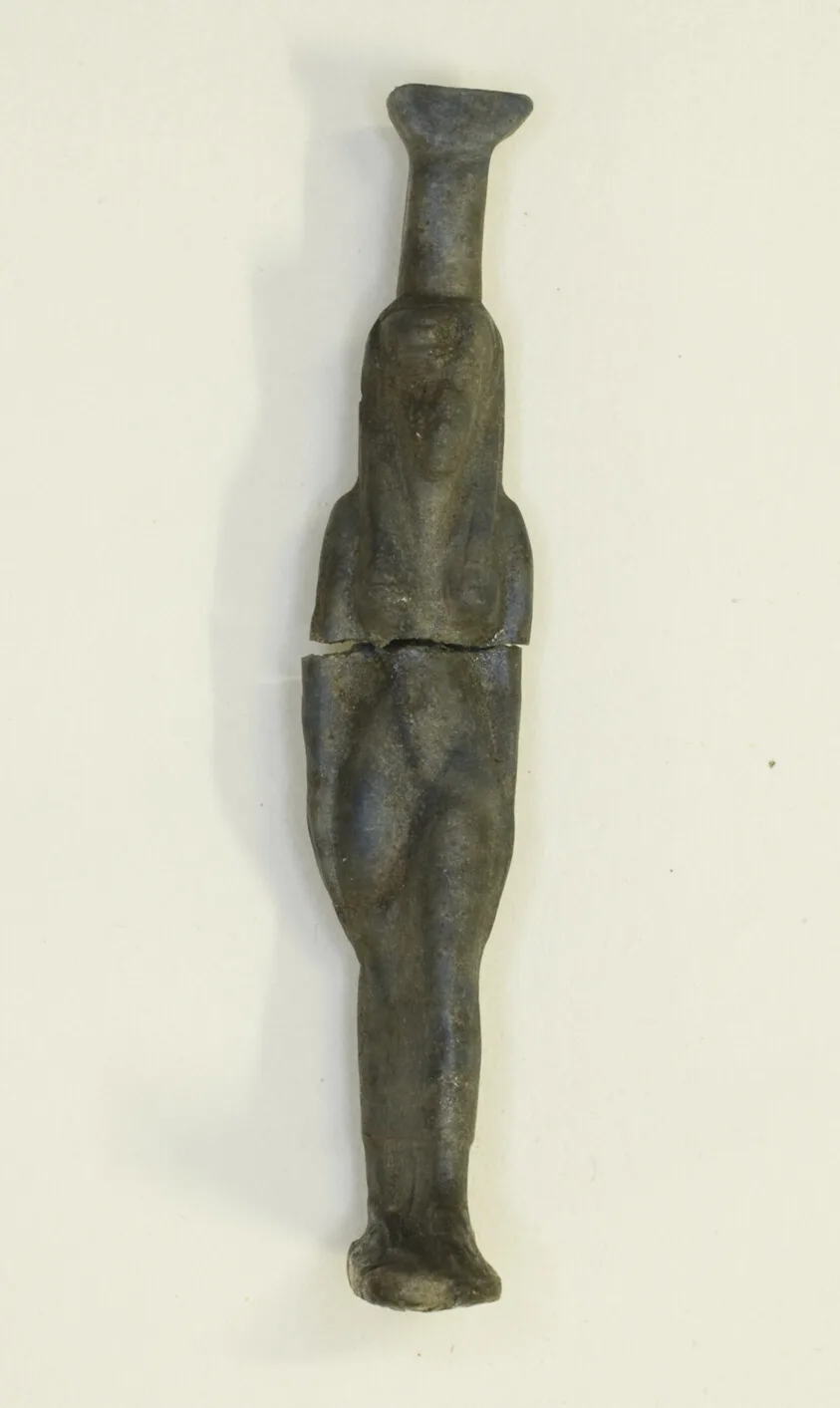
The Egyptian symbol of life. Its presence in modern occultism runs through nineteenth-century neo-Egyptian movements and into the broad symbolic vocabulary of contemporary witchy aesthetics.
Sigil Magic
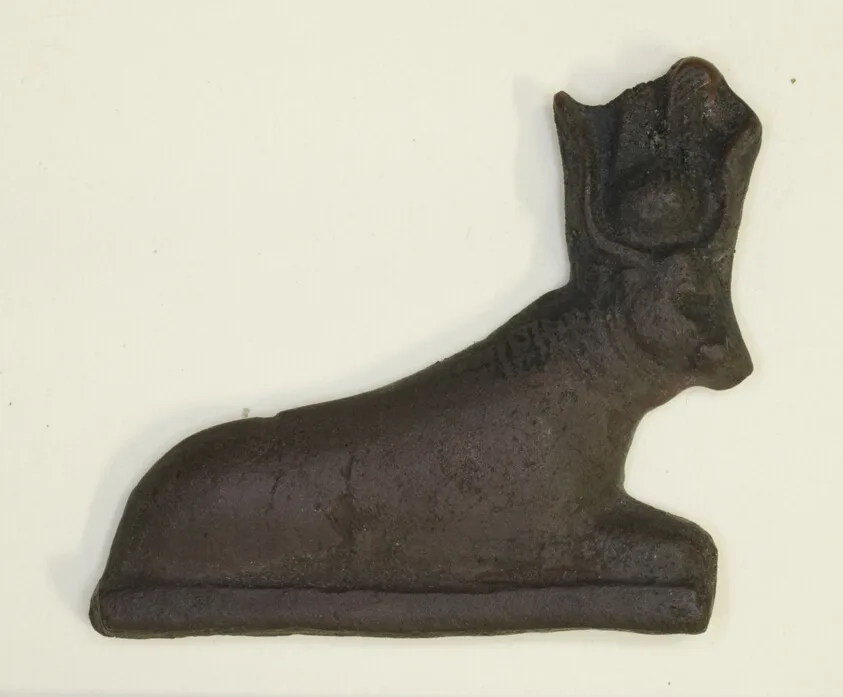
The tradition of personal intention symbols. A pendant bearing a sigil represents a specific intention held by the wearer. This is the most intimate element in the collection: entirely personal, often invisible to the uninitiated.
Crystals in the Wiccan Tradition
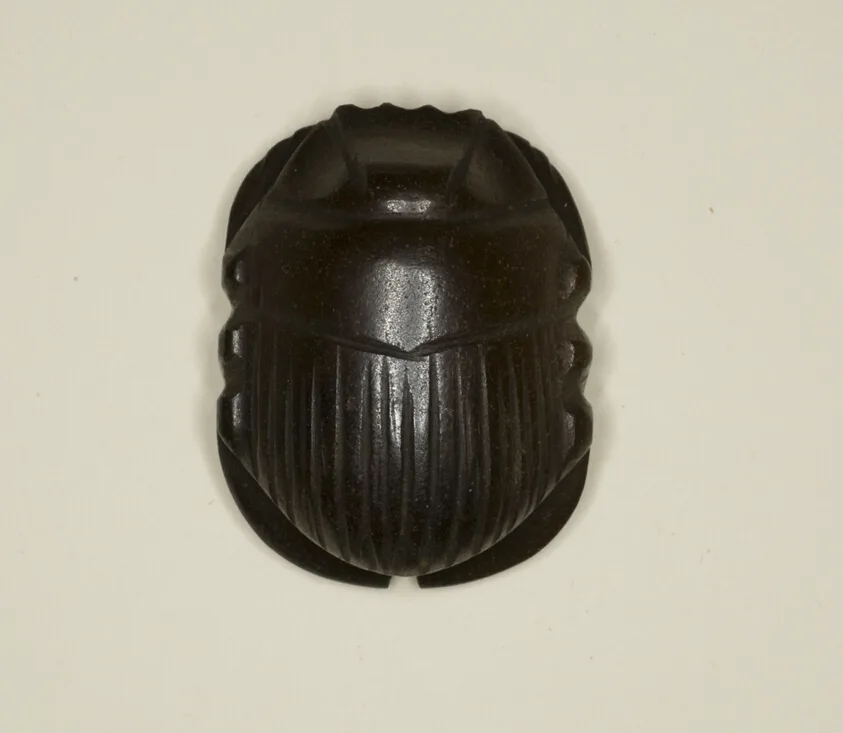
In Wiccan and broader folk-magic tradition, stones are understood to carry specific properties. This is a belief framework, not a scientific claim, and it is worth being precise about that distinction.
- Labradorite intuition, magical transition, liminal states. In Wiccan tradition considered a stone of prophecy
- Moonstone connection to lunar cycles, feminine energy
- Black tourmaline protection from negative influences
- Amethyst work with the third eye, clarity of mind
- Clear quartz universal amplifier of intention
- Rose quartz heart energy, love
- Selenite cleansing of space and other stones
- Malachite transformation, change of state
The Witch's Heart Brooch
One of the most underrated forms in this whole aesthetic. The witch's heart is a heart with its lower point curled over, like a tongue of flame or a tail. The fashion came out of Scotland and Scandinavia in the seventeenth and eighteenth centuries. By one reading the twisted heart stood for a love that holds and does not let go, which is why such brooches were given at betrothal as a charm of faithfulness. By another the shape shielded the wearer from someone else's unkind gaze. They were often made with a garnet or another red stone at the centre. The witch's heart is returning now as an elegant, historically genuine piece that carries real tradition without announcing the theme at all.
The Witch Bottle
A witch bottle is not jewellery in the strict sense, but miniature versions have become a popular pendant. Historically it was a vessel buried under a threshold or beside a hearth to protect the house. Inside went pins, needles, salt, herbs, sometimes thread or hair. Archaeologists have found such bottles across England, and the best-known group dates to the seventeenth century. The modern bottle pendant inherits the idea directly: a tiny glass vial on a chain, filled with dried herbs, salt or small crystals. It is a personal charm with an entirely traceable pedigree.
The Black Cat
The link between black cats and witches fixed itself in late medieval Europe, when animals were declared companions or even disguises of sorcerers. Before that, many cultures held the cat to be benign: Egypt honoured it as an embodiment of the goddess Bast, and in Norse myth cats drew the chariot of Freyja. In the modern aesthetic the black cat has turned from a symbol of fear into one of independence, night intuition and connection to the hidden. In jewellery it appears as a silhouette pendant, a ring with a small figure, a pair of earrings. The image reads easily and is almost always received warmly, with none of the grim undertone.
The Key of Hecate, and Keys in General
The key is among the oldest protective objects. In Greek tradition it was an attribute of Hecate, goddess of crossroads, who unlocked the boundary between worlds. In folk magic a house key was hung by a cradle against the evil eye, and old keys found by chance were reckoned particularly strong. In jewellery a skeleton key stands for access to hidden knowledge, the ability to open and to close a path. It is often paired with a lock or hung beside a moon phase. This is one of the few symbols that looks equally at home in the gothic line and the cottage line.
Other Symbols in the Collection
- Eight-spoked Wheel of the Year
- Raven, owl, cat as familiar animals
- Skeleton key (access to hidden knowledge)
- Feather (connection to air and spirits)
- Spiral (cycles, Celtic symbol)
- Third eye, all-seeing eye
- Serpent (transformation, wisdom)
The Wheel of the Year: Eight Sabbats and What to Wear
One of the foundations of Wiccan practice. Eight festivals divide the year into equal segments. Each carries its own colours, symbols and stones, and wearing a piece that corresponds to the current sabbat is a practice with roots in Wiccan tradition.
Yule (21 December, winter solstice) The return of light after the longest night. Silver jewellery, moonstone, star motifs. Clear quartz pendants recalling frost. The sabbat of renewal and the slow turning back towards the sun.
Imbolc (1 February) The first signs of stirring beneath the ground, associated with the goddess Brigid and sacred flame. White and milky stones: moonstone, chalcedony. The triquetra as Brigid's symbol. Small flame pendants.
Ostara (21 March, spring equinox) Balance of day and night, the earth fully waking. Spiral jewellery, hare motifs, green stones: aventurine, malachite, jade.
Beltane (1 May) Fire and vital force. In Wiccan tradition considered one of the most energetically charged points in the year. Red stones: garnet, carnelian. Floral motifs, woven bracelets.
Litha (21 June, summer solstice) The peak of solar power. Sun-wheel pendants, gold-toned pieces, yellow stones: citrine, tiger's eye, amber.
Lughnasadh (1 August) The first harvest, gratitude to the land. Amber, grain motifs, warm earth-toned stones: jasper, carnelian.
Mabon (21 September, autumn equinox) The second harvest, balance. Smoky quartz, leaf motifs, acorn. Earth tones, warm browns.
Samhain (31 October) The veil between worlds grows thin. The sabbat most associated with ancestors and hidden knowledge. Black stones: obsidian, onyx, black tourmaline. Skulls, keys, the crescent.
Wearing a piece tied to each sabbat at the corresponding time of year is a practice, not merely a decoration.
Lunar Phases: A Collection Within the Collection
The moon as an organising principle of witchy practice. In Wiccan tradition, each phase is understood to correspond to a particular type of intentional work.
New moon Darkness, blank slate, beginning. In Wiccan tradition this is considered the time for setting intentions. New moon jewellery: a dark pendant without stone or with black tourmaline, a minimalist ring. The intention is only forming.
Waxing moon Growth, forward movement. The crescent facing right. In tradition this is the time for expansion and drawing things towards you. Jewellery: crescent pendant, waxing moon, green stones.
Full moon Peak power, culmination. In Wiccan tradition the full moon is considered the time of maximum energy and completion of intentions. Jewellery: circular pendant with stone, full pentacle, moonstone ring. Moonstone is understood in folk tradition to be especially potent under the full moon.
Waning moon Release, cleansing, completion. In tradition this is the time for letting go. Jewellery: leftward-facing crescent, darker stones for clearing.
Changing jewellery according to the lunar calendar is a practice that is several hundred years old. It fits into contemporary daily life without difficulty.
Customer reviews
Zevira is a real jewellery shop. Genuine payments, deliveries and customer thank-yous.
🥰🥰🥰 gracias

Ok, ¡gracias! 🙂

Witchy Styles
This is not a single aesthetic but several distinct sub-categories.
Solitary Witch
Minimalist approach. Fine chain with a small crescent or single crystal. Jewellery as a personal amulet, not a public statement. Practice without a coven, without shared rituals, without announcements. One witch, one pendant, one intention.
Wiccan Tradition
Specific Wiccan symbols: pentagram, triquetra, Wheel of the Year. Silver, clean design. For practising Wiccans, jewellery is part of the working toolkit.
Kitchen Witch
Home magic: herbs, spices, cauldron. Jewellery with botanical motifs, small spoons, keys, seeds, grain. Close to cottage-core but with a practical orientation. Cauldron pendant, daisy earrings, branch ring.
Green Witch
Close to nature and plants. Green aventurine, malachite. Forest motifs, leaves, bark-inspired textures. Often with natural materials, minimal processing.
Sea Witch
The element of water combined with the moon. Shells, maritime knots, coral, moonstone. Cool blue tones, mother-of-pearl, sea-glass quartz. The pairing of ocean and moon reads as a coherent system, particularly resonant along British coastlines. The underlying vocabulary of anchors, shells and pearl is laid out in the ocean jewellery guide, which the sea witch aesthetic draws from directly.
Hereditary Witch
Family magical tradition passed down through generations. Knots, Celtic braids, triquetra, crosses, antique motifs. Brass and darkened silver suit this aesthetic better than bright new metal. Vintage and antique pieces fit it most naturally.
Cottage Witch
The hedge-witch, herb-witch, forest-cottage aesthetic. Botanical motifs, tree of life, feathers, natural stones. Warm and earthy. Rose gold, warm stones.
Cosmic Witch
Stars, planets, constellations, moon phases. Cool silver tones, labradorite, opal.
Dark Witch
Black obsidian, bone, oxidised silver. For those working with the shadow side of practice. The visual register here borrows heavily from the gothic jewellery tradition, where memento mori symbols and dark stones already do similar work.
Minimalist or Maximalist: Choosing Your Approach
Minimalist Witchy
One symbol. One pendant: a small pentagram or crescent moon on a fine chain. No rings, no bracelets. The piece is almost invisible but it is there. This is for those who wear it for themselves, not for an audience.
Maximalist Witchy
Layers. Three or four chains of different lengths: one with moon phases, one with a crystal, one with a pentacle. Rings on several fingers, at least one with a stone. Visible earrings. A charm bracelet. This reads as a system rather than an accumulation when there is internal logic: a unified palette or a unified theme. Silver plus lunar motifs. Black plus stones.
Both are valid. The choice depends on the type of practice and the character of the wearer.
Upload a photo of your pet, someone you love, or an object. We'll build a 3D model and hand-cast it in pewter.




Building a Witchy Collection
Minimal Set (3 Pieces)
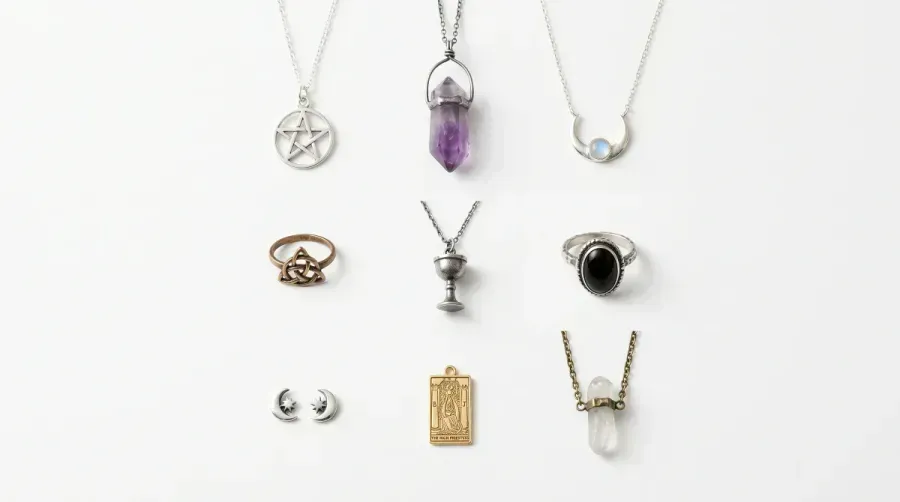
Pentagram or triquetra pendant, moonstone ring, crescent earrings.
Full Set (5 to 7 Pieces)
Add: crystal charm bracelet, skull or serpent ring, key pendant, tarot card pendant.
For Practice
If you practise Wicca or spellcraft, jewellery becomes a working tool:
- Pentacle ring worn for each ritual
- Pendant with the crystal matching your current intention
- Earrings with the phase of tonight's moon
Seasonal Collection
Eight Wheel-of-the-Year pendants, changed by calendar. At that point it is a practice, not just decoration.
Materials
The occult aesthetic favours:
Silver connection to the moon, the feminine principle. The dominant metal in this category. 925 silver preferred.
Oxidised silver for the dark witch. The patina is part of the atmosphere.
Rose gold for cottage witch aesthetics.
Brass for dark academia and cottage witch.
Crystals essential. At least one in any collection.
Natural minerals (labradorite, malachite, onyx) genuine stones rather than imitations.
Leather cords instead of metal chains. More atmospheric.
Woven cords for the cottage witch.
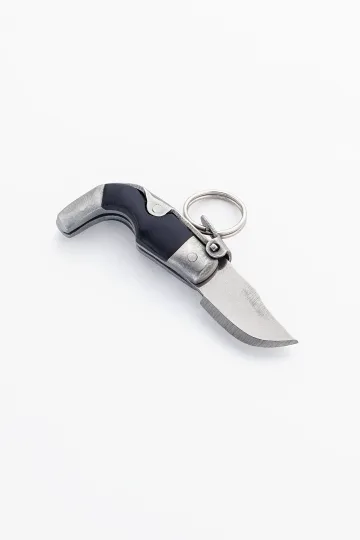
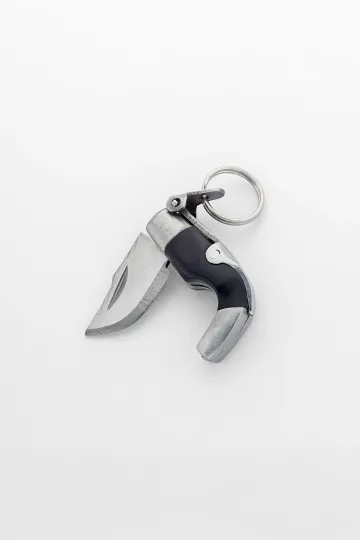
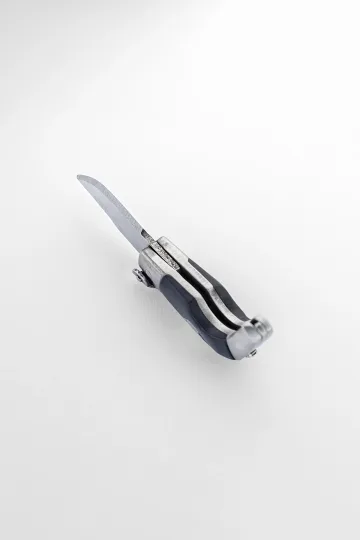
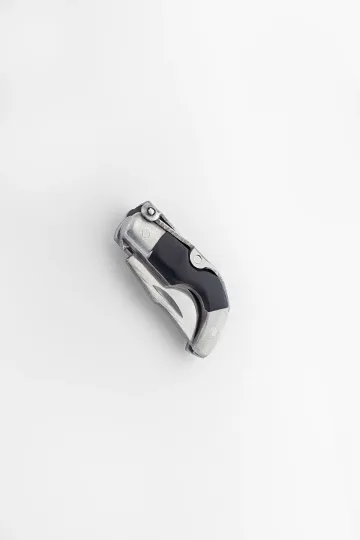
CAPAORA mini knife pendant
The 18th-century Spanish navaja in miniature: 40 mm of stainless steel, a real folding mechanism and a Palanquilla lock that clicks. An affordable gift to remember.
Authentic · Ships from Spain · 14-day returns
Witches' Stones: Four Key Minerals
Stones hold a particular place in Wiccan practice, and outside that practice each of them still has an honest geological history and a real optical character. Here are the four minerals most often tied to the aesthetic, examined from both sides: the folklore and the nature of the stone.
Black Tourmaline
Black tourmaline, mineralogically schorl, is the commonest variety of tourmaline. In tradition it counts as a stone of protection and grounding, which is why it is the one most often worn as a guard against someone else's negativity. The stone has a curious physical property: heated or rubbed, it develops a charge and attracts light particles. Those phenomena, pyroelectricity and piezoelectricity, were read for centuries as something alive and mysterious, and they fed the stone's reputation in part. Black tourmaline is usually worn in a plain silver setting or as a rough crystal on a cord, so that the natural form survives.
Labradorite
Labradorite was found on the coast of Labrador in Canada in the eighteenth century, which is where the name comes from. Its defining feature is labradorescence, a blue, green or golden glow produced by light refracting through extremely thin internal layers. At one angle the stone looks grey and unremarkable; at another it flares. Wiccan tradition calls labradorite the stone of seers and of transitions, and the poetic logic is easy to follow, since the stone literally shows what is hidden when you look at it correctly. In jewellery it likes a dark ground and silver, both of which sharpen the inner fire.
Moonstone
Moonstone is a feldspar with adularescence, a soft milky-blue shimmer that appears to float across the surface as the stone tilts. Its link to the moon is in the name and in the character alike. Tradition treats it as a stone of cycles and intuition and wears it above all at the full moon. The mineral is soft and sensitive to knocks and to chemicals, so in rings it is better tucked into a protective setting and cleaned only with warm water. Moonstone gets on with silver and with warm gold equally well, which makes it useful across very different lines.
Obsidian
Obsidian is volcanic glass, lava that cooled so fast it never formed crystals. People have used it for tens of thousands of years for mirrors, blades and points. That mirror nature is exactly what gave obsidian its reputation as a stone of vision: polished obsidian mirrors were used for scrying in cultures from Mesoamerica to Renaissance Europe. In the witchy aesthetic obsidian is the stone of protection and of shadow work, the central mineral of the dark line. It comes black, smoky, snowflake with grey inclusions, and iridescent rainbow. In jewellery it is polished to a deep mirror finish.
How the Witches' Stones Reached Jewellery
It is worth knowing that the modern set of witchy stones was assembled comparatively recently. Most of the familiar meanings, labradorite for prophecy, black tourmaline for protection, took shape in the twentieth century alongside the New Age movement and popular crystal literature. Historical magic more often worked with whatever was to hand: a holed pebble, flint, amber, plain rock crystal. That does not make the modern system less real as a cultural phenomenon, but it is honest to recognise a living tradition assembled within living memory rather than an ancient canon.
How to Combine
Natural fabrics make the best ground for witchy jewellery. Linen, cotton, wool. Synthetic materials cut against the aesthetic.
Several chains of different lengths: one with a pentacle, one with moon phases, one plain silver. They do not compete but complement.
Rings on multiple fingers work better than one large ring. Mix fine bands with slightly wider ones.
Crescent earrings plus a full-moon pendant is not too much. It is a system.
Leave your email, we'll send your discount code. No spam, unsubscribe anytime.
The code arrives by email, valid on your first order.
Caring for Crystal Jewellery
Silver oxidises over time, particularly pieces with darker finishes. For many practitioners this is not a flaw: the darkening of silver is understood as the piece absorbing wear and experience.
If you want to restore shine: a soft cloth, no abrasives. Liquid silver polish works on smooth surfaces but can damage crystals.
Moonstone is sensitive to harsh chemicals. Wash only with warm water and mild soap.
In Wiccan tradition, it is believed that the night of the full moon restores the energy of crystals, or that running water cleanses them. This is a cultural ritual, a part of practice, not a claim about physical properties.
A note on crystal cleansing methods:
- Salt cleansing is suitable only for hard stones (quartz, amethyst, obsidian, tourmaline)
- Selenite must not be wet or salted: it dissolves in water and loses its structure
- Moonstone, labradorite and malachite are better left in moonlight on a windowsill
- Moon water (water left under the full moon) is a cultural ritual in Wiccan tradition, not a promise of any particular physical effect
Leather cords last longest when kept dry and not worn in the shower.
The Ethical Side
Wearing witchy jewellery without being a practising witch is entirely normal. This is an aesthetic, not a religion. Nobody is accusing casual wearers of cultural appropriation.
That said, some symbols deserve a little thought. White sage smudging has become fashionable as a general "cleansing" ritual, but the burning of white sage is a specific practice belonging to certain indigenous peoples of North America, with its own traditional holders. Using it as a decorative trend without understanding that context is a genuine case where it is worth pausing.
The term "white witch" carries some conceptual baggage worth knowing about. Many practitioners today prefer "protective magic" or "positive practice" instead.
Specific sacred symbols from indigenous traditions are not decorative accessories. Religious symbols from living traditions are fine to wear with understanding of their meaning. The inverted pentagram: if the philosophy does not resonate, better avoided.
The majority of symbols in this aesthetic (moons, pentacles, crystals, nature imagery) are neutral and universal.
Ways to Wear It
The Full Look
A long black or vintage dress, heavy boots, layered charms of three or four chains at different lengths, rings across several fingers. Fully committed to the theme, and it wants an occasion that carries it.
The Ordinary Everyday Look
A black t-shirt, jeans, one or two pieces. A fine crescent or a small pentagram. This is how most of the aesthetic is actually worn day to day, and it holds up in any setting.
The Professional Look
If you work as an astrologer, a tarot reader or a wellness coach, the jewellery becomes part of a professional identity rather than a private one. Larger pendants and crystal rings do real work here, because clients read them as a signal of what you do.
Quietly, for Yourself
A fine chain with a small moonstone. A pentacle ring worn under a shirt cuff. Nobody else needs to see it. That is enough, and for a lot of wearers it is the whole point.
Who It Suits
Practising Wiccans, pagans and those who work with magic. Direct identification.
Fans of astrology, tarot and numerology. Not necessarily witches, but closely related aesthetics.
Wellness coaches, yoga teachers, therapists. This aesthetic is often part of their public identity.
Gothic jewellery wearers looking for more spiritual depth. Magical tradition is gothic plus meaning.
Teenagers and young adults exploring identity. A strong current in that age group.
Anyone drawn to nature, cycles and feminine strength. No ritual practice required.
Fans of occult films and series from the 1990s and 2000s. The pop-culture entry point.
Send a friend a discount code, they save on their first order.
Psychology: Why This Aesthetic Pulls So Hard
A Sense of Control Through Ritual
Wearing a particular pendant for a particular moon phase, or changing a ring with the season, is a form of ritual, and ritual gives a person a sense of order in a disorderly world. Psychologists have long noted that small repeated actions lower anxiety even when the person performing them does not believe in any supernatural effect. An amulet works as an anchor for intention: it reminds you of a goal every time it crosses your field of vision. In that sense a witchy piece sits closer to a diary or a reminder bracelet than to anything mystical.
A Pull Towards Natural Cycles
In a world where day and night have been replaced by screens, the theme of the moon, the seasons and the wheel of the year restores a connection to a natural rhythm. What draws many people is not magic as such but the idea of living in step with cycles, noticing a new moon, marking an equinox. Jewellery becomes a gentle way of holding on to that connection without turning it into a religion.
An Aesthetic of Strength and Autonomy
Over recent decades the figure of the witch has shifted from frightening to a symbol of independence and inner strength. For many people, and particularly for young women, this aesthetic is a language of self-determination: I decide what I believe and how I look. Dark stones, silver, the moon and the pentacle assemble into a visual code that reads as confidence rather than as threat.
Belonging to a Community
Recognisable symbols work as a quiet password. Labradorite on a finger or a crescent on a chain signals shared values and interests to anyone who reads the code. The aesthetic gathers people around astrology, tarot, a low-impact way of living and an interest in folklore, and it offers a sense of belonging with none of the obligations of formal membership.
The Witchy Aesthetic in Art and Culture
The Sabbath in Old Master Painting
The image of the witch was fed by rumour and by art in equal measure. Painters of the late Renaissance and the baroque took readily to scenes of the sabbath, flights on broomsticks, night gatherings. Prints on the theme circulated across Europe and fixed a set of recognisable details: the cauldron, the black cat, the moon, wild herbs. Many of the visual clichés the aesthetic uses today come from that pictorial tradition rather than from anything the village healers actually did.
Romanticism and the Return of the Witch
In the nineteenth century the Romantics rethought the witch, turning her from a monster into a tragic and compelling figure. Poets and painters saw a rebel, a keeper of ancient knowledge, a victim of intolerance. The image of the beautiful and dangerous sorceress took shape then, and popular culture inherited it later. Lunar motifs, loose hair, dark fabrics: all of it entered the visual language that contemporary jewellery leans on.
Theatre, Opera and Folk Music
The subject lived on the stage as well. Witch scenes in classical tragedy, operatic choruses of spirits, folk ballads about sorceresses shaped the sound and the look of the theme for a wide public long before screens existed. The Benevento dances under the walnut tree, for example, entered Italian musical and dance tradition and stayed there. These cultural layers explain why the aesthetic feels so familiar even to people who have never taken an interest in magic.
Gothic and Dark Academia
Modern witchy fashion is closely entwined with gothic style and with dark academia. From there come oxidised silver, brass, motifs of old books, keys and dried plants. The boundary between these directions is blurred deliberately: the same key pendant or heart brooch sits comfortably in any of them. That makes witchy jewellery a convenient bridge between several neighbouring styles rather than a closed category.
Surprising Facts
Most of Those Executed Were Not Witches
Historians agree that the overwhelming majority of people condemned in the trials practised no magic at all. They were healers, midwives, isolated older women, sometimes simply neighbours on the wrong side of a property dispute. Actual practitioners of folk magic were rather more likely to avoid attention.
In Iceland, Most Accused Witches Were Men
Scandinavia breaks the familiar stereotype. In Iceland almost everyone executed for sorcery was male, because local tradition tied magic to command of runes and charm verses, and that was reckoned a man's craft.
The Pentagram Was a Christian Symbol for Centuries
Before it became an occult sign, the five-pointed star stood in Christian tradition for the five wounds of Christ and served as a protective symbol. Believers drew it on seals and charms with none of the subtext later attached to it.
Black Tourmaline Attracts Ash
Heat a crystal of black tourmaline and it takes on a charge and starts pulling in dust and light particles. Dutch traders in the eighteenth century used warmed tourmaline to draw ash out of their pipes, and called the stone the ash-puller.
Witch Bottles Are Still Being Found
When old houses in England are demolished, builders regularly uncover witch bottles bricked in beside a threshold or a chimney, filled with pins and needles. Some finds are more than three hundred years old and still sealed.
The Inquisitor Who Stopped a Witch Hunt
One of the great sceptics of his age was an inquisitor himself. After the Zugarramurdi proceedings, Alonso de Salazar personally reviewed hundreds of confessions and concluded that there was no real evidence of witchcraft. His report noticeably cooled the hunt for witches in Spain.
Labradorite Looks Dead From the Wrong Angle
The chief beauty of labradorite is temperamental. Turn the stone the wrong way and it looks like a dull grey pebble. The glow appears only at a particular tilt to the light, which is why the stone seems to come alive in movement and flat in a photograph.
Wicca Is Less Than a Century Old
Despite the talk of ancient tradition, Wicca as an organised modern movement appeared only in the middle of the twentieth century. Most of the familiar meanings attached to symbols and stones are younger than they look, and they are still settling in front of us.
Frequently Asked Questions
Is witchcraft the same as Satanism?
No. Wicca, paganism and magic practice are not Satanism. Satanism is a separate philosophical tradition. Most witchy jewellery has no connection whatsoever to Satanic symbolism.
Can you wear a pentagram without being a witch?
Yes. The pentagram is an ancient symbol with more than five thousand years of history, used across many cultures. The majority of people wearing it today are not practitioners.
Do crystals actually work?
Scientifically, no. Psychologically, for many people yes: as a placebo, a ritual object, a physical reminder of intention. How you relate to them is your own decision.
Which symbols are most popular?
Pentagram or pentacle, moon phases, labradorite rings, tarot cards, skull motifs, raven.
Does witchy jewellery work for men?
Yes. The cosmic witch aesthetic (stars, planets, constellations) and the dark aesthetic (skulls, obsidian) translate well into masculine jewellery.
Is it appropriate for work?
With discretion. A small moon pendant under your shirt, a labradorite ring: no one will raise an eyebrow. A large pentagram is better kept for the right environment.
What does "charging a crystal under the moon" mean?
In Wiccan tradition, the night of the full moon is believed to restore a crystal's energy. This is a cultural and ritual practice, not a promise of a specific physical effect.
Can you mix it with other styles?
Yes. Witchy with gothic is a natural pairing. With boho it becomes cottage witch. With minimalism it reads as a contemporary trend.
Can you wear several crystals together?
Yes. There are no restrictions in the tradition. The only practical point: store pieces with stones separately so they do not scratch each other. Labradorite and onyx are best kept apart from softer stones.
How do you tell a genuine stone from an imitation?
Genuine labradorite shows labradorescence, the iridescent shimmer that appears at certain angles. Genuine moonstone also has an inner glow, softer in character. Glass and synthetics do not replicate these effects. Buy from sellers who state the origin of the stone.
Buying it as a gift? Each one arrives ready to give.
 A branded Zevira box and a little card come with every order.










Conclusion
This jewellery is not just fashion. It is an aesthetic language through which people express their relationship with nature, cycles, mystery and personal strength. You can engage with it on the surface (it is beautiful) or at depth (it is part of a practice).
If you are starting out, choose one symbol that resonates. A moon phase. A pentacle. A labradorite stone. Wear it for a month. If it feels like yours, build from there.
About Zevira
Zevira makes jewellery in the artisan tradition of Albacete, Spain. The witchy aesthetic in our collections intersects with lunar, gothic and mystical symbolism. Britain's own magical inheritance, from the Pendle trials to Cornish pellar tradition to the living Wiccan community in Glastonbury, is part of the wider conversation this jewellery belongs to.
What you can find in our witchy collection:
- Moon phases and crescent moons
- Pentagrams and pentacles for protection
- Ankh, all-seeing eye, third eye
- Raven, owl, cat: familiar animals
- Labradorite and moonstone: stones of intuition
- Keys, witch knots, cauldrons as rarer motifs
Each piece is handmade, with the option for personal engraving. We work in 925 silver and 14-18K gold.