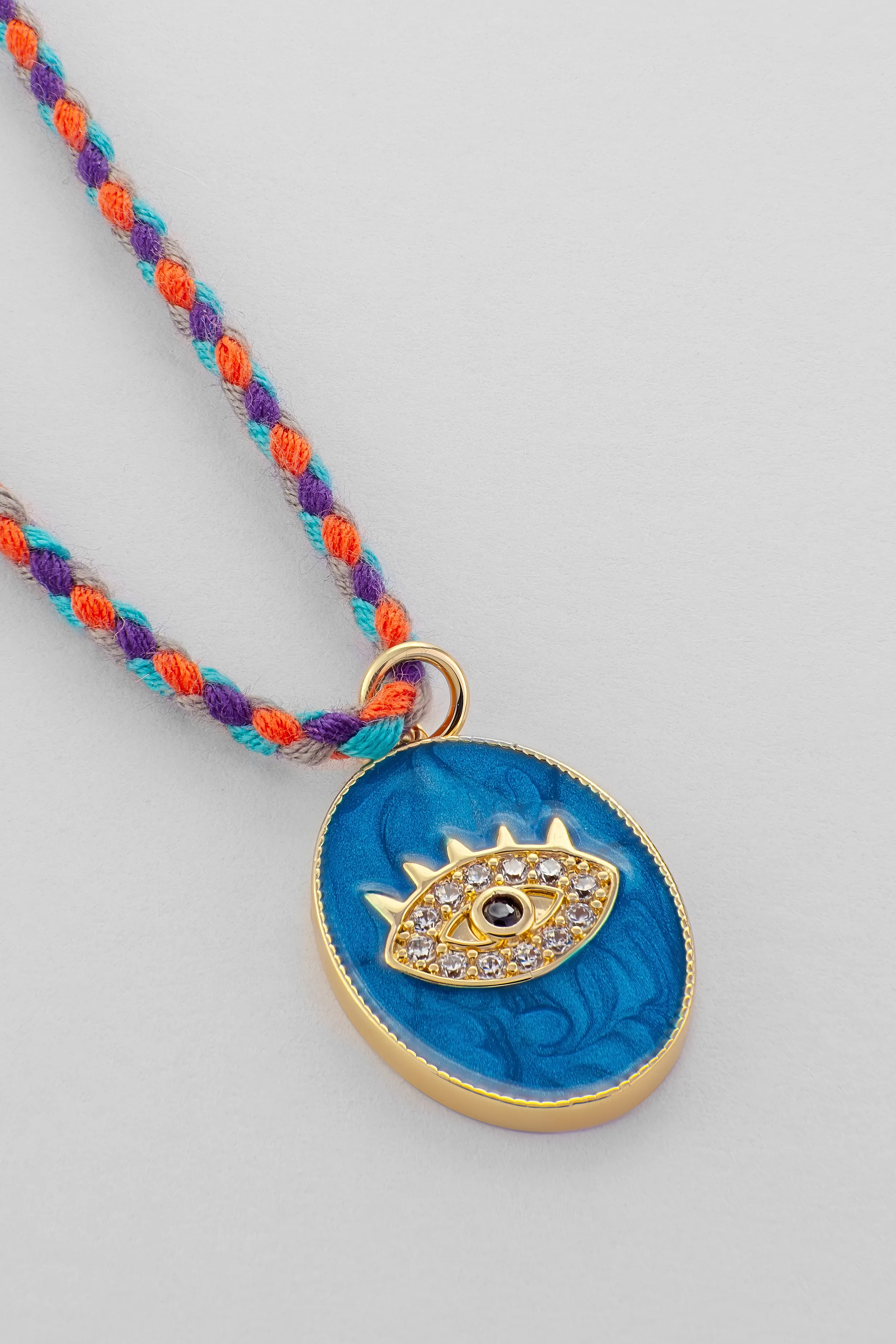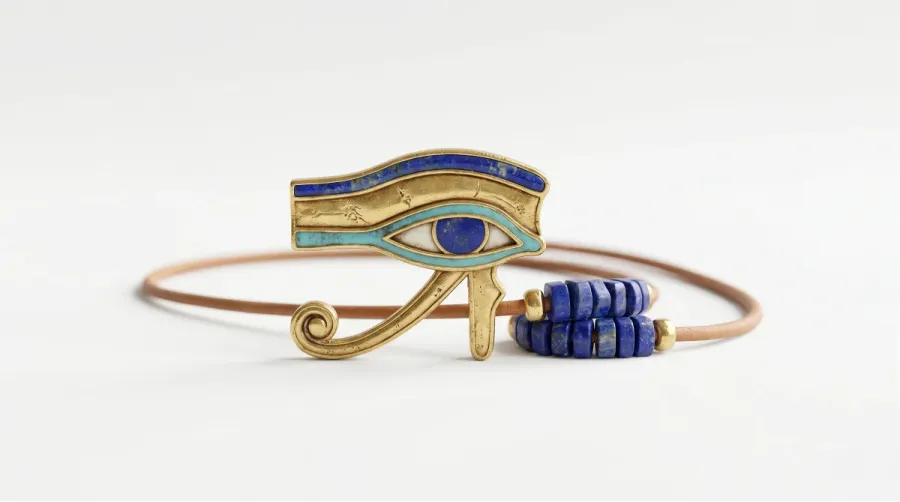
The Eye of Horus (Wedjat): Meaning, History and Why People Wear It as Jewellery
An Eye That Sees Across Five Millennia
In the British Museum in London, Room 63 holds one of the largest collections of ancient Egyptian amulets in the world. Thousands of small faience eyes, recovered from tombs, pulled from mummy wrappings, excavated from temple foundations. Some of them are 4,500 years old. They were ancient when Rome was a village of huts by the Tiber. They were antique when the Parthenon was being built. And they look almost identical to the pendant someone put on this morning before walking out the door in Manchester or Edinburgh.
The Eye of Horus is one of the longest-surviving symbols in human history. Not the cross (roughly 2,000 years in its current form). Not the crescent (about 1,400 years). Not the Star of David (about 800 years in its modern meaning). The Eye of Horus has been in continuous use for at least 5,000 years. And in all that time, it has never gone out of fashion.
This is an article about what stands behind the symbol. Not a Wikipedia summary, but an exploration: why an eye, why this particular eye, and why people continue wearing it in an age when nobody believes in Osiris.
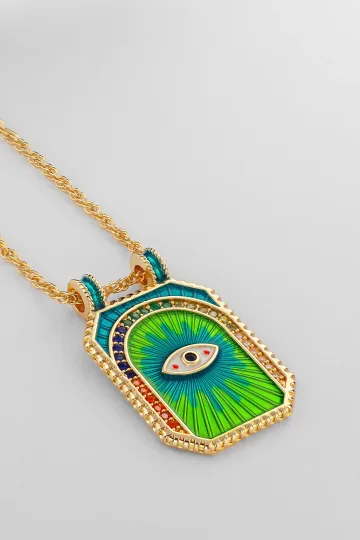
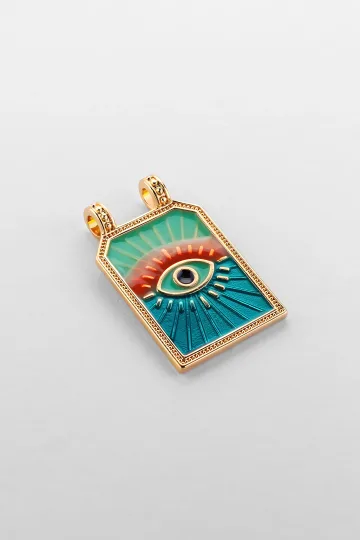
Wear the symbol, don't just read about it. These are in stock:


The Myth: How Horus Lost His Eye
The Characters
To understand the symbol, you need to know the story. It begins with a family drama that makes any Netflix series look pale.
Osiris: the god-king. Ruled Egypt, taught humans agriculture, gave them laws. A good sort. Married to his sister Isis (standard practice in Egyptian mythology, no commentary needed).
Set: brother of Osiris. God of chaos, storms and the desert. Envied Osiris. Murdered him. Not a simple killing either. He hacked the body into 14 parts (42 in some versions) and scattered them across Egypt. Thorough.
Isis: wife of Osiris. Collected every part of her husband's body (except one, which a fish ate, yes, that one). Through magic, she briefly revived Osiris long enough to conceive a son. After which Osiris became ruler of the underworld.
Horus: son of Osiris and Isis. Born after his father's death. Raised in secret, in the marshes of the Nile Delta, far from his murderous uncle. Life's purpose: avenge his father and reclaim the throne.
The Battle
Horus grew up and challenged Set. Their conflict lasted, depending on the version of the myth, from 80 days to 80 years. This was not a single battle but a series of confrontations, trials, disputes and tricks before a divine tribunal. Both cheated. Both fought dirty.
In one of the clashes, Set tore out the left eye of Horus. He ripped it into six pieces (64 in another version) and scattered them. Not a metaphor. The god of chaos literally ripped the eye from the god of the sky and destroyed it.
The Healing
Thoth, god of wisdom and magic (ibis-headed, patron of scribes and scholars) gathered the pieces of the eye and restored it. Some versions of the myth say Thoth added the missing piece through magic, making the eye more perfect than it had been before its destruction. The restored eye became a symbol of healing, wholeness and the victory of order over chaos.
Horus offered the restored eye to his father Osiris, to help him in the underworld. Osiris "consumed" the eye and through it gained the power to see and judge the dead. This act of giving his healed eye to his father made the Wedjat a symbol of sacrifice, healing and the connection between the living and the dead.
The Outcome
Horus ultimately defeated Set and took the throne of Egypt. Set was exiled to the desert (in some versions reconciled and sent to guard the barque of Ra from the serpent Apophis). Order was restored. Every pharaoh after this was considered a living embodiment of Horus: the god who lost an eye, got it back and became king.
The Eye of Horus belongs on dark silk with lapis in its pupil. Plastic turquoise is beneath it, no arguments.
Styling the Eye of Horus
Over years of styling the Eye has passed through dozens of looks with me, from everyday to editorial. Here is what actually holds up, sorted by occasion.
What do I pair the Eye with every day? For daily wear I recommend a smooth silver or steel outline, 20-25 mm, on a 42-46 cm chain over a plain tee or knit in sand, grey or white. The symbol lands at the collarbone as the single accent, and that is enough. I suggest saving detailed enamel for later: a clean outline sits more calmly against simple clothes.
Is it right for the office? Yes, as long as you keep it restrained. I choose silver or steel, a medium size, 45-50 cm so it sits under the top button of a shirt or under a turtleneck. A V-neck gives a ready frame and the pendant lands dead centre. A signet ring with the Eye in the same key I recommend on the middle finger, where it flickers during gestures as a quiet talking point.
How do I build an evening look? For evening I suggest a dark, smooth fabric: black, deep blue, wine, silk or velvet, bare shoulders. A larger 30-35 mm pendant belongs here, or a stone version: lapis, turquoise or black onyx in the pupil gives depth under artificial light. Gold reads warmer than silver on dark cloth, so for evening I choose it.
Which metal and stone for my skin tone? For a warm undertone I recommend gold with lapis: the blue echoes ancient Egyptian faience. A cool undertone takes silver with turquoise or black onyx. If you are unsure of your undertone, a smooth silver outline without enamel flatters almost everyone.
One Eye or layered? On the neckline I keep the Eye alone: it carries the most graphic weight and will not share the space with a second strong symbol. I build layers from thin bare chains of different lengths. I mix metals only when I repeat the tone in a ring or earrings. Turquoise wants earthy and blue tones in the clothing, onyx prefers monochrome.

Turn on your camera, pick earrings, a pendant or a ring, and see the piece on yourself in real time.
Switch items in one tap.
Everything runs in your browser: no photo or video is ever uploaded.
What the Eye of Horus Symbolises
Healing and Restoration
The primary meaning. The eye was destroyed and restored. Broken into pieces and reassembled. This is a universal metaphor for any kind of recovery: after illness, after loss, after trauma, after divorce, after crisis.
People who wear the Eye of Horus after a difficult period choose it for precisely this reason: "I was broken and I recovered." A symbol that is 5,000 years old describes exactly the feeling of someone who has been through something serious in 2026. Myths work because human experience does not change.
Protection
The Egyptians used the Wedjat as a protective amulet. They placed it in mummy wrappings, painted it on the prows of boats, carved it into temple walls. The eye warded off evil. The logic: if the hawk-god who defeated chaos is watching over you, evil will keep its distance.
The protective function is why the Eye of Horus is still worn as an amulet. Alongside the nazar and the hamsa, it forms the trio of the most widespread protective symbols in world jewellery. The difference: the nazar protects against the evil eye (malicious gaze), the hamsa against evil in general, the Eye of Horus against chaos and destruction.
Royal Authority
Every pharaoh was a living Horus. The right eye of Horus (the Eye of Ra) symbolised the sun and power. The left eye (the Wedjat) symbolised the moon and wisdom. A pharaoh wearing the Eye of Horus stated: I am the heir to divine order, my authority is legitimate, chaos holds no power over me.
In a modern context, this translates to confidence and self-assurance. A person wearing the Eye of Horus does not necessarily believe in Egyptian gods. But they project: "I am in control of my life, I have been through difficulty and I prevailed."
Mathematical Mysticism
The six parts of the Eye of Horus correspond to fractions: 1/2, 1/4, 1/8, 1/16, 1/32, 1/64. Together they add up to 63/64, not 1. The missing 1/64 is the part Thoth added through magic. This is Egyptian mathematics, built into mythology.
Each part of the eye corresponded to a specific sense:
- Right side of the eye (1/2) = smell
- Pupil (1/4) = sight
- Eyebrow (1/8) = thought
- Left side of the eye (1/16) = hearing
- Curved tail (1/32) = taste
- Teardrop (1/64) = touch
The Egyptians used these fractions as a system for measuring grain and medicines. The Eye of Horus hieroglyph was not only a religious symbol but a mathematical tool. A medicinal recipe could be written in parts of the Wedjat: 1/4 + 1/16 of something = a specific dosage.
The fact that the fractions add up to 63/64 and not a whole was deliberate. The missing 1/64 represented the divine contribution, the part that no human measurement could supply. The complete eye required Thoth's intervention. A useful way of encoding the idea that precision, however refined, always falls short of perfection by exactly one divine sliver.
The Anatomy of the Symbol: What Each Element Represents
The Eye of Horus is not an arbitrary design. Every part of the symbol has a specific origin in the anatomy of two animals: the human eye and the peregrine falcon.
The overall shape, a stylised almond eye with a heavy lid, is recognisably human. But two elements come directly from the falcon's facial markings. The peregrine falcon has two distinctive features: a vertical teardrop stripe beneath each eye (a dark marking that runs down from the inner corner) and a curved streak running back from the outer corner. These are precisely the "teardrop" and "tail" that define the Wedjat iconography.
Horus was the falcon god. The Egyptians who designed this symbol were precise observers. They took the features that distinguish the falcon's face from any other bird (the markings that make it look watchful, fierce, perpetually vigilant) and incorporated them into the eye symbol. A symbol meant to protect by watching used the face of the most effective hunter in the sky.
The arched eyebrow above the eye completes the composition. In Egyptian hieroglyphic writing, the brow represented thought and consciousness. Together: sight, hearing, smell, taste, touch and thought. All six senses, all six fractions. A complete being.
This level of intentional design is worth pausing over. The Egyptians did not simply draw an eye. They took the most acute observer in the natural world, extracted its defining visual features, combined them with the human eye, and assigned each component a sense and a fraction. The symbol was a compact diagram of perception, embedded inside a story about loss and restoration. That is not decoration. That is design thinking.
Customer reviews
Zevira is a real jewellery shop. Genuine payments, deliveries and customer thank-yous.
🥰🥰🥰 gracias
Ok, ¡gracias! 🙂
The Eye of Horus in Burial Practice
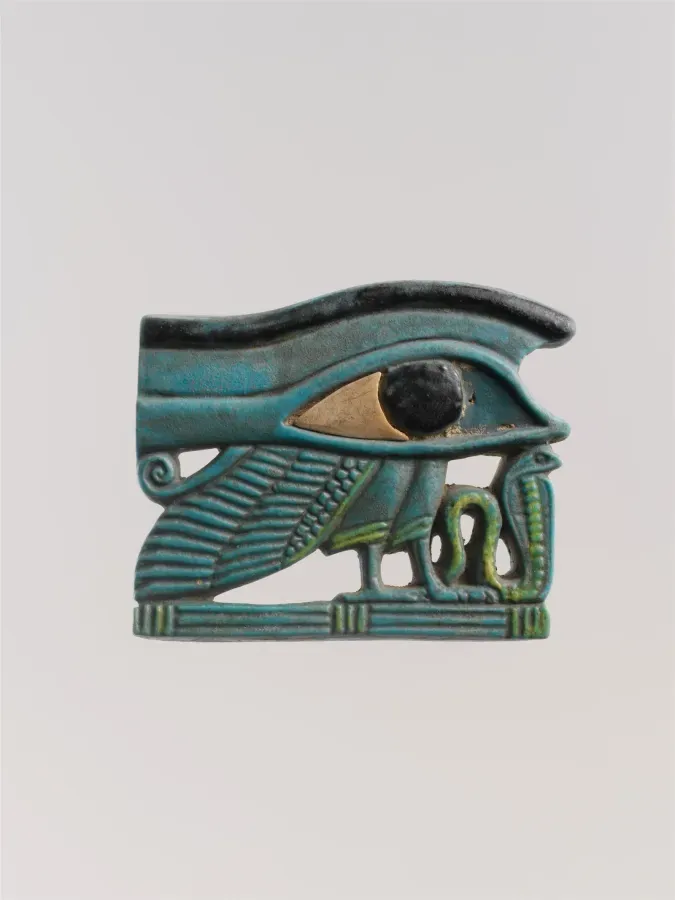
The Wedjat was not merely decorative in ancient Egyptian funerary practice. It had a specific ritual function across thousands of years of mortuary tradition.
The Role of Amulets in Mummification
When a body was mummified, priests followed detailed instructions about which amulets to place at specific locations within the wrappings. The Wedjat was one of the most important. According to funerary texts including Chapter 140 of the Book of the Dead, the eye amulet was placed over the incision through which the internal organs were removed during mummification, specifically over the left flank of the torso. The logic was protective and regenerative: the organ most associated with life force had been removed; the eye that was itself restored would guard the wound.
Other Wedjat amulets were placed at the throat, on the chest, and at the forehead. An elaborate set of wrappings could contain dozens of individual Wedjat amulets in different materials and sizes, each assigned to a specific protective function.
The Opening of the Mouth Ceremony
One of the central rituals of Egyptian burial was the Opening of the Mouth ceremony, performed on the mummy before it was sealed in the tomb. A priest would touch various parts of the mummy with ritual instruments, symbolically restoring the senses and faculties to the dead person so they could function in the afterlife.
The Wedjat was central to this ceremony. Presenting the eye amulet during the rite was an act of restoring sight, the same restoration that Thoth performed in the myth. The ceremony replicated the mythological event: the eye was destroyed (the person died), and now it is being given back (the person is being prepared for new life in the underworld).
The Book of the Dead
The Book of the Dead (more accurately translated as "The Book of Coming Forth by Day") is a collection of spells and instructions compiled between roughly 1550 BCE and 50 BCE to help the dead navigate the afterlife. Several chapters specifically invoke the Wedjat as a protection against the dangers that threatened the soul: hostile spirits, dangerous passages, the tests before Osiris's tribunal.
Spell 140 instructs the deceased to offer the Wedjat to Osiris to ensure safe passage. Spell 167 is specifically about "bringing the Eye of Horus", restoring what was damaged and ensuring the dead person's wholeness. The symbol was not just worn. It was spoken. It was performed. It was actively used in the mechanics of what the Egyptians believed happened after death.
Eye of Horus vs Eye of Ra: What Is the Difference
This is the question that confuses everyone, including some Egyptologists.
Eye of Horus (Wedjat). Left eye. Moon. Healing, protection, restoration. Was destroyed and reassembled. Passive, receiving energy. A symbol of overcoming.
Eye of Ra. Right eye. Sun. Power, fury, destruction of enemies. In mythology, the Eye of Ra is an independent entity, a daughter of Ra (sometimes identified with the goddesses Sekhmet, Hathor, Tefnut), capable of separating from the god and acting on its own. Active, scorching energy.
The Eye of Ra has its own mythology separate from Horus. In one cycle, the Eye of Ra wandered away from the god and had to be retrieved. When it returned, it wept tears of joy, and those tears became human beings. In another cycle, it was sent out as Sekhmet to punish humanity for rebellion against Ra, and nearly destroyed everyone before being tricked into stopping. The Eye of Ra is not a symbol of healing. It is a symbol of divine force that can protect or consume.
In practice. In jewellery, the distinction between left and right eye is usually not observed. Most pendants are stylisations not tied to a specific eye. If it matters to you, the Wedjat (left, lunar) is drawn with the "tail" and "teardrop" on the left. The Eye of Ra is on the right. But 99% of wearers do not make this distinction, and that is perfectly fine.
Upload a photo of your pet, someone you love, or an object. We'll build a 3D model and hand-cast it in pewter.



The Eye of Horus in Other Cultures
Greece and Rome
Greeks, in contact with Egypt from the 7th century BCE, adapted the idea of the protective eye. The Greek "evil eye" (what is now called the nazar) is partly an heir to the Egyptian tradition. Not a direct copy, but the concept of "eye-as-protection" came from the same cultural sphere.
Romans painted eyes on the prows of warships. A tradition that came through Greece from Egypt: a ship with eyes "sees" danger. This same tradition survives in Mediterranean countries to this day: fishing boats in Turkey, Greece, Malta and Southern Italy still carry painted eyes on their bows.
Christianity: The All-Seeing Eye
The triangle with an eye inside appears in Christian iconography from the 17th century. The "Eye of Providence", the eye of God that sees all. The connection to the Egyptian Eye of Horus is not direct, but the iconographic lineage can be traced: eye = divine observation, protection by a higher power.
More on the All-Seeing Eye and how it differs from the Egyptian eye: meaning of the All-Seeing Eye.
Freemasonry
Freemasons adopted the Eye of Providence in the 18th century. It appears on Masonic lodges, aprons and certificates. And since 1782, on the Great Seal of the United States and on the one-dollar bill. The eye in a triangle above a pyramid. An Egyptian pyramid combined with a Christian-Masonic eye, creating one of the most recognisable symbols in the world.
The connection to the Eye of Horus is more aesthetic than direct. Masons did not worship Horus. But the visual rhyme between the Egyptian Wedjat and the Masonic Eye of Providence is obvious.
Buddhism
The "Eyes of Buddha" on stupas in Nepal (the famous eyes of Boudhanath) are not connected to Egypt directly, but exploit the same idea: an all-seeing gaze that protects and observes. The archetype of the "protective eye" is cross-cultural. People on opposite sides of the world, with no contact between them, arrived at the same idea: a depicted eye is a shield.
The Eye of Horus in Jewellery Design
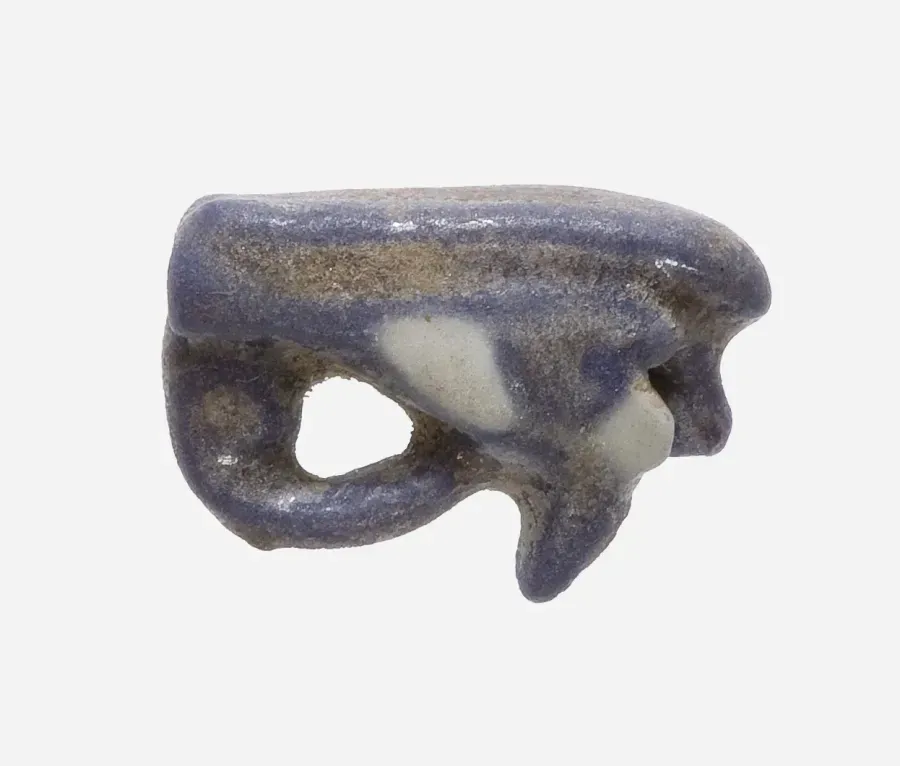
Classical Egyptian Style
A detailed eye with characteristic elements: the arched brow, the teardrop (a vertical line beneath the eye), the spiral (tail) to the side. Often filled with blue or turquoise enamel, referencing the faience amulets of ancient Egypt, which were precisely that shade of blue.
This style says: "I know where this symbol comes from." It directly references the Egyptian heritage.
Minimalist
A simplified outline of the eye. A single line tracing the shape. No detail, no enamel, no stones. A clean silhouette that reads as "eye" and "protection" without tying itself to a specific culture.
A minimalist Eye of Horus works in a contemporary wardrobe without creating the feeling of "I've just stepped out of a pyramid." More on minimalism: minimalist jewellery guide.
With a Stone
The pupil is replaced by a stone: cubic zirconia, onyx, turquoise, lapis lazuli. The stone adds depth and colour. Turquoise and lapis lazuli are historically accurate choices (the Egyptians used both). Black onyx is dramatic and contemporary. Clear CZ is universal.
Combined with Other Symbols
The Eye of Horus is frequently combined with:
- Ankh (key of life): double Egyptian symbolism. More: meaning of the ankh.
- Scarab: protection plus rebirth. More: meaning of the scarab.
- Lotus: protection, purity and spiritual growth. More: meaning of the lotus.
- Nazar: two protective eyes from different cultures together. Double protection (or hedging one's bets).
Types of Jewellery
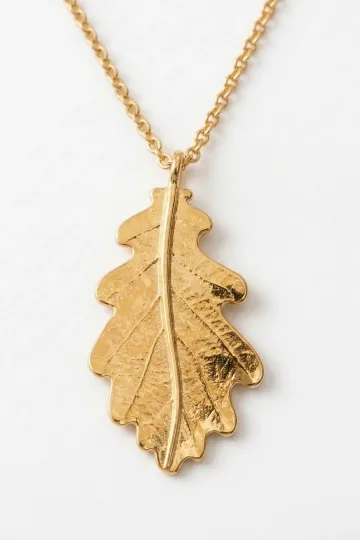
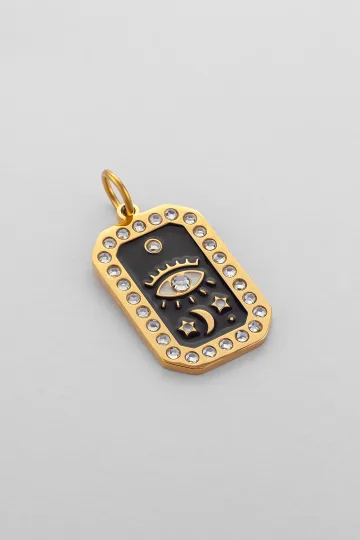
Pendants. The most popular format for the Eye of Horus. The symbol is detailed enough to need space for legibility. A pendant of 20-30 mm provides that space. On a 42-48 cm chain, it sits at the collarbone, visible and noticeable.
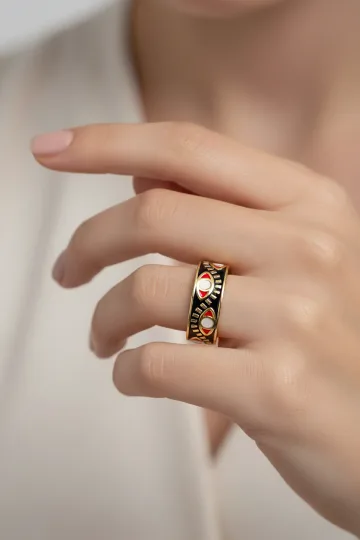
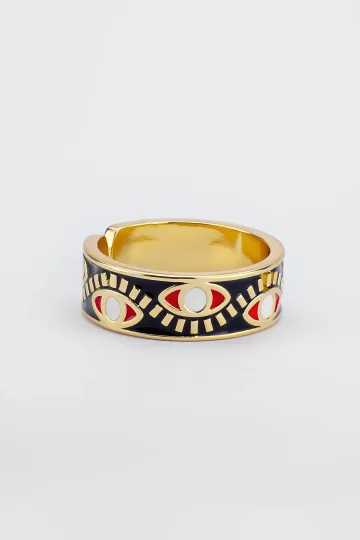
Rings. The eye on a ring platform (signet) or as the central element of a decorative ring. A ring with the Eye of Horus is a statement. It is more visible than a pendant (hands are always in view) and provokes questions. "What's that on your ring?" is a conversation that starts with a symbol.
Earrings. Paired Eyes of Horus on earrings create the effect of "two eyes watching": a powerful visual accent near your own eyes. Works if the earrings are large enough (10-15 mm) for the details to be legible.
Bracelets. The eye as the central element on a chain bracelet. Less visible than a pendant or ring, but palpable: you know it is on you, even if others do not notice.



How to Wear the Eye of Horus
As a Pendant
The pendant is the most versatile format. The ideal chain length for an Eye of Horus is 42-48 cm, which places it at the collarbone, visible without being intrusive. For men wearing it over a shirt, 50-55 cm works better, letting the pendant fall onto the chest rather than sit against the throat.
Size matters: a 20-25 mm Eye of Horus pendant reads clearly in everyday contexts. The details (brow, teardrop, tail) are legible at arm's length, which is what matters for a symbol that invites comment. Larger pieces (30-35 mm) make a stronger statement but need proportional clothing to carry them.
As a Ring
A signet-style ring with the Eye of Horus on the face is one of the most striking formats. Worn on the index or middle finger, it catches the eye during gestures. Unlike a pendant, which faces outward by default, a ring shifts orientation constantly, so the symbol is more dynamic, more conversational.
As Earrings
Paired Eye of Horus earrings create a deliberate symmetry that plays against the symbol's own asymmetry. The effect is strongest at profile or three-quarter angles, where the symbol appears at ear level, near your own eyes. Minimum size for readability: 10-12 mm.
Layering
The Eye of Horus layers well with chains of different lengths that carry simpler elements (plain links, small charms). The eye pendant anchors the look because it has the most visual information. Keep competing symbolism minimal: one strong statement symbol per neckline works; two compete.
Who Wears the Eye of Horus and Why
History Enthusiasts
Egyptology is one of the most popular historical hobbies in the world. The British Museum, with the Rosetta Stone and the mummy galleries, has done more for popular Egyptology than perhaps any other institution. Howard Carter's discovery of Tutankhamun's tomb in 1922 sparked a wave of Egyptomania that has never fully subsided. People who have read about ancient Egypt, visited museums, perhaps travelled to Luxor or Cairo, wear the Eye of Horus as a marker of their interest. "I know what this means, and it matters to me."
People Who Have Overcome Difficulties
A symbol of restoration. An eye that was destroyed and reassembled. For people who have been through serious life trials (illness, loss, addiction, divorce), the Eye of Horus is a reminder: "I was broken and I healed." Not sentimental, but mythological. Myths give experiences a scale that everyday language does not possess.
Those Seeking Protection
Superstitious, semi-superstitious and "just in case." People who wear the nazar and the hamsa for the same reasons. Not because they believe in magic. Because the symbol provides a sense of control in situations where control is absent. Psychology, not esoterica. More on this phenomenon: protection rings.
Lovers of Aesthetics
The Eye of Horus is simply a beautiful symbol. Asymmetrical, dynamic, with a distinctive "tail" and "teardrop." It looks good on metal. It is recognisable but not banal (unlike a heart or a star). Some people wear it purely because they like how it looks. And that is a perfectly valid reason.
Tattoo Culture
The Eye of Horus is one of the most popular tattoo motifs. People who already have a tattoo of the symbol often complement it with a jewellery counterpart. Tattoo plus pendant equals a visual rhyme. The same symbolism in two different media: one permanent, one changeable.
The asymmetrical shape adapts well to different parts of the body: forearm, shoulder blade, ribs, the back of the neck. And unlike many tattoo motifs, the Eye of Horus does not lose its meaning with age. The symbol is 5,000 years old; it will endure another 50 on your skin.
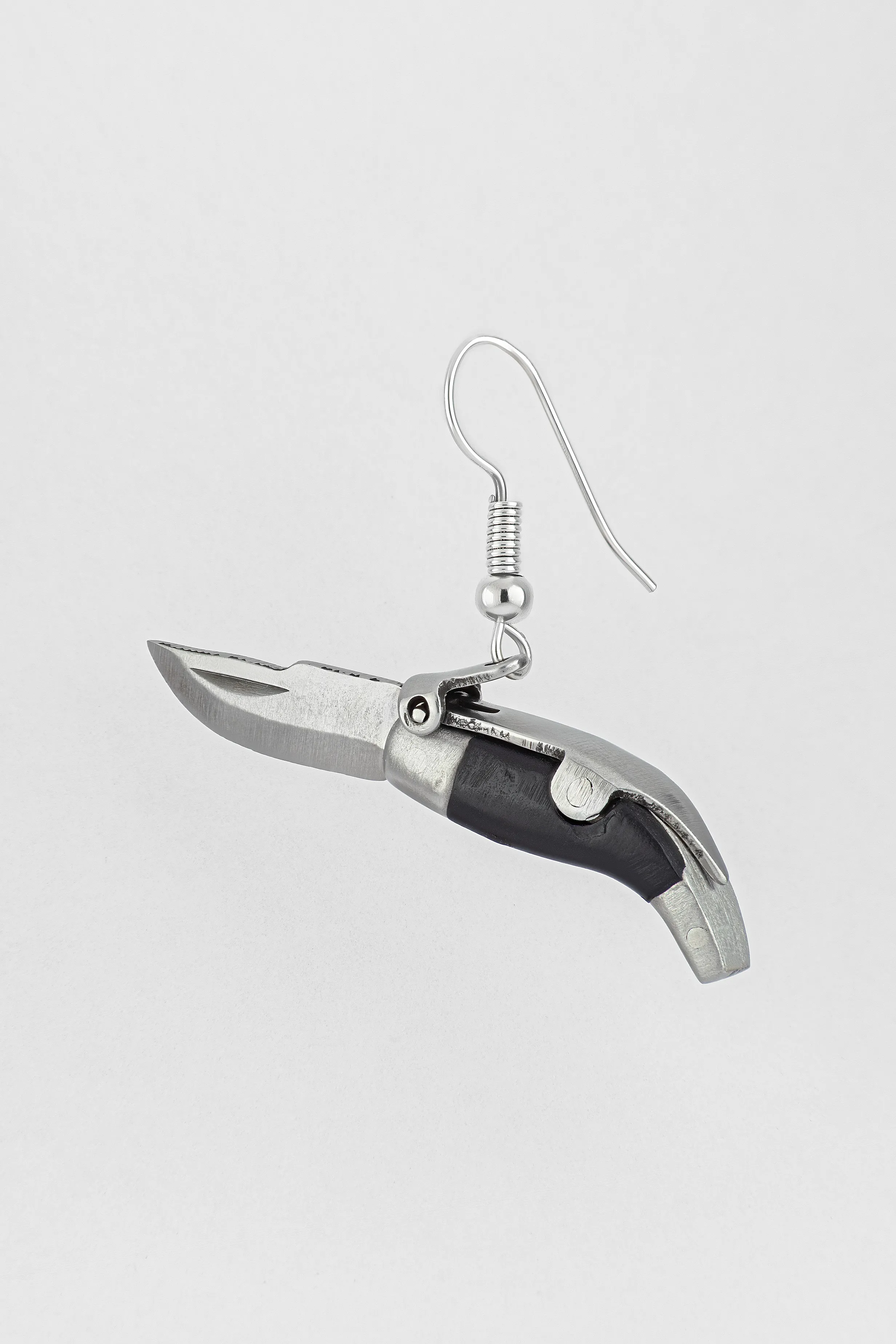
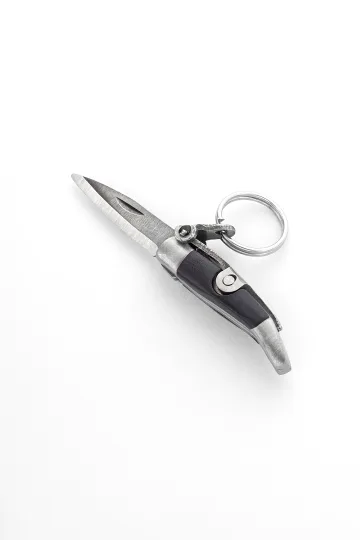
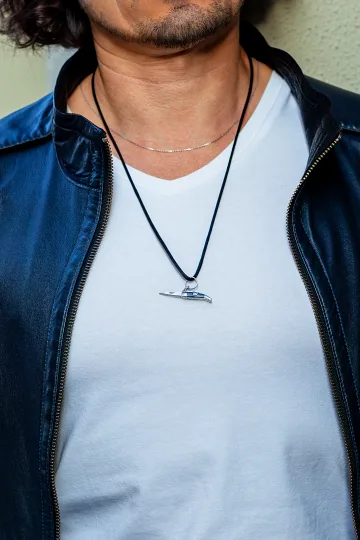
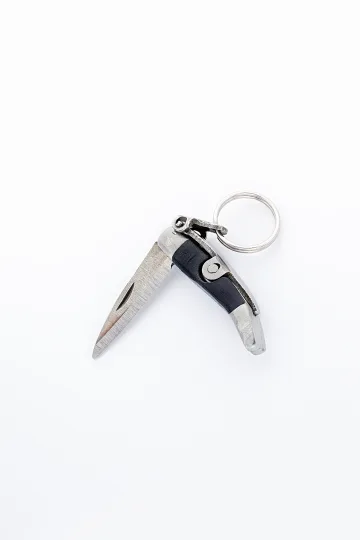
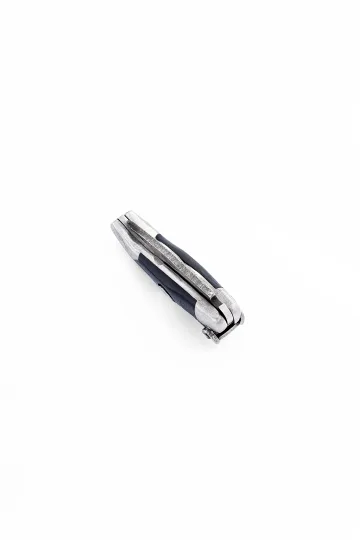
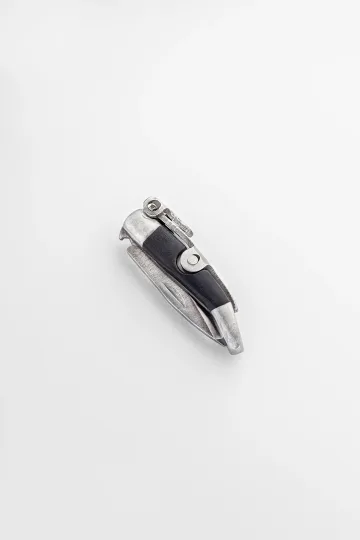
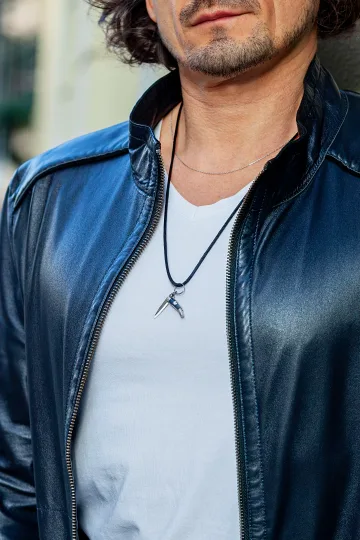
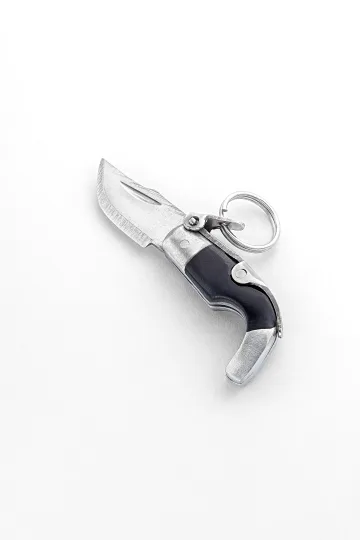
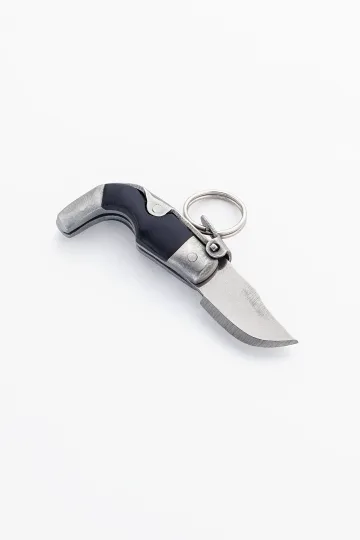
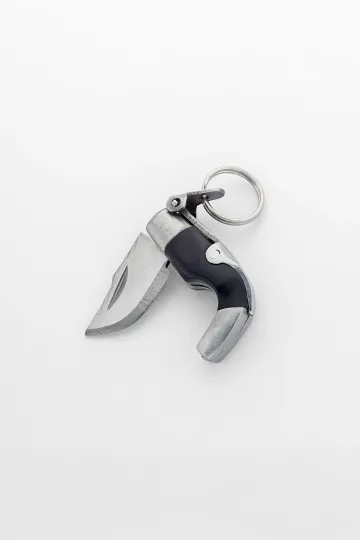
CAPAORA mini knife pendant
The 18th-century Spanish navaja in miniature: 40 mm of stainless steel, a real folding mechanism and a Palanquilla lock that clicks. An affordable gift to remember.
Authentic · Ships from Spain · 14-day returns
Materials for Eye of Horus Jewellery
316L stainless steel. The best choice for everyday wear. The detail of the Eye of Horus shows well on a steel surface: sharp contours, legible lines, silver or black (PVD) colour.
Sterling silver (925). The traditional choice. Silver has a historical connection to the moon, and the Wedjat (left eye) is a lunar symbol. A silver Eye of Horus is historically "correct." But silver requires maintenance (tarnish). More: silver 925 guide.
Gold. The Egyptians considered gold the "flesh of the gods." A gold Eye of Horus is the most authentic option. But also the most expensive. Gold plating provides the visual effect but wears away. More: how long does gold plating last.
With stones. Turquoise is the stone of Hathor, an Egyptian choice. Lapis lazuli is the stone of the sky, used in Tutankhamun's death mask. Black onyx is modern and dramatic. Any blue or dark blue stone creates a visual link to traditional Egyptian faience.
More on matching metal to your skin tone: metal and skin tone guide.
Leave your email, we'll send your discount code. No spam, unsubscribe anytime.
The code arrives by email, valid on your first order.
Archaeology of the Eye of Horus: Real Discoveries
Amulets from Tombs
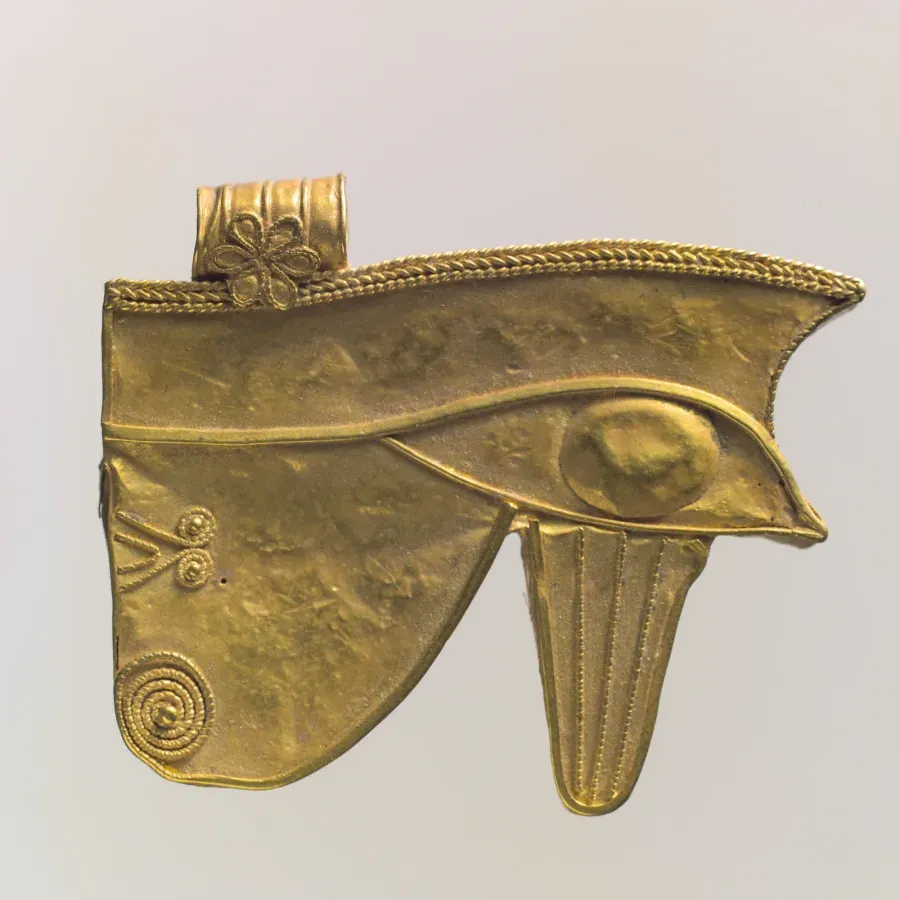
The earliest amulets bearing the Eye of Horus date to the Old Kingdom period (approximately 2686-2181 BCE). Materials: faience (glazed ceramic in blue or green), steatite (soapstone), gold, silver, lapis lazuli, carnelian, turquoise. Sizes ranged from 5 mm (sewn into burial wrappings) to 15 cm (placed on the chest of a mummy).
In the tomb of Tutankhamun (1323 BCE), dozens of Wedjat amulets were found: on the pectoral (chest ornament), on bracelets, on rings, inside the wrappings of the mummy. One of the most famous is a gold Wedjat inlaid with lapis lazuli, turquoise and carnelian, roughly 7 cm across. It is 3,300 years old, and it looks as though it were made yesterday. It sits in the Egyptian Museum in Cairo, though elements of the Tutankhamun collection have travelled the world, including exhibitions at the Saatchi Gallery in London.
The Workers of Deir el-Medina
The village of Deir el-Medina was the settlement of workers who built the tombs in the Valley of the Kings. Archaeologists found thousands of small Wedjat amulets there, not royal ones, but ordinary. Workers wore them every day, the way modern people wear crosses or nazar eyes. This was not elite symbolism. It was everyday protection for ordinary people.
The material of these "popular" amulets was faience. Cheap, mass-produced. The ancient Egyptian equivalent of modern stainless steel: an affordable material for a mass-produced piece of jewellery with protective symbolism. The parallel is precise.
The Deir el-Medina finds also included written documents: papyri recording daily life, disputes and transactions. These show that amulet-wearing was matter-of-fact, not ceremonial. Workers recorded buying amulets alongside recording buying bread. The Wedjat was a practical object in the same category as a good sandal or a reliable knife.
Amulets on Ships
Phoenician and Greek trading vessels that sank in the Mediterranean (7th-3rd centuries BCE) carried Wedjat amulets on their hulls and among their cargo. The symbol travelled with goods from Egypt to Spain, from Sicily to Lebanon. The shipboard eye protected against storms and sea monsters. The same logic as the painted eyes on fishing boats in modern Turkey and Greece.
The Phoenician trade routes were the highways along which the Eye of Horus spread westward. Archaeological finds of Wedjat amulets in Phoenician settlements along the Spanish coast (Cádiz, Ibiza, Málaga) demonstrate that the symbol was travelling and being used along the Atlantic fringe of Europe centuries before Rome became an empire.
Roman Egypt
After Rome's conquest of Egypt (30 BCE), the symbol did not disappear. It adapted. Romano-Egyptian Wedjat amulets are stylistically different from pharaonic ones: less detailed, more abstract, often combined with Roman symbols. The Eye of Horus survived changes of power, changes of religion and changes of language. The symbol proved more durable than empires.
The Eye of Horus in Pop Culture
The symbol has travelled far beyond museums and esoteric shops.
Music. Modern pop and hip-hop artists have used Eye of Horus symbolism in music videos and album artwork. This spawned a wave of conspiracy theories ("Illuminati in the music industry!"), but in reality it is simply a powerful visual symbol that looks good on camera.
Film. The Mummy franchise, Gods of Egypt, Stargate: Egyptian symbolism, including the Eye of Horus, is heavily used in entertainment cinema. Every new film about Egypt boosts sales of Egyptian symbolism in jewellery.
Video games. Assassin's Creed: Origins is set in ancient Egypt, and the Eye of Horus is one of the key visual elements. For an entire generation of gamers, this symbol is associated with adventure, not religion.
Fashion. Several luxury brands have used the eye as a print and accessory element. Egyptian symbolism periodically comes into fashion ("Egyptomania") and every wave raises interest in authentic symbols.
Eye of Horus vs Other "Eye" Symbols
Eye of Horus vs nazar. The nazar is a simple concentric circle (white-blue-black), protecting against the evil eye. The Eye of Horus is a detailed symbol with a mythological history, meaning healing and protection. The nazar is simpler visually and culturally (Turkey, Greece). The Eye of Horus is deeper and more specific (Egypt). More: nazar and the evil eye.
Eye of Horus vs All-Seeing Eye. The All-Seeing Eye is an eye inside a triangle, a Christian-Masonic symbol. The Eye of Horus has separate iconography with brow, teardrop and tail. Visually they differ. By meaning: the All-Seeing Eye says "God sees everything." The Eye of Horus says "I was destroyed and I recovered." More: meaning of the All-Seeing Eye.
Eye of Horus vs Third Eye. The third eye (ajna chakra) is a Hindu and Buddhist symbol of inner vision. Located on the forehead, not on the face. It means intuition and enlightenment, not protection. Different traditions, different meanings, overlap only in the word "eye."
How to Gift an Eye of Horus
The Eye of Horus is one of the finest symbolic gifts because it carries a concrete and positive message.
When to give it:
- Recovery after illness ("you restored yourself, like the Eye of Horus")
- A new beginning after a difficult period ("order after chaos")
- For protection before a journey, a move, a new job
- Graduation ("you passed the test and emerged stronger")
Who to give it to:
- People interested in history and mythology
- People who value symbolism with depth (not merely "pretty" but "meaningful")
- People who have been through a hard time and come out the other side
How to explain it (if needed): "This is the Eye of Horus. It is 5,000 years old. An Egyptian god lost his eye in battle, and it was restored, made better than it was before. A symbol of healing and the idea that nothing broken is broken forever."
Three sentences. That is enough. No Egyptology lecture required.
More on gifts: gift for her guide and gift for him guide.
The Eye of Horus in Medicine and Pharmacology
Papyrus Prescriptions
The Ebers Papyrus (circa 1550 BCE), one of the oldest medical documents in the world, contains over 700 medicinal recipes. Dosages in it are recorded in parts of the Eye of Horus. A physician would write: "1/4 Wedjat of honey + 1/8 Wedjat of resin + 1/64 Wedjat of myrrh powder." Each fraction represented a part of the eye. The patient visited the doctor, and the doctor prescribed them the eye of a god, broken into portions.
This is not mysticism. It is a standardised system of measurement embedded in a religious symbol. Practical and memorable.
The Ebers Papyrus is not unique in this. The Edwin Smith Papyrus, the Hearst Papyrus and the London Medical Papyrus all use Wedjat fractions for measurement. These documents span several centuries and multiple medical traditions, which tells us the system was stable, widely understood and professionally accepted. The Wedjat fraction was to an ancient Egyptian physician what a milligram is to a pharmacist today: a unit.
The Rx Symbol
There is a theory (disputed but appealing) that the Rx symbol on prescriptions descends from the Eye of Horus. The "R" with a crossed leg supposedly derived from a stylised Wedjat via the Latin "Recipe" (take). Most historians of pharmacology consider this a coincidence, but the visual resemblance between the ancient Wedjat and the medieval Rx is intriguing.
Ophthalmology
The irony: the symbol of a damaged and healed eye became the unofficial emblem of ophthalmology. Some ophthalmology clinics and journals use a stylised Wedjat in their logos. An eye that was torn out and restored is the perfect metaphor for the science of treating vision.
Misconceptions and Myths
"The Eye of Horus is an Illuminati symbol"
No. The Illuminati (the Bavarian order of the 18th century) used the Owl of Minerva, not an eye. The eye in the triangle on the dollar bill is the Eye of Providence, a Christian-Masonic symbol, not Egyptian. The confusion arose from visual similarity and internet conspiracy theories.
"The Eye of Horus opens the third eye"
A New Age interpretation with no connection to Egyptian tradition. The Egyptians had no concept of chakras. The Eye of Horus is a specific eye of a specific god from a specific myth. Not a chakra, not an energy centre, not a portal to another dimension.
"The pineal gland = the Eye of Horus"
A popular internet theory: the Eye of Horus supposedly depicts a sagittal cross-section of the brain, with the "pupil" representing the pineal gland. Visual similarity exists, but there is no evidence that the Egyptians understood brain anatomy at that level. An attractive theory, but this is pareidolia (the human tendency to see familiar patterns in random shapes), not history.
"The Eye of Horus protects against electromagnetic radiation"
Encountered on esoteric websites. No. The symbol is 5,000 years old and the people who designed it had no concept of electromagnetic radiation. There is no mechanism by which a piece of metal shaped like an eye would interact with radio waves or 5G. The symbol is culturally and historically meaningful. It is not a functional filter.
Send a friend a discount code, they save on their first order.
The Eye of Horus and Fashion: Waves of Egyptomania
Interest in Egyptian symbolism in fashion comes in waves.
1920s. The discovery of Tutankhamun's tomb (1922, by Howard Carter in the Valley of the Kings) triggered the first mass Egyptomania. Art Deco absorbed Egyptian motifs: lotuses, scarabs, Eyes of Horus appeared on brooches, earrings and necklaces from the great Parisian maisons to costume jewellery manufacturers. The most powerful wave.
1960s. The film Cleopatra (1963) with Elizabeth Taylor raised a new wave. Egyptian motifs in jewellery, fashion and interiors.
1990s-2000s. The Mummy (1999), Stargate (1994), video games set in Egypt. Egyptian symbolism entered goth culture and alternative fashion.
2020s. Assassin's Creed: Origins (2017) and continuing interest in Egyptology. Plus the broader trend towards symbolic jewellery. The Eye of Horus is now worn not as an "Egyptian theme" but as a universal protection symbol alongside the nazar and hamsa.
The next wave will probably arrive with the opening of the Grand Egyptian Museum near the Giza Pyramids (the largest archaeological museum in the world) or with a major film or series. Egypt does not run out. More lies beneath the sand than has been found.
Buying it as a gift? Each one arrives ready to give.
 A branded Zevira box and a little card come with every order.




Caring for Eye of Horus Jewellery
Care depends on the material and the presence of details.
Without enamel or stones. Standard care by material. Stainless steel: wipe with a soft cloth. Silver: polishing cloth; for tarnish, the foil-and-baking-soda method. More: how to clean jewellery and tarnish: how to restore.
With enamel. The Eye of Horus often has blue or turquoise enamel fill. Enamel is more fragile than metal: do not drop, do not scrub with abrasives, do not soak. Soft cloth + warm water. More: enamel jewellery care.
With stones. If the pupil is a set stone, watch the setting. A stone in a prong setting can loosen from impacts. Check with your finger: if the stone moves, take it to a jeweller to tighten the prongs.
Relief details. The Eye of Horus is a detailed symbol. Dirt, sweat and cosmetics accumulate in the grooves of the relief (brow, teardrop, tail). A soft toothbrush and mild soapy water once a month is sufficient to keep the details clean. Rinse thoroughly and dry with a soft cloth: do not leave moisture sitting in the recesses of a silver piece.
FAQ
Is the Eye of Horus a religious symbol? Historically, yes (ancient Egyptian religion). Today, no, because the ancient Egyptian religion is not practised. In a modern context, it is a cultural and aesthetic symbol with a mythological background. Nobody prays to Horus when putting on a pendant.
Can a Christian or Muslim wear the Eye of Horus? Strict adherents of Abrahamic religions may object (symbol of a "pagan" god). In practice, most people see no conflict. It is a historical symbol, not an object of worship. But if your religious community takes it seriously, bear that in mind.
Right eye or left eye? Left (Wedjat) is more common in jewellery. It is the "lunar" eye, the symbol of healing. Right (Eye of Ra) is the "solar" eye, the symbol of power. Most pendants do not make a distinction. If it matters to you, look at the orientation of the "tail" and "teardrop."
Does the Eye of Horus bring luck? The Egyptians believed so. Modern science says no. Psychology says possibly: if you associate the symbol with protection and confidence, it may produce a placebo effect of calm. And calm itself increases the odds of better decisions.
Is there a "wrong" way to wear the Eye of Horus? No. Up, down, left, right: in jewellery, orientation has no ritual significance. Wear it however is comfortable and looks good to you.
Can you combine the Eye of Horus with other symbols? Yes. Combines well with the ankh, scarab, lotus (Egyptian theme). With the nazar (double eye protection). With moon and stars (cosmic theme). Combines poorly with symbols that visually compete for attention (a large cross + a large eye = two loud statements simultaneously).
Why is the Eye of Horus so popular in tattoos? Because it combines recognisability, beauty, depth of meaning and universality. Few symbols are simultaneously beautiful visually, carry a 5,000-year history and bear a positive message. Plus the asymmetrical shape adapts well to different body parts. And unlike many tattoo motifs, it does not lose relevance with age. The symbol is 5,000 years old; it will endure another 50 on your skin.
Can a child wear the Eye of Horus? Yes. As a cultural symbol it is neutral and carries no negative connotations. A small pendant on a chain or charm on a bracelet is a perfectly normal children's accessory. For children with nickel allergies, choose 316L stainless steel or titanium. More: nickel allergy guide.
What is the difference between the Wedjat and a generic "eye" symbol? The Wedjat has specific iconography: the almond-shaped eye, the arched brow above, the vertical teardrop line beneath, and the curved spiral tail extending from the outer corner. All four elements together identify it as the Eye of Horus. A generic "eye" or "mystical eye" pendant without these elements is a different symbol, aesthetically related, but not the Wedjat specifically.
Did the Egyptians wear the Eye of Horus in daily life or only in death? Both. The Deir el-Medina finds prove that ordinary working people wore faience Wedjat amulets every day. Tomb goods were the preserved record, which is why so many have survived, but the symbol was not reserved for death. It was everyday protection, just as people today wear a religious symbol as a matter of daily habit.
Why does the symbol survive when the religion behind it is gone? Because the myth it encodes is not religious in a narrow sense. Loss, destruction and restoration are human experiences, not theological positions. The Eye of Horus describes something that happens to people, not something that requires belief in a particular deity. When the religion of ancient Egypt ended, the symbol's mythological meaning remained intact. That is the test of a durable symbol: it survives the faith that created it.
How do I know if my Eye of Horus pendant is oriented as a Wedjat or an Eye of Ra? Look at the direction of the tail and teardrop. If both elements extend toward the left side of the composition (as you look at it), the symbol is drawn as a left-facing eye, the Wedjat. If they extend to the right, it is a right-facing eye, the Eye of Ra. Many mass-produced pendants are ambiguous or mirror-reversed; this is not a defect, simply a stylistic convention of the jewellery market.
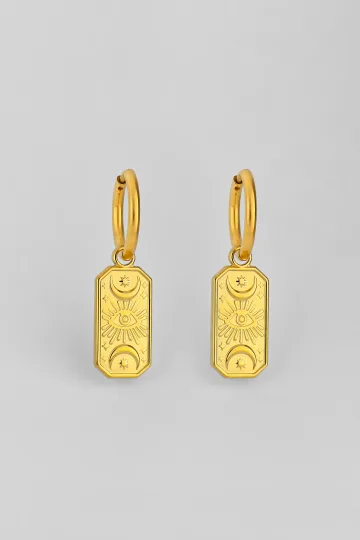
Silver and gold jewellery, wedding bands, symbolic pendants, paired sets.
Wear the symbol, don't just read about it. These are in stock:

The Bottom Line
The Eye of Horus has survived 5,000 years not because the Egyptians were talented illustrators. It survived because the story behind it is universal. Loss and restoration. Destruction and healing. Chaos and order. Every human being experiences these, in every era, in every culture.
When you put on a pendant with the Eye of Horus, you are not putting on an Egyptian artefact. You are putting on a symbol that has been saying the same thing for fifty centuries: what was broken can be reassembled. And what is reassembled can be better than the original.
5,000 years. Dozens of cultures. Millions of amulets. And one idea that does not go out of date: destruction is not the end. It is the beginning of restoration.
Thoth added the missing piece. Perhaps your missing piece is still ahead.
About Zevira
Zevira makes jewellery in the artisan tradition of Albacete, Spain. The Eye of Horus in our collections is an Egyptian motif adapted for everyday wear: small and detailed, yet recognisable enough to read from across a room.
What you can find with us featuring the Eye of Horus:
- Pendants in sterling silver 925 with finely worked teardrop lines
- Signet rings with an engraved Eye of Horus
- Paired studs with the Eye of Ra and the Eye of Horus, one for each ear
- Bracelets with the Eye of Horus on a protective cord
- Personal engraving of a meaningful date or symbol
Every piece can be personalised with engraving, with the option of personal engraving. We work in sterling silver 925 and 14 to 18K gold.