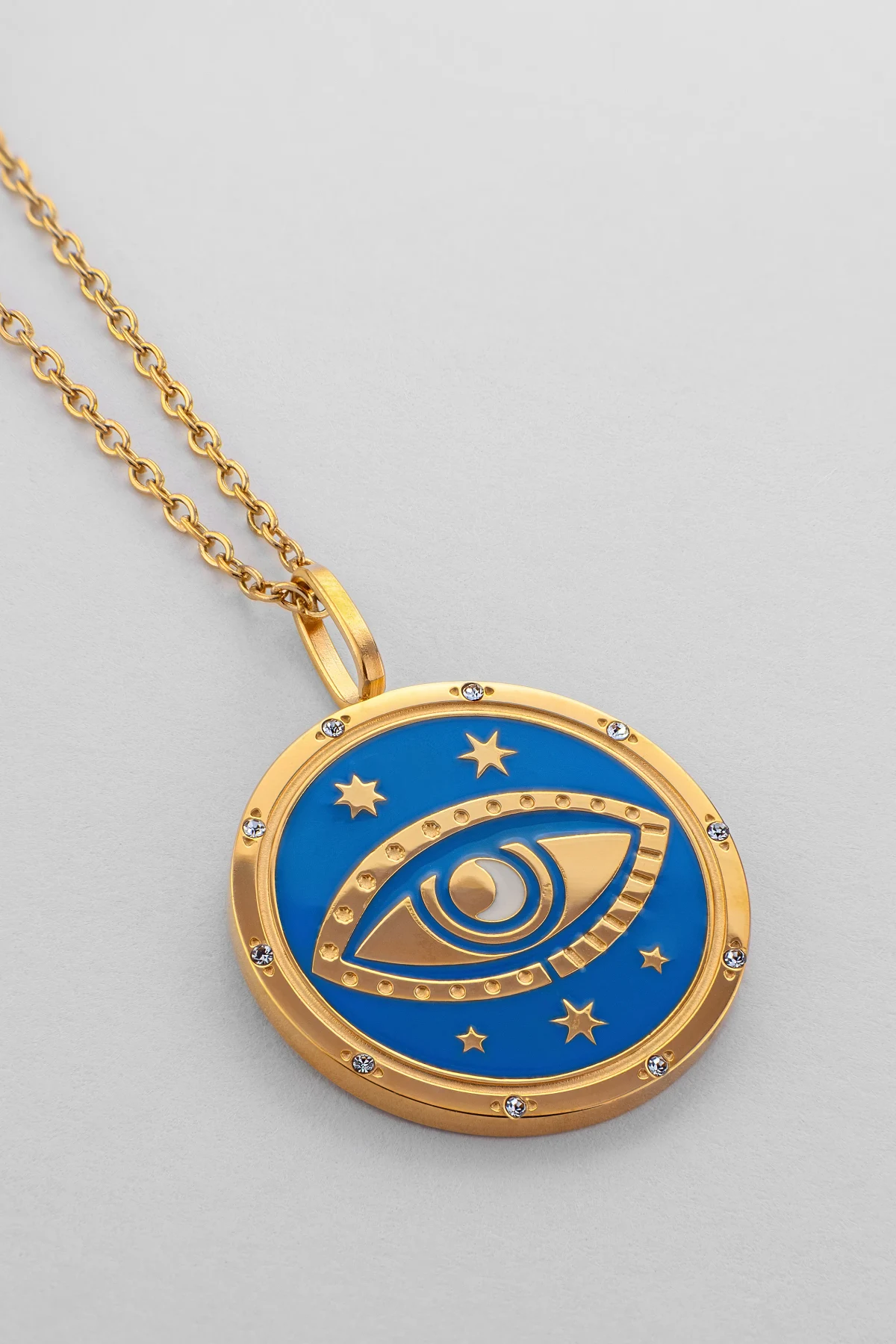
The All-Seeing Eye: Complete History, True Meaning, and Why People Wear It
The symbol you can't escape
You've seen it. Everyone has. The eye inside a triangle on the back of every US dollar bill. The floating eye on Masonic lodge facades. The glowing eye in the final scene of a dozen conspiracy thriller movies. The eye pendant on the neck of the girl sitting across from you on the metro who looks like she knows something you don't.
The All-Seeing Eye is one of those symbols that seems to be everywhere and nowhere at the same time. It sits on government buildings and punk band t-shirts. It appears in Renaissance paintings and Instagram jewellery flat lays. It means God's omniscience to a devout Christian and "question authority" to a counterculture kid wearing the same image ironically.
How does one symbol carry so many contradictory meanings? How did an ancient Egyptian medical diagram end up on the most widely circulated banknote in the world? And why do people keep choosing to wear it around their necks?
Those are the questions this article answers. Not the surface-level "Illuminati confirmed" version. The real history, from 3000 BCE to your jewellery box, with every twist and reinvention along the way.
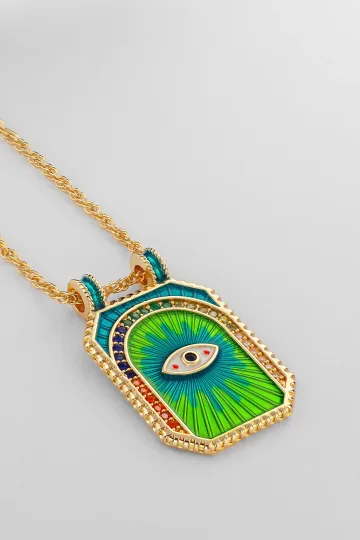
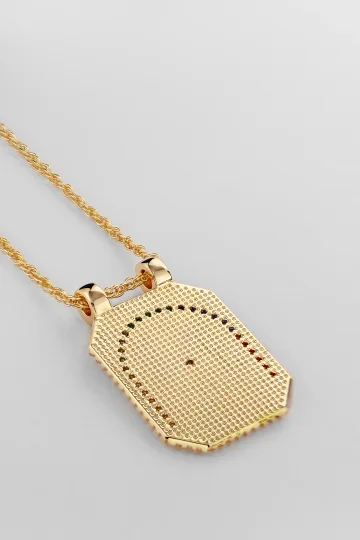
Wear the symbol, don't just read about it. These are in stock:

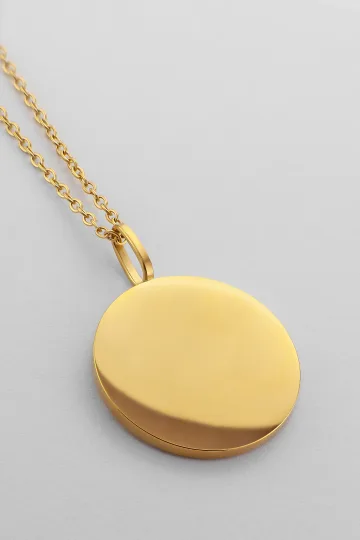
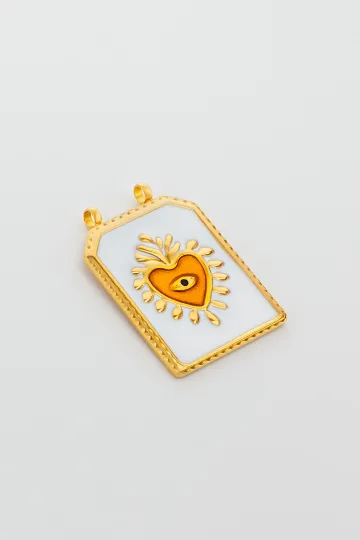
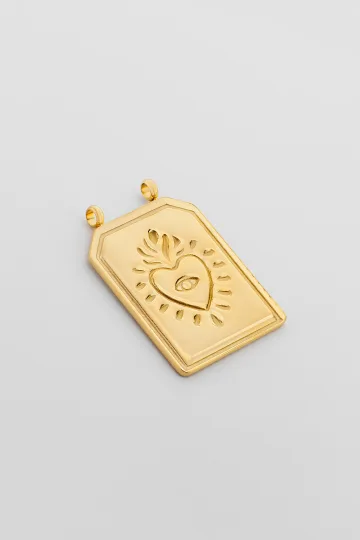
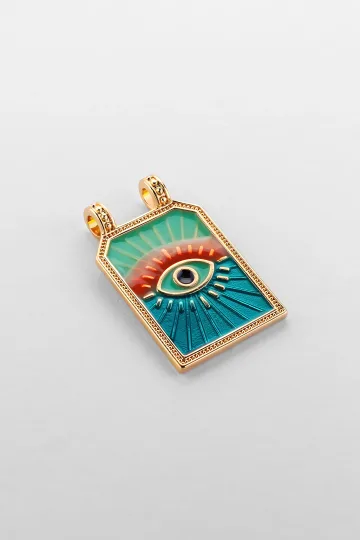

Upload a photo of your pet, someone you love, or an object. We'll build a 3D model and hand-cast it in pewter.



The Eye of Horus: Where It All Started
The myth of Horus and Set
To understand the All-Seeing Eye, you have to start in Egypt, roughly five thousand years ago. The story begins with a family feud that makes anything on television look civilised.
Osiris was the king of Egypt and the god of the underworld. His brother Set was jealous. Set murdered Osiris, chopped his body into pieces, and scattered them across Egypt. Isis, wife of Osiris, gathered the pieces and reassembled her husband long enough to conceive a son: Horus.
Horus grew up with a single mission: avenge his father. The war between Horus and Set lasted decades in the mythological timeline. During one of their battles, Set tore out Horus's left eye and ripped it into six pieces. The god Thoth (the deity of wisdom and magic) found the pieces and reassembled the eye, restoring it to wholeness. This restored eye became the Wedjat, the Eye of Horus, and it carried the meaning of healing, restoration, and the triumph of order over chaos.
The right eye of Horus represented the sun (Ra's eye). The left eye, the one that was destroyed and restored, represented the moon. Together they symbolised completeness: the ability to see both the visible and the invisible, the rational and the intuitive, the daylight world and the midnight one.
This is important because it sets up the dual nature that the eye symbol has carried ever since. It is not just about seeing. It is about seeing what was lost and making it whole again. It is about damage that becomes wisdom.
The Wedjat as medical symbol
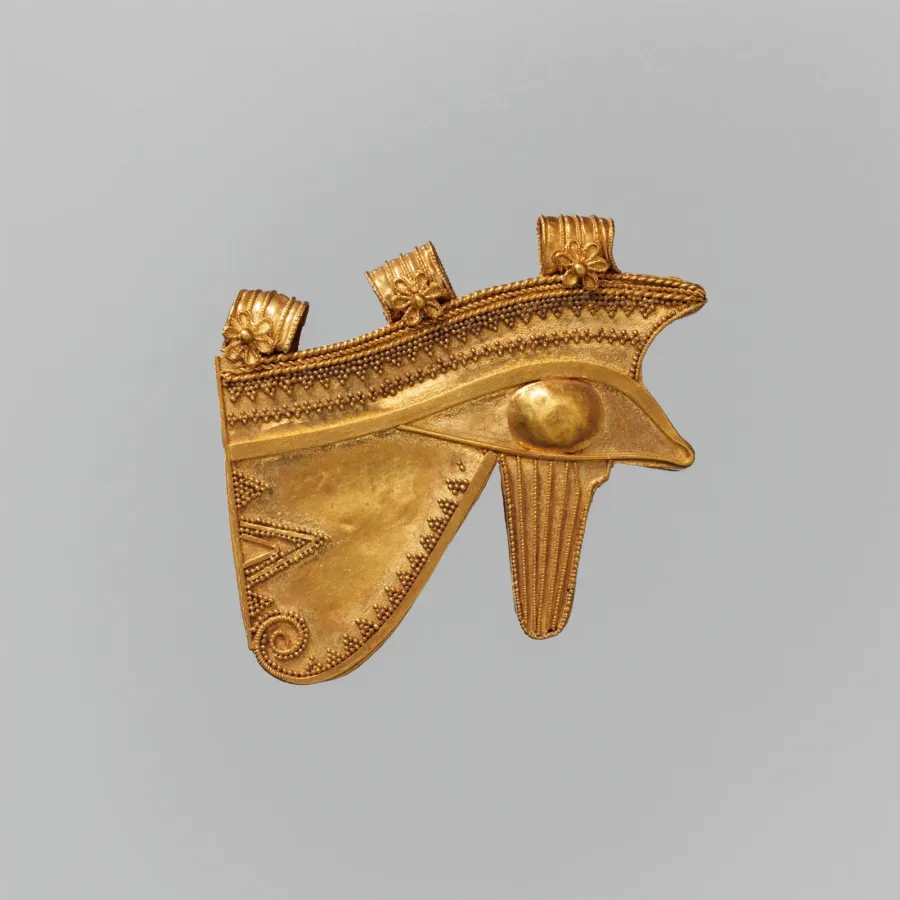
Here's something most people don't know: the six pieces of the Eye of Horus corresponded to six senses in Egyptian understanding (sight, hearing, smell, taste, touch, and thought). Each piece was also associated with a specific fraction (1/2, 1/4, 1/8, 1/16, 1/32, 1/64), and these fractions were used in Egyptian pharmacy to measure ingredients for medicines.
The Wedjat was literally a prescription system. When an Egyptian doctor wrote out a remedy, they used the hieroglyphic fragments of the Eye of Horus to indicate proportions. The symbol wasn't just spiritual. It was scientific. Or rather, in Egyptian thinking, there was no meaningful distinction between the two.
This medical dimension adds a layer that often gets overlooked. The Eye of Horus is not just about divine surveillance or cosmic awareness. It is about healing. About taking something broken and putting it back together in the right proportions. About the precision required to restore balance.
Archaeologists have found Wedjat amulets in virtually every context of ancient Egyptian life. They were placed on mummies to protect the dead in the afterlife. They were worn by the living as protection against illness and misfortune. They were painted on the bows of boats to help sailors navigate safely. The eye was everywhere in Egypt because protection was needed everywhere.
Why it still resonates 5,000 years later
The Eye of Horus has outlasted the civilisation that created it by several thousand years. That's remarkable for any symbol, and there's a specific reason it endures.
The eye is biologically primal. Humans are hardwired to detect eyes; it's one of the first things a newborn learns to recognise. We process eye contact differently from every other visual input. An eye looking at you triggers something deep in the nervous system: attention, alertness, the sense of being observed and therefore accountable.
When you put that biological response together with a narrative about healing and restoration, you get a symbol with extraordinary staying power. The Eye of Horus doesn't just say "someone is watching." It says "someone is watching over you." The difference is everything.
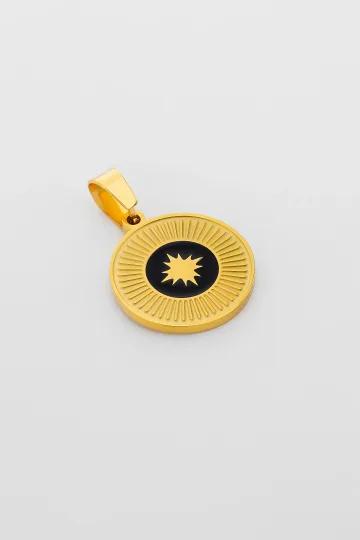
Rays belong to the evening, matte to the daylight. Swap them and I will notice.
How and when to wear the All-Seeing Eye
After styling the eye on dozens of shoots, I have learned it rewards restraint far more than sparkle. Here is how I place it, sorted by occasion.
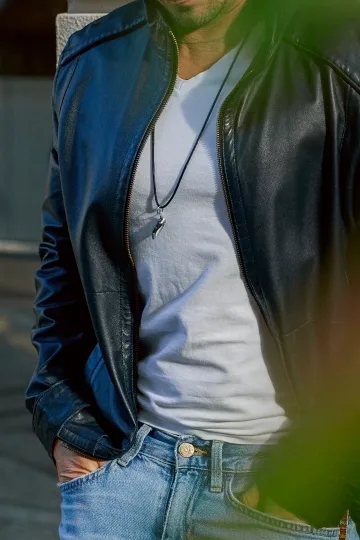
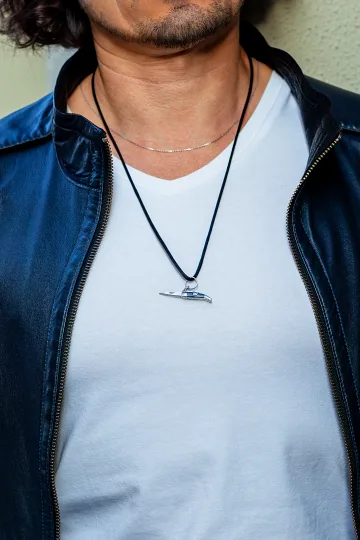
What do I pair the eye with every day? For daily wear I recommend a silver pendant on a medium chain over a white tee, a grey turtleneck or a denim shirt. A high or shallow V neckline presents it cleanly, without fighting the collar. Here the eye works as a quiet accent that people catch on the second glance, which is exactly the effect I want by day.
Is it right for the office? For work I suggest a smaller, calmer eye: a minimalist geometric pendant under a shirt or a thin sweater, a shorter chain, a matte metal. No rays, no glow, just clean graphics. In business neutrals (grey, graphite, navy, beige) it reads as a personal mark rather than a piece that pulls attention across the table.
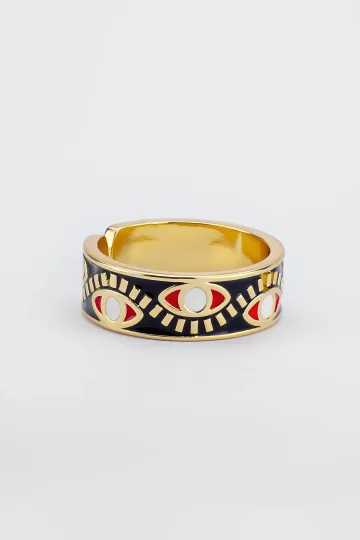
How do I build an evening look? For evening I let it loose. I choose an eye with rays in gold on a long chain over a black dress with an open back or a deep neckline, or on bare skin under a blazer. Dense dark fabrics (velvet, satin, leather) make the symbol more dramatic. For a special occasion I build the whole look around the eye, with earrings or a ring in the same motif so the theme reads as one.
Who does the eye actually suit? It suits anyone who likes to wear meaning rather than shine: the thoughtful, the slightly ironic, those curious about the hidden. In mood it is a symbol for people who want a light note of mystery without any theatricality.
Two rules I never break? First, I pick one dominant metal and stay with it: gold for warm skin and warm clothes, silver for cool, mixing only on purpose through a single linking detail. Second, I choose the chain length for the neckline: short to sit in the hollow of the throat under a closed top, long to fall on the chest under an open neckline. Layering works, but the eye stays the lead, and any other pendants stay thinner and quieter.

Turn on your camera, pick earrings, a pendant or a ring, and see the piece on yourself in real time.
Switch items in one tap.
Everything runs in your browser: no photo or video is ever uploaded.
Customer reviews
Zevira is a real jewellery shop. Genuine payments, deliveries and customer thank-yous.
🥰🥰🥰 gracias
Ok, ¡gracias! 🙂
The Eye of Providence: Christianity, Masonry, and the Dollar Bill
The Christian origins
Fast forward about 3,500 years from ancient Egypt to Renaissance Europe. Christianity needed visual symbols to communicate complex theology to a largely illiterate population, and the eye turned out to be perfect for the job.
The Eye of Providence (an eye enclosed in a triangle, often surrounded by rays of light) first appeared in Christian art during the Renaissance, roughly the 15th and 16th centuries. The triangle represented the Holy Trinity (Father, Son, Holy Spirit). The eye inside it represented God's omniscience: his ability to see everything, everywhere, at all times.
One of the earliest known examples is Jacopo Pontormo's 1525 painting "Supper at Emmaus," where the Eye of Providence floats above the scene of Christ revealing himself to his disciples after the resurrection. The message was clear: God sees all. God knows all. Even when you think you're alone, you are observed.
This wasn't meant to be threatening, despite how it sounds. In Christian theology, God's omniscience is paired with his benevolence. He sees your sins, yes, but he also sees your struggles, your sorrows, and your sincere attempts to do better. The Eye of Providence was as much about comfort as surveillance. It said: you are never truly alone. Someone greater than you is paying attention.
The symbol spread rapidly through European church architecture. You'll find it carved into altarpieces, painted on ceilings, embossed on pulpits, and set into stained glass windows across Catholic and Protestant churches from Portugal to Poland. The Aachen Cathedral in Germany has a particularly striking example. So does the church of San Giovanni in Florence.
It reached Britain in the same wave and stayed. Georgian and Victorian churchyards are full of it: an eye in a triangle at the head of a slate headstone, rays fanning out around a cloud, sometimes with a Latin motto about the eye of the Lord being upon the righteous. Nonconformist chapels used it as freely as parish churches did, and it turns up on charity boards, on foundation stones and above the doors of almshouses, where the point being made was that a benefactor's giving was seen even when nobody signed their name to it. The grammar of the image is consistent wherever it appears: triangle for the Trinity, rays for divine light, cloud for the boundary between heaven and earth.
Worth holding those two things apart, because they get muddled constantly. The iconography is a documented Christian tradition with a datable history, a stable set of visual conventions and thousands of surviving examples you can go and look at on a Sunday afternoon. The conspiratorial reading that arrived much later is a separate thing: a modern piece of folklore about power, fascinating as a cultural phenomenon and revealing about the anxieties of the century that produced it, but not an account of what these carvings meant to the people who commissioned them.
Freemasonry and the eye
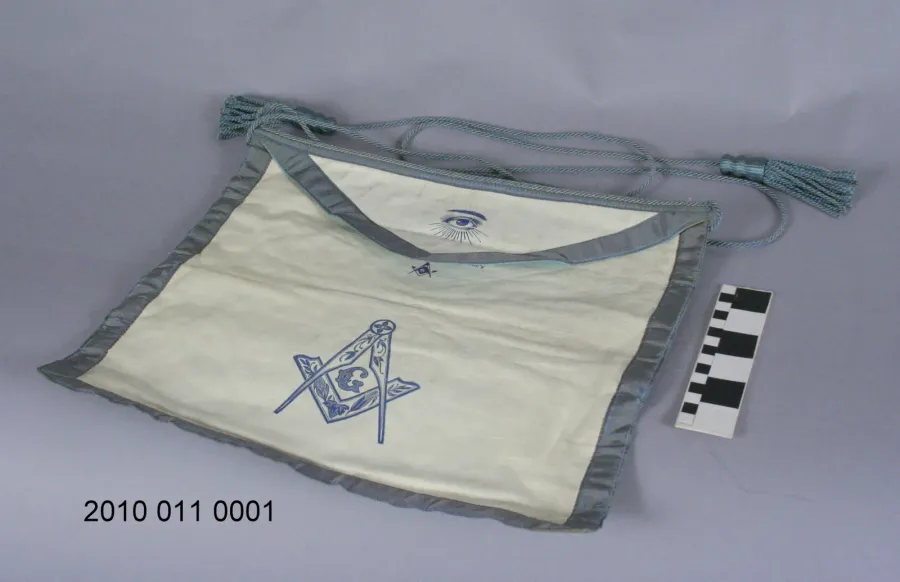
In the late 1700s, the Freemasons adopted the Eye of Providence as one of their official symbols. This is where things get complicated, because it's also where most conspiracy theories begin.
The Masonic use of the eye is actually pretty straightforward. Freemasonry is built on the metaphor of architecture: members are "builders" of a moral and spiritual temple. The All-Seeing Eye, in Masonic symbolism, represents the Grand Architect of the Universe (their non-denominational term for God), who watches over the work of the builders.
The symbol typically appears with the eye inside a triangle, surrounded by glory (rays of light), and sometimes positioned above a truncated pyramid. The pyramid represents the incomplete work of building a just society. The eye above it represents divine oversight of that work.
It's worth noting that the Freemasons didn't invent the Eye of Providence. They borrowed it from Christian art, which had borrowed the concept (though not the exact form) from Egyptian symbolism. Each tradition added its own layer, but the core idea of a higher intelligence that observes and guides remained consistent.
The Great Seal and the dollar bill

In 1782, the United States adopted the Great Seal, and on its reverse side placed an unfinished pyramid with the Eye of Providence floating above it. This is the image that ended up on the back of the one-dollar bill in 1935, making it one of the most widely viewed symbols in human history.
The designers of the Great Seal were not all Freemasons, despite what popular culture claims. Benjamin Franklin was a Mason. Thomas Jefferson and John Adams, the other two members of the original design committee, were not. The eye was chosen primarily for its Christian associations, divine providence watching over the new nation, not for Masonic reasons.
The Latin motto above the eye, "Annuit Coeptis," translates roughly as "He approves our undertakings." The motto below, "Novus Ordo Seclorum," means "A new order of the ages." Put together with the unfinished pyramid and the watchful eye, the message is: we are building something new, it is not yet complete, and a higher power is watching over the project.
That's it. That's the actual meaning. No secret society pulling strings. No hidden blueprint for world domination. Just a young country using a 300-year-old Christian symbol to express hope that God was on their side.
But of course, the conspiracy version is more fun.
The Illuminati myth (and why it stuck)
The Bavarian Illuminati was a real organisation, founded in 1776 by Adam Weishaupt, a law professor in Ingolstadt, Germany. It was a secret society dedicated to Enlightenment values: reason, secularism, and opposition to religious influence on public life. It was suppressed by the Bavarian government in 1785 and effectively ceased to exist.
Here's the thing: there is no evidence that the Illuminati ever used the All-Seeing Eye as their symbol. None. The connection between the Illuminati and the eye was invented much later, primarily by conspiracy theorists in the 20th century who noticed that the eye appeared on both the dollar bill and in Masonic imagery, and who connected dots that weren't actually there.
The myth stuck for several reasons. First, because it's a compelling story. A secret society controlling the world through hidden symbols is more exciting than "a committee of politicians chose a common Christian symbol for their new country's seal." Second, because the eye really is unsettling. Something about being watched triggers paranoia, and it's a short step from "God is watching" to "someone powerful is watching."
Third, and this is the most interesting reason: conspiracy theories about the Illuminati actually increased the symbol's popularity. Every time someone made a YouTube video about "Illuminati symbols hidden in plain sight," they were advertising the eye. Every time a rapper or pop star used the triangle-and-eye imagery in a music video, they were making it cooler. The conspiracy theory became the marketing campaign.
Today, the All-Seeing Eye on jewellery carries an ironic double layer. The wearer knows the conspiracy theory. They also know it's nonsense. But they like the aesthetic of mystery, of hidden knowledge, of being part of something that operates on a level most people don't notice. The eye says: I'm paying attention. Are you?



The Third Eye: Eastern Traditions and Inner Vision
Ajna chakra in Hinduism and Buddhism
While the Western world was developing the Eye of Providence, Eastern traditions were exploring a completely different eye, one that doesn't see outward but inward.
In Hindu and Buddhist traditions, the third eye (associated with the Ajna chakra, located between and slightly above the eyebrows) represents inner vision, intuition, and higher consciousness. It is not a physical eye. It is the capacity to perceive reality beyond what the five senses can detect. For a deeper look at how the Ajna chakra translates into wearable jewellery, the Eastern reading of the eye opens up an entirely separate tradition.
In Hinduism, the god Shiva is depicted with a third eye on his forehead. When Shiva opens his third eye, it can destroy. It burns Kamadeva (the god of desire) to ash when Kama tries to disturb Shiva's meditation. But it also illuminates. Shiva's third eye represents the ability to see through illusion (maya) to the true nature of reality.
In Buddhism, the third eye is associated with enlightenment: the direct perception of truth that comes from deep meditation practice. The Buddha is often depicted with a dot (urna) between his eyebrows, symbolising this awakened sight.
The concept appears in various forms across Taoism, Jainism, and several other Eastern traditions. The details vary, but the core idea is consistent: there is a form of seeing that goes beyond physical vision, and developing this inner sight is one of the highest achievements of spiritual practice.
The pineal gland connection
In the 17th century, French philosopher Rene Descartes proposed that the pineal gland (a small, pinecone-shaped structure deep in the brain) was "the seat of the soul." He believed it was the point where the mind and body interacted.
Modern neuroscience doesn't support Descartes' specific claim, but the pineal gland does have some interesting properties. It produces melatonin, which regulates sleep cycles. It contains light-sensitive cells similar to those in the retina. In some reptiles and amphibians, the corresponding structure (the parietal eye) is literally a photoreceptive organ on the top of the head.
These biological facts, combined with the ancient tradition of the third eye, created a modern narrative: the pineal gland IS the third eye, and it can be "activated" through meditation, diet, or other practices to achieve higher perception.
Whether you take this literally or metaphorically, the connection between the pineal gland and the third eye concept has given the eye symbol additional meaning in modern spiritual and wellness communities. An eye pendant in this context represents not surveillance or divine oversight, but the aspiration to see more clearly: to trust intuition, to perceive what's hidden, to develop awareness beyond the obvious.
Modern spirituality and the third eye
The third eye concept has been enthusiastically adopted by modern spiritual movements, from New Age practices to yoga communities to psychedelic culture. The symbol appears on meditation cushions, yoga studio walls, crystal shop displays, and, increasingly, on jewellery.
In this context, wearing an eye symbol is explicitly about inner vision. It says: I value intuition. I believe there's more to reality than what's immediately visible. I'm working on seeing more clearly.
This is a fundamentally different meaning from the Eye of Providence (which is about being watched) or the Eye of Horus (which is about healing and protection). The third eye tradition is about the wearer's own capacity to see, not about being seen by something else.
The fact that a single symbol, an eye, can carry all three of these meanings simultaneously is part of what makes eye jewellery so appealing. It's a Rorschach test. People see in it what they need to see.
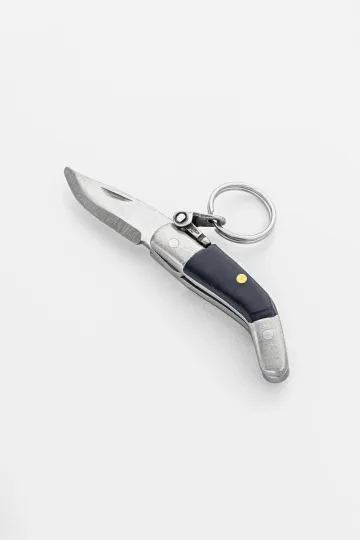
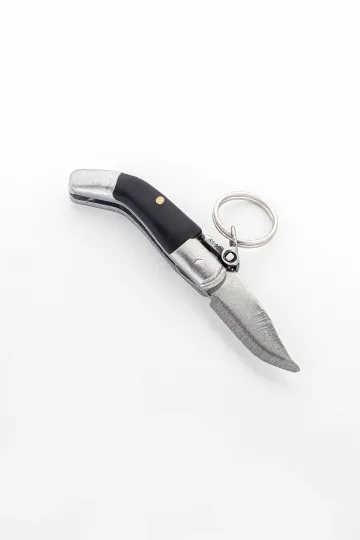
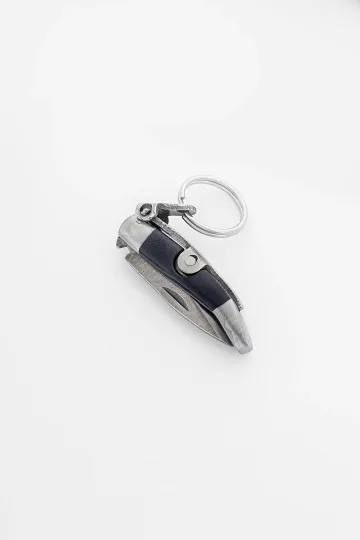
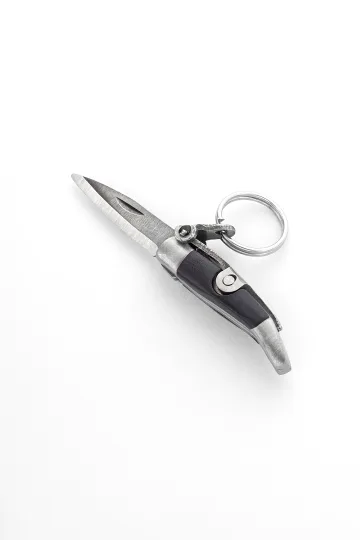
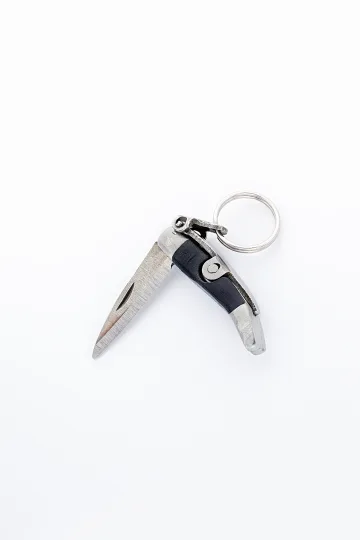
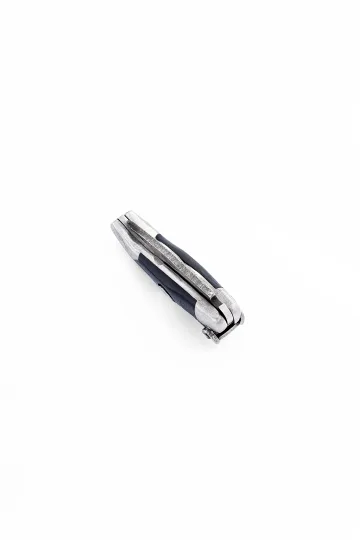
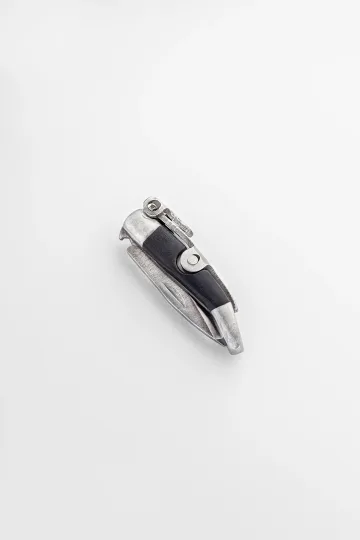
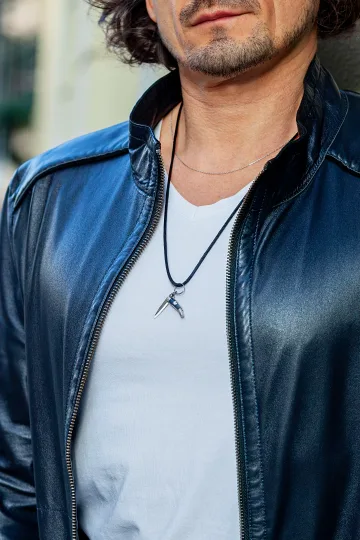
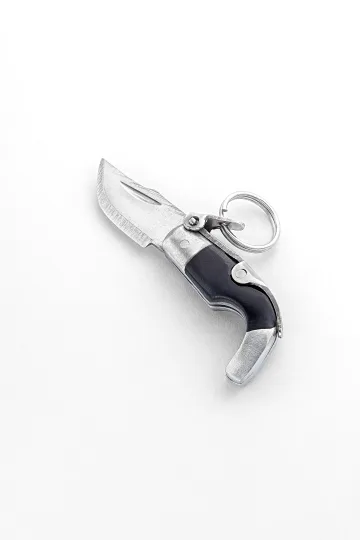
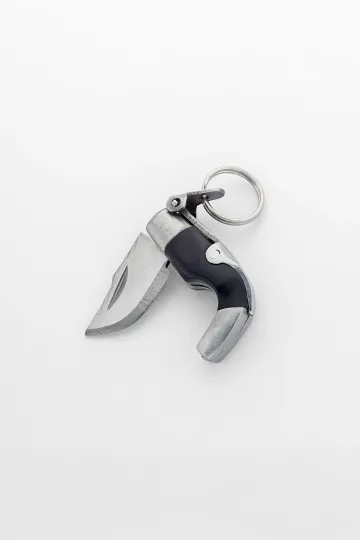
CAPAORA mini knife pendant
The 18th-century Spanish navaja in miniature: 40 mm of stainless steel, a real folding mechanism and a Palanquilla lock that clicks. An affordable gift to remember.
Authentic · Ships from Spain · 14-day returns
All-Seeing Eye vs Evil Eye vs Eye of Horus: What's the Difference
This is one of the most common points of confusion in symbolic jewellery, so let's be clear.
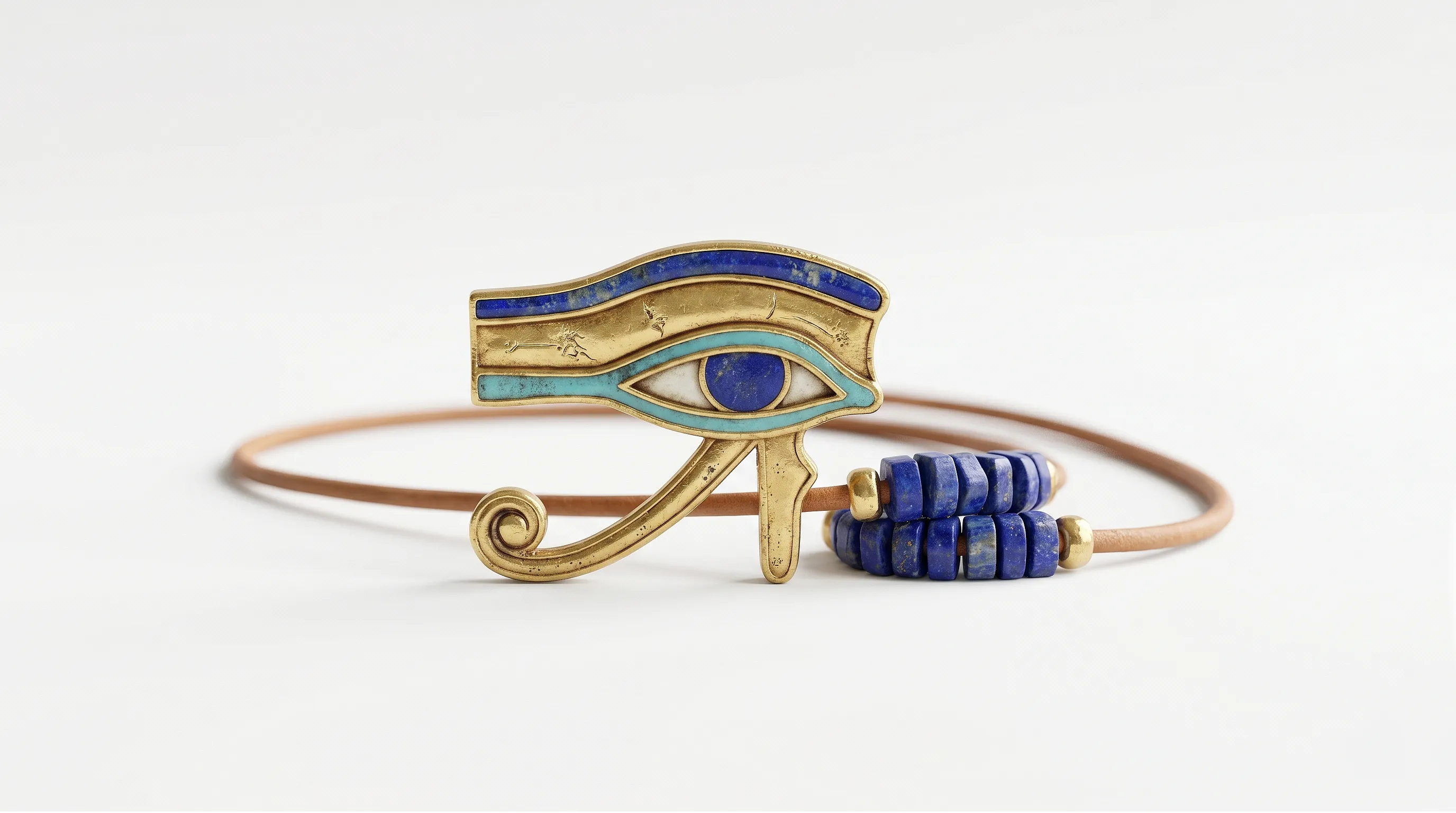
Eye of Horus (Wedjat): Egyptian. Left eye of the falcon god Horus, destroyed and restored. Meaning: healing, protection, restoration of wholeness. Visual: stylised eye with distinctive Egyptian markings below it (representing a falcon's facial markings). The shape is specific and recognisable.
Evil Eye (Nazar): Turkish/Greek/Mediterranean. A curse cast by a malevolent glare, and the amulet that protects against it. Meaning: protection from jealousy and ill will. Visual: concentric circles of blue, white, light blue, and black. The shape is a flat disc or bead. Read more about the nazar and evil eye tradition.
Eye of Providence / All-Seeing Eye: Christian/Masonic/American. An eye (usually in a triangle, often with rays). Meaning: divine omniscience, God's watchfulness, awareness. Visual: realistic or stylised eye inside a triangle.
Third Eye (Ajna): Hindu/Buddhist/New Age. The inner eye of spiritual perception. Meaning: intuition, higher consciousness, inner vision. Visual: varies widely, often a vertical eye or an eye combined with geometric patterns.
These are four distinct traditions with four distinct visual languages and four distinct meanings. They overlap in some places (both Horus and Nazar are about protection; both Providence and Third Eye involve expanded perception) but they are not interchangeable.
In modern jewellery, designers often blend elements from multiple traditions. An eye inside a triangle with Egyptian styling. A realistic eye with rays that could be Providence or could be Third Eye. This blending isn't wrong. It's how symbols evolve. But knowing the distinct origins helps you choose which meaning you want to carry.
| Symbol | Origin | Core meaning | Visual marker |
|---|---|---|---|
| Eye of Horus | Egypt, 3000 BCE | Healing, protection | Falcon markings under eye |
| Evil Eye (Nazar) | Turkey/Mediterranean | Protection from jealousy | Blue concentric circles |
| Eye of Providence | Christianity, 1500s | Divine omniscience | Eye in triangle with rays |
| Third Eye | Hindu/Buddhist | Inner vision, intuition | Vertical eye, Ajna dot |
Leave your email, we'll send your discount code. No spam, unsubscribe anytime.
The code arrives by email, valid on your first order.
The Eye in Pop Culture: From Album Covers to Fashion Runways
The All-Seeing Eye broke out of religious and esoteric contexts a long time ago. It's now one of the most used symbols in music, fashion, film, and street culture.
In music, the eye has been a recurring visual since at least the 1960s. Pink Floyd's iconic prism-and-rainbow cover didn't feature an eye, but their concerts used massive projected eyes as stage visuals. The rolling stone's "Bridges to Babylon" tour featured a massive all-seeing eye. Many modern pop and hip-hop artists have used eye-in-triangle imagery in videos and performances, sometimes as genuine symbolic interest, sometimes as deliberate conspiracy bait (which generates engagement, which is the point).
In fashion, the eye got a major boost from Kenzo, whose "Eye" collection became a brand signature. The Kenzo eye appeared on sweaters, bags, shoes, and accessories, bringing the symbol into mainstream fashion. Other houses followed: Gucci has used eye motifs extensively, and independent designers have made eye jewellery a staple of the symbolic accessories market.
Film and television have turned the eye into visual shorthand for "something bigger is going on." From the Eye of Sauron in Lord of the Rings to the surveillance themes of Mr. Robot to the conspiracy aesthetics of National Treasure, the All-Seeing Eye communicates mystery, power, and the unsettling sense that reality has layers you haven't noticed yet.
In tattoo culture, the eye (particularly inside a triangle) is consistently among the most requested designs. It works at any size, in any style, and it never fully goes out of fashion because its meaning is elastic enough to fit any personal narrative.
What's remarkable is how the symbol maintains its power through all these contexts. A Kenzo sweater and a pyramid on the dollar bill and an Egyptian amulet and a yoga studio poster are radically different contexts. But the eye holds its gravity in each one. It always feels like it means something, even if you're not entirely sure what.
Wearing the All-Seeing Eye: What It Says About You
Who wears it and why
People who choose eye jewellery tend to fall into a few overlapping categories:
The seekers. People drawn to hidden knowledge, esoteric traditions, and the idea that reality has layers worth exploring. They might meditate. They might read about ancient civilisations for fun. They might simply be the kind of person who looks at the surface of things and asks "what else?"
The protected. People who wear the eye for its oldest function: as a guardian symbol. This connects to the Eye of Horus tradition and the broader Mediterranean protective eye culture. They might not articulate it in mystical terms. It just feels right to have an eye watching over them.
The aware. People who value consciousness, attention, and the ability to see clearly through noise and distraction. In a world of information overload and algorithmic manipulation, wearing an eye is a quiet statement: I'm paying attention. I see what's happening.
The aesthetic rebels. People who like the visual power of the symbol: its graphic boldness, its edge, its association with conspiracy and counterculture. They're not necessarily making a spiritual statement. They're making a style statement that happens to carry depth.
The ironic observers. People who wear the Illuminati symbol precisely because they know the conspiracy theory is absurd, and they find humour in wearing the most "loaded" symbol they can find. It's a conversation starter. It's a filter. If someone sees your eye pendant and starts talking about the New World Order, you know something about that person.
How to style eye jewellery
Solo and minimal. A single eye pendant on a medium chain. Clean, direct, unmissable. Works with everything from a black turtleneck to a white t-shirt. The eye doesn't need company to make an impact.
Layered with intention. The eye pairs naturally with other symbolic pieces. An eye pendant with a question mark for the philosophical thinker. An eye with a cross for the spiritually layered. An eye with celestial symbols (moon, stars) for the mystically inclined.
Stacked. Eye ring, eye pendant, eye earrings: the maximalist approach. This works better than you'd think because eye designs vary widely (realistic, geometric, Egyptian-styled, minimalist) so they don't look repetitive when mixed.
Contrast. An eye pendant with sharp tailoring. An eye ring with a delicate bracelet. The symbol has edge, so playing it against softness creates interesting tension.
The gift guide
For the thinker. Someone who reads, questions, and values awareness. An All-Seeing Eye pendant says "I see that you see."
For the protector. Someone you want to keep safe. An eye pendant as a guardian symbol, sent before a journey, a new job, or a challenging life phase.
For the spiritual seeker. Someone into meditation, yoga, energy work, or any practice that values inner vision. A third-eye-styled piece connects to their practice.
For the aesthete. Someone who appreciates bold, graphic, meaningful design. An eye pendant is one of the most striking symbols in jewellery, period.
For the couple. Matching eye pendants. "I see you" as a statement of mutual recognition. Not mainstream romance, but deeply personal.
Pair the eye with other pieces from the mystic symbols collection or explore how it fits within the broader world of symbolic jewellery.
Frequently Asked Questions
What does the All-Seeing Eye actually mean? It depends on which tradition you're drawing from. In Egyptian tradition (Eye of Horus), it means healing and protection. In Christianity (Eye of Providence), it means God's omniscience. In Eastern traditions (Third Eye), it means inner vision and higher consciousness. In modern culture, it often combines all three: awareness, protection, and the aspiration to see beyond the obvious.
Is the All-Seeing Eye an Illuminati symbol? No. The historical Bavarian Illuminati (1776-1785) never used the All-Seeing Eye. The connection was invented by conspiracy theorists in the 20th century. The eye on the US dollar bill is a Christian symbol (Eye of Providence) chosen for the Great Seal in 1782. It predates any conspiracy narrative by centuries.
Is wearing an All-Seeing Eye disrespectful to any religion? The eye appears positively in Christianity, Hinduism, Buddhism, and ancient Egyptian religion. It is not exclusive to any single faith and carries no negative associations in any major tradition. Some very conservative religious groups might object to the Masonic association, but the symbol itself is broadly respected.
What's the difference between the Eye of Horus and the All-Seeing Eye? The Eye of Horus is an ancient Egyptian symbol: the restored left eye of the god Horus, representing healing and protection. It has distinctive falcon-like markings. The All-Seeing Eye (Eye of Providence) is a Christian/Masonic symbol, an eye in a triangle representing God's omniscience. Different origins, different visuals, overlapping meanings.
Can men wear All-Seeing Eye jewellery? Absolutely. The eye is one of the most gender-neutral symbols in jewellery. It appears across cultures and carries no gendered associations. Eye rings, pendants, and cuffs are among the most popular symbolic pieces for men.
What does the triangle around the eye mean? In Christian iconography, the triangle represents the Holy Trinity (Father, Son, Holy Spirit). In Masonic usage, it represents the deity or Grand Architect. In broader modern usage, the triangle adds geometric power to the symbol and distinguishes it from other eye motifs.
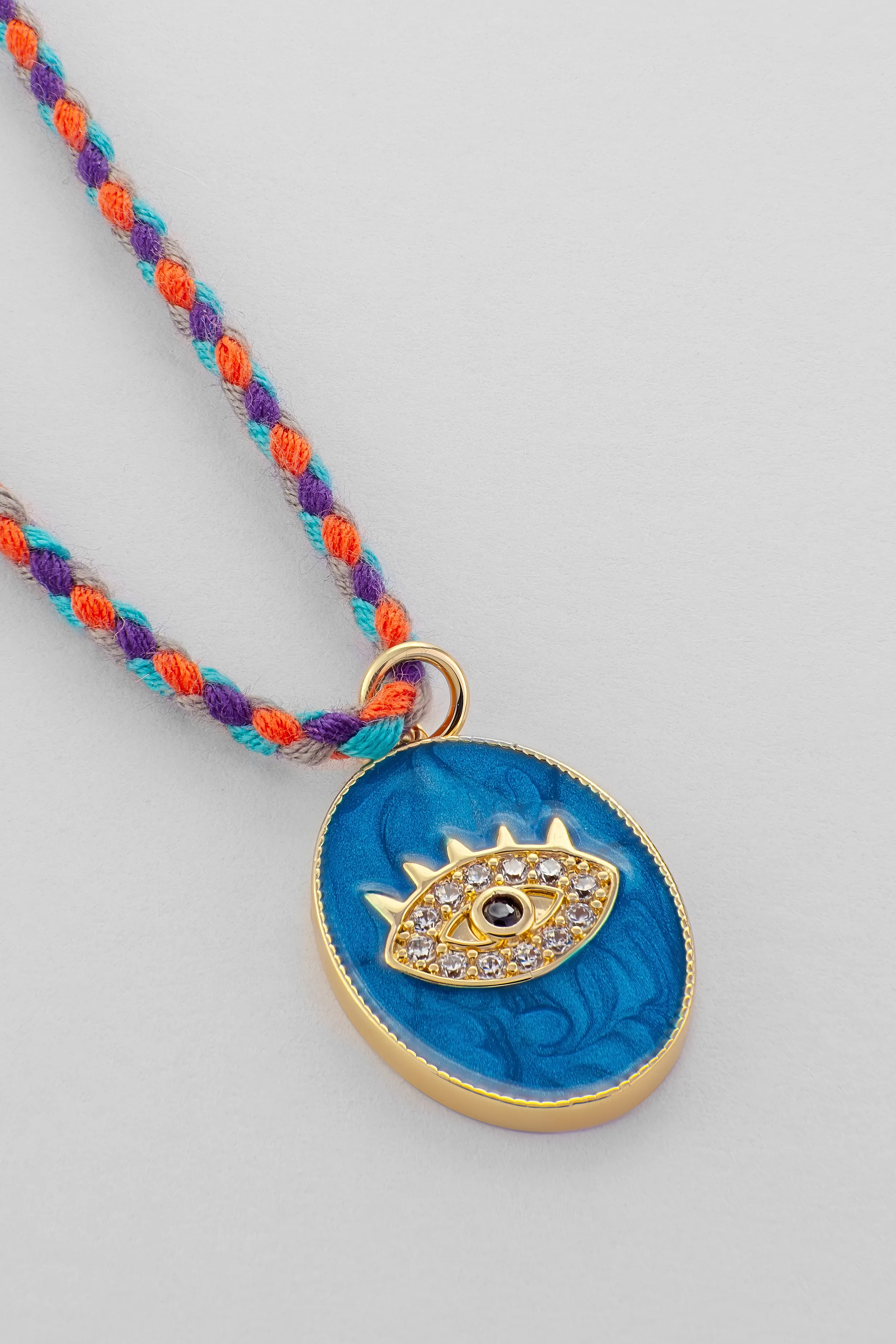
Does the colour of an eye pendant change its meaning? Blue eye motifs tend to connect to the Mediterranean evil eye (nazar) tradition. Gold evokes Egyptian and divine associations. Silver or white reads as modern and minimal. Black or dark metals add an edge or gothic quality. The colour influences the feel but doesn't fundamentally change the symbol's core meanings.
Is the All-Seeing Eye related to the evil eye? They're different traditions. The evil eye (nazar) is about protection from the malicious gaze of jealous people. The All-Seeing Eye is about divine or higher awareness. They both use the eye as a symbol, but their origins, meanings, and visual languages are distinct. Both can coexist on the same person: an evil eye bracelet for protection and an All-Seeing Eye pendant for awareness.
Buying it as a gift? Each one arrives ready to give.
 A branded Zevira box and a little card come with every order.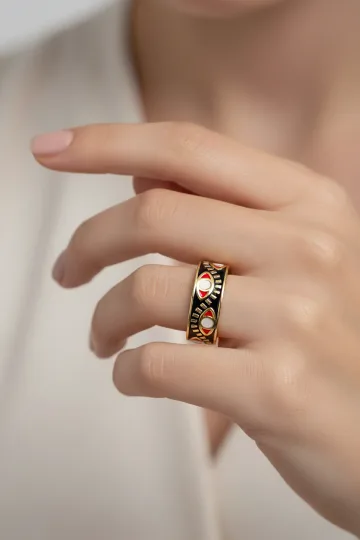







Common Questions
How do I care for an eye pendant and clean it?
Wipe it with a soft cloth every couple of weeks, and refresh tarnished silver in warm water with a drop of washing-up liquid and a soft brush, paying attention to the cut-outs of the eye where grime collects. Take it off before bed and before a shower, and store it dry in its own pouch so it doesn't scratch against other pieces. Skip the harsh chemicals and the toothpaste trick: both strip the oxidised finish out of the relief, and once the dark recesses are polished flat the eye loses the contrast that makes it readable. If you live in a hard-water area, much of southern and eastern England included, dry the pendant properly after any contact with tap water, since limescale leaves a dull film on silver faster than most people expect.
Can I wear it in the shower, the pool or at the gym?
Better to take it off. Chlorine in a pool, sea salt on holiday and sweat at the gym all work slowly at the blackened finish and leave a bloom on silver, while gold goes cloudy from body lotion and shower gel. One session will not ruin anything, but a habit of swimming in your jewellery shortens its life and flattens the relief of the eye. Sports also introduce a plain mechanical risk: a chain caught on a weights bar or a rowing machine handle snaps at the jump ring long before it snaps anywhere else.
How do I tell real silver from a fake?
Look for the 925 mark on the pendant's bail or the clasp of the chain; that is the first honest sign. In Britain you have a further advantage, because silver above the statutory weight threshold sold here must carry a full hallmark struck by an Assay Office in London, Birmingham, Sheffield or Edinburgh, with a sponsor's mark, a fineness mark and an office mark grouped together. Real silver darkens over time, which is ordinary oxidation rather than a fault, while a cheap alloy tends to green the skin and wear through to a different colour underneath. Weight tells you something too: a hollow, weightless pendant is almost never what it claims to be.
Who does an all-seeing eye suit, and what occasion is it right for?
The eye is gender-neutral and sits well on almost anyone: thoughtful people, ironic people, anyone who likes to wear a meaning rather than a logo. As a gift it works before a journey, a new job or a difficult stretch, in the old role of a travelling charm, and it also suits seekers, people who meditate, and anyone drawn to a graphic, architectural piece. Paired eye pendants work as a quiet statement of mutual recognition, which is why couples buy them more often than the symbol's reputation would suggest.
What do you pair an eye pendant with?
On its own, on a mid-length chain over a plain top, it reads cleanest. In layered looks the eye gets on well with other symbols: a question mark, a cross, a moon, a scatter of stars. Keep to one main metal across the set and match the chain length to the neckline, and if you are building a stack, let the eye stay the lead piece while the other charms stay thinner and quieter. Two symbols of equal weight on one neck argue with each other instead of adding up.
Is it true that this is an Illuminati symbol?
No. The historical Bavarian Illuminati lasted under a decade in the late eighteenth century and never used the sign. The link was invented by conspiracy writers in the twentieth century and spread because it explained a confusing world in one picture. The eye on the dollar is the Christian Eye of Providence, chosen for a state seal in 1782, long before any of those theories existed. Worth separating the two layers: the iconography is a documented Christian and civic tradition, while the conspiracy reading is a cultural phenomenon in its own right, interesting as folklore about power and worth studying as such, but not evidence of anything.
Silver and gold jewellery, wedding bands, symbolic pendants, paired sets.
Send a friend a discount code, they save on their first order.
What the eye actually sees
Every symbol in jewellery carries meaning, but most of them settle comfortably into a single lane. Hearts mean love. Anchors mean stability. Stars mean aspiration. The All-Seeing Eye refuses to be that simple.
It is simultaneously ancient and modern. Egyptian and Christian and Hindu and secular. Spiritual and political. Earnest and ironic. It protects and observes. It heals and judges. It represents God and represents the self. It is the most conspiracy-laden symbol in popular culture and also one of the most genuinely meaningful.
That range is exactly why it endures. You can wear the All-Seeing Eye as a twenty-year-old art student who likes the aesthetic and as a fifty-year-old meditator who takes the third eye literally and as a thirty-five-year-old professional who just thinks it looks striking with a blazer. All three are wearing the same symbol. None of them is wrong.
The eye has been watching humanity for five thousand years. It has outlasted the civilisation that created it, survived the religion that adopted it, weathered the conspiracy theories that tried to claim it, and emerged into the 21st century more popular than ever.
Not because it answers questions. Because it asks one.
Are you paying attention?
Wear the symbol, don't just read about it. These are in stock:

About Zevira
Zevira makes jewellery in the artisan tradition of Albacete, Spain. The eye runs through the entire history of the craft, from Egyptian amulets to modern pendants, and we treat it with the same seriousness: every meaning should read in the lines of a piece, not on a price tag.
Here's what you'll find with us on the all-seeing eye theme:
- Eye-in-triangle pendants (Eye of Providence) in 925 silver and gold
- Pieces with the Eye of Horus in Egyptian styling
- Minimalist third-eye pendants for those with a practice
- Eye-motif rings and earrings for stacking and layered looks
- Matching eye pendants as a statement of mutual recognition
- The eye paired with the moon, stars, and other mystic symbols
Every piece can be personalised with engraving, with the option of personal engraving. Sterling 925 silver and 14-18K gold.
Wear the symbol, don't just read about it. These are in stock: