What Symbols on Jewellery Mean: The Complete Guide
Introduction
Last December, a friend of mine opened a small velvet box at her birthday dinner. Inside was a gold pendant, a delicate eye shape with blue and white enamel. She held it up to the light, turning it slowly. "It's beautiful," she said. Then: "But what does it actually mean?"
The table went quiet. Someone said it was an evil eye. Someone else called it a nazar. A third person insisted it was "just a Turkish thing." Nobody could quite explain what it stood for or why people wear it.
That moment stuck with me. We wear symbols every day, on necklaces, rings, bracelets, and half the time we don't really know the story behind them. A tree pendant might mean family roots or spiritual growth or just "I liked how it looked." A heart could be romantic love or self-love or devotion to something sacred.
This guide is for anyone who has ever looked at a piece of jewellery and wondered: what does that actually mean? We'll walk through every major symbol category: protection charms, celestial motifs, nature-inspired designs, ocean symbols, love tokens, mystic emblems, tarot imagery, and cultural icons. For each one, you'll get the history, the meaning, and a link to the full deep-dive article if you want to go further.
Let's start with a quick question.
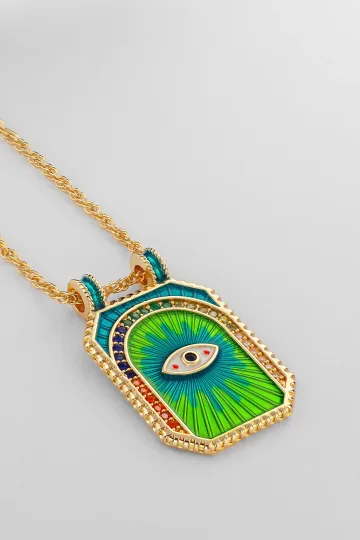
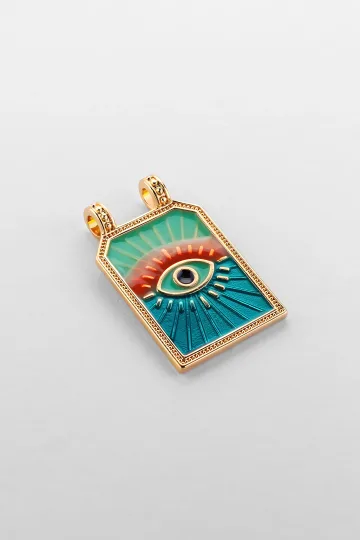
Wear the symbol, don't just read about it. These are in stock:


Why Symbols Matter in Jewellery
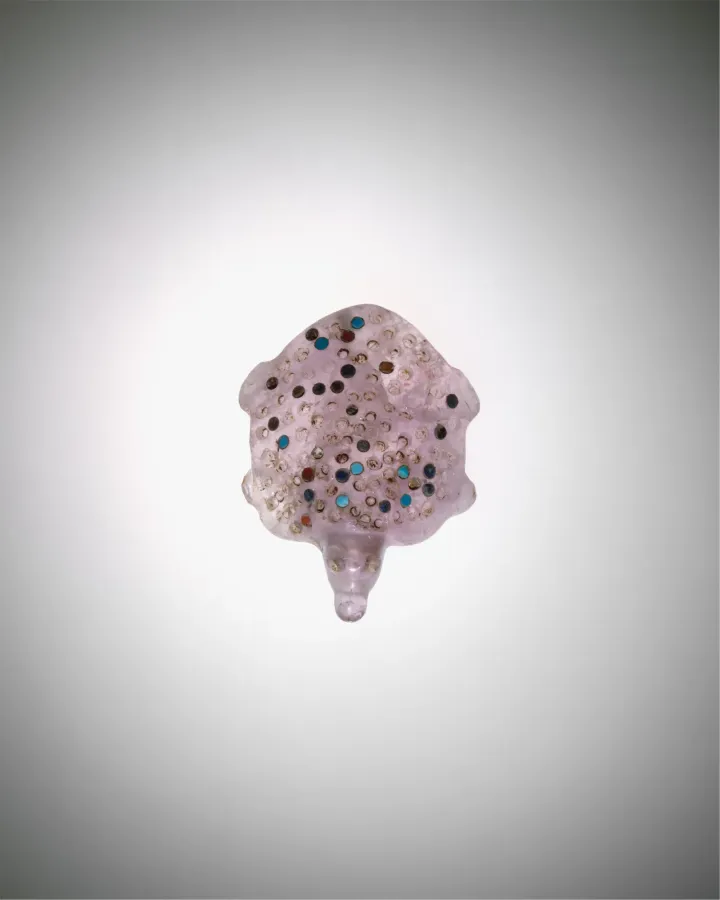
People have worn symbolic jewellery for at least 7,000 years. The earliest known pendants weren't decorative. They were protective. Ancient Mesopotamians carved eyes into stone. Egyptians wore ankhs and scarabs. Romans had their rings engraved with family crests.
The reasons haven't changed much. We still wear symbols for three main reasons.
Identity. A symbol says something about who you are without words. A person wearing a tree of life pendant might value family above all else. Someone with a compass rose might be a traveller at heart. The jewellery becomes a quiet introduction.
Protection. This is the oldest reason. From the blue eye of the nazar to the open palm of the hamsa, protective amulets are found in virtually every culture. Even people who don't consider themselves superstitious often feel a certain comfort wearing one. Call it tradition, call it habit, call it a placebo: it works.
Connection. Symbols link us to cultures, traditions, and people. A sacred heart pendant might connect you to your grandmother's faith. A whale tail might remind you of a trip to the coast that changed your perspective. Symbolic jewellery carries memory.
There's also a practical benefit: conversation. Few accessories start more conversations than an unusual pendant. People notice symbols. They ask about them. And suddenly you're telling the story of why you chose that particular one, and the person across from you is sharing theirs.
And here's something worth knowing: the same symbol can carry different weight depending on where you are, who gave it to you, and what you were going through when you first put it on. A nazar bought on holiday in Istanbul hits differently than one your mother tucked into your luggage before you moved abroad. The object is the same. The meaning isn't.
Now let's look at what these symbols actually mean.
One charm against bare skin outshouts five on a chain rack. Don't turn your throat into a jumble sale.
How and What to Wear Symbolic Jewellery With
A symbolic pendant rarely lives on its own, it slots into an outfit. After years on set I keep coming back to one rule: the quieter the clothes, the louder the symbol speaks. Here is what actually works, by occasion.
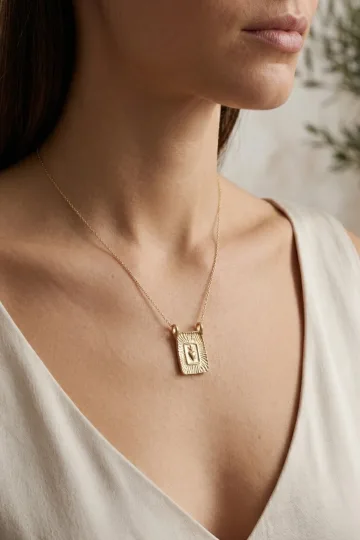
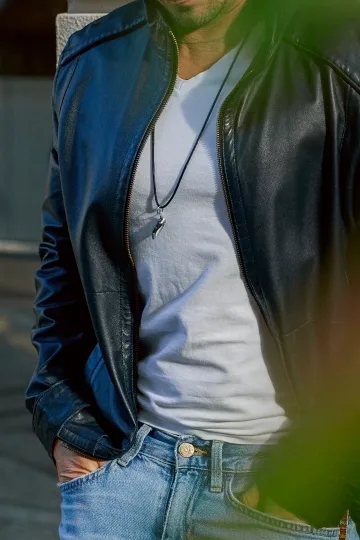
How do I wear a symbol every day? For daytime I recommend a small pendant on a fine chain at 40-45 cm, so it sits just above the neckline of a tee or a plain shirt. Solid linen, cotton and knits in neutral tones (grey, white, sand) give the pendant room. I suggest calm motifs here: tree of life, moon, a simple heart.
Does a symbol work at the office? It does. I choose a V-neck or a shallow round neckline that a medium-length pendant falls into. One accent at the throat, thin stud earrings, and the look is done. Protection symbols like the nazar or hamsa work quietly here, a private talisman under the blouse rather than a display piece.
How do I build an evening look? For evening I allow contrast: an open neckline, dark smooth fabric (silk or velvet) and a larger pendant on a 50 cm chain. Sacred Heart, All-Seeing Eye and the compass rose read brighter at night, especially in warm gold that echoes low light.
How do I mix several symbols at once? For a special occasion I build two or three chains at different lengths and mix metals on purpose: gold with gold for warmth, silver with silver for cool. Combining both, let one metal lead. Largest pendant lowest, small ones higher, at least 5 cm between lengths so they do not tangle.
Who suits what? For a spare, understated nature I suggest one thin symbol. For anyone who likes character and a story on them, several charms at once in the Mediterranean spirit sit better. The rule that never fails: one meaningful lead per look, everything else supports it rather than argues with it.

Turn on your camera, pick earrings, a pendant or a ring, and see the piece on yourself in real time.
Switch items in one tap.
Everything runs in your browser: no photo or video is ever uploaded.
Protection Symbols
Protection is the oldest reason humans started wearing jewellery. Before beauty, before status, there was the need to feel safe. These symbols have been guarding people for centuries, and they're still some of the most popular motifs in modern jewellery.
Nazar (Evil Eye)
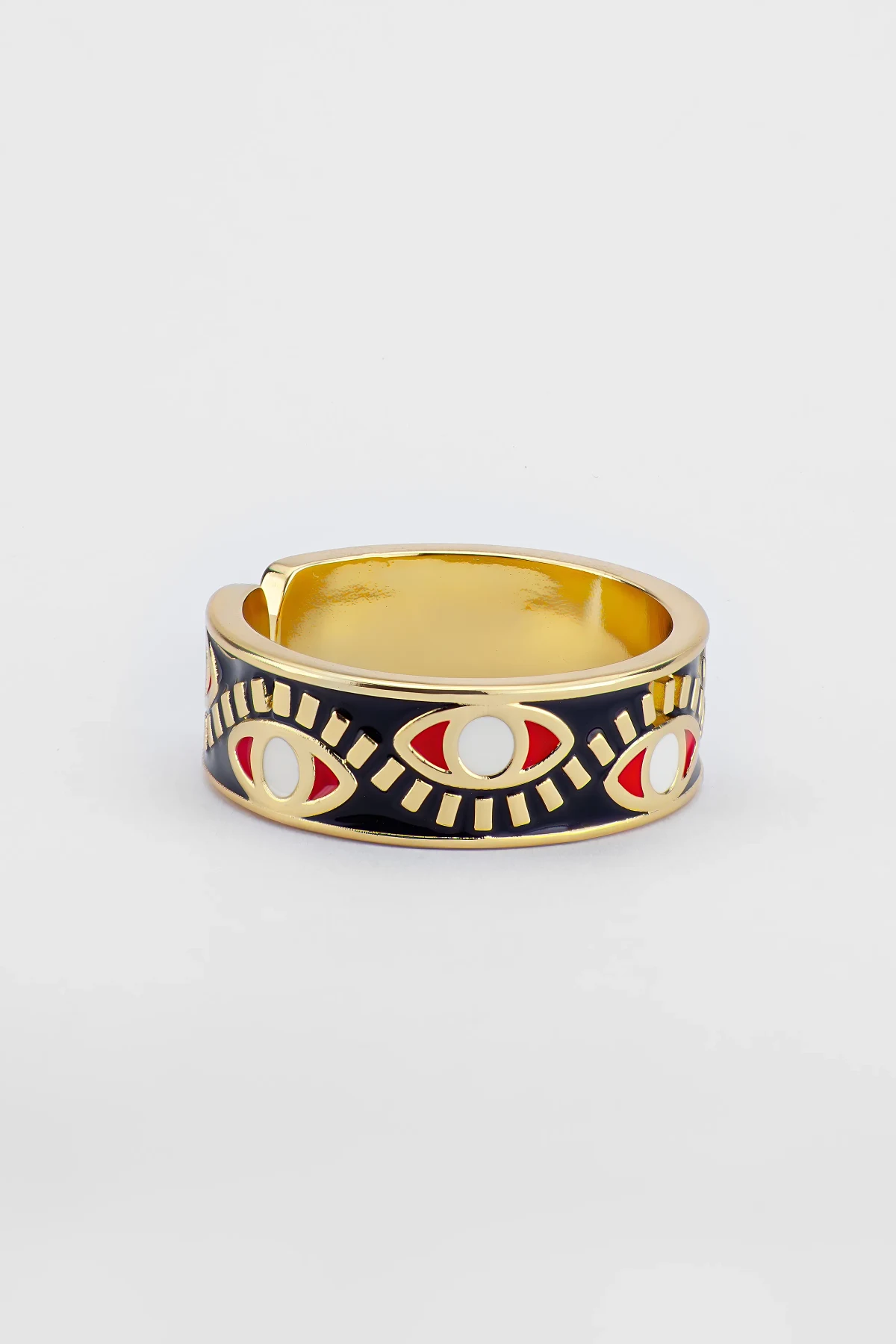
The blue eye. You've seen it on necklaces, bracelets, keychains, and hanging above doorways across Turkey, Greece, and the Middle East. The nazar is one of the most recognisable amulets in the world.
The concept is straightforward: an envious or hostile gaze can bring misfortune. The nazar "stares back," reflecting that energy away from the wearer. It's been in continuous use for over 5,000 years, from Sumerian clay beads to modern gold pendants.
The origin story is fascinating. Ancient Sumerians believed that the eye was the most powerful part of the body, the window through which energy, both good and bad, entered a person. They created the first eye-shaped amulets as a kind of mirror, designed to bounce that energy right back to the sender. The idea spread through Mesopotamia, into Egypt, across the Mediterranean, and eventually around the entire world.
What makes the nazar unusual is its universality. It's not tied to any single religion or culture. Muslims, Christians, Jews, and atheists all wear it. In Turkey, it's as common as a house key. In Greece, you'll find it pinned to babies' clothing. In parts of the Middle East, taxi drivers hang them from rearview mirrors.
The classic design uses four concentric circles: dark blue (protection), white (purity), light blue (the sky), and a black centre (the watchful eye).
Who it's for: Anyone who feels exposed: starting a new job, going through a visible success, or simply wanting a daily layer of reassurance. The nazar is probably the most universally appropriate protective amulet you can wear.
Want the full story? Read our complete guide to the nazar and evil eye.
Hamsa (Hand of Fatima)
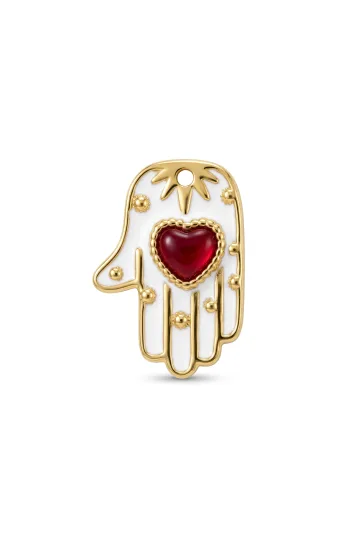
An open palm with an eye in the centre. The hamsa is another ancient protection symbol, this one rooted in Middle Eastern and North African traditions. The name comes from the Arabic word for "five," referring to the five fingers.
While the nazar reflects negativity, the hamsa blocks it. The open hand acts as a barrier, pushing harmful energy away before it reaches you. It's often called the Hand of Fatima in Islamic tradition or the Hand of Miriam in Jewish tradition, but the symbol predates both religions by thousands of years. Archaeological evidence suggests it was already in use in ancient Carthage and Phoenicia, long before the monotheistic religions adopted it.
The hamsa can be worn facing up (fingers spread, catching and stopping negative energy) or facing down (fingers together, inviting blessings and abundance). Both orientations are traditional, and some people choose based on what they feel they need more at a given time.
Many people combine the hamsa with a nazar eye in the centre, a double layer of protection that has become one of the most popular charm combinations worldwide.
Who it's for: People who want active protection: not just deflection, but a real barrier. The hamsa works especially well for those who find themselves in emotionally intense environments or who absorb other people's energy easily.
Explore the full history in our hamsa and Hand of Fatima guide.
Cornicello (Italian Horn)
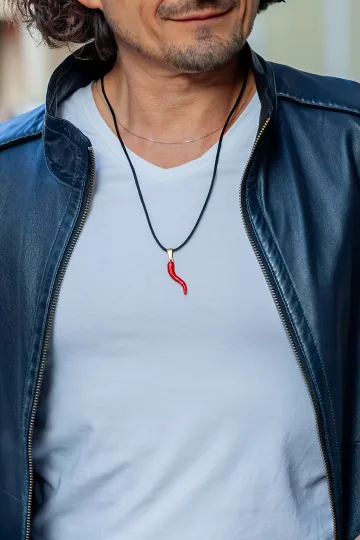
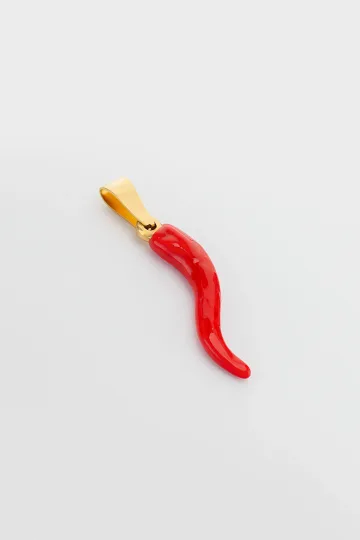
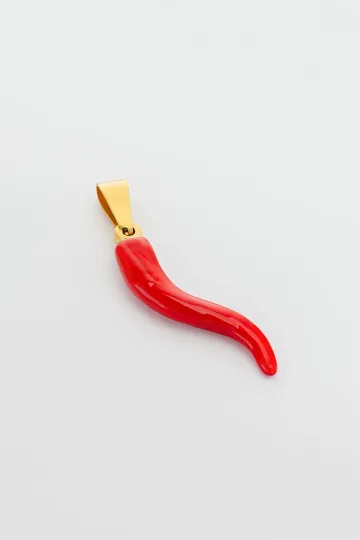
A small, twisted horn shape, usually in red or gold. The cornicello (also called corno or cornetto) comes from ancient Italian folk tradition and is still wildly popular in southern Italy.
The shape represents a chili pepper or an animal horn, and its protective power comes from its pointed tip, which is believed to pierce and destroy negative energy. In Italian culture, it's specifically associated with protection against the malocchio (evil eye) and with good luck.
The cornicello has roots going back to Neolithic Italy. Hunters wore animal horns around their necks to invoke the strength and virility of the creatures they hunted. Over time, the practice evolved from literal horns to stylised, miniature versions. By the time of the Roman Empire, the cornicello was already recognisable in something close to its modern form.
The cornicello is also linked to lunar energy and fertility, which is why it's traditionally given to newlyweds and expectant mothers. In Naples, you'll still see men reach for their cornicello when they hear bad news or feel someone has given them the malocchio. There it works as a reflex.
Who it's for: People who appreciate the earthier, more visceral side of protection magic. The cornicello is particularly popular with those who have Italian heritage or a connection to Mediterranean culture, but its meaning is universal.
Read the full story in our cornicello guide.
Mano Figa (Italian Fig Hand)
Less well-known internationally but deeply rooted in Italian and Portuguese folk tradition, the mano figa is a closed fist with the thumb pushed between the index and middle fingers. It's one of the oldest protective gestures in the Mediterranean world.
The symbol is associated with fertility, sexual energy, and the power to ward off the evil eye. In Brazil (where it arrived with Portuguese colonists), the figa is everywhere: keychains, dashboard ornaments, and of course, jewellery. In Italy, it sits alongside the cornicello as a trusted guardian against negativity.
As a pendant, the mano figa is bold and unmistakable. It tends to attract people who appreciate folk traditions and aren't afraid of symbols with a bit of edge.
Cross & Saint Benedict
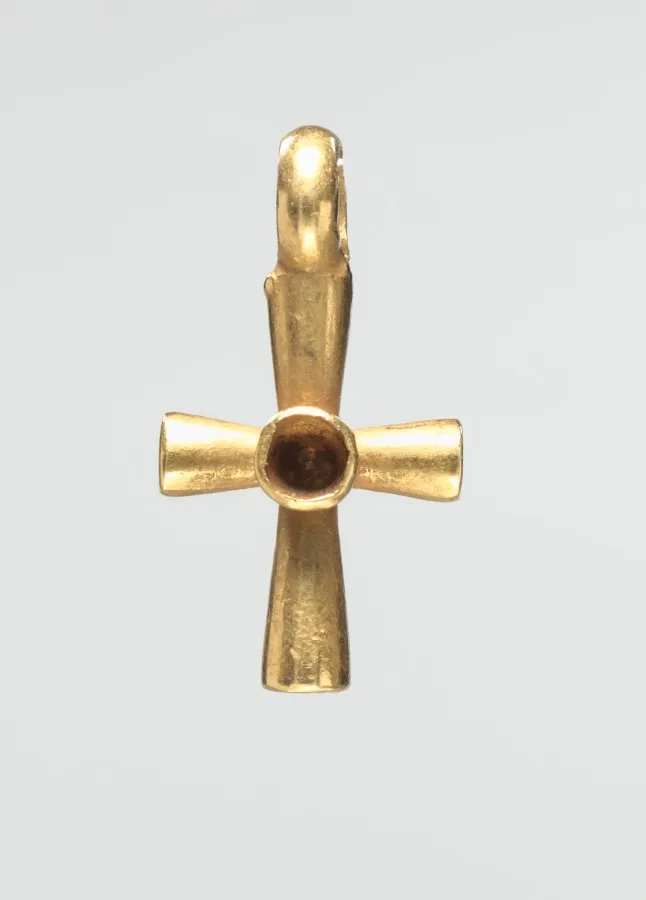
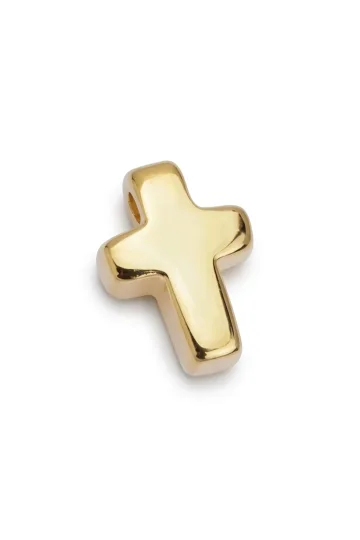
The cross is perhaps the most recognised symbol in the Western world. In jewellery, it can represent faith, heritage, or simply a connection to tradition. Many people wear crosses not as a statement of belief but as a link to family or culture.
The Saint Benedict medal adds a layer of specific protective symbolism. It features a cross surrounded by Latin abbreviations that represent prayers against evil. The letters on the medal (C.S.P.B., C.S.S.M.L., N.D.S.M.D.) stand for phrases like "Crux Sacra Sit Mihi Lux" (May the Holy Cross be my light) and "Non Draco Sit Mihi Dux" (Let not the dragon be my guide). For centuries, it has been one of Catholicism's most powerful protective emblems.
The medal dates back to at least the 11th century, though the specific arrangement of letters we know today was standardised around 1880. What makes it fascinating is that it's worn by people far beyond the Catholic faith. Many simply appreciate the weight of centuries of protective intent concentrated in a single small object.
Both symbols work beautifully as pendants, and they pair naturally with other protective charms.
Who it's for: Anyone connected to Christian tradition, whether actively practising or culturally. Also popular with people who appreciate the aesthetic of religious iconography regardless of personal belief.
How Protection Symbols Differ Across Mediterranean Cultures
Here's something interesting: the same basic fear (the evil eye, negative energy from others) produced very different protective responses depending on geography.
In Turkey, the solution is the nazar, a reflective, watchful eye that sends negativity back to its source. The approach is essentially optical. You fight a gaze with a counter-gaze.
In Greece, they call it mati, and the protection rituals go further than just wearing an amulet. There's a specific prayer (xematiasma) that older women perform to diagnose and remove the evil eye. The jewellery piece is one part of a larger system.
In Italy, the response splits into two: the cornicello (a passive shield, worn constantly) and the mano cornuta gesture (an active ward, made with the hand when you feel threatened). Italians also have the malocchio diagnosis ritual involving olive oil and water. If the oil drops spread in the water, someone has given you the evil eye.
In Spain and Latin America, protection often takes a religious form: the Saint Benedict medal, the Sacred Heart, the miraculous medals of various saints. The approach is intercession: you're not deflecting energy yourself, you're calling on a higher power to do it.
In the Middle East and North Africa, the hamsa dominates. But the specifics vary. In some regions, the hamsa is always blue. In others, red. In some traditions, it must be gifted, never bought. In others, buying your own is perfectly fine.
The point is: every Mediterranean culture recognises that other people's envy and negativity can cause harm. They just developed different tools for the same job. And in modern jewellery, we have the freedom to combine them all.
Upload a photo of your pet, someone you love, or an object. We'll build a 3D model and hand-cast it in pewter.




Celestial Symbols
Look up. The sun, moon, and stars have been inspiring jewellery makers since the Bronze Age. Celestial symbols carry some of the most universal and instantly understood meanings in all of human culture.
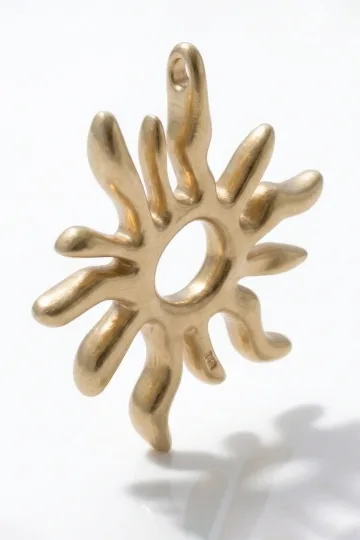
The Sun
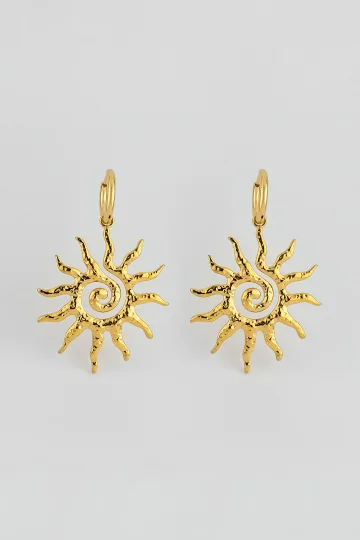
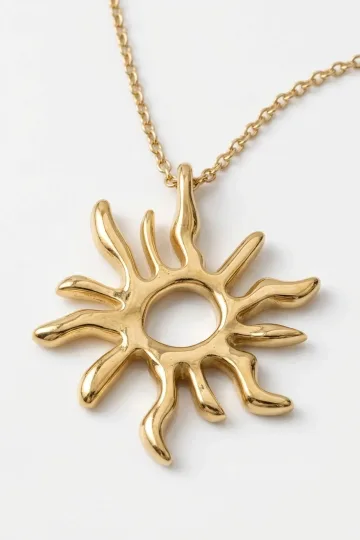
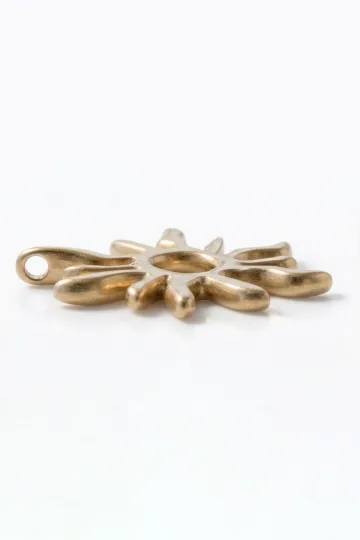
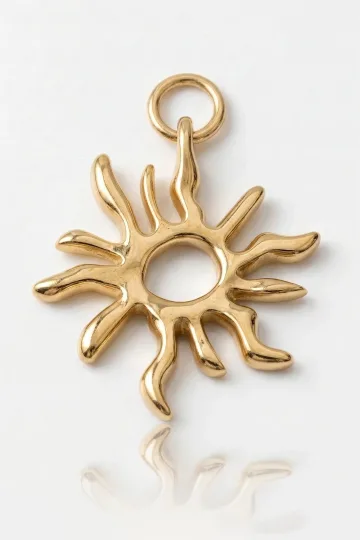
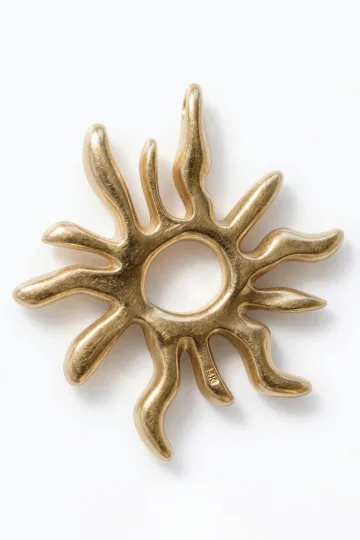
Power, vitality, life itself. The sun as a jewellery motif represents energy, confidence, and warmth. In ancient Egypt, the sun disc was associated with Ra, the supreme deity. In Aztec culture, the sun was quite literally the centre of everything. The Greeks had Helios driving his chariot across the sky each day, while Hindu tradition links the sun to Surya, the source of all life.
As a pendant, the sun tends to appeal to people who see themselves as sources of energy: the ones who light up a room, who lead, who bring warmth to others. It's also a popular choice for people going through a period of renewal or personal growth. A new chapter. A fresh start.
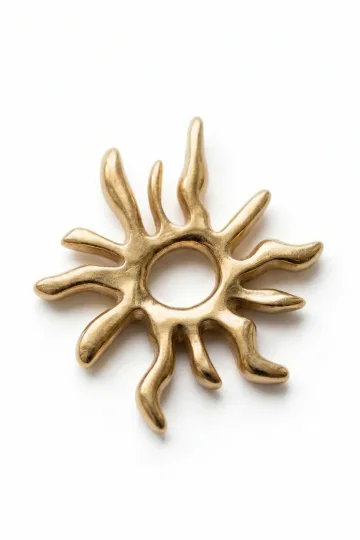
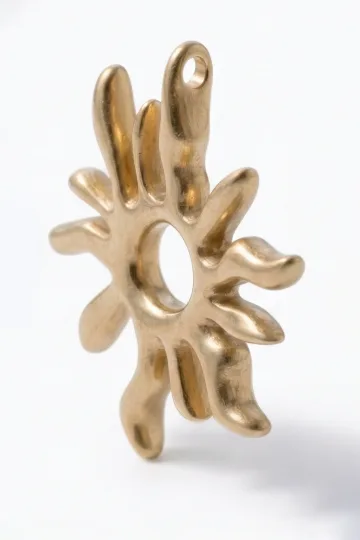
Sun pendants range from minimalist rays to elaborate designs with faces and ornate borders. The symbol works in gold and gold-plated metals especially well, since the warm tones echo the meaning.
Who it's for: Extroverts, leaders, optimists. People who've come through a dark period and want to mark the return of light. Also a strong choice for anyone born under a fire sign (Aries, Leo, Sagittarius) who connects with solar energy.
The Moon
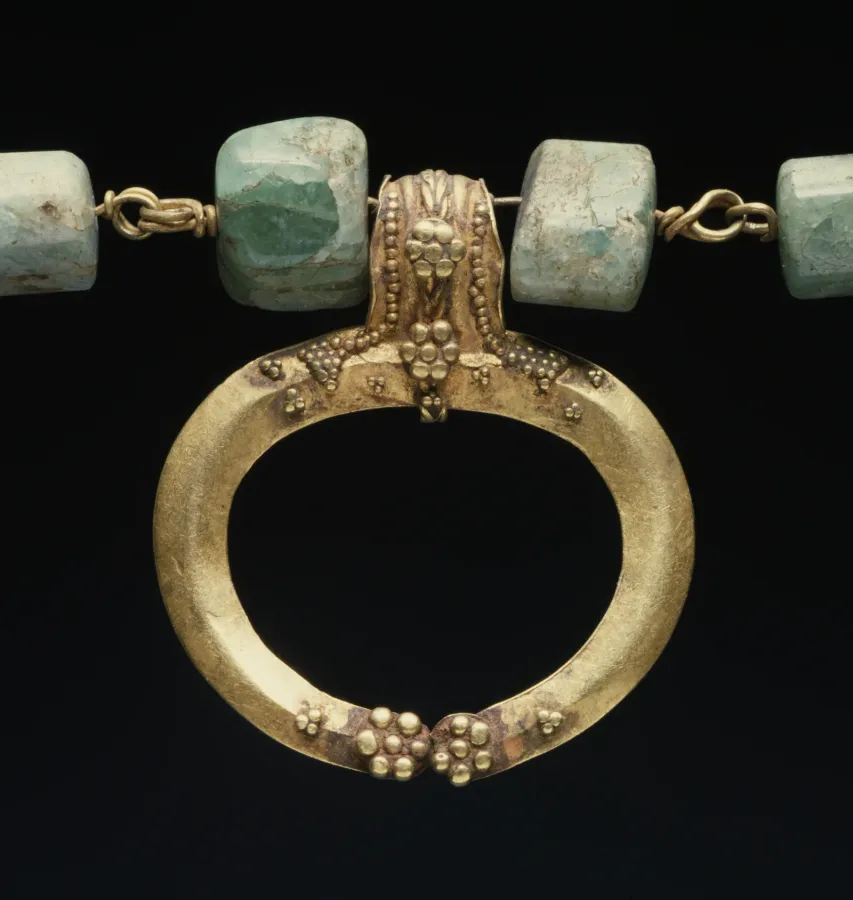
Where the sun is energy, the moon is intuition. Lunar symbols represent cycles, feminine power, reflection, and the mysterious side of life. The crescent moon in particular has been a jewellery staple for millennia.
Different moon phases carry different meanings:
- Crescent: new beginnings, intention-setting, growth
- Full moon: completion, clarity, abundance
- Half moon: balance between light and dark, decision-making
The moon's connection to cycles makes it resonate with anyone who has experienced the ebb and flow of life. It reminds us that dark phases are temporary, that fullness follows emptiness, and that each phase has its own quiet beauty.
The moon is a popular choice for people who trust their instincts, who appreciate quiet strength over loud confidence. It's also deeply tied to ideas of feminine energy, though that doesn't mean it's only for women. Plenty of men's jewellery features lunar motifs.
Who it's for: Intuitive people, night owls, anyone who identifies with the yin side of life. People navigating transitions particularly connect with crescent moons.
Stars
Stars represent guidance, hope, and destiny. The North Star (Polaris) has been a navigation symbol for centuries, a fixed point that helps travellers find their way. As a jewellery motif, stars carry that same idea: direction, purpose, and the sense that you're heading somewhere meaningful.
A star pendant can mean different things depending on the design. A single star often represents personal destiny or a guiding principle. Multiple stars suggest abundance or a family constellation. A shooting star implies a wish, a dream, or a fleeting moment worth remembering. A five-pointed star has associations with balance and the five elements, while a six-pointed star carries deep spiritual significance across multiple traditions.
Who it's for: Dreamers, planners, people with a sense of destiny. Stars are also wonderful for parents who want to represent their children: one star per child, forming their own constellation.
For the full deep-dive into celestial motifs, read our sun, moon, and stars jewellery guide.
Customer reviews
Zevira is a real jewellery shop. Genuine payments, deliveries and customer thank-yous.
🥰🥰🥰 gracias

Ok, ¡gracias! 🙂

Nature Symbols
Nature-inspired jewellery connects us to the living world. These symbols tend to carry meanings around growth, transformation, and the cycles of life.
Tree of Life
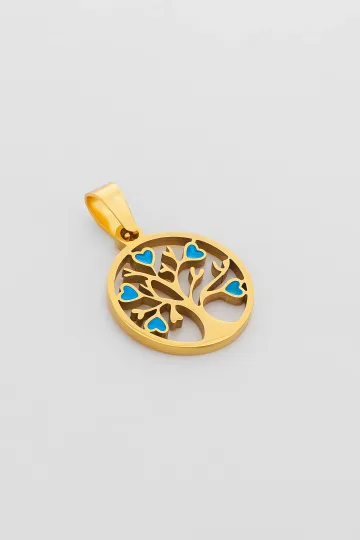
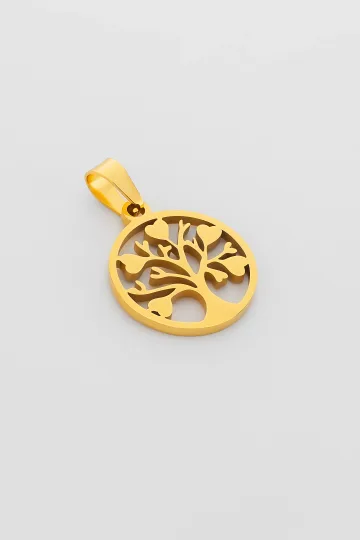
This might be the single most meaningful symbol in jewellery. The tree of life appears in Norse mythology (Yggdrasil), Celtic tradition, Kabbalah, Christianity, Islam, and dozens of other belief systems. The core meaning is always the same: connection.
Roots represent ancestry and grounding. The trunk represents strength and the present moment. Branches represent growth, family, and reaching toward something higher.
What's remarkable about the tree of life is how it functions as a kind of universal family portrait. Each branch can represent a family member, each root a generation gone before. Some people choose a tree of life pendant when they become parents, marking the moment their family literally grew a new branch.
People choose tree of life jewellery for many reasons: to honour family, to mark a new chapter, to represent personal growth, or simply because the image of a spreading tree feels right to them. It's one of those symbols that works on multiple levels at once.
Who it's for: Family-oriented people, new parents, anyone going through a grounding phase. Also perfect for people who feel scattered and want a symbol that represents being rooted.
Our full guide covers the tree of life across every culture and tradition: tree of life meaning and guide.
Leaves & Acorns
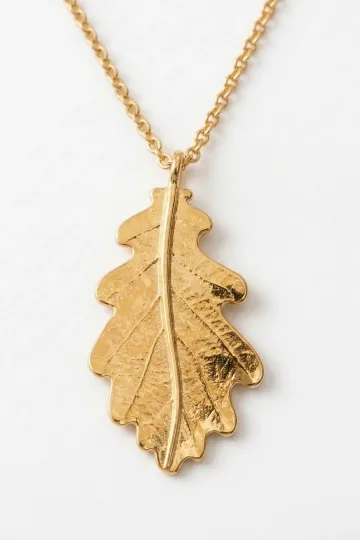
A single leaf represents renewal, freshness, and the cyclical nature of life. Different leaves carry different shades of meaning. An oak leaf suggests endurance, while a delicate fern frond implies resilience and grace. An olive leaf speaks to peace, while a laurel leaf carries echoes of victory and achievement.
The acorn is a particularly powerful symbol. It's small, humble, and easy to overlook. But inside it carries the blueprint for something massive. "Great oaks from little acorns grow." That proverb captures the essence perfectly. Acorn pendants are popular gifts for people starting something new: a business, a family, a personal transformation.
Who it's for: People at the beginning of something. Entrepreneurs, expectant parents, students heading to university. The acorn says: "You're small now, but everything you need is already inside you."
Bees & Butterflies
Two of nature's great transformers.
The bee represents community, hard work, and sweetness. In ancient Egyptian culture, bees were associated with royalty. In Celtic tradition, they were messengers between worlds. Napoleon adopted the bee as his personal emblem, representing industry and collective effort. Today, bee jewellery often carries an environmental message too, a nod to the importance of pollinators and ecosystems.
The butterfly is transformation incarnate. Caterpillar to chrysalis to winged creature: the metaphor writes itself. What people sometimes forget is how brutal the transformation actually is. Inside the chrysalis, the caterpillar essentially dissolves before reforming into something entirely new. That detail gives butterfly jewellery a deeper edge. It's not about easy, pretty change. It's about surviving the complete dismantling of who you were. Butterfly pendants and earrings are classic gifts for people going through major life changes: graduations, recovery, new directions.
Who it's for: Bees suit team players, hard workers, community builders. Butterflies suit survivors, reinventors, anyone who has been through something difficult and come out transformed.
For more nature-inspired symbolism, see our complete nature symbols guide.
Ocean Symbols
The ocean covers 70% of the planet. It's no surprise that sea-inspired symbols carry some of the deepest and most emotional meanings in jewellery.
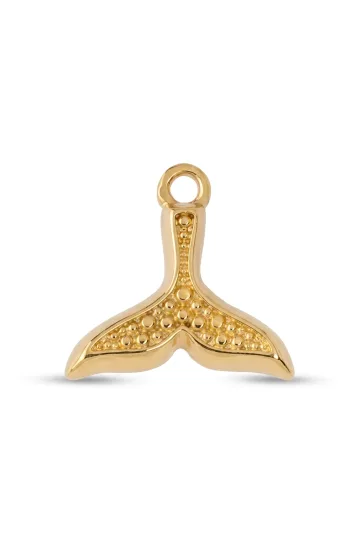
Whale Tail
Freedom, depth, and emotional intelligence. The whale tail (or fluke) has become an increasingly popular jewellery motif, especially among people who feel a connection to the ocean.
Whales are remarkable creatures. They communicate across vast distances, they dive deeper than almost any other mammal, and they travel thousands of miles on instinct alone. A whale tail pendant captures all of that: the courage to go deep, the freedom to roam, and the ability to navigate by feeling rather than maps.
In Maori culture, the whale tail (or "muri paraoa") is a symbol of speed, strength, and protection of the family group. In coastal communities around the world, spotting a whale tail breaking the surface is considered a sign of good luck.
Who it's for: Ocean lovers, deep thinkers, free spirits. People who make decisions from the gut rather than the spreadsheet.
Anchor
Stability in rough waters. The anchor is one of jewellery's most straightforward symbols: something that holds you steady when life gets turbulent. It represents security, groundedness, and commitment.
Historically, the anchor was also a secret symbol among early Christians, a disguised cross that could be worn without persecution. That double meaning, faith hidden in plain sight, gives the anchor an extra layer of depth. The anchor also appears in nautical tattoo tradition, where sailors would earn one after their first Atlantic crossing, making it a mark of experience and survival.
Anchor jewellery is a popular gift for couples ("you're my anchor"), for graduates heading into uncertain waters, and for anyone who values stability above all else.
Who it's for: Grounded people. The person in the friend group everyone comes to for advice. Partners who provide stability. Also fitting for anyone who's been through chaos and chosen to plant themselves firmly.
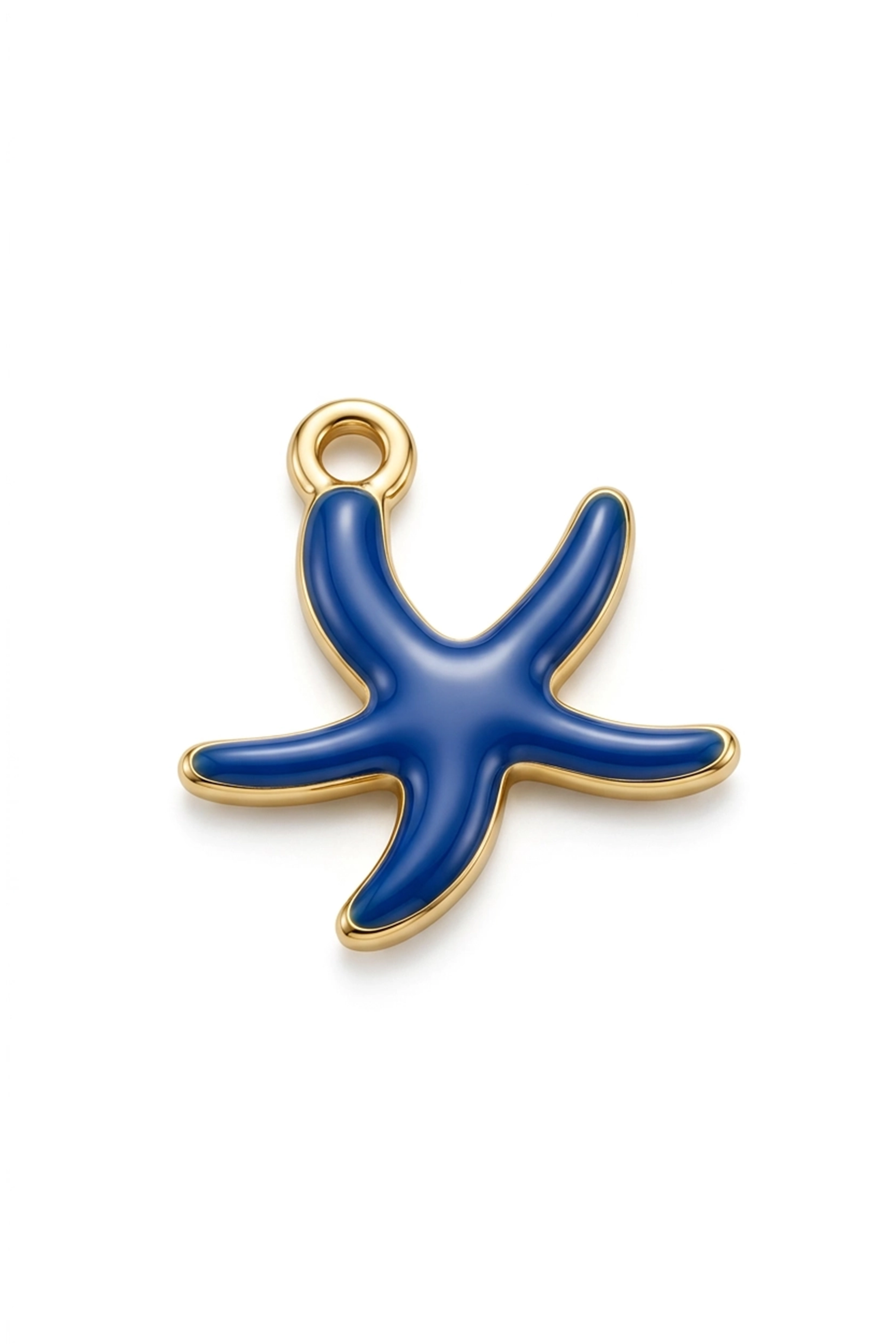
Seahorse
Patience, persistence, and going against the current. The seahorse is a quietly powerful symbol. These creatures move slowly, bond for life (in some species), and the males carry the young, overturning expectations at every turn.
A seahorse pendant represents patience and the courage to do things differently. It's for the person who doesn't follow the crowd, who takes their time, who values depth over speed. In ancient Greek mythology, seahorses pulled Poseidon's chariot, so there's also an element of hidden power beneath a gentle exterior.
Who it's for: Nonconformists, patient strategists, people who do things at their own pace and make no apologies for it.
Dive deeper into ocean symbolism in our ocean jewellery symbols guide.





Love & Heart Symbols
Love is the most universal human experience, and the symbols we've created to represent it are some of the oldest and most diverse in jewellery.
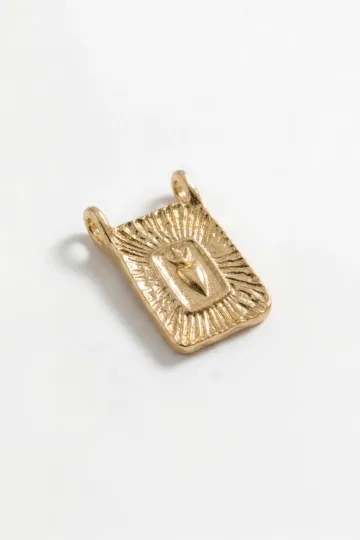
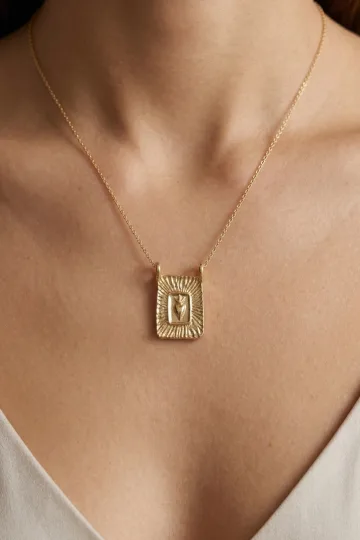
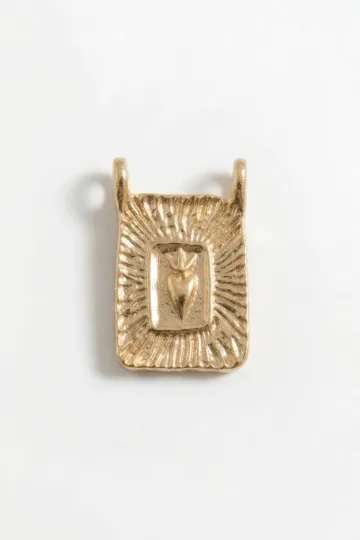
Sacred Heart
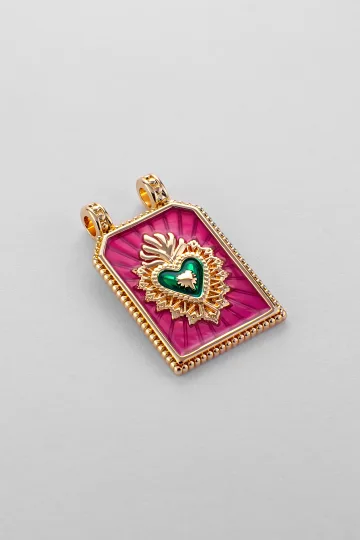
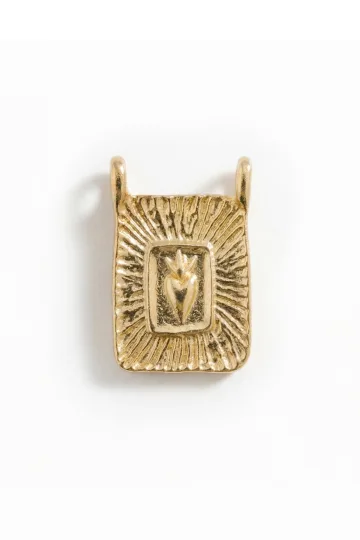
A heart engulfed in flames, often surrounded by thorns and topped with a cross. The Sacred Heart is one of the most visually striking symbols in all of jewellery. It originated in Catholic devotional art, representing Christ's divine love and sacrifice.
But over the centuries, the Sacred Heart has evolved beyond its religious roots. Today, many people wear it as a symbol of passionate, consuming love, the kind that burns and endures. It represents devotion without limits, love that survives pain, and a heart that stays open despite everything.
The thorns around the Sacred Heart aren't purely about suffering. They represent the idea that real love has edges. It can hurt. It requires sacrifice. But the flames show that love burns through those obstacles anyway. That's a message that resonates far beyond any single religious tradition.
In Latin American culture, the Sagrado Corazon has deep roots in folk art, tattoo culture, and personal iconography. As jewellery, it makes a bold, emotional statement.
Who it's for: Passionate people. Those who love hard and aren't afraid of the consequences. People who've been hurt and chose to keep their hearts open.
Read the full story: Sacred Heart meaning guide.
Love Lock
The love lock tradition started on bridges in Paris, Rome, and Seoul, where couples would attach a padlock and throw away the key. As jewellery, the lock symbol represents commitment, security in love, and the idea of two people choosing each other permanently.
A lock pendant says: "This is sealed. This is certain." It pairs beautifully with a key pendant worn by a partner. Together, they complete the meaning.
Who it's for: Committed couples, people who value security in relationships, romantics who believe in forever.
Hearts
The heart shape is so universal that it barely needs explanation. But hearts in jewellery carry surprising variety in their meanings.
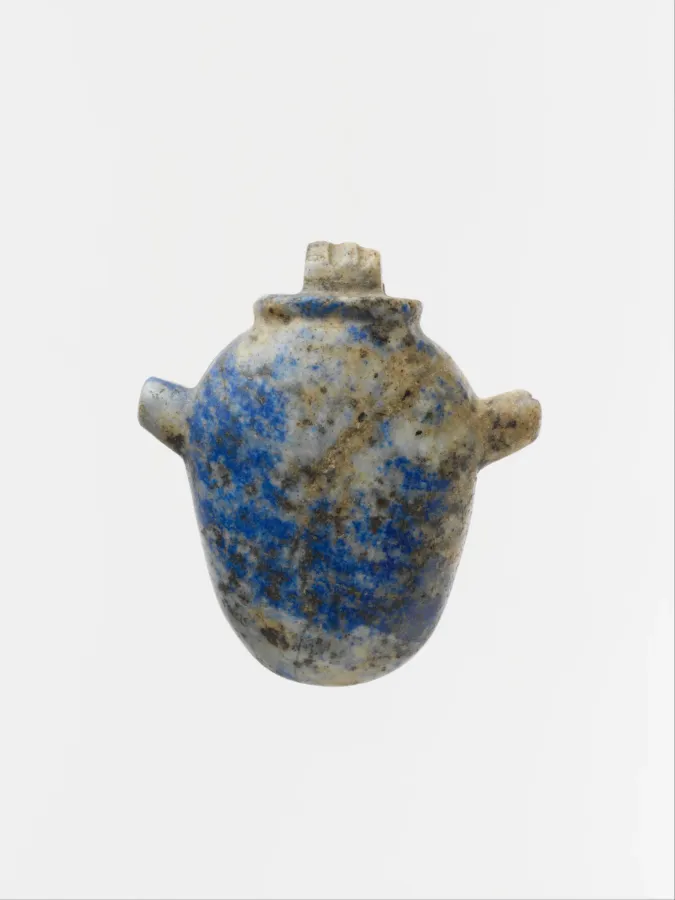
A simple heart pendant is a declaration of love, whether romantic, familial, or self-directed. A heart with wings suggests freedom in love. An anatomical heart (realistic, not stylised) appeals to people who value authenticity over romance. A broken heart mended with gold (inspired by the Japanese art of kintsugi) represents healing and the beauty of imperfection.
Double hearts represent partnership. A heart with an arrow recalls Cupid and the sudden, unexpected nature of falling in love. A heart with a key suggests that someone holds access to your deepest self.
Who it's for: Everyone. That's the beauty of the heart. The specific design narrows the meaning to match whoever wears it.
For the complete exploration of love symbols, see our love symbols in jewellery guide.
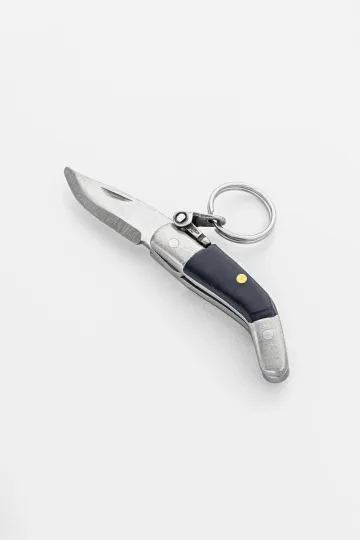
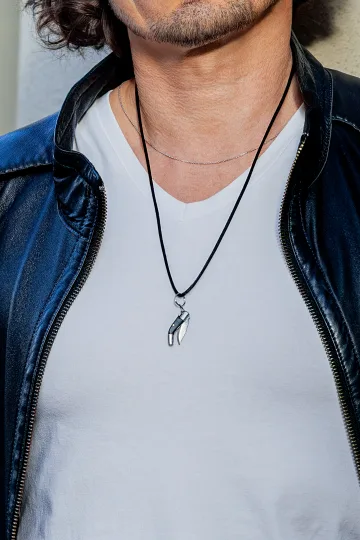
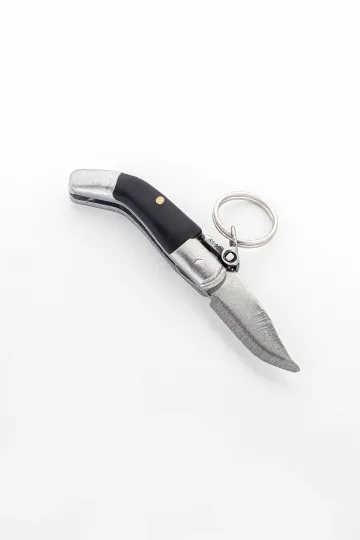
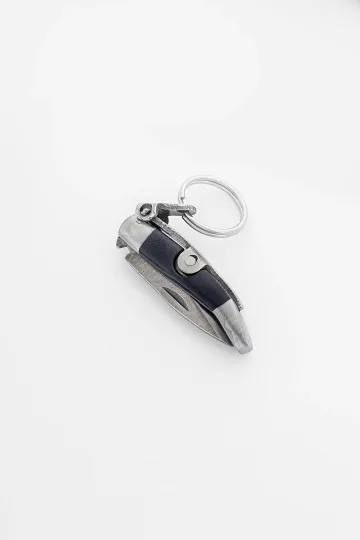
CAPAORA mini knife pendant
The 18th-century Spanish navaja in miniature: 40 mm of stainless steel, a real folding mechanism and a Palanquilla lock that clicks. An affordable gift to remember.
Authentic · Ships from Spain · 14-day returns
Mystic Symbols
Some symbols reach beyond the everyday into the realm of mystery, wisdom, and spiritual seeking. These are for people drawn to the unknown.
The All-Seeing Eye
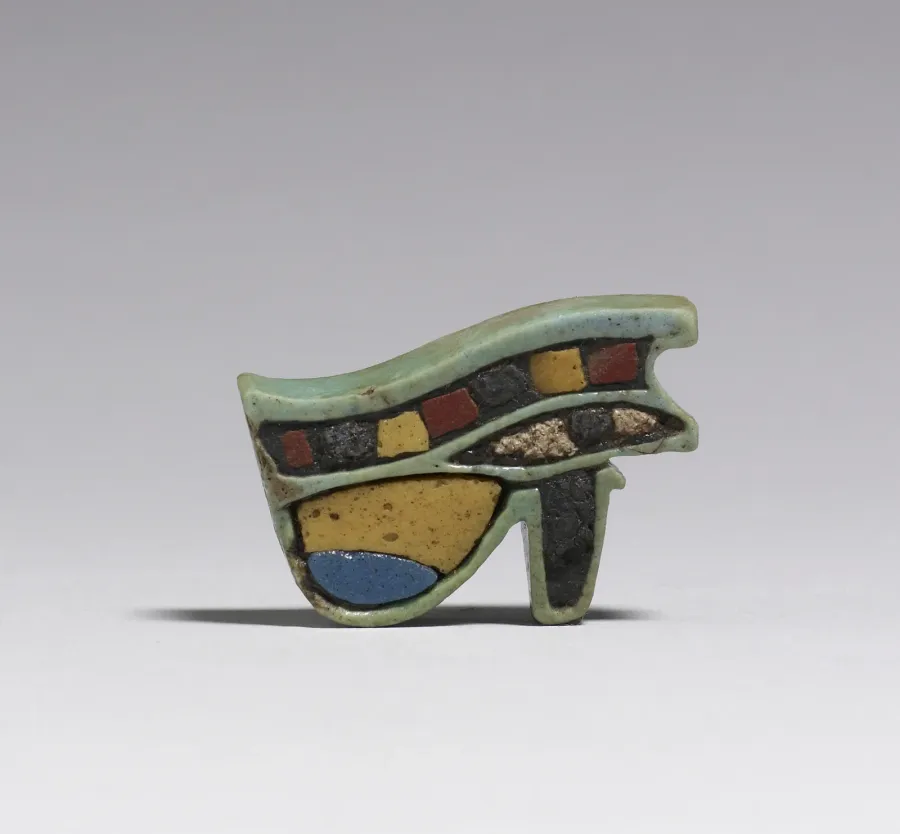
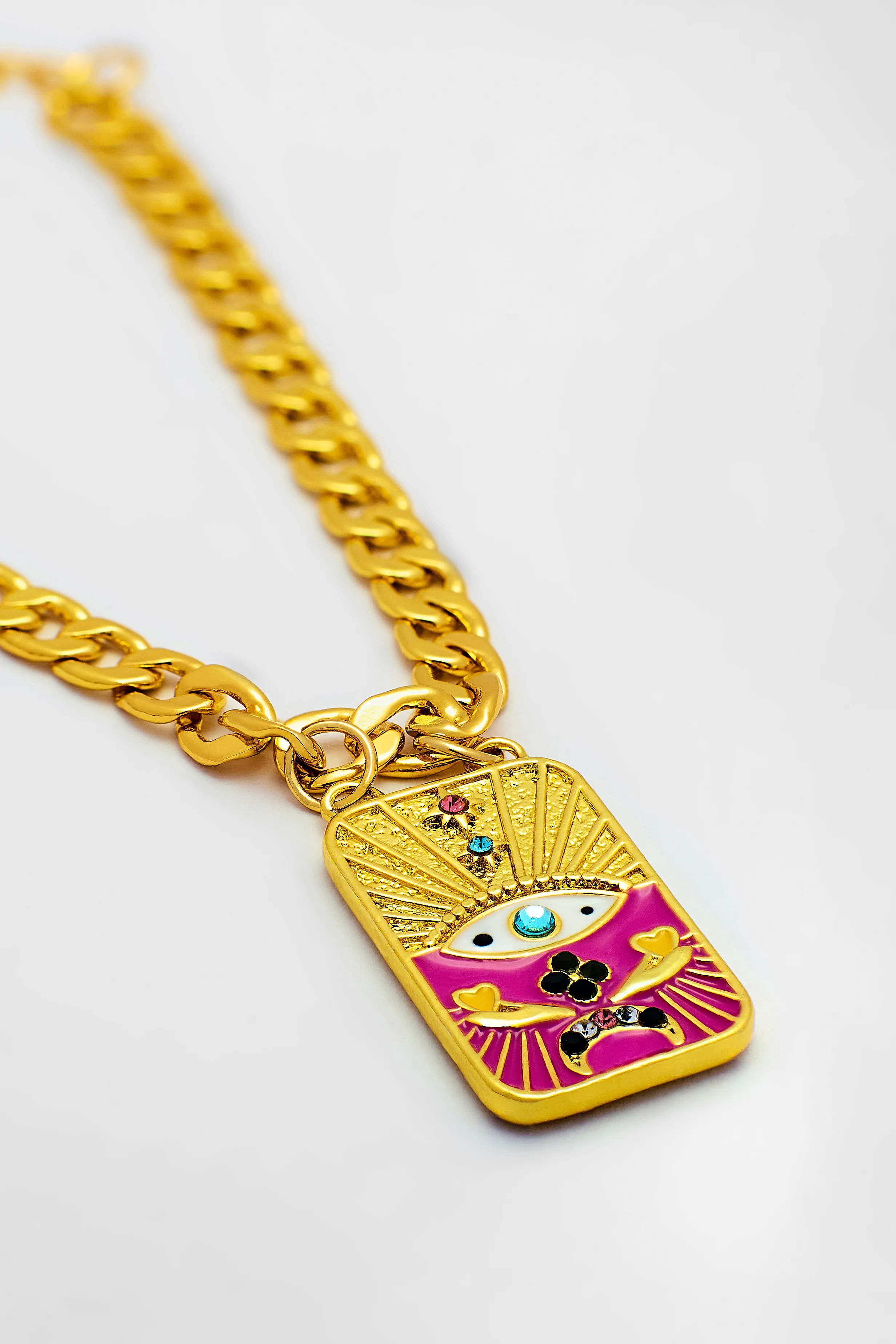
An eye inside a triangle, radiating light. The All-Seeing Eye (or Eye of Providence) represents omniscience, wisdom, and higher awareness. Its origins are complex. It appears in ancient Egyptian art (the Eye of Horus), in Christian iconography (the eye of God watching over humanity), and in Masonic symbolism.
The Eye of Horus deserves special mention. In Egyptian myth, Horus lost his left eye in battle with Set, and the goddess Hathor (or Thoth, depending on the version) restored it. The restored eye became a symbol of healing, wholeness, and protection, all rolled into one. That layered meaning is part of why eye symbols remain so compelling thousands of years later.
As jewellery, it's worn by people who value awareness and truth. It's a reminder to stay watchful, to look deeper, and to trust that there's more to reality than what's on the surface.
The All-Seeing Eye has experienced a major revival in contemporary jewellery design, especially among people interested in spirituality, philosophy, and the esoteric.
Who it's for: Truth-seekers, philosophers, spiritual explorers. People who question surface-level reality and want a daily reminder to look deeper.
Full deep-dive: mystic eye symbols guide.
Labyrinth
Not a maze. A labyrinth. The distinction matters. A maze has dead ends and is designed to confuse. A labyrinth has a single winding path that always leads to the centre. You can't get lost in a labyrinth. You can only walk.
As a jewellery symbol, the labyrinth represents the journey of life, the idea that even when the path seems winding and uncertain, you're always moving toward something. It's a symbol of trust, patience, and the understanding that the route matters as much as the destination.
Labyrinth designs date back to ancient Crete (the myth of the Minotaur) and appear in medieval cathedral floors across Europe. Walking a labyrinth was a meditative practice for medieval pilgrims who couldn't travel to the Holy Land, a miniature pilgrimage you could complete in an afternoon.
Who it's for: People who trust the process. Those in transition who need reassurance that the winding path still leads somewhere. Meditators and contemplatives.
Pendulum
A weighted object suspended from a point, free to swing. The pendulum represents truth-seeking, decision-making, and the search for answers. In esoteric traditions, pendulums are used for divination. Held over a question, they supposedly swing toward the truth.
As jewellery, a pendulum pendant carries that same energy of inquiry. It's for the person who asks questions, who doesn't accept easy answers, and who trusts their inner compass.
Who it's for: Questioners, investigators, people who would rather find the truth themselves than be told what to think.
Tarot Symbols
Tarot cards have been used for divination and self-reflection since the 15th century. Recently, tarot imagery has become one of the fastest-growing categories in symbolic jewellery.
Each tarot card carries rich, layered symbolism. The most popular cards as jewellery motifs include:
The Sun: joy, success, vitality, and optimism. The Sun card represents the best possible outcome, everything going right. As a pendant, it's a statement of positivity and confidence.
The Moon: intuition, dreams, the subconscious. The Moon card speaks to the hidden side of life, to what we feel but can't always explain. Wearing it is an embrace of mystery and inner knowing.
The Lovers: not just romance, but choice. The Lovers card represents a meaningful decision, a crossroads where you choose with your heart. As jewellery, it symbolises the commitments that define us.
The Star: hope, renewal, and inspiration. After difficulty comes healing. The Star card is gentle and optimistic, a reminder that better things are coming.
The Tower: less commonly worn, but powerful. The Tower represents sudden change, the collapse of false structures, and the liberation that follows. People who choose this card as jewellery tend to have survived something that broke their world open, and they're stronger for it.
The Wheel of Fortune: the idea that life turns, that luck shifts, that nothing is permanent. This card appeals to people who've learned to ride the ups and downs without losing themselves.
Tarot pendants have become especially popular as gifts because each card tells a specific story. You can choose a card that matches the recipient's personality or current life situation.
For a complete guide to tarot imagery in jewellery, read our tarot jewellery guide. You can also explore our tarot collection.
Leave your email, we'll send your discount code. No spam, unsubscribe anytime.
The code arrives by email, valid on your first order.
Spanish & Cultural Symbols
Some symbols carry the weight of specific cultural traditions, and that specificity is part of their power.
Navaja Knife
The navaja is a traditional Spanish folding knife with deep roots in Andalusian culture. As a jewellery motif, the miniature knife represents strength, independence, and the sharp edge of personal conviction.
The navaja has a fascinating history. It was the everyday tool and personal defence weapon of ordinary Spaniards for centuries. In the hands of the Romani people of southern Spain, it became associated with flamenco culture, personal honour, and fierce independence. Each region of Spain had its own distinctive navaja style: the Albacete blade was different from the Jerezana, which was different from the Sevillana.
As a pendant, the navaja appeals to people who value strength, directness, and cultural heritage. It's a bold piece, not for everyone, but deeply meaningful for those who connect with it.
Who it's for: Strong personalities, people with Spanish or Mediterranean roots, anyone who values directness and personal strength.
Read more about knife symbolism: knife pendants and earrings guide.
Compass Rose
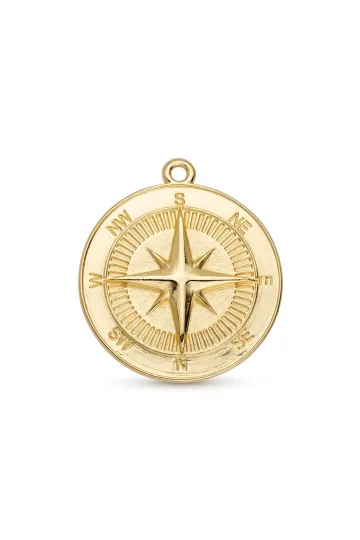
The compass rose (the decorative design on maps showing cardinal directions) represents navigation, exploration, and the confidence to find your own path. It appears on old nautical charts, and as jewellery it carries that same spirit of adventure.
A compass rose pendant is a popular gift for travellers, for people starting new chapters, and for anyone who values direction and purpose. It says: "I know where I'm going," or perhaps more honestly: "I'll figure it out as I go."
Who it's for: Travellers, explorers, career changers, anyone at a crossroads. People who value the journey as much as the destination.
Symbols as Gifts: What Message Are You Sending?
Choosing a symbolic pendant as a gift is one of the most personal things you can do. You're not just giving jewellery, you're giving a meaning. Here's a guide to what different symbols say when you give them.
For protection and care: The nazar, hamsa, or cornicello says "I want you to be safe." It's a gift that feels like a hug: protective without being possessive. These are perfect for friends moving to a new city, children leaving for university, or anyone facing an uncertain chapter.
For encouragement: The acorn says "You have everything you need to grow." The butterfly says "You're going to come through this transformed." The star says "Follow your path." These are gifts for people facing challenges.
For love and commitment: The Sacred Heart says "I love you completely, even through difficulty." The love lock says "This is forever." The heart in all its variations carries affection that needs no explanation.
For wisdom and growth: The tree of life says "Your roots are strong." The labyrinth says "Trust the journey." The All-Seeing Eye says "Keep searching for truth."
For celebration: The sun says "You light everything up." The bee says "You hold everything together." The compass rose says "Adventure awaits."
The beauty of symbolic gifts is that they age well. A scarf or a candle gets used up. A book gets read and shelved. But a pendant with meaning gets worn, touched, and thought about for years. Every time the recipient puts it on, they remember why you chose that particular symbol for them.
Browse our full gift collection for more ideas.
Symbols and Men: Beyond the Stereotype
There's a persistent idea that symbolic jewellery is mostly a women's thing. That's historically inaccurate and increasingly outdated. Men have worn amulets, signet rings, and symbolic pendants for literally thousands of years. Roman generals wore eagle emblems. Vikings wore Thor's hammer. Samurai carried protective charms. The idea that men shouldn't wear meaningful jewellery is a very recent (and very Western) invention.
Today, symbolic jewellery for men is having a significant comeback. The most popular symbols include:
Protection symbols: the nazar, cornicello, and cross are easily the top three. These have never really gone out of fashion for men in Mediterranean cultures. A man wearing a cornicello in Naples raises zero eyebrows.
Strength symbols: the navaja knife, the anchor, the sun. These carry associations with resilience, stability, and quiet power that appeal to men across cultures.
Navigation symbols: the compass rose and the North Star. These speak to direction, purpose, and the confidence to choose your own path.
Mystic symbols: the All-Seeing Eye and tarot cards (particularly The Sun, The Tower, and The Wheel of Fortune) are increasingly popular with men interested in philosophy and spiritual exploration.
The key is simplicity. Men's symbolic pendants tend to be slightly smaller, on thicker chains, in bolder metals. The meaning doesn't change, just the execution.
Explore our men's collection or read our dedicated jewellery gifts for men guide.
Combining Symbols: The Art of Layering Meaningful Pieces
Wearing one symbolic pendant is a statement. Wearing two or three together is a story.
The art of combining symbolic jewellery (layering chains at different lengths, mixing motifs, creating a personal collection of meaning on your chest) has ancient roots. Mediterranean women have been stacking protective charms for centuries. What's new is the intentionality: choosing combinations that work both visually and symbolically.
Some combinations that work particularly well:
The Protection Stack: nazar + hamsa + cornicello. Three different approaches to the same goal: reflect, block, and pierce negativity. This combination is traditional in parts of southern Italy and works beautifully at different chain lengths.
The Growth Journey: crescent moon + tree of life + star. New beginnings, deep roots, and direction. This tells the story of someone building something from the ground up.
The Love Declaration: Sacred Heart + love lock + small heart. Layers of love, from the passionate to the committed to the simple and sweet.
The Seeker's Set: All-Seeing Eye + pendulum + moon. Awareness, inquiry, and intuition. For someone on a spiritual or philosophical path.
The Ocean Soul: whale tail + anchor + seahorse. Freedom, stability, and patience. For someone whose personality was shaped by the sea.
The practical side matters too. Mix chain lengths (40cm, 45cm, 50cm) so the pendants don't tangle. Keep the larger pendant lowest and the smallest highest. And if all your symbols are on the same theme, consider adding one wildcard that contrasts. It creates visual interest and suggests complexity.
For the full layering guide, read our jewellery layering: how to combine guide.
Buying it as a gift? Each one arrives ready to give.
 A branded Zevira box and a little card come with every order.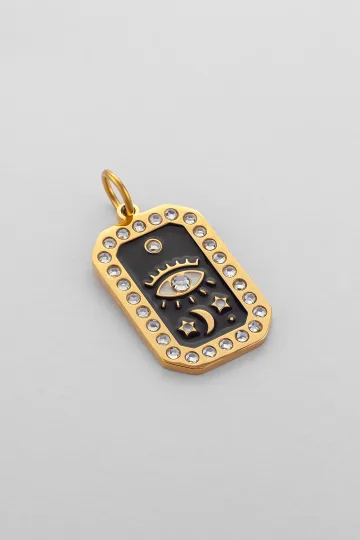
Symbol Care: Superstitions, Breakage, and Maintenance
Do symbolic pieces need special care? Practically, no. Treat them like any other jewellery. Keep them clean, store them properly, remove them before swimming in chlorinated pools.
But the superstitions around symbolic jewellery are worth knowing, even if you don't believe in them.
Broken protection amulets. In many Mediterranean traditions, a nazar, cornicello, or hamsa that breaks has done its job. It absorbed a blow that was meant for you. The proper response is gratitude, not repair. Thank the amulet for its service and replace it with a new one. Repairing a broken protection piece is considered bad luck in some traditions because the "seal" has been broken.
Tarnished symbols. Some people believe that a symbol that tarnishes quickly is absorbing negative energy. Whether or not you subscribe to that, regular cleaning keeps your pieces looking their best. A gentle polishing cloth works wonders.
Gifted vs. purchased. In some traditions, a protective amulet gifted by someone who loves you is more powerful than one you bought yourself. There's a nice logic to this: the amulet carries the giver's protective intention along with its own symbolism. But plenty of traditions have no such distinction, so don't let it stop you from buying what you need.
Sleeping with symbols. Some people never take their protective jewellery off, even to sleep. Others remove everything at night. There's no universal rule, but many traditions suggest that protection works best when it's continuous.
Passing symbols down. A protective amulet that belonged to a grandparent or parent carries extra weight. It becomes an heirloom charged with the protective energy of someone who loved you.
How to Choose a Symbol
With so many symbols available, how do you pick the right one? Here are three approaches that work.
Choose by intention. Start with what you need. Feeling vulnerable? Look at protection symbols: the nazar, hamsa, or cornicello. Going through a transition? Butterflies and moons speak to that. Need grounding? Trees and anchors. The symbol finds you when you know what you're looking for.
Choose for a gift recipient. Think about the person, not the symbol. A friend who loves the ocean would connect with a whale tail pendant. Your mother might love a tree of life for its family meaning. A partner going through a tough time would appreciate a sacred heart: love that burns through difficulty. The best symbolic gifts feel personal, like you really thought about it.
Choose by gut feeling. Sometimes you see a pendant and something clicks. You don't know the full history, you can't explain the symbolism in detail, but it feels right. Trust that. Symbols have been communicating on a level beyond words for thousands of years. If something draws you in, there's usually a reason.
A few practical tips:
- If you're new to symbolic jewellery, start with something universal: a tree of life, a moon, or a simple heart. These work with any outfit and any personal style
- Consider what men in your life might appreciate: protection symbols like the nazar and cornicello, or strength symbols like the navaja, are popular choices
- Layer symbols that complement each other. A moon and star together. A hamsa with a nazar eye. A tree of life with a small leaf. Read our layering guide for more combinations
- Don't overthink it. The "right" symbol is the one that means something to you
Send a friend a discount code, they save on their first order.
Frequently Asked Questions
Can I wear symbols from cultures that aren't my own? Yes. Most protective and spiritual symbols have been shared across cultures for thousands of years. The nazar, for example, is used across dozens of cultures and religions. The key is wearing the symbol with respect and genuine appreciation, not as a costume or a trend.
Do I need to believe in a symbol for it to "work"? That depends on what you mean by "work." If you mean literal magical protection, that's a matter of personal belief. But symbols work on a psychological level regardless. Wearing a protection amulet can genuinely make you feel safer, and that feeling of safety can change how you carry yourself. That's real.
Is it bad luck to buy a protective amulet for yourself? No. In some traditions, a gifted amulet is considered slightly more powerful, but buying one for yourself is completely normal and has been for centuries. The intention matters more than the transaction.
Can I wear multiple symbols at once? Absolutely. Many people layer pendants, combining protection symbols with personal meaning symbols. In Mediterranean cultures, wearing multiple amulets together is common practice. Just make sure the combination looks intentional rather than cluttered. Our layering guide has specific tips.
What if my pendant breaks or gets damaged? In many traditions (especially around the nazar and cornicello), a broken amulet is actually a positive sign. It means the charm absorbed a blow that was meant for you. Thank it and replace it. Don't try to repair a broken protection amulet.
Are there symbols that shouldn't be worn together? There are no hard rules about this. Different protective symbols complement rather than conflict with each other. A hamsa with a nazar eye, a cornicello with a cross: these combinations have long traditions behind them.
How do I know if a symbol is right for me? If you're drawn to it, it's right for you. Symbols communicate on an intuitive level. Trust your gut reaction. If a certain pendant catches your eye repeatedly, that's your answer.
Do jewellery symbols have different meanings in different cultures? Sometimes, yes. The crescent moon means one thing in Islamic tradition and something slightly different in Wiccan practice. The heart means one thing in Catholic iconography (Sacred Heart) and something else as a simple love token. Context matters, but the core meaning usually overlaps across cultures.
What's the best protection symbol for a gift? The nazar is the safest choice. It's universally recognised and culturally neutral. For someone with Italian heritage, a cornicello is deeply personal. For someone with faith-based connections, a Saint Benedict medal carries extra weight. When in doubt, a hamsa works beautifully for anyone.
Can children wear symbolic jewellery? Yes. In many Mediterranean cultures, babies receive their first nazar pin within days of being born. Small, lightweight pendants on secure chains are appropriate for older children. The tradition of protecting children with amulets is one of the oldest in human history.
Is there a difference between wearing a symbol on a necklace versus a bracelet? Traditionally, pendants near the heart carry the strongest personal meaning, while bracelets offer a more visible, outward-facing statement. Rings carry commitment energy. But in practice, wear your symbol wherever it feels right. The meaning lives in the symbol, not the body part.
How often should I replace protective jewellery? Only when it breaks or when you feel its energy has shifted. Some people wear the same protection amulet for decades. Others replace theirs annually. There's no schedule. Let your instinct guide you.
What symbol should I choose if I'm going through a major life change? The butterfly is the classic transformation symbol. But consider also: the crescent moon (new beginnings), the compass rose (finding direction), the tree of life (staying rooted during change), or The Star tarot card (hope after difficulty). Each carries a slightly different shade of "change," so pick the one that matches your experience.
Wear the symbol, don't just read about it. These are in stock:











Common Questions
How do I stop a symbolic pendant from tarnishing?
Tarnish is a chemical reaction, not damage, and it responds to habit more than to products. Take the piece off before you shower, swim, sleep or train, and put it on last after perfume, sun cream and hairspray have dried. Every couple of weeks give it a pass with a soft polishing cloth, and keep a silver-specific cloth for sterling, which darkens faster than gold. Storage matters as much as cleaning: a small pouch or a lined box stops the chain from scratching the pendant and stops the whole thing knotting itself in a drawer. If you live in a hard water area, and most of the south and east of England qualifies, rinse and dry the piece after any accidental soaking, because limescale residue sits in the engraved lines of a symbol and dulls the detail first.
Can I wear it in the shower, the pool and the gym?
Better not. Chlorine is the worst offender, since it attacks the solder joints where a bail meets a pendant and it can strip the colour out of enamel over a season of swimming. Salt water, sweat and gym chalk are gentler but cumulative. Nothing will fall apart the first time it gets wet, but a pendant that comes off before water and exercise lasts several times longer looking the way it did on day one. The simplest trick is a physical cue: keep a small dish by the toothbrush or in your gym bag, and taking it off stops being something you have to remember.
How do I tell real silver or gold from plated imitation?
Look for the hallmark. In Britain any precious metal item above the weight threshold must be assayed, so a genuine piece carries a millesimal fineness number stamped into the metal: 925 for sterling silver, 375, 585 or 750 for 9, 14 and 18 carat gold. Alongside it you may find a town mark from the assay office that tested it, London, Birmingham, Sheffield or Edinburgh, plus a date letter. Beyond the stamp, behaviour tells you a lot. Real sterling darkens evenly and polishes back; plated base metal wears through at the high points and shows a different colour underneath, and it often leaves a green mark on the skin. Plated pieces also tend to feel suspiciously light for their size. Buying from a seller who states the alloy plainly removes most of the guesswork.
What chain length suits a symbolic pendant?
For a small everyday charm, 40 or 45 cm, roughly 16 or 18 inches, sits at the base of the throat or just below it, which is where a symbol reads clearly without competing with a collar. A larger statement pendant hangs better at 50 cm, about 20 inches, closer to the neckline. If you wear several pendants at once, space the chains at least 5 cm apart so they stop tangling and each symbol gets its own line. Neck size shifts these numbers a little, so if you are between lengths, go longer: a chain that sits slightly low still looks deliberate, while one that is too tight never does.
What should I wear it with so the symbol doesn't get lost?
The quieter the outfit, the louder the symbol. A plain top with a shallow neckline, small studs in the ears and one meaningful pendant at the throat is the whole formula, and it works from an office desk to a dinner. If you want layers, keep a single theme running through them: a protective set of nazar, hamsa and cornicello on chains of different lengths reads as one considered idea rather than three unrelated charms. Busy prints, ruffles and heavy knitwear are where pendants disappear, so save the symbol for days when the fabric will let it be seen.
Is it true you shouldn't buy an amulet for yourself, and that a broken one shouldn't be repaired?
These are folk beliefs, not rules, and they are worth knowing rather than obeying. Buying a charm for yourself is entirely ordinary and always has been; intention counts for more than who handed over the money. The second belief has more staying power: across Mediterranean traditions a protective amulet that cracks or snaps is understood to have taken a blow on your behalf, so the custom is to thank it and replace it rather than solder it back together. Plenty of people find that story satisfying and follow it. Plenty of others take a broken cornicello to a jeweller and carry on wearing it. Both are legitimate; the symbol is yours to interpret.
Silver and gold jewellery, wedding bands, symbolic pendants, paired sets.
Conclusion
Every symbol in this guide carries centuries of human meaning: stories, beliefs, hopes, and fears compressed into a shape small enough to hang from a chain. That's remarkable when you think about it. A tiny pendant can connect you to 5,000 years of history.
The most important thing to remember is this: there's no wrong choice. Whether you pick a symbol for its historical meaning, its cultural significance, its aesthetic beauty, or just because it felt right in the moment, you're participating in one of humanity's oldest traditions. People have always worn their stories.
And the next time someone asks "what does that pendant mean?", now you'll have an answer.
Wear the symbol, don't just read about it. These are in stock:

About Zevira
Zevira makes jewellery in the artisan tradition of Albacete, Spain. Symbolism sits at the heart of what we do: every pendant in this guide is something we translate from a museum piece or a living tradition into a thing you can actually wear every day.
Here's what you'll find with us for symbols:
- Protection charms: nazar, hamsa, cornicello, mano figa, the cross and the Saint Benedict medal
- Celestial motifs: the sun, the moon, crescent phases, and stars
- Nature and ocean: tree of life, acorn, bee, butterfly, whale tail, anchor, seahorse
- Love symbols: the Sacred Heart, the love lock, and hearts in every variation
- Mystic and tarot: the All-Seeing Eye, the labyrinth, the pendulum, and a full set of tarot cards
- Cultural symbols: the navaja from Albacete and the compass rose
Each piece is made by hand, with the option to add a personal engraving. Sterling silver 925 and 14 to 18K gold.