Knife Pendants and Knife Earrings: Jewelry with Character for the Bold
Brutal Jewellery: When Blade Form Becomes Art
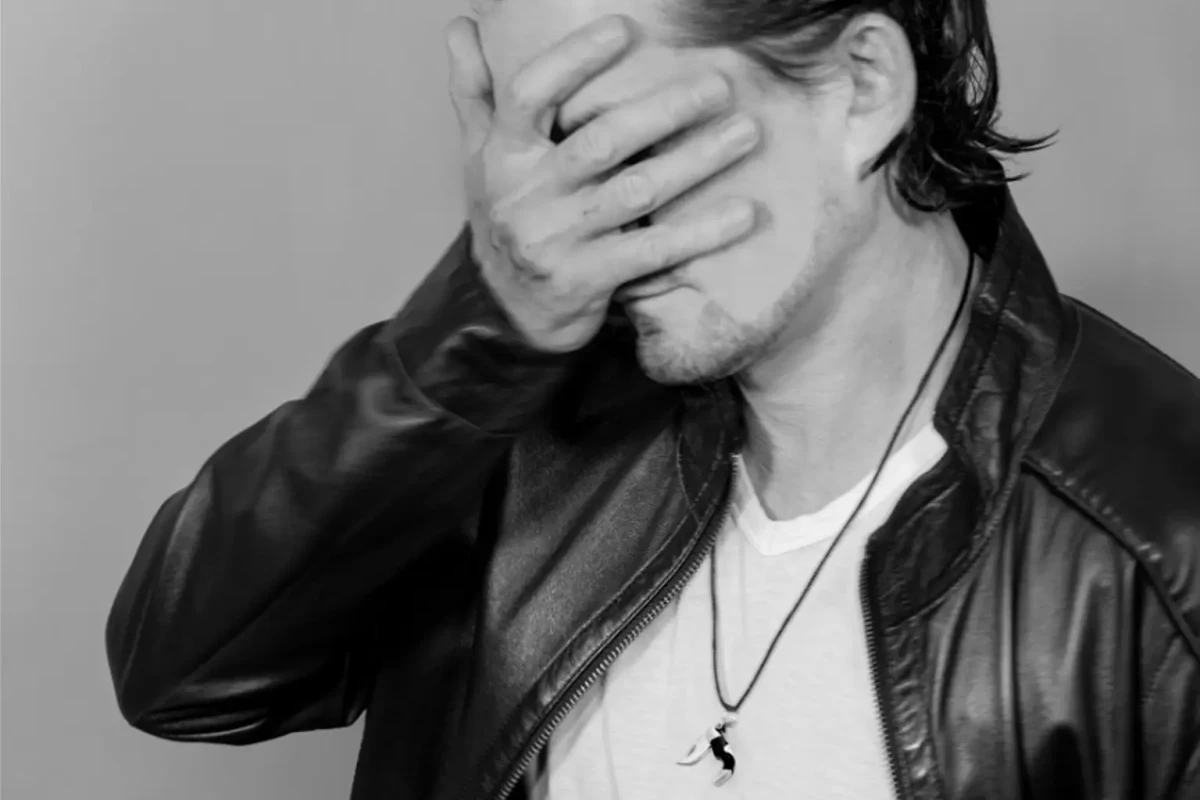
In the world of modern jewellery, a special trend is gaining popularity: knife-shaped pendants and knife earrings. These are stylish accessories inspired by the forms of historical blades, worn by both men and women who appreciate non-standard aesthetics and symbolism.
If you were looking to "buy knife pendant," "knife earrings," "blade earring," or "miniature knife pendant," you’ve come to the right place.
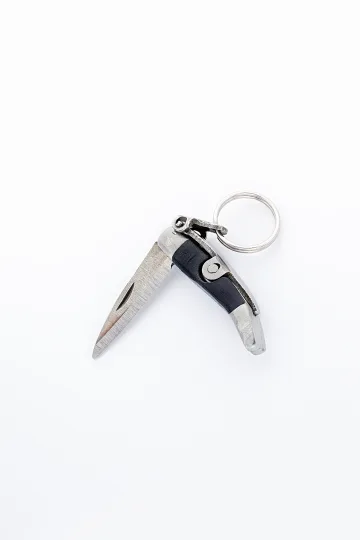
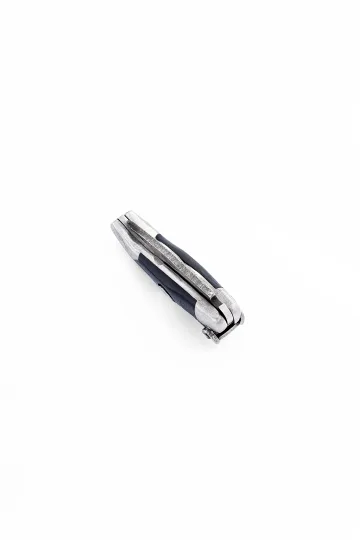
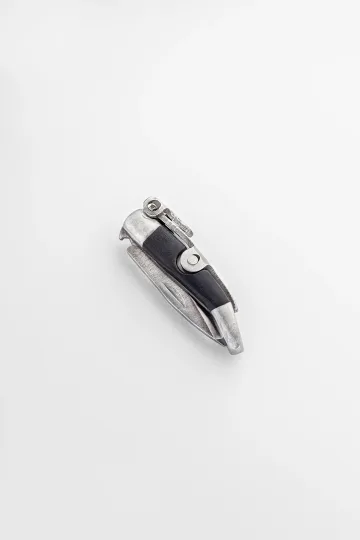
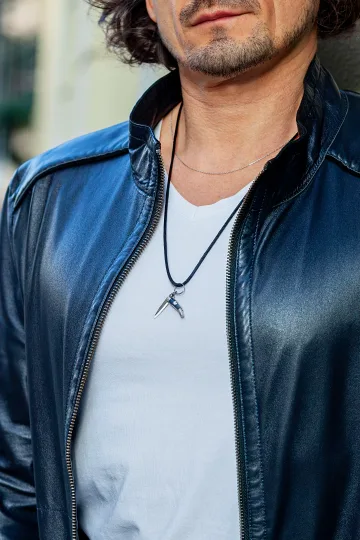
Wear the symbol, don't just read about it. These are in stock:




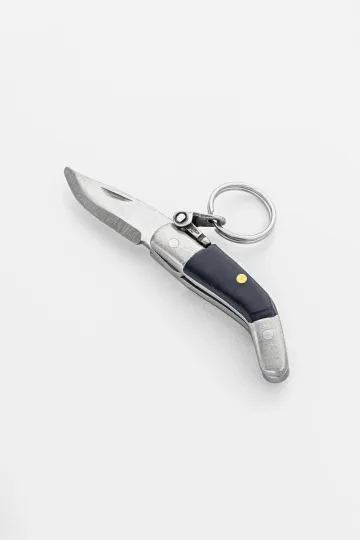
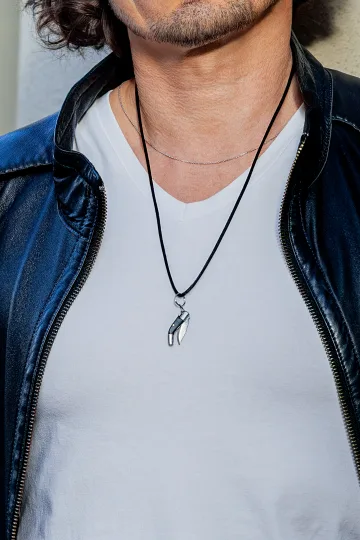
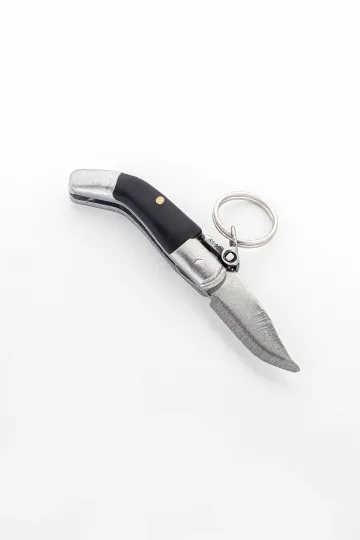
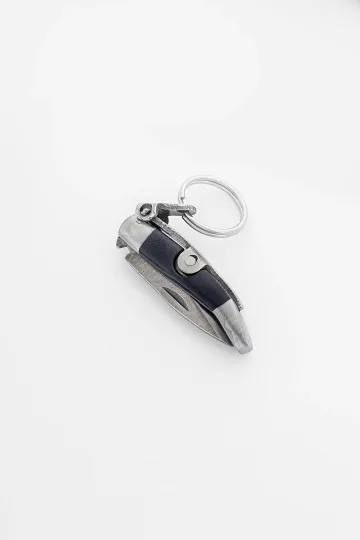
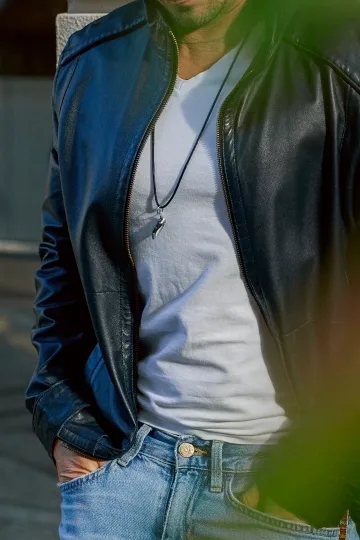
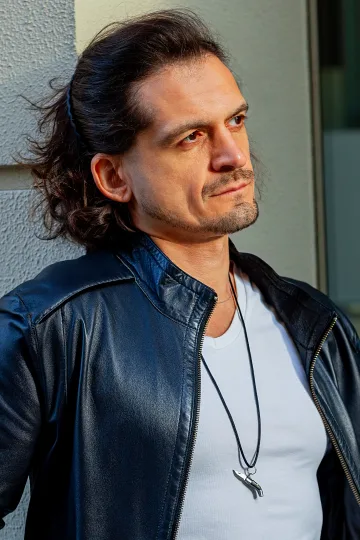

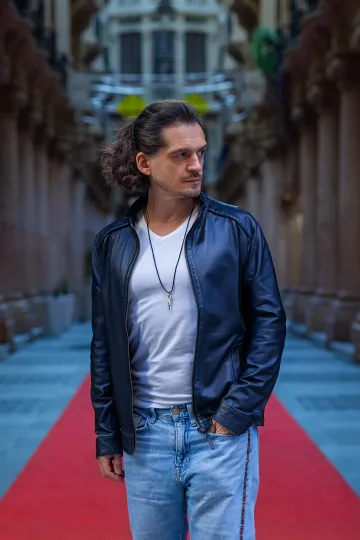
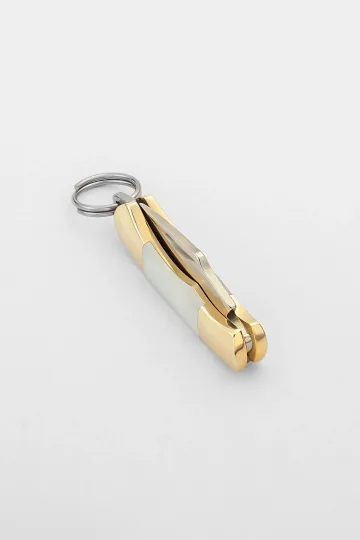
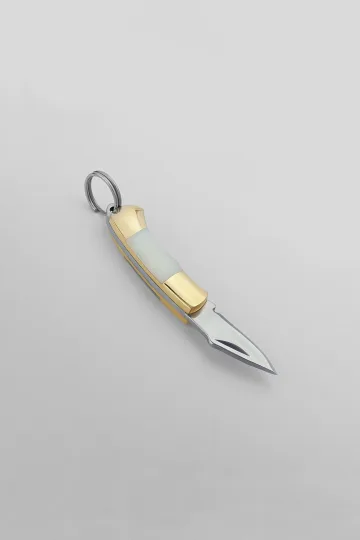
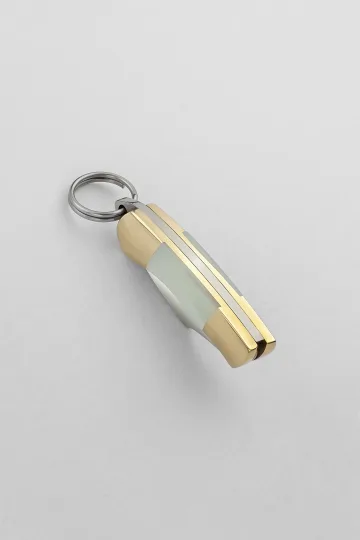

What Are Knife Pendants?
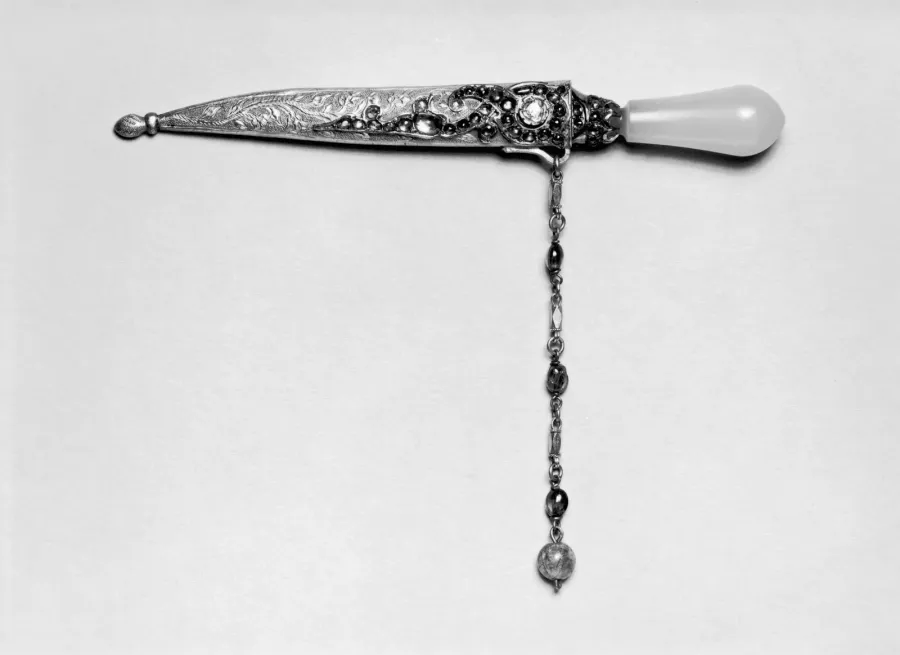
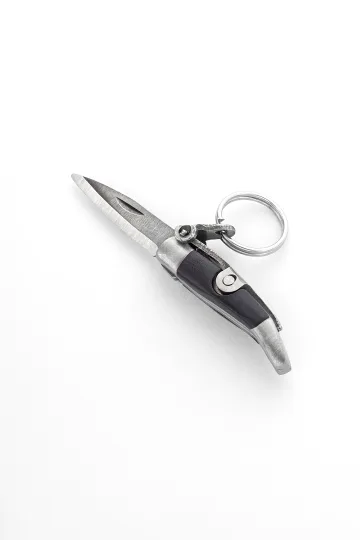
A knife pendant is a piece of jewellery made in the shape of a miniature knife or blade. The silhouette of a blade is one of the most recognisable and aesthetically powerful forms in design history. Elongated proportions, sharp geometry, and the play of light on the edges make these pieces memorable and expressive.
Knife pendants come in many varieties. Simple decorative pendants made of brass, knife steel, or silver are perfect for a first introduction to this aesthetic. More complex options include detailed miniatures with moving parts, reproducing historical examples of Spanish navajas or Japanese tanto. These items represent true jewellery art and traditions of manual labour.
The premium segment consists of handmade historical replicas, exact copies of museum specimens from the 18th and 19th centuries. They are crafted using traditional technologies from high-quality materials and often hold the status of cultural heritage.
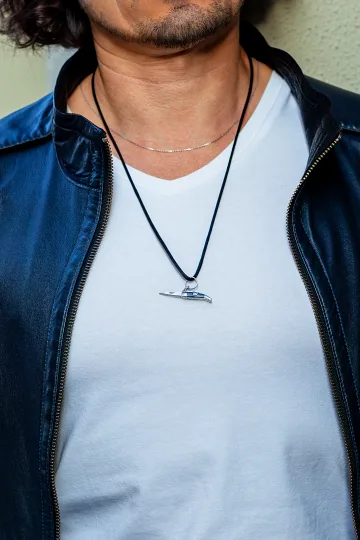
A dagger rides point down, on one clean chain, on bare collarbone. Five pendants at once is a yard sale, not a look.
How to Wear Knife Pendants and Dagger Earrings
I have styled the blade across hundreds of shoots, and the same lessons keep proving out. Here is what actually holds up, sorted by occasion.
How do I wear a knife pendant every day? For daily wear I recommend a medium stiletto or a small navaja on a thin chain. A plain top beats a busy one: cool silver sits cleanly on grey, graphite, white and black, while I suggest showing brass and bronze against warm fabrics like linen and ochre. The blade reads all the stronger against a quiet background.
Does it work at the office? It does, as long as you keep it restrained. I recommend a silver pendant of 2-3 cm under the shirt, catching the light as you move, plus tiny micro-blade studs. In a strict setting that is character you only notice up close, and it commits you to nothing.
How do I build an evening look? For evening I go for contrast: a brutal shape on soft or formal fabric. Blackened silver with a garnet on a white silk blouse, a long dagger earring beside a black dress. Under a V-neck the blade falls right along the neckline, its best position, and I keep the chain shorter, 40-45 cm.
How do I wear knife earrings without overloading the look? I choose asymmetry: a long dagger in one ear, a small stud in the other. It suits cropped hair and open necks especially well. With hair worn down I choose polished pieces, since they catch the light in the gaps between strands.
Who does a blade at the throat actually suit? Anyone who loves a clean line and quiet nerve. A cool complexion leans toward silver and blackened silver, a warm one toward gold, brass and bronze, but black steel suits absolutely everyone. Two rules to close on: pick the chain length for the neckline, not the other way round, and never more than one focal point at a time. One blade, everything else quiet.
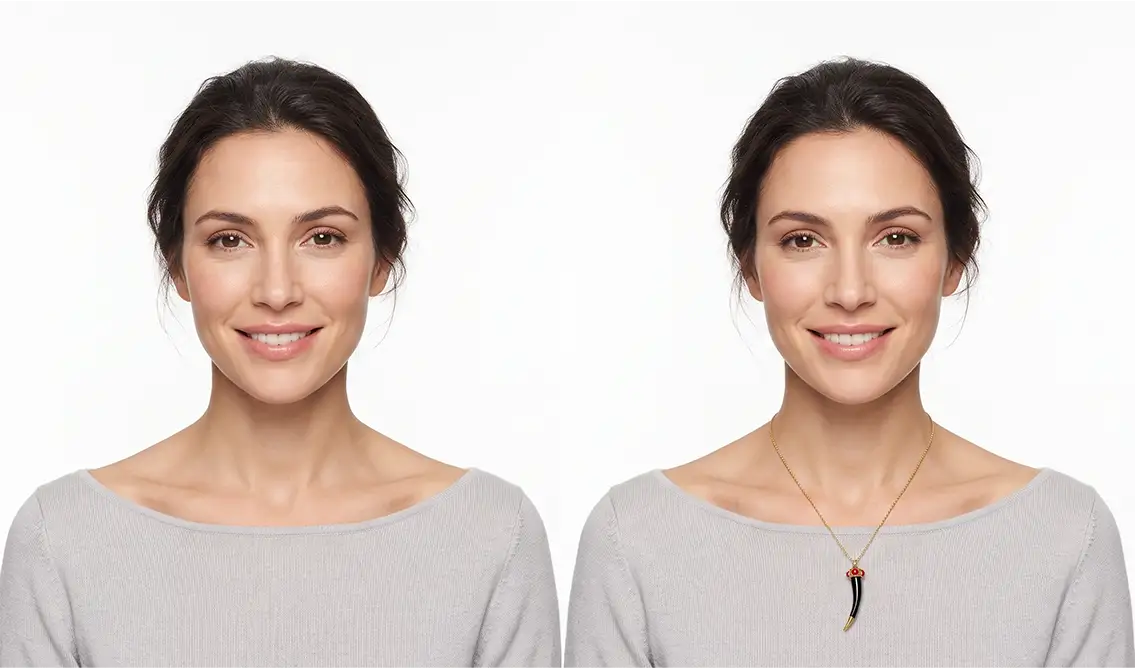
Turn on your camera, pick earrings, a pendant or a ring, and see the piece on yourself in real time.
Switch items in one tap.
Everything runs in your browser: no photo or video is ever uploaded.
Types of Knife Pendants
Four families cover almost everything on the market. They differ in construction, in how much attention they ask for, and in what you are actually buying: a shape, a mechanism, a piece of documented history, or an artist's statement.
Decorative Pendants
Cast or stamped pieces in which the blade silhouette does the work on its own. Silver, brass, bronze, jewellery-grade steel. Usual size runs from 2 to 5 cm. The pendant can be flat or fully three-dimensional, polished or matte, smooth or textured. No moving parts at all: one solid piece, dependable and undemanding.
Decorative pendants are the ones you wear without thinking. Rain does not worry them, they slip under a jumper, and forgetting to take one off before bed costs nothing. These are the workhorses of the category: practical, adaptable, easy to live with.
If what draws you is the classic Spanish archetype specifically, the long curved blade, the acoustic click of the carraca lock, the navaja earrings that echo flamenco earrings, that is a chapter with its own character and we cover it in the guide to the Albacete navaja.
Functional Miniatures
Detailed copies of real knives at reduced scale. The difference from a decorative pendant is the working folding mechanism. A blade of 15 to 20 mm genuinely opens and closes, and a spring holds it open with an audible snap.
A functional miniature never fails to attract interest. It is jewellery that people want to pick up, examine and click. Everyone who sees a working navaja the length of a little finger asks the same question, and you have a story ready.
These pieces ask for a little more attention: a drop of watch oil on the pivot pin every few months, a considered hand on the mechanism, storage in an individual pouch.
Historical Replicas
Exact copies of museum pieces shrunk to pendant scale. Blade shape, handle proportions, spring type and locking mechanism are reproduced as faithfully as the scale allows. The materials match the original too: knife steel, ox horn, brass fittings.
A quarter-scale replica of an eighteenth century Albacete navaja with a working carraca, the toothed ratchet that produces a rhythmic click as the blade opens, is at once an ornament, a collector's object and a wearable fragment of history.
Historical replicas come in limited runs. Every piece is hand assembled and hand fitted. This is the top of the category.
Artisan One-Offs
Unique work in which the blade shape becomes the starting point for something personal. Precious metals, stones, enamel, unorthodox construction. Single pieces or runs of a handful.
A gold knife pendant with a garnet setting and hand engraving sits on the border between jewellery and small sculpture. People buy these to own them as much as to wear them.
Why the Blade Silhouette Holds the Eye
Four reasons this shape outperforms most others.
Elongated proportions. A knife pendant has a pronounced vertical axis, which lengthens the neck visually and reads as slimming. Stylists have known for a century that vertical lines do this. The blade does it with unusual force because it narrows towards the tip.
Geometric clarity. Straight ridges, precise angles, symmetry or deliberate asymmetry. In a market saturated with rounded, amorphous shapes, that clarity lands like fresh air.
The play of light. Facets and planes reflect differently depending on angle, so the piece comes alive in motion, shifting highlights and shadows. That is why these pendants photograph and film so well, and why they hold attention in person.
Tension. The blade shape carries visual charge. It sits against the soft lines of the body, the roundness of a face, the fall of fabric, and that contrast is what makes an outfit memorable.
Blade Shapes: A Field Guide
Shape is the single decision that changes everything else: the mood, the length of chain that suits it, the clothes it agrees with. Seven forms account for most of what you will meet.
Stiletto
Long, straight, symmetrical. The most austere and elegant silhouette of the group, with a straight line back to the Italian Renaissance. It stretches the neck visually and behaves impeccably in minimalist outfits. If you want one pendant that will still look correct in ten years, this is the shape.
Navaja
A folding knife with a curved handle, the Spanish classic. In miniature it is unique for its working mechanism. This is the most alive of all the types: you can open it, close it, hear the spring. It is also the only one that gives you something to do with your hands during a long meeting.
Tanto
The Japanese straight blade with an angular point. Geometric precision, restraint, an aesthetic built on removing rather than adding. For anyone drawn to Japanese craft, this is the natural entry point, and it pairs unusually well with plain monochrome dressing.
Dagger
Double-edged, with a crossguard. European and Caucasian tradition. The cruciform silhouette adds a heraldic note that gothic styling has used for decades. It is the shape most people picture when they hear the words knife pendant.
Yatagan and Scimitar
A curved blade that widens towards the point, from the Middle East and Central Asia. A fluid, moving silhouette that softens where the stiletto sharpens. It suits ethnic and fantasy looks, and it flatters angular cheekbones better than any straight blade.
Sword
A complete sword in miniature: blade, guard, grip, pommel. The maximum statement in the category. It needs size to read properly, 5 to 7 cm, because all those details disappear below a certain scale.
Karambit and Sickle
A curved form with the cutting edge on the inside, from South East Asia. An unusual, almost circular silhouette that stands apart from the straight-line logic of everything else here. Worn as a pendant it reads more like an abstract hook than a weapon, which is exactly why some people choose it.
Knife Jewellery: Styles and Types
Knife-shaped earrings were once an attribute of biker and rock culture, but today they are worn by people of all styles, from office workers to creative individuals. These are universal pieces of jewellery that suit anyone who isn't afraid to be themselves.
Undoubtedly, this is a very bold and provocative ornament that says you are not afraid to stand out.
They vary greatly in shape and style. Dangle dagger earrings, 2 to 6 cm in length, look spectacular in motion and create a dramatic image. Minimalist studs in the shape of a small blade are suitable for everyday wear and look discreetly elegant. Ear cuffs wrap around the entire ear to create an "armour" effect, particularly popular in gothic aesthetics. There are also asymmetric pull-through earrings that pass through the piercing, a choice for lovers of modern minimalism.
These earrings are worn by everyone: with short haircuts, they emphasise the neckline and cheekbones; rock and gothic fans choose them as a genre classic; minimalists use them as the single bright accent in an outfit. They look especially interesting in contrast combinations. Brutal earrings with a feminine dress or an elegant blouse with knife earrings create a memorable mix of styles.
Types of Jewellery:
1. Decorative Pendants
- Cast jewellery in blade form
- Flat or 3D pendants
- Made from jewellery alloys (silver, bronze, brass)
- Stylization of different eras
- Affordable price
2. Functional Miniatures
- Detailed copies of historical knives
- With moving parts (folding mechanism)
- Reproduce specific historical models
- Collectible value
- Medium price
3. Premium Historical Replicas
- Exact reproduction of museum pieces
- Traditional materials and technologies
- Cultural authenticity
- Cultural heritage status
4. Designer/Artisan Pieces
- Unique works by master craftsmen
- Precious metals and stones
- One-of-a-kind specimens
- Objects of art
The classic Spanish archetype that most decorative knife pendants quietly reference is the Albacetena navaja, with its virolas, rebajo and the unmistakable click of the carraca. If you want to understand the original before choosing a miniature of it, read the guide to the Albacete navaja.
Knife Earrings: A Universal Trend
For All Who Aren't Afraid to Be Themselves
Knife-shaped earrings were once the domain of biker and rock culture, but today they are worn by people of various styles, from office workers to creative minds.
Types of Earrings:
Dangle Dagger Earrings
- Length from 2 to 6 cm
- Moving or static
- For single or double piercings
- Look spectacular in motion
Stud Earrings
- Minimalist option
- Shape of a small blade
- Suitable for daily wear
- Understated elegance
Ear Cuffs
- Wrap around the whole ear
- Don't always require a piercing
- Dramatic effect
- Popular in gothic aesthetics
Threader/Pull-through Earrings
- Pass through the piercing
- Often asymmetric
- Length can be adjusted
- Modern style
Who Suits Knife Earrings?
These are universal ornaments:
- With short haircuts: they highlight the neck and cheekbones
- Rock, Gothic, and Alternative fans: a classic of the genre
- Minimalists: one bright accent in the look
- Maximalists: part of a layered look
- Creative individuals: a statement of non-standard thinking
- Lovers of contrast: brutal jewellery + feminine look or vice versa
Types of Knife Earrings
Earrings sit beside the face, which means the choice matters more than with a pendant. Length, weight and finish decide whether the piece reads as elegant, dramatic or simply uncomfortable by four in the afternoon.
Dangle Dagger Earrings
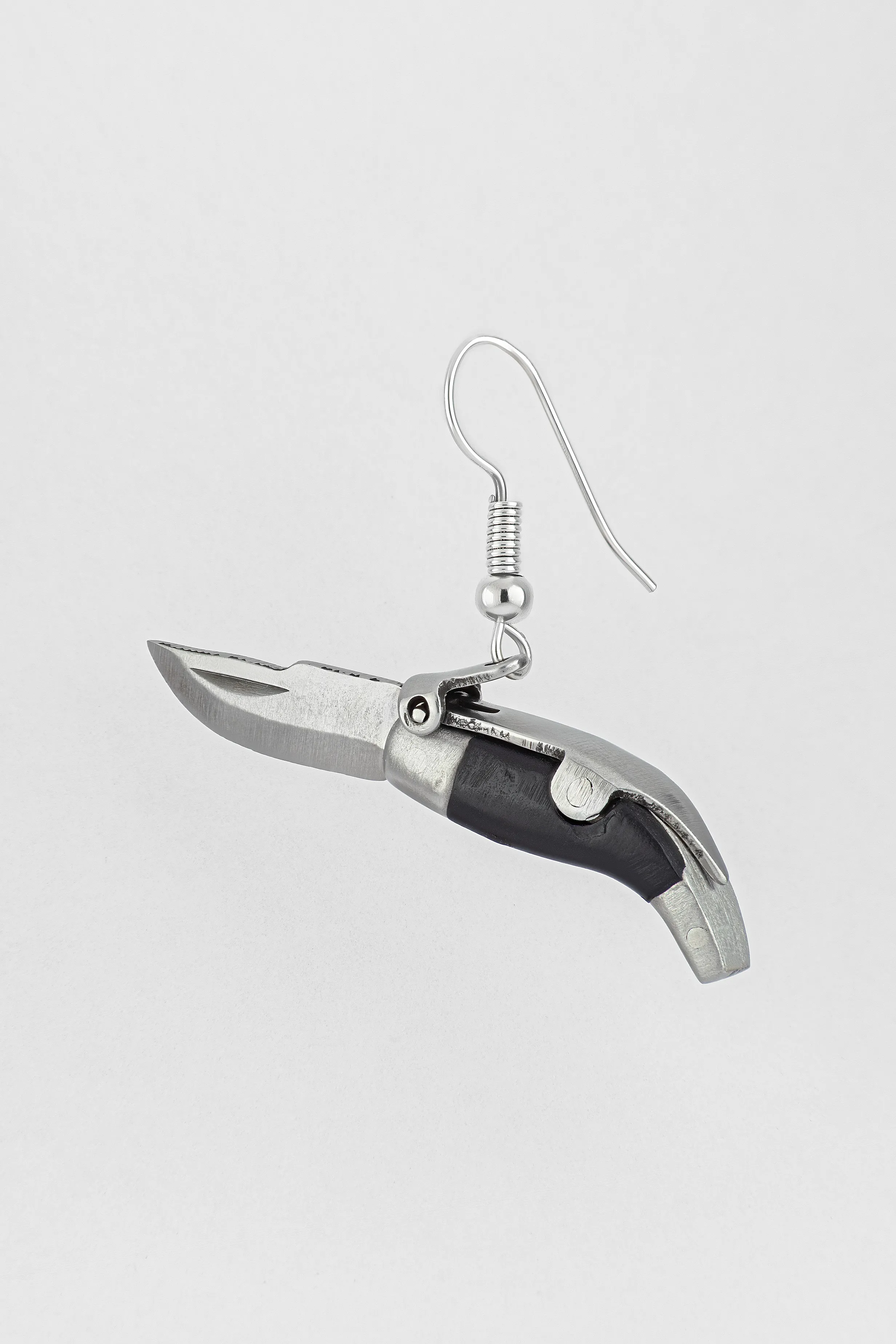
The most expressive option. Length from 2 to 6 cm. The blade swings freely as the head moves, catches light and creates motion. They come on a hook wire, on a lever back, or on a post with a drop element below it.
Short models of 2 to 3 cm work for daily wear. Long ones of 4 to 6 cm behave as evening pieces. Weight matters: for comfortable all-day wear a single earring should stay under 5 g.
Stud Earrings
A miniature blade silhouette on a post with a butterfly back. Discreet, tidy, made for every day. The element itself is usually 1 to 2 cm long and you stop noticing it within an hour.
Blade-shaped studs pass any dress code, from a bank to a sixth form. They keep the character without announcing it, which is why they are usually the first knife-shaped piece anyone buys.
Ear Cuffs
These wrap around the ear entirely or over a significant part of it, creating an armour effect. Many models need no piercing at all and hold by spring tension alone.
Blade-shaped cuffs belong to gothic, cyber and futurist styling. They are a heavy visual accent and work best as the only thing on that ear.
Threaders
A fine chain or bar that passes right through the piercing. A miniature blade sits on one side, a free end or a decorative element on the other, and the length of the drop is adjustable.
Threaders build asymmetric, contemporary compositions. They suit being worn singly in one ear with a small stud in the other.
One Earring or a Pair
Wearing a single knife earring instead of a pair has a long history behind it. One earring creates asymmetry that reads as modern. The second ear can stay empty, take a small stud, or carry a thin hoop. The contrast between the dressed ear and the free one adds movement.
A matched pair gives a more symmetrical, composed look, and it is the classic choice for formal occasions. Two identical dagger earrings frame the face and settle it.
Earrings and Hair
Long hair worn down half hides the earring, producing a flicker effect as it appears and disappears. For that context choose polished, reflective models that catch light through the gaps between strands.
Hair worn up opens the ear and the neck completely. Here you can afford large and heavily detailed pieces, because every element will actually be seen.
Cropped hair and shaved sides are the ideal frame for a blade-shaped earring. The clean line of the neck and the cheekbone is underlined by the vertical of the drop.
Weight and Comfort
For daily wear, keep a single earring under 5 g. Up to 10 g is acceptable for an evening. Titanium and aluminium are preferable for long models thanks to their lightness. Silver and steel at the same size will be noticeably heavier, and after six hours you will know it.
Earrings by Season
In summer blade-shaped earrings get maximum visibility, with no hats or hoods in the way. Sweat speeds up the tarnishing of silver, so wipe them more often.
In winter the enemy is knitted hats and hoods. Long models snag on the weave. For the cold season choose studs or short drops, and take cuffs off before pulling a hat on.
Which Earrings Suit Whom
Cropped hair and shaved sides. Long dangling dagger earrings. Open ears and neck make the perfect frame for an expressive piece.
Long hair worn down. Polished, reflective models that catch light even in the gaps between strands.
Hair worn up. Anything works. Fully exposed ears let you show the most detailed pieces you own.
Oval face. Universal. Every type of blade-shaped earring behaves.
Long face. Horizontally oriented studs or short drops. Long dangles can stretch the face further.
Round face. Long dagger earrings and threaders. The vertical line slims visually.
Square face. Earrings with soft, curved blade lines such as navajas and yatagans. The flowing shape softens angular cheekbones.
Blade-Motif Bracelets
The wrist is the second most natural place for this shape after the neck, and it is the one people forget. A blade-motif bracelet keeps the theme going without putting anything near your face.
Bangles
A solid cast bracelet with blades in relief running around the circumference. Silver, steel, bronze. Width from 5 to 15 mm. It either slips over the hand or opens on a hinge.
A rigid bracelet with blade relief pairs well with a knife pendant, creating a thematic unity without overload. Wear it alone on the wrist, with no company.
Chain Bracelets with Charms
A chain at the wrist carrying one or several miniature blade charms. Lighter and more mobile than a bangle. The charms chime softly as you move, adding a sound dimension that most jewellery lacks.
Leather Bracelets with Metal Elements
A wide leather strap with a silver or steel plate in blade form. Rugged aesthetics, a nod to rock and biker culture. It sits well opposite a watch on the other wrist.
Cuff Bracelets
An open metal bracelet whose ends are finished as blades or points. It goes on through the gap between the ends. A clean minimalist option that carries both daytime and evening.
Rings with a Blade Motif
Signet Rings
Substantial rings with a blade in relief on the face. Silver, steel, bronze. Popular in rock and biker styling. A dagger ring on the index or middle finger is a genre classic and has been since the middle of the last century.
Minimalist Rings
Slim bands with a miniature blade silhouette in place of the usual stone or setting. Sterling silver, titanium. You can wear several across different fingers, mixing them with plain smooth bands.
Claw Rings
Rings that sit on the upper phalanx and end in a pointed blade-shaped tip. A dramatic accessory for evenings and themed events, and a photographer's favourite because of what it does to the shape of the hand.
Brooches and Pins
Dagger Brooches
A brooch shaped as a dagger or stiletto, fixed to a lapel, collar, scarf or hat. A classic format that has existed in the jewellery tradition since the Middle Ages. The Scottish kilt pin in the form of a miniature sword is one of the oldest surviving examples.
The virtue of a dagger brooch is portability of position: today on a jacket lapel, tomorrow on a scarf, the day after on a rucksack. That flexibility makes the brooch one of the most adaptable formats in the whole category.
Tie and Collar Pins
A miniature blade as a tie pin. A strict, elegant accessory for a business suit. Silver or steel, 4 to 6 cm long. It slides between the folds of the tie, holding it in place and creating an accent at the same time.
Collar pins shaped as small daggers pass through the eyelets in the points of a shirt collar and join them, lifting the knot of the tie. A refined detail that only registers close up, which is precisely its appeal.
Scarf Clips and Fibulae
A clip for a scarf or shawl in blade form. Functional decoration: it holds fabric and ornaments at once. Fibulae shaped as swords and daggers were used across Scandinavia and Europe from the Bronze Age onward and are still produced as replicas and artisan pieces.
History: From Symbols of Power to Fashion Statements
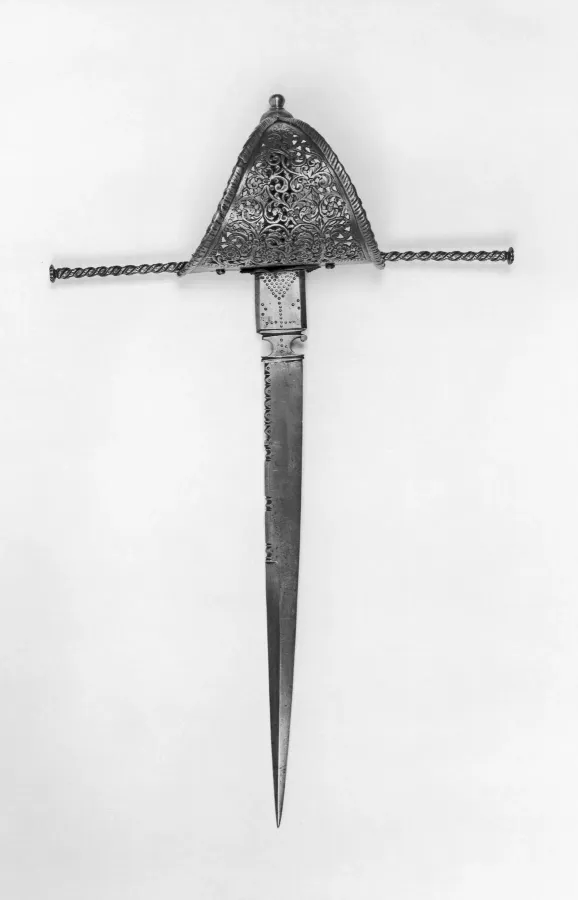
Ancient Traditions
Wearing miniature objects in the shape of tools and blades as ornaments has an ancient history:
Scandinavia (Vikings):
- Miniature axes as amulets
- Symbol of bravery and protection
- Passed down through inheritance
- Worn by everyone, regardless of gender
Japan:
- Kozuka, a decorative element in the katana scabbard
- Richly decorated with inlays
- Symbol of samurai status
- A work of art
Spain:
- Miniature navajas as jewellery
- Part of the national costume
- Family relics
- Jewellery work with inlays
Spain's case is the deepest of the lot, with five centuries of folding-knife craft, the Moorish inheritance, the bandolero legend and the way Carmen carried the form into European literature. We trace all of it in the history and symbolism of the Spanish navaja.
Caucasus:
- Miniature daggers with filigree
- Silver finishing
- Wedding jewellery
- Amulets for the whole family
Scotland:
- Sgian-dubh, part of the national costume
- Miniatures as brooches
- Clan symbolism
The Ancient World
The first miniature blades worn as ornaments appeared alongside the blades themselves. The logic was simple and universal: if a full-size knife protects against a physical threat, a miniature copy worn on the body protects against a spiritual one.
Folding blades have been recovered from Iberian burial grounds as part of the grave goods. Comparable finds in Austria are dated to the fifth and fourth centuries before the common era. Roman workshops produced folding multi-tools that were carried on the belt as useful objects and as markers of standing at the same time.
Scandinavia
The Norse built one of the most developed traditions of wearing miniature weapons as jewellery. Silver and bronze pendants shaped as swords, axes and spears, dated between the eighth and eleventh centuries, have been found across Scandinavia. Men, women and children wore them. A miniature sword could indicate membership of a warrior class, but more often it functioned as a protective charm, and handing an amulet from parent to child was a significant ritual.
Japan
The kozuka was a small blade housed in the scabbard of a katana. Practically it handled small tasks, but its main role was decorative. Kozuka handles were carved and inlaid with gold and silver, and work by outstanding makers was valued as art in its own right and collected separately from the swords.
The Caucasus
A miniature silver dagger with blackening and filigree was given to boys at birth, used as wedding jewellery and passed down through families. Caucasian silversmiths produced filigree work that has never been surpassed, with wire drawn to a fraction of a millimetre and soldered into lace.
Spain
The deepest and most developed folding-blade tradition in Europe. The navaja emerged in an era when commoners were barred from carrying swords, and over five centuries it travelled from shepherd's tool to national emblem. We trace the whole story, the Moorish roots, the capital city of Albacete, the bandolero era, the reflections in flamenco and in literature, in the history and symbolism of the Spanish navaja.
Scotland
The sgian-dubh, a small blade carried in the top of the hose, is part of traditional Highland dress. Its handle was richly finished with silver and stones. Miniature brooches and kilt pins in the sgian-dubh form survive today as an element of formal dress and appear at almost every Scottish wedding.
Medieval and Early Modern Europe
The chatelaine, a decorative chain worn at the waist carrying miniature scissors, keys and a small knife, was popular from the seventeenth to the nineteenth century. Silver and gold chatelaines with miniature blades are the direct ancestors of the modern knife pendant, and British examples from the Georgian and Victorian periods sit in museum collections across the country.
20th-21st Century: From Subcultures to Mainstream
1950s-60s, Bikers: Knife-shaped jewellery as a symbol of freedom and rebellion.
1970s-80s, Rock and Metal: Musicians popularized brutal accessories.
1990s-00s, Gothic: Dagger earrings became a mass trend.
2010s, Unisex: Knife-shaped jewellery moved beyond subcultures.
2020-2026, Mainstream: Knife pendants are worn by bloggers, actors, and everyday people. Premium collections from jewellery brands have emerged.
Why Wear Knife-Shaped Jewellery?
Aesthetics
1. Unique Form The blade silhouette is one of the strongest forms in design:
- Elongated proportions visually lengthen the neck
- Geometric clarity of lines
- Play of light on the edges
- Dynamics in motion
2. Contrast A blade-shaped ornament creates:
- A visual accent in the look
- Contrast with the soft lines of the body
- A dramatic effect
- A memorable image
3. Versatility Pairs well with:
- Minimalist clothing (basic wardrobe)
- Leather jackets
- Evening wear (contrast of brutality and elegance)
- Casual looks
Symbolism
1. Strength and Determination The blade form has for centuries symbolised:
- Inner strength
- Decisiveness
- Independence
- Self-sufficiency
2. Cultural Connection A historical replica provides:
- A link to cultural heritage
- Respect for traditions
- Interest in history
- A conversation starter
3. Individuality Jewellery shows that you:
- Are not afraid to stand out
- Value the non-standard
- Have your own style
- Are interested in symbolism
4. Collecting Miniature replicas are:
- A wearable collection
- Growing in value
- Unique in every specimen
Popular Jewellery Styles
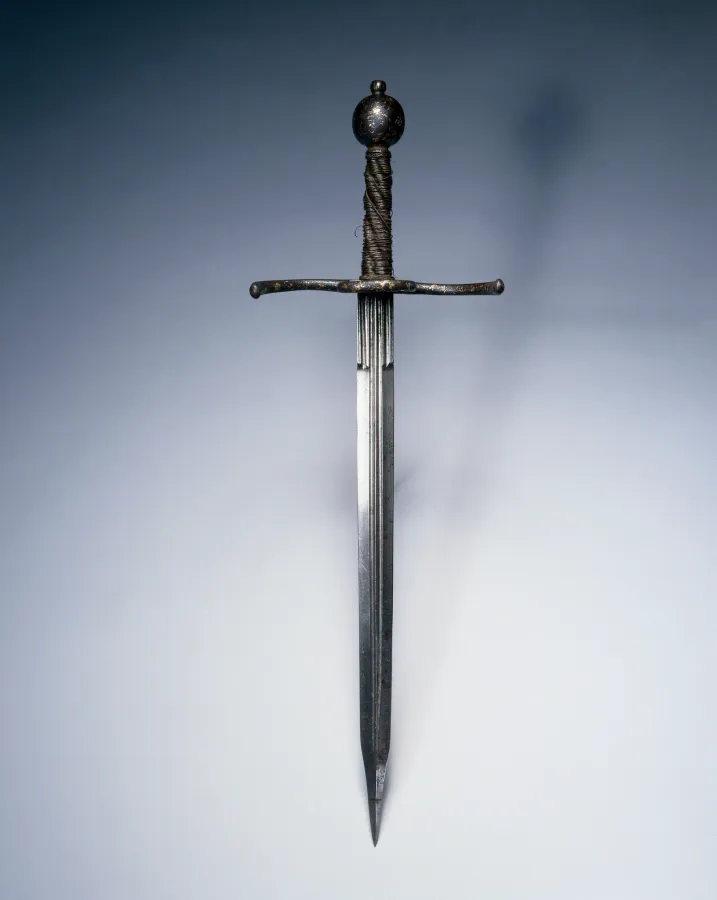
1. Viking / Scandinavian
Characteristics:
- Straight lines
- Runes and Celtic patterns
- Silver, bronze, bone
- Natural aesthetics
- Often oxidised (blackened) silver
How to wear:
- Layering
- Leather cords
- With ethnic jewellery
- Minimalist clothing
For whom: Lovers of Scandinavian aesthetics, minimalism, reenactors.
2. Japanese Style
Characteristics:
- Katana, tanto in miniature
- Precise geometry
- With tsuba (guard)
- Steel, brass, precious metals
How to wear:
- On a long chain
- Minimalistically
- Monochrome clothing
- As a central element
For whom: Fans of Japanese culture, minimalism, anime.
3. Gothic
Characteristics:
- Dramatic dagger shapes
- Blackened silver
- Red stones (garnet, glass)
- Skulls, crosses, roses
- Victorian motifs
How to wear:
- With black clothing
- Layered
- Velvet chokers
- Lace and leather
For whom: Goths, lovers of dark aesthetics, Victorian style.
4. Rock / Biker
Characteristics:
- Massive forms
- Stainless steel
- Chains, leather
- Skulls, flames
- Brutal aesthetics
How to wear:
- On a thick chain
- Leather jacket
- Rugged boots
- Denim clothing
For whom: Rockers, bikers, heavy music fans.
5. Historical Replicas (Premium)
Characteristics:
- Exact reproduction of historical specimens
- Traditional materials
- Cultural authenticity
- Collectible value
- Handcrafted
For whom: History buffs, collectors, people with an interest in a specific culture.
6. Steampunk
Characteristics:
- Brass, copper, bronze
- Gears, screws
- Victorian + industrial aesthetics
- Patinated metal
- Leather elements
How to wear:
- With vests
- Goggles
- Pocket watch chains
- Layered
For whom: Creative individuals, cosplayers, designers.
7. Minimalism
Characteristics:
- Clean lines
- No decoration
- Functional beauty
- Matte or polished surface
- Premium materials (925 silver, titanium)
How to wear:
- As the sole ornament
- Thin chain
- Monochrome clothing
- In professional environments
For whom: Minimalist enthusiasts, architects, designers.
8. Fantasy
Characteristics:
- Fantastic geometry
- Dragons, elven motifs
- Bright inserts (enamel, rhinestones)
- Large sizes
How to wear:
- At festivals
- In cosplay
- With fantasy clothing
- Layered looks
For whom: Gamers, fantasy fans, cosplayers.
Knife Pendants as Conversation Starters
One of the most practical functions of a knife pendant is social. It reliably generates questions. "What is that?" or "Is that a knife?" or "Where did you get that?" These openings lead to stories about Albacete, about the 1563 sword ban, about how a castrating knife became jewellery, about the connection between moonlight and blades. Every navaja type carries a different story, and every story creates a different conversation.
For networking events, conferences, or first dates, a knife pendant is more effective than a business card. Cards get lost. The pendant stays, and the story it generates stays longer. People remember "the person with the tiny Spanish knife" more easily than "the person from accounting."
Materials: What Knife Pendants Are Made Of
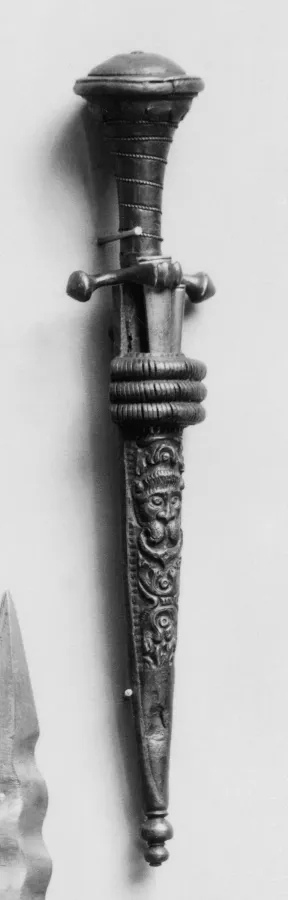
Sterling Silver Knife Pendants
A silver knife pendant in 925 sterling silver is the sweet spot for most people. It has the weight and cool lustre that makes a miniature blade look serious, not like a toy. Silver takes detail well, which matters when you are reproducing the lines of a navaja or the curve of a machete at pendant scale.
Sterling silver knife pendants can be oxidised (blackened) to bring out the texture of the handle and the edge of the blade. An oxidised silver navaja pendant looks like it has been carried for decades. Polished silver gives a cleaner, more modern feel.
Silver 925 is also the material that bridges everyday wear and special occasions. A stainless steel pendant is strictly casual. A gold knife pendant is a statement. Sterling silver works everywhere.
Look for the 925 hallmark on the bail. If there is no stamp, it is likely plated, not solid silver. Plated pieces look fine at first but the coating wears off at the edges within months.
Gold and Platinum Knife Pendants
A knife pendant in gold is rare, and that is the point. When everyone else is wearing stainless steel or brass, a gold miniature navaja stands out without shouting. Yellow gold gives the piece a Mediterranean warmth. White gold or platinum keeps it cooler, sharper, more modern.
Gold knife pendants sit in the premium segment. They are collector pieces, gifts for significant occasions, heirloom items. A gold jerezana or a platinum punta de espada is not something you buy casually. It is something you commission or find and keep for years.
Rose gold works surprisingly well on knife silhouettes, softening the aggressive lines into something that reads as elegant rather than edgy. For people who want a knife pendant that does not look like a knife pendant at first glance, rose gold is the answer.
Stainless Steel
The workhorse. Stainless steel knife pendants are practically indestructible. They do not tarnish, do not scratch easily, survive showers and swimming pools and years of daily wear without a thought. If you want a miniature knife necklace that you put on and forget about, stainless steel is the material.
The trade-off: less prestige than silver, less warmth than brass, less weight than gold. But for everyday carry, nothing beats it. Our stainless steel jewellery style guide covers how the material wears and pairs across a wardrobe.
Brass and Bronze
Warm tones, vintage feel. Brass knife pendants develop a natural patina over time that gives them character. A brass navaja pendant that has been worn for a year looks like it was pulled from an old leather pouch. Some people polish it off, others let it build. Both are valid.
Brass is also the traditional material for navaja handle fittings (virolas), so a brass knife pendant has historical accuracy going for it.
Blackened Silver
- Dramatic look
- Highlights details
- Requires no polishing
- Gothic aesthetic
Decorative Elements
Stones:
- Garnet: red, gothic
- Onyx: black, minimalism
- Swarovski: sparkle
- Turquoise: ethnic
- Agate: natural patterns
Enamel:
- Colour accents
- Traditional technique
- Vibrant motifs
Natural Materials:
- Wood: carving, naturalness
- Bone: tradition
- Horn: unique patterns
- Leather: biker aesthetic
Titanium
Light, strong, chemically inert. Density is almost half that of steel, around 4.5 g per cubic centimetre. It does not react with sweat, cosmetics or seawater. It can be anodised, coloured electrochemically, into blue, violet, gold and green without any paint or plating at all.
In its favour. The lightest jewellery metal in common use. Total hypoallergenicity, which is why it is used in surgical implants. It never tarnishes or rusts. Bright anodised colours. Genuinely comfortable in long earrings.
Against. Difficult to work, since casting, soldering and engraving all need specialist equipment. A narrower choice of models as a result. It lacks the heft of silver, which many people specifically want in a pendant.
For whom. For anyone with a metal allergy. For long dagger earrings where weight is critical. For people who like colour in their jewellery.
How to Choose a Metal: The Short Version
If you are active, move a lot, train, and have no wish to think about maintenance: 316L stainless steel.
If the beauty of the metal matters to you, you are willing to wipe a piece down every fortnight and you value proper jewellery quality: sterling silver.
If you have a metal allergy or you want light earrings for every day: titanium.
If you like vintage, ethnic and living metal that ages alongside you: brass or bronze.
If the standing of the material and its lasting worth matter: gold.
Mixing Metals
The best knife pendants often use several metals at once. A steel blade with silver bolsters. Brass pins on a steel spring. A bronze frame with a titanium insert.
In historical navaja replicas mixing is the norm: steel blade, brass liners and pins, iron spring. Every material was chosen for an engineering reason, but the visual result is that characteristic three-colour palette collectors recognise instantly.
Durability by Metal
Titanium: effectively permanent. It does not wear, does not dull.
Stainless steel: decades with no visible change. Small scratches with heavy wear.
Sterling silver: generations with correct care. It tarnishes but cleans easily. Softer than steel.
Brass and bronze: durable but soft. They patinate and live a life of their own.
Weight by Metal
Titanium: 4.5 g per cubic centimetre. The lightest. Ideal for earrings.
Stainless steel: around 8 g per cubic centimetre.
Brass and bronze: 8.5 to 8.9 g per cubic centimetre.
Silver: 10.5 g per cubic centimetre. The heaviest of the common jewellery metals, and the source of that satisfying weight in a pendant.
Blackened Silver and Other Finishes
Oxidised (Blackened) Silver
Controlled darkening of silver using sulphur-bearing solutions. The dark ground in the recesses of the relief brings out the detail: engraving, file work, ornament. The maker blackens the whole piece and then polishes the raised areas back, creating the contrast.
Blackened silver does not want polishing to a shine. Aggressive cleaning destroys the very contrast you paid for. Wipe with a soft damp cloth, working the raised surfaces only.
Rhodium Plating
A microscopically thin layer of rhodium, a platinum-group metal, applied over silver. It gives a bright, cold, platinum-like lustre and protects against tarnishing. Rhodium-plated silver holds its look far longer than untreated silver. The plating wears through after one to three years of heavy wear and can be renewed by a jeweller.
PVD Coating
Physical vapour deposition applies a thin layer of titanium nitride or a similar compound to steel inside a vacuum chamber. The result is high wear resistance and the option of black, gold, rose or blue finishes. It does not flake and does not fade.
Matte black steel finished this way looks severe and thoroughly contemporary. It has become the default choice for minimalist blade-shaped pendants and earrings.
Allergies: Choosing Metal Without Regret
Nickel, the Main Culprit
Dermatologists put nickel sensitivity at roughly 10 to 15 per cent of the population. Symptoms are redness, itching and flaking where the piece touches skin. The reaction can appear within hours or take several days.
Nickel appears in many jewellery alloys as a hardening component. In the European Union its release from items in prolonged skin contact is capped under the nickel restriction within REACH, and Britain retained the same limits. Cheap costume jewellery from untraceable sources often ignores the rules entirely.
Safe Materials
Titanium is the safest option available. Biologically inert and used in medical implants.
316L surgical steel contains nickel, but releases it in negligible quantities. It suits most people with moderate sensitivity.
Sterling silver is normally safe. Its alloying metal, copper, rarely provokes a reaction. Some makers add nickel, so check the composition.
Niobium is an exotic but entirely hypoallergenic option. Like titanium it can be anodised into a range of colours.
What to Do If You Already React
If you know you are nickel sensitive, choose titanium for earrings, where skin contact is constant, and sterling silver or 316L steel for pendants, where contact is lighter and the piece often rests on fabric.
Clear nail varnish on the contact surfaces creates a temporary barrier. It is not elegant, the varnish wears off, but as an emergency measure it works.
Take jewellery off before sport, before a sauna and in real heat. Sweat increases metal ion release and raises the risk of a reaction.
On the first wearing of a new piece, start with two or three hours. If nothing happens, extend gradually.
Skin Chemistry and Metal
Why Silver Tarnishes Faster on Some People
Sweat composition is individual. Its acidity ranges from about pH 4.5 to 7.0 between people, and the level of sulphur-bearing amino acids such as cysteine and methionine varies just as widely. The more acidic the sweat and the more sulphur it carries, the faster silver builds a sulphide film and darkens.
Diet changes the chemistry of sweat. Plenty of garlic, onion and brassicas such as cabbage and broccoli raise sulphur content. Hormonal shifts and certain medications can accelerate tarnishing too.
If your silver darkens faster than you would like, that is not a quality problem. It is your body. Rhodium-plated silver, surgical steel or titanium solve the question outright.
The Effect of Environment
Salt-laden sea air speeds up silver tarnishing. Chlorinated pool water attacks silver aggressively, so take it off. Hot springs carrying hydrogen sulphide can blacken a silver piece in minutes. City air with industrial emissions contributes its share. Hard water, which covers most of southern and eastern Britain, leaves mineral film on polished surfaces and asks for a rinse in soft or filtered water after cleaning.
The Smell of Metal
Metals have a smell. That familiar metallic scent comes from iron or steel meeting skin: fatty acids in sweat react with metal ions. Silver barely smells at all. Titanium does not smell in any circumstances.
For pendants worn under clothing, in contact with skin, the smell of steel can become noticeable in heat. If that bothers you, choose silver or titanium. If it reads to you as the smell of tools and workshops, a steel pendant hands you that for free.
Customer reviews
Zevira is a real jewellery shop. Genuine payments, deliveries and customer thank-yous.
🥰🥰🥰 gracias
Ok, ¡gracias! 🙂
Stones and Inlays
Garnet
Deep red against blackened silver. The classic pairing for gothic dagger earrings and pendants. Hardness 6.5 to 7.5 on the Mohs scale, tough enough for daily wear without special care.
Black Onyx
Monochrome severity. A black stone on silver or steel, for minimalists and anyone who wants no colour distraction. It appears constantly in pieces designed to read as neutral.
Turquoise
Ethnic colour. Blue or greenish stone veined with matrix. It sits beautifully against bronze and brass blade pendants. Hardness 5 to 6, so it wants careful handling and no ultrasonic cleaners.
Moonstone
Shimmering and quietly mysterious. A blade-shaped earring with moonstone combines the sharpness of the form with a soft, diffused glow. Hardness 6 to 6.5, fine for earrings, but pendants in heavy daily rotation need more caution.
Labradorite
Flashes of blue, green and gold. It comes into its own in larger blade pendants, where the broad surface of the stone gives the whole palette room to show.
Agate
Concentric banding and enormous colour variety. Moss agate, with green growths suspended inside, looks like a fragment of woodland set in stone. Affordable and visually interesting in equal measure.
On Stone Hardness
Pendants swing on a chain and knock against surfaces. Earrings take far fewer impacts. For pendants choose stones at hardness 7 and above, such as garnet, onyx and agate. For earrings the softer stones, moonstone and turquoise, are perfectly reasonable.
Textures and Decoration
Damascus
Layered forging of different steels followed by acid etching. The result is that characteristic wavy pattern, unrepeatable on every piece, like a fingerprint. Genuine damascus on a miniature pendant blade is a small feat of metallurgy. The pattern registers to the eye and to the fingertip alike.
Filigree
Openwork made from fine silver or gold wire between 0.2 and 0.5 mm thick. Every millimetre of the ornament is built by hand. The technique reached its height around the Mediterranean and in the Caucasus. Filigree on the handle of a pendant turns the piece into lace made of metal.
Engraving
By hand with a graver, or by machine with a laser. Hand engraving shows a living line: slight irregularities, changing depth, an individual hand. Machine work is absolutely precise and repeatable. Traditional motifs include foliage, inscriptions, hunting scenes and heraldry.
Inlay
Setting wire of one metal into channels cut in another. Brass wire on dark horn or steel. This was the signature technique of the Albacete workshops in the eighteenth century, and at miniature scale it demands the highest level of hand skill in the whole discipline.
Blade Geometry: Straight, Curved, Symmetrical
The Straight Blade
As on a stiletto or a punta de espada navaja. The energy of direct action: purpose, precision, severity. In a pendant it creates a vertical axis that lengthens and slims. For people who gravitate towards order and clarity.
The Curved Blade
As on a jerezana or bandolera navaja. Fluidity, grace, movement. The sensation is one of flow, quite different from the static vertical of a straight blade. For those who value spontaneity and dislike being pinned down.
Symmetry and Asymmetry
A symmetrical dagger pendant, mirrored on both sides, looks formal, with a heraldic flavour. An asymmetric pendant, where the spine and the edge follow different lines, looks more organic, more alive, more obviously descended from a working tool.
The Point as Focal Point
The eye slides along the lines of the blade towards the point, exactly as it does along an arrow. Worn point down, the pendant directs attention to the centre of the chest. Worn point up, it sends attention towards the face and neck.
The Golden Ratio
Many classical blade shapes drift intuitively towards golden ratio proportions of roughly 1 to 1.618. At pendant scale any disharmony in proportion is glaring. An experienced maker feels the right proportions rather than calculating them, but centuries of evolution in the form sit behind that instinct.
How to Choose?
By Style
For daily wear:
- Small size (up to 4 cm)
- Lightweight
- Minimalist design
- Durable materials
For special occasions:
- Large models
- Precious metals
- Decorative elements
- Eye-catching design
By Budget
Basic Budget:
- Steel, brass
- Simple forms
- For a first experience
Medium Budget:
- 925 Silver
- Medium detail
- Optimal price/quality ratio
Premium Budget:
- Historical replicas
- Handcrafted
- Collectible specimens
- Premium materials
By Size
Miniature (up to 2 cm):
- Understated
- For work
- Easy to wear
Medium (2-4 cm):
- Universal size
- Noticeable but not loud
- Popular choice
Large (4-7 cm):
- A statement piece
- Centre of the look
- For those confident in their style
Knife Pendants and Gender: Who Wears What
The old assumption that knife jewellery is "for men" has been fading for years. Blade aesthetics work across gender lines. But the way different people wear them tends to differ.
Men often choose knife pendants as their first piece of jewellery. A pendant that does not feel like "jewellery" in the traditional sense makes the entry easier. The straight, austere lines of a punta de espada or the chunky silhouette of a capaora sit closer to a military medal than a mall pendant. On a thick chain or leather cord, worn under or over a shirt, this becomes functional style rather than decoration.
Women gravitate toward the more flowing forms. The lunar knife with its crescent curve, the Curva Helada with its Moorish sweep. On a thin chain at 42-45 cm, these pieces read as elegant and powerful simultaneously. The duality is the point: beautiful and dangerous, soft and sharp.
How to Wear It: A Practical Guide
Pendant Size
Up to 2 cm. A restrained accent, visible only close up. For work and for minimalism.
2 to 4 cm. The universal size. Noticeable without dominating. The right choice for a first knife pendant.
4 to 7 cm. A statement. The centre of the outfit, and it needs the rest of the look to stay quiet.
Chain Length
40 to 45 cm. The pendant sits at the collarbone. The classic. Clearly visible with an open collar.
50 to 55 cm. Just below the collarbone. Versatile, and it works over clothing as well as under it.
60 to 70 cm. Below chest level. It swings as you move. A loose, relaxed register.
Chain or Cord
Fine chains, 0.8 to 1.2 mm. For miniature and mid-size pendants. They do not compete with the piece.
Medium chains, 1.5 to 2.5 mm. For mid-size and large pendants. The balance between presence and elegance.
Heavy chains, 3 mm and above. Rock and biker styling. Large links suit a substantial pendant.
Leather cords. Ethnic and vintage atmosphere. Natural leather, adjustable length.
Rubber cords. The modern alternative. Hypoallergenic, indifferent to water, never blackens.
Contrast Combinations
The strongest move in the whole category: a rugged shape against soft, feminine or strictly formal clothing. A blackened silver pendant on a white shirt. Dagger earrings with garnets and a plain black dress. A silver blade over a pastel cashmere jumper.
Monochrome Harmony
A silver knife pendant on a silver chain with silver earrings. Black or grey clothing. Unity and completeness, and it behaves impeccably in a corporate setting where contrast would read as loud.
Layering
Three or four chains at different lengths, one of them carrying the blade. The pendant belongs either on the longest chain or on the shortest. Buried in the middle it simply disappears.
Asymmetry
A long dagger earring in one ear and a small stud in the other. Or a cuff on one ear and nothing on the other. It creates movement and reads as thoroughly contemporary.
Pendant and Neckline
A V-neck is the ideal partner for a knife pendant. The lines of the neckline and the silhouette of the blade point the same way, and the two become one shape.
A round neck creates contrast with the elongated form. The contrast can be handsome, but the pendant competes with the line of the neckline rather than joining it.
A polo neck lets you wear the pendant over the fabric, where it sits like a brooch against a textured ground and reads completely differently.
Metal Colour and Skin Tone
A cool colouring, pinkish skin tone, ash or black hair, blue or grey eyes, suits silver, steel and blackened silver.
A warm colouring, golden skin tone, red or chestnut hair, brown or green eyes, suits gold, brass and bronze.
These are guidelines rather than laws. Blackened silver and black steel suit absolutely everyone, with no exceptions worth mentioning.
Body Proportions
On a smaller, finer frame, large pendants of 5 to 7 cm can weigh the look down visually. Models up to 3 or 4 cm are the sweet spot.
On a tall or broad frame a small pendant can vanish. Mid-size and large models keep the proportions honest.
Pairing with Other Jewellery
With rings. Matching the metal works best. A silver knife pendant with silver rings. Mixing silver and gold is allowed but takes confidence.
With bracelets. A leather bracelet answers a pendant on a leather cord. A silver chain at the wrist answers a silver pendant at the neck.
With watches. A mechanical watch on a leather strap complements a historical replica. A sports watch belongs with steel and titanium.
With other pendants. When layering, either commit to one theme, blade plus shield plus rune, or stay neutral, one pendant and plain chains. Do not mix rugged with sweet at the level of the jewellery: contrast belongs between the jewellery and the clothing, not inside the jewellery itself.
Pendant and Neckline Depth
A deep V-neck: a pendant on a longer chain of 55 to 65 cm, centred inside the frame. It becomes a visual continuation of the neckline.
A boat neck: a short chain of 40 to 45 cm. The pendant sits at the collarbone and answers the horizontal line above it.
A stand collar: the pendant goes over the clothing and lies on the fabric like a brooch.
Upload a photo of your pet, someone you love, or an object. We'll build a 3D model and hand-cast it in pewter.
Ten Complete Looks
Office. White shirt, dark trousers. A silver stiletto pendant of 2 to 3 cm on a fine 45 cm chain. Micro-blade studs.
Evening. Black dress. A blackened silver dagger pendant with a garnet on a 50 cm chain. Long dagger earrings. A velvet choker.
Viking. Chunky knitwear. Leather jacket. A bronze sword pendant of 5 to 6 cm on a leather cord. Minimal other jewellery.
Japan. Monochrome clothing. A polished steel tanto pendant on a long fine 65 cm chain. Nothing else at all.
Rock. Leather jacket. Black T-shirt. A substantial steel pendant on a heavy chain. Ear cuffs. A studded bracelet.
Contrast. A soft pastel dress. A silver navaja pendant of 3 to 4 cm on a fine chain. Blade-motif threader earrings.
Summer. White linen shirt. A steel pendant of 2 to 3 cm on a rubber cord. Tanned skin.
Dark academia. Wool jacket. Shirt and tie. A silver stiletto pendant under the shirt, showing as you move.
Historical authenticity. Plain clothing in natural tones. A navaja pendant in steel, horn and brass on a braided leather cord.
A first date. Whatever you feel confident in. One mid-size pendant on a chain. Tell the story behind it. That works better than any profile ever written.
Everyday Scenarios
A Weekday Morning
Shirt, jeans or trousers. A fine silver chain at the neck with a minimalist stiletto pendant of 3 cm. It hides under the first button or sits in an open collar. Colleagues who see it every day stopped noticing months ago. A new person will ask about it within the hour, and you have a story ready.
A Party or a Dinner
Black clothing, an open neck. A blackened silver navaja pendant on a medium 50 cm chain. The mechanism works. You demonstrate it at the table, opening the miniature blade. The carraca sound turns heads. Someone asks to hold it. Someone else asks where to buy one.
A Concert or Festival
Dagger earrings of 5 cm. A substantial pendant on a leather cord. Blade-motif rings. The full set, which would be excessive on an ordinary Tuesday, looks entirely at home here. This is the one context where more is genuinely more.
Travelling
One versatile mid-size pendant on a chain that never comes off, not on the plane, not in the hotel, not on the beach, provided it is steel or titanium. It becomes a travelling companion. And if your route passes through Albacete, an hour in the knife museum adds a layer of meaning to the piece you are already wearing.
An Evening at Home
The pendant lies on the bedside table. Before sleep you pick it up, click the mechanism, look at the detail. A tactile ritual that helps the switch from working mode to rest, and one reason functional miniatures hold people longer than decorative ones.
Navajas: A Premium Example
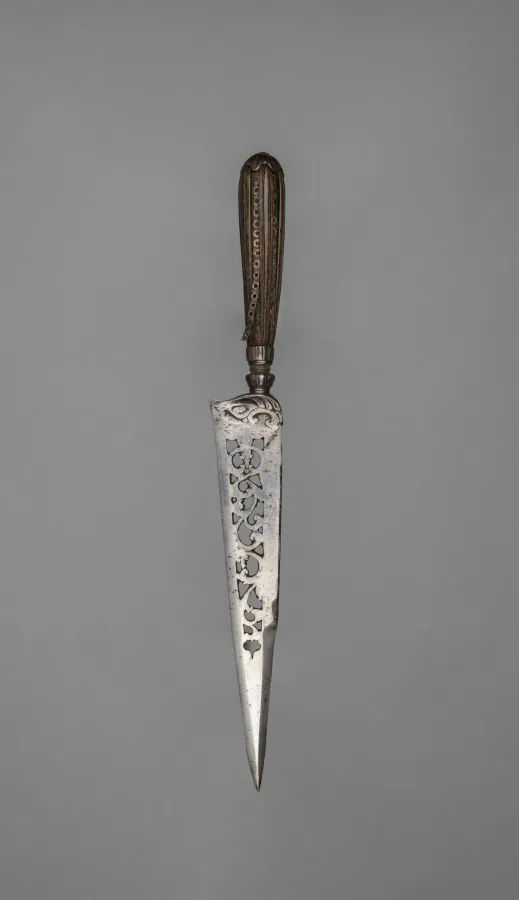
Spanish Heritage in Miniature
Spanish Navaja:
- Folding miniatures of the 18th century
- "Lengua de Vaca" (Cow's Tongue) shape
- Horn, stainless steel, brass
- Traditional Palanquilla mechanism with the characteristic "carraca" sound
- Status of Cultural Heritage of Spain (BIC)
Jerezana Navaja:
- Origin in Andalusia, 17th century
- Elongated elegant silhouette
- Symbol of personal strength and status
- Associated with Jerez, Cádiz, and Seville
- Status of Cultural Heritage of Spain (BIC)
Punta de Espada Navaja:
- Straight and sharp blade
- Geometry inspired by the sword
- Restrained and precise aesthetics
- Traditional form from Albacete
- Status of Cultural Heritage of Spain (BIC)
Bandolera Navaja:
- Linked to Andalusian bandoleros
- Pronounced curved line
- Practical and protective purpose
- Symbol of freedom and independence
- Status of Cultural Heritage of Spain (BIC)
Sevillana Navaja:
- Graceful decorative profile
- Urban and everyday form
- Emphasis on aesthetics along with function
- Local artisan tradition
- Status of Cultural Heritage of Spain (BIC)
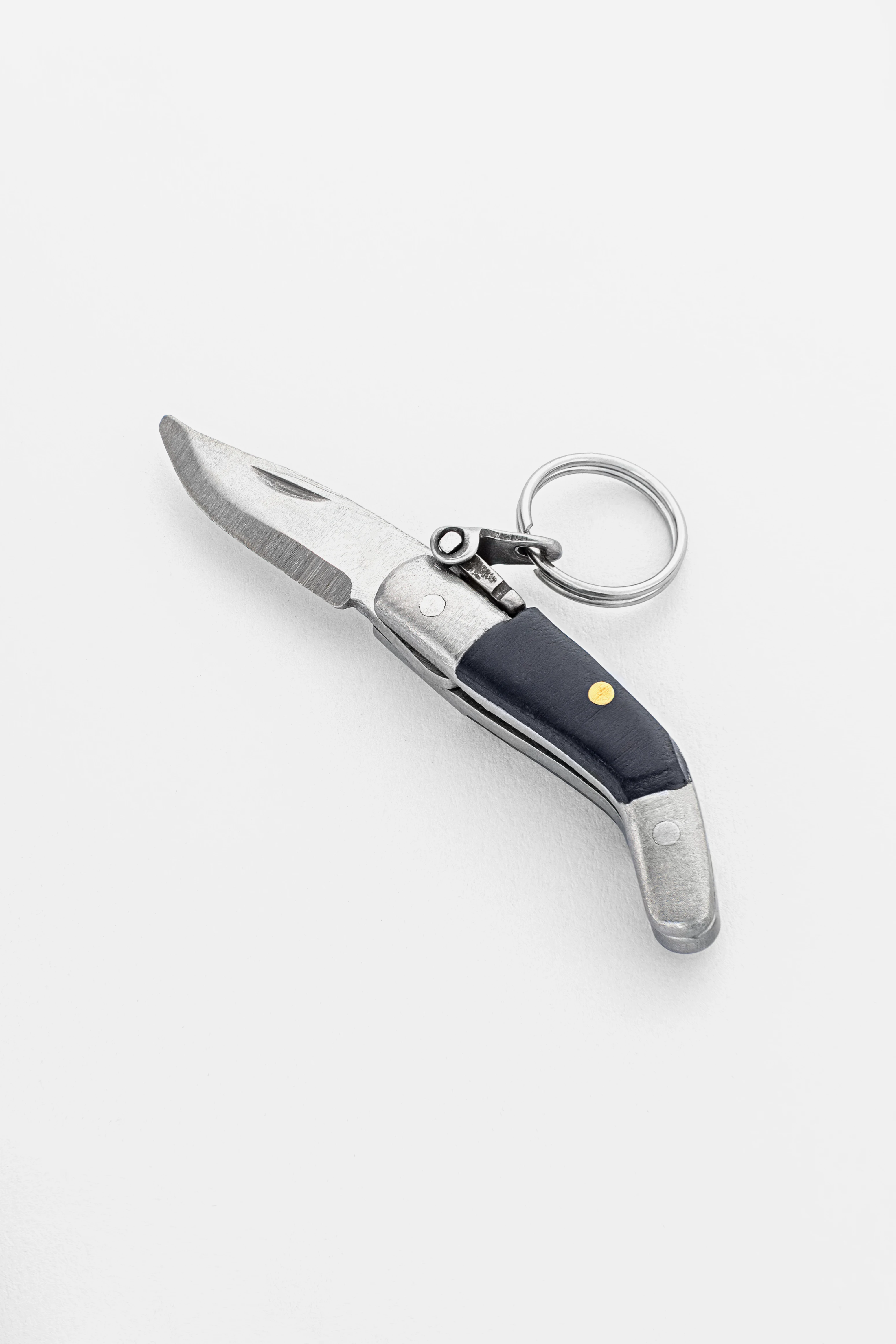
Navaja Capaora Mini is a functional miniature of the historical 18th-century Spanish navaja. An ideal example of how jewellery can be simultaneously:
- Historically accurate: reproduces the "Lengua de Vaca" shape
- Culturally valuable: linked to a craft with BIC status
- Functional: with a moving Palanquilla mechanism
- Aesthetically strong: recognisable silhouette
- Collectible: limited edition (edición limitada)
How to wear historical replicas:
- Standalone ornament
- Leather cord or silver chain
- With modern classics or ethnic clothing
- A conversation piece
Average Characteristics:
- Size: ~40 mm total, ~17 mm blade
- Weight: ~4.3 g (comfortable wear)
- Material: knife steel
- Mechanism: Palanquilla with the characteristic "carraca" click or other functional working mechanism.
Why Is It Worth the Money?
Historical Value: Albacete has been the capital of Spanish knife-making for over 600 years. The tradition is state-protected.
Quality: Handcrafted, exact reproduction of 18th-century museum specimens.
Uniqueness: Limited series; each item is individual.
Sound: The "carraca" mechanism is the "voice of steel," the audio signature of Spanish craft.
Collectible appeal: Limited edition pieces are valued by collectors for their craft and rarity.
Albacete: Five Centuries of Craft
Zevira works in Albacete, a city in south-eastern Spain that has been the capital of the blade trade for more than five hundred years. That is not marketing shorthand. Documents record organised guilds of bladesmiths from the fifteenth century onward, and the first master whose name survives in the archives, Alonso Fernandez, worked here.
By the eighteenth century the city held around twenty substantial workshops, and a significant share of a population of roughly ten thousand was tied to the blade trade in one way or another. Work from that period is distinguished by its finish: engraving, inlay, elaborate locking mechanisms.
In 2017 the craft of making the Albacete navaja was formally recognised as an Asset of Cultural Interest, Bien de Interes Cultural. That is the highest level of protection Spain gives to intangible heritage.
The Carraca Mechanism
Teeth are filed into the heel of the blade. As it opens they pass one by one across the spring, producing that rhythmic click. The sound became the audio signature of the Spanish blade trade, and any Spaniard recognises it instantly.
In jewellery miniatures the mechanism is reproduced at scale. A navaja pendant of around 40 mm makes the same click on opening as the full-size original. A genuine working mechanism, shrunk to the size of an ornament.
The Twelve Canonical Models
Over the centuries twelve canonical navaja models settled in Albacete. They remain an inexhaustible source of ideas.
Lengua de Vaca, cow's tongue. A broad short blade. In miniature it makes a powerful, emphatic pendant.
Punta de Espada, sword point. Straight and narrow. The most elegant silhouette of the family.
Jerezana. A curved blade with Andalusian associations. A flowing line and considerable grace.
Sevillana. A refined decorative profile, urban and polished.
Bandolera. A pronounced curve, and associations with freedom and independence.
How a Miniature Navaja Is Made
A single miniature passes through dozens of hand operations.
The blade is cut from steel, shaped and ground. Every tenth of a millimetre counts: the blade must fit inside the handle when closed and still hold its strength. Then heat treatment, quenching, tempering.
The spring is cut and calibrated. Its tension has to be exact, enough to lock the blade, gentle enough for fingers. If there is a carraca, the teeth are fitted to the spring individually until the sound comes out clean.
The horn handle is heated, sawn and formed. Horn is fragile at this scale, and one wrong movement splits the blank.
Assembly: every part is pinned and fitted, and each pin is peened by hand. Final polish. The mechanism is tested by opening it over and over.
The whole process for one miniature runs from several hours to several days.
What BIC Status Means
Recognising the navaja as an Asset of Cultural Interest means the techniques, the shapes and the traditions are under state protection. The twelve canonical models, the methods of working horn, the mechanism designs, the hardening technology. All of it documented and protected.
For a buyer that is a guarantee of authenticity. A navaja pendant made in Albacete by a maker working inside a protected tradition is a wearable piece of cultural heritage. The difference is roughly that between ordinary wine and wine with a protected designation of origin.
Today's Makers
Several dozen workshops operate in Albacete now. These are working craftspeople who combine inherited technique with modern tooling. Traditional carbon steel alongside contemporary stainless. Hand-worked horn and electric grinders. Old drawings and precision instruments.
Every generation added something without abandoning the foundation. Nineteenth century makers adopted English steel while keeping the Albacete hardening method. Twenty-first century makers use lasers for engraving while still assembling mechanisms by hand. The tradition survives because it keeps breathing.
Gift Tradition
Ritual of Friendship
In Spanish folklore, there is a beautiful tradition: a knife-shaped ornament is not simply given. The recipient must "buy" it for a symbolic coin (usually of the smallest denomination).
This ritual turns the exchange into a meaningful ceremony that strengthens friendship and trust. When you buy such a piece as a gift, you aren't just getting an object, but the opportunity to create a significant moment.
Superstition and the Ritual of the Coin
A Blade Cannot Simply Be Given
One of the most widespread beliefs in the world holds that a knife, or any object with an edge, must never be given outright, because the point will cut the friendship between giver and receiver. To neutralise it, the receiver hands the giver a symbolic coin of the smallest denomination available. Formally the gift becomes a purchase, and the friendship stays intact.
The custom is recorded across dozens of cultures. In Spain a navaja is bought back with a centimo. In Finland a puukko costs a cent. In Britain a blade costs a penny, and the practice is still common enough that most people over fifty will recognise it without explanation. In Japan a five-yen coin accompanies a gifted kitchen blade. In Argentina and Uruguay a coin changes hands for an asado knife. Greece does the same.
Why It Survives in the Twenty-First Century
The buy-back ritual satisfies a real appetite for small ceremonies. The giver tells the story. The receiver digs out a coin. An exchange happens. That little piece of theatre lodges in the memory far more firmly than any polite thank you.
For pendants and earrings in blade form the tradition takes on a particular charm. You give a piece of jewellery shaped like a blade. You tell the old story. The receiver buys it back with loose change from a pocket. A shared moment that both of you will remember.
Some buyers put the coin inside the gift box with a card explaining the custom, so the receiver knows what to do.
Which Way the Point Faces
In several traditions the direction of the point matters. Upward means protection and readiness. Downward means peace and rest. Some owners choose their orientation deliberately. Others go by what looks better. Both approaches are perfectly sound, and nobody has ever settled the argument.
The Ritual of First Wearing
Hold it in your hands. Study the detail. Open and close the mechanism. Feel the weight. Only then put it on. That moment of introduction to a new piece builds the emotional link that makes wearing it mean something.
How the Blade Is Worn Around the World
Southern Europe
In Spain, Italy and Greece knife pendants are read in the context of local craft traditions. In Spain the navaja is a national emblem and miniature navaja pendants are sold everywhere. Italy has a strong stiletto tradition of its own. The southern European buyer values the historical anchor and cares about authenticity.
Northern Europe
In Scandinavia, Germany and Britain blade-motif earrings are more often read through subculture or through minimalism. Scandinavians prefer clean lines. Germans value technical quality. British buyers pay attention to originality and to the story behind a piece, which is why the Albacete provenance carries weight here.
North America
A wide spectrum, from bikers to minimalists. The American market values variety and is willing to experiment with scale and material in ways European buyers often are not.
Japan
Care and attention to detail. Miniature katana and tanto worn as pendants have a long domestic tradition, and the standard of finish expected is exacting.
Latin America
Strong local blade traditions of their own, from the Argentine facon to the Mexican machete. A shared language with Spain creates a natural bridge to the Albacete tradition.
The Knife Pendant at a Wedding
In a number of cultures a miniature blade is traditional wedding jewellery. In the Caucasus a silver dagger formed part of the groom's wedding set. In Scotland the sgian-dubh is a required element of formal Highland dress, which means it appears at a large share of Scottish weddings to this day.
For couples who share this aesthetic, matching blade-silhouette pendants make a more personal alternative to the standard paired pendants split into two halves of a heart.
The buy-back ritual turns the giving of such a pendant into a small ceremony that fits an engagement or an anniversary perfectly. It is elegant, it carries meaning, and it stays in the memory.
Miniature blade pendants also work as wedding favours. Every guest receives a piece with a coin and a card explaining the custom. Unusual, and it creates a shared ritual moment across the whole room.



Blade Form in Art and Architecture
Painting
In medieval iconography the sword stood for martyrdom, justice and spiritual struggle. In seventeenth century still life a folding knife signalled the transience of earthly things. In nineteenth century Romantic painting the Spanish navaja became the attribute of the authentic Spaniard: passionate, proud, dangerous.
Architecture
The blade shape has a hold on architects. A number of well-known buildings carry a blade silhouette: narrow, elongated, with a sharp edge at the upper floors. Elongated proportions, a point, and the play of facet and light work identically at a scale of four centimetres and at a scale of three hundred metres.
Tattooing
Daggers and swords rank among the most popular motifs in tattoo culture worldwide. A dagger through a heart, a dagger with a rose, a dagger with a serpent. Tattoo and pendant draw on the same archetypes. Someone with a dagger on the forearm is very likely to appreciate a blade at the throat. The pendant has one advantage: it comes off.
The Sensory Experience
Sound
The metallic chime of a pendant meeting the clasp of its own chain. The soft knock of silver against a button. The snap of a folding mechanism. The distinctive rattle of the carraca when a miniature is opened deliberately. These sounds create an auditory dimension that most descriptions of jewellery ignore completely.
In quiet moments, when someone is concentrating or thinking, the faint chime of a pendant can register as a calming background. And the carraca sound, produced deliberately, creates a pause that draws attention. This is not noise. It is the voice of the metal.
Weight
The sensation of weight on the chest is part of the experience of wearing. A piece that is too light is never felt at all. One that is too heavy becomes tiring. The optimum for a daily pendant sits between 3 and 10 g.
Temperature
Metal feels cold at the moment you put it on. That instant of cool silver against the chest in the morning is bracing. Within a few minutes the metal reaches body temperature and disappears from awareness. The piece becomes part of you.
Take a warm pendant off at the end of the day and rest it on your palm, and the amount of heat it has stored is genuinely surprising. A small reminder that the piece has literally been sharing your body heat all day.
Knife Earrings: The Bold Statement
Knife earrings deserve special attention because they occupy the most visible position of any jewellery piece: right beside the face. A knife pendant can hide under a shirt. An earring cannot. It is always visible, always in the frame of conversation, always part of how your face is perceived.
The navaja earring that actually folds open is a unique category within knife earrings. It is interactive. Every opening and closing is a small performance. During conversation, while waiting, while thinking: the deliberate unfolding becomes a ritual. People who fidget with their earrings, twisting studs or pulling hoops, find the navaja earring channels that energy into something deliberate and satisfying.
Wearing a knife earring in one ear only (asymmetry) creates a stronger statement than wearing a pair. One ear carries the blade. The other ear carries a small stud for balance, or nothing at all. The asymmetry draws the eye to the knife side.
Jewellery Care
Simple Rules
925 Silver:
- Special silver polishing cloths
- Soft brush + soapy solution
- Store in a closed jewellery box
Stainless Steel:
- Low maintenance
- Soapy solution
- Microfiber polishing
Blackened Silver:
- DO NOT polish aggressively
- Soft damp cloth
With Moving Parts:
- Occasional drop of oil on the mechanism
- Do not overload
General:
- Remove before sleep
- Remove before sports
- Store separately from other jewellery
Storing Your Pieces
A closed box slows tarnishing because it limits contact with air. A sachet of silica gel inside absorbs the damp, which matters more in a British house than most people expect. Anti-tarnish strips, sold in jewellery shops, buy you several extra months between cleanings. Every piece gets its own pouch or its own compartment, because metal scratches metal.
What Damages Jewellery Fastest
Perfume and cosmetics applied after the jewellery goes on, rather than before. Chlorinated pool water. Sleeping in a piece, where body pressure deforms thin sections and the pillow polishes scratches into the surface. Sport, which combines sweat, friction and impact. None of these ruin a piece overnight, but together they take years off it.
A Six-Month Check
Twice a year, look over the bail, the chain, the clasp, the mechanism and any stone settings. A loose bail takes a jeweller two minutes to close. A lost pendant takes considerably longer to replace. This is the single cheapest habit in the whole of jewellery ownership.
Detailed Care by Material
Sterling Silver: Daily Care
Wipe with a soft dry cloth after every wearing. That removes sweat and skin oil and slows tarnishing. Every two or three weeks go over it with a proper silver cloth. Once a month, or as needed, wash in warm soapy water with a soft brush. A child's toothbrush is ideal.
For heavy tarnishing use a professional silver cleaner. Do not use the bicarbonate and foil method on pieces with stones, blackening or enamel: the chemistry involved can strip the decorative work.
Store in a closed box. Contact with air accelerates tarnishing.
Sterling Silver: What to Avoid
Chlorinated water in a swimming pool attacks silver aggressively. Take it off, every time.
Hydrogen sulphide in hot springs and thermal baths will blacken a piece within minutes. Take it off.
Seawater is not critical, but salt leaves whitish marks. Rinse in fresh water after swimming.
Cosmetics and perfume go on before the jewellery, never after. The chemistry in fragrance reacts with silver.
Sport means sweat, friction and knocks. Take it off.
Blackened Silver: A Different Approach
The main rule is not to polish the whole piece. The beauty of a blackened item lies in the contrast between dark recesses and bright raised areas.
Soft damp cloth. Mild soapy water and a soft brush, working the raised surfaces only. No abrasives. No silver cleaners, which will remove the blackening entirely.
Blackening is not a permanent coating. With heavy wear the patina on raised areas gradually rubs back, exposing bright silver. That is normal and arguably gives the piece character. A jeweller can restore it if you would rather.
Stainless Steel: Minimum Effort
Soapy water and a soft cloth. It survives the shower, the pool and the beach. Long contact with chlorinated water can leave a whitish film, easily removed.
The one caution: abrasive cleaners and metal brushes leave scratches on a polished surface. Soft materials only.
Titanium: Practically No Care
A soft cloth. Soapy water if it needs it. It does not tarnish, does not rust and does not react to anything.
Anodised, coloured titanium is stable, but constant friction in one spot can alter the thickness of the oxide film and therefore the shade. The process is extremely slow and only shows after years of heavy wear.
Brass and Bronze: Living Metal
Two approaches. Regular cleaning with a brass polish, a mix of lemon juice and salt, or a proper polishing paste. Or deliberate acceptance of the patina. Both are correct.
The greenish mark on skin washes off with water. Beeswax or clear nail varnish on the contact areas creates a barrier.
Pieces with Stones
Stones are sensitive to impact and to chemicals. Do not immerse a piece with stones in cleaning solutions. Wipe with a soft damp cloth. Stones below hardness 7, such as turquoise and moonstone, need particular care.
Check the setting every few months. If a stone moves at all, take it to a jeweller before it falls out.
Mechanisms: Caring for Moving Parts
Every few months, a micro-drop of watch or mineral oil on the pivot pin. Do not use vegetable oil, which thickens, and do not use general purpose sprays, which leave a sticky residue.
If the action becomes stiff, do not force it loose. Apply oil. Give it five minutes to travel. Then try again.
Never flick the mechanism open. Smooth, controlled movement extends the life of the spring and the teeth.
How to Give One: Step by Step
Step 1: Choose the Piece
If you do not know the recipient's taste, take a minimalist mid-size model in sterling silver. It is the safest option in the category.
If you do know their taste, choose by style: gothic, ethnic, minimalist, historical replica.
Step 2: Prepare the Coin
A small coin of any denomination. Some people pick a coin from the country the piece comes from, a Spanish centimo for a navaja. Others use whatever is in the pocket. Both work.
Step 3: Write the Card
A short account of the buy-back custom: "By an old tradition, a blade-shaped piece cannot simply be given. The receiver must buy it. Hand the enclosed coin back to the giver, and the friendship stays safe."
Step 4: Package It
A box or case with a soft lining. Coin and card inside. If the piece has documentation, include that too.
Step 5: Hand It Over
Tell the story. Explain the custom. Ask for the coin. Accept payment. Friendship, or love, duly protected.
The ritual takes a minute and is remembered for years.
Leave your email, we'll send your discount code. No spam, unsubscribe anytime.
The code arrives by email, valid on your first order.
Your First Purchase: A Step by Step Route
Step 1. Decide the purpose: everyday wear, evenings, a collection, a gift.
Step 2. Decide the style: minimalism, gothic, ethnic, historical replica.
Step 3. Decide the material with allergies in mind: titanium if you react to metals, steel for an active life, silver as the classic, gold for the top of the range.
Step 4. Choose the size: mid-size, 2 to 4 cm, for a first pendant.
Step 5. Choose the chain: fine for minimalism, medium for versatility, leather cord for an ethnic feel.
Step 6. Check the quality: crispness of casting, polish, security of the bail, action of the mechanism.
Step 7. Get a coin ready if it is a gift.
And the part that matters most: choose the piece that produces a reaction. A knife pendant or knife earrings carry a character of their own, and yours has to meet it. If you pick one up and it feels like yours, you have found your blade.
What Knife Pendants Are Called Abroad
If you search on international marketplaces, the vocabulary is worth knowing.
In English: knife pendant, blade pendant, dagger necklace, knife earrings, dagger earrings, blade earring, miniature knife necklace.
In Spanish: colgante navaja, colgante cuchillo, pendientes cuchillo, pendientes daga.
In German: Messer-Anhaenger, Dolch-Anhaenger, Messer-Ohrringe.
In Italian: ciondolo coltello, ciondolo pugnale, orecchini pugnale, orecchini stiletto.
In French: pendentif couteau, pendentif poignard, boucles d'oreilles dague.
In Portuguese: pendente faca, pendente punhal, brincos punhal.
Searching in the local language of the country a piece comes from usually surfaces the makers, not the resellers, which is generally where you want to be.
Metal Electrochemistry: The Practical Side
Wearing several pieces in different metals at once can set off galvanic corrosion. If a silver chain rests permanently against a steel pendant in the zone that touches skin, one of the two metals may darken faster in the contact area. The effect is usually slight, but for collectable pieces it makes sense to limit long contact between dissimilar metals. The simple fix is a bail in the same metal as the chain.
The same logic explains why a mixed stack of chains sometimes leaves one piece looking tired while the rest look new. Rotate them, or group by metal.
How to Judge Quality in the Shop
Visual Check
Surface: even shine or even matte, with no blotches, flow lines or bubbles. Crisp casting lines. No sharp burrs, which scratch skin and catch on knitwear.
Bail: firmly attached. The ring should be large enough for your chosen chain. It should not open under light pressure.
Stones, if any: seated tightly in the setting. No movement. No cracks or chips.
Hands-On Check
Weight: consistent with the stated material. Silver is heavier than most fakes. Titanium is lighter than steel at the same size.
Surface: smooth, with no roughness unless the design calls for it. The edges of the pendant should not bite into a fingertip.
Mechanism, if there is one: smooth travel with no catching. A clear lock with the characteristic click. The blade should not wobble in the open position. The spring should return it without play.
The Magnet Test
Silver is not magnetic. If a piece stamped 925 is drawn to a magnet, it is plated steel. 316L stainless steel is usually weakly magnetic or not magnetic at all. Strong attraction points to cheap steel.
Hallmarks
On silver look for a 925 or sterling stamp. On gold, 375, 585 or 750. In Britain the Assay Offices in London, Birmingham, Sheffield and Edinburgh apply their own marks, which give you the metal, the office and the year. The stamp should be crisp and readable. An absent hallmark does not automatically mean a fake, since not every country requires marking, but a present one is an extra guarantee.
Paperwork
A certificate for premium work. A serial number for limited runs. Information about the maker or workshop. A description of the materials. Care instructions. Anything that lets you trace the piece later also protects its value later.
Knife Pendants and Children
Under Fourteen
Miniature pendants in hypoallergenic materials, titanium or surgical steel, can suit a child if the family shares this aesthetic. Size up to 2 cm. No moving parts, for safety. A sturdy chain with a reliable clasp. Do not give small children functional miniatures with mechanisms: small moving parts are not appropriate at that age.
Fourteen to Seventeen
Minimalist models in steel or silver. Stud earrings. Small pendants on a fine chain. This is a good age for a first grown-up piece of jewellery with character. A gift accompanied by the buy-back ritual and the story behind the shape can turn into a genuine milestone.
Travel and Customs
Jewellery for personal use is normally not declarable, provided its value stays under the relevant customs threshold. For expensive collectable pieces, declaring is sensible, particularly if you plan to bring the item back in.
Modern replicas fall outside restrictions on exporting cultural property: they are new manufactured goods, not originals.
Across most of Europe knife pendants are read as neutral. In Spain, Italy and France they are part of local culture. In Britain, where the subject of blades is a sensitive one, a miniature silver pendant still draws no negative reaction, because it is obviously an ornament rather than a tool.
Government buildings, courts and some schools operate strict screening rules of their own. In places like that the simplest course is to take the pendant off and put it in a pocket.
CAPAORA mini knife pendant
The 18th-century Spanish navaja in miniature: 40 mm of stainless steel, a real folding mechanism and a Palanquilla lock that clicks. An affordable gift to remember.
Authentic · Ships from Spain · 14-day returns
The World of Knife Pendants in Numbers
The tradition of wearing miniature blades as ornaments can be traced back at least to the eighth century. More than 1,200 years of continuous history.
Albacete has worked in the blade trade for over 500 years. The first documented master, Alonso Fernandez, appears in the fifteenth century.
The knife museum in Albacete holds more than 5,000 items.
A traditional navaja passes through more than 40 hand operations. A jewellery miniature demands no fewer.
BIC status was granted in 2017, the highest level of protection Spain gives to intangible heritage.
In 2022 Albacete hosted the third world meeting of knife-making cities, effectively becoming the world capital of the craft for the duration.
Eight Questions to Ask Yourself Before Buying
1. What do I want this piece for?
Daily wear demands practicality: a durable material, a mid size, a secure clasp. An evening piece allows extravagance: larger models, stones, dramatic design. A collection implies value: limited runs, hand work, historical accuracy.
2. What do I actually wear most of the time?
Minimalism and neutral tones: restrained models in silver or steel. Rock and gothic: something more dramatic. Ethnic and boho: brass, bronze, leather cords. Buy for the wardrobe you have, not the one you imagine.
3. Do I have any metal allergies?
If yes, or if you are unsure, titanium. If not, sterling silver is the ideal first choice.
4. Pendant or earrings?
A pendant is the gentler entry into the aesthetic. It is less conspicuous and needs no piercing. Earrings work as a first purchase for people who already wear earrings and want variety. Start with studs: restrained and comfortable.
5. What size?
For a first purchase, mid size: 2 to 4 cm for a pendant, 2 to 3 cm for earrings. Noticeable without startling anyone.
6. Chain or cord?
A fine silver chain for minimalism. A leather cord for an ethnic feel. A rubber cord for an active life. A heavy chain for rock styling.
7. What am I willing to spend?
The entry tier, steel and brass, is for trying the aesthetic and for daily rotation. The middle tier, sterling silver, is the main choice for most people. The upper tier, replicas and artisan work, is for collections and for people who care about craft.
8. Is it a gift?
If yes, prepare a coin and a card explaining the buy-back custom. If you do not know the recipient's taste, a minimalist mid-size sterling silver model is the option that never misfires.
Frequently Asked Questions
Q: Can I wear it to work? A: Depends on the dress code. In creative professions, usually yes, especially minimalist models.
Q: Is it unisex? A: Yes! Both men and women wear them. Choose the style that fits you.
Q: Can I swim with it? A: Titanium and stainless steel, yes. Silver is better removed.
Q: How do I choose the size of the earrings? A: Start with small ones (2-3 cm), then experiment.
Q: How do I distinguish quality from a cheap fake? A: Check for hallmarks, weight, detail, and read the material description. A quality miniature has heft in the hand, like a thick coin. The details (clip point, handle texture, blade-to-handle transition) should be readable even at miniature scale. If it looks like a generic pointed stick, the maker did not know what they were reproducing.
Q: Can I wear several pendants at once? A: Yes! Combine different sizes and chain lengths. A short chain with one navaja type, a longer chain with another. The key is that each piece should belong to the same aesthetic universe. Two Spanish navajas together: coherent. A navaja plus a cartoon character: chaos.
Q: Are knife pendants legal to wear everywhere? A: Rules vary by country, by venue and by the specific piece. Most jewellery miniatures are decorative rather than functional, but laws and security policies differ between jurisdictions, and metal accessories can sometimes draw attention at screening points. For places like airports, schools or events with their own security checks, it is best to confirm in advance with the organisers or the local rules that apply.
Q: What is the best knife pendant for someone who does not wear jewellery? A: The jerezana for versatility, or the punta de espada for minimalism. Both read as objects with purpose rather than decoration, which makes them easier for jewellery newcomers to accept. The punta de espada in particular sits closer to a military medal than a fashion accessory, which helps men who resist the idea of "wearing jewellery."
Myths and Misconceptions
"It's only for men"
Blade-shaped earrings and pendants are worn by everyone. If anything, it is in a woman's wardrobe that the contrast between the shape of a blade and the softness of an outfit produces the strongest effect. Historically miniature blade amulets were never tied to gender: Scandinavian sword pendants were worn by men and women alike, and by children.
"It's an aggressive statement"
A miniature silver blade on a fine chain provokes no more aggression than a cross or an anchor. It is a symbol, not a weapon. Once someone has spent thirty seconds with the aesthetic, the initial surprise turns into curiosity almost every time.
"It's a seasonal trend"
The blade as a decorative motif has existed for over a thousand years and has outlived dozens of fashion cycles. Interpretations change, from the chrome of the 1950s to the restrained silver of the 2020s, but the shape stays. This is an archetype rather than a trend. The cross has been jewellery for two thousand years. The heart for centuries. The blade for millennia. Shapes at that level do not answer to a season.
"You won't get it through airport security"
Decorative pendants with a blade silhouette are not prohibited items. Large metal jewellery can catch a scanner's attention, but the worst outcome is a visual inspection. Across decades of these pieces existing, no owner has lost a pendant at a security check.
"Knife earrings stretch piercings"
Earrings weighing 2 to 5 g are no heavier than ordinary drop earrings. Problems only start with very heavy models above 10 g worn for many hours every day. The solution is straightforward: alternate heavy with light and give your ears a rest.
"Anything good costs a fortune"
As in any jewellery segment, there are tiers. A good steel pendant sits comfortably in the entry range. Silver costs more but stays accessible. The premium end, replicas and artisan work, asks for real commitment, which is equally true of any other jewellery category. And the cost per wearing, the price divided by the years of service, is always lower on a good piece than on a cheap one that needs replacing every season.
Knife Pendants and Face Shape: Does It Matter?
With earrings, face shape guides the choice. With pendants, it matters less because the piece sits on the chest, not beside the face. But chain length changes how a knife pendant interacts with your neckline and overall silhouette.
Short neck: Avoid very short chains (under 45 cm) with large knife pendants. The combination crowds the neck area. Go for 50-55 cm, letting the pendant drop below the collarbone.
Long neck: Short chains work beautifully. A navaja at 40-45 cm sits right at the collarbone and becomes part of the neckline rather than an isolated piece lower on the chest.
Broad shoulders: Larger pendants (4-5 cm) balance the proportions. A tiny pendant on a broad-shouldered frame can look lost. The capaora, with its chunky silhouette, works well here.
Petite frame: Smaller pendants (2-3 cm) and thinner chains. A massive machete pendant on a small frame overwhelms. The jerezana, with its balanced proportions, scales well.
The Psychology of Knife Jewellery
Why do people wear miniature weapons? Psychologists who study adornment behaviour point to several motivations.
Control symbolism. A knife represents agency, the ability to act, to cut through problems, to defend oneself. Wearing one symbolically is a portable reminder of personal power. Not literal power. Metaphorical. "I can handle what comes."
Boundary setting. Blade jewellery subtly communicates that the wearer is not passive. Without aggression, without threat, the shape says: there are limits, and I know where mine are.
Identity anchoring. For people connected to blade cultures (chefs, outdoors enthusiasts, history buffs, martial artists), a knife pendant is an identity marker. Like a musician wearing a treble clef or a sailor wearing an anchor. It says: this is my world.
Conversation engineering. Unusual jewellery creates social openings. A knife pendant reliably generates the question "what is that?" and the answer becomes a story, a connection point, a way to steer conversation toward something meaningful.
None of this is conscious for most wearers. They just like how it looks. But the psychology underneath explains why knife pendants resonate with such a wide range of people, from office workers to chefs to collectors.
Knife Pendants at Work
The question comes up constantly: can I wear a knife pendant to the office?
Creative industries: Almost always fine. Design studios, advertising agencies, media companies, tech startups. Nobody blinks. The pendant might even be a networking tool.
Traditional corporate: More nuanced. Under the shirt, invisible: no issue. Visible on a business-casual day: depends on the company culture. A jerezana reads as design. A machete reads as provocation. Know your audience.
Client-facing roles: If the client is conservative (banking, law), tuck it under the shirt. If the client is creative, let it show. Match the pendant to the meeting, not to some abstract rule.
Healthcare: Under the scrubs, usually fine. A pendant that falls forward during patient care is not. Short chains and compact pendants (capaora, punta de espada) work better than long chains with large pieces.
The honest advice: wear what you want, but be strategic about when it shows. A knife pendant is not offensive. But it is unusual, and unusual draws attention. Sometimes that is exactly what you want. Sometimes it is not.
Creative Professions
In design, architecture, fashion, photography, media and software, jewellery of this kind reads as a sign of individuality and is welcomed rather than tolerated. For many creative professionals an unconventional accessory is part of the professional image, and a blade pendant does that job without a logo on it.
Academia
In universities blade-motif earrings attract curiosity far more often than disapproval. A lecturer wearing a navaja pendant has a ready-made opening for a digression on the history of craft or the semiotics of symbols, which students remember longer than the lecture.
Corporate Environments
In conservative organisations the restrained approach pays. A small silver stiletto pendant on a fine chain under the shirt. Miniature studs. Save the large and dramatic models for outside working hours, and nobody will ever have a conversation with you about your jewellery that you did not want to have.
Medicine and Hospitality
Doctors, chefs and others in hands-on roles usually remove jewellery for the working day. For them a knife pendant becomes a before-and-after piece: a way of switching out of professional mode and back into personal life at the end of a shift.
Age and Knife Pendants
The Younger Wearer, 18 to 35
The core audience. Knife pendants function here as part of a visual language of self-expression alongside tattoos, piercings and independent clothing labels. This group values authenticity, the story behind an object, and limited runs above almost everything else.
Middle and Older Wearers
They usually arrive through an interest in history or in collecting. Photogenic qualities matter far less than material quality, historical accuracy and lasting worth. For many people in this group a knife pendant is the first genuinely unconventional piece of jewellery they have ever owned, and they tend to keep it for decades.
Teenagers, 14 to 17
Minimalist models in steel or silver suit a school environment. Check the hypoallergenic credentials for earrings. A pendant given with the story of the shape behind it can turn into a real marker of growing up, which is why it makes such a good sixteenth birthday present.
The Knife Pendant as a Family Heirloom
A good silver knife pendant can serve several generations. Silver does not degrade. Mechanisms can be restored. Patina adds rather than subtracts.
In many cultures passing a miniature blade from parent to child is a considered ritual. Among the Norse a sword pendant went from father to son. In the Caucasus a silver dagger marked coming of age. A modern pendant handed on from parent to child continues exactly that line.
Personalisation, an engraved date, a name, a family motto, turns the piece into an heirloom. Across a couple of generations it becomes family history you can hold in your hand, which is more than most objects manage.
Repair and Restoration
A loose bail, the suspension loop: a jeweller will close or replace it in minutes.
A weakened spring in a miniature: replacement needs specialist skill. Do not attempt this yourself.
Deep scratches: professional polishing. Small scratches are part of the life of a piece and most owners stop seeing them.
A lost stone: keep it and take it to a jeweller. Setting a stone in a small piece demands precision.
A preventive check every six months: bail, chain, mechanism, stone settings. Ten minutes of attention that saves a piece.
Pairing Knife Pendants with Other Jewellery
Knife pendants have a strong visual presence. They do not need much company. But they can work in combinations if you follow a few principles.
Knife plus symbol. A navaja on one chain, a nazar or compass on another. Two different types of meaning, two different visual weights. This creates depth without competition.
Knife plus knife. Two navajas on chains of different lengths. A jerezana at 45 cm, a punta de espada at 55 cm. The shorter one reads first, the longer one adds a layer. Both from the same "universe" (Spanish knives), so the combination is coherent, not chaotic.
Knife plus ring. A sun and moon ring on the hand, a navaja on the chest. Different body zones, different visual stories, unified by the overall aesthetic of meaningful, non-generic jewellery.
What to avoid. Knife plus delicate floral pendant. The aesthetic clash is too sharp. Knife plus skull pendant. Too heavy in one direction, tips into costume territory. Knife plus nothing. Often the best choice. Let the blade speak alone.
Collecting Knife Pendants: Building a Set
For collectors, knife pendants offer something most jewellery does not: systematic variety within a coherent family.
The navaja collection alone includes seven distinct types, each with a different blade shape, a different history, and a different character. Collect them all and you have a wearable encyclopaedia of Spanish blade culture. Wear a different one each day and you have a week's worth of conversation starters.
Start with the type that resonates most. The jerezana for elegance. The capaora for rawness. The punta de espada for precision. The lunar knife for mystique. Add the others over time. Each one deepens the understanding of the collection as a whole, and each one changes how you see the others.
For display at home, a velvet-lined tray or a dedicated hook strip keeps the collection visible and accessible. These are not pieces that should live in a drawer. They are miniature works of blade craft, and they deserve to be seen even when they are not being worn.
A Wearable Collection
Knife pendants can be collected and worn at the same time, which is unusual among collectables. Different styles for different days: gothic for the evening, minimalism for work, a historical replica at the weekend.
A serious collection includes pieces from different cultures, the Spanish navaja, the Japanese tanto, the Scandinavian sword, in different materials, silver, steel, titanium, bronze, and across different sizes and periods.
What Determines Value
Edition size. Limited runs hold their value best. Once a run has sold out, the secondary market is the only route in.
Attribution. The maker's name. In both blade work and jewellery this is a guarantee of quality and a source of additional value.
Historical anchoring. A replica of a specific museum piece counts for more than an abstract stylisation.
Materials. Precious and rare metals, natural stones, horn, bone, rare timbers.
A working mechanism. A demonstration of skill, and it adds value in every market.
Storage and Cataloguing
Every piece in its own pouch or its own compartment. Silver in anti-tarnish bags. Record the details of each acquisition: date, place, maker, materials, serial number. Photograph every piece when it arrives. Rotate what you wear, so no single piece takes all the wear.
The Community
Themed groups on social platforms, forums and meetings at craft fairs bring collectors together. What gets exchanged is information: where to find a particular maker, how to tell authentic work from imitation, which mechanism holds up best. For a beginner this is the fastest way to build judgement and find suppliers worth trusting.
Blade Form in Literature
In Spanish literature the navaja occupies a place of its own. Nineteenth century Romantics mythologised it as the attribute of the authentic Spaniard. Travelling writers of that century described the navajas of Albacete with a mixture of admiration and mild horror, building an image that drew foreign visitors to the region for generations afterwards.
That literary aura still surrounds jewellery inspired by the navaja. A navaja pendant carries the mark of the craft tradition and the mark of the literary myth at the same time, and separating the two is not really possible any more.
Send a friend a discount code, they save on their first order.
The Short Version
Decide the purpose. Choose the style. Settle the material, allowing for any allergy. Pick the size, mid-size for a first piece. Choose the chain. Check the quality. Prepare a coin if it is a gift.
Above all: choose what produces a reaction in you. A knife pendant or knife earrings carry character, and yours has to meet it. If you pick a piece up and it feels like yours, you have found your blade.
The Knife Pendant as a Gift
Why It Works
This is not another scarf or another mug. A blade-shaped piece has a character of its own and provokes an emotional response. The recipient may fall for it instantly or turn it over in surprise, but indifference is not one of the available outcomes.
The buy-back custom turns the handover into a ritual, and rituals are what people remember.
It is also genuinely universal jewellery. There is no need to decide whether you are shopping in the men's section or the women's.
If You Don't Know Their Taste
A minimalist mid-size model in sterling silver. Silver goes with any wardrobe, a mid size is neither loud nor invisible, and a minimalist design slots into any style. This is the safest choice in the whole category.
For Connoisseurs
A historical replica. A navaja pendant with a working mechanism. The gift comes with a story: tell them about Albacete, about five centuries of craft, about the carraca, about the tradition of the coin.
Corporate Gifts
Blade-motif pendants have been gaining ground as corporate gifts in businesses connected with food, wine, the outdoors and creative work. This is not a branded pen destined for a desk drawer. A pendant like this gets remembered, gets worn, and prompts a conversation each time in which the giver comes up.
The Investment Angle
Silver and gold jewellery has always been understood as something you buy for years rather than for a season. A well-made silver knife pendant stays with its owner for decades and often passes between hands inside a family.
Limited-run collectable pieces are valued for their rarity. Once a run has sold out, the secondary market is the only way to get one. Historical replicas from Albacete makers are increasingly treated as antiques in their own right as the years pass.
What draws collector interest: the maker's name, the size of the run, cultural significance including BIC status, condition, and the presence of documentation.
We would not suggest treating these pieces as financial instruments. They are objects to wear and enjoy first, and everything else is a side effect.
Gift Packaging
The moment of unwrapping sets the emotional tone for the whole ownership of a piece. A pendant lifted out of a well-made box is received differently from the same pendant in a polythene bag.
The box or case should hold the piece securely. A soft lining in velvet or suede protects it and gives a contrasting background. A card carrying information about the piece, its materials and its history adds real value. And for a gift given in the spirit of the buy-back custom: a coin in the box with a note explaining what to do with it.
Glossary of Terms
Bail is the ring or loop at the top of a pendant through which the chain passes.
Ear wire is the wire element of an earring that passes through the piercing.
Stud is an earring on a straight post with a butterfly back.
Carraca is the toothed locking mechanism of a navaja, named for the ratchet sound it makes.
Palanquilla is the lever on a navaja spring that releases the blade.
Virola is the metal ferrule at the end of the handle.
Oxidation is the controlled darkening of silver to create a blackened effect.
Rhodium plating is a layer of rhodium applied over silver for protection and shine.
Damascus is layered steel with a wave pattern revealed by etching.
Filigree is the technique of building ornament from fine drawn wire.
Inlay is the technique of setting one material into another.
BIC, Bien de Interes Cultural, is the highest level of protection Spain gives to intangible heritage.
Photographing Jewellery
Metal jewellery photographs best in soft side light. Direct flash burns out the surface and flattens every facet you paid for. Window light on an overcast day, which Britain supplies generously, is close to ideal.
A dark background, black velvet or dark timber, suits silver and steel pendants. Natural materials, raw wood or linen, suit brass and bronze.
A photograph on the body shows context: how the pendant sits, how it interacts with clothing, what the real proportions are. Close-ups let you show the things that justify the price: texture, mechanism, stones, engraving.
Legal Questions
It Is Jewellery
A decorative knife pendant is not a weapon. It is made from jewellery metals, has no sharpened edge and cannot be used as a tool. Functional miniatures of 3 to 5 cm are equally not weapons: their scale rules out any practical use.
Air Travel
A pendant of this kind is not a prohibited item at security. Large metal jewellery can catch a scanner's attention, but the outcome is a visual inspection at worst. To avoid a delay, drop the pendant into the tray before you walk through.
Rules do vary between countries, venues and specific pieces, and buildings with their own screening policies set their own terms. For airports, schools or events with private security, confirming in advance with the organisers is the sensible course.
Price Tiers
Entry
Stainless steel, brass, costume alloys. Decorative pendants with no moving parts. Cast or stamped. A good place to test whether the aesthetic is yours, and a sensible source of pieces for daily rotation.
Middle
Sterling silver, quality steel, titanium. Detailed work, stones such as garnet, onyx and agate, blackening. The best balance of quality against outlay, and proper jewellery built for years of wear.
Upper
Hand-made historical replicas. Artisan work in precious metals. Damascus, filigree, inlay. Limited runs. Documentation. A named maker. For collectors and for people who care about the craft itself.
Sustainability and Conscious Buying
A hand-made silver pendant lasts generations. Silver does not decompose and can be melted down without loss of quality. One durable piece in a noble metal is a far more responsible choice than dozens of disposable items in plated zinc alloy that will shed their coating within a month.
Roughly 20 to 25 per cent of the world's silver comes from recycled sources, making it one of the most recycled metals on the planet. Stainless steel recycles equally well. Titanium is harder to reprocess, but its exceptional lifespan more than compensates.
Production in Albacete is local: short supply chains, a small carbon footprint, support for a regional economy. Horn and timber for handles are by-products of agriculture rather than a reason to farm anything.
One Good Piece Instead of Ten Cheap Ones
Mass-market costume jewellery works on a disposable model: zinc alloy with plating that flakes within weeks, plastic stones, glued assembly that fails on contact with water.
A hand-made silver pendant is the opposite proposition. It does not need replacing every season. The cost per wearing, the price divided by the number of days, falls towards nothing with every year. And the pleasure of owning something good grows: the patina adds character, the mechanism beds in, your attachment deepens.
That is what conscious consumption actually looks like. Fewer things, better ones. Fewer purchases, more meaningful ones.
A Second Life
Silver and gold jewellery you no longer want should never go in a bin. Pass it on, with the buy-back ritual. Sell it on the secondary market, where collectable runs can exceed their original price. Melt it into something new, since silver reprocesses without loss. Some makers offer restoration and modification: the old piece is taken apart, the parts reworked, and something new is built from them.
Collecting as a Journey
Every new acquisition opens a door onto a specific history. A Spanish navaja leads to eighteenth century Albacete. A Japanese tanto to the world of the samurai. A Scandinavian sword to the northern coasts. A Caucasian dagger to mountain villages.
Ten years on, a collection of twenty such pendants amounts to an autobiography in miniature: your tastes, your interests, your travels, the people you met.
The first pendant, bought in Albacete on holiday. The second, given by a friend with the ritual of the coin. The third, won at auction after six months of hunting. The fourth, commissioned from a maker to your own sketch. Each carries jewellery value and personal history at once, and the second of those is what makes a collection priceless in the literal sense.
Blade Form and Contemporary Fashion
Cycles
The popularity of sharp forms in jewellery, blades, arrows, lightning, spikes, rises in periods of social change and dissent, and gives way to soft forms, hearts, flowers, drops, in periods of stability.
The 1920s: geometric sharpness. Dagger brooches, angular pendants.
The 1950s: post-war comfort and soft shapes. Blade aesthetics retreat into the biker underground.
The 1970s: punk. Razor earrings, safety pins, daggers. Sharpness as protest.
The 1990s: gothic. Blackened silver and daggers reach the mass market.
The 2020s: minimalism and maximalism coexisting. The blade shape appears comfortably in both.
A Parallel with Watchmaking
In the 1970s and 1980s it looked as though the quartz revolution would finish mechanical watches. Why keep a complicated, expensive movement when a quartz watch costs almost nothing? Instead the mechanical watch became an object of collecting and devotion.
The same thing is happening with blade pendants. Mass production offers cheap stampings. But the abundance of the cheap raises the value of the hand-made. Anyone who has held a navaja pendant with a genuine carraca will never again confuse it with a zinc-alloy casting.
The Knife Pendant as a Meditative Object
Functional miniatures with working mechanisms play a role close to worry beads or a smooth stone turned in the hand. The repeated action of opening and closing occupies fine motor attention, which helps concentration, lowers stress and gives the hands something to do in situations of waiting.
Unlike a plastic fidget toy, a navaja pendant carries cultural and historical weight. You are interacting with a miniature copy of a tool five centuries old, and that lends the action depth.
Mindfulness practice often uses anchoring: tying attention to a physical object as a way back into the present moment. The weight of a pendant on the chest, the cool of the metal in the morning, the shape traced under the fingers. All of it can serve as that anchor, pulling you out of the stream of thought and back into the room.
Screen, Games and Social Media
Screen Culture
Pendants and earrings with a blade motif appear regularly in film and television as part of the costume of characters with strong personalities. Costume designers use the shape as visual coding: a character in dagger earrings reads as independent and decisive before a line of dialogue is spoken.
After a major fantasy series airs, interest in blade-shaped jewellery reliably rises. Viewers want to carry a piece of the aesthetic they have been watching into ordinary life.
Video Games
Legendary swords and daggers from role-playing games have enormous followings. Miniature sword pendants drawn from popular game worlds are one of the fastest growing segments in the category.
At conventions, full-size prop weapons are part of the costume. In daily life the same belonging can be expressed through a miniature pendant. It lets people carry their identity every day rather than only at events.
Social Media
The blade shape is photogenic: it produces a clean silhouette, catches light, and reads clearly even on a small screen. Stylists regularly include blade-motif pendants and earrings in round-ups of unusual jewellery, and posts on the theme routinely pull hundreds of thousands of views.
Buying it as a gift? Each one arrives ready to give.
 A branded Zevira box and a little card come with every order.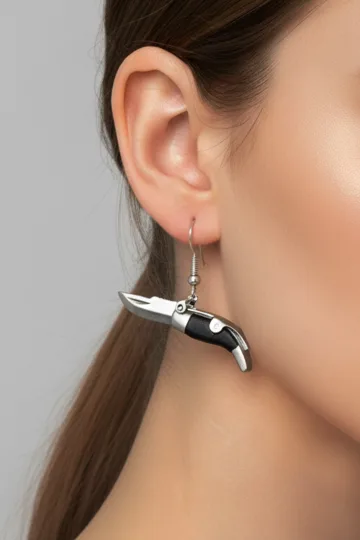
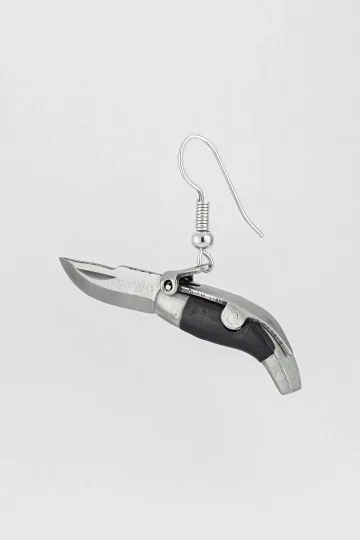


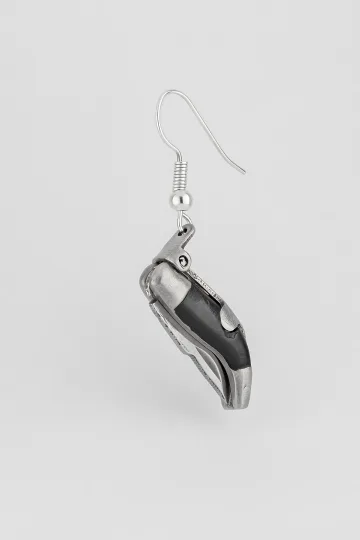

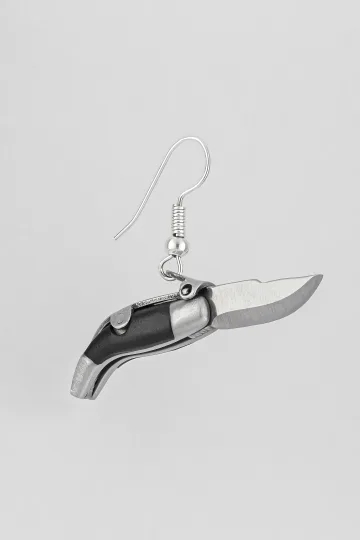
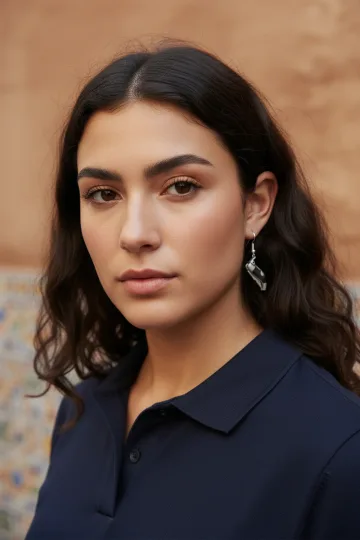
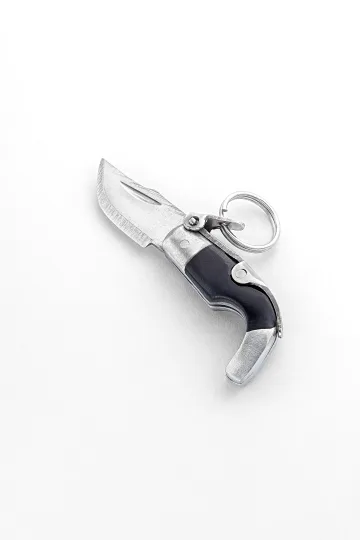
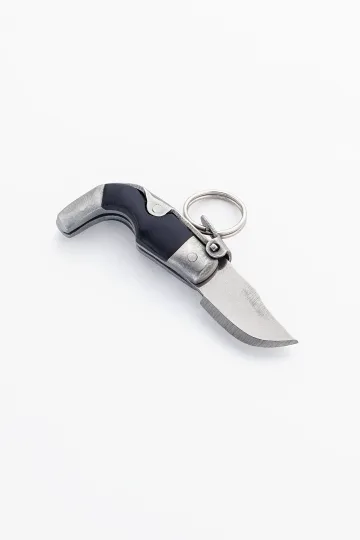
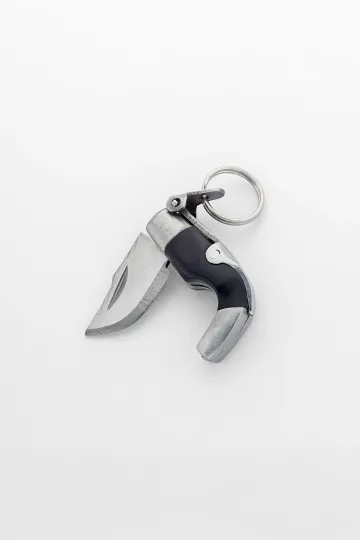
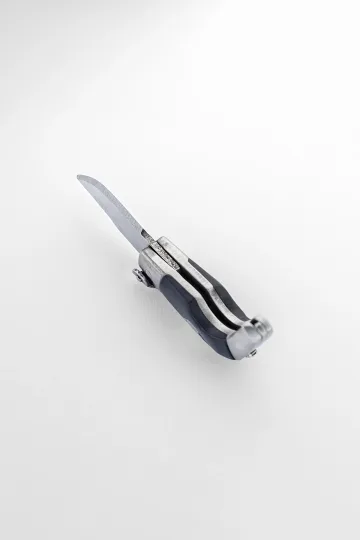
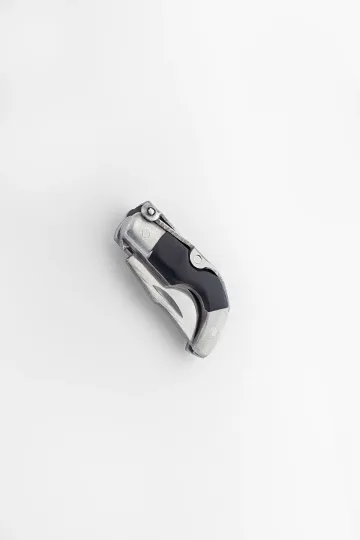
The Knife Museum in Albacete
For anyone who wants to go deeper. The Museo Municipal de la Cuchilleria occupies the Casa de Hortelano, an architectural set piece completed in 1912. The collection runs to more than 5,000 items. The museum runs build-your-own-navaja workshops, design competitions and temporary exhibitions.
The annual FECAM fair is the largest event in Spain for anyone who cares about blade craft. Work by the best makers, the chance to buy directly, and the atmosphere of a living craft culture rather than a heritage display.
If you are planning a trip through Spain, Albacete earns a stop. It is a city that has lived by the shape of a blade for more than five hundred years.
Further Resources
The Municipal Knife Museum
Museo Municipal de la Cuchilleria, in the Casa de Hortelano of 1912. Over 5,000 items in the collection. Workshops, design competitions, temporary exhibitions. Unmissable if you find yourself in Albacete.
The APRECU Association
The organisation that protects the Cuchilleria de Albacete designation and oversees quality for pieces carrying the AB guarantee mark. A useful source on traditions and on quality standards.
The FECAM Fair
An annual event for admirers of blade craft in Spain. Work from the best makers, direct purchases, and the atmosphere of a craft culture still in daily use.
Our Site
On the Zevira site: a description of every piece with photographs, information on materials and techniques, the history behind each collection, and care recommendations.
Get in Touch
We are open to questions. If you want to know more about a particular piece, its materials, the history of a model or how it is made, write to us. If you are a collector looking for something specific, we can help you navigate. If you are planning a visit to Albacete and want to see workshops or the museum, we can suggest a route.
Every question is confirmation that the tradition is alive and that people care about what they wear at the throat.
We do not sell merchandise. We pass on a tradition, through objects that can be worn every day, through shapes refined across five centuries, through sounds, materials and sensations that cannot be faked.
Your blade is waiting.
Common Questions
How do I care for a silver knife pendant?
After each wearing, wipe it with a soft dry cloth to remove sweat and skin oil. Every two or three weeks go over it with a silver cloth, and when tarnishing becomes visible, wash it in warm soapy water with a soft brush. Never polish blackened silver as a whole: work the raised areas only, or the contrast disappears.
Can I wear a knife pendant in the shower, the pool or the gym?
Titanium and stainless steel handle water, including seawater, and are indifferent to sweat. Silver is better taken off: chlorine in a pool and salt at the coast accelerate tarnishing, and training adds friction and knocks. Leather and rubber cords behave differently from each other, so always remove leather before water.
Is this jewellery for men or for women?
Neither. The blade silhouette reads on any outfit, and historically miniature blade amulets were worn by men, women and children alike. Choose the size, shape and metal that suit you rather than the label on the display case.
How do I tell real silver from a plated fake?
Look for the 925 hallmark on the bail or the handle. Silver is not magnetic: if the pendant is drawn to a magnet, there is steel under the coating. Real silver is noticeably heavier than plated costume jewellery of the same size, and on a good piece the facets and casting are crisp, with no flow lines or burrs.
What size of pendant and earrings should I start with?
For a pendant, take a mid size of roughly two to four centimetres: visible without taking over the outfit. Start earrings short, two to three centimetres, which are comfortable and suit almost any occasion. Leave the long dangling models until you know what actually suits you.
Is it true that a knife pendant will be stopped at the airport?
No. A decorative pendant with a blade silhouette is not a prohibited item: it has no sharpened edge and is obviously jewellery. Large metal can catch a scanner's attention, but it goes no further than a visual check. To save time, put the pendant in the tray before the archway.
Silver and gold jewellery, wedding bands, symbolic pendants, paired sets.
Conclusion
Knife pendants and knife earrings are a statement of style, a link to history, and a symbol of individuality. By choosing a blade-shaped ornament, you become part of an ancient tradition of people who value craftsmanship, symbolism, and the beauty of functional forms.
About Zevira
Zevira makes jewellery in the artisan tradition of Albacete, Spain. We live in the city that has been the capital of knife craft for more than five centuries, and we carry the shape of the blade into jewellery scale: from a miniature navaja with a working carraca mechanism to a clean stiletto pendant and dangling dagger earrings.
What you can find with us in the world of blade jewellery:
- Knife pendants: decorative pieces, functional miniatures with a folding mechanism, historical replicas of Albacete navajas
- Knife earrings: dangling daggers, micro-blade studs, ear cuffs and threaders
- Blade-shaped silhouettes: stiletto, navaja, tanto, dagger, sword
- Materials to match your life: 925 silver, blackened silver, 14 to 18K gold
- Stones and inlays: garnet, black onyx, agate for gothic and minimalist looks
- Paired pendants and gift sets with a coin for the buying ritual
Every piece is made by a craftsman by hand, with the option of personal engraving. 925 silver and 14 to 18K gold.