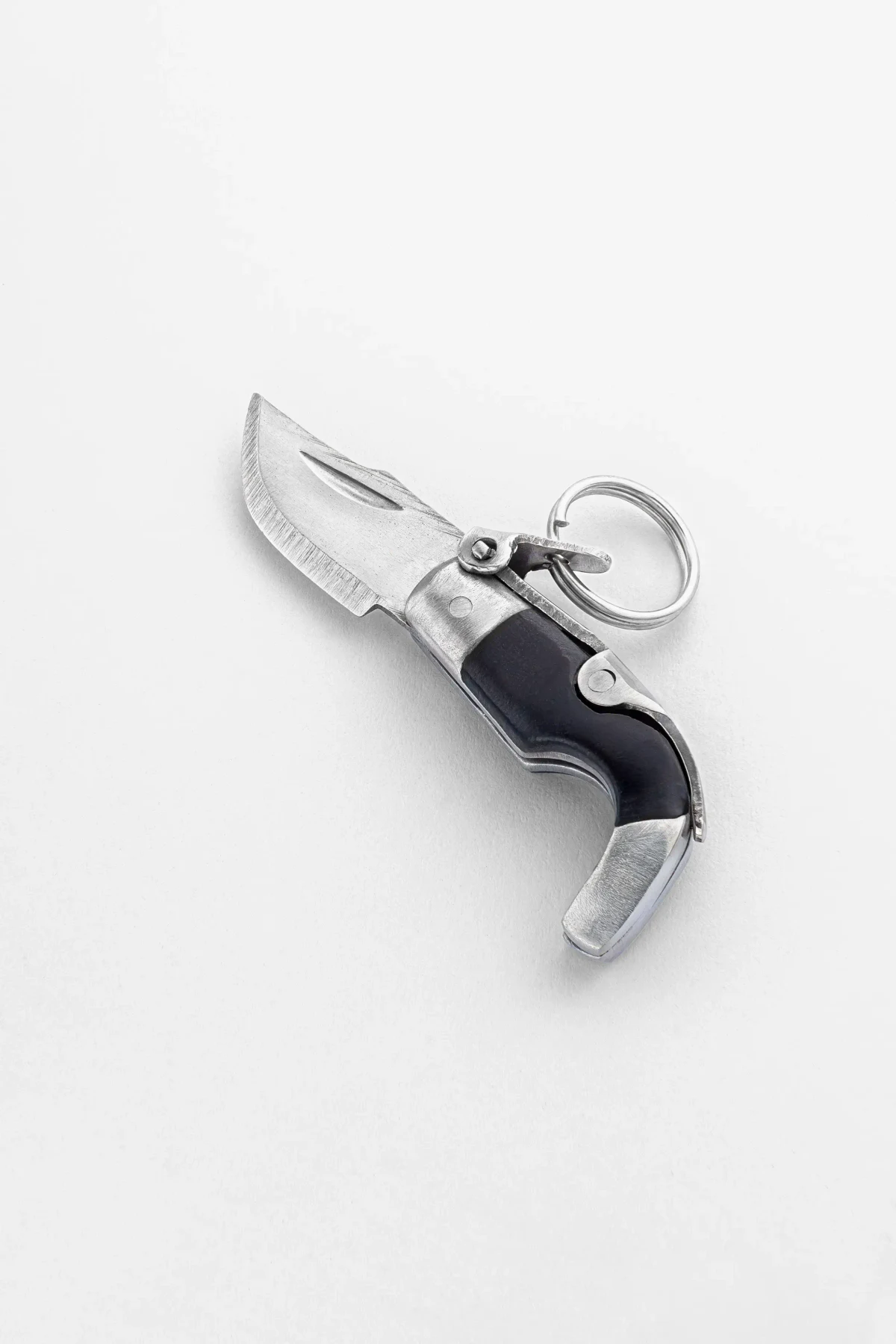
Capaora: The Most Brutal Navaja and Its Journey from the Pen to the Jewellery Box
A knife with an uncomfortable past
The name comes from "capar," meaning to castrate. This was a knife for castrating bulls. Wide, short blade, comfortable handle that does not slip in a wet hand. A livestock tool, as utilitarian as pliers or a saw.
And yet this tool became jewellery. Because form outlived function. When a knife stops cutting and starts hanging on a chain, only the silhouette remains. And the silhouette of the capaora, powerful, stocky, confident, turned out to be one of the most expressive in the navaja family.
It is not the first time a rough tool became a symbol. An anchor holds a ship. Thor's hammer killed giants. A skull is a bone. Context shifts, form stays. The capaora followed the same path: from the livestock pen to the museum case to the chain around your neck.
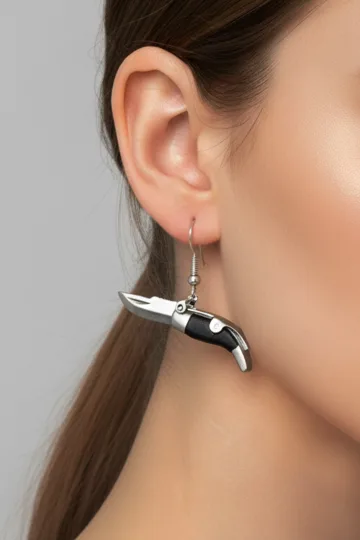
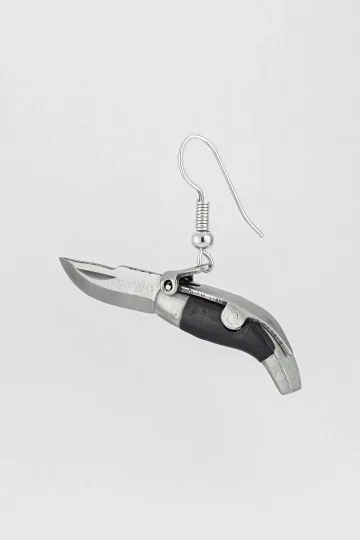
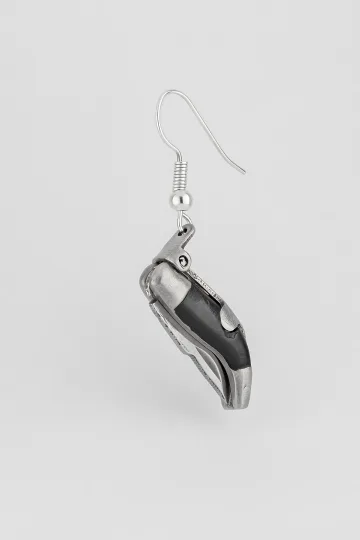
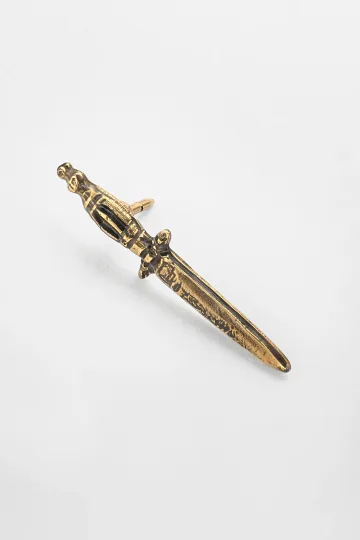
Wear the symbol, don't just read about it. These are in stock:


















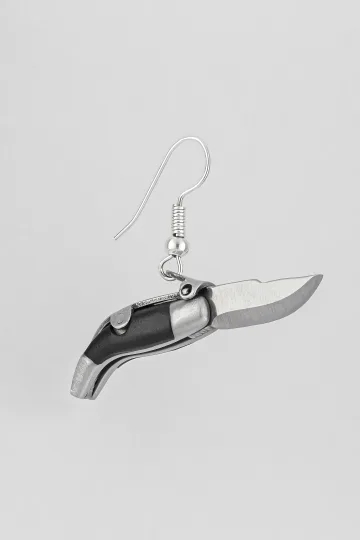
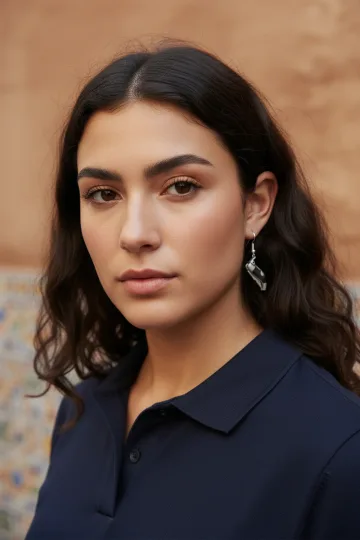
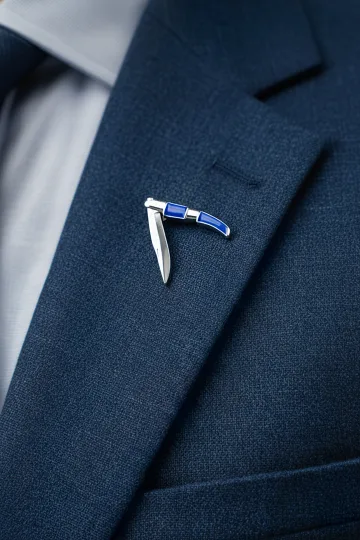


What it is: short and wide
The capaora is the opposite of the punta de espada. Where that one strives to be a sword, the capaora honestly admits it is a knife. A working, simple, functional knife.
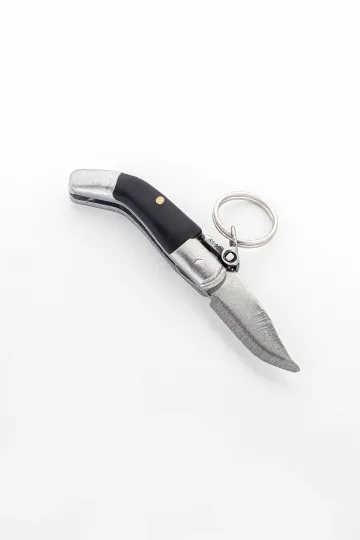
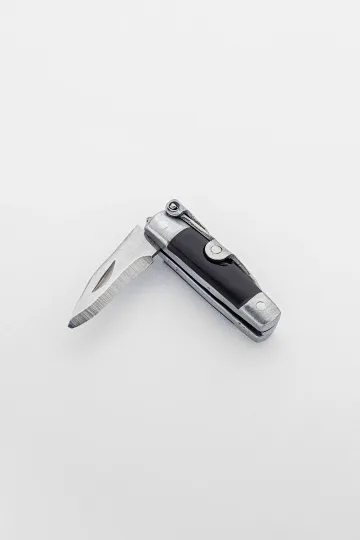
The blade is wide and relatively short. No elongated tip, no striving for elegance. Almost rectangular, with a rounded tip or gentle slope. Width often reaches a third or even half of the length, a proportion unthinkable for the elegant jerezana. That width gave the blade rigidity for heavy work: a thin blade under lateral stress bends or snaps; a wide one holds.
The cutting edge is sharpened differently from other navajas. Where the jerezana is honed to razor sharpness (it needs precision), the capaora takes a coarser edge, a wider bevel angle. Less beautiful, but it holds up longer against bone and cartilage. Practicality over aesthetics. That is everything you need to know about this knife's character.
The handle is thick, for a large hand. In historical specimens: horn or wood, no decoration. Handles were made from what was at hand: horn from the same bull, oak or olive from the nearest grove. No inlay, no carving: a slippery handle in a wet hand means disaster. Function dictated form mercilessly. In the jewellery version, the capaora pendant is noticeably chunkier than other navaja miniatures.
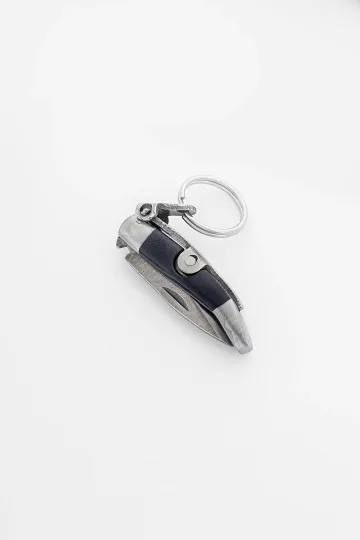
Proportions distinguish the capaora: handle roughly equal to blade length, creating a compact, balanced object. Like a clenched fist where other navajas stretch into length. About the size of a large postage stamp when worn as a pendant. Small, but dense.
The carraca (lock) sounds heavier on a capaora. Like a fist on a table instead of a finger snap. The spring was made stronger than on other navajas: the blade had to hold firm under serious load.
Silver and gold jewellery, wedding bands, symbolic pendants, paired sets.
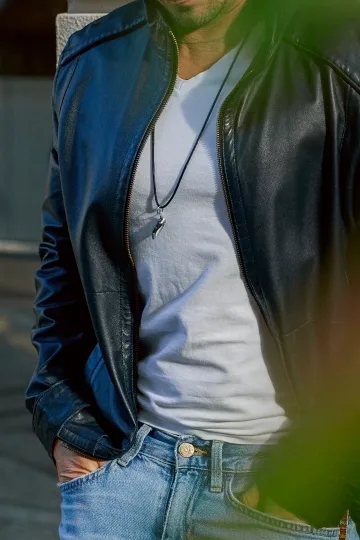
A castrating knife belongs on leather and an open collar. Hang it on a dainty gold chain and you have missed the joke entirely.
How to wear the capaora
I have styled the capaora across dozens of looks, from a chef's jacket to a suit at a wedding. Here is what actually holds up, by occasion.
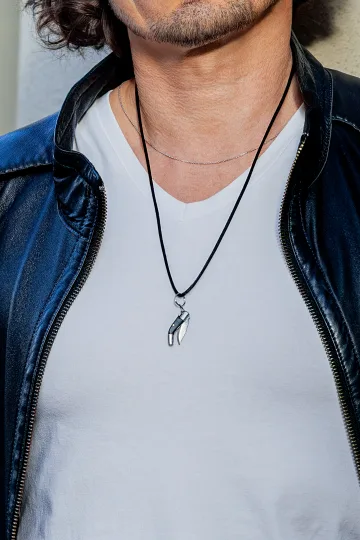
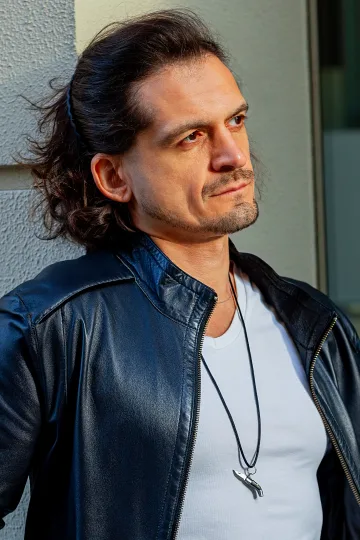
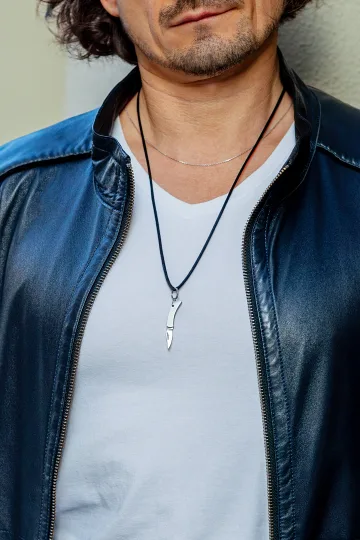
How do I wear the capaora every day? For daily wear I recommend a leather cord and a muted palette: grey, olive, sand, navy. A plain tee or an open flannel over heavy cotton, and the pendant reads as a habit rather than an outfit. Against that backdrop the wide blade shows without shouting.
Is the capaora right for the office? It is, and here it works on contrast. I suggest tucking it under a shirt, at the first open button, next to a wool or tweed jacket. Keep the rest quiet: one pendant, no stacked bracelets, chain metal matching your watch or belt buckle. Then the knife becomes the only accent, and that is enough.
How do I build an evening look? For evening I choose a dark backdrop: a high-neck shirt or a fine knit, leather, dense fabrics. The capaora on a steel cable or a thin rolo reads as composed. One strong piece on a dark ground beats a handful of small ones.
Steel, brass or silver for my look? For a cool, modern look I recommend steel: an honest grey tone with no sentiment. For a warm palette and textured clothing I suggest brass, which takes on a patina and looks more like your own year after year. I choose silver for the brightest shine, if the natural darkening of the recesses does not bother you.
Does the capaora suit a woman? It does, and most of all on contrast. A heavy knife pendant on a thin chain over a silk blouse gives that blend of strength and softness people notice at once. For length I recommend 50-55 cm, so the pendant sits mid-chest and does not tip forward.

Turn on your camera, pick earrings, a pendant or a ring, and see the piece on yourself in real time.
Switch items in one tap.
Everything runs in your browser: no photo or video is ever uploaded.
Who it suits
People who value function over form. If your style is reliable things without decoration, the capaora is your navaja. It does not pretend to be something it is not.
Men with large builds. The compact, wide silhouette looks right on a large neck. Thin navajas can get lost; the capaora does not. Its proportions work like an anchor: grounding, giving a centre of gravity.
Those who know the history. The uncomfortable past of the capaora is part of its character. Some see a rough knife. Some see a tool that became art. The second view is more interesting. And when someone asks "what is that pendant?" you have a story no generic charm can match.
Contrast lovers. Capaora on a thin chain, capaora with an elegant suit: the tension between the rough form and refined surroundings creates something interesting. Like work boots with good denim: an object from another context that makes the whole look sharper.
BBQ and food people. The capaora was a meat knife long before barbecue became a hobby. Chefs, grillers, anyone who works with knives daily will recognise the lineage.
Gift seekers. For men who "don't wear anything." Because this is not a typical pendant. Give it with the story of where the form came from, and let the person decide how they feel about wearing a bull-castrating knife around their neck. Most find it funny.
History: from the pen to the belt
Rural Spain
The capaora was born in a world where every tool had to earn its place. In 18th-19th century Spanish villages, there were no specialised shops. The knife used on livestock in the morning cut bread at lunch and opened a bottle in the evening.
The wide blade proved universal. Yes, it was designed for a specific operation. But farmers quickly discovered it also cut rope, cleaned hooves, chopped branches and did dozens of other jobs for which the thin jerezana was too fragile.
Production regions matched livestock regions: Extremadura, Castilla-La Mancha, parts of Andalusia. Herders drove cattle along transhumance routes, hundreds of kilometres on foot. They carried capaoras, and the knives travelled across Spain. Albacete smiths, located at the crossroads of these routes, saw capaoras from every region and synthesised the best features.
City life
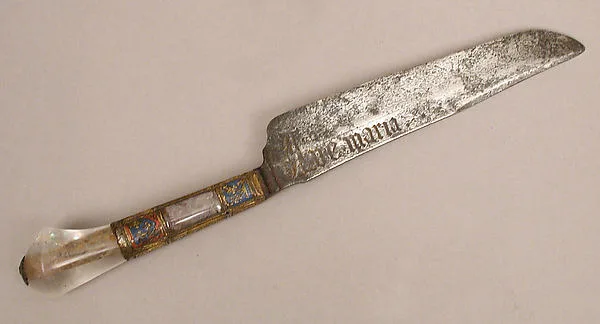
When the capaora moved from village to city, it lost its primary function but kept its reputation. This was the knife of the serious man. Not an aristocrat (that was the punta de espada), not a dandy (that was the jerezana), but a worker whose hands do the job.
By the 19th century, the capaora became associated with craftsmen, butchers and builders, people who needed a sturdy knife without pretensions.
In film, music and culture
"No Country for Old Men" by the Coen brothers. Anton Chigurh with his captive bolt gun, a livestock tool turned killing device. Same story as the capaora, inverted: an instrument designed for animal work that escaped its function.
"Peaky Blinders": a world where the working class arms itself with what is at hand. Razor blades sewn into caps, not from luxury but from necessity. The capaora comes from the same logic: take what works, do not think about beauty. Beauty will come later, accidentally.
Workwear culture (Carhartt, Dickies, Red Wing) is built on the same aesthetic as the capaora. Work clothing that became fashion. A work tool that became jewellery. The path is the same: a thing made for function turns out to be beautiful precisely because no one tried to make it beautiful.
BBQ culture and meat gastronomy turned butcher knives into cult objects. People buy steak knives for hundreds, photograph them for Instagram, debate steel grades on forums. The capaora was cutting meat long before that became a hobby.
A certain kind of actor wears rough jewellery as part of their image, not as costume. Massive rings and chunky pendants on the red carpet: that is the aesthetic where the capaora fits without a single question.
On Instagram and TikTok, the working jewellery aesthetic is its own world. Hashtags #knifependant and #workwearjewelry collect content from people combining rough pendants with flannel shirts and leather aprons.
How people wear it (an illustrative picture)
Picture someone who works with knives every day. For them, a capaora around the neck can read as a small reminder that they make things with their hands, not their head. It sits there, under a chef's jacket or a work shirt, all shift. The wide blade collects fingerprints, so the habit of touching it through the day comes naturally. And it tends to start conversations: colleagues notice the pendant and ask what it is. That is the kind of role the capaora plays in everyday wear.
What to pair it with
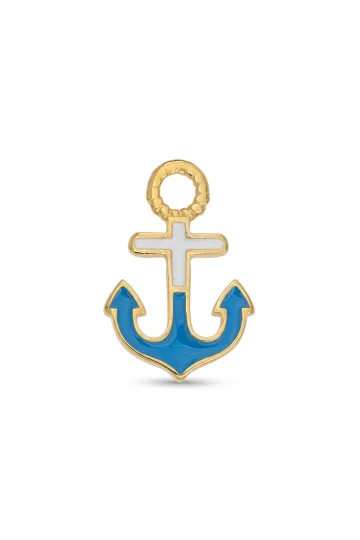
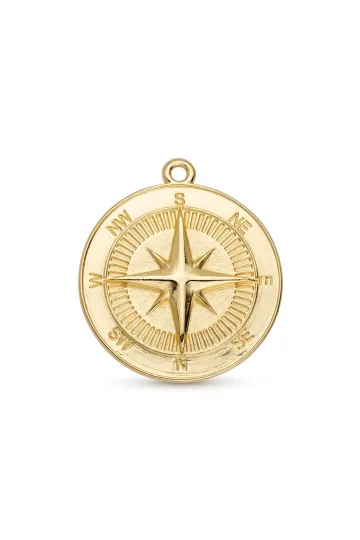
The capaora is a working knife, and the best pairings build on working aesthetics. With an anchor: honest things, two tools that became symbols. With mini-machete: the working set, two cleavers on two chains, zero pretension. With a compass: a simple men's set that works with flannel and leather alike.
Capaora solo on a thick chain or leather cord: strong and complete. If you want contrast, try capaora next to a jerezana: the brute force of the village against Andalusian elegance. Unexpected, but it works.
As a layering piece: the capaora works as the heavy bottom layer, closest to the chest. Something lighter on a shorter chain above, like Curva Helada: mystique against pragmatism.
Customer reviews
Zevira is a real jewellery shop. Genuine payments, deliveries and customer thank-yous.
🥰🥰🥰 gracias

Ok, ¡gracias! 🙂

As a gift
For the guy who grills. The one with the grill in the place of honour, who knows the difference between ribeye and strip, whose apron is burnt in three places. The capaora was a meat knife centuries before BBQ became a hobby. He will appreciate the context.
For the workwear lover. Carhartt, Dickies, Red Wing. Someone who wears flannel not because it is trendy but because it is warm. The capaora comes from the same world.
For the man who does not wear jewellery. Not an axe on the wall. Not a survival knife in a paracord box. A piece with an uncomfortable history (a bull-castrating knife, if anyone asks) and honest character. Most men find this funny. Some wear it with pride.
For the craft beer friend. The one who knows stouts from IPAs, goes to the barbershop, and values things made by hand. Capaora on a leather cord fits that aesthetic precisely.
For a birthday. Costs about the same as a good bottle of whisky, but it will not be empty by next week. A gift that starts a conversation every time someone notices it.
For Father's Day. Not a tie. A pendant with a backstory that makes people laugh when they hear it.
What to write on the card? Nothing. The capaora is not the kind of knife that needs words.
The capaora and contrasts: unexpected pairings
The capaora creates its most interesting effect when paired with unexpected contexts. A rough pendant on a thin chain. A working knife silhouette with an elegant suit. The tension between the raw form and refined surroundings makes both stand out.
Think about it like this: work boots with tailored jeans. A flannel shirt under a blazer. The contrast gives each element more presence than it would have alone. The capaora in a formal context does not look out of place. It looks intentional. It says: I know the rules, and I chose to bend them.
For women, the capaora offers a particularly interesting contrast. A chunky, honest knife pendant on a delicate chain, over a silk blouse, creates a mix of strength and femininity that is genuinely striking. Not every woman wants delicate jewellery. Some want something with weight, with history, with a story that makes people lean in and ask.
For couples, the capaora and the jerezana make a compelling pair of pendants: the brute force of the village against the elegance of the city. Rural and urban. Practical and refined. Different knives, same tradition, same chain of craft stretching back five hundred years.
Behind the scenes: from knife to pendant
Shrinking the capaora to pendant size seems straightforward. The form is compact, the lines simple. But the devil is in the details. The wide blade of the full-size knife creates a sense of mass, heaviness. At miniature scale, that mass vanishes unless compensated. The master adds relief: texture on the handle, a clear spine line, slight volume on the blade surface. Without these details, a three-centimetre capaora becomes a flat rectangle.
Another subtlety: the rounded tip. On a full-size knife it looks natural and powerful. In miniature, if the rounding is not emphasised, the pendant looks unfinished, as if someone broke the point off. The master thickens the spine line toward the tip, creating the characteristic "brow" of the capaora, that blunt confidence that makes this knife recognisable.
In Albacete the whole chain sits within a few streets of itself. The master who cuts the miniature has seen the originals in the museum, five minutes on foot. He knows how light falls on a wide blade, how shadow gathers in the corner between blade and handle. These observations determine which details to keep and which to amplify.
Upload a photo of your pet, someone you love, or an object. We'll build a 3D model and hand-cast it in pewter.




The capaora and transhumance: the knife that walked across Spain
The capaora did not stay in one place. It travelled. Spanish herders drove their cattle along transhumance routes, hundreds of kilometres on foot, from summer pastures in the mountains to winter pastures in the valleys. These seasonal migrations took weeks and covered the length of the country.
The herders carried capaoras. The knives went with them from Extremadura to Castile, from Andalusia to La Mancha. Along these routes, smiths in different towns saw the capaoras and adapted them. Each region added something: a slightly different blade angle, a different handle wood, a different spring tension. The result was regional variation within a single type.
Albacete sat at the crossroads of several transhumance routes. The smiths there saw capaoras from every region and synthesised the best features into what became the definitive form. This is why the best capaoras historically came from Albacete, even though the knife was born in the countryside: the city was the meeting point where all the variations converged.
For a pendant, this travelling history adds a layer. The capaora is more than a livestock knife. It is a road knife, a journey knife, a knife that crossed landscapes and collected influences. Wearing one is wearing the memory of those long walks across Spain.
Albacete: where roughness becomes art
The capaora as a type was born in the countryside, but the best specimens were always made in Albacete. Because even a "rough" knife needs a good master. The carraca must click cleanly. The blade must sit in the handle without play. The steel must be correctly tempered.
Albacete is a city where these skills were passed from master to apprentice for hundreds of years. The knife-making tradition holds BIC status (Bien de Interes Cultural) since 2017, state-level cultural heritage recognition. Every September at the Feria de Albacete, knife-makers exhibit their work. Capaoras among them remind everyone that craft knows no hierarchy of beautiful and ugly.
Zevira works inside this tradition. The capaora pendant comes out of Albacete itself, two hundred metres from the museum where the full-size originals stand behind glass. Not a replica from a photograph. Not a factory stamping from overseas. Craft in a city that has been making knives longer than most European nations have existed.




Steel, brass and silver: which material and why it matters
The capaora pendant is produced in three base materials, and the choice changes how the piece wears over time.
Stainless steel is the most practical option. It resists moisture, holds its finish under daily contact, and needs only a soft cloth to maintain. The cool grey tone of steel suits the working aesthetic of the capaora directly: no warmth, no sentimentality, just honest metal. For people who swim, shower with their jewellery, or work in conditions involving moisture or oils, stainless steel is the rational choice.
Brass with coating offers a warmer tone, closer to aged bronze or oxidised copper. Brass develops patina where the coating wears thinnest, typically at the high points of the handle texture and the spine of the blade. This patina is not damage: it is the material living. On a capaora, it reads as genuine wear, the way an old boot develops character in the crease. The patina deepens over months and settles into something that cannot be faked with chemicals. Brass versions suit people who want their jewellery to look slightly less new with each passing year.
Silver versions carry more weight in the hand and a brighter initial surface. Sterling silver tarnishes naturally in contact with skin chemistry and air, and the capaora's wide blade surface shows that tarnishing clearly. Some wearers polish regularly. Others let it go dark in the recesses and bright on the raised surfaces: this differential patina creates exactly the depth that an artisan would produce deliberately on a full-size knife. Either approach is correct.
The coating on brass and silver versions is applied after forming and engraving, so the relief details remain sharp. The coating does not fill fine lines. What you see as texture is the actual surface of the metal, not a printed effect.
The folding mechanism at miniature scale
One technical detail that separates a well-made capaora pendant from a poor one is the folding mechanism. On a full-size navaja, the blade is held open by a spring-loaded lock (the carraca) that clicks audibly when the blade reaches full extension. The spring tension must be calibrated precisely: too weak and the blade rattles or closes under use; too strong and the knife is difficult to open.
On a miniature pendant, the mechanism must still function even though the parts are a fraction of the working size. This is not a trivial engineering problem. At three centimetres, the spring wire is about the diameter of a thick human hair. If it is not tensioned correctly, the blade will either be loose (it will rattle when you walk, which is not ideal) or stiff to the point where opening requires a tool.
The Zevira capaora is designed to open and close with finger pressure. This is intentional: the owner interacts with the mechanism, and that interaction is part of what makes the pendant different from a solid casting. A solid casting is a shape. A working miniature is a compressed version of the real object. The difference is felt in the hand.
If you own a capaora pendant, open and close it occasionally. Not as a nervous habit, but as maintenance: it keeps the spring from stiffening in a closed position over long periods. Monthly is sufficient.
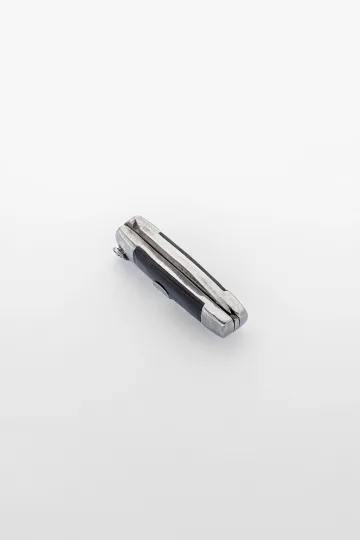
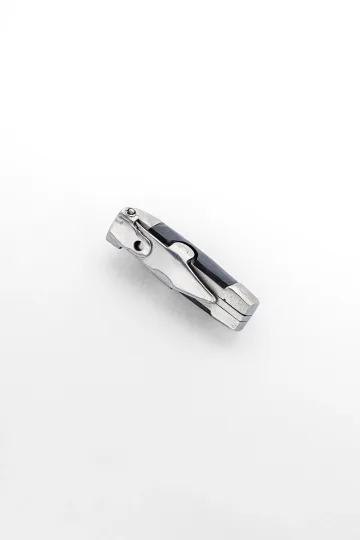
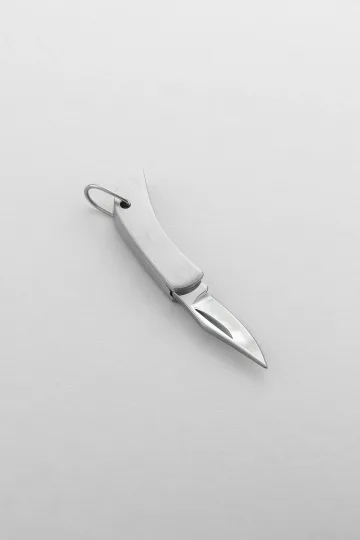
CAPAORA mini knife pendant
The 18th-century Spanish navaja in miniature: 40 mm of stainless steel, a real folding mechanism and a Palanquilla lock that clicks. An affordable gift to remember.
Authentic · Ships from Spain · 14-day returns
Care: special note for the capaora
The wide blade surface collects more fingerprints than narrow navajas. Many wearers develop a habit of touching the pendant throughout the day. If you do, wipe it with a cloth in the evening. Stainless steel versions are easier to maintain than brass in this regard. The full care guide covers cleaning and prevention by material in the jewellery water and shower guide.
Chain and cord: wearing the capaora
The capaora rewards a specific chain choice. Its wide, compact form has visual weight that most thin chains cannot anchor. A chain that looks correct on a slender cross pendant will look mismatched underneath a capaora: the pendant will swing, tip forward, and look unstable.
Anchor chain or rolo chain, 3-4 mm. These chains have enough individual link mass to keep the pendant sitting flat against the chest. The capaora does not spin or tilt. Length for men: 50-55 cm, so the pendant rests at the mid-chest. Length for women: 45-50 cm, pulling the pendant to the upper chest or collar area. Shorter reads bolder.
Leather cord. A flat or round cord of 3-4 mm diameter changes the entire tone of the piece. On leather, the capaora reads less like jewellery and more like an object someone carries with them habitually, the way a traditional craftsman might attach a useful tool to a leather thong. A waxed flat cord suits the workwear context. A round braided cord suits the rugged outdoors context. Both are right.
Steel cable. For those who want minimal visibility of the chain itself, a fine steel cable in black or raw silver makes the capaora appear to float without obvious support. The contrast between the fine cable and the chunky pendant is a deliberate design choice rather than a mismatch.
Avoid delicate box chains and serpentine chains. Their individual links are too small to hold the weight of the pendant without the chain eventually kinking or bending at the bail point.
How to spot quality
Proportions: the capaora blade is wide and short, handle roughly equal to blade. If the miniature is elongated and thin, it is not a capaora.
Weight: a quality pendant has heft. Hollow stampings feel weightless and do not convey the character of a knife built for heavy work.
Details: rounded tip, blade width, carraca line should all be readable. If the pendant looks like an abstract rectangle, the maker did not understand what they were making.
Finish: even coating, no burrs, smooth edges. The bail should be neat and proportional.
Leave your email, we'll send your discount code. No spam, unsubscribe anytime.
The code arrives by email, valid on your first order.
Care
Wipe with soft cloth after wearing. Store separately from other jewellery. Avoid contact with perfume, creams, chlorine. Brass toning over time is normal, it develops patina. Baking soda restores shine. Open and close navaja earrings periodically to keep the mechanism smooth.
Capaora vs other navajas
| Type | Blade shape | Character | World analogue |
|---|---|---|---|
| Capaora | Wide, short, rounded tip | Brute force, honesty | Cleaver |
| Punta de Espada | Straight, symmetrical, sword-like | Austerity, dignity | Rapier |
| Jerezana | Clip point, elegant | Grace, Andalusian chic | Stiletto |
| Curva Helada | Curved, crescent | Moorish grace | Yataghan |
| Machete | Long, straight, non-folding | Raw power | Machete |
The wide blade as a symbol: what form communicates
Every object communicates before words do. The capaora communicates before anyone asks what it is. The message is in the proportions.
Width says: I do not need to pierce, I cut through. A wide blade does not ask to be let in. It is already there. This is why wide-bladed tools traditionally belonged to people whose work involved volume rather than precision: the butcher, the woodcutter, the tanner. Work that does not wait for permission.
The short length says: I am not pretending to be a sword. I am not reaching for dignity through length. I am exactly as long as I need to be, and no longer. This restraint is its own form of confidence.
The rounded tip says: I was not made for stabbing. I was made for cutting, pressing, scraping. Practical functions. The rounded tip of the capaora removes the suggestion of violence that a pointed blade carries. The capaora is honest about its origin: it was a livestock tool. It did its work without aggression.
Together these elements create a silhouette that reads as directness. In body language, a wide, low, centred posture communicates groundedness. The capaora in pendant form carries the same reading: a wide, compact, centred shape that occupies its space without apology, without reaching for more.
This is why the capaora works as jewellery for people who find most jewellery either too decorative or too symbolic. It is not decorative. It is not symbolic. It is a compressed form, and the form carries its own meaning: I am what I am. This is the thing that makes it genuinely unusual in the pendant market, where most objects are either abstractions or conventional symbols.
The capaora and the anti-bling trend
There is a growing counter-trend to "bling," especially among people who prefer substance over flash. Instead of shiny gold and conspicuous logos, more and more people seek jewellery that is quiet. Not invisible, but not screaming. Jewellery that provokes a question ("what is that?"), not a judgment ("that is expensive/cheap").
The capaora is the perfect anti-bling pendant. It is solid but not large. It has character but no glitter. It tells a story that has nothing to do with money: a castrating knife from the livestock pens of Extremadura that became jewellery because its form was stronger than its function.
In a world where every other influencer wears chains worth the price of a small car, the capaora is the antidote: a piece with an uncomfortable history and honest material, which stands out precisely for that reason.
The Forja Española line and the navaja family
The capaora does not exist in isolation. It belongs to the Forja Española collection, a line of pendants built around Spanish navaja types, each with its own distinct character and history. Understanding where the capaora sits within this family sharpens what makes it distinctive.
The punta de espada is the aristocrat: straight, symmetrical, designed to reference the sword rather than the field knife. It reads as composed, as authority. Where the capaora is horizontal in spirit, the punta de espada is vertical.
The jerezana is the city knife: an elegant clip-point blade, associated with Jerez and Andalusian culture, the navaja of flamenco and wine. It has curves. It has grace. It is what the capaora is not.
The Curva Helada is the exotic: a curved blade with Moorish references, the shape of a crescent, carrying the memory of Al-Andalus. Where the capaora is purely utilitarian, the Curva Helada is poetic.
The capaora is the rural one, the honest one, the one that never pretended. In the Forja Española line, it serves as the counterweight: if you wear a jerezana and want contrast, add a capaora. If you want a single pendant that says everything about working aesthetics and nothing about elegance, the capaora is the one.
Workwear culture and the capaora
The capaora finds its natural home in workwear culture. What Carhartt and Red Wing are in the USA has its equivalents everywhere: the tradition of Engelbert Strauss (workwear that became lifestyle), Birkenstock (functional shoe that became a design object), and the entire Bauhaus aesthetic of form following function.
In cities around the world, an aesthetic has developed that connects workwear, craft, and authenticity. Flannel shirts, leather aprons, sturdy boots, and alongside them: a pendant that does not decorate, but tells a story.
The capaora fits this world because it does not try to be beautiful. It IS beautiful, but in the way a good tool is beautiful: through function, through honesty, through the absence of everything superfluous.
The craft parallel: In fine blade-making traditions, the same principle holds. A quality kitchen knife is not decorated. It is perfectly ground, perfectly balanced, and its beauty lies in geometry, not decoration. The capaora follows the same philosophy, just from a different culture.
Craft culture: The modern craft movement (craft beer, artisan bread, small-batch chocolate) has created an appreciation for honest, handmade products. A capaora pendant from the workshop in Albacete, full production cycle, is exactly that: a craft product with 500 years of history.
BBQ culture: The BBQ scene has exploded in the last several years. Weber grill events, competitions, specialised butchers: everything is growing. The capaora was a meat knife for centuries. For the man at the grill, a capaora pendant is a homage to the primal form of his hobby.
Surface, patina, and the character of the used object
Most pendants look best when they are new. The capaora is one of the few that looks better after a year of wearing.
The wide blade surface picks up the story of daily use: the slight warm darkening where the thumb rests, the brighter catch of light on the spine where the metal is exposed most directly, the deep tone of the recesses in the handle texture. These changes are not defects. They are the record of the object being worn, touched, carried. In brass and silver versions, this differential patina develops faster and more visibly than on steel. The high points brighten. The low points deepen.
This is how antique knives looked when they were used. And the reason those old capaoras in the Albacete museum case look so compelling is precisely this: they have been touched. They have been in pockets, in hands, on belts. The surface tells that story.
A capaora pendant can develop the same quality. Give it a year of wearing. By then the pendant will not look like a piece you just bought. It will look like a piece that has been with you.
Send a friend a discount code, they save on their first order.
The capaora in the museum
In the Museo de la Cuchilleria in Albacete, historical capaoras from the 18th and 19th centuries are on display. The early examples are rough, functional, without any decoration. The later ones show an evolution: better steel, finer proportions, but still recognisable as working knives. No piece tries to be something other than what it is.
The museum is centrally located, open year-round, and affordable. The collection includes not just capaoras but the full range of Spanish navajas. A morning is enough for a thorough visit. After that, the Feria fair (every September) is recommended, where living smiths demonstrate their craft.
The fair context reveals something the museum cannot. In the museum, the capaoras are behind glass. At the fair, the masters are present next to their work. A craftsman raised in the Albacete trade can explain, while holding both pieces, how the miniature pendant differs technically from a full-size navaja: the adjusted spring tension, the thickened spine line toward the tip, the way the bail is integrated without disrupting the silhouette. This knowledge exists only in the hands of people who have worked with it for years. The BIC designation protects the chain of transmission: from master to apprentice, generation by generation, in the same city where the form was born.
The capaora and the future of workwear jewellery
The trend toward workwear-inspired jewellery is growing. On Instagram and TikTok, hashtags like #workwearjewelry and #knifependant connect two worlds that were traditionally separate: craft and accessory, function and decoration.
The capaora stands at the front of this trend because it is the most honest. An anchor was always partly decorative. A compass was always partly metaphorical. But the capaora was a castrating knife. It does not get more brutal than that. And precisely this brutality, this complete absence of pretension, is what creates the appeal.
Buying it as a gift? Each one arrives ready to give.
 A branded Zevira box and a little card come with every order.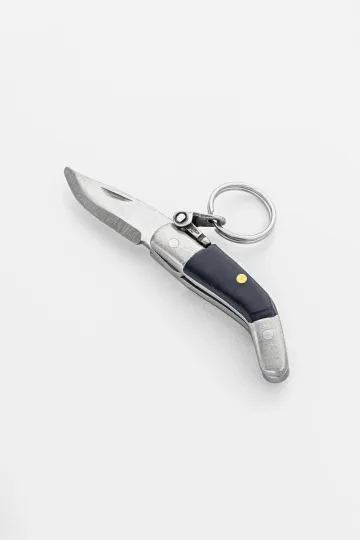



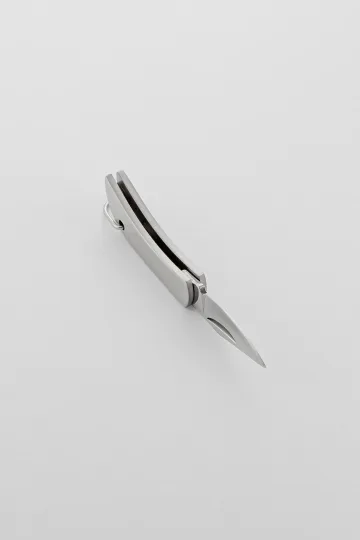
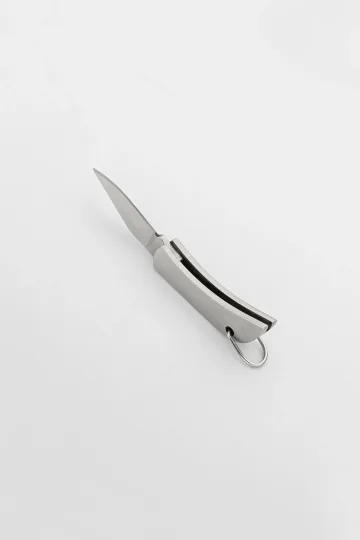

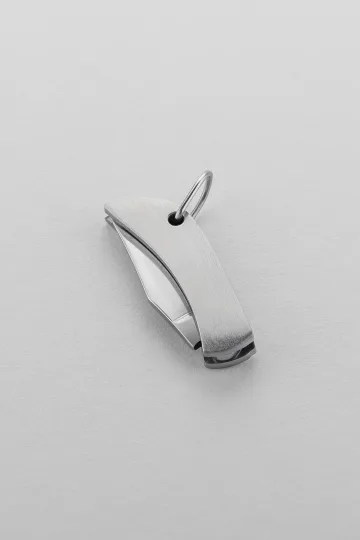
What makes a good capaora pendant: the decisions behind the object
Not all capaora pendants are equal. The type is distinctive enough that poor reproductions are easy to spot, but the gap between acceptable and excellent is where the maker's choices matter.
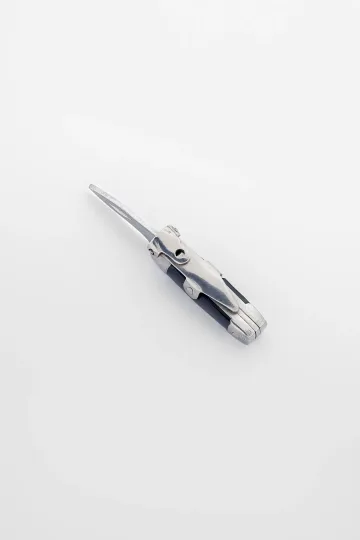
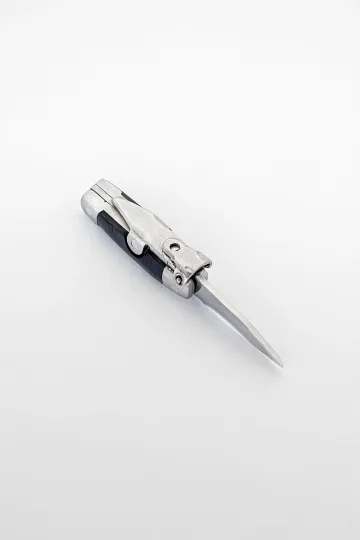
The bail placement. On a folding navaja, the pivot pin sits at the spine end of the handle. On a pendant, the bail needs to be placed so that the knife hangs correctly: blade down, roughly vertical, with the wide blade facing forward. If the bail is placed incorrectly, the pendant tilts or hangs sideways. The Zevira capaora bail is positioned at the measured centre of gravity of the closed form, which keeps it vertical in all chain positions.
The finish on the blade flat. The wide blade of the capaora is the most visible surface. On a well-made pendant, this surface has a consistent polish without visible tool marks, grind lines, or pitting. Rough finishing is harder to hide on a wide, flat surface than on a narrow blade. This is one of the reasons the capaora is technically more demanding to finish than the jerezana, despite being less ornate.
The fit of the folded blade. When closed, the blade should seat fully into the handle with no gap visible at the spine and no blade tip protruding beyond the end of the handle. Gaps indicate tolerance problems in the fitting. A blade that extends past the end of the handle creates a sharp point that will eventually catch on clothing or skin. On the Zevira capaora, the fit is checked on every piece before it ships.
The ring construction. The jump ring connecting the bail to the chain should be soldered closed, not left as an open spiral. Open jump rings can catch on chain links and work themselves open over months of wear. A soldered ring is permanent.
Not for everyone
The capaora is not for everyone. If you want elegance, restraint, rapier-like precision, your knife is the punta de espada. The capaora does not do elegance. It does honesty, directness, and the kind of beauty that comes from not trying. If you pick it up and wish it were thinner, more refined, more subtle, put it down. The punta de espada is waiting.
The capaora as a gift: expanded ideas
For the motorcycle rider. Harley, Triumph, BMW: biker culture has a long tradition of jewellery. The capaora is solid enough to not get lost under a leather jacket, and subtle enough to not look like a rocker cliche.
For the gardener or farmer. The capaora was a tool of agriculture. A farmer or garden enthusiast understands the lineage intuitively. "This is a work knife that became jewellery" resonates with anyone who works with their hands.
For the minimalist who wants something with history. The capaora is minimalist in form (no decoration, no flourish) but maximal in history (castrating knife, livestock farming, Extremadura, 500 years). Minimal form, maximum content.
Price context: Costs about the same as a good bottle of single malt whisky, but it will not be empty next week. A gift that starts a conversation every time someone notices it. What to write on the card? Nothing. Or: "For the one who knows their tools."
Wear the symbol, don't just read about it. These are in stock:


Frequently asked questions
What is a capaora? A type of Spanish navaja with a wide, short blade. The name comes from "capar" (to castrate). Historically used as an agricultural tool, now reproduced as a jewellery pendant.
Why did a castrating knife become jewellery? Because form outlived function. The wide, compact silhouette turned out to be visually powerful. The same way an anchor stopped being just a ship's tool.
Does the capaora suit women? As jewellery, yes. Tomboyish or workwear style pairs well with the capaora's rough form. For smoother shapes, look at Curva Helada or the lunar knife.
How does it differ from the machete pendant? The machete does not fold and has a long blade. The capaora is a folding navaja with a short, wide blade. As pendants: the machete is elongated, the capaora is compact. In energy they are close (both working, both honest), but the silhouettes differ.
Is it a real knife? No. It is a jewellery miniature in stainless steel and brass with coating. Decorative, not functional.
Where is it made? In Albacete, Spain, a city with five hundred years of knife-making tradition, recognised as state cultural heritage (BIC since 2017).
Where can I see the original? At the Museo de la Cuchilleria in Albacete, Spain. The museum holds capaoras from early rough specimens to decorated 19th-century examples.
Is the capaora good for a first navaja pendant? It depends on your style. If you lean toward workwear, raw aesthetics, and honest forms, the capaora is an excellent first choice. If you prefer something more versatile and balanced, the jerezana is a safer start. The capaora is a specific statement. The jerezana is a universal one.
How does the capaora compare to the machete pendant? The machete does not fold and has a long blade. The capaora is a folding navaja with a short, wide blade. As pendants: the machete is elongated, the capaora is compact. In energy they are close (both working, both honest), but the silhouettes differ significantly.
Can I shower with the capaora pendant? Stainless steel versions: yes, but soap residue can build up in the texture of the wide blade. Wipe with a toothbrush weekly. Brass versions: not recommended daily. Remove before shower, or accept faster coating wear. Full details in the water guide.
What chain works best with the capaora? A thick chain (3-4 mm anchor or rolo chain) or a leather cord. The capaora is a chunky pendant, and thin chains look mismatched. The weight of the pendant needs a chain that can handle it visually and physically. Length: 50-55 cm for men, 45-50 cm for women.
What material should I choose: stainless steel, brass, or silver? Stainless steel if you want low maintenance and modern tone. Brass if you want a warm, bronze-like look that develops patina over time. Silver if you want the brightest initial finish and do not mind the natural tarnishing process. All three versions are produced at the same workshop; the form and proportions are identical across materials.
Does the pendant actually open and close? Yes. The folding mechanism is functional at miniature scale. The blade opens and locks, the carraca clicks. Opening and closing it periodically (monthly is enough) keeps the spring from stiffening.
How heavy is the capaora pendant? Noticeably heavier than a flat stamped pendant of the same size, because of the three-dimensional construction and the solid metal content of the working parts. You will feel it at the end of the chain, which is part of its character. It does not feel heavy in an uncomfortable way: it feels substantial. Most wearers stop noticing after a day or two.
Can I take it on an aeroplane? Yes. Jewellery miniatures are not knives. They are not sharp, not functional. Carry-on is fine. If you are concerned, carry the pendant in your hand luggage pouch, not your checked bag, to avoid loss.
What does the navaja tradition mean for Albacete today? The BIC designation (Bien de Interés Cultural, since 2017) means the knife-making tradition of Albacete is recognised as state-level cultural heritage, alongside flamenco, the Camino de Santiago, and other protected Spanish traditions. It affects how craftsmen are trained, how workshops are supported, and how the craft is documented. For a buyer, it means the capaora pendant comes from a tradition that the Spanish state considers worth preserving.
About Zevira
Zevira makes jewellery in the artisan tradition of Albacete, Spain, the same city that has been forging navajas for five centuries, a couple of hundred metres from the knife museum. Our capaora is not a replica copied off a photograph. It is a miniature put together by a maker who knows the original sitting in the museum case.
What you can find with us around navajas and working symbolism:
- Navaja pendants: capaora, jerezana, punta de espada, curva helada
- Mini-machetes and other working silhouettes on a chain or a leather cord
- Maritime symbols: anchors, compasses, the rose of the winds
- Versions in stainless steel, coated brass and 925 silver
- Anchor and rolo chains, leather cords and steel cable to carry the weight of the pendant
- Paired sets built on contrast: the rough capaora next to the elegant jerezana
Every piece can be personalised with engraving, with the option of personal engraving. 925 silver and 14-18K gold.


