Compass Rose Jewelry: Meaning, History and the Symbol of Finding Your Path
Introduction
A friend of mine got a compass pendant before her first solo trip. Nothing fancy, just a small gold disc with four points. She said it made her feel less scared about going somewhere she had never been. Three years later, she has been to eleven countries and still wears it every day. Not because she thinks it is magic. Because it reminds her she is the kind of person who goes.
I asked her once if she would ever take it off. She thought about it for a second and said no. Not because of superstition. Because every time she looked down and saw it, she remembered that moment in the airport when she almost turned around. She did not turn around. The pendant did not make that happen, but it marked the moment. And now it carries all the moments after it.
Wear the symbol, don't just read about it. These are in stock:



That is the thing about compass jewelry. It is not really about knowing where north is. It is about choosing to move in the first place. The compass rose is one of the oldest navigation symbols in the world, and somewhere between the 14th-century Mediterranean and today, it became something much more personal than a tool for reading maps.
This article covers the full story of compass rose jewellery. Where the symbol came from, what it actually means, who wears it, and why it has become one of the most popular gifts for people at turning points in their lives. Whether you are thinking about getting one for yourself or giving one to someone who matters, this is everything you need to know.
What is a compass rose
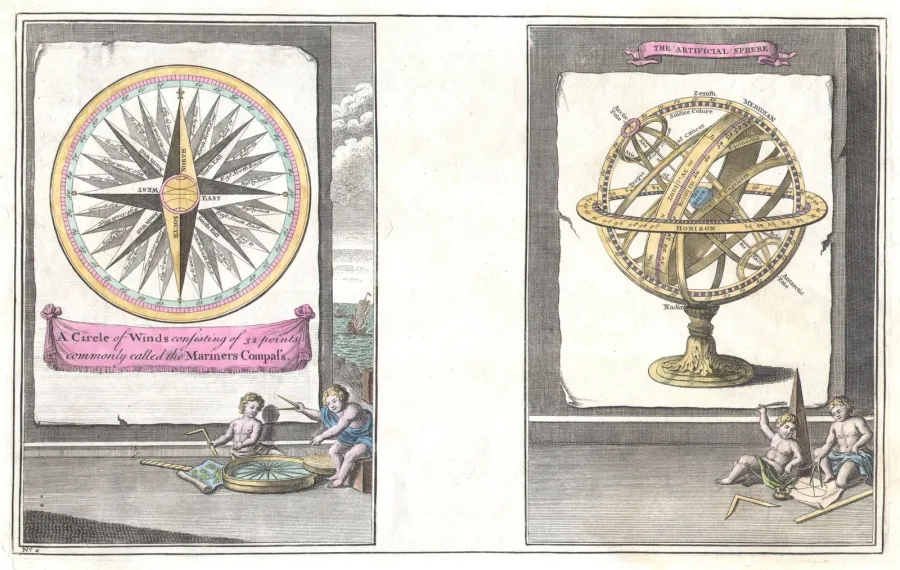
A compass rose is the circular figure on maps and compasses that shows the cardinal directions: north, south, east, and west. Between them, it shows intermediate directions like northeast, southwest, and so on. The classic design has 8, 16, or 32 points radiating from a centre, often with an elongated north point marked by a fleur-de-lis or an arrow.
The name "rose" comes from the way the design looks. Those radiating points resemble the petals of a flower. In different languages it has different names: rosa de los vientos in Spanish, rose des vents in French, rosa dei venti in Italian, Kompassrose in German, and rosa vetrov in Russian. The variety of names hints at how widespread this symbol has always been. It does not belong to one culture. It belongs to anyone who has ever needed to know which way to go.
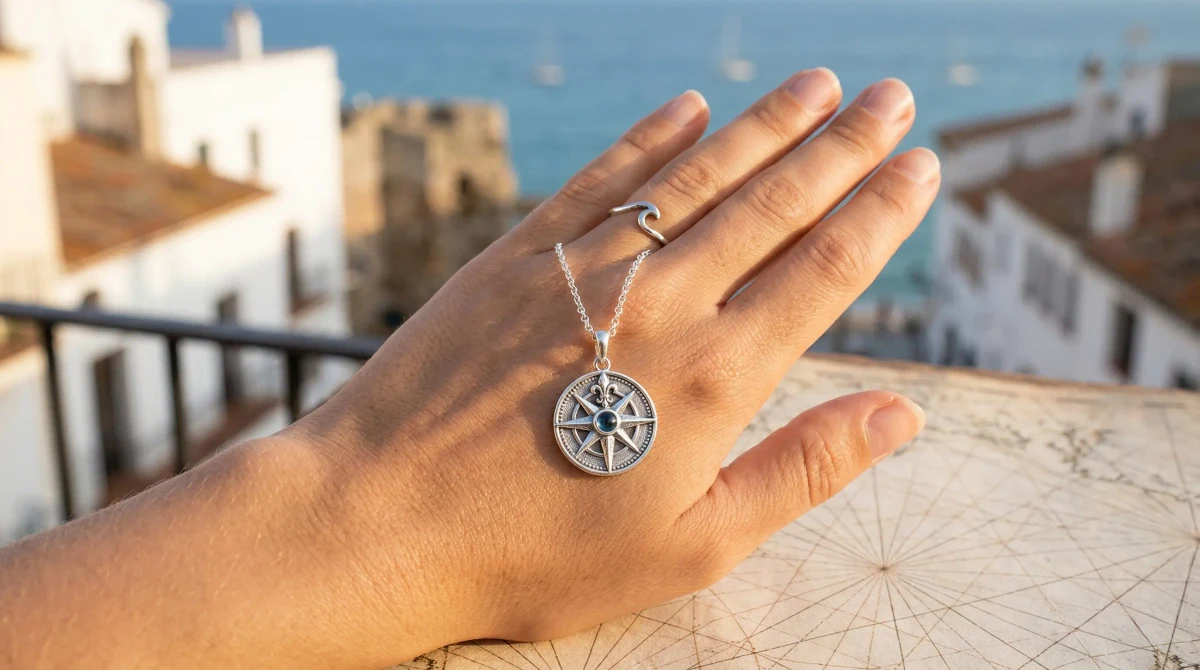
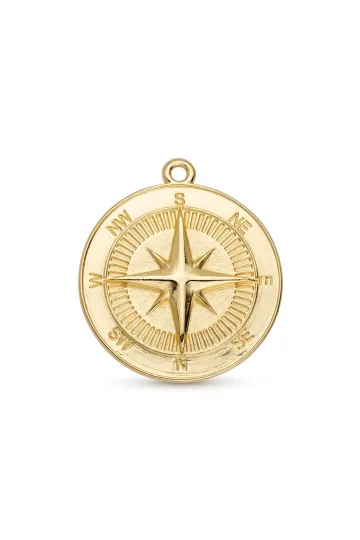
In jewellery, the compass rose is usually simplified to 4 or 8 points. The design works beautifully in metal because the geometric pattern is naturally symmetrical and catches light from every angle. You will find it on pendants, bracelets, rings, and earrings, sometimes alone and sometimes combined with other symbols like anchors, waves, or coordinates.
What separates the compass rose from a regular compass dial is the artistry. This was never just a functional diagram. Even on the earliest maps, cartographers decorated their wind roses with gold leaf, elaborate colours, and intricate details. From the very beginning, it was meant to be both useful and beautiful. That dual nature is exactly what makes it work so well as jewellery. It carries real meaning, but it also simply looks good.
There are a few key visual variations to know about. The four-point compass rose is the simplest, showing only the cardinal directions. It is clean, modern, and works well in minimalist jewellery. The eight-point version adds the ordinal directions (northeast, southeast, southwest, northwest) and has more visual complexity. The sixteen-point and thirty-two-point roses are the most detailed, echoing the original portolan chart designs. These highly detailed versions tend to appear in larger pendants and statement pieces where the intricacy can really shine.
The compass rose lives on silver and sea-blue. A gold one on the beach just looks like fancy dress.
How to wear a compass rose
The compass has passed through dozens of client looks with me, from travel outfits to evening ones. Here is what actually works, sorted by occasion.
What do I wear a compass rose with every day? For daily wear I recommend a silver compass on a thin chain over a plain tee, an open-collar linen shirt or light knitwear. Calm natural tones (sand, olive, washed blue, grey melange) hold the symbol, so it reads as a personal piece rather than a loud accent. Under a closed collar I suggest wearing the pendant over the fabric, otherwise it gets lost.
Silver or blue enamel? Here I almost always choose silver: the cool metal is already about sea and sky, and it argues less with clothing. Blue enamel or a blue stone I suggest to anyone who wants a direct maritime note; a deep navy nods to naval tradition and catches the light well. A gold compass on a beach look reads as a costume prop, so for a sea theme I recommend the cool palette.
How do I build an evening look? For evening I suggest contrast: black, navy or wine, a smooth fabric with a slight sheen. On that surface the geometry of the rays opens up and the metal starts to play in the light. I recommend a larger pendant worn solo, with no neighbours, on an open neck; it sits best on the sternum, right in the centre of the neckline.
And if it is a travel gift? When I put together a gift for a traveller, I choose a medium silver compass on a 45-50 cm chain: it suits almost anyone by build and by style. The symbol is gender-neutral, so there is no need to guess the recipient's taste. I suggest leaving room for engraved coordinates or a date on the back, which turns the piece into something genuinely personal.
Restrained or bold? For anyone who likes quiet pieces I recommend a small polished disc, 18-20 mm, under a shirt or jumper: the compass works as character, not as a signboard. For anyone who wants to be noticed I suggest a large pendant worn solo on an open neckline. One rule never fails: the compass rose already carries detail, so a single compass on a clean chain always beats the same one lost in a crowd of pendants.

Turn on your camera, pick earrings, a pendant or a ring, and see the piece on yourself in real time.
Switch items in one tap.
Everything runs in your browser: no photo or video is ever uploaded.
Customer reviews
Zevira is a real jewellery shop. Genuine payments, deliveries and customer thank-yous.
🥰🥰🥰 gracias
Ok, ¡gracias! 🙂
History: from medieval portolan charts to modern jewellery
The birth of the wind rose in the Mediterranean
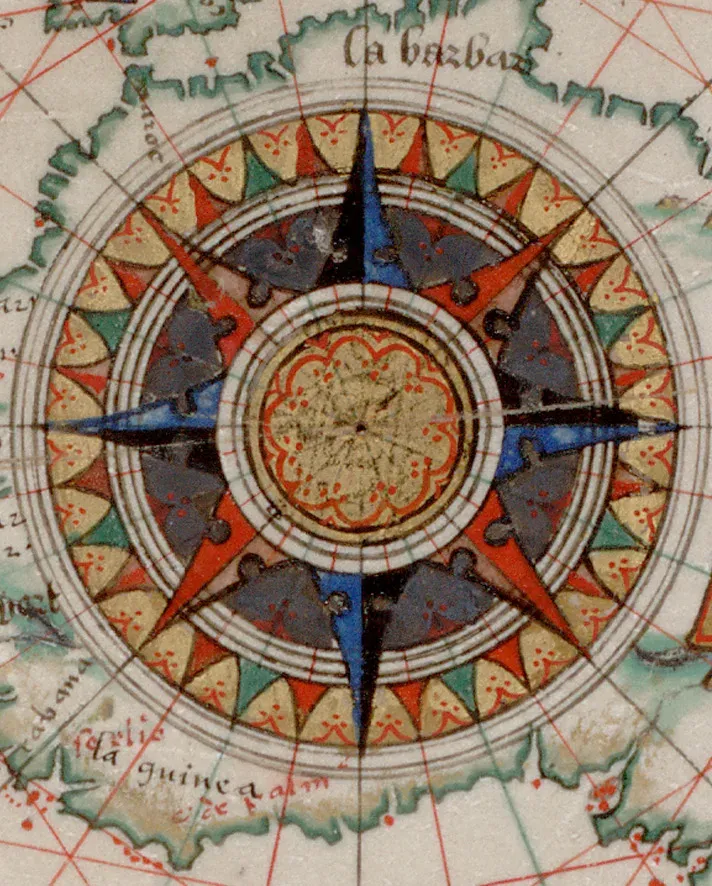
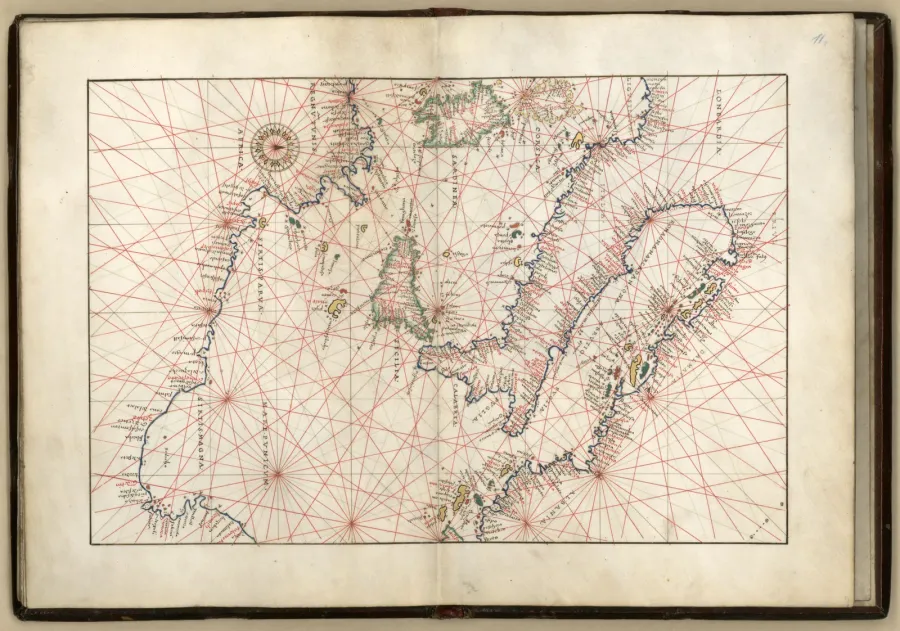
The compass rose first appeared on portolan charts in the late 13th and early 14th centuries. These were the earliest accurate navigation maps, drawn on animal skin by Mediterranean cartographers. Italian and Catalan mapmakers led the way, and their charts covered the coasts of the Mediterranean, the Black Sea, and eventually the Atlantic coast of Europe.
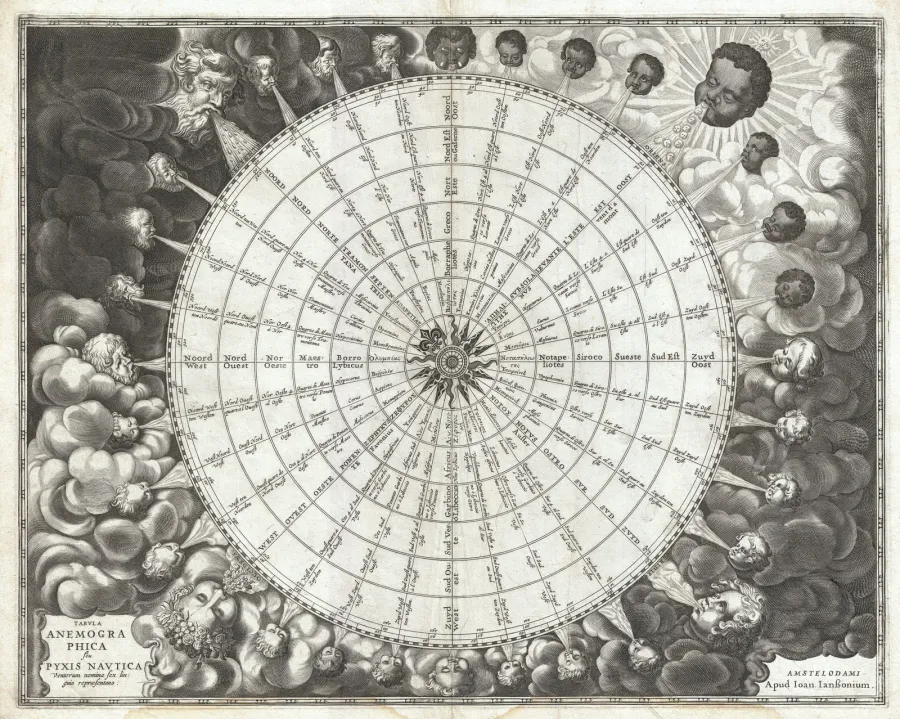
The earliest wind roses on these charts had 8 or 16 points, each representing a different wind direction. Mediterranean sailors did not think in terms of "north" and "south" the way we do. They navigated by winds. Tramontana was the north wind, Levante came from the east, Scirocco from the southeast. The wind rose was literally a diagram of these named winds.
Each wind had its own character in the minds of sailors. Tramontana was cold and clear, coming down from the mountains. Scirocco was hot and dry, blowing from the Sahara. Libeccio brought storms from the southwest. Knowing which wind was blowing told you about more than direction. It told you about weather, temperature, sea conditions, and risk. The wind rose was a survival tool disguised as a diagram.
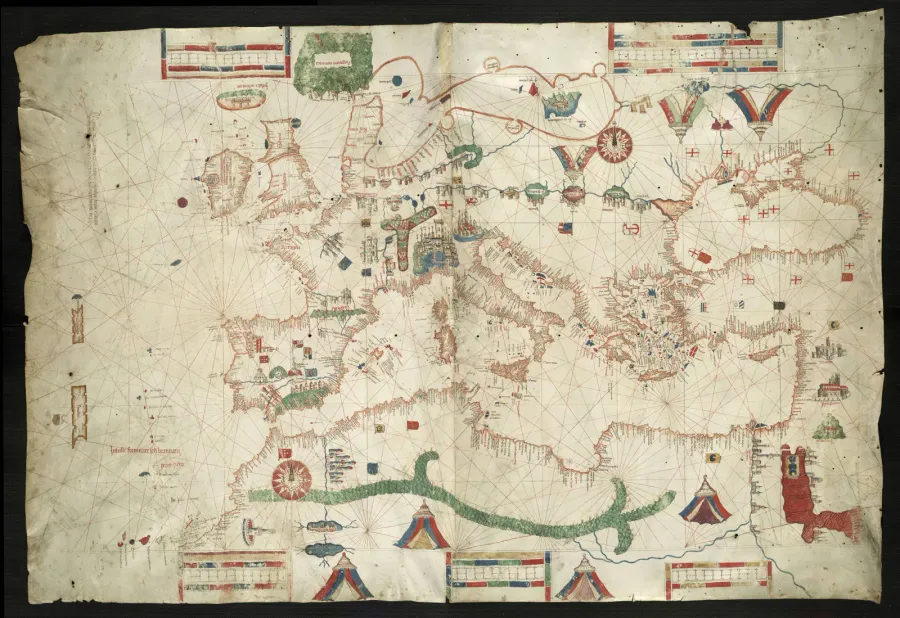
The famous Catalan Atlas of 1375, created by the Majorcan cartographer Abraham Cresques, features some of the most elaborate wind roses ever drawn. They were works of art, decorated in gold and rich colours, with the north point traditionally marked by a fleur-de-lis to honour the French royal house (or, some historians argue, simply because it was easy to recognise). Cresques was working for King Charles V of France, which may explain the French royal symbol. But the tradition spread far beyond France and lasted centuries.
Other notable early examples include the Carta Pisana from around 1275, one of the oldest surviving portolan charts, which features a network of radiating rhumb lines centred on wind roses. The Pizzigano chart of 1367 is another masterpiece, with its elaborate multicoloured compass roses connecting an entire web of navigation lines across the Mediterranean.
By the 1400s, the compass rose had become a standard feature on every serious navigation chart. It was the visual anchor of the map, the one element that oriented everything else. Without it, a map was just a picture. With it, a map became a tool for going somewhere.
Age of Exploration and the golden era of navigation
When European explorers began crossing the Atlantic and rounding Africa in the late 15th century, the compass rose went with them. The charts of Columbus, Vasco da Gama, and Magellan all featured detailed wind roses. Navigation was a matter of life and death on the open ocean, and the compass rose was the symbol of that knowledge.
During this period, the designs became even more elaborate. Portuguese cartographers added 32 points to their compass roses and decorated them with national symbols. The north point often bore a fleur-de-lis, and the east point sometimes carried a cross pointing toward Jerusalem and the Holy Land. This was not just decoration. It reflected the worldview of the time, where navigation was connected to faith, discovery, and the expansion of Christendom.
Spanish cartographers of the Casa de la Contratacion in Seville produced some of the most beautiful compass roses of the era. These were not just on maps used by captains. They appeared in royal atlases, diplomatic gifts, and wall decorations in the palaces of monarchs who funded the expeditions. The compass rose had become a status symbol, a marker of ambition and reach.
The Age of Exploration turned the compass rose from a technical tool into a cultural symbol. It represented ambition, courage, and the human drive to discover what lies beyond the horizon. Maps from this era are still collected as art, and the compass rose is always their most striking visual element. When you look at a 16th-century Portuguese chart with its gilded compass rose, you are looking at the same basic image that appears on compass pendants today. The through-line is unbroken.
The compass rose in sailor tradition and tattoos
Sailors have always been a superstitious group. They carried charms, followed rituals, and marked their bodies with symbols meant to protect them at sea. The compass rose became one of the most important sailor tattoos, and it has remained so ever since.
A compass tattoo on a sailor meant they would always find their way home. It was not just decoration. In an era before GPS, satellite phones, or rescue helicopters, getting lost at sea was a real and common threat. Ships disappeared without a trace. Entire crews vanished. Wearing a compass symbol was a way of saying: I will come back. It was a declaration of intent, made visible on the skin.
The Nautical Star, a five-pointed star often associated with compass imagery, became one of the most iconic sailor tattoos in history. Sailors would get it on their forearm, chest, or behind their ear. Each position had its own meaning in maritime folklore. A nautical star on the wrist meant the sailor could always find their way. One behind the ear meant they would always hear the call of the sea. One on the chest meant the sea was in their heart.
The tradition of sailor tattoos also included specific milestones. Crossing the equator earned you certain tattoos. Rounding Cape Horn earned others. The compass was different because it was not about where you had been. It was about where you were going, and the faith that you would get there and back again.
This tradition is still alive today. Modern sailors, Navy veterans, and Coast Guard members often wear compass rose tattoos or jewellery. The meaning has not changed much. It still says: I know where I am going, and I know how to get home. That continuity, from 15th-century deckhands to 21st-century veterans, is part of what gives compass jewellery its weight.
From maps to jewellery: how the symbol crossed over
The jump from maps and tattoos to jewellery happened gradually over the 19th and 20th centuries. Victorian-era travellers wore compass brooches as fashionable accessories. Wealthy tourists on the Grand Tour through Europe brought back nautical-themed pieces from coastal towns. By the mid-20th century, nautical themes in jewellery were mainstream, especially in coastal communities along the Mediterranean, the Atlantic coast, and New England.
In the 1950s and 60s, maritime-inspired jewellery had a wave of popularity alongside the general preppy and coastal aesthetic. Anchors, ship wheels, and compass motifs appeared on everything from bracelets to cufflinks. But these were often more about style than meaning.
The real explosion came in the 2000s and 2010s, when "travel culture" became a massive part of identity for millennials and Gen Z. Suddenly, compass jewellery was everywhere. Instagram feeds filled with compass pendants photographed against mountain backgrounds, airport terminals, and ocean views. The symbol had found a new audience who saw it as a personal statement about how they wanted to live.
Today, compass rose jewellery is one of the best-selling categories in meaningful, symbolic accessories. It sits right alongside tree of life pendants, evil eye charms, and celestial jewellery in popularity. But unlike many trendy symbols, the compass rose has centuries of genuine history behind it. That depth is part of its appeal. When you wear a compass pendant, you are wearing something that meant life or death to someone 500 years ago. That is not something you can say about most fashion accessories.
What a compass rose symbolises
Direction and finding your true path
The most obvious meaning of a compass is direction. But in jewellery, it becomes metaphorical. Wearing a compass is not about finding geographic north. It is about trusting that you have an internal sense of direction, a moral compass, a set of values that point you the right way even when things get confusing.
People who wear compass jewellery often describe it as a reminder to stay true to themselves. When life gets chaotic, when decisions feel impossible, they look down at the pendant and remember: you know which way to go. You have always known. The compass does not give you the answer. It reminds you that you already have it.
This is why compass jewellery is so popular with people going through transitions. New jobs, moves to new cities, breakups, career changes. The compass says: you are not lost. You are just somewhere new. There is a difference between being lost and being in unfamiliar territory, and the compass pendant is a physical reminder of that distinction.
The concept of a "moral compass" has been part of English language for over two centuries. It refers to a person's innate sense of right and wrong, the internal guidance system that helps you make decisions when there is no map to follow. Wearing a compass pendant externalizes that idea. It takes something invisible and makes it tangible.
Adventure, curiosity, and the call of the unknown
The second big meaning is adventure. The compass rose was born from exploration, from people who looked at the edge of the map and decided to go past it. Wearing one signals that you are someone who values experience, curiosity, and the courage to try things that scare you a little.
This does not have to mean literal travel. Adventure can be starting a business, learning a new skill, moving somewhere unfamiliar, or simply choosing to live with more openness. The compass says: I am not afraid of the unknown. Or more honestly, it says: I am a little afraid, but I am going anyway.
There is a beautiful tension in the symbol. A compass helps you find your way, but you only need a compass if you are going somewhere you have not been before. It is a tool for the uncertain, for the brave, for the curious. That duality is what makes it so powerful. Safety and risk, contained in a single image.
The adventure meaning resonates especially with younger wearers. In a world where experiences are valued over possessions, where "where have you been" matters more than "what do you own," compass jewellery becomes a kind of identity marker. It signals a set of priorities. And because the symbol is centuries old, it does not feel like a trend. It feels like a timeless value.
Protection for travellers
Since the earliest days of navigation, the compass has been a protective symbol. Sailors wore compass marks to ensure a safe voyage. The idea was straightforward: if you always know where you are, you can always get to safety. Knowledge is protection. Orientation is survival.
This protective meaning still resonates today. Parents give compass pendants to children heading off to college. Partners give them to each other before long separations. Friends exchange them before one of them moves abroad. The message is always the same: no matter where you go, you will find your way. It is not a promise that nothing bad will happen. It is a statement of confidence in the person receiving it.
In some maritime traditions, the compass was believed to have genuine protective power. It was not just symbolic. Sailors believed that wearing a compass image could calm storms, prevent getting lost, and ensure the ship would make it to port. Whether or not you believe in that kind of power, the emotional reality is the same. A compass pendant makes people feel safer. It makes them feel prepared. And sometimes, that feeling of preparedness is exactly what you need to actually go.
There is a reason why compass pendants are one of the most common "bon voyage" gifts. They carry a very specific emotional message that is hard to express in words but instantly understood when you hold the object in your hand.
Coming home: the promise of return
Here is a meaning that people often overlook. The compass does not just point forward. It also points back. North is always north. Home is always there. No matter how far you go, a compass can bring you back.
This makes compass jewellery incredibly meaningful for people with deep connections to a specific place. Military families, expats, long-distance couples, immigrants who left their homeland but carry it with them. The compass is a promise: I will return, or at least, I will never forget where I came from.
Some people even engrave coordinates on the back of their compass pendants: the latitude and longitude of their hometown, the place they fell in love, or the location of a meaningful memory. The compass becomes a map to one specific, personal spot on earth. This customization option has made compass pendants one of the most popular personalised jewellery choices.
The "coming home" meaning also works on an emotional level. Sometimes "home" is not a place. It is a state of mind, a relationship, a sense of belonging. The compass can point toward that too. For someone going through a difficult time, a compass pendant can mean: you will find your centre again. You will get back to yourself.
Upload a photo of your pet, someone you love, or an object. We'll build a 3D model and hand-cast it in pewter.



Who wears compass rose jewellery and why
Travelers and adventurers
This is the obvious group. People who collect passport stamps, who save up for trips instead of things, who feel most alive when they are somewhere new. For them, compass jewellery is part of their identity. It says: I am someone who goes places.
But it is not just globe-trotters. Hikers, surfers, mountain climbers, road-trippers, van-lifers, anyone who orients their life around exploration tends to gravitate toward compass symbols. It is the universal badge of the adventure-minded. You will see compass pendants on people at outdoor gear stores, at airports, at hostels, and at surf shops. It crosses economic and cultural lines because the desire to explore is universal.
Many travellers also use compass jewellery as a kind of talisman on the road. They put it on before a flight. They touch it when they are nervous in a new place. It becomes a ritual object, even if no one would call it that out loud. The routine of putting on the compass before a trip creates a psychological anchor that connects every journey to the one before it.
Graduates and people starting fresh
Graduation is one of the most popular occasions for giving compass jewellery. The symbolism is perfect: you have finished one chapter and are about to step into something unknown. A compass pendant says "you will find your way" without being preachy about it.
The same applies to anyone starting something new. First job, new city, beginning of a relationship, recovery from something difficult. The compass is appropriate for any moment where someone needs to believe they have the internal resources to navigate what comes next.
What makes compass jewellery particularly good for graduates is that it is both celebratory and practical. It acknowledges the achievement (you made it this far) while also addressing the anxiety (and now what?). Most graduation gifts do one or the other. A compass pendant does both, simultaneously.
This is also why compass jewellery has become popular for milestone birthdays: turning 18, 21, 30, 40, 50. Each of these ages brings its own kind of transition, its own version of "what comes next?" The compass says: whatever it is, you are equipped to handle it.
Sailors and ocean lovers
People connected to the sea have a special relationship with the compass. For them, it is not abstract symbolism. It is history. It is tradition. It is a direct link to centuries of maritime culture.
Navy veterans, merchant mariners, yacht enthusiasts, and anyone who grew up near the ocean often wear compass jewelry with a different kind of respect. They know what the symbol originally meant, and they honor that. This is also why compass pendants pair so naturally with other ocean symbols like anchors, whale tails, and seahorses.
For ocean lovers, compass jewellery often connects to a broader nautical aesthetic. It is not just one piece. It is part of a whole visual language that includes anchors, knots, waves, and maritime motifs. The compass is the centerpiece of that language because it is the most symbolically rich.
Anyone searching for direction
Finally, there are people who wear compass jewellery not because they have found their path, but because they are looking for it. And that is completely valid. The compass is not a symbol of certainty. It is a symbol of the willingness to search.
People going through tough times, people questioning their choices, people who feel stuck. For them a compass pendant can be a quiet form of hope. It says: I do not have all the answers yet, but I am paying attention, and I am moving forward. That is enough. You do not need to know your exact destination to start moving.
This might be the most honest meaning of all. Most of us are not confidently striding toward a clear goal. Most of us are figuring it out as we go. The compass is a companion for that process. Not a declaration that you have arrived, but a commitment to keep going.



The compass as a gift: what it says without words
Compass jewellery is one of the most thoughtful gifts you can give, because the meaning is built right into the object. You do not have to explain it. The person receiving it understands immediately.
Here is what a compass gift communicates in different situations:
For a graduate: "You are ready for this. Trust yourself. You know which way to go."
For a traveller about to leave: "Go explore. And know that you can always find your way home."
For someone going through a hard time: "You are not lost. This is just a detour."
For a partner in a long-distance relationship: "No matter how far apart we are, we are still oriented toward each other."
For a parent from a child: "You gave me direction. This is a thank you for that."
For a friend starting over: "New beginnings are exciting. You have a compass. Use it."
For a retiring colleague: "You navigated your career with purpose. Now navigate the next chapter the same way."
For a new parent: "The biggest adventure of your life just started. You will find your way."
This makes compass pieces some of the best-selling items in the meaningful gifts for men category, though honestly they are equally popular as gifts for women. The symbolism is universal. It works across genders, ages, and occasions.
The key is that a compass gift is never generic. It always feels personal, because it speaks to someone's specific moment in life. That is rare for jewellery. Most jewellery gifts say "I think you are beautiful" or "I was thinking of you." A compass gift says something much more specific: "I believe in where you are going."
Another reason compass jewellery makes such a good gift is that it does not require knowing the recipient's exact style preferences. Unlike earrings (are their ears pierced?), bracelets (what wrist size?), or rings (what finger size?), a pendant on a chain works for almost everyone. The design is geometric and neutral enough to match any personal style. It is one of the safest meaningful jewellery gifts you can choose.
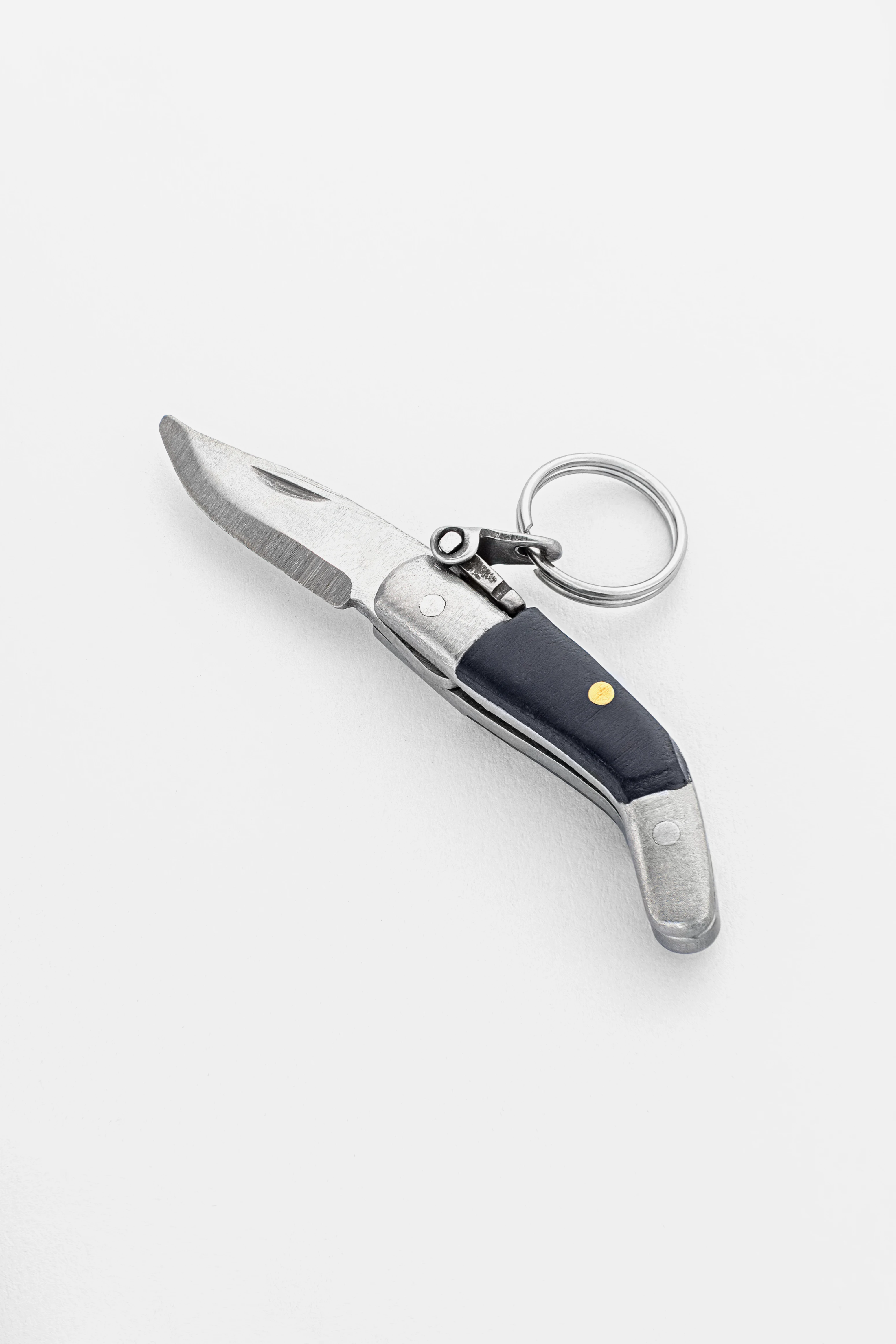
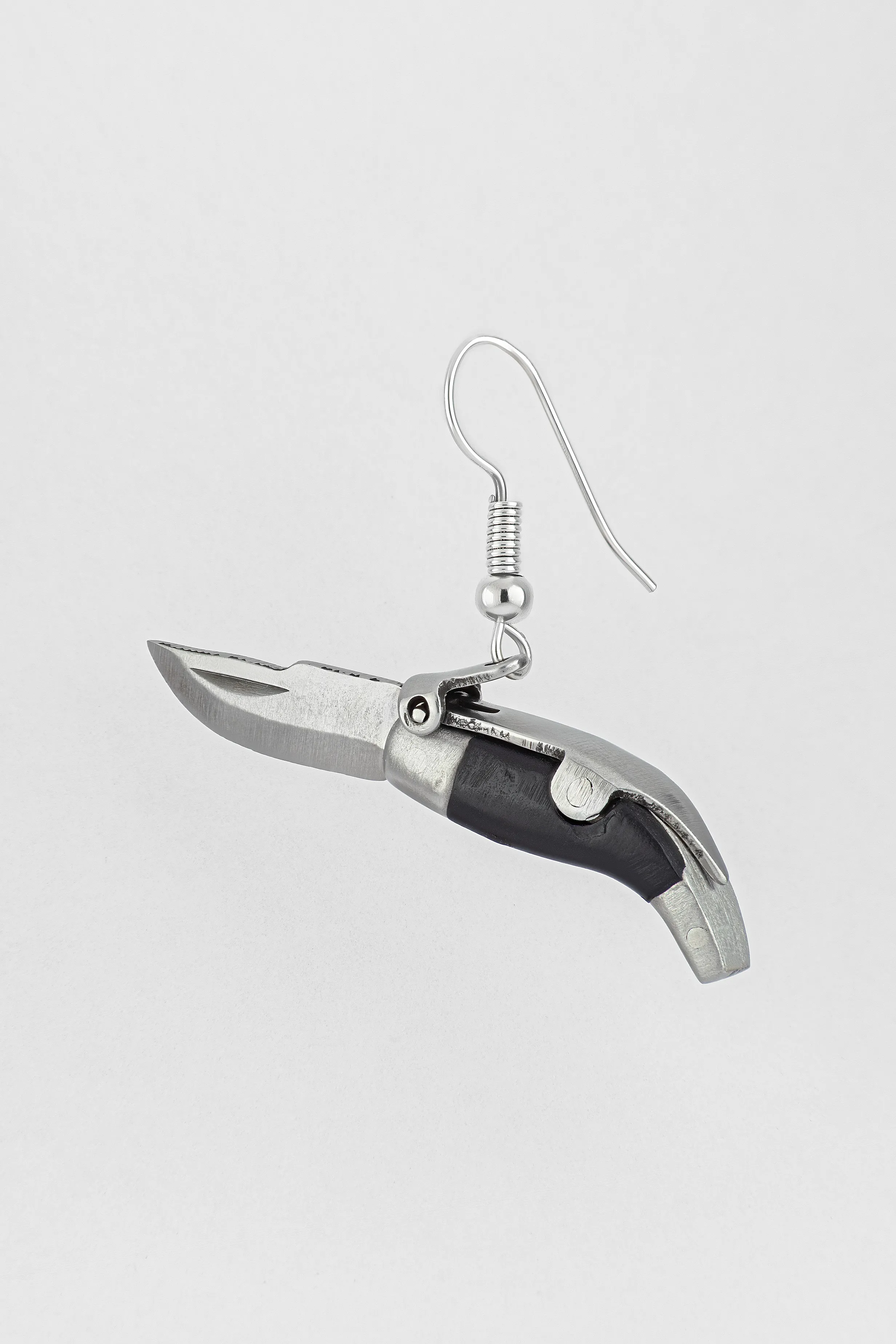
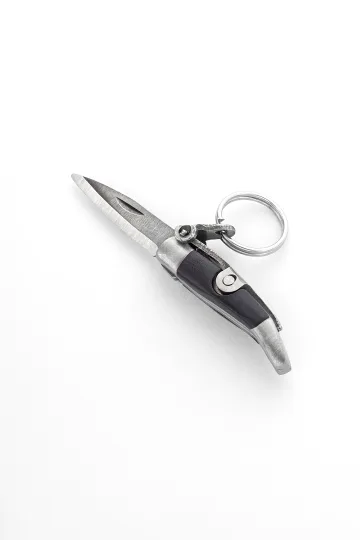
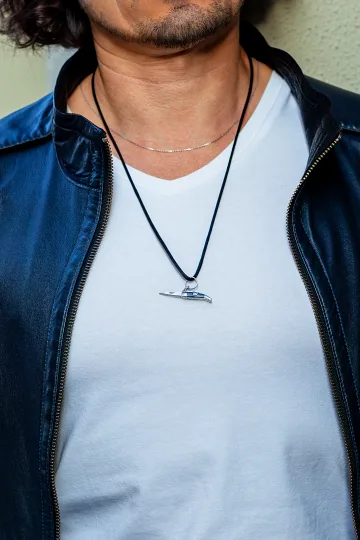
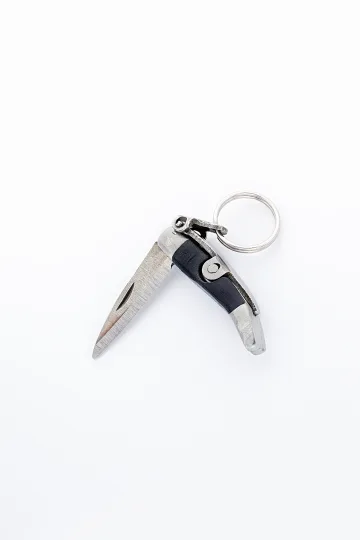
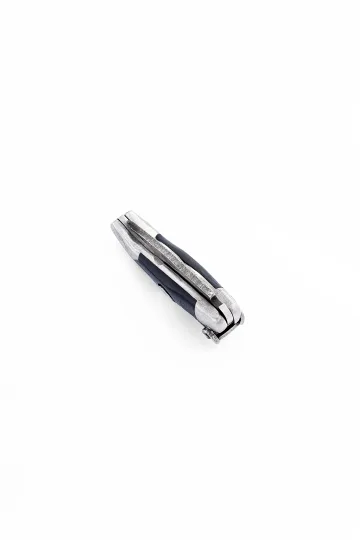
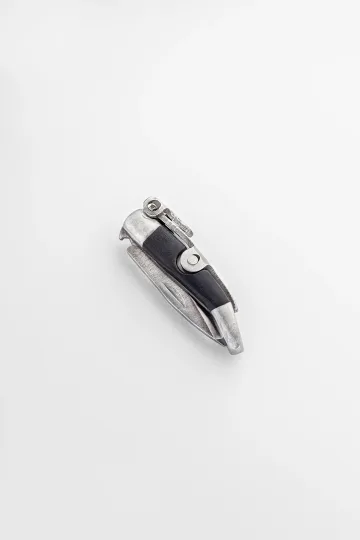
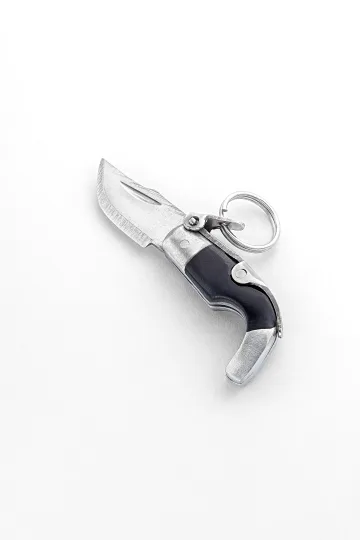
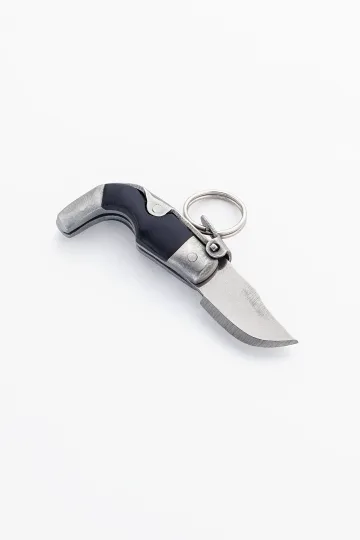
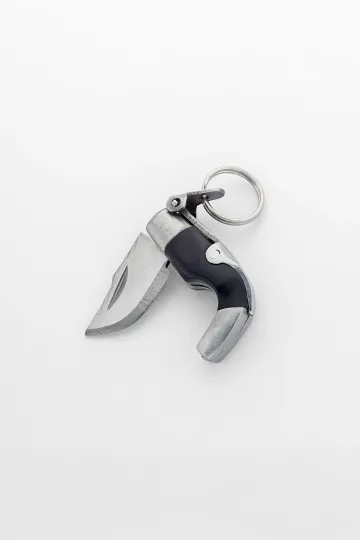
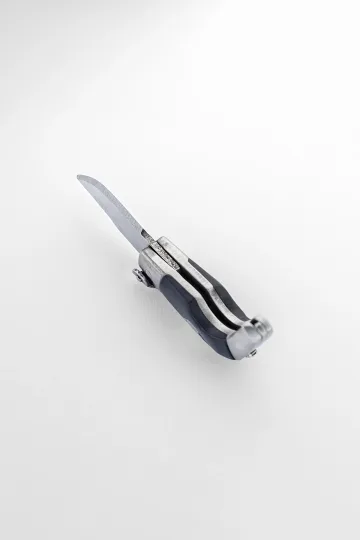
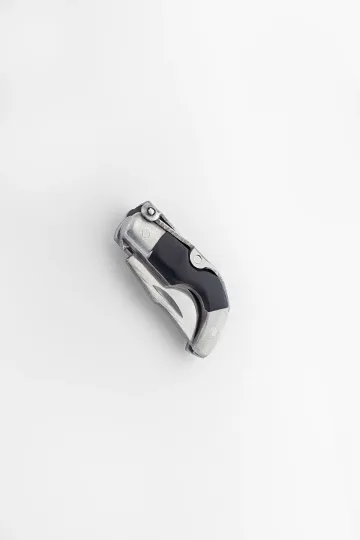
CAPAORA mini knife pendant
The 18th-century Spanish navaja in miniature: 40 mm of stainless steel, a real folding mechanism and a Palanquilla lock that clicks. An affordable gift to remember.
Authentic · Ships from Spain · 14-day returns
Types of compass rose jewellery
Pendants and necklaces
This is the most popular form. A compass pendant sits right at the centre of the chest, close to the heart, visible but not flashy. The classic version is a disc or coin-shaped pendant with the compass rose engraved or raised on the surface.
Some designs show all 32 points, highly detailed and traditional. Others simplify to 4 or 8 points for a cleaner, more modern look. Both are equally valid. The detailed versions appeal to history buffs and nautical purists. The minimal versions work better for everyday wear and layering.
Popular variations include:
- Round disc with engraved compass rose
- Open-work (cut-out) compass designs where you can see through the metal
- Compass with spinning centre needle (a conversation starter)
- Compass combined with a world map on the same pendant
- Compass with coordinates engraved on the back
- Double-sided pendants with compass on front and personal message on back
- Compass rose integrated into a larger medallion design
The size of compass pendants varies significantly. Small ones (15-20mm) are subtle and easy to layer. Medium ones (20-30mm) are the sweet spot for daily wear. Large ones (30mm+) make a statement and work best as solo pieces. If you are unsure, medium is almost always the right call.
Bracelets
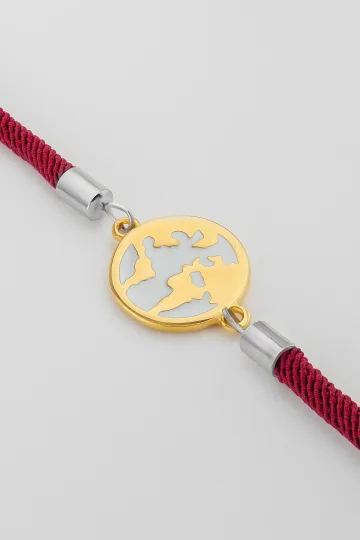
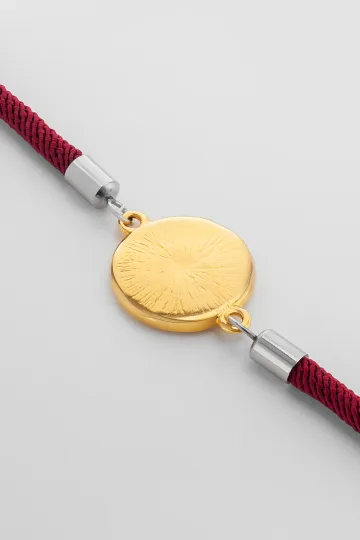
Compass bracelets are the second most popular option. The symbol works well as a bracelet charm or as the centerpiece of a bangle. Chain bracelets with a small compass rose disc are popular for women, while leather cord bracelets with a metal compass are common for men.
A world map bracelet with compass elements is one of the most popular styles in travel-themed jewellery. It combines two powerful symbols: the compass (direction) and the map (possibility). Together they say something bigger than either one alone.
Beaded bracelets with a compass charm are another popular option. The casual, stackable nature of beaded bracelets makes them easy to wear every day without feeling like you are "wearing jewellery" in a formal sense. This makes them popular with people who do not usually wear much jewellery but want something meaningful.
Cuff bracelets with an engraved compass rose are a bolder choice. They work well as standalone pieces and have a more substantial, committed feel than chain or cord bracelets.
Rings and earrings
Compass rings are a niche but growing category. The design works best on signet-style rings where the flat face can hold the rose pattern. These have a strong, bold look and lean masculine, though anyone can pull them off.
Compass earrings are less common but make a statement. Small studs with a compass rose are subtle and elegant. Larger dangles with compass details work for special occasions. Drop earrings with a compass disc create movement and catch light nicely.
Some designers have started incorporating the compass into ear cuffs and climber earrings, which gives the traditional symbol a very contemporary feel.
Paired with other nautical symbols
Some of the best compass jewellery combines the rose with other meaningful maritime symbols:
- Compass + anchor: Direction plus stability. Perfect for someone who values both adventure and security. This is one of the most popular combinations in nautical jewellery.
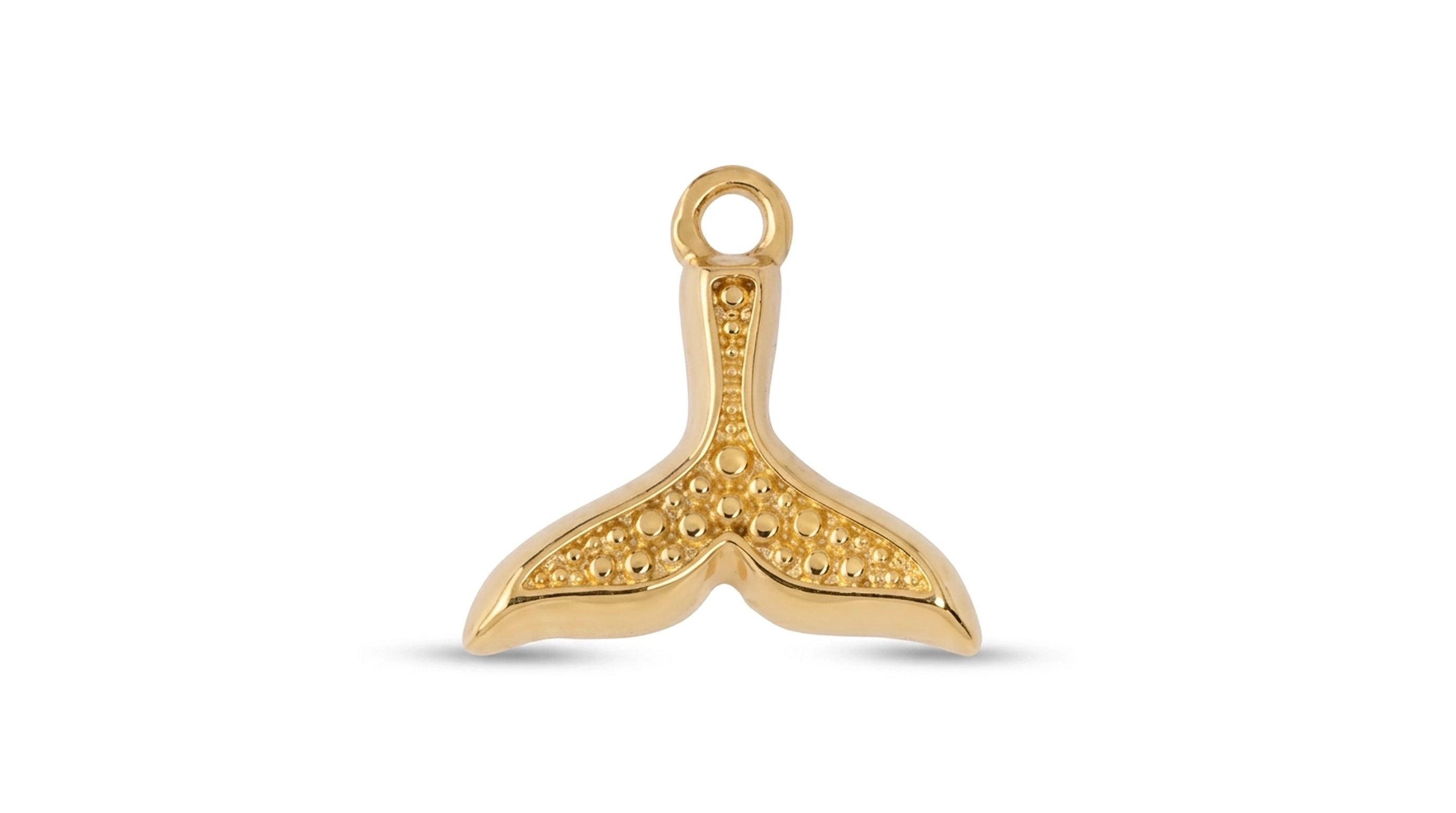
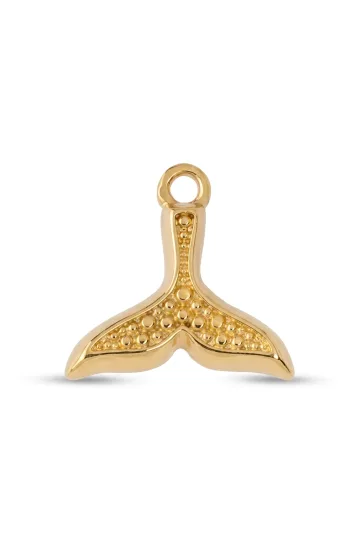
- Compass + whale tail: Navigation plus the majesty of the ocean. Great for ocean lovers and free spirits. The whale tail adds a sense of wild natural beauty to the compass's precision.
- Compass + star: Guidance from both earth and sky. A nod to celestial navigation, the ancient art of steering by the stars.
- Compass + coordinates: Personal and specific. Marks a place that matters. This combination is especially popular for couples and families.
- Compass + wave: Direction plus flow. The wave adds a sense of organic movement to the structured geometry of the compass.
- Compass + arrow: Double emphasis on direction. The arrow adds decisiveness to the compass's broader sense of orientation.
These combinations add layers of meaning and create pieces that feel truly unique. They also make excellent conversation pieces because people always want to know what the combination means to the wearer.
Leave your email, we'll send your discount code. No spam, unsubscribe anytime.
The code arrives by email, valid on your first order.
Materials and what they add to the meaning
The material of a compass pendant goes beyond looks. Each metal carries its own traditional associations:
Gold is connected to the sun, warmth, and success. A gold compass rose connects to the golden age of exploration and the gold-decorated wind roses on historical charts. It is the premium choice and it ages beautifully. Over time, gold develops a subtle patina that gives it character without losing its warmth. For compass jewellery specifically, gold feels historically appropriate because the original wind roses on portolan charts were decorated with gold leaf.
Silver is linked to the moon and intuition. Since navigation has always been connected to the stars and the moon (celestial navigation), silver is a particularly fitting material for a compass. It gives a cooler, more understated look. Silver compass pendants tend to have a slightly more casual, everyday feel compared to gold.
Rose gold is a modern favourite. It softens the geometric precision of the compass rose with a warm, romantic tone. Popular for gifts between partners. Rose gold compass pendants have a distinctly contemporary feel while still honouring the traditional design.
Two-tone combinations: gold and silver together represent balance. The compass rose itself is about finding equilibrium between different directions, so two-tone designs reinforce the symbolism nicely. They also have the practical advantage of matching with both gold and silver jewellery you might already own.
Enamel detailing adds colour and visual depth. Blue enamel is the most popular choice because it references the ocean and sky. Navy blue, in particular, connects to maritime tradition. Green enamel can represent land and earth. Red often marks the north point, following cartographic tradition. Enamel allows compass jewellery to include colour in a way that pure metal designs cannot, and it creates a visual effect that is closer to the actual compass roses on historical maps.
Stainless steel and titanium are popular for more casual, sporty compass jewellery. They are durable, lightweight, and work well for pieces that will be worn during outdoor activities. If you want a compass bracelet you can wear while hiking, swimming, or travelling without worrying about damage, these materials make sense.
If you are interested in how different materials and finishes affect jewelry, the nature symbols guide goes deeper into material choices for symbolic pieces.
Wearing compass jewellery day to day
Compass jewellery is easy to live with because the design is geometric and fairly neutral. It goes with almost anything, and the practical decisions come down to length, scale and how much else you put around it.
Everyday wear: a simple compass pendant on a mid-length chain, 45 to 50 cm, works with everything from a tee shirt to smart-casual office clothes. Keep it as a single piece for a clean look. The compass rose already holds enough visual interest that it does not need support from other pendants.
Layering: compass pendants layer well with other symbolic pieces, especially maritime or nature motifs. Try the compass on a longer chain with a shorter chain above it. A reliable arrangement is a short chain with a small charm at 40 to 45 cm, the compass on a mid chain at 50 to 55 cm, and optionally a long chain at 60 to 65 cm for depth. The gap between chains is what keeps them from tangling, and it is also what lets each piece be read separately.
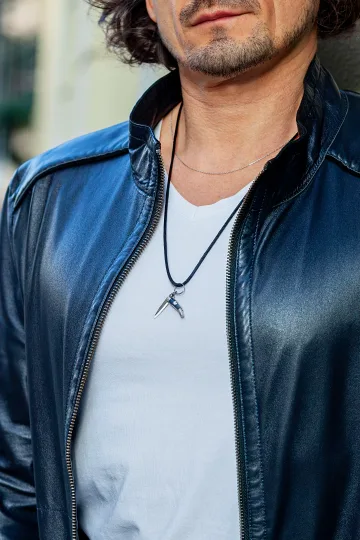
For men: compass pendants on leather cords, heavier chains or as a bracelet charm lean masculine without any aggression, which is why this is one of the few jewellery symbols men wear without hesitating. Pair with an anchor bracelet for a full nautical set. Men generally prefer a slightly larger pendant, around 25 to 30 mm, on a shorter chain or a cord.
Formal occasions: a small polished compass in gold or silver sits well with evening clothes. The geometric design reads as elegant rather than casual as long as the scale stays modest and the finish is clean. Under a dinner jacket, a compact disc on a fine chain is enough.
What to avoid: the compass rose is already a detailed design. Do not put it next to other intricate, busy symbols, because the two will fight and both will lose. One statement piece plus clean, simple companions is the right approach.
Compass rose vs other navigation symbols
The compass rose is not the only navigation-related symbol in jewellery. Here is how it compares:
Compass rose vs anchor: The anchor symbolises stability, grounding, and hope. The compass symbolises direction, search, and movement. They are complementary: the anchor is about staying, the compass is about going. Many people wear both. Together, they represent the full human experience of wanting roots and wanting wings at the same time.
Compass rose vs Nautical Star: The nautical star (a five-pointed star divided into alternating light and dark sections) was a sailor's tattoo symbol for finding your way home. It is closely related to the compass rose but simpler. The compass is more about direction and exploration; the nautical star is more about returning safely. In many historical contexts, the two symbols were used interchangeably, though purists would disagree.
Compass rose vs world map: A world map represents possibilities and the breadth of the world. The compass represents your ability to navigate it. Together they are one of the most powerful symbol combinations in travel jewellery. The map says "look at everything that is out there." The compass says "and you can get to any of it."
Compass rose vs arrow: Arrows point in one direction. The compass points in all directions. An arrow says "I am going this way." A compass says "I can go any way I choose." The compass carries more nuance and possibility. Arrows are about certainty. Compasses are about choice.
Compass rose vs lighthouse: The lighthouse is an external guide: something that helps you from outside. The compass is internal. It is your own sense of direction. This philosophical difference makes them appeal to different people. Some prefer to be guided. Others prefer to guide themselves. The compass is for the latter.
Compass rose vs ship wheel: The ship wheel represents control and steering. The compass represents knowledge and orientation. You need both to navigate, but they emphasise different things. The wheel says "I am in charge." The compass says "I know where I am." These are related but distinct feelings, and both have their place in nautical jewellery.
The compass rose as a gift: meaning and who to give it to
The compass rose left the maritime world a long time ago and became a send-off gift. It says one short thing with unusual precision: you have a direction, and you will find your way. That is why it turns up at moments of change, when spoken encouragement sounds like a greetings card and a symbol lands better.
Who receives a compass and on what occasion
The first and most obvious recipient is anyone leaving: a student off on a year abroad, a friend moving to another city, someone starting a long journey. Here the compass reads as a wish for a safe road and a quiet promise that the road leads somewhere worth arriving at. The second is anyone starting a new chapter, which covers graduation, a first job, a career change and retirement in equal measure. In that setting the compass rose is about choosing your own course rather than following the one other people expected. Partners separated by distance give each other compasses as a note that both still know the bearing home. New parents belong on the list too, because a first child is a new chart as much as anything else. Unlike most keepsakes, the compass is also bought for oneself, usually to mark a turning point that only the buyer can see. As a birthday present it suits people who live on the move: guides, sailors, long-distance drivers, anyone who spends weekends on a hill path. It works particularly well as a paired gift, since two identical pendants worn by people whom circumstances are pulling apart read as an agreement to hold a shared heading. And for a school leaver heading away from home for the first time, the compass says something calm and useful: you are your own navigator now, and that is a normal thing to be.
The send-off tradition of "find your way"
The compass rose carries no dark superstitious baggage, which makes it a safe gift in almost any circumstance. The folklore around it is warm rather than ominous: a gifted compass is said to keep the wearer from going astray, to help them come home and to help them find the right decision. Sailors wore compass and wind-rose motifs for centuries as charms of the road, trusting the symbol to hold them safe on the passage and to promise a return. That is the thread that turned a cartographer's drawing into a personal emblem. Giving a compass is a way of wishing someone against getting lost, on the map or off it. None of this requires you to believe in anything. The send-off works perfectly well on a plain human level, which is why the compass is welcome even among people who treat omens with amusement.
How to present it: engraving and a note
The compass opens up when you attach a specific meaning to it. Engraved coordinates for a home town, a grid reference from an Ordnance Survey map of a place that matters, a departure date, or a short line such as "find your way" turn the piece into something addressed to one person. A handwritten note with a wish for a good journey strengthens the gesture and explains the choice of symbol to a recipient who has no maritime background. If you are marking a new chapter, it is worth saying out loud that north on the pendant is symbolic rather than magnetic: the meaning comes from the idea of direction, not from a working needle. General tact around gift-giving, including what you should not give and how to sidestep the superstitions, helps with picking the occasion and the framing. The compass rose forgives most situations because it speaks about support rather than luck. One more idea that reliably lands: give the compass alongside a map or a postcard of the place the person is going to, so the symbol of orientation and the actual point on the chart reinforce each other.
Send a friend a discount code, they save on their first order.
Frequently asked questions
What does compass rose jewellery symbolise? The compass rose represents direction, adventure, finding your path, and protection during journeys. It started as a navigation tool on 14th-century maps and evolved into a personal symbol of inner guidance and the courage to explore. Different wearers emphasise different aspects of its meaning, which is part of what makes it so versatile.
Is compass jewellery suitable for men? Absolutely. The compass rose is one of the most popular jewellery symbols for men, with a long history in sailor culture and tattoo tradition. Pendants, bracelets, and signet rings all work well. In fact, compass jewellery is one of the rare categories where men buy for themselves as often as they receive gifts.
What is the best occasion to give compass jewellery as a gift? Graduations, going-away parties, milestone birthdays, retirements, and any moment of transition. It is also a great gift for frequent travellers, new parents (navigating a new chapter), and partners in long-distance relationships. Essentially, any time someone is about to embark on something new, a compass is appropriate.
Does a compass need to point to real north to have meaning? No. In jewellery, the compass is symbolic, not functional. The meaning comes from what the design represents, not from any actual magnetic properties. No one expects a pendant to navigate.
Can I combine compass jewellery with other symbols? Yes. It pairs especially well with anchors (stability + direction), whale tails (ocean freedom), stars (celestial guidance), and world maps (possibility). Avoid pairing it with too many other detailed symbols, and keep it balanced. One or two complementary symbols is ideal.
What is the difference between a compass rose and a wind rose? They are the same thing. "Wind rose" is the older, more traditional name, referring to the diagram of wind directions on Mediterranean portolan charts. "Compass rose" became the standard English term as the magnetic compass replaced wind-based navigation. In jewellery, both terms are used interchangeably.
Why does the north point on a compass rose often have a fleur-de-lis? This tradition started on 14th-century portolan charts. Some historians believe it honoured the French royal family, possibly because the Catalan Atlas was made for the French king. Others think it was simply a decorative, easy-to-recognise marker that would stand out even on a rocking ship. Either way, it has been the convention for over 600 years and remains a popular design element in compass jewellery.
Is there a spiritual or mystical meaning to compass jewellery? Some people assign spiritual meaning to it. The four cardinal directions correspond to elements (earth, air, fire, water) in many traditions. Native American, Celtic, and various Asian traditions all assign spiritual significance to the four directions. But for most wearers, the meaning is personal rather than mystical: trust your direction, keep moving forward, remember you can always find your way.
How do I choose the right size for a compass pendant? Small (15-20mm) for subtle everyday wear or layering. Medium (20-30mm) for a visible but not overpowering daily piece. Large (30mm+) for a statement piece. When in doubt, medium is the most versatile choice.
Silver and gold jewellery, wedding bands, symbolic pendants, paired sets.
Buying it as a gift? Each one arrives ready to give.
 A branded Zevira box and a little card come with every order.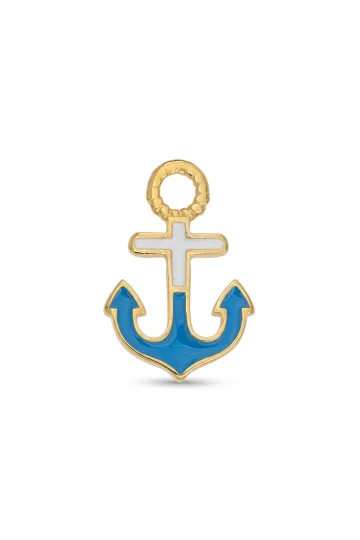



Conclusion
The compass rose has travelled a long journey itself. From the hand-drawn wind diagrams of 14th-century Mediterranean cartographers, through the golden age of exploration, into sailor tattoos and maritime tradition, and finally into the jewellery we wear today. At every stage, it has meant roughly the same thing: you can find your way.
What makes compass jewellery special is that it works on two levels at once. There is the historical weight, centuries of explorers, navigators, and sailors who trusted this symbol with their lives. And there is the personal meaning, the quiet reminder to trust your own sense of direction, wherever you happen to be going.
It is not a flashy symbol. It does not scream for attention. A compass pendant sits quietly against your chest and does its work subtly, through small moments of recognition. You glance down and remember what it means. You feel its weight and think about where you are and where you are going. That is enough.
It is not a symbol that tells you where to go. It is a symbol that says you already know.
Wear the symbol, don't just read about it. These are in stock:

About Zevira
Zevira makes jewellery in the artisan tradition of Albacete, Spain. The compass rose and nautical symbols hold a special place in what we do: these are pieces for people at turning points, so we keep them simple, wearable, and ready for a personal engraving of coordinates or a date.
Here is what you will find with us around the compass rose and navigation theme:
- Compass rose pendants with 4, 8, or more points, from minimalist to highly detailed
- Compass pendants with the option to engrave coordinates on the back
- Bracelets with compass and nautical elements on chain or leather cord
- Compass paired with anchor, whale tail, or wave in a single piece
- Matching sets for two people who travel apart from each other
- Silver and gold versions for everyday and formal styling
Every piece can be personalised with engraving, with the option of a personal engraving. Sterling silver 925 and 14-18K gold.