The Lauburu: The Basque Symbol of Four Elements, Home, and the Oldest Wheel in Europe
A four-headed wheel from a corner of the Pyrenees
Look at a Basque farmhouse door in a village like Ainhoa or Sare, on the French side of the border, and you will sometimes see a carving above the lintel. Four curved heads, like four commas chasing each other, fused at a single central point. It looks a little like a stylised sunflower and a little like a pinwheel frozen in time. This is the lauburu, and its age is measured not in centuries but in millennia.
The Basque people have lived in the western Pyrenees since long before Rome, long before the Celts pushed across Gaul, long before anyone was writing down European history at all. Their language, Euskara, has no known relatives on Earth. Their folklore is older than the Roman gods. And their four-armed solar wheel sits on headstones, doors, yokes, and now on small silver pendants resting in the hollow of a collarbone.
This guide is for anyone who has seen the lauburu on a trip to San Sebastián, noticed it on a cousin's necklace at a family gathering in Boise, Idaho, or come across it in a photograph from Bilbao and wondered what, exactly, they were looking at. The short answer: one of the oldest continuously used symbols in European art. The long answer is below.
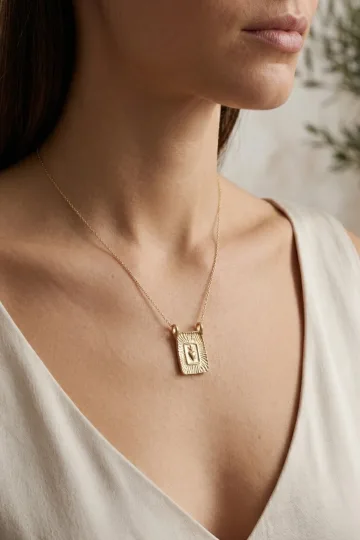
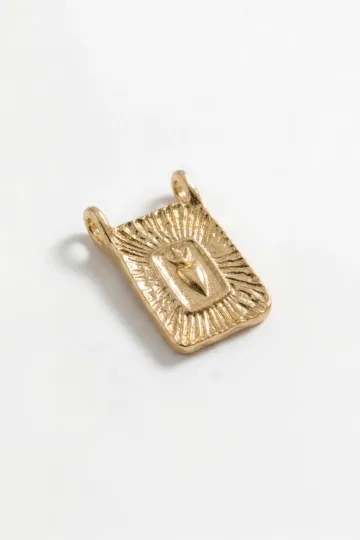
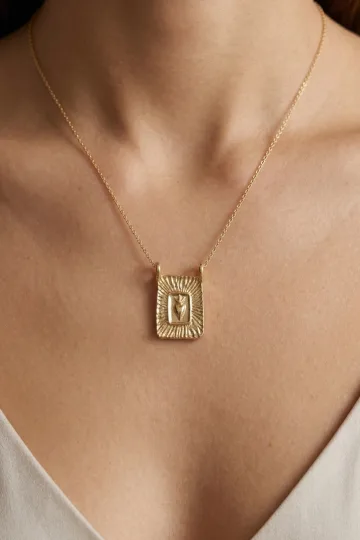
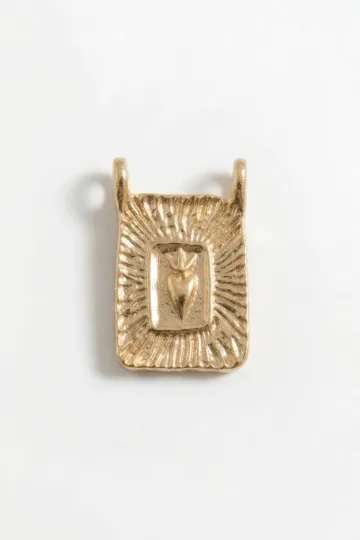
Wear the symbol, don't just read about it. These are in stock:





Jewellery with the lauburu: what to choose
The lauburu pendant
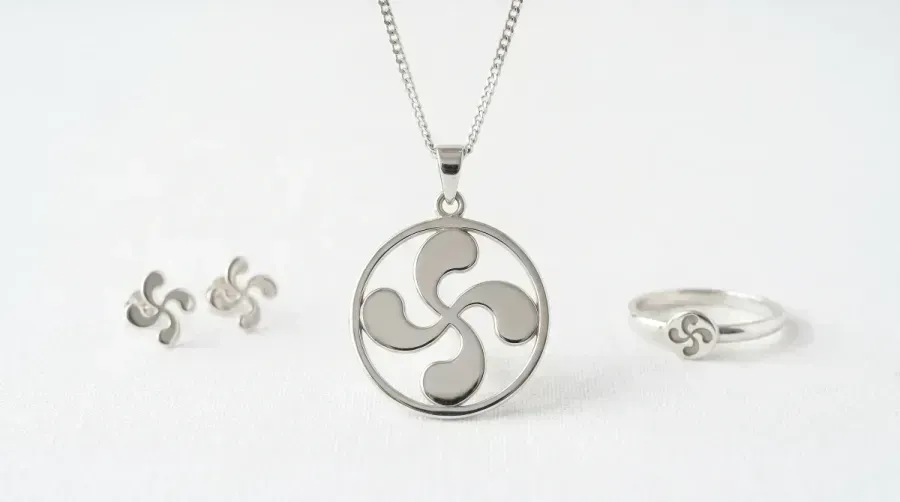
The pendant is where the lauburu lives most naturally. The symbol is radial, meaning it reads clearly from any angle. Hung on a chain, it rotates slightly as you move, and the curved heads catch light like the blades of a slow turbine. The classic size sits between 18 and 25 mm. Smaller than that and the four curves lose legibility. Larger and the piece starts to feel like a belt buckle.
Sterling silver is the traditional material and remains the first choice for most buyers. Basque silversmiths have worked the symbol in 925 silver for generations. The slight greyness of oxidised silver, pushed deep into the inner curves of the lauburu, actually improves the design, giving the four heads contour and shadow. A mirror-polished lauburu looks fine. A lauburu with brushed outer surfaces and darkened inner recesses looks old, in the best sense of the word.
A lauburu pendant works on a short snake chain, a mid-length cable, or a heavier Figaro link. It does not belong on ornate, diamond-crusted chains. The symbol is agricultural in spirit, connected to doors and tools and gravestones. Keep the chain honest. If you are unsure about chain length, our chain length guide for necklaces walks through what sits where on which frame.
The lauburu ring
On a ring, the lauburu becomes tighter and more graphic. The symbol is usually flattened slightly into an oval or reduced to 12 to 15 mm so it sits cleanly on the finger. Two ring formats dominate. The first is a signet-style flat top with the lauburu engraved or cast in low relief. The second is a cut-out lauburu, where the metal between the four curved heads is pierced through, and the skin of the finger shows through the negative space.
Both formats are unisex. A thicker band, between 2.5 and 4 mm, tends to carry the symbol more confidently than a fine wire band. For sizing, our ring size chart translates between the main international systems, which matters because Basque rings cross borders constantly, and a Spanish size and a US size are not the same thing.
Lauburu earrings
Earrings are the most overlooked lauburu format and, in many ways, the most elegant. A pair of small lauburu studs, 8 to 10 mm across, reads as a clean graphic mark rather than a cultural flag. You can wear them to a meeting in London or a dinner in Biarritz without explanation. Anyone who knows what they are will recognise them. Anyone who does not will see a nicely proportioned spinning form.
Dangle earrings with a single lauburu on a short drop work for evening wear. The rotation of the symbol as you move your head is a quiet, hypnotic detail. Traditional Basque earrings were often worked in filigree, and filigree lauburu earrings are still made by silversmiths in Gipuzkoa and Bizkaia. These are workshop pieces, not mass production, and they cost accordingly.
Lauburu bracelets
The lauburu on a bracelet can go two ways. Option one: a single lauburu as a pendant charm on a fine chain. Option two: the lauburu incorporated into a bangle, either as a repeated engraved motif around the circumference or as a single medallion fused to the band.
The bangle format is more architectural and reads especially well on men. A flat silver cuff, 8 to 12 mm wide, with one engraved lauburu centred on the wrist, is one of those pieces that looks entirely contemporary until someone tells you the symbol predates the Roman Empire.
Cufflinks and tie pins
Cufflinks with a lauburu motif are a small but enduring category. They work for weddings, formal dinners, and anyone in the Basque diaspora who wants a quiet marker of identity inside an otherwise conventional suit. Tie pins with the symbol are less common but even subtler. Both translate the lauburu into a scale where the symbol becomes more like a watermark, visible to anyone who leans in but invisible across the room.
Customer reviews
Zevira is a real jewellery shop. Genuine payments, deliveries and customer thank-yous.
🥰🥰🥰 gracias
Ok, ¡gracias! 🙂
A silver lauburu on black, nothing else. The Basques ignored fashion for seven thousand years; take the hint.
How to wear the lauburu
The lauburu reads exactly as loudly as you let it: a clear accent on a plain background, a quiet personal mark under a closed collar. So I build the look around the occasion.
What do I pair it with every day? For daily wear I recommend a mid-size pendant on a chain that lands at the collarbone, worn over grey or white knit, a turtleneck or a simple cotton shirt. The calmer the fabric colour, the louder the symbol speaks, so I suggest keeping the lauburu on a single tone with no stripes or prints crowding it.
Is it right for the office? Yes, and restraint works in its favour here. I recommend a small pendant tucked under a shirt or blouse collar, stud earrings and a ring without high relief. It looks considered without demanding an explanation, and it sits well on a shirt collar, a thin jumper over a blouse, or a neutral jacket.
How do I build an evening look? For evening I suggest an open neckline and a dark smooth fabric (silk, velvet, dense knit) to make room for a larger pendant in blackened silver or enamel. One strong accent and little else: stud earrings and a fine ring. After dark the lauburu holds the composition on its own, so I do not split the attention.
And for a special occasion? For a wedding, an anniversary or a family celebration I choose an engraved version or coloured enamel, especially when there are Basque roots in the family. A pair of matching pendants reads as a shared story without a word.
How do I combine it with other pieces? The cleanest option is the lauburu alone on a thin chain. In a layered look I make it the anchor on the shorter chain and keep the longer ones neutral. The metals need not match: silver sits happily with steel and brass, and the contrast works in the symbol's favour.

Turn on your camera, pick earrings, a pendant or a ring, and see the piece on yourself in real time.
Switch items in one tap.
Everything runs in your browser: no photo or video is ever uploaded.
Types of the lauburu
The classic lauburu
The basic form is what most people recognise: four curved heads meeting at a central point, each head formed from two arcs that curl inward. The symbol is rotationally symmetrical with fourfold symmetry. Rotate it ninety degrees and it looks identical. Rotate it one hundred and eighty degrees, the same. This mathematical property is part of why the design is visually stable, and part of why it has survived so well in hand-cut stone, where a design with subtle asymmetries would have accumulated errors over millennia of copying.
The classic lauburu has no inner ornament. The four heads are solid shapes, the centre is a simple meeting point. This is the version carved on discoidal funerary stones across the French and Spanish Basque provinces. If you want the oldest, most archaeologically accurate form, this is it.
The ornamented lauburu
Later versions, particularly from the eighteenth and nineteenth centuries, added dots, small crosses, or radial lines inside each of the four heads. Some add a small central disc or a ring around the whole design. These ornamented lauburus appear on farmhouse doors, yoke plates, and decorative metalwork from the Basque pastoral tradition.
In jewellery, ornamented lauburus tend to show up on larger pendants where there is enough surface area to support the internal detail. The extra elements do not change the meaning of the symbol, but they do root it visually in a particular period and region. A lauburu with small nailhead dots inside the heads, for example, reads as post-medieval rural rather than ancient and clean.
The stylised lauburu
Contemporary Basque designers, especially from the 1960s onward, have reworked the lauburu into hundreds of variations. Some thin the four heads until they are almost blade-like. Some open the centre, turning the symbol into something closer to a hollow pinwheel. Some combine the lauburu with the ikurriña flag colours, creating enamelled or two-tone versions.
For a pendant that feels modern but still reads as a lauburu, stylised versions can be the best choice. They sidestep any heavy folkloric weight. The symbol is still there, but presented as graphic design rather than heritage artefact.
The three-armed and six-armed variants
The four-armed form is the canonical one, but the Basque artistic tradition includes three-armed and six-armed versions of similar rotational solar designs. The three-armed version is a close cousin of the Celtic triskele and the Manx triskele, and shares many of the same meanings. The six-armed version, often enclosed in a circle, appears on hilarri headstones and overlaps visually with the "flower of life" and sun wheel motifs found across much of pre-Christian Europe.
These variants are not technically lauburus in the strict sense. Lauburu literally means "four heads" in Basque, so anything without four heads is, by definition, something else. But they sit in the same family, and Basque jewelers sometimes offer them alongside the classic four-armed design. If you are drawn to the rotational-solar aesthetic but want something slightly different, the three-armed and six-armed versions are natural alternatives. For more on the three-armed cousin, see our triskele and triskelion guide.
History and origin: a symbol older than Rome
Before the Celts, before the Romans
The Basques are a puzzle for European prehistory. Genetic studies suggest they are the closest living descendants of the pre-Indo-European populations of Western Europe, the people who lived on the continent before the Celtic and Germanic migrations that reshaped the linguistic map. The Basque language, Euskara, is a language isolate. It has no established relatives. Basque grammar does not behave like any other European grammar, and Basque vocabulary includes words that may have survived unchanged since the Neolithic period.
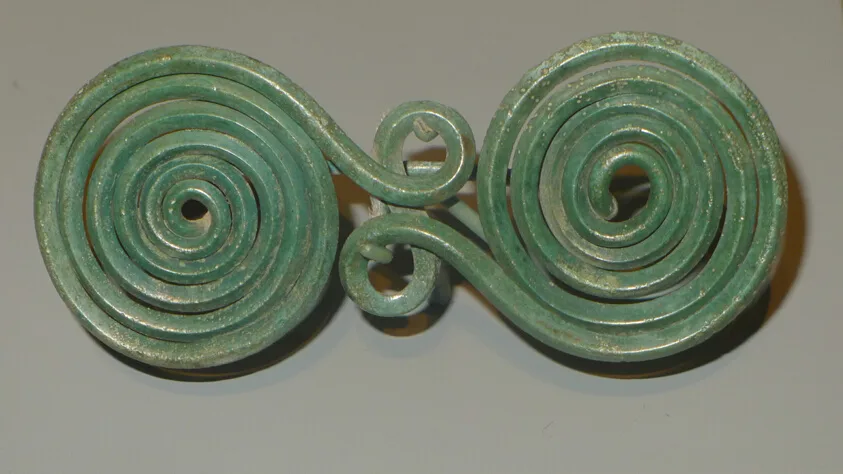
This matters for the lauburu because the symbol is embedded in a culture that was already old when the Romans arrived in Hispania. Archaeological finds across Basque territory show rotational and solar motifs on pottery and stone from thousands of years back. The specific four-armed form that we now call the lauburu probably crystallised somewhere between the late Bronze Age and the early Iron Age, but rotational solar symbols in the same visual family are considerably older.
The continuous line of use runs from pre-Roman carvings through medieval stonework into the modern era. Unlike many European folk symbols, the lauburu was never buried, forgotten, and rediscovered. It has always been there.
Hilarri: the Basque discoidal headstones
Walk through any old cemetery in the French Basque Country, particularly in Labourd or Lower Navarre, and you will see hilarri. These are discoidal funerary stones, flat round slabs mounted on short pillars, carved with a variety of solar, floral, and geometric motifs. The lauburu is one of the most common designs on hilarri, alongside simple crosses, stars, and tools that indicate the profession of the deceased.
The hilarri tradition runs from roughly the sixteenth century to the early twentieth, though the underlying form is much older. The best surviving examples are in village cemeteries around Ainhoa, Sare, Espelette, and Saint-Jean-de-Luz. The stones are usually small, rarely taller than a metre, and deliberately modest. A lauburu on a hilarri is not decoration. It is a statement about the relationship between the deceased, the turning of time, and the cycle of the seasons.
For anyone visiting the Basque Country, the hilarri are one of the quietest and most rewarding things to look for. Not tourist attractions in the usual sense, but small carved records of how this culture thought about death for five hundred years.
Solar wheel, swastika, and why the lauburu is none of these
It is impossible to discuss the lauburu without addressing the visual similarity to the swastika, and the specific swastika used by Nazi Germany. The lauburu has four arms arranged around a central point. The swastika has four arms arranged around a central point. Both are ancient. Both are rotational. This is where the similarity ends.
The lauburu's arms are curved, shaped like commas, flowing inward. The Nazi swastika's arms are straight lines, bent at ninety-degree angles, marching outward. The two shapes are visually distinct to anyone who pauses for half a second. More importantly, the two symbols have entirely separate histories. The lauburu has been continuously used in the Basque Country for thousands of years. The Nazi version was adopted in the early twentieth century from a broader pool of ancient Indo-European solar symbols and weaponised into one of the most recognisable hate emblems in modern history.
The Basque lauburu is not a swastika. It is not a derivation of a swastika. It is a parallel solar motif from a related but independent tradition, and its use predates the Nazi appropriation by several millennia. Most educated Europeans know this. Most people outside Europe do not, which is why this paragraph exists.
For more on related ancient symbols and their meanings, our complete guide to jewelry symbols covers the wider family of rotational, solar, and protective emblems from across the continent.
Celtic cousins and the triskele
The lauburu shares its genetic neighbourhood with the Celtic triskele, the three-legged triskelion on the flag of the Isle of Man, and the rotational solar wheels found across Iron Age Europe. All of these symbols emerged from a pan-European fascination with rotational motion, the turning of the year, and the daily path of the sun across the sky.
Celtic triskeles appear on stonework from Ireland, Brittany, and northern Spain. The Manx triskele, three armoured legs in mid-stride, is a direct political adaptation of the same underlying form. The lauburu belongs to this family but is not Celtic. The Basques are not Celts, and conflating the two erases a genuinely unique European lineage. The visual similarity reflects shared regional aesthetics, not shared ancestry.
Our Celtic knot and trinity knot guide covers the Celtic side of this visual family in more depth, for anyone curious about the overlaps and the clear differences.
Upload a photo of your pet, someone you love, or an object. We'll build a 3D model and hand-cast it in pewter.
What the lauburu symbolises
Four elements, four seasons, four winds
The canonical reading of the lauburu is that the four heads represent the four classical elements: earth, water, fire, and air. This interpretation aligns the symbol with broader pre-Christian European cosmology, where fours were ubiquitous, four elements, four seasons, four cardinal directions, four winds.
The seasonal reading is particularly strong in Basque folk tradition. The lauburu as the turning of the agricultural year: spring planting, summer growth, autumn harvest, winter rest. On a farmhouse door, the symbol was a prayer for a productive cycle. On a hilarri, the same symbol marked a cycle completed, a life that had turned its four quarters and reached the central point where all four heads meet.
Life, death, rebirth
The rotational nature of the lauburu lends itself to readings of continuous transformation. Not a linear progression but a wheel, where every ending is already the beginning of the next turn. This is why the symbol appears on both cradles and graves. Both moments are points on the same wheel.
Basque folk tradition is less doctrinal than the surrounding Christian and Roman cultures. The Basques converted to Christianity relatively late and held on to pre-Christian practices longer than most of their neighbours. The lauburu carries some of this older cosmology forward, a worldview where death is not a final chapter but a turn in a cycle that precedes and exceeds any individual life.
Home and protection
Above the door of a Basque farmhouse, the lauburu is a protective sign. It marks the threshold. It acknowledges that the home is part of a larger natural cycle and asks that cycle to keep the house safe. This is the most common modern folk use of the symbol, still actively practised in villages across Navarre and the French Basque provinces.
In jewelry, the protective reading carries through. A lauburu pendant is, among other things, an amulet. Not in the melodramatic magical-thinking sense, but in the older everyday sense of a small object worn close to the body as a quiet claim on safety and belonging. For more on this wider family of protective pieces, see our protection amulets guide and our overview of protection rings.
The naming legend: Resurrección María de Azkue and "laur buru"
The Basque word "lauburu" is usually translated as "four heads," from "lau" (four) and "buru" (head). The modern name was popularised in the late nineteenth and early twentieth centuries by Basque intellectuals working to consolidate and document Basque culture. The writer Resurrección María de Azkue, a priest, linguist, and folklorist from Bizkaia, was one of the key figures in this movement. His dictionaries and ethnographic work helped codify a standard vocabulary for Basque cultural objects, including the name that now sticks to the four-headed wheel.
Before this codification, the symbol had regional names that varied by village. The formal name "lauburu" is therefore relatively recent as a label, even though the thing it labels is extremely old. This is a common pattern in the recovery of pre-modern folk culture: the object is ancient, the name is a nineteenth-century ethnographer's gift.



The lauburu and Basque identity
Sabino Arana and the flag
Modern Basque identity as a political project has a definable start date: the 1890s, when Sabino Arana, a Bizkaian nationalist, began codifying what he called a specifically Basque nationalism. Arana designed the ikurriña, the red, green, and white Basque flag, in 1894. His movement, the Basque Nationalist Party, became one of the dominant political forces in the region and remains central to Basque politics today.
The lauburu's status within this political project is interesting. Arana's movement adopted the lauburu as one of several Basque cultural emblems, and the symbol has appeared on various Basque political materials ever since. But unlike the ikurriña, which is unambiguously a modern political flag, the lauburu is a much older cultural object that existed long before Basque nationalism crystallised as a political force. You can wear a lauburu without making a political statement. You can also wear one as a political statement. The same symbol handles both uses.
Modern use in Bilbao, San Sebastián, and Vitoria-Gasteiz
Walk through any of the major Basque cities and the lauburu is everywhere once you know to look for it. Carved into public buildings, stamped on coasters in bars, embossed on wine labels from Rioja Alavesa, stitched into the edges of pelota-club logos, and sold in every jewellery shop from the old town of San Sebastián to the arcades of Bilbao. It is not hidden. It is ambient.
In tourist-heavy areas, you will see lauburu jewellery at a range of prices and qualities, from mass-produced pieces aimed at casual visitors up to serious silversmith work by named artisans. The difference is usually obvious in the weight of the metal, the finish of the piece, and the retailer. Workshop studios in Gipuzkoa and Bizkaia produce lauburu pieces that would be respectable gallery objects anywhere in Europe.
The Arantzazu Sanctuary
The Sanctuary of Arantzazu, in the mountains of Gipuzkoa, is one of the more visually striking Basque religious sites and a good place to see contemporary Basque art in dialogue with older traditions. The sculptor Jorge Oteiza worked on the facade in the mid-twentieth century, and the sanctuary is full of interpretations of traditional Basque motifs filtered through modernist abstraction. You will not always see a literal lauburu there, but the rotational, four-quartered aesthetic runs through the whole place.
The Basque diaspora: Boise, Argentina, Uruguay
One of the most unexpected places to see lauburu jewellery is the American West, specifically Idaho. Boise has one of the largest Basque diasporic communities outside Europe, a legacy of nineteenth-century sheep-herding migrations. The Basque Block in downtown Boise is a full cultural district, with a museum, cultural centre, and annual festival (Jaialdi) that draws tens of thousands of visitors. Lauburu jewellery and imagery are common throughout the neighbourhood.
Argentina and Uruguay also have significant Basque communities, with cultural centres in Buenos Aires, Montevideo, and smaller towns across the pampas. Basque surnames are common in both countries, and Basque symbols, including the lauburu, appear in family jewellery passed down across generations. A cousin's necklace in Mendoza and a grandfather's ring in Idaho may both be carrying the same four-headed wheel.
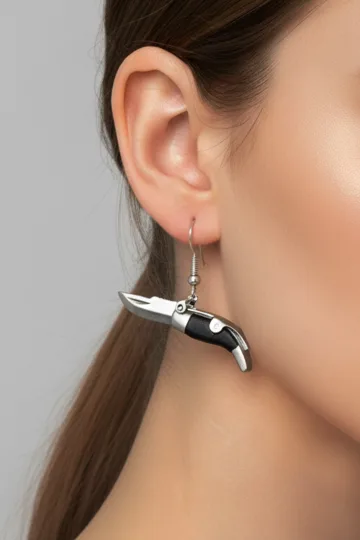
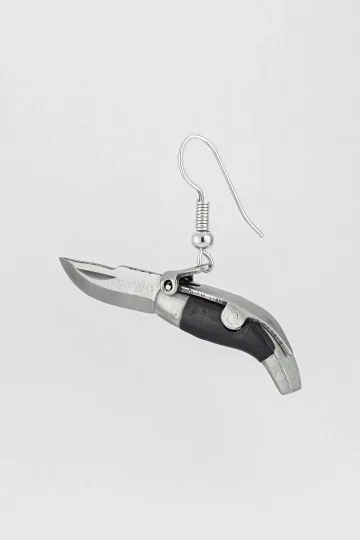
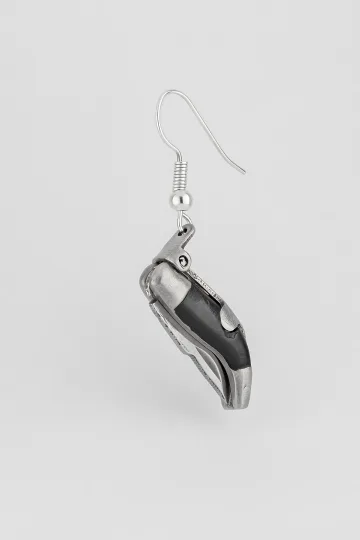
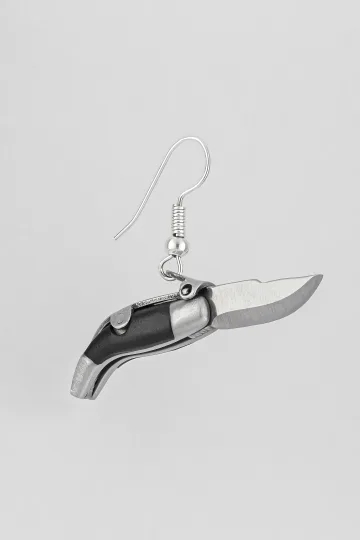
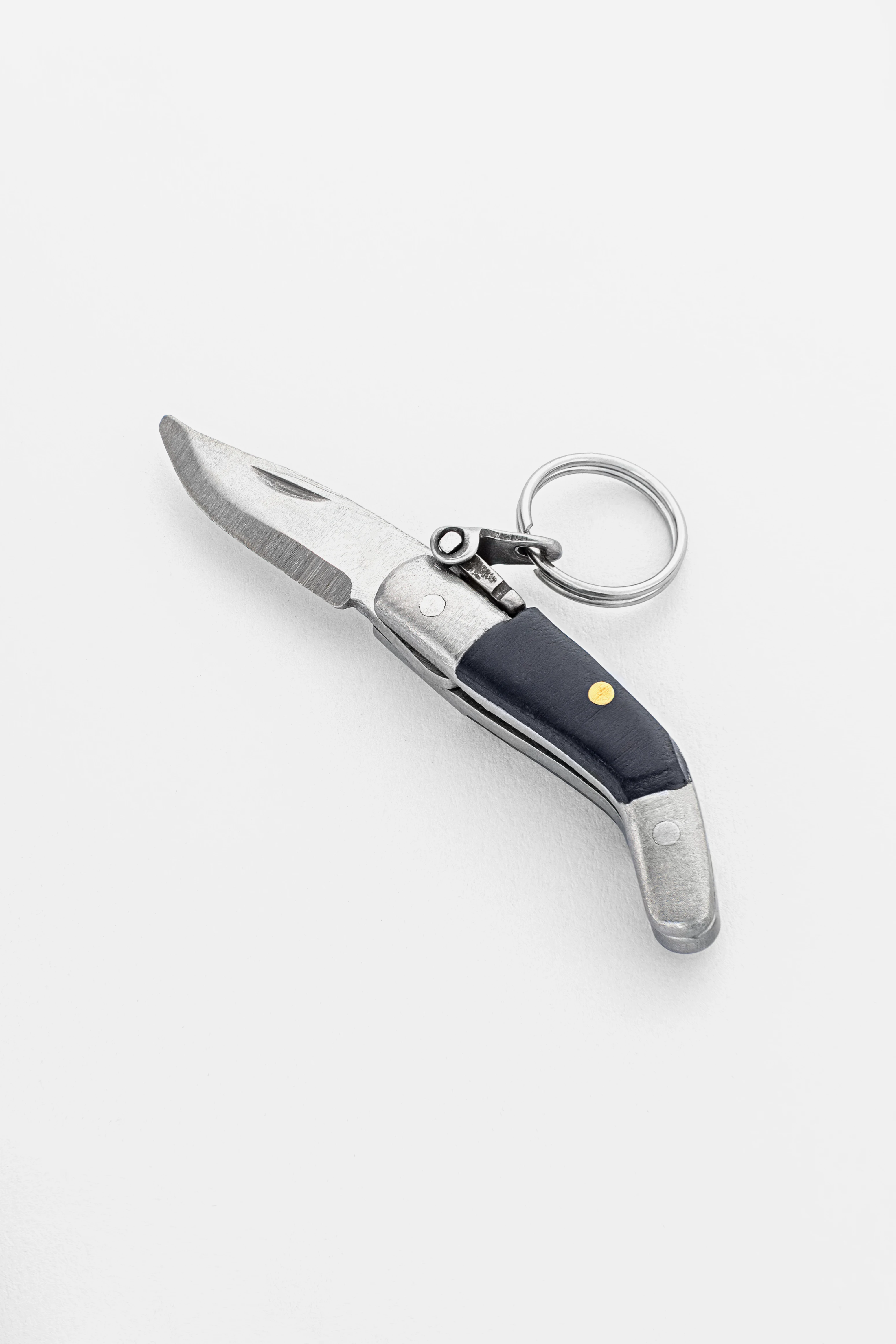
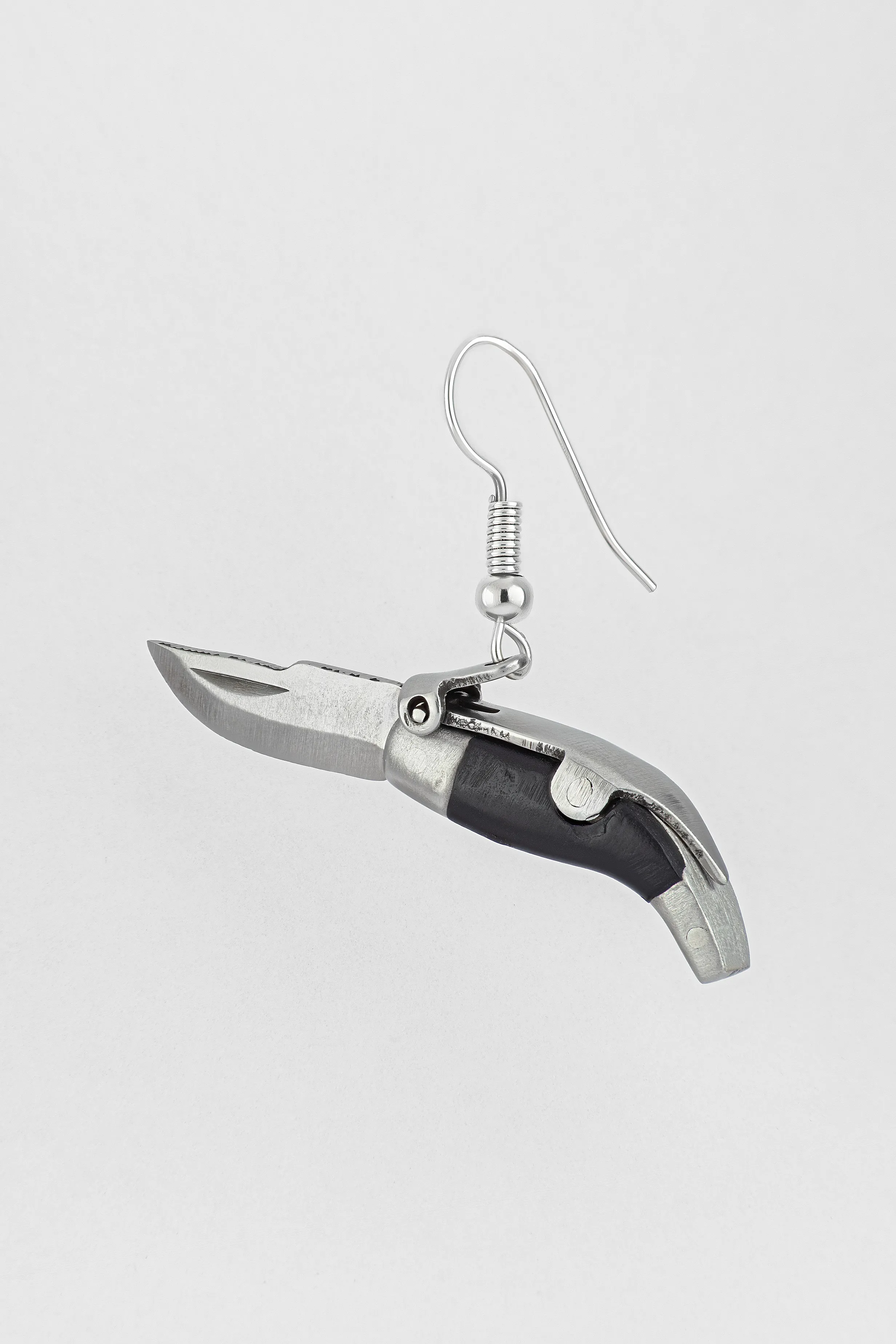
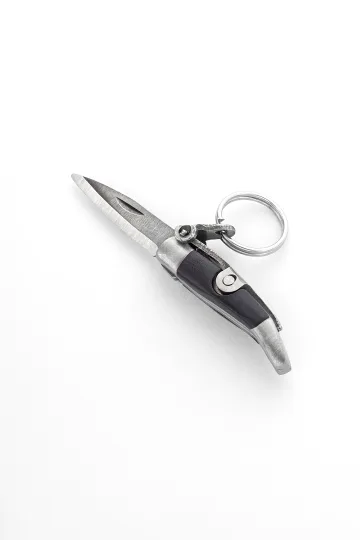
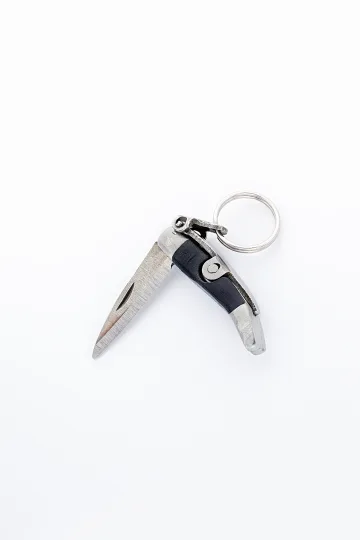
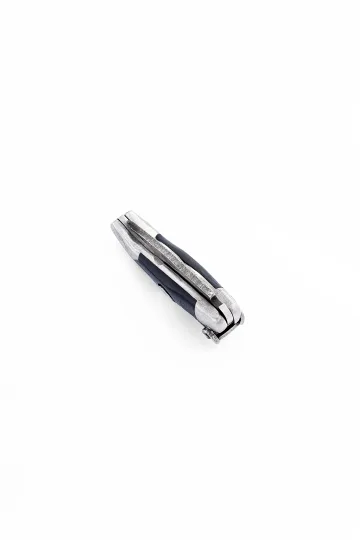
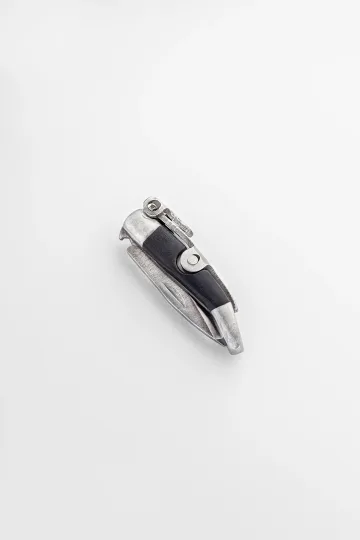
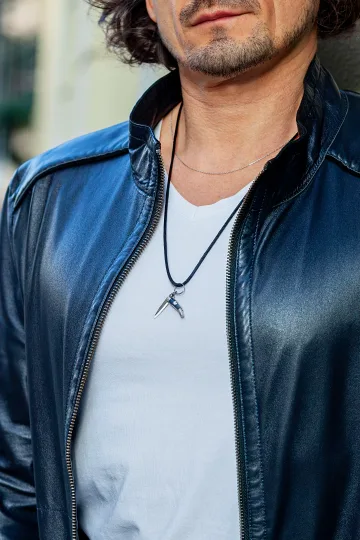
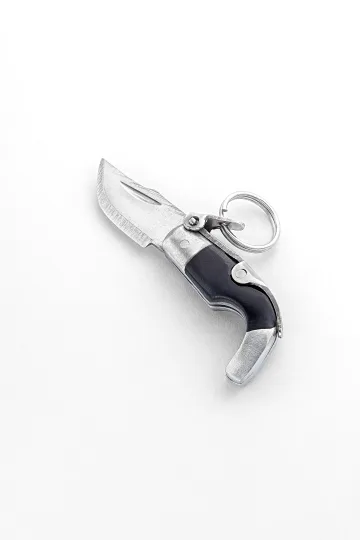
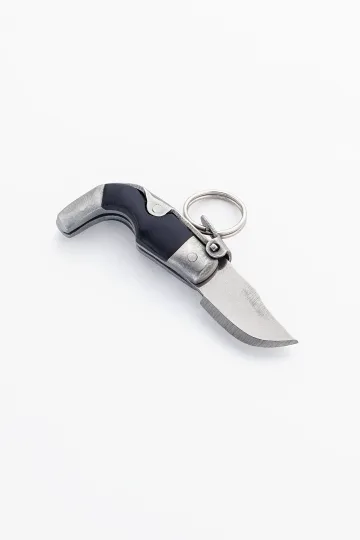
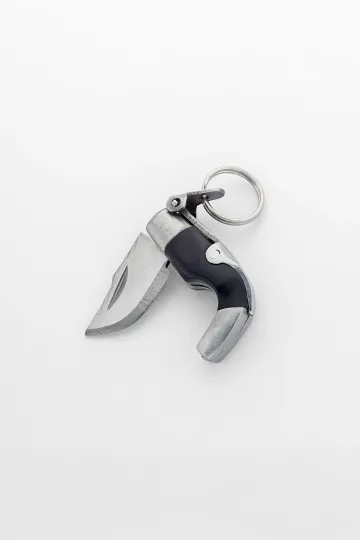
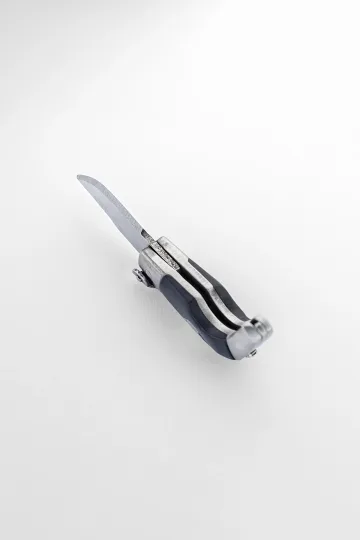
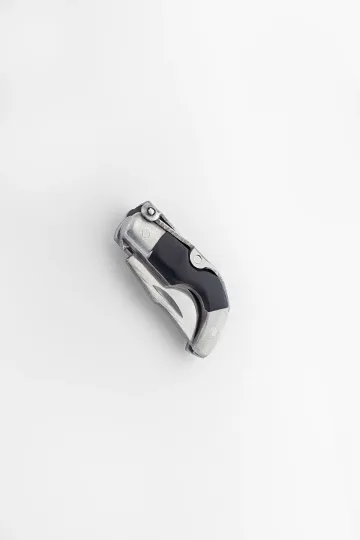
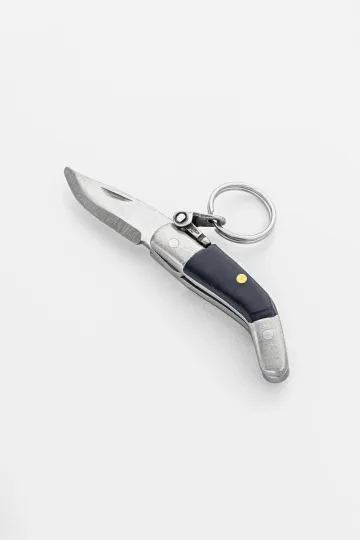
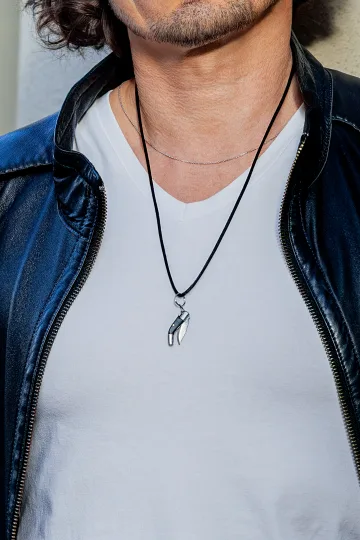
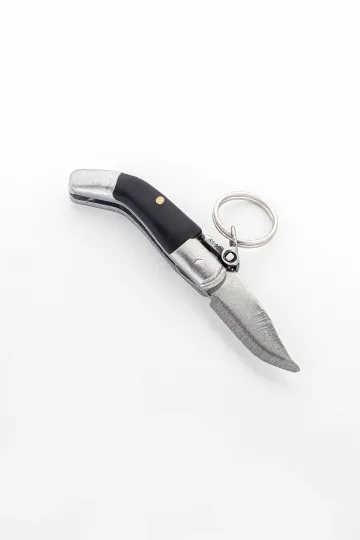
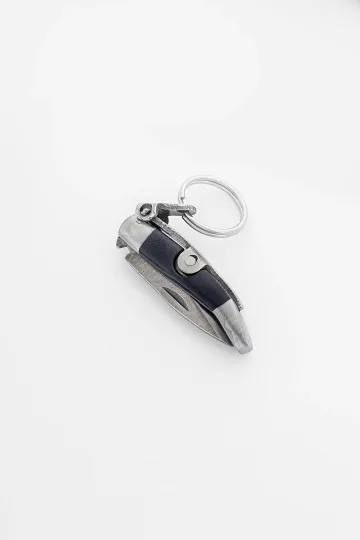
CAPAORA mini knife pendant
The 18th-century Spanish navaja in miniature: 40 mm of stainless steel, a real folding mechanism and a Palanquilla lock that clicks. An affordable gift to remember.
Authentic · Ships from Spain · 14-day returns
Materials and techniques: the Spanish silversmith tradition
Sterling silver 925
The dominant material for lauburu jewellery is sterling silver, stamped 925, meaning 92.5% pure silver alloyed with 7.5% other metals (usually copper) for strength. Silver is the right material for this symbol for several reasons. It is traditional in the region. It takes detail well, which matters for the curved interior edges of the four heads. It oxidises into a grey that enhances rather than hides the design. And it carries the symbol at a price point that does not make the object feel precious in the wrong way.
The lauburu is an agricultural symbol with sacred resonances. Solid gold can feel inappropriate, though plated or vermeil versions exist. For anyone who specifically wants the symbol in a warmer metal, a sterling silver lauburu with a light gold plating is a reasonable middle path. For more on the specific meaning of the 925 hallmark and how to identify real silver, see our guide to what silver 925 actually means and our how to tell if silver is real article.
Wood and horn
Before widespread access to silver, many rural lauburus were carved from wood or cow horn. These are still made by traditional craftspeople in small villages and appear in regional markets, especially during summer festivals. Wooden lauburus are usually set into a small leather or cord necklace rather than a metal chain. They have a rougher, more agricultural energy than the silver versions, and they wear well on anyone who prefers earthier materials.
Horn lauburus are rarer and tend to be workshop pieces rather than mass-market items. The polished surface of horn, usually dark brown or black, contrasts with the complex inner geometry of the symbol. These are serious objects, often commissioned rather than bought off a shelf.
Steel
Stainless steel lauburus are the modern workhorses. Cheaper to produce, essentially indestructible in daily wear, and completely uninterested in tarnish, steel pieces are the right choice for anyone who wants a lauburu to wear and forget about. The design reads well in steel, especially in darker finishes like PVD-coated black or gunmetal. For more on steel and how it compares to silver and brass, see our brass vs steel vs silver comparison.
Engraving and personalisation
A lauburu pendant or ring is a natural canvas for a personal inscription. Initials, dates, short phrases in Basque or Spanish, or the name of a town in the Basque Country all work. Engraving is usually done on the reverse side of a pendant or on the inside of a ring band. Standard laser engraving handles this cleanly. Hand engraving by a silversmith is more expensive but carries a different weight, the small irregularities of a human tool marking a piece that will outlast the person who wore it.
The Spanish silversmith tradition
Spanish silverwork has deep roots in places like Córdoba, Salamanca, and the Basque workshops of Gipuzkoa and Bizkaia. The tradition favours clean forms, a disciplined relationship between positive and negative space, and a certain respect for the weight of a piece in the hand. A proper Spanish-made silver lauburu feels dense, settled, and intentional. This is true whether the piece is produced in a workshop in Eibar or in a goldsmith's studio in Albacete, where Zevira is based.
Pendants, rings, earrings and paired sets featuring the Basque lauburu in sterling silver.
Leave your email, we'll send your discount code. No spam, unsubscribe anytime.
The code arrives by email, valid on your first order.
Who wears the lauburu
The Basque diaspora
The most obvious group. A Basque pendant carries specific cultural weight when it is worn by someone with Basque ancestry, Basque in-laws, a Basque spouse, or a long personal connection to the region. The symbol is less loaded than a national flag but more specific than a general European heritage piece. It says: this line of my family comes from these mountains.
Cultural travellers and collectors
The second largest group is people who have spent time in the Basque Country and want to carry a piece of it home. This includes rugby fans who have watched matches at Biarritz or San Sebastián, food tourists who came for pintxos and stayed for the landscape, Camino de Santiago pilgrims who crossed the Basque provinces on the way to Compostela, and anyone who has been moved by the architecture of Bilbao, the beaches of Donostia, or the mountain villages of Navarre.
Lovers of old Europe
Some people are drawn to the lauburu not for personal or ancestral reasons but because they find pre-Roman European symbols more interesting than modern graphic design. This is a perfectly reasonable motivation. The lauburu belongs in the same mental category as the Scandinavian rune, the Celtic knot, the Greek meander, and the Etruscan rosette. All of these are marks from a Europe that existed before the homogenising weight of the Roman Empire flattened regional visual traditions. Wearing one of these marks is a small act of attention to the layered depth of the continent.
Spiritual and cyclical-minded wearers
The lauburu's rotational symbolism, its reading of life as a turning wheel rather than a linear track, resonates with a range of modern spiritual orientations that are sympathetic to pre-Christian European traditions. This is a more personal and less territorial relationship with the symbol. The four elements, the four seasons, the wheel of the year: these ideas have found a new audience in the last several decades, and the lauburu is one of the more grounded and historically rooted symbols in this space.
Men and women alike
The lauburu is not gendered in either its traditional or modern uses. Men wear it. Women wear it. The symbol sits in the same category as a signet ring or a family crest: identity markers that are available to anyone with a claim on them. For men in particular, the lauburu is one of the quieter Spanish-origin pieces available. See also our first jewelry for men guide for broader context on starter pieces that age well.
Gift contexts
Lauburu jewelry is a strong gift for several specific occasions. A Basque wedding or christening. A graduation from a university where the recipient studied abroad in Spain or France. A milestone birthday for someone with roots in the Basque Country. A housewarming, given the symbol's protective-doorpost associations. For more on matching jewelry gifts to specific recipients, our gift for girlfriend guide and gift for boyfriend guide cover the broader framework.
Common myths about the lauburu
"It is just a Spanish version of the swastika"
No. As covered above, the lauburu and the Nazi swastika are two different symbols with different shapes, different histories, and different meanings. Both belong to a very broad pan-Eurasian family of rotational solar motifs, but the specific Basque four-headed wheel has been in continuous use for millennia and owes nothing to twentieth-century political movements. Conflating the two is historically illiterate.
"It is Celtic"
No. The Basques are not Celts. Basque culture is one of the few pre-Celtic European traditions that survived the Celtic migrations essentially intact. The lauburu's visual similarity to Celtic rotational symbols reflects shared regional aesthetics across Iron Age Europe, not shared ancestry. The Celts passed through the Basque lands and beyond. The Basques stayed.
"It means exactly one thing"
No. Like most ancient symbols, the lauburu carries a cluster of associated meanings rather than a single definition. Four elements, four seasons, four winds, life-death-rebirth cycle, protection of the home, turning of time. These meanings overlap and reinforce each other. Any serious reading of the symbol embraces the cluster rather than trying to pin it down to one thing.
"Only Basques can wear it"
This one comes up occasionally and deserves a respectful answer. The lauburu is not a closed or initiatory symbol. It is not the property of a restricted group. Basques themselves have historically welcomed visitors and diaspora members wearing the symbol, and the modern Basque cultural institutions generally treat it as a symbol of hospitality and shared heritage rather than as an exclusive marker. That said, wearing a cultural symbol carries some responsibility. Learning what it means, understanding the culture it comes from, and not flattening it into a generic ornament are the minimum obligations. Beyond that, the symbol is open.
"It is the same as the Basque flag"
No. The Basque flag, the ikurriña, was designed by Sabino Arana in 1894 and is a modern political emblem. The lauburu is thousands of years older than the flag. The two are often associated because both are visible Basque cultural markers, but they belong to very different categories: one is a political flag, the other is a pre-political cultural symbol.
How to choose lauburu jewellery
Start with where you will wear it
Everyday lauburu pieces should be low-maintenance. Steel or a well-finished sterling silver piece on a durable chain handles daily life in any climate. Workshop-grade silver or filigree pieces are better reserved for occasions where you will actually look at what you are wearing: dinners, holidays, cultural events.
If you live in a humid climate or swim regularly in your jewellery, steel and gold-plated options beat pure silver for long-term wear. Silver oxidises faster in damp air, and while a lightly tarnished silver lauburu has genuine character, a heavily tarnished one just looks neglected.
Match the size to the frame
A 25 mm lauburu on a small frame reads as an accessory the wearer has grown into. A 15 mm lauburu on a broad chest reads as a minor detail. The best match sits between 18 and 22 mm for most adult frames, with smaller sizes for delicate pendants and larger sizes for statement pieces. For men's pieces, 22 to 28 mm is comfortable.
Think about chain and setting
The lauburu pairs well with simple chains: snake, cable, Figaro, or a modest box link. It does not pair well with heavy rope chains or ornate filigree chains, which fight the symbol for visual space. A clean chain lets the lauburu do its work.
For a ring setting, a flat-top signet style is the most traditional. A bezel-set lauburu disc on a plain band is a strong modern alternative. Avoid settings with side stones or cluster detail, which pull the eye away from the central symbol.
Ethical sourcing
Where possible, buy from workshops with a known lineage, whether that is a named Basque silversmith or a Spanish brand with traceable production. Mass-produced lauburus sold in airport shops and tourist kiosks are not illegitimate, but they are interchangeable with generic costume jewellery. A proper piece from a proper workshop lasts longer, ages better, and carries the symbol with the weight it deserves.
Caring for lauburu jewellery
Sterling silver
Wipe with a soft cloth after wear. Store in an airtight pouch or drawer to slow oxidation. Polish occasionally with a silver cloth, working carefully around the inner curves of the four heads. For deep cleaning, warm soapy water and a soft brush reach into the interior detail. Avoid harsh dips, which can strip the intentional darkening that gives a traditional lauburu its contrast.
Our guide on how to clean gold and silver jewelry at home covers the full cleaning workflow for different metals. Our tarnish removal guide handles the more serious cases.
Steel and plated pieces
Stainless steel needs essentially nothing. Wipe and wear. Gold-plated pieces should be kept dry, away from perfume and sweat, and wiped after wear. The plating will eventually thin with daily friction. Our gold plating durability guide and our PVD coating comparison walk through the specifics.
Wood and horn
Store dry. Polish occasionally with a drop of neutral oil, working it into the surface with a soft cloth. Avoid prolonged immersion in water. Wooden and horn lauburus age beautifully when they are given basic care, developing a patina that reflects the years of wear.
Send a friend a discount code, they save on their first order.
FAQ
Is the lauburu a religious symbol? Not exclusively. The lauburu predates Christianity in the Basque Country by thousands of years, so calling it a religious symbol in the modern sense is imprecise. It is a cultural symbol with sacred resonances. It appears on Christian gravestones and pre-Christian stone carvings alike. Basque people use it in both secular and spiritual contexts without contradiction.
Can non-Basques wear the lauburu? Yes. The symbol is open, not restricted. The only implicit ask is that the wearer understands what it is, respects its origin, and does not flatten it into a generic graphic. Most Basque cultural institutions treat the symbol as a mark of hospitality rather than exclusion.
How do I pronounce "lauburu"? Roughly "lah-oo-boo-roo," with equal stress on each syllable. In Basque, vowels are pronounced distinctly, and there is no strong primary accent. Spanish speakers tend to shift the stress slightly to the second syllable ("lauBUru"), which is acceptable in casual conversation.
Is the lauburu related to the swastika? The two symbols belong to the same very broad family of ancient rotational solar motifs, which existed across Eurasia for thousands of years. The specific Basque form and the specific Nazi form are visually and historically distinct, with the Basque version predating the Nazi version by millennia. Conflating them misreads both.
What is the difference between a lauburu and a Celtic triskele? Number of arms and cultural origin. The lauburu has four arms and is Basque. The triskele has three arms and is Celtic or Manx. They belong to the same visual family but come from different cultures with different languages and different histories.
What material is best for a daily lauburu? Sterling silver 925 is traditional and ages beautifully. Stainless steel is the practical choice for anyone who wants to wear and forget. Gold-plated options look warmer but require more care.
Where should I buy authentic lauburu jewellery? Workshops in the Basque Country are the gold standard for traditional craftsmanship. Spanish silversmiths across the peninsula produce quality lauburu pieces, including studios like ours in Albacete. Look for clear hallmarks, traceable production, and silversmiths who can tell you where the piece was made and by whom.
Is the lauburu appropriate as a gift? Yes, especially for people with Basque heritage, travellers who have spent time in the region, or anyone drawn to old European symbols. The symbol carries warmth and protection without the weight of more overtly political emblems.
Is the lauburu gender-specific? No. It works on men, women, and anyone outside those categories. The design is geometric and neutral, and Basque tradition does not assign it a gender.
Can I get a lauburu engraved with a name? Yes. A pendant or ring is an excellent canvas for a short inscription. Initials, dates, or a phrase in Basque, Spanish, or English all work. Most silversmiths offer basic engraving; hand engraving by a specialist is available for higher-end pieces.
Does wearing a lauburu mean I support Basque independence? Not by default. The lauburu is a cultural symbol that predates the modern independence movement by millennia. It can be used politically, but the default reading is cultural and historical, not partisan. Wearing one does not commit you to any specific political position.
What is the best chain length for a lauburu pendant? For women, a 45 to 50 cm chain places the pendant in the hollow of the collarbone. For men, 55 to 60 cm sits flat on the chest. Adjust for frame size and personal preference. See our necklace chain length guide for more detailed recommendations.
Buying it as a gift? Each one arrives ready to give.
 A branded Zevira box and a little card come with every order.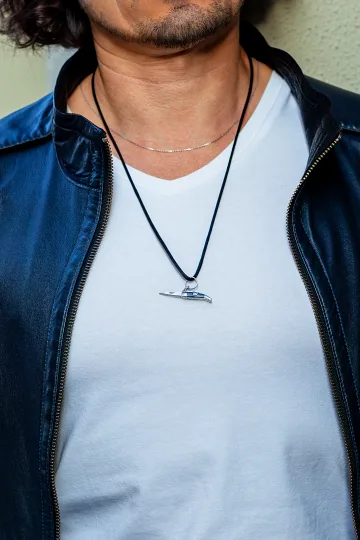




About Zevira
Zevira is a Spanish jewellery brand from Albacete. The lauburu line is one of the catalogue categories. See the catalogue for current pieces and details.
Wear the symbol, don't just read about it. These are in stock:
The bottom line
The lauburu is a genuinely ancient symbol that has survived, continuously, in the mountains between France and Spain for longer than most European civilisations have existed as distinct entities. It has sat on doors and gravestones and silver pendants through the Roman Empire, the early medieval kingdoms, the Spanish monarchy, the Napoleonic wars, two world wars, and everything since. It is still there. People are still carving it into stone. Workshops are still casting it in silver. Families are still passing it from one generation to the next in Idaho, Argentina, and the old towns of Bizkaia.
Wearing a lauburu is not a performance. It is a small, grounded acknowledgement of a culture that has refused to disappear. The four heads at the centre of the wheel are turning the same way they turned when the first Basque silversmith carved one into a piece of cow horn in a village that no longer has a name. The wheel keeps turning. The symbol keeps being worn. The line holds.
That is what the lauburu does. Quietly, for millennia, without asking for attention.