Protection Amulets and Talismans: A Complete Guide to Jewellery That Guards You
Introduction
My grandmother wore a small pendant every day. A tiny horn shape, slightly curved, dark red against her olive skin. She never took it off. Not for cooking, not for sleeping, not even for the bath.
When I was maybe seven, I asked her about it. She touched it with her thumb, the way you'd touch a worry stone, and said, "My mother gave this to me when I left home. She said it would keep the bad things away." Then she paused and added, "I don't know if it works. But nothing bad has happened yet."
That was thirty years ago. She's gone now, but I still remember the weight of that little horn in my palm when she let me hold it. It was warm. Not from magic. From her skin.
That pendant was a cornicello, an Italian protection amulet with roots stretching back thousands of years. And my grandmother was far from alone. Across every continent, in every era of human history, people have worn objects they believed would shield them from harm. Blue eyes in Turkey. Open palms in Morocco. Crosses in Spain. Knotted threads in India.
This guide covers all of it. The history, the symbols, the traditions, and the practical side: how to pick the right amulet for you and how to actually wear it. Whether you believe these things carry genuine protective energy or you simply love the idea of wearing something meaningful, there's a lot to discover here.
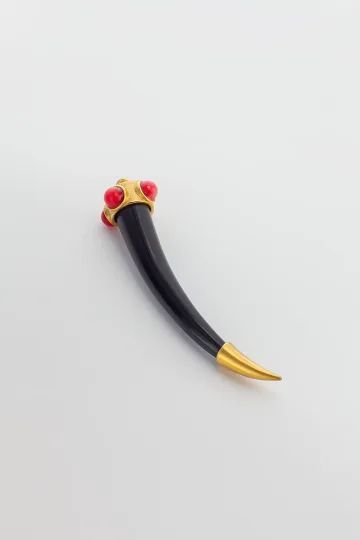
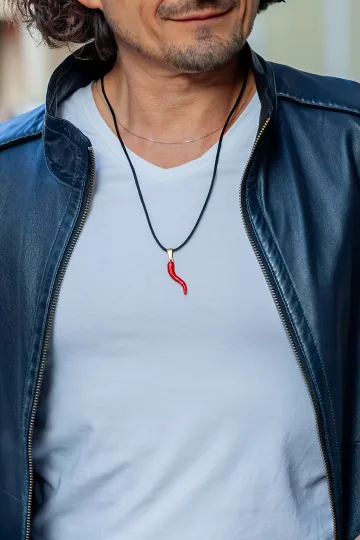
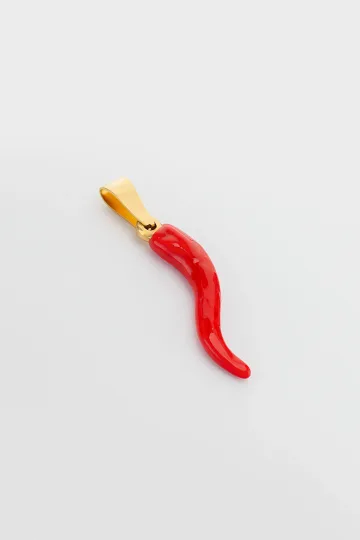
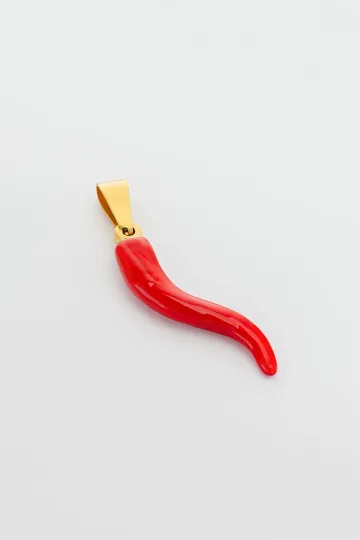
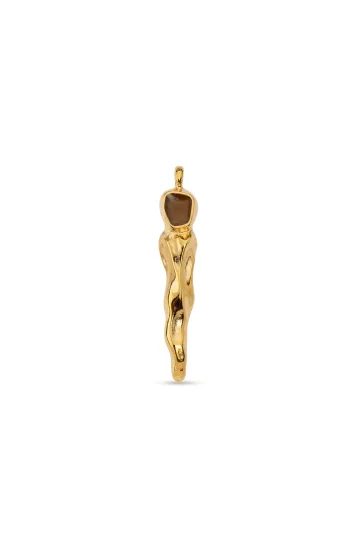
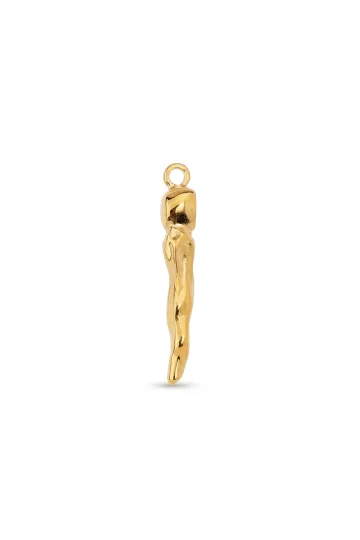
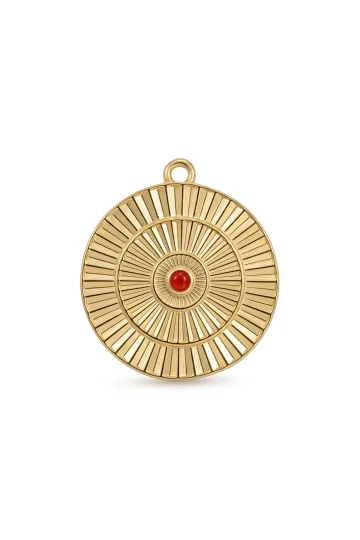
Wear the symbol, don't just read about it. These are in stock:



Amulet vs Talisman vs Charm: What's the Difference
People use these words interchangeably, and honestly, in casual conversation that's fine. But they do have distinct meanings, and understanding the differences helps you appreciate what you're wearing.
An amulet is a passive protector. It shields. It deflects. It absorbs negativity so you don't have to. Think of it as armour for your energy. The nazar (evil eye bead) is a perfect example. It sits there, watching, reflecting bad intentions back to wherever they came from. You don't need to activate it or charge it. It just works by being present. The word comes from the Latin "amuletum," which roughly translates to "a means of defence."
A talisman is active. It doesn't just protect. It attracts. Good luck, love, success, health. A talisman is more like a magnet than a shield. The word comes from the Arabic "tilasm" (or the Greek "telesma"), meaning a completed ritual object. Historically, talismans were often inscribed with specific symbols, prayers, or astrological signs to focus their power on a particular goal.
A charm is the broadest category. Originally, the word referred to a spoken incantation (from the Latin "carmen," meaning song or verse). Over time it came to mean any small object with supposed magical properties. Today most people use "charm" to describe the little pendants on a bracelet, but the original meaning was much more potent.
In practice, many protective jewellery pieces blur these lines. A hamsa pendant both protects (amulet function) and attracts blessing (talisman function). A sacred heart pendant shields the wearer while also connecting them to divine love.
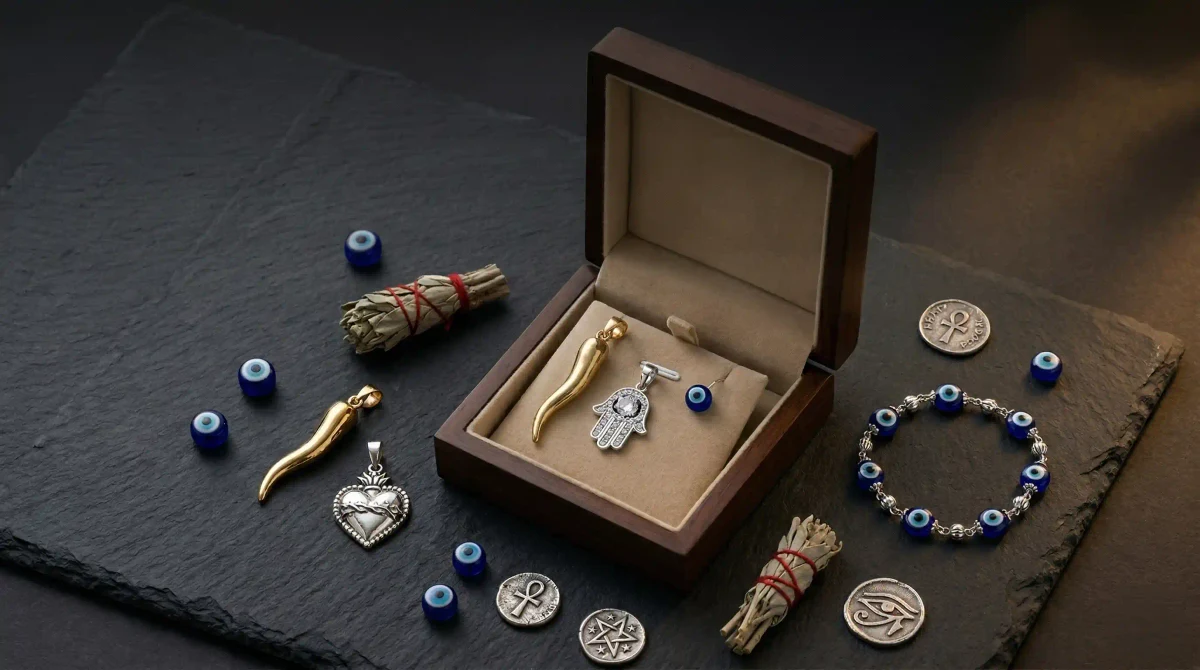
For simplicity, this article uses "amulet" as the general term for protective jewellery. But know that many of these pieces pull double or even triple duty.
An amulet rides against the skin, not over the collar. It guards you, not your audience.
What to Wear Your Amulet With
Over years of styling, dozens of protective pendants have passed through my hands: nazars, hamsas, horns, crosses, medals. Here is what actually helps you choose an amulet and fit it into a look.
What do you want protection from? I always start with the job, not the looks. Against the evil eye and envy I recommend a nazar or a cornicello horn: they work by reflecting and by the sharp point. For the road and travel I suggest a medal with a patron of travellers or a compass pendant. For love and relationships I choose a red tone and paired amulets. For luck in your affairs a hamsa turned palm-down sits well. Job first, symbol second.
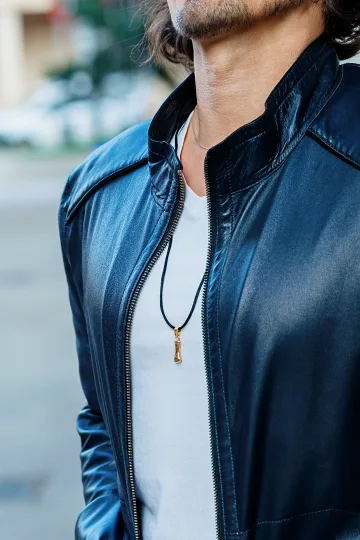
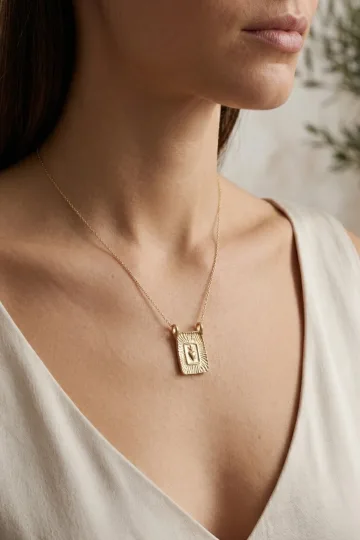
Wear the amulet under your clothes or on show? It depends who it is for. If the amulet is for you, I recommend a long chain and a pendant close to the body, under the collar, near the skin. That way it draws no extra glances and works quietly. On show, over the neckline, I suggest bringing out only what reads as jewellery: an openwork hamsa, a cross, a large horn. Personal protection stays under the fabric.
Which metal should you choose? I go by skin undertone and by how often the piece will be worn. For a warm undertone I suggest gold and gilded brass, for a cool one silver and steel. For daily wear without taking it off I recommend steel or 925 silver: they handle water and leave no marks on the skin. The symbol still matters more than the metal: a glass nazar protects no worse than a gold one.
How do you match the amulet to the occasion? For everyday I choose a calm shape on a thin base, one symbol that does not fight your clothes. For a night out or a special evening I recommend something brighter: red coral, a large hamsa, a contrast of metal against open skin at the neckline. For layers I suggest gathering two or three chains of different length and dropping the most protective symbol closest to the body, with the decorative one lower.
An amulet for yourself or as a gift? For yourself I suggest taking what catches your eye and fits your job: a piece like that gets worn more and taken off less. As a gift I recommend a symbol with a clear, kind meaning: a nazar for a birth, a hamsa for a housewarming, paired amulets for an anniversary. For a child I choose a light pendant on a soft cord and no sharp details. In many traditions a gifted amulet is held to be stronger than a bought one, and that is a nice part of the gesture.

Turn on your camera, pick earrings, a pendant or a ring, and see the piece on yourself in real time.
Switch items in one tap.
Everything runs in your browser: no photo or video is ever uploaded.
A Brief History of Protection Jewellery
Humans have been wearing protective objects for as long as we've been wearing anything at all. The instinct runs deep, deeper than any religion, older than any civilisation we have records of.
Ancient Egypt and Mesopotamia
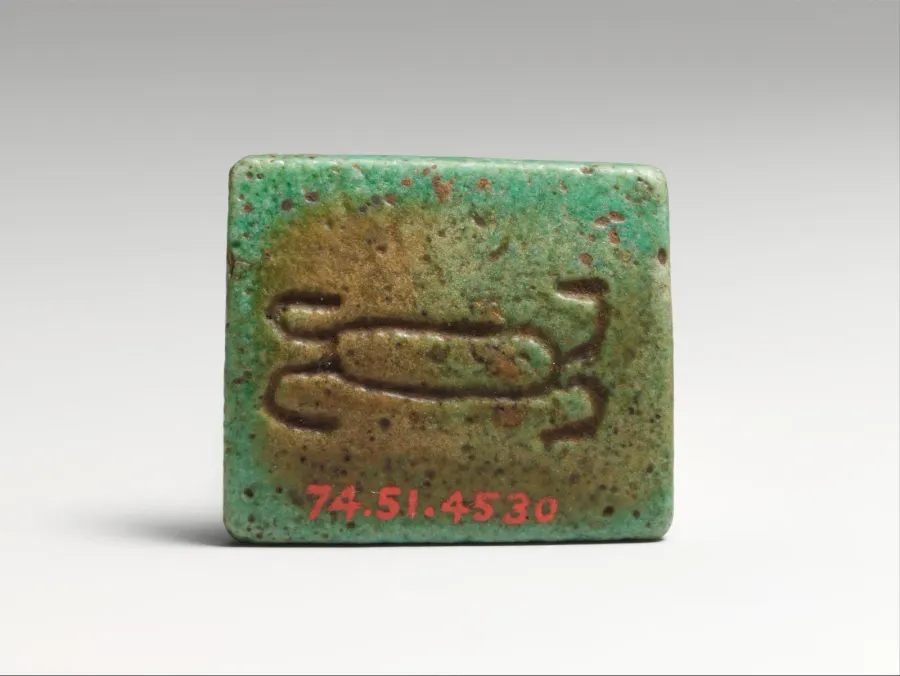
The oldest known amulets date back roughly 7,000 years. In ancient Egypt, protective jewellery wasn't optional. It was essential infrastructure for daily life and the afterlife alike.
The Eye of Horus (wedjat) was everywhere. Egyptians wore it as pendants, painted it on coffins, carved it into temple walls. They believed it could heal the sick, protect the dead on their journey through the underworld, and ward off any number of evils. Pharaohs and farmers wore it equally.
The scarab beetle was another powerhouse. Representing the sun god Khepri and the cycle of rebirth, scarab amulets were pressed into service for everything from blessing crops to protecting soldiers in battle. Some Egyptians were buried with dozens of them.
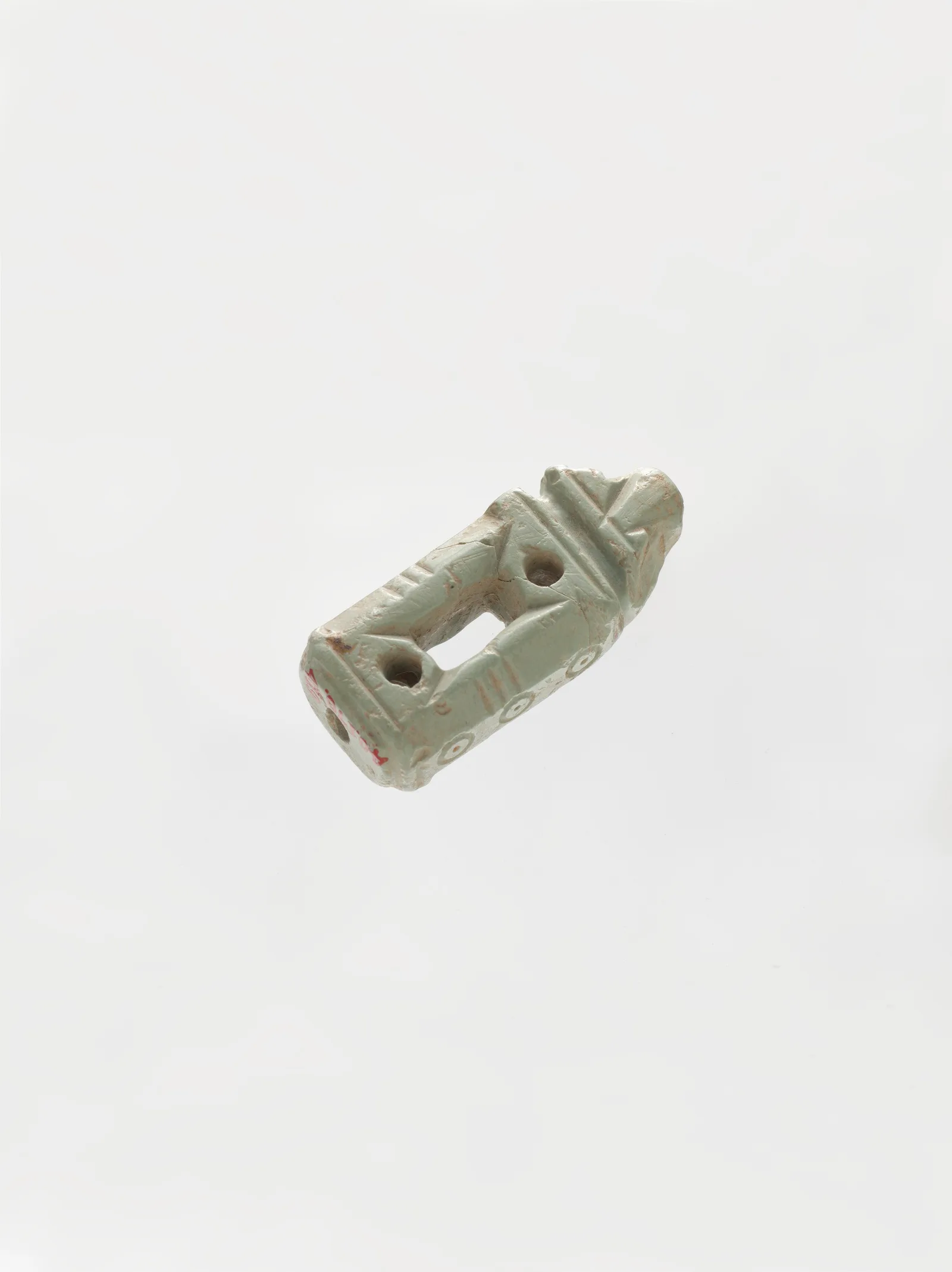
In Mesopotamia, the Sumerians and Babylonians favoured cylinder seals, small carved stone tubes that doubled as amulets. They believed certain materials (lapis lazuli, carnelian, agate) had inherent protective properties, and wearing a carved seal around your neck was both a status symbol and a spiritual shield.
Greece and Rome
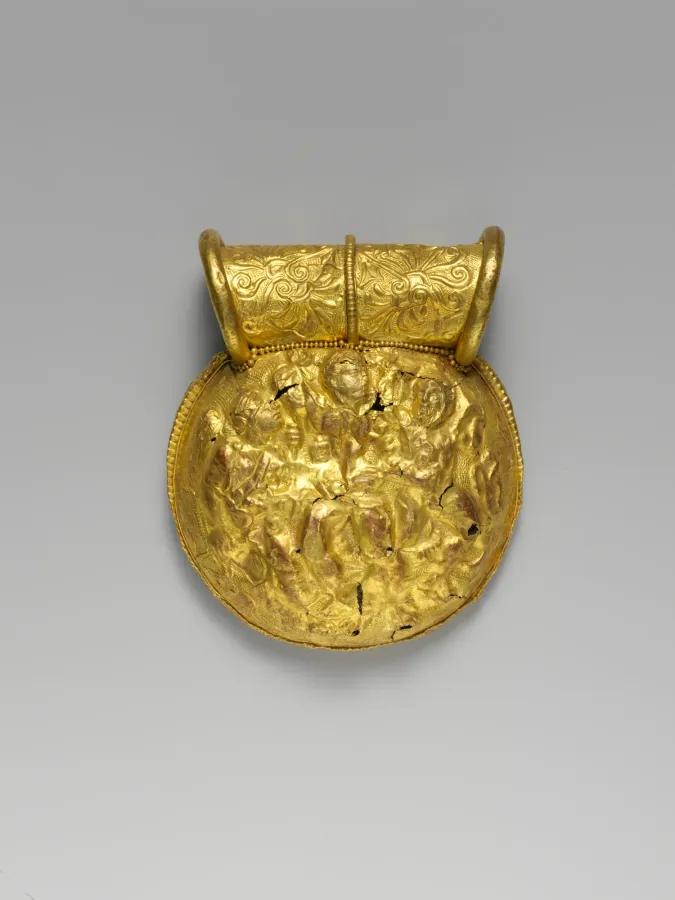
The ancient Greeks took the evil eye extremely seriously. Pliny the Elder devoted entire passages to people who could supposedly kill with a glance. The response? Phallic amulets, eye-shaped pendants, and small figures making obscene gestures, all designed to distract or confuse the evil eye.
The Romans inherited this tradition and ran with it. Roman children wore a "bulla" (a locket-style pendant containing protective charms) from birth until they came of age. Soldiers carried amulets into battle. Gladiators tattooed protective symbols on their skin.
The fascinus, a winged phallus amulet, was so important to Roman culture that it had its own religious cult. Generals returning from victory processions had one hung beneath their chariot, specifically to protect them from the envy of the crowds.
The Middle Ages
With the spread of Christianity and Islam across Europe and the Middle East, protection amulets didn't disappear. They adapted. Pagan symbols were replaced by (or merged with) religious ones.
Relics became the ultimate protective objects. A bone fragment from a saint, a splinter supposedly from the True Cross, a vial of holy water: these were the medieval equivalent of the most powerful amulets imaginable. Kings went to war over them. Churches were built to house them.
For ordinary people, simpler options served. The cross pendant became the most widespread protection amulet in Christian Europe. Pilgrimage badges (small metal souvenirs from holy sites) were pinned to hats and cloaks as proof of spiritual protection.
In Jewish communities, the hamsa (an open palm, sometimes with an eye in the centre) continued its long history as a guardian symbol. The Star of David also gained protective associations during this period.
Islamic amulets often featured verses from the Quran inscribed on small scrolls, sealed inside decorative metal cases and worn around the neck. The "Hand of Fatima" (another name for the hamsa) became one of the most beloved symbols in the Islamic world.
Renaissance and Beyond
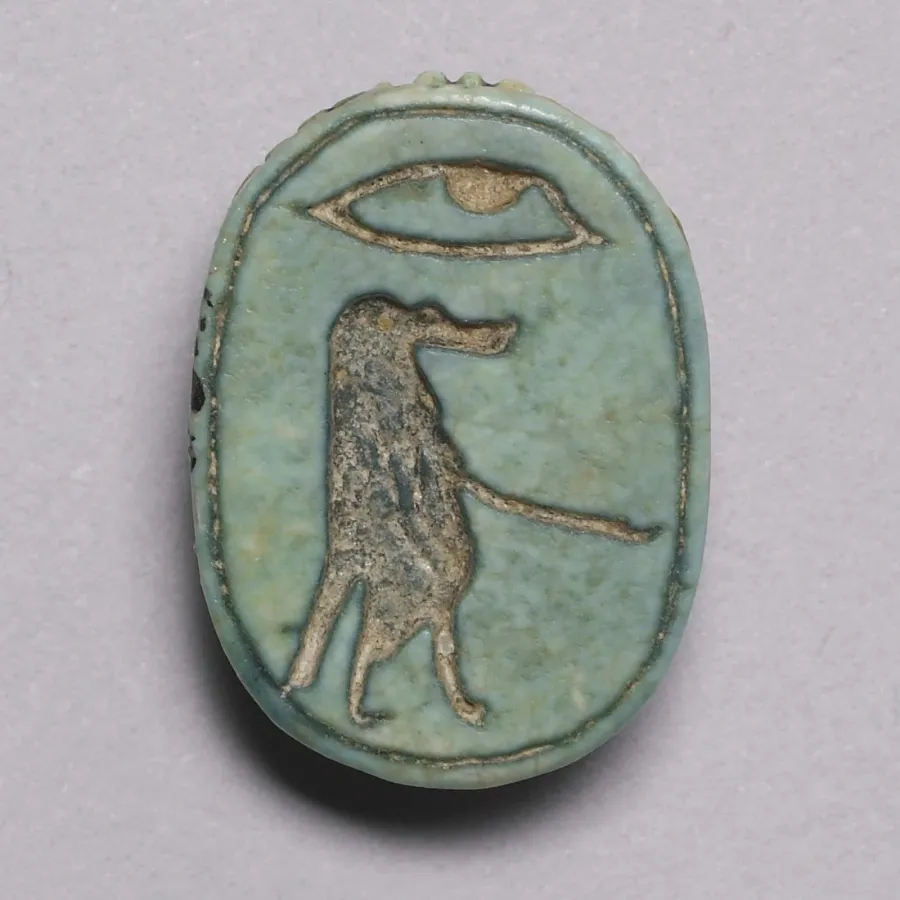
The Renaissance brought a renewed interest in ancient Greek and Roman protective traditions. Scholars translated old texts about the "science" of amulets, and the practice of wearing protective jewellery experienced something of a golden age.
Astrological talismans became enormously popular. People commissioned pendants engraved with their birth chart, planetary symbols, and mathematical squares believed to channel cosmic protection. Marsilio Ficino, the famous Italian philosopher, wrote extensively about how to create and use such talismans.
By the 18th and 19th centuries, protection jewellery had become both more personal and more decorative. Lockets containing a loved one's hair served as protective keepsakes. Mourning jewellery with jet and black enamel was believed to keep the dead at peace. The Victorians, for all their rationality, loved a good amulet.
The Modern Revival
Something interesting has happened in the last twenty years. Protection amulets, which had been gradually fading into folklore, came roaring back.
Part of it is fashion. The evil eye went from Turkish souvenir to global style staple in under a decade. Celebrities wear hamsa necklaces on red carpets. Italian horn pendants show up in streetwear lookbooks.
But part of it is something else. In a world that feels increasingly unpredictable, people are reaching for symbols that feel grounding. You don't have to believe an amulet has literal magical power to appreciate what it represents: the idea that you can carry something meaningful, something connected to thousands of years of human hope, right against your skin.
Mediterranean Protection Traditions
The Mediterranean is the global epicentre of protection jewellery. Something about this crossroads of cultures, where Europe, Africa, and Asia meet, produced an extraordinary concentration of guardian symbols. Let's look at the major ones.
Italian: The Cornicello and Mano Figa
Italy takes protection seriously. The cornicello (little horn) is arguably the country's most beloved amulet, especially in southern Italy and among Italian diaspora communities worldwide.
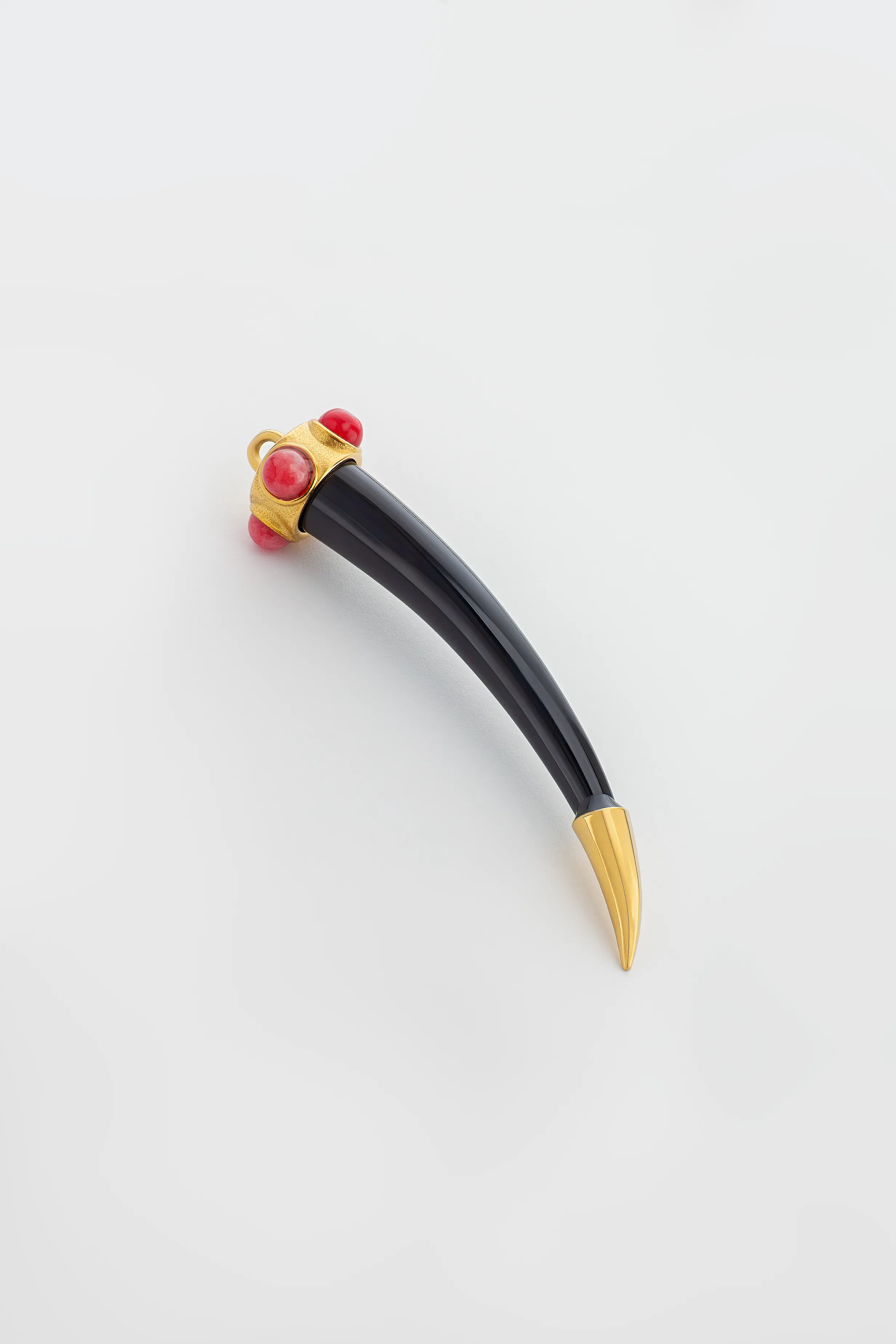
The cornicello looks like a twisted horn or chilli pepper. It's usually red or gold, and you'll see it dangling from rearview mirrors, hung above doorways, and worn as pendants by everyone from grandmothers to twenty-somethings. The symbol traces back to ancient Neolithic times, when horn shapes were associated with lunar goddesses and fertility.
How does it work? The pointed tip is said to pierce the evil eye, deflecting negative energy before it can reach you. Red ones are considered especially powerful, the colour adding an extra layer of protective force.
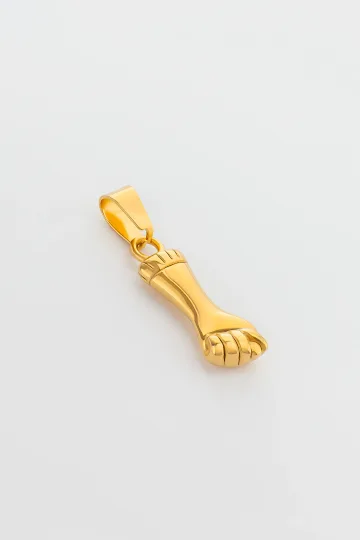
Then there's the mano figa (also called the figa or fig hand), a closed fist with the thumb poking out between the index and middle fingers. It's an ancient gesture of protection (and, in some readings, defiance) that predates Christianity by millennia. Worn as a pendant, it's believed to ward off envy and malicious intent.
In Naples, you might spot someone making the "corna" gesture with their hand: index and little fingers extended, middle fingers down. Same idea as the cornicello, just done with your own body instead of jewellery.
Turkish and Greek: The Nazar
The nazar (evil eye bead) is possibly the single most recognisable protection amulet on earth. Those concentric blue-and-white circles stare out from shop windows from Istanbul to Athens to Melbourne.
The concept is beautifully simple: an eye that watches for evil eyes. It reflects the malicious gaze back at whoever sent it. In Turkey it's called "nazar boncugu," in Greece "mati," and in most English-speaking countries simply "the evil eye."
Turkish culture is saturated with the nazar. It's pinned to newborn babies' clothes, hung above the doors of new businesses, embedded in the dashboards of taxis, and given as housewarming gifts. When one cracks or breaks, that's considered proof it absorbed a hit. Time to get a new one.
The classic form uses glass (those blue beads from Turkish bazaars), but the symbol translates beautifully to jewellery. Pendants, rings, earrings, bracelets: the blue eye works in every format.
Arabic and Jewish: The Hamsa
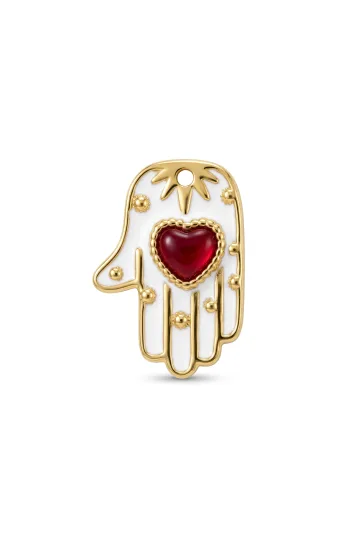
The hamsa (also called the Hand of Fatima in Islam and the Hand of Miriam in Judaism) is an open palm with five fingers, sometimes with an eye in the centre.
This symbol is fascinating because it's claimed by multiple faiths simultaneously. Muslims associate it with Fatima, the Prophet Muhammad's daughter. Jews connect it to Miriam, Moses' sister. In both cases, the meaning is the same: a divine hand that blocks evil and blesses the wearer.
The hamsa works in two positions. Fingers pointing up, it's a shield against negativity, like a "stop" signal to bad energy. Fingers pointing down, it attracts blessings: health, fertility, good fortune.
Historically, the hamsa predates both Islam and Judaism. Similar hand-shaped amulets appear in ancient Carthaginian and Phoenician sites, suggesting the symbol is at least 2,000 to 3,000 years old.
In modern jewellery, the hamsa is incredibly versatile. It can be ornate and filigree-detailed or clean and minimalist. It pairs naturally with other protective symbols, especially the evil eye.
Spanish: Religious Medals and Crosses
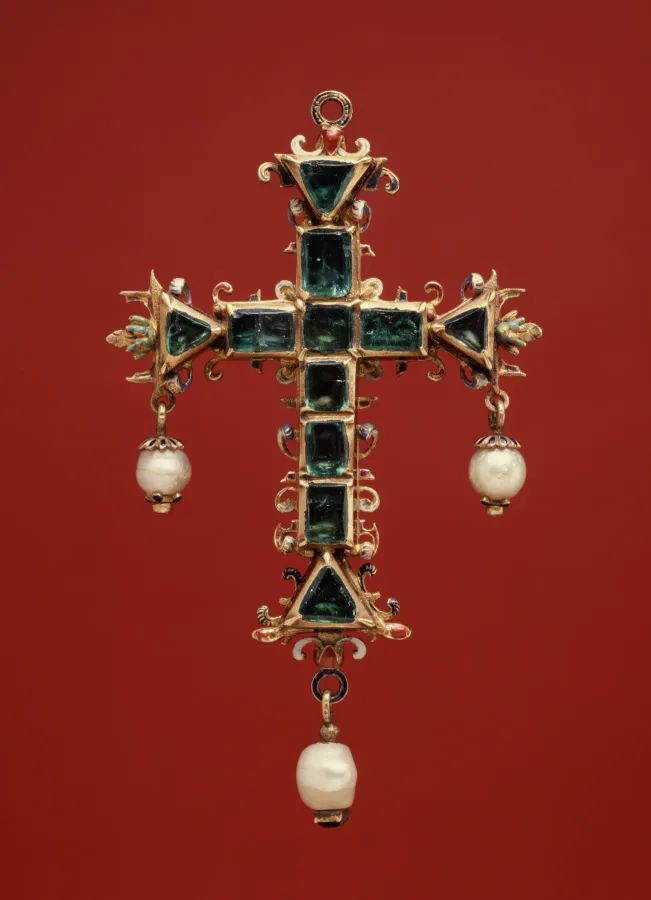
Spain has its own rich tradition of protective jewellery, deeply intertwined with Catholic faith.
The most common Spanish protection amulet is the medalla religiosa, a small medal depicting a saint, the Virgin Mary, or Christ. Specific saints are associated with specific protections: San Benito (Saint Benedict) for protection against evil, Santiago (Saint James) for travellers, the Virgen del Carmen for sailors.
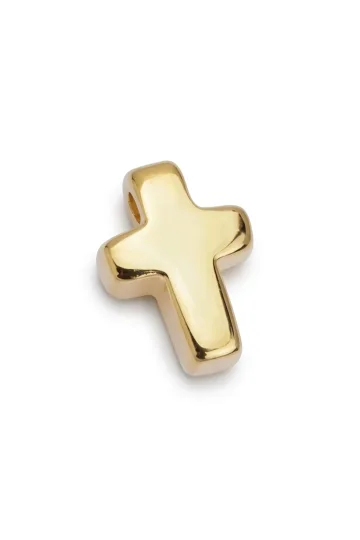
Crosses, of course, are universal in Christian tradition. But Spanish cross pendants have their own distinctive style: often ornate, sometimes incorporating enamel or coloured stones, and frequently given as gifts at baptisms, first communions, and other milestone moments.
The escapulario (scapular), two small cloth panels connected by strings and worn over the shoulders, is another traditional Spanish protective item, though it's more a devotional object than jewellery per se.
In Spanish-speaking Latin America, these traditions merged with indigenous beliefs to create hybrid protective objects. The "ojo turco" (Turkish eye, meaning nazar) is hugely popular in Mexico. The "azabache" (jet stone) is a classic Caribbean protection amulet for babies.
Customer reviews
Zevira is a real jewellery shop. Genuine payments, deliveries and customer thank-yous.
🥰🥰🥰 gracias

Ok, ¡gracias! 🙂

Christian Protection Symbols in Jewellery
Whether or not you're personally religious, it's impossible to talk about protection jewellery without covering Christian symbols. They represent some of the most widely worn protective pieces in history.
The Cross
The cross is the most recognised symbol on the planet, full stop. As a protection amulet, it carries millennia of meaning. Early Christians wore fish symbols (the ichthys) to identify each other in secret. Once Christianity became legal and then dominant, the cross took over.
Wearing a cross was believed to invoke divine protection, quite literally placing yourself under the sign of Christ's sacrifice. Different styles carry different connotations. A crucifix (cross with the body of Christ) emphasises suffering and redemption. A plain cross emphasises resurrection and hope.
Celtic crosses, Russian Orthodox crosses, Coptic crosses, Maltese crosses: the variations are endless, and many of them carry specific protective associations tied to their regional traditions.
The Saint Benedict Medal
The Saint Benedict medal is one of the most powerful specifically protective objects in Catholic tradition. It features the cross of Saint Benedict on one side, surrounded by Latin letters representing a prayer of exorcism and protection.
The medal is believed to guard against evil spirits, temptation, disease, and negative influences. It's one of the few Catholic objects that comes with a formal prayer of blessing specifically for its protective use.
You'll see Saint Benedict medals everywhere in southern Europe and Latin America. They're embedded in walls, hung above doors, and worn as pendants. Some people layer them with other protective symbols for a combined effect.
The Sacred Heart
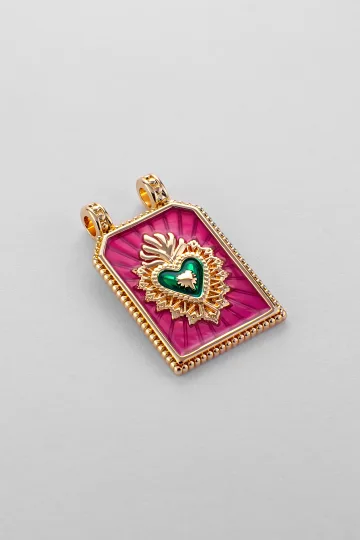
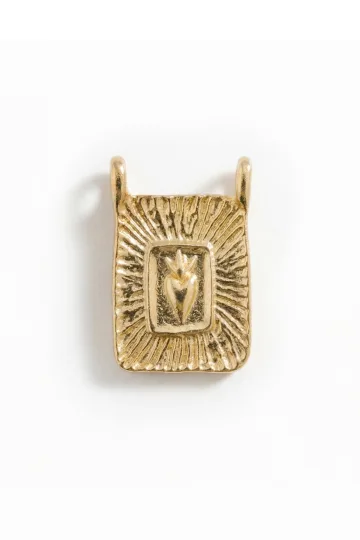
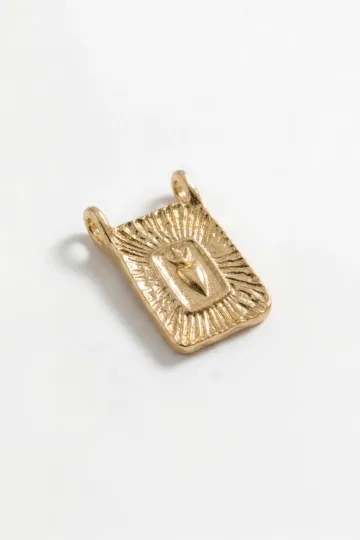
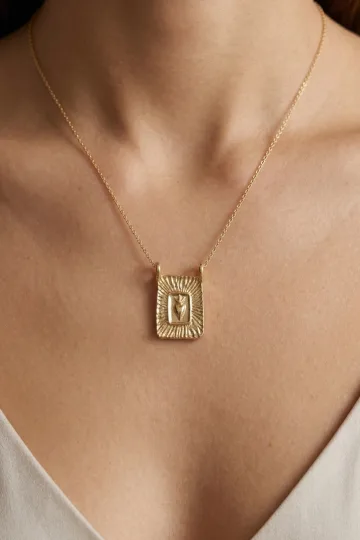
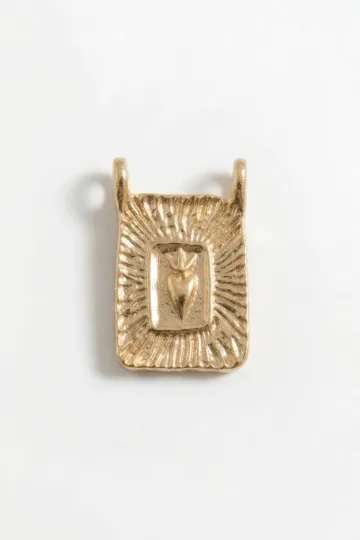
The Sacred Heart, a flaming heart often encircled by a crown of thorns, represents divine love and compassion. As a protective symbol, it works differently from the evil eye or the cornicello. Instead of deflecting negativity, it channels love, wrapping the wearer in something like a spiritual embrace.
In Catholic tradition, devotion to the Sacred Heart is believed to bring peace to families, comfort to the suffering, and spiritual protection to the faithful. As jewellery, the Sacred Heart translates into some of the most visually striking pendants you'll find. The combination of heart, flame, and thorns creates a powerful visual that works on purely aesthetic grounds even before you consider the symbolism.
Upload a photo of your pet, someone you love, or an object. We'll build a 3D model and hand-cast it in pewter.




Universal Protection Symbols
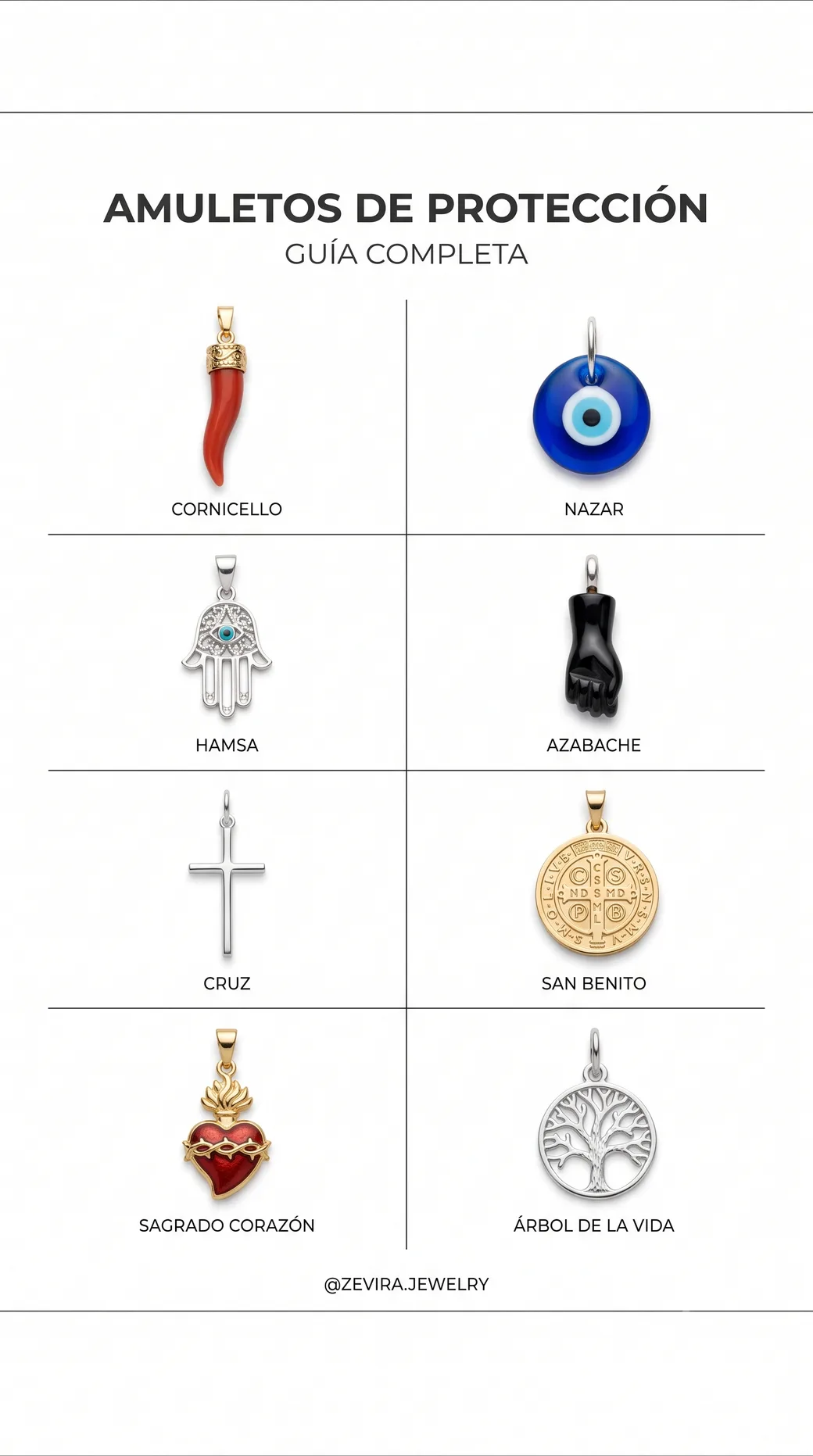
Some protective symbols transcend any single culture or religion. They pop up independently across civilisations, as if humans everywhere arrived at similar conclusions about what shapes and images offer protection.
The Evil Eye
We've covered the nazar specifically, but the belief in the evil eye (and the need for protection from it) is genuinely universal. It appears in ancient Sumerian texts, Greek philosophy, Roman law, the Quran, the Torah, and the folk traditions of cultures from Ireland to Japan.
The core idea: certain people can cause harm through envious or admiring glances. The response: wear something that blocks or deflects that gaze. Different cultures developed different solutions (blue eyes, hands, horns, gestures), but the underlying logic is identical.
If you're drawn to eye symbolism, you've got a world of options. The nazar, the Eye of Horus, the all-seeing eye, the mystic eye: each brings its own specific twist to the same ancient idea.
Hand Symbols
Open palms appear as protection symbols in cultures that had no contact with each other. The hamsa in the Middle East. The mano pantea in ancient Egypt. The "abhaya mudra" (gesture of fearlessness) in Buddhism and Hinduism. The "talk to the hand" gesture in modern Western culture (only half joking; the instinct to put your palm up to block something runs deep).
The hand is the body part we use to push things away. It's also the part we use to reach out, to bless, to heal. As a symbol, it bridges the gap between protection and positive intention.
Horn Shapes
The horn is another universal protector. The cornicello in Italy. Crescent moon amulets in the Islamic world. Bull horns above doorways in rural Europe. Horn-shaped pendants in West Africa.
Horns channel the raw power of the animals that bear them. They pierce. They push. They defend. In many traditions, the horn's pointed shape is specifically believed to puncture the evil eye, popping it like a bubble.
The Tree of Life
The Tree of Life isn't always classified as a protection symbol, but it has strong guardian qualities. A tree with deep roots and wide branches represents stability, shelter, and connection to something larger.
In Norse mythology, Yggdrasil (the world tree) literally held the cosmos together. In Judaism's Kabbalah, the Tree of Life maps the structure of creation. In Celtic tradition, trees were sacred beings that guarded the land.
As jewellery, the Tree of Life pendant works as quiet protection: less "shield against evil" and more "anchor in a storm." If the nazar is a fire extinguisher, the Tree of Life is a foundation.
How to Choose Your Protection Amulet
So you've read about dozens of symbols, and now you're wondering which one is right for you. Here are three approaches.
Choose by Heritage
The most natural approach: wear what your ancestors wore. If your family comes from southern Italy, a cornicello will carry generations of meaning for you. If you've got Greek or Turkish roots, the nazar is a connection to your culture. If your background is Latin American, you might gravitate toward religious medals or the azabache.
This isn't about blood purity or gatekeeping. It's about resonance. An amulet that connects you to your family story will always feel more powerful than one you picked at random. Remember my grandmother's cornicello? Its power wasn't mystical. It was personal.
Choose by Intention
Different symbols address different concerns:
- General protection from negativity: Nazar, hamsa, cornicello
- Spiritual protection: Saint Benedict medal, cross, sacred heart
- Protection for the home: Hamsa (fingers up), Tree of Life, nazar
- Protection in love and relationships: Sacred Heart, red evil eye, paired amulets
- Protection during travel: Saint Christopher medal, evil eye, compass symbols
- Protection for new beginnings: Nazar (for newborns and new ventures), scarab, Tree of Life
- Protection with an extra boost of luck: Horn pendant, hamsa (fingers down), four-leaf clover
That last category overlaps with a separate tradition all its own: the dedicated guide to horseshoe and clover luck symbols traces how these motifs sit slightly apart from defensive amulets, doing the active work of attracting fortune rather than blocking harm.
Pick the intention that matches your current life, and the right symbol will usually become obvious.
Choose by Intuition
Sometimes you don't need a logical reason. You see a particular pendant and something clicks. You feel drawn to a shape or symbol without being able to articulate why.
Plenty of people who work with protective jewellery say this is actually the best method. The amulet that catches your eye is the one that "wants" to work with you. Whether you frame that as intuition, subconscious pattern recognition, or actual mystical attraction, the result is the same: you'll wear it more, treasure it more, and feel more connected to it.
Don't overthink it. If a piece speaks to you, listen.





How to Wear Protection Jewellery
Which Side of the Body
Traditions vary on this, but there's a common thread:
- Left side: In many traditions, the left side is the receiving side. Wearing your amulet on the left (left wrist, left ear, over the left side of the chest) is said to better absorb incoming negative energy. This is the most common recommendation for protection pieces.
- Right side: The right side is the projecting side. Wearing a talisman on the right can amplify outward qualities like confidence and charisma. Better for pieces meant to attract rather than defend.
- Centre (neck): A pendant on a chain sits over your heart and throat, two energy centres in many spiritual traditions. This is considered a balanced, all-purpose position.
Practically speaking, wear your amulet wherever it's comfortable and where you'll actually keep it on. The "best" position is the one that means you never take it off.
Layering Protection Pieces
Combining multiple amulets is not only acceptable. It's traditional. In southern Italy, people routinely wear a cornicello, a saint's medal, and a cross on the same chain. In the Middle East, a hamsa pendant might sit alongside a nazar bead and a Quran verse locket.
Some guidelines for layering:
- Mix complementary symbols: Pair a defensive amulet (nazar, cornicello) with a positive one (Tree of Life, sacred heart). Shield and attract.
- Vary the chain lengths: Place your most protective piece closest to the skin (shorter chain) and more decorative pieces on longer chains.
- Don't overcrowd: Two or three pieces is a sweet spot. Five or six starts to look cluttered and, according to some traditions, the symbols can "compete" with each other.
- Consider a single chain with multiple pendants: A curated group on one chain looks intentional rather than random.
If you're new to layering, our jewellery layering guide has practical tips.
Activating Your Amulet
"Activating" sounds dramatic, but many traditions include some form of intentional beginning when you first wear a new amulet.
Simple approaches:
- Hold the pendant in your hand for a moment before putting it on. Think about what you want it to do for you. That's it. Intention set.
- Some people cleanse new jewellery by placing it in moonlight overnight, running it under water, or burning sage or incense around it. None of these are mandatory, but the ritual can make the piece feel more "yours."
- In Catholic tradition, having a medal or cross blessed by a priest is the standard activation. The Saint Benedict medal, in particular, has a specific blessing ritual.
- The most universal "activation" is simply wearing the piece consistently. Over time, it absorbs your energy and becomes part of your daily armour.
CAPAORA mini knife pendant
The 18th-century Spanish navaja in miniature: 40 mm of stainless steel, a real folding mechanism and a Palanquilla lock that clicks. An affordable gift to remember.
Authentic · Ships from Spain · 14-day returns
Protection Symbols for the Person and for the Home
Guardian symbols split into two families, and the line between them is old. Worn amulets travel with the body: the nazar pinned to a baby's blanket, a cornicello on a chain, a saint's medal tucked under a collar, a knotted red thread on the wrist. They move where you move, so they answer the fear of being watched, envied or wished ill by a passing glance. The idea is portable protection, a shield you carry into markets, weddings and long roads.
The home version stays put and guards a threshold instead of a person. Doorways and thresholds carried the heaviest charge, because a door is the seam where the outside world meets the household. Romans set a fascinus over the entrance and buried protective figures under floors. Turkish families hang a large nazar above the shop door. Italians nail a horseshoe or a horn near the lintel. In the Levant a hamsa greets you on the wall by the entrance, and across rural Europe iron, salt and rowan wood were pressed into service at windowsills. The logic is consistent across all of it: the person needs a shield that follows the skin, while the home needs a sentry fixed at the point of entry. Whether either genuinely turns away harm is a question folklore never troubled to test, yet the two roles have stayed distinct for thousands of years because they answer two different anxieties, the traveller's and the householder's.
What Is the Most Powerful Protection Amulet in the World
There is no single winner here, and any seller who names one is selling certainty rather than history. Power in this field is not a fixed property of an object; it is a function of belief, context and the culture doing the believing. The nazar is arguably the most widespread guardian on earth, recognised from Istanbul to Melbourne, which gives it a strong claim by sheer reach. The hamsa carries weight across three faiths at once. The Saint Benedict medal comes with a formal Catholic rite of blessing, which believers treat as a mark of real authority.
Ask a Neapolitan grandmother and the answer is the cornicello; ask in Cairo and it is a Quranic verse sealed in a silver case; ask in Oaxaca and it is the azabache or a scapular. Each community crowns its own, and each is right within its own world. The honest comparative answer is that the most powerful amulet is the one that carries the deepest meaning for the person wearing it, because meaning is what drives the documented effects, the calmer nerves and the steadier confidence. No object has ever passed a laboratory test for turning away fate, and none of these traditions promises one. What they offer instead is continuity, a link to thousands of years of the same human hope, and that link is stronger when it is yours by heritage or by genuine attachment rather than by a claim printed on a label.
Leave your email, we'll send your discount code. No spam, unsubscribe anytime.
The code arrives by email, valid on your first order.
A DIY Protection Amulet
Making your own guardian is as old as the practice itself, and most folk traditions treat the act of making as half the magic. The recipes are simple and physical. You take an object with meaning, a stone, a bead, a coin, a knot of red wool, a horn shape, and you add intention through a small ritual. Common methods across cultures include holding the piece while naming what you want it to guard against, passing it through incense or candle smoke, leaving it in moonlight overnight, sprinkling it with salt or spring water, or tying knots while a wish is spoken. The red thread of the Kabbalah tradition is knotted seven times. Slavic folk charms were sewn shut with a whispered formula.
A sober look at all this helps. None of these steps loads an object with a measurable force, and the smoke, salt and moonlight do nothing chemical to the metal or stone. What they do is make the piece feel unmistakably yours, and that is not nothing. The ritual sets an intention you then carry, and a homemade amulet tends to get worn more faithfully because you built it. If you want to make one, choose a material you like, give it a moment of clear thought about its job, and wear it. Skip any recipe that asks for money, secrecy or harm to another person, because those are the marks of a scam dressed as tradition, not of folk protection.
Against Bad Luck, Envy and the Evil Eye
Folklore hands out specific tools for specific troubles, and the ones aimed at envy and the evil eye are the oldest of all. Against the nazar, the envious or admiring glance, the classic remedy is an eye that stares back: the blue Turkish bead, the Eye of Horus, the mystic eye pendant. The cornicello and the mano figa answer the same threat by a different route, the horn's point said to pierce the gaze and the fig-hand gesture to insult and distract it. For envy specifically, Roman generals hung a fascinus beneath the victory chariot, precisely because a crowd's admiration was thought dangerous.
Bad luck, the vaguer enemy, draws in the luck-attractors rather than the shields. Horseshoes over the door, four-leaf clovers, and the hamsa turned palm-down are meant to pull fortune in rather than push harm away, which is why they sit slightly apart from the defensive amulets. Red is the recurring colour across every one of these traditions, from the Italian coral horn to the Kabbalah thread to the Chinese knot, credited almost everywhere with extra force against ill will. The clear-eyed reading is that these objects work on the wearer more than on fate. Naming a fear, wearing a countermeasure and feeling guarded lowers the low hum of anxiety that envy and superstition feed on, and a calmer person makes fewer of the small mistakes that look, in hindsight, like bad luck.
Symbols of Protection Against Evil
Ask which symbols are read as guards against evil across cultures and the same short list keeps returning. The evil eye, blue and staring, is the most widespread, built to reflect a hostile glance back at its source. The hamsa, the open right hand, blocks like a raised palm and doubles as a blessing. The horn, the Italian cornicello, is said to pierce the bad gaze with its point. The cross and the Saint Benedict medal carry Christian protection, the medal stamped with a short exorcism prayer. The Eye of Horus guarded ancient Egyptians for four thousand years, and Solomon's seal, the interlaced star, sealed medieval amulets against demons. None of these has ever been tested and passed, yet each names a real fear and gives the wearer something to hold.
Amulets Against Negative Energy
"Negative energy" is a modern umbrella for old fears: envy, tension, a room that feels wrong after an argument. The amulets people reach for are the dark, absorbing ones. Black stones lead the field, obsidian, black tourmaline, onyx and jet, all thought to soak up heaviness rather than reflect it. Salt is the classic cleanser, a bowl in a corner or a pinch in a pocket. Incense and dried herbs, rosemary, sage or juniper, are burned to reset a space. A nazar or a red thread covers the personal side. The sober note matters here: no instrument measures this energy, and a stone cannot fix a real conflict. What these objects do is mark a pause, a deliberate moment of clearing, and that ritual has its own quiet value.
Send a friend a discount code, they save on their first order.
Protective Stones and Minerals
Long before gemstones were jewellery, they were amulets. Obsidian, volcanic glass, was carved into mirrors and blades and treated as a shield against harm. Jet, called azabache in Spain, is still tied to a baby's wrist across the Hispanic world to turn away the evil eye. Turquoise guarded riders and travellers from Persia to the American Southwest. Amber, warm and electric to the touch, was worn against illness in the Baltic. Tiger's eye was thought to watch back like an eye, and black tourmaline is the modern favourite for absorbing bad feeling. The colours cluster for a reason: deep blues and blacks dominate, the shades folklore linked to depth, night and the power to swallow a threat whole.
Where to Place a Protection Amulet in the Home
A house amulet only works, in folk logic, if it sits where the outside gets in. The front door and threshold take the strongest guard: a horseshoe with the points up, a nazar or hamsa beside the frame, a Saint Benedict medal on the lintel. Windows get a bead, a bell or a sprig of rowan or olive. The kitchen, the heart of many homes, holds a braid of garlic or a bowl of salt. Over a child's bed or crib goes a small nazar or a red ribbon, kept well out of reach and off any cord. A workplace or shop entrance often carries the largest eye of all, meant to meet every customer. Place one where you will actually see it, so it does its real work, reminding you of the boundary you keep.
Buying it as a gift? Each one arrives ready to give.
 A branded Zevira box and a little card come with every order.









Which Jewellery Is Worn as an Amulet
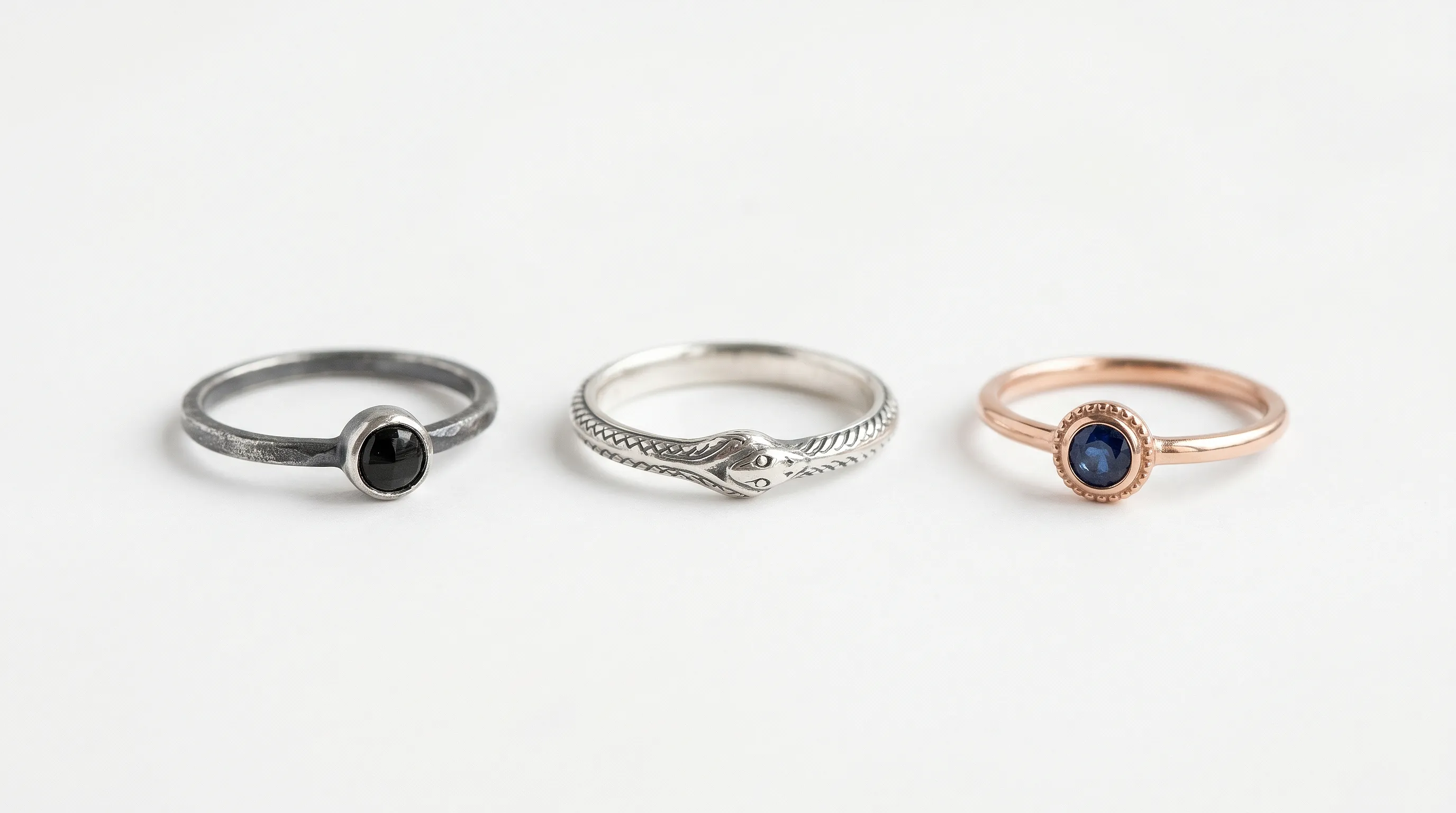
Almost any form can carry protection, and the shape you choose changes how the symbol behaves. A pendant on a chain sits over the chest, the most common home for an eye, a horn or a cross, close to the heart and easy to tuck away. A bracelet, especially a red thread or a beaded strand, keeps the guard on the pulse where blood and life were thought to run. A ring puts a small seal on the hand that acts in the world. A brooch or pin fixes a nazar to a coat or a baby's blanket without touching skin. A medal, blessed and worn under a shirt, belongs to the religious tradition. Pick the form you will wear daily, because an amulet in a drawer protects nothing.
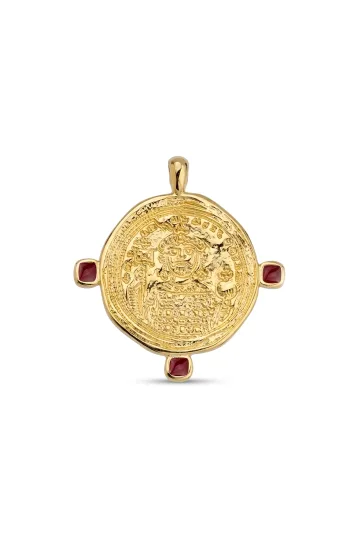
Wear the symbol, don't just read about it. These are in stock:






Frequently Asked Questions
Can I wear protection amulets from a culture that isn't my own? Yes. Protection symbols have always crossed cultural boundaries. That's how they spread around the world in the first place. The evil eye migrated from Sumeria to Turkey to Greece to Italy to the Americas. The hamsa is shared by Jews, Muslims, and Christians alike. Wear what resonates with you, and do so with respect for its origins. Understanding the history of what you're wearing is a form of respect.
Do I need to believe in my amulet for it to work? That depends on what "work" means to you. If you're asking whether an amulet has measurable supernatural power, that's a personal belief question nobody can answer for you. But psychologically, wearing something meaningful does have documented effects. It can reduce anxiety, boost confidence, and create a sense of groundedness. The placebo effect is still an effect.
What happens if my amulet breaks? In most traditions, a broken amulet is actually a positive sign. It means the piece did its job: it absorbed a hit of negative energy so you didn't have to. Thank it (mentally or verbally), dispose of it respectfully, and replace it. Don't try to repair a broken protection piece; its cycle is complete.
Can I wear multiple protection symbols at the same time? Absolutely. This is traditional practice across cultures. A typical Italian nonna might wear a cornicello, a saint's medal, and a cross simultaneously. In the Middle East, combining a hamsa with a nazar is extremely common. Just keep the total to two or three pieces for the best visual and symbolic balance.
Should I take my amulet off at night? Traditions differ. Some say you should never remove your protective piece (my grandmother certainly didn't). Others say you should give it a "rest" by removing it at night. Practically, most jewellery experts recommend removing necklaces and bracelets for sleep to prevent damage and tangling. If you prefer to keep your amulet on 24/7, just choose a piece that's comfortable enough to sleep in.
Is it bad luck to buy your own amulet? No. This is a common myth, but it doesn't hold up historically. While gifted amulets are considered slightly more powerful in some traditions (because they carry the love and intention of the giver), self-purchased amulets have been normal practice for thousands of years. Every ancient bazaar was full of people buying their own protection.
Do certain metals work better for protection amulets? Different traditions have different preferences. Gold is associated with solar energy and divine power. Silver connects to lunar energy and intuition. Copper is linked to Venus and love-based protection. But the honest answer is: the symbol matters more than the metal. A gold nazar and a glass nazar carry the same symbolic weight.
Can I give a protection amulet as a gift? This is one of the best gifts you can give. In Turkish culture, giving a nazar to a newborn is practically mandatory. In Italian tradition, gifting a cornicello is a gesture of deep care. A protection amulet says "I want you to be safe," and there's no occasion where that sentiment is unwelcome. Check our gift guide or our men's gift guide for more ideas.
Silver and gold jewellery, wedding bands, symbolic pendants, paired sets.
Conclusion
Protection amulets are one of those rare things that connect the ancient world to the modern one without any gap. A woman in Istanbul today pins a blue eye to her baby's blanket for the exact same reason an Egyptian mother placed a wedjat amulet in her child's crib 4,000 years ago. The materials change. The core impulse doesn't.
You don't need to build a belief system around your jewellery. You don't need to follow specific rules or rituals (though you can, if that appeals to you). At its simplest, wearing a protection amulet is a way of carrying a story (your grandmother's story, your culture's story, humanity's story) close to your skin.
And if it happens to keep the bad things away? Well, nothing bad has happened yet.
About Zevira
Zevira makes jewellery in the artisan tradition of Albacete, Spain. Protection amulets and charms sit at the heart of our symbolic collection: we carry the thousand-year-old motifs of the eye, the hand and the horn into pieces made to be worn against the skin every day.
What you can find with us on the subject of protection amulets:
- Nazar pendants with the blue glass eye that turns away the evil look
- Hamsa in sterling silver and gold plating, with the eye in the centre of the palm or without it
- Cornicello, the Italian horn, in red and gold finishes
- Crosses, Saint Benedict medals and Sacred Heart pendants
- The Tree of Life and other anchor symbols for layered compositions
- Paired charms to give for a new baby, a wedding or a housewarming
Every piece can be personalised with engraving, with personal engraving available. Sterling silver 925 and 14-18K gold.