Horseshoe and Clover Jewelry: Luck Symbols, How to Choose and Wear Them
Introduction: Two Icons of Good Fortune
Ask anyone in America to draw "luck" and they will likely reach for one of two images. A horseshoe, probably nailed above an imaginary door. Or a four-leaf clover, the rare find that has meant fortune for centuries across the Celtic world.
Both symbols are so embedded in Western visual culture that their origins are easy to overlook. The horseshoe turns up over doorways from Irish farmhouses to Andalusian ranches to country barns in Kentucky. The clover, tied irrevocably to Ireland and the Gaelic diaspora, became a global shorthand for fortune through Saint Patrick's Day and the millions who carried it westward across the Atlantic. Today both symbols appear on everything from gold pendants and charm bracelets to casino carpets and tattoo flash sheets.
But there is more to these symbols than a casual "that's for luck." The horseshoe carries iron-age roots in Scandinavian and British folklore; the clover reaches back into pre-Christian Celtic spirituality and forward into Victorian sentimentality and Irish-American identity. Both have been worn as jewellery for at least two centuries, and both remain entirely relevant today.
This guide covers what horseshoe and clover pieces look like in practice, what the symbols actually mean, the history behind them, when a pendant is more than decoration, and how to build a collection that makes sense for you.
Horseshoe Jewellery: What to Choose
Horseshoe Pendants
The classic form, available across every price point.
- Small minimalist pendant 1.5-2 inches on a fine chain. Everyday wear. Budget to mid range.
- Medium pendant 3-4 inches with surface detail (studs, hammered texture). Mid range.
- Pendant set with stones diamonds along the curve or a single sapphire at the centre. Premium.
- Rose gold with enamel contemporary and wearable. Mid to premium.
Horseshoe Earrings
- Small horseshoe studs symmetrical, understated for daily wear.
- Drop horseshoes at different angles asymmetric, more fashion-forward.
Horseshoe Rings
- Fine ring with horseshoe accent minimal, stackable.
- Statement ring with stones bold centerpiece.
- Signet ring with horseshoe especially associated with equestrian circles. In meaning these belong to the wider class of protection rings worn for safekeeping rather than as a purely decorative accent.
Horseshoe Bracelets
- Chain bracelet with a single horseshoe charm everyday.
- Charm bracelet with multiple horseshoes collectible aesthetic.
- Matching pair with a partner two identical horseshoes, two wrists.
The Horseshoe at Home
A note on context: the tradition of hanging an actual horseshoe above the front door is alive in the United States and Britain. Often a decorative cast-iron piece with engraving. The jewelry and the door ornament share the same symbolic origin, and understanding one deepens the appreciation of the other.
A four-leaf clover works alone. String five charms together and that is not luck, that is panic.
How to wear a horseshoe or clover
Over years of styling, the horseshoe and the clover have passed through dozens of looks with me, from a country shoot to quiet office classics. Here is what actually works, sorted by occasion.
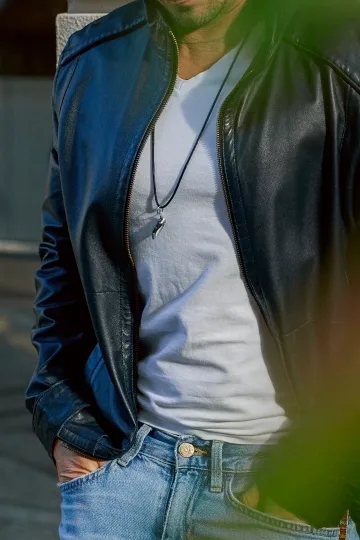
What do I wear a horseshoe or clover with every day? For daily wear I recommend a small four-leaf clover or a slim horseshoe on a short chain over a plain tee, a linen shirt or a round-neck knit. A shallow neckline or an open collar works best, so the pendant rests on skin instead of sinking into fabric. Denim, pale cotton and soft earthy tones are the natural home for silver and matte gold.
Is it right for the office? Yes, as long as you keep it restrained. I suggest a fine gold chain with a tiny clover under a shirt collar or over a plain jumper. No rhinestones, no big crystal-set horseshoes: the quieter the symbol, the more convincing it reads at work. One accent, no more.
How do I build an evening look? For evening I choose contrast: drop clover earrings or a stone-set horseshoe against a dark ground, a black dress, deep blue, wine. A stone or enamel catches the light, and the symbol turns from a modest charm into a piece people notice. Bare shoulders and a V-neck suit it best.
Horseshoe up or down, honestly? On a chain the pendant shifts as you move, so the folk theory rather steps aside. I recommend choosing by your own cultural habit: the Irish tradition points up, the Mediterranean one points down. For a shoot I go points-up, the silhouette reads cleaner that way.
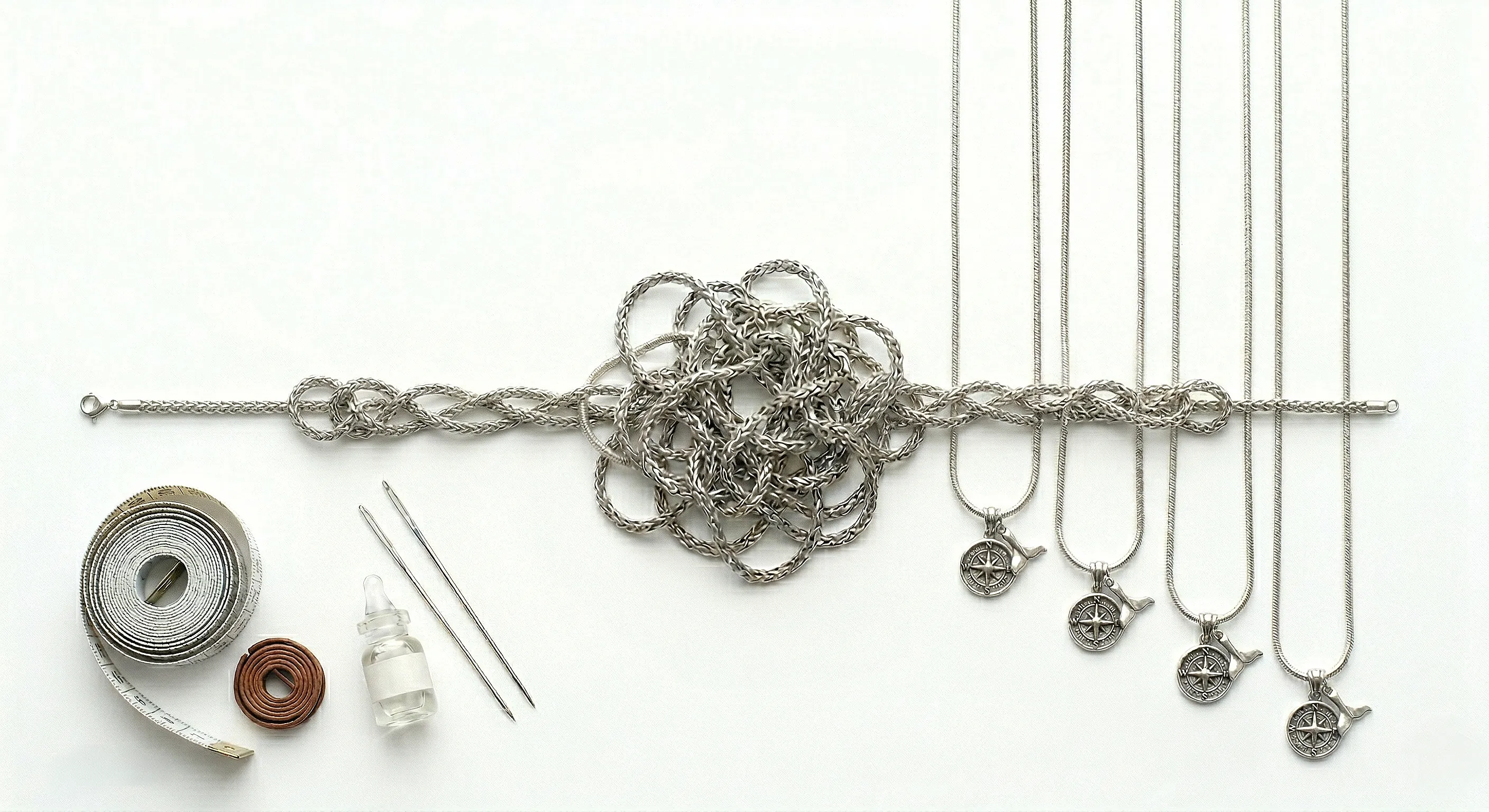
How do I keep layering from tipping over? You can wear a clover and a horseshoe on several chains of different lengths and mix yellow gold with oxidised silver, but I suggest repeating each metal at least twice, or the stack looks accidental. A short 40 to 42 cm chain for daytime, a 45 to 50 cm one when you wear several at once. And keep the measure: one or two symbols per look, or luck turns into visual noise.

Turn on your camera, pick earrings, a pendant or a ring, and see the piece on yourself in real time.
Switch items in one tap.
Everything runs in your browser: no photo or video is ever uploaded.
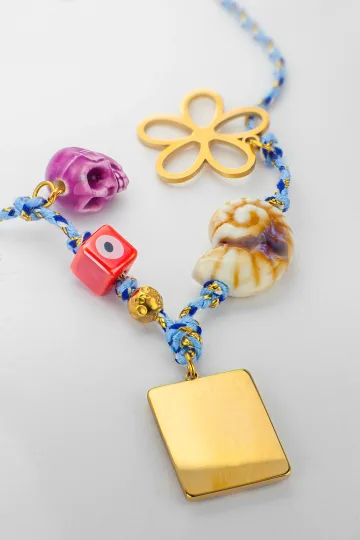
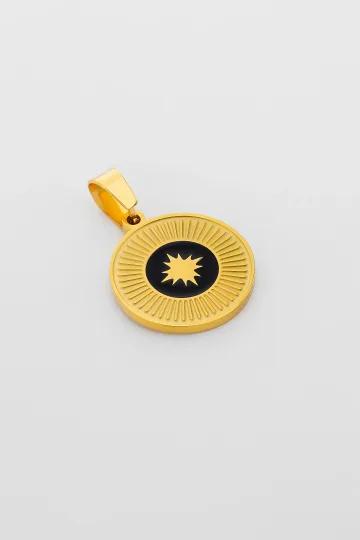
Wear the symbol, don't just read about it. These are in stock:


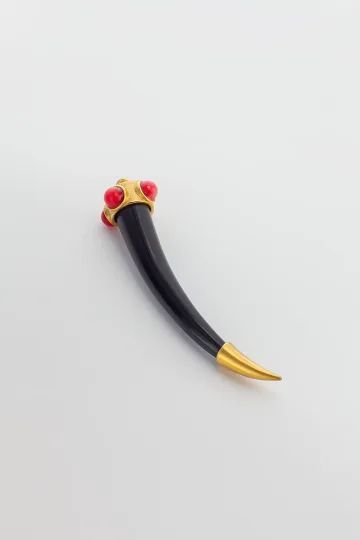



Clover Jewellery: What to Choose
Clover Pendants
- Delicate minimalist clover 1-2 cm everyday. Budget to mid range.
- Stylised clover with square petals and a central stone quiet luxury aesthetic. Mid to premium.
- Clover with green enamel a nod to Irish tradition. Mid range.
- Diamond-set clover premium to luxury.
Clover Earrings
- Clover stud pairs with or without enamel, symmetrical.
- Drop clovers on fine chains for evening.
Clover Rings
- Fine ring with small clover accent minimalist.
- Statement ring with enamel clover bolder centerpiece.
Clover Bracelets
- Slim bracelet with a single clover everyday minimalism.
- Bracelet with multiple stylised clovers associated with quiet luxury dressing.
The Lucky Charm Bracelet
Clover plus horseshoe plus other fortune symbols (seven, rabbit's foot, coin). A charm bracelet as a growing personal collection. This format suits people who want to build meaning gradually, adding a charm at each life milestone.
Horseshoe Types in Jewellery
Classic U-Form
The most common. Open end up or down (see the debate below).
With Decorative Studs
Mimicking the nail pattern of a real horseshoe. The studs read as surface detail and give the piece an authentic, slightly rustic quality.
Minimalist Flat
Contemporary. Clean silhouette without texture, suited to layering with other fine chains.
With Engraving
Another motif engraved inside the horseshoe: a date, initials, a clover, a star. Personalized pieces that carry a specific story.
Double Horseshoe
Two horseshoes interlinked. Amplified luck, or a symbol of a pair. Popular as a couples gift.
Horseshoe with Horse
Combined motif. The horseshoe frames a horse silhouette. Popular in equestrian communities and among riders.
Horseshoe with Clover Inside
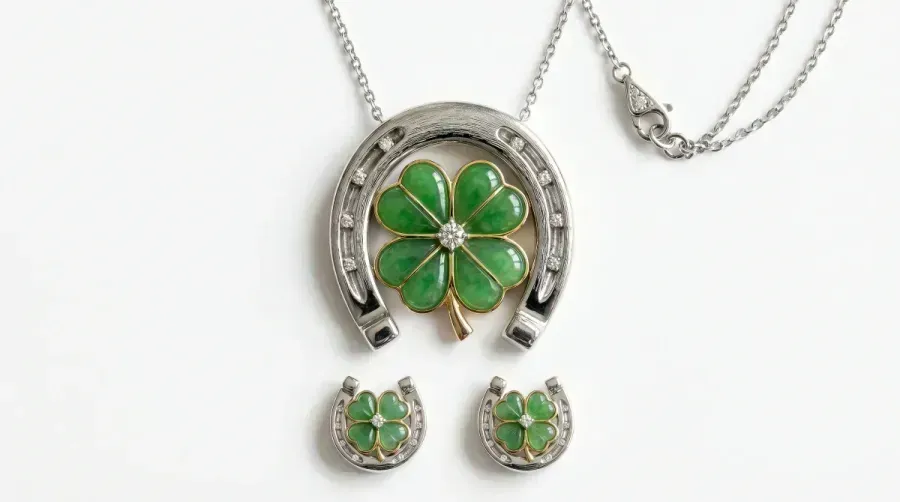
Double symbolism in a single piece. The horseshoe as frame, the clover at the centre. A compact way to carry both traditions.
Clover Types in Jewellery
Three-Leaf Clover (Shamrock)
Three leaves. The actual botanical clover. In Ireland this carries the meaning of the Holy Trinity, as taught by Saint Patrick. Specifically Irish, specifically Christian in context. The shamrock on an Irish-American's lapel on March 17 is an identity statement first and a luck charm second.
Four-Leaf Clover
A natural mutation, roughly one in ten thousand plants. The luck association comes precisely from rarity: finding one means fortune has already found you. A secular symbol, not tied to any specific religious tradition.
Stylised Square-Petal Clover
The four-leaf clover with square petals and a round central stone appeared in Parisian fine jewellery in the late 1960s and became one of the defining silhouettes of quiet luxury. The form has been widely referenced ever since across all price points.
Floral Clover
With blooms, more decorative, suited to spring and summer collections.
Celtic Knotwork Clover
Interlaced with Celtic knotwork. Irish heritage plus ornamental complexity.
What the Horseshoe and Clover Symbolize
Horseshoe: Protection and Fortune
Protection from evil. The older and deeper meaning. Iron was believed in European folk tradition to repel malevolent spirits. The horseshoe, being forged iron made by a skilled smith, was a concentrated form of that protective quality. By function this puts it in the same category as the protection amulets and talismans of the wider Mediterranean and Celtic world.
Luck. The modern reading. A horseshoe open end up is understood as a cup catching fortune from above, an image that became dominant in the nineteenth century through Irish and American folk belief.
Connection to the horse. The horse is an ancient symbol of strength, freedom, and nobility. The horseshoe carries some of that weight. This is why the symbol resonates particularly with people in equestrian life, even when the intended meaning is purely about luck.
Professional symbol. For those in equestrian life: riders, stable owners, farriers, veterinarians, racehorse trainers. The horseshoe is a badge of membership in a world where the animal itself is central.
Christian overlay. The horseshoe above a door was held to ward off the devil, who was said to fear iron. The legend of Saint Dunstan made this explicit and gave the custom a Christian narrative that helped it persist through the Reformation.
Clover: Fortune, Faith, and Irish Identity
Luck (four-leaf). The most widely known meaning. Rarity equals fortune. If you find one, you were already lucky enough to spot it, which proves the point.
The Holy Trinity (three-leaf). Christian symbol, popularized by Saint Patrick in the fifth century. One stem, three leaves: Father, Son, and Holy Spirit.
Four gifts (four-leaf). Faith, hope, love, luck. One leaf for each. This medieval tradition gives each element of the clover a specific value rather than treating the whole as a vague general symbol.
Irish national identity. The shamrock is Ireland's official emblem, used by the national sports teams and the Irish diaspora worldwide. For the roughly thirty-five million Americans who claim Irish heritage, a clover piece carries cultural weight that goes beyond luck.
Natural abundance. Clover feeds bees, fixes nitrogen in soil, sustains livestock. A symbol of fertile land and natural balance, which gives it a gentler, more pastoral dimension than the sharp iron symbolism of the horseshoe.
Horseshoe: Open End Up or Down
One of the longer-running debates in folk symbolism, and one that comes up whenever someone is deciding how to hang a horseshoe over a door or which way to face a pendant.
Open End Up
Theory: the horseshoe acts as a cup, collecting luck from above. This reading is dominant in Ireland and the United States. The logic is straightforward: a bowl facing up holds what falls into it; a bowl facing down empties immediately.
Open End Down
Theory: luck pours down over everyone who passes beneath. This reading is more common in Spain, Italy, and across the Mediterranean. When you see a horseshoe hung over a Spanish doorway, it is almost always end down. The philosophy here is generosity: luck should flow outward to others, not be hoarded.
In Jewellery
Pendants tend to hang open end up simply for visual stability on a chain. Rings can go either way. The direction on a charm bracelet shifts with movement anyway.
If the folk meaning matters to you, follow the tradition that feels right: open end up for the Irish and North American reading, open end down for the Mediterranean one. If you just want a horseshoe pendant that looks right, the natural hang of the piece already makes the choice for you.
History of the Horseshoe as a Symbol
The Iron Age: Metal Against Magic
Pre-Christian cultures across Europe feared supernatural beings: elves, household spirits, malevolent entities that could bring sickness, bad harvests, and misfortune. Iron was widely held to break enchantments and repel these forces. A horseshoe, being forged iron shaped by a smith's hammer, concentrated that protective quality.
The Celts placed particular value on iron as protection against fairy folk. The belief was that beings from the Otherworld could not tolerate the presence of cold iron. This meant the horseshoe was not merely decorative above a door; it was a functional barrier in the folk imagination. The nailing of it into the wood of the doorframe was a deliberate act of protection.
The blacksmith who made the horseshoe occupied an elevated social position in early cultures partly because of this association. He transformed raw ore into objects of power. His forge was a place of controlled fire and controlled transformation, both of which carried spiritual weight.
Rome: Iron at Sea (First Century CE)
Long before the medieval doorway custom, Roman sailors carried small iron horseshoes aboard as protection against shipwreck. The reasoning followed the same logic as the land version: iron was thought to settle the spirits of the storm, and a shoe that had already carried a horse safely over hard ground was iron with a proven history. Excavations of ancient trading vessels in the Mediterranean have turned up small horseshoe-shaped iron amulets among the ship's fittings, which places the charm at sea centuries before it appeared over a farmhouse door.
The maritime version matters because it shows the symbol was never purely agricultural. A horseshoe worked wherever the outcome was outside human control, and a sea crossing in a wooden hull was the most obvious case of that in the ancient world. The same reasoning carried the horseshoe onto Norse ships a thousand years later, and it survives today in the habit of taking a small charm on a flight or a long drive.
Medieval Britain: Smiths and Saints
The blacksmith occupied an ambiguous social role: part craftsman, part figure of almost supernatural skill. The legend of Saint Dunstan (tenth century) captures this neatly. The devil came to Dunstan the smith asking to be shod, and Dunstan nailed the horseshoe to the devil's foot, releasing him only on the condition that he never enter a house where a horseshoe hung.
This story did important work in medieval England. It turned the horseshoe from a piece of folk magic into a specifically Christian protective object. It gave the custom a narrative that could be repeated and explained without reference to pagan belief. The horseshoe became a piece of Christian armour against demonic intrusion.
The Vikings
Scandinavian seafarers incorporated iron talismans into their ships. The horseshoe appears in Norse protective symbolism alongside Thor's hammer and other iron amulets. The connection between iron protection and the sea journey was particularly strong in Norse culture, where every voyage was understood as a passage through danger.
The Victorian Argument: Points Up or Points Down
The nineteenth century in Britain produced a genuine, long-running disagreement about how a horseshoe should hang over a door, and it was argued about in parish magazines and country notebooks with more heat than the subject strictly deserved.
One camp insisted on points up. The horseshoe was a vessel, luck collected in it like rainwater, and a shoe turned the other way would let the whole lot run out onto the doorstep. The other camp insisted on points down, because a shoe hung that way poured its luck over everyone who walked underneath, and hoarding good fortune in a cup was thought a mean way to treat a household charm.
The argument was never settled, which is the interesting part. Ireland and, later, the United States settled firmly on points up. Spain, Italy and the Balkans settled just as firmly on points down. Britain never picked a side, and to this day you can walk a single village street and find both, sometimes on neighbouring cottages, each household certain the other has got it backwards. Farriers in the shires often had a view of their own and hung the shoe whichever way the last customer preferred.
In jewellery the question loses most of its force, because a pendant on a chain turns as the wearer moves and will spend the day in both positions. If the belief matters to you, follow the tradition you grew up with rather than looking for a ruling.
Victorian England and American Gold Rush
The nineteenth century saw the horseshoe become fashionable jewellery across Britain and America. It appeared on wedding dresses as a sewn charm, an English tradition that persisted well into the twentieth century. During the gold rush era in California and Australia, the horseshoe pendant became associated with prospectors' luck: the lucky strike, the successful claim.
Victorian jewellers produced horseshoes in gold set with rubies, sapphires, and seed pearls. These were not folk charms but fine jewellery objects, which tells us that by this point the horseshoe had moved fully from superstition into sentiment. A Victorian lady wearing a gold horseshoe was not warding off demons; she was expressing a hope and wearing a beautiful piece.
American Country and Western Tradition
In the twentieth century, the horseshoe became part of the visual language of American country and western culture: on belt buckles, on barn doors, on the logos of rodeo events. Country music, which draws heavily on rural Southern imagery, embedded the horseshoe as an emblem of working-class good fortune. This gave the symbol a specifically American character that overlaps with but differs from the British and Irish traditions.
Twentieth Century to Now
The horseshoe entered mass culture through country music, tattoo aesthetics, and casino iconography. In jewellery it spans every register, from a child's silver charm to a fine gold pendant in the quiet luxury tradition. The symbol is now global and has shed much of its specific cultural associations in favour of a general meaning of good fortune.
Customer reviews
Zevira is a real jewellery shop. Genuine payments, deliveries and customer thank-yous.
🥰🥰🥰 gracias

Ok, ¡gracias! 🙂

History of the Clover as a Symbol
Celtic Pre-Christian Tradition
Clover was a sacred plant among the ancient Celts. The three-leaved form mirrored the triple deities that recur throughout Celtic mythology: the triple goddess, the triadic heroes, the triune structure of many Celtic sacred concepts. The number three was not merely convenient; it was cosmologically significant.
The four-leaved mutation was believed to open a person's eyes to the fairy world. This gave the four-leaf clover a double value: it was already proof of luck (you found it), and it granted a further gift (you could now see what others could not). This made finding one a genuinely remarkable event in a culture that took the proximity of the Otherworld seriously.
Shamrock and Four-Leaf Clover: Understanding the Difference
The two clover symbols are distinct and the distinction matters.
The shamrock is specifically the three-leaved clover (Trifolium repens or a related species). In Irish, seamróg means "little clover." It is Ireland's national emblem, worn on Saint Patrick's Day, present on the jerseys of the Irish national teams, carried by the diaspora as a marker of identity. It is also a Christian symbol, connected specifically to Saint Patrick's explanation of the Trinity.
The four-leaf clover is a genetic mutation occurring in roughly one of every five thousand to ten thousand plants, depending on the variety and growing conditions. The luck symbolism comes from rarity: finding one is already a small statistical improbability, which is itself a kind of luck. This is a secular symbol, not tied to Irish national identity or Christian theology. Anyone can wear a four-leaf clover pendant for luck without any connection to Ireland.
White clover (Trifolium repens) is the species most commonly found in lawns and meadows, and its mutations produce most of the four-leaf variants people find. Red clover (Trifolium pratense) is taller and used in agriculture; four-leaf mutations are rarer in this variety.
Saint Patrick (Fifth Century)
According to the familiar account, Patrick used the three-leaved shamrock to explain the Trinity to pagan Irish audiences. One stem, three leaves: Father, Son, and Holy Spirit. This made the shamrock simultaneously a Christian symbol and Ireland's national emblem. The genius of the gesture was its accessibility: Patrick used something everyone could hold in their hand.
Whether the historical Patrick actually did this is debated by scholars. What matters for our purposes is that the story became inseparable from Irish identity and that the plant became the carrier of both Christian meaning and national pride.
The Medieval Four Gifts
The tradition associating each leaf with a virtue (faith, hope, love, luck) developed through the medieval period. This gave the four-leaf clover a moral dimension beyond its luck symbolism. Each element of it stood for something positive in life, which made it a suitable gift and a suitable piece of jewellery to wear with intention.
A rare fifth leaf was linked specifically to money and financial fortune. The fifth leaf is even rarer than the fourth, appearing perhaps once per million plants, which gives it a kind of legendary status within the clover folklore.
Irish Emigration (Nineteenth Century)
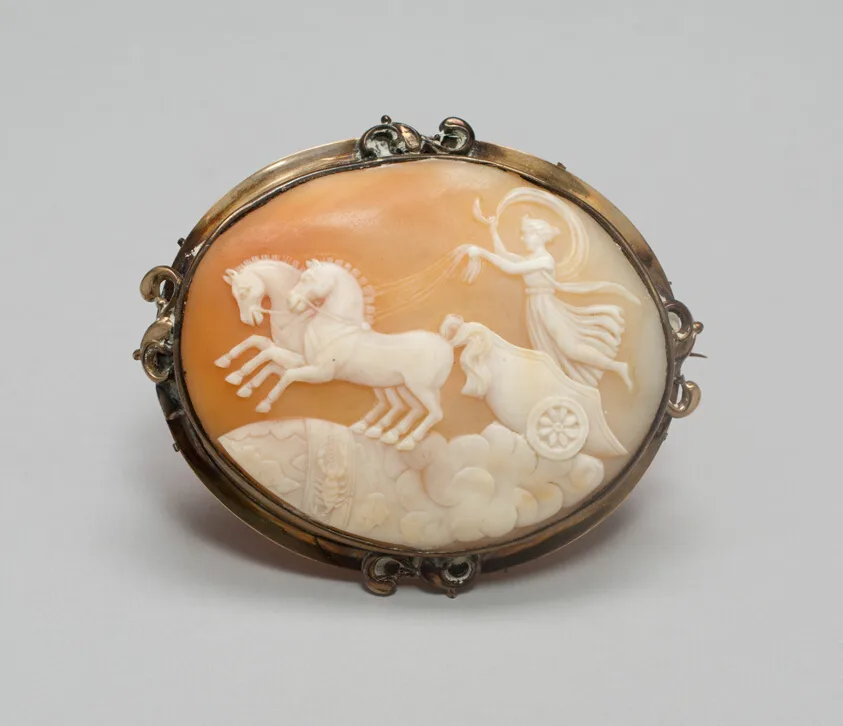
The Great Famine of 1845-1852 sent over a million Irish people to Britain, North America, and Australia. Saint Patrick's Day (March 17) became the focal point of diaspora identity, and the shamrock travelled with it. The clover's current global reach, particularly in the United States, is largely a product of that dispersal.
By the late nineteenth century, Irish-American communities in Boston, New York, Chicago, and San Francisco had made March 17 into a major public celebration. The shamrock was their visible badge. Clover jewellery, Claddagh rings, and Celtic knotwork pieces became commercial products that let people express this identity throughout the year, not just on one day.
Saint Patrick's Day Today
March 17 has become a global Irish holiday rather than a strictly Irish one, and the shamrock travels with it. Dublin runs a multi-day festival, London holds a parade and a feast in Trafalgar Square, and cities with no Irish population to speak of light public buildings green for the evening. The plant is worn as a sprig, printed on everything, and sold in enormous quantities as jewellery.
That single date carries a disproportionate share of the year's trade in Irish pieces: shamrock pendants, Claddagh rings, Celtic knotwork, Tara-style brooches. What is worth noticing is that the day is a shamrock occasion, not a four-leaf clover one. The three-leaved plant is the national emblem with the Trinity story behind it; the four-leaved mutation is a general luck charm with no Irish claim on it at all. Shops routinely mix the two in March, and anyone buying a piece as a marker of Irish heritage should count the leaves before paying.
Outside March, clover jewellery in Ireland and among the diaspora is worn quietly and year-round, which is arguably the truer expression of it. A small silver shamrock on a chain reads as heritage on any ordinary Tuesday, without the green beer.
The Stylised Four-Petal Clover in Fine Jewellery (Late 1960s)
In the late 1960s, Parisian fine jewellery introduced the stylised four-petal clover with a central cabochon stone. It became one of the most widely recognised jewellery silhouettes of the twentieth century, and the form is now referenced at every level of the market from costume jewellery to high-end gold pieces. Originals from the historic Parisian house are in the luxury segment; references and interpretations exist across all price points.
The Horseshoe and the Clover in British Folk Tradition
Britain has its own version of both charms, and it differs from the Irish and the Mediterranean ones in ways that still shape how the jewellery is worn.
The shoe over the door. The custom of nailing a horseshoe above a doorway is documented across England, Wales and Scotland from at least the medieval period, and it survived the Reformation, the Enlightenment and the arrival of the motor car with barely a scratch. Farmhouses, pubs, forges and stables carried one, and plenty still do. The shoe was traditionally a used one taken from a working horse rather than a new shoe bought from the farrier, on the reasoning that a shoe which had already done its job carried the luck of the roads it had covered.
Found, not bought. A version of this belief runs through British folklore as well: a horseshoe picked up by chance on a lane was held to be worth more than one acquired deliberately, because chance had put it in your path. The rule was applied loosely even at the time, since farriers sold old shoes cheerfully enough, and it has no bearing on jewellery. A pendant is a different kind of object. You buy the metal and the making, and you supply the meaning yourself, which is how every worn charm has always worked.
Which way up, still unresolved. The points-up and points-down argument described above is not a historical curiosity in Britain, it is a live domestic disagreement. English households lean toward points up in the north and points down in parts of the west country, with no consistency to speak of; the safest thing to say at a friend's front door is nothing at all.
The wedding horseshoe. This is the strongest surviving British thread. A small horseshoe, traditionally silver or silver-coloured, is given to the bride on the morning of the wedding, often by a child, and carried over her arm on a ribbon, tucked into the bouquet or stitched inside the hem of the dress. The custom is Victorian in its present form and was standard across Britain and Ireland by the late nineteenth century. It is still common today, which is why a horseshoe pendant reads as a wedding gift here in a way it does not in most of continental Europe.
Shamrock, not four-leaf. The clover in Britain splits along a clear line. The three-leaved shamrock belongs to Ireland and to Irish communities in Liverpool, Glasgow, Manchester and London, where it is heritage rather than luck. The four-leaf clover is a general British good-luck charm with no national attachment, familiar to anyone who spent a childhood summer combing a lawn for one. Children still do it, the odds are still poor, and the found leaf still goes into a book to dry. Both plants end up in the same jewellery cabinet, which is exactly why the distinction gets lost.
Green in the countryside. Clover has a second, quieter place in British rural life as a fodder crop and a bee plant, which is why it turns up in Arts and Crafts metalwork alongside oak, ivy and hawthorn. A clover motif on a British piece is sometimes botanical rather than superstitious, and the two readings sit together comfortably.
Other Luck Symbols in Jewellery
Horseshoe and clover are not alone in their corner.
Seven. The luck number in Western culture, especially in casino-adjacent imagery. Appears frequently alongside horseshoes on charm bracelets and in tattooed ensembles.
Coin. Universal fortune. An old coin as a pendant carries the idea of found money, of surplus, of wealth that arrives unexpectedly.
Rabbit's foot. North American and British folk tradition. More common as a keychain than as fine jewellery, but appears occasionally in charm bracelets.
Horseshoe and clover together. Double luck in a single piece, common in charm bracelets. The combination is so established it almost constitutes its own symbol.
Hamsa. Protection and fortune across Middle Eastern and North African traditions. Works well alongside horseshoe and clover in layered jewellery without cultural conflict.
Nazar (evil eye bead). Protection from the evil eye, widely worn in Turkey, Greece, and across the Mediterranean. Not a luck symbol exactly, but a protective one, which makes it a natural companion to luck charms.
Elephant with raised trunk. Indian tradition. The raised trunk position is understood to shower good fortune on those nearby.
Eight. Chinese fortune number, the shape echoing the character for abundance. Relevant in American contexts because of the size and influence of Chinese-American communities.
Upload a photo of your pet, someone you love, or an object. We'll build a 3D model and hand-cast it in pewter.




Materials for Horseshoe and Clover Jewellery
The material affects not just the look but the durability, the price, and how the piece reads stylistically.
Sterling silver 925. The classic choice. Versatile, accessible, holds fine detail well. A silver horseshoe has a visual kinship with the real object that gives it authenticity. Tarnishes over time with exposure to air and moisture; needs occasional polishing. Oxidised silver (intentionally darkened) creates a more vintage, found-object quality.
14k gold. The standard for everyday fine jewellery. Durable enough for daily wear, does not tarnish, looks good on every skin tone. Yellow gold with a four-leaf clover reads as considered and warm. Rose gold is the contemporary choice, particularly popular in the younger market.
18k gold. Richer in colour, softer in texture. Premium and luxury tier. Fine details can be vulnerable to daily wear; better suited to pieces that are not worn every day.
Enamel. Used for colour accents. Green enamel on clover leaves is the obvious choice and adds an Irish authenticity to the piece. Blue or white enamel on a horseshoe creates a more modern look. Enamel is fragile: avoid impact and harsh chemicals, and clean only with a soft damp cloth.
Mixed metals. A gold horseshoe and a silver clover on the same chain works well in the mixed metals aesthetic that has been popular for several years. The contrast reads as deliberate rather than accidental if the proportions are right.
Caring for Horseshoe and Clover Jewellery
Silver. Tarnishes with exposure to air, moisture, and cosmetics. Polish regularly with a soft cloth or a silver polishing cloth. Store in a closed box or zip bag to slow tarnishing.
Gold. Lower maintenance. Wash periodically with warm water and mild soap; dry completely.
Enamel. No chemicals, no ultrasound cleaners, no hard cloths. Soft damp cloth only. Do not drop: enamel cracks on hard floors.
Fine filigree or open-work designs. More vulnerable to snagging and mechanical impact. Store separately rather than in a pile with other chains.
General rule. Remove before swimming, cleaning, and working out. Apply perfume and moisturizer before putting on jewellery, not after.
Ways to Wear a Horseshoe or a Clover
Before the styling detail, it helps to decide what the piece is for. A luck charm can be private, public, or somewhere in between, and each choice changes what you should buy.
Under Your Clothes
A small horseshoe or clover on a short chain, worn under a shirt or a blouse. Nobody sees it, which is rather the point. This is the oldest way of carrying a charm and the most functional: the object works for the wearer, not for an audience. It suits the moments when you want the reassurance without inviting a conversation about it, which usually means an exam, an interview, a hospital appointment, a difficult negotiation. Buy small, buy smooth, and avoid sharp settings or open claw work that will catch on fabric.
Over Your Clothes
A medium or large pendant worn on show, where the symbol is part of the outfit rather than hidden inside it. This is the register for anyone who likes the shape for its own sake, and it is where enamel, stone settings and textured surfaces earn their keep. Worn openly, the charm reads as a stylistic choice first and a superstition second, which is usually how the wearer intends it.
Layered
A clover, a horseshoe and perhaps an old coin on chains of different lengths. The stack tells a small story about the person wearing it, and it suits relaxed dressing far better than formal. The rule that keeps it from looking accidental is repetition: repeat each metal at least twice, and keep the pendants at genuinely different heights so they do not clash and tangle.
With Workwear
Restrained versions work perfectly well in an office. A fine gold chain with a small four-leaf clover under a collar, or a slim horseshoe on a plain jumper, reads as jewellery rather than as a charm. Large horseshoes hung with crystals do not survive a meeting room. If in doubt, the smaller piece is always the safer one in a professional setting.
With Everyday Clothes
Almost anything goes here, and this is where these symbols are most at home. Denim, linen, cotton knits, soft earthy colours. Silver suits a casual wardrobe particularly well, and oxidised silver even more so, because the darkened surface flatters worn-in fabrics. A clover in yellow gold against a white shirt is the other reliable pairing.
For Occasions That Matter
Wearing a luck charm to an exam, an interview, a competition or a first day is a genuine tradition rather than an affectation, and it is worth respecting the habit. The piece works best if it is already familiar: put it on for ordinary days first so that on the day it counts, it feels like something you own rather than something you bought for the occasion.
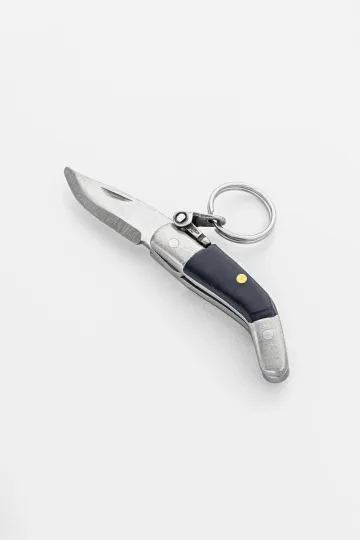
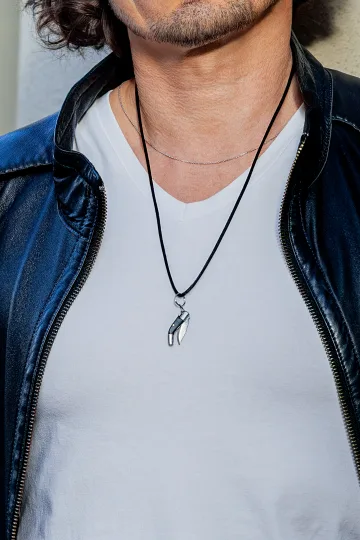
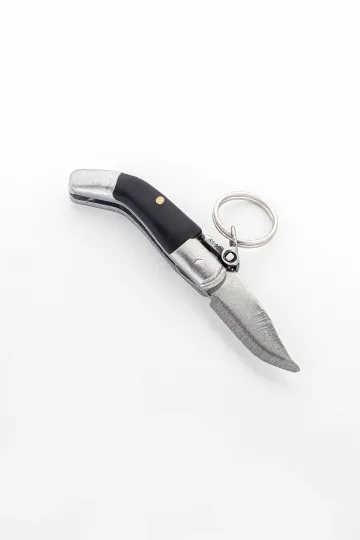
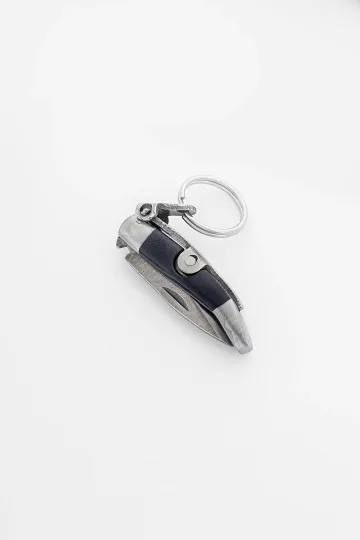
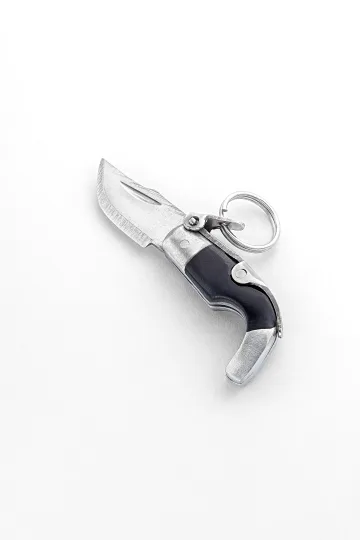
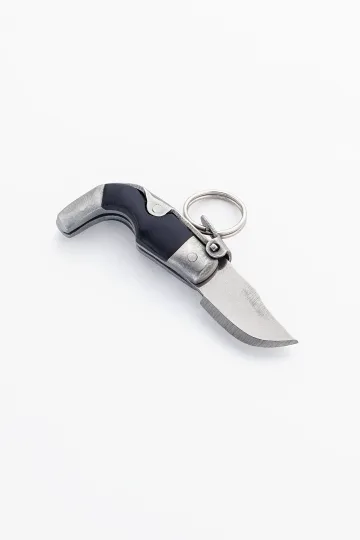
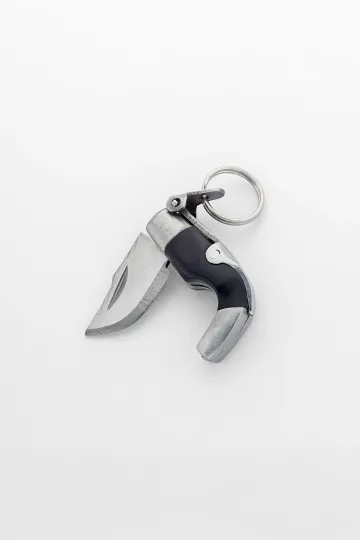
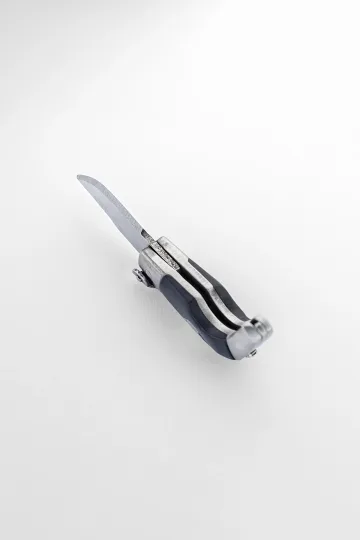
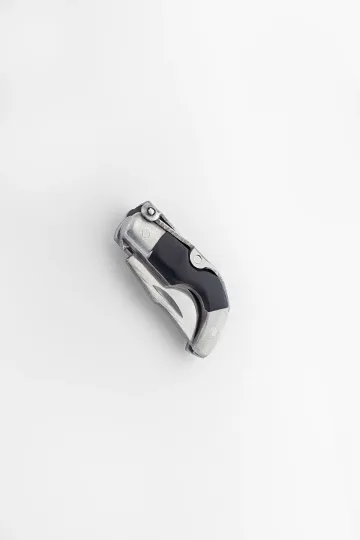
CAPAORA mini knife pendant
The 18th-century Spanish navaja in miniature: 40 mm of stainless steel, a real folding mechanism and a Palanquilla lock that clicks. An affordable gift to remember.
Authentic · Ships from Spain · 14-day returns
The Horseshoe and the Clover Around the World
Both symbols travel, but they do not mean quite the same thing everywhere, and the differences are worth knowing before you buy a piece abroad or give one to someone from another culture.
Ireland
The home of the clover. The shamrock is the national emblem, it appears on the crest of the national rugby side, it is worn on March 17, and it carries the Saint Patrick story with it. In Ireland the three-leaved plant is identity rather than luck, and the distinction is felt keenly. The four-leaf clover exists there as a general charm, as it does everywhere, but it is not the national symbol and never has been. The horseshoe is present too, hung points up, and forms part of the wedding tradition shared with Britain.
The United States
Both symbols are strong, for different reasons. The horseshoe belongs to country and western visual language: belt buckles, barn doors, rodeo signage, ranch gates. The clover belongs to the Irish diaspora, which is enormous, with roughly thirty million Americans identifying some Irish descent. Saint Patrick's Day in Boston, New York and Chicago is a civic event rather than a private one, and the shamrock is its badge. Outside March the four-leaf clover circulates as a plain luck charm with no ethnic reading at all.
Britain
The horseshoe dominates, through the Victorian jewellery tradition and the wedding custom that still runs strong. Silver horseshoe charms are standard bridal gifts, and the shape turns up on christening spoons, wedding cake decorations and greeting cards to a degree that has no equivalent on the continent. Clover appears mostly as the four-leaf luck charm, with the shamrock carried by Irish communities and worn with particular force in Northern Ireland.
Spain
The horseshoe, the herradura, is a familiar charm and especially so in Andalusia, where horses run deep in regional culture. Village doorways carry them, generally hung points down so that the luck spills over whoever comes in. Clover has far less traditional weight in Spain; in Galicia the Celtic connection surfaces instead through knotwork, the trisquel and other Atlantic motifs that belong to the same northern family as the Irish material.
France
The horseshoe is a porte-bonheur, a luck bringer, and appears in the same sentimental nineteenth-century jewellery vocabulary as the four-leaf clover, the ladybird and the wishbone. Brittany is the exception worth noting: as a Celtic region it carries clover, triskelions and knotwork with a heritage meaning much closer to the Irish reading than to the rest of France.
Italy
The horseshoe is a solid part of national folklore and hangs above doorways across the country, usually points down. It is rarely the only charm in play. The cornetto, a small twisted horn in coral or gold, is the more distinctly Italian amulet, and the two are frequently worn together on the same chain without anyone finding that excessive. Clover is present but reads as an imported charm rather than a native one.
The Balkans
The horseshoe, potkovica in Serbian, is a central folk amulet across Serbia, Bulgaria and Greece, hung above the door and traditionally with the open end downward. It carries the iron symbolism strongly, and in rural areas the preference for a shoe from a working horse rather than a decorative reproduction is still expressed. Clover has almost no traditional standing in the region and arrives entirely through jewellery fashion.
China
Neither symbol belongs to the tradition. Chinese luck symbolism runs through its own vocabulary: the dragon, the character fu for fortune, the number eight, red cord, jade. There is a neat commercial irony here, in that a large share of the world's mass-produced horseshoe and clover jewellery is manufactured in China for export to markets where those symbols do mean something. Among younger urban buyers the four-leaf clover has some currency as an imported fashion motif, largely detached from any belief.
Japan
Much the same picture. Japanese luck objects are the maneki-neko, the daruma, the omamori charm bought at a shrine and deliberately kept closed. The clover and the horseshoe arrived as Western imports and are read as such: pretty, foreign, mildly lucky. The four-leaf clover has been thoroughly absorbed into Japanese design and stationery, where it functions as a general good-fortune motif without the Irish association it carries in the English-speaking world.
Who These Pieces Suit
The luck charm is one of the few jewellery categories that fits almost any recipient, but some cases fit better than others.
Someone going through a hard stretch. A pendant solves nothing, and it is worth being honest about that. What it does is give a difficult period a small physical anchor. Your eye catches the charm, and you are reminded of something you decided earlier when you were thinking more clearly. That is a modest effect, and it is real.
Someone facing a specific event. An exam, an interview, a viva, a presentation, a competition. A small pendant worn under the shirt is the classic form. Nobody sees it, and the wearer knows it is there.
A newborn. A small silver horseshoe or clover is a traditional christening and new-baby gift across Britain and Ireland. In practice it is usually kept by the family rather than worn by the child, and it becomes a keepsake attached to a date.
An athlete. Pre-competition ritual is a genuine part of sport at every level, and a slim charm worn under a kit sits comfortably alongside the rest of the routine. Choose something flat, light and without protruding settings.
Someone starting a business. The clover as a charm for financial fortune is a widespread folk belief rather than a specifically modern one, and a small gold four-leaf pendant carries the idea without embarrassment. It reads as style with a history behind it.
Anyone involved with horses. For a rider, a groom, a farrier or a racing enthusiast, the horseshoe stops being a superstition and becomes an occupational emblem. This is one of the few cases where a large, unmistakable horseshoe is exactly right.
Irish families and the diaspora. The shamrock as heritage. Worn on March 17 and equally well on any other day, and given between generations as a marker of where a family came from.
A bride. The horseshoe is a British and Irish wedding symbol with a long history, given on the morning of the wedding or carried with the bouquet. As a pendant it does the same work and can be worn afterwards, which the ribbon version cannot.
A school or university leaver. A symbol of transition with a wish attached. Unobtrusive, meaningful, and genuinely wearable, which is more than can be said for most graduation gifts.
A colleague starting a new job. Neutral, easy to explain, with no religious content to navigate. Good luck in the new role, expressed as an object rather than a card.
A child. A small silver clover or horseshoe works at any age and does not read as a children's piece, which means it survives the child growing up.
Leave your email, we'll send your discount code. No spam, unsubscribe anytime.
The code arrives by email, valid on your first order.
Luck Jewellery as a Gift
The horseshoe and four-leaf clover are among the most versatile gift categories in jewellery because they carry a clear positive meaning that requires no explanation.
A newborn gift. A small silver clover or horseshoe pendant is a traditional christening or birth gift in British, Irish, and American traditions. Often kept by the family rather than worn by the child.
A graduation gift. Marking a transition and wishing fortune in what follows. The luck symbolism is genuinely relevant: a graduate is setting out into uncertainty, and a wish for good fortune is substantive rather than generic.
A new job gift. "Good luck in the new role" expressed as something lasting. A horseshoe or clover pendant works here where a card does not, because it is a physical object the person carries forward.
A wedding gift. In British and Irish tradition the horseshoe is a classic gift for the bride, sometimes as a pendant, sometimes as a decorative charm on the dress or bouquet. This tradition dates to at least the Victorian era.
For an athlete. A slim pendant worn under a sports kit on competition day. Ritual is a real part of athletic performance, and a physical talisman serves the same function as pre-race breathing exercises.
For someone starting a business. A gold clover as a personal talisman for a new venture. Conveys genuine support without being over-effusive.
For someone with Irish heritage. The clover as an expression of identity. A Claddagh ring says "Irish" most explicitly, but a clover pendant works year-round without the specific romantic symbolism of the Claddagh.
Who Receives a Horseshoe or a Clover
The commonest occasion is a housewarming, because the horseshoe has been carried into a new house as a wish for a full larder and a guarded threshold for as long as anyone has recorded the custom. A pendant says the same thing in a form the owner can take out of the house with them. The clover, particularly the four-leaf version, suits the moment before a threshold of a different kind: an exam, an interview, the first month of a new venture. A horseshoe fits a wedding, where the British and Irish tradition of handing one to the bride is still alive and still understood. A shamrock is the right choice for someone with Irish roots or a genuine attachment to the country, and the wrong choice if you meant a general luck charm. Both work as a small talisman for a colleague, a friend or a child on a day that matters, when you want to wish someone well without a speech. The horseshoe is a natural gift for anyone who works with horses, where it reads plainly and affectionately. A clover suits a spring birthday, or anyone who already has a lucky habit and enjoys it. And a matched pair, a horseshoe for one person and a clover for the other, works nicely between friends: two people sharing one idea of luck with a symbol each.
The Omen: Points Up So the Luck Stays In
The best known belief concerns the direction of the shoe. The Irish tradition hangs and wears it points up so that fortune gathers in the cup and cannot run out. The Mediterranean tradition hangs it points down so that fortune pours over everyone who passes underneath. Both readings are old, both are sincerely held, and arguing about which is correct misses the point. Choose whichever meaning suits the person receiving it, and say which one you meant when you hand it over. The four-leaf clover carries a simpler story: its rarity in a field made it the emblem of the lucky accident, and folk tradition assigns the four leaves to hope, faith, love and luck. Neither symbol drags any dark or reversible omen behind it, which makes both safe gifts even for someone who takes such things seriously.
How to Give It: A Housewarming, a Wedding, a Note
Say what the gift means and the tradition does the rest. A horseshoe for a new house sits well with a short written wish for a full house; a clover before an exam needs nothing more than good luck written on a card. Engraving a date, a set of initials or a single word fixes the occasion and turns a charm into a record of it. If you are giving a horseshoe, mention the points-up custom with a smile: it settles the question of direction and gives the moment something to talk about. Wider gift etiquette, including which gifts carry unlucky associations and how to work around them, is worth a glance if the occasion is a formal one. Both of these charms are easy to give and easy to receive, and it is precisely that lack of ceremony that makes them work for almost any occasion. A small ritual helps as well: say the wish out loud as you fasten the chain, so that the charm stays attached to a specific piece of goodwill rather than to nothing in particular.
Superstition or Sentiment: A Grounded View
It is worth addressing directly how these pieces actually work, if they work at all.
No pendant passes an exam. No horseshoe over a door prevents bad decisions. No four-leaf clover in a wallet fills it with money. Everyone who carries these objects knows this.
And they carry them anyway. Why?
Because symbols work through the person who carries them, not instead of them. When you look at a pendant before walking into something difficult, you activate what might be called a behavioural anchor: the object focuses your attention, recalls a specific intention, and reduces ambient anxiety. Athletes at the highest level consistently use pre-performance rituals. These rituals do not change the physical outcome directly; they change the mental state of the performer, which then influences the physical outcome.
A luck charm works in the same way. It is not magic in the supernatural sense. It is a personal ritual object. And personal ritual objects have documented value in human performance and well-being.
That said, it is also just a beautiful piece of jewellery with several thousand years of history behind it. Both things are true.
Combining Symbols
Horseshoe and clover work well in combination with other luck symbols. A charm bracelet allows you to build a personal set of meanings.
Horseshoe and coin. Luck and material fortune combined. Good for someone specifically focused on financial goals.
Clover and key. Luck and open doors. A popular combination for graduation gifts.
Horseshoe and heart. Luck in love. Classic romantic pairing.
Clover and infinity. Enduring luck. Works particularly well in minimal bracelets.
Horseshoe, hamsa, and clover. Western luck, Mediterranean protection, and Irish symbolism on one piece. Each element has a different cultural origin, which makes the combination a conversation about luck across traditions.
Horseshoe and Clover Jewellery for Life's Turning Points
Some moments call for a luck charm in a way that goes beyond general well-wishing.
A First Day in a New Role
Starting a new job means navigating an unknown culture, making first impressions that are hard to revise, and performing under observation. A small gold clover or silver horseshoe worn close to the body is a physical anchor: a reminder of intention when the environment is unfamiliar. Not magic, but focus.
Moving to a New City
Leaving everything familiar and starting over somewhere new is one of the larger emotional challenges a person faces. In European folk tradition, moving into a new home was accompanied by protective rituals: salt on the threshold, bread on the table, a horseshoe above the door. For the contemporary person, a horseshoe pendant when relocating is a way of carrying that old ritual into a new life in portable form.
Graduating
The end of one long phase and the beginning of an uncertain one. A clover pendant as a graduation gift is not generic: it is a genuine wish for fortune in what follows, which is exactly what a graduate needs. The luck symbolism here is substantive because the person is genuinely setting out into uncertainty.
A Wedding
In British and Irish tradition, the horseshoe is a wedding symbol. Brides received small gold horseshoes as gifts, had horseshoes sewn into their dresses, or carried decorative ones alongside their bouquets. In Scotland this tradition is particularly strong. The luck wished at a wedding is not trivial: a long marriage involves real uncertainty, and a wish for good fortune in it is genuine.
Retirement
A piece of luck jewellery as a retirement gift carries a double meaning: recognition of the long road already travelled, and good wishes for the new life that opens. It is more personal than a generic gift and more lasting than a card.
Recovery from Illness
A period of serious treatment or long recovery exhausts a person physically and psychologically. A luck charm from people who care functions as a material expression of support: "we are here, we want you to have strength." It does not change the medical outcome; it changes the experience of going through something difficult while knowing others are thinking of you.
The Psychology of Luck: Why We Carry Symbols
The question of why someone wears a luck charm without believing in the supernatural deserves a direct answer.
Research in sports psychology has shown that ritual objects affect performance. Studies with golfers found that players told their ball was "lucky" performed significantly better on putting tasks than control groups given no such information. The placebo effect operates outside medicine.
The mechanism is straightforward. When a person uses a ritual, they shift from diffuse anxiety into a state of concentrated intention. The ritual marks the moment: "this is where something important begins." That shift is itself valuable.
A good luck symbol works precisely as this kind of switch. It functions through the mechanism of human attention and intention, not through supernatural force. This is why wearing a horseshoe pendant before an important meeting is not irrational even for a complete skeptic. The object changes the mental state of the wearer; the mental state influences the performance.
This does not mean pretending to believe in magic. But it does mean that dismissing these objects as mere superstition is not entirely accurate either. There is a psychology behind them that is neither embarrassing nor mysterious.
Layering Guide: Horseshoe and Clover in Multi-Chain Dressing
Chain layering has become a standard approach in fine jewellery styling. Horseshoe and clover pendants fit naturally into this format.
Three Chains: A Basic Luck Stack
Short chain 15-16 inches: a small gold clover. Sits close to the neck, barely visible.
Medium chain 17-19 inches: a slim silver horseshoe pendant. Settles near the collarbone.
Long chain 22-24 inches: a simple chain without pendant, or with a small coin. Creates depth and visual movement.
Three lengths, three levels, one theme. The result reads as considered rather than accumulated.
Mixed Metals
Silver, gold, engagement rings, symbolic jewellery, paired sets.
Combining gold and silver in one look has been a consistent trend. A yellow gold horseshoe paired with an oxidised silver clover gives a visual contrast that works. The key principle: at least one element of each metal appears in the stack, so the combination reads as intentional.
Bracelets as Extension
A slim bracelet with a single horseshoe charm worn alongside a clover ring creates a thematic suite. The luck theme reads without being heavy-handed.
What Does Not Work
Too many symbols at once overloads the image. Horseshoe and clover together in two separate pieces works well. Three horseshoes simultaneously reads as a collection rather than a style. One or two symbols per look is the practical ceiling.
Send a friend a discount code, they save on their first order.
Gift Guide: Choosing the Right Format
A luck symbol piece is one of the most versatile gift categories in jewellery. But versatile does not mean no decision required.
By Occasion
Birth or christening. Small silver pendant on a fine chain. This is not for the baby; it is for the family. These pieces are kept for years.
Graduation. Four-leaf clover in gold. Luck at the beginning of adult life.
Wedding. Horseshoe in British tradition. Or a matching luck charm bracelet for the couple.
New job. Silver horseshoe or clover. Says "good luck" without requiring words.
Anniversary. Gold clover in the stylised form with a central stone. A step up in significance.
Recovery or tough period. Small silver piece from someone who cares. Tactful and lasting.
By Budget
Budget range. Small silver pendant without stones. Simple but well-made carries its own dignity.
Mid range. Silver with green enamel or a small stone. Detail and interest without crossing into premium.
Upper mid range. 14k gold with clover or horseshoe. This is a piece the recipient will remember.
Premium. Gold with diamonds or sapphires. For the occasions that warrant it.
By Recipient Style
Minimalist. Fine gold ring with a small horseshoe or clover accent. Clean and wearable every day.
Bohemian. Silver pendant with oxidised finish, possibly with several charms.
Classic. Gold clover in the stylised form. Restrained and elegant.
Equestrian. Horseshoe with horse motif, or a clean horseshoe in silver or gold.
FAQ
Which way should a horseshoe face?
In jewellery this matters less than it does on a door. The Irish and North American tradition is open end up, holding luck in. The Spanish and Mediterranean tradition is open end down, luck pouring over those who pass beneath. Choose whichever feels right culturally or aesthetically.
Three leaves or four leaves?
Three leaves: Irish national identity, the Holy Trinity. Four leaves: luck, because of natural rarity. For a specifically Irish reference, three. For a luck charm, four.
Is the square-petal stylised clover the same thing?
The shape is related but the design is distinct. The square-petal form with a central stone became iconic through Parisian fine jewellery in the late 1960s. It is now widely referenced across the market. Genuine originals from the historic house are in the luxury segment.
Can you give a horseshoe as a wedding gift?
Yes. The horseshoe is a traditional British and Irish wedding symbol. Brides carry or receive them, and the lucky horseshoe appears on wedding cards, invitations, and as a charm on the dress or bouquet.
Is a horseshoe suitable for a man?
Yes. Men's versions: a heavy signet ring with a horseshoe motif, a leather cord pendant, cufflinks. Particularly at home in equestrian and country aesthetics.
Is clover jewellery only for Saint Patrick's Day?
No. It is particularly appropriate around March 17, but a clover pendant is perfectly wearable throughout the year as a straightforward luck symbol.
What material works best?
Sterling silver is versatile and accessible. 14k gold is the everyday standard. 18k gold for premium pieces. Green enamel on a clover is a perennial option. Rose gold is the contemporary choice.
Can horseshoe and clover be worn together?
Yes. A charm bracelet combining both, or a double pendant on one chain. Double luck, in folk logic.
How much should I expect to spend?
A small silver pendant is budget to mid range. Something with enamel or stones sits in the mid range. A gold 14k piece moves into premium. Diamond-set clover in fine jewellery is luxury.
How do I care for these pieces?
Silver: polish regularly with a soft cloth, store in a closed box. Gold: wash with mild soap and warm water. Enamel: soft cloth only, avoid impact. Remove before swimming and exercise.
Building a Luck Collection
Starting Point
One symbol, one material, one pendant. A slim silver clover or horseshoe on a fine chain. Everyday, unobtrusive, wearable anywhere. This is the version you reach for before something that matters.
A Considered Collection
Clover and horseshoe as a pair. Different forms:
- Clover pendant for daily wear
- Horseshoe studs for particular occasions
- Four-leaf clover ring for the weekend
- Charm bracelet with several luck symbols
A Full Luck Collection
Add other symbols:
- Horseshoe in silver
- Four-leaf clover in gold
- An old coin
- A hamsa
- A nazar
- A scarab
- A seven or eight
- A star
A charm bracelet with five to eight charms, or individual pieces for different situations.
Wearing It Wisely: Practical Notes
A few details about wearing luck symbols rarely make it into ordinary buying guides.
When to keep it hidden. A small pendant worn out of sight is the most functional form a charm can take, because it works for you rather than for an audience. There is a useful parallel in the Japanese omamori, the shrine charm sold in a sealed cloth pouch which the owner is not supposed to open: the contents are private, and opening it is held to release the effect. The same logic applies to a clover under a shirt. Nobody needs to see it for it to do its job.
When to wear it openly. If the piece carries cultural weight rather than personal superstition, hiding it defeats the purpose. A shamrock worn as a marker of Irish heritage, or a horseshoe worn by someone whose life revolves around horses, is a statement of belonging, and a statement kept under a collar is not much of a statement. Different function, different placement.
Whether to sleep in it. A slim pendant on a fine chain can stay on overnight without much risk. A charm bracelet with several dangling pieces should come off, because it will tangle, catch on bedding and scratch whatever it lands against. Enamel in particular should be removed at night: the surface is harder than it looks but it chips at the edges, and a full night of small knocks is exactly how that happens.
How many charms at once. One or two luck symbols on a look is convincing. Five different amulets on the same chain stops reading as personal ritual and starts reading as clutter, and the individual meanings cancel each other out. Keep the ones that genuinely mean something and let the rest live in the box.
Keep it clean. This sounds trivial and is not. A charm that is polished and cared for carries a different message from a dull, tarnished one on a kinked chain. If the symbol matters enough to wear daily, it is worth five minutes with a cloth every few weeks. Silver responds immediately; gold needs little more than warm water and mild soap.
Watch the chain, not the pendant. Almost every lost charm is a chain failure rather than a pendant failure. Check the jump ring and the clasp every few months, particularly on a piece worn under clothing where friction against fabric is constant. A jump ring that has opened even slightly is a cheap repair and an expensive loss.
Omens and Beliefs: What Holds Up and What Does Not
A good deal of folklore has accumulated around these symbols, and it is worth separating the traditional from the true.
"A found horseshoe brings luck, a bought one does not." This is a real and widespread belief, recorded across Britain, Ireland and much of eastern Europe, and it made sense in a world where horseshoes were work equipment rather than merchandise. Applied to jewellery it collapses. Buying a horseshoe pendant does not empty it of meaning: you are paying for the metal and the making, and the meaning is something you supply yourself. That has always been how worn charms function, including the found ones.
"You have to find the four-leaf clover yourself." The same reasoning and the same limits. A chance find in a field is a genuinely improbable event, which is what made it a luck sign in the first place. A clover pendant is a different sort of object entirely: it carries the symbol and the shape, and it does not pretend to be an accident. Nobody has ever claimed otherwise, and the two things can coexist.
"A broken horseshoe is bad luck." Pure folklore with nothing behind it. If a piece breaks, take it to a jeweller and have it repaired. A soldered join on a silver horseshoe is a routine job, and the repaired charm is not diminished by having been mended. Historically, worn and broken shoes were the ones people hung up, precisely because they had done the most work.
"It has to be iron, gold will not work." This one has a real historical root. In the original folk belief the protective quality lived in the iron itself, not in the shape, because iron was the metal held to repel fairies and malevolent spirits. But the symbolism migrated from the material to the outline centuries ago. A gold horseshoe on a chain is working as an image, not as a lump of protective metal, and it has been doing so since Victorian jewellers first made them.
"You must never give your own charm to someone else." Common, but far from universal, and plenty of traditions hold the opposite. Passing on a charm can be an act of trust and care, and an inherited luck pendant from a grandmother carries more weight than a new one, not less. A piece given deliberately, with the intention stated, works perfectly well.
"The clover must have exactly four leaves to count." Five-leaf clovers exist, at perhaps one in a million plants, and folklore attaches them specifically to money. Six and seven leaves have been recorded. None of this is a problem; it simply means the folklore was built around whatever people actually found, and the four-leaf version won because it was rare enough to be special and common enough to be findable.
Luck Symbols Across Jewellery Aesthetics
Part of why these two shapes have lasted is that they slot into almost any stylistic register without looking out of place.
Quiet luxury. A stylised four-petal clover with square petals and a small central stone, on a fine gold chain, is close to the definition of the category. No logo, no noise, nothing but outline and material. That is precisely why a Parisian house arrived at the silhouette in the late 1960s and why it has not dated in the decades since. In this register, restraint in scale matters more than the value of the stone.
Boho and folk. Oxidised silver, textured surfaces, several charms on one long chain. A darkened horseshoe next to a clover, an old coin and a hamsa, hung at a length that lets them move. The look depends on the pieces being slightly mismatched, and on nothing being too polished. It is the most forgiving aesthetic for building a collection over years rather than buying it in one go.
Minimalist. A slim band with a tiny horseshoe or clover, or a 42 cm chain with a very small pendant. Nothing added. This works best in gold, where a matte or lightly polished yellow surface with a small four-leaf clover reads as a decision made carefully rather than a purchase made quickly. Scale is the whole game here: a millimetre too large and the effect goes.
Country and western. A substantial horseshoe, possibly with a horse or engraved detail, on a leather cord or as a heavy silver pendant. This is not office jewellery and is not trying to be. In American western dress the horseshoe belongs with boots and a worked belt buckle, and the scale is deliberately unsubtle.
Victorian revival. Seed pearls, small rubies, rose gold, a horseshoe brooch or a stickpin. The nineteenth-century originals are collectable and the modern interpretations are widely made. This aesthetic suits anyone who likes their symbolism with a bit of period detail and does not mind a piece that reads as antique.
Children and teenagers. A small silver horseshoe with a bright stone, or coloured enamel on a clover. Rose gold, cheerful colours, a short chain. Luck symbols are excellent gifts at this age because they are recognisable, they have a story attached, and they do not read as adult jewellery pretending to suit a child.
Buying it as a gift? Each one arrives ready to give.
 A branded Zevira box and a little card come with every order.










What History Shows: The First Horseshoe Jewellery
The earliest known jewellery with a horseshoe motif dates to roughly the 1800s. That places it squarely in the European fashion for sentimental symbolism, the same wave that produced clasped hands, hearts, anchors, forget-me-nots, mourning rings and wreath motifs. Before that period the horseshoe existed as a charm above a door and as an iron amulet, but not as something a person wore made in precious metal.
Victorian jewellers worked the shape into a small number of standard formats. There was the brooch, typically large, in gold, set with rubies or sapphires and occasionally with seed pearls along the outer curve. There was the pendant on a chain, the format that has survived most intact. There was the tie pin, which was the men's version and extremely common in the second half of the century. And there was the bracelet, usually several small horseshoes linked in a row. Every one of these formats still exists; only the scale has changed, since modern taste runs to smaller and cleaner versions of the same outlines.
The Irish context is particularly interesting. In nineteenth-century Irish workshops the horseshoe frequently appeared alongside the shamrock, Celtic knotwork and Claddagh rings, and bog oak was used as a cheap and distinctly Irish material for the same motifs. These were commercial objects made for a diaspora that wanted tangible proof of where it came from, and they were sold in enormous quantities in Dublin, Killarney and later in American cities. That trade did more than anything else to fix what the world now recognises as Irish jewellery, and the horseshoe rode along with it.
One more detail is worth noting. The Victorian horseshoe was almost always drawn points up, and the seven nail holes were usually reproduced faithfully in the metal even when they served no purpose. Both conventions came out of the folklore rather than out of design logic, and both survive in horseshoe pendants made today, which is a neat demonstration of how long a superstitious detail can outlive the belief that produced it.
Conclusion
The horseshoe and the clover are the two most widely recognised luck symbols in the European and North American tradition. They carry genuine history, they are visually versatile, and they work whether the wearer believes in them or not. For those with Irish heritage the clover carries additional meaning as a marker of identity that transcends the luck symbolism entirely.
In jewellery these are among the more forgiving choices. A horseshoe or clover pendant works for almost any occasion, any person, any style register. It is a piece that does not require explanation, that people recognise immediately, and that ages well. You will not outgrow a good horseshoe pendant the way you might outgrow a more trend-specific piece.
If you believe in luck charms, the pendant does its work. If you do not, you have a beautiful piece of jewellery with a few thousand years of cultural history behind it. Either way, it is a good choice.
About Zevira
Zevira makes jewellery in the artisan tradition of Albacete, Spain. The horseshoe and clover are part of our luck and protection collection. Spanish folk tradition has its own good-luck symbols alongside these universal ones: the figa, the Cross of Santiago, the pilgrim shell, and the pomegranate as a symbol of abundance.
What you will find in our luck collection:
- Classic horseshoe pendants, open end up
- Four-leaf clover pendants with detailed leaves
- Matching luck charms for two
- Luck collection sets combining several symbols
- Horseshoe with a central stone
- Personal engraving with a date or initials
Each piece is made by hand, with the option of personal engraving. We work in sterling silver 925 and 14-18k gold.