The Hourglass in Jewellery: Memento Mori's Elegant Cousin and What It Means to Wear Time
Sand falling, always falling
There's something about an hourglass that no clock can replicate. A digital watch tells you it's 14:37. A wall clock's hands sweep in a circle, never arriving anywhere. But an hourglass shows you time as a physical substance, grain by grain, falling from what you have left into what you've already spent. You can see it happening. You can hold it in your hand.
That's why the hourglass has been one of the most powerful symbols in Western culture for seven centuries. Not because it tells time well (it doesn't, really, not compared to a proper clock), but because it makes time visible. Tangible. Personal. When you watch sand fall through the narrow waist of an hourglass, you're not checking the hour. You're watching your life pass. And that makes it one of the most philosophically loaded symbols you can wear around your neck.
This article is about where that symbol comes from, what it has meant across centuries of art and culture, and why wearing an hourglass pendant in 2026 connects you to monks, sailors, pirates, painters, and philosophers. If you've read our piece on skull jewellery and memento mori, consider this the companion article. The skull says "remember you will die." The hourglass says "and here's exactly how much time you're losing while you think about it."
Wear the symbol, don't just read about it. These are in stock:




The Invention of the Hourglass: Monks, Sand, and the Measurement of Prayer
Before the Hourglass: Water Clocks and Sundials
Humans have been trying to measure time for as long as civilisation has existed. The Egyptians used sundials as early as 1500 BCE, tracking the shadow of a gnomon across a marked surface. Water clocks (clepsydrae) were common across the ancient world, from Greece to China, using the regulated flow of water to mark intervals. The Romans timed their legal speeches with water clocks. The Greeks used them to ensure equal time for speakers in debate.
But both had problems. Sundials only work when the sun is shining. Water clocks freeze in winter, evaporate in summer, and require constant recalibration. Neither is portable. Neither works on a ship.
The 8th Century Origins: Sand and Glass in the Monastery
The earliest references to sand-filled timekeeping devices appear around the 8th century, most likely in European monasteries. The connection to monastic life makes perfect sense. Medieval monks lived by the Liturgy of the Hours, a cycle of prayer that divided the day into eight canonical hours: Matins, Lauds, Prime, Terce, Sext, None, Vespers, and Compline. Each had to be observed at its proper time, which meant someone had to keep track.
An early sandglass was the ideal solution. Unlike a water clock, it wouldn't freeze during a German winter. Unlike a sundial, it worked at three in the morning when the monks rose for Matins. You filled two glass bulbs with fine sand, connected them with a narrow neck, turned the device over, and waited. When the sand ran out, the interval was done. Flip it and start again.
The name "hourglass" is slightly misleading. Early sandglasses measured all sorts of intervals, from a few minutes to several hours. The "hour" glass specifically calibrated to sixty minutes was just one variation. Ships used four-hour glasses. Preachers used glasses calibrated to the ideal sermon length (which suggests that boring sermons have been a problem for a very long time).
The 14th Century Explosion: When Hourglasses Went Mainstream
By the 14th century, hourglasses had spread far beyond the monastery. A 1338 fresco by Ambrogio Lorenzetti in Siena, "Allegory of Good Government," includes one of the earliest known artistic depictions of an hourglass, held by the figure of Temperance. This is significant because it tells us two things: hourglasses were common enough by the 1330s to be widely recognised, and they were already being used symbolically, not just practically. Temperance holds the hourglass because moderation requires an awareness of time, a sense that resources are finite and must be used wisely.
By the 1400s, hourglasses were everywhere. They sat on merchants' desks. They timed church sermons. They regulated shift work in mines. The city of Nuremberg became a major centre of hourglass production, which makes sense given that Nuremberg was also a centre of glassmaking and precision instrument crafting. German craftsmen refined the art, experimenting with different sands (marble dust, tin oxide, fine eggshell powder) to achieve more accurate and consistent flow rates.
The hourglass was, for several centuries, the most reliable portable timekeeping device in Europe. And during all those centuries, it was accumulating symbolic meaning with every grain of sand that fell.
Hang the hourglass dead straight, at the sternum, over bare skin. Time worn crooked is an amateur's tell, and I won't hear otherwise.
How to Wear Hourglass Jewellery
The hourglass has passed through dozens of looks with me, from shoots to quiet weekdays. It is a soft symbol, easy to place, as long as you do not overload the neck. Here is what actually works, sorted by occasion.
What do I wear the hourglass with every day? For daily wear I recommend a pendant on a thin chain over a plain sweater, a white shirt or a basic tee. The calmer the fabric, the clearer the silhouette reads. A light top lifts the metal, a dark one turns the hourglass into the accent. I suggest keeping the length so the pendant sits at the centre of the chest and hangs strictly vertical, then the symbol of time reads correctly.
Is it right for the office? Yes. I choose silver or matte gold, a medium-length pendant above a blouse neckline or under a shirt collar. Nothing extra: under a jacket the piece works as a quiet detail noticed only in close conversation. A strict dress code is no obstacle, the hourglass lives happily under clothing.
How do I build an evening look? For evening I suggest a longer pendant in a deep V-neck, bare shoulders and a smooth dark fabric like silk or velvet. The hourglass catches light on the facets of glass and metal, and the look tightens at once. Warm gold or gilt reads best here. To push the theme, add earrings with the same silhouette and keep everything else minimal.
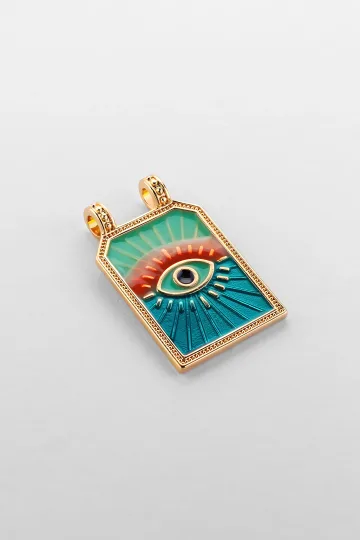
Which symbols do I pair it with? The hourglass speaks the language of memento mori. Next to a skull it builds the full vanitas vocabulary, with a snake or ouroboros it becomes the cycle of time, with an all-seeing eye it reads as awareness of the present. Moon and star motifs sit well beside it too. For layers, drop the pendant into a stack of two or three chains of different lengths and it finds its place in the middle.
Who does the hourglass actually suit? Anyone who likes pieces with a story and cannot stand empty decoration. This is a symbol for a thinking person, for a mood between melancholy and calm. Two rules that never fail. First: keep the pendant strictly vertical at the centre of the chest, an hourglass worn crooked loses its point. Second: do not crowd the neck, one expressive silhouette is enough to set the tone for the whole look.

Turn on your camera, pick earrings, a pendant or a ring, and see the piece on yourself in real time.
Switch items in one tap.
Everything runs in your browser: no photo or video is ever uploaded.
Hourglasses at Sea: How Sand Measured the Ocean
The Ship's Glass: Timing Watches and Measuring Speed
If monks invented the hourglass, sailors perfected its use. From the 14th century through the 18th, the sandglass was the most important timekeeping instrument aboard any ship.
The basic unit of shipboard time was the "watch," a four-hour shift. The ship's boy was responsible for turning the half-hour glass and striking the bell each time it ran out. One turn, one bell. Two turns, two bells. Eight bells meant the four-hour watch was over and the next crew took their shift. This system of "bells" persisted in navies worldwide well into the 20th century, and it's still used ceremonially today.
Getting the timing right was literally a matter of life and death. Navigation at sea depended on knowing your position, and knowing your position depended on knowing the time. Before the invention of the marine chronometer in the 18th century, ships relied on dead reckoning, which required accurate measurement of speed and the passage of time. A sandglass that ran too fast or too slow could put a ship miles off course, and miles off course could mean reefs, rocks, or the wrong continent.
The Log Line and the Knot: Why We Still Measure Speed in Knots
Here's a detail that connects the hourglass directly to modern language. To measure a ship's speed, sailors would throw a log (a piece of wood attached to a rope) overboard and count how many knots in the rope played out during a fixed time interval, measured by a sandglass. The standard glass was a 28-second glass, and the knots were spaced at 47 feet 3 inches apart. The number of knots that passed through a sailor's hands in 28 seconds equalled the ship's speed in nautical miles per hour.
That's why we still measure maritime and aviation speed in "knots." The word is a direct linguistic fossil of the hourglass era. Every time a pilot or a sailor says "knots," they're referencing a piece of wood, a knotted rope, and a little glass full of sand.
Maritime Culture and the Sailor's Relationship with Time
Life at sea created a unique relationship with time. On land, time is contextual. You notice it's morning because the sun rises. You know it's dinner because you're hungry. But at sea, especially during long ocean crossings, the markers disappear. Days blur together. The horizon is the same in every direction. Time becomes abstract.
The sandglass was the one thing that gave structure to that abstraction. It was the heartbeat of the ship. Every half hour, the glass turned. Every four hours, the watch changed. The rhythm of sand falling through glass was the rhythm of life aboard a vessel.
This is why maritime culture developed such a deep relationship with the hourglass as a symbol. For sailors, the hourglass wasn't a metaphor for the passage of time. It was the actual mechanism by which time passed aboard their ship. When the sand stopped, something had to happen. Turn the glass, strike the bell, change the watch. Time demanded action.
That same urgency is part of what makes the hourglass resonate as jewellery. It's not a passive symbol. It's a prompt.
Upload a photo of your pet, someone you love, or an object. We'll build a 3D model and hand-cast it in pewter.



Vanitas and Memento Mori: The Hourglass in Dutch Golden Age Painting
Reading the Vanitas Still Life: Skull, Hourglass, Candle
If you've read our article on skull jewellery and memento mori, you already know the basics of vanitas painting. The genre flourished in the Dutch Republic during the 17th century, and its purpose was to remind wealthy Calvinist merchants that their riches, pleasures, and achievements were all temporary.
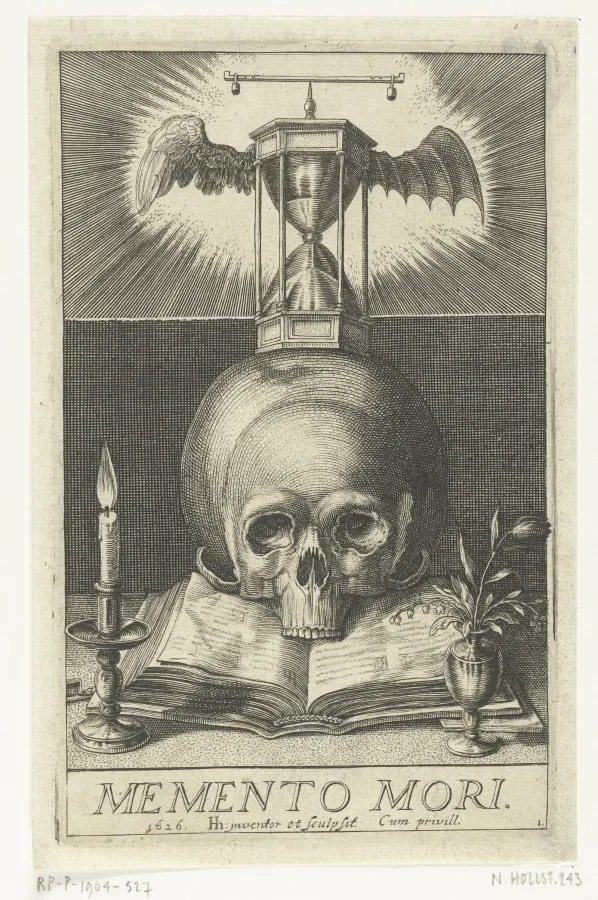
The standard vocabulary of vanitas painting includes a human skull (death), wilting flowers (beauty fading), rotting fruit (pleasure decaying), extinguished candles (the flame of life going out), musical instruments (earthly enjoyments that don't last), gold coins (the futility of wealth), and the hourglass (time running out).
Of all these symbols, the hourglass might be the most psychologically effective. A skull is abstract. You know intellectually that it represents death, but it requires a conceptual leap. An extinguished candle is atmospheric but static. But an hourglass is kinetic. In a painting, you can see that the top bulb is almost empty. The sand is nearly gone. And unlike a candle, which might have just been blown out by a breeze, an hourglass has only one explanation: time has passed and cannot be recovered.
Pieter Claesz, Harmen Steenwijck, and the Art of Running Out
The great vanitas painters used the hourglass with surgical precision.
Pieter Claesz's "Vanitas Still Life" (c. 1630) places an hourglass directly behind a skull, with a pocket watch lying face-up in front. Three timekeeping devices in one painting, three ways of saying the same thing: this moment is passing, this life is draining, this wealth on the table means nothing against the fact that the sand is almost gone.
Harmen Steenwijck's "An Allegory of the Vanities of Human Life" (c. 1640) positions a Japanese katana alongside books, a shell, a flute, and an hourglass. The message layers beautifully: military power, knowledge, beauty, art, and all of them set against the ticking of sand. None of them stop the glass from running out.
Philippe de Champaigne's "Still Life with a Skull" (c. 1671) reduces vanitas to its absolute minimum: a skull, a flower, and an hourglass. Three objects. Three truths. You will die (skull). Beauty fades (flower). Time is passing right now (hourglass). The simplicity is devastating.
Why the Hourglass Hit Harder Than the Skull
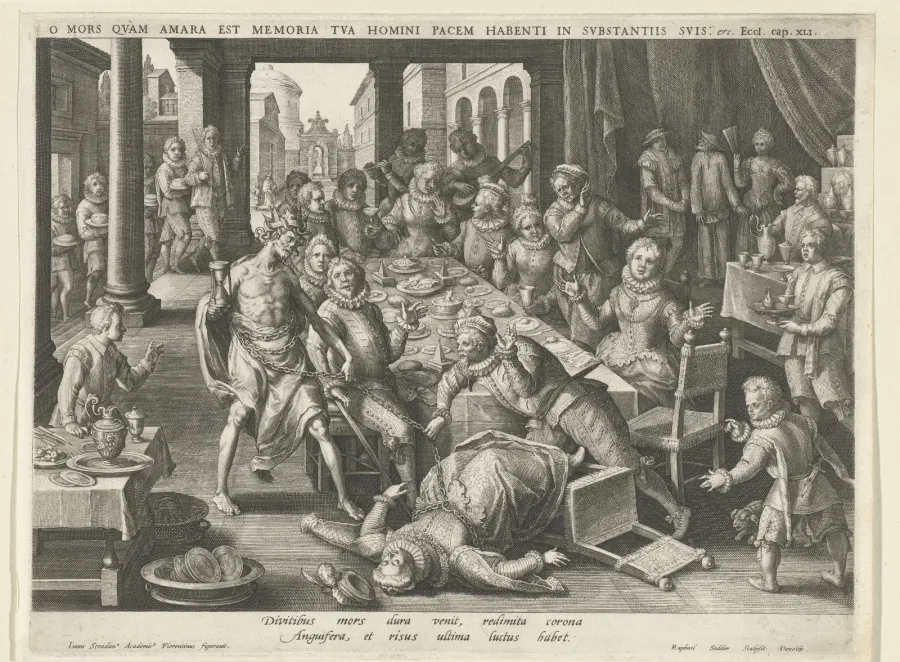
Here's something the Dutch painters understood: the hourglass is, in some ways, more unsettling than the skull. A skull represents death, which is in the future. It might be decades away. You can look at a skull and think, "Not yet." But an hourglass represents the present. The sand is falling now. Every second you spend looking at the painting, more sand has fallen. The hourglass doesn't point to some future event. It points to this exact moment and says, "This one's gone too."
That's a distinction that matters for jewellery. A skull pendant is a memento mori. An hourglass pendant is a memento vivere, a reminder to live. It doesn't just say "you'll die." It says "you're alive right now, and the sand is falling, and what are you doing with it?"
Customer reviews
Zevira is a real jewellery shop. Genuine payments, deliveries and customer thank-yous.
🥰🥰🥰 gracias
Ok, ¡gracias! 🙂
The Jolly Roger: When Pirates Put an Hourglass on Their Flag
Your Time Is Up: The Real Meaning of Pirate Flags
Most people think the Jolly Roger was just a skull and crossbones. In reality, pirate flags were far more varied, and many of the most famous ones included an hourglass.
Pirate flags were psychological weapons. The whole point was to terrify merchant ships into surrendering without a fight, because fighting cost the pirates ammunition, crew, and time. Each element on the flag communicated a specific message. The skull and crossbones said "we are willing to kill." The hourglass said "your time is running out, so decide quickly." Together, they were an ultimatum rendered in cloth: surrender now or die.
Bartholomew Roberts, Edward Teach, and the Hourglass Jolly Roger
Bartholomew Roberts, arguably the most successful pirate of the Golden Age of Piracy, used multiple flag designs during his career, several of which featured hourglasses. One showed Roberts himself standing on two skulls (representing the governors of Barbados and Martinique, whom he particularly hated), holding an hourglass. Another showed a skeleton holding an hourglass in one hand and a spear aimed at a bleeding heart in the other. The message was unsubtle: your time is running out, and it's going to hurt.
Edward Teach, known as Blackbeard, reportedly flew a flag showing a skeleton holding an hourglass in one hand and a spear in the other, with a bleeding heart nearby. Several other pirates of the era used similar imagery. The hourglass on a pirate flag was so common that it became a standard element of the genre.
What's interesting about the pirate hourglass is how it transformed the symbol's meaning. In vanitas painting, the hourglass is contemplative, even melancholy. It invites you to reflect on mortality. On a pirate flag, the same symbol becomes a threat. Reflect on mortality right now, because yours is about to end. Same image, completely different emotional register.
This duality is part of what makes the hourglass such a rich symbol for jewellery. It can be meditative or aggressive. Philosophical or punk. Depending on who's wearing it and how they carry themselves, the same hourglass pendant can say "I'm mindful about time" or "Don't waste mine."



Freemasonry and the Hourglass: A Symbol of Mortality on the Lodge Floor
The hourglass holds a significant place in Masonic symbolism. In the system of degrees that structures Freemasonry, the hourglass appears in the Third Degree, the Master Mason degree, which is concerned with themes of mortality, resurrection, and the meaning of a well-lived life.
Within the lodge, the hourglass is presented as a reminder that human life is finite and that every Mason should use his time wisely. It's placed alongside other symbols of mortality, including the scythe (the instrument of Time, which cuts down all living things) and the sprig of acacia (symbolising the immortality of the soul).
The Masonic interpretation of the hourglass is characteristically layered. On the surface, it's a straightforward memento mori: remember you will die, so live virtuously. But it also represents the transformation of rough material into something refined, a central Masonic metaphor. Just as sand passes through the narrow waist of the hourglass and is transformed from "time remaining" into "time spent," the Mason is expected to pass through the trials of life and emerge refined.
The connection between Freemasonry and the hourglass explains some of the symbol's prevalence on 18th- and 19th-century gravestones, since many of the stonemasons who carved those gravestones were themselves Freemasons.
Winged Hourglasses: Time Flies on Colonial Gravestones
New England Puritan Gravestones and Their Carved Symbols
Walk through any old burying ground in New England, from the Granary Burying Ground in Boston to the Ancient Burying Ground in Hartford, and you'll see the same carved symbols repeated on headstones from the 17th and 18th centuries: death's heads (skulls with wings), hourglasses, crossed bones, coffins, and the Latin phrase "tempus fugit" (time flies).
The Puritans who settled New England had a complicated relationship with death. They believed in predestination, the idea that God had already determined who was saved and who was damned. This meant that death was simultaneously terrifying (because you couldn't be sure of your fate) and welcome (because if you were among the elect, death was the doorway to heaven). Their gravestones reflected this ambivalence: the symbols are stark and honest about mortality, but they're not despairing. They're instructive.
The Winged Hourglass: Tempus Fugit Made Stone
The winged hourglass, one of the most common gravestone motifs in colonial New England, combines two ideas into a single image. The hourglass says "time is running out." The wings say "and it's moving fast." Together, they create a visual translation of "tempus fugit" that even an illiterate person could understand.
What's striking about these carvings is their craftsmanship. These weren't mass-produced symbols stamped onto stone. Each one was hand-carved by a skilled stonecutter, and many of them are beautiful: the wings detailed feather by feather, the hourglass showing individual grains of sand, the whole composition framed by scrollwork or floral borders. Death was serious business, and the art that marked it was treated with corresponding seriousness.
The winged hourglass eventually gave way to other gravestone motifs. By the late 18th century, the weeping willow and urn became more popular, reflecting a shift from Puritan severity toward a gentler, more sentimental view of death. But the winged hourglass remains one of the most recognisable symbols of early American visual culture, and it's a direct ancestor of the hourglass pendants and charms that people wear today.
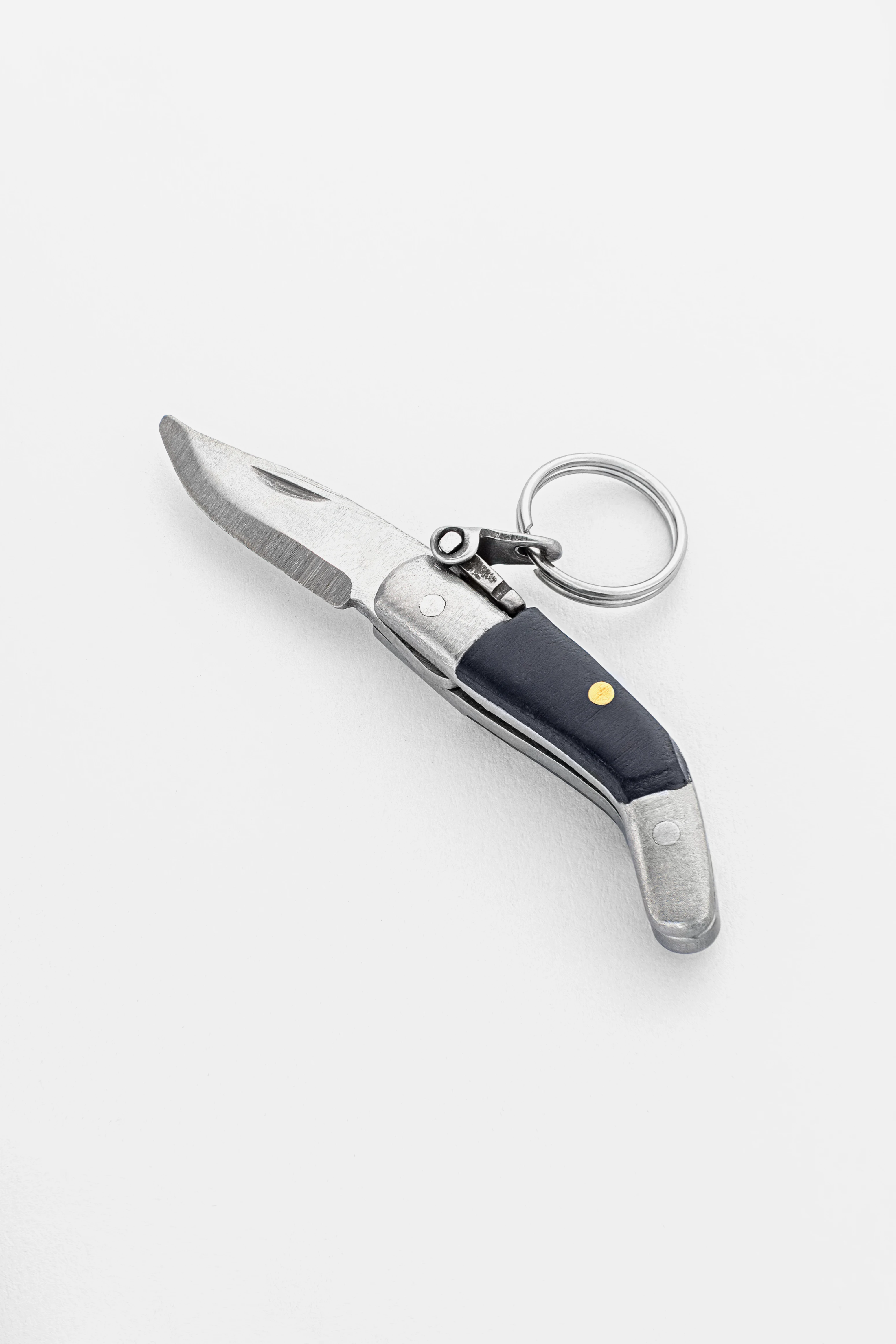
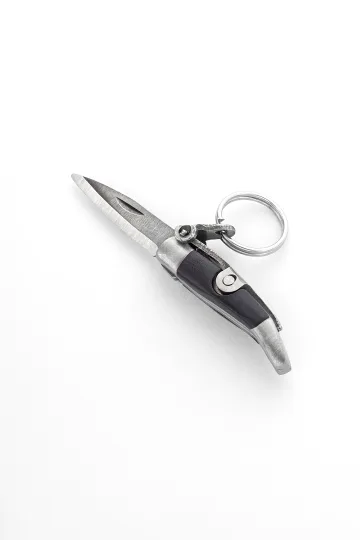
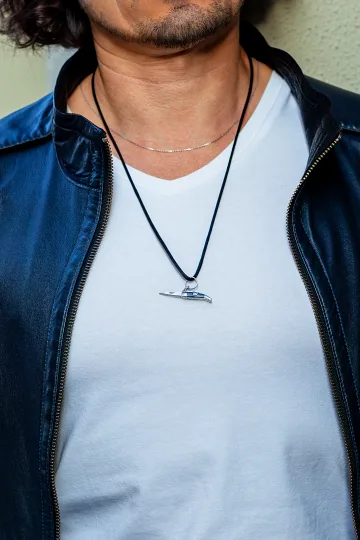
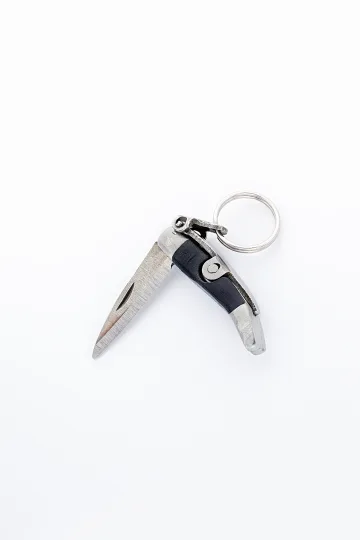
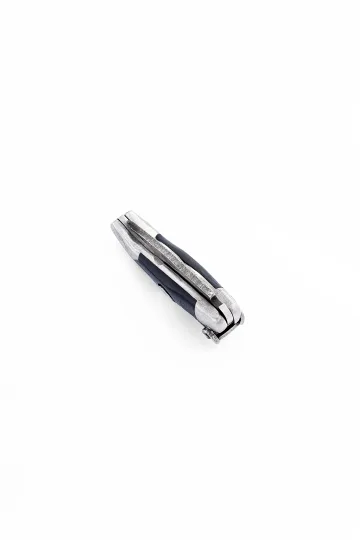
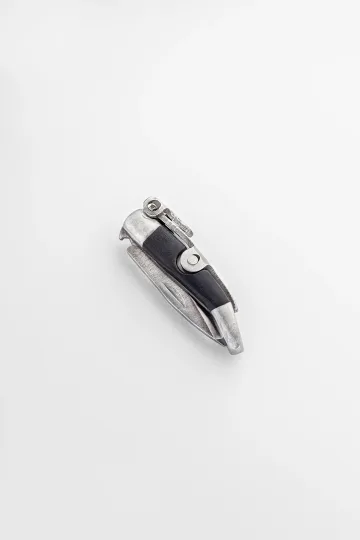
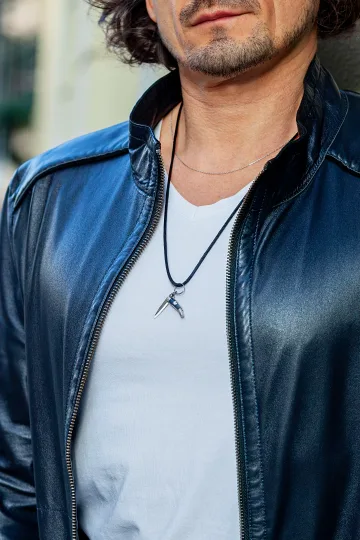
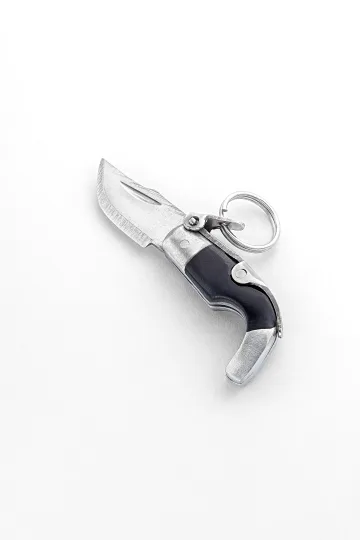
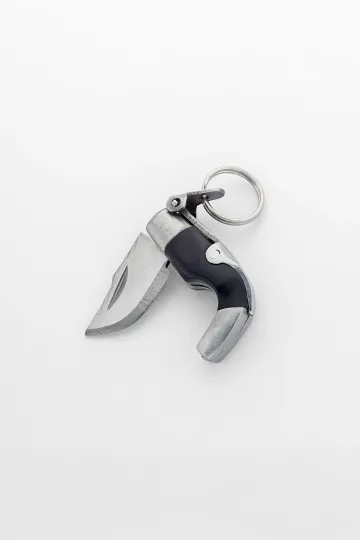
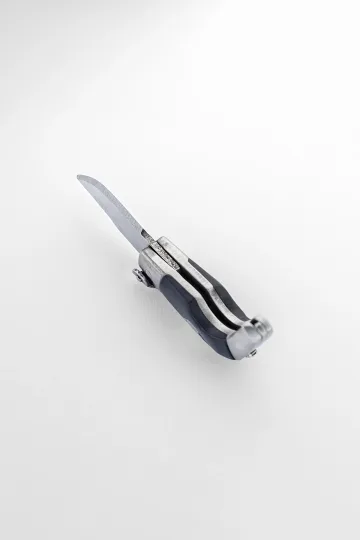
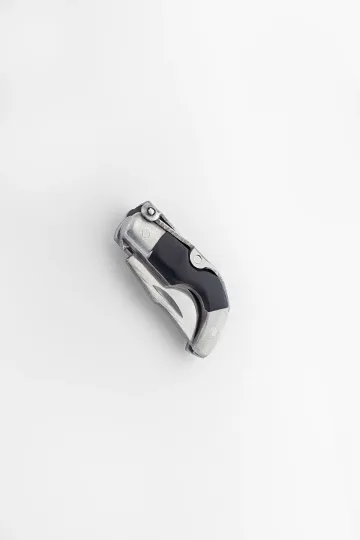
CAPAORA mini knife pendant
The 18th-century Spanish navaja in miniature: 40 mm of stainless steel, a real folding mechanism and a Palanquilla lock that clicks. An affordable gift to remember.
Authentic · Ships from Spain · 14-day returns
Father Time and the Scythe: How the Hourglass Ended Up in the Hands of Chronos
An hourglass rarely hangs in the air on its own. In European art someone almost always holds it, and more often than not that someone is Father Time, a grey old man with a scythe. The lineage of this figure is tangled. The Greeks distinguished Chronos, time itself, from the titan Cronus, father of the gods, who carried a reaper's sickle. Over the centuries the two names blurred together, and the Romans added their own Saturn, the old god of agriculture, wealth, and renewal, sickle in hand as well. So time took on the look of a weary elder who cuts down everything alive, the way a scythe cuts wheat in a field.
The wings and the hourglass attached themselves to this figure later, during the Renaissance. In the illustrations to Petrarch's Triumphs, painted roughly between 1440 and 1500, Time appears as a winged, decrepit old man with an hourglass in his hand, and the glass is there for one reason: to remind you that a human lifespan is short. By the end of the sixteenth century artists were composing whole allegories around the figure, and by the eighteenth Father Time had settled into his familiar shape: a beard, a dark cloak, a scythe in one hand, an hourglass in the other. That was also when the New Year image was born, the frail old man with the glass handing the year over to an infant, a plain metaphor for a single hourglass turned over for another round.
From here comes the kinship with the figure of Death. The scythe, the hourglass, the winged silhouette drifted so freely between the two images that they are sometimes impossible to tell apart. At times a serpent coils near the old man, biting its own tail, an ancient sign of the closed circle of time (there is more on it in our article on the ouroboros). For jewellery this is a rich inheritance: a pendant with an hourglass drags a whole portrait gallery behind it, from the ancient reaper to the Renaissance elder with wings at his back.
The Hourglass Figure: When the Body Became a Symbol of Time
The phrase "hourglass figure" to describe a body with a narrow waist and wider bust and hips appears to date from the mid-19th century, though the aesthetic ideal it describes is much older. The connection is purely visual: the silhouette of a body with those proportions resembles the silhouette of an hourglass.
But the metaphor runs deeper than simple resemblance. The hourglass figure is, whether consciously or not, a figure associated with time. It's a shape that suggests the passage of something through a narrow point, a transformation from one state to another. The narrow waist of the hourglass is the present moment, the pinch point where the future becomes the past.
There's also a connection to the infinity symbol (the lemniscate, a figure eight on its side). An hourglass, rotated 90 degrees, is essentially an infinity symbol. This isn't a coincidence that anyone planned, but it's a resonance that gives the shape additional symbolic weight. The hourglass measures finite time. The infinity symbol represents eternity. The fact that they're the same shape, just rotated, suggests that the finite and the infinite are closer than they appear.
In jewellery design, the hourglass silhouette works precisely because of these layered associations. It's a shape that reads as elegant and balanced. It evokes the human form. It suggests both limitation and endlessness. And it does all of this without being heavy-handed about it.
Leave your email, we'll send your discount code. No spam, unsubscribe anytime.
The code arrives by email, valid on your first order.
Modern Meaning: Mindfulness, Presence, and Not Wasting Time
Less Dark Than the Skull, Same Philosophical Depth
The hourglass and the skull are siblings in the memento mori family, but they have different personalities.
The skull is direct. It shows you what you'll become. It's confrontational, unapologetic, a bit punk. The skull says: "You're going to be bones."
The hourglass is indirect. It doesn't show you death. It shows you the process. It's contemplative, elegant, and honestly just as unsettling if you think about it long enough. The hourglass says: "While you were reading this sentence, you lost three seconds you'll never get back."
For people who want a memento mori symbol but find the skull too aggressive or too closely associated with biker culture or heavy metal, the hourglass offers the same philosophical content in a different container. It's memento mori in a cocktail dress. Same depth, different delivery.
The Hourglass as a Mindfulness Symbol
The modern mindfulness movement has, perhaps without realising it, rediscovered what the hourglass has been saying for centuries. Be present. Pay attention to this moment. Don't let your mind drift to the past or the future when the only time that actually exists is now.
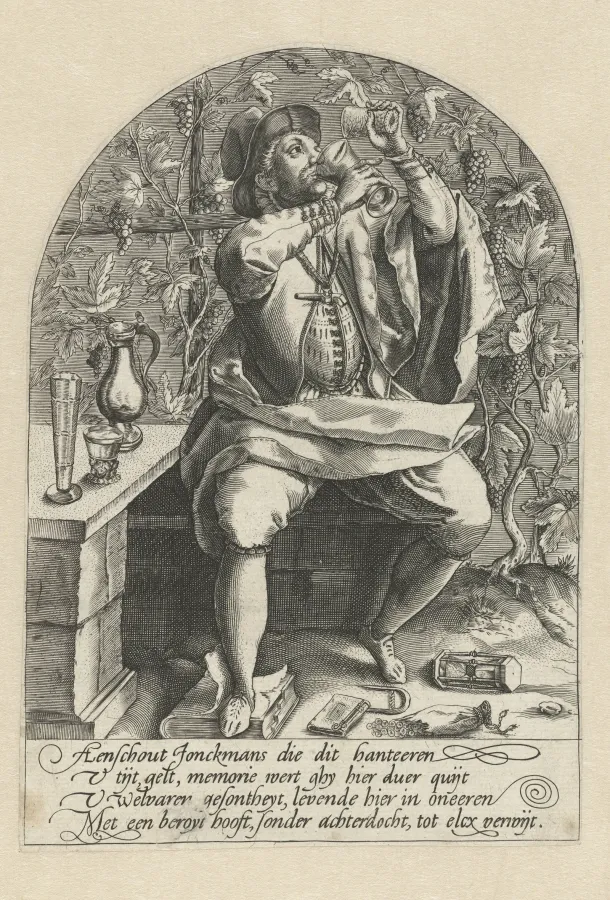
Sand timers have become popular meditation tools. You turn them over, watch the sand fall, and use the visual flow as a focus for attention, exactly the way a monk in the 8th century might have used the same device to focus during prayer. The technology hasn't changed. The underlying human need hasn't changed either.
An hourglass pendant carries this same energy. It's a wearable reminder to be present. Not in a preachy way, not with the aggressive philosophical confrontation of a skull, but with a gentle, persistent nudge: time is passing. Are you paying attention? Are you here?
The Infinity Connection: Turn It Over and Start Again
One of the most beautiful things about a physical hourglass is that it resets. When the sand runs out, you turn it over and start again. The cycle repeats. The same sand falls through the same narrow waist, again and again.
This gives the hourglass a dimension that the skull completely lacks: renewal. A skull is final. Dead is dead. But an hourglass is cyclical. It measures an interval, not an ending. When one period ends, another begins.
In jewellery, this resonance matters. An hourglass pendant doesn't just say "time is running out." It also says "and when this phase ends, another one starts." It's a symbol that acknowledges endings without being nihilistic about them. For someone going through a transition, ending a relationship, starting a new career, recovering from loss, the hourglass is a reminder that time is both finite and renewable. The sand always falls, but the glass can always be turned.
The Hourglass in Fashion and Design: Curves That Mean Something
The hourglass shape has influenced fashion and architecture for centuries, often in ways that aren't explicitly connected to the timekeeping device but carry its associations nonetheless.
Christian Dior's "New Look" of 1947, with its cinched waist and full skirt, was essentially the hourglass rendered in fabric. The silhouette dominated postwar fashion because it promised a return to elegance after the utility of wartime clothing. The hourglass shape said: we have time for beauty again.
In architecture, the hourglass curve appears in structures from Antoni Gaudi's chimneys on Casa Mila to Norman Foster's 30 St Mary Axe (the "Gherkin") in London. The narrowing at the middle, the swelling at top and bottom, creates a form that is both structurally efficient and visually dynamic. It draws the eye. It implies movement.
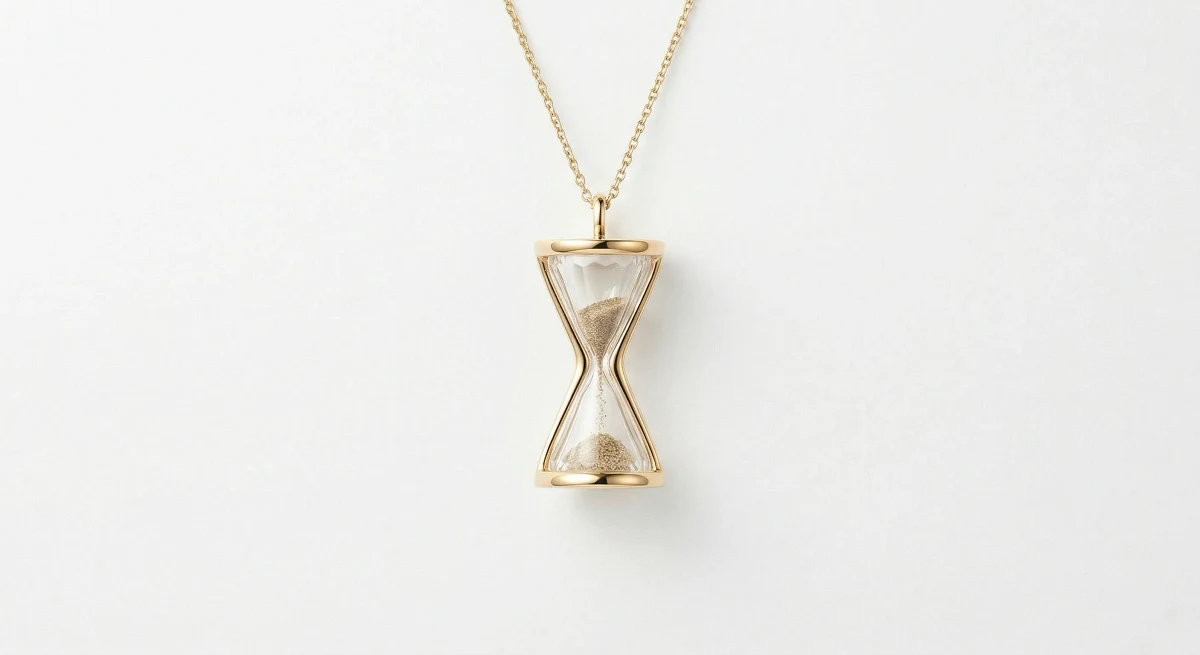
In jewellery specifically, the hourglass is a versatile design element. It can be literal: a miniature hourglass pendant, sometimes with actual moving sand sealed inside. It can be abstract: two triangles meeting at their points, suggesting the hourglass form without replicating it. Or it can be purely proportional, a piece whose silhouette echoes the hourglass curve. Each approach carries the symbolic weight differently. The literal hourglass pendant is the most explicit memento mori. The abstract version is more about the aesthetic. The proportional version operates almost subconsciously.
Silver and gold jewellery, wedding bands, symbolic pendants, paired sets.
How an Hourglass Works: Why the Sand Falls at a Steady Rate
An hourglass has a property that feels almost magical until you understand it. Whether the glass is full or nearly empty, the sand pours through the neck at the same speed. Water refuses to behave this way: the less of it there is in a vessel, the weaker the pressure and the slower the stream. That is exactly why water clocks needed constant correction, while sandglasses ran evenly from the first grain to the last.
The answer lies in how a granular material behaves. In 1895 the German engineer Janssen showed that the pressure at the bottom of a container filled with grain barely depends on the height of the column above it. The grains catch on one another, line up into chains and arches, and transfer their weight to the walls, where friction holds them in place. The upper bulb can be packed to the brim, yet only a small, nearly constant fraction of that load presses on the neck rather than the whole weight. The rate of the trickle is set by the diameter of the opening, not by the amount of sand piled above.
A craft grew out of this physics. The makers knew that ordinary sea sand was useless in a precise glass, since the grains vary too much in size and love moisture too well. Instead they used ground marble, crushed eggshell, powdered tin or lead oxide, all sifted to a uniform grain and dried to the dryness of bone. The glass was sealed shut, because the real enemy of a steady flow is damp: sand that has taken up moisture clumps and jams in the neck. Cheap glasses give themselves away precisely here, the sand moving in fits and starts. In a good one the trickle runs smooth and monotonous, the way it should for seven centuries running.
What Hourglass Pendants Are Made Of
An hourglass pendant comes in two breeds, and the choice between them is worth making deliberately. The first is the sculptural silhouette: a solid miniature in silver or gold, where the two bulbs and the neck are only suggested by the shape. The sand in such a pendant does not move, but the piece is sturdy and slim, sits happily under a shirt, and shrugs off a knock. This is the one people tend to wear every day.
The second breed is a genuine working little glass about the size of a fingertip: a tiny glass bulb in a metal frame, with filler shifting inside it. Turn the pendant over and the sand really does run through the neck for a few seconds. These are filled not with beach sand but with fine glass beads, coloured quartz powder, sometimes flecks of brass or a thin golden dust, so the stream catches the light. It is a striking thing, but fragile: glass is glass, and a working pendant asks for gentler handling than a sculptural one.
The metal sets the character of the symbol. Sterling silver 925 sounds sterner and cooler, closer to the memento mori theme and to gravestone carving. Warm gold in 14-18K or a gold plating softens the image, steering it away from gloom toward elegance. The frame is often finished with engraving: scrollwork in the spirit of old timepieces, or a personal date, turning an abstract symbol of time into a mark of one specific stretch of life. Care is simple, and important for being so: keep the piece dry, take it off in the shower and the pool, and with a working glass protect the bulb from sharp knocks. Damp filler inside can never be restored, so moisture is as forbidden to a working pendant as it was to a real medieval sandglass.
Send a friend a discount code, they save on their first order.
The Hourglass in Tattoos: Meaning and Motifs
The hourglass is one of the most frequent requests among people getting memento mori work done. The reason is the same as in jewellery: the symbol reads instantly and speaks of time more plainly than any clock face. The classic design shows the bulb half full, and that is a deliberate move. You never see how much sand is left, only that it is falling. Precisely the feeling behind the whole philosophy of "remember that you are mortal."
The motif has recognisable variants, and each shifts the meaning. Sand frozen in mid-air stands for a caught moment, an instant a person wants to hold onto forever. A cracked or shattered bulb reads as a challenge to time or a memory of loss, the familiar count broken off. Hourglasses are often inked in combination: with a skull you get the full memento mori vocabulary, with a rose comes the theme of fading beauty, with a candle and wings sounds the Latin tempus fugit, time flies. Sometimes the sand in the lower bulb flows into flowers or a skull, showing what a life lived turns into.
Larger work on the forearm with a rough gothic script suits a bolder taste, while fine linework and small detail suit a lighter one. For anyone drawn to this symbolism but not ready for the permanence of a tattoo, an hourglass pendant gives the same idea in a reversible form: you can take it off, give it away, change the metal, and the meaning stays the same.
Buying it as a gift? Each one arrives ready to give.
 A branded Zevira box and a little card come with every order.





Who an Hourglass Pendant Suits and How to Gift It
The hourglass suits a thinking person, someone who values pieces with meaning and cannot stand empty decoration. It is a symbol for the kind of person who looks calmly at the finite nature of time and wants to carry that calm openly rather than hide it. The pendant sits especially well against a moment of change: the end of studies, a new job, recovery after a hard year, a round anniversary. At all of these points a person already feels one bulb empty and another begin to fill, and the piece simply says that feeling out loud.
As a gift the hourglass strikes a warm note, despite the grim reputation of memento mori. The meaning reads not as "your time is running out" but as "let it be yours." Engraving a date on the frame works well: it ties the abstract symbol to a concrete milestone and makes the gift personal. Such a pendant is fitting for a coming of age, a graduation, a promotion, an anniversary, any threshold where a new count begins.
For anyone collecting not a single symbol but a whole set of meaning, the hourglass is easy to pair with its neighbours from the language of time. With a serpent biting its own tail comes the idea of the closed circle, which we wrote about in the article on the snake in jewellery. With a skull it builds a stern memento mori, with an all-seeing eye the theme of the conscious present. The one thing worth thinking about in advance: for a person who is painfully superstitious and genuinely fears the subject of death, a gentler motif is the safer choice. For everyone else the hourglass is a quiet, intelligent gift that accompanies rather than presses.
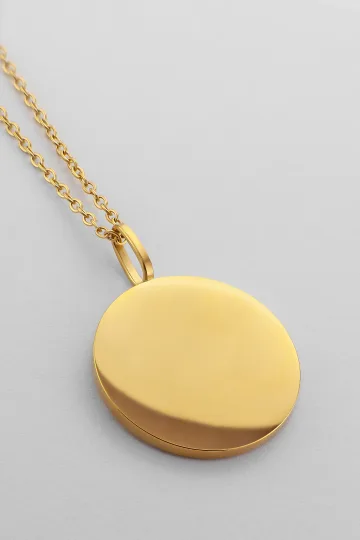
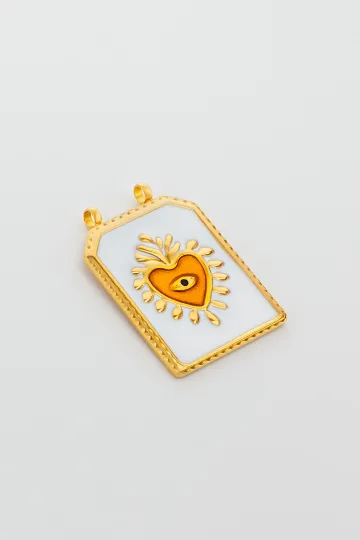
Wear the symbol, don't just read about it. These are in stock:



Surprising Facts About the Hourglass
A few things about this symbol catch even those who have worn it for years off guard.
Inside there was often no sand at all. For a steady flow the makers poured almost anything but beach sand into the bulbs: ground marble, crushed eggshell, powdered lead or tin oxide, all sifted to a single grain size. The name stuck more out of habit than out of the contents.
A rotated hourglass is the sign of infinity. Lay an hourglass on its side and the silhouette becomes a lemniscate, the figure eight of eternity. Finite time and endlessness turn out to be the same shape, simply rotated ninety degrees.
Nautical "knots" come from here. A ship's speed was measured by counting knots on a log line over an interval marked by a sandglass. That is why the pace of a vessel and an aircraft is still counted in knots today, a direct inheritance from the hourglass era.
Pirates turned it into a threat. On the flags of the Golden Age of piracy the hourglass meant an ultimatum, "time is running out, surrender," turning a contemplative vanitas symbol into a psychological weapon rendered in cloth.
There is a dolphin named after it. A small dolphin of the southern seas, crossed by pale bands along its flanks, was nicknamed the hourglass dolphin as early as 1824: the pattern on its body recalls two bulbs with a narrow neck between them.
The kitchen egg timer is its direct descendant. The three-minute glass for boiling eggs, familiar to everyone, is built exactly like a medieval sandglass and works on the same physics of the narrow neck.
Frequently Asked Questions
What does an hourglass symbolise? The hourglass symbolises the passage of time, mortality, and the finite nature of life. It's a core memento mori symbol that has appeared in Western art since the 14th century. Unlike the skull, which points to death as an end point, the hourglass emphasises the process: time is passing right now, continuously, and cannot be stopped or reversed.
What does an hourglass pendant mean? An hourglass pendant carries the same philosophical weight as the historical symbol: a reminder to be mindful of time and to live deliberately. It's a wearable memento mori that is more subtle and contemplative than a skull. For many people, it represents mindfulness, the value of the present moment, and an acknowledgment that time is precious.
Why did pirates use hourglasses on their flags? The hourglass on a pirate flag was a warning: "your time is running out." It functioned alongside the skull and crossbones as a psychological weapon to encourage merchant ships to surrender without fighting. Pirates like Bartholomew Roberts and Blackbeard used hourglass imagery on their flags to communicate urgency and threat.
What is the hourglass in Freemasonry? In Freemasonry, the hourglass is a symbol of the Third Degree (Master Mason) and represents the passage of mortal life. It reminds Masons that human time is limited and should be used for virtuous and meaningful work. It's often presented alongside the scythe and the sprig of acacia.
What does a winged hourglass mean? A winged hourglass represents "tempus fugit," time flies. It was a common motif on colonial-era gravestones in New England and combined the hourglass (time is running out) with wings (it's moving quickly). The symbol conveyed the Puritan belief that life is short and must be used wisely.
Is the hourglass connected to the infinity symbol? Visually, yes. An hourglass rotated 90 degrees resembles the infinity symbol (lemniscate). While this connection wasn't intentionally designed, it creates an interesting symbolic resonance: the hourglass measures finite time, while the infinity symbol represents endlessness. The fact that they share the same basic shape suggests that the finite and the infinite are intimately related.
What's the difference between an hourglass and a skull as a symbol? Both are memento mori symbols, but they emphasise different aspects. The skull represents death as a destination: "this is what you'll become." The hourglass represents time as a process: "this is what's happening right now." The skull is more direct and confrontational. The hourglass is more contemplative and ongoing. In vanitas painting, they were often placed together for complementary effect.
Can you wear hourglass jewellery to a formal event? Absolutely. The hourglass is one of the most elegant symbolic pieces you can wear. It doesn't carry the subcultural associations that skull jewellery sometimes does, so it reads as refined and intellectual in any context. An hourglass pendant in gold-plated steel works with anything from a business suit to an evening dress.
Time is the one thing everyone has in common and nobody has enough of. Every culture in history has tried to measure it, control it, symbolise it, make peace with it. The hourglass is the simplest and most honest of all those attempts. Two chambers. A narrow passage. Sand falling. That's it. That's life.
There's something freeing about wearing that truth around your neck. Not as a burden, not as a grim reminder, but as a quiet agreement with reality. The sand is falling. It's falling right now. It will keep falling whether you pay attention or not.
The only question is whether you watch it fall or whether you get busy living while it does.
That's what an hourglass pendant is. Not a timer. Not a warning. An invitation.
Wear the symbol, don't just read about it. These are in stock:
About Zevira
Zevira makes jewellery in the artisan tradition of Albacete, Spain. For us the hourglass isn't a passing trend, it's the oldest way people ever found to make time tangible, and we treat it with the same seriousness as the Dutch vanitas masters and the gravestone carvers who came before us.
Here's what you'll find with us around the theme of time and memento mori:
- Hourglass pendants and necklaces, made to hang vertically at the centre of the chest
- Earrings that carry the symmetrical hourglass silhouette
- Symbols of time and awareness: the ouroboros, the serpent, cyclical motifs
- Companions from the vanitas vocabulary: skulls, the all-seeing eye, the heart
- Paired sets where the hourglass meets other symbols
- Sterling silver 925 and gold plating, for a warmer or sharper take on the symbol
Every piece can be personalised with engraving, with the option of personal engraving. Sterling silver 925 and 14-18K gold.