The Triskele: Three Spirals, Three Thousand Years, and the Celtic Symbol That Keeps Spinning
A shape that won't stay still
There's a stone in Ireland that has been sitting in the same spot for over five thousand years. It weighs about five tonnes. It guards the entrance to a Neolithic passage tomb called Newgrange, in County Meath, about an hour north of Dublin. And carved into its surface, with absolute confidence, is a triple spiral that looks like it was designed yesterday.
Three interlocking spirals, radiating from a shared centre, turning in the same direction. No beginning, no end. Just motion.
That carving is older than the Egyptian pyramids. Older than Stonehenge. Older than written language itself. And the shape it depicts, the triskele, is still one of the most popular symbols in jewellery, tattoo art, and cultural identity today. It appears on the flag of Sicily, the coat of arms of the Isle of Man, and every second shop window in Brittany. It's carved into Celtic crosses, stamped onto ancient Greek coins, and etched into modern wedding bands.
Five millennia of continuous use. That's not a trend. That's something fundamental about the human brain responding to a shape that means movement, balance, and the number three.
This is the full story. Where the triskele came from, what it meant to the people who carved it into stone and stamped it onto coins, how it travelled across cultures and centuries, and what it looks like when you translate it into gold and silver and wear it on your body.
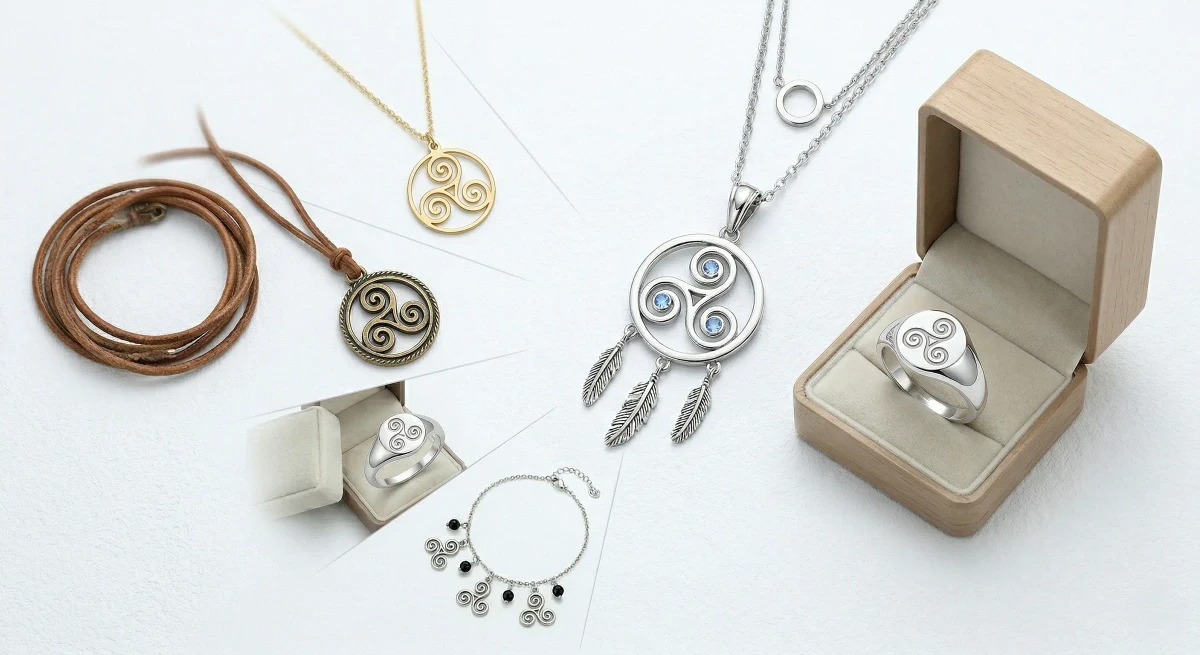
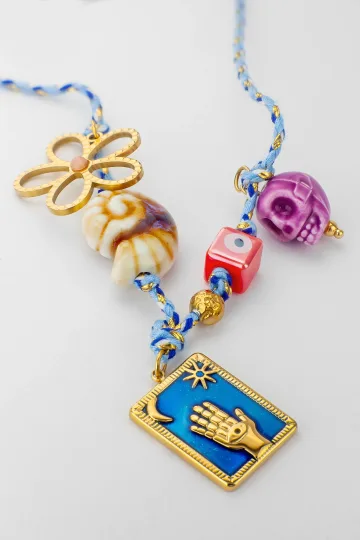
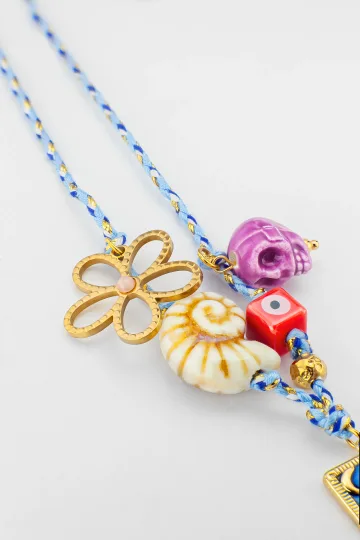
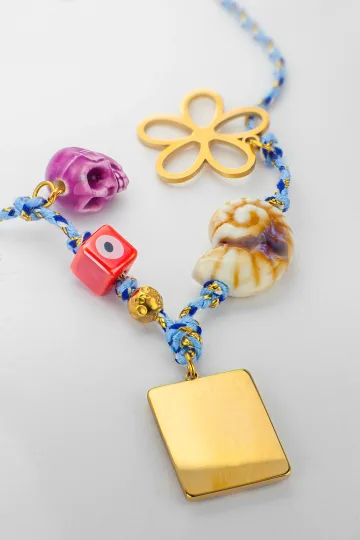
Wear the symbol, don't just read about it. These are in stock:



What the Triskele Actually Is: Two Forms, One Idea
The triple spiral
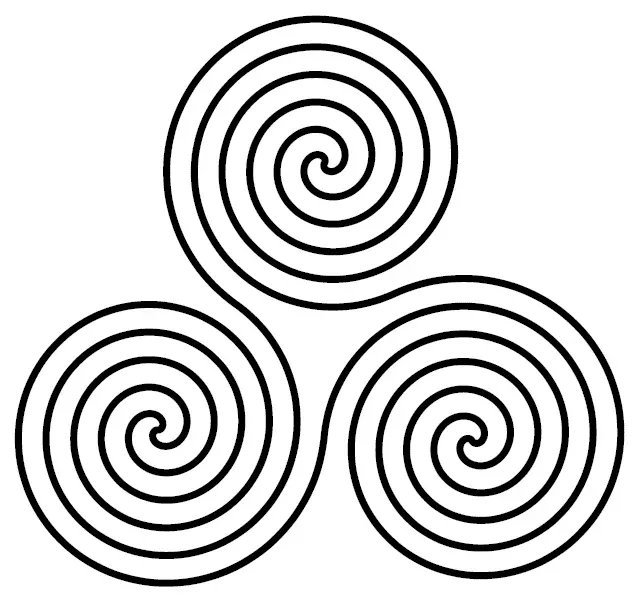
The triskele (from the Greek triskelion, meaning "three-legged") takes two main forms. The first and probably older form is the triple spiral: three spirals that emerge from a single centre point and curve outward, either clockwise or counterclockwise. Sometimes the spirals connect. Sometimes they don't. But they always share the same rotational energy, as if someone set a pinwheel spinning and froze it mid-turn.
This is the version you see at Newgrange. It's the version most associated with Celtic and pre-Celtic cultures in Ireland, Scotland, and Wales. When someone says "triskele" in a jewellery context, they usually mean the triple spiral.
The three legs (triskelion)
The second form is more literal: three human legs, bent at the knee, radiating from a central point. Picture the motion of someone running, multiplied by three and arranged in a circle. This version is most associated with ancient Greece, particularly with Sicily, and with the Isle of Man.
The three-legged version sometimes includes a face at the centre (usually Medusa, on Sicilian examples) and sometimes stands alone. It's less abstract than the spiral, more figurative, but carries the same core idea: three identical elements in rotational symmetry.
Why three?
The number three shows up everywhere in human symbolism, across every culture, every era. Christians have the Trinity. Hindus have the Trimurti. Philosophers have thesis, antithesis, synthesis. Fairy tales run on threes: three wishes, three trials, three brothers.
There's probably something neurological about it. Three is the minimum number needed to suggest a pattern. Two is a pair. Four is a grid. But three creates rotation, direction, and the sense of something in motion. The triskele captures that sensation in its simplest visual form: three of the same thing, spinning around a centre.
The Celts certainly embraced three as a sacred number. Their world divided into threes naturally: past, present, future. Earth, sea, sky. Birth, life, death. The triskele wasn't just decoration. It was a diagram of how they understood reality. The same threefold logic underpins the Celtic knot and the triquetra, where three points are tied together by a single endless loop.
Customer reviews
Zevira is a real jewellery shop. Genuine payments, deliveries and customer thank-yous.
🥰🥰🥰 gracias
Ok, ¡gracias! 🙂
A green triskele wants green in the cloth. Tone on tone is not overkill, it is taste.
How to wear a triskele
The triskele slips into a wardrobe easily because it is geometry, not a loud ornament. A few rules I keep coming back to, sorted by occasion.
What do I wear a triskele with every day? For daily wear I recommend a 15-20mm pendant on a chain at the collarbone, over a plain tee, a turtleneck or a shirt. The symbol reads without taking over the look. A boat neck or a round neck gives the spiral room, and a solid fabric shows the lines best.
Does a triskele work for the office? Yes, with the same restraint I give any quiet geometry. I suggest silver or white gold under a shirt or knitwear, a length down to the sternum so the pendant tucks under the collar and only hints at itself. It reads as a detail, not a loud accent, and no dress code rules it out.
How do I build an evening look? For evening I choose an open neckline and a smooth, darker fabric (silk, satin), where the lines carry. A larger pendant, or a warm gold tone that catches light as you move, changes the mood. Bare skin at the collarbone reads best.
Can I layer it or add a stone for a special occasion? For a special day I suggest adding a small stone drop on a separate chain of a different length, spreading the symbols across levels with air between them. Green stones lean into the Celtic thread, blue ones toward sea and sky. Keep each piece on its own line so nothing crowds.
Who does it suit, and what pairs with it? The triskele has no fixed gender, so it sits evenly on any look, and it speaks to anyone who likes minimalism with meaning. Since it is already a dense symbol, I recommend one expressive piece with neutral company: a thin chain, small spiral studs, a plain ring. Keep the metals in one family, all cool or all warm, and let a single triskele be the main accent while everything else stays thin and simple.

Turn on your camera, pick earrings, a pendant or a ring, and see the piece on yourself in real time.
Switch items in one tap.
Everything runs in your browser: no photo or video is ever uploaded.
Newgrange: The 5,000-Year-Old Spiral That Started Everything
The entrance stone
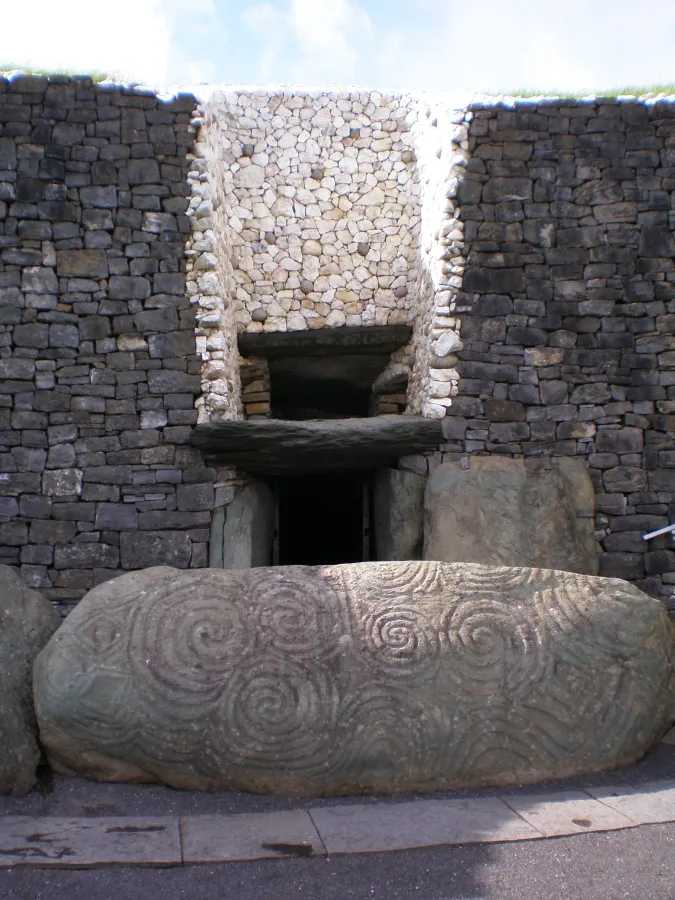
Newgrange is a passage tomb in Ireland's Boyne Valley, built around 3200 BCE by Neolithic farming communities. It's a massive circular mound, about 85 metres in diameter, with a 19-metre stone-lined passage leading to a cruciform chamber at its centre.
The entrance stone is the first thing you see. It's a large kerbstone, roughly 3 metres wide, covered in carved spirals, lozenges, and concentric arcs. And right in the centre, dominating the composition, is a triple spiral. Three spirals, connected, turning together.
The carving is confident. Whoever made it wasn't experimenting or doodling. The lines are deep, deliberate, and geometrically consistent. This was someone who knew exactly what they wanted to say, even if we don't know exactly what that was.
Older than Stonehenge, older than the pyramids
Here's what makes Newgrange remarkable in terms of sheer chronology. It was built around 3200 BCE. The Great Pyramid of Giza was built around 2560 BCE. Stonehenge's main stone circle went up around 2500 BCE. Newgrange predates both by roughly six to seven centuries.
The people who built it had no writing, no metal tools, no wheels. They moved enormous stones using rollers and human labour. They aligned the passage so precisely that on the winter solstice, a shaft of sunlight enters through a specially constructed roof box above the entrance and illuminates the inner chamber for exactly seventeen minutes.
They could do astronomical engineering. They could move multi-tonne boulders. And they carved triple spirals into the stone with a sophistication that suggests the symbol already had deep meaning by the time Newgrange was built. Whatever the triskele represented, it was important enough to place at the entrance of a monument that took decades to construct.
What it meant to them (and what we honestly don't know)
Here's the honest part. We don't know what the Newgrange spirals meant to their makers. They left no text. They left no Rosetta Stone for Neolithic art. Everything we say about the "meaning" of the Newgrange spirals is educated speculation.
Some archaeologists connect the spirals to the sun and the solstice alignment. The spiral mimics the apparent motion of the sun across the sky, and the triple form might represent the three phases of the sun's daily journey: rising, zenith, setting.
Others see it as a map of the passage tomb itself: three chambers branching from a central corridor, echoing the three spirals branching from a central point.
Still others suggest the spirals represent altered states of consciousness. Entoptic phenomena, the geometric patterns people see when entering trance states, commonly include spirals. If Neolithic rituals involved trance (and there's decent evidence they did), the spirals might be a record of what people saw during those experiences.
The truth is probably some combination. Or something we haven't thought of. Five thousand years is a long time. The meaning may have shifted multiple times before the Celts ever arrived in Ireland and inherited the symbol.
What we can say with confidence is that the shape mattered. It wasn't random. It wasn't decorative in a trivial sense. It was placed at the entrance of one of the most significant monuments in Neolithic Europe, facing the sun. That's a statement, even if we can't read it fluently.
Upload a photo of your pet, someone you love, or an object. We'll build a 3D model and hand-cast it in pewter.
Celtic Meaning: Three Realms, Three Stages, Three Faces
Land, sea, and sky
By the time Celtic culture emerged in Iron Age Europe (roughly 800 BCE onward), the triple spiral had been sitting in Irish and European landscapes for over two thousand years. The Celts didn't invent it. But they adopted it, and they gave it layers of meaning that persist today.
The most fundamental Celtic triad is the three realms: land, sea, and sky. These weren't just geographic categories. They were the three dimensions of existence. Land was the physical world, the realm of the living. Sea was the boundary, the realm of the unknown and the passage between worlds. Sky was the realm of the gods, of cosmic order, of the forces that governed everything below.
The triskele represented these three realms in dynamic balance. Not static compartments, but interconnected zones that flowed into each other, like the spirals themselves. A fisherman stood on land, worked the sea, and prayed to the sky. All three were present in every moment.
Birth, life, and death
The three stages of existence mapped neatly onto the triskele's three arms. Birth as the first spiral, emerging from the centre. Life as the second, expanding outward. Death as the third, but here's the important part: the third spiral curves back toward the centre, suggesting that death isn't an ending but a return. The cycle begins again. The same threefold layering of life sits inside the tree of life: roots, trunk, and crown as three levels of one continuous being.
This isn't unique to Celtic thought. Plenty of cultures see death as cyclical rather than terminal. But the triskele captures the idea with particular elegance because the spirals are identical. Birth, life, and death aren't different in kind. They're the same motion, repeated.
Maiden, mother, and crone
The triple goddess concept is one of the most debated aspects of Celtic symbolism. In its modern form, largely shaped by Robert Graves' 1948 book "The White Goddess," the triple goddess appears as maiden, mother, and crone: three aspects of femininity corresponding to youth, maturity, and old age.
Whether the ancient Celts actually structured their goddess worship this way is contested. The Celts certainly had triple goddesses. Brigid, for instance, was often described as three sisters with the same name, each governing a different domain (poetry, healing, smithcraft). The Morrigan appeared as three war goddesses. But whether "maiden, mother, crone" was a real Celtic framework or a modern invention projected backward is an active scholarly debate.
Regardless of historical accuracy, the association between the triskele and the triple goddess is deeply embedded in modern Celtic spirituality and jewellery symbolism. Many people choose triskele jewellery specifically because of this connection. The honesty here is: the connection is meaningful even if its historical depth is uncertain.
The Christian adaptation
When Christianity came to Celtic lands, the triskele didn't disappear. It adapted. Three spirals became three aspects of the Holy Trinity: Father, Son, and Holy Spirit. This was convenient for everyone. Celtic converts could keep wearing their familiar symbol, and the Church could claim it as Christian.
The Book of Kells, that masterpiece of Insular art from around 800 CE, is full of triple spiral motifs integrated into Christian illumination. The monks who created it were working within a tradition that blended Celtic visual language with Christian theology. The triskele fit both.
This layering is part of what makes the symbol so durable. It accommodates different belief systems without losing its visual identity. Three spirals can mean three gods, three realms, three stages, or three persons of the Trinity, depending on who's looking.


The Greek Triskelion: Three Legs on Sicilian Coins
Three capes, three legs
Ancient Greeks had their own version of the triskele, and it was more literal. The island of Sicily has three prominent capes: Peloro in the northeast, Passero in the southeast, and Lilibeo in the west. Three points defining a roughly triangular island. The Greeks called it Trinacria, "the three-pointed thing."
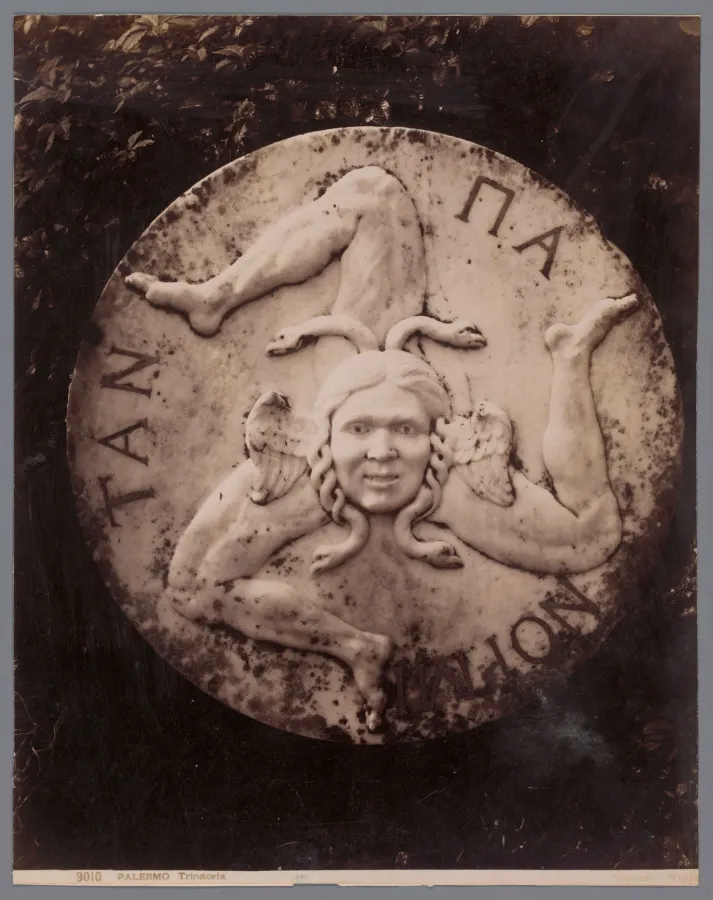
To represent this shape, they created the triskelion: three human legs, bent at the knee, radiating from a centre point. Each leg pointed toward one of the capes. The symbol was simultaneously geographic (a map of the island), dynamic (the legs suggest running), and mythological.
Ancient coins and Medusa's head
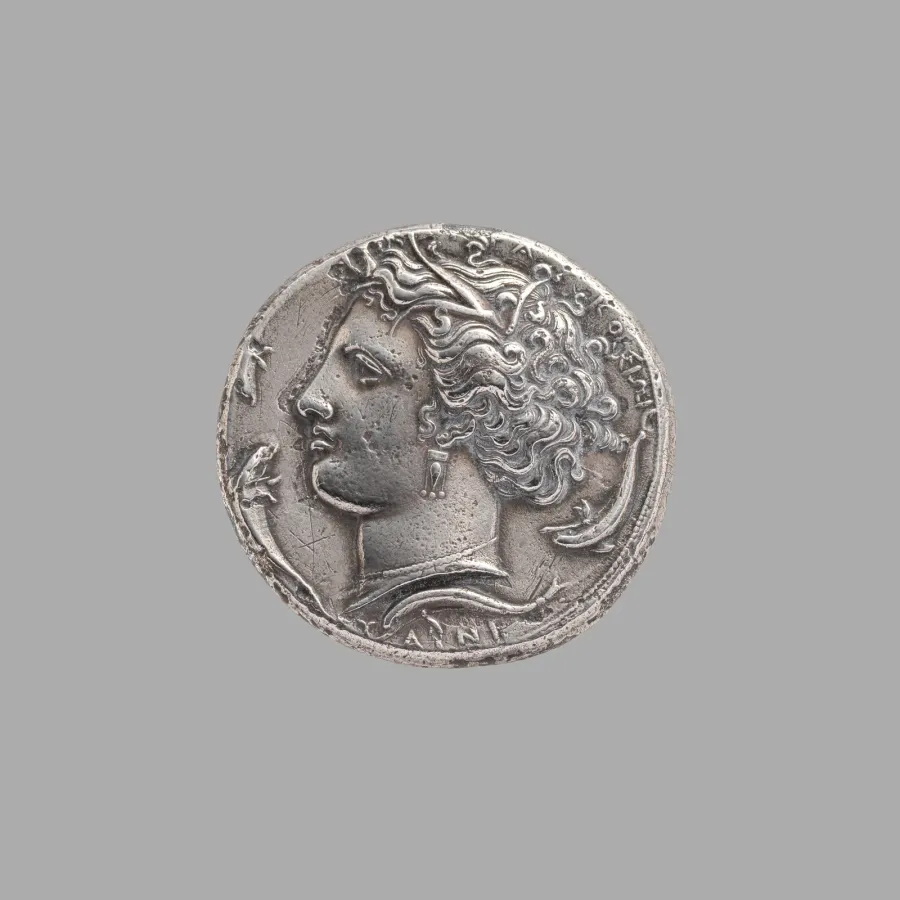
The earliest known Sicilian triskelion coins date to around the 4th century BCE. Syracuse, the most powerful Greek city in Sicily, minted coins with the triskelion alongside the head of Medusa or the nymph Arethusa.
The Medusa connection is interesting. In many versions of the Sicilian triskelion, a Medusa head occupies the centre, with the three legs extending from it. This combines the protective/apotropaic power of the Gorgon (whose face turns enemies to stone) with the three-legged symbol of the island itself. Protection plus identity.
The combination stuck. When the Romans took Sicily, they kept the triskelion. When the Normans arrived in the medieval period, they kept it too. The symbol survived every conquest because it was so fundamentally tied to the island's geography that removing it would have been like removing the capes themselves.
The trinacria lives on
Today, the trinacria (three legs with Medusa head) is on the official flag of Sicily. It appears on government buildings, Sicilian products, and as a common tattoo among Sicilians and the Sicilian diaspora worldwide. It's one of the most enduring regional symbols in Europe.
The Sicilian version reminds us that the triskele isn't only a "Celtic" symbol. It's a shape that multiple cultures arrived at independently because three-fold rotational symmetry is visually compelling and naturally maps onto geographic and philosophical trinities.
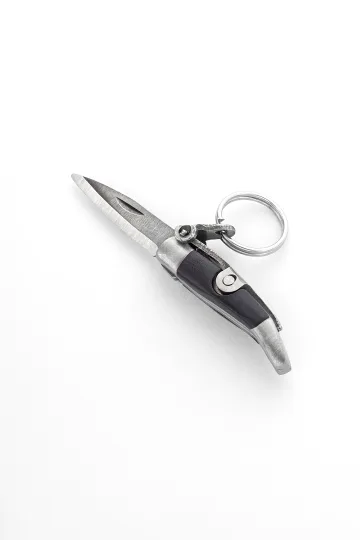
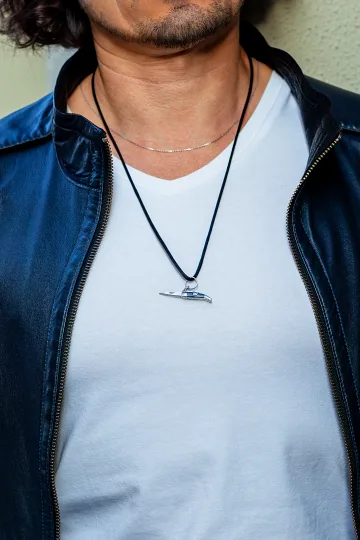
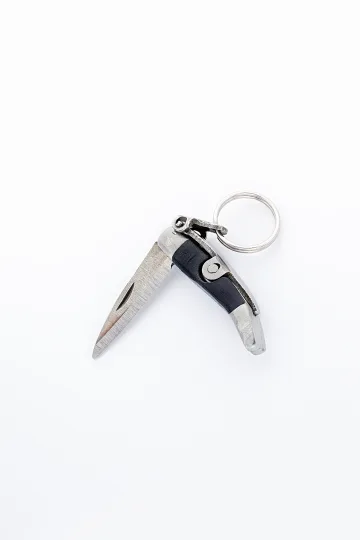
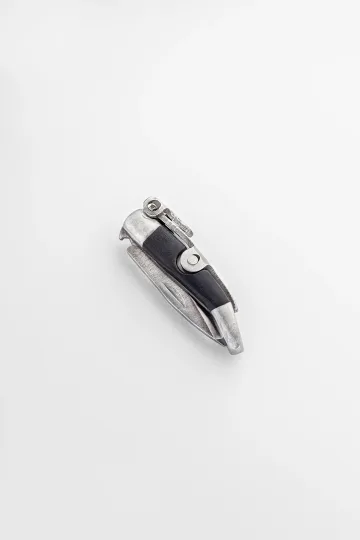
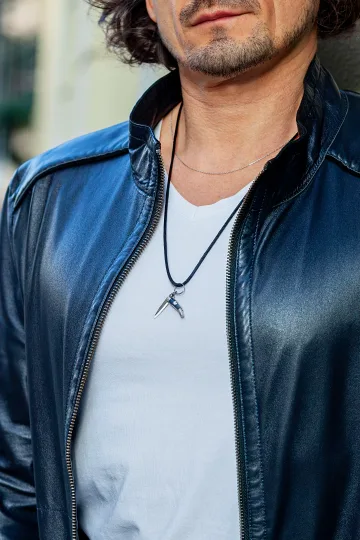
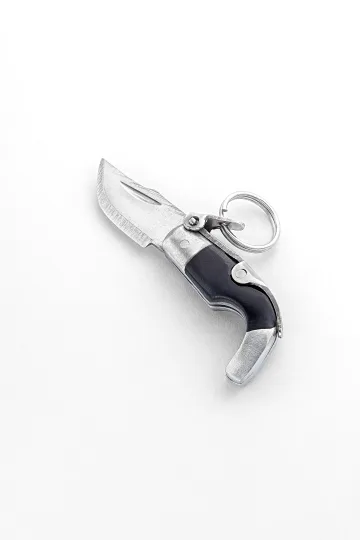
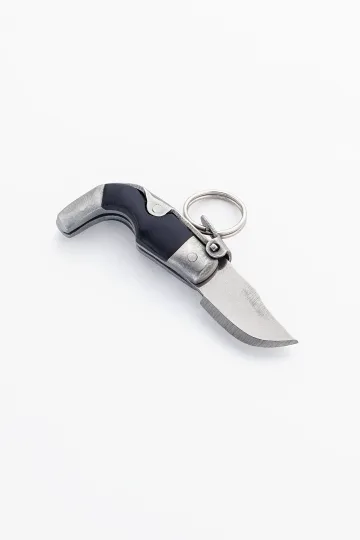
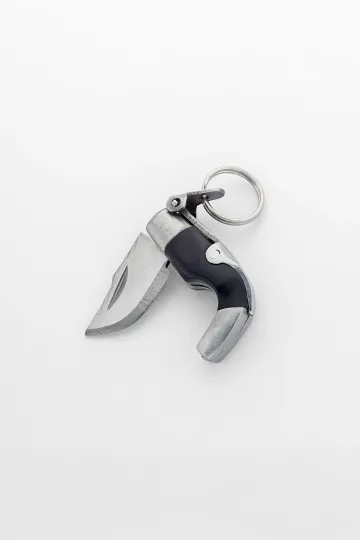
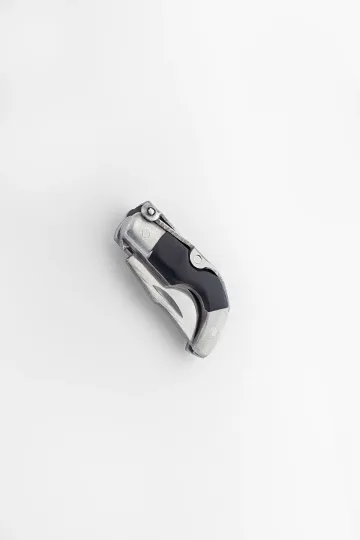
CAPAORA mini knife pendant
The 18th-century Spanish navaja in miniature: 40 mm of stainless steel, a real folding mechanism and a Palanquilla lock that clicks. An affordable gift to remember.
Authentic · Ships from Spain · 14-day returns
The Isle of Man: Three Legs That Run in Circles
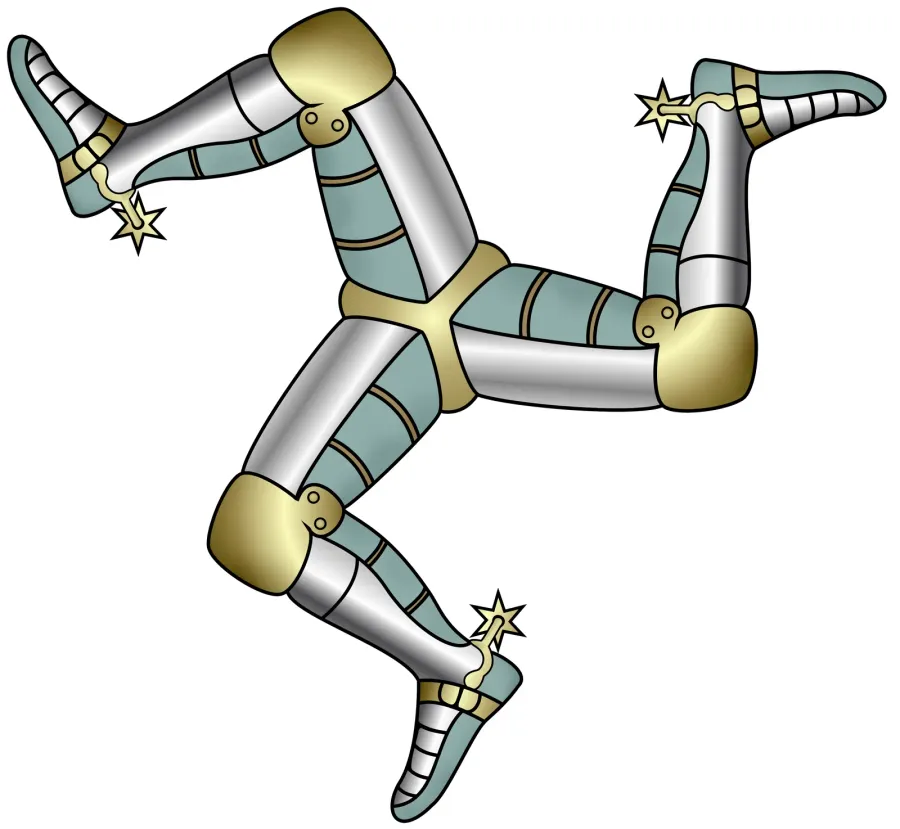
The Isle of Man, that small island in the Irish Sea between England, Ireland, Scotland, and Wales, has used a three-legged symbol since at least the 13th century. The Manx triskelion shows three armoured legs, spurred and bent at the knee, rotating from a central point.
The motto that accompanies it is "Quocunque Jeceris Stabit," which translates to "Whichever way you throw me, I will stand." It's a statement of resilience. No matter which way you're pushed, you land on your feet. Three legs means you always have one on the ground.
How the Isle of Man got its three legs is debated. Some historians connect it to the island's Norse rulers and their contact with Sicilian Norman lords (who used the trinacria). Others see a direct Celtic origin from Irish or Scottish influence. The truth is probably some mixture.
What's not debated is how central the symbol is to Manx identity. It appears on the flag, on coins, on the island's coat of arms, and on the TT motorcycle races branding. It's one of those symbols that has become so identified with a place that they're inseparable. The Isle of Man IS the three legs, and the three legs IS the Isle of Man.
Brittany: How the Triskele Became the Symbol of Celtic France
Brittany (Breizh in Breton) is the westernmost region of France and the most Celtic. The Bretons are descended from British Celts who crossed the English Channel in the 5th and 6th centuries, fleeing Anglo-Saxon expansion. They brought their language (Breton, closely related to Cornish and Welsh) and their cultural identity.
The triskele became THE symbol of Breton identity, particularly during the Celtic cultural revival of the 20th century. Walk through any town in Brittany and you'll see triskeles on shop signs, pottery, flags, bumper stickers, and, of course, jewellery.
The annual Festival Interceltique de Lorient, one of the largest Celtic festivals in the world, uses the triskele prominently. The festival draws performers and visitors from all Celtic nations (Ireland, Scotland, Wales, Cornwall, Galicia, Asturias) and Brittany's role as host reinforces its position as the Celtic heart of continental Europe.
For Bretons, the triskele is a political and cultural statement as much as an aesthetic choice. It says: we are Celtic, not just French. We have our own language, our own traditions, our own history. The symbol carries the weight of a minority culture asserting its distinctiveness within a centralising nation-state.
Breton jewellery, particularly from the tradition of bijoux bretons, frequently features triskele motifs in silver and gold. These pieces are both personal ornament and cultural flag. Wearing a triskele in Brittany is wearing your identity.
Leave your email, we'll send your discount code. No spam, unsubscribe anytime.
The code arrives by email, valid on your first order.
Beyond the Celts: The Triple Spiral in Other Cultures
Buddhist Triple Gem
The triple spiral appears in Buddhist contexts as a representation of the Three Jewels (Triratna): Buddha, Dharma, and Sangha (the teacher, the teaching, and the community). While Buddhist art more commonly uses a specific Triratna symbol, the triple spiral form sometimes appears in East Asian Buddhist decorative traditions, reinforcing the idea that three-fold rotational symmetry carries spiritual significance across cultures.
Japanese mitsudomoe
The mitsudomoe is a Japanese symbol consisting of three comma-shaped tomoe swirling around a central point. It resembles the triskele closely enough that their visual kinship is obvious, though there's no direct historical connection.
In Japan, the mitsudomoe appears on family crests, shrine architecture, and taiko drums. It's associated with the war god Hachiman and with the idea of cyclical motion (heaven, earth, humanity or the three realms of existence). The parallels with Celtic triple symbolism are striking but almost certainly coincidental. Both cultures responded to the same mathematical harmony. A similar pattern of independent reinvention shows up in the Basque Country, where the lauburu, a four-armed sibling of the triskele, follows the same rotational logic.
Korean sam-taegeuk
The sam-taegeuk is a Korean triple yin-yang symbol, with three teardrops (typically red, blue, and yellow) swirling around a centre. It appears on the South Korean presidential seal and is associated with the three fundamental forces of the universe. Again, visually close to the triskele, culturally independent.
The fact that Ireland, Sicily, Japan, and Korea all developed three-fold rotational symbols tells us something about the shape itself. It isn't culturally specific. It's mathematically fundamental. Three elements in a circle create the simplest possible dynamic pattern: a shape that appears to move.
The Modern Celtic Revival: Tattoos, Jewellery, and Identity
The diaspora effect
The Celtic revival of the 19th and 20th centuries transformed the triskele from an archaeological curiosity into a living symbol. The Irish diaspora, scattered across North America, Australia, and Britain after the Great Famine and subsequent waves of emigration, needed symbols to maintain their connection to home. The shamrock was obvious. The Celtic cross was familiar. And the triskele, with its ancient lineage and visual distinctiveness, became a way of saying "I remember where I came from" without words.
Scottish, Welsh, and Breton diasporas adopted the triskele similarly. It became a pan-Celtic symbol, not belonging exclusively to any one nation but representing the shared Celtic heritage that connected Ireland, Scotland, Wales, Cornwall, Brittany, and Galicia.
Tattoo culture
The triskele is one of the most popular Celtic tattoo designs, and for good reason. It's compact, scalable, and instantly recognisable. It works as a small inner-wrist piece or a large shoulder design. It pairs well with knotwork borders, runic inscriptions, and other Celtic motifs.
For many people, a triskele tattoo is a personal statement about heritage, about connection to Celtic culture (whether by blood or by affinity), and about the philosophical ideas the symbol carries: motion, cycles, balance, and the sacred significance of three.
Triskele jewellery
In jewellery, the triskele translates beautifully. The rotational symmetry makes it naturally balanced as a pendant. The spiral lines create visual interest without clutter. And the symbol's depth of meaning gives every piece a story that goes back five thousand years.
Triskele jewellery ranges from literal reproductions of the Newgrange carving to abstract modern interpretations that capture the rotational energy without being explicitly Celtic. Some designs emphasise the spiral, creating flowing, organic pieces. Others emphasise the geometric structure, creating clean, architectural designs. Both approaches work because the shape is strong enough to survive any stylistic treatment.
Wearing Triskele Jewellery: Styles, Metals, and Combinations
Pendants and necklaces
The triskele works exceptionally well as a pendant. Its circular, self-contained form hangs naturally and reads clearly at pendant scale (15-30mm). A triskele pendant sits well at the collarbone on a shorter chain (40-45cm) or over the sternum on a longer one (55-65cm).
For a single-pendant look, the triskele is strong enough to stand alone. Its visual complexity fills the space without needing additional elements. For layering, pair it with simpler chains or with a small gemstone drop. Avoid pairing with other complex symbolic pendants that will compete for attention.
Spiral-style triskeles in gold have particular warmth. The spiral lines catch light as they curve, creating a play of light and shadow that changes with movement. This is one of those designs where the piece genuinely looks different depending on the angle, which keeps it interesting over time.
Earrings
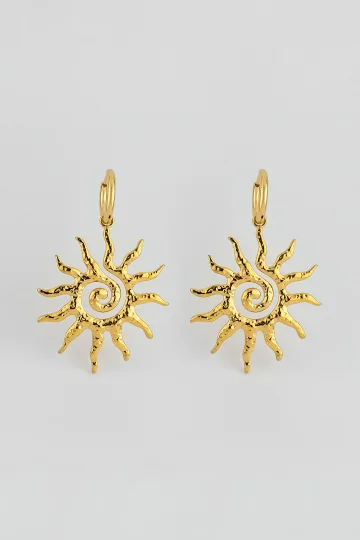
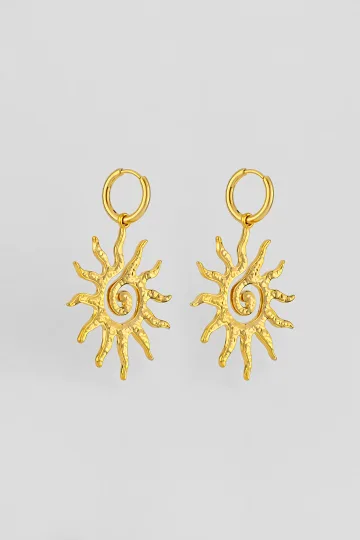
Triskele earrings work in two scales. Small studs (8-12mm) bring the symbol close to the face in a subtle, everyday-appropriate way. They're clean, recognisable, and professional enough for any setting. Larger drop earrings use the triskele as a focal element, sometimes with additional spiral work or gemstone accents.
Spiral earrings, even when they don't explicitly form a triple spiral, echo the triskele's energy. The labyrinth pattern and the solar spiral are visual cousins of the triskele, sharing its sense of rotational movement and organic flow.
Metals that work
Gold is historically appropriate for triskele jewellery. Celtic goldwork is one of the great traditions of European metalcraft, and gold's warmth complements the organic curves of the spiral. Gold also connects to the sun, which aligns with theories about the Newgrange spirals' solar symbolism.
Sterling silver gives triskele designs a cooler, more contemporary feel. Silver's reflectivity emphasises the spiral lines, and the metal's association with the moon adds a different symbolic layer. Celtic silver jewellery is a well-established tradition, particularly in Scotland and Brittany.
Mixed metals or gold vermeil on silver create contrast that highlights the spiral pattern. The interplay of warm and cool tones echoes the interplay of the triskele's symbolic meanings: sun and moon, land and sea, ancient and modern.
For gemstone accents, green stones (emerald, peridot, green agate) reinforce the Celtic connection. Blue stones (sapphire, lapis lazuli, topaz) connect to sea and sky. Amber, with its warmth and ancient origins, is a particularly fitting companion for triskele pieces.
Send a friend a discount code, they save on their first order.
Frequently Asked Questions
What's the difference between a triskele and a triskelion?
The words are often used interchangeably, and that's fine in casual conversation. Technically, "triskele" tends to refer to the triple spiral form (three spirals radiating from a centre), while "triskelion" more often refers to the three-legged version (three bent legs radiating from a centre, as on the Sicilian flag). Both come from the Greek for "three legs." In jewellery, most pieces labelled "triskele" use the spiral form.
How old is the triskele symbol?
The oldest known triple spiral carvings are at Newgrange in Ireland, dating to approximately 3200 BCE, making the symbol at least 5,200 years old. However, simpler spiral motifs appear in even earlier Neolithic art, so the triple form may have evolved from an older tradition of spiral carving. It's one of the oldest continuously used symbols in the world.
Is the triskele a Celtic symbol?
Yes and no. The Celts adopted and popularised the triple spiral, and it's deeply embedded in Celtic cultural identity. But the symbol predates Celtic culture by at least two thousand years (Newgrange was built long before the Celts arrived in Ireland). And similar triple rotational symbols appear in Greek, Japanese, Korean, and other traditions independently. The Celts don't own it, but they're its most prominent cultural ambassadors.
What does the triskele mean in Celtic tradition?
The most common interpretations are: three realms (land, sea, sky), three stages of life (birth, life, death), and the triple goddess (maiden, mother, crone). The Celts also used it as a symbol of motion, cycles, and the interconnectedness of all things. After Christianity arrived, it was adapted to represent the Holy Trinity.
Is the triskele connected to any religion?
It has been used in Celtic paganism, Celtic Christianity, and appears in Buddhist and other spiritual contexts. It's not exclusively tied to any single religion. Most people who wear triskele jewellery today connect it to Celtic heritage or to the general philosophical ideas of cycles and balance rather than to a specific religious belief.
Why does Sicily have a three-legged symbol?
Sicily's trinacria (three legs with Medusa head) represents the island's three capes: Peloro, Passero, and Lilibeo. The Greeks created it as both a geographic symbol and a mythological one. It has been on Sicilian coins since at least the 4th century BCE and remains on the official Sicilian flag today.
Can I wear a triskele if I'm not Celtic?
Absolutely. The triskele is one of the least culturally restricted symbols in the world, partly because it appeared independently in multiple cultures and partly because the Celtic cultural traditions actively share their symbols. There's no meaningful debate about appropriation with the triskele the way there is with some other cultural symbols. Wear it because you connect with it.
What jewellery styles work best with the triskele?
Pendants are the most popular form because the triskele's circular symmetry hangs naturally. Earrings (both studs and drops) work well at different scales. Gold is historically appropriate for Celtic designs, but silver gives a more contemporary feel. The triskele pairs well with other Celtic motifs (knotwork, spirals) and with nature-inspired designs (leaves, waves).
Silver and gold jewellery, wedding bands, symbolic pendants, paired sets.
Buying it as a gift? Each one arrives ready to give.
 A branded Zevira box and a little card come with every order.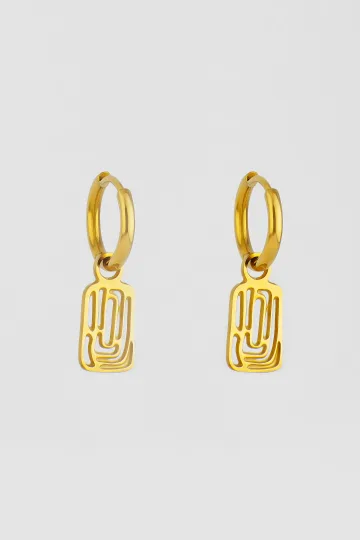





Still spinning after five thousand years
The triskele has outlasted every civilisation that used it. The Neolithic builders of Newgrange are gone, but their spiral is still carved into the entrance stone, still catching the winter solstice light. The Celtic tribes who wore it as an emblem of their worldview are long dissolved into modern nations, but their triple spiral shows up on flags, tattoos, and jewellery every day. The Greek colonists who stamped three legs onto Sicilian coins have been dead for two and a half millennia, but the trinacria is still on the flag of Sicily.
There's a reason for that durability. The triskele captures something that doesn't go out of date: the idea that the world moves in cycles, that things come in threes, that motion and balance can coexist, that what goes around comes around.
It's also just a beautiful shape. Three spirals, turning together. Simple enough to carve into stone with a flint tool. Complex enough to carry five thousand years of meaning. That combination of simplicity and depth is rare, and it's why the triskele keeps showing up, century after century, culture after culture, in stone and bronze and gold and silver and ink on skin.
If you wear it, you're wearing the oldest continuously used symbol in European history. Not a bad thing to have against your skin.
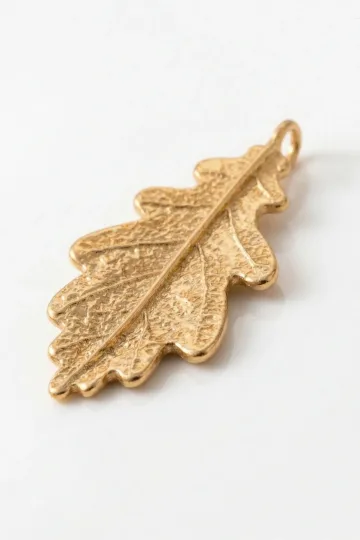
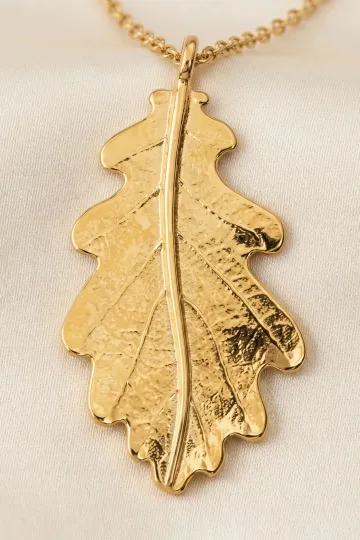
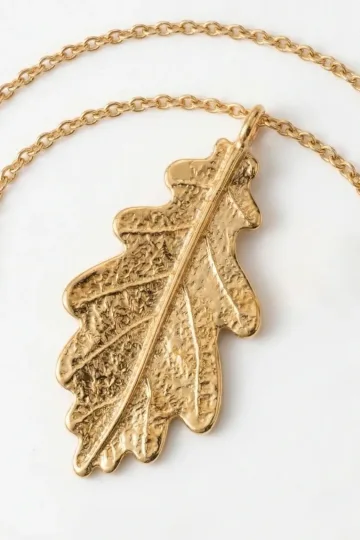
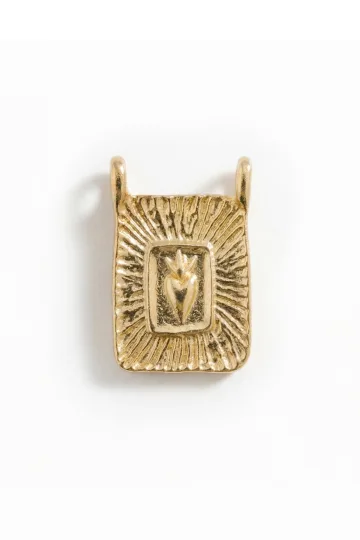
Wear the symbol, don't just read about it. These are in stock:
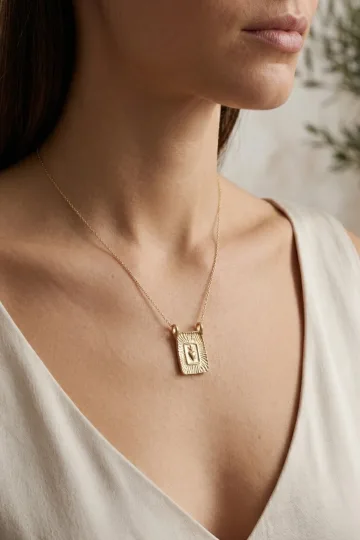
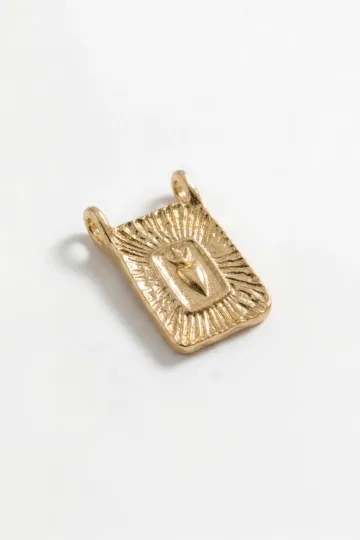
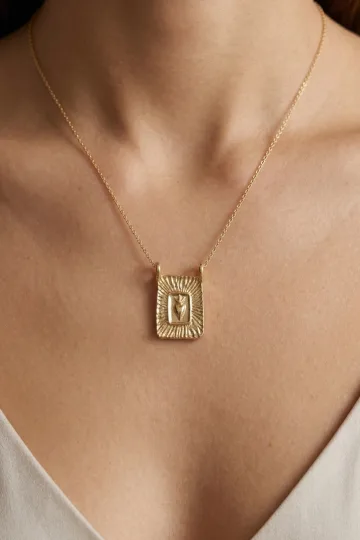
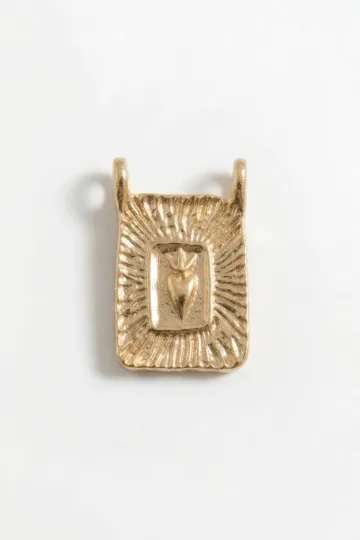
About Zevira
Zevira makes jewellery in the artisan tradition of Albacete, Spain. Spirals and Celtic symbols sit close to what we do: clean geometry with a long history reads best in metal when a maker's hand guides it, not a stamping press.
What you can find with us around the triskele and Celtic symbolism:
- pendants with spiral and triple motifs in sterling silver and 14-18K gold
- stud earrings and drops with a spiral line that echoes the triskele
- rings with knotwork and spiral patterns to round out a matching set
- paired sets of pendant plus earrings in the same metal and finish
- pieces set with green and amber stones that reinforce the Celtic connection
- personal engraving with a date, initials, or a motto on the reverse
Every piece can be personalised with engraving, with the option of personal engraving. Sterling silver and 14-18K gold.