Celtic Knots in Jewellery: The Lines That Never End and What They Actually Mean
A line that goes nowhere and everywhere
Pick up a piece of Celtic jewellery. A ring, a pendant, a brooch. Now try to find where the pattern starts. Trace the line with your finger or your eye. Follow it as it weaves over and under, crossing itself, looping back, threading through gaps that shouldn't exist. Keep going.
You won't find the beginning. You won't find the end. That's the point.
Celtic knotwork is one of the most recognisable decorative traditions in the world. You've seen it on wedding rings, pub signs, tattoo parlours, airport gift shops in Dublin, and probably on at least one piece of jewellery you own. The interlaced lines are everywhere. But if you ask most people what Celtic knots actually mean, you get a vague answer about eternity, or the Trinity, or Irish heritage, delivered with complete confidence and very little evidence.
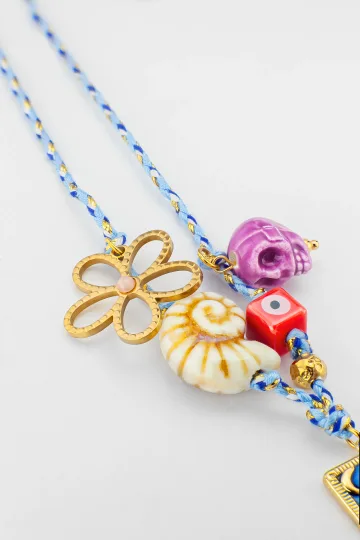
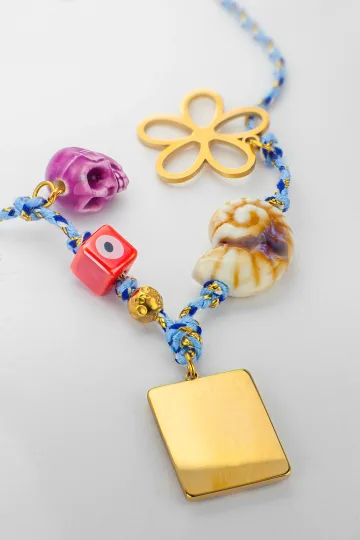
Wear the symbol, don't just read about it. These are in stock:





The truth is more interesting and more honest than the tourist version. Celtic knotwork has a real history that stretches back over a thousand years, through illuminated manuscripts and stone crosses and monastery workshops where monks with extraordinary patience created some of the most intricate art in human history. But the meanings we attach to these patterns today are largely a product of the 19th century, when Victorians rediscovered Celtic art and decided to assign symbolism that the original makers may never have intended.
This is the full story. What Celtic knots are, where they came from, what they might have meant, what we've decided they mean, and why they ended up on millions of wedding rings.
What Celtic Knots Actually Are
The basic principle: one line, no end
A Celtic knot, in its purest form, is a continuous line that weaves over and under itself to create a closed pattern with no beginning and no end. Pick any point on the line and follow it, and you will eventually return to where you started, having crossed every other part of the pattern along the way.
This is the fundamental rule that separates true Celtic knotwork from other decorative patterns. The line never terminates. It never hits a dead end. It never forks into two separate paths. One line, endlessly looping.
In mathematical terms, this makes most Celtic knots a type of closed curve, similar to a knot in topology. The monks who created these designs in the 7th and 8th centuries didn't have topology, but they understood the principle intuitively and applied it with remarkable consistency.
Not every "Celtic" pattern follows this rule. Some incorporate loose ends, animal heads biting their own tails, or vegetal (plant-based) interlace where tendrils branch and terminate. But the classic knotwork, the kind most people picture when they hear "Celtic knot," maintains the single continuous line.
Interlace vs knotwork vs spirals
People use "Celtic knot" as a catch-all term, but there are actually several distinct types of Celtic decorative art:
Interlace is the broad category. Any pattern where bands or cords weave over and under each other. This technique exists in cultures worldwide, from Islamic geometric art to Norse woodcarving to Roman mosaics. Celtic interlace is one branch of a very large tree.
Knotwork specifically refers to interlace patterns where the bands form closed loops with no beginning or end. This is what most people mean by "Celtic knots."
Spirals are a separate tradition entirely, older than knotwork by thousands of years. The spiral motifs at Newgrange in Ireland date to roughly 3200 BCE, millennia before anyone was doing interlace on the island. Spirals evolved into the triskele (three-armed spiral) which is one of the most iconic Celtic symbols.
Zoomorphic interlace incorporates animal forms into the knotwork. Serpents, birds, dogs, and mythical creatures whose bodies become the cords of the knot. This is particularly prominent in the Book of Kells.
Key patterns are geometric step-patterns, like angular spirals. They appear alongside knotwork in manuscripts and stone carving but use straight lines and right angles rather than flowing curves.
Understanding these distinctions matters because they have different histories and, probably, different meanings. But in modern jewellery, they're all lumped together under "Celtic."
Upload a photo of your pet, someone you love, or an object. We'll build a 3D model and hand-cast it in pewter.




A bold knot belongs on tweed and wool, not on a pinhead stud. Weave craves scale.
How and where to wear Celtic knotwork
Celtic weave slips into almost any look because its graphic is calm: the line reads as ornament, not as a shout. Here is what actually works, sorted by occasion.
What do I wear a Celtic knot with every day? For daily wear I recommend a triquetra pendant on a thin chain over a plain roll-neck or a basic tee. The deeper the neckline, the longer the chain I choose, so the knot lands on the chest instead of getting lost at the collar. With a round neck a shorter length sits prettier, right at the collarbones.
Is Celtic jewellery right for the office? It is, and it behaves well there. The pattern is intricate but restrained, no shine and no big stones, so it does not fight tailored clothes. I suggest a silver pendant or a slim knotwork ring with a shirt, knitwear or a muted jacket. If you already wear a watch or another ring, keep one metal: silver to silver, yellow gold to yellow. Mixing metal tones on a Celtic piece looks accidental.
How do I build an evening look? For evening I lean on contrast. A Celtic cross or a larger pendant with dense weave sits well on black, deep green or burgundy, since wine and forest tones flatter the aesthetic. Here I like to layer two chains of different lengths, where the lower one carries the knot and the upper stays thin and empty.
What about a wedding or an anniversary? For a special day the lovers' knot or a band with unbroken weave around the whole rim works on its own: the symbol reads without explanation. Yellow gold gives the warmest, most traditional look, which is why I usually choose it for these occasions.
Who does Celtic knotwork actually suit? Anyone drawn to quiet depth rather than loud decoration. If you love texture, natural motifs and the story behind a piece, the weave will settle into your character. Two rules I keep. First: for small formats choose a simple design like the triquetra, since a complex knot smudges on a tiny stud. Second: one expressive Celtic piece beats three middling ones, so do not overload the look.

Turn on your camera, pick earrings, a pendant or a ring, and see the piece on yourself in real time.
Switch items in one tap.
Everything runs in your browser: no photo or video is ever uploaded.
The Major Types of Celtic Knots
The Trinity knot (triquetra)
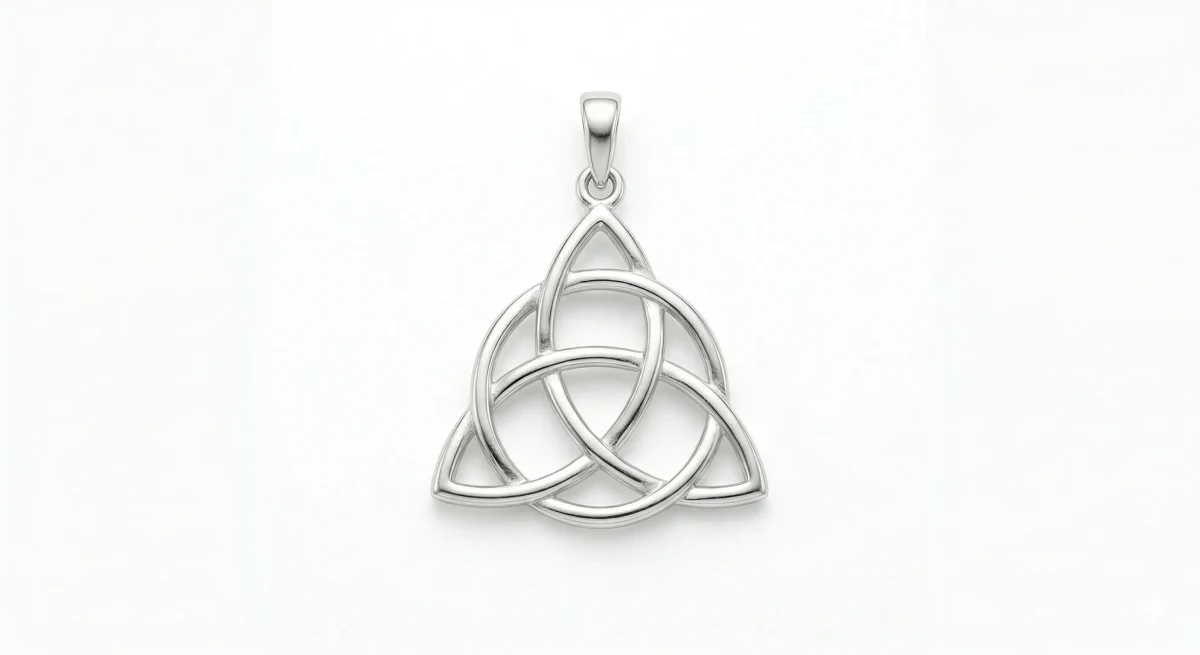
The triquetra is probably the most famous Celtic symbol after the Celtic cross. Three pointed loops interlinked, usually with a circle running through or around them. The word "triquetra" is Latin for "three-cornered."
The association with the Christian Trinity (Father, Son, Holy Spirit) is the most common modern interpretation, and it's why this knot appears on so many Irish and Scottish Christian artefacts. But the triquetra predates Christianity in Ireland by centuries. It appears on Norse rune stones, Germanic coins, and in various pre-Christian contexts across Northern Europe.
What did it mean before Christianity? Nobody knows for certain. Popular theories include the three domains (land, sea, sky), the three stages of life (maiden, mother, crone), or the cycle of life, death, and rebirth. These are plausible interpretations but they're largely speculative. The pre-Christian Celts didn't leave written explanations of their symbols.
In modern jewellery, the Trinity knot is the default Celtic pendant. It works at any scale, looks good from a distance and up close, and carries enough symbolic weight that the wearer can attach their own meaning to it.
The Celtic cross
A cross with a circle around the intersection of the arms. The arms usually extend beyond the circle. The surface is typically covered in knotwork, interlace, and sometimes figural scenes.
The Celtic cross is one of Ireland and Scotland's most visible exports. The great stone crosses at Clonmacnoise, Monasterboice, and Iona are major tourist destinations and national symbols. The High Cross of Kells stands over three metres tall and has been weathering Irish rain since the 9th century.
The circle is the most debated element. One theory says it represents the sun, suggesting a fusion of Christian and pagan symbolism when missionaries adapted local traditions. Another says it's purely structural, the circle strengthening the junction of the arms so the stone cross wouldn't break. The practical explanation is less romantic but probably more accurate.
In jewellery, the Celtic cross appears on everything from simple pendants to elaborate brooches. It's one of the few Celtic symbols that remains explicitly religious for most wearers.
The Dara knot
"Dara" comes from the Irish word "doire" meaning oak tree. The Dara knot is designed to evoke the root system of an oak, with intertwining lines branching and reconnecting in a pattern that suggests both strength and organic growth.
There's no single definitive Dara knot design. Unlike the triquetra, which has a fixed form, "Dara knot" is more of a category. Various interlace patterns that evoke tree roots all get called Dara knots.
The oak was sacred to the Druids. The word "Druid" itself may derive from a Celtic root meaning "oak knowledge" or "oak seer." So a knot representing oak roots carries associations with wisdom, endurance, and connection to the earth.
In modern jewellery, the Dara knot is popular as a symbol of inner strength. It's a common gift for people going through difficult times, a visual reminder that roots hold even when storms hit.
Solomon's knot
Two interlinked loops, creating a pattern of four crossings. Despite the name, this knot has no documented connection to King Solomon. It appears in Roman mosaics, Jewish art, Islamic decoration, and African textiles, as well as in Celtic contexts. It's one of the most universal knot patterns in human decorative history.
In Celtic contexts, Solomon's knot is often interpreted as representing the union of two things: two people, two ideas, two worlds. It appears on early Christian grave markers in Britain and Ireland, possibly symbolising the link between the mortal and divine.
The shield knot
A four-cornered knot design, often square or roughly square, with the four corners representing the four cardinal directions or the four elements (earth, water, fire, air). Shield knots appear across multiple cultures and were commonly placed on shields, armour, and at the entrances to buildings.
The intended purpose was protection. The endless interlace of the knot was believed to confuse and trap evil spirits, who would follow the line endlessly and never find a way in. Whether anyone actually believed this literally or whether it was more of a "knock on wood" custom is debatable.
In jewellery, shield knots are worn as protective symbols. They're popular as gifts for travellers and people starting new chapters in their lives.
The Celtic spiral (triskele)
Three interlocked spirals rotating from a common centre. The triskele (also called triskelion) is one of the oldest Celtic symbols, appearing on the entrance stone at Newgrange, which dates to approximately 3200 BCE. That's older than the Egyptian pyramids.
But here's the complication: the people who built Newgrange weren't Celts. Celtic culture didn't arrive in Ireland until roughly 500 BCE, nearly three thousand years later. The spiral motifs at Newgrange belong to the Neolithic people who preceded the Celts. The Celts adopted and continued the spiral tradition, but they didn't invent it.
The triskele's three arms have been interpreted as representing everything from the three worlds (physical, spiritual, celestial) to the three stages of time (past, present, future) to the three elements (earth, water, sky). The honest answer is that we don't know what the Neolithic builders of Newgrange intended. We don't even know what the later Celts understood by it. We know they used it a lot, which suggests it was important.
The lover's knot
Two intertwined knots forming a single continuous design, with each knot dependent on the other to hold its shape. Pull one knot away and the other collapses. The design creates two distinct forms that are inseparable.
This knot doesn't appear in medieval Celtic manuscripts or stone crosses. It's a later invention, probably from the Victorian period, designed specifically to represent romantic love and partnership. Which doesn't make it less meaningful. It just means its pedigree is 19th century rather than 8th century.
The lover's knot is massively popular for wedding jewellery, particularly bands and pendants exchanged between partners.
Customer reviews
Zevira is a real jewellery shop. Genuine payments, deliveries and customer thank-yous.
🥰🥰🥰 gracias

Ok, ¡gracias! 🙂

The Real History: Manuscripts, Stones, and Monks
The Book of Kells and Lindisfarne Gospels
The greatest surviving examples of Celtic knotwork are illuminated manuscripts, hand-written books decorated with extraordinary intricacy by monks in the early medieval period.
The Book of Kells (circa 800 CE) is the crown jewel. Now housed at Trinity College Dublin, it's a Latin manuscript of the four Gospels produced by monks at the monastery of Iona (a small island off Scotland's west coast) and possibly completed at Kells in County Meath, Ireland, after Viking raids forced the monks to relocate.
Every page is decorated. The major pages, the ones that open each Gospel and mark significant passages, are so densely illustrated that scholars have spent careers cataloguing the details. The knotwork alone could fill a book. But the decoration also includes zoomorphic interlace (animals whose bodies form the cords), vegetal patterns, geometric key patterns, and figural illustrations of people and scenes.
The level of detail is almost unbelievable. Some of the interlace in the Book of Kells is so fine that it can only be fully appreciated under magnification. Modern analysis has shown lines drawn with a precision that suggests the monks used some kind of magnifying lens, though we don't know for sure. What we do know is that they worked with goose quills on vellum (prepared calfskin) in monastery scriptoriums that had no electric light.
The Lindisfarne Gospels (circa 715-720 CE) are slightly earlier and come from the monastery at Lindisfarne, an island off the northeast coast of England. The knotwork is equally stunning, and the manuscript is remarkable because it was almost certainly the work of a single monk, Eadfrith, Bishop of Lindisfarne. One person created the entire thing.
These manuscripts demonstrate that Celtic knotwork was not a folk tradition passed down by illiterate farmers. It was a highly sophisticated art form produced by educated monks who understood geometry, had access to expensive materials (pigments imported from the Mediterranean, gold leaf, calfskin prepared over months), and dedicated years of their lives to single books.
The great stone crosses
While manuscripts could be destroyed, lost, or locked away, the stone crosses of Ireland, Scotland, and Wales stood in the open for everyone to see. These were the public face of Celtic knotwork.
The great High Crosses date mainly from the 8th to 10th centuries. They stand at monastic sites, crossroads, and boundaries. The largest are over five metres tall. Their surfaces are covered with figural scenes from the Bible on one face and dense interlace knotwork on the other.
Notable examples include the Cross of the Scriptures at Clonmacnoise, the Muiredach Cross at Monasterboice, the High Cross at Ahenny, and the St Martin's Cross on Iona. Each combines knotwork with different types of interlace, spirals, and key patterns. The variety suggests that individual carvers had creative freedom within the tradition.
Stone crosses with Celtic knotwork are found across Ireland, Scotland, Wales, Cornwall, the Isle of Man, and parts of northern England. This geographic spread maps closely to areas of Irish and Scottish monastic influence during the early medieval period, supporting the idea that the knotwork tradition spread primarily through the Church.
Before the monks: pre-Christian knotwork
Here's where things get tricky. The monks who created the Book of Kells and the stone crosses clearly didn't invent interlace from nothing. They inherited and perfected a tradition. But where did it come from?
The spiral tradition in Ireland goes back to the Neolithic (Newgrange, circa 3200 BCE). But true interlace, the over-and-under weaving of bands, appears much later and may not be a native Irish development at all.
Some scholars trace Celtic interlace to late Roman art, particularly floor mosaics in Roman Britain and continental Europe. Roman interlace patterns from the 3rd and 4th centuries CE share structural principles with later Insular (the scholarly term for Irish and British early medieval) knotwork.
Others point to connections with Coptic art from Egypt and the Eastern Mediterranean, noting similarities between Coptic manuscript decoration and early Insular manuscripts. Early Irish monks had contacts with the Eastern Mediterranean through trade routes and pilgrimage.
Germanic and Scandinavian animal interlace is another possible influence. The Anglo-Saxons and Norse had their own traditions of intertwined animal ornament that developed alongside and sometimes merged with Celtic knotwork, particularly in areas where these cultures overlapped (like Northumbria, where both the Lindisfarne Gospels and Anglo-Saxon art traditions existed).
The honest summary: Celtic knotwork as we know it is a product of early medieval monasteries. It draws on older native spiral traditions, Roman interlace, possibly Eastern Mediterranean influences, and Germanic animal ornament. The monks synthesised these into something new and extraordinary.





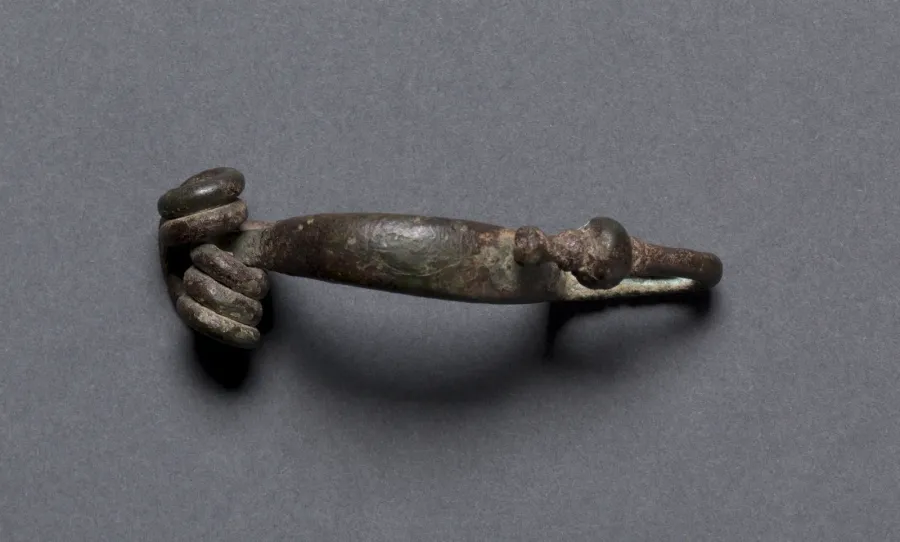
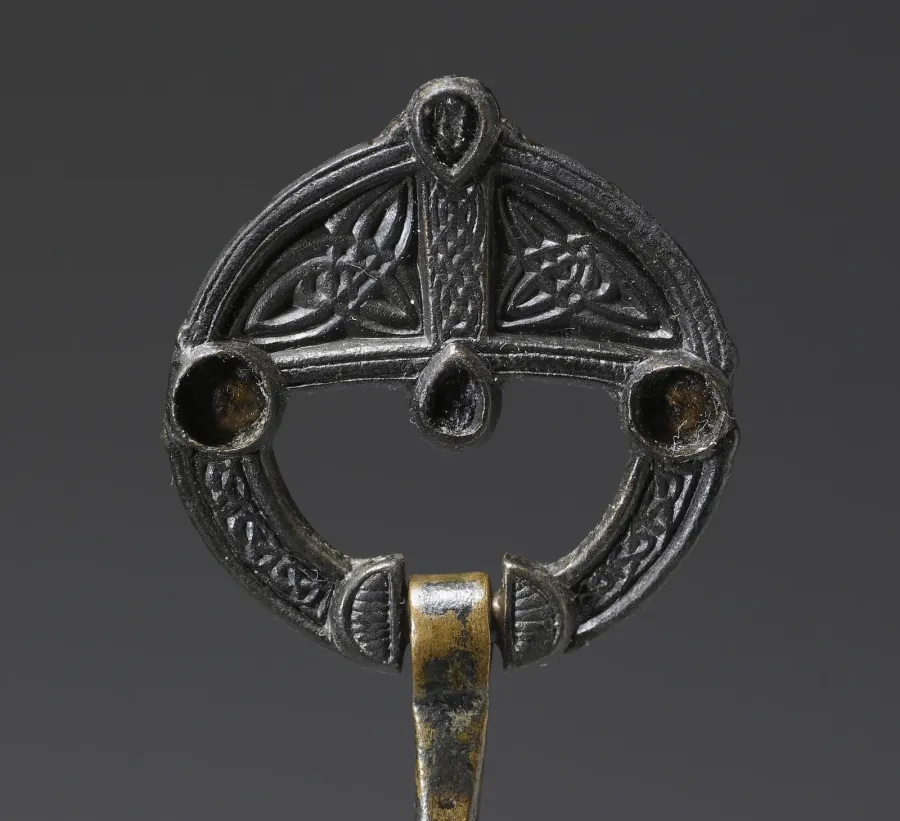
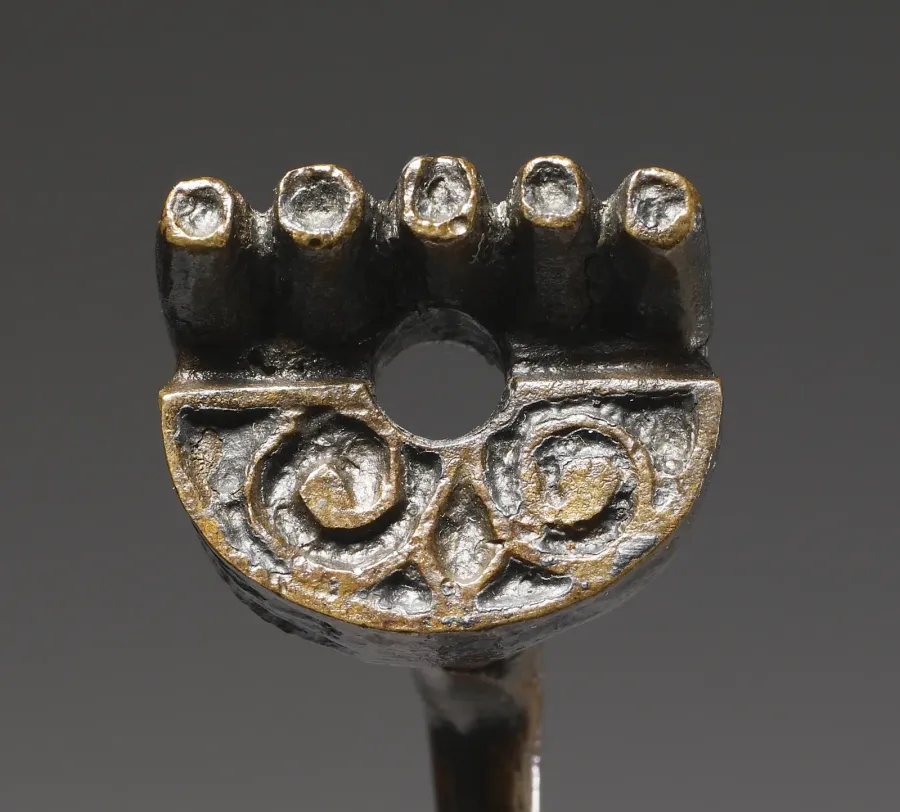
Interlace Beyond Ireland: Anglo-Saxon, Norse, Coptic and Islamic Parallels
Anyone who spends an afternoon in the early medieval rooms of a good museum leaves with an uncomfortable question. If interlace is Celtic, why is so much of it sitting in cases labelled Anglo-Saxon, Lombard, Coptic and Norse?
The honest answer is that woven ornament is one of those ideas humans keep arriving at independently, and that early medieval Europe was far better connected than the word Dark Ages suggests. Knotwork was a shared visual language across the whole of the north, and the Irish version is the most spectacular branch of it rather than the trunk.
Anglo-Saxon England. The gold and garnet work from the Sutton Hoo ship burial in Suffolk, made in the early seventh century, is covered in interlace, including animal interlace of a sophistication that matches anything in the manuscripts. The shoulder clasps alone carry a woven design in cloisonné garnet that would be a technical challenge for a workshop today. The Staffordshire Hoard, ploughed up in a Mercian field, contains hundreds of fragments of the same visual family. Neither is Celtic in origin, and both are interlace of the first order.
The Insular problem. Scholars have a word for this, and the word is Insular. The great manuscripts and metalwork of the seventh to ninth centuries came out of a shared world spanning Ireland, western Scotland, Northumbria and the monasteries the Irish founded across the North Sea. Lindisfarne, on the Northumbrian coast, was founded from Iona by Irish monks and staffed by both. Deciding whether its gospel book is Irish or English is a modern political exercise applied to people who did not think in those terms. The safest and most accurate description of most so-called Celtic knotwork is Insular art.
Norse interlace. Scandinavian craftsmen developed their own interlace over the same centuries, running through a sequence of styles that ends with the extraordinary thin ribbon-animals of the Urnes style in the eleventh century. Viking-age settlement in Ireland, the Isle of Man and northern England produced genuine hybrids: Manx stone crosses where Christian iconography and Norse ribbon beasts share the same slab quite happily.
Coptic and Mediterranean roots. Ribbon interlace as border decoration appears in late Roman and early Christian floor mosaics across the Mediterranean, and in Coptic Egyptian textiles and manuscripts centuries before the Book of Kells. Some art historians argue that Egyptian monasticism, which shaped Irish monastic practice more than most people expect, brought the border patterns north along with the rule of life.
Islamic girih and the endless idea. In the Islamic world, the same instinct for a line without a beginning produced strapwork and girih tiling of dizzying mathematical rigour, for a related reason: a pattern that cannot be exhausted is a decent way to speak about the infinite without depicting it. Nobody borrowed from anybody here. Two cultures reached similar conclusions from similar premises.
Slavic and Balkan plaitwork. The same period gives us Croatian pleter, the woven stone bands carved on church screens along the Adriatic, and the plaited borders of early Slavic manuscript illumination. They look startlingly like Irish work to an untrained eye, they were made by people who had never heard of Ireland, and they are a useful reminder that a clean woven line is a solution to a decorative problem rather than an ethnic signature.
None of this makes Celtic knotwork less remarkable. It makes it a member of a large family, and it means that if you are drawn to woven ornament without any Irish or Scottish connection at all, you have plenty of legitimate ancestors to choose from.
CAPAORA mini knife pendant
The 18th-century Spanish navaja in miniature: 40 mm of stainless steel, a real folding mechanism and a Palanquilla lock that clicks. An affordable gift to remember.
Authentic · Ships from Spain · 14-day returns
What Did Celtic Knots Mean? The Honest Answer
This is the section where most articles would list a confident catalogue of symbolic meanings. Each knot type neatly assigned a concept: eternity, strength, love, protection, the Trinity.
Here's the problem: we have almost no direct evidence for what pre-Christian Celts intended these patterns to mean. The Celts of the Iron Age (roughly 800 BCE to the Roman conquest) did not have a written tradition. Their knowledge was transmitted orally through Druids and poets. When that oral tradition broke down, the meanings went with it.
What we have instead is:
Inference from context. A knot appearing on a grave marker probably relates to death or the afterlife. A knot on a shield probably relates to protection. But "probably" isn't "definitely."
Christian interpretation. Once monks adopted knotwork, they gave it Christian meanings. The Trinity knot became about Father, Son, and Holy Spirit. The endless line became about the eternity of God's love. But these are Christian readings of pre-Christian forms.
Victorian and modern interpretation. Starting in the 19th century, antiquarians, romantics, and nationalists began assigning elaborate symbolic systems to Celtic patterns. Much of what you'll read in popular books and websites traces back to this period, not to the actual Celts.
Comparison with other cultures. Some meanings are extrapolated from what similar patterns meant in other cultural contexts. The Romans used interlace patterns with apotropaic (evil-averting) intent, so perhaps the Celts did too. Plausible, but unproven.
The uncomfortable truth is that when someone tells you with complete certainty that a specific Celtic knot means a specific thing, they're usually repeating a Victorian interpretation or a modern commercial narrative, not an ancient Celtic teaching.
Does this make the symbols meaningless? No. It means the meanings are living and evolving rather than fixed and ancient. The Trinity knot means the Trinity to millions of Irish Christians because that's what their culture has decided it means. That's how symbolism works. But it's worth knowing the difference between "this symbol has meant X for two hundred years" and "this symbol has meant X for two thousand years."
Leave your email, we'll send your discount code. No spam, unsubscribe anytime.
The code arrives by email, valid on your first order.
Christian Adoption: The Trinity and the Endless Line
When Christianity arrived in Ireland (traditionally dated to St Patrick in the 5th century, though the process was more gradual and complex), the missionaries faced a population with deep artistic traditions. Rather than suppressing these traditions, the Irish Church absorbed them.
This wasn't unique to Ireland. Christianity has always been skilled at adopting local customs and reframing them. Christmas absorbed Saturnalia. Easter absorbed spring fertility festivals. And in Ireland, the monasteries absorbed knotwork.
The fit was remarkably natural. The endless line of Celtic knotwork mapped beautifully onto Christian concepts of eternity and God's infinite nature. The Trinity knot required only a slight conceptual shift to represent Father, Son, and Holy Spirit. The interlaced patterns, where every strand depends on every other strand, could illustrate the interconnectedness of creation under a divine plan.
The monks didn't just preserve knotwork. They elevated it. The monastery scriptoriums had resources (expensive pigments, gold leaf, prepared vellum) and time (monks whose primary work was prayer and scholarship could spend years on a single manuscript) that no secular workshop could match. The result was that Celtic knotwork reached its highest artistic achievement in a Christian religious context.
This is why almost all the great surviving examples of Celtic knotwork are Christian artefacts: manuscripts, crosses, church metalwork, reliquaries. The secular tradition may have been equally rich, but secular objects in wood, leather, and cloth haven't survived the way stone and vellum have.
The Victorian Celtic Revival: Romanticism Meets Nationalism
In the late 18th and early 19th centuries, intellectuals across Europe rediscovered the medieval past. In England, this produced the Gothic Revival. In Germany, the Brothers Grimm collected folk tales. And in Ireland and Scotland, antiquarians turned their attention to Celtic art.
The timing wasn't coincidental. Ireland in the 19th century was under British rule, and Irish cultural identity was both threatened and fiercely defended. Celtic art became a symbol of Irish distinctness, a visual argument that Ireland had a sophisticated culture long before the English arrived.
George Petrie, an Irish antiquarian, began systematically documenting and drawing the stone crosses and manuscript pages in the 1820s and 1830s. His work, along with others like Margaret Stokes, made Celtic art accessible to a broad audience for the first time. Previously, the Book of Kells sat in a library. Now its pages were reproduced in popular books.
The Celtic Revival accelerated after the Great Famine (1845-1852). The catastrophe intensified Irish nationalism and, for the millions who emigrated, created a diaspora hungry for symbols of Irish identity. Celtic knotwork, along with the Claddagh ring, the harp, and the shamrock, became a visual shorthand for Irishness.
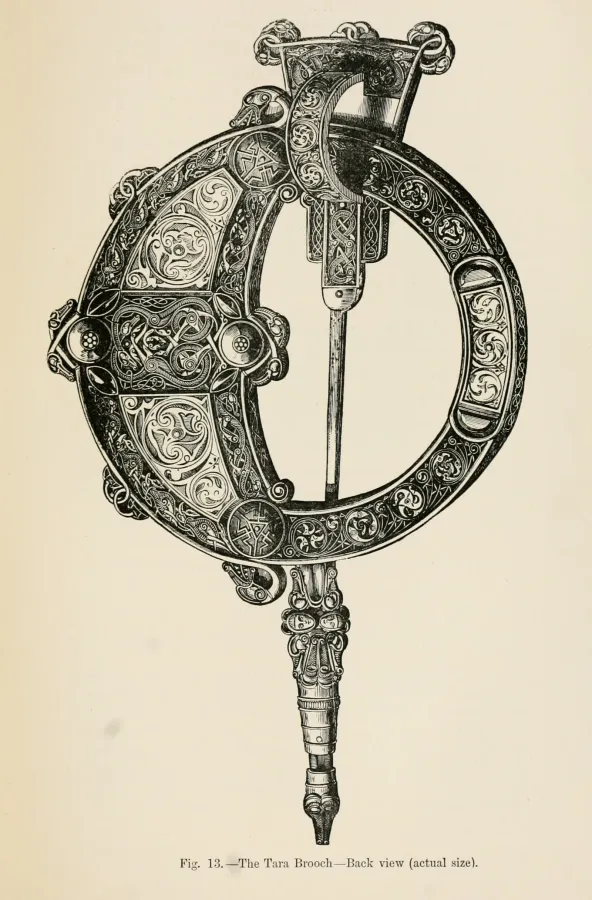
Jewellers responded. Companies like West & Son in Dublin began producing Celtic-inspired jewellery in the mid-19th century, drawing on manuscript and cross designs. The Tara Brooch (a genuine 8th-century masterpiece found in 1850) became the model for a whole industry of reproduction Celtic brooches.
But here's the crucial point: the Victorians didn't just reproduce Celtic art. They interpreted it. They assigned meanings. They created the symbolic framework that most people use today. When a modern website tells you that the Dara knot represents strength, or the shield knot represents protection, or the lover's knot represents romance, these associations were largely established in the 19th century.
This doesn't make the associations wrong. Symbols are created by cultures, and the Victorian and post-Victorian Celtic Revival is a real cultural movement with real significance. But it does mean that the "ancient Celtic meaning" you see in jewellery catalogues is often Victorian in origin.
Celtic Knots in Modern Jewellery
Wedding rings and bands
Celtic knot wedding bands are one of the most popular wedding ring styles in the English-speaking world, particularly in Ireland, Scotland, the United States, Canada, and Australia. The appeal is straightforward: a ring that symbolises eternity bears a pattern that has no beginning and no end. The metaphor is almost too perfect.
Traditional Celtic wedding bands feature continuous knotwork carved or cast into a flat or slightly domed band, usually in gold (yellow, white, or rose) or platinum. The knot pattern wraps completely around the ring so there's no start or finish point, reinforcing the eternity symbolism.
The most popular patterns for wedding bands are simple interlace (clean, readable lines that work at a small scale), the Trinity knot (for couples with Irish heritage or Christian faith), and the lover's knot (two intertwined patterns representing the couple).
Celtic wedding bands work for both men and women. The masculine versions tend to be wider with bolder knotwork, while feminine versions may be narrower with more delicate interlace, but this is convention rather than rule.
Pendants and necklaces
The Trinity knot pendant is the workhorse of Celtic jewellery. It's the piece you buy at the airport in Shannon, the piece your Irish grandmother left you, the piece that sits in every jewellery shop window on Grafton Street.
Its popularity comes from versatility. A Trinity knot pendant works as a religious symbol (the Trinity), a cultural symbol (Irish heritage), a philosophical symbol (interconnectedness, eternity), or purely an aesthetic choice (it's a beautiful, balanced design). The wearer decides what it means to them.
Celtic cross pendants carry more explicit religious weight. They're popular among practising Christians of Irish and Scottish descent and are common confirmation and graduation gifts.
More elaborate Celtic pendants incorporate zoomorphic elements (animals from the Book of Kells tradition), spirals (connecting to the older Neolithic tradition), or combinations of multiple knot types.
Tattoos and body art
Celtic knotwork is one of the most popular tattoo styles globally. The appeal for tattoo artists is technical: the continuous interlace is challenging to execute well, and a perfectly realised Celtic knot tattoo demonstrates skill. The appeal for clients is symbolic and aesthetic: the designs are visually striking, carry cultural weight, and the "no beginning, no end" concept resonates as a personal statement about identity and endurance.
The most common Celtic tattoo designs are armbands (continuous knotwork wrapping the bicep or wrist), the Trinity knot (on the shoulder, chest, or back), the Celtic cross (back, shoulder, or forearm), and full Celtic-inspired sleeves combining knotwork, spirals, and zoomorphic elements.
A note on cultural sensitivity: Celtic tattoos are generally not considered problematic in the way that tattoos from some other cultural traditions might be. The Celtic nations (Ireland, Scotland, Wales, Cornwall, Brittany, Isle of Man) haven't historically policed cultural borrowing of their symbols. But it's worth knowing what you're wearing and why, rather than treating it as purely decorative.
The diaspora connection
For the millions of people of Irish, Scottish, and Welsh descent living in the United States, Canada, Australia, and elsewhere, Celtic jewellery serves a specific function: it's a wearable declaration of heritage.
This is particularly strong in the United States, where Irish-American identity has been a major cultural force since the mid-19th century. The Great Famine and subsequent waves of emigration created enormous Irish communities in Boston, New York, Chicago, and other cities. Celtic symbols, including knotwork jewellery, became a way to maintain and display Irish identity across generations.
The same pattern holds for Scottish-Americans (particularly in the Appalachian regions and the Southeast) and Welsh-Americans (particularly in Pennsylvania). Celtic jewellery connects people to a homeland most have never seen.
This diaspora market drives the global Celtic jewellery industry. Ireland's Celtic jewellery exports are worth hundreds of millions of euros annually, with the majority going to the United States.
Buying it as a gift? Each one arrives ready to give.
 A branded Zevira box and a little card come with every order.
Choosing Celtic Knot Jewellery: What to Consider
Meaning vs aesthetics. Some buyers want a specific symbolic meaning. Others just like the look. Both are valid. If meaning matters to you, the Trinity knot (spiritual interconnection), the Dara knot (inner strength), and the lover's knot (partnership) are the most clearly coded.
Heritage vs personal connection. You don't need to be Irish to wear Celtic jewellery. The designs are beautiful, the craftsmanship tradition is extraordinary, and symbolism belongs to whoever finds meaning in it. But if you do have Celtic heritage, the jewellery carries an extra layer of personal significance.
Complexity vs readability. Highly complex knotwork looks stunning in large formats (brooches, large pendants) but can become muddy at small scales (thin rings, small studs). Simpler designs like the Trinity knot work better for smaller pieces.
Metal choice. Traditional Celtic jewellery was made in gold, silver, and bronze. Modern pieces are available in all standard jewellery metals. Yellow gold gives the warmest, most traditional look. White gold and silver suit the silver-toned metalwork tradition of later Celtic periods. Rose gold is a modern addition that pairs beautifully with knotwork's organic curves.
Handmade vs mass-produced. The difference matters more in Celtic jewellery than in many other styles, because the quality of the knotwork depends on precise execution. In a well-made piece, every crossing is clean, every curve flows naturally, and the pattern is genuinely continuous. In a poorly made piece, the lines are uneven, crossings are ambiguous (you can't tell what's over and what's under), and the pattern may have breaks.
Send a friend a discount code, they save on their first order.
The Meaning of Celtic Rings, Amulets, and Pendants
Celtic knot ring: meaning
A Celtic knot ring reads as continuity: the band is already an unbroken circle, and the knotwork repeats that idea across the surface. With no start and no finish, it stands for a bond that does not break, which is why people choose it for a partner, a friendship, or a private promise. When the design uses the Trinity knot, it adds a three in one reading: body, mind, and spirit, or the Christian Trinity. A plain interlace keeps to the pure idea of eternity. If a specific meaning matters to you, look at the knot rather than the metal: the pattern, not the gold, is what fixes what the ring says.
Celtic wedding rings: meaning
On a Celtic wedding band the message sits in the line that goes all the way round without a break: love with no seam and no end. The Irish and Scottish tradition favours three choices. Continuous interlace stands for eternity and stays legible even on a thin band. The Trinity knot suits couples who want the spiritual three in one reading. The lovers' knot is two knots holding each other in place: undo one and the other falls apart, a direct metaphor for the couple. You need no Celtic ancestry to wear one; the symbol speaks to anyone who feels the promise behind it.
Triquetra and love: what it means for a couple
The triquetra has become one of the most used love symbols in jewellery, and for good reason: its three interlocking loops, drawn in a single stroke, read as two people and the bond between them, or as three stages of a relationship holding one another up. A circle around it adds the idea of an eternal union. This is a modern reading rather than a documented medieval meaning, yet it fits the shape so well that it feels natural. For the full story of the symbol itself, we cover it in the meaning of the triquetra.
Celtic amulets and their meaning
Celtic amulets were never a fixed catalogue of talismans, but motifs that each era read as protective. The shield knot, with its four corners, was placed on weapons and doorways to confuse malicious spirits, who would follow the endless line and never find the way in. The Dara knot, shaped after oak roots, is worn as an amulet of inner strength through hard times. The triquetra and the Celtic cross protect in a spiritual key. The shared idea stays constant: a line with no opening lets nothing harmful through. You can see more pieces in the amulets section.
Celtic pendants: meaning
A Celtic pendant takes its meaning from the knot it carries, not the format. A triquetra pendant works as a sign of eternity, of three forces in one, or of cultural belonging, depending on who wears it. The Celtic cross carries explicit Christian weight. The Dara knot speaks of strength and roots; the lovers' knot, of partnership. That is why the same kind of pendant serves as a spiritual gift, a token of heritage, or a purely aesthetic choice: the owner decides what it means. When buying, check that the interlace is clean and genuinely continuous, the mark of good work.
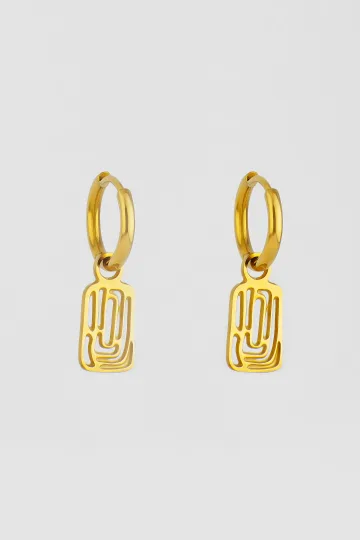
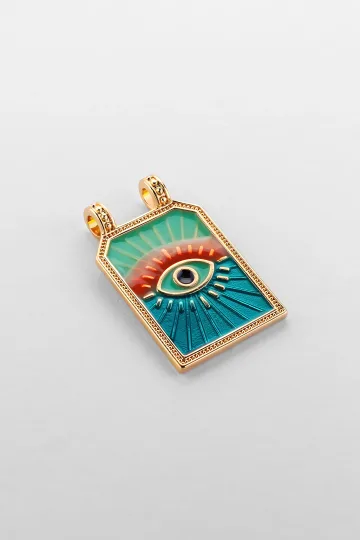
Wear the symbol, don't just read about it. These are in stock:










Frequently Asked Questions
What is the difference between a Celtic knot and a Trinity knot? "Celtic knot" is the broad category covering all continuous interlace patterns from the Celtic tradition. The Trinity knot (triquetra) is one specific design within that category: three interlinked loops. All Trinity knots are Celtic knots, but not all Celtic knots are Trinity knots.
Are Celtic knots Irish or Scottish? Both. The knotwork tradition spans Ireland, Scotland, Wales, Cornwall, the Isle of Man, and parts of northern England. The Book of Kells was probably started in Scotland (Iona) and finished in Ireland (Kells). The tradition doesn't respect modern national borders.
What does a Celtic knot tattoo mean? It depends on the specific design and the wearer's intention. Common meanings include eternity, interconnectedness, heritage, spiritual faith, strength, and love. Many people choose Celtic knots primarily for their aesthetic qualities rather than specific symbolic meanings.
Is a Celtic cross a religious symbol? Historically, yes. The great stone crosses were Christian monuments. In modern use, some people wear the Celtic cross as a cultural rather than religious symbol, but it retains strong Christian associations for most people.
Can I wear Celtic jewellery if I'm not Irish? Yes. Celtic art has been a global decorative tradition for centuries, and there's no cultural taboo against non-Celtic people wearing it. The designs are widely available precisely because the Celtic nations have historically shared their artistic heritage openly.
What is the best Celtic knot for a wedding ring? The most popular choices are continuous interlace (symbolising eternity), the Trinity knot (for couples with Christian faith), and the lover's knot (representing partnership). Simple interlace tends to work best on ring bands because it remains readable at a small scale.
Are Celtic knot meanings ancient or modern? A bit of both. The patterns themselves date back to the early medieval period (7th-10th centuries CE), with some elements (spirals) going back to the Neolithic. But many of the specific symbolic meanings were assigned during the Victorian Celtic Revival of the 19th century.
What is the Dara knot? A Celtic knot pattern that evokes the root system of an oak tree. "Dara" comes from the Irish word for oak. It's associated with inner strength and endurance, though this symbolic meaning is a relatively modern attribution.
Silver and gold jewellery, wedding bands, symbolic pendants, paired sets.
Wear the symbol, don't just read about it. These are in stock:







The line continues
Celtic knotwork has survived Viking raids, religious reformation, political upheaval, colonial suppression, and the relentless pressure of modernisation. It has been carved in stone, painted on vellum with pigments from the other side of the world, stamped into cheap tourist souvenirs, and tattooed onto millions of arms.
The patterns endure because they tap into something fundamental about how humans respond to visual complexity. A Celtic knot invites you to follow it. Your eye traces the line, and something in your brain finds satisfaction in the way it loops and returns. The monks who drew these patterns a thousand years ago understood that pull. Modern jewellers and tattoo artists understand it too.
Whether you wear a Celtic knot because it connects you to your grandmother's county in Ireland, because the Trinity speaks to your faith, because you admire the craftsmanship tradition, or because you just think it looks good, you're participating in a tradition that has been adapting and reinventing itself for over a millennium. The line has no beginning and no end, and the culture that surrounds it works the same way.
About Zevira
Zevira makes jewellery in the artisan tradition of Albacete, Spain. Celtic knotwork is precision work: every crossing has to land right, the line has to stay continuous, and a hand-cut pattern shows itself instantly. That is exactly why knotwork of this kind calls for careful metalwork rather than a stamping die.
Here is what you will find with us on the Celtic theme:
- Triquetra and Trinity knot pendants for anyone who cares about the symbol of an unbroken line
- Rings with continuous knotwork wrapping the whole band, suitable as wedding bands
- The Dara knot as a gift for someone who needs something to lean on through a hard stretch
- Paired pieces with the lover's knot, where two knots hold each other's shape
- The Celtic cross in a quiet, wearable scale
- Spiral motifs for those drawn to the older, pre-Christian, nature-rooted side of the tradition
Every piece can be personalised with engraving, with the option of personal engraving. Sterling 925 silver and 14-18K gold.