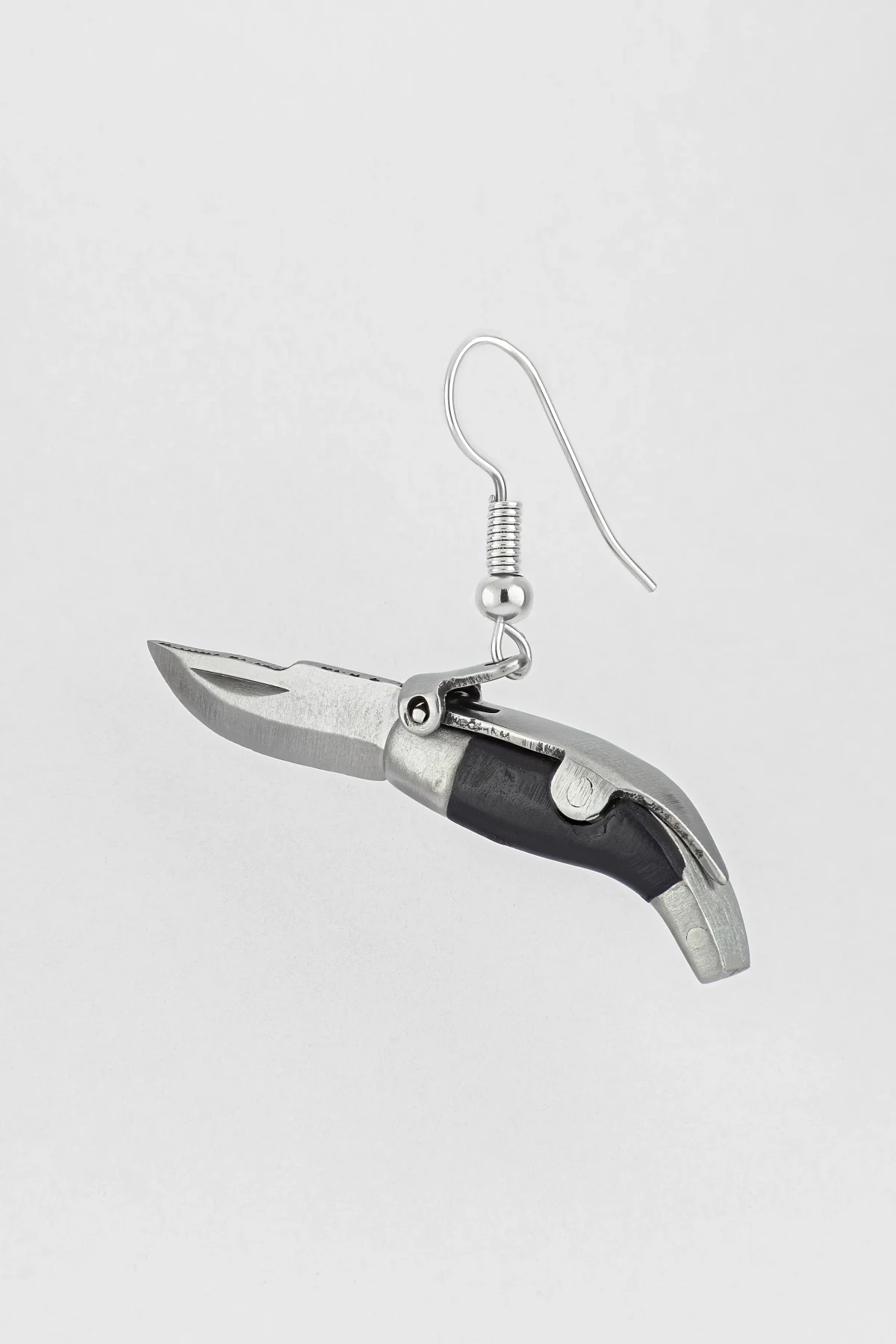
Albacete Navaja: The Classic Knife, the Click of the Carraca, and the Earring with Character
A knife you hear before you see
Before you see an Albacete navaja, you hear it. A click. Short, dry, like a castanet. That is the carraca, the spring lock that fixes the blade in the open position. No other type of knife sounds like this. Swiss knives unfold quietly. Japanese folders open with a whisper. The Albacete navaja clicks. And that sound has been its calling card for 500 years.
In old Andalusia, the click of the carraca was a message. Not a threat, a warning. "I am armed. Think again." Bandoleros in the Sierra Morena mountains, bartenders in Albacete taverns, matadors backstage at the arena: they all knew that sound. It meant the conversation was over and a different language was about to begin.
The Albacete navaja is not just one of many Spanish knife types. It is the archetype. The form that other types take as their starting point and then vary. The jerezana refines it. The punta de espada elongates it. The capaora simplifies it. The Curva Helada bends it. But all of them are variations on the theme set by the Albacete navaja.
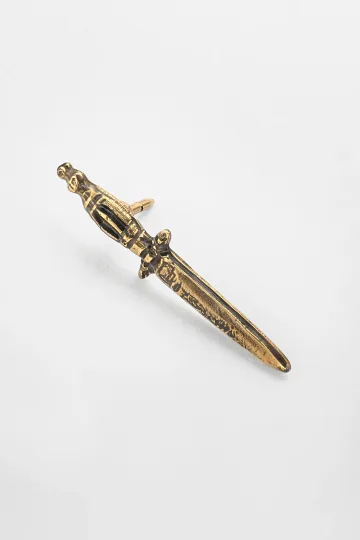
And now that form hangs on a chain. Or swings from an ear, as an earring that unfolds.
Wear the symbol, don't just read about it. These are in stock:

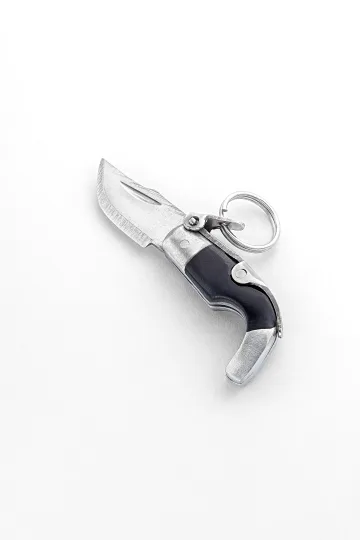
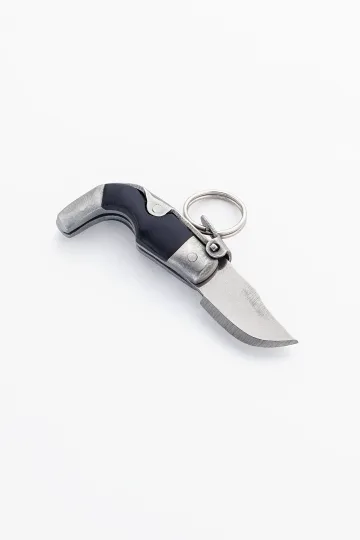
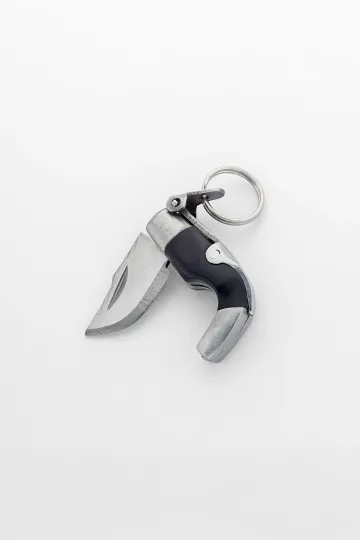
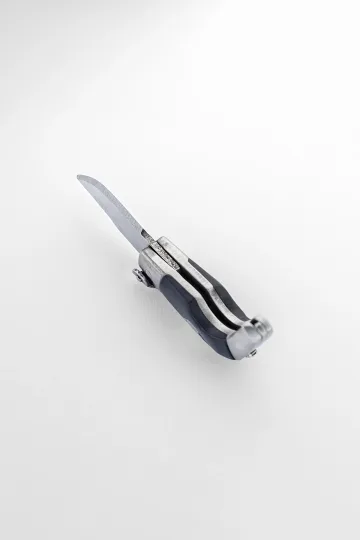
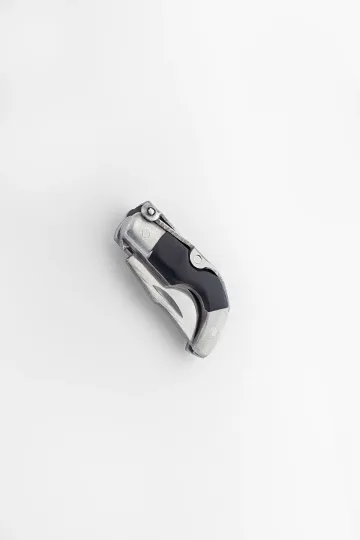
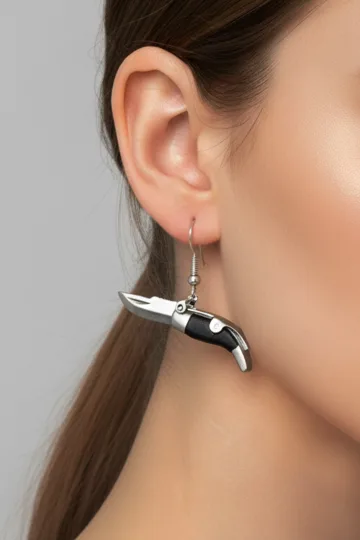
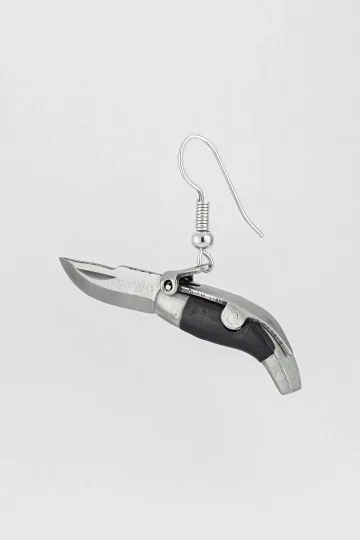


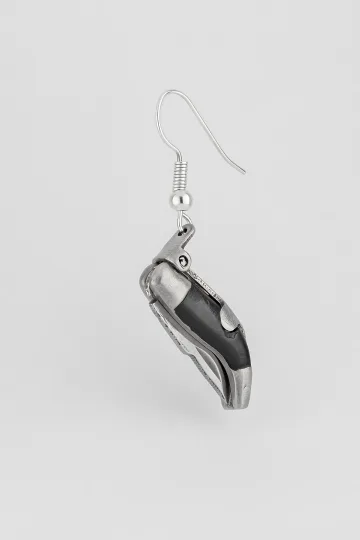

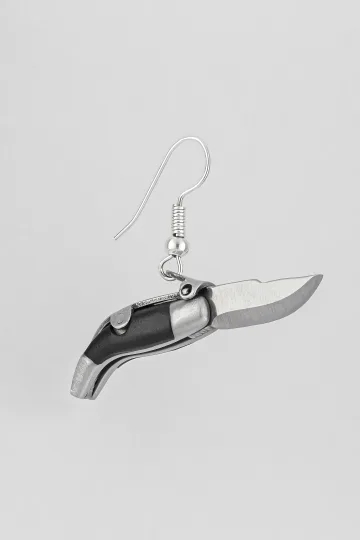
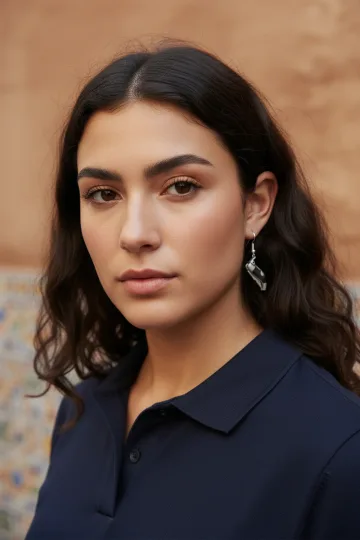
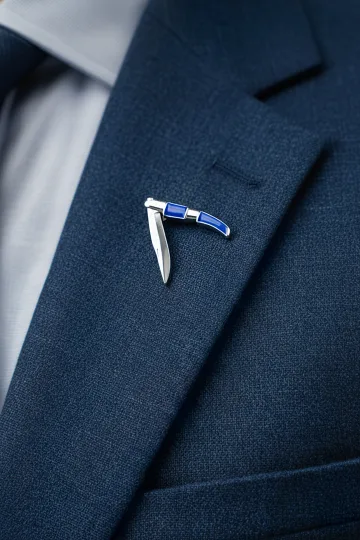


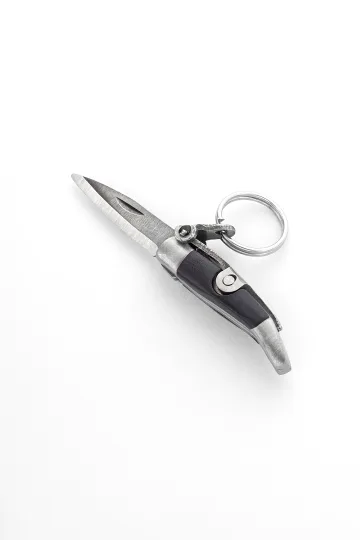
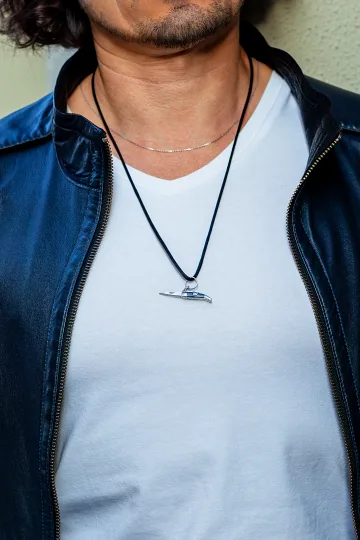
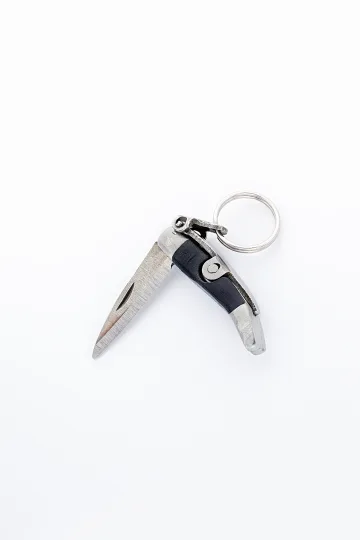


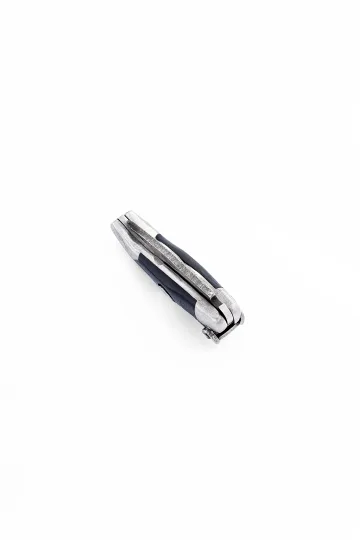

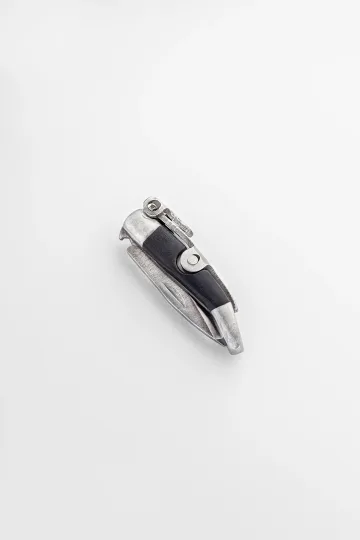
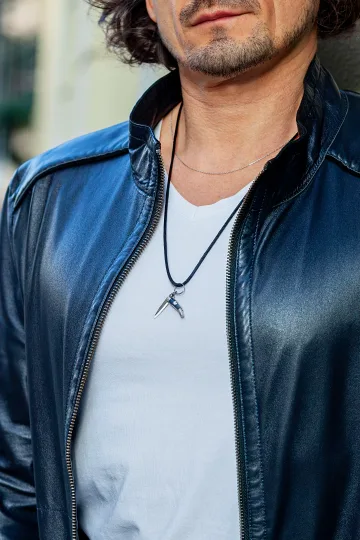
What an Albacete navaja looks like
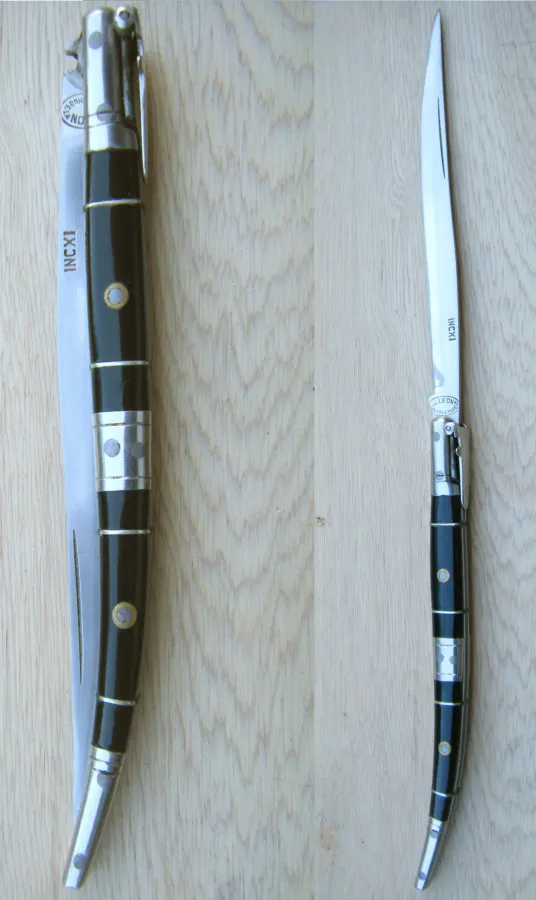
The blade
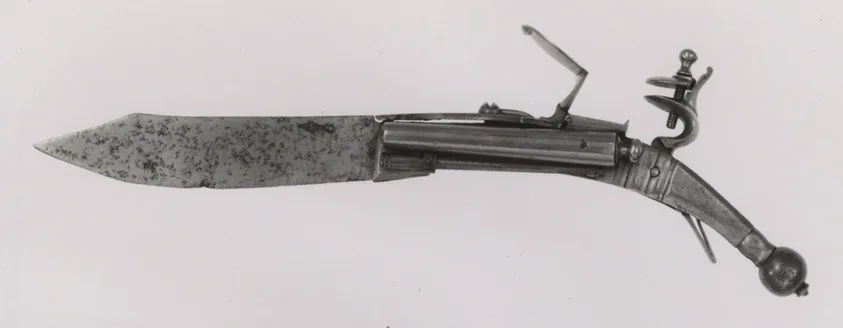
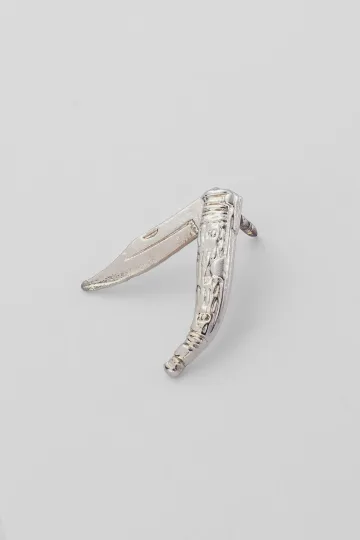
The blade of an Albacete navaja has a distinctive shape: straight for most of its length, with a curve that begins at roughly 75% from the base and flows smoothly to the tip. This is not the sabre curve of the Curva Helada or the sickle arc of the lunar knife. It is a gentle, controlled turn of the line, like a pen flourish at the end of a signature.
The tip features a contrafilo, a reverse edge on the spine that occupies less than half the blade length. The contrafilo gives the tip both menace and function: the knife can cut and also thrust from both sides. On a full-size navaja, this made the weapon more dangerous. On a jewellery miniature, it makes the silhouette more interesting: the tip gains volume and reads clearly at any scale.
The steel is high-carbon, high quality. Albacete smiths worked with carbon steel for centuries: it holds an edge better than stainless but demands care. On museum specimens you can see patina, noble dark patterns that appear on carbon steel over the years. That patina is the knife's passport: its pattern roughly tells you the age and intensity of use.
Decorative work on blade and handle
Albacete navajas were never purely functional objects. From at least the 17th century, the best workshops practised damasquinado, the inlay of fine gold and silver wire into a darkened steel ground. The technique came directly from Moorish metalwork: the Arabic word for Damascus steel gave it the name. A damasquinado blade carries geometric patterns or floral scrolls worked in precious metal against the dark steel. The contrast is exact because the wire is hammered flush and then polished flat.
Engraving went in a different direction. On high-grade handles, a burin cut fine lines directly into horn, bone, or ivory. Hunting scenes, religious motifs, the coat of arms of a noble who commissioned the knife: all documented in museum collections. On the virolas themselves, a fine chiselled script with initials or a date was standard for any knife intended as a gift or a betrothal present.
The combination of a damasquinado blade with silver-inlaid virolas and an engraved horn handle represented the pinnacle of the Albacete craft. These pieces were not everyday carry. They were made for the Feria, for gifts between equals, for presenting to a patron. Today they sit in museum cases. The miniature pendant distils their visual language: contrasting materials, clear zones, the same three-part structure of metal and handle material.
The handle: virolas and rebajo
The handle of an Albacete navaja is a work in itself. Two elements define it that you will not find on other types:
Virolas are decorative metal rings at the upper end of the handle, near the blade base. They were made from brass, alpaca, silver, sometimes gold. On simple navajas, virolas are plain. On expensive ones, they are engraved with ornament, with the owner's initials. Virolas are like shirt cuffs: the detail by which you judge the level of the piece.
Rebajo is the metal cap at the opposite end of the handle. Together with the virolas, the rebajo creates a visual frame: metal, handle material, metal. This three-part structure is the signature of the Albacete navaja.
Between virolas and rebajo sits the handle proper: horn, bone, wood. Bull horn is classic. Olive wood for the simpler models. Engraved bone for those with deeper pockets. Ebony, mother of pearl, tortoiseshell for ceremonial pieces brought out for festivals and fairs.
In jewellery miniatures, the virolas and rebajo are preserved as decorative bands of a different tone or texture on the pendant handle. They are small, but they are exactly what a connoisseur looks for to tell an Albacete navaja from a generic "navaja."
The mechanism: golpetillo
The lock of the Albacete navaja is called the golpetillo. It is a spring mechanism on the left side of the handle (when the knife lies blade-right). The spring is a steel strip with a window or lever (palanquilla) that engages a locking notch when the blade opens.
The golpetillo creates that click. When the blade opens quickly, the spring strikes the notch with a characteristic sound, hence the name: "golpetillo" from "golpe" (strike). The sound is not a side effect. It is a design feature. Smiths tuned the golpetillo like a musical instrument: the correct click should be short, bright, and confident. A dull or drawn-out click meant poor fitting.
The spring comes in two types: teja (flat, like a roof tile) and tetilla (rounded). The spring type affects the sound and the opening force. The smith selected the spring to match the customer: a stiff teja for a young, strong man; a soft tetilla for an older one. Personalisation at the mechanical level.
Try it on mentally
Picture this: you are wearing an open-collared shirt, and from one ear hangs a compact metal silhouette, about the size of a thumb segment. At arm's length, people see a shape, something metallic and clean. Up close, they notice the curve of the blade, the virolas, the hinge. And they ask. That is the navaja earring. In Solingen, the great German knife-making city, collectors of Spanish navajas prize the golpetillo mechanism above all. German knife culture understands precision mechanics, and the golpetillo is exactly that: a centuries-old spring lock, hand-fitted to tolerances that modern factories would struggle to match.
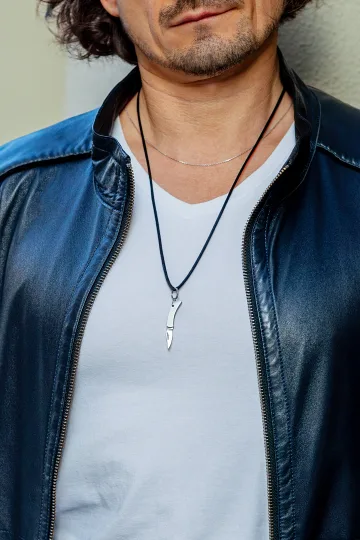
A navaja rides on an open collar, a leather jacket over it. You don't tuck a blade under a tie, and don't argue.
How to wear a navaja
Over years on shoots and in the atelier I have styled the navaja into dozens of looks, from street to evening. Here is what actually works, by occasion.
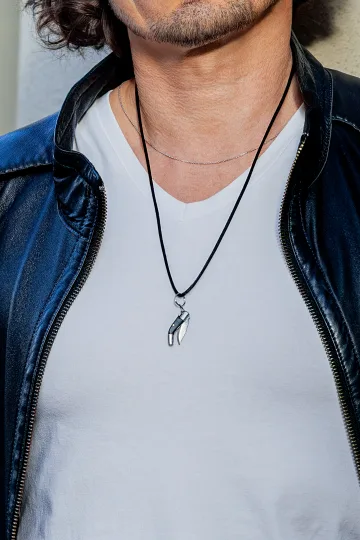
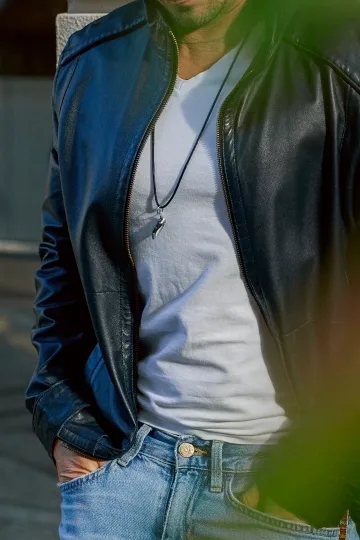
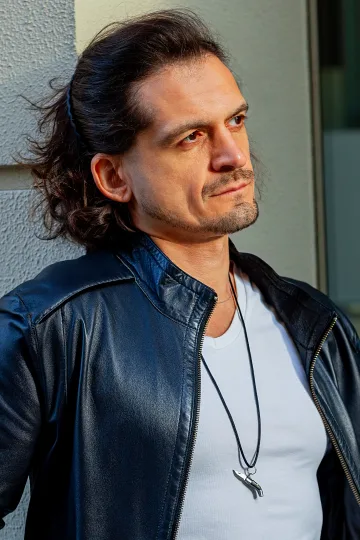
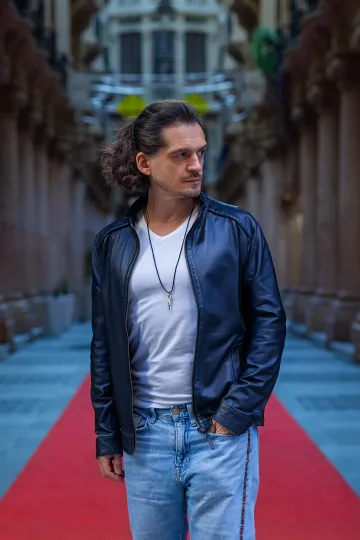
How do you wear a navaja every day? For an everyday look I recommend a pendant on a thin 45-50 cm chain over a grey or white tee, an open collar, a leather jacket or denim on top. A single navaja earring I suggest with the hair up or a short cut, so the metal stays on show. A light top lifts the steel; a dark one turns the blade into the accent.
Does a navaja belong at the office? It does, if you keep it restrained. I choose a pendant on a thin chain under a plain shirt in a calm colour, length 45-50, so the blade slips under the top button. A strict dress code is no verdict: the pendant tucks under the shirt and stays a private detail only you know about.
How do you build an evening look? For the evening I suggest dark fabric, black or wine, an open collar and a shorter chain closer to the collarbones. Against the dark the cool steel reads sharper. You can layer two or three pieces from one collection, but without overload.
Silver or gold for a navaja? I hold the line by metal: a silvery tone with a cool palette (blue, grey, white), a golden tone with a warm one (beige, ochre, olive, terracotta). Matte steel is the all-rounder and never fights the clothes.
Pendant or earring, which to choose? It depends on how you want to speak. A pendant reads from across the room, slowly; a single earring reads at conversation distance, a deliberate asymmetry. One piece on a clean line always beats five at once. If you want both formats, set them at different heights of the body: pendant at the chest, earring by the face.

Turn on your camera, pick earrings, a pendant or a ring, and see the piece on yourself in real time.
Switch items in one tap.
Everything runs in your browser: no photo or video is ever uploaded.
Who it is for
For those who do not ask permission to be themselves. That is from the brand description, and it is accurate. The navaja was the knife of people who lived by their own rules. The navaja earring carries the same energy.
For men and women. One earring in one ear: asymmetry, boldness. Two earrings: symmetry, balance. Both work.
For lovers of Spain. Not tourist Spain (paella, sangria) but real Spain (flamenco, navajas, the dry plains of La Mancha).
For knife collectors. When you cannot take a real navaja with you (on a plane, to work, to a bar), the navaja earring stays with you.
For minimalists who want one piece that says everything. No stacking, no layering. One earring, one conversation starter, one 500-year story.
For every day. This is not costume jewellery for special occasions. The navaja earring is made for daily wear. Stainless steel or coated brass: materials that handle contact with skin, sweat, water. No drama, no green stains, no peeling. Wear it with a leather jacket or a white shirt. The navaja does not conflict with style. It defines it.
History: 500 years in one city
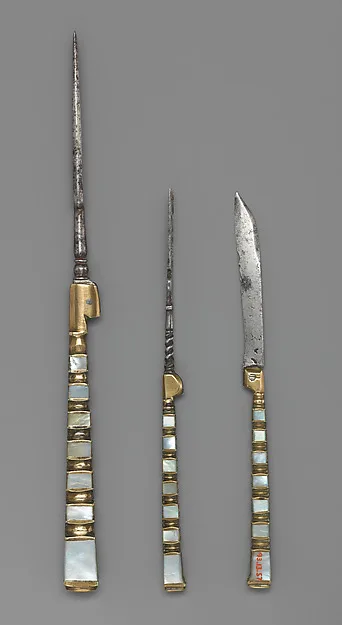
The wider arc lives in our full history of the Spanish navaja: the Moorish roots across Iberia, the Andalusian shepherds, the bandolero romanticism of the Sierra Morena, the way Carmen and the bullring fixed the navaja in the European imagination. What follows here is the story as it played out in one city.
The Moorish foundation
Albacete stood on the border between Moorish and Christian Spain. The Moors held the city from the 8th to the 13th century. They left behind not minarets (those were demolished) but metalwork. Damascus steel, the technique of inlay, the folding mechanism: all of this came from the Arab world and settled in the workshops of Albacete.
The sword ban: 1563
Philip II banned commoners from carrying swords. The smiths answered with the navaja: a folding knife that was technically not a sword but approached one in length and capability. The Albacete navaja was born in this conflict between law and dignity.
The cuchillero guilds
By the 17th century, Albacete had formed knife-making guilds, the gremios. A division of labour: one master for blades, another for springs, a third for handles, a fourth for assembly. Collective craftsmanship. Workshop marks on the blades served as signature, guarantee, brand, three hundred years before branding was invented.
The craft: from steel to handle
Making a full-size Albacete navaja by traditional methods involves at least a dozen distinct operations. The blade begins as a bar of high-carbon steel that is heated, forged to rough shape, then normalized to relieve stress in the metal. The blade is ground to its final profile, then hardened by quenching in oil, then tempered in an oven at a lower temperature to reduce brittleness without losing hardness. The difference between a blade that holds an edge for months and one that chips in a week sits entirely in the temperature control of those last two steps.
The spring is cut and fitted separately, then adjusted for tension and sound. This is the step that defines the voice of the knife. The goldsmith, if the piece warrants it, works the virolas: turning the brass or silver rings, engraving them if the customer has ordered ornament. The handle material is shaped, drilled for the pivot pin, and polished. Assembly is the final test: everything must sit flush, open smoothly, and lock with the right click. If the click is wrong, the spring is adjusted. This process is repeated until the smith is satisfied.
Traditional masters passed this sequence of operations through apprenticeships that lasted years. The guild system ensured no one rushed through it.
BIC: 2017
In 2017, the metalworking craft tradition of Albacete received the status of Bien de Interes Cultural, intangible cultural heritage at the national level. Not a certificate, not an award. A legal status, the same as that of architectural monuments. The state recognised that what Albacete's masters do with metal is a national treasure.
Upload a photo of your pet, someone you love, or an object. We'll build a 3D model and hand-cast it in pewter.
The navaja in flamenco, film, and the street
Flamenco
The navaja and flamenco are children of the same mother. Both Andalusian. Both about controlled passion. Both about the moment when silence explodes into action.
In flamenco dance, there is a moment called the cierre, the closing heel strike. In the navaja, there is an analogue: the click of the carraca. Both sounds mean the same thing: full stop. End of phrase. Decision made.
Camaron de la Isla, the greatest flamenco singer, was from San Fernando, near Cadiz. Paco de Lucia, the greatest guitarist, from Algeciras. Both came from a world where the navaja was part of daily life. Their music carries the same energy as the click of a navaja: restraint that can explode at any moment.
Cinema
Carlos Saura's "Carmen" (1983) put navajas on screen. "Captain Alatriste" (2006) with Viggo Mortensen showed 17th-century Spain where navajas and swords coexisted. Antonio Banderas in "The Mask of Zorro" played the Andalusian hero with a blade. Tarantino, not Spanish, but a knife fetishist, would find navajas a worthy addition to his aesthetic.
In the "Narcos" series, navajas flash as part of the Latin American landscape. In "Peaky Blinders," blades are sewn into caps: different country, different era, but the same idea. The working class with weapons they should not have.
Bandoleros
18th and 19th century, the Sierra Morena mountains. Highway robbers whom the people considered Robin Hoods. The navaja was their signature weapon. Prosper Merimee wrote "Carmen" (1845) after travelling through Andalusia, where every other man carried a navaja. French and English travellers described navajas with horror and admiration. Theophile Gautier noted "folding knives of terrifying size, which the Andalusians open with the same calm as an Englishman opens an umbrella."
Social media
#navajadealbacete, #cuchilleriaalbacete, #knifependant: thousands of posts. TikTok videos with ASMR carraca clicks get hundreds of thousands of views. A new generation discovers navajas through screens and then travels to Albacete to see them in person.
Owner's story
A navaja collector from Germany. "I have been collecting navajas for 20 years. Real, full-size ones. When I saw the navaja earring, I thought it was a toy. I ordered it out of curiosity. Now I wear it every day. The real navajas sit in their display case. The earring is on me."
Customer reviews
Zevira is a real jewellery shop. Genuine payments, deliveries and customer thank-yous.
🥰🥰🥰 gracias
Ok, ¡gracias! 🙂
What to pair it with
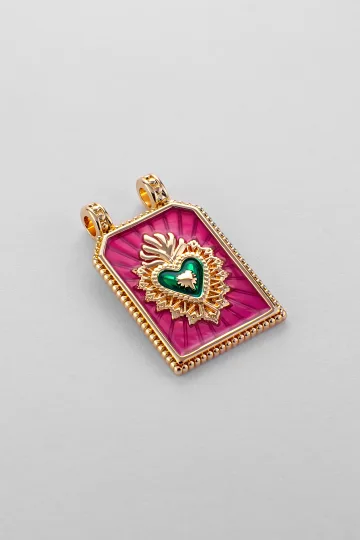
The Albacete navaja is a universal form that pairs with almost anything in the catalogue. With a nazar, you get a Mediterranean set: Spanish steel plus Turkish eye, two shores of the same sea. With a compass, the image of a traveller who knows both the direction and how to get there. With a sacred heart, Andalusian passion, flamenco and fire. The Albacete navaja works solo on a simple chain and in the company of an anchor or any other navaja from the collection. It is the archetype, and archetypes do not conflict with details. If you do not know where to start your set, start here.
The navaja as a gift
The navaja is one of those gifts people remember. Not because it is expensive. Because it is specific.
For a man's birthday. A navaja pendant or earring says: "I know what you like, and I did not buy you yet another cologne." Men get tired of abstract gifts. The navaja is an object with a biography, a history, a character. Give a jerezana: give a piece of Andalusia. Give a punta de espada: give dignity. Give a capaora: say "you are solid and real."
For a couple. Two navaja pendants of different types: him, the punta de espada (severity); her, the Curva Helada (curve). Or the other way around. Navajas have no gender restrictions.
For a traveller heading to Spain. A navaja pendant before the trip is an invitation. "When you are in Albacete, visit the knife museum and understand where this piece comes from." A gift that becomes a route.
For a collector. All 7 navaja types in the collection form a system. Start with one, collect them all. Each new pendant is a new chapter of the story.
For yourself. The navaja is not something you wait for others to give. If it resonates, take it. The way people used to buy real navajas: walk into the workshop, choose, walk out. No occasion needed.
Seasonal ideas: A navaja earring for a graduation gift, a navaja pendant for a February birthday, a pair of different types for an anniversary. The price sits somewhere around a good dinner out, but unlike a dinner, it does not end when the evening does.
What to write on the card? Nothing. The navaja speaks for itself.



Albacete, the workshop, and quality
Zevira works in Albacete. This is not a marketing decision. It is a fact: the workshop stands in the city that has been forging navajas for 500 years. The Museo de la Cuchilleria is within walking distance. Master cuchilleros are neighbours. The Feria de Albacete takes place outside the window every September.
A navaja pendant or earring from Albacete is not the same as a navaja pendant from AliExpress. Visually, they might look similar. But behind one stands 500 years of craft, and behind the other stands a photograph in a catalogue.
We do not claim our pendants are hand-forged on an anvil. That would not be true. But we do claim they are made by people who see real navajas every day. Who know how the blade curve should look at 75%. Who understand the difference between a jerezana and a punta de espada not from pictures but from a handle in the hand. And that knowledge is in every millimetre of the miniature.
Behind the scenes
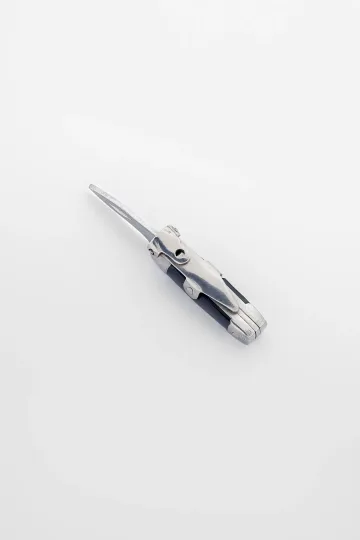
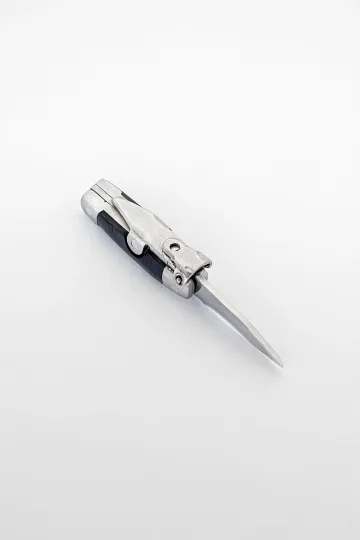
When a master starts work on a navaja miniature, the first decision is what to keep at a scale smaller than a little finger. The blade curve at 75% is mandatory. The virolas must be hinted at, even as a thin band of contrasting tone. The contrafilo on the tip gets simplified to a single facet, but stays present. The carraca line on the handle is suggested by a groove no wider than a hair. What gets left out: the interior spring mechanism, the fine engraving on the handle scales. What gets added: a bail for the chain, engineered so it does not compete with the knife silhouette. The whole process takes more decisions per square millimetre than a full-size knife, because at this scale every line either reads or it does not.
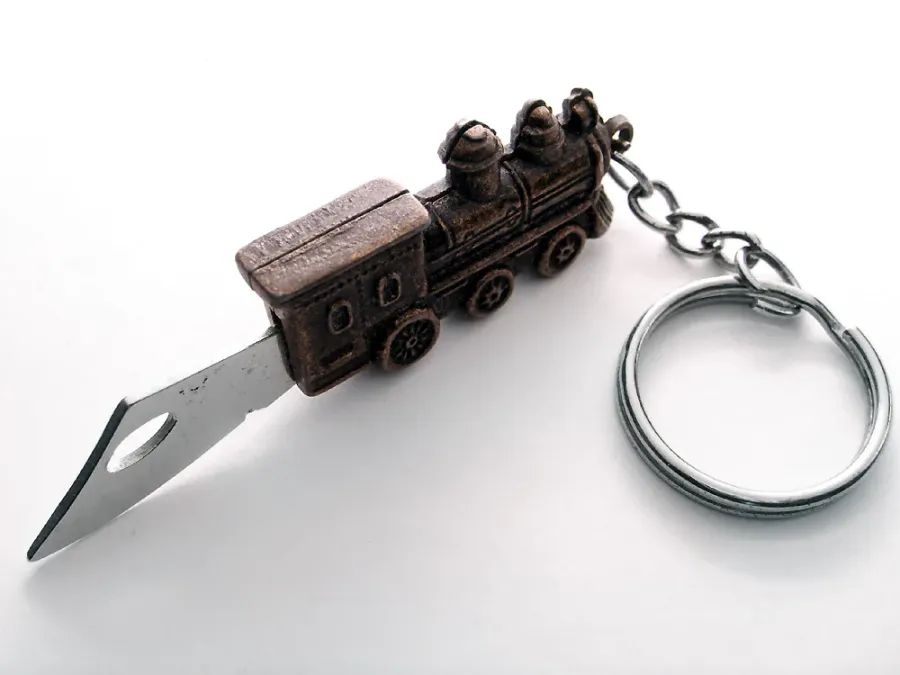
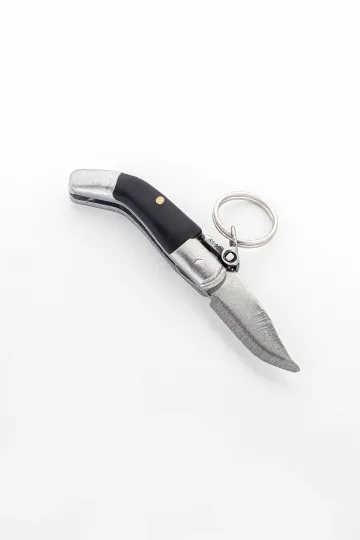
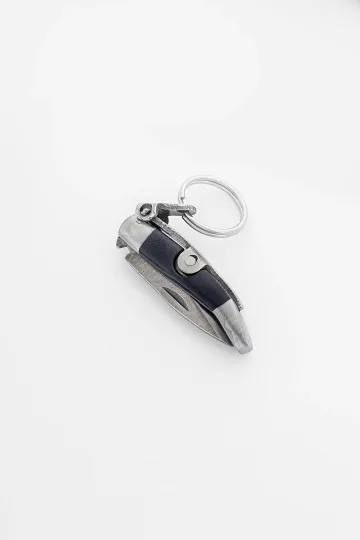
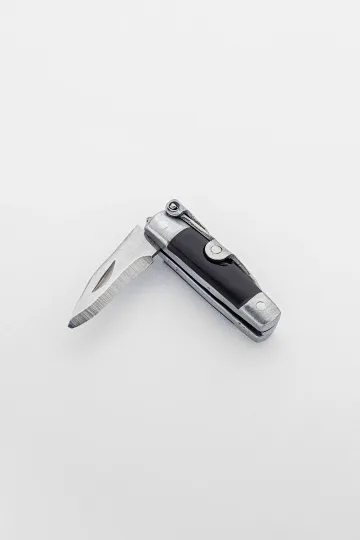
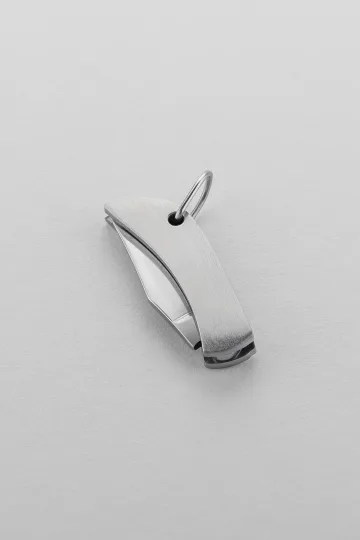
CAPAORA mini knife pendant
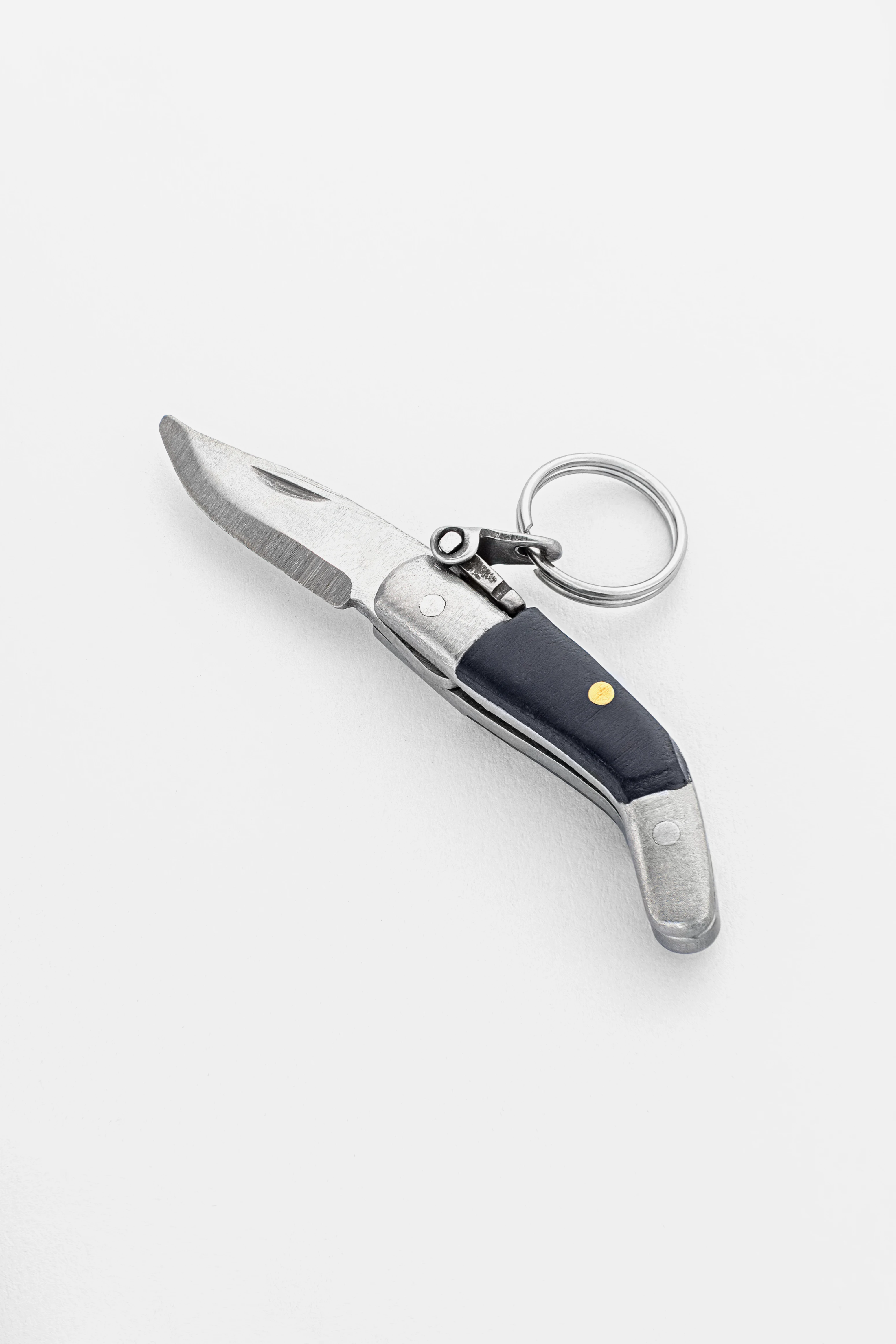
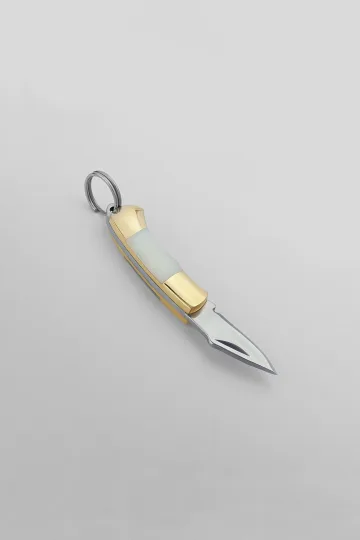
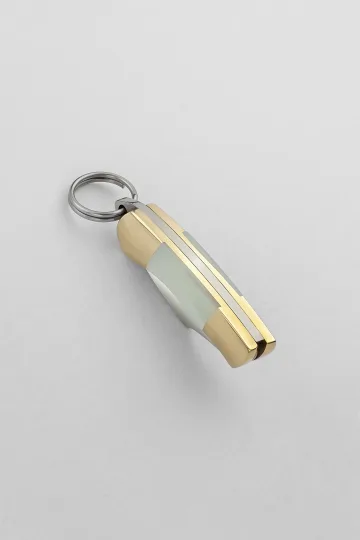
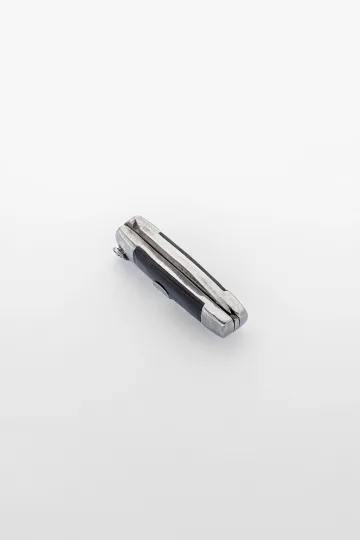
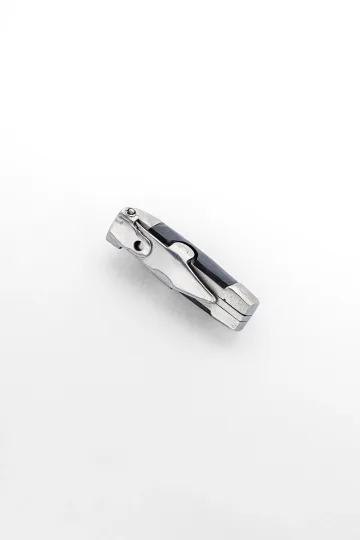
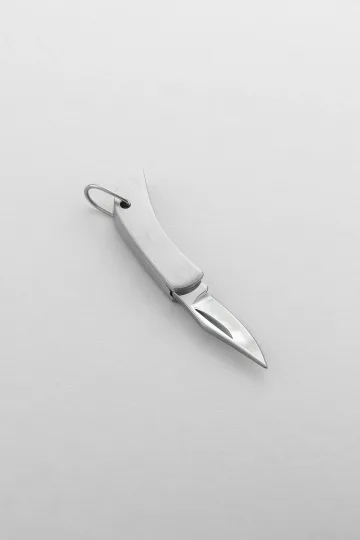
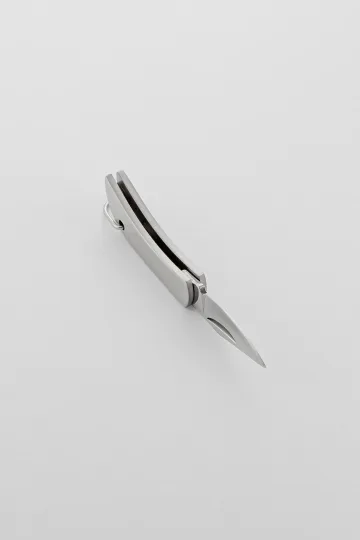
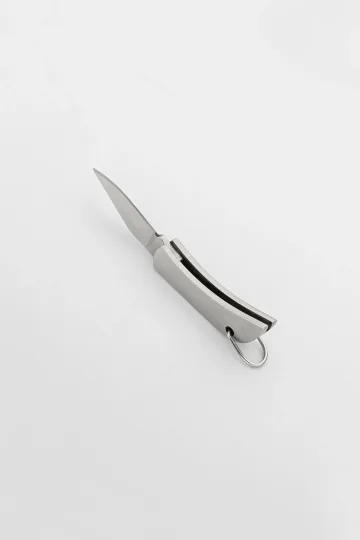
The 18th-century Spanish navaja in miniature: 40 mm of stainless steel, a real folding mechanism and a Palanquilla lock that clicks. An affordable gift to remember.
Authentic · Ships from Spain · 14-day returns
How to spot quality
What to look for when choosing a navaja miniature. Proportions: blade and handle should preserve the ratio of the original. Cheap copies make the blade one length for all types, and the Albacete version looks the same as the jerezana or capaora. That is not a navaja; that is a stick. Weight: a quality miniature has heft in the hand. Hollow stampings are weightless and ring like foil. Details: virolas, carraca, contrafilo, clip point: these elements should be legible. If the pendant looks like an abstract stick with a loop, it is not a navaja. Finish: even coating, no burrs, smooth edges. The loop or ring for the chain should be neat and proportional, not a huge ring that draws attention away from the pendant itself.
Care
Wipe with a soft cloth after wearing. Store separately from other jewellery to avoid scratches. Avoid contact with perfume, creams, chlorine. Brass may darken over time: this is normal and creates patina. If you want the shine back, rub with baking soda. If you have a navaja earring, periodically open and close it to keep the mechanism from seizing up. That is it. These are not fragile objects. They are miniature navajas. They can handle a life.
Leave your email, we'll send your discount code. No spam, unsubscribe anytime.
The code arrives by email, valid on your first order.
Navaja collection guide
| Type | Character | Read more |
|---|---|---|
| Albacete | Archetype, click, flamenco | You are here |
| Jerezana | Andalusia, sherry, elegance | Read |
| Punta de Espada | Sword in a pocket, severity | Read |
| Capaora | Working strength, workwear | Read |
| Curva Helada | Moorish curve, beauty | Read |
| Lunar Knife | Night, crescent, Lorca | Read |
| Machete | Latin strength, streetwear | Read |
If you are zooming out from navajas to knife jewellery in general (symbolism, materials, allergies, sizing, and a first-purchase algorithm that works regardless of which type you pick), the knife pendants and knife earrings guide is the companion piece to this one.
How the navaja spread beyond Albacete
Albacete was the centre, but not the only location. From the 17th century onward, Albacete blades traveled to every corner of Spain through the annual Feria and through itinerant merchants who carried knives in leather satchels from village to village. In Andalusia, local smiths began adapting the Albacete form for regional tastes: the jerezana elongated the blade for the sherry-producing towns around Jerez; the capaora shortened it for working men who needed a practical tool rather than a display piece.
By the 19th century, Albacete navajas were being exported to Latin America. The same folding design that had served bandoleros in the Sierra Morena was carried by gauchos in Argentina and rancheros in Mexico. Spanish emigrants brought navajas across the Atlantic, and local workshops copied the form. This is why "navaja" in Latin American Spanish often refers generically to any folding knife, while in Spain it specifically means the Albacete archetype.
The navaja also moved north into France, where travellers like Gautier and Merimee encountered it and wrote about it with such vividness that the knife became a literary object before it became a commodity. Thiers, the French cutlery capital, produced its own navaja-influenced folders. The Laguiole, though a distinct tradition, shares with the navaja the same foundational idea: a pocketknife as a cultural object, worth decorating, worth preserving, worth collecting.
The Navaja in International Knife Culture
Knife enthusiasts worldwide have a particular relationship with the navaja. In a world where knife-making cities like Solingen, Seki, and Thiers have built centuries-long reputations, Albacete occupies a unique position. Not a competitor to these traditions, but a relative. All share respect for material, precision, and craft. All understand that a good blade cannot be industrially replicated, that it needs a master's hand.
At international knife shows and collector events, Spanish navajas regularly appear alongside blades from other traditions. The reaction from seasoned collectors is consistently the same: respect for the mechanics, fascination with the aesthetics, and the question "where can I get one?"
The Parallels Between Blade Cities
There are only a few cities in the world whose name is synonymous with a blade. Solingen is one. Albacete is the other. Seki is a third.
Both Solingen and Albacete lie inland, not on the sea, not on major rivers, not at trade crossroads. Both developed their craft over centuries in relative isolation. Both have guilds that passed knowledge from generation to generation. Both have museums dedicated to their craft.
The difference: Solingen industrialized fully. Workshops became factories. Handwork became machine work. Quality remained, but character changed. Solingen blades are precise, reproducible, scalable.
Albacete industrialized partially. There are factories. But there are also individual masters who make a navaja by hand, from steel to handle. This coexistence of industry and craft is stronger in Albacete than in most blade cities. The BIC status of 2017 protects precisely this artisanal element.
What International Knife Collectors Value
Collectors of Spanish navajas form a small but passionate community worldwide. At knife shows, you regularly see Spanish navajas next to German, Japanese, and French blades. What fascinates collectors:
The golpetillo mechanism. For those who appreciate precision mechanics, the golpetillo is a marvel. A spring, hand-fitted, that produces acoustic feedback. No German knife sounds like this. No Japanese knife. Only the Albacete navaja clicks.
The handle materials. Modern production knives often use synthetic handles (practical, hygienic, scalable). Albacete navajas use bull horn, olive wood, bone. Natural materials with texture and history. Each handle is unique.
The cultural depth. A production knife has a product history. A navaja has a cultural history. Bandoleros, flamenco, the sword ban of 1563: behind every navaja stands half a millennium of narrative. For collectors, that is the difference between a tool and an artifact.
The Navaja and the Sheffield Tradition
British collectors arrive at the navaja from a parallel history. Sheffield was to cutlery what Albacete was to the navaja: a single city that became a byword for blades, with its own marks, its own guild structure in the Company of Cutlers, and its own vocabulary of patterns. The comparison is worth drawing because the two traditions solved the same problem in different ways.
Sheffield built its reputation on the pocket knife and the table knife, on spring-backed folders with a firm walk and talk, the trade's term for the way a blade moves and the sound it makes when it closes. Albacete built its reputation on a knife that announces itself. Both traditions prize the same thing, a mechanism fitted so precisely that it can be heard, and both were hit by the same twentieth-century pressure from cheap stamped production.
For anyone in Britain wearing a navaja pendant, that parallel is the shortest route into why the piece matters. It is the Spanish answer to a question Sheffield was also asking: how do you make a folding blade that a person keeps for life.
The Acoustic Dimension: Why the Click Matters
We mentioned the click of the carraca. But it deserves more than a mention. It deserves its own section.
Jewellery is normally silent. Chains jingle softly. Rings are quiet. Earrings swing without sound. But a navaja earring with a folding mechanism clicks. It makes a sound. And that sound connects the wearer to 500 years of history.
It is a small sound. Not loud, not intrusive. A quiet click when you open the earring. Some wearers make it a habit: open in the morning, close in the evening. A ritual that frames the day.
Collectors of full-size navajas prize the sound of the carraca particularly highly. They call it "the voice of the steel," the acoustic signature of Spanish craft. When that signature lives in an earring you wear every day, the sound becomes a daily companion.
The Feria de Albacete: Where the Navaja Lives
Every September since 1375, the Feria de Albacete takes place. One of the oldest fairs in Spain. Ten days of celebration with music, food, and, yes, navajas.
The cuchilleros display their finest work during the Feria. Masterpieces with mother-of-pearl handles, gold virolas, engraved blades. Collectors from across Europe attend. International knife enthusiasts are among the most loyal visitors, knowing the masters by name.
For anyone visiting Albacete, the Feria is worth planning around. But even outside the Feria, the Museo de la Cuchilleria is open year-round. The admission is modest. The collection is impressive. And the moment when you compare the pendant around your neck with the full-size original behind glass is something no photograph can capture.
What You See in the Museum
The Museo Municipal de la Cuchilleria in Albacete is small. Not the Louvre. Not a sprawling national museum. A few rooms, carefully curated, with navajas spanning five centuries.
What you see: the evolution of form. From the early, rough folding knives of the 16th century to the refined models of the 18th century to modern interpretations. You see how the blade shape was refined. How handles progressed from simple wood to mother of pearl and tortoiseshell. How virolas went from plain bands to engraved works of art.
What you hear: the museum sometimes hosts demonstrations. A master opens a navaja, and the click of the carraca echoes through the quiet room. In that moment, the present connects to 500 years of history. Same sound, same mechanism, same place.
What you take away: an understanding of why a navaja pendant is more than a decorative stick. It is the miniature of an artifact that has its own cultural history. And that history lives on in Albacete, not as folklore but as daily practice.
Buying it as a gift? Each one arrives ready to give.
 A branded Zevira box and a little card come with every order.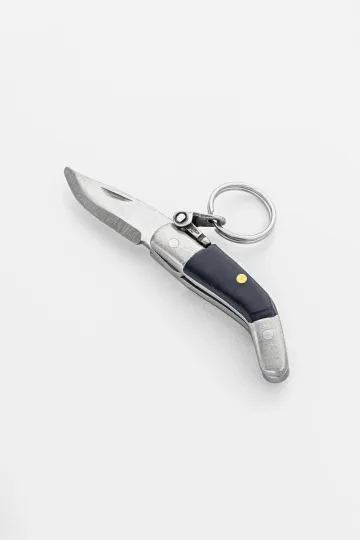
Materials: Horn, Olive Wood, Bone and Steel
The navaja's identity sits as much in the handle as in the blade, and the material vocabulary has barely changed in three centuries.
Bull horn is the classic. Dark, translucent at the edges when held to light, and no two pieces alike, since the grain follows the growth of the animal. Horn is warm to the touch and it moves slightly with humidity, which is why old handles sometimes show a hairline gap at the bolster. On a pendant version, horn reads as depth rather than as black, and it takes a polish that stays quiet rather than glossy.
Olive wood is the Mediterranean alternative, pale gold with a wild grain that swirls rather than runs straight. It is dense, it takes fine detail, and it darkens over years of handling. Of the traditional handle materials it is the one that most obviously ages with the owner.
Bone is the lightest of the three, pale and slightly porous, and it was traditionally the working man's material because it cost less than horn. It scrimshaws well, which is why so many antique navajas carry engraved decoration on bone rather than on metal.
Nickel silver for the virolas. The bolsters and ferrules are usually nickel silver, an alloy of copper, nickel and zinc that contains no silver at all despite the name. It polishes bright, resists corrosion, and is hard enough to protect the ends of a softer handle. Worth knowing if you react to nickel, since it is the one component that regularly touches skin.
Carbon steel and stainless. Traditional blades were carbon steel, which takes a fierce edge and rusts if you look at it wrongly. Modern makers mostly use stainless, which holds up in a pocket and in a Spanish summer. On a worn piece rather than a working blade, stainless is the obvious choice, and 316L in particular tolerates sweat and salt water without marking.
Damascus and pattern welding. Layered steel with a visible pattern turns up on higher-end pieces. It is decorative rather than functional at this scale, and the pattern is genuinely in the metal rather than etched on top, which is worth verifying before paying for it.
Gift Ideas: Occasion by Occasion
The navaja carries a specific set of associations, courage, decisiveness, craft, a long history in one place, and those associations make it a better fit for some occasions than others.
A new job or a promotion. The strongest fit of all. The knife is the symbol of someone who makes a decision and acts on it, and a piece given at a professional turning point carries that reading without anyone needing to explain it.
A milestone birthday. Thirty, forty, fifty. The navaja is not a young person's symbol specifically, and it works particularly well for a birthday that the recipient is not thrilled about, because it says durability rather than youth.
A move abroad, or a return home. A form tied to one city for five hundred years is a natural gift for someone changing countries. Paired with a compass it becomes explicit.
A graduation. With a caveat: it works for someone finishing something difficult, less well for someone at the start of everything.
A wedding or an anniversary. Traditionally the navaja belongs to Spanish courtship rather than to Spanish weddings, and there is a folk superstition across much of Europe about giving anything with a blade to a partner. The usual fix, and it is genuinely traditional, is for the recipient to hand back a coin, which turns the gift into a purchase and cancels the omen.
Between friends. The knife has a long history as a token between people who have been through something together, and this is where the coin custom is most often actually observed.
To yourself. The most common case, and no ceremony required.
When to choose something else. Avoid it as a gift for someone recovering from illness, for a child, or for anyone whose associations with blades are not neutral. It is a strong symbol and it does not soften.
Send a friend a discount code, they save on their first order.
Who this is NOT for
If you want something delicate and barely visible, the Albacete navaja is not your piece. It is the archetype, and archetypes are not subtle. For something slimmer and more refined, look at the jerezana with its elegant clip point. For something curved and mysterious, the Curva Helada. The Albacete navaja is for people who want the original, the full statement, the one that started it all. If that is too much, there is a navaja for every temperament.
The Navaja Across Generations
The navaja is not a young person's piece or an old person's piece. It crosses generations because it speaks to different things at different ages.
A 20-year-old wears a navaja earring because it looks sharp. Because it starts conversations. Because the folding mechanism is satisfying to fidget with. The history is a bonus. The form is the point.
A 35-year-old wears a navaja pendant because they have been to Spain, or because they saw one in a film, or because someone told them the story of Albacete and it stuck. The symbol has acquired layers. It is no longer just a shape. It is a reference.
A 50-year-old wears a navaja because they understand what it means to carry something with five centuries of history. Because the craft resonates with their own experience of doing something well for a long time. The pendant is a quiet statement about values: tradition, quality, the beauty of an object that does one thing and does it well.
A collector wears all seven navaja types because each one is a chapter. The Albacete for the foundation. The jerezana for elegance. The punta de espada for severity. The capaora for strength. The Curva Helada for beauty. The lunar knife for mystery. The machete for power. Together, they tell the complete story of Spanish blade culture.
Silver and gold jewellery, wedding bands, symbolic pendants, paired sets.
Wear the symbol, don't just read about it. These are in stock:



The Navaja and the Earring: One Shape, Two Formats
The same outline works at two very different scales, and the choice between them is not only about size.
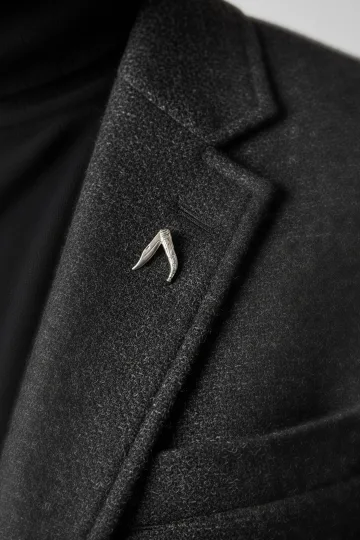
As a pendant the navaja sits vertically on a chain, and the length of the form does the work. It reads clearly at a distance, it lies flat against the chest, and the detail on the blade and virolas is visible when someone is close enough to look. This is the format for anyone who wants the piece to be part of an outfit rather than part of a face.
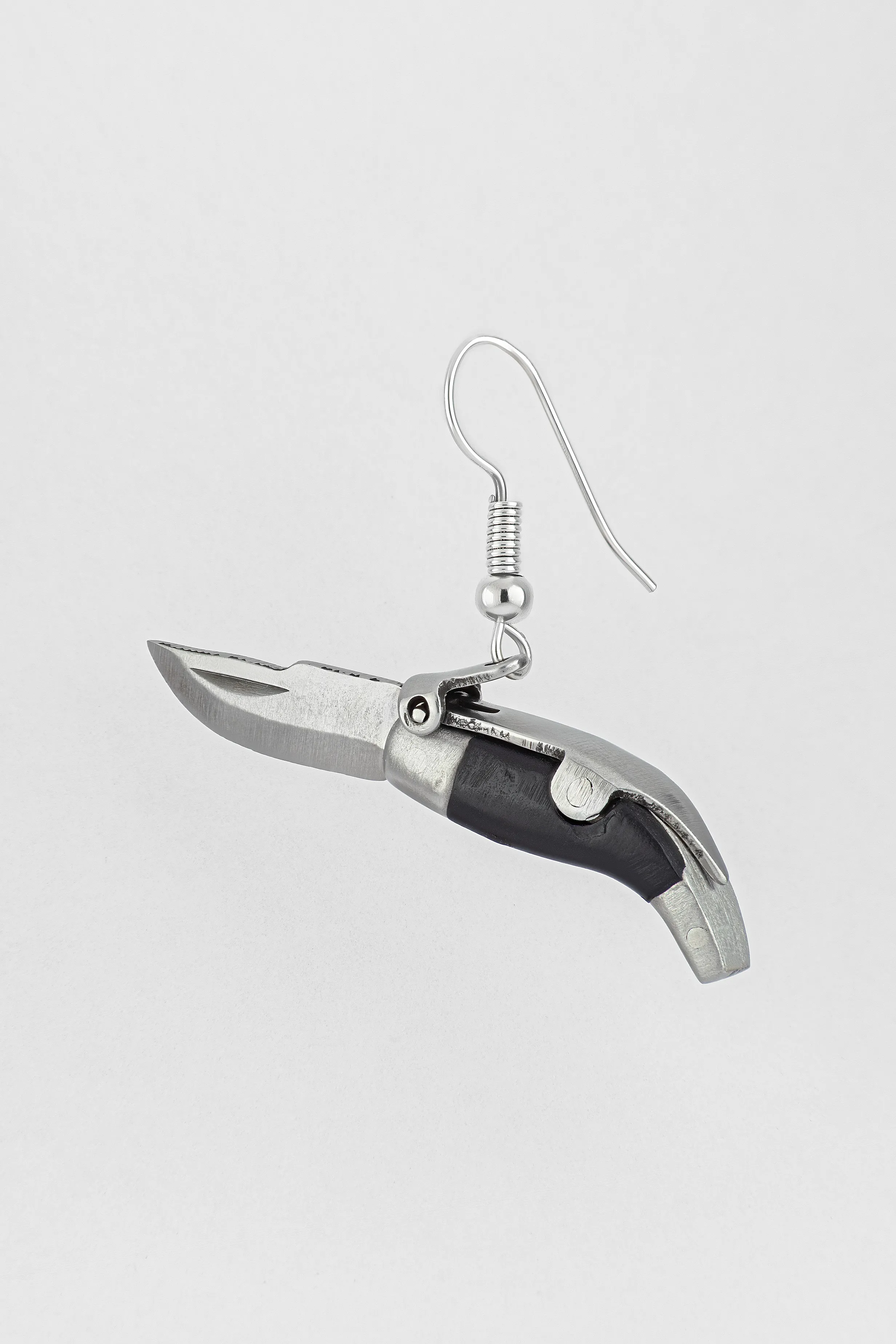
As an earring the same shape becomes an entirely different object. It sits beside the jaw, it moves when the head moves, and its length is read against the neck rather than against the torso. A navaja earring worn alone is one of the few knife pieces that reads as elegant rather than as aggressive, because the scale is intimate and the eye takes it as a line rather than as a blade.
Worn as a single earring, which is how most people wear it, the piece becomes asymmetric by design. That works with short hair and with hair tied back, and it disappears entirely under anything loose, which some wearers use deliberately.
A pair is a different statement again, more formal and more graphic, and it suits a plain neckline with no other jewellery competing.
The practical differences. An earring must be light, which limits the material and the thickness of the form. A pendant can carry weight and detail that an earlobe would object to after an hour. If the mechanism actually moves, and on some pieces it does, that is far more satisfying at pendant scale where the hand can reach it.
Wearing both is possible but rarely works, since two versions of the same distinctive silhouette on one person reads as a set rather than as a choice. If you own both, alternate them.
Wear the symbol, don't just read about it. These are in stock:






Frequently asked questions
What is an Albacete navaja? A classic type of Spanish navaja from Albacete. It is distinguished by a curved blade (the curve begins at 75% of the length), virolas and rebajo on the handle, and a golpetillo mechanism with a characteristic click.
How does it differ from other navajas? The Albacete navaja is the base form from which other types diverge. The jerezana refines its blade, the punta de espada straightens it, the capaora shortens it, the Curva Helada deepens the curve. The Albacete version is the golden mean.
Does the navaja earring really unfold? Yes. The earring reproduces the mechanics of a real navaja: the blade opens and closes. This is not simply a pendant in the shape of a knife; it is a miniature mechanism.
What is Bien de Interes Cultural? A national status of intangible cultural heritage in Spain. Since 2017, the metalworking craft tradition of Albacete has been protected at the national level.
Is a navaja dangerous? A real navaja is a bladed weapon (legislation varies by country). Jewellery navaja pendants and earrings are designed as decorative items and are treated as jewellery in most jurisdictions, but knife and sharp-object laws differ from place to place, so it is worth checking the local rules where you live or travel.
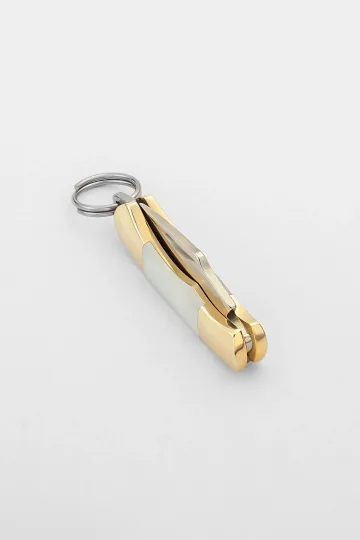
What are they made of? Stainless steel and coated brass. Not gold, not silver, unless specified. The golden tone you see is brass with a protective coating.
Is it suitable as a gift for someone who does not wear jewellery? This is actually the most common scenario. The navaja earring is the piece that converts non-jewellery people. It does not feel like jewellery. It feels like carrying a piece of history.
What chain length works best with the pendant? 45 to 50 centimetres for most people. At that length the pendant sits on the sternum, visible in an open collar and hidden under a closed one. For a lower, freer look, 55 centimetres. For a V-neck or a deep neckline, 42 to 45 centimetres keeps the pendant in the frame of the neckline. Chain thickness should match the pendant's weight: a cable chain or a fine box chain works better than a heavy curb.
Can I wear the navaja pendant through airport security? As a rule it does not cause problems. Jewellery pendants are not knives. They are not sharp and not functional as tools. The pendant is small and usually reads as ordinary jewellery during screening. That said, the final decision always rests with airport security staff, and rules can vary by airport and country, so allow for that possibility when you travel.
What is damasquinado? The technique of inlaying fine gold or silver wire into a darkened steel or iron ground. It came to Albacete via Moorish metalwork and was used to decorate high-grade navajas from at least the 17th century. On jewellery miniatures, the visual effect is suggested through contrasting surface finishes rather than true wire inlay.
Can I wear different navaja types together? Yes. A navaja pendant and a navaja earring of different types is the most natural combination. The collection is designed as a system: types complement rather than repeat each other. Start with the Albacete as the foundation and build from there.
About Zevira
Zevira makes jewellery in the artisan tradition of Albacete, Spain. The same city that has forged navajas for five centuries, and the same visual language: the blade curve at 75%, the virolas, the contrafilo, the carraca line, all carried into a miniature you can wear every day.
What you can find with us on the navaja theme:
- An Albacete-type navaja pendant on a 45 to 55 cm chain
- A navaja earring with a folding mechanism and a click
- Other types from the collection: jerezana, punta de espada, capaora, Curva Helada, lunar knife, machete
- Paired sets for couples: two different navaja types, one for each
- Everyday-wear options in stainless steel and coated brass
- Personal engraving of initials or a date on the handle
Every piece can be personalised with engraving by a master, with personal engraving available. Sterling silver 925 and 14 to 18K gold.


