The Ankh: What the Egyptian Cross of Life Actually Means and Why People Wear It
Introduction
I was at a flea market in Brooklyn a few years ago when I spotted a woman selling vintage jewellery from a folding table. She was wearing three necklaces. Two of them I do not remember. The third was an ankh, large and brass, sitting right at her collarbone. I asked about it. She told me her mother gave it to her in the 1970s, during what she called "the awakening." She meant the Black consciousness movement. The ankh, she said, was how her family reconnected with Africa after centuries of disconnection.
That same week, I walked past a goth supply shop in the East Village. There, in the window, was another ankh. Silver. Sleek. Sitting on black velvet next to a Bauhaus album cover.
Wear the symbol, don't just read about it. These are in stock:



Two completely different worlds. Two completely different reasons. The same symbol.
That is the ankh. It has been doing this for over 5,000 years. It slides between cultures, between eras, between meanings, and it never stops being relevant. It was the most important religious symbol in ancient Egypt. It became the cross of Coptic Christians. It was reclaimed by the African diaspora. It was adopted by goths, occultists, gamers, and spiritual seekers. And through all of that, it has never lost its fundamental message: life.
This is the full story of the ankh in jewellery and culture. Where it came from. What it means. Why people keep reaching for it. And why, if you are looking for a symbol to wear, the ankh might be the most loaded and layered option on the table.
What the ankh actually is
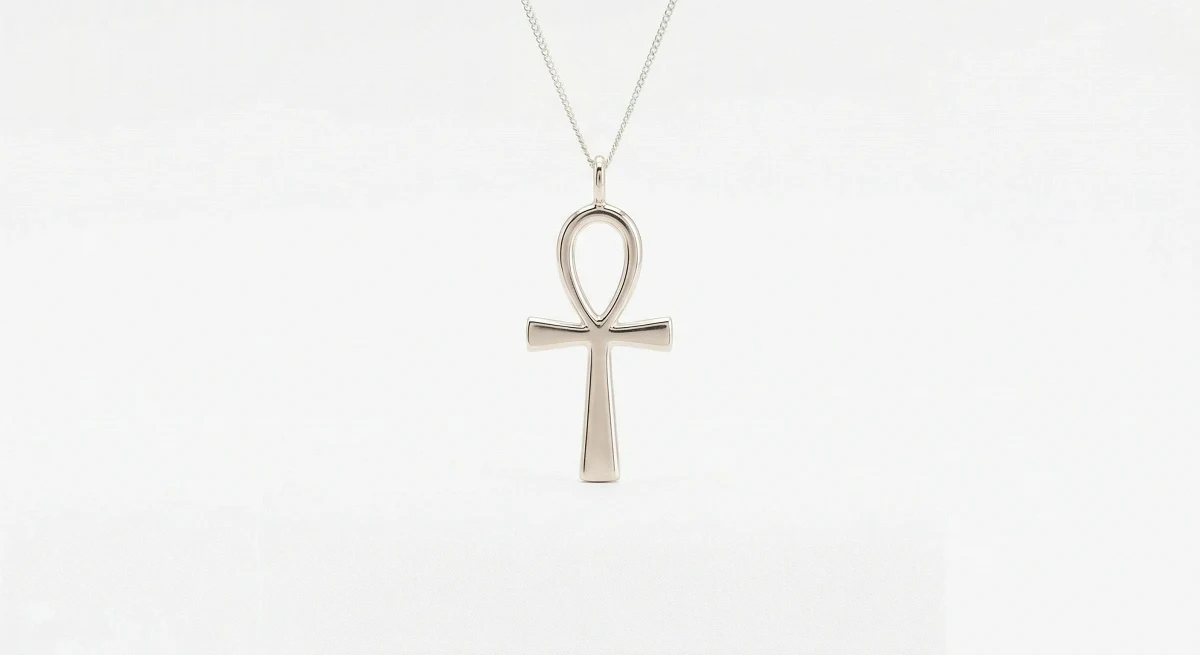
The ankh is a hieroglyphic character from ancient Egypt. It looks like a cross with a loop at the top, sometimes described as a cross with a handle, or a keyhole shape. The Egyptians called it "ankh," which literally translates to "life." In Latin, scholars later called it the crux ansata, meaning "cross with a handle."
If you have ever seen Egyptian art, you have seen ankhs. Gods hold them. Pharaohs carry them. They appear on temple walls, coffin lids, amulets, mirrors, furniture, and pottery. The ankh was everywhere in ancient Egypt, more pervasive than any other single symbol, including the Eye of Horus and the scarab.
What makes the ankh unique among ancient symbols is its simplicity. It is not a complex pictograph. It is not a detailed scene. It is a clean geometric shape that a child could draw from memory. That simplicity is part of its power. It can be rendered in gold, carved in stone, tattooed on skin, or stamped on a cheap souvenir, and it remains instantly recognisable. Five thousand years of continuous use, and the shape has not changed at all.
The other thing that sets the ankh apart is its meaning. While many Egyptian symbols are specific (the scarab represents transformation, the djed pillar represents stability, the Eye of Horus represents protection), the ankh represents something universal: life itself. Not a specific aspect of life. Not a metaphor for life. Life. The concept in its entirety. Birth, existence, breath, vitality, the force that separates the living from the dead.
That is a heavy thing for one small shape to carry. And yet it does.
A gold ankh wants a bare collarbone and a tan; a black one wants nerve. Never under a tie.
How to wear an ankh
I have run the ankh through dozens of looks, from quiet silver under a shirt to bold gold on a bare neck. Here is what actually works, occasion by occasion.
What do I wear an ankh with day to day? For everyday I recommend a medium silver ankh on a mid-length chain. It sits happily with knitwear, linen and cotton, does not argue with an office dress code and needs no special occasion. A light top lifts the metal; a dark one turns the ankh into the accent.
How long should the chain be for my neckline? The deeper the neckline, the longer a chain I suggest. The ankh likes open space at the throat and gets lost when it hits a high collar. Under a V-neck it lands dead centre, which is its best position. Under a closed round neck I recommend a shorter chain so the ankh rests on the fabric.
How do I build an evening look? For evening I choose a black or oxidised ankh over a solid dark top. Cool metal on dark fabric reads composed and a little dramatic, the gothic note the symbol has carried since the eighties. A gold ankh does the opposite: it leans into warm tones, velvet and silk.
Can I layer an ankh? You can, with care. I suggest adding a second chain a couple of centimetres longer, with a small stone or a smooth plate, so the eye catches the difference in height. The ankh sits well beside the Eye of Horus and the scarab, but two identical pendants side by side cancel each other out.
Who does the ankh actually suit? Anyone who values meaning in an object over shiny bulk. It settles just as naturally into a minimal wardrobe as into a layered one. Keep to one metal temperature within a look: either warm gold and brass, or cool silver and steel.
Turn on your camera, pick earrings, a pendant or a ring, and see the piece on yourself in real time.
Switch items in one tap.
Everything runs in your browser: no photo or video is ever uploaded.
The ankh in ancient Egypt
The breath of life: gods, pharaohs, and the dead
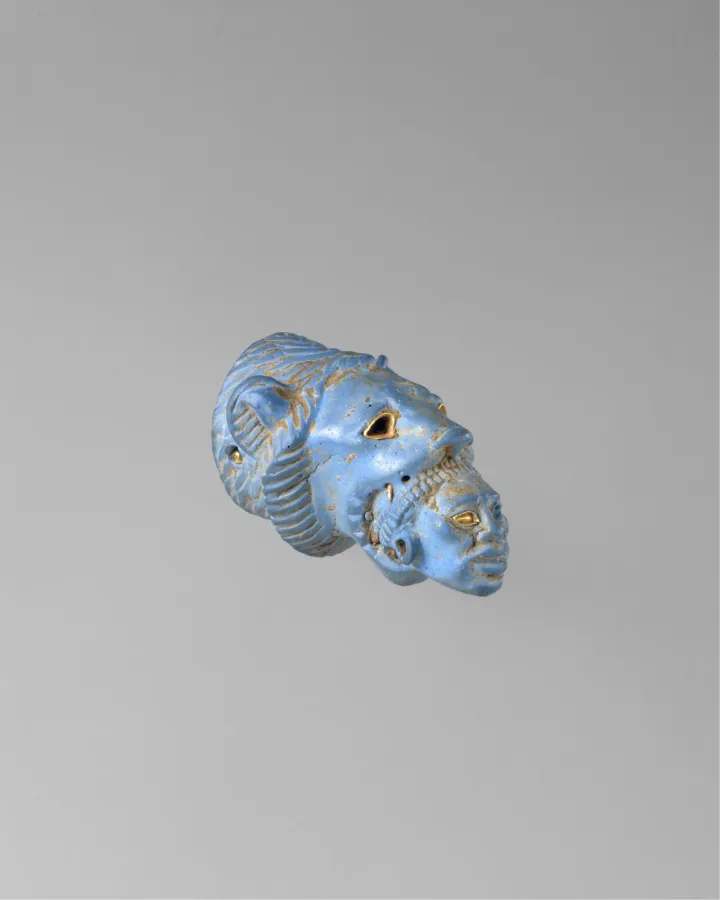
In Egyptian temple art, the ankh appears in one scene more than any other: a god holding the ankh to the nose or lips of a pharaoh. Isis does it. Osiris does it. Anubis does it. Hathor does it. Thoth does it. Nearly every major deity in the Egyptian pantheon is shown at some point pressing an ankh toward a human face.
This was not decorative. It was theological. The ankh at the nose represented the breath of life. The gods were literally giving life to the pharaoh. Without this divine breath, the king was just a man. With it, he was something more.
The same gesture was repeated in funerary contexts. In tomb paintings, gods press ankhs to the faces of the dead. This was not nostalgia or mourning. It was functional. The Egyptians believed that the ankh could reanimate the dead in the afterlife. It was the key that unlocked eternal existence. This is why the ankh is sometimes called the "key of life." Not in a metaphorical sense. The Egyptians genuinely believed it worked as a key, opening the door between death and continued existence.
Pharaohs carried ankhs in life and were buried with them in death. Ankh amulets placed on mummies were insurance policies for the journey to the Field of Reeds, the Egyptian paradise. Without an ankh, the dead person might not receive the divine breath needed to live again.
The power of this image cannot be overstated. For over three thousand years, from the Old Kingdom through the Ptolemaic period, the ankh-to-the-face motif was the single most important depiction of divine power in Egyptian visual culture. It said: life comes from the gods, and this symbol is the channel through which it flows.
Ankh on the walls: temples, tombs, and everyday objects
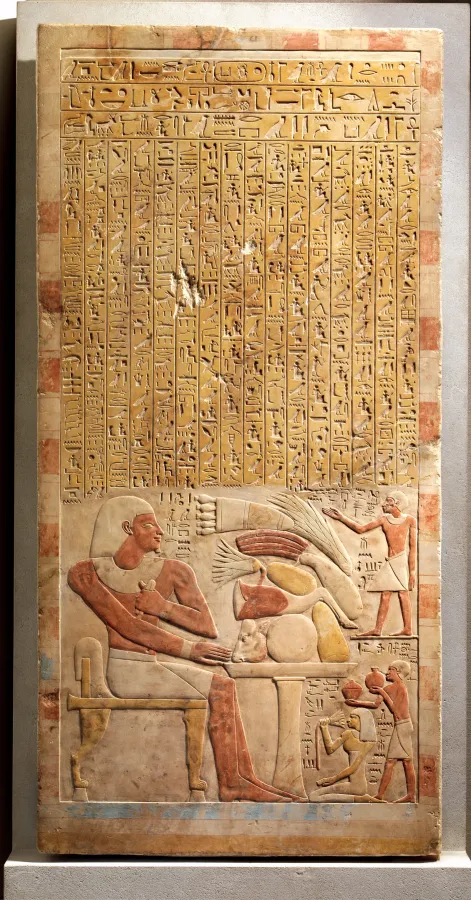
Walk through any surviving Egyptian temple, and you will find ankhs everywhere. At Karnak, at Luxor, at Abu Simbel, at Philae, the ankh appears hundreds of times on a single wall. Gods hold them. Kings receive them. They border inscriptions. They decorate column capitals. They frame doorways.
But the ankh was not confined to temples and tombs. It appeared on everyday objects too. Bronze mirrors were frequently made in the shape of an ankh, with the loop serving as the reflective surface and the cross as the handle. This was not just clever design. The Egyptians associated the mirror with the concept of the afterlife. When you looked into a mirror, you saw another version of yourself in another world. The ankh shape reinforced this idea.
Ankh symbols appeared on pottery, furniture, sandals, and clothing. They were carved into headrests. They decorated cosmetic palettes. They showed up on children's toys. The ankh was not reserved for priests and kings. It was for everyone. It was so thoroughly integrated into daily life that it would be like asking someone today why they use the letter "A." It was just there, part of the visual vocabulary.
Jewellery, of course, was a primary carrier. Ankh amulets in gold, silver, faience, and semi-precious stones have been found in tombs from every period of Egyptian history. They were worn around the neck, set into rings, and incorporated into elaborate pectoral pieces. The finest examples show extraordinary craftsmanship, with inlaid lapis lazuli, turquoise, and carnelian filling the loop and arms of the cross.
The ankh and the afterlife
The connection between the ankh and the afterlife goes deeper than just funerary amulets. The ankh was believed to be the literal shape of the concept "life," and in Egyptian theology, life did not end at death. It continued, transformed, into something else.
The Book of the Dead, that famous collection of spells and instructions for navigating the afterlife, features ankh symbols throughout. In the weighing of the heart ceremony, where the dead person's heart is weighed against the feather of Ma'at, ankh symbols appear in the hands of the judging gods. They are present as a reminder: what is at stake here is not punishment or reward. What is at stake is life. Continued life. Eternal life.
When Egyptian priests performed the "Opening of the Mouth" ceremony on mummies, using ritual tools to symbolically restore the senses of the dead person, the ankh was part of the process. The dead needed to breathe, see, hear, and speak in the afterlife. The ankh was the symbol that made all of that possible.
This is why the ankh endured so long in Egypt. It was not fashion. It was not decoration. It was the most important concept in Egyptian religion, compressed into a single shape. Life. Continued life. Eternal life. Everything else was secondary.
The mystery of its shape: what does the ankh represent?
Here is the thing that Egyptologists will tell you if you push them: nobody actually knows what the ankh shape represents. We know what it means (life). We know how it was used (as a hieroglyph, as a religious symbol, as an amulet). But the origin of the shape itself? That is one of the great unsolved puzzles of Egyptology.
There are theories. Several of them are quite good. But none is proven beyond doubt.
The sandal strap theory
This is the theory proposed by Sir Alan Gardiner, one of the most important Egyptologists of the 20th century. Gardiner noticed that the hieroglyph for "ankh" and the hieroglyph for "sandal strap" looked remarkably similar. He suggested that the ankh might have originally depicted a sandal strap, with the loop representing the part that went around the ankle and the cross representing the straps.
Why would a sandal strap mean "life"? Gardiner argued that it could be a phonetic coincidence. The Egyptian word for sandal strap sounded similar to "ankh," and over time, the symbol migrated from one word to the other. This kind of thing happened regularly in hieroglyphic writing.
The sandal strap theory is respected but not universally accepted. Critics point out that it feels reductive. The most important symbol in Egyptian civilisation came from a shoe? It is possible, but it is not particularly satisfying.
The knot of Isis
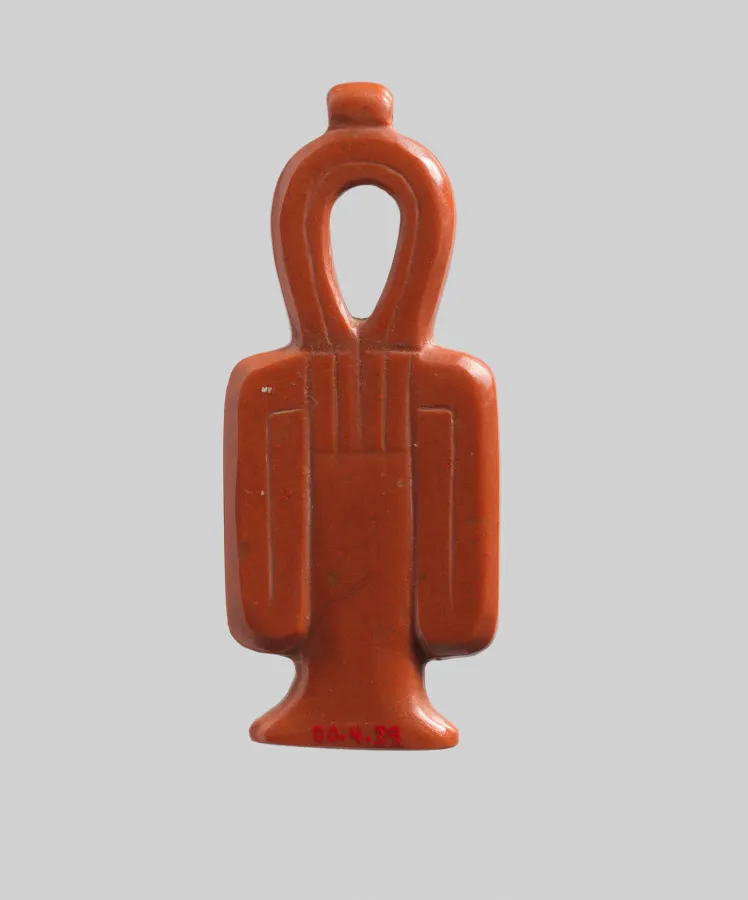
Another prominent theory connects the ankh to the "tyet," also known as the Knot of Isis or the Blood of Isis. The tyet looks like an ankh with its arms folded down. It was associated with the goddess Isis and with concepts of protection, fertility, and resurrection.
Supporters of this theory argue that the ankh might be an evolved or simplified version of the tyet. Since Isis was the goddess who famously resurrected her husband Osiris from the dead, the connection to "life" makes intuitive sense. Isis literally brought life back. The ankh could be a distilled version of her power.
This theory has the advantage of connecting the ankh to a specific, important mythology. But it has the disadvantage of being somewhat circular. The tyet looks like the ankh because... the ankh might come from the tyet? That is reasoning in a circle.
Mirror, sun on the horizon, male and female
Several other theories compete for attention. One proposes that the ankh represents a bronze mirror, since Egyptian mirrors were often ankh-shaped. Another suggests it depicts the sun rising over the horizon, with the loop as the sun and the crossbar as the horizon line. Yet another argues it represents the union of male and female principles: the oval loop as female, the vertical line as male, the horizontal bar as the union.
The male-and-female theory has been popular in New Age circles since the 1970s, though there is not much evidence for it in actual Egyptian texts. It works as a metaphor, but whether the Egyptians intended it that way is another question entirely.
The honest answer: nobody knows for certain
After more than two centuries of modern Egyptology, the origin of the ankh shape remains genuinely unknown. Scholars have theories. Some are better than others. But no one can point to a definitive Egyptian text that says "this is what the shape means and this is where it came from."
And here is what I find fascinating about that: it does not matter. The ankh has functioned as a symbol of life for five thousand years regardless of whether we understand its visual origin. The meaning has always been clear. The shape has always been compelling. The mystery of why it looks the way it does has not weakened the symbol in any way. If anything, the mystery adds to it. The ankh knows something we do not, and that makes it more powerful, not less.
Customer reviews
Zevira is a real jewellery shop. Genuine payments, deliveries and customer thank-yous.
🥰🥰🥰 gracias

Ok, ¡gracias! 🙂

Coptic Christianity: when the ankh became a cross
When Christianity arrived in Egypt in the first centuries CE, it encountered a population that had been using the ankh for thousands of years. The early Egyptian Christians, who became known as the Copts, faced a choice: abandon the ankh as a pagan symbol, or adapt it.
They adapted it.
The Coptic cross, also known as the crux ansata in its looped form, incorporated the ankh's shape into Christian iconography. The loop at the top was reinterpreted as a symbol of eternal life through Christ. The cross below it already matched the crucifixion cross. It was a remarkably clean merger. The ankh, which had always meant "life" in the Egyptian context, now meant "eternal life" in the Christian context. The theological distance between those two ideas was not very large.
This was not casual or accidental. The Coptic Church deliberately retained Egyptian visual traditions as a way of maintaining cultural continuity. They were Egyptian before they were Christian, and they did not see a contradiction between the two identities. The ankh was part of their heritage. Christianity gave it a new theological framework, but the core meaning was preserved.
To this day, Coptic Christians use ankh-derived cross designs in their churches, their art, and their jewellery. If you visit a Coptic church in Cairo or Alexandria, you will see the looped cross on vestments, altar cloths, and carved into stone facades. The ankh did not die when Egypt converted to Christianity. It converted too.
This is worth noting because it means the ankh has been in continuous use, in one religious context or another, for over five thousand years. Very few symbols on earth can claim that kind of track record. The cross is about two thousand years old. The Star of David in its current form is roughly a thousand. The crescent moon and star is about five hundred in its Ottoman context. The ankh predates all of them.
Upload a photo of your pet, someone you love, or an object. We'll build a 3D model and hand-cast it in pewter.


The ankh and African-American cultural identity
In the 1960s and 1970s, the ankh experienced a powerful resurgence in a context that had nothing to do with Egyptology or religion. It became a symbol of African heritage in the Black consciousness movement in the United States.
The logic was straightforward and compelling. African Americans had been systematically disconnected from their ancestral cultures through slavery. The ankh, as the most recognisable symbol of ancient Egypt, the most famous African civilisation, offered a tangible link to a pre-colonial African identity. Wearing an ankh was a statement: I come from somewhere. My ancestors built one of the greatest civilisations in human history. This is my heritage, and I am reclaiming it.
The ankh appeared alongside other Afrocentric symbols like kente cloth patterns, cowrie shells, and the colours red, black, and green. It was worn by activists, artists, musicians, and ordinary people who wanted to assert African identity in a society that had spent centuries erasing it.
This was not just symbolic politics. It was deeply personal. For many Black Americans, wearing an ankh was an act of self-definition. It said: I refuse to start my cultural history at the point of enslavement. I have roots that go back millennia.
Hip-hop culture picked up the ankh in the 1980s and 1990s, with artists wearing elaborate ankh pendants in gold. The symbol moved from political activism to fashion to mainstream visibility. By the 2000s, the ankh was everywhere in Black fashion, from streetwear to haute couture.
Today, the ankh remains an important symbol of African heritage and Black identity. It carries a weight that goes far beyond aesthetics. When someone from this tradition wears an ankh, they are often wearing it for reasons that are as much about history and identity as they are about spirituality or style.
Where to see real ankhs: British collections and the hieroglyph itself
Britain holds some of the deepest Egyptian collections outside Cairo, and every one of them contains ankhs that are thousands of years old. Seeing them in person changes how the symbol reads, because the pendant in a shop window suddenly has ancestors sitting in a glass case a bus ride away.
The Egyptian galleries of the British Museum in London are the obvious starting point. The amulet cases are the part that matters most for anyone interested in the ankh as jewellery rather than as temple decoration: rows of small ankhs in faience, carnelian, bronze and gold, many of them strung for the neck, many of them placed on mummies among dozens of other protective signs. Seen together, they make one thing plain. The ankh was not reserved for gods and kings on wall reliefs. Ordinary Egyptians wore it, and wore it constantly, in the same everyday way people wear a pendant now.
The Petrie Museum of Egyptian and Sudanese Archaeology at University College London is the specialist's collection, built out of the excavation work of Flinders Petrie and holding around 80,000 objects, most of them small and domestic. It is the place to understand the ankh at working scale: mould fragments used to mass produce faience amulets, half-finished pieces, the ordinary manufacturing evidence that museums with grander displays tend to leave in storage. The Ashmolean in Oxford, the Manchester Museum, the Egypt Centre in Swansea and the Egyptian gallery at Bolton all hold ankh amulets too, most of them arriving through the excavation subscriptions of the Egypt Exploration Fund, which the writer Amelia Edwards helped found in 1882 after a Nile journey convinced her that the monuments were being lost faster than they were being recorded. That is why an ankh from a dig in Middle Egypt can end up on permanent display in a Lancashire mill town.
It is worth knowing what you are actually looking at as a piece of writing. The ankh is a hieroglyph before it is anything else, catalogued as sign S34 in the standard sign list compiled by Alan Gardiner, and it spells the three consonants ˁ-n-ḫ. Vocalised in the conventional Egyptological way, that is ankh, and the word means life, to live, and by extension to be well. The same root gives the Egyptian words for oath, for a mirror and for a bouquet of flowers, all of them touching on the idea of living breath. So when a god on a tomb wall holds the sign to a king's nostrils, the scene is not decorative. It is a rebus: the word "life" being handed over as a physical object, drawn where a sentence would otherwise be needed.
Standing in front of a case of them, the scale of the thing lands properly. Hundreds of ankhs, from different centuries, in different materials, from thumbnail amulets to signs carved a metre high, all repeating one word. This was not a motif. It was infrastructure.





The ankh in goth and alternative culture
The Hunger, David Bowie, and the birth of goth ankh
The year was 1983. Tony Scott directed "The Hunger," a vampire film starring David Bowie and Catherine Deneuve. In the film, Bowie's character wears an ankh pendant that doubles as a weapon. He uses the pointed bottom of the cross to pierce the skin of his victims and drink their blood.
The film was not a massive commercial hit. But it was a massive cultural hit within the emerging goth subculture. The visual combination of Bowie in a dark suit with an ankh at his throat, moving through a world of decadent immortality and beautiful doom, was irresistible. The ankh became the unofficial emblem of goth almost overnight.
The logic worked on multiple levels. The ankh meant life, and goths were obsessed with the tension between life and death. The ankh was ancient and mysterious, and goths valued the ancient and mysterious. The ankh looked striking against black clothing, and goths wore black clothing. It was a perfect match.
Neil Gaiman's Sandman: Death's ankh
Then, in 1989, Neil Gaiman published "The Sandman." One of the most beloved characters in the series was Death, portrayed not as a grim reaper but as a cheerful young goth woman with an ankh pendant around her neck.
This was enormously influential. Death in the Sandman comics was kind, funny, wise, and completely comfortable with her role. The ankh she wore was both a symbol of her office (she was the personification of the end of life, and therefore held the key to life) and a fashion statement that millions of readers found deeply cool.
After Sandman, the ankh in goth culture was no longer just a Hunger reference. It was a Death reference. And wearing Death's ankh was a way of saying: I understand that life and death are not opposites. They are connected. The ankh represents that connection.
The goth ankh today
The goth ankh has now been a fixture of alternative fashion for over four decades. You can find ankh pendants, rings, earrings, and brooches in every goth supply shop, every alternative fashion brand, and every corner of the internet where dark aesthetics are celebrated.
What is interesting is that the goth ankh has developed its own symbolic layer, somewhat independent of the Egyptian original. In goth culture, the ankh represents the embrace of mortality, the beauty of darkness, the rejection of mainstream cheerfulness, and the belief that there is something profound and beautiful about impermanence. These are not meanings the Egyptians would have recognised. They are meanings that the goth community created, using the ancient shape as a foundation.
This kind of cultural layering is what makes the ankh so fascinating. It does not just carry meaning. It generates new meaning in every culture that adopts it.
Leave your email, we'll send your discount code. No spam, unsubscribe anytime.
The code arrives by email, valid on your first order.
The ankh in modern spirituality and the occult
The ankh entered Western occultism in the 19th century, largely through the influence of figures like Eliphas Levi, the French occultist who blended Egyptian symbolism with Kabbalistic and Hermetic traditions. For Levi and his followers, the ankh represented the union of cosmic forces, the key to hidden knowledge, and the link between the material and spiritual worlds.
The Hermetic Order of the Golden Dawn, that influential late-Victorian occult society, incorporated the ankh into its ritual practices. Members used ankh-shaped tools in ceremonies. The ankh appeared in their tarot interpretations, their astrological charts, and their magical workings.
Aleister Crowley, who emerged from the Golden Dawn, continued to use the ankh in his own system of Thelema. For Crowley, the ankh was connected to concepts of will, power, and transformation.
In the 20th century, the New Age movement adopted the ankh enthusiastically. It became associated with healing energy, chakra work, crystal therapy, and various forms of alternative spirituality. New Age practitioners often describe the ankh as a "channel for life force energy" or a "key to higher consciousness."
The tattoo world embraced the ankh early and never let go. It is consistently one of the most popular symbolic tattoo designs worldwide. People get ankh tattoos for reasons ranging from spiritual devotion to aesthetic appreciation to memorial tributes. The clean, bold lines of the shape translate beautifully to ink on skin, which is part of the reason it remains a tattoo shop staple.
For all of these communities, the ankh functions as a bridge between ancient wisdom and modern practice. Whether the specific beliefs are historically accurate is beside the point. The ankh provides a visual and symbolic connection to something very old, and that connection is what people are seeking.
The ankh in pop culture: from Stargate to video games
The ankh has appeared in popular culture so many times that cataloguing every instance would take a book. But a few key appearances deserve mention because they have shaped how millions of people first encounter the symbol.
"Stargate" (1994) and the television series it spawned treated Egyptian symbols, including the ankh, as alien technology. In the Stargate universe, the ankh-like devices were tools of the Goa'uld, an alien race that had posed as Egyptian gods. This framing gave the ankh a science-fiction dimension it had never had before.
In "Yu-Gi-Oh!," the manga and anime franchise, Egyptian mythology plays a central role. The Millennium Items, which drive much of the plot, are rooted in Egyptian magical tradition, and ankh imagery appears throughout the series. For millions of young people in the late 1990s and 2000s, Yu-Gi-Oh was their first exposure to Egyptian symbolism.
Video games have used the ankh extensively. In the "Ultima" series, the ankh represents the virtues. In "Vampire: The Masquerade," it appears in clan symbolism. In "Assassin's Creed Origins," set in Ptolemaic Egypt, ankhs appear as part of the environment and narrative. In countless RPGs, adventure games, and fantasy titles, the ankh serves as a symbol of healing, resurrection, or divine power.
The cumulative effect of all this pop culture exposure is that the ankh is now one of the most widely recognised ancient symbols in the world. A teenager who has never read a book about Egypt can identify an ankh from a video game, a comic book, or a movie. This mainstream recognition is a double-edged thing. It makes the ankh accessible but also risks flattening it. The symbol that once carried the weight of an entire civilisation's theology can become, in the wrong context, just a cool shape.
But symbols are resilient. The ankh has survived five millennia of cultural change. It can survive being in a video game.
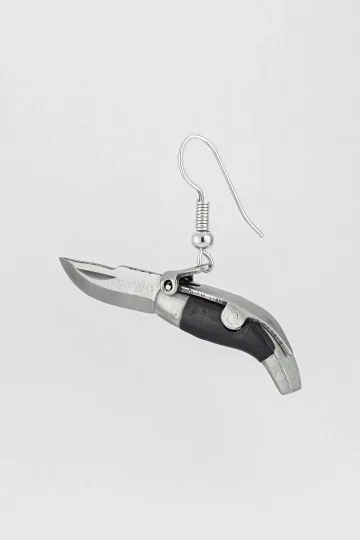
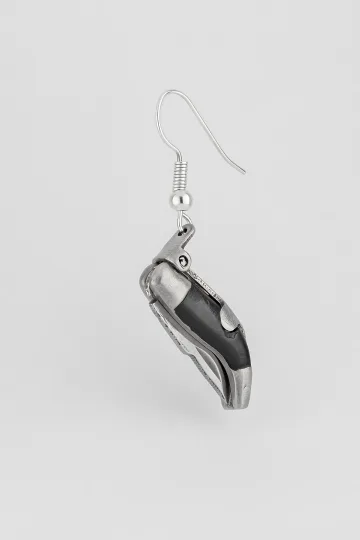
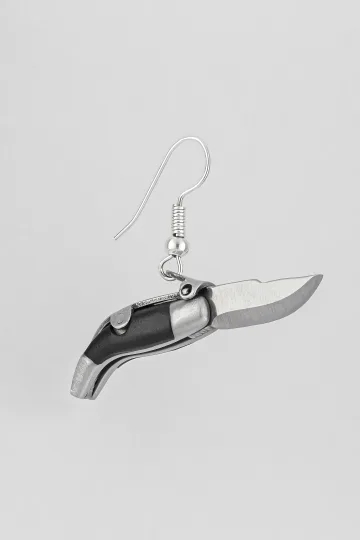
CAPAORA mini knife pendant
The 18th-century Spanish navaja in miniature: 40 mm of stainless steel, a real folding mechanism and a Palanquilla lock that clicks. An affordable gift to remember.
Authentic · Ships from Spain · 14-day returns
What the ankh means when you wear it as jewellery
When you wear an ankh today, you are not locked into any single meaning. The symbol is broad enough to hold whatever you bring to it. But there are some consistent threads that run across cultures and eras.
Life and vitality. This is the original meaning, and it still works. An ankh pendant is a way of saying: I celebrate being alive. I value life. I carry life with me.
Connection to ancestry. For people of African descent, the ankh connects to ancient Egypt and to Africa more broadly. For anyone interested in their deep roots, the ankh is a reminder that human civilisation is much older and more complex than modern society sometimes acknowledges.
Spiritual seeking. The ankh signals an interest in the mystical, the metaphysical, the questions that sit beyond the material world. It does not commit you to any specific religion or spiritual practice. It simply says: I think there is more to reality than what we can measure.
Embrace of mortality. In goth and alternative contexts, the ankh represents the beauty of the life-death continuum. It is not morbid. It is philosophical. It says: I understand that life includes death, and I am not afraid of that.
Aesthetic appreciation. Sometimes an ankh is simply a beautiful shape. The proportions are pleasing. The loop invites the eye. The lines are clean. Some people wear the ankh because it is one of the best-designed symbols humans have ever created, and they appreciate it on a purely visual level.
Protection. In many traditions, both ancient and modern, the ankh is believed to offer spiritual protection. Like the evil eye or the hamsa hand, the ankh is sometimes worn as a talisman, a shield against negative energy.
All of these meanings can coexist on the same chain around the same neck. That is the ankh's gift. It does not ask you to choose.
The Egyptian Revival and the ankh in Western jewellery
The ankh did not arrive in Western jewellery in a straight line from ancient Egypt. It arrived in two distinct waves, each triggered by a historical event.
The first wave came with Napoleon's Egyptian campaign of 1798-1801. Napoleon brought 167 scholars, artists, and engineers with him, and what they documented became the "Description de l'Égypte," a monumental publication in 23 volumes that gave Europe its first systematic look at Egyptian art and architecture. Egyptian motifs, including lotus flowers, sphinxes, scarabs, and ankhs, began appearing in European jewellery, furniture, and interior design within years of the publication. This first Egyptian Revival was fashionable among wealthy Europeans who wanted to signal interest in the mysterious and ancient. Jewellers in Paris, London, and Berlin produced pieces with Egyptian motifs throughout the early 19th century.
The second wave was more explosive. On 26 November 1922, Howard Carter peered through a hole in the sealed doorway of a tomb in the Valley of the Kings and saw, as he famously described it, "wonderful things." The tomb was Tutankhamun's. It was the most intact royal burial ever found, packed with thousands of objects covered in Egyptian imagery, including dozens of ankh amulets and decorative pieces featuring the ankh prominently.
The world went into a frenzy. Newspapers ran front-page stories for months. Within weeks of the discovery, fashion houses and jewellers had adapted Egyptian motifs into Art Deco collections. The Tutankhamun effect produced what historians now call the Egyptian Revival of the 1920s. Ankh-shaped brooches, pendants, earrings, and bracelets appeared in jewellery shops across Europe and North America. The ankh was no longer an academic symbol. It was fashionable.
This Art Deco Egyptian Revival left a lasting mark on jewellery design. The clean geometric lines of Art Deco suited Egyptian motifs perfectly. An ankh, with its oval loop and straight arms, is already Art Deco in spirit: bold, geometric, purposeful. The two aesthetics reinforced each other, and the designs produced in the 1920s and 1930s remain some of the most beautiful ankh jewellery ever made.
The third significant moment came in the 1960s and 1970s, when the ankh was adopted by the counterculture. As young people turned away from mainstream religion and toward Eastern philosophy, ancient mysticism, and alternative spirituality, the ankh offered a symbol of life that carried no institutional religious baggage. It was ancient. It was non-Christian. It was connected to Africa and to deep human history. It became one of the defining symbols of the hippie era, worn in large macramé chokers, hammered silver pendants, and carved wooden beads. By the mid-1970s, the ankh was in mainstream chain jewellery stores alongside peace signs and yin-yangs.
Ankh jewellery: materials and forms
One reason the ankh has remained in active jewellery production for thousands of years is that the shape is genuinely well-suited to the craft. It works at every scale, in every metal, with every technique.
Gold. Historically, gold is the most authentic material for an ankh. The Egyptians considered gold the flesh of the gods, incorruptible and eternal. Gold ankh amulets have been found in royal tombs and in the graves of ordinary Egyptians. In contemporary jewellery, an ankh in 14k or 18k gold carries the most direct connection to the Egyptian original. For something between gold's warmth and silver's accessibility, gold-fill or vermeil (gold over sterling silver) is a practical choice.
Sterling silver. The most common material for modern ankh jewellery. Silver has a cooler tone that pairs particularly well with the architectural quality of the ankh shape. Oxidised silver, where the metal is deliberately darkened in the recesses of the form, emphasises the geometry and works beautifully with the goth aesthetic. Sterling silver ankhs are durable, reasonably priced, and age well.
Bronze and brass. These materials bring the ankh closest to the feel of ancient Egyptian bronzework. Handcast bronze ankhs develop a natural patina over time that adds depth and character. For people who want a raw, ancient-feeling piece, bronze is hard to beat. The warm golden-brown of brass also connects visually to the gold of Egyptian originals.
Black-finished metals. Black-coated or blackened silver and steel ankhs have been a staple of goth jewellery since the 1980s. The dark finish emphasises the silhouette and leans fully into the memento mori tradition. These tend to be bolder and more dramatic as statement pieces.
Scale and proportion. The ankh works at every size. A tiny ankh (under 1 cm) on a fine chain is subtle and personal, a private symbol. A medium ankh (2-3 cm) is the sweet spot for everyday visible wear. Large statement ankhs (4 cm and above) on thick chains read as deliberate, bold declarations, in the tradition of the hip-hop gold chain.
Stone inlays. The loop of the ankh is a natural setting for stones. Historically, Egyptian ankh amulets used lapis lazuli (deep blue, associated with the heavens), turquoise (associated with fertility and rebirth), and carnelian (orange-red, associated with vitality). In contemporary pieces, these stones remain popular, but onyx, labradorite, moonstone, and garnet all work well visually and symbolically.
Forms beyond the pendant. Ankh rings are a strong alternative to pendants, particularly rings where the ankh is the entire top of the ring rather than a stone setting in an ankh surround. Ankh earrings, in small stud or short drop form, pair the symbol with everyday discretion. Cuff bracelets with ankh charms or ankh-shaped clasps allow the symbol to appear in unexpected places.
Send a friend a discount code, they save on their first order.
Frequently asked questions about ankh jewellery
Is wearing an ankh cultural appropriation?
This is a question that comes up regularly, and it deserves a thoughtful answer. The ankh originated in ancient Egypt, and it holds particular significance for people of African descent who wear it as a connection to their heritage. However, the ankh has been adopted and adapted by so many cultures over five thousand years (Coptic Christians, European occultists, goths, New Age practitioners) that calling it the exclusive property of any single group is historically inaccurate. The key is respect. Wear it because it means something to you. Do not wear it as a costume or a joke. If you understand and appreciate what it represents, you are wearing it appropriately.
Is the ankh a religious symbol?
It was in ancient Egypt, and it still is in Coptic Christianity. But for many people today, the ankh is cultural or spiritual rather than specifically religious. It does not require you to believe in the Egyptian gods or in Christianity. It can be worn as a symbol of life, heritage, aesthetics, or personal meaning without any religious commitment.
Can I wear an ankh with a Christian cross?
Yes. The Coptic Church has been doing exactly this for nearly two thousand years. The ankh and the cross share the concept of eternal life. They are not in conflict. Many people wear both without any theological contradiction.
What is the difference between an ankh and a regular cross?
The ankh has a loop at the top instead of a straight upper arm. The loop is the defining feature. Without it, the symbol is just a cross. Some scholars believe the loop represents the sun, others believe it represents a mirror or a knot. But visually, the loop is what makes an ankh an ankh.
Is the ankh associated with any negative meanings?
In mainstream culture, no. The ankh is almost universally positive. It represents life, which is hard to spin as negative. In some conservative Christian contexts, the ankh has been viewed with suspicion because of its pagan and occult associations, but this is a minority view. The Coptic Church, one of the oldest Christian denominations on earth, uses the ankh. If it is good enough for them, it is hard to argue it is anti-Christian.
Does the direction the ankh faces matter?
No. Unlike some symbols (like the swastika, which reverses meaning when flipped), the ankh carries the same meaning in any orientation. Upright is traditional and most common, but a sideways or even inverted ankh does not change the symbolism.
What does an ankh tattoo mean?
The same things as an ankh pendant: life, spirituality, connection to ancient wisdom, embrace of mortality, African heritage, or aesthetic appreciation. Tattoo ankhs are often placed on the wrist, the back of the neck, the chest, or the forearm. They are one of the most popular symbolic tattoo designs worldwide.
Why is the ankh sometimes called the key of life?
Because the Egyptians believed it literally functioned as a key. The ankh "unlocked" eternal life. When gods pressed the ankh to the lips of the dead, they were using it to open the door to the afterlife. The shape even looks somewhat like a key, with the loop as the handle and the cross as the blade. Whether this resemblance is intentional or coincidental is, like everything about the ankh, debated.
Is the ankh a good gift?
One of the best. It carries a universally positive meaning (life) and is simultaneously deep and layered enough to feel thoughtful rather than generic. It works for birthdays, graduations, new beginnings, recovery from illness, or simply as a way of saying: I value your being alive. If you are giving it to someone unfamiliar with its history, a brief note helps. Not an essay. Something like: "This is called an ankh. It is over 5,000 years old. It means life. The Egyptians believed it was the key that opened the door between death and eternity." That transforms a beautiful pendant into something the person will research and make their own.
Does the material of an ankh change its meaning?
Not symbolically, but practically, different materials carry different cultural associations. Gold ankhs connect most directly to ancient Egypt and the hip-hop tradition of conspicuous gold chains. Silver ankhs are associated with goth aesthetics and contemporary spiritual jewellery. Bronze feels ancient and tangible. Black-finished metal reads as explicitly goth. None is more or less "correct" than the others. Choose the material that suits the meaning you want to bring.
Caring for ankh jewellery
Ankh jewellery is cared for by material, not by shape. The form is simple enough that no special technique is required, but the recesses of the ankh, particularly the interior curve of the loop, can collect dirt and tarnish that a simple wipe misses.
Sterling silver. Silver tarnishes naturally over time. A polishing cloth removes light tarnish in seconds. For deeper tarnish, a paste of bicarbonate of soda and warm water applied with a soft toothbrush works well. The toothbrush allows you to reach into the recesses of the loop and the junction between the loop and the vertical arm. Rinse thoroughly and dry completely before storing.
Vermeil and gold-fill. The gold layer on vermeil (gold over sterling) is thicker than standard gold plate but still vulnerable to chemicals. Remove before swimming, bathing, using perfume, and applying hand cream. Store separately from other pieces, as friction against harder metals wears the surface. With reasonable care, vermeil maintains its appearance for years.
Bronze and brass. These develop a patina that many people find desirable, as it emphasises the ancient quality of the form. If you want to maintain brightness, a paste of salt and lemon juice, applied briefly and rinsed thoroughly, removes oxidation. If you prefer the patina, simply leave the piece alone.
Storage. Store in an individual pouch or a compartment of a jewellery box. Keep out of the bathroom, where the combination of steam and moisture accelerates tarnishing. The relief structure of the ankh, particularly the enclosed loop, creates small recesses where moisture collects if the piece is not dried after exposure to water.
Silver and gold jewellery, wedding bands, symbolic pendants, paired sets.
Conclusion
The ankh has been in use for over five thousand years, and it is not slowing down. From the temple walls of Karnak to the goth clubs of London, from the tombs of pharaohs to the necks of Brooklyn hipsters, from ancient theology to modern video games, this simple looped cross has proven itself to be one of the most adaptable, durable, and meaningful symbols humans have ever created.
What strikes me most about the ankh is its generosity. It does not demand that you belong to a specific culture, religion, or subculture in order to wear it. It does not require a purity test. It simply asks: does the concept of life mean something to you? If the answer is yes, the ankh is yours.
There are symbols that peak and fade. The ankh is not one of them. It was ancient when the pyramids were new, and it will still be relevant long after we are gone. That is not fashion. That is something deeper. That is a shape that has found its way into the permanent vocabulary of humanity, and there it will stay.
If you are looking for a piece of jewellery that carries history, meaning, and beauty in equal measure, the ankh is hard to beat. It has five thousand years of proof behind it.
Buying it as a gift? Each one arrives ready to give.
 A branded Zevira box and a little card come with every order.


About Zevira
Zevira makes jewellery in the artisan tradition of Albacete, Spain. For us, the ankh is less an ancient relic than a shape you can actually wear every day: the clean geometry of the loop and cross sits just as well in cool silver as it does in warm gold.
Here is what you will find with us around the ankh and Egyptian symbolism:
- Ankh pendants in 925 silver and 14-18K gold, from slim and personal to large and bold
- Ankhs set with lapis lazuli, turquoise, and carnelian, in keeping with the Egyptian tradition
- Oxidised silver and black finishes for a goth aesthetic
- Ankh rings and earrings made for everyday wear
- The ankh paired with the Eye of Horus and the scarab for an Egyptian trio
- Unisex pieces on a chain or on a leather cord
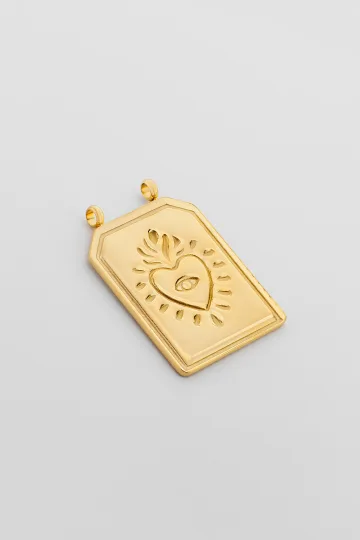
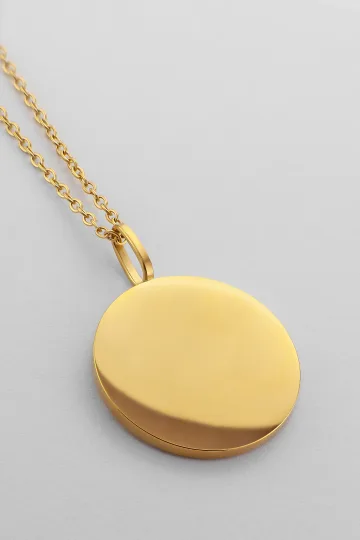
Every piece can be personalised with engraving, with the option of personal engraving. 925 silver and 14-18K gold.