Mantilla and Peineta: The Spanish Tradition of Lace and Comb in Jewellery
Introduction: When Hair Becomes Sculpture
If you see a woman in a black lace veil cascading from an enormous comb set in her hair, you are in Spain. Or at a Spanish wedding. Or at Semana Santa in Seville.
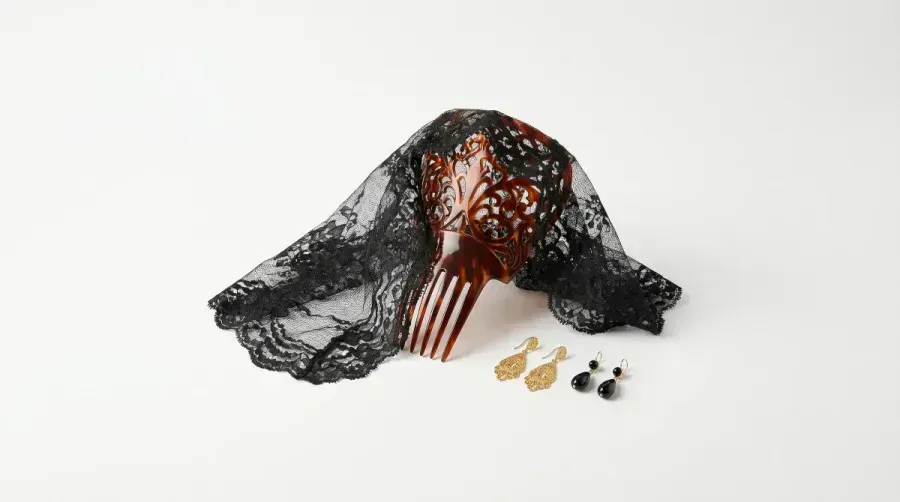
The mantilla and peineta is one of the most recognisable female aesthetics in the world, alongside the kimono or the sari. It is a two-piece system: a rigid decorative comb (peineta) secured in the hair, and a long lace veil (mantilla) draped over the comb and falling onto the shoulders.
This look cannot be worn in half measures. Either you commit to the full ensemble or you leave it alone. It is not an accessory; it is a costume. And it comes with rules: when, where, and with what.
This guide explains what the mantilla and peineta are, how to wear them, which jewellery works best, and where the tradition comes from. If you are visiting Seville for Semana Santa, planning to attend a Spanish wedding, or simply curious about this living tradition, read this before you go.
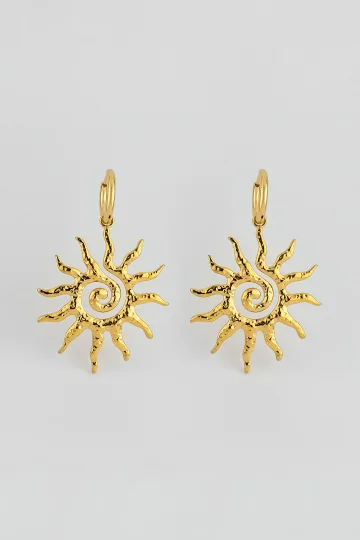
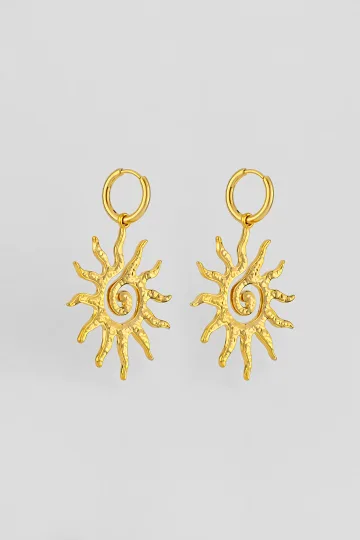
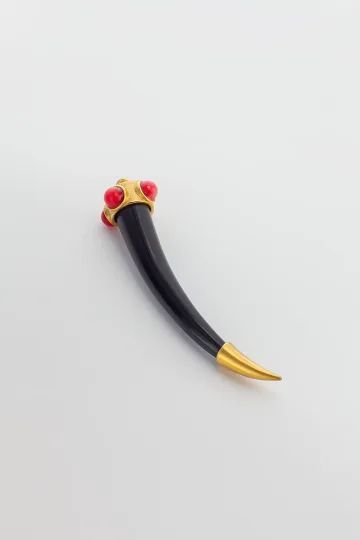
Wear the symbol, don't just read about it. These are in stock:




A Short History of the Peineta
Roman and Iberian Origins
The decorative hair comb on the Iberian Peninsula predates the Christian era. Iberian women wore bone and bronze hair pins long before the Roman conquest. Roman matrons brought their own fashion for elaborate hairstyles supported by combs and pins of ivory and tortoiseshell. These practices survived the fall of Rome in the local traditions of the peninsula.
The Mozarab Period (8th-11th Centuries)
After the Arab conquest of 711, a unique cultural environment emerged: Christians living under Moorish rule, known as Mozarabs. Islamic practice of head covering for women gradually merged with the Christian tradition of covering the head in church. From this mixing of influences came the early form of a veil held over a comb. Both traditions contributed to what would eventually become the mantilla.
The Renaissance Court: Isabella and Charles I
By the 15th and 16th centuries, the decorated comb had become a marker of status at the Spanish court. Under Isabella the Catholic and her successors, ornate combs of tortoiseshell and ivory were part of formal dress. When Charles I (later Holy Roman Emperor Charles V) unified a vast empire, Spanish court fashion spread across Europe. The Spanish comb appeared at the French, Dutch, and Italian courts in his wake.
The Golden Age: The Court of Philip IV
Under Philip IV in the 17th century, the peineta reached its first great flowering. A large tortoiseshell comb inlaid with gold became an expected attribute of the court lady. In parallel, Toledo developed the damascene technique, gold inlaid into blackened steel, which decorated court accessories with the same dark-and-gold palette. Diego Velazquez recorded this style in his portraits. In "Las Meninas" (1656), the Infanta Margarita and her attendants wear early versions of the ensemble. The tradition of black lace on the comb for mourning also crystallised in this period.
Goya and the Maja: The 19th Century
Francisco Goya produced the most famous images of Spanish women in the mantilla. "The Clothed Maja" and "The Naked Maja" (both around 1797-1800) became icons of the era. The clothed maja wears black with a typical lace veil and a tall peineta. The maja as a figure represented the urban working-class Spanish woman, but her style became so expressive that it came to stand for national character.
During the era of Romantic nationalism, the costumbrismo movement celebrated the majas in this dress as the embodiment of authentic Spain, and the mantilla took its place beside the other pillars of the Spanish jewellery tradition.
The Bourbon Revival
Through the 19th and early 20th centuries, the Spanish royal family kept the mantilla as part of ceremonial protocol. Queens Maria Cristina, Victoria Eugenia, and Sofia all wore it at state occasions, cementing its status as a national ceremonial attribute.
Cream veil before noon, black after. Mix them up and the whole cathedral turns, and not to admire you.
How to Wear a Mantilla and Peineta
The ensemble leads the whole look rather than finishing it. My rule after years of dressing formal appearances: the dress and the occasion decide everything, and I choose the jewellery last. Here is what actually works, sorted by occasion.
Which mantilla should I choose for a wedding? For a wedding I recommend a white or ivory mantilla for a morning ceremony and a black one for the afternoon. Keep the dress long, straight or A-line, in classic fabrics: silk, crepe, lace. For jewellery I suggest long pearl earrings and a single strand of pearls; anything colourful or oversized is redundant, since the lace already carries all the visual weight.
What should I wear to church or during Holy Week? For Mass and Semana Santa I choose a strict black mantilla, blonda or Chantilly, with a closed black long-sleeved dress. Earrings stay long, set with jet, the dark stone that traditionally suits black lace. I keep metal on the hands to a minimum and pick dark shoes without shine.
Which earrings and jewellery go with lace? I match the earring length to the length of the veil: the longer the mantilla, the larger the earrings, or they vanish under the lace. I hold the palette to two tones, lace plus one metal: gold for warm skin, silver for cool. Pearls for a wedding, jet for solemn black, coral for a festive outing.
How high a comb suits my height? I choose the height of the peineta by proportion, not by fashion. Under about 160 cm I recommend a 20-25 cm comb, or it outweighs the figure. From 170 cm you can go confidently to 30-40 cm, the classic bridal silhouette. A long face is balanced by a lower, wider comb; a round one is lengthened by a tall, narrow peineta.
How do I wear the ensemble at a feria or bullfight? Here I allow colour: a navy or patterned mantilla, a dress in a saturated tone, long coral earrings and one expressive brooch on the chest or pinned straight to the lace. A thin bracelet is fine, but no stacks; the ensemble will not tolerate clutter.

Turn on your camera, pick earrings, a pendant or a ring, and see the piece on yourself in real time.
Switch items in one tap.
Everything runs in your browser: no photo or video is ever uploaded.
What Is the Peineta
The peineta is a decorative comb worn in the hair. Its primary function is to anchor the lace veil.
Types by Shape
Concha (shell shape). The classic form: a semicircular spine resembling a shell. The most common type for weddings and solemn events. Stable, holds lace well.
Tortuga (turtle shell). Historically, this referred to combs made from actual tortoiseshell in a form that echoed the natural material. The term now applies to high-quality imitations with the characteristic pattern. Common in the 18th and 19th centuries.
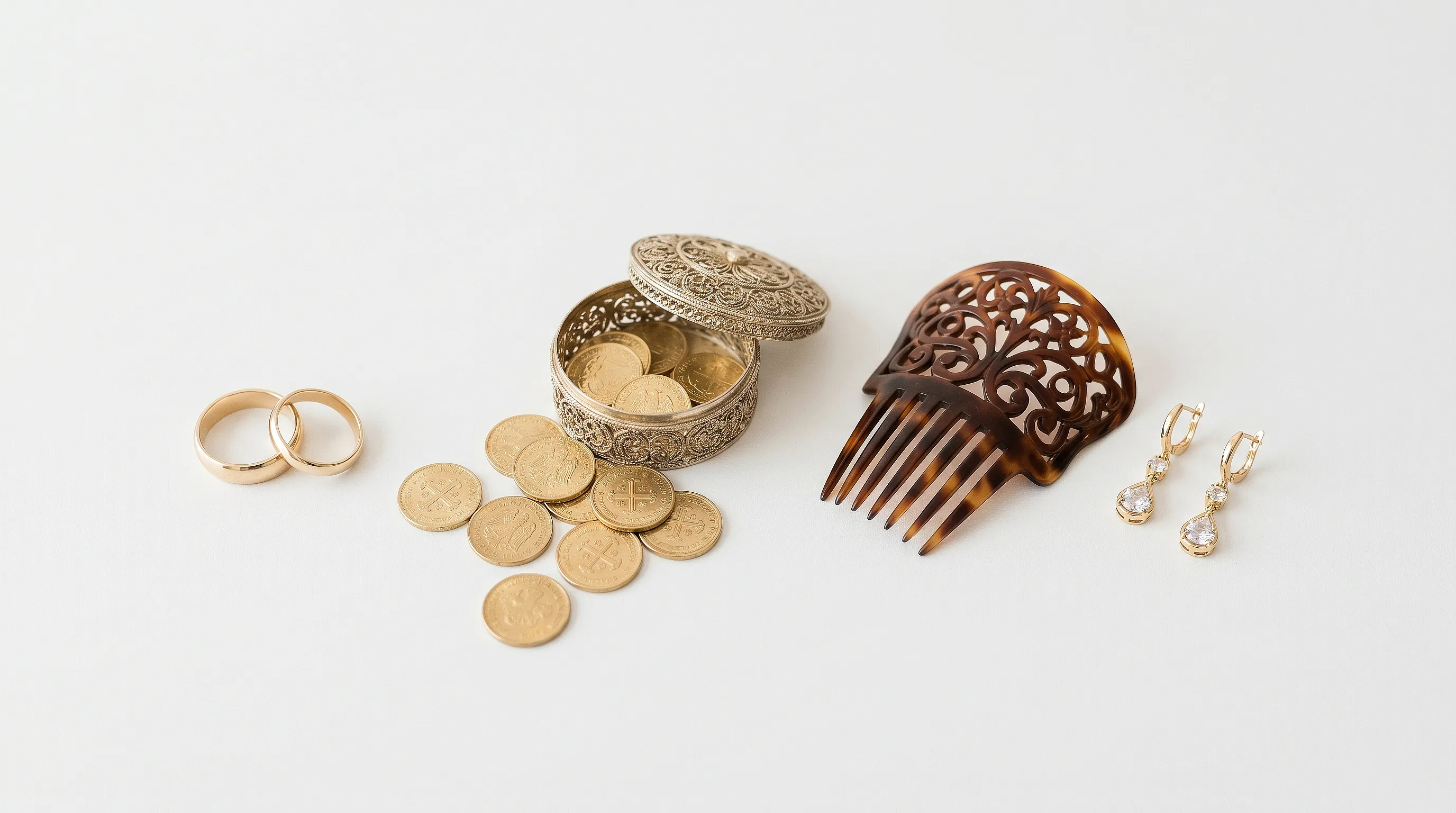
Filigrana de plata (silver filigree). A comb of worked silver or gold wire. Rare. For exceptional occasions such as royal weddings. Heavy, requires a very firm bun.
Types by Material
Tortoiseshell (carey). The classic material of the 18th and 19th centuries. Real tortoiseshell is now banned under the international CITES convention. The characteristic colour is a warm amber-brown with natural patterning.
Jet (azabache). Black and lustrous. A Galician speciality. The classic choice for formal mantilla wear.
Modern imitation. Plastic that mimics tortoiseshell or jet. The standard today. Quality varies considerably.
Silver, gold, metal. Rare, but used for special occasions. Heavier, costlier, and more difficult to secure.
Rhinestone-decorated. A contemporary option for cocktail events, not for formal weddings.
Sizes and Their Significance
8-10 cm. For girls at First Communion or Confirmation. Light, small, often in white plastic.
15-20 cm. For less formal ceremonial traditions. Church attendance at ordinary services.
25-40 cm. The range for major occasions: church weddings, Semana Santa, audiences. This size creates the classic silhouette.
40-50 cm and above. For state ceremonies and royal occasions. Rarely seen outside Spain.
Historically, a comb of 30-50 cm was the norm for the most solemn events at the Spanish court. The taller the comb, the weightier the statement.
Shapes
Flat (flat back). The classic form. Suits most hair types.
Curved top. A more contemporary silhouette.
Engraved. Floral or geometric motifs are common.
Gemstone-set. The highest category, for evening and ceremonial events.
What Is the Mantilla
The mantilla is a lace veil that is placed over the comb and falls onto the shoulders or beyond.
Colour and Its Meaning
Black (luto / Semana Santa / corrida). The most solemn and versatile colour. For Semana Santa processions, funerals, afternoon and evening weddings, and papal audiences. This is the colour that comes to mind for most people when they hear the word mantilla.
White (royal wedding / bride). For morning weddings, First Communions, christenings. White is associated with purity and innocence. Brides of royal families have traditionally chosen white: a Spanish princess wore white at a royal wedding in the early 2000s; the same figure appeared again in white at a Vatican audience a decade later as queen.
Navy blue (formal modern events). A formal alternative to black for contemporary state ceremonies. A compromise between austerity and an explicitly funereal appearance.
Cream and ivory. For brides who prefer a softer tone to stark white.
Types by Material
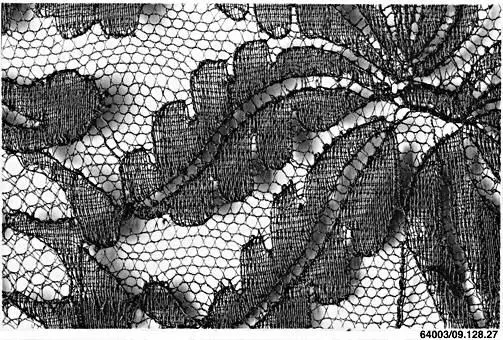
Blonda. Silk lace with a large floral pattern. The Andalusian classic. The most immediately recognisable style.
Chantilly. Fine French bobbin lace with a delicate design.
Spanish lace (encaje espanol). Handmade, the highest category.
Embroidered tulle. A modern, lighter option.
Manila shawl. Technically distinct from a mantilla: a large silk shawl with fringe, used for flamenco or as a semi-mantilla look.
Veil Length
Short (up to 1 metre). Covers the shoulders. Casual occasions.
Medium (1.5 metres). Reaches the waist. The standard length.
Long (2+ metres). The classic length, to the hem of the dress. Traditional weddings. Two metres is broadly considered the benchmark for a proper traditional mantilla.
Very long (3+ metres). Royal or exceptional events. Functions as an extension of the bridal train.
Customer reviews
Zevira is a real jewellery shop. Genuine payments, deliveries and customer thank-yous.
🥰🥰🥰 gracias
Ok, ¡gracias! 🙂
Five Occasions Where the Mantilla Appears
Semana Santa (Holy Week)
The most visible and widespread context. In Seville, Malaga, Cadiz, and other Andalusian cities, women attend the processions in black mantillas. This is not historical re-enactment but a living tradition: thousands of women put on the ensemble each year in March or April. Seville is particularly strict about etiquette. A full peineta, black blonda or Chantilly, and long earrings are expected. British tourists visiting Seville for Semana Santa often want to participate respectfully. The short answer is: if a Spanish friend or host invites you to wear one and helps you dress correctly, it is a compliment to accept. If you are simply attending as a spectator, appreciate the visual tradition without adopting the costume.
Royal Weddings
Spanish royal weddings have used the mantilla as a state element. It is not merely tradition but a political symbol of monarchic continuity. The ensemble signals that the new member of the royal family has been absorbed into the Spanish ceremonial identity. In contemporary Spanish wedding jewellery, the mantilla and peineta still anchor the classic bridal silhouette.
The Corrida
In the boxes at bullfights, women from traditional families appear in mantillas at evening events. It signals a connection to a particular cultural circle and to tauromachism as a cultural phenomenon.
Papal Audiences (Vatican)
One of the few international ceremonies where the mantilla appears outside Spain. Protocol for royal family members at papal audiences has historically included a long-sleeved closed dress and a black mantilla covering the head. This rule goes back to medieval papal etiquette. Spanish queens have observed it rigorously for centuries.
Dia de la Hispanidad (12 October, Madrid)
Spain's National Day is marked with a military parade in Madrid. Members of the royal family and official guests attend in formal dress. Women from aristocratic circles often wear mantillas in the stands. This is one of the few remaining civil, non-religious contexts for the ensemble.
Jewellery with the Mantilla: What Women Wear
The Comb as Key Adornment
The peineta is the centrepiece of the hair. Once it is in place, no other headpiece is needed or appropriate.
Earrings
Long earrings are essential. Small studs disappear beneath the lace.
- Long pearl drops -- the wedding classic.
- Chandelier earrings -- for Semana Santa and formal evening wear.
- Long gold drops with gemstones -- for the reception.
Brooch
Optional but frequently seen:
- On the bodice of the dress as a central accent
- Pinned to the mantilla itself as lace decoration
- At the waist
Necklace
Keep it fine and minimal. The lace is already a statement; a heavy necklace competes with it. Common choices:
- A slender gold chain with a small cross
- A single-strand pearl necklace
Bracelets and Rings
These do not disturb the overall aesthetic. Sensible options:
- A wedding ring (worn on the right hand in Spain)
- A fine bracelet or pearl strand
- A family heirloom if contextually appropriate
Engraving
The peineta itself is rarely engraved: most modern combs are made of plastic or resin, which does not take engraving. A silver filigree peineta can in theory carry a monogram or family crest, but that is a bespoke commission. The jewellery that accompanies the ensemble -- brooches, earring backs, rings -- is more readily engraved. Initials on the reverse of a brooch, or inside a ring, are a way of making an inherited piece more personal.
Upload a photo of your pet, someone you love, or an object. We'll build a 3D model and hand-cast it in pewter.



How to Put On a Mantilla
Step 1: Hair
The hair is dressed in a firm, high bun at the back or crown. It must be dense enough to grip the comb teeth.
Step 2: Peineta
The comb is inserted into the bun with the teeth pointing downward and forward. The teeth pass through the hair of the bun, securing it. The decorative top faces upward and backward.
Step 3: Veil
The lace is folded in half (for the standard length) and draped over the comb so that one panel falls forward over the chest and the other falls down the back. The back panel is usually longer.
Step 4: Securing
The veil is pinned to the comb with hairpins or small pins. For very formal occasions it may also be pinned to the dress.
Step 5: Final Check
The lace should lie flat, not slip, and not cover the eyes. The back panel should not touch the ground.
Practice
Most women who wear the mantilla for the first time recommend several rehearsals before the real event. Many attend short workshops before a wedding or Semana Santa.
When to Wear a Mantilla
Expected (Traditional Occasions)
Church wedding. For a traditionally minded bride, the lace ensemble is expected. White for morning weddings, black for afternoon and evening.
Semana Santa. Particularly in Seville, Malaga, and Madrid. Women attending the processions wear black veils.
Ferias (local festivals). The April Feria in Seville, the Horse Feria in Jerez. The mantilla appears here, though flamenco dress with flowers is more common.
Papal audiences. Royal women have traditionally worn the ensemble at Vatican audiences for centuries. This is one of the few remaining occasions where a woman appears before the Pope with her head covered.
Funerals. Black lace at funerals is an old Catholic tradition. It has faded from everyday use but still appears at formal aristocratic funerals.
Optional
Christenings and First Communions. The mother or godmother may wear a white veil.
VIP events. Galas, Spanish-themed evenings.
Photo shoots. Bridal, fashion, editorial.
When Not to Wear It
As everyday wear. This is not a daily accessory. Special occasions only.
Without an invitation to the event. Do not wear it simply because you like the look. Cultural respect matters.
At non-Spanish events. If you are not Spanish and you are not at a Spanish event, it reads as fancy dress rather than cultural appreciation.
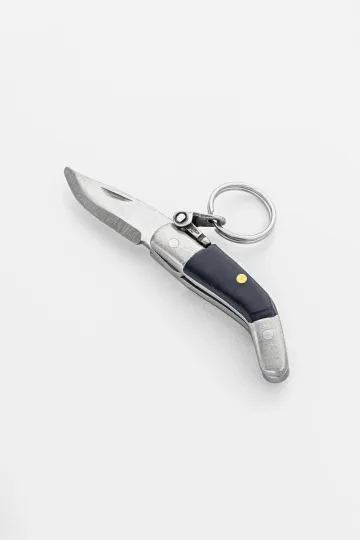
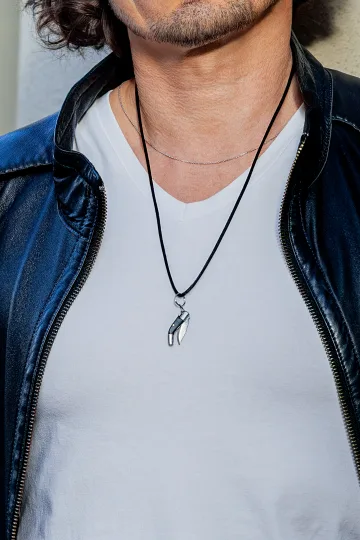
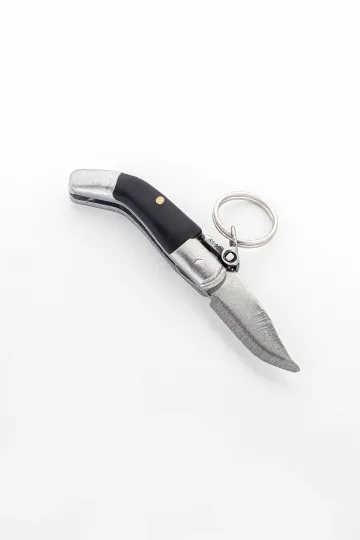
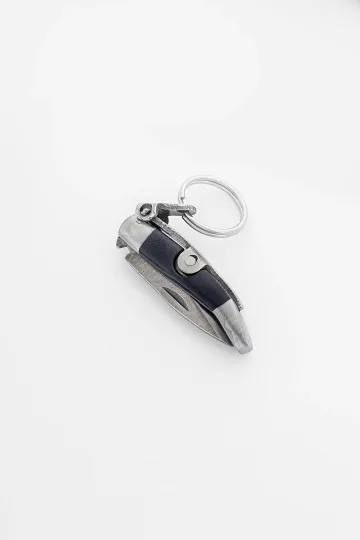
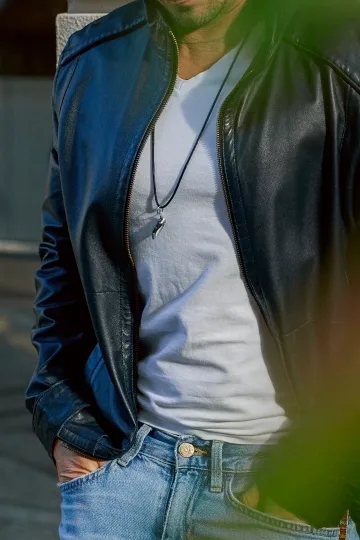
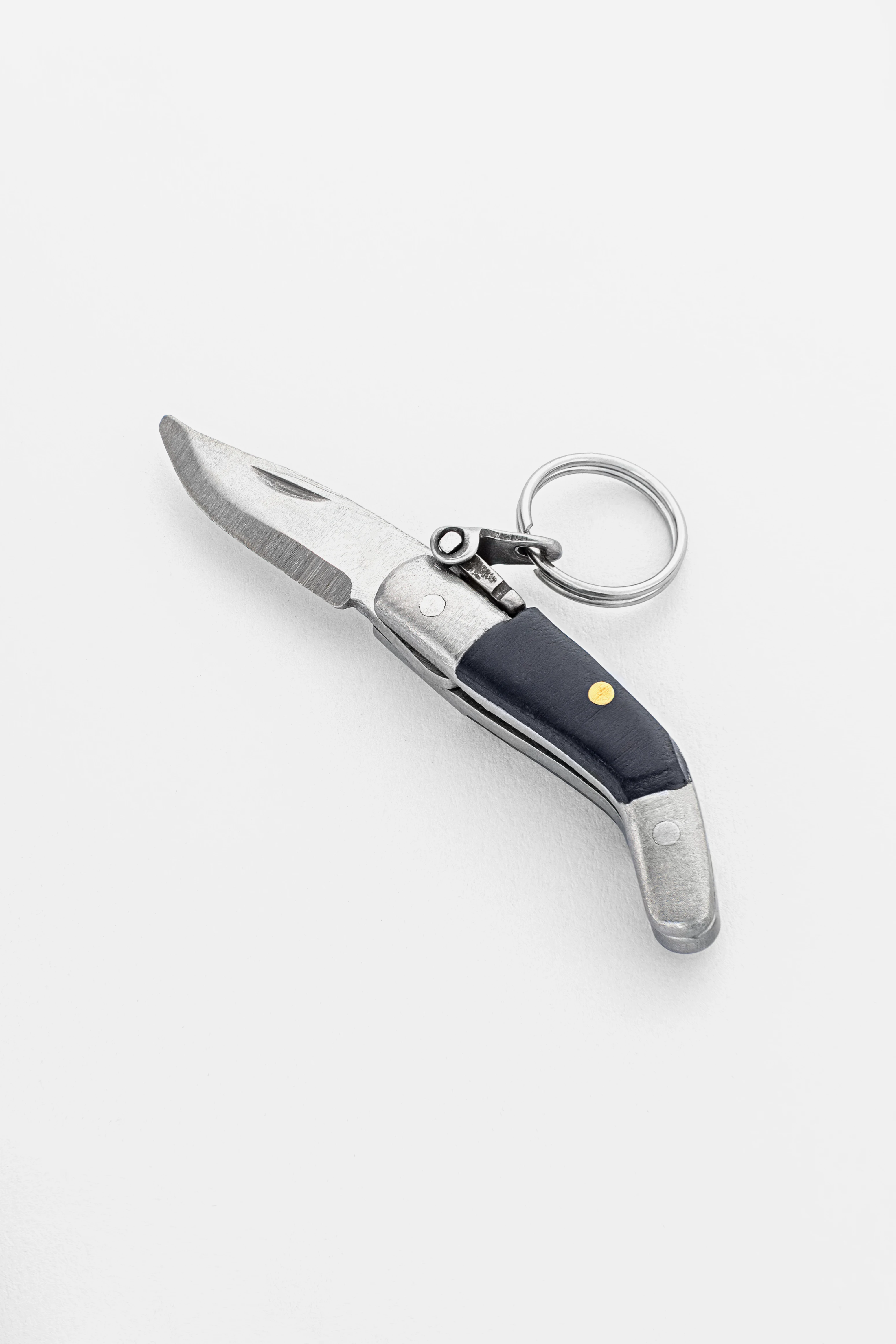
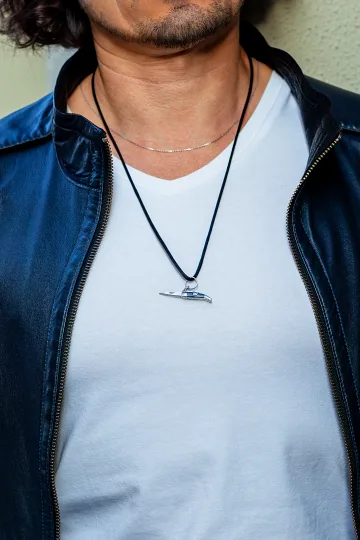
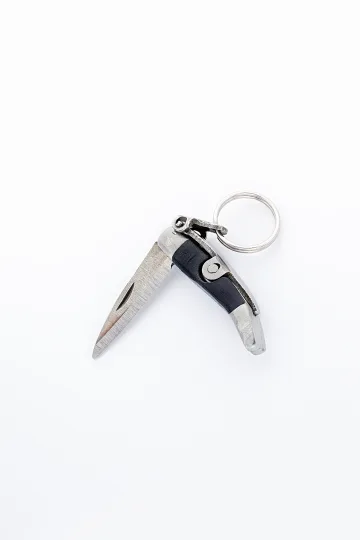
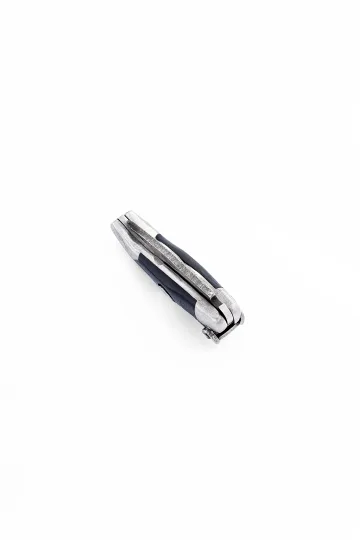
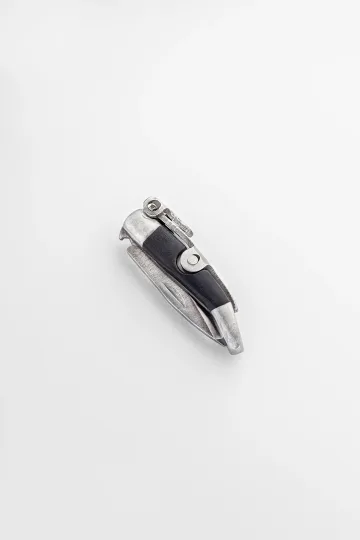
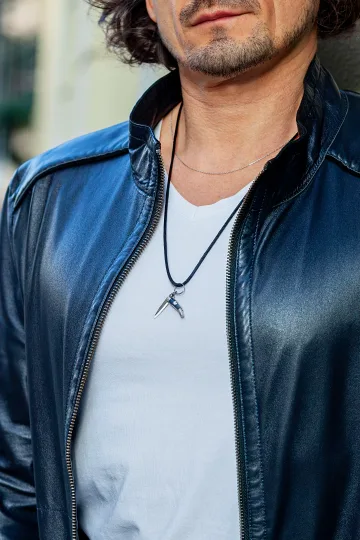
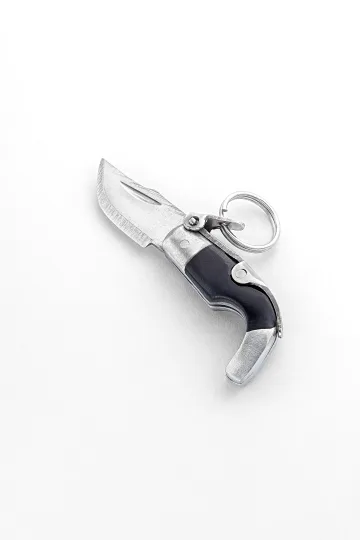
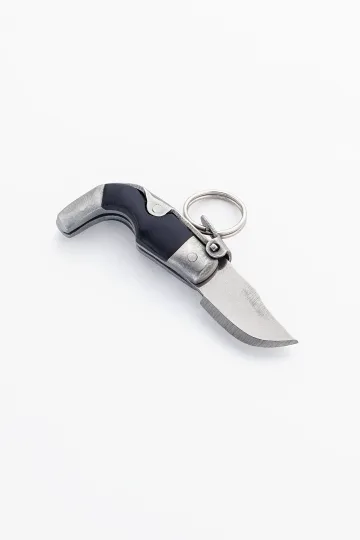
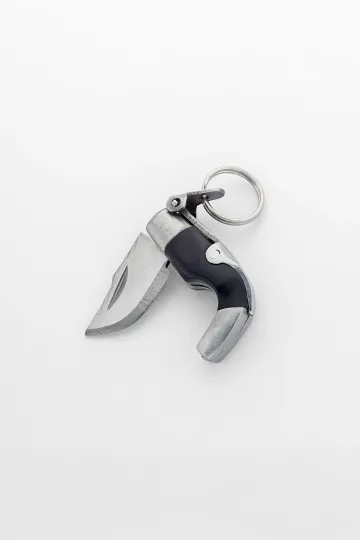
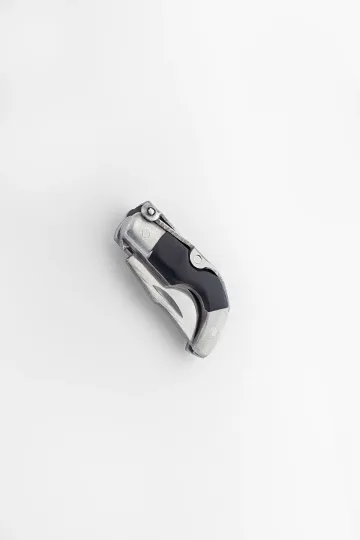
CAPAORA mini knife pendant
The 18th-century Spanish navaja in miniature: 40 mm of stainless steel, a real folding mechanism and a Palanquilla lock that clicks. An affordable gift to remember.
Authentic · Ships from Spain · 14-day returns
Regional Traditions
Andalusia
The dominant tradition. Blonda silk lace with a large floral pattern, a substantial comb, long earrings. Weddings, ferias, Semana Santa.
Madrid
More restrained and less decorative. Black veils prevail. The classic Castilian style.
Castile-La Mancha
Traditional but understated. No excess.
Catalonia
Less embedded in this particular tradition. Contemporary Catalan weddings often omit it entirely.
Galicia
Chantilly or Spanish lace paired with a jet comb. A distinctly Galician beauty.
Basque Country
Rare here. The region's textile tradition leans toward the traditional Basque headscarf.
The Symbolism of the Mantilla and Peineta
Everything above describes what is worn and when. This section is about what it means, which is the part an outsider most often gets wrong. None of it translates directly into British dress codes, and it is more useful to read it as a foreign grammar than as a set of rules you might apply at home.
A covered head as a mark of respect
At the base of the whole tradition lies a simple gesture: entering a church with the head covered. Everything else grew out of that religious root. Even now, when the ensemble reads as cultural rather than devotional for a good many of the women wearing it, the idea of deference to the moment survives inside it. A woman in a mantilla is saying to everyone around her that the occasion is significant and that she prepared for it. The nearest British equivalent is not a wedding hat, which is decorative, but the older instinct that certain places and certain moments ask you to dress differently from the way you dressed that morning.
Black as dignity rather than mourning
Black lace is taken by default as mourning dress by anyone who has not grown up with it, and in British terms that assumption is almost automatic. In Spanish culture black is also the colour of formal dignity, of ceremony, of seriousness of intent. This is why a black mantilla is correct at an afternoon wedding, at the bullring and at a state occasion. It is not about grief; it is about weight. Anyone accustomed to reading black at a wedding as a small provocation needs to set that reading aside entirely here, because it simply does not apply.
The height of the comb as a statement of standing
The taller the peineta, the louder the statement. At court, a high comb was the privilege of noble women and it literally raised its wearer above the crowd, adding height and visibility in a room where both mattered. That logic has softened but it has not disappeared. A substantial peineta at a wedding today announces that the bride has chosen the most traditional and most ceremonial register available to her, and everyone in the church understands the message without a word being said about it.
Lace as a female inheritance
Unlike jewellery, which often passed down the male line as capital, lace and combs traditionally went from mother to daughter. This is family memory held by women: a grandmother's mantilla at a granddaughter's wedding closes a circle of generations. It is the reason old lace is handled with more care than new, and the reason a Spanish family will have a piece repaired rather than replaced almost regardless of what the repair costs. What stands behind it is people, not just material, and a buyer who understands that will treat an antique piece very differently from a new one bought last month.
Leave your email, we'll send your discount code. No spam, unsubscribe anytime.
The code arrives by email, valid on your first order.
History of the Mantilla
The Middle Ages
The roots lie in the Islamic and Jewish traditions of the Mediterranean, where women covered their heads. After the Reconquista, the practice carried over into Christian Spain as a mark of respect within the Church.
The Renaissance and the Golden Age (16th-17th centuries)
The ensemble took shape as a distinct female garment during this period. Velazquez depicted noblewomen in early versions in his court portraits.
The 18th Century: Rococo and the Comb
The peineta assumed its modern form during this century. The large decorative comb became part of aristocratic fashion. Goya's portraits are the most celebrated visual record of this moment.
The 19th Century: National Identity
The mantilla became a symbol of Spanish cultural identity. During the era of Romantic nationalism, the movement known as costumbrismo celebrated the "majas" -- working-class women whose style came to represent authentic Spain -- in this dress.
The 20th Century: Royal Endorsement
The Spanish royal family kept the ensemble as part of formal court dress. Queens Maria Cristina, Victoria Eugenia, and Sofia all wore it at state occasions, cementing its ceremonial status.
After Franco (1975 onwards)
Revival as a conscious cultural choice. Young Spanish women began choosing the look for weddings as an act of connection with their heritage, not as an obligation.
The 21st Century
The mantilla is now universally recognised as a Spanish aesthetic. Spanish actresses and public figures wear it at formal appearances as a cultural statement. Spanish content creators have introduced contemporary interpretations to younger audiences.
Artisans and Workshops Today
The tradition of making peinetas has not died out. Workshops in Albacete and other Castilian towns still produce combs by traditional methods. Albacete artisans are known for their work with bone and tortoiseshell imitation. In Seville, specialist workshops in the old quarters pass the skill from generation to generation. Madrid heritage workshops produce silver and gold peinetas on commission for weddings. These are not mass-produced objects: each comb is made to measure for a specific head and hairstyle.
You cannot buy a genuine handmade peineta at a tourist market stall. The real thing is ordered in advance, as you would commission a bespoke dress.
Care and Maintenance
Caring for the Peineta
A peineta made of tortoiseshell imitation or celluloid is sensitive to moisture and temperature changes. Store it wrapped in natural silk or soft cotton. Not in a plastic bag: plastic can react with the comb material. Do not rub. Do not use abrasives. If the comb has metal detailing, wipe gently with a soft chamois.
The hairpins and small pins used to secure the veil are best stored in separate silk pouches or flat boxes with padding, to prevent bending and scratching.
Caring for the Mantilla
Handmade lace cannot go into a washing machine. Professional dry cleaning by a lace specialist only. Store flat, not rolled tightly, in thin acid-free tissue paper (available from specialist textile suppliers). Keep away from direct light: lace fades.
After wearing, fold carefully and put away immediately. Do not leave crumpled.
The Mantilla in Art and Popular Culture
Painting
Goya: "The Clothed Maja" and "The Naked Maja". Two of the most famous paintings associated with the ensemble (one with it, one without).
Velazquez: "Las Meninas". Royal ladies in an early form of the look.
Zuloaga, Zurbaran, Murillo. Classic Spanish painters for whom this motif appears regularly.
Literature
Calderon de la Barca, Lope de Vega. Golden Age theatre in which the image appears as a dramatic element.
Cervantes. Don Quixote and his particular reading of it.
Opera
Bizet's "Carmen". Carmen in this guise is one of the most recognisable images in operatic history.
Fashion
French and Spanish couture houses of the 20th century repeatedly drew on the mantilla as a source of inspiration. Spanish designers continue to return to it in contemporary collections, maintaining the thread of continuity.
Contemporary Formal Context
The Queen of Spain wears the ensemble at papal visits and state ceremonies. This sustains its status as a national ceremonial attribute.
Contemporary Feminist Critique
The subject is genuinely contested. Some contemporary Spanish women criticise the tradition as:
- A remnant of patriarchal culture in which women were expected to cover themselves
- An expression of Catholic religious control over women's bodies
- An undemocratic symbol of aristocratic privilege
Others defend it as:
- A conscious cultural choice, not a compulsion
- A living connection to ancestry, craft, and art
- A celebration of female aesthetic power (the mantilla adorns; it does not conceal)
Each woman decides for herself. A contemporary Spaniard may wear the ensemble as an act of tradition or deliberately refuse it as an act of emancipation. Both positions are legitimate.
Send a friend a discount code, they save on their first order.
How to Buy a Mantilla and Peineta
Where
Seville: the capital of the tradition. The Calle Sierpes area has specialist shops with long histories.
Madrid: historic lace houses with multi-generational expertise.
Granada: local workshops specialising in the craft.
Online: official sites of historic lace houses and independent artisans based in Spain.
What to Look For
Certified Spanish lace. Handmade, not machine-produced. Look for labels reading "Encaje de Almagro" or "Hecho en Espana."
Correct size. Try it before purchasing. The fit of the comb matters as much as the look of the veil.
A quality comb. Avoid the cheapest plastic (it breaks quickly). A better-grade plastic or a proper tortoiseshell imitation is worth the difference.
Price
Machine-produced lace sits in the budget segment. Hand-crafted Spanish lace is premium to luxury. Antique pieces (19th century) are luxury-collectible.
Combs range from budget (plain plastic) to luxury (genuine antique tortoiseshell, 100+ years old).
Care
Storage: in clean cotton fabric, laid flat. Never in plastic bags.
Cleaning: professional dry cleaning by a specialist in lace only. Not a washing machine.
Avoid rain and strong wind. The material is fragile; the comb can be dislodged.
Facts That Surprise
The comb was once made from real tortoiseshell
Until the trade was prohibited, the shell of the hawksbill sea turtle was the most sought-after material for a peineta. Craftsmen heated the plates, softened them and pressed them into large combs, working with the warm amber pattern the material gives. Today it belongs firmly to the past: every modern peineta is an imitation, and genuine tortoiseshell survives only in antique and museum pieces. Anyone inheriting or buying an antique comb should also know that international rules on tortoiseshell apply to carrying it across borders, which is a practical rather than a theoretical concern if the piece is travelling to a wedding abroad.
Combs reached half a metre in height
The grandest court peinetas rose 40 to 50 centimetres above the head. Wearing a structure like that through an entire evening was a skill in itself: a woman held her neck straight, moved smoothly and practised her posture in advance. The tall comb effectively dictated a manner of carrying oneself, and how a woman carried her peineta was read as evidence of her training.
A mantilla weighs less than it looks
Two metres of genuine silk lace is almost weightless. It folds into a palm and the light passes straight through it in the sun. The whole weight of the ensemble sits in the comb and the hairdressing, while the veil itself floats. That contrast between an imposing appearance and the real weight of the thing surprises everyone who picks up an antique mantilla for the first time.
A black mantilla is correct at a wedding
To an unaccustomed eye, black lace at a wedding looks like a mistake, and to a British eye it looks close to an insult. In Spain it is the norm for an afternoon ceremony. A guest, and even the bride, in a black mantilla is following the etiquette rather than breaking it. White belongs to the morning and black to the later part of the day, and that logic of the hour outweighs the familiar association of black with mourning.
The lace is made by hand on bobbins
The finest mantillas are made by working dozens of wooden bobbins, throwing the threads by hand. A complex pattern takes months of work, and several Spanish towns have names that function as a mark of quality in lace the way certain place names do for cheese or wine. A machine copy saves the time, but an experienced eye distinguishes the living irregularity of hand-worked lace from the flawless repeat of a machine pattern almost instantly.
Papal protocol made the mantilla international
The right to appear before the Pope in a white mantilla belonged historically to only a few Catholic queens, and Spanish queens exercised it for centuries. That privilege turned a strictly Spanish ensemble into a rare item of international ceremonial vocabulary. A lace veil on a comb became a pass into one of the most closed protocols in Europe, and it remains the reason people outside Spain recognise the ensemble at all.
The ensemble outlived an attempt to ban it
Eighteenth-century attempts by the authorities to restrict street dress did not kill the mantilla. They hardened it. Popular stubbornness turned a lace veil into a badge of independent character, and it stayed one. Few garments anywhere have become a point of national pride precisely because somebody once tried to prohibit them.
Frequently Asked Questions
Do you have to be Spanish to wear this?
No, but cultural awareness is expected. If you are at a Spanish friend's wedding and she invites you to wear one, it is a compliment. If you put it on for social media without context, it reads differently.
Is the comb only worn with lace?
Traditionally, yes. A large peineta without a veil looks out of place. A small decorative comb can work as a standalone hair accessory.
White or black lace?
It depends on the time and occasion. Morning weddings (before 6 pm): white. Evening weddings, Semana Santa, formal evenings: black.
Where can I find an authentic peineta?
From craftspeople in Albacete, Seville, or Madrid -- workshops with a name and a history, not tourist market stalls. A reliable sign is if the maker offers to fit the comb to your specific head and hairstyle, rather than selling a standard size off a shelf.
How is the peineta correctly placed?
A high, dense bun at the back of the head or just above. The comb is inserted with its teeth into the base of the bun, pointing downward and forward. If the comb slides, add hairpins to the bun for extra grip. The veil is then draped over the comb and pinned to it with small pins.
What is the classic length for a mantilla?
Approximately two metres for the traditional version. This is the length that covers the head and descends to the lower edge of a long dress. Shorter for less formal occasions, longer for royal and exceptional events.
Can it be worn with a contemporary dress?
Yes, but the comb and veil become the focal point. It works best with a classic silhouette (A-line, white or black). A very short, modern dress with this lace creates an uncomfortable contrast.
How long do you wear it?
At a wedding, typically through the ceremony and the first photographs, then the comb can remain while the veil is removed. At Semana Santa, throughout the procession. At funerals, for the duration of the ceremony.
Which comb is best for a bride?
Large (20-30 cm), with a warm lustre (tortoiseshell imitation or genuine jet). Avoid overly busy decoration that competes with the dress.
Can a grandmother's piece be altered?
Yes. Many Spanish women inherit and adapt family pieces. Find a lace specialist, not an ordinary tailor.
Is this a Catholic symbol?
The roots are Catholic (covering the head in church). Contemporary use is largely secular and cultural. Being Catholic is not a requirement.
What earrings are essential?
Long ones. Small studs are lost under the lace. Long drops or chandelier earrings are the classic choice.
Buying it as a gift? Each one arrives ready to give.
 A branded Zevira box and a little card come with every order.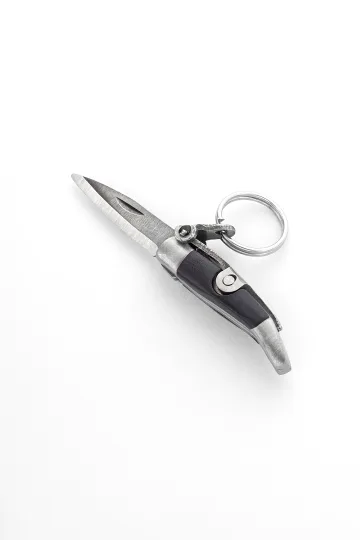





Conclusion
The mantilla and peineta ensemble is one of the strongest and most recognisable female aesthetics in the world. What the kimono is to Japan, what the sari is to India -- that is what this is to Spain. Not an accessory but a cultural statement.
For a Spanish woman it is a connection to ancestry, to the craft of lace-making, to centuries of tradition. For a visitor it is an act of respect for Spanish culture -- but one that requires the right context and the right moment.
If you are attending a Spanish wedding, experiencing Semana Santa, or present at a formal Spanish occasion, consider it seriously. If not, there is no obligation. But if you choose to wear it, do it properly: the right comb, the right lace, the right moment.
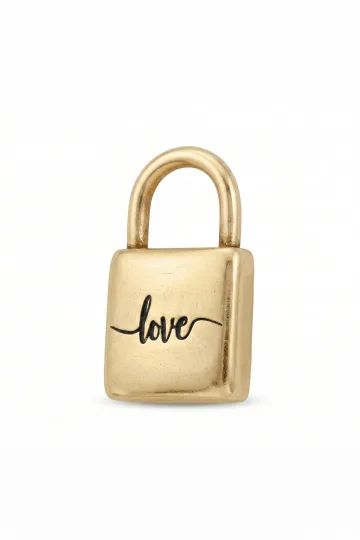
Silver, gold, wedding rings, symbolic pieces, and paired sets.
About Zevira
Zevira is based in Albacete, in the heart of Spanish culture. The mantilla and peineta are textile and carving traditions rather than jewellery, but the right pieces are inseparable from the ensemble. Long earrings, brooches, pearl strands, and rings with meaningful stones all play a defined role in this look.
What Zevira offers for the mantilla:
- Long chandelier earrings that read clearly beneath black lace
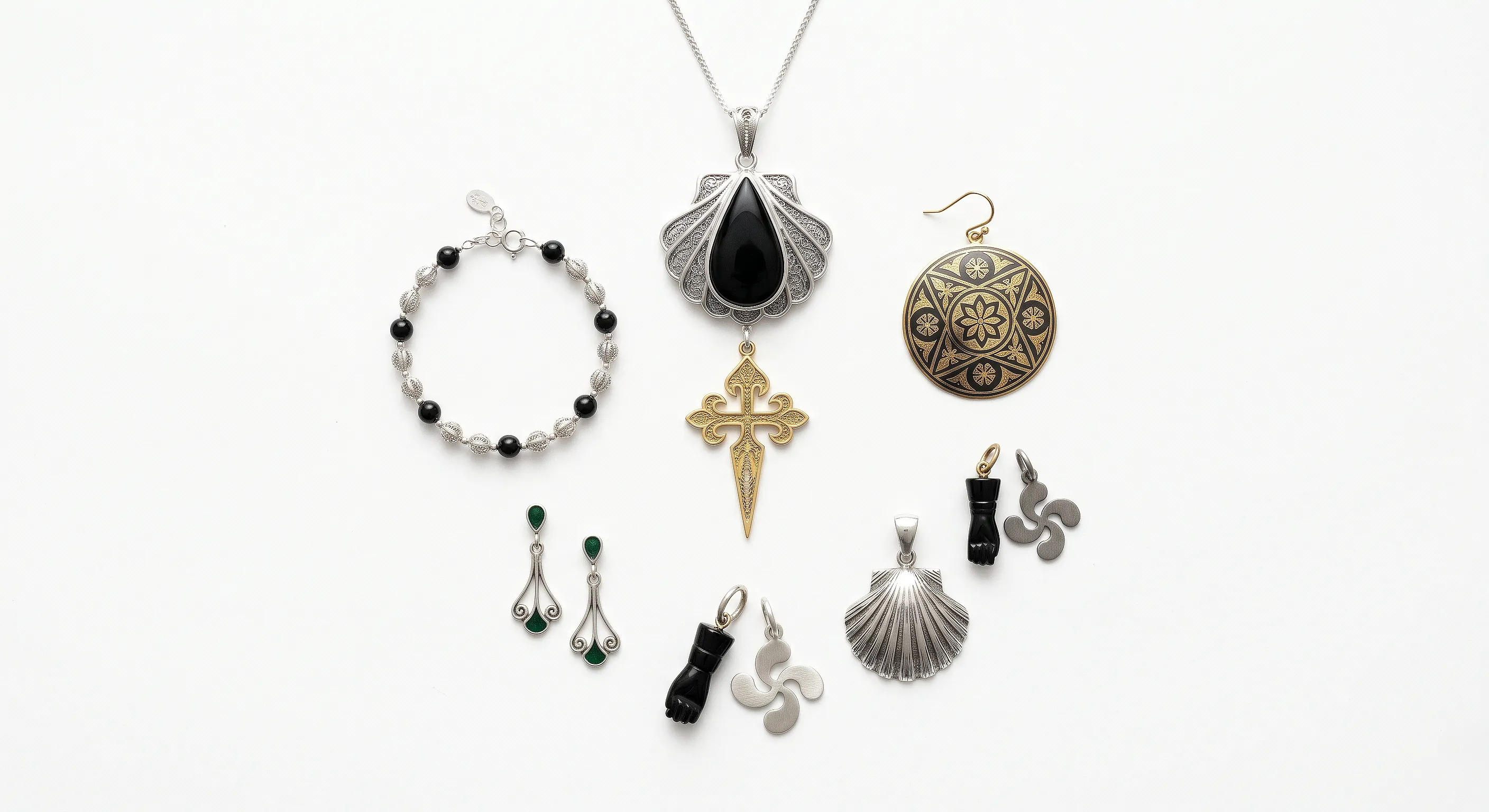
- Long drops with coral or jet -- traditional Spanish materials
- Brooches for pinning the veil
- Pearl strands in varying lengths
- Rings set with stones significant in Spanish tradition
- Jewellery consultation by mantilla type (white, black, coloured)
Every piece is handmade by a craftsperson, with personalised engraving available. We work with 925 silver and 14-18K gold.