Om in Jewellery: What the Most Sacred Sound in the World Looks Like When You Wear It
A single syllable that four religions consider the sound of reality itself
There is no older sacred sound in continuous human use than Om. Not a word, exactly. Not a prayer, not a name for God. A vibration. A syllable that Hindus, Buddhists, Jains, and Sikhs have been chanting for somewhere between 3,000 and 5,000 years, depending on which scholars you ask and how you date the earliest Vedic texts.
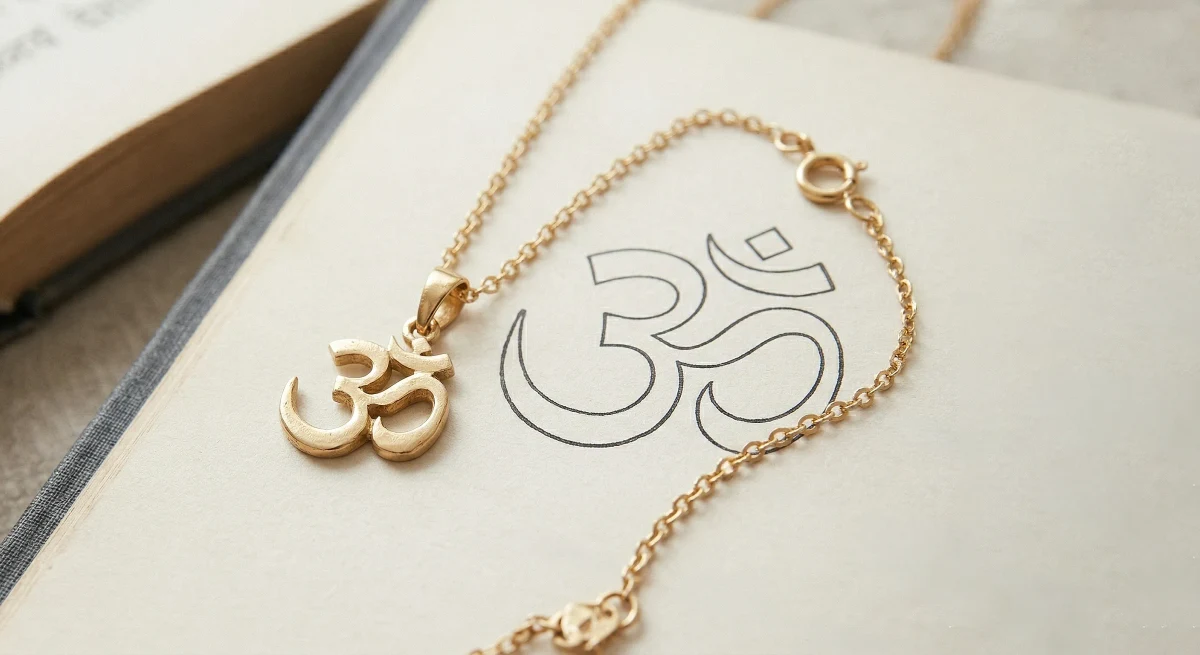
That syllable has a written form. The curving symbol you see on pendants, yoga mats, studio walls, and tattoos is Om written in Devanagari script, the writing system used for Sanskrit, Hindi, and several other South Asian languages. Every curve in that symbol has a specific meaning. The whole thing is, in essence, a map of human consciousness drawn in three and a half strokes.
Wear the symbol, don't just read about it. These are in stock:




And here's where it gets complicated. Om isn't just a cultural artifact or an aesthetic choice. For over a billion people, it is the most sacred symbol in their religious tradition. For some Hindus, seeing Om on a pair of flip-flops or a beer bottle label is roughly equivalent to what a devout Christian might feel seeing the cross used as a bottle opener. For other Hindus, the global spread of Om is a source of pride, a sign that the world is recognising the depth of their spiritual tradition.
This article takes Om seriously. Not as a yoga accessory or a boho aesthetic, but as what it actually is: one of the most profound and carefully analysed concepts in the entire history of human thought about consciousness, reality, and the nature of existence. We'll trace its meaning across four religions, examine the symbol curve by curve, look at what modern science says about the effects of chanting, and address the cultural sensitivity question honestly. Then we'll talk about what it means to wear it.
What Om Actually Is
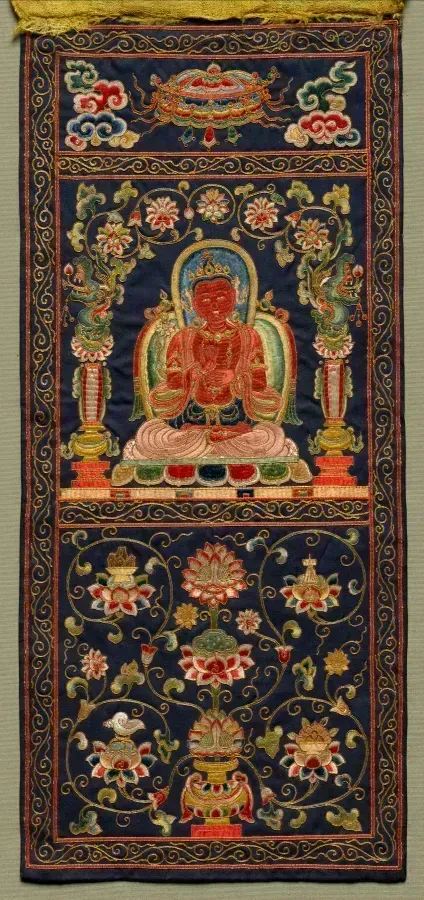
Om (also written Aum) is a sacred syllable that functions differently depending on which tradition you approach it from. But across all of them, certain things are consistent.
It is the primordial sound. In Hindu cosmology, Om is the sound that existed before creation and from which creation emerged. It's not a sound that describes reality. It IS reality, expressed as vibration. The Mandukya Upanishad opens with: "Om is this imperishable word. Om is the universe."
It is three sounds in one. The syllable breaks down into A-U-M, three phonetic components that merge when spoken. "A" (ah) is produced at the back of the throat with the mouth open. "U" (oo) rolls forward through the mouth. "M" (mm) closes at the lips. Together, they represent a complete journey from open to closed, from beginning to end, from creation to dissolution. The logic echoes the yin and yang idea, where the whole arises from complementary opposites.
It has a silent fourth component. After the "M" fades, there is silence. That silence is considered the most important part. It represents the state beyond description, beyond thought, beyond the reach of language. In Sanskrit, this is called "turiya," the fourth state of consciousness.
It spans multiple religions.
- In Hinduism: the sound of Brahman (ultimate reality), the beginning of every prayer and mantra
- In Buddhism: the opening of the most famous mantra in the world (Om Mani Padme Hum), inscribed on prayer wheels and flags
- In Jainism: a condensed form of the names of the five supreme beings (Pancha Parameshti)
- In Sikhism: expressed as "Ik Onkar" (one Om), the opening of the Guru Granth Sahib and the foundation of Sikh theology
It is not a word. This distinction matters. Om does not translate to anything. It doesn't mean "God" or "peace" or "universe" in the way that a word in a dictionary means something. It is, in the tradition, the SOUND of truth. The vibration that underlies everything. Trying to translate Om is like trying to translate a musical note. You can describe what it does, but you can't replace it with another word.
Upload a photo of your pet, someone you love, or an object. We'll build a 3D model and hand-cast it in pewter.


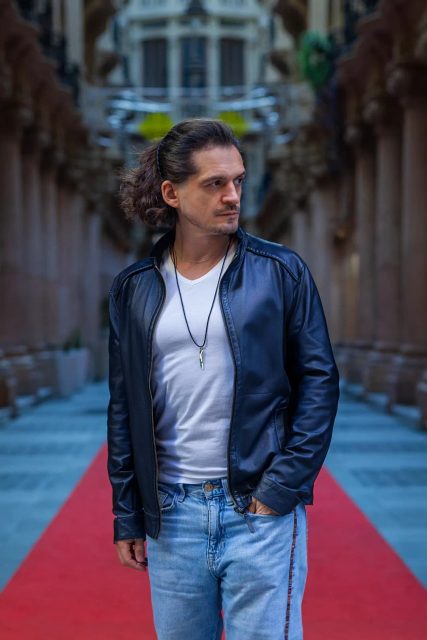
Om rides at the heart, never below the belt. I refuse to see it on a pair of flip-flops, and that is final.
How and What to Wear Om With
Over years on set I have built dozens of looks around this symbol. Om does not like a busy frame, so I recommend keeping the clothes around it calm. Here is what actually works, by occasion.
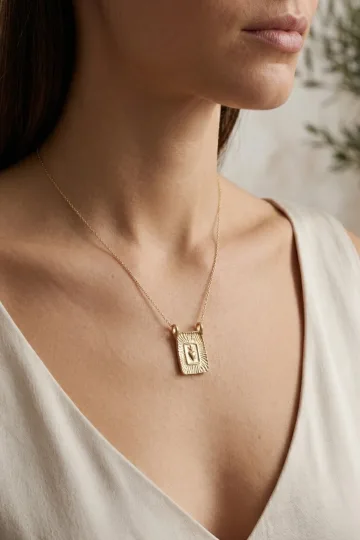
What do you wear Om with every day? For a daily look I recommend a silver pendant on a medium chain over a loose tee, linen or soft knit. Natural fabrics and muted tones (cream, sand, olive, grey) give the symbol room, and even a small pendant reads clearly. I choose the open collarbone on purpose: that is where Om sits best, right at the centre of the chest.
Does Om work for the office? It does, and better than you would expect. I suggest a short chain and a pendant tucked under a shirt or a thin V-neck sweater, closer to the throat. The symbol stays a personal detail, almost invisible to others but yours. Keep the metal restrained: matte silver or thin gold without shine.
How do you build an evening look? Evening asks for contrast. Against a black top, a deep neckline and a smooth fabric, I choose a gold Om, and the meditative sign turns into a piece that anchors the outfit. Soft layering works here: a pendant on a long chain plus a thin short one with no charm, two levels and a quiet rhythm. Silver with gold now reads as a deliberate choice, not a mistake.
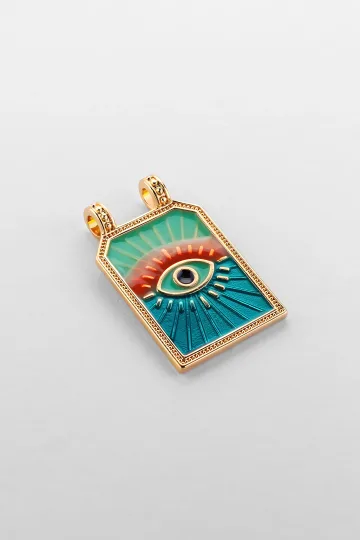
Which symbols pair well with Om? Om gets along with related motifs. I recommend the company of a lotus, tied to it through the mantra Om Mani Padme Hum, or a third eye. But three or four symbols on one neck is noise, so I keep one meaningful accent and one quiet chain beside it.
Who suits Om, and where do you wear it? It suits those who love the meaning behind a piece as much as its shape, and those who practise yoga or meditation and want an anchor within reach. On placement there is one rule, and tradition points to it: the symbol is worn above the waist, at the heart. I match the chain length to the neckline, not the other way round, so Om lands in the open zone instead of hiding under fabric.

Turn on your camera, pick earrings, a pendant or a ring, and see the piece on yourself in real time.
Switch items in one tap.
Everything runs in your browser: no photo or video is ever uploaded.
The Written Symbol: What Each Curve Means
The Devanagari script
The Om symbol as most people recognise it is the character for Om in Devanagari, the script used for Sanskrit. It looks like the number 30 with a tail, a curve on top, and a dot above that. But each element of the character has been interpreted as representing a specific state of consciousness, creating a visual map of the mind.
This interpretation comes from the Mandukya Upanishad's analysis of the four states of consciousness and their relationship to the three sounds of A-U-M plus silence.
Waking, dreaming, deep sleep
The large bottom curve represents the waking state (Jagrat in Sanskrit). This is the state most people consider "normal" consciousness: you're aware of the external world, you're processing sensory information, you're operating in everyday reality. It's the largest curve because it's the state we spend the most time in and the one we identify with most strongly.
The middle curve (extending from the back of the large curve, like a tail curling to the right) represents the dreaming state (Swapna). In this state, consciousness turns inward. You experience a world, but it's generated by your own mind. The dreaming state is considered important because it demonstrates that consciousness doesn't require external input to create experience. Your mind builds entire worlds while your body lies still.
The upper curve (the smaller curve at the top, separate from the lower two) represents deep dreamless sleep (Sushupti). This is the state where there is no awareness of either external or internal worlds. No dreams, no sensory input, no narrative. Just consciousness in its most basic form, present but not aware of being present. Hindu philosophy considers this a profound state, not just "nothing happening," but a glimpse of consciousness without content.
Maya and the dot of transcendence
The semi-circle or crescent that sits between the upper curve and the dot represents Maya, usually translated as "illusion" but more accurately understood as "that which measures" or "that which creates the appearance of separation." Maya is the veil between the relative world (the three states below) and absolute reality (the dot above). In yogic anatomy, this veil corresponds to the third eye, the point between the brows where subtler perception is said to open. Maya comes close to the transcendent but never reaches it. The boundary between relative and absolute experience is permeable but real.
The dot (bindu) at the very top represents Turiya, the fourth state, the state of pure consciousness that underlies and encompasses the other three. It is the silence after the M fades. It is Brahman. It is what you ARE when all the states and stories and content are stripped away. The dot is small but positioned above everything else because, in the Upanishadic view, it is the most fundamental reality. Everything else is a manifestation of it.
Together, the five elements create a complete philosophical diagram: three states of ordinary consciousness (waking, dreaming, sleeping), the veil that separates them from the absolute (maya), and the absolute itself (turiya). All in a single written character. That's why Om is considered the most compact expression of an entire metaphysical system.
Customer reviews
Zevira is a real jewellery shop. Genuine payments, deliveries and customer thank-yous.
🥰🥰🥰 gracias
Ok, ¡gracias! 🙂

Om in Hinduism: The Sound of Everything
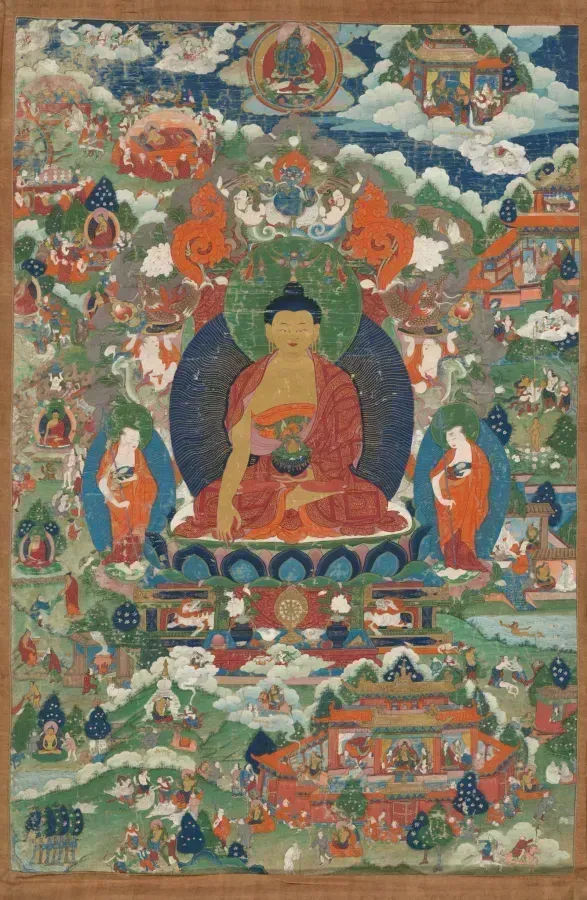
The Mandukya Upanishad
The Mandukya Upanishad is the shortest of the principal Upanishads, just twelve verses. It is also, arguably, the most concentrated. The entire text is an analysis of the syllable Om, examining it sound by sound and mapping each component to a state of consciousness.
The philosopher Gaudapada (c. 6th century CE) wrote an extensive commentary on it called the Mandukya Karika, which became foundational to the Advaita Vedanta school, one of the most influential philosophical traditions in India. The 8th-century philosopher Adi Shankara, who systematized Advaita Vedanta and whose influence on Hindu thought is roughly comparable to Thomas Aquinas's influence on Catholic thought, considered the Mandukya Upanishad sufficient in itself to lead to liberation. He reportedly said that if a person could only study one Upanishad, this should be the one.
The text establishes that the syllable Om (Pranava) IS Brahman. Not represents Brahman, not symbolises Brahman, IS Brahman. This is a metaphysical claim of the strongest possible kind: the sound and the ultimate reality are identical.
Om as Brahman
Brahman in Hindu philosophy is not "God" in the Western theistic sense. Brahman is the ground of all being, the ultimate reality from which everything arises and to which everything returns. It is not a person, not a mind, not a force. It is what exists when all specific things and qualities are removed. Brahman is existence itself.
The Upanishadic claim that Om IS Brahman means that when you chant Om, you're not praying to someone or asking for something. You're vibrating in resonance with reality itself. The sound IS the thing. This is fundamentally different from how most Western religious language works. In the Abrahamic traditions, words about God are descriptions of God. In the Upanishadic tradition, Om is not a description. It's a direct participation.
This is also why Om carries such weight for many Hindus. It's not a decorative element of their faith. It's the foundation. Everything else in Hindu practice connects back to Om: every mantra begins with it, every ritual includes it, every philosophical text references it. Taking Om casually can feel, to practitioners, like someone treating the foundation of their worldview as an accessory.
Beginning of every prayer and mantra
In practical Hindu worship (puja), Om opens everything. The Gayatri Mantra, considered the most sacred verse in the Vedas, begins with Om. Temple rituals begin with Om. Personal meditation typically begins and ends with Om. The priests' invocations begin with Om. It functions like a key that opens the door between ordinary speech and sacred speech.
This practice extends back to the Vedic period (roughly 1500 to 500 BCE), making it one of the oldest continuous religious practices on Earth. When a Hindu family chants Om before a meal or a ceremony today, they are performing essentially the same act that their ancestors performed three thousand years ago. The continuity is extraordinary.
The Chandogya Upanishad (one of the oldest, dating to perhaps the 8th century BCE) devotes its first chapter entirely to Om, calling it the "Udgitha" (the loud chant) and declaring it the essence of all essences, the highest of the high.




Om in Buddhism: A Different Emphasis
Om Mani Padme Hum
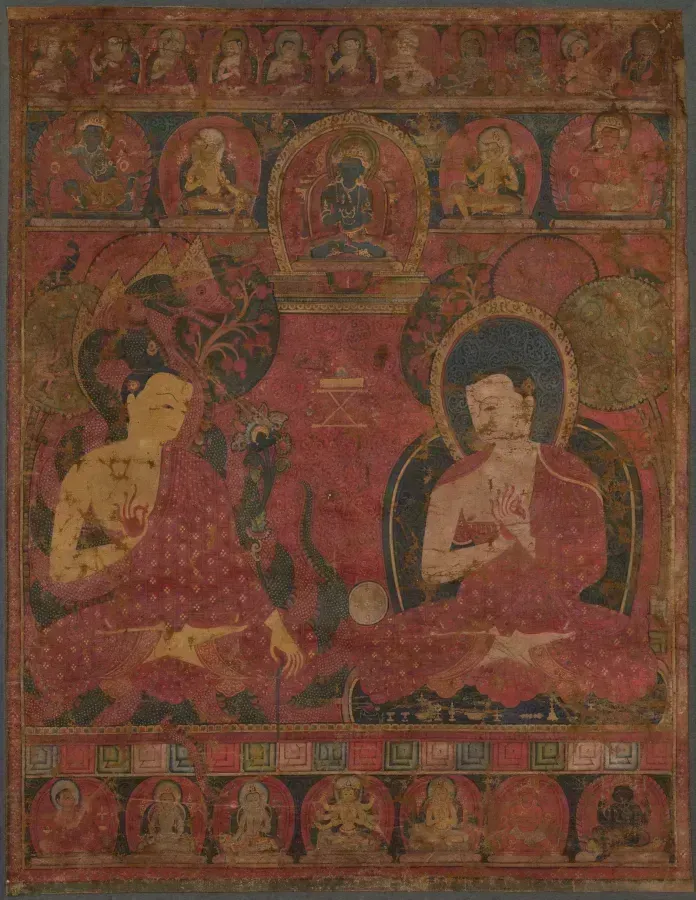
The most recognisable mantra in Buddhism is Om Mani Padme Hum, the six-syllable mantra associated with Avalokiteshvara (Chenrezig in Tibetan), the bodhisattva of compassion. This mantra is everywhere in Tibetan Buddhist culture: carved into stone, printed on flags, inscribed inside prayer wheels, chanted by monks and laypeople alike.
The mantra translates roughly as "the jewel in the lotus," but as with Om itself, the meaning is not really contained in the translation. Each syllable is associated with a different realm of existence in Buddhist cosmology, and the practice of chanting it is said to purify the karma associated with each realm.
Om, in this context, functions as an opening, a sacred invocation that sets the tone for what follows. But the emphasis in Buddhist use of Om is different from Hindu use. In Hinduism, Om IS the ultimate reality. In Buddhism, Om is a gateway to practice. The Buddhist tradition generally doesn't make the same metaphysical identification between the sound and the absolute that the Hindu tradition does.
Tibetan prayer wheels and flags
Tibetan prayer wheels contain scrolls with Om Mani Padme Hum written thousands of times. Spinning the wheel is considered equivalent to chanting the mantra that many times. The practice is based on the idea that the mantra's power exists in its form, not just in its vocalization. Written Om has the same effect as spoken Om.
Prayer flags, common throughout the Himalayan region, carry the mantra on fabric that flutters in the wind. The idea is that the wind carries the blessing of the mantra across the landscape, purifying the air and benefiting all beings in its path.
These practices mean that Om in Tibetan Buddhism is not just something you hear or say. It's something you see, touch, spin, hang, and encounter in the physical landscape. Walking through a Tibetan Buddhist area, you cannot avoid Om. It is built into the environment.
How Buddhist Om differs from Hindu Om
The key theological difference: Hinduism generally treats Om as the sound of Brahman (ultimate unchanging reality). Buddhism, which does not accept the concept of Brahman or a permanent ultimate self (Atman), treats Om as a powerful sacred syllable without making the same ontological claim. In Buddhism, Om is a tool for practice, not an expression of a metaphysical absolute.
This distinction matters for understanding the symbol. When a Hindu wears Om, the theological statement is: "I carry the sound of ultimate reality." When a Buddhist uses Om, the statement is closer to: "I engage in the practice of compassion and purification." Same syllable, different philosophical framework.
There's also a difference in visual representation. Hindu Om is typically written in Devanagari script (the curving character most people recognise). Tibetan Om is written in Tibetan script, which produces a visually different character, more angular and vertical. Both represent the same sound, but they look quite different.
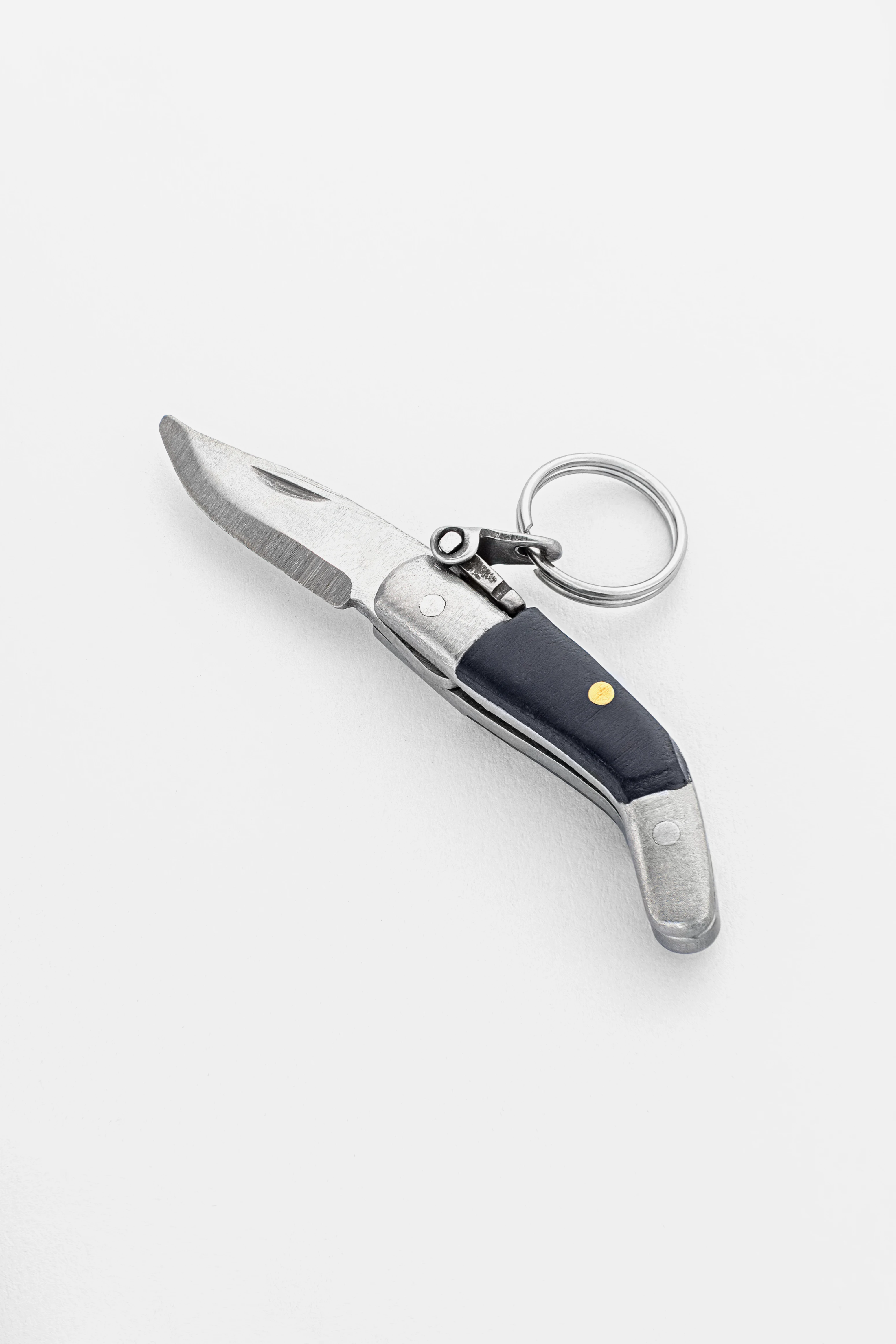
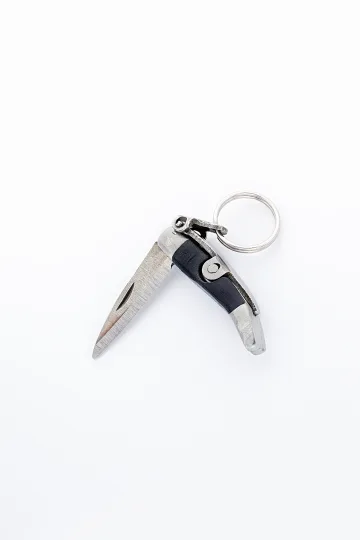
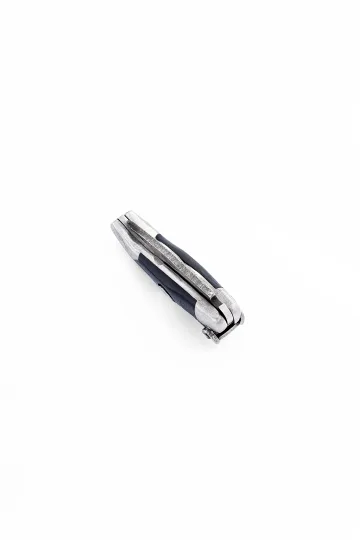
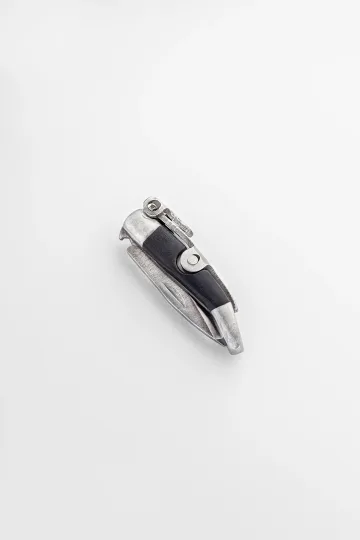
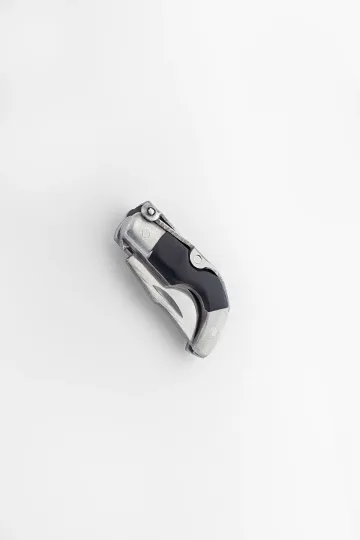
CAPAORA mini knife pendant
The 18th-century Spanish navaja in miniature: 40 mm of stainless steel, a real folding mechanism and a Palanquilla lock that clicks. An affordable gift to remember.
Authentic · Ships from Spain · 14-day returns
Om in Jainism and Sikhism: Shared Symbol, Different Paths
Jainism has its own relationship with Om that predates or runs parallel to its Hindu usage. In Jain tradition, Om is not the sound of the universe. It is a condensed representation of the five Pancha Parameshti, the five supreme beings: Arihants (enlightened beings), Siddhas (liberated souls), Acharyas (spiritual leaders), Upadhyayas (teachers), and Sadhus/Sadhvis (monks and nuns). The five syllables of the Namokar Mantra (Na-Mo-A-Ri-Ha) are sometimes represented by Om, making it a kind of abbreviation for the most important mantra in Jain practice.
Jain Om is often written differently from Hindu Om, sometimes appearing as a collection of crescents or in a distinctly Jain calligraphic style. The visual form matters because it signals which tradition the wearer is connecting to.
Sikhism's relationship with Om is expressed through "Ik Onkar," the opening words of the Mul Mantar, which is the opening section of the Guru Granth Sahib, the Sikh holy scripture. "Ik" means "one" and "Onkar" derives from "Omkara" (Om). So the foundational statement of Sikh theology literally begins with Om: "One Om," meaning there is one supreme reality.
However, Sikhism's Ik Onkar is written in Gurmukhi script, not Devanagari, and it carries specifically Sikh theological meaning. It's a declaration of monotheism: one reality, one creative force, one truth. This is different from the Hindu Advaita interpretation (where Om represents the non-dual absolute) and from the Buddhist interpretation (where Om is a practice tool).
The point of all this: Om is not "a Hindu symbol that other religions borrowed." It is a shared South Asian sacred concept that each tradition has developed in its own direction. Wearing Om connects you not to one religion but to a family of related spiritual traditions spanning thousands of years.
Leave your email, we'll send your discount code. No spam, unsubscribe anytime.
The code arrives by email, valid on your first order.
Om in Modern Yoga Culture
From ashrams to Western studios
The story of how Om went from Indian ashrams to Western yoga studios is essentially the story of yoga's migration westward. Swami Vivekananda's address at the Parliament of the World's Religions in Chicago in 1893 is often cited as the starting point. He introduced Hindu philosophical concepts to an American audience, and interest grew slowly from there.
By the 1960s, the counterculture's embrace of Indian spirituality (the Beatles visiting Maharishi Mahesh Yogi, Ram Dass publishing "Be Here Now," the spread of Transcendental Meditation) brought Om into Western popular awareness. It appeared on album covers, posters, t-shirts. It became a visual shorthand for "Eastern spirituality" and, less charitably, for "hippie."
The yoga boom of the 1990s and 2000s commercialized the process further. As yoga studios opened in every Western city, Om came with them. The symbol appeared on studio walls, on yoga mats, on water bottles, on jewellery marketed to the growing population of people who practised yoga as physical exercise and, in some cases, as something deeper.
Chanting at the beginning and end of class
In many yoga classes worldwide, the session opens and closes with the chanting of Om. The teacher will invite students to take a deep breath and chant together. Three Oms is common: one for body, one for mind, one for spirit. Or one for past, one for present, one for future. Or simply three as a ritual opening.
For some students, this is a meaningful moment of connection to the yogic tradition. For others, it's just the thing you do before the physical practice starts. And for some, particularly people from Hindu, Buddhist, or Jain backgrounds, watching a room full of people in expensive activewear chant Om before doing what amounts to a fitness class can feel strange. Not necessarily offensive, but disconnected from the weight that the syllable carries in its original context.
This gap between sacred practice and fitness routine is at the heart of the cultural sensitivity conversation around Om.
Om tattoos and the Instagram generation
Om is one of the most popular tattoo designs in the world. A 2023 survey of tattoo artists ranked it among the top ten most requested spiritual or symbolic designs globally. It appears on wrists, behind ears, on ribs, on the backs of necks. It's everywhere on Instagram and Pinterest, often paired with lotus flowers, mandalas, or other South Asian spiritual imagery.
For many people who get an Om tattoo, the intention is genuine. They've practised yoga for years, they've read about Hindu philosophy, they feel a real connection to what the symbol represents. For others, it's primarily aesthetic. The curving lines of the Devanagari character are visually beautiful, and the association with "spirituality" and "peace" is attractive.
The question of where genuine connection ends and superficial appropriation begins is not simple, and we'll address it directly in the next section.
The Cultural Sensitivity Question: Respect or Appropriation?
Why some Hindus welcome it
Many Hindus see the global spread of Om as a positive development. Their reasoning:
Universality is built into the concept. Om is described in the Upanishads as the sound of ALL reality, not the sound of Hindu reality. If Om really is what the texts say it is, then it belongs to everyone. Claiming exclusive ownership of it would actually contradict its meaning.
Visibility validates. For Hindu communities in the West who have faced ignorance and discrimination about their faith, seeing Om recognised and respected by non-Hindus can feel like progress. It normalizes Hinduism and makes it visible in cultures that have historically paid it little attention.
Sharing is traditional. Hinduism is not, historically, a missionary religion in the Abrahamic sense. But it has a long tradition of teachers sharing knowledge with anyone who sincerely seeks it. The guru-student relationship doesn't require the student to be Hindu. Many of the most influential yoga teachers who brought these practices to the West did so intentionally.
It sparks deeper interest. Someone who buys an Om pendant might then read about what it means, which might lead to reading the Upanishads, which might lead to a genuine engagement with one of humanity's oldest philosophical traditions. The jewellery becomes a gateway.
Why some Hindus find it disrespectful
Other Hindus have legitimate concerns:
Decontextualization. Om is not a logo. It exists within a vast philosophical and devotional system that gives it meaning. Taking the symbol and stripping it of that context, using it as a decoration on yoga pants, beer labels, doormats, or shoes, reduces something sacred to something commercial. It's not that non-Hindus can't engage with Om. It's that engagement requires context.
The shoes and floor problem. In Hindu culture, placing religious symbols below the waist, on the floor, or on shoes is deeply disrespectful. Om on flip-flops, Om doormats, and Om on the soles of socks have caused real anger in Hindu communities. There's a difference between wearing Om on a pendant near your heart and stepping on it with your feet.
Selective adoption. There's a pattern in which Western culture takes the attractive, marketable elements of South Asian traditions (yoga poses, Om symbols, mandala art, chakra language) while ignoring or dismissing the rest: the philosophy, the devotional practices, the dietary disciplines, the social commitments. This selective approach can feel extractive.
The power dynamic. When South Asian people wear their own religious symbols in Western countries, they sometimes face discrimination, mockery, or the assumption that they're "exotic" or "strange." When white Westerners wear the same symbols, they're considered trendy and spiritual. That asymmetry is real and it affects how the conversation about Om jewellery lands.
The key: intention and awareness
There's no single correct answer to whether wearing Om as jewellery is appropriate if you're not Hindu, Buddhist, Jain, or Sikh. But there is a useful framework:
Know what you're wearing. If you're going to wear Om, understand what it means. Not just "it means peace" or "it's a yoga thing," but the actual philosophical content. You've read this far in this article, which means you're already taking that seriously.
Wear it with respect. Om belongs near the heart, around the neck, on the ears. Not on shoes, not on the floor, not on your backside. Placement matters in every tradition that considers Om sacred.
Be honest about your relationship to the tradition. Are you engaged with the practice and philosophy, or do you just like how the symbol looks? Both can be valid, but honesty about which one you're doing matters.
Listen to people from the tradition. When Hindu, Buddhist, Jain, or Sikh people express discomfort about how their symbols are used, the appropriate response is to listen, not to explain to them why it should be fine.
Don't commercialize what isn't yours to commercialize. There's a difference between an individual wearing an Om pendant because it genuinely means something to them, and a company mass-producing Om beer koozies for profit. Scale and intent both matter.
The fact that you're thinking about this at all puts you ahead of the curve. Cultural sensitivity isn't about getting a permission slip. It's about approaching another tradition's sacred symbols with the same respect you'd want for your own.
Sound and Vibration: What Happens When You Chant Om
Vagus nerve stimulation
The vagus nerve is the longest cranial nerve in the body, running from the brainstem through the neck, chest, and abdomen. It's a key component of the parasympathetic nervous system, which controls rest-and-digest functions. The vagus nerve is associated with the body's relaxation responses.
Chanting Om produces a specific vibratory pattern in the vocal cords, palate, and nasal passages. The prolonged "M" sound creates a humming vibration that resonates through the head and chest. This is the same humming, focused breathing that many people describe as soothing, and it is part of why the practice has felt calming to those who do it.
In simpler terms: many practitioners experience the slow, deliberate humming of Om as a way to settle and slow down. This article does not offer medical advice, and Om jewellery is not a treatment for any health condition.
Measurable relaxation effects
People who practise chanting Om often describe it as quieting and grounding, and the slow rhythmic breathing it requires is the kind that many find relaxing. These are personal experiences rather than promises of any particular result.
Whether the calming effect comes from the vibration itself, from the focused breathing, or simply from the act of pausing, the practice has been valued for that sense of settling for a very long time.
Why the ancient practice still resonates
The Upanishadic claim that Om is "the sound of the universe" is a metaphysical statement that science can neither confirm nor deny. What can be observed is simpler: people who chant Om tend to describe the experience as calming.
This is interesting because it suggests that the practice of chanting Om wasn't just symbolic or purely devotional. Practitioners noticed and valued something in it, and they described what they felt in the language available to them: vibration, energy, connection to the cosmic sound.
Whether this validates the metaphysical claims is a philosophical question. But it does mean that wearing an Om pendant as a reminder to pause and breathe isn't just sentiment. There's a long-lived practice behind the symbol that its practitioners have always described as helping them feel calmer.
Buying it as a gift? Each one arrives ready to give.
 A branded Zevira box and a little card come with every order.





Wearing Om: Styling and Intention
How to style Om jewellery
Om jewellery works across a wide range of styles because the symbol itself is visually versatile. The curving Devanagari character is inherently elegant.
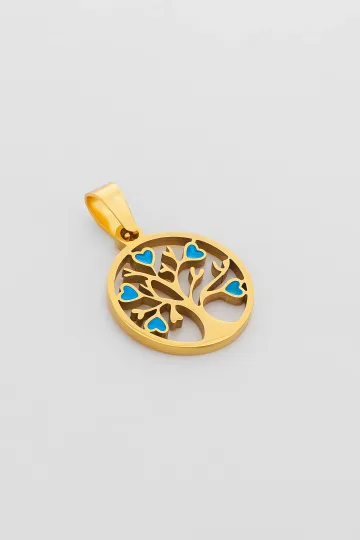
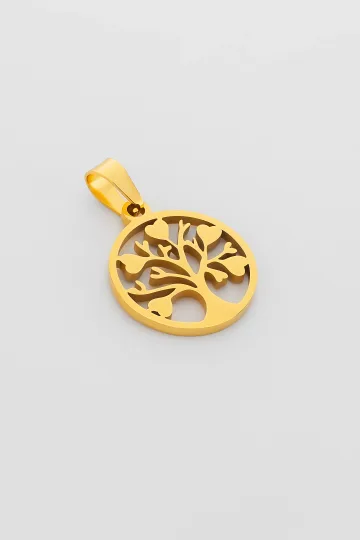
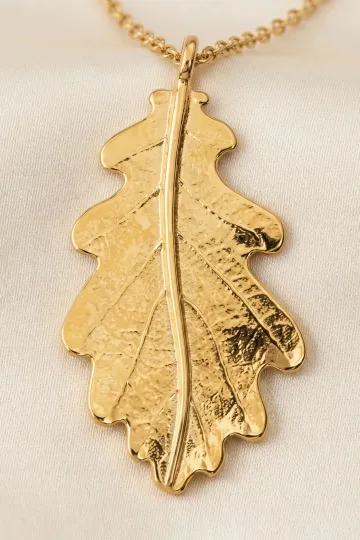
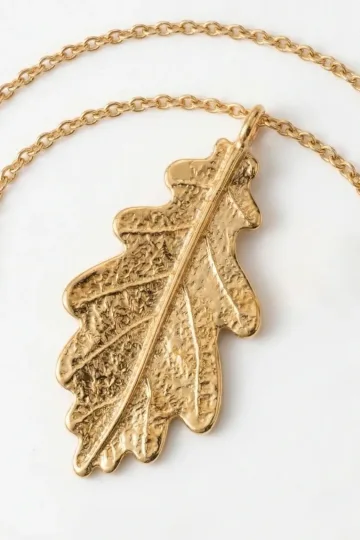
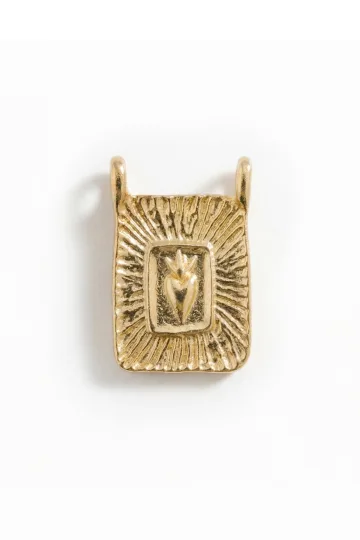
- Pendant on a chain. The most common and most respectful format. A medium-sized Om pendant at chest height keeps the symbol near the heart, which aligns with the traditional reverence for the symbol. Works with both casual and dressy outfits. A piece like the Somnium Necklace carries this kind of quiet intentionality.
- Layered with other meaningful pieces. Om pairs naturally with lotus motifs (the lotus is directly connected to Om through the mantra Om Mani Padme Hum and through Hindu iconography). A Mystical Dance Necklace alongside an Om piece creates a conversation between different symbolic traditions.
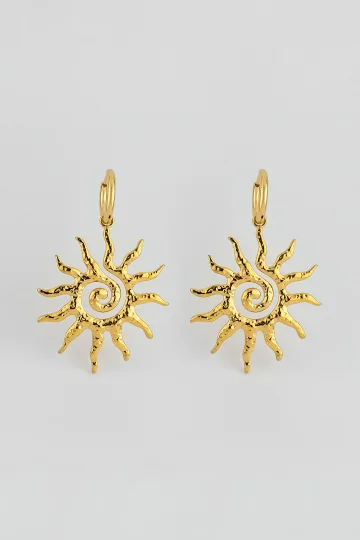
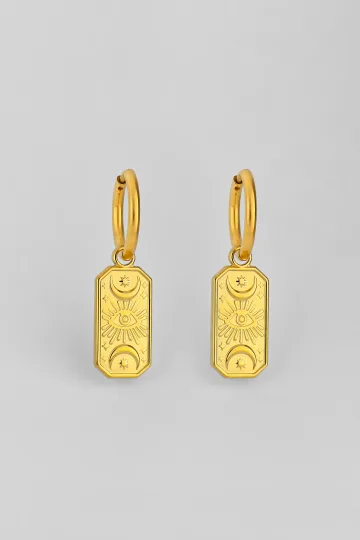
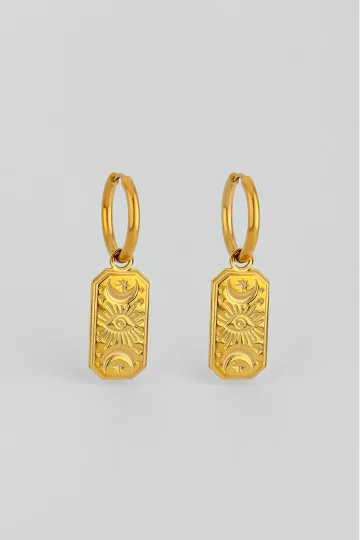
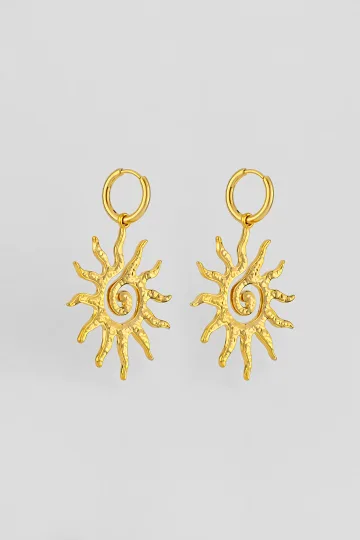
- Earrings. Small Om earrings work as a subtle daily reminder. The symbol near the ears connects naturally to Om's identity as a SOUND. You hear the world through ears; wearing Om there links the symbol to its essence. Something like the Solar Spiral Earrings can complement Om earrings with their own spiral symbolism.
- Ring. An Om ring keeps the symbol visible to YOU throughout the day, which is useful if the pendant is more about a personal reminder than an outward statement.
- Bracelet or bangle. Common in South Asian jewellery traditions. Om on a bracelet keeps it close to the pulse point, connecting the symbol to your body's own rhythms.
The gift guide
For someone who practices yoga seriously. Not the person who goes once a month, but the person for whom yoga is a genuine practice. An Om pendant acknowledges that their practice is about more than physical flexibility. It's about the tradition behind the poses.
For someone going through a difficult transition. Om represents the complete cycle of consciousness: waking, dreaming, sleeping, and the transcendence beyond all three. Giving Om to someone in transition says: "Whatever state you're in right now, it's part of a larger whole."
For someone with a meditation practice. Om is the foundational mantra. A pendant serves as a physical anchor for their practice, something to touch or hold when they need to return to centre.
For someone exploring South Asian philosophy. An Om pendant given alongside a book (the Mandukya Upanishad, the Bhagavad Gita, or a good introduction to yoga philosophy) makes the symbol part of a genuine learning journey rather than a standalone aesthetic choice.
A note on gifting Om across cultures: If you're gifting Om to someone who is Hindu, Buddhist, Jain, or Sikh, the gesture is generally welcomed because you're giving them a symbol of their own tradition. If you're gifting it to someone who is not from these traditions, include a note about what it means. Context transforms the gift from a pretty pendant into something meaningful.
Send a friend a discount code, they save on their first order.
Frequently Asked Questions
What does Om mean? Om (Aum) is a sacred syllable in Hinduism, Buddhism, Jainism, and Sikhism. In Hindu philosophy, it represents Brahman (ultimate reality) and the sound from which all creation emerged. It is not a word with a dictionary definition but a vibratory expression of the fundamental nature of existence. Each of its three sounds (A, U, M) maps to a state of consciousness: waking, dreaming, and deep sleep. The silence after is the fourth state: transcendence.
Is it Om or Aum? Both. "Om" and "Aum" refer to the same syllable. "Aum" makes the three-part structure (A-U-M) more visible in writing. "Om" is the more common spelling in English. In Sanskrit, the vowels A and U combine into O by a grammatical rule called sandhi, so both spellings are technically correct.
Is it disrespectful to wear Om if I'm not Hindu? There's no single answer. Many Hindus welcome it; some find it inappropriate when separated from its context. The key factors: wear it with understanding of what it means, place it respectfully (near the heart, not below the waist), and be honest about your relationship to the tradition. Knowledge and respect matter more than your background.
What do the curves of the Om symbol represent? The large bottom curve is the waking state. The middle curve is the dreaming state. The upper curve is deep dreamless sleep. The semi-circle between the upper curve and the dot is Maya (the veil of illusion). The dot at the top is Turiya (the fourth state of pure transcendence). Together, they form a complete map of consciousness.
What is the Mandukya Upanishad? The shortest of the principal Upanishads (twelve verses), entirely dedicated to analysing the syllable Om. It maps the three sounds (A-U-M) to three states of consciousness and introduces the fourth state (Turiya). It's considered one of the most important texts in Hindu philosophy, and the philosopher Adi Shankara reportedly said it alone was sufficient for liberation.
Why do yoga classes chant Om? Chanting Om at the beginning and end of a yoga class is a traditional practice that connects the physical practice to its spiritual roots. The shared vibration is also a practical group synchronization technique: it brings everyone's breathing and attention to the same point. Many practitioners describe the shared humming as calming.
Does chanting Om feel like anything physical? Many people who chant Om describe a noticeable humming vibration through the head and chest, along with a sense of calm that they attribute to the slow, focused breathing the practice involves. These are personal experiences, and this is not medical advice; Om jewellery is not a treatment for any condition.
Is Om Buddhist or Hindu? Both, and also Jain and Sikh. Om appears in all four traditions, though with different theological frameworks. Hinduism treats it as identical with Brahman (ultimate reality). Buddhism uses it as a sacred syllable in mantras (especially Om Mani Padme Hum) without making the same metaphysical identification. Jainism associates it with the five supreme beings. Sikhism begins its scripture with Ik Onkar (One Om).
Can I wear Om and a cross (or other religious symbol) together? There's no rule against it. Many people who are drawn to multiple spiritual traditions wear symbols from different faiths. The key is genuine respect for each symbol, not treating either as merely decorative.
What is the best placement for an Om pendant? Near the heart, on a chain at chest height. This is both the most common and the most respectful placement. In South Asian traditions, sacred symbols are kept above the waist and treated with reverence. A pendant at heart level fulfils both of those principles.
Silver and gold jewellery, wedding bands, symbolic pendants, paired sets.
Wear the symbol, don't just read about it. These are in stock:
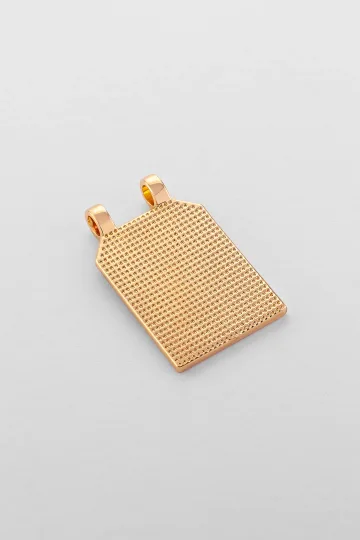
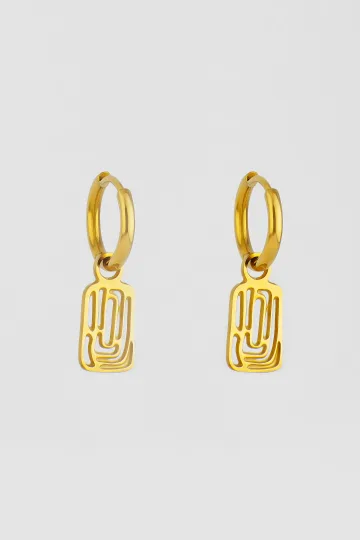






The sound that carries everything
Om has been chanted continuously for at least three thousand years. It has outlived empires, survived colonial suppression, crossed oceans, entered cultures that knew nothing about its origins, and landed on yoga mats in cities that didn't exist when the Mandukya Upanishad was composed.
It has done all of this because it works on multiple levels simultaneously. As philosophy, it is one of the most elegant models of consciousness ever proposed: three states, a veil, and a transcendence, all in a single syllable. As practice, it gives people a simple ritual of slow breathing and humming that many describe as calming. As symbol, it is visually distinctive, instantly recognisable, and carries the weight of thousands of years of human contemplation about what it means to be aware.
Wearing Om on a pendant doesn't require you to be Hindu, or Buddhist, or Jain, or Sikh. It doesn't require you to chant every morning or to have read the Upanishads. But it does ask something of you: that you know what you're carrying. That you treat it not as an accessory but as a compressed expression of one of humanity's oldest and deepest questions. What is consciousness? What is reality? What is the sound the universe makes when nothing else is playing?
The Mandukya Upanishad answers: Om.
Someone studying the body in a lab would phrase it differently. But they're often pointing at the same thing from a different angle: that this particular vibration, this specific pattern of A-U-M followed by silence, is experienced as distinct from other sounds. The ancient practitioners knew this from their own practice.
A small symbol on a chain. A single syllable that four religions consider sacred. A vibration that many describe as calming. A map of consciousness drawn in three and a half strokes.
That's what you're wearing when you wear Om.
Wear the symbol, don't just read about it. These are in stock:

About Zevira
Zevira makes jewellery in the artisan tradition of Albacete, Spain. We take symbols seriously: when a pendant carries Om, the lotus, or the third eye, there's real meaning behind the shape, not a pretty curve of the line.
What you'll find with us on the theme of mindful symbolism:
- Pendants with sacred and meditative motifs, made to be worn near the heart
- Earrings with symbolic designs as a quiet daily reminder
- Necklaces that work as an anchor for meditation and breathing practice
- Pieces with lotus and third-eye motifs, kindred to the Om tradition
- Jewellery worn above the waist, with respect for where the symbol comes from
- Paired and layered combinations of symbolic pieces
Every piece is handmade by a craftsperson, with the option of personal engraving. Sterling silver 925 and 14-18K gold.