The Lotus Flower in Jewellery: Why a Flower That Grows in Mud Became Sacred
Introduction
There is a flower that roots itself in the filthiest water it can find. The murkier, the better. It pushes through layers of silt and decomposing matter, through water so dark you cannot see your hand in it. And then, when it finally breaks the surface, it opens into something so clean, so geometrically perfect, so luminous that entire civilisations decided it must be divine.
That is the lotus. And the fact that it does this every single day, closing at night and sinking below the water, only to rise and open again at dawn, untouched by the muck it lives in, is the reason human beings have been obsessed with this flower for at least 5,000 years.
I started researching the lotus after noticing something odd: it kept appearing in completely unrelated contexts. A friend's yoga studio had it on the wall. A museum exhibition on ancient Egypt featured it on a pharaoh's crown. A jewellery designer I follow used it as the centrepiece of an entire collection. A tattoo artist told me it was her most requested design. These were not connected people, not part of the same tradition, not even on the same continent. But they all gravitated toward the same flower.
Wear the symbol, don't just read about it. These are in stock:



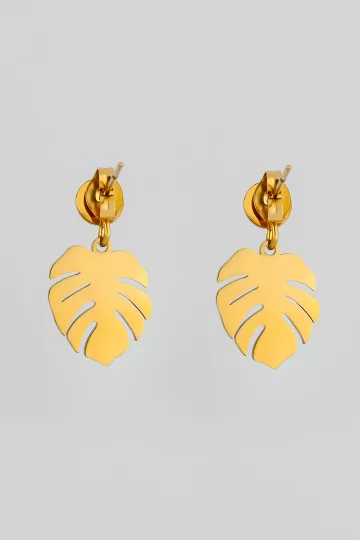

What I found when I dug into the history was extraordinary. The lotus is far more than a pretty symbol. It is arguably the most culturally significant flower in human history, revered across Egypt, India, China, Japan, Southeast Asia, and now the Western wellness world. Its meanings range from creation itself to enlightenment, from divine beauty to personal resilience. This is the full story of how a mud flower conquered the world, and why people keep putting it around their necks.
What makes the lotus so extraordinary as a symbol
Most flower symbols are fairly straightforward. The rose is love. The lily is purity. The sunflower is loyalty. You can summarise their meanings in a word or two.
The lotus is different. It operates on multiple levels simultaneously, which is why it works in so many different cultural contexts. At the most basic level, it represents the triumph of beauty over ugliness, purity over corruption, light over darkness. That is the surface reading, and it is already powerful.
But go deeper and the lotus becomes something more complex. It represents the idea that suffering is not just something to endure but something that can produce growth. In Buddhist tradition, the lotus does not bloom despite the mud. It blooms because of the mud. The muck is not an obstacle. It is the nutrient. Take away the mud and the lotus dies.
That is a fundamentally different message from most Western flower symbolism, where flowers tend to represent innocence, beauty, or romantic love, all things that exist in a kind of ideal state untouched by difficulty. The lotus says the opposite: beauty requires difficulty. Growth requires darkness. The worst conditions produce the most extraordinary results.
There is also a temporal dimension that sets the lotus apart. The flower's daily cycle of closing, submerging, and reopening mirrors ideas about death and rebirth that appear in almost every human culture. The Egyptians saw it as the cycle of creation. Hindus saw it as the cycle of the cosmos. Buddhists saw it as the cycle of spiritual awakening. The lotus did not need to be invented as a metaphor. It performed the metaphor every single day in plain sight.
And then there is the physical fact that the lotus stays clean. Its leaves and petals repel water and dirt through a microstructure that scientists now call the "lotus effect." Mud slides off it. Nothing sticks. In a world where everything eventually gets dirty, the lotus remains untouched. That biological reality became the foundation for spiritual ideas about detachment, purity of mind, and rising above worldly corruption.
When you wear a lotus, you are wearing all of these layers at once. The resilience. The purity. The daily renewal. The idea that where you come from does not determine what you become. That is a lot of meaning for a single flower, and it explains why the lotus has endured where other symbols have faded.
Customer reviews
Zevira is a real jewellery shop. Genuine payments, deliveries and customer thank-yous.
🥰🥰🥰 gracias

Ok, ¡gracias! 🙂

A lotus wants a bare collarbone, not a chunky turtleneck. Hide it and you may as well have left it in the box.
How to wear a lotus
Over years on shoots the lotus has passed through dozens of looks with me, from morning coffee to evening exits. Here is what actually works, sorted by occasion.
What do I pair a lotus with every day? For daily wear I recommend a thin lotus pendant on a short or medium chain over a plain base: a white cotton shirt, a linen tee, a neutral turtleneck. A light top lifts the metal, a dark one turns the flower into the accent. Under a V-neck it lands right in the centre, its strongest position. Under a round neck I suggest a shorter chain so the lotus rests on the fabric instead of hiding.
Is a lotus right for the office? Yes, as long as you keep it restrained. I recommend a clean, graphic lotus without enamel; silver or white gold reads calmer than warm tones. I suggest a 45 to 50 cm length so the pendant sits just under the top button of a blouse. Under a jacket it works as a quiet detail, not a loud statement.
How do I build an evening look? For evening I raise the contrast. A yellow-gold lotus on a bare collarbone with a dress in a deep or wine tone reads warm and rich, especially when the fabric is smooth: silk, satin, heavy crepe. A little layering belongs here: a lotus on a medium chain plus a very fine chain just above. I keep metals at one temperature, gold to gold, silver to silver.
Open flower, half-open, or bud, which should I choose? These are three different messages, and I choose on purpose. The open flower speaks of completion and hard-won calm. The half-open bloom is about growth still underway and suits almost any mood. The bud is the most understated, about potential and promise. If you are unsure which stage you are at, take the half-open: it does not dictate the story in advance.
Who does the lotus suit, and what pairs with it? The lotus suits anyone who values quiet symbolism over noise. Lotus earrings frame the face and love tied-back hair and a bare neck. A petal-motif ring likes free hands without extra stacks. It combines easily with other symbols: add a moon for intuition, a tree of life for grounding, a water motif for meaning. Do not overload it, two or three accents at most.

Turn on your camera, pick earrings, a pendant or a ring, and see the piece on yourself in real time.
Switch items in one tap.
Everything runs in your browser: no photo or video is ever uploaded.
How a lotus actually grows (and why it matters)
From murky water to perfect bloom
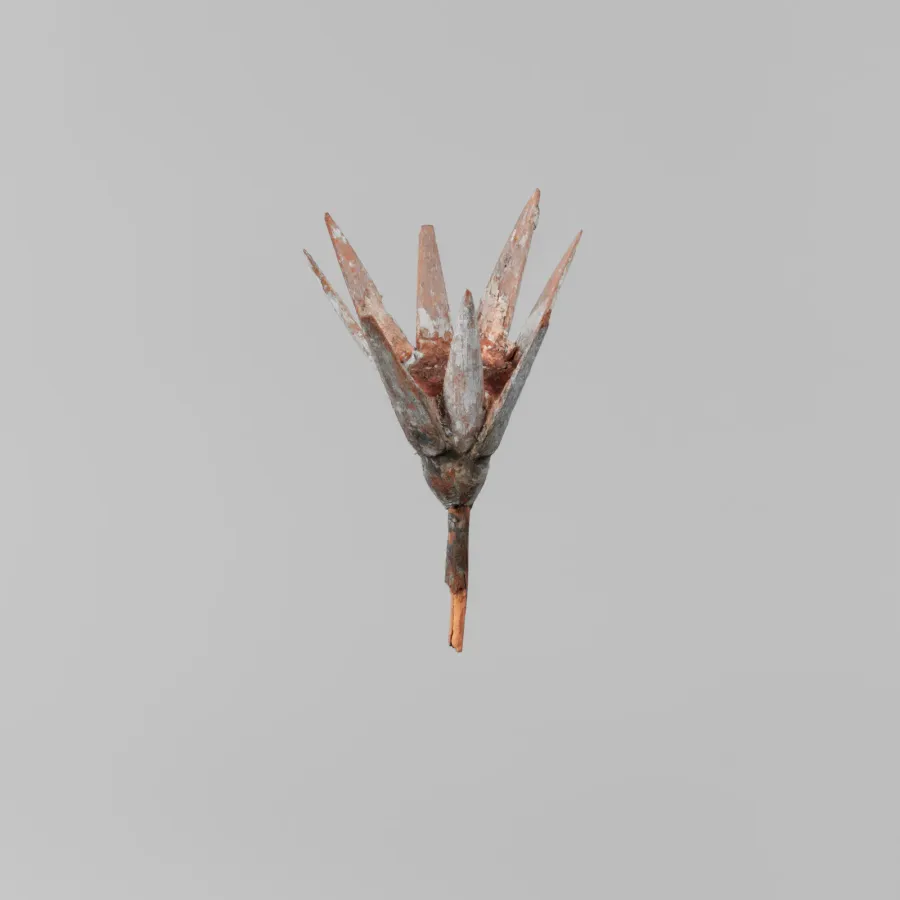
The lotus (Nelumbo nucifera) is not a water lily, though people often confuse the two. Water lilies float on the surface. The lotus rises above it. Its stem can grow over a metre tall, lifting the flower well clear of the water into open air. That distinction matters, because the visual impact of the lotus is precisely this: a pristine flower hovering above dark water, connected to the mud below but not touched by it.
The growing process is remarkable. Lotus seeds can remain viable for centuries. In 1995, a seed estimated to be 1,300 years old was successfully germinated in China. The plant begins in the sediment at the bottom of a pond, lake, or slow-moving river. Its roots anchor into the mud, and from there a stem begins its upward journey through the water column. The leaves emerge first, large and round, creating a canopy on the surface. Then the flower bud appears, pushing through the leaf cover and rising into the air.
The bloom itself lasts about three days. Each morning, the petals open with the sunrise. Each evening, they close and the flower retreats slightly toward the water. On the fourth day, the petals begin to fall, revealing the distinctive seed pod, a flat, shower-head-shaped structure with holes that will eventually release the seeds back into the water to begin the cycle again.
The lotus effect: self-cleaning leaves
In 1997, German botanists Wilhelm Barthlott and Christoph Neinhuis published research that explained something people had observed for millennia: lotus leaves never get dirty. The surface of a lotus leaf is covered in microscopic wax crystals arranged in a bumpy nanostructure. When water hits this surface, it forms nearly perfect spheres and rolls off, carrying dirt, bacteria, and fungi with it.
This is now called the "lotus effect" (Lotuseffekt), and it has been applied to everything from self-cleaning paints and roof tiles to water-repellent fabrics and medical devices. The discovery confirmed scientifically what Buddhist monks and Hindu priests had been saying symbolically for thousands of years: the lotus exists in the mud but is not of the mud.
Why the biology became the metaphor
It is easy to understand why ancient peoples, observing this flower, reached for spiritual explanations. Here was a plant that grew in the worst conditions, produced extraordinary beauty, cleaned itself without assistance, and repeated this cycle every single day. It was not a stretch to see it as evidence of something divine.
The biological facts and the symbolic meanings reinforce each other in a way that is rare for any natural symbol. Most symbols are somewhat arbitrary. The dove became a peace symbol through cultural convention, not because doves are particularly peaceful (they are not). But the lotus became a purity symbol because it is actually, measurably, self-purifying. The metaphor is built into the organism.
That convergence of literal and figurative meaning is probably why the lotus has such staying power. It is more than a nice idea. It is a nice idea that you can watch happening in real time, in a real pond, every single morning.
Upload a photo of your pet, someone you love, or an object. We'll build a 3D model and hand-cast it in pewter.




Egypt: the flower that created the world
The blue lotus and the god Nefertem
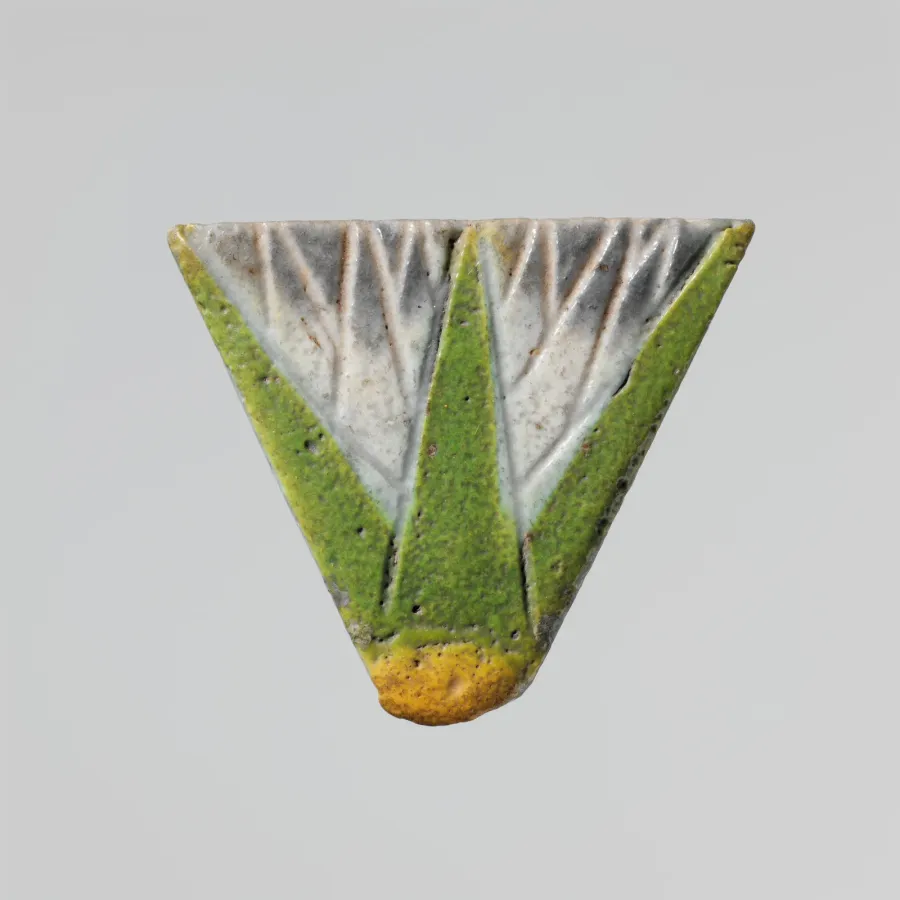
The Egyptian blue lotus (Nymphaea caerulea, technically a water lily, but the Egyptians treated it as a lotus and the symbolic tradition follows suit) was one of the most important plants in ancient Egyptian religion. It bloomed at dawn and closed at dusk, floating on the surface of the Nile and its tributaries. For a civilisation that worshipped the sun, a flower that opened with sunlight and closed without it was impossible to ignore.
Nefertem was the god associated with the lotus. He was depicted as a young man with a lotus flower on his head, or sometimes as a child sitting inside a lotus blossom. He was associated with perfume, beauty, and the morning sun. In the Pyramid Texts, some of the oldest religious writings in the world, Nefertem is described as "the lotus blossom which is before the nose of Ra." He was literally the fragrance of the sun god.
The blue lotus also had psychoactive properties. Modern analysis has confirmed that it contains aporphine and nuciferine, compounds that produce mild sedative and euphoric effects when consumed. The Egyptians soaked the flowers in wine, creating a drink used in religious ceremonies and elite social gatherings. This practical dimension, the flower as intoxicant and gateway to altered states, added another layer to its sacred status.
Creation from primordial waters
In one of the most beautiful Egyptian creation myths, the universe began as an infinite dark ocean called Nun. There was nothing: no light, no land, no life. And then, from the surface of these primordial waters, a giant lotus emerged. The flower opened, and inside it sat the sun god, who brought light and creation into existence.
This is an extraordinary origin story. The entire universe, in this telling, began with a lotus. The flower was not merely a symbol of creation. It was the mechanism of creation. Everything that exists came from inside it.
Variants of the myth differ on the details. In some versions, it is Ra who sits inside the lotus. In others, it is the child god who would become Ra. In the Hermopolitan tradition, the lotus grew on a primordial mound that emerged from the waters. But the core image is consistent: before there was anything, there was a lotus, and from the lotus came everything.
Lotus in pharaonic art and jewellery
The lotus appears throughout Egyptian visual culture with a frequency that rivals the scarab and the Eye of Horus. Temple columns at Luxor and Karnak are carved in the shape of lotus buds and open blossoms. Tomb paintings show the deceased holding lotus flowers or smelling them, a gesture that symbolised rebirth in the afterlife. Offering tables are depicted laden with lotus blooms alongside bread, beer, and meat.
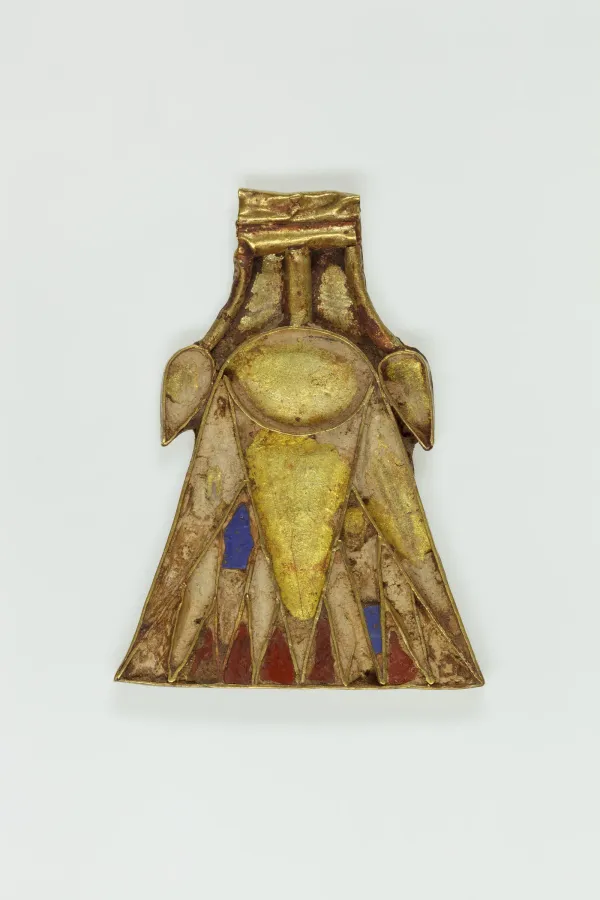
In jewellery, the lotus was rendered in gold, faience, carnelian, turquoise, and lapis lazuli. Lotus-shaped pendants, pectorals, and hair ornaments have been found in tombs spanning nearly the entire history of ancient Egypt. The famous pectoral of Princess Sit-Hathor-Yunet from the Twelfth Dynasty (around 1870 BCE) features lotus motifs alongside falcons and cobras, placing the flower at the highest level of royal symbolism.
The Egyptian lotus tradition established something that would echo through all subsequent cultures: the lotus as a symbol of emergence, of something pure and beautiful rising from something dark and formless. Every later tradition, Hindu, Buddhist, Chinese, built on this foundation, whether they knew it or not.





Hinduism: the flower of the gods
Lakshmi on the lotus throne
In Hindu iconography, very few images are more recognisable than Lakshmi sitting on a fully opened lotus flower, her four hands extending blessings, gold coins falling from one palm. Lakshmi is the goddess of wealth, fortune, prosperity, and beauty, and the lotus is her primary attribute. She is sometimes called Padma (lotus) or Kamala (also lotus, from a different Sanskrit root).
The lotus beneath Lakshmi is more than a seat. It is a statement about the nature of true prosperity. In Hindu thought, genuine wealth and beauty are not corrupted by the world they exist in. Like the lotus in muddy water, Lakshmi's blessings are present in the material world but not tainted by it. The image teaches that abundance and purity can coexist, that you do not have to renounce the world to remain untouched by its chaos.
This is a more nuanced message than the Western association of spiritual purity with material poverty. In the Hindu tradition, the lotus-seated Lakshmi says: you can have both. You can thrive in the world without being consumed by it. That is a message that resonates far beyond Hinduism, and it is one of the reasons lotus jewellery appeals to people from many different backgrounds.
Brahma and the navel lotus of Vishnu
One of the most dramatic images in Hindu cosmology shows Vishnu reclining on the cosmic serpent Shesha, floating on the ocean of creation. From Vishnu's navel grows a lotus stem, and sitting on the lotus flower at the top of that stem is Brahma, the creator god. From his position on the lotus, Brahma creates the universe.
The parallels with the Egyptian lotus creation myth are striking. In both traditions, the lotus emerges from primordial waters and serves as the vehicle through which creation occurs. Whether there was direct transmission between these traditions or whether the lotus independently inspired similar myths in different civilisations is an open question. But the convergence itself tells you something about the power of the image: two cultures separated by thousands of miles looked at the same flower and reached the same conclusion.
The navel lotus of Vishnu also introduces the idea of connection. The lotus links Vishnu (the preserver) to Brahma (the creator). It is a bridge between different aspects of the divine. In the context of jewellery, this adds yet another meaning layer: the lotus as a connector, a link between different states of being, between preservation and creation, between the sleeping potential and the awakened reality.
Padma: the lotus in Sanskrit and sacred texts
The Sanskrit word "padma" appears throughout Hindu sacred literature with remarkable frequency. It shows up in the names of deities (Padmavati, an aspect of Lakshmi), in descriptions of divine beauty (lotus eyes, lotus feet, lotus hands are standard poetic epithets), in philosophical texts, and in everyday language.
The Bhagavad Gita, one of the most important Hindu scriptures, uses the lotus as a metaphor for detachment. Chapter 5, verse 10 says that one who acts without attachment, surrendering results to the divine, is untouched by sin as a lotus leaf is untouched by water. This verse has been quoted billions of times over the past two millennia, and it encapsulates the Hindu lotus teaching: be in the world, do your work, but let nothing stick to you.
The lotus position in yoga (padmasana) takes its name from the flower. The posture, with legs crossed and feet resting on opposite thighs, is said to resemble the open lotus blossom. It is the traditional meditation posture precisely because it embodies the lotus principle: grounded in the physical body (the mud) while the spine rises upward toward awareness (the bloom).
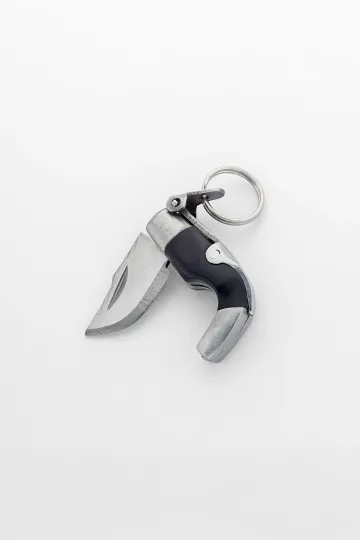
CAPAORA mini knife pendant
The 18th-century Spanish navaja in miniature: 40 mm of stainless steel, a real folding mechanism and a Palanquilla lock that clicks. An affordable gift to remember.
Authentic · Ships from Spain · 14-day returns
Buddhism: enlightenment growing from suffering
The central metaphor of the Buddhist path
If the lotus is important in Hinduism, it is absolutely central in Buddhism. The entire Buddhist path can be understood through the lotus metaphor: suffering (the mud) is not an obstacle to enlightenment (the bloom) but its necessary precondition. Without suffering, there is no compassion. Without difficulty, there is no growth. Without the mud, there is no lotus.
In Buddhist tradition, the Buddha himself is closely associated with the lotus. According to legend, lotus flowers appeared beneath his feet as he took his first steps after birth. He is typically depicted sitting on a lotus throne. The lotus appears in Buddhist art, architecture, scripture, and practice more frequently than any other natural symbol.
The metaphor extends beyond the individual. The entire Buddhist teaching about samsara (the cycle of birth, death, and rebirth) maps onto the lotus cycle. The flower blooms, fades, drops its seeds, and new flowers grow. Death is not an ending but a transition, just as the lotus closing at night is not death but preparation for the next morning's bloom.
What makes the Buddhist lotus metaphor particularly powerful is its lack of escapism. Many spiritual traditions promise an escape from suffering: a heaven, a paradise, a transcendent state beyond the material world. Buddhism, through the lotus, says something different: the transcendent state grows directly from within the suffering. You do not leave the mud. You transform it.
Lotus colours and their meanings
In Buddhist iconography, the colour of the lotus carries specific meaning, and this is directly relevant for anyone choosing lotus jewellery.
The white lotus represents mental purity and spiritual perfection. It is the lotus of Bodhi, of awakening. In Buddhist art, it is associated with the Buddha himself and with the highest state of spiritual achievement. A white lotus pendant carries the meaning of clarity, inner peace, and the aspiration toward wisdom.
The pink lotus is considered the supreme lotus, the lotus of the Buddha himself. In traditions where specific colours are assigned to specific Buddhas, the pink lotus belongs to the historical Buddha, Siddhartha Gautama. It represents the living tradition of Buddhism and the Buddha's own story of transformation. Pink lotus jewellery often carries a sense of devotion and connection to the Buddhist path.
The blue lotus represents wisdom and knowledge. It is typically depicted as partially open, with the centre hidden, symbolising the idea that wisdom is never fully revealed but always unfolding. In Buddhist tradition, it is associated with Manjushri, the bodhisattva of wisdom, who is often shown holding a blue lotus. Blue lotus jewellery speaks to intellectual curiosity and the ongoing pursuit of understanding.
The red lotus represents love and compassion. It is the lotus of the heart, associated with Avalokiteshvara (Guanyin in Chinese tradition), the bodhisattva of compassion. A red lotus says: I lead with my heart. I choose empathy. Red lotus jewellery is often chosen by people in caregiving roles, or by those who want a daily reminder to approach the world with kindness.
The purple lotus is more esoteric, associated with mystical teachings and the Eightfold Path. It is less common in jewellery but appears in Buddhist art with eight petals, one for each element of the path.
The Lotus Sutra and its influence
The Lotus Sutra (Saddharma Pundarika Sutra) is one of the most influential texts in Mahayana Buddhism. Dating to around the first century CE, it is considered by many traditions to contain the Buddha's highest teaching. The sutra's central message is that all beings have the potential for Buddhahood, the capacity for complete enlightenment. It is named after the lotus precisely because the lotus embodies this teaching: even in the muddiest water, the potential for a perfect bloom exists.
The Lotus Sutra had an enormous impact on East Asian Buddhism. It became the foundational text for the Tiantai school in China and the Tendai and Nichiren schools in Japan. The famous chant "Nam Myoho Renge Kyo" (devotion to the Lotus Sutra) is practised by millions of people worldwide. The text's influence extended beyond religion into East Asian literature, art, and philosophy, further embedding the lotus symbol into the cultural fabric of China, Japan, Korea, and Vietnam.
China, Japan, and the lotus in East Asian culture
The lotus in Chinese poetry and philosophy
In Chinese culture, the lotus holds a position of unique reverence, but for slightly different reasons than in India. The key text is a short essay by Zhou Dunyi, a Song Dynasty philosopher, written in 1063 CE. It is called "On the Love of the Lotus" (Ai Lian Shuo), and it is one of the most quoted pieces of Chinese prose.
Zhou Dunyi's argument is that the lotus represents the junzi, the ideal person in Confucian thought. While other flowers are beautiful, they have flaws: the peony is showy and associated with wealth and vanity; the chrysanthemum is admirable but reclusive, hiding from the world. The lotus alone grows from mud without being stained, is washed by clear water without being seductive, is hollow inside and straight outside, neither spreading nor branching, fragrant from afar and even more pure when observed up close.
This essay essentially codified the lotus as a moral symbol in Chinese culture. It was about more than spiritual purity in a religious sense. It was about personal integrity, about being a good person in a corrupt world. That reading of the lotus, grounded in practical ethics rather than metaphysics, is one of the reasons the symbol resonates with people who are not particularly religious or spiritual.
Chinese painters have depicted the lotus for centuries, from the Song Dynasty ink wash paintings to the elaborate palace decorations of the Qing. The lotus pond is one of the most enduring subjects in Chinese visual art, appearing in scrolls, screens, porcelain, and textiles. The combination of lotus with other elements creates specific meanings: lotus with fish means abundance year after year (because the Chinese word for fish, "yu," sounds like the word for surplus). Lotus with a boy represents the wish for sons. A lotus bud means continuous rising.
Japanese lotus traditions
Japan received the lotus primarily through Buddhism, which arrived via China and Korea in the sixth century CE. The lotus immediately became central to Japanese Buddhist art and temple architecture. The great Buddha at Kamakura sits on a lotus pedestal. Lotus ponds are a standard feature of temple gardens. The annual Lotus Festival (Kanrensetsu) celebrates the flower's bloom with tea ceremonies using lotus leaves as cups.
In Japanese aesthetics, the lotus carries a particular association with the concept of wabi-sabi, the beauty of impermanence and imperfection. The fading lotus, with its drooping petals and exposed seed pod, is considered as beautiful as the perfect bloom, perhaps more so, because it reminds the viewer that all things are temporary. This Japanese reading adds a bittersweet dimension to the lotus that is less prominent in Indian or Chinese traditions.
Japanese artisans have interpreted the lotus in lacquerwork, textiles, ceramics, metalwork, and of course jewellery, often with a refinement and restraint that distinguishes Japanese lotus design from the exuberance of Indian or Chinese versions.
Lotus motifs in architecture and decorative arts
Across East Asia, the lotus appears in architectural details with extraordinary consistency. Temple roof finials, column capitals, door carvings, ceiling medallions, floor tiles, and balustrade panels all feature lotus motifs. The Forbidden City in Beijing, Angkor Wat in Cambodia, Borobudur in Indonesia, and countless temples across Thailand, Myanmar, Laos, and Vietnam all incorporate the lotus into their architectural vocabulary.
In decorative arts, the lotus is one of the "four gentlemen" flowers in Chinese tradition (alongside plum blossom, orchid, and bamboo) and one of the "seven treasures" of Buddhism. It appears on porcelain, silk embroidery, carved jade, cloisonne enamel, and precious metalwork. The sheer volume of lotus-themed decorative objects produced over the past two millennia is staggering, and it means that the lotus has been absorbed into the visual vocabulary of East Asian design at the deepest level.
Leave your email, we'll send your discount code. No spam, unsubscribe anytime.
The code arrives by email, valid on your first order.
Yoga, wellness, and the Western adoption of the lotus
Lotus pose and what it represents
When yoga began to enter Western popular culture in the mid-twentieth century, it brought the lotus with it. The lotus pose (padmasana) became one of the most recognisable images of yoga practice, even for people who had never set foot in a studio. The image of a person sitting cross-legged with a straight spine, often with a stylised lotus flower in the background, became the visual shorthand for meditation, mindfulness, and inner peace.
This association cemented the lotus as a wellness symbol in Western culture. Yoga studios, meditation apps, wellness retreats, organic food brands, and mindfulness programmes all adopted the lotus as a logo or decorative motif. By the early 2000s, the lotus had become the most widely used symbol in the Western wellness industry.
The Western adoption is sometimes criticised as superficial, a stripping away of the deep religious and philosophical meanings in favour of a generic "peace and calm" vibe. There is some truth to that criticism. But it is also true that the lotus's core message, growth through difficulty, purity maintained in impure conditions, daily renewal, translates across cultures without requiring adherence to any particular religious framework. The lotus works as a universal human metaphor because the experience it describes, surviving hard times and coming out clean on the other side, is universal.
Chakra symbolism and the thousand-petalled lotus
In the yogic chakra system, the lotus appears at every level. Each of the seven major chakras is depicted as a lotus with a specific number of petals. The root chakra (muladhara) has four petals. The sacral chakra (svadhisthana) has six. The solar plexus (manipura) has ten. The heart chakra (anahata) has twelve. The throat chakra (vishuddha) has sixteen. The third eye (ajna) has two (or ninety-six, depending on the tradition).
And then there is the crown chakra, sahasrara, depicted as a thousand-petalled lotus at the top of the head. This is the chakra of pure consciousness, the point where individual awareness merges with universal awareness. The thousand-petalled lotus represents the highest possible state of human spiritual development, the full bloom of consciousness. It is the ultimate destination of the yogic path: from root to crown, from mud to a thousand petals of light.
In the context of jewellery, the lotus pendant worn near the heart or throat carries an implicit chakra reference, even if the wearer is not consciously thinking about it. The lotus at the chest level corresponds to the heart chakra, suggesting love, compassion, and emotional openness. The lotus at the throat suggests expression and truth. These associations, even when unspoken, give lotus jewellery an energetic dimension that many wearers sense intuitively.
Victorian flower language and the lotus
The Victorian language of flowers (floriography) included the lotus, though it was less commonly used than roses, violets, or lilies in European bouquets. In Victorian flower dictionaries, the lotus generally symbolised "estranged love" or "eloquence," somewhat different from its Asian meanings. The water lily (often conflated with the lotus in Victorian sources) meant "purity of heart."
The Victorian engagement with the lotus was filtered through Orientalism, the European fascination with Asian cultures that was at its peak in the nineteenth century. The lotus appeared in Pre-Raphaelite paintings, in the design motifs of the Aesthetic Movement, and in the jewellery of the Art Nouveau period, where its organic curves perfectly suited the style's emphasis on flowing, natural forms. Rene Lalique, the great Art Nouveau jeweller, created lotus-inspired pieces that remain influential in jewellery design to this day.
The lotus in modern jewellery
Pendants and necklaces
The lotus pendant is one of the most popular symbolic necklace designs in contemporary jewellery. Its appeal is partly visual: the lotus's radial symmetry, with petals opening outward from a central point, creates a balanced, pleasing shape that works at any scale. A tiny lotus charm on a delicate chain is as effective as a large statement pendant.
Lotus pendants come in several common styles. The open lotus, with fully unfurled petals, represents complete realisation, the full bloom of whatever personal quality the wearer associates with the flower. The half-open lotus, with some petals still curled inward, represents ongoing growth, a journey not yet complete. The lotus bud represents potential, the promise of what is to come.
The choice of metal adds another layer. Gold lotus pendants carry associations of warmth, prosperity, and the sun (connecting back to the Egyptian solar lotus). Silver lotus pendants feel cooler, more contemplative, more aligned with the Buddhist and yogic traditions. Rose gold softens the symbol, adding a warmth that many people find especially wearable for everyday use.
Earrings and rings
Lotus earrings are particularly effective because of the flower's natural symmetry. A matching pair of lotus studs or small drops creates a framing effect around the face that feels both decorative and meaningful. Lotus hoop earrings, where a small lotus sits at the bottom of a circular hoop, have become a popular style that balances modern design with symbolic weight.
Lotus rings tend to be statement pieces. The flower's radial design naturally lends itself to cocktail-ring scale, where the open petals can be rendered in detail. Some designers create stackable lotus rings where petals nest into each other, allowing the wearer to build the flower piece by piece. Others incorporate gemstones at the centre of the lotus, using the petals as a natural setting.
The lotus also works well in combination with other symbolic elements. Lotus and moon pairings evoke the nighttime water garden. Lotus and eye combinations suggest awakened awareness. Lotus with a serpent connects to the Hindu kundalini tradition. These combinations allow wearers to create personal symbolic vocabularies through their jewellery choices.
How to choose a lotus piece that fits your story
If you are drawn to the lotus for its resilience symbolism, the message of growing through difficulty, look for a design that shows the full journey: stem, water, and bloom. Designs that include the stem are rarer but they tell the complete story, not just the pretty ending but the whole path from mud to light.
If the Buddhist meaning resonates with you, consider the colour. A white or silver lotus for purity and peace. A blue stone or enamel detail for wisdom. A pink or rose gold piece for the Buddhist heart path of compassion.
If you connect with the lotus as a daily renewal symbol, a piece you will wear every day should be simple enough to be comfortable and durable enough to withstand constant wear. A small pendant on a chain, a pair of studs, or a thin band ring works better than an elaborate cocktail piece for this purpose.
And if the lotus simply appeals to you aesthetically, without any particular symbolic intention, that is perfectly valid too. The flower is beautiful. You do not need a philosophical framework to wear it.
Lotus vs rose vs lily: flower symbols compared
The rose, the lily, and the lotus are the three most symbolically important flowers in world culture. They overlap in some ways but diverge in others.
The rose is primarily a Western symbol. Its core meanings are love, passion, and beauty. Red roses mean romantic love. White roses mean purity or remembrance. The rose carries strong associations with Christianity (the rosary, the mystical rose of Mary) and with European literary traditions (the Roman de la Rose, the War of the Roses). In jewellery, roses tend to communicate romance, femininity, and Western cultural identity.
The lily bridges Western and Eastern traditions. In Christianity, the lily represents the Virgin Mary's purity. In Chinese culture, the lily symbolises good luck and the wish for a hundred years of harmony. In Japanese culture, certain lily species are associated with funerals and remembrance. In jewellery, the lily tends to feel more formal and traditional than the lotus.
The lotus is the most cross-cultural of the three. It carries meanings across Egyptian, Hindu, Buddhist, Chinese, Japanese, and modern Western traditions. Its core message, growth through adversity, is more dynamic and process-oriented than the rose's (love as a state) or the lily's (purity as a quality). The lotus is about transformation, which gives it a narrative quality the other two lack. When you wear a lotus, you are not just stating what you value. You are referencing a story: the journey from darkness to light.
For people who want their jewellery to carry symbolic weight without being tied to a single cultural or religious tradition, the lotus is often the most versatile choice. It speaks to Buddhists and yogis, to people who have survived difficult times, to anyone who believes that growth requires struggle. That breadth of meaning is its greatest strength.
Send a friend a discount code, they save on their first order.
Frequently asked questions about lotus jewellery
What does a lotus pendant mean?
A lotus pendant generally symbolises purity, spiritual growth, and resilience. The specific shade matters: in Buddhist tradition, white represents mental purity, pink represents the Buddha's own path, blue represents wisdom, and red represents compassion. Outside of Buddhism, the lotus is widely understood as a symbol of rising above difficulty, of maintaining your integrity in challenging circumstances. It is one of the most universally positive symbols you can wear.
Is it disrespectful to wear a lotus if I am not Buddhist or Hindu?
This is a common concern, and the short answer is no. The lotus is a cultural symbol that has been shared across civilisations for thousands of years. No single tradition owns it. The Egyptians used it before Hinduism or Buddhism existed. The Chinese gave it Confucian meanings independent of Indian religious traditions. The lotus has always been a cross-cultural symbol, and wearing it as a modern person from any background is consistent with its history. What matters is respect: wearing the lotus because you genuinely connect with its meaning, not as a costume or a joke.
What is the difference between a lotus and a water lily in jewellery?
In jewellery design, the terms are often used interchangeably, but there are visual differences. A lotus flower rises above the water on a tall stem, and its petals are more pointed and upright. A water lily floats on the surface, and its petals tend to be rounder and flatter. Most "lotus" jewellery is inspired by the Nelumbo nucifera (the sacred lotus) or by stylised versions of it. If you want to be precise, look for a design with upward-reaching petals and a visible stem or a raised profile.
Can I wear a lotus with other symbolic jewellery?
Absolutely. The lotus pairs naturally with many other symbols. It works well with the evil eye (purity combined with protection), with the moon (renewal and intuition), with the tree of life (growth and rootedness), and with geometric shapes like circles and mandalas. It also pairs beautifully with other nature motifs: butterflies, birds, and especially water-themed elements. The lotus is a generous symbol that enriches combinations rather than competing with them.
Which metal is best for a lotus pendant?
There is no wrong answer, but the metal does shift the feeling. Gold connects to the Egyptian solar lotus tradition and adds warmth and richness. Sterling silver aligns more with the Buddhist contemplative tradition and has a cooler, more understated feel. Rose gold softens the symbol and gives it a contemporary warmth that many people find ideal for daily wear. The choice depends on your skin tone, your wardrobe, and the feeling you want the piece to carry.
Is the lotus a good gift?
The lotus is an excellent gift because its meanings are so widely positive. It says "I believe in your ability to grow" or "I see your strength" or "I wish you peace." It works for birthdays, graduations, recovery milestones, new beginnings, and moments of personal transformation. Unlike some symbols that carry very specific meanings (a heart says romance, a cross says faith), the lotus has enough breadth that the recipient can find their own meaning in it.
What is the best time to start wearing a lotus?
There is no prescribed time, but many people are drawn to the lotus during or after periods of difficulty: a health challenge, a relationship ending, a career upheaval, a loss. The lotus's message of resilience and renewal makes it especially meaningful during transitions. That said, you do not need to be going through something hard to wear a lotus. It is equally valid as a reminder of peace, growth, or connection to a spiritual practice.
Silver and gold jewellery, wedding bands, symbolic pendants, paired sets.
Buying it as a gift? Each one arrives ready to give.
 A branded Zevira box and a little card come with every order.










Conclusion
The lotus has been carrying meaning for at least 5,000 years, from the creation myths of ancient Egypt to the yoga studios of modern cities, from the Hindu temples of India to the tea houses of Japan. No other flower has been sacred to so many cultures for so many different reasons.
What sets the lotus apart is its honesty. It does not pretend that beauty comes easily. It does not hide where it came from. It grows from the worst conditions and turns them into something extraordinary, and it does this openly, visibly, every single day. That is not a metaphor someone invented. That is what the flower actually does.
In Buddhist tradition, the lotus represents the idea that enlightenment is not an escape from the world but a transformation within it. In Hindu tradition, it represents the possibility of existing in the world without being contaminated by it. In Chinese tradition, it represents the moral integrity of a good person living in a corrupt society. In Egyptian tradition, it represents the very act of creation, light emerging from darkness. These are not contradictory readings. They are all facets of the same truth, observed from different angles.
When you wear a lotus, you carry all of that history. You carry the weight of civilisations that looked at this flower and decided it was sacred. You carry the biological fact of a plant that purifies itself in dirty water. You carry the personal meaning of whatever brought you to the symbol in the first place, whether it was a spiritual practice, a difficult year, or simply a recognition that some things are beautiful precisely because they had to fight to exist.
The mud is not optional. The lotus needs it. And that might be the most important thing the flower teaches: not to resent where you have been, but to understand that where you have been is exactly what made the bloom possible.
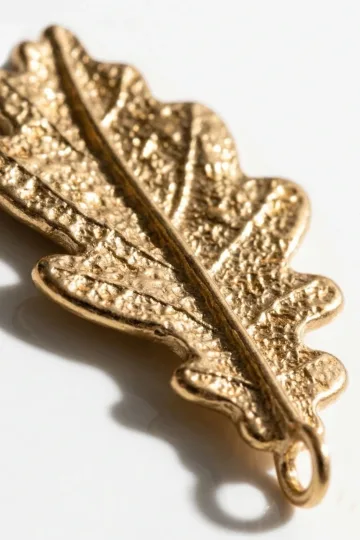
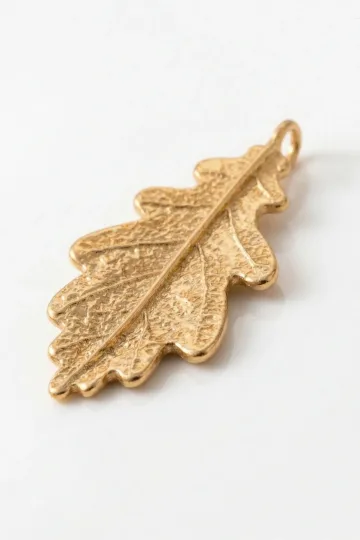
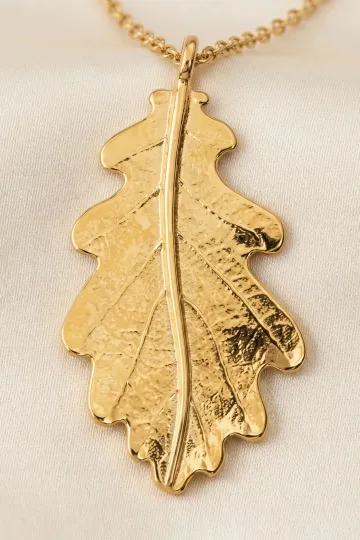
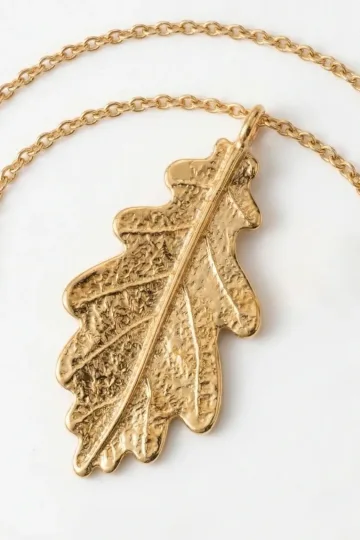
Wear the symbol, don't just read about it. These are in stock:





About Zevira
Zevira makes jewellery in the artisan tradition of Albacete, Spain. The lotus is not a one-off seasonal motif for us. It belongs to a standing line of nature and symbol pieces, and we shape the flower with the same care that craftspeople from the Nile to Jingdezhen gave it for four thousand years.
Here is what you will find with us around the lotus and natural symbolism:
- Lotus pendants in different stages: the open bloom, the half-open flower, and the bud, each for a different meaning
- Versions in sterling silver and in 14-18K yellow and rose gold, for the white, golden, and pink readings of the symbol
- Lotus earrings that play on the flower's natural radial symmetry
- Slim bands and statement rings with a petal motif
- Symbols that pair well together: the moon, the tree of life, the evil eye, water motifs
- Clean, graphic versions of the lotus that suit a man's wardrobe just as well
Every piece can be personalised with engraving, with the option of personal engraving. Sterling silver and 14-18K gold.