Poker Jewellery: Ace of Spades, Four Suits and the Dead Man's Hand
Poker occupies its own territory within card culture. Bridge is played at clubs over afternoon tea, whist is recorded on scoring pads, and rummy is dealt on kitchen tables -- but poker is built differently. Seated at a single green baize, players combine probability mathematics, psychological reading of opponents, emotional control, pot-odds calculation and the ability to hold a neutral expression when half the stack is in the middle. Poker is not pure chance, because over the long run it is the player who wins, not the cards. And it is not pure logic, because without intuitive reading of the person across the table, mathematics works only halfway.
Over a century and a half, poker built its own subculture with its own heroes, landmarks, terminology and geography: the Mississippi riverboats of the 1850s, the saloons of the American West, the Binion's Horseshoe hotel in Las Vegas, the World Series of Poker, thousands of online tables and streaming broadcasts. It has its own iconography: the ace of spades, a five-card fan, the royal flush, the champion's gold bracelet, a scatter of coloured chips. And it has its own rituals, including the personal lucky object placed on the felt, the special ring worn only for a tournament.
Poker jewellery grew from that subculture and carries its signs. It is distinct from the wider casino aesthetic, which covers dice from ancient Sumer to the roulette wheel. Here the conversation is narrow and deep. A player who wears an ace-of-spades pendant or a dead-man's-hand ring does so not for a general gambling aesthetic but as the mark of a specific discipline, a specific record at the table, a specific date.
This article treats poker jewellery as a cultural phenomenon. We discuss symbolism, materials, formats, history and ritual. A dead-man's-hand ring does not bring luck and does not ward off bad fortune. It functions as a personal anchor of discipline and a sign of belonging to a subculture with its own heroes and its own dates.
Poker Jewellery: What to Choose
Poker took one and a half centuries to solidify its visual vocabulary, and the jewellery that emerged from it carries a specific set of images: the ace of spades, Wild Bill Hickok's dead man's hand, the four suits, the champion's gold bracelet. Each sign operates in different registers, from vintage to contemporary, and serves different purposes -- daily wear, formal occasion, gift, personal talisman.
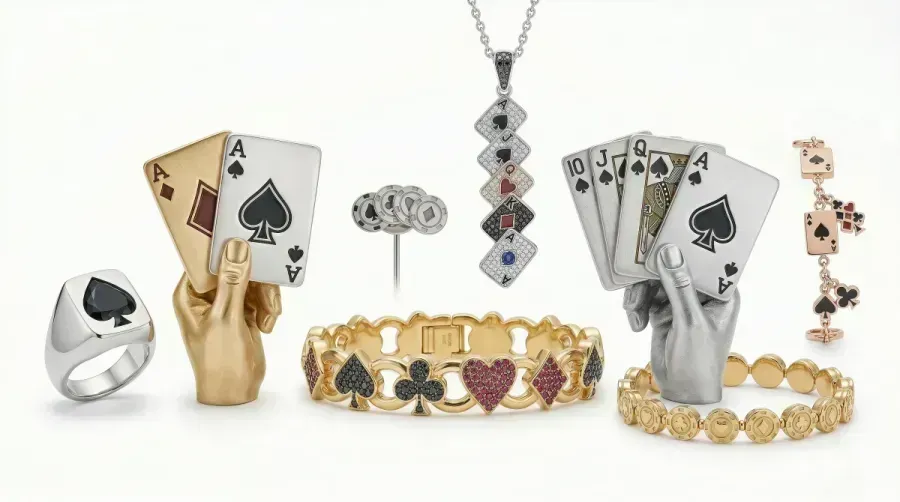
The primary format is rings, above all signet rings. A large flat or slightly domed bezel carries the ace of spades, the four suits, a card fan or the dead-man's-hand combination in relief or engraving. Bezel diameter runs 15 to 25 millimetres; material is sterling silver or yellow gold, often oxidised for contrast. The ring sits firmly on the middle or index finger of the dominant hand. This is the classic masculine format, though women's versions with narrower bezels and finer shanks are made to order.
The second most popular format is pendants. Options here are wide: a single suit (most often the ace of spades) at 2 to 3 centimetres, a five-card fan on a 50-55-centimetre chain, a stylised dead-man's-hand fan at around 4 centimetres, a casino-chip pendant with a denomination, a miniature champion's bracelet as a charm. Men's versions hang on a 55-60-centimetre chain or a leather cord with a silver clasp. Women's versions use a finer 45-50-centimetre chain, sometimes with enamel or mother-of-pearl accents.
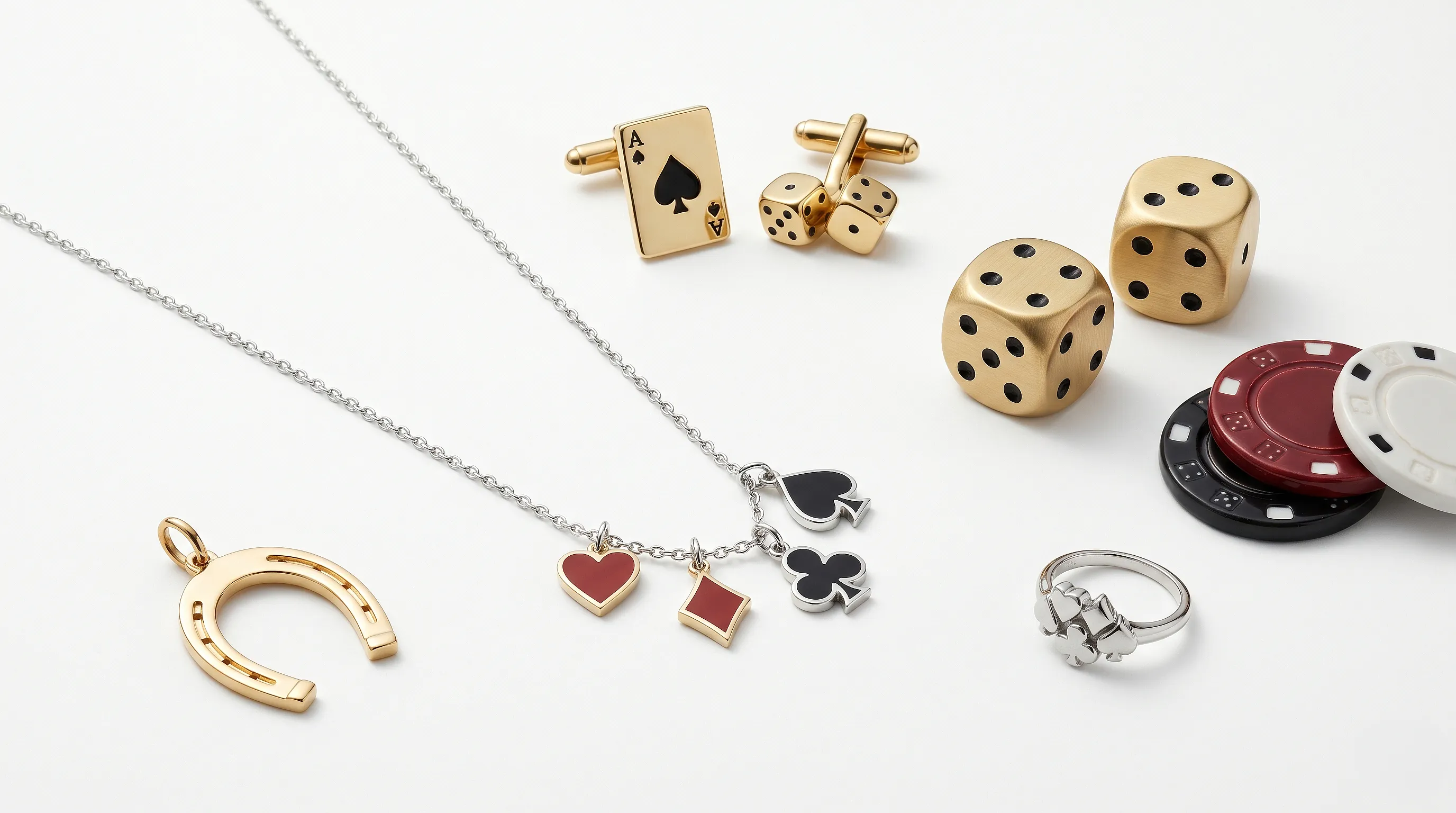
Cufflinks with the four suits are a vintage format rooted in the gentlemen's clubs of London and Paris in the late 19th century. The Worshipful Company of Card Makers, chartered in London from the 17th century, helped establish playing-card iconography as acceptable decorative language for formal accessories. Each cufflink carries a square composition of the four suits, or two suits per link, or one per link with a left-right division. Enamel is dense, red and black, in a silver setting. Such a set works naturally with black tie, a tailored suit, a white shirt.
Bracelets fall into several subcategories. First: bracelets in the style of a poker trophy, personalised to the owner. Second: plain silver or gold bracelets engraved with poker symbols or a key date. Third: shamballa-style bracelets with chip beads in different colours. Fourth: heavy-link chain bracelets with a poker charm.
Chip pendants form their own category. They are made as circular discs 18-25 millimetres across, in casino colour schemes (white, red, blue, green, black) with an engraved or enamelled denomination. They are often ordered as a pair or a series, each chip marking a personal milestone: first cash, first club win, a table anniversary.
Watches with poker symbolism on the dial are a separate topic. The four suits replacing hour markers, the ace of spades at the six-o'clock position, a card fan on the dial background: this is a way to introduce the poker aesthetic into an everyday accessory without overloading the look.
Men's chains with a large poker pendant function as a declared sign of identity. A 4-6-millimetre bismarck or anchor weave, 55-60 centimetres, with a solid spade card or card fan as the drop. This is jewellery for a player who wears his belonging to poker culture openly.
At Zevira we take personalisation orders on all these formats: engraving of the date of a first serious cash, a player's name or handle, the denomination of a significant chip, the combination that brought a key victory.
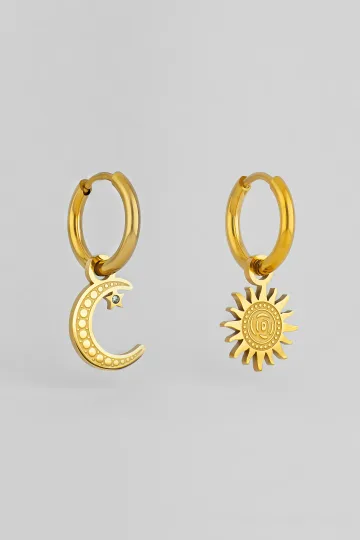
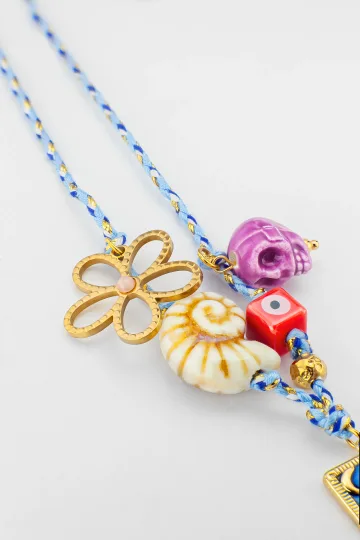
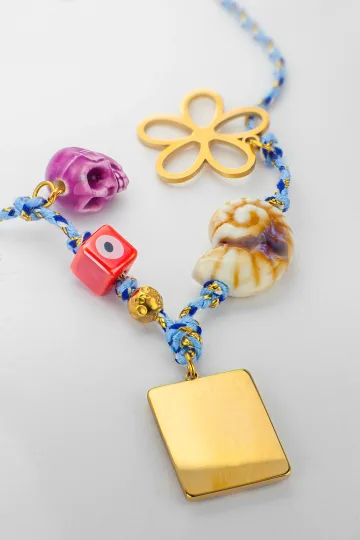
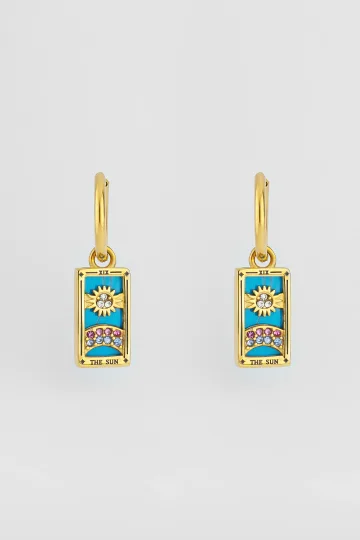
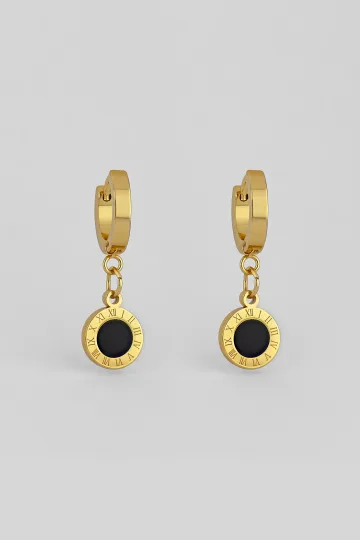
Wear the symbol, don't just read about it. These are in stock:


The Key Symbols of Poker in Jewellery
The poker symbolic vocabulary is smaller than the general card-culture vocabulary, but each element carries a dense layer of meaning. First is the ace of spades: the most recognisable single card in poker iconography, graphically strong, working at any scale and in any format.
The dead man's hand is a five-card composition fixed in culture as Wild Bill Hickok's 1876 deal: two aces and two eights of the black suits, plus an unknown fifth card. In jewellery it reads as a fan or a tight layout on a signet bezel.
The four suits together function as a sign of completeness: spades, hearts, diamonds, clubs as the four pillars of the game. They appear in cufflinks, earrings, rings with relief around the shank, and necklaces with four pendants.
The royal flush is 10-J-Q-K-A of one suit, the strongest combination in classical five-card poker. In jewellery it appears as a five-card fan or as an engraving on the flat surface of a ring or medallion.
Court cards -- king, queen, jack -- enter poker jewellery as individual motifs. The king of spades as a sign of power, the queen of hearts as a romantic line, the jack of clubs for cunning. In the British playing-card tradition, the king of hearts has been called the "suicide king" since at least the 18th century due to his sword appearing to enter his own head -- a peculiarity of the English card-printing style that became a collector's note.
Chip pendants with denominations occupy a special place. They work simultaneously as a jewellery motif and as a sign of personal tenure at the table.
The stylised deck, a miniature "stack" of cards in isometric view, appears as a charm or as part of a more complex composition. It functions as a sign of "player in general" without attachment to any specific hand.
One ace of spades over an open collar beats a fistful of rings. Leave the rest of the deck at the table.
How to wear poker jewellery
The table has its own rules, but most of the time a poker piece lives in an ordinary wardrobe. Here is what actually works once the cards are put away, sorted by occasion.
What do I wear with an ace of spades every day? For daytime I recommend one restrained sign: an ace of spades pendant on a fine chain under the collar of a grey or white shirt, or an oxidised ring with a single suit on your stronger hand. Black onyx and matte silver get along with denim and knitwear, they do not argue with colour and read as a personal detail. Under a round neck I suggest a shorter chain so the sign sits at the collarbone instead of hiding.
Is it appropriate at the office? Quite, if you keep it restrained. I recommend a thin ring with a spade suit or a flat pendant worn under the shirt, and four-suit cufflinks with a jacket. The stricter the dress code, the smaller the sign: a dark suit on silver reads as graphic, not as a casino.
How do I build an evening look? For the evening I choose the larger format. Cufflinks in red and black enamel sit well with a dark suit and a white shirt, a signet with the dead man's hand or a royal-flush fan works as the centre of the look, and a chain with a heavy pendant goes over a dark sweater. For a special occasion I suggest the most visible piece in the collection, with a personal engraving.
How do I get the metal right? Hold one line. I recommend yellow gold with warm fabrics and a casino register, white gold and platinum with cool, formal looks. Red suits ask for an echo in a garment of the same tone, while black suits are universal and go with any colour.
Who does a poker sign suit? Anyone who likes the specific and is not afraid when a piece tells a story. Two rules that never fail. First, one strong poker motif plus a neutral piece reads better than a whole deck spread across the body. Second, you match the chain length to the neckline, not the other way round, so the sign lands in the open zone.

Turn on your camera, pick earrings, a pendant or a ring, and see the piece on yourself in real time.
Switch items in one tap.
Everything runs in your browser: no photo or video is ever uploaded.
The Ace of Spades: the Primary Poker Symbol
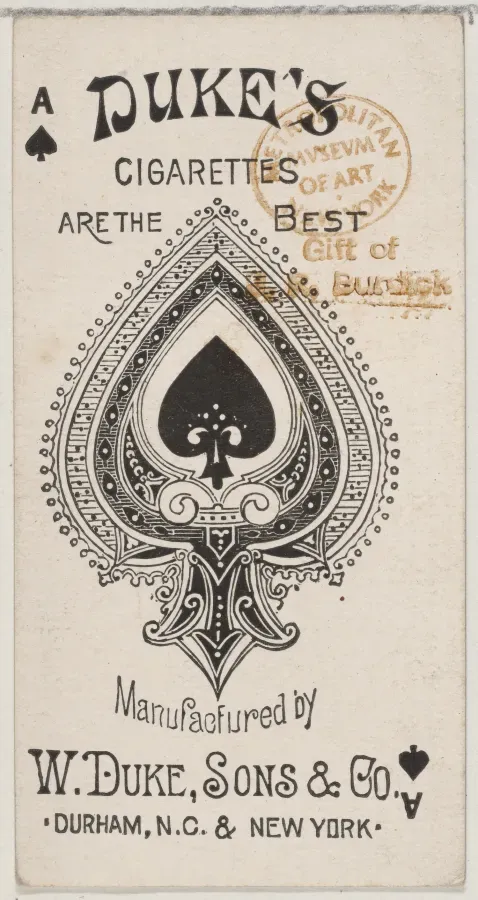
The ace of spades became poker's primary symbol for several reinforcing reasons. In some variants of the poker suit hierarchy, especially in high-chip cash games, spades rank as the senior suit. When two flush hands are equal in rank, the spade flush wins. This rule is not universal but it exists, and it gives spades additional authority.
The visual strength of the ace of spades is the second factor. In any deck the ace of spades is drawn differently from the other aces: it typically carries a large ornamental spade in the centre, often with the maker's mark, a decorative frame and flourishes. This tradition dates from the 18th century, when the British government required a revenue stamp to be printed on each deck of playing cards -- the stamp was placed on the ace of spades, and card printers began treating it as the most "dressed" card in the pack. The Stamp Act of 1712 and subsequent card taxes meant the ace of spades became the official bearer of state certification, a fact that London's card-printing trade -- centred around the Worshipful Company of Card Makers in the City -- turned into a design tradition. Since then the ace of spades has been the most recognisable single sign in any card deck.
The cultural association of the ace of spades is dual. On one side it is a sign of death and risk: during the Vietnam War, American soldiers left aces of spades on fallen adversaries, and the "death card" nickname entered mass culture. On the other side, in poker culture the ace of spades is a sign of strength and leadership: the highest card of the senior suit, the maximum achievable from a single card. This duality makes the ace of spades graphically and symbolically richer than any other card.
In jewellery the ace of spades takes several standard forms. Rings with the ace of spades come in two types: a signet with a raised bezel and engraved spade (bezel 18-22 millimetres) and a more contemporary ring with a flat black-enamel insert on a silver ground. 2-3 centimetre pendants are worn on a 45-55-centimetre chain, rectangular with rounded corners, like a miniature playing card. Large pendants 4-5 centimetres on a leather cord serve as a men's statement accessory. An ace-of-spades brooch is a vintage format for a lapel. A charm is a tiny card 10-12 millimetres long for a charm bracelet.
Materials map to price segments. In the entry segment: sterling silver with dense matte black enamel. In the mid segment: yellow or white gold with onyx (black matte stone, an ideal replica of the spade suit surface). In the premium segment: platinum with black sapphires, with diamond accents on the border of the mark or around the "stamp" outline.
Personal engraving is what transforms a production ace of spades into a personal artefact. The most common subject is a date: first serious cash, first club win, first tournament, a table anniversary. Less often a name or handle. Rarer still a short phrase or a significant number. Engraving goes on the reverse of the pendant, the inner shank of the ring, or the edge of the bezel.
The Dead Man's Hand: a Wild West Legend
The story of the dead man's hand begins on 2 August 1876, at the Nuttal & Mann's saloon in Deadwood, Dakota Territory. James Butler Hickok, known as Wild Bill, a celebrated gunfighter, scout, former marshal and poker player, was seated at the table with his back to the door -- against his own rule of caution. He sat that way because every other seat was taken. At some point Jack McCall, a fellow lodger and unsuccessful player who had lost to Hickok at that same table the previous day, entered the saloon, walked up behind Hickok and shot him in the back of the head.
At the moment of the shot, Hickok held five cards. According to accounts gathered by later historians of the American West, his hand consisted of two black aces (spades and clubs) and two black eights (spades and clubs). The fifth card has been disputed ever since: different sources name different candidates, from the queen of diamonds to a nine or jack of diamonds. The exact answer is not known, and that uncertainty became part of the legend: the dead man's hand is always two pairs of black cards and an unknown fifth.
From that day "Dead Man's Hand" became the unofficial icon of poker subculture. It works on two levels simultaneously. The surface level is the grim association: a man died holding this hand, so it is a "bad" hand. The deeper level is an acknowledgement of risk as part of the game: Hickok sat with his back to the door, held a strong two pair, and life ended between the deal and the announcement of the combination. The dead man's hand is a reminder that at the table you can lose everything, including yourself, and that poker as a subculture remembers its fallen heroes.
To be direct: the dead man's hand is not a curse and not a bad omen in any practical gaming sense. Two black pairs of aces and eights is a strong combination that wins many pots in classical five-card poker. In Texas Hold'em it is also very playable. The legend works as cultural memory, not as a mathematical statement. A player who knows the history understands the difference.
In jewellery the dead man's hand takes several forms. A pendant with a five-card fan: the four known cards (ace of spades, ace of clubs, eight of spades, eight of clubs) plus a stylised "unknown" fifth card shown face-down or with a question mark. Fan size 3-4 centimetres opened out; material usually sterling silver with black enamel for the black suits. A signet ring with dead-man's-hand relief carries five cards in a tight layout on a 20-25-millimetre bezel. A dead-man's-hand brooch is a vintage interpretation that pins to a jacket or waistcoat, readable as a historical reference by those who know the story.
The symbolism of the dead man's hand as read by players: acceptance of risk, willingness to play to the end, cultural memory of the birth of poker as an American West phenomenon, solidarity with the long line of players for whom poker was not entertainment but a way of life. A dead-man's-hand ring is not a protective amulet or a luck token. It is closer to a trophy of understanding and composure.
Customer reviews
Zevira is a real jewellery shop. Genuine payments, deliveries and customer thank-yous.
🥰🥰🥰 gracias
Ok, ¡gracias! 🙂
The Four Suits: Symbolism and Combinations
The four suits of the French pack (spades, hearts, diamonds, clubs) each carry their own symbolic load, and in poker subculture that load differs from general card culture. In poker, unlike bridge or whist, the suit is often not a critical factor in hand strength (except for flushes and the royal flush), so its role shifts from functional to aesthetic and identificatory.
Spades rank as the senior suit in some poker variants. Visually the spade reads as a blade or a stylised leaf, graphically clean and assertive. In jewellery the spade carries meanings of strength, finality and leadership. Black -- realised through enamel, onyx, black agate or black sapphire -- gives the piece graphic severity.
Hearts are associated with feeling, sentiment and the emotional line of play. The heart suit in poker jewellery is worn by players who see in poker not only calculation but an emotional component: passion for the game, love of the table, sense of belonging to a community. Red is realised through enamel, ruby, garnet or coral.
Diamonds are the suit of money and winning. The rhombus shape, red colour and visual clarity make diamonds a popular choice for the player focused on results. In jewellery the diamond suit often pairs with the chip motif or with an engraved denomination.
Clubs symbolise growth, success and good fortune. The trefoil of clubs echoes the three-leaf clover, and that visual closeness reinforces lucky symbolism. Black is realised the same way as spades: enamel, onyx, agate.
Jewellery combining all four suits creates several established compositions. Cufflinks carry one suit per link: spades and clubs on one, hearts and diamonds on the other, or any preferred arrangement. Classic gentlemen's-wardrobe format, ideal with black tie. A necklace with four pendants on a single chain: each miniature pendant 8-10 millimetres, chain 50 centimetres. A ring with four reliefs around the shank: spades, hearts, diamonds, clubs at equal intervals, small or no bezel. Earrings work in two registers: a classic pair of "spade and heart" (one black, one red, asymmetric) or a set of four individual studs, two per ear.
Choosing one suit as a personal sign is a separate theme. Many players consciously or unconsciously associate with a particular suit: some with spades as a sign of discipline, some with hearts as an emotional line, some with diamonds as a focus on outcomes, some with clubs as a luck sign. It is not hard superstition but a form of self-identification fixed in a personal piece of jewellery.
Upload a photo of your pet, someone you love, or an object. We'll build a 3D model and hand-cast it in pewter.



The Royal Flush as Symbol
The royal flush, 10-J-Q-K-A of one suit, sits at the top of the classical poker hierarchy. In classical five-card poker nothing beats it. The probability of receiving a royal flush in a five-card deal is roughly 1 in 649,740, translating to approximately 0.000154 percent. In Texas Hold'em, where seven cards are used (two in hand plus five community cards), the probability is higher but still rare, around 1 in 30,940 deals.
That rarity and that absoluteness make the royal flush an almost mythological symbol inside poker culture. A player may sit at the table for thousands of hours and never hold one. Those who do receive it remember the date, the place, the hand and the feeling for the rest of their career. It is a "where were you when it happened" event, comparable in emotional weight to major personal milestones.
In jewellery the royal flush is rendered as five cards in a row or a fan, ten through ace, of one suit. Most commonly it is the spade royal flush as the graphically strongest. A pendant with a five-card fan 3-4 centimetres opened out works as a drop on a 50-55-centimetre chain. Material: sterling silver with enamelled suit and value details, or yellow gold with engraving. A ring with royal flush engraving on the flat bezel surface is a more restrained format: five cards shown small, detail fine, readable only close up.
A royal flush brooch is a large format for a deliberately vintage look. Size 4-5 centimetres, textured enamel, detailed rendering of the ace-of-spades "stamp" and the king, queen and jack figures. Engraving on the flat side of a watch (for instance on the caseback of a pocket watch or on the exterior of a wristwatch bracelet) is a discreet way to introduce the royal flush into an everyday accessory.
The meaning of the royal flush as a jewellery piece is layered. At the first level it is a sign of the ideal: the perfect hand, the summit, the maximum possible. At the second it is a sign of the dream that may never arrive but always serves as a reference point. At the third it is a sign of a specific personal event: if a player has held a royal flush, they often commission a ring or pendant with that combination and a dated engraving as a trophy. At the fourth it is a gift: jewellery with a royal flush is often chosen for a player's milestone birthday, a major table anniversary or a significant tournament result.
The Champion's Gold Bracelet: a Cultural Object
The World Series of Poker, WSOP, is the principal tournament series in the poker world. It was founded in 1970 by Benny Binion, owner of the Binion's Horseshoe hotel and casino at the heart of Las Vegas. Binion was a complex figure, but what he did for poker was essential: he gathered the best players of his era under one roof and organised a series of tournaments with substantial prizes. By 1972 the format had stabilised: Texas Hold'em became the main event discipline, and a gold bracelet was awarded to the winner of each individual tournament in the series. The bracelet has since become the principal token of recognition in the poker community, often more meaningful than the cash prize. Money can be lost, spent, invested, dissipated. The bracelet remains as a physical sign of achievement that cannot be duplicated and cannot be purchased.
Johnny Moss became the first WSOP champion in 1970, chosen by vote of the other players. One of the defining names of the professional poker tournament era, known as "Texas Dolly," won the main event back-to-back in 1976 and 1977, both times with a ten-deuce, a holding that became a legendary hand. That same player collected ten bracelets over his career. Stu Ungar, a player of extraordinary natural ability, won the Main Event three times (1980, 1981, 1997). Phil Hellmuth holds the bracelet record: as of 2025 he has 17, with the count still open.
The bracelet itself has gone through several visual iterations. The 1970s bracelets were modest, with minimal engraving and a relatively simple construction. In the 1980s and 1990s the design grew more elaborate: a large central plate bearing the WSOP logo, side links in polished gold, personalised engraving with the year, discipline and winner's name. In the 2000s, following the online poker boom (discussed in the history section below), the bracelet grew larger and more detailed. Some later editions include gemstone insets, predominantly diamonds.
Privately made trophy bracelets have become their own strand of poker culture. Players who win local tournaments, in their own club, in a regional series, in a home league, often commission or receive as a prize a bracelet in the general champion's-bracelet style. The gold bracelet has become the universal form of the poker trophy, just as the cup became the universal form of the sporting prize.
At Zevira we take orders for personal poker trophy bracelets tied to a specific achievement: a club tournament victory, a home-game win, a player's anniversary at the table, a collective gift from a regular playing group. The bracelet ranges from a heavy version in gold-plated sterling silver with a dense 25-30-millimetre central plate to a lighter everyday version with a 15-20-millimetre plate. Engraving is always personal: name or handle, date, tournament or club name, number of entrants, sometimes the key combination.
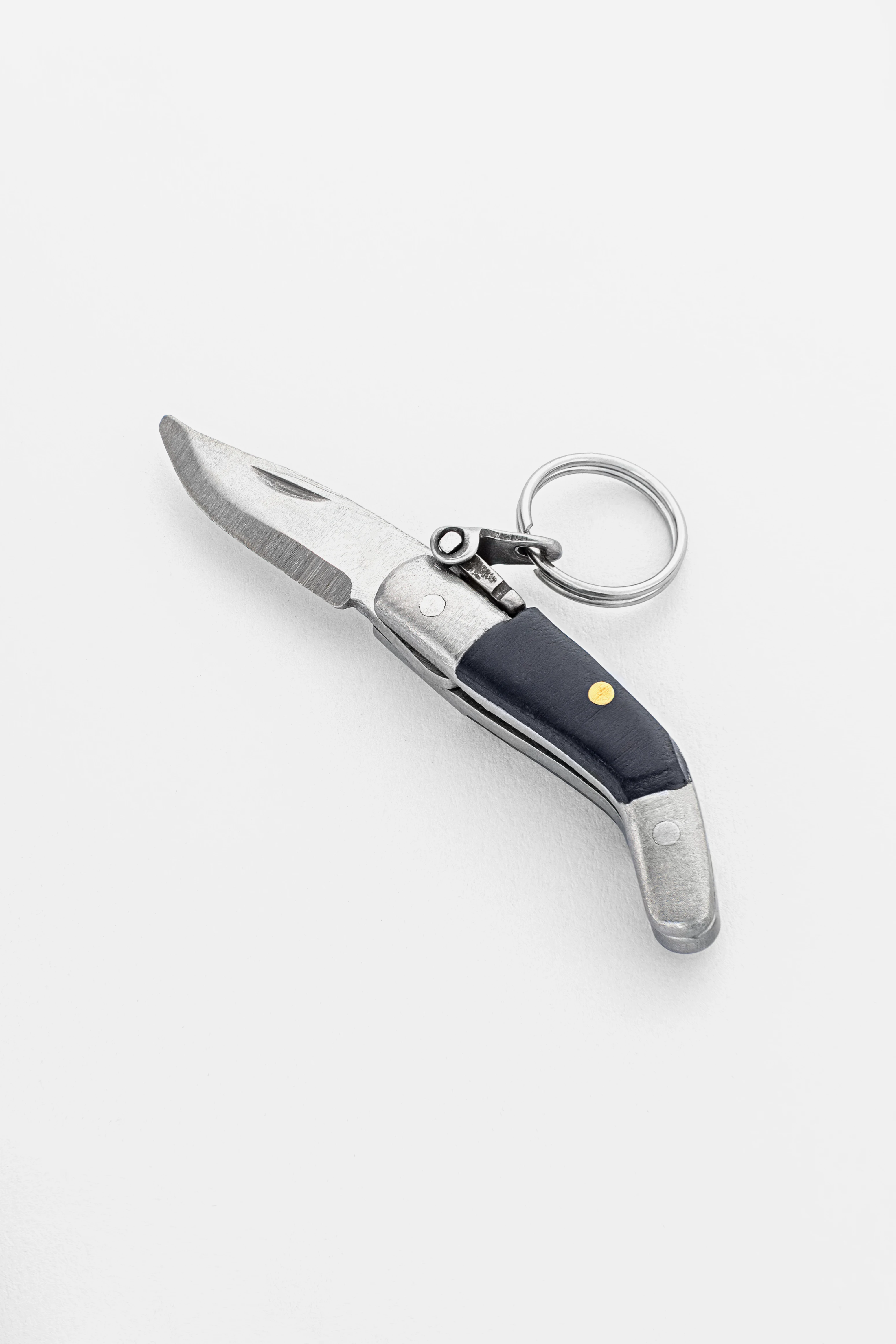
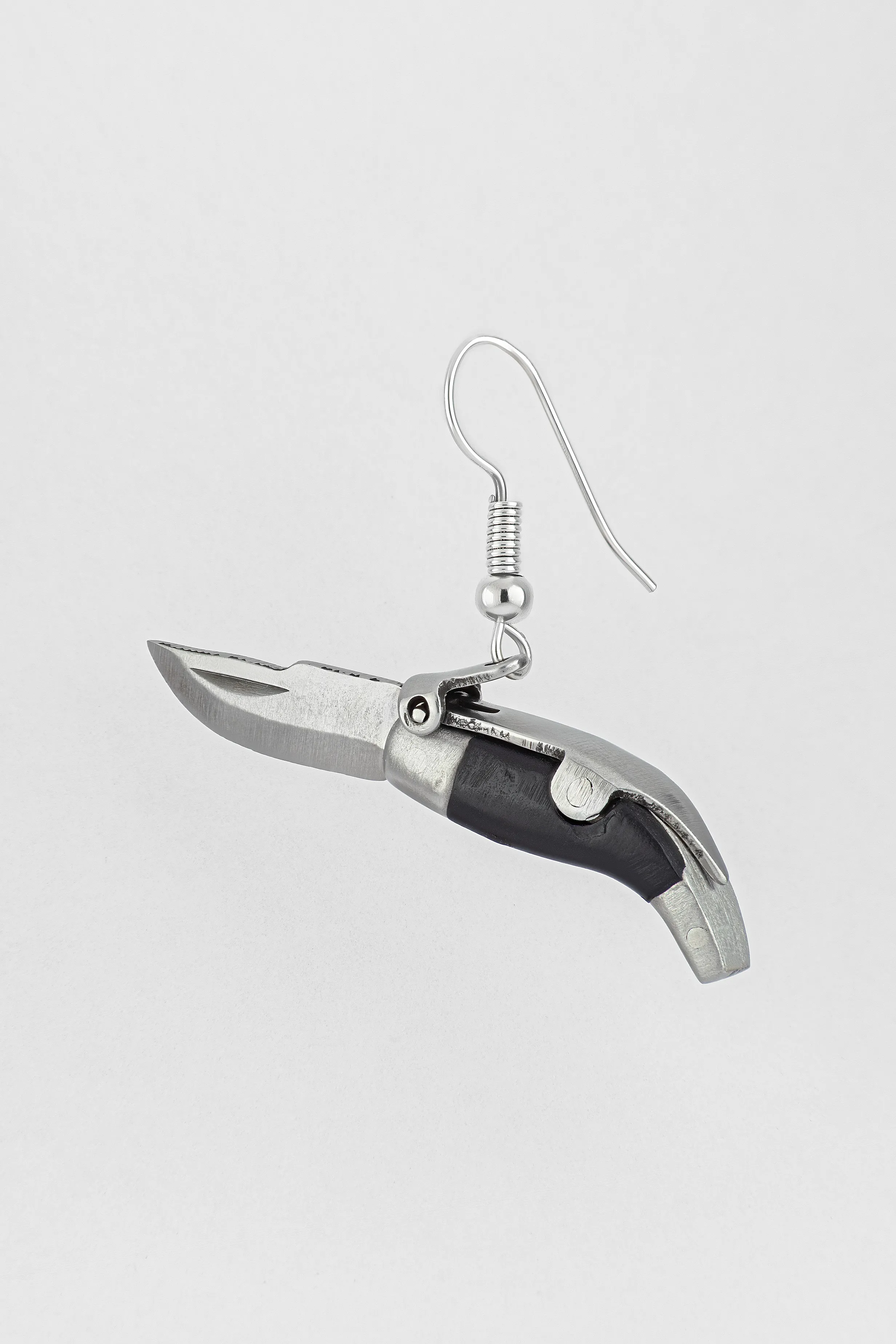
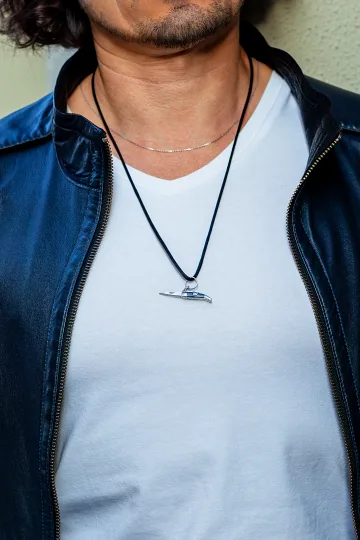
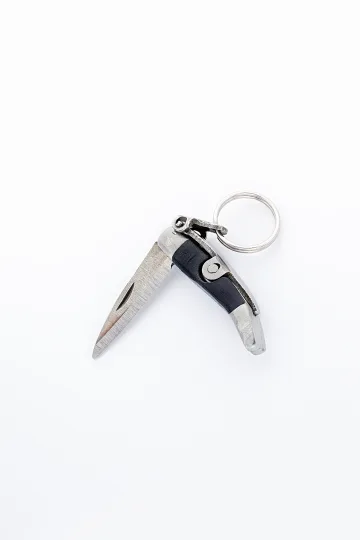
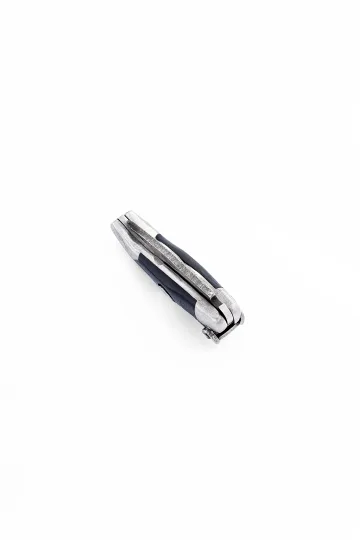
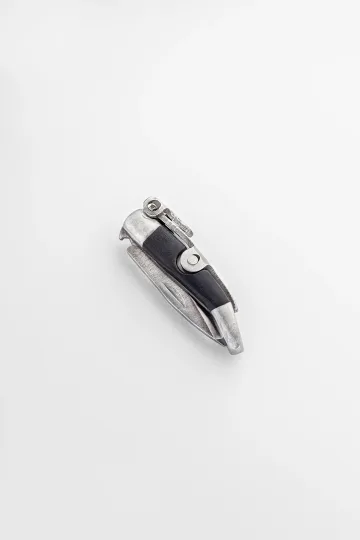
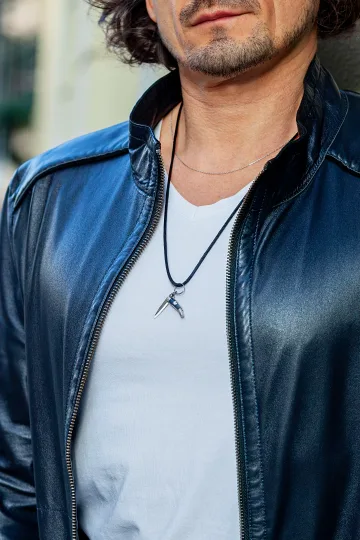
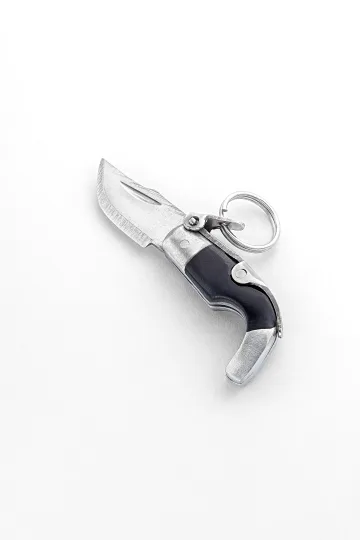
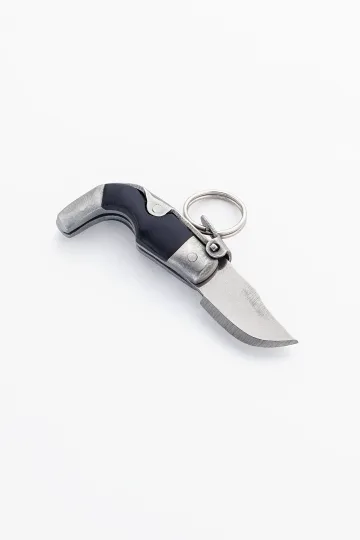
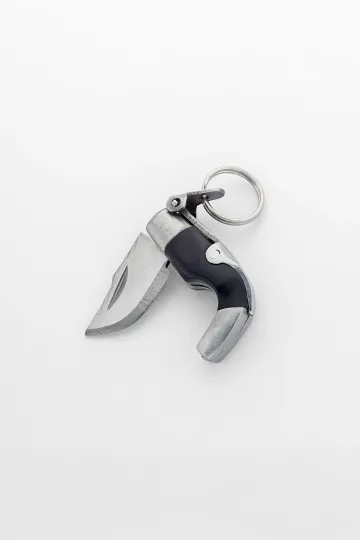
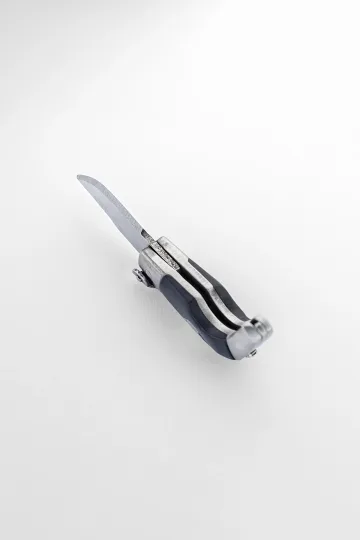
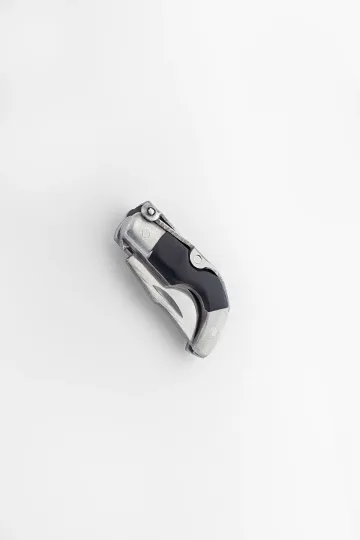
CAPAORA mini knife pendant
The 18th-century Spanish navaja in miniature: 40 mm of stainless steel, a real folding mechanism and a Palanquilla lock that clicks. An affordable gift to remember.
Authentic · Ships from Spain · 14-day returns
Materials in Poker Jewellery
The base material for poker jewellery is sterling silver (925). This is the compromise between cost, durability and visual presence. Silver holds engraving crisply, takes enamel well, accepts oxidising for contrast and stands up to daily wear. Production models of rings, pendants, bracelets and charms are typically made in sterling silver.
Yellow gold occupies an important place in poker jewellery because of the visual association with Las Vegas, the tournament aesthetic and the champion's gold bracelet. Yellow gold at 14 carat (585 fineness) or 18 carat (750 fineness) gives the warm gloss that reads as mid-20th-century casino luxury. Yellow gold works especially naturally in the trophy-bracelet style, heavy signet rings, substantial chains.
White gold and platinum give a more precise, contemporary aesthetic. They are chosen when a player prefers restraint and does not want the classic casino register. White gold works with black enamel and onyx; platinum with black sapphires and diamond accents. This is the choice for the premium segment and for players who value elegance without declaration.
Among stones, the primary choice for spade and club symbolism is onyx. Black, matte, sometimes with a slight layering effect, it is perfectly flat in a cabochon cut and exactly reproduces the graphic of the black suit. Onyx is inexpensive at entry level, durable, well-polished and resistant to daily wear.
For heart and diamond symbolism the stones are ruby and garnet. Ruby is the premium choice, with a fine deep red, high hardness and a dense lustre. Garnet (typically almandine or pyrope) is the more accessible alternative, with a darker saturated red close to wine. Garnet works well in a cabochon cut, especially in a vintage aesthetic.
Black sapphire is the premium choice for spade symbolism. Deep black with a blue cast in certain light, it differs from onyx in greater lustre density and greater hardness.
Small diamonds function as accents: on the border of a suit mark, in the centre of the ace-of-spades "stamp" point, around the perimeter of a chip disc. Size is usually 1-2 millimetres, quantity one to twelve per piece.
Mother-of-pearl is used to stylise the surface of a playing card. A white card with a dark suit mark, a mother-of-pearl inset in a silver or gold setting, black enamel for the spade or club: this approach achieves high precision in visually quoting the playing card.
Enamel is the workhorse of the mass segment of poker jewellery. Red for hearts and diamonds, black for spades and clubs, dense and matte or glossy to taste. Enamel costs less than precious stones, delivers precise colour and withstands daily wear when applied correctly. Cold enamel is less durable; hot (kiln-fired) enamel gives results that last generations.
Personal engraving is the service most often placed first in a poker jewellery order. A production piece becomes a personal artefact with one procedure. The subject is a date, a name, a handle, a denomination, a short phrase, a card combination in notation (for example "AsAc8s8c?"). The typeface is chosen to match the piece's style: vintage italic for classical signets, formal roman for contemporary rings, a card-style typeface for themed pendants.
Leave your email, we'll send your discount code. No spam, unsubscribe anytime.
The code arrives by email, valid on your first order.
The Player's Talisman
Poker culture is rich in personal rituals and lucky objects that players keep beside them at the table. A defining name of the professional poker tournament era was known for wearing a particular shirt to tournaments: its presence was part of his preparation routine. Stu Ungar had a lucky cap that accompanied him through many key moments in his career. Many professional and amateur players keep a personal object on the felt: an old coin, a small token, a chip with personal significance, a photograph in a locket. These objects do not work as magical devices. They work as anchors of attention and discipline.
Jewellery works analogously in this system. A player may have a ring or pendant worn only for play, and the act of putting it on becomes part of the preparatory ritual, a signal of switching into concentration mode. Removing the jewellery after play is the signal of decompression, the exit from the mode. Such a "tournament piece" often differs from the player's everyday jewellery in style, weight or visibility: it is distinguished precisely by its function.
The psychological mechanism of this ritual is transparent and well documented in sports and cognitive psychology. Ritual gives a sense of control over the uncontrollable, and in poker, where variance is high even at optimal play, that sense of control is critical for decision quality. A player who feels ready makes better decisions than one who is anxious and uncertain. This is not magic; it is a working focus technique known across all high-stress disciplines, from chess to surgery, from shooting to public speaking.
A necessary honest note here: a talisman does not affect the mathematics of poker. The probability of receiving an ace on the river does not change because a player wears a spade-suit ring. But a talisman can affect the player's state, and the player's state in turn affects the quality of decisions made. This is a real mechanism working through psychology, not a mystical channel. The distinction matters and is worth keeping in mind.
For a player with a tilt problem (where emotion after a losing run distorts strategy and leads to expensive errors) an anchor object can work as a physical reminder of discipline. The player touches the ring, looks at the pendant, feels the weight of the bracelet: that moment is a return from an emotional state to an analytical one. This technique is used in other high-stress disciplines and has solid psychological backing.
For a casual player, the jewellery-talisman works differently: more as a marker of belonging to a favoured pastime. An ace-of-spades pendant on a day off recalls the regular home game with friends, gives a sense of continuity in an interest, serves as a private story that only the owner can read.
Wearing at the Table
The practice of wearing jewellery at the poker table involves several purely physical considerations. A ring must not impede card-turning or chip-moving: a very tall bezel catches on a card when checking a hand, a sharp edge can scratch a chip or mark the felt. For tournament wear the preference is rings with flat or gently domed bezels, rounded edges, no sharp projections. Heavy signet rings with high-set stones are better kept for daily wear away from the table.
A pendant chain must be long enough that the drop does not lie on the felt or catch chips or cards when leaning forward. Men's chains of 55-60 centimetres with the pendant tucked inside a shirt are fine. Short chains of 40-45 centimetres with a high pendant at the collarbone are also safe. Problems arise with medium-length chains of 45-50 centimetres carrying a large pendant that rests on the chest and can swing forward when bending toward the table.
Bracelets need separate attention. Heavy-link bracelets can rattle when moving chips, which is considered poor form in serious games. Compact links, a neat clasp, moderate weight: the compromise that works for most tournaments. Fine chains with charms are less obtrusive but can catch on cuffs.
A separate matter is jewellery and the poker face. Professional players pay close attention to any visual signal that might reveal their state or intentions to opponents. Jewellery with stones that catch the light brightly when the hand moves can become such a signal: the movement of a hand with a flashing stone is registered by an opponent's peripheral vision more clearly than a movement without it. For this reason a number of serious players avoid highly reflective jewellery in tournaments and choose matte textures, oxidised silver, flat onyx, matte enamel.
The opposite strategy is the deliberate image. Some players consciously wear a prominent large piece as part of managing how opponents perceive them: the "cowboy" image, the Las Vegas showman, the eccentric professional. Phil Hellmuth is known for theatrical tournament entrances in distinctive dress and accessories as part of his public persona. The cowboy hat worn by legends of the professional poker tournament era functioned as a component of their visual identity.
The balance between personal ritual, practical function at the table and image management is set by each player. There is no universal rule, but one practical principle: the jewellery should help, not hinder. If it distracts, irritates, catches, rattles or otherwise draws attention away from the game, it is working against the player. If it is familiar, comfortable, aesthetic and personally meaningful, it is working for the player.
One further practical point, easy to overlook until it costs something. Long sessions mean hours of repeated hand movement across a felt surface, and jewellery worn under those conditions wears faster than the same piece worn to an office. Ring shanks thin on the palm side, chain links at the back of the neck abrade where they sit against a collar, and clasp springs tire. Anyone playing regularly should look over a working piece properly twice a year: check the shank thickness on a ring, the security of any stone setting, the spring in a bracelet clasp and the wear at the bail of a pendant. A stone that has loosened in a claw setting will eventually leave the piece, and a card room floor is a poor place to lose one. For pieces that see this kind of use, bezel and channel settings outlast claws by a wide margin, which is one more argument for the flat, graphic designs that suit the subject anyway.
Streaming Poker and Jewellery on Camera
Since 2003 (the date and its significance are covered in the history section below), online poker underwent explosive growth and became a full discipline in its own right. Today a substantial proportion of players, from amateurs to high-level professionals, spend most of their playing time at online tables. The rise of streaming platforms created a new practice: broadcasting play live with a camera on the player, a graphic overlay of cards and running commentary during hands. This created an entirely new context for poker jewellery: the piece is now watched not only by neighbours at the table but by thousands of viewers on screen.
The requirements for "camera jewellery" differ from those for tournament jewellery. The primary factor is readability at small size. A webcam delivers a compressed image; fine details pixelate, thin lines blur. This means that a piece designed for close-up inspection may become an indistinct blur on camera. The rule is simple: large motifs 3-5 centimetres read better than miniatures. A pendant the size of a coin or a little larger reads as a specific sign. A pendant the size of a button reads as merely "something light on the neck."
Contrast with clothing is critical. A white shirt plus black onyx plus silver gives maximum readable contrast: three separate registers each visually distinct. Black clothing plus a black pendant plus a dark chain merges into one mass. For a streamer the first scheme works better.
Background lighting also determines how well the lustre of a jewellery piece is transmitted. Light set above and slightly to the side creates highlights on convex surfaces that read on camera and show volume. Flat front lighting kills the sense of material: silver becomes indistinguishable from aluminium, gold from brass. Streamers working with professional lighting rigs address this as a standard technical question.
Streamers with a personal symbolic piece have found it to be a way of building a recognisable identity. A specific ring, pendant or bracelet appearing in every broadcast works as part of a visual brand, much like a hairstyle or clothing style. For a player who produces regular streams, commissioning a personalised piece designed with camera requirements in mind is a sound investment in recognition.
Send a friend a discount code, they save on their first order.
A Brief History of Poker Through Its Symbols
Poker emerged in the mid-19th century on the Mississippi riverboats. The game's roots lie in the French "poque" (the probable source of the name) and the German "pochen," both known in Europe during the 17th and 18th centuries. French colonists of Louisiana brought the game to the American continent in the early 19th century. By the 1830s poker had spread along the steamboat routes between New Orleans and St Louis, becoming part of the atmosphere of those vessels: a card room, professional players, passengers with money, long river crossings. That period established the five-card bluffing-and-betting format as the classical form.
The Wild West era, roughly 1860 to 1880, was the second chapter. Poker moved ashore and became part of saloon culture in Colorado, Nevada, Dakota, Arizona and California. Saloons were the social centres of small mining and ranching towns, and a poker table in the corner was standard furnishing. In that period the Wild Bill Hickok legend was made: his death at the table in 1876 created the first iconic poker story and gave poker its first icon, the dead man's hand.
The early 20th century and the interwar years saw poker spread through war. American soldiers played in barracks and on the fronts of the First World War, bringing the game into the trenches of the Western Front and teaching it to British and French allies. The Second World War intensified the process: millions of American service personnel in Europe, North Africa and the Pacific played poker in their free time, and the game became truly international.
In 1949 Benny Binion organised a private high-stakes match at the Horseshoe in Las Vegas between Nick "the Greek" Dandaios and Johnny Moss, which ran for five months with breaks and became poker legend. That match showed Binion that high-stakes poker had an audience and a commercial future, and that thought led twenty years later to the WSOP.
In 1970 the WSOP was founded. The first series ran in limited format, with players voting for the champion (unanimous for Johnny Moss). By 1972 the format had stabilised. Texas Hold'em became the main event discipline; gold bracelets became the award for each tournament in the series.
In 1979 David Sklansky published "The Theory of Poker," establishing rigorous strategic foundations for the game and helping to transform it from a semi-folkloric craft into a discipline that could be systematically studied.
2003 was the Moneymaker effect. Chris Moneymaker, an amateur accountant from Tennessee, qualified for the WSOP Main Event through a forty-dollar online satellite. He went the distance and won the championship against seasoned professionals. That single event became the symbol of a new era: "an ordinary person with an internet qualification can win millions at the world's premier tournament." From that moment the poker world changed radically. Thousands of new players entered online poker, prize pools grew, television broadcasts with hole-card cameras appeared, and poker became a genuinely mass media phenomenon.
From 2003 to around 2011 the "poker boom" ran, with the industry growing by dozens of percentage points annually. After 2011 growth slowed, but the industry stabilised at a high new level. By the mid-2020s the poker subculture is fully formed, its symbolism settled, and poker jewellery has become an independent topic distinct from the wider casino aesthetic.
Poker in Britain and the English-Speaking World
Britain came to poker from a card culture that was already ancient and entirely its own. Whist dominated the eighteenth and nineteenth centuries and produced the first serious literature on card play in English; brag, a three-card betting game with bluffing at its core, was being played in English taverns long before poker existed and is a direct ancestor of the betting logic poker later formalised. Cribbage boards sat on pub tables from the seventeenth century onwards. When poker eventually arrived, it landed on ground that already understood a wager, a bluff and a reading of the person opposite.
The route it took was mostly military. American service personnel stationed in Britain during the two world wars played poker in mess halls, on airfields and in billets across East Anglia, Lincolnshire and the south coast, and the game spread outwards from there into local circles. For decades afterwards it remained a private, domestic game: played in homes, in service clubs, in the back rooms of pubs, rarely for serious money and almost never in public.
The legal frame shaped everything that followed. British gambling law drew a firm line between games of chance played against a house and games played between the players themselves, and that distinction is why poker in Britain grew up inside licensed members' clubs rather than in open casinos. When the licensing regime was modernised in the mid-2000s, card rooms became a visible part of the landscape in London, Manchester, Birmingham, Nottingham and Cardiff, and the country turned into one of the main hubs of the European tournament circuit. Live poker in Britain is now a regulated, taxed, above-board activity, and winnings from it are not treated as taxable income in the way that a salary is, a quirk of the system that has attracted professionals to the country for years.
The online era changed the balance again. British and Irish players became one of the largest national groups on the international online rooms, and the country produced a strong generation of tournament professionals who came up through internet qualifiers rather than through casino apprenticeships. That history matters to the jewellery, because it produced a distinctly British register of poker symbolism.
Compared with the American original, British poker jewellery is quieter. There is less Las Vegas gloss and more graphic restraint: matte silver instead of high-polish gold, a single suit instead of a full spread, engraving instead of stones. The signet ring tradition helps enormously here, since Britain already has a centuries-old habit of wearing a flat-bezel ring with a personal mark on the little finger, and a spade or a four-suit arrangement slots into that convention without looking like fancy dress. Hallmarking plays its part too: a piece assayed at London, Birmingham, Sheffield or Edinburgh carries a set of marks that a British buyer reads instinctively, and for a trophy piece meant to outlive its owner that legibility is part of the point.
Engraving preferences differ as well. Where the American tradition favours the tournament name and the year, British commissions lean towards the private detail: initials, the date of a club final, the name of a home game that has run for a decade, a hand in card notation that only the people at that table would recognise. The result reads as a signet with a secret rather than as a trophy, which is very much the British way with jewellery of any kind.
British players also tend to layer poker symbolism with other markers of identity rather than let it stand alone. A spade ring alongside a pendant with the female symbol for a woman at the table; a dead-man's-hand signet with a lauburu bracelet for a player with an interest in ethnic symbolism; a poker set worn with a peace sign pendant by someone who wants distance from the aggressive poker image. That layering is characteristic of contemporary poker jewellery generally, and it is especially well developed wherever the culture is confident enough not to need the full casino costume.
Who Suits Poker Jewellery
The first and most obvious group is professional and semi-professional players, for whom poker constitutes the main or a significant part of their income and identity. For them poker jewellery is a sign of professional belonging, a personal anchor of discipline and a trophy of specific achievements. A dead-man's-hand signet, a bracelet engraved with the date of a first major win, a royal flush pendant: these are functional, personal, purposeful objects.
The second group is regular recreational players, those who play weekly with friends at home or in a local club. For them the jewellery works as a marker of a hobby and a sign of belonging to a social group. Poker as a regular gathering format, where the same five to seven people meet, carries strong social bonds, and matching or complementary jewellery among the participants functions as a sign of that bond. Cufflinks for "poker Thursdays," matching charms on bracelets, rings with personal engraving: the formats are many.
The third group is collectors of poker memorabilia. There is an entire subculture of people who collect poker objects: vintage decks, casino chips, strategy books, historical artefacts. Jewellery pieces with poker symbolism enter these collections naturally as the wearable component. The rarer and more specific the motif, the more a collector values it: a suit arrangement copied from a nineteenth-century deck, a chip denomination from a room that no longer exists, a bracelet made in the style of an early tournament award. Britain's antiques fairs and auction rooms are a good hunting ground here, since Victorian and Edwardian card-table accessories, counters, markers, cases and scoring pieces, surface regularly and sit naturally alongside modern commissions.
The fourth group is gift recipients. Poker jewellery is a strong gift format for a tournament participant, a club champion, an anniversary player, a father or grandfather who plays. The gift is commissioned with personalisation for the specific occasion: a name, a date, a denomination, a combination. Such a gift reads as personal recognition of an achievement, not a dutiful gesture.
The fifth group is participants in regular home games as a sign of "we play together." A group of eight people who have met monthly for two decades to play Texas Hold'em might commission eight matching rings with a shared motif and an individual engraving on each. That is a community ritual fixed in material. The engraving in these cases usually carries the group's own shorthand: the name the game goes by among its members, the year it started, a seat number, a running joke reduced to three letters. Nobody outside the group can read it, and that is exactly the appeal.
The sixth group is older relatives who play. A father who spent decades on bridge or cribbage and took up poker later in life, a grandfather who remembers the card rooms of the 1990s, an uncle who runs a regular game in the back room every other Friday: for them a poker piece works as recognition of a genuine interest rather than as a themed novelty. The tone for this group should stay conservative. A flat signet with a single suit, a plain silver bracelet with a dated engraving, a set of cufflinks in restrained enamel. Anything that reads as casino merchandise misses the point badly with a recipient who has been playing cards since before the aesthetic existed.
Who poker jewellery does not suit is also worth stating directly. People who have or have had a problem with gambling addiction may find such jewellery a trigger and a worsening of their condition. Problem gambling is a clinical condition requiring professional support, and poker symbolism in that context is categorically inappropriate. Also unsuitable for those who relate to poker purely as a game of chance: poker symbolism, unlike the wider casino aesthetic, carries a "skill accent" rather than a "luck token" charge, and a misread leads to a poor choice. For someone drawn to roulette rather than to the card table, elephant jewellery as a luck symbol is the better fit, and anyone who simply likes the general card-and-dice aesthetic will get more out of our guide to game symbols in jewellery.
Buying it as a gift? Each one arrives ready to give.
 A branded Zevira box and a little card come with every order.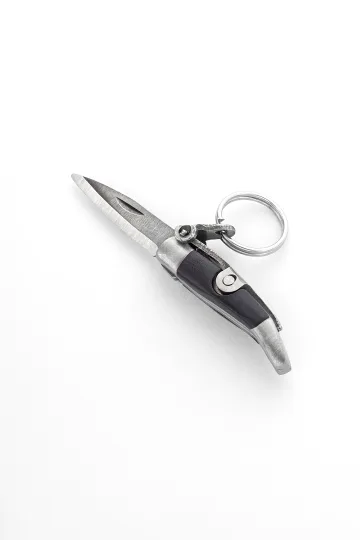




Frequently Asked Questions
Is poker jewellery appropriate in a professional setting? It depends on the context and the specific piece. A restrained motif -- a single-suit pendant 10-12 millimetres on a fine chain inside a collar -- is appropriate almost anywhere. A large ring with a dead-man's-hand bezel in a conservative office will read as eccentric, and the corporate culture matters. At a formal interview in a traditional industry a heavy poker signet may work against you; in finance or a creative sector it can read as character.
Is this men's jewellery or can women wear it? Poker jewellery developed historically as a masculine segment, and most classic formats, from heavy signets to substantial chains, carry a masculine aesthetic. However the women's poker scene is growing actively, and poker jewellery for women is made in full range. Finer rings with spade symbolism, elegant royal flush pendants, slim bracelets with suit charms: the format fits individual style, and there is no fixed gender boundary.
Does a poker pendant signal a gambling problem? No. Problem gambling is a clinical condition with specific diagnostic criteria requiring professional support. Wearing a poker piece is a sign of a hobby, a cultural interest, a professional identity or a personal identity, and by itself indicates nothing pathological. People who are seriously engaged with poker, while also living healthy lives with families, careers and other interests, are the norm.
What to have engraved on a personal commission? Standard options: the date of a first serious cash or significant tournament result, the player's name or handle, a favourite hand in card notation, the denomination of a meaningful chip, the name of a club or tournament. Engraving turns a production piece into a personal artefact at relatively modest cost.
Is poker jewellery suitable as a gift? Yes, if you know the person plays or loves the game. Poker jewellery carries a specific subcultural charge and will be read fully only by someone inside that culture. For a recipient with no connection to poker, general gaming symbolism such as a four-leaf clover, a horseshoe or a plain die without poker associations is a better choice.
Which metal lasts best for a piece worn at the table every week? Sterling silver with an oxidised finish is the sensible working choice. It holds engraving crisply, the darkened recesses of a suit mark stay legible rather than filling with polish, and the inevitable surface scratches of chip-handling read as wear rather than as damage. Yellow gold looks the part but shows knocks more obviously on a flat bezel, and a high-polish finish will pick up every mark from the felt and the rail. If the piece is a trophy meant for occasional wear, gold makes sense; if it goes on every week, silver ages better.
What size should a suit motif be so it reads without shouting? For a pendant, 10 to 12 millimetres reads as a discreet personal sign under a collar, 20 to 25 millimetres reads clearly across a table, and anything above 30 millimetres becomes a statement that has to be dressed around. For a ring bezel, 12 to 15 millimetres suits most hands, and the flatter the bezel the less it interferes with cards and chips. Cufflinks work well anywhere from 14 to 18 millimetres, since the sleeve frames them and does half the work.
Is there a British hallmark on poker pieces, and does it matter? Silver and gold articles above the statutory weight thresholds sold in the UK carry a hallmark struck at an Assay Office, London, Birmingham, Sheffield or Edinburgh, showing the metal standard, the office and the sponsor's mark. For a trophy piece meant to be kept and handed on, that set of marks is worth having: it fixes the metal standard beyond argument and dates the object. On a commissioned bracelet or signet, the hallmark usually sits on the inner surface where it does not interfere with the design.
Can a poker piece be worn in a casino or card room? Yes, within the room's own rules. Licensed British card rooms have no objection to jewellery as such, though tournament floors sometimes ask that anything reflective or bulky be kept clear of the playing surface, and dealers will mention it if a bracelet is catching the felt or a ring is marking chips. The practical constraints described above, flat bezels, rounded edges, no rattling links, cover almost everything a floor supervisor would raise.
About Zevira
Zevira is a Spanish jewellery brand based in Albacete. The poker line -- ace of spades, four suits, champion's-style trophy bracelets -- is one of the categories in the catalogue. For current stock and details, see the catalogue.
Silver, gold, symbolic pieces, card suits, paired sets and personalised engraving.