The Third Eye (Ajna) in Jewellery: Meaning of the Symbol of Intuition
An eye nobody has seen, yet everyone seems to feel
Gather everyone who wears a third-eye pendant and you end up with a remarkably varied group. A yoga teacher from Brighton who has practised Iyengar for fifteen years. A philosophy student in Edinburgh who stumbled across Madame Blavatsky's writings and never quite came back from the rabbit hole. A ceramicist in Bristol who simply liked the shape. A therapist in London who treats the symbol as a daily reminder to trust her instincts. None of them would necessarily agree on metaphysics, and that is rather the point.
The third eye is a symbol of inner vision, placed at the centre of the forehead, between the eyebrows. Nobody can prove it exists in any physiological sense. Science has looked and found only a small gland producing melatonin. And yet, across three thousand years and cultures that had no contact with each other, people independently arrived at the same idea: there is something there, a capacity to perceive what ordinary sight misses.
That is a remarkable degree of convergence, and it is worth taking seriously even if you are the sort of person who prefers peer-reviewed papers to tantra texts.
Wear the symbol, don't just read about it. These are in stock:
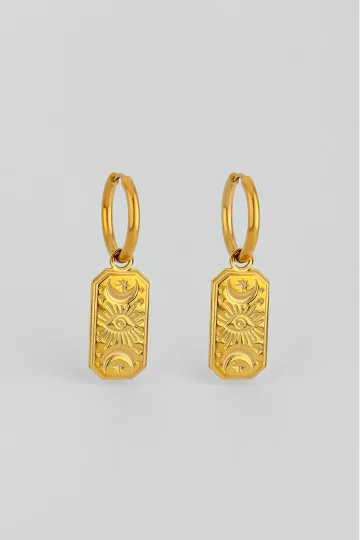

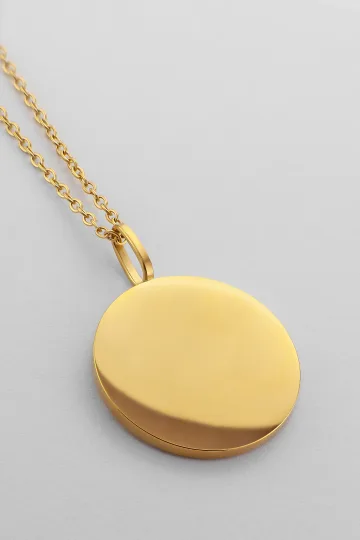
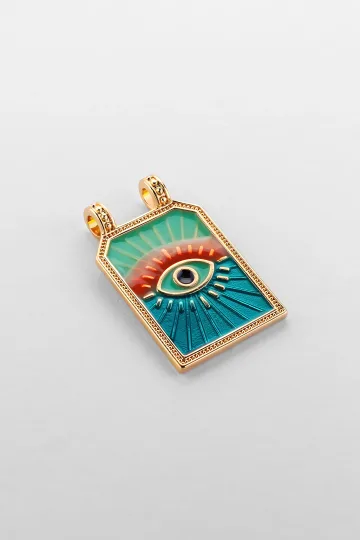
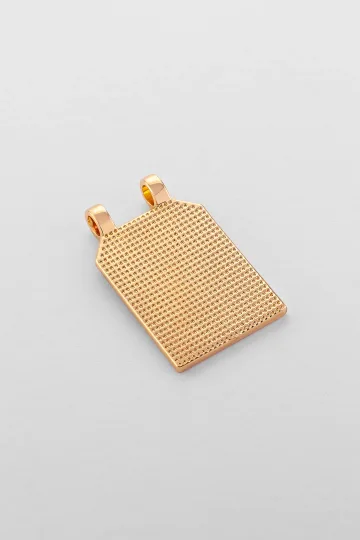
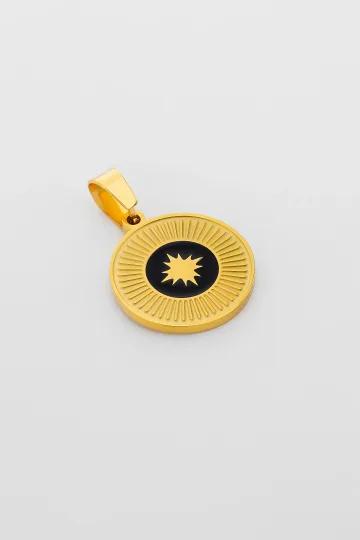

Jewellery with the third eye: what to look for
Pendants
The most common form by a distance.
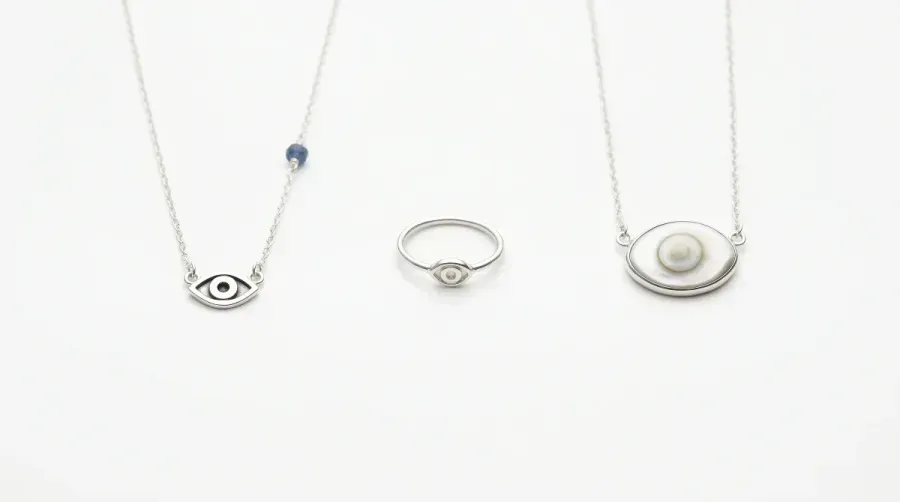
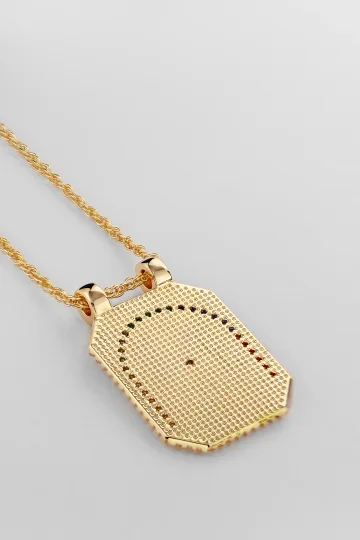
- A small eye pendant, around 2 cm is the minimalist everyday option. Sits quietly under a shirt, nobody needs to know.
- A medium pendant with the eye inside a lotus or mandala, 3 to 4 cm is a more deliberate spiritual statement. The middle price range.
- A pendant with an Ajna stone: amethyst, lapis lazuli, sapphire in indigo or violet, the colours traditionally associated with the sixth chakra. Mid-to-premium range.
- An eye in a triangle borrows from esoteric aesthetics. Works well if you are comfortable with a slightly occult visual language.
Rings with the third eye
Less common, but worth knowing about.
- A signet ring with an eye is the more masculine version. Direct and considered.
- A fine band with a small eye is a minimalist accent that pairs with almost anything.
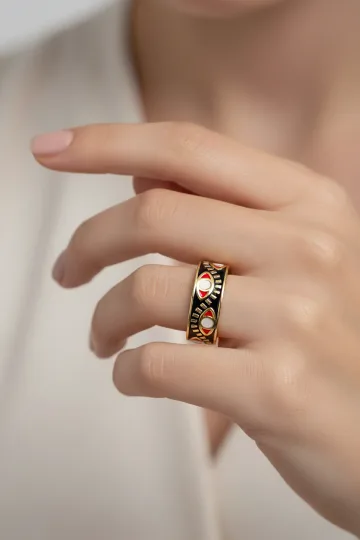
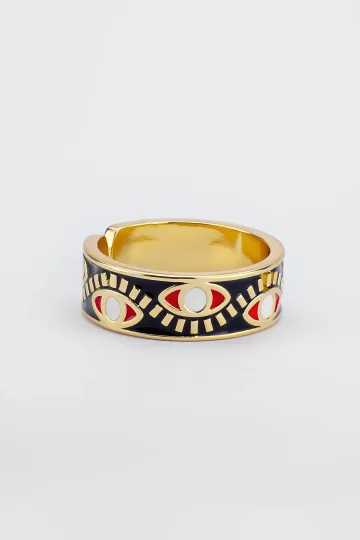
- A bold ring with eye and stones for those who lean into yoga-adjacent aesthetics.
Earrings
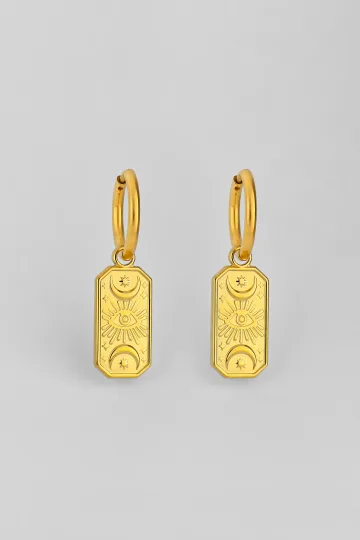
- Matching eye studs are the easiest everyday choice.
- Asymmetric earrings with one conventional piece and one third-eye piece. A contemporary approach that has grown significantly in British jewellery in recent years.
- Drop earrings with a third eye and stone for bohemian or spiritual occasions.
Bracelets
- A fine chain with a single eye charm for daily wear.
- Multiple small eyes along the chain gives an ethnic, layered quality.
- A bracelet combining the OM symbol and an eye is the complete yogic set.
Headpieces and tikka
Rare but striking. A headband or chain with a pendant that rests precisely between the eyebrows. Used in yoga practices, spiritual ceremonies, and occasionally as a considered style choice.
In Indian bridal tradition, the forehead ornament worn from the hair parting down to the brow is called a matha patti or tikka. Its placement directly over the Ajna point is deliberate: in the tradition this is understood as the seat of spiritual reception, and the jewellery marks or underlines that point. Today the matha patti is worn beyond weddings, in festival looks, bohemian styling, and yoga-adjacent contexts.
The third eye reads on a bare neck and dark cloth. Over a loud print it just goes blind.
What to wear the third eye with
Dozens of these pendants have passed through my hands on shoots, and the rule is always the same: the third eye wants a quiet background. The calmer the clothing, the louder the symbol reads. Here is what actually works, by occasion.
What do you wear the third eye with every day? For an everyday look I recommend a small silver eye on a thin chain over a plain tee, linen, or soft knitwear in natural tones: sand, olive, slate blue. An open neckline or a boat neck gives the pendant room on the skin. If you wear it over fabric, I suggest matte textures: silver on rough linen looks more honest than on shiny satin.
Does the third eye work at the office? It does, as long as you keep it minimal. I choose a thin chain and a small eye or a bindu dot with a single stone, worn under a shirt collar or over a turtleneck. A large esoteric piece fights the room in a professional setting, so I save it for another occasion. Amethyst or lapis add colour without breaking the restraint.
How do you build an evening look? For the evening I suggest one strong accent rather than everything at once. I choose a pendant with an Ajna stone on an open neck, a signet ring with an eye, or earrings with an indigo stone. Dark fabrics (graphite, aubergine, ink blue) light up the purple and blue stones best.
What about a festival or a practice? This is where the boho register opens up. I recommend a forehead tikka, layered chains of different lengths, and the third eye alongside an Om and a lotus. That look lives on linen dresses, asymmetric tops, and loose silhouettes with air and movement.
Which metal and stone should you choose? Silver is universal and gets along with the esoteric aesthetic, rose gold reads as modern wellness, and copper nods to the Indian tradition. For stones I choose amethyst, lapis, or sapphire, the colours of Ajna. I build layers on chains of different lengths so the pendants do not tangle, and I keep the metals in one family when I want calm.

Turn on your camera, pick earrings, a pendant or a ring, and see the piece on yourself in real time.
Switch items in one tap.
Everything runs in your browser: no photo or video is ever uploaded.
How the symbol works visually
The third eye appears in several distinct visual forms, each carrying its own specificity.
An open eye with lashes. Realistic, reminiscent of ancient Egyptian iconography. Direct and immediately recognisable.
An eye inside a triangle. Often confused with the Eye of Providence, the all-seeing eye of Freemasonry. Context determines meaning: placed within yogic symbolism, it reads as Ajna.
An eye in a lotus. The Hindu version. Ajna chakra is traditionally depicted as a two-petalled lotus with an eye at its centre.
An eye inside a circle or mandala. The Buddhist variant, often with concentric rings around the central form.
A bindu point. The minimalist version. A single dot or small gemstone placed as if it were a bindi between the brows. Elegant and understated.
An abstract eye. Stylised, not literal. Common in contemporary jewellery design where the symbol is treated as a starting point rather than an instruction.
Third eye versus other eye symbols
These mystic eye symbols get confused regularly. The distinctions matter.
Nazar (Turkish evil eye). Blue glass eye worn as protection against malevolent intent. Entirely different function: the Nazar deflects, the third eye perceives.
Hamsa. A hand with an eye in the palm. A protective amulet across Jewish, Islamic, and North African traditions. Not the same symbol.
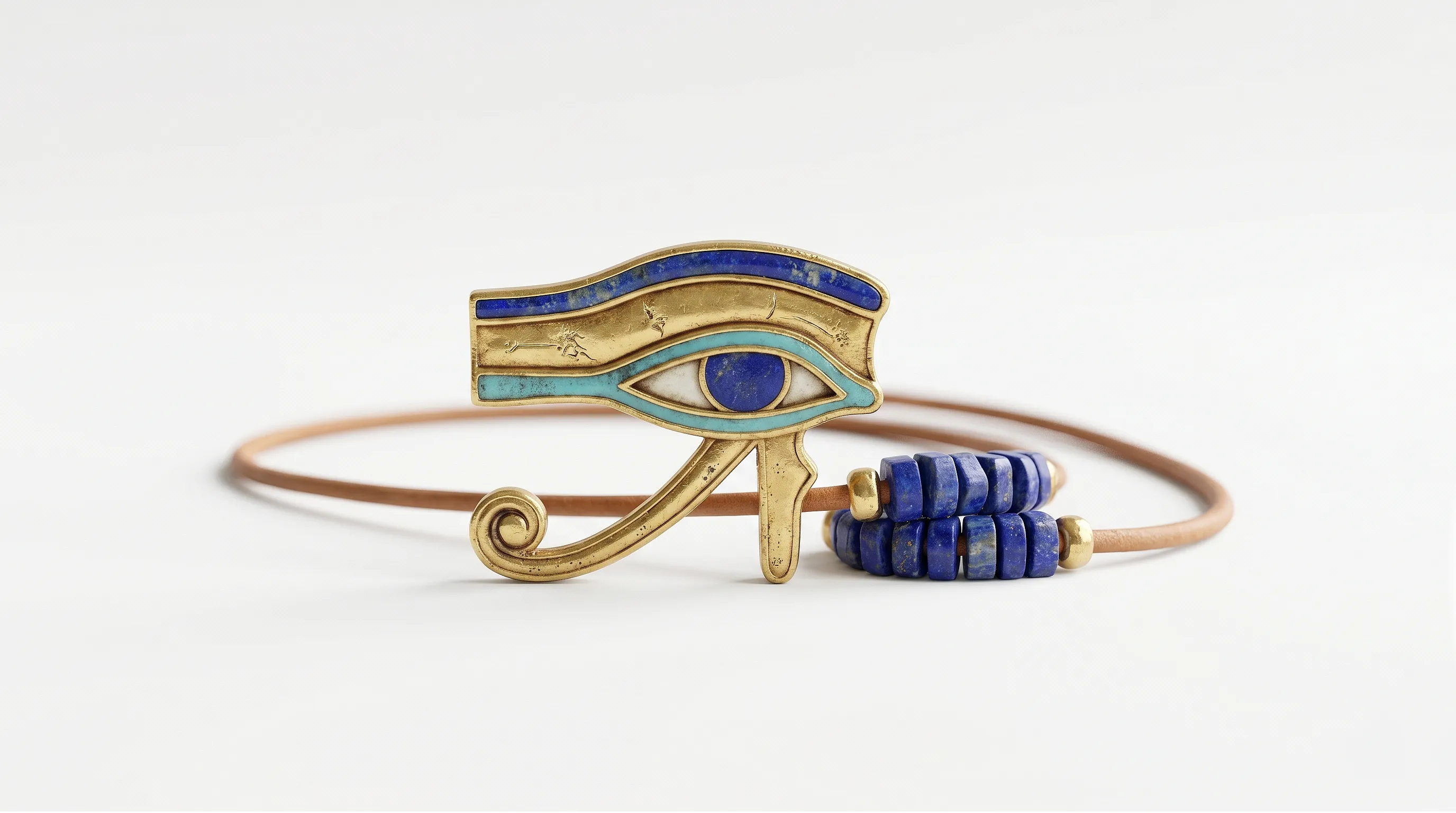
Eye of Horus (Wadjet). Egyptian protective symbol. Similar energy of spiritual guardianship, but a different cultural tradition entirely.
Eye of Providence. The all-seeing eye in a triangle. Masonic and Christian in origin. Watchful deity, not inner vision.
Third eye (Ajna). Hindu and Buddhist in origin. The organ of inner sight and spiritual wisdom.
You can wear several of these simultaneously without contradiction, but it is worth knowing what each one actually says.
How to wear it
Under clothing
A small eye pendant beneath a shirt or blouse. A private reminder. No one else needs to know.
Visible over clothing
A medium or larger pendant worn openly. The bohemian or spiritual-aesthetic register.
Layered
Third eye plus OM plus lotus on chains of different lengths. The full yogic vocabulary, worn together.
With professional dress
A small, minimalist eye works. A heavily symbolic large piece probably does not, unless you work in a field where it reads as intentional self-expression rather than a distraction.
With casual dress
Any size works well. Particularly well alongside linen, flowing fabrics, relaxed silhouettes.
Materials
- Sterling silver is the universal choice, sympathetic to esoteric aesthetics.
- Rose gold sits in the contemporary wellness register.
- Copper carries traditional Indian associations.
- Amethyst, lapis lazuli, and sapphire are the stones traditionally linked to Ajna.
Customer reviews
Zevira is a real jewellery shop. Genuine payments, deliveries and customer thank-yous.
🥰🥰🥰 gracias

Ok, ¡gracias! 🙂

What the third eye symbolises
The symbol carries several overlapping meanings, weighted differently across traditions.
Intuition. The most common Western reading. The sixth sense, the inner voice, the feeling you cannot quite explain but that turns out to be right.
Spiritual sight. The capacity to perceive what lies beneath appearances. In religious traditions, this is often framed as perceiving the divine.
Wisdom. Not accumulated knowledge but discernment. The ability to understand the nature of things, not just their surface.
Clairvoyance. In esoteric traditions, the third eye is literally the organ of paranormal perception. Take that as you will.
Concentration and meditation. Both Buddhist and yogic practices focus attention at the point between the eyebrows during meditation. Whether or not you believe in chakras, this turns out to be a surprisingly effective concentration anchor.
Destructive power. Particularly in Hinduism. Shiva's third eye emits fire capable of consuming entire worlds. This is not the gentle intuition of a wellness app; it is something considerably more formidable.
Cutting through illusion. In Buddhist thought, the third eye is the faculty of discernment, the capacity to distinguish what is real from what merely appears to be.
Silver, gold, symbolic pieces and meaningful sets.
Who it suits
Those who practise yoga or meditation. The symbolism is directly relevant to their practice.
Anyone interested in Indian or Buddhist philosophy. Readers, travellers, practitioners.
People who trust their instincts and want a reminder to keep doing so. Therapists, artists, writers, counsellors.
Lovers of bohemian, ethnic, or layered aesthetics. The third eye belongs to this visual vocabulary naturally.
Those who want their jewellery to mean something. The third eye is an intellectual symbol, not merely decorative.
Partners who share a practice. Matching third-eye pieces work well as a reminder of shared intention.
Someone in a period of searching. Spiritual, psychological, or simply life-oriented uncertainty often draws people to symbols of depth. That is not a weakness; it is rather human.
Upload a photo of your pet, someone you love, or an object. We'll build a 3D model and hand-cast it in pewter.




The history of the symbol
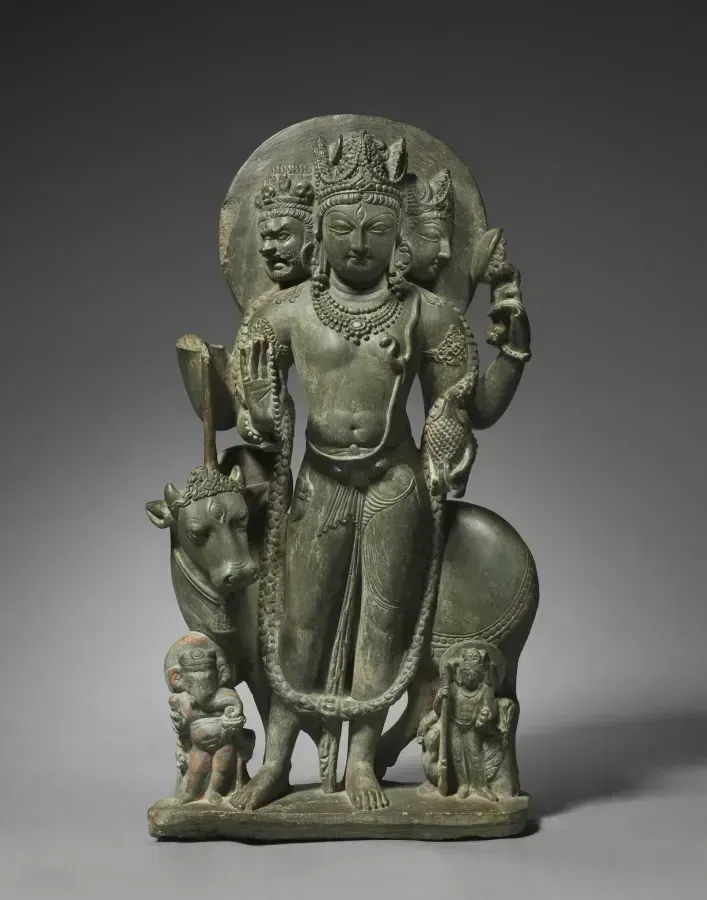
India: Shiva and the fire of destruction
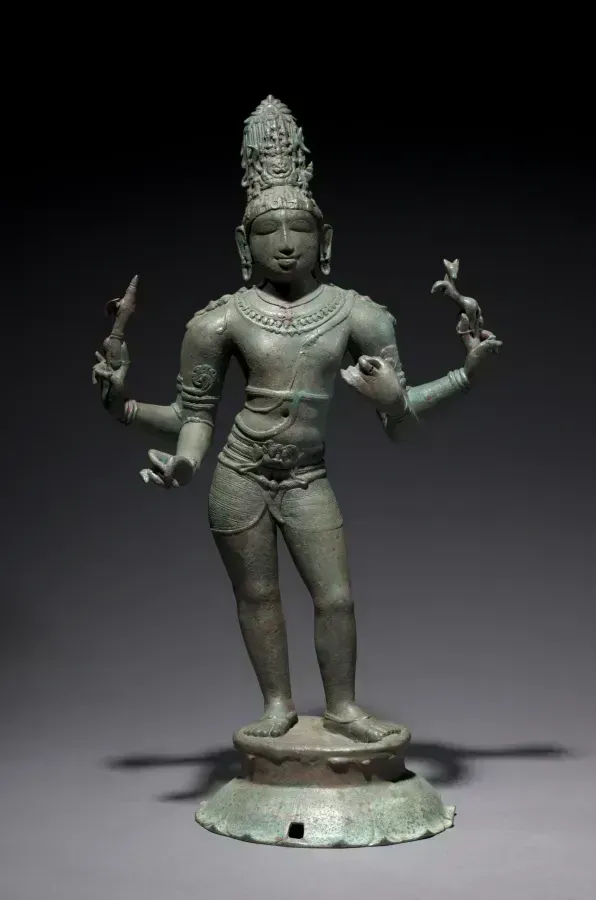
In Hindu mythology the third eye belongs above all to Shiva. According to the texts, Parvati, his consort, once playfully covered his eyes with her palms. The world immediately fell into darkness, because Shiva's eyes are the sun and the moon. To restore light, a third eye opened on his forehead, and from it shot fire.
Shiva's third eye is not a quiet organ of intuition. It is a weapon. When opened fully, it emits a fire that destroys. This is important context for the symbol: its original meaning is considerably more dramatic than the wellness version that circulates today.
Female deities, including Parvati, Durga, and Kali, are also depicted with the third eye, particularly in their martial forms.
Hinduism: the Ajna chakra
In yogic tradition, the third eye is the sixth chakra, called Ajna. It sits between the eyebrows. Its colour is indigo or violet. Its bija mantra is OM.
Ajna governs intuition, inner sight, and discernment. An open Ajna produces clarity. A blocked Ajna produces confusion and poor judgement. The system does not promise magic; it maps psychological functions onto the body in a way that serious practitioners find genuinely useful.
Buddhism: the ushnisha and the Buddha's third eye
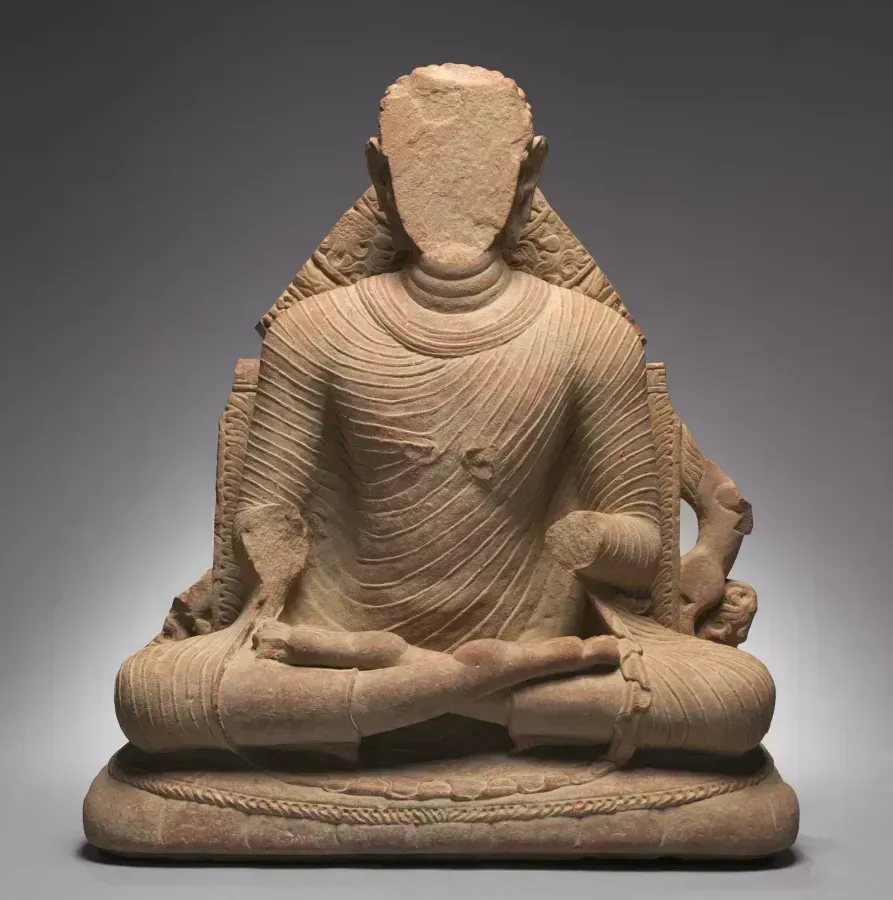
On images of the Buddha, you will typically see two things: the ushnisha, a cranial protuberance at the crown, and the bindu, a dot or jewel between the eyebrows.
In Tibetan Buddhism, the third eye is connected to yoga-tantra practices. Bodhisattvas are frequently depicted with the third eye, particularly in their wrathful forms: Mahakala, Yamantaka.
Ancient Egypt: the Wadjet and the Eye of Ra
The Egyptians did not use the term "third eye" in any Indian sense, but they had a parallel concept. The Wadjet, or Eye of Horus, is a protective magical eye, guarding against evil and signifying royal authority.
Thailand and Southeast Asia
Theravada Buddhism spread the use of the bindu as a forehead mark. Thai, Burmese, and Cambodian Buddha statues often show this dot, sometimes rendered in a precious stone.
Britain and the West: theosophy and the New Age
Helena Petrovna Blavatsky (1831-1891), co-founder of the Theosophical Society, is perhaps the single most important figure in the Western reception of the third eye. Through works like "The Secret Doctrine" (1888), she introduced Indian esoteric concepts to European and American audiences at a time when such ideas were both scandalous and irresistible to a certain kind of Victorian intellectual.
Blavatsky's theosophical project was ambitious: she wanted to synthesise Hindu and Buddhist thought, Western occultism, and emerging comparative religion into a coherent spiritual science. She settled in London for a significant part of her career, and it was through the British Theosophical Society that many of these ideas spread across the English-speaking world.
After Blavatsky, Annie Besant and Charles Leadbeater developed the tradition further in Britain, and Paramahansa Yogananda's "Autobiography of a Yogi" (1946) became a foundational text for Western engagement with Indian spirituality. B.K.S. Iyengar's work in London from the 1950s onwards brought yoga into practical British life in a way that made the third eye accessible even to people who had no interest in esotericism.
The third eye in Hindu mythology: key stories
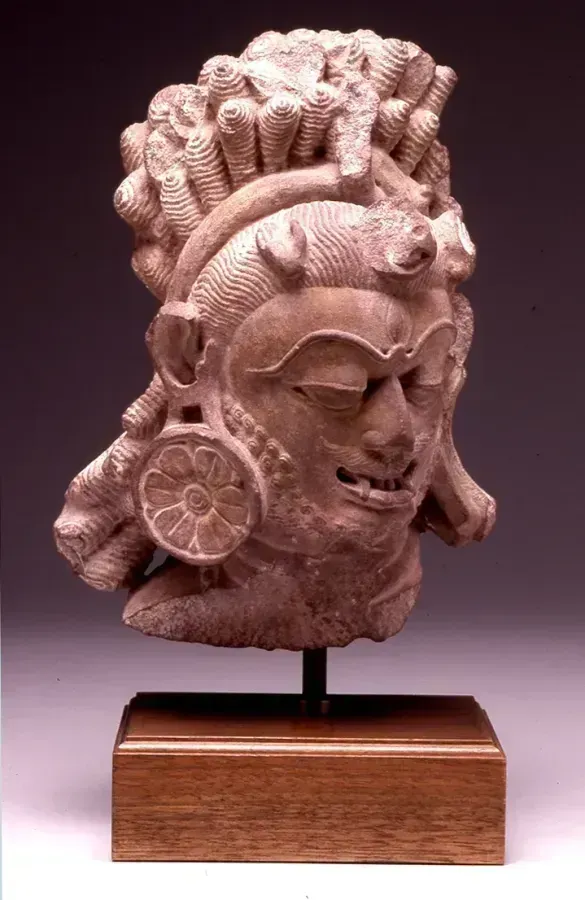
The burning of Kama. The god of love, Kama, dared to shoot his flower-tipped arrows at Shiva while Shiva was in deep meditation. Shiva opened his third eye and reduced Kama to ash on the spot. The story is about the incompatibility of desire and enlightenment.
Tripurasura. Three demons built three cities, called Tripura, that could only be destroyed simultaneously by a single arrow at a rare moment of alignment. Shiva fired through his third eye and destroyed all three at once.
Bhairava. A wrathful form of Shiva in which the third eye is permanently open and perpetually emitting fire. Bhairava guards cities, temples, and sacred sites. In Nepal, statues of Bhairava with his fiery third eye stand at temple entrances.
These stories establish clearly that the Indian third eye is not the peaceful intuition of a wellness app. It is a formidable force that demands respect, and the mythology surrounding it is designed to make that clear.





The biology of the myth: the pineal gland
The pineal gland is a small structure at the centre of the brain, roughly the size of a pea. Its function is the production of melatonin, the hormone that regulates sleep. That is what it does. Science has been thorough on this point.
In the seventeenth century, Rene Descartes, in "The Passions of the Soul" (1649), proposed that the pineal gland was "the seat of the soul". He chose it because it is the only unpaired structure in the brain; everything else comes in twos, but the pineal sits alone at the centre. The reasoning was philosophically motivated rather than anatomical.
Modern neuroscience has not confirmed Descartes. The pineal gland produces melatonin, and on the question of the soul it remains entirely silent.
There is one genuinely interesting biological detail: the pineal gland contains cells that closely resemble the photoreceptors in the retina. In some reptiles and birds, a parietal eye connected to the pineal gland actually responds to light directly. Evolution has, in these species, placed something like a literal third eye on top of the head, though what it does is regulate circadian rhythms rather than confer enlightenment.
The popular theory linking dimethyltryptamine production to the pineal gland has not been scientifically confirmed, though it continues to circulate enthusiastically.
The biological reality is considerably more modest than the mythology. But the mythology has been generating meaning for three thousand years, which is not nothing.
The seven-chakra system and where Ajna sits
Muladhara (root) at the base of the spine. Red. Survival, stability, groundedness.
Svadhisthana (sacral) in the pelvic region. Orange. Creativity, sexuality, emotional fluidity.
Manipura (solar plexus) below the sternum. Yellow. Will, personal power, agency.
Anahata (heart) at the centre of the chest. Green. Love, compassion, connection.
Vishuddha (throat) at the throat. Blue. Communication, truth, articulation.
Ajna (third eye) between the eyebrows. Indigo. Intuition, wisdom, discernment.
Sahasrara (crown) at the top of the head. Violet or white. Connection to the transcendent, liberation.
In jewellery, seven-chakra sets are popular: a pendant or bracelet with seven stones in sequence. The Ajna stone is indigo or violet, usually amethyst or lapis lazuli.
Leave your email, we'll send your discount code. No spam, unsubscribe anytime.
The code arrives by email, valid on your first order.
The third eye in yogic practice: Ajna beyond the symbol
The Ajna chakra in classical yoga is not merely a symbol worn on the body; it is a precise anatomical reference point for meditative practice. Patanjali, in the Yoga Sutras (composed approximately 200 BCE), identifies the technique of directing sustained attention to a single point as dharana. When that single-pointed awareness becomes unbroken, it becomes dhyana, or meditation proper. The point between the eyebrows is one of the classical anchors for this practice, partly because it is immediately available to introspection without needing physical sensation to locate it.
The technique of trataka, fixed gazing at a single point or flame, is described in the Hatha Yoga Pradipika (approximately 15th century CE) as a method for purifying both the eyes and the mind. Advanced trataka practitioners sometimes work with internal gazing, turning the eyes upward and inward toward the Ajna point with the lids closed. This is physically demanding and produces distinctive effects on concentration that practitioners describe consistently enough to suggest something real is occurring, whether or not the chakra framework is the correct explanation.
The concept of sankalpa, a conscious intention or vow, is closely connected to Ajna in the yogic tradition. The idea is that a person with a clear, unobstructed mind can form an intention with such precision that it is far more likely to be realised than an intention formed in a state of mental noise. The jewellery does not produce this clarity, but wearing the symbol can serve as a daily prompt to examine whether one is acting with intention or merely reacting.
Kundalini yoga understands Ajna as the point at which the three main energy channels of the subtle body (ida, pingala, and sushumna) converge. Ida and pingala, associated respectively with lunar and solar energies and with left and right nostrils, coil up the spine from the base and meet at Ajna before reaching the crown. In this model, the opening of Ajna is not a beginning but a penultimate stage: the work of the lower chakras must be stable before the sixth can be approached productively.
Tantra adds further layers. In certain Shaiva Tantric texts, Ajna is described as the seat of the guru's grace, the point at which direct transmission from teacher to student occurs. The bindu mark placed on a disciple's forehead during initiation ceremonies is not merely decorative: it marks the point at which a blessing is understood to enter.
CAPAORA mini knife pendant
The 18th-century Spanish navaja in miniature: 40 mm of stainless steel, a real folding mechanism and a Palanquilla lock that clicks. An affordable gift to remember.
Authentic · Ships from Spain · 14-day returns
Ajna in the early Sanskrit sources
The third eye as a specific meditative and spiritual site predates even Patanjali. In the Chandogya Upanishad, one of the oldest of the principal Upanishads (composed roughly between the 8th and 6th centuries BCE), the concept of the dahara, the subtle space within the heart, already carries the idea that perception of a higher order requires attending to an interior point rather than the outer world. The Mandukya Upanishad, brief but among the most analytically precise, describes the states of consciousness through which the practitioner moves, and the deep state of turiya, the "fourth," corresponds to what later yogic systems would associate with Ajna and beyond.
The Katha Upanishad uses the image of a city with eleven gates to describe the body. One of those gates is the point on the forehead. The Shvetashvatara Upanishad, a Shaiva text, speaks of the fire that arises in yoga practice at the location between the brows, and connects it explicitly with the perception of Brahman. These are not passing mentions: they reflect a consistent conceptual thread running from the early Upanishads through Patanjali's systematisation and into the Tantric literature of the medieval period.
The Vigyana Bhairava Tantra, a Kashmiri Shaiva text probably dating from the 7th to 9th centuries CE, contains 112 dharanas, or methods of entering meditative absorption. Several of them involve directing awareness specifically to the space between the eyebrows. One instruction runs, in rough paraphrase: place your awareness in the space between the eyebrows, let it fill with light, and allow that light to expand into your whole body. The practice is described as immediate, accessible, and capable of producing rapid stillness. Practitioners today report consistent results with this technique, which says something about the map even if the territory remains debatable.
Stones associated with Ajna: what tradition says and why it matters for jewellery
The stones linked to the Ajna chakra in Hindu and Tibetan practice are not arbitrary. They share a colour family (indigo through violet) and in several cases have histories of use predating any written spiritual system.
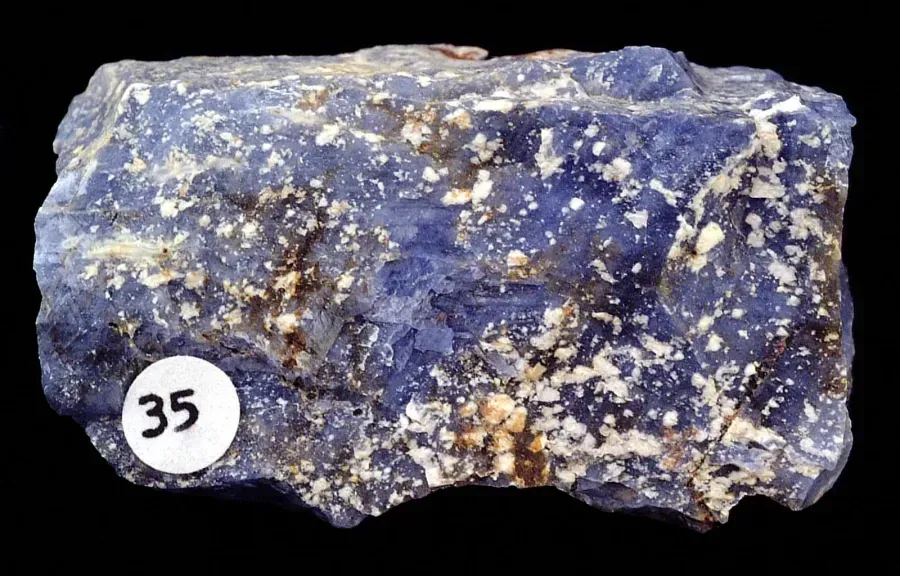
Lapis lazuli is the oldest of the "third eye stones" in terms of documented use. Ancient Mesopotamia, Egypt, and India all valued it deeply, and the trade routes that carried it were among the first long-distance commercial networks in human history. The colour, deep blue scattered with flecks of iron pyrite, was associated with the night sky and with depth. In Indian jewellery, lapis is among the most traditional choices for an Ajna-referencing piece.
Amethyst is the most commonly used stone today. The violet tone aligns with the colour of the Ajna chakra in most modern representations. It is accessible across price ranges and takes well to the kind of detailed setting work that third-eye pendants often require. Its long association with sobriety and clear-headedness in European tradition (the Greek name means "not intoxicated") adds a secondary layer of meaning that aligns usefully with the Ajna theme of clarity and discernment.
Indigo sapphire is the premium option. A deep, saturated blue, it is associated in Indian tradition with Saturn, a planet linked to depth of perception and the capacity to see through surfaces. For signet rings or as the centrepiece of a pendant, a genuine sapphire carries a weight that synthetic alternatives cannot replicate.
Labradorite entered the esoteric tradition relatively recently, around the 1980s and 1990s. Its physical property of adularescence, the iridescent shimmer that appears when the stone is turned in light, makes it visually arresting. The association with intuition and hidden sight is modern but consistent: the stone looks like something is moving behind its surface, and that appearance has attached itself to the Ajna concept.
Iolite is less well known but historically interesting. Described in Viking sources as the "compass stone" because its polarising properties allowed Norse sailors to locate the sun in overcast conditions, it carries a secondary meaning of seeing through difficulty. The blue-violet colour places it firmly in the Ajna range, and it is considerably less expensive than sapphire.
Fluorite in its purple or indigo variety is another option. Structurally, it cleaves along smooth planes, which gives cut fluorite an unusually clean optical character. It is soft for a gemstone, which means it requires careful setting and is better suited to pendants and earrings than to rings worn daily.
The third eye across traditions
India
The source tradition. Shiva, Ajna, yoga, bindi, meditation practices. In Indian jewellery the third eye is often combined with other Shiva symbols: the trident, the crescent, the cobra. Also with OM, with the lotus.
Buddhism
Tibet, Nepal, Bhutan, Thailand. The third eye as a symbol of enlightenment. Often combined with yantras, mandalas, and mantras.
Western esotericism
Blavatsky and subsequent writers brought the third eye into European occultism. Aleister Crowley incorporated it into his system, though in a register considerably darker than the yoga-studio version.
Contemporary wellness
Meditation apps, mindfulness culture, yoga studios. The third eye as a symbol of mental clarity and intentional living. The purist might object that this strips the symbol of its depth; the practitioner might reply that depth comes from practice, not from historical credentials.
The third eye in contemporary life: yoga, wellness, and British culture
Yoga arrived in Britain with the Victorians, but it was the 1960s and 70s that brought it into mainstream culture. The Beatles' retreat to Rishikesh in 1968 is the obvious cultural milestone; less celebrated but arguably more lasting was the work of B.K.S. Iyengar, whose London students spread Iyengar yoga across the country in the decades that followed.
Today Britain has one of the highest yoga participation rates in Europe. An estimated 460,000 people practise weekly, and the broader wellness industry, including meditation apps, retreats, and mindfulness courses, is a significant part of British consumer culture.
In this context, the third eye has become a widely recognised symbol without needing any explanation. A pendant, a tattoo, a printed textile: the symbol reads immediately to a large part of the population, associated with intentionality, calm, and some level of engagement with contemplative practice.
Whether that represents the trivialisation of a profound symbol or simply its democratisation is a question worth sitting with. Probably both things are true simultaneously.
Send a friend a discount code, they save on their first order.
The bindi, the tikka, and forehead jewellery as living tradition
The bindi, the small mark worn between the eyebrows, has a history considerably more complex than its current status as a fashion accessory suggests. In Sanskrit texts, the dot at the Ajna point is called bindu, meaning "point" or "drop," and it carries multiple layers of meaning depending on context. As a mark of the married woman in Hindu tradition, the sindoor applied to the hair parting and the bindi worn on the forehead together form a visible statement of social and spiritual status. As a cosmetic or fashion item, the bindi has circulated far beyond its original cultural context.
The tikka, or matha patti, is the jewelled version of the bindi taken to its formal extreme. A chain or ornament attached to the hair sits along the parting and ends with a pendant stone resting at the Ajna point. In classical Indian bridal jewellery, the tikka is one of the sixteen adornments, the solah shringar, that together constitute the complete bridal look. The placement at the third eye is not incidental: the bride at her wedding is understood as embodying aspects of the goddess Lakshmi, and the adornment at the Ajna point marks her elevated spiritual status on that day.
In contemporary fashion, the tikka has moved decisively beyond the wedding context. Festival goers, yoga practitioners, and those working with bohemian styling all draw on the visual vocabulary of forehead jewellery. The cultural conversation about who can wear these forms is ongoing and unresolved, and it is worth knowing that you are engaging with a living tradition, not a historical artefact.
The third eye in popular culture
The 1960s and 70s counterculture. The Beatles in Rishikesh made Indian spirituality fashionable in a way that no amount of academic publishing could have achieved. That wave of interest, mixed with psychedelic culture, brought the symbol into the Western visual vocabulary.
Music. Album covers from that era onwards regularly feature the symbol. It has never entirely left.
Cinema. Documentary films about India, about meditation, about consciousness: a consistent thread from the 1970s to the present.
The wellness industry. Meditation apps, yoga studios, retreat centres: the third eye has become part of the visual language of the business of self-improvement. Whether that is appropriation or evolution depends on who is being asked.
Tattoo culture. The third eye appears frequently in tattoo work, often on the back of the neck, the inner wrist, or the nape.
Caring for third-eye jewellery
The care requirements depend primarily on the metal and stone combination, not the symbol itself. A few points are worth knowing.
Silver. Sterling silver tarnishes over time through oxidation. This is a surface process that does not damage the metal. A soft polishing cloth, used regularly, keeps it bright. Avoid leaving silver pieces in damp environments or in contact with perfume and body lotion for extended periods. If a piece has already tarnished, a silver polishing solution or a paste made from bicarbonate of soda and water, applied gently and rinsed thoroughly, restores the surface without scratching. Many wearers prefer the aged patina that develops with regular wear; it sits well with the aesthetic of symbolic jewellery.
Lapis lazuli. A relatively soft stone (5 to 6 on the Mohs scale) that is porous and sensitive to acids. Do not clean it with vinegar, lemon juice, or chemical jewellery cleaners. Warm water and a soft brush are sufficient. The blue colour in lapis comes partly from lazurite and partly from the pyrite flecks; harsh chemicals can dull both.
Amethyst. Harder than lapis (7 on the Mohs scale) and less porous. Warm soapy water and a soft brush are the standard approach. Amethyst can fade in prolonged direct sunlight, so store it out of direct light when not in use.
Sapphire. Very hard (9 on the Mohs scale), resistant to most household chemicals, and straightforward to clean with warm soapy water. A sapphire set in silver benefits from occasional professional cleaning to remove accumulation around the setting.
Labradorite. Moderate hardness (6 to 6.5), and the adularescent layer is a structural feature of the crystal lattice rather than a surface coating, so it cannot be polished away. Clean gently with water and a soft cloth. Avoid ultrasonic cleaners, which can cause cleavage fractures in feldspars.
FAQ
Do I need to believe in esotericism to wear a third-eye piece?
No. Many people wear it as an aesthetic choice or as a reference to Indian art and culture without any esoteric belief. That is entirely fine.
Can a Christian or Muslim wear the third eye?
There is no rule preventing it. In strictly observant contexts, some may raise an eyebrow, since yoga is connected to Hindu deities. But casual wear as jewellery is generally understood as cultural appreciation rather than religious syncretism.
How do you "open" the third eye?
Not with a pendant. Classical practices: meditation with attention directed to the point between the eyebrows, pranayama, yoga nidra, vipassana. These require sustained practice over time. The jewellery is a reminder, not a shortcut.
What is the difference between dharana and dhyana in the context of Ajna practice?
Dharana is the act of directing attention to a single point, in this case the space between the eyebrows, and holding it there against the natural tendency of the mind to wander. Dhyana is what happens when that direction of attention becomes genuinely continuous rather than repeatedly re-established. Patanjali's Yoga Sutras present these as distinct stages on a spectrum, not separate activities. The distinction matters for practitioners because dharana is effortful and can be frustrating; dhyana is less effortful and is the condition in which genuine meditative depth becomes possible. Most practitioners spend the majority of their practice in dharana and experience dhyana only intermittently.
Third eye or tattoo?
Many people choose both. A tattoo is permanent; a piece of jewellery can be taken off. A forehead tattoo exists as a practice, particularly in India, but is rare in the West.
What does the eye in a triangle mean?
Context determines everything. In Freemasonry it is the Eye of Providence. In a Hindu or yogic context, if the triangle forms part of a yantra, it may indicate Ajna. The visual form is similar; the meaning depends on everything around it.
Is the third eye an appropriate gift?
If you know the recipient has an interest in the subject, yes. It is not a universal gift; it requires some shared context.
Which stones are associated with the third eye?
Amethyst, lapis lazuli, sapphire, labradorite, iolite, fluorite. Indigo and violet colours, corresponding to the Ajna chakra.
What is the difference between the third eye and a bindi?
A bindi is a physical mark: a sticker, paint, or jewel worn between the eyebrows, primarily by Indian women. The third eye is a spiritual concept. A bindi marks the location traditionally associated with the third eye, but it is also simply a decorative and cultural practice.
Is this a masculine or feminine symbol?
Entirely universal. In Hinduism the third eye belongs to both male deities (Shiva) and female (Kali, Durga). In jewellery it is worn by all genders.
How do you combine the third eye with other symbols in a layered look?
The third eye works well alongside the OM symbol (both from the yogic tradition), the lotus (shared by Hinduism and Buddhism as an emblem of awakening), and moon phases (which carry associations of cyclical time and intuition). The combination with a Nazar is less natural because the functions differ: protection from others versus inner perception. With a cross, the pairing is possible but carries enough weight of distinct religious history that it tends to make a statement, which may or may not be intended.
Does the metal choice carry meaning?
In traditional contexts, copper is associated with Vedic ritual practice and with conductivity, and is used in a number of ritual objects from the Indian subcontinent. Silver has long associations with the moon in both Indian and Western traditions, and the moon is one of Shiva's emblems. Rose gold is a purely contemporary choice with no traditional referent; it sits in the wellness aesthetic register rather than a spiritual one. None of these is wrong. The choice is a matter of what the wearer finds resonant.
What is the Vigyana Bhairava Tantra, and why does it matter?
The Vigyana Bhairava Tantra is a Kashmiri Shaiva text, probably from the 7th to 9th centuries CE, that records 112 dharanas, or methods of entering meditative absorption. Several of these methods involve directing awareness to the space between the eyebrows. It is one of the earliest systematic records of third-eye practice as a meditation technique rather than a mythological symbol, and it predates the modern wellness appropriation of the term by roughly twelve centuries. Its instructions are direct and practically oriented, and many meditation teachers draw on them today.
Is there a right way to position a third-eye pendant for meditation practice?
The jewellery is not a meditation instrument; it is a symbol. For meditation, the physical pendant is usually removed or tucked away, and attention is directed internally. Some practitioners do hold a pendant or stone during meditation as a tactile anchor, which is a legitimate personal choice, but the classical tradition works with interior focus rather than external objects.
Buying it as a gift? Each one arrives ready to give.
 A branded Zevira box and a little card come with every order.











Conclusion
The third eye is one of those symbols that manages to hold several meanings simultaneously without collapsing into confusion. For a practising Hindu it is the centre of Shiva's power and the sixth chakra of the yogic body. For a meditator it is the focal point of practice. For a student of history it is Descartes and the pineal gland and Blavatsky in London. For a person who simply likes meaningful objects it is a beautiful pendant with a long story behind it.
None of these readings cancels out the others. The person wearing the piece decides which story they are carrying. The symbol is capacious enough to hold all of them.
Zevira makes jewellery in the artisan tradition of Albacete, Spain. Our collections include both traditional and symbolic designs. Open the catalogue
About Zevira
Zevira makes jewellery in the artisan tradition of Albacete, Spain. The third eye is one of those signs of depth we love translating into metal and stone: a quiet pendant under a shirt, a bolder ring for yoga-leaning style, or a minimalist bindu dot set with a single gemstone.
Here is what you can find with us on the third eye theme:
- Pendants with the eye set in a lotus, a mandala, or a triangle, from small everyday pieces to bolder spiritual ones
- Jewellery with Ajna stones: amethyst, lapis lazuli, indigo sapphire, iolite, labradorite, and fluorite
- Rings with the third eye, from fine minimalist bands to signets with a central stone
- Earrings and bracelets carrying the symbol, including sets paired with OM and the lotus
- A minimalist bindu dot with a single stone for those who prefer a hint rather than a large sign
- Matching sets for couples who share a practice
Every piece can be personalised with engraving, with the option of personal engraving. Sterling silver 925 and 14 to 18K gold.