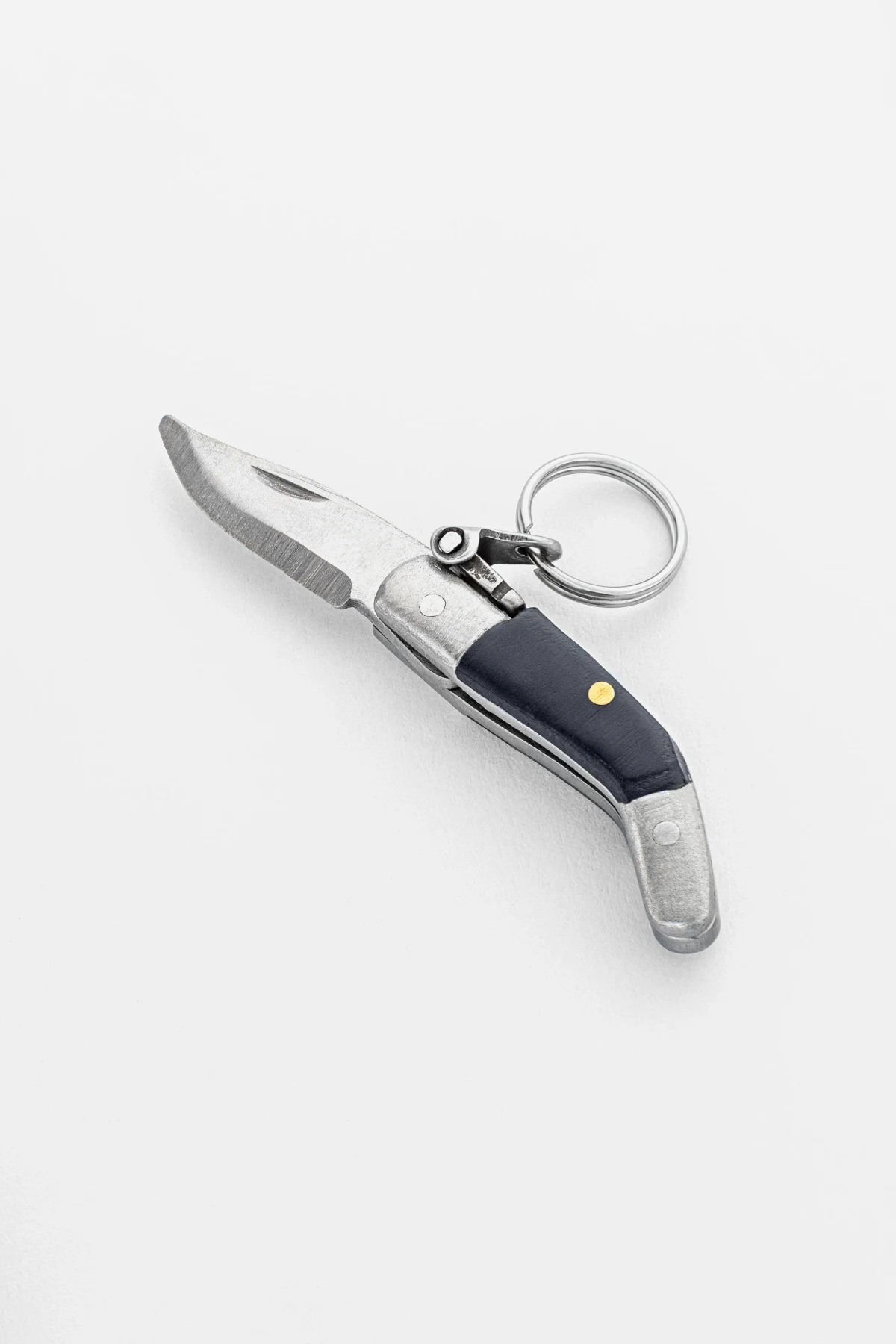
Jerezana: The Knife from Sherry Country That Became Jewellery
A city that smells of wine and steel
Jerez de la Frontera sits in southern Andalusia, between Cadiz and Seville. Most people know it for sherry, the fortified wine that the English shipped out by the barrel from the 15th century onward. Fewer people know that the same city gave its name to one of the most elegant types of Spanish navaja.
The jerezana is a knife and, beyond that, the calling card of a city where winemaking and blade-making developed side by side. The same hands that pruned the vines forged the blades. The same metal that went into barrel hoops went into edges. And the same character, dry, strong, nothing superfluous, shaped both the knife and the wine.
In the jewellery world, the jerezana arrived for the same reason navajas became jewellery at all: because the form of the knife turned out to be too beautiful to remain only in a pocket. But the path from full-size blade to pendant on a chain runs through a specific place, a specific city, and a specific workshop. More on that shortly.
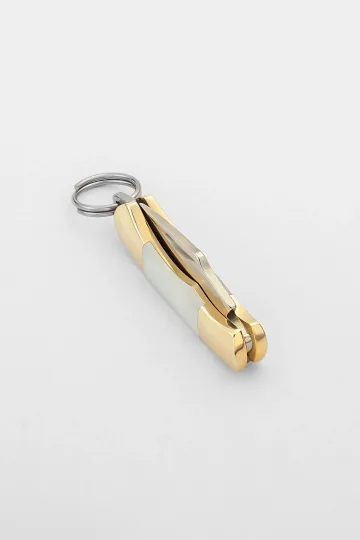
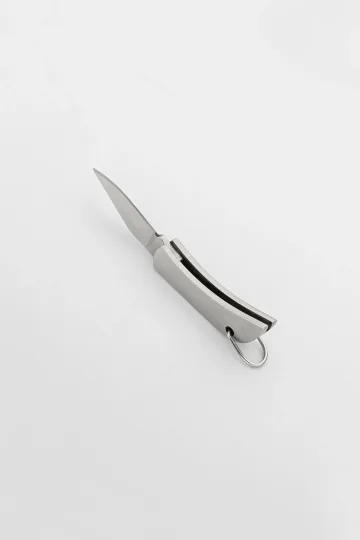
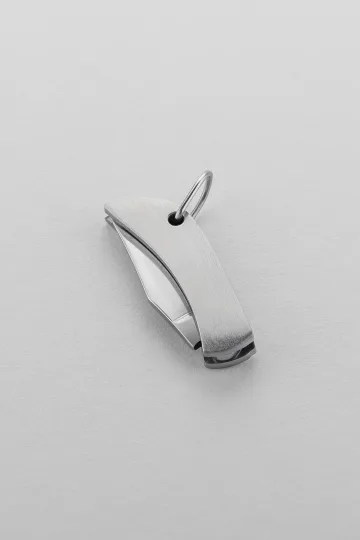
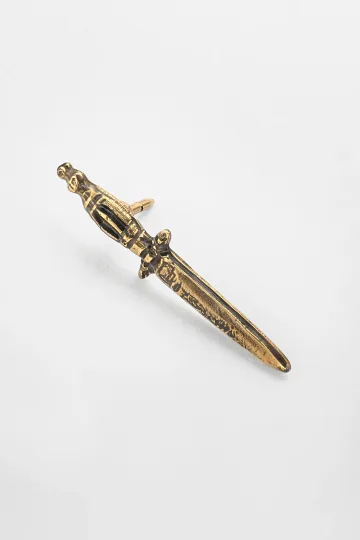
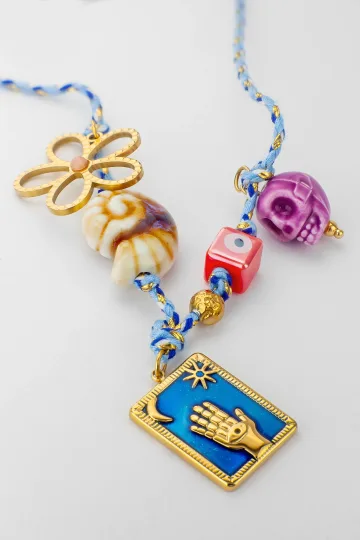
Wear the symbol, don't just read about it. These are in stock:
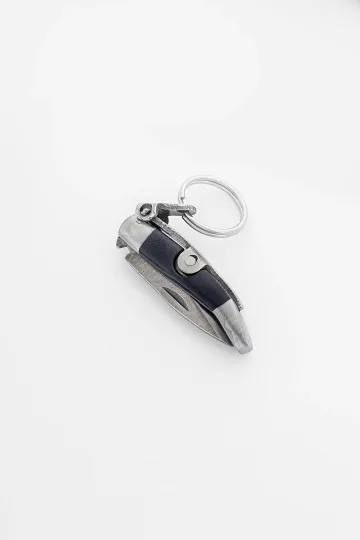
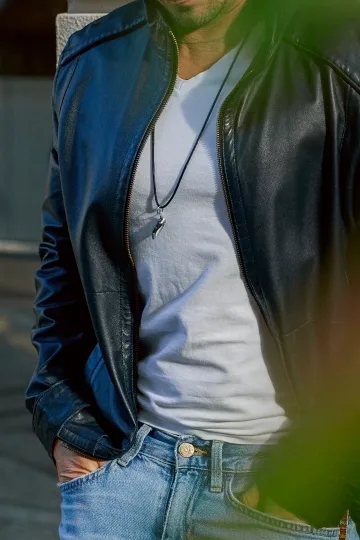
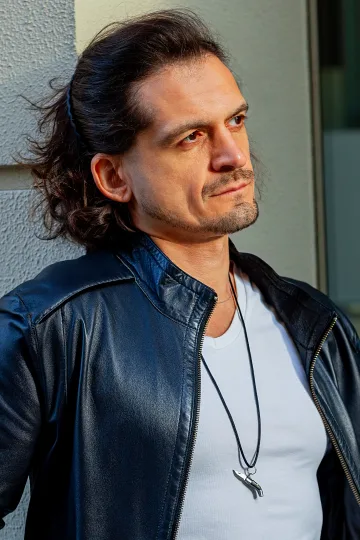
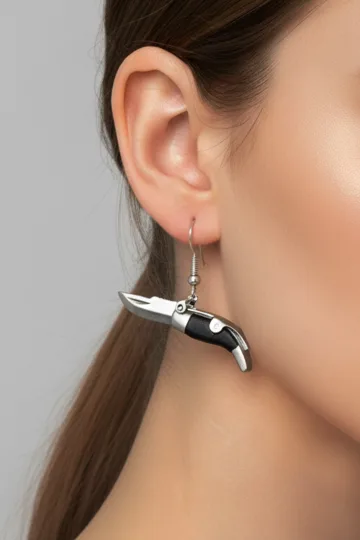
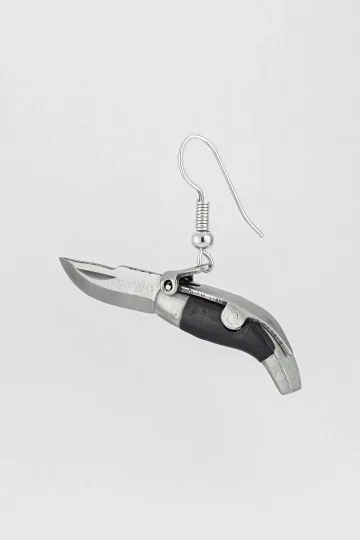


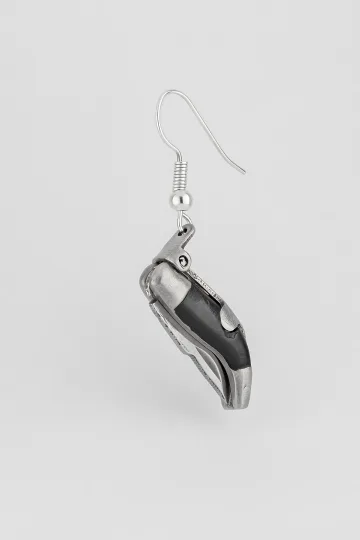

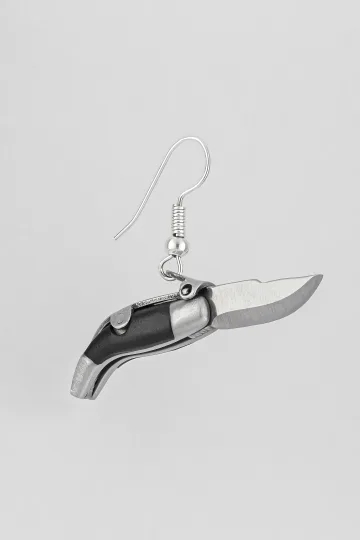
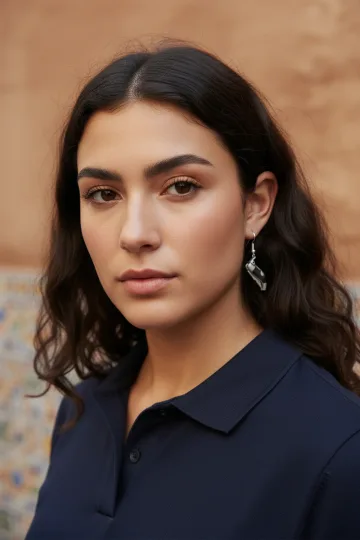
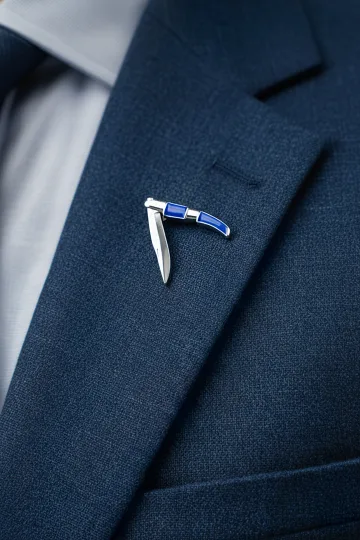


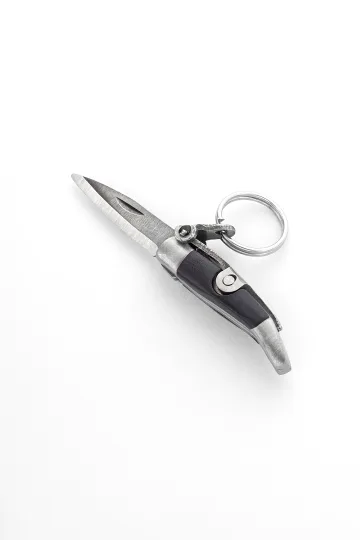
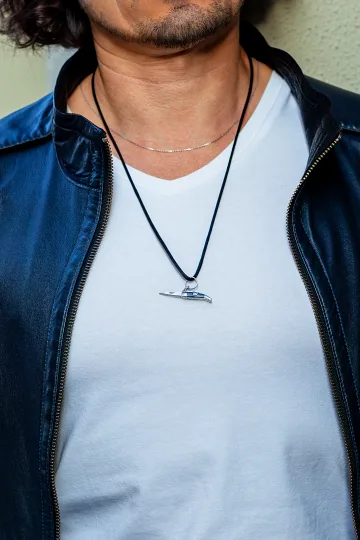
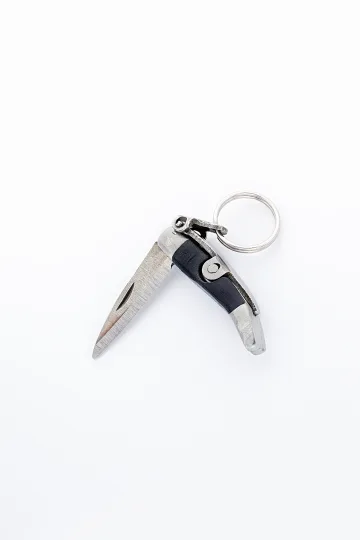


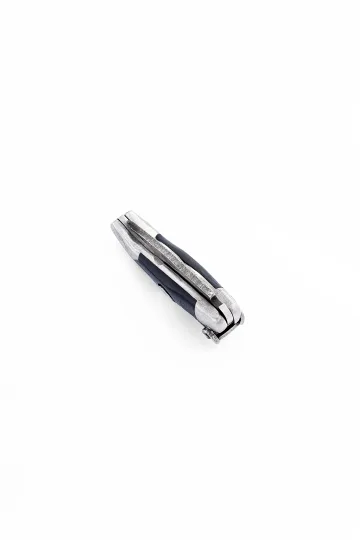

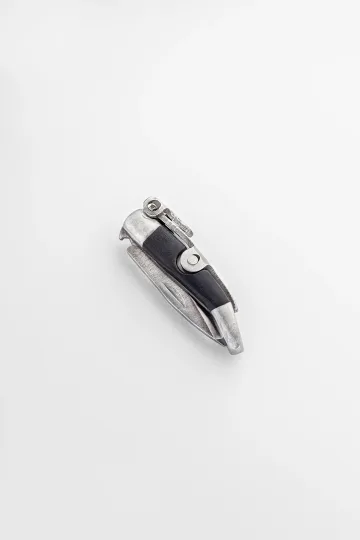
What a jerezana looks like
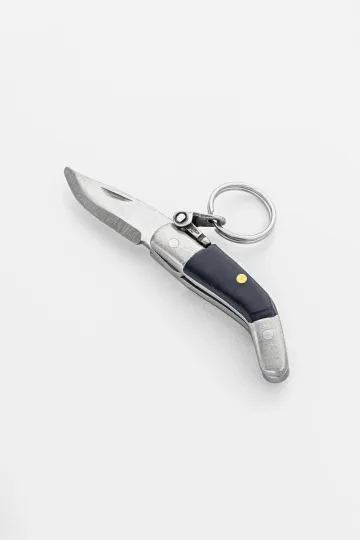
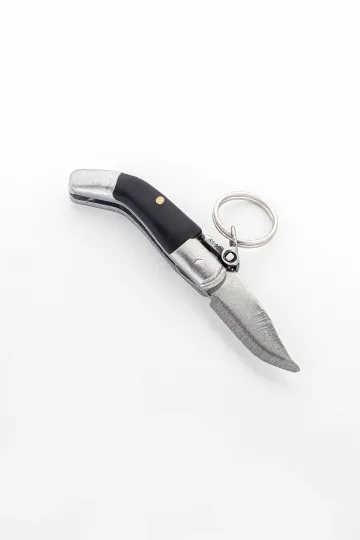
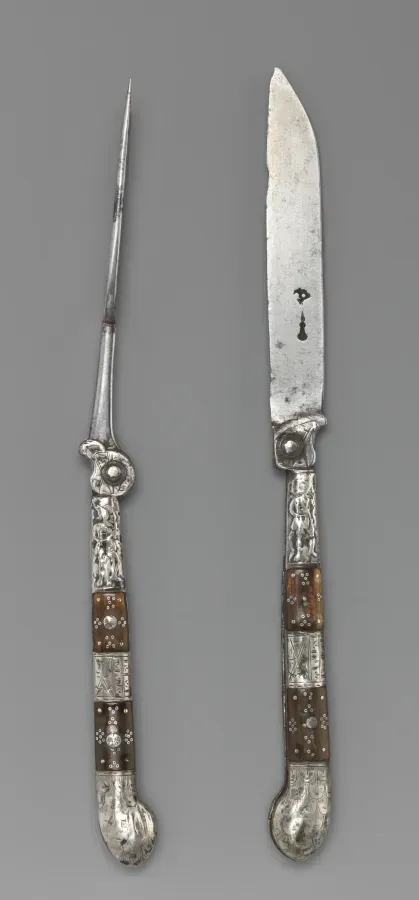
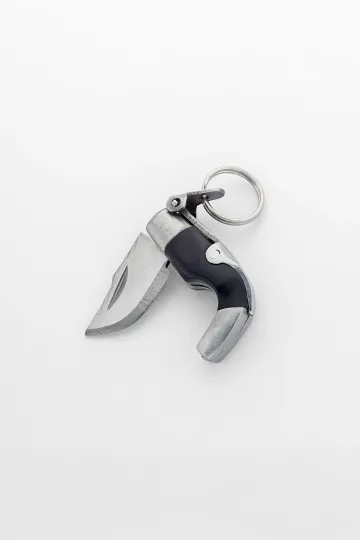
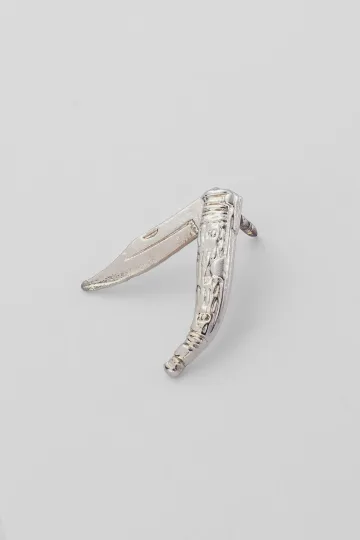
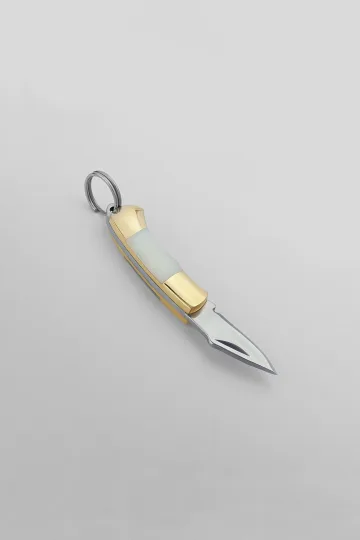
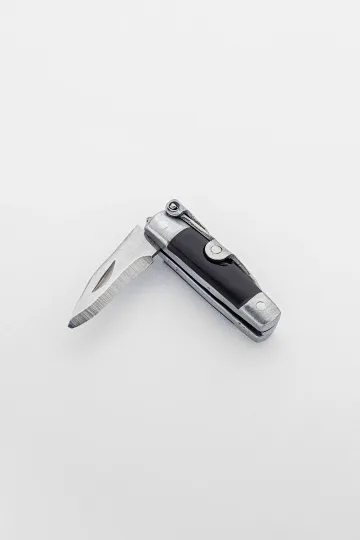
The blade. Straight or slightly curved, with a characteristic clip point where the spine slopes toward the tip, creating a thin, predatory point. Historical blade length varied from 10 to 25 centimetres. In the Museo de la Cuchilleria in Albacete, you can see specimens where the blade is longer than the handle, some reaching 35 centimetres when open. The clip point appeared for function: the sloped spine eased penetration and thinned the point. But the visual effect was so striking that it became decorative.
There is a nuance collectors value: the angle of the spine slope on a jerezana differs from the clip point on American knives (like the Bowie). The jerezana slope is shorter and steeper, creating a sharper, more predatory profile. The American clip point is stretched and smooth. Side by side, the difference is obvious: the jerezana looks impatient, the Bowie looks relaxed.
The handle. Classic handles were made from bull horn, logical for a region where the corrida was part of life. More expensive examples had bone handles with engravings: bull heads, grapevines, coats of arms. Olive wood for the rural versions. Parade jerezanas had handles of ivory, mother of pearl, tortoiseshell. Inlay included silver wire hammered into grooves in the bone, a technique from Moorish craftsmen. These knives were jewellery pieces long before anyone thought to make knives at pendant scale.
The lock. The carraca, a spring mechanism that locks the blade open with a characteristic click. A good smith tuned the carraca like a musical instrument. A bad one clicks dull. A good one clicks clean and short, like a castanet.
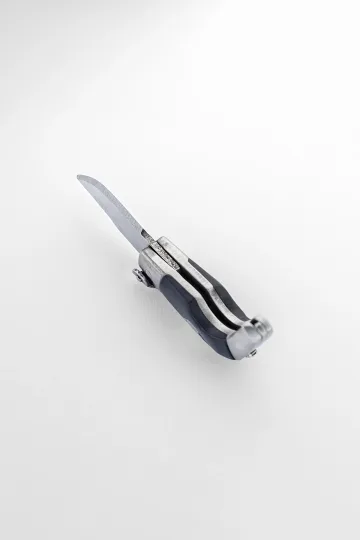
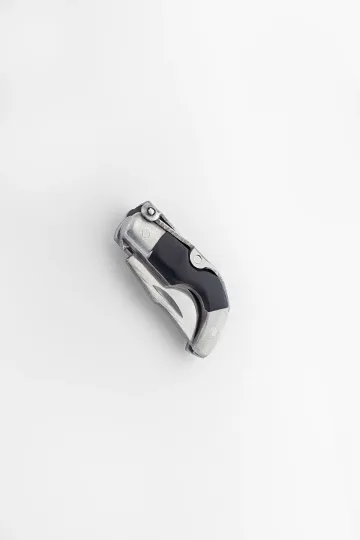
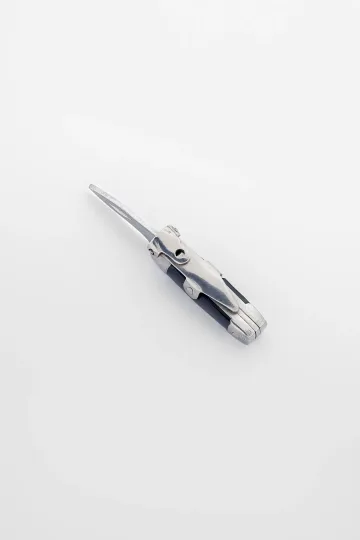
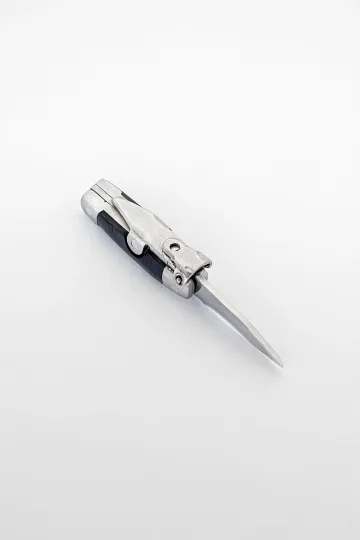
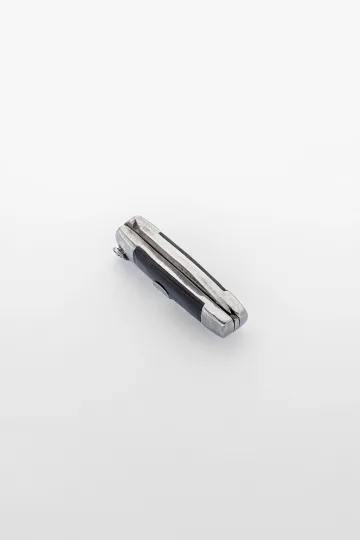
The silhouette. Folded, the jerezana is compact and graceful. Unfolded, elongated and aggressive. This contrast is exactly what makes the form attractive for jewellery design. The jerezana profile reads at distance: even in a museum case you recognise it by the spine slope.
Try it on mentally
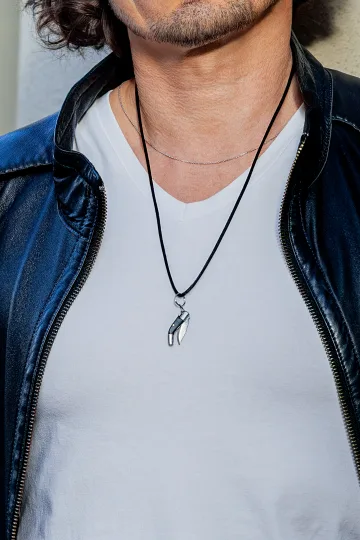
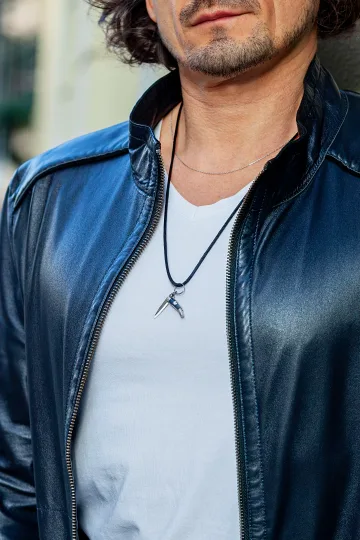
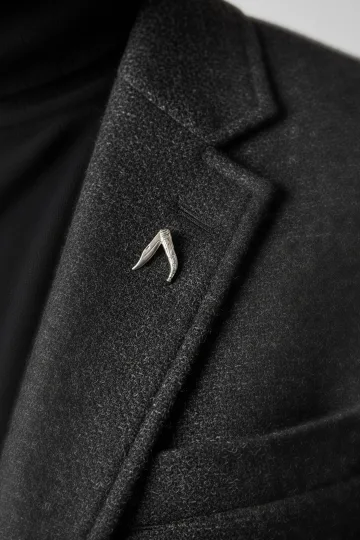
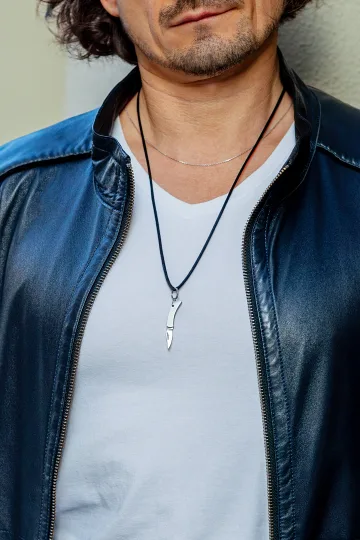
Picture a medium-length chain, and at the sternum, where the shirt collar opens, a miniature knife silhouette about the size of a lighter but thinner. At conversation distance, people see the shape, the clip point angling down like a hawk's beak. Up close, they notice the virolas, the handle texture, the line where the blade meets the hinge. And they ask. That is the jerezana pendant.
A blade rides point-down over an open collar, never tucked under a tie. Hide a navaja and you never deserved one.
How to wear a jerezana pendant
Over years on shoots and in fitting rooms the navaja has passed through dozens of looks with me. Here is what actually works, sorted by occasion.
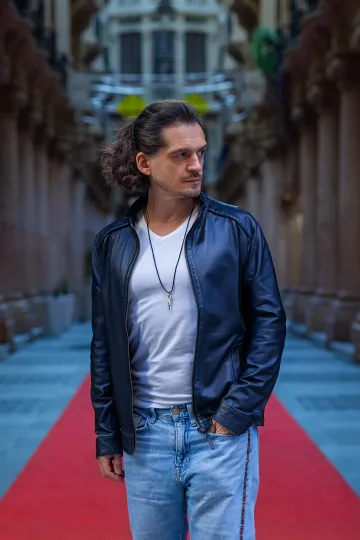
What do I wear the jerezana with every day? For daily wear I recommend a medium chain over a plain tee or under the open collar of a linen shirt. The clip point should peek out of the neckline, that is where it catches the eye. I suggest a dark or muted background: graphite, navy, wine, sand. On white the outline disappears, on a busy print it dissolves.
Is it right for the office? Yes, if you keep it to yourself. I recommend tucking the pendant under a buttoned collar, where it stays your private mark that only you know about. Undo the top button toward the evening and the look shifts without a single extra move. A strict dress code is no obstacle for a navaja.
How do I build an evening look? For evening I choose a longer chain and wear the pendant over a thin knit or under a jacket against bare skin. Under a V-neck the blade silhouette reads especially clean. A deep, solid colour holds the shape better than a busy print.
Which handle tone goes with which wardrobe? A dark horn tone I suggest with leather, suede, heavy fabrics and an autumn palette. A light bone or mother-of-pearl tone I choose for white, silver and a summer wardrobe. The metal sets the mood, so I match it to the fabric rather than the other way round.
Can I layer the navaja? Carefully. I recommend one navaja plus a short, restrained pendant like a nazar on a second, higher chain so the silhouettes do not argue. A stack of three blades turns into too much at once. And point the tip down, that way the silhouette catches the light correctly.

Turn on your camera, pick earrings, a pendant or a ring, and see the piece on yourself in real time.
Switch items in one tap.
Everything runs in your browser: no photo or video is ever uploaded.
Who wears a jerezana pendant
People with Andalusian roots. An identity marker. Like an Irish Claddagh or an Italian cornetto. You wear where you come from.
Spanish culture appreciators. Flamenco, sherry, horses, navajas: one world. A jerezana pendant says: I know this world and I respect it.
Knife lovers. When you cannot carry the real thing (on a plane, to work, to a bar), the pendant stays with you. For collectors, the difference between a factory pendant from AliExpress and a piece made in the city that has been forging navajas for 500 years is not just noticeable. It is fundamental.
Anyone drawn to blade aesthetics. Not everyone who wears an anchor was a sailor. Not everyone who wears a cross goes to church. The form works on its own.
For minimalists who want one right thing. The jerezana, with its balanced proportions and Andalusian clip point, is the piece for someone who prefers one correct thing to ten ordinary ones.
History: from vineyards to bandits
Moorish roots
Navajas inherit Arab metallurgy. The Moors brought Damascus steel and folding knife techniques to Spain in the 8th century. Jerez (then Sherish) was a centre of Moorish influence. When Christians recaptured the city in 1264, they took the mosques but kept the metalwork. The forging technique passed from Moorish masters to Andalusian ones. Blade form evolved, but base principles remained: quality steel, smooth curve, precise balance.
This line never broke. From Jerez, from Seville, from dozens of other Andalusian cities, master knife-makers moved to where demand existed. Many settled in La Mancha, in Albacete, where by the 16th century a knife-making centre had formed, drawing techniques from across the peninsula. The jerezana was born in Andalusia, but its form was honed over centuries in workshops across Spain.
Why navajas appeared at all
In 1563, Philip II banned commoners from carrying swords. Only nobles had the right to long weapons. This was a blow to dignity in a culture where a weapon meant honour. The answer was the navaja. Technically not a sword, a folding knife. Smiths started making these knives ever longer, until the navaja became, in essence, a folding sword.
The jerezana became one of the most popular types because Jerez was a trading city. Sailors, merchants, winemakers all carried knives and wanted one from their own city. Port trade meant jerezanas went by sea to the New World, England, Africa.
Bandoleros and romance
In the 18th-19th centuries, bandoleros, highway robbers whom the people considered Robin Hoods, used the navaja as their weapon. Prosper Merimee wrote "Carmen" (1845) after travelling through Andalusia. Theophile Gautier noted "folding knives of terrifying size, which the Andalusians open with the same calm as an Englishman opens an umbrella."
The jerezana carried an additional layer of meaning. It was from Jerez, the city of wine, flamenco, horses. Carrying a jerezana meant belonging to that culture, being part of the Andalusian world. An identity marker long before navajas became jewellery.
Navaja duels
The jerezana was prized in the bacelada (navaja dueling). Opponents wrapped their left hand in a cloak and engaged. The clip point allowed precise thrusts, the long blade kept distance. In Seville and Jerez, separate schools of knife fighting developed, each preferring its navaja type. The jerezana was the blade of the "Seville school": fast, based on precision rather than brute force. For brute force, there were other knives, like the capaora.
The Seville school favoured what practitioners called the "entrada baja," a low entry that kept the body angled away from the opponent's blade while the extended arm made contact first. The clip point was essential for this: a straight blade would catch on clothing, while the angled tip found gaps in the opponent's guard. Local lore pictures the jerezana duelist as moving like a dancer who has decided to hurt someone, an image that captures the aesthetic contradiction defining the knife's character.
The Jerez variant of the school added a stronger emphasis on the mano izquierda, the left-hand defence wrapped in the cloak. According to local tradition, a Jerez man defending himself would use the cloak not just as a shield but as a distraction, throwing it briefly to obscure his opponent's view while the jerezana moved. People described the manoeuvre as theatrical, like a torero. The comparison was not accidental: the corrida and the bacelada shared an audience, a vocabulary, and a city.
In film, music, and culture
The jerezana lives in every screen version of "Carmen." Carlos Saura's 1983 version. Paz Vega's 2003 version. In every Carmen there is a knife, and that knife is a navaja. Antonio Banderas in "Zorro," another Andalusian hero with a blade. Banderas is from Malaga, a hundred kilometres from Jerez.
Andalusian culture is the world of Paco de Lucia and Camaron de la Isla. When you listen to "Entre dos aguas," you hear the same Andalusia that forged jerezanas: dry, passionate, with a taste of sherry and metal.
Tarantino turned knives into a cinema fetish. From "Kill Bill" to "Inglourious Basterds," the blade in his films is always more than a weapon, always an object with character and biography. A navaja would fit his universe perfectly.
Spanish fashion houses regularly draw on Andalusian motifs in their collections. When high fashion turns to Spain, it inevitably encounters navajas, as part of a visual code that cannot be bypassed.
On Instagram and TikTok, navajas in jewellery format gain momentum. The #navajajewelry and #knifependant hashtags collect tens of thousands of posts: from bloggers styling knife pendants with flamenco dresses, to collectors photographing miniatures next to full-size navajas.
Upload a photo of your pet, someone you love, or an object. We'll build a 3D model and hand-cast it in pewter.
Owner's story
Picture a common scenario: someone buys the jerezana for a partner who never wears jewellery. He puts the navaja on and keeps it on, because it is the first piece that does not feel like jewellery. That is the kind of reaction the form tends to provoke.
What to pair it with
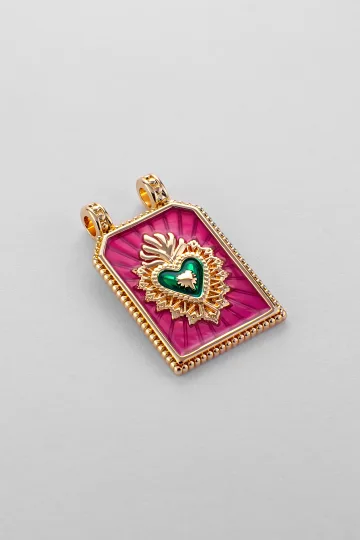
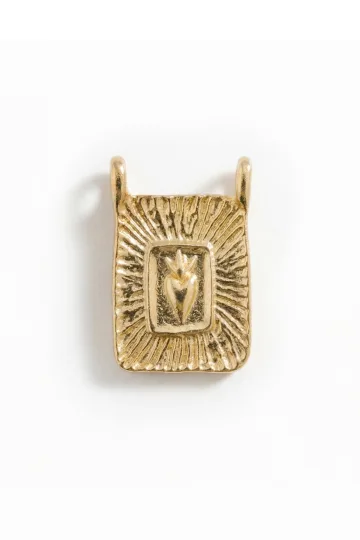
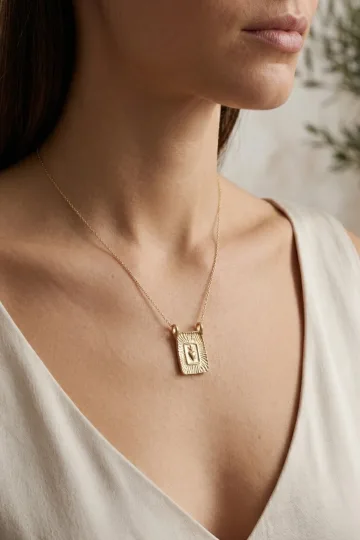
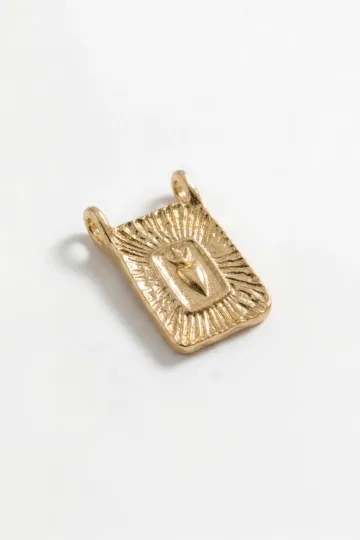
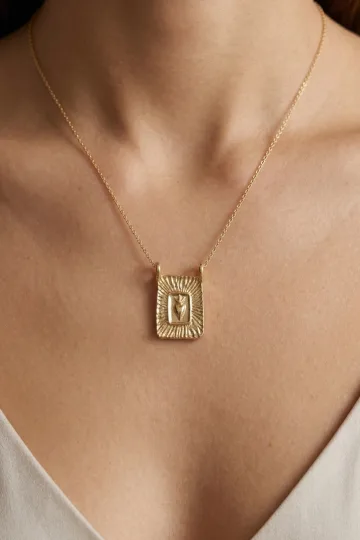
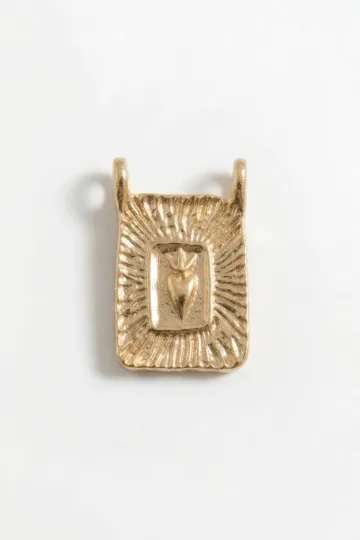
With a nazar: Andalusian set, two Mediterranean symbols. With a sacred heart: flamenco passion in its purest form, knife and burning heart, Andalusia from blade to altar. With a hamsa: Mediterranean trio, if you add the nazar. The jerezana works paired with other navajas too: next to punta de espada, elegance versus severity, Andalusia versus Castile. With the lunar knife on a second chain: day navaja and night, sherry and moonlight.
Customer reviews
Zevira is a real jewellery shop. Genuine payments, deliveries and customer thank-yous.
🥰🥰🥰 gracias
Ok, ¡gracias! 🙂
The jerezana as a gift
For the Andalusia lover. Who visited Seville and still remembers the orange trees. A jerezana from Jerez, the city of sherry and flamenco, is like a bottle of Fino, but you wear it and it never runs out.
For the sherry connoisseur. Who knows Amontillado from Oloroso and that Manzanilla is only made in Sanlucar. The jerezana comes from the same world as their favourite glass. Same hands, same city, same dry, strong character.
For the flamenco fan. Who heard Camaron live. Or who listens to contemporary flamenco-pop artists and finds the roots. The navaja was part of the flamenco world long before pendants, and the jerezana carries that code.
For impeccable taste. Who prefers one right thing to ten ordinary ones. The jerezana with its balanced proportions and Andalusian clip point is for that person.
As a Spain souvenir. Not a postcard, not a fridge magnet. A piece made in Albacete, in a workshop with a 500-year tradition. Spain you can wear every day.
Seasonal ideas. A jerezana pendant for Valentine's Day (Andalusian passion in metal), for a graduation (a piece with a biography, not a generic gift), or for a birthday of someone heading to Spain. In price, it is somewhere around a good bottle of aged sherry, but unlike the bottle, it lasts.
Wedding gift note: In Spanish tradition, giving a knife can "cut" the bond (so the recipient symbolically pays a coin). A jerezana pendant sidesteps the superstition: it is jewellery in the shape of a knife, not a knife. The meaning stays; the omen does not.
What to write on the card? Nothing. The jerezana speaks for itself.
Jerez: geography that shaped both wine and steel
Jerez de la Frontera sits on the edge of a particular geological zone called the albariza, chalky white soil that reflects sunlight upward and retains moisture deep enough for vine roots to find it through summer droughts. This is why sherry grapes taste the way they do, dry on the surface, rich underneath, with a mineral tension that comes from the rock itself.
The same dryness shaped the knife culture. A vine-pruning knife in this climate needs to hold an edge through cracked, hardened wood. A harvest knife must be reliable in the heat. The workmen who tended the vineyards were not buying decorative objects; they were buying tools, and they had opinions about geometry.
The port made the knife trade international. Cadiz, forty minutes from Jerez, was one of the busiest ports in the world during the 16th and 17th centuries. Spanish silver from the Americas passed through it. So did traders from England, the Netherlands, and the Ottoman Empire. A jerezana made in Jerez could reach a buyer in Bristol, Antwerp, or Smyrna within a season. This is why the jerezana form spread: not because someone decided to market it, but because it worked, and sailors carried it everywhere.
The geography also explains the horse culture. Jerez is the home of the Spanish Pure Breed (PRE, Pura Raza Española) and the Royal Andalusian School of Equestrian Art. The same city that gave its name to the knife also gave it to the horse. In a working horse culture, knives are not optional: they cut leather, repair harness, trim hooves, and do a dozen tasks around the stable. The jerezana was the horseman's knife before it was the traveller's symbol.



Handle materials: what they told about the man carrying it
The handle of a historic jerezana was never neutral. Every material said something about the owner's world.
Bull horn was the default for working men. Andalusia had fighting bulls, and horn was a byproduct of the corrida industry. Horn absorbs grip well, does not slip in a wet hand, and holds up to years of use without cracking. A plain horn-handled jerezana said: I work with my hands, I am from here, I do not need to prove anything.
Bone with engraved bull heads or grapevines said something different: I have a craftsman who knows my tastes, and I can afford his time. These handles required hours of carving or grinding. The engravings were not decoration for strangers; they were personal markers. A man with a vine motif on his handle was almost certainly a vinicultor or had family in the trade.
Olive wood was the rural alternative. The wood of an old olive tree is spectacularly dense and patterned, and a handle cut from the junction of branch and trunk had grain patterns that no two were alike. These handles were made by the man himself, or by a local carpenter, not by a specialist cuchillero. They had the honest character of things made without pretension.
Ivory and mother of pearl were the materials of parade pieces. A jerezana with an ivory handle was not for the field; it was for the procession, the festival, the formal occasion where you wanted a knife that showed you could have any knife you chose. These pieces sat alongside jewellery in the homes that owned them.
The silver wire inlay technique, hammered into cut grooves in bone, came directly from Moorish craft tradition. The Granadan school of metalwork used the same method for decorating furniture and boxes. When Christians reconquered Andalusia, they kept the craftsmen and the techniques. Some of the most intricately inlaid jerezana handles from the 17th century are inseparable, stylistically, from Moorish decorative metalwork. The knife did not break with that tradition; it inherited it.
The jerezana and 19th-century travellers
European travellers in the 19th century, from Humboldt to Merimee, were fascinated by Spain. The navaja appears in their travel reports as the quintessential symbol of a culture that was simultaneously archaic and passionate. In a continent of strict order, the open carrying of knives appeared as a sign of a freer, wilder world.
This fascination lives on in modern travellers. Whoever travels through Andalusia, whoever experiences the flamenco in Jerez, whoever drinks sherry in a bodega, intuitively understands why the jerezana is more than a knife. It is the spirit of a city, in the form of a blade.
As a pendant, the jerezana captures that spirit and makes it portable. It is not a souvenir in the classic sense. No fridge magnet, no postcard. It is a piece from a workshop with 500 years of tradition, carrying the history of Andalusia in a form that feels on the neck as if it had always been there.
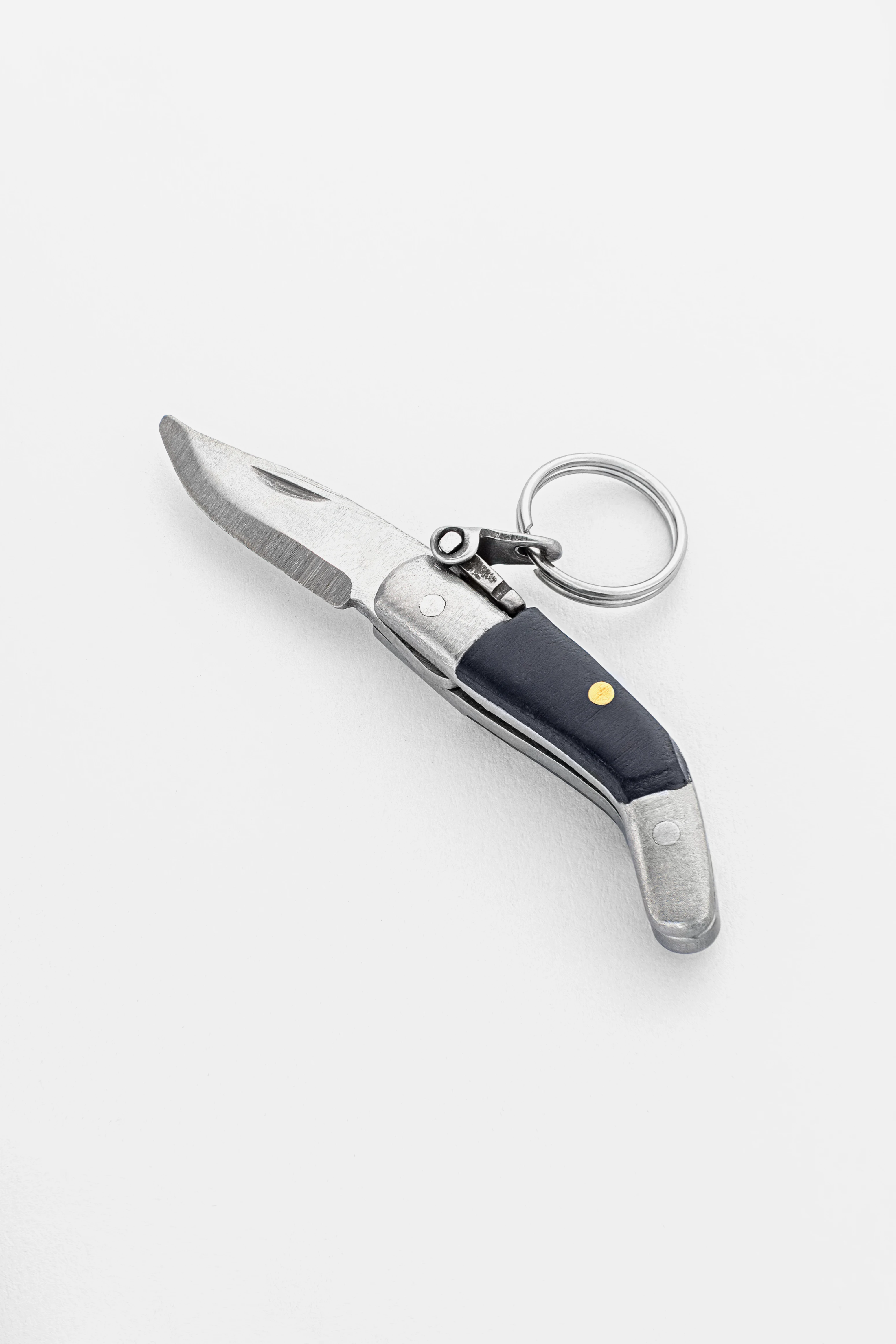
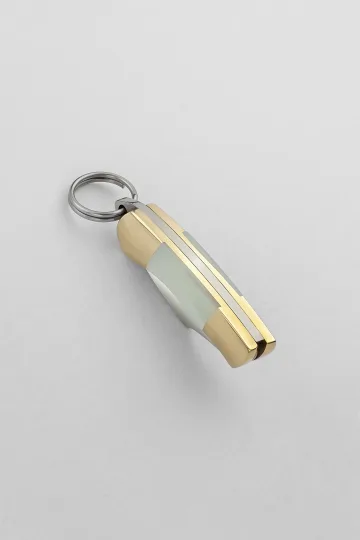
CAPAORA mini knife pendant
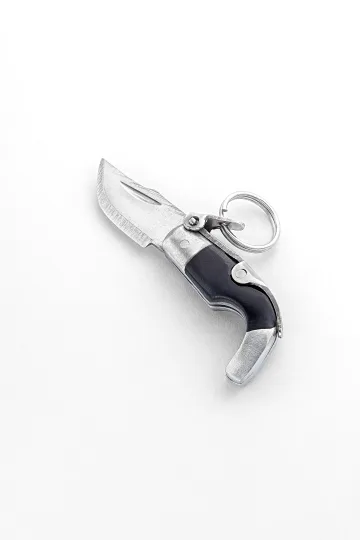
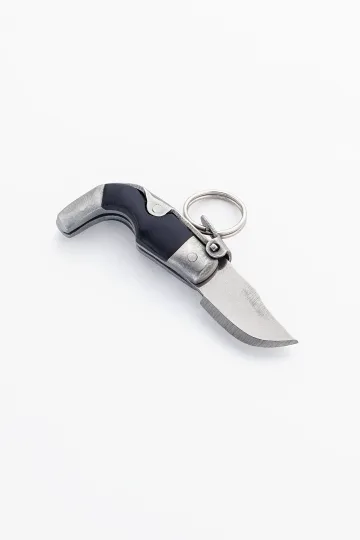
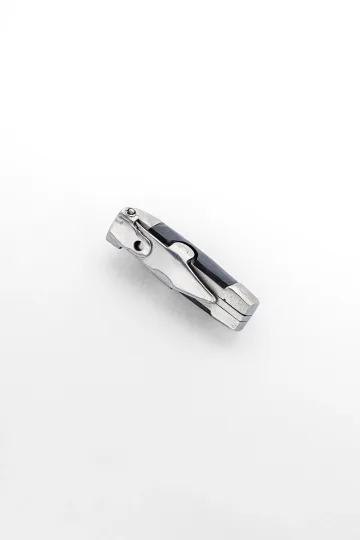
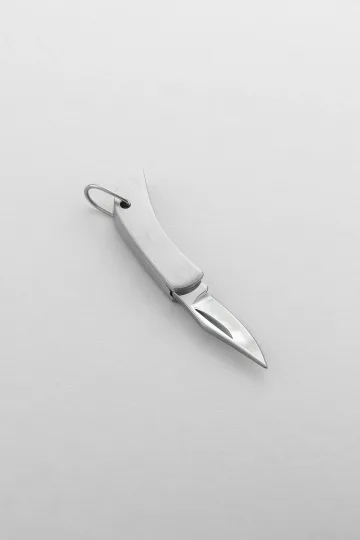
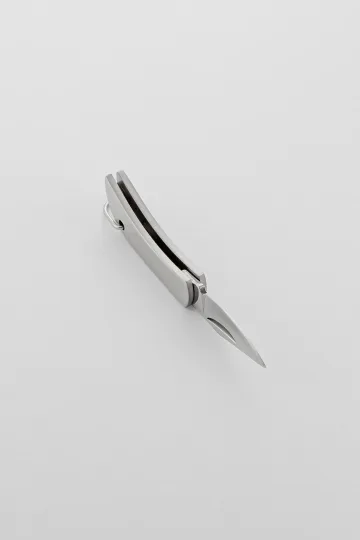
The 18th-century Spanish navaja in miniature: 40 mm of stainless steel, a real folding mechanism and a Palanquilla lock that clicks. An affordable gift to remember.
Authentic · Ships from Spain · 14-day returns
Albacete, the workshop, and quality
If the jerezana is from Jerez, why is the Zevira collection made in Albacete? Because Albacete is where all threads converge. For centuries, smiths from across Spain gravitated here. In 2017, the tradition received BIC status (Bien de Interes Cultural). The Museo de la Cuchilleria houses navajas from across Spain. Every September, during the Feria de Albacete, master cuchilleros exhibit their work at a fair running since 1375.
The Zevira workshop operates here. Full production cycle inside the workshop. The difference between a pendant made in this tradition and a mass product from AliExpress is the same as between a bottle of sherry from a bodega in Jerez and "sherry" from a supermarket. Technically similar. Practically different worlds. One pendant carries 500 years of tradition, the other carries a barcode and shipping costs.
Behind the scenes
The master takes the form of a jerezana and decides what to preserve at a scale the size of a thumb segment. The clip point is mandatory; it is the jerezana's signature. Without it, you have a generic stick. The virolas on the handle survive as a thin band of different texture or tone. The angle where the blade meets the handle has to suggest the carraca mechanism even if it is no longer functional. The clip point slope gets slightly steepened at miniature scale so it reads clearly on a chain. The handle-to-blade ratio cannot change, or the silhouette stops being a jerezana. Every decision moves the piece further from "small knife" toward "jewellery that remembers being a knife." That is the craft.
How to spot quality
Proportions: blade and handle must preserve the navaja ratio. If all types look the same, it is stamping, not jewellery. Weight: quality pendant has heft, about the weight of a thick coin. Details: clip point, virolas, carraca line must read even at the size of a little finger. Finish: even coating, no burrs, smooth edges. Chain loop neat and proportional, not a huge ring that dominates the silhouette.
Leave your email, we'll send your discount code. No spam, unsubscribe anytime.
The code arrives by email, valid on your first order.
The jerezana and sherry: parallel traditions
The connection between the jerezana and sherry is not accidental. Both come from the same city, the same culture, the same character.
Sherry is a fortified wine that improves with age. It starts simple and becomes complex through time, patience, and the solera system (blending younger and older wines). A good Amontillado is not made in a year. It takes decades. The wine maker trusts the process and waits.
The jerezana follows the same logic. The blade starts as raw steel and becomes refined through forging, grinding, tempering, and fitting. The handle starts as raw horn and becomes polished through cutting, shaping, and finishing. Each step adds a layer of quality that the previous step made possible.
Both traditions share a philosophy: the best things take time, the best materials demand respect, and shortcuts destroy quality. A mass-produced navaja and a mass-produced sherry are both drinkable and functional, respectively. But neither carries the depth of the real thing.
When you hold a jerezana pendant, you hold the same philosophy that goes into a bottle of Fino: care, patience, and the refusal to rush.
Care
Wipe with a soft cloth after wearing. Store separately. Avoid perfume, creams, chlorine. Brass darkens over time: normal patina. For shine, rub with baking soda. Open and close navaja earrings periodically. That is all. These are miniature navajas, not glass figurines.
Solingen and Albacete: two blade cities, one spirit
For those familiar with blade culture, the comparison between Solingen (Germany's famous blade city) and Albacete is unavoidable. Both cities define themselves through steel. Both have centuries-old traditions. Both have international reputations that far exceed their size.
Solingen is the blade city since the Middle Ages. Razors, scissors, cutlery, knives: everything with the Solingen quality seal. The tradition reaches back to the 13th century.
Albacete is the Spanish counterpart. Since the 15th century, the centre of navaja production. The Feria de Albacete (since 1375) is older than most European cities.
The difference: Solingen industrialised early and systematised quality. Albacete kept the artisanal character longer. Solingen produces millions of identical blades. Albacete produces thousands of individual navajas. Both approaches have their merit.
What connects them: the respect for geometry. In Solingen, you check a blade by holding it against the light. In Albacete, they do the same. The truth of a blade shows in the line, not the logo.
For collectors of Spanish navajas, this background matters. When you wear a jerezana, you wear a Spanish symbol and a piece of a tradition that blade connoisseurs worldwide recognise as kindred.
Navaja collection guide
| Type | Character | Read more |
|---|---|---|
| Jerezana | Andalusia, sherry, elegance | You are here |
| Albacete | Archetype, click, flamenco | Read |
| Punta de Espada | Sword in a pocket, severity | Read |
| Capaora | Working strength, workwear | Read |
| Curva Helada | Moorish curve, beauty | Read |
| Lunar Knife | Night, crescent, Lorca | Read |
| Machete | Latin strength, streetwear | Read |
The jerezana and the flamenco tradition
The navaja and flamenco are inseparable. Both come from Andalusia. Both carry the same mixture of elegance and danger.
In flamenco iconography, the knife appears constantly. Carmen (Merimee, 1845) is the most famous connection: a story of passion, jealousy, and a navaja in Seville. Bizet's opera made it world-famous. In every staging, from the Bolshoi ballets to Saura's film (1983), the navaja is present.
Paco de Lucia played "Entre dos aguas" in a world that smelled of jerezana steel and sherry. Camaron de la Isla sang of the same Andalusia. Contemporary flamenco-pop artists carry this tradition into the 21st century. When you wear a jerezana pendant, you wear this soundtrack with it.
Buying it as a gift? Each one arrives ready to give.
 A branded Zevira box and a little card come with every order.
Jerez, horses, and the complete Andalusian world
The jerezana does not exist in isolation. It belongs to a city that built its identity on three pillars: wine, horses, and flamenco. The knife is the fourth pillar, less celebrated in tourist brochures, but present in every layer of the culture.
The Royal Andalusian School of Equestrian Art has operated in Jerez since the 18th century. Its horses, the Pura Raza Española, are the same breed that appears in Velázquez paintings and Habsburg portraits. These are not fast horses; they are balanced, collected horses, designed for precision rather than speed. The same aesthetic preference that produced the PRE produced the jerezana: a form where nothing is wasted, where the energy is controlled and directed rather than released.
In a working horse culture, the knife is an everyday tool. Harness breaks at the wrong moment and needs immediate repair. Rope frays. The farrier needs a blade for trimming. The rider needs a knife for cutting anything that catches around a horse's leg. The jerezana was practical before it was cultural, and the fact that it became cultural shows how thoroughly it was integrated into Jerez life.
The corrida adds another dimension. In the 18th and 19th centuries, the bullring and the knife shop were part of the same economy. Bull horn for handles came from the same animals that appeared in the arena. A family in Jerez might have a father who worked in the bodega, a son who occasionally worked as a banderillero, and an uncle who sold knives at the market. The objects of that world, wine glasses, bull horns, navaja handles, passed between these roles fluidly.
When you wear a jerezana pendant, you carry a piece of this complete world. Not just the wine, not just the flamenco, but all of it: the horse that performs collected movements in the arena of the Escuela, the bull whose horn became the handle, the bodega where the solera ages in darkness, the dancer whose cloak mirrors the duelist's defence.
The jerezana as an entry into the navaja world
If you have never owned a navaja pendant and cannot decide between the types, the jerezana is often the best choice. Here is why.
The jerezana is the most versatile navaja. Its proportions are balanced, not too long, not too wide. The clip point gives it character without looking aggressive. It suits a T-shirt and a suit. It works for men and women. It is not as austere as the punta de espada (which some find too minimalist) and not as raw as the capaora (which some find too provocative).
The story is easy to tell. "From Jerez de la Frontera, the city of sherry." Ten words, everyone gets it. With the punta de espada you need to explain the sword ban. With the capaora you have to say "castrating knife," which does not fit every conversation.
And the clip point is immediately recognisable. Even someone who knows nothing about navajas can see that the form is special. The sloping spine creates a visual hook that attracts attention.
Start with the jerezana and if you enjoy it, all options are open: a punta de espada for the minimalist day, a capaora for the workwear look, a lunar knife for the night. But the jerezana stays the piece you always return to. The versatile one. The reliable one. The Andalusian.
Send a friend a discount code, they save on their first order.
The jerezana as a collector's piece
There is an active scene of navaja collectors in the world. Knife and blade fairs regularly show Spanish navajas alongside German and Japanese blades.
The jerezana is a popular collector's piece because it has a clear identity: clip point, Jerez proportions, Andalusian handle design. A connoisseur recognises a jerezana at first glance, even in a display case full of navajas.
As a pendant, the jerezana becomes a wearable collector's piece. For navaja enthusiasts who cannot constantly take their collection from the display case, a miniature pendant is a way to make the passion visible. The real navaja stays at home. The miniature goes everywhere.
The clip point: why this angle changes everything
The clip point is the soul of the jerezana, and it is worth understanding more closely.
Picture a straight blade. Now take the upper part of the tip and cut it at a steep angle. What remains is the clip point: a thin, sharp tip that angles slightly upward or runs straight forward. The "clip" is the part that was removed.
On the jerezana, the clip is steeper and shorter than on American knives. That gives the blade a more aggressive, impatient profile. Laid next to a Bowie knife, the jerezana looks like it has no time for long conversations. The Bowie looks like it would have a coffee first.
In jewellery, the clip point translates into a silhouette that is instantly recognisable. The sloping spine creates an asymmetry that gives the pendant dynamism. It does not just hang from the chain. It points in a direction. It has intent.
For design lovers, the clip point is a lesson in functional design. The form arose not from aesthetic considerations. It arose from practice: a thinner point penetrates more easily, a steeper angle allows more precise cuts. That the result is also beautiful was a side effect. Like so many good designs: function created form, and form became aesthetic.
Wear the symbol, don't just read about it. These are in stock:



The jerezana as a cultural bridge
The jerezana connects worlds. Andalusia and the rest of Europe. Sherry and steel. History and present. For travellers who love Spain, a jerezana pendant is a way to carry the memory of sunny afternoons in Cadiz, flamenco evenings in Seville, sherry tastings in Jerez.
It is not a souvenir in the classic sense: no fridge magnet, no postcard. It is a piece from a workshop with 500 years of tradition, made in Albacete, the city that has been forging blades since the 15th century. It carries the history of Andalusia in a form that feels on the neck as if it had always been there.
And when someone asks: "What is that?" you have the story ready. Five hundred years, tellable in thirty seconds. That is the power of a pendant with a biography.
Who this is NOT for
If you want something raw and brutal, the jerezana is not your blade. It is the elegant one, the Andalusian aristocrat among navajas. For something heavier and more industrial, look at the capaora. For the original archetype with maximum presence, the Albacete navaja. The jerezana is for people who value refinement over impact. If you want impact, there is a navaja for that too.
Silver and gold jewellery, wedding bands, symbolic pendants, paired sets.
Wear the symbol, don't just read about it. These are in stock:






Frequently asked questions
What is a jerezana? A type of Spanish navaja from Jerez de la Frontera in Andalusia. Distinguished by a clip point blade and decorative handle of horn or bone.
How does it differ from other navajas? By blade shape (clip point), proportions, and cultural tie to Jerez. Each navaja type ties to a specific region. The punta de espada has a straight sword tip, the capaora a wide short blade, the Curva Helada a curved Moorish blade.
Can men wear a knife pendant? Yes. Historically navajas were male items, but as jewellery they work for any gender. The form of a knife in miniature is design, not weaponry.
What are Zevira pendants made of? Stainless steel and coated brass. Not gold, not silver, unless specified. The golden tone is brass with a protective coating. Production entirely in Albacete, Spain.
Are these real knives? No. Jewellery miniatures. Not sharp, not weapons. Decorative pendants.
Are navajas legal? Real navajas: depends on country legislation. Jewellery pendants: fully legal everywhere, including planes, offices, schools.
Where can I see a real jerezana? Museo de la Cuchilleria, Albacete, Spain. Open year-round. They have historical jerezana specimens from the 16th to 19th centuries.
Is the jerezana a good first navaja pendant? Yes, probably the best. It is the most versatile and balanced type. The clip point gives it character without looking aggressive. It works with any outfit, any occasion. Start with the jerezana. If you want more later, you know which direction to go: punta de espada for minimalism, capaora for rawness, lunar knife for mystique.
Can I wear a jerezana pendant on a plane? Yes, without any issue. Jewellery pendants are not knives. They are not sharp, not functional, not weapons. They pass through airport security without questions. The pendant is too small to trigger metal detectors in most cases, and if it does, security recognises it as jewellery immediately.
What chain length works best? 45-50 cm for most people. At this length, the pendant sits at the sternum, visible in an open collar, hidden under a buttoned shirt. For a more casual look, 55 cm drops the pendant lower. For women over a V-neck, 42-45 cm keeps it at the collarbone. Match the chain thickness to the pendant weight: a thin chain for the jerezana works perfectly, since the pendant is balanced and not too heavy.
How do I choose between the jerezana and other navajas? The jerezana is for elegance and versatility. The punta de espada is for minimalists who want the cleanest line. The capaora is for those who value function over form. The lunar knife is for night people and ambiguity lovers. The Curva Helada is for those drawn to Moorish curves. Each type has a personality. Choose the one that matches yours.
What is the carraca and why does it matter on a pendant? The carraca is the spring lock mechanism that holds the blade open with a click. On a full-size navaja, it is functional: a well-tuned carraca clicks clean and secure, a poorly tuned one clicks dull or fails to lock. On a pendant, the carraca is reproduced as a visual detail, the seam line where the blade meets the handle, the slight ridge that suggests the mechanism beneath. Even when it does not function, it reads. A pendant without this detail looks incomplete to anyone who knows navajas. The carraca line is what separates a piece made by someone who understands the form from one made by someone who has only seen a photograph.
What does "virolas" mean? Virolas are the metal bands or collars at the junctions where different handle sections meet, or where the handle meets the blade pivot. On a full-size jerezana, they are functional: they hold the handle scales together and reinforce the weakest points. On ornate pieces, they are made from silver or brass and decorated with engraving. On a pendant, virolas appear as fine bands of contrasting texture or tone. They are small, but they are the detail that makes a pendant read as a specific knife rather than a generic blade shape.
Is the jerezana associated with any particular festival or season? The Feria de Jerez takes place in May, traditionally one of the great horse and sherry festivals of Andalusia. It is the occasion when Jerez puts on its most complete display: carriages, horses, flamenco, sherry, and, historically, knives. September brings the Feria de Albacete, where the knife tradition is celebrated directly. For anyone with a connection to either festival, wearing a jerezana pendant in those seasons carries an extra layer of resonance.
What is the solera system and how does it relate to craftsmanship? The solera is the blending system used to age sherry: new wine goes into the top row of barrels, finished wine comes from the bottom, and the process continuously mixes vintages so that no single glass of sherry is from a single year. The result is a wine with layered complexity that no single harvest could produce. Knife-making in Albacete works on a similar principle: masters learn from masters, techniques layer onto techniques, and a knife made today carries decisions made by craftsmen three generations back. The parallel is not metaphorical; it is how both traditions actually function. Continuity is the craft.
About Zevira
Zevira makes jewellery in the Albacete tradition in Spain, in a city that has been forging navajas for more than five centuries, where part of the process and the final assembly happen. The jerezana comes from Jerez, but its form was honed over centuries in workshops across the country, and today we carry that silhouette into a jewellery scale: the clip point, the virolas, and the hint of the carraca line all survive in a pendant the size of a finger joint.
Here is what you can find with us in navajas and blade-shaped jewellery:
- Jerezana pendants with a clip point and readable virolas
- Other navaja types: punta de espada, capaora, lunar knife, curva helada, mini machete
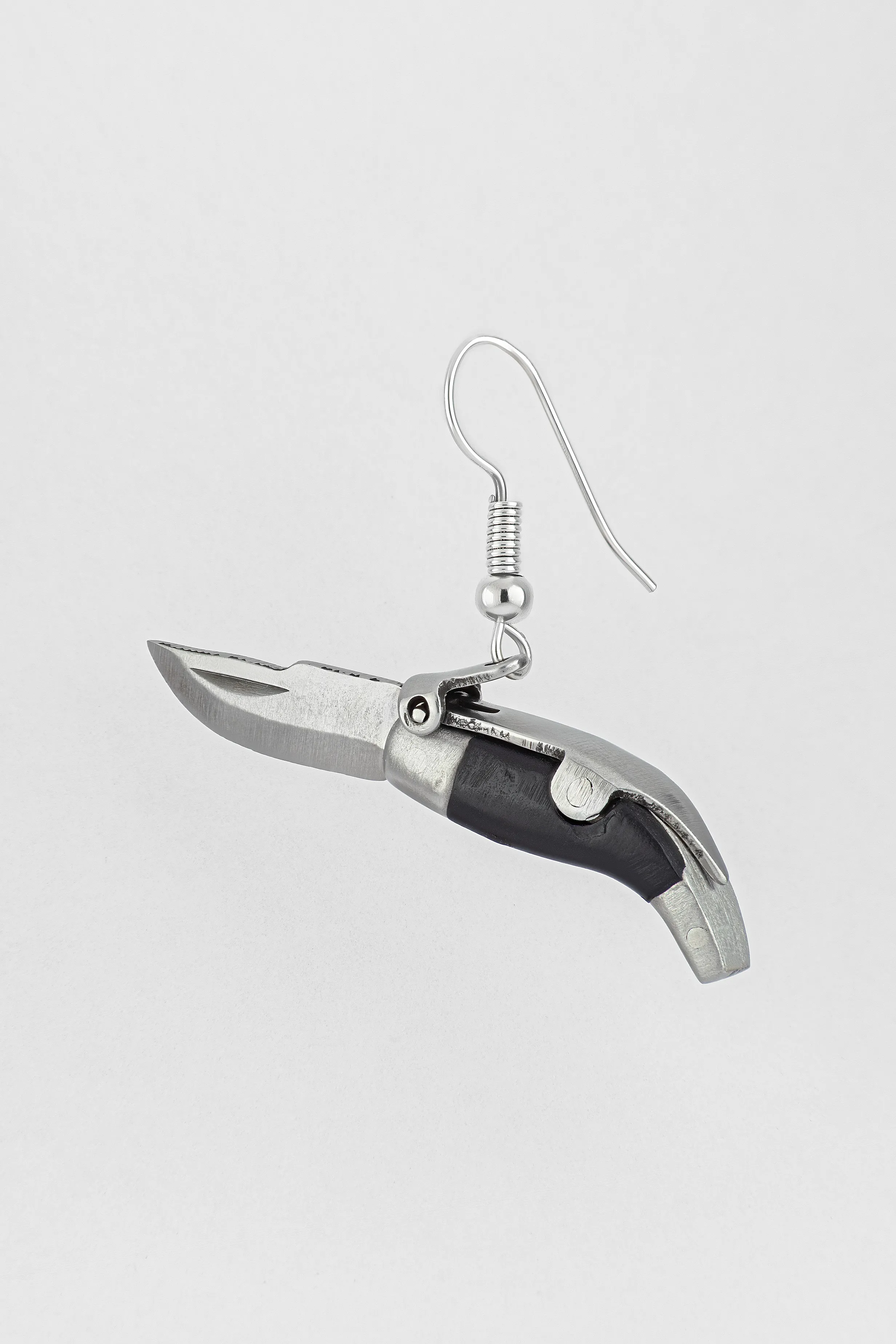
- Knife earrings and miniatures with an opening mechanism
- Andalusian pairs: jerezana with a nazar, hamsa, or sacred heart
- Dark and light handles: tones echoing horn, bone, olive wood, mother of pearl
- Gift sets with a coin for the knife "buy-back" tradition
Every piece can be personalised with engraving by a master, with the option of personal engraving. Navaja pendants are built from stainless steel and coated brass (golden or silver tone) unless the product card states otherwise.


