The Spanish Navaja: History, Culture and Symbolism of the Iconic Blade
A blade the size of a forearm, in a town the size of a secret
The old man sat behind a table covered in green felt. In front of him, maybe thirty knives, laid out the way a jeweller would display rings. Each one different. Some had handles of bone, others of horn, a few wrapped in brass filigree so intricate it looked like lace frozen in metal. He picked one up, a long, curved blade that folded into a handle decorated with what looked like a tiny bullfighting scene, and opened it with a single flick of his thumb. The click of the lock echoed off the stone walls.
This was Albacete. A small city in the middle of La Mancha, the dry heart of Spain, the kind of place most tourists skip on the way from Madrid to the coast. But Albacete has been making knives for over five hundred years. Walk through the old quarter during the September fair, and you'll see them everywhere. In shop windows. In old men's pockets. On museum walls, behind glass, with cards explaining that this particular blade belonged to a bandit from Ronda or a bullfighter from Seville.
Wear the symbol, don't just read about it. These are in stock:

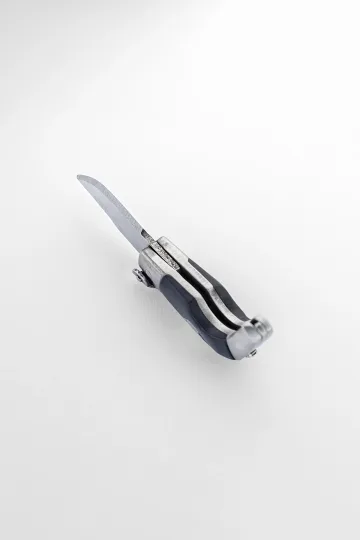
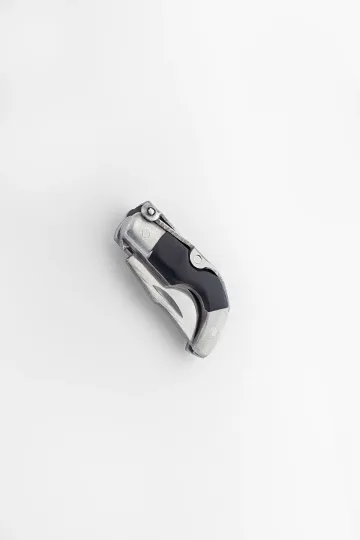
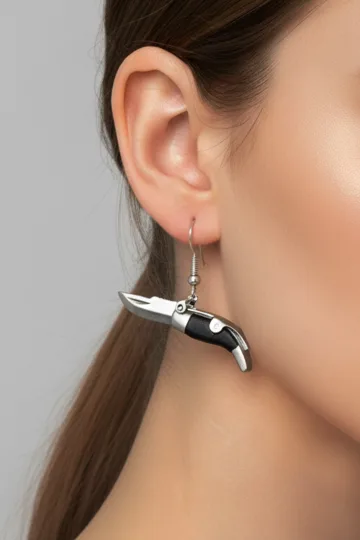
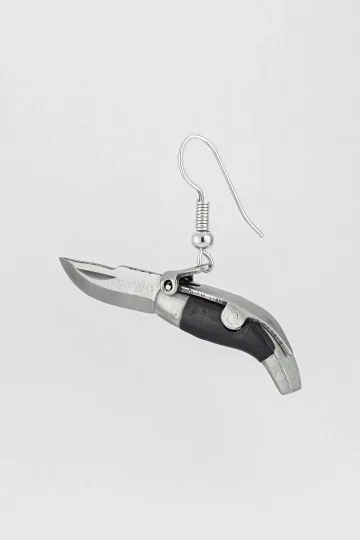








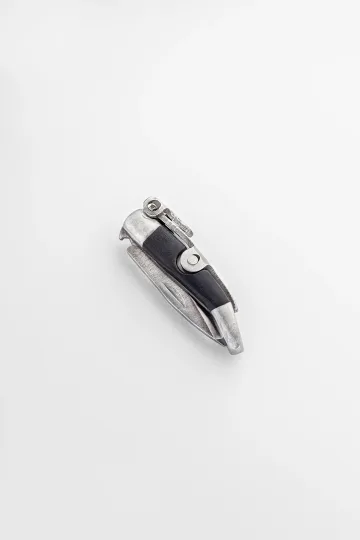
The navaja, the Spanish folding knife, is one of those objects that carries an entire culture inside it. It is a tool, a weapon, and a story about Spain itself. About the Moors who brought metalworking techniques from Damascus. About the bandoleros who terrorised mountain roads and became folk heroes. About Prosper Merimee's Carmen, who made the whole world associate Spain with passion, danger and a blade hidden in a sash. About the cuchilleros of Albacete who kept the craft alive through wars and dictatorships and the slow erosion of hand-making in an industrial age.
This article is about that blade. Where it came from, how it evolved, what it meant to the people who carried it, and why, centuries later, it keeps showing up not just in museums and collections, but around people's necks, as pendants, as a symbol of something that still matters.
Customer reviews
Zevira is a real jewellery shop. Genuine payments, deliveries and customer thank-yous.
🥰🥰🥰 gracias
Ok, ¡gracias! 🙂
What is a navaja
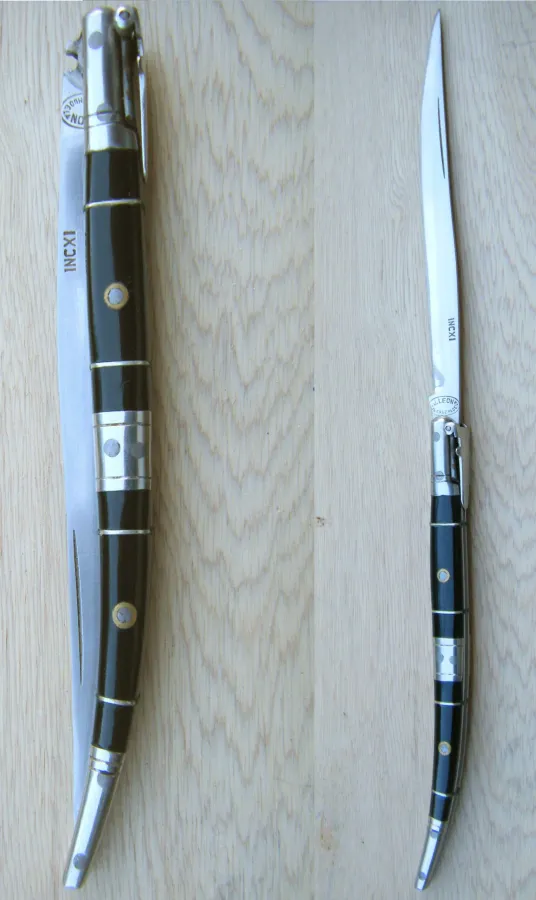
The navaja is a folding knife. That's the simple definition, and it's technically accurate, but it's a bit like calling flamenco "a dance." True, but missing everything that matters.
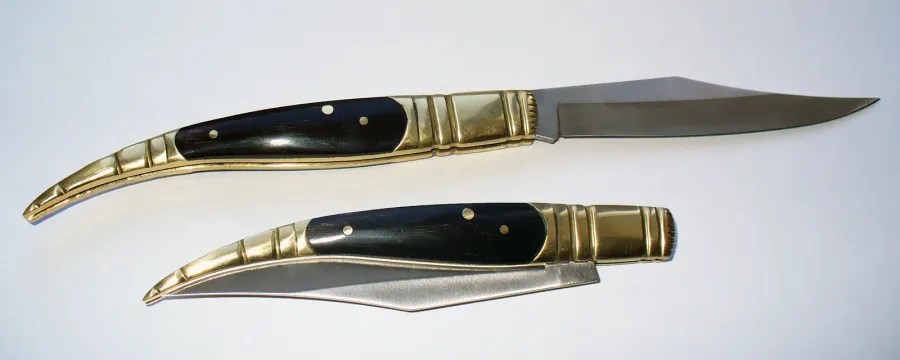
What makes the navaja distinctive is its combination of form, mechanism and cultural weight. The blade is typically long relative to the handle. In historical examples, the blade could be as long as the handle itself, sometimes longer. When open, some navajas stretched to 40 or 50 centimetres. When closed, that same blade disappeared entirely into the handle, which might fit in a pocket or a sash.
The locking mechanism, called the "carraca" or "trinquete" in Spanish, is another signature feature. When you open a navaja, it clicks into place with an audible snap. This isn't just functional. It's psychological. That click is a statement. In the old days, the sound of a navaja locking open was enough to end an argument before it started. The click said: I am armed, I am serious, and you should reconsider whatever you were about to do.
The blade shapes vary enormously. Some are curved like a scimitar, a direct echo of the Moorish origins. Others are straight and pointed, designed for thrusting. Some have a distinctive "clip point" where the spine of the blade curves downward to meet the edge, creating a fine, sharp tip. The variety reflects centuries of regional adaptation: different cities, different uses, different aesthetics.
The handles are where navajas become art. Historically, handles were made from bone, horn, wood, brass, iron, and sometimes precious metals. The decoration ranged from simple file-work to elaborate engraving, inlay, and even miniature paintings. A wealthy man's navaja might have handles of ivory inlaid with gold, with his family crest engraved on the blade. A working man's navaja might have a simple horn handle, but it would still be shaped and finished with care.
The navaja is often described as "the poor man's sword." In centuries when only the nobility were legally permitted to carry swords, the common people of Spain carried navajas. It was a tool for eating, for working, for self-defence, and for settling matters of honour. That dual nature, utilitarian and symbolic, humble and proud, is what sets the navaja apart from any ordinary knife.
Names and terms
The word "navaja" comes from the Latin "novacula," meaning razor. In different regions of Spain and Latin America, you'll encounter related terms:
- Navaja: the general term for a folding knife with a locking mechanism
- Navaja barbera: a straight razor (different from the fighting navaja, but sharing the name)
- Navajita: a small navaja, often decorative
- Cuchillo: a knife in general (non-folding)
- Faca: a Portuguese/Brazilian term for a large knife
- Chaira: a butcher's knife, sometimes also a folding knife in certain regions
In English, "navaja" is used without translation. It's one of those Spanish words, like "flamenco" or "siesta," that has entered other languages because no translation captures the full meaning.
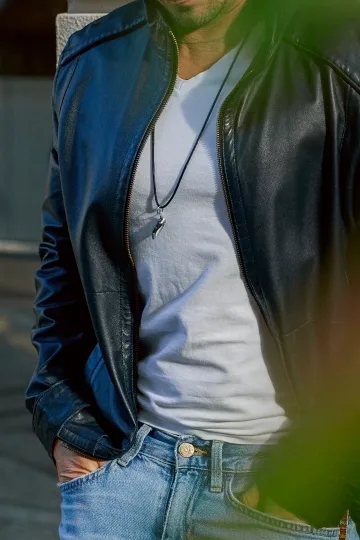
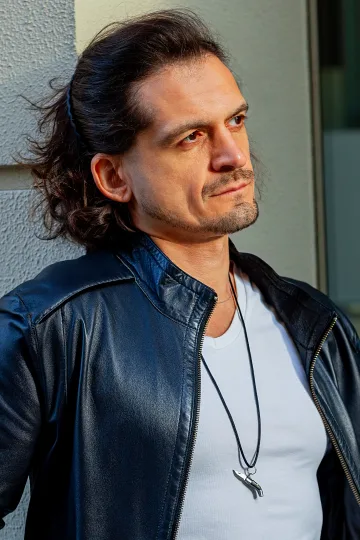
A navaja belongs on leather and denim. Don't smuggle it under a suit, it's character, not a necktie.
How to wear the navaja
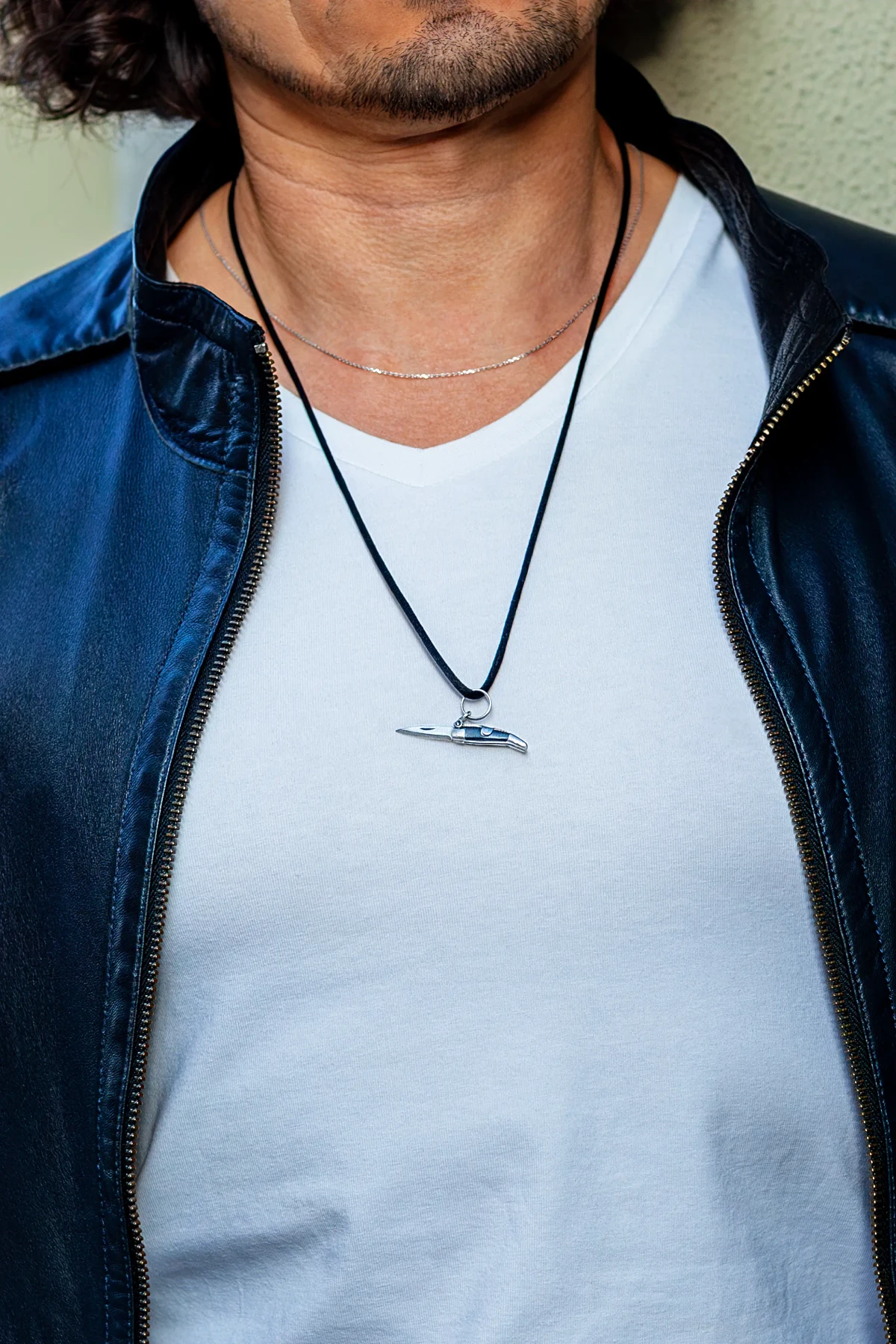
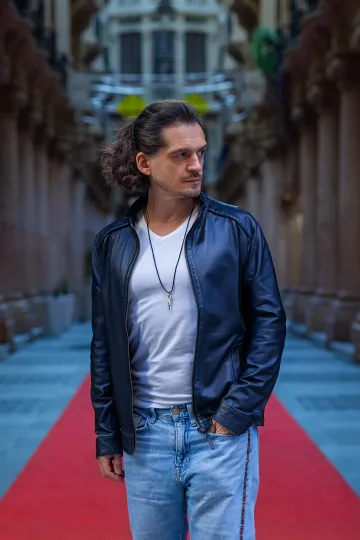
Over years on shoots the navaja has passed through dozens of looks with me, on men and women alike. Here is what actually works, sorted by occasion. And let me be clear from the start: here the navaja is a pendant, a piece of character on the neck, not a weapon.
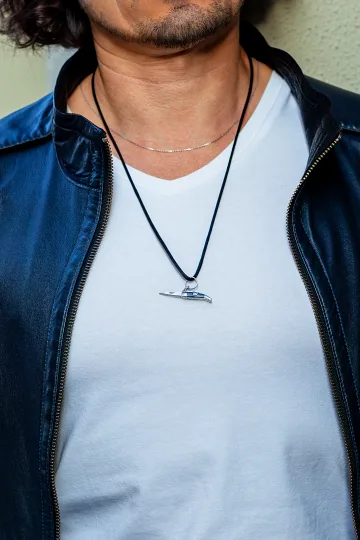
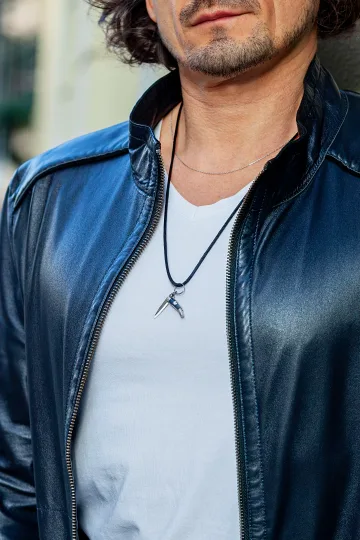
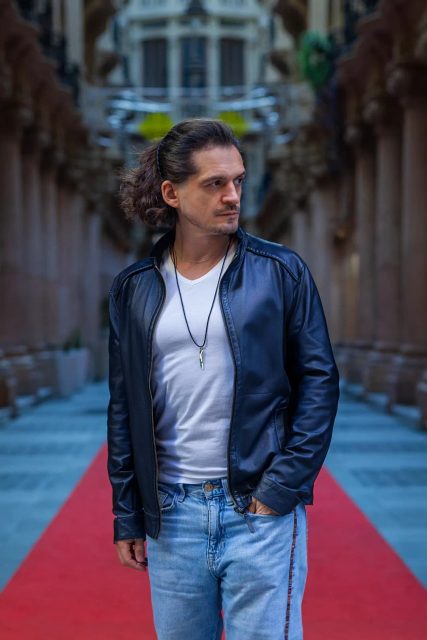
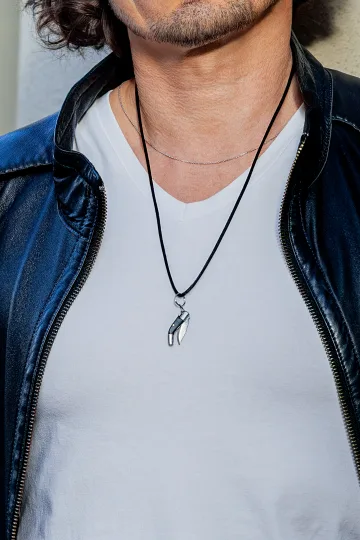
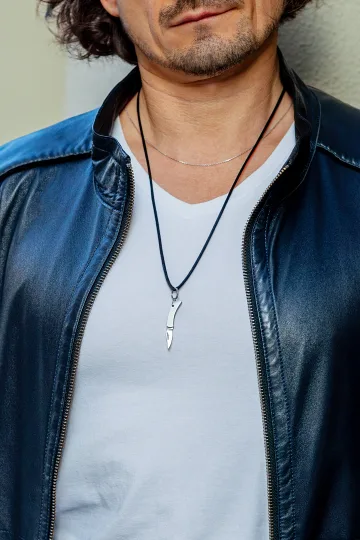
What do I wear the navaja pendant with every day? For daily wear I recommend denim, leather and coarse knit: a heavy tee, a chunky grey sweater, a shirt with the collar open. Keep the clothing colour calm, black, graphite, sand, olive. Against that ground the steel reads cleanly and the blade's silhouette doesn't drown in a print. An open collar leaves the collarbone free, and the navaja lands dead centre on the chest, where you can see it.
On a chain or a cord? I choose the material to match the piece's character. A leather cord gives a rough, working feel, it echoes the navaja's roots and looks best under leather and denim. A heavy steel or silver chain sounds more brutal and carries the larger form. Thin, delicate chains do the navaja no favours, they argue with its character. I suggest keeping to one metal, steel with steel, silver with silver.
What length is right? I recommend a length to the sternum, around mid-chest. There the blade falls into the open zone under an unbuttoned collar and shows in full. Shorter and it hides under the fabric and loses its silhouette, longer and it drops down and swings. Under a high, closed collar take a shorter piece so the navaja rests over the knit, not under it.
Can I wear it under a suit? Don't drag the navaja under a suit and tie. It's character, not a business detail, and in a strict dress code it looks out of place. Its home is casual: a leather jacket, denim, coarse knit, an easy weekend look. If you want to soften it, leave one navaja on a cord and drop everything else, let it work alone.
Who does it suit, and does it make a gift? The navaja is unisex, but its character is rugged. It's loved by people who aren't afraid of a strong detail: denim and leather aesthetics, rock, minimalism with a single accent. As a gift for a man it's a safe bet, especially for someone who doesn't wear ordinary jewellery, a form with a story rather than an abstract pendant. For a woman I suggest playing on contrast, a navaja on a heavy chain over soft fabric gives an interesting tension.

Turn on your camera, pick earrings, a pendant or a ring, and see the piece on yourself in real time.
Switch items in one tap.
Everything runs in your browser: no photo or video is ever uploaded.
Upload a photo of your pet, someone you love, or an object. We'll build a 3D model and hand-cast it in pewter.
History of the navaja by era
Moorish origins
The story begins in the 8th century, when the Moors, Muslim peoples from North Africa, crossed the Strait of Gibraltar and conquered most of the Iberian Peninsula. They brought with them some of the most advanced metalworking techniques in the world, inherited from the great smithing traditions of Damascus, Baghdad, and Cairo.
The Moors established workshops in cities like Toledo, Cordoba, and Granada. They made swords that became legendary across Europe. But they also made smaller blades, folding knives for everyday use. The earliest prototypes of what would become the navaja appeared in Moorish Spain, probably around the 10th or 11th century. These were simple folding blades without locks, more like the friction-folding knives still found in parts of North Africa.
The Moorish influence on the navaja runs deep. The curved blade that became a hallmark of many navaja styles echoes the scimitar. The decorative tradition of engraving geometric and floral patterns on metal comes directly from Islamic art, which favoured abstract designs over figurative ones. Even the tradition of damascening (inlaying gold or silver wire into steel to create patterns) is a Moorish technique that Albacete's knifemakers still practice today.
It's worth noting that the Moors didn't invent folding knives. Romans had simple folding knives, and similar tools existed in other cultures. But the Moors elevated the craft. They turned a simple tool into something that was also beautiful, that carried artistic and cultural meaning. That transformation, from tool to cultural object, is the Moorish legacy in the navaja.
Golden Age Spain
The Reconquista, the centuries-long Christian reconquest of the Iberian Peninsula, was completed in 1492 when Granada, the last Moorish kingdom, fell to Ferdinand and Isabella. But the metalworking traditions the Moors had established didn't disappear. They were absorbed, adapted, and continued by Christian Spanish craftsmen.
The 16th and 17th centuries, Spain's Golden Age, were a turning point for the navaja. This was the era when Spain was the most powerful nation on Earth. Spanish treasure fleets crossed the Atlantic. Spanish armies fought across Europe. And in the cities and towns of the peninsula, a new culture of personal arms was flourishing.
Here's the key social context: in 1564, and then more strictly in later decades, the Spanish crown issued decrees restricting the carrying of swords to the nobility and military. Ordinary citizens (farmers, tradesmen, muleteers, labourers) were forbidden from carrying swords. But they still lived in a society where personal honour was everything, where roads were dangerous, and where disputes were settled face to face.
The navaja filled the gap. It wasn't a sword, so it wasn't technically prohibited (though various local regulations tried, mostly unsuccessfully, to restrict it). It was small enough to hide in a sash, a boot, or a pocket. And in the hands of someone who knew how to use it, it was devastatingly effective.
During this period, regional styles began to emerge. The knifemakers of Albacete, Toledo, Seville, Jerez, and other cities developed distinctive blade shapes, handle styles, and decoration techniques. The navaja went from being a simple folding knife to being a spectrum of regional variations, each with its own character and reputation.
This was also when the navaja acquired its symbolic dimension. It became associated with the "majo" and "maja," the swaggering, well-dressed common people of Spain's cities who took pride in their own culture and rejected the French-influenced fashions of the aristocracy. A majo carried a navaja not just for practical reasons, but as a statement of identity. It said: I am Spanish, I am from the streets, and I handle my own affairs.
The 18th century bandoleros
If the Golden Age gave the navaja its social context, the 18th century gave it its legend.
The bandoleros, highwaymen who operated in the mountain passes of Andalusia, Castile, and other regions, became some of the most romanticised figures in Spanish history. They robbed travellers, evaded the law, and lived by their own code. Some were genuinely cruel. Others were, at least in the popular imagination, Robin Hood figures who stole from the rich and helped the poor.
What all bandoleros had in common was the navaja. It was their signature weapon, more personal and more practical than a firearm in the close quarters of a mountain ambush. A bandolero's navaja was often elaborate: a large blade with a decorated handle, sometimes engraved with his name, a motto, or a religious inscription. "Si esta vibora te pica, no busques remedio en la botica" (If this viper bites you, don't look for a remedy at the pharmacy) was a popular inscription on bandolero navajas.
The most famous bandolero regions, the Serrania de Ronda, the Sierra Morena, the passes between Andalusia and Castile, became associated with the navaja in the European imagination. Foreign travellers who passed through Spain in the 18th century (and there were many, since the Grand Tour often included Spain) wrote about the bandoleros and their knives with a mixture of fear and fascination.
This is when the navaja entered European literature and art. It stopped being a purely Spanish object and became an international symbol of Spain itself: dangerous, passionate, romantic, unpredictable. The same qualities that would later be projected onto Carmen, flamenco, and bullfighting were first projected onto the bandolero and his blade.
The 18th century also saw some of the finest navajas ever made. Workshops in Albacete, Santa Cruz de Mudela, and Solana produced knives that were genuine works of art. Some surviving examples have handles of ivory and tortoiseshell, blades of Damascus steel, and engravings that took weeks to complete. These weren't weapons for bandoleros. They were luxury items for wealthy collectors. But they shared the same essential form: the long folding blade, the click of the lock, the unmistakable silhouette.
19th century decline
The 19th century brought changes that threatened the navaja on multiple fronts.
First, there were the legal restrictions. The Spanish government, following European trends toward centralised policing and disarmament of civilians, passed increasingly strict laws against carrying bladed weapons. The Royal Decree of 1828 specifically targeted the navaja, limiting blade length and eventually prohibiting the carrying of folding knives above a certain size. Similar laws followed throughout the century.
Second, industrialisation began to undermine the hand-forging tradition. Mass-produced knives from Sheffield (England) and Solingen (Germany) flooded the European market. They were cheaper, more consistent, and available everywhere. The handmade navajas of Albacete and other Spanish workshops couldn't compete on price. Many workshops closed. The number of working cuchilleros in Albacete dropped dramatically.
Third, Spain itself was in crisis. The Napoleonic invasion (1808-1814), the loss of the American colonies, the Carlist Wars, political instability: the 19th century was brutal for Spain. In that chaos, the navaja became associated less with romance and more with violence. Newspaper reports of knife fights in cities contributed to a negative image. The educated classes increasingly saw the navaja as a relic of a barbaric past that Spain needed to leave behind.
But the navaja didn't die. It retreated from urban life into the countryside, where it remained an essential everyday tool. And it lived on in art, literature, and the collective memory. The 19th century decline was real, but it was also the beginning of nostalgia, the recognition that something valuable was being lost.
20th century revival
The 20th century brought the navaja back, though in different forms.
During the Spanish Civil War (1936-1939), navajas were carried by soldiers on both sides, though more as personal tools than weapons. The Franco dictatorship (1939-1975) maintained strict weapons laws, but traditional knifemaking continued in Albacete and other centres, now framed as cultural heritage rather than arms production.
The real revival began in the 1970s and 1980s, after Franco's death and Spain's transition to democracy. There was a broad cultural movement to reclaim and celebrate Spanish regional identities and traditions that had been suppressed or neglected. The navaja was part of this. Collectors began seeking out antique navajas. Museums mounted exhibitions. Knifemakers who had been working quietly started receiving recognition.
By the 1990s, a new generation of artisan knifemakers was emerging. They studied the old techniques (hand-forging, file-work, damascening) and combined them with modern metallurgy and design. International knife shows in Solingen, Paris, and Atlanta featured Spanish navajas alongside the best work from around the world. The quality was extraordinary.
Today, the Spanish navaja occupies a place similar to the Japanese katana or the Swiss Army knife. It's a blade that transcends its function and represents an entire culture. Custom navajas from top Spanish makers are collector's items that can take months to produce and command substantial prices. Meanwhile, the form itself has influenced knife design worldwide. You'll see navaja-inspired folding knives from makers in the United States, Japan, and across Europe.
The navaja survived. Not because of nostalgia, but because the thing it represents (independence, self-reliance, craftsmanship, Spanish character) never stopped mattering.



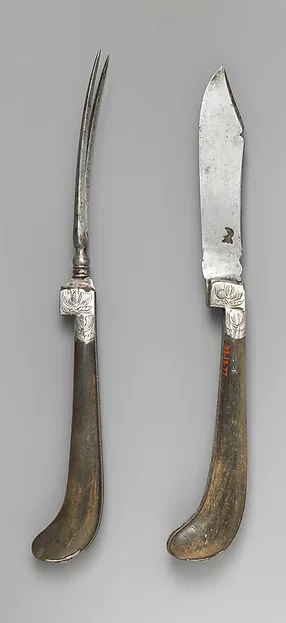
Albacete: the world capital of navajas
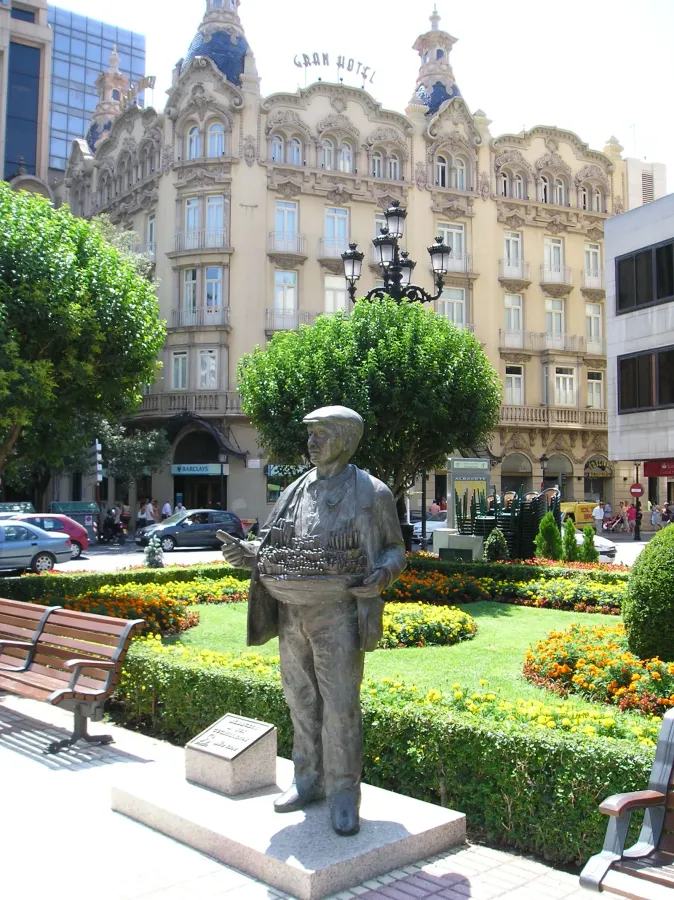
If you want to understand the navaja, you have to understand Albacete.
The city sits in the middle of the Castilla-La Mancha region, on the high plateau of central Spain. It's not a coastal city. It's not a tourist magnet. It's a working city on the meseta, surrounded by flat land and big sky. The climate is extreme: scorching summers, bitter winters, wind that cuts through everything.
This landscape matters because it shaped the people who settled here, and those people shaped the knives. The cuchilleros of Albacete have been making blades since at least the 15th century, though some historians push the date back further, to the Moorish period. The city's coat of arms includes a knife. Its main festival, the Feria de Albacete, held every September, features knife displays and competitions alongside bullfights and music.
The tradition was recognised by the Spanish government as part of the country's intangible cultural heritage. The Museo de la Cuchilleria (Museum of Cutlery) in Albacete houses one of the finest collections of navajas in the world, with examples spanning five centuries. Walking through its galleries is like watching the evolution of an art form in real time, from crude medieval blades to the breathtaking work of contemporary masters. For a closer look at the Albacete-style navaja itself (the click of the carraca lock, the virolas and rebajo on the handle, the regional forms that grew out of this single city), see the dedicated article on the Albacete navaja.
What makes Albacete special
Several factors converged to make Albacete the centre of Spanish knifemaking:
- Water power: the Jucar river and its tributaries provided the energy to drive grinding wheels and trip hammers
- Iron supply: ore from the nearby Sierra de Alcaraz and trade routes from the Basque Country provided raw material
- Trade routes: Albacete sat at the crossroads of major roads connecting Madrid, Valencia, Murcia, and Andalusia
- Guild tradition: the cuchilleros organised early into guilds that maintained quality standards and trained apprentices
- Cultural pride: the city's identity became inseparable from its craft, creating a self-reinforcing cycle of excellence
At its peak in the 18th century, Albacete had hundreds of working knifemakers. Today, the number is smaller, but the quality has arguably never been higher. Modern Albacete makers produce navajas using traditional techniques (hand-forging the blade, shaping the handle from natural materials, engraving and inlaying by hand) while also incorporating contemporary steels and design innovations.
Zevira's connection
The Forja Espanola collection draws directly from this tradition. Each pendant in the collection captures a specific navaja type (the Jerezana, the Capaora, the Punta de Espada) as miniature wearable sculptures. The goal isn't to replicate a knife. It's to capture the essence of each form: the curve, the proportions, the character that makes each type distinct. When you see the silhouette of a Jerezana pendant hanging from a chain, you're seeing the same shape that has existed in Spanish workshops for centuries. The material is different, the scale is different, but the DNA is the same.
It's a way of carrying Albacete's tradition with you. Not as a weapon, not even as a tool, but as a symbol of craft, of heritage, of a culture that made beautiful things with fire and steel and human patience.
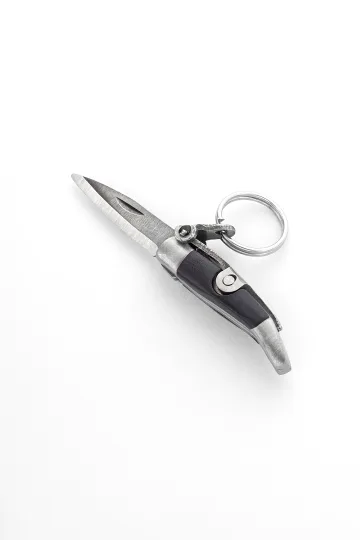
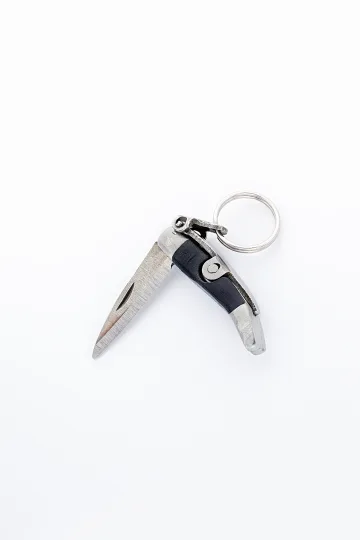
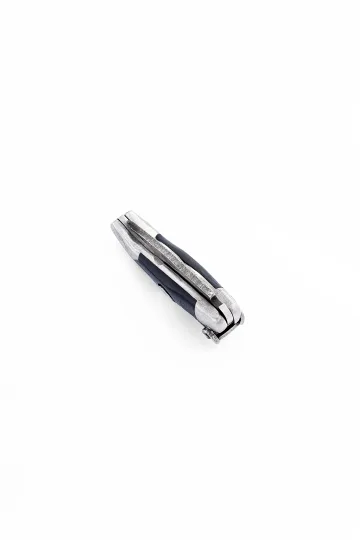
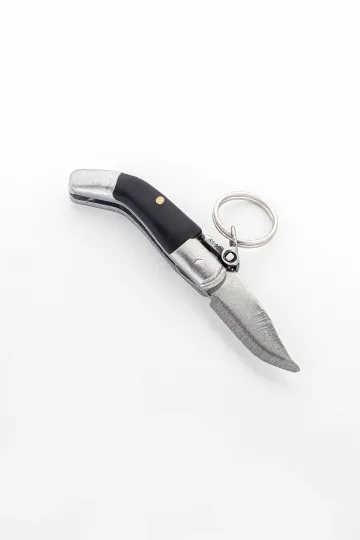
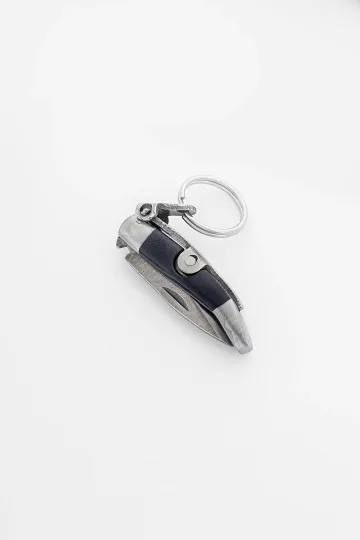
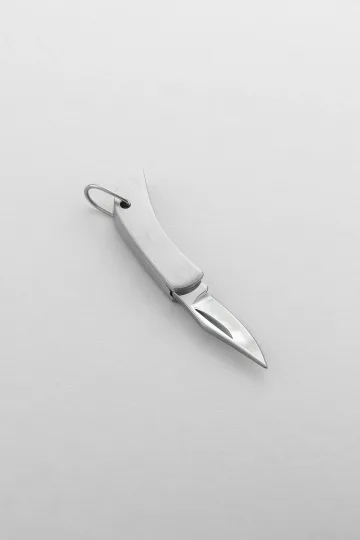
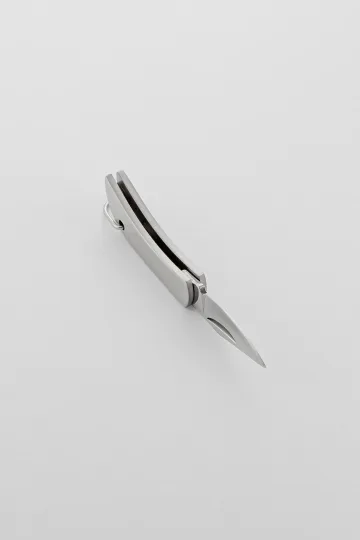
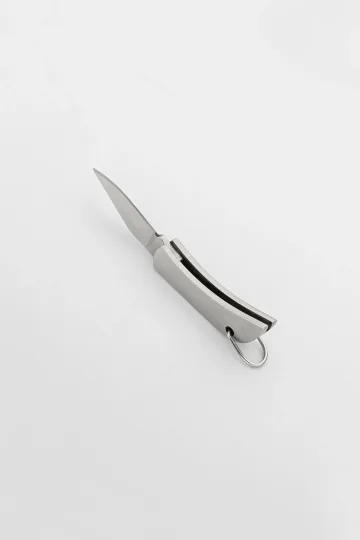
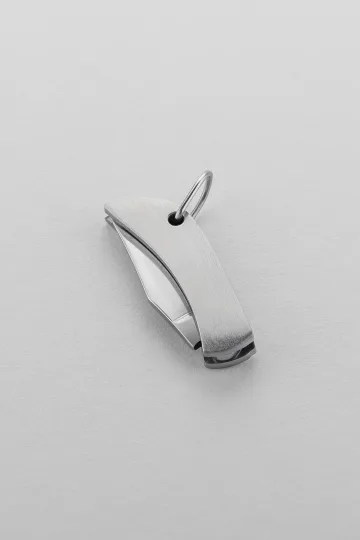
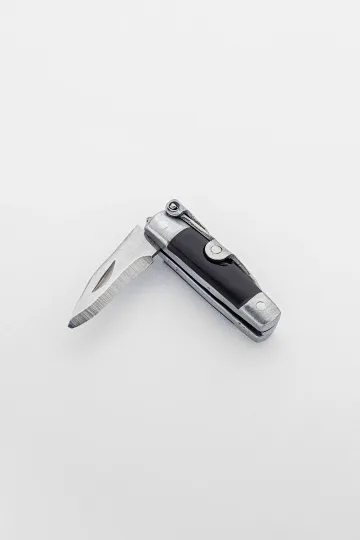
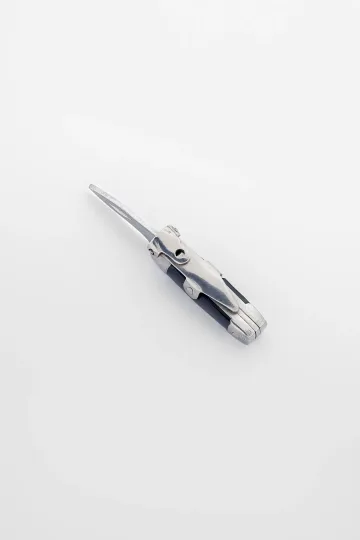
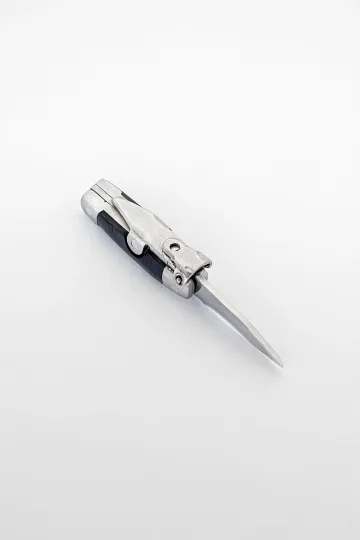
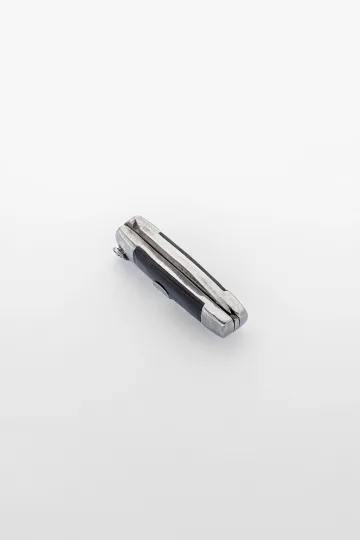
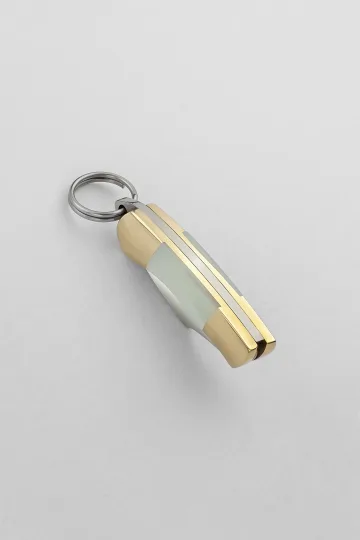
CAPAORA mini knife pendant
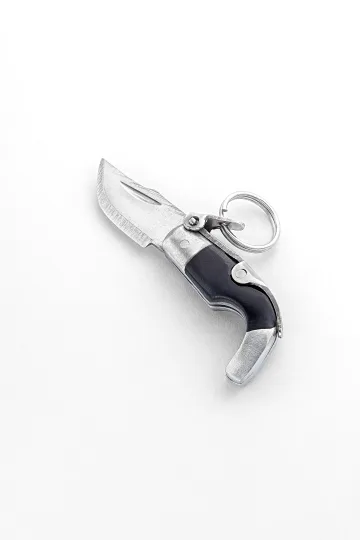
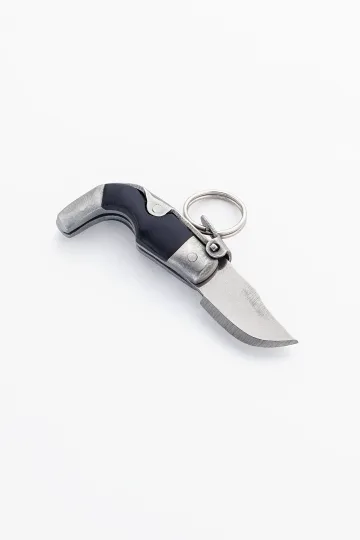
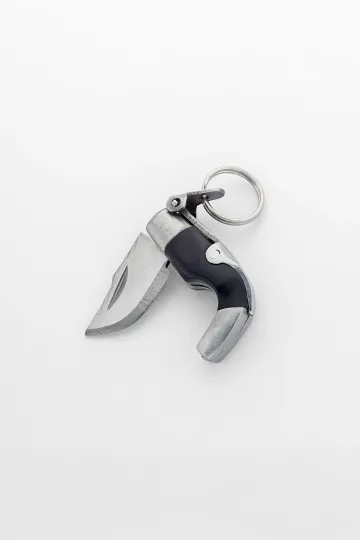
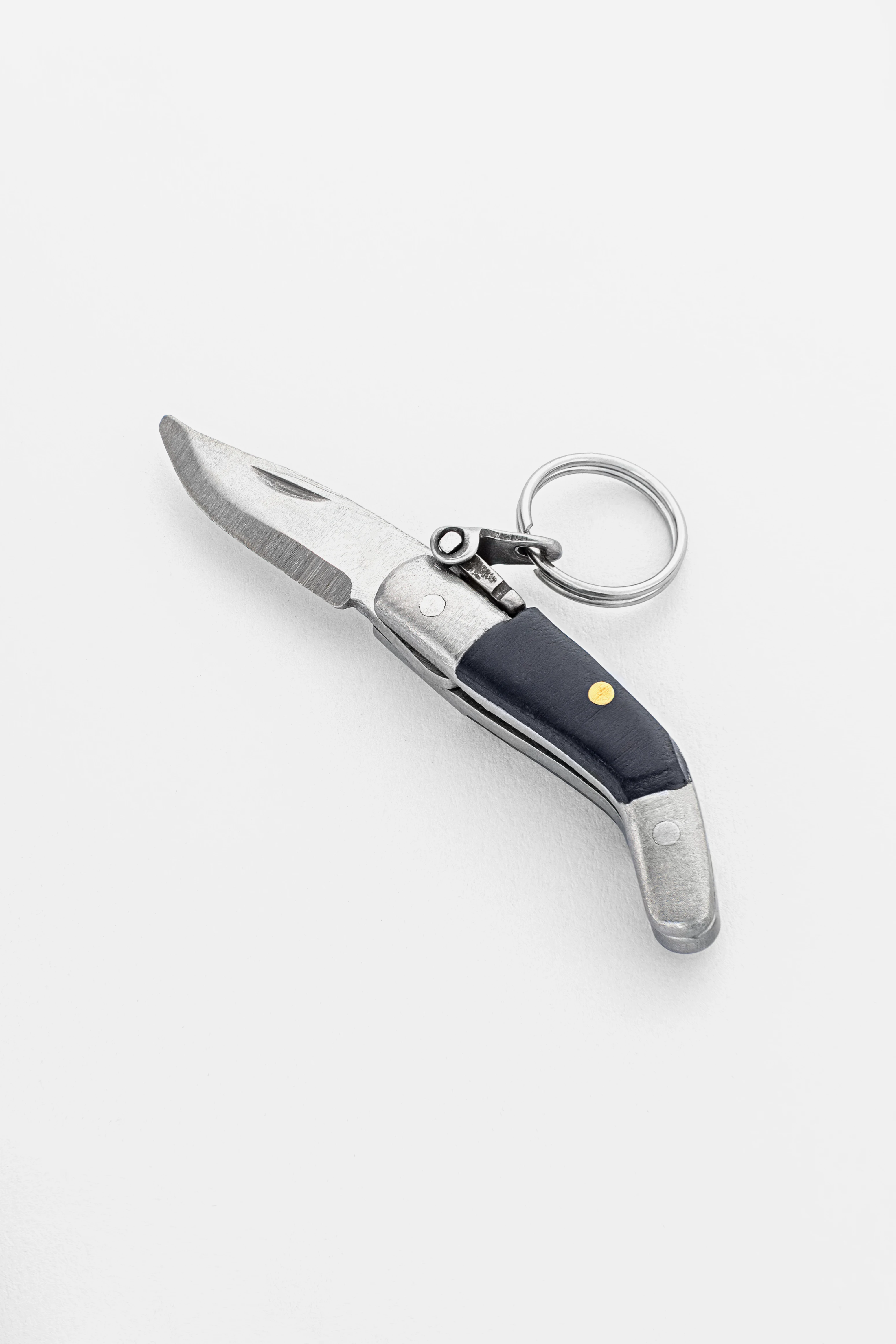
The 18th-century Spanish navaja in miniature: 40 mm of stainless steel, a real folding mechanism and a Palanquilla lock that clicks. An affordable gift to remember.
Authentic · Ships from Spain · 14-day returns
What the navaja represents
Symbols mean what people need them to mean, and the navaja has meant many things to many people over the centuries. But certain themes keep recurring.
Honour and personal sovereignty
In a society where common people were forbidden from carrying swords (the weapon of the aristocrat, the symbol of official authority), the navaja became the weapon of personal sovereignty. It said: I may not be a nobleman, but I answer to my own code. I defend my own honour. I handle my own problems.
This isn't abstract. For centuries, Spanish social life operated on a system of honour that was binding and real. Your reputation, your "honra," determined your economic opportunities, your marriage prospects, your standing in the community. An insult to your honour demanded a response. And for ordinary people, the response often involved a navaja.
Today, the honour code has evolved, but the underlying principle persists. The navaja still represents the idea that you are responsible for yourself. You don't outsource your problems to others. You stand behind your word. You carry the tools you need to navigate the world on your own terms.
Independence and self-reliance
Related to honour, but distinct from it. The navaja is a tool of independence. It cuts rope, slices bread, opens packages, cleans fish, sharpens sticks, strips bark. In the rural Spain of past centuries, a man without a knife was a man who couldn't function. The navaja was the original multi-tool, the one object you'd never leave home without.
That practical independence extended into symbolic territory. To carry a navaja was to be ready for whatever the day brought. It was the opposite of dependence, of helplessness, of waiting for someone else to solve your problems. This resonates today in a different way. In a world of digital abstraction, where most of us spend our days touching screens and sitting in chairs, there's something grounding about a knife. It connects you to a time when people made things with their hands and solved problems with direct action.
Spanish identity and pride
The navaja is as Spanish as flamenco, as bullfighting, as Goya's paintings. It's part of the cultural DNA in a way that few other objects are. When Spanish people encounter the navaja abroad, whether in a museum, in a collector's display, or in a jewellery collection, there's often a flash of recognition and pride. It's theirs.
This is why the navaja resonates particularly with people of Spanish and Latin American heritage. The blade travelled to the Americas with the conquistadors and colonists. It took root in Mexico, in Argentina, in Colombia, in every country where Spanish culture left its mark. The gaucho's facon in Argentina, the cuchillo criollo of the Pampas: these are descendants of the Spanish navaja, adapted to a new world.
Protection and readiness
At its most basic, a knife is a tool of protection. The navaja represents the readiness to defend yourself and the people you care about. Not aggression. Readiness. There's a difference. A person who carries a knife isn't looking for trouble. They're prepared for it. That distinction matters, and it's central to the navaja's symbolism.
In jewellery, this translates into the idea of wearing a protective talisman. A knife pendant isn't a weapon. Obviously. But it carries the energy of protection, of preparedness, of the quiet confidence that comes from knowing you can handle what comes.
Leave your email, we'll send your discount code. No spam, unsubscribe anytime.
The code arrives by email, valid on your first order.
Types of navajas
The Spanish navaja isn't one knife. It's a family of knives, each with its own regional origin, blade shape, and personality. Here are the four most important types, and not coincidentally, the four that inspired Zevira's Forja Espanola collection.
Jerezana
Named after Jerez de la Frontera, the sherry capital of Andalusia, the Jerezana is one of the most elegant navaja types. Its blade has a distinctive S-curve: the edge curves outward while the spine curves inward, creating a sinuous, almost serpentine profile. The tip is sharp and upswept.
The Jerezana was the navaja of choice in southern Andalusia. Its curved blade was particularly effective in the circular knife-fighting style practised in Jerez, Cadiz, and Seville. Fighters would hold the navaja low, near the hip, and use sweeping, arcing movements, not unlike the passes of a bullfighter's cape.
Beyond function, the Jerezana is simply beautiful. That S-curve gives it a flowing, organic quality. It looks alive. It looks like it's moving even when it's still. This is why it translates so well into jewellery: the silhouette is instantly recognisable and inherently graceful.
Character: Elegant. Fluid. Andalusian. For people who value grace and style alongside strength.
Capaora
The Capaora (sometimes spelled "capaora" or "capadora") is a broader, heavier navaja with a curved blade that widens toward the tip before coming to a point. The shape suggests a tool as much as a weapon: the wide belly of the blade made it useful for slicing, skinning, and other practical tasks.
The Capaora originated in rural Andalusia and was the navaja of working people: farmers, herders, butchers, muleteers. It wasn't as flashy as the Jerezana, but it was versatile and reliable. The wider blade also made it a more intimidating weapon. Where the Jerezana was a fencer's blade, the Capaora was a fighter's blade.
The handles of Capaoras were typically robust and practical, often made from horn or hardwood. Decoration tended to be simpler than on Jerezanas or Albacetenas. The beauty of a Capaora is in its proportions and its honesty: this is a knife that doesn't pretend to be anything it isn't.
Character: Strong. Honest. Working-class. For people who value substance over decoration.
Punta de espada
"Punta de espada" means "sword point." The name tells you everything. This navaja has a straight, triangular blade that comes to a sharp point, very different from the curved blades of the Jerezana and Capaora. The blade shape resembles the tip of a rapier or small sword, and that's intentional.
The Punta de Espada was a fighting navaja, pure and simple. Its straight, pointed blade was designed for thrusting, for getting past an opponent's guard and striking with precision. It was particularly associated with the navaja-fighting traditions of Murcia and eastern Andalusia, where a more linear, thrust-oriented style was practised.
Historically, the Punta de Espada was the navaja most feared by authorities. Its sword-like blade made it unmistakably a weapon, and it was specifically targeted in various prohibitions. Carrying one was a statement of defiance as much as a practical choice.
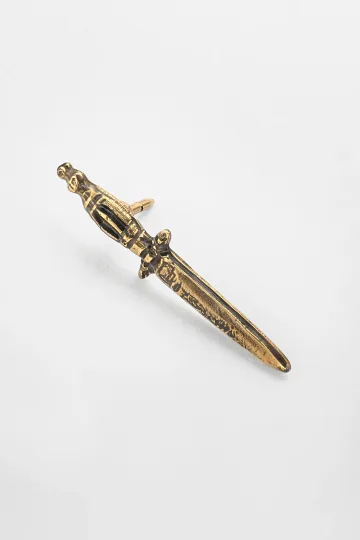
In terms of design, the Punta de Espada has a martial severity that's very different from the flowing curves of the Jerezana. It's all angles and edges. It looks dangerous even in miniature, which is part of its appeal as a pendant.
Character: Sharp. Direct. Uncompromising. For people who say what they mean and mean what they say.
Albacetena
The Albacetena, the navaja of Albacete, is the most decorated and arguably the most iconic type. It's the navaja that foreign visitors to Spain pictured when they heard the word. The blade is typically mid-length and slightly curved, but it's the handle that sets the Albacetena apart.
Albacetena handles are works of art. Traditionally made from brass, they feature elaborate engravings, punch-work, and sometimes damascening (gold or silver wire inlaid into the metal). Common motifs include bullfighting scenes, floral patterns, geometric Islamic designs inherited from the Moorish period, and sometimes religious images. Some Albacetenas have handles that tell a story: a sequence of engraved scenes that unfold as you turn the knife in your hands.
The blade itself often carries engravings too: a maker's mark, a motto, a date. The overall effect is of a knife that is simultaneously a tool, a weapon, and a miniature art object. This is the navaja that museums display behind glass. This is the navaja that collectors hunt.
The Albacetena represents the pinnacle of the cuchillero's art. It's the type that best embodies the idea that a knife can be both functional and beautiful, that craftsmanship and utility aren't opposites but partners.
Character: Artistic. Cultured. Traditional. For people who believe that everything worth making is worth making beautifully.
The navaja in art and literature
The navaja hasn't just existed in workshops and pockets. It has lived in stories, paintings, operas, and poems. The blade became a character in its own right, a symbol that writers and artists used to evoke Spain at its most intense.
Carmen and Prosper Merimee
No single work did more to cement the navaja in the international imagination than Prosper Merimee's novella "Carmen" (1845), and especially Georges Bizet's opera adaptation (1875).
Merimee was a French writer who travelled extensively in Spain in the 1830s. He was fascinated by the country's rougher edges: the bandoleros, the smugglers, the gitanos, the knife fighters. His Carmen is set in Seville and the mountains of Andalusia. The story centres on Don Jose, a soldier who falls obsessively in love with Carmen, a Roma cigarette worker. The novella is drenched in knife culture. Jose carries a navaja. Carmen's other lover, the picador Lucas, carries one. In the climactic scene, Jose kills Carmen with a knife.
Bizet's opera amplified everything. It became one of the most performed operas in the world, and with it, the navaja became internationally associated with Spanish passion, jealousy, and fatal attraction. For millions of people who never visited Spain, the navaja was Carmen's knife, the blade of dangerous love.
This was a double-edged legacy (pun intended). On one hand, it kept the navaja alive in global culture. On the other, it reduced Spain to a stereotype: passion, blood, knives, flamenco, bulls. Many Spanish intellectuals resented this. But the power of the image was undeniable, and it persists. When people today wear a navaja pendant, some of that Romantic-era mystique still clings to the metal.
Goya and the majos
Francisco Goya (1746-1828) painted Spanish life as he saw it, without flattery or idealisation. His paintings and prints are full of navajas. In "The Fight with Cudgels" and various scenes from the "Tauromaquia" series, blades appear in hands, in sashes, at belt-lines. But it's his paintings of the majos and majas, the stylish common people of Madrid, where the navaja appears most naturally.
Goya's majos are proud, well-dressed, and self-assured. They carry navajas as naturally as they wear their capes and sashes. The knife is part of the outfit, part of the identity. Goya doesn't portray it as threatening. It's just there, like a watch or a ring, a personal item that says something about who you are.
These paintings shaped how Europeans visualised Spanish common culture for generations. The majo with his navaja became an archetype, reproduced in prints, copied by illustrators, and referenced by writers long after Goya's death.
Flamenco culture
The navaja and flamenco share a cultural ecosystem. Both emerged from the same world: Andalusia, the Roma community, the lower classes of Spanish society, the fusion of Moorish, Jewish, Christian, and gitano cultures that makes southern Spain unlike anywhere else.
In flamenco, the navaja appears metaphorically. Songs (cantes) reference knives, blade fights, wounds, scars, and the mix of love and violence that the navaja embodies. The phrase "me has clavado un punalito" (you've stabbed me with a little blade) is a classic flamenco metaphor for heartbreak. The navaja is the pain that comes with passion, the cut that comes with closeness.
Visually, the navaja has influenced flamenco aesthetics. The clicking open of a blade mirrors the sharp, percussive movements of flamenco dance. The curved lines of a Jerezana echo the arcs of a dancer's arms. Some scholars have even suggested that certain knife-fighting stances influenced flamenco dance positions, though this is debated.
What's not debated is that the two traditions come from the same place and express the same things: intensity, pride, beauty forged from struggle, and a refusal to be anything other than fully alive.
Literature and poetry
The navaja appears throughout Spanish literature. Federico Garcia Lorca, the great poet of Andalusia, references knives and blades repeatedly in his work. In "Romancero Gitano" (Gypsy Ballads), the knife is a constant presence, sometimes a literal weapon, sometimes a metaphor for fate, for desire, for the sharp edge of reality.
"La navaja" by the poet Salvador Rueda (1857-1933) is a full-length poem dedicated to the blade, celebrating its form, its history, and its place in Spanish culture. The navaja has inspired prose writers, playwrights, essayists, and travel writers for centuries. It's one of those subjects that never gets old because it touches on so many things at once: craft, violence, beauty, identity, history, danger, honour.
In English-language literature, the navaja appears in the works of Ernest Hemingway (who was obsessed with Spain), Washington Irving (who wrote extensively about the Alhambra and Andalusia), and George Borrow (whose "The Bible in Spain" contains vivid descriptions of knife-carrying Spaniards).
The navaja as jewellery
Why people wear knife pendants
A knife around your neck makes a statement. But what statement, exactly?
For some, it's aesthetic. The navaja is simply a beautiful form. Those curves, those proportions, that silhouette against a collarbone: it's striking in a way that more conventional jewellery isn't. If you're bored of hearts and stars and generic pendants, a miniature navaja is something else entirely. It starts conversations. It makes people look twice.
For others, it's symbolic. The meanings we discussed (honour, independence, protection, readiness, Spanish identity) all transfer to the pendant. Wearing a navaja pendant is like wearing a compressed version of everything the blade represents. It's not about wanting to carry a weapon. It's about wanting to carry the idea behind it.
For people with Spanish or Latin American heritage, a navaja pendant can be a deeply personal connection to culture and family history. Maybe your grandfather carried a navaja. Maybe your family is from Albacete, or Jerez, or Ronda. Maybe you grew up hearing stories about the old country where men carried these blades as naturally as they wore their hats. The pendant is a link to that world.
And for some, it's about the mix of beauty and danger that the navaja embodies. There are people who are drawn to jewellery that has an edge (literally). Not because they're violent or aggressive, but because they feel things strongly and want their jewellery to reflect that intensity. A navaja pendant says: I'm not soft. I'm not bland. I have some steel in me.
If you want to go deeper on the wearable side of all this (materials, allergies, chain lengths, styling, how to choose your first piece), we cover it in the full guide to knife pendants and knife earrings.
Who wears navaja jewellery
The knife pendant crosses boundaries in a way that few other jewellery types do. You'll find it on:
- Men who want jewellery with masculine energy but more character than a simple chain
- Women who like the contrast of a delicate chain with a strong, symbolic pendant
- People of Spanish and Latin American heritage connecting to their cultural roots
- Flamenco and Spanish culture enthusiasts who carry a piece of that world with them
- Collectors and knife enthusiasts who appreciate the form even in miniature
- People in the alternative and rock scenes who gravitate toward jewellery with edge and story
- Gift-givers looking for something meaningful for someone who doesn't do generic jewellery
The point is that navaja jewellery isn't niche. It appeals to anyone who values design, symbolism, and the kind of cultural depth that most jewellery simply doesn't have.
How to wear it
A navaja pendant works in multiple ways:
- Solo on a mid-length chain: the classic approach. Let the pendant sit at mid-chest where it catches light and attention
- Layered with other chains: pair it with simpler chains for a textured, layered look
- On a leather cord: for a rougher, more rustic feel that echoes the navaja's working-class origins
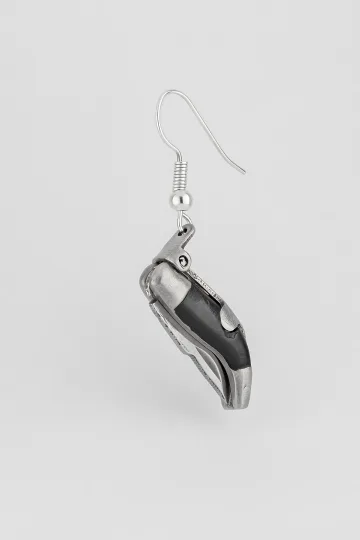
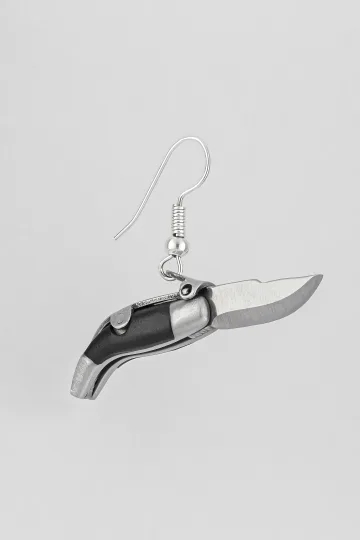
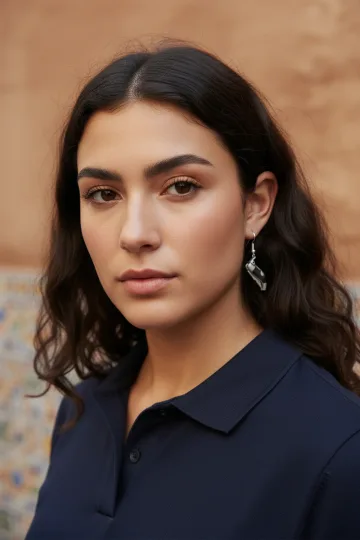
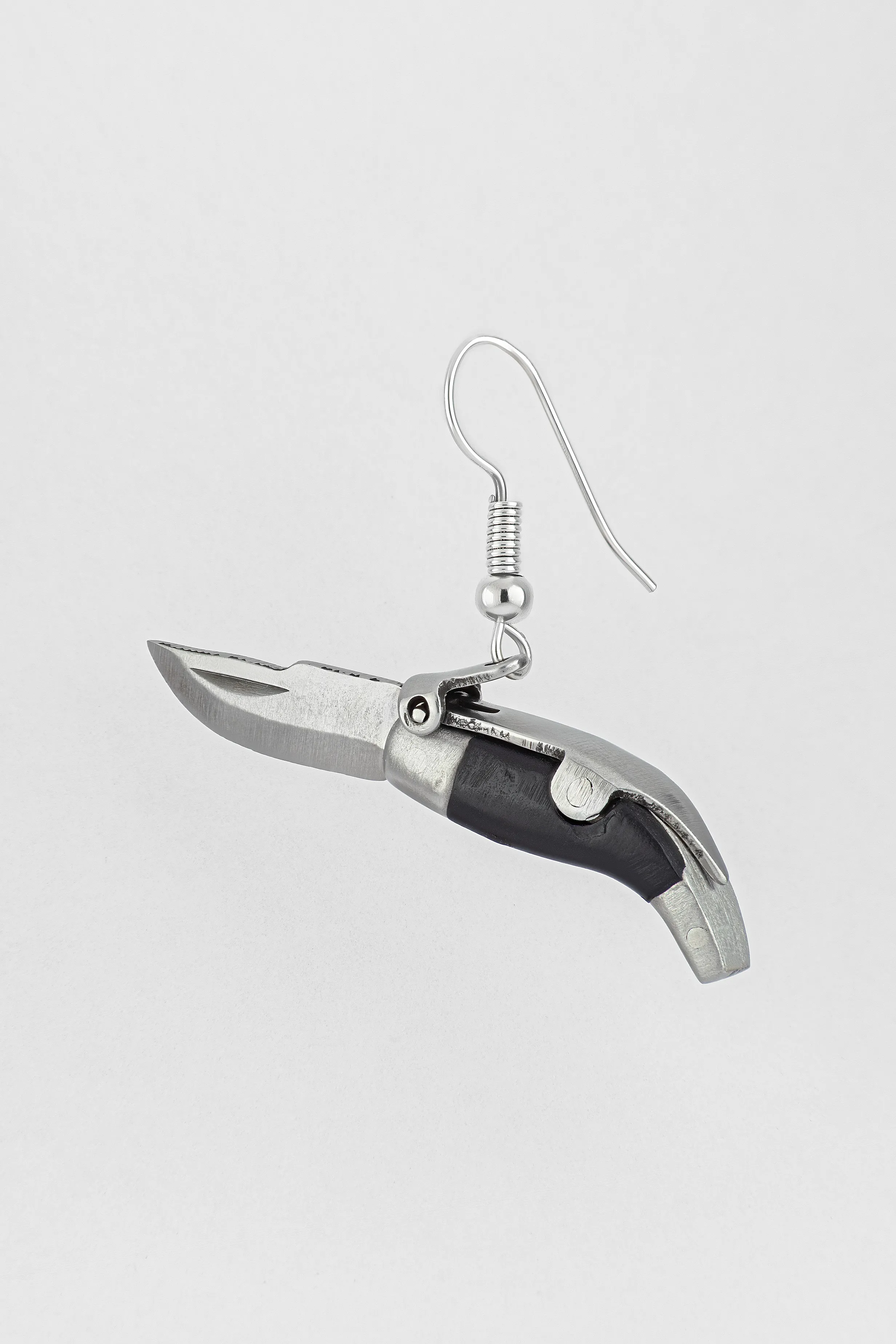
- As an earring: a single navaja earring makes a bold asymmetric statement
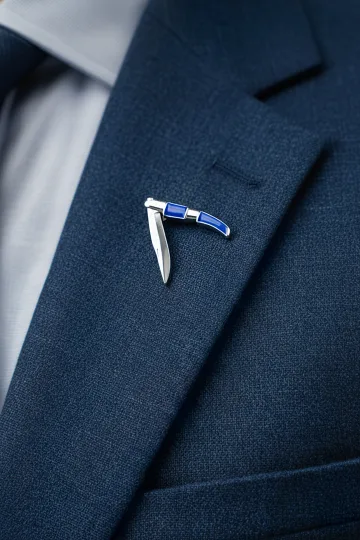
- As a pin or brooch: on a jacket lapel, a bag, or a hat
The navaja form is strong enough to anchor any outfit. It pairs naturally with leather, denim, black, earth tones, but it also creates interesting tension with softer, more feminine styling. A Jerezana pendant on a silk blouse. A Capaora earring with a flowing dress. The contrast works because the navaja carries so much cultural weight that it elevates whatever it's paired with.
Browse the full range in the men's collection or find the perfect piece in the gifts collection.
Send a friend a discount code, they save on their first order.
Navaja as a gift
A navaja pendant is a gift for a man with character. Not an abstract charm, but a form with a history behind it: Spanish heritage, the craft of Albacete, five centuries of hand-work gathered into a single silhouette. It's the kind of piece you give to someone who values substance over shine and recognises good work at a glance.
Choose a meaningful occasion. A milestone birthday, a promotion, a turning point in a career. The navaja also works as a mark of respect for a mentor or a boss: it speaks of independence, self-reliance and keeping your word, a language that lands with anyone who has walked a long road themselves. There's no aggression here, no weapon romance, only the dignity of craftsmanship.
A navaja is worn and passed on. The pendant outlives fashion and stays with its owner for years, then moves to the next generation along with the story of who gave it and why. That's what makes it a gift rather than a souvenir.
For matching a piece to the occasion, budget and recipient, see our gift guide by occasion. We also cover jewellery gifts for men and a gift for your boss separately. Choose a blade form in the navaja catalogue.
Buying it as a gift? Each one arrives ready to give.
 A branded Zevira box and a little card come with every order.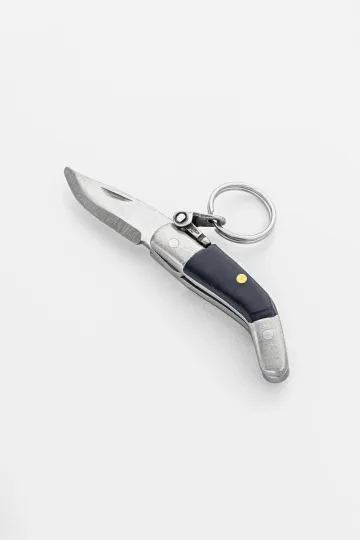


Frequently asked questions
What does "navaja" mean?
The word comes from the Latin "novacula," meaning razor. In modern Spanish, "navaja" refers specifically to a folding knife with a blade that locks into the handle. It's distinct from "cuchillo" (a fixed-blade knife) and "navaja barbera" (a straight razor). In English and other languages, the word "navaja" is used without translation to refer specifically to the Spanish folding knife.
Is the navaja legal to carry?
Laws vary by country, region, and blade length. In Spain, folding knives with blades under 11 centimetres are generally legal to carry if you have a legitimate reason. Larger navajas are classified as weapons and require permits. In other countries, knife laws differ significantly. This article is about history and culture, not legal advice, so always check your local laws. Of course, navaja jewellery (pendants, earrings, pins) is legal everywhere.
What's the difference between a navaja and a switchblade?
The key difference is the opening mechanism. A navaja is manually opened. You use your thumb, a nail nick, or a combination of gravity and wrist movement to open the blade, which then locks in place. A switchblade (automatic knife) uses a spring mechanism activated by a button or lever. The navaja predates the switchblade by centuries. They're fundamentally different objects with different histories and cultural associations.
Why is Albacete famous for knives?
Geography, history, and culture converged. The city sat at a crossroads of major trade routes, had access to water power and iron ore, inherited Moorish metalworking traditions, and developed a guild system that maintained quality and trained new generations of craftsmen. Over centuries, the city's identity became inseparable from its knife-making tradition. Today, Albacete's cutlery museum and its annual fair continue to celebrate this heritage.
Can women wear navaja pendants?
Historically, women in Spain carried navajas too, smaller ones, often in a sheath tucked into a garter or hidden in clothing. The idea that knives are "only for men" is a modern simplification. Navaja jewellery works beautifully on anyone. A Jerezana pendant on a fine chain has an elegant, serpentine quality that's flattering regardless of gender. Many of Zevira's customers buying from the Forja Espanola collection are women choosing pieces for themselves.
What is the best navaja type for a pendant?
It depends on what speaks to you. The Jerezana has the most elegant, flowing lines, and it's the most obviously beautiful as jewellery. The Punta de Espada has a striking, angular form that makes a stronger, more assertive statement. The Capaora is bold and substantial. The Albacetena is the most ornate. Take the quiz at the top of this article to find which type matches your character.
Are navaja pendants appropriate as gifts?
Absolutely. In many cultures, giving a knife (or a representation of a knife) symbolises wishing the recipient strength, protection, and the ability to cut through life's difficulties. In Spanish tradition, there's a saying: "regalar un cuchillo es regalar poder" (to give a knife is to give power). A navaja pendant makes a thoughtful gift for anyone who appreciates Spanish culture, distinctive design, or jewellery with real meaning behind it.
What's the connection between navajas and flamenco?
Both come from the same cultural soil: Andalusia, the fusion of Moorish, Roma, Jewish, and Christian traditions, and the lower classes of Spanish society. Flamenco songs reference knives and knife fights as metaphors for love, pain, and fate. The navaja's qualities (intensity, beauty, danger, pride) mirror the emotional landscape of flamenco. They're two expressions of the same spirit.
Silver and gold jewellery, wedding bands, symbolic pendants, paired sets.
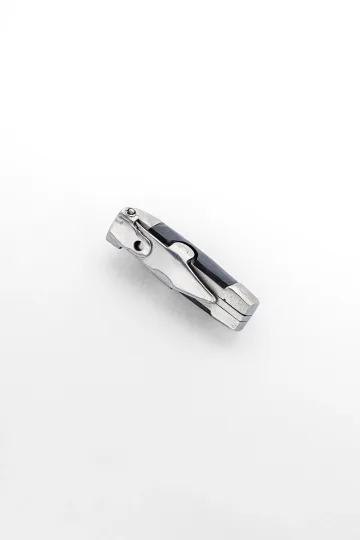
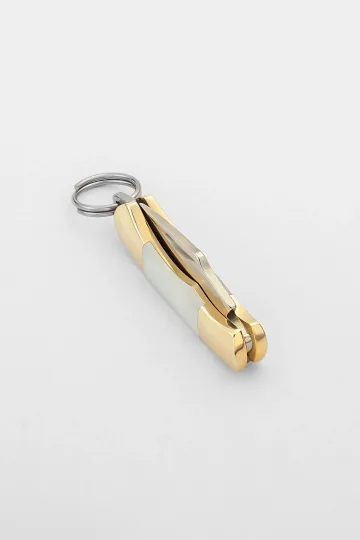
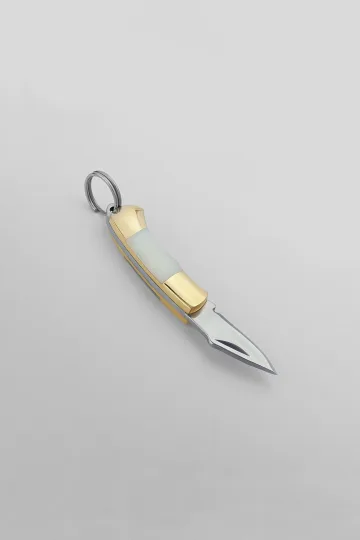
Wear the symbol, don't just read about it. These are in stock:






Conclusion
The navaja has been part of Spain for over a thousand years. It started as a Moorish craft, became a common man's weapon, got romanticised by poets and painters, nearly disappeared under the weight of modernity, and came back as a symbol of cultural pride and artistic excellence.
That's a lot of life for a folding knife.
But the navaja isn't really about the knife. It's about what the knife represents. Self-reliance. Personal honour. The belief that everyday objects can be beautiful. The insistence on doing things your own way, even when the world offers you easier, cheaper, mass-produced alternatives.
These ideas don't go out of style. They don't become irrelevant. If anything, they matter more now than they did a century ago, because the forces of standardisation and disposability are stronger than ever. The navaja is the opposite of disposable. It's an object that was designed to last, designed to be specific, designed to carry meaning.
Whether you encounter it in a museum in Albacete, in the pages of a Merimee novel, in a flamenco lyric, or around someone's neck as a pendant, the navaja still tells the same story. It says: someone made this with care. Someone carried this with pride. And the tradition continues.


