Jewellery for Couples: Matching Pieces, Symbols of Connection, and Gift Ideas
Couple jewellery is 2,500 years old. The Greeks called it symbolon, literally "something thrown together." Two people broke a piece of pottery or a coin, each kept half, and decades later their descendants could meet, fit the broken edges back together, and prove an old bond. That Greek word is the root of the modern word "symbol." A half-heart pendant on a silver chain today is a direct descendant of that piece of broken clay.
This guide covers how couple jewellery actually works today. The different types, the symbols that pair best, the occasions that call for matching pieces, materials, engraving, and how to choose without ruining the surprise. Shopping for an anniversary, a Valentine's gift, or just to mark something real between you and someone you love? There's an approach here that fits.
And if you're picturing identical friendship bracelets from 2003, that's the wrong picture entirely.
Why couple jewellery works
Let's get this out of the way first: couple jewellery is not about matching outfits. It's not about proving to the world that you're together. Nobody needs to see two people wearing identical chains and think "oh they must be a couple." That's not the point.
The point is the invisible thread.
Shared symbols, private language
Every couple develops their own language over time. Inside jokes. Nicknames. That one look you give each other across a room that means "can we leave now?" Couple jewellery taps into that same private world. When you both wear a piece that connects, it becomes part of your shared vocabulary, except it's silent, and it travels everywhere with you.
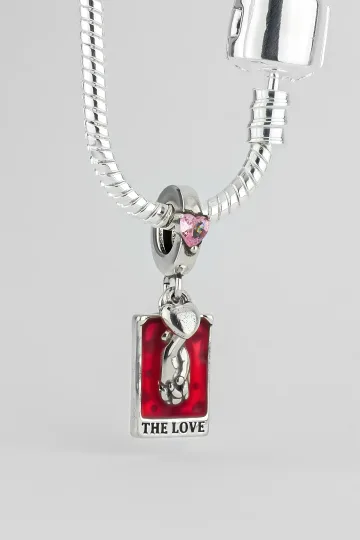
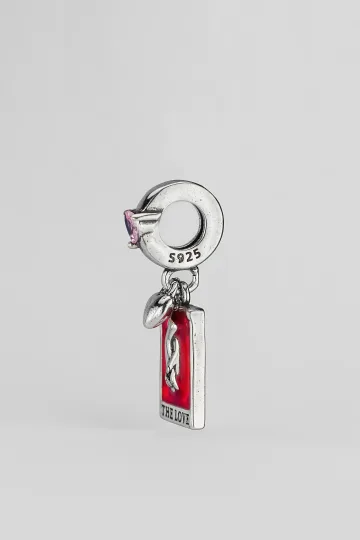
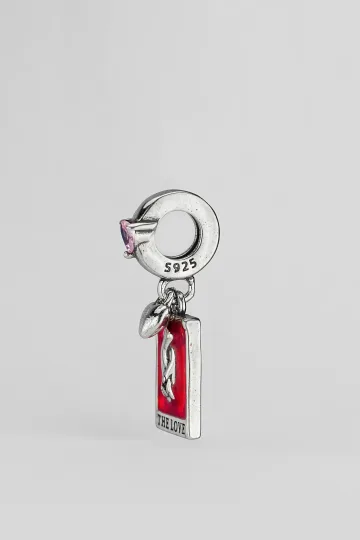
Wear the symbol, don't just read about it. These are in stock:
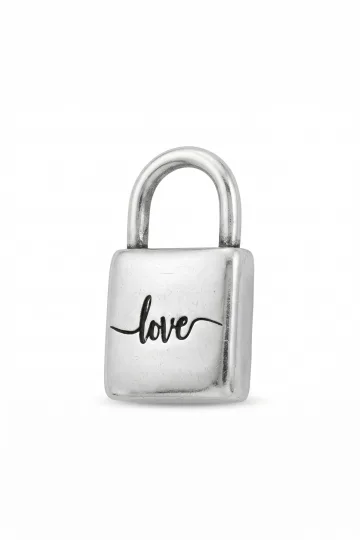
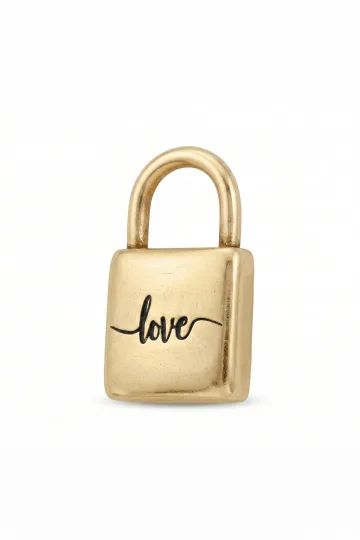
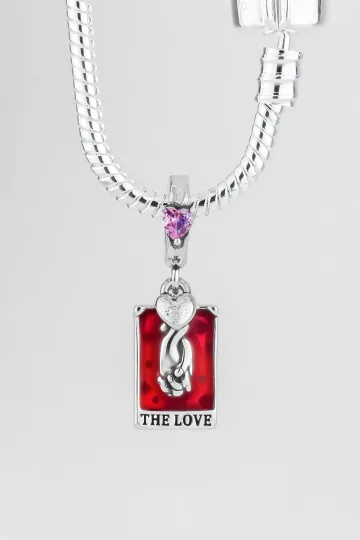
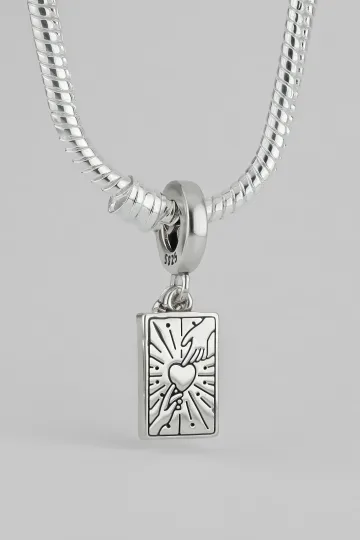



A compass pendant on him and a star pendant on her doesn't mean anything to a stranger on the street. But between the two of them, it carries an entire conversation about direction, about home, about knowing that wherever one of them goes, the other is the fixed point they navigate by. That's not cheesy. That's intimacy made physical.
The invisible connection
There's something specific that happens when you're wearing a piece of jewellery that connects to someone else's piece, and that person is across town, or across the country, or sitting right next to you on the sofa. You touch the pendant without thinking about it. Your fingers find it while you're on a phone call, or waiting for the bus, or just standing in line at the supermarket. And for half a second, you're not alone. You're connected to the person who wears the other piece.
It's not magic. It's just how objects work when they carry meaning. A ring on your finger from someone you love doesn't feel the same as a ring you bought yourself on clearance. The metal is the same. The weight is the same. But the meaning transforms the experience of wearing it. Couple jewellery amplifies this effect because there's always a mirror piece out there, on someone else's body, carrying the same story.
Beyond the matching outfit problem
The reason some people roll their eyes at couple jewellery is because they're imagining the worst version of it. Matching t-shirts at a theme park. Identical tattoos after three weeks of dating. That coordinated instagram aesthetic that feels more like a brand campaign than a relationship.
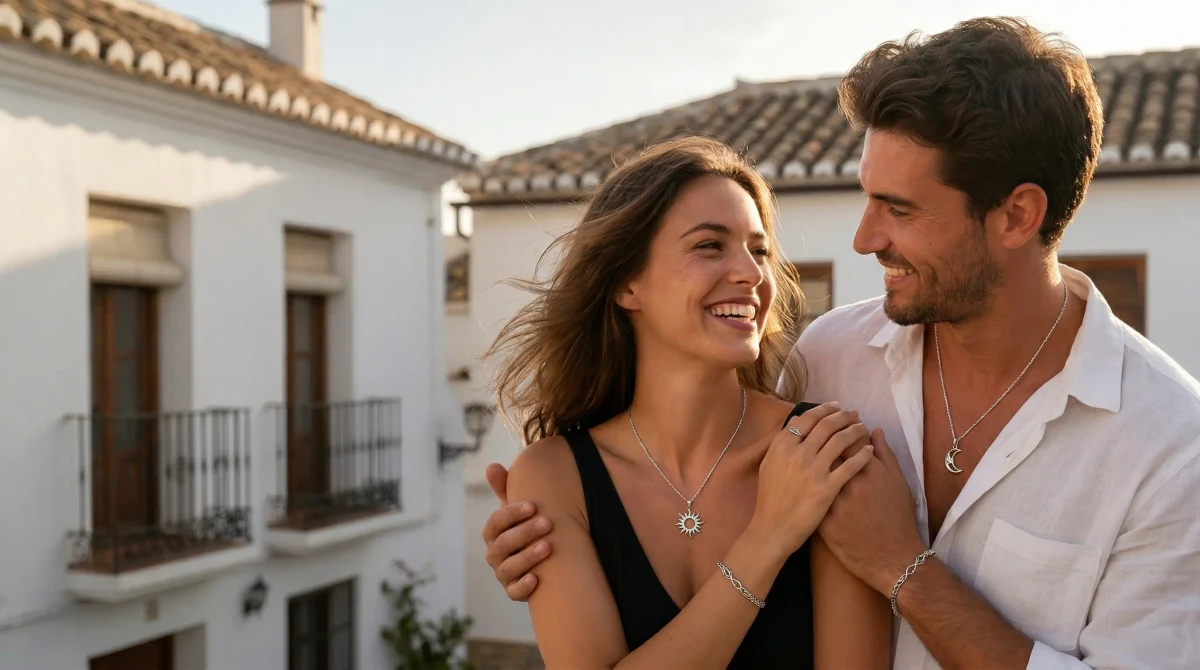
Good couple jewellery avoids all of that. The best couple pieces are different enough that nobody would spot them as a set unless they knew what to look for. Complementary, not identical. A sun and a moon. A compass and a star. A tree and a heart. The connection is there, but it's private. And that privacy is what makes it powerful.
Where couple jewellery comes from
The history of paired jewellery runs deeper than American shopping malls. It starts in antiquity, runs through medieval Europe, and passes through Victorian England before it ever reaches a mall kiosk.
Greek symbola and Roman tessera hospitalis
The Greek symbolon worked as a legal document. Two people bound by xenia, the sacred obligation of hospitality, broke a piece of pottery or a small token together. Each kept half. The matching halves could re-activate the ancestral bond decades or even centuries later. A descendant of one family could arrive at the door of the other, present the broken piece, and if the edges matched, the original contract was honoured. It was simultaneously a family heirloom and a working legal document.
The Romans expanded the custom into the tessera hospitalis, a small clay or bronze token broken between host and guest. Inscriptions on one half continued on the other, and some Roman tesserae were strung on cords and worn as pendants. These are the direct ancestors of paired pendants worn around the neck today.
Medieval gimmel rings
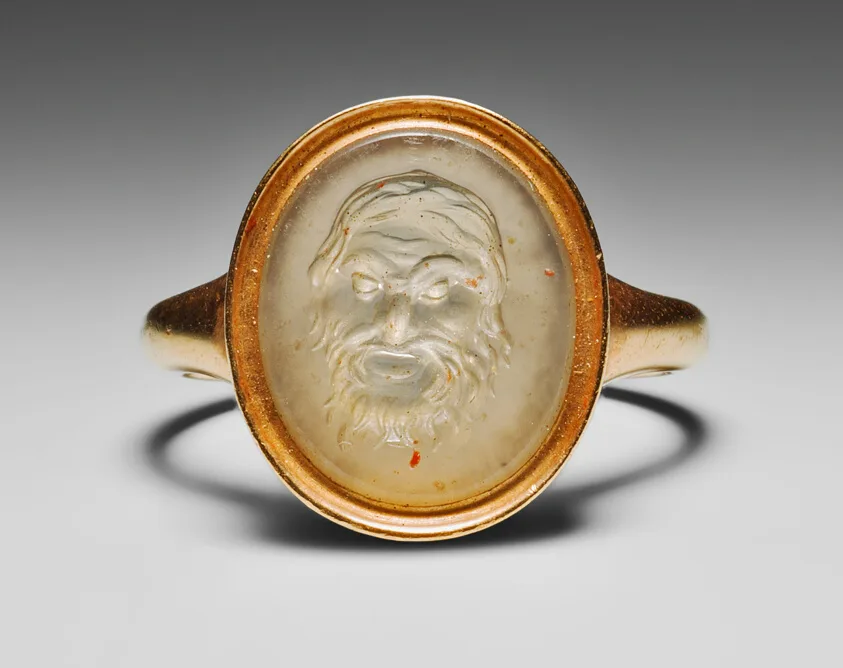
The gimmel ring, from the Latin gemellus, meaning twin, was a European medieval and Renaissance design. Two or three thin bands fit together to form one ring. Each band could be worn separately by the engaged couple during the engagement, then joined onto the bride's finger at the wedding ceremony.
Gimmel rings were popular in Europe from roughly the fifteenth to the seventeenth century. Some featured clasped hands (fede) or a heart hidden between the joining bands, visible only when the pieces came together. The symbolism is clean: two complete objects, each worn separately during a period of waiting, joining permanently at the moment of union. This is the template for almost every paired ring set sold today.
Victorian Mizpah pendants
This is where the half-heart tradition really begins. From roughly 1860 to 1910, British and American couples and families exchanged Mizpah pendants. Mizpah is Hebrew for "watchtower," from a verse in Genesis 31:49: "The Lord watch between me and thee, when we are absent one from another."
The Victorian context made this design urgent. The British Empire scattered families across continents. Soldiers shipped out to India, sailors to Australia, emigrants to Canada. A Mizpah pendant said: even if I never come home, you have half of this disc, and God watches over both of us. It was real religious and emotional infrastructure, not a decorative trinket.
Mizpah pendants were given far beyond romantic couples. Mothers gave them to sons leaving for foreign service, sisters exchanged them, fathers gave them to daughters marrying and moving away. The genre was not romantic, it was broadly "about separation and the bond that outlasts it." The straight line from Victorian Mizpah pendants to modern half-heart BFF necklaces is well documented. This is not an American invention of the 1990s. It is an English tradition over a hundred years older.
Twentieth century: from sentiment to mall kiosks
Paired jewellery became a mass market product in the second half of the twentieth century. American shopping mall kiosks in the 1980s and 1990s popularised the half-heart "best friends" pendant as an inexpensive gift for teenagers. The format was cheap, accessible, and required no ceremony to give.
This is when paired jewellery became casual. For centuries it had been serious business: Greek oaths, Roman legal tokens, medieval betrothals, Victorian partings of a lifetime. The 1990s half-heart in stainless steel or plated brass made the idea accessible to ten year olds with allowance money. The cheap version has its own dignity, but the school-yard association is why some adults still hesitate to take a half-heart pendant seriously. They should. Made in real silver with careful engraving, it reads as a continuation of the Victorian Mizpah tradition, not as a child's toy.
Matching chains are a team kit, not a love story. Wear pieces that rhyme, not pieces that clone. And don't argue.
How to wear couple jewellery
I've styled couple pieces for partners, friends and whole families on set, and the takeaway never changes: a couple piece works because of how each person wears it, not because the two match. Here is what actually holds up.
What do I wear a couple pendant with day to day? For everyday I recommend a fine chain over a plain, print-free top: a tee, a roll-neck, a shirt. The calmer the fabric, the more the pendant reads. Under an open collar or a V-neck it settles right in the centre, which is its best spot. Under a high neck I suggest a shorter chain so the piece rests on the fabric instead of hiding.
How do I wear a couple piece when we're apart? With your partner nowhere in sight, the pendant stops being a couple statement and becomes your personal detail. I suggest layering it: add one shorter chain on top and stop there. That way it reads as part of your style, not as the single reminder of a relationship.
Can I mix metals across the pair? You can and you should. A gold sun with a silver moon drives home the idea that you're different but linked. One rule I recommend: if there are two metals, repeat each of them at least twice across the look, so the mix reads deliberate rather than accidental.
How do I put together an evening couple look? For evening I choose an open neckline and smooth fabric in a deep colour: wine, emerald, black. I keep the couple pendant as the lead and add at most one shorter fine chain. Match the metal to the rest of the look: warm gold with beige and wine, cool silver with navy and grey.
How do the two of us wear our pieces without looking like a costume? I recommend not tailoring your outfits to each other. The best couple looks read as two people with good taste who happen to wear related pieces. Let the pendants fall at their natural length and keep the match a quiet conversation, not a billboard.
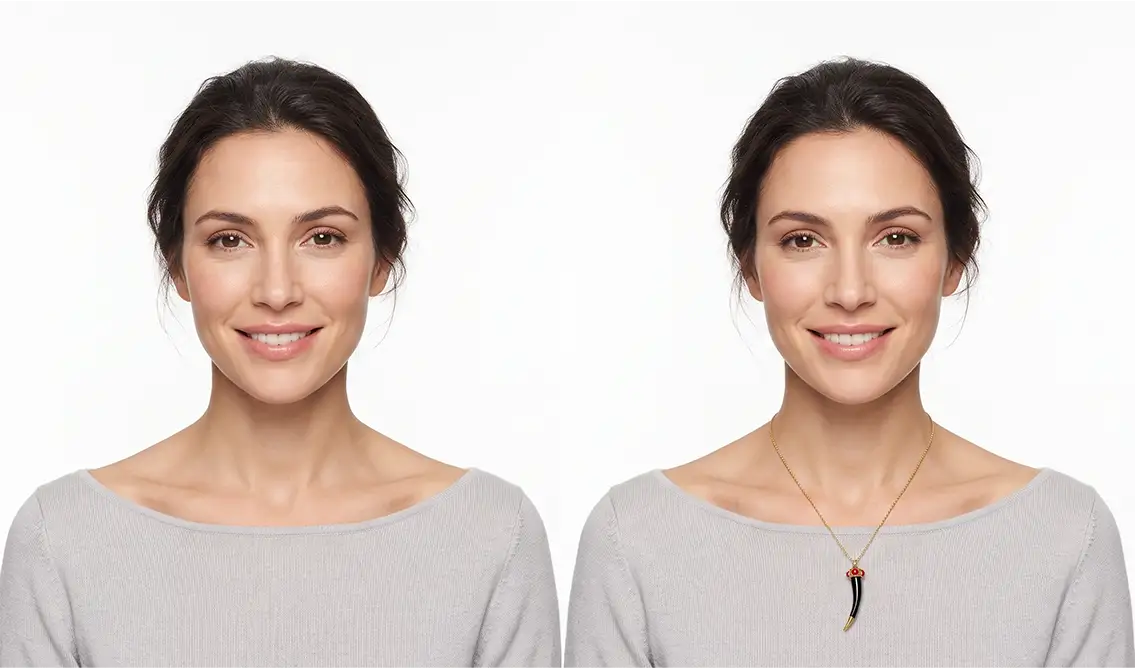
Turn on your camera, pick earrings, a pendant or a ring, and see the piece on yourself in real time.
Switch items in one tap.
Everything runs in your browser: no photo or video is ever uploaded.
Customer reviews
Zevira is a real jewellery shop. Genuine payments, deliveries and customer thank-yous.
🥰🥰🥰 gracias
Ok, ¡gracias! 🙂
Types of couple jewellery
Not all couple jewellery follows the same formula. There are distinct approaches, and which one works depends on your relationship style, how visible you want the connection to be, and how much you each value having your own identity within the pair.
Matching pendants
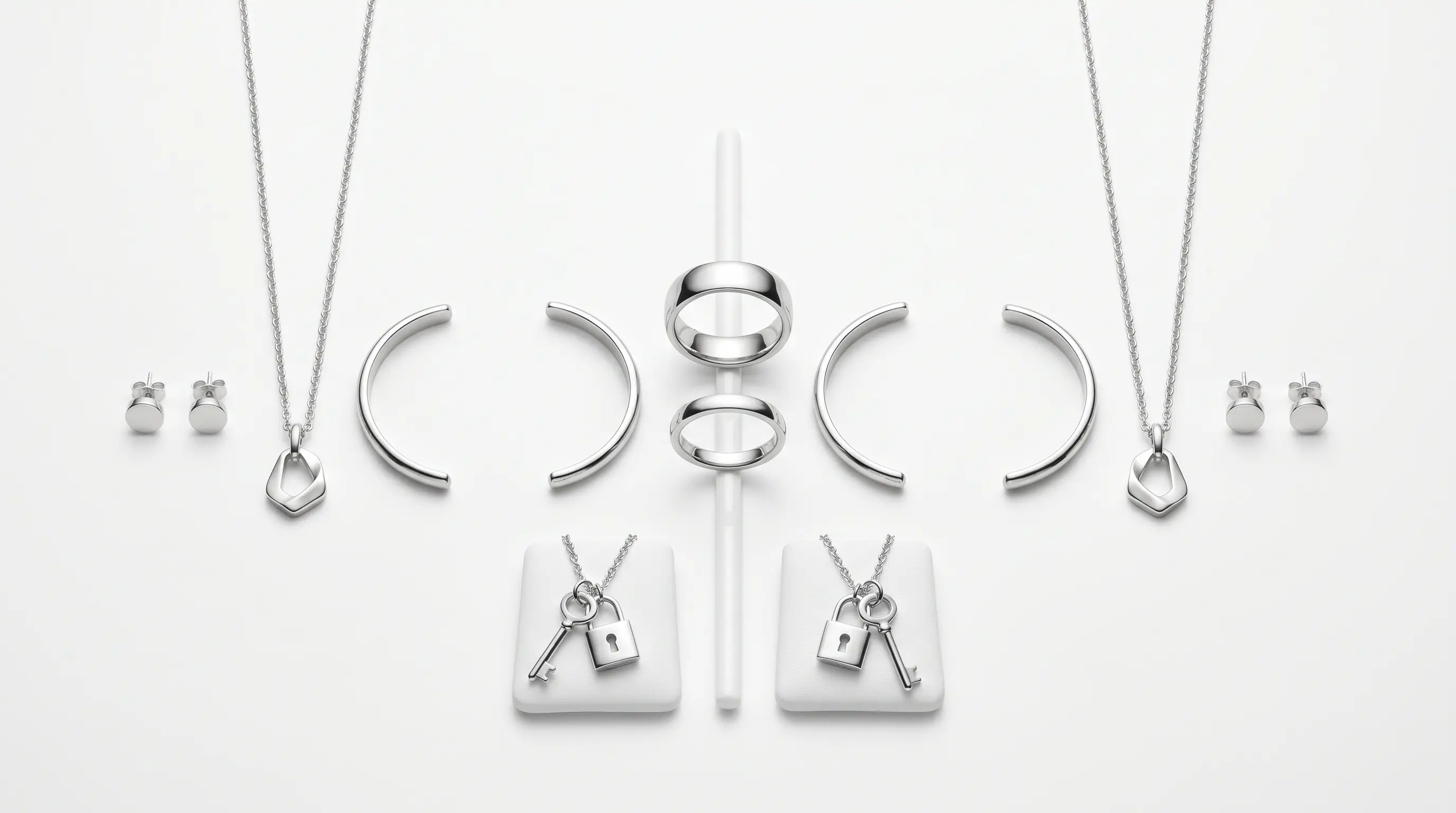
The most straightforward approach. Two of the same pendant, same design, same material. The only difference might be chain length or size. Matching pendants work well for couples who actively enjoy being a unit. You see it a lot with heart pendants, love lock pendants, and simple symbolic charms.
The appeal is the clarity. There's no ambiguity about what matching pendants mean. When you both pull them out at the same time and someone notices, the connection is obvious and intentional. Some couples like that visibility. They want people to know.
The potential downside is that matching pieces require similar taste. If one of you loves bold gold and the other gravitates toward minimal silver, identical pendants force a compromise that might not feel authentic for both parties.
Complementary symbols
This is where it gets interesting. Instead of the same piece twice, you choose two different pieces that relate to each other. Sun and moon. Lock and key. Compass and star. Each piece stands alone as a beautiful design in its own right, but together they tell a story.
Complementary symbols work for couples who value individuality. You each get something that suits your personal style, your own aesthetic, your own personality, but the two pieces share a conceptual thread. It's matching on a deeper level than appearance. It's matching in meaning.
This approach also opens up more creative possibilities. You're not limited to what looks good doubled. You can mix metals, mix sizes, mix types of jewellery entirely: a pendant for one and a ring for the other, connected by the same symbolic family.
Split and half pieces
Split jewellery takes one design and divides it into two wearable halves. A heart broken into two pieces, each on its own chain. A circle split down the middle. A yin-yang divided into its two halves. When the pieces come together, they form the complete design.
This type has a strong emotional hook: apart, each piece is incomplete. Together, they're whole. The metaphor is obvious, and it works because it's honest. Nobody in a relationship is entirely complete on their own. We like to pretend otherwise, but the truth is that the right person fills in gaps you didn't even know you had.
Split pieces are particularly popular for long-distance couples. When you're separated by miles, having a physical half that only becomes whole when you're reunited is a tangible reminder that the distance is temporary.
Puzzle pieces
A single shape (a heart, a star, a circle, an abstract form) cut into two interlocking puzzle pieces. Each person wears one piece. Held together, they click into place visually. The puzzle leans slightly more playful than the half heart. Two people are pieces of a larger image, and they only make sense together.
Puzzle sets work beautifully for parent and child pairings, three-sibling groups (where a central piece is joined by two side pieces), and friend trios. They also appear as stackable ring sets, where two or three thin bands fit together to form one thicker pattern. Each ring reads as a simple band alone and as part of a larger design together.
Yin and yang
Two teardrop-shaped halves that form a complete circle. One dark, one light, each containing a small dot of the opposite colour. The symbol is Daoist, Chinese in origin, and represents the interdependence of opposites. Light and dark, hot and cold, active and receptive. Neither is good or bad. Each contains a seed of the other.
As paired jewellery, the yin yang pendant is cut along its natural split. One partner wears the dark half, the other the light. This works best for pairs who think of themselves as complementary rather than identical: the loud one and the quiet one, the planner and the improviser. The yin yang pair says we are different, and that is the point. Read more in our yin yang meaning guide.
Coordinate pendants
A modern format. Two matching pendants or bracelets engraved with the same geographic coordinates: the corner where you met, the restaurant of a first date, the hospital where a child was born, the village where two friends grew up. The numbers look abstract to outsiders. That's the appeal. It's jewellery with a built-in private language.
A variation: two different sets of coordinates on a single pendant, "here is you" and "here is me," for couples living apart. Or coordinates paired with a date, when the day of meeting matters more than the place.
His-and-hers from the same collection
This is the subtlest approach. You don't pick matching or complementary pieces at all. Instead, you each choose whatever you want from the same collection. Maybe he picks a pendant and she picks a ring. Maybe she wants the bold piece and he wants the understated one. The connection isn't in the design. It's in the origin.
This works beautifully for couples who are fiercely individual but still want a shared thread. The jewellery doesn't match visually. It matches conceptually. Both pieces come from the same creative family, share the same design language, and carry the same overall energy. It's like reading different chapters of the same book.
For a deeper look at how to layer and combine different jewellery pieces, our styling guide covers the basics.
Upload a photo of your pet, someone you love, or an object. We'll build a 3D model and hand-cast it in pewter.



Best symbol pairs for couples
Some symbols are made to go together. They've worked in pairs for centuries, and there's a reason people keep choosing them. Here are the pairings that resonate most deeply.
Sun and Moon: balance in every sense
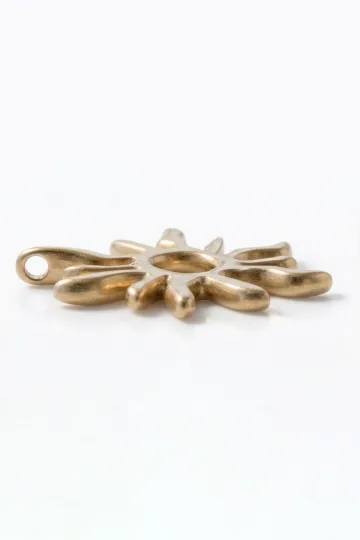
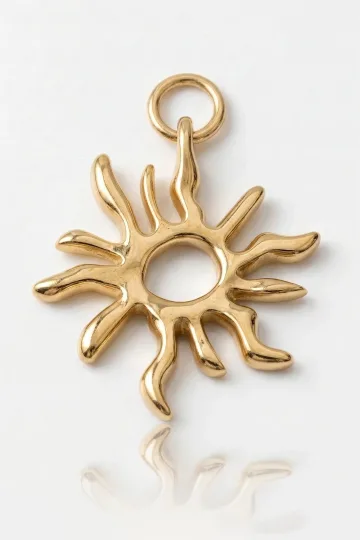
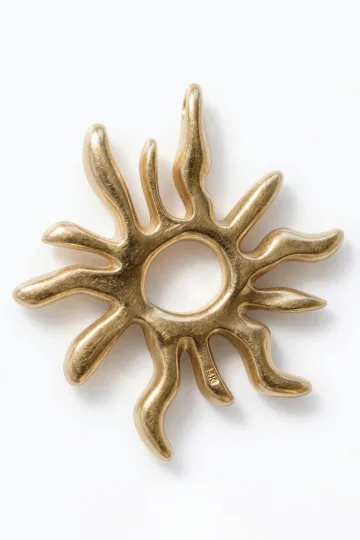
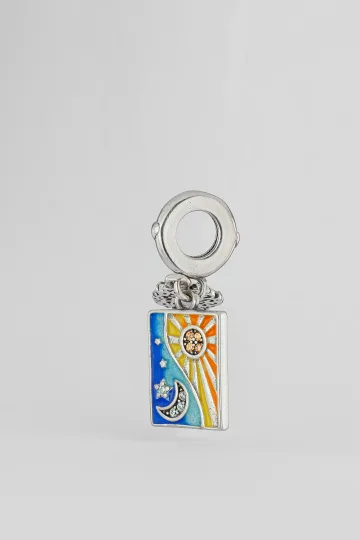
The sun and moon pairing might be the most universal symbol of complementary partnership. Day and night. Warmth and coolness. Visibility and mystery. Together, they represent the full cycle of existence. You can't have one without the other.
In couple jewellery, the sun typically represents the partner who's more outgoing, more visible, more extroverted, the one who lights up a room. The moon represents the quieter partner, the reflective one, the one who shines in a different, subtler way. But these aren't rigid assignments. Some couples swap them precisely because they see qualities in each other that the other person doesn't see in themselves. He thinks she's the sun. She thinks he is.
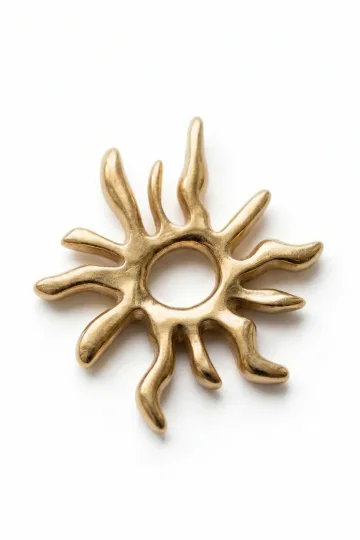
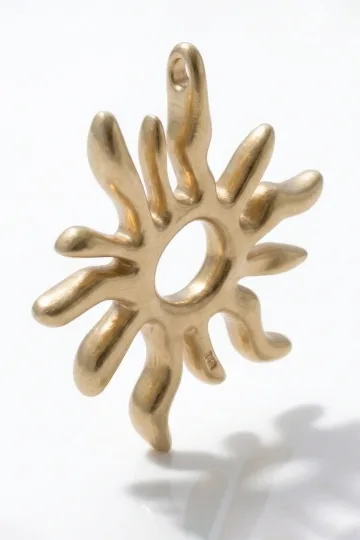
The sun and moon pairing works across every metal tone and design style. A gold sun pendant paired with a silver moon pendant creates a visual contrast that reinforces the symbolism. Or both in gold, both in silver. The complementary energy comes from the symbols themselves, not the material.
For more on what celestial symbols mean in jewellery, our guide to sun, moon and star jewellery goes deep.
Compass and Star: he finds the way, she's his north star
This was the pairing from the story at the top, and it's become one of the most requested couple combinations for a reason. The compass represents the journey: the active search, the willingness to explore, the courage to move forward even when the path isn't clear. The star represents the destination: the fixed point, the guiding light, the thing worth travelling toward.
There's a beautiful tension in this pairing. The compass is always moving, always recalibrating. The star is steady, constant, unshakeable. Together, they suggest a relationship where one person anchors while the other explores, and both roles are equally essential.
This pairing works especially well for long-distance couples, couples with different career paths that take them in different directions, or anyone who feels that their relationship is defined by the idea of finding your way to each other, over and over again.
Tree of Life and Heart: roots and love
The Tree of Life is one of the most powerful symbols in jewellery. It represents growth, family, connection to something larger than yourself. Paired with a heart, it creates a story about love that's grounded, not floating. Love with roots.
This combination works particularly well for couples who've built something together over time. Years of shared experiences, maybe children, maybe a home, maybe just a history that runs deep. The tree represents everything they've grown together. The heart represents why they started growing in the first place.
It's also a beautiful pairing for parent-child connections, which we'll get to later.
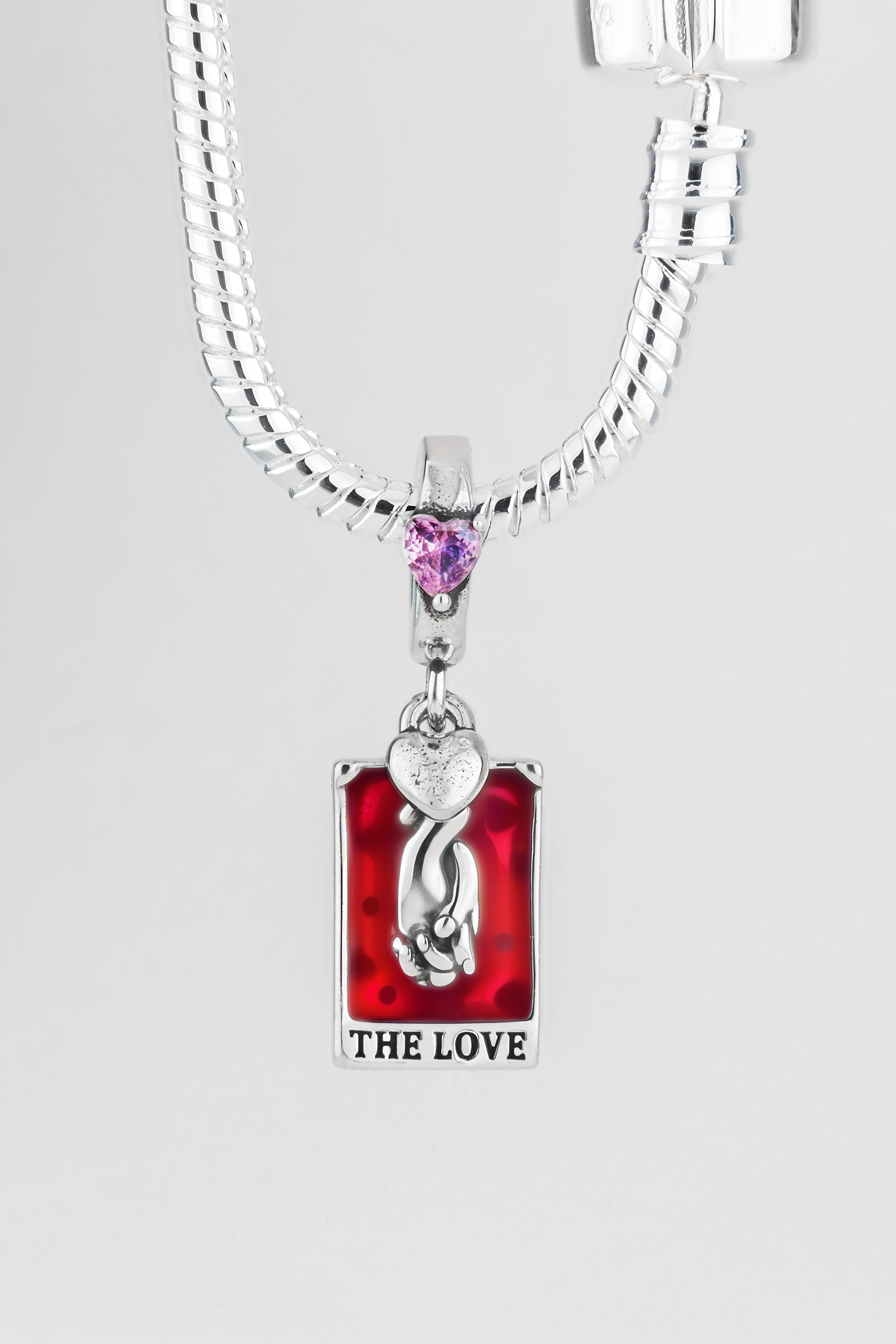
Lock and Key: love lock pendants for two
We covered the love lock symbol in depth in our love symbols guide, but it takes on special meaning as a couple pairing. One person wears the lock. The other wears the key. The symbolism writes itself: you hold what protects me, and I hold what opens you.
Lock and key sets have been exchanged between lovers for centuries, long before the modern bridge lock tradition. Victorian couples exchanged actual lock-and-key sets as tokens of fidelity. The tradition has stayed because the metaphor is irresistible: trust, access, vulnerability, security, all wrapped into two small metal shapes.
For couples who lean toward romantic traditions with a bit of drama, this pairing delivers.
Whale Tail and Seahorse: for ocean lovers
Not every couple pairing needs to be about cosmic balance or deep metaphors. Sometimes the connection is about a shared passion. For couples who love the ocean, whether you're surfers, divers, beach wanderers, or just people who feel most like yourselves near water, the whale tail and seahorse pairing captures that shared world.
The whale tail represents freedom, power, and the call of the deep. The seahorse represents patience, grace, and the gentle side of the sea. Together, they say: the ocean is our place. It's where we found each other, or where we're happiest together, or simply where our best memories live.
Our guide to ocean jewellery symbols explores more marine pairings and their meanings.



Couple jewellery by occasion
The right moment can turn a piece of jewellery from a nice gift into a significant one. Here are the occasions that pair best with couple jewellery, and what to consider for each.
Anniversary gifts that actually mean something
Anniversaries are the most natural fit for couple jewellery because the whole point is celebrating the connection between two specific people. Paper, wood, silver, gold: those traditional anniversary materials are fine, but a matched or complementary set of pendants or rings says something more specific than a generic anniversary gift.
The trick with anniversary couple jewellery is personalisation through symbol choice. Your fifth anniversary? Pick symbols that reference something from your fifth year together. The trip you took, the challenge you overcame, the inside joke that defined that season. The symbol doesn't need to be obvious to anyone else. It just needs to make both of you smile.
Valentine's Day: with substance, without the cliche
Valentine's Day gets a bad reputation because so much of it is performative. Flowers that die, chocolate that disappears, cards with pre-written messages from strangers. Couple jewellery cuts through that noise because it lasts, and because it's specific to your relationship.
The best Valentine's couple jewellery leans into the romantic symbolism without being generic. A love lock set is perfect here. It acknowledges the occasion without feeling like you grabbed the first heart-shaped thing you saw. Sun and moon pieces work too, because they celebrate the balance that makes your relationship actually function day to day.
Engagement party or pre-wedding gifts
Here's an idea that more people should consider: couple jewellery as an engagement party gift, not from the couple to each other, but from close friends or family. A complementary set that the engaged couple can wear during the hectic wedding planning months, something to remind them that all the stress about seating charts and venue deposits exists because they chose each other.
For couples giving to each other before the wedding, matching pendants serve as a beautiful counterpart to the rings. Rings carry the formal weight. Pendants carry the personal weight.
Long-distance relationship anchors
This might be where couple jewellery does its most meaningful work. When you're separated by distance, the absence of the other person is physical. You can't reach for their hand. You can't lean into them on the sofa. The everyday physical presence that most couples take for granted is simply missing.
A pendant you can touch becomes a stand-in for that physical connection. Split pieces work especially well here. The incomplete half is a reminder that reunion is coming, and that you carry a piece of them wherever you go. Compass and star pairings hit hard for long-distance couples too, for obvious reasons.
"Just because": the most powerful occasion of all
There's something about jewellery given on a random day, for no calendar-mandated reason, that hits differently. It says: I was thinking about you. Not because the date told me to, but because you're in my head and I wanted you to have proof.
Couple jewellery given "just because" often ends up being the most treasured. There's no occasion to compete with, no expectation to meet. Just intention, pure and simple. If you're considering couple jewellery and waiting for the right moment, stop waiting. Today is the right moment.
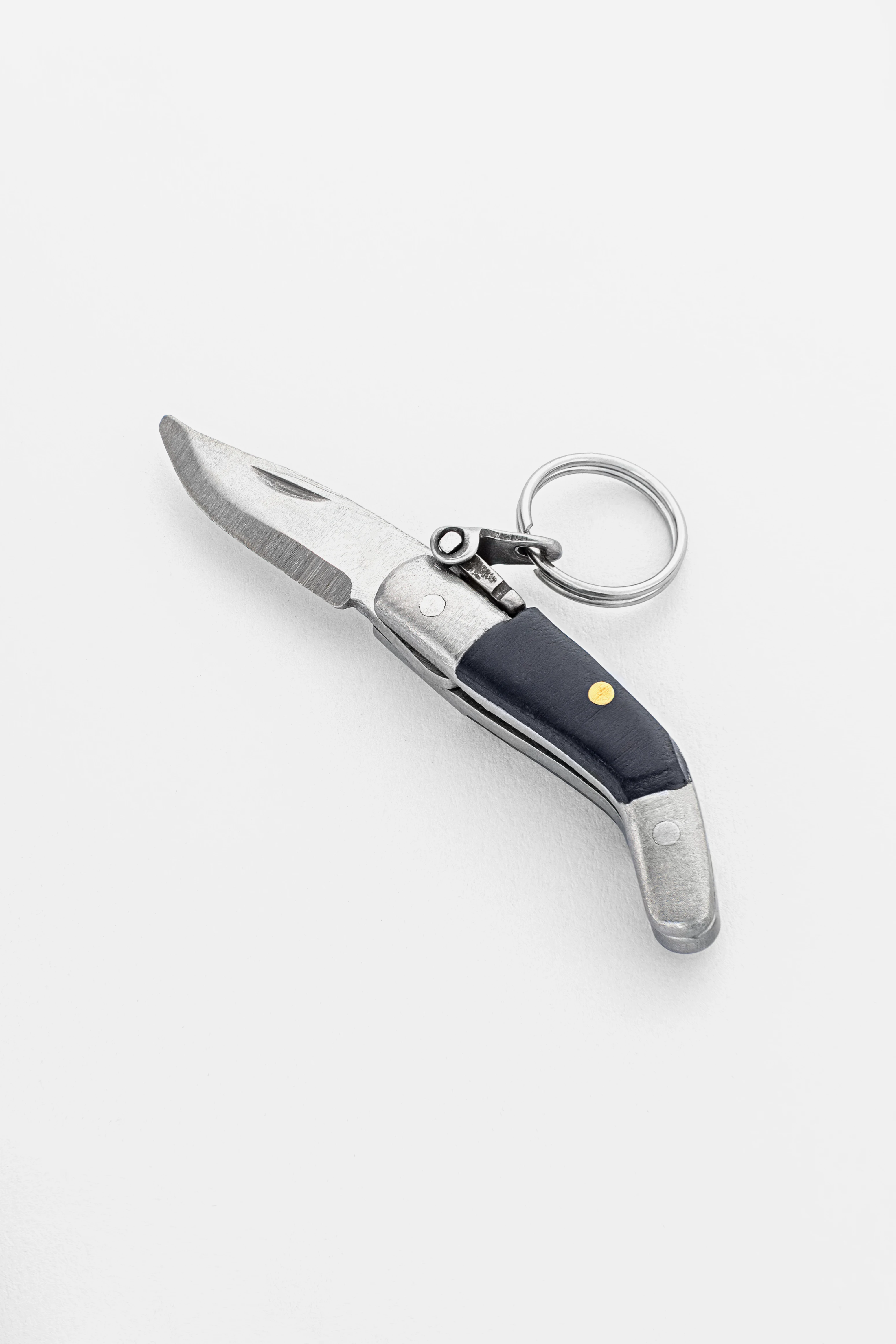
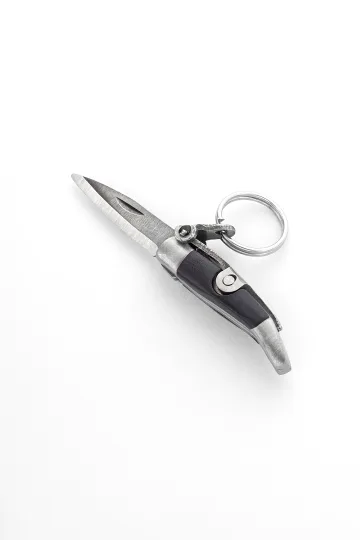
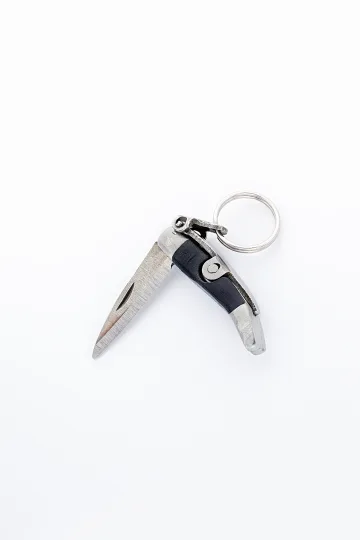
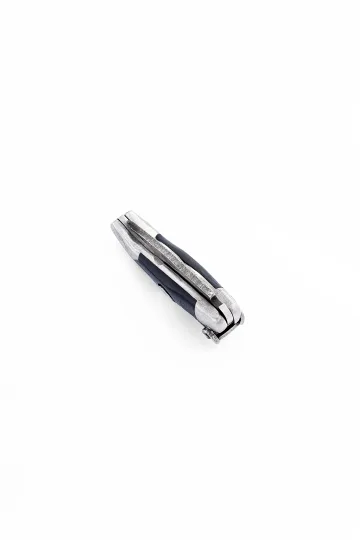
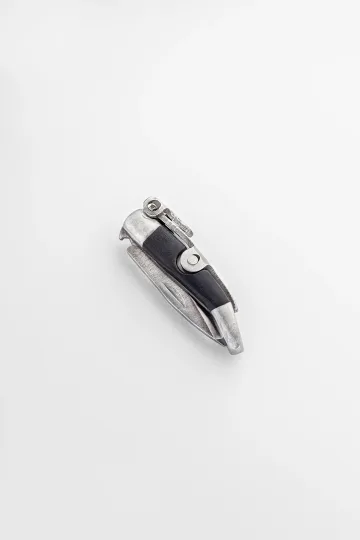
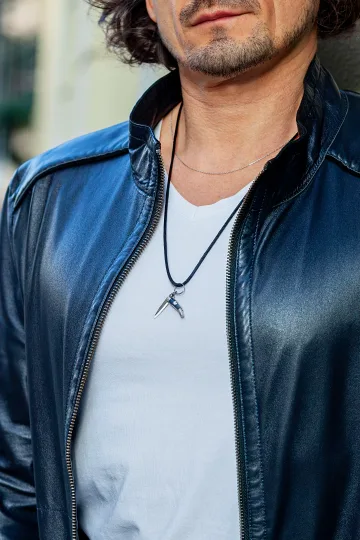
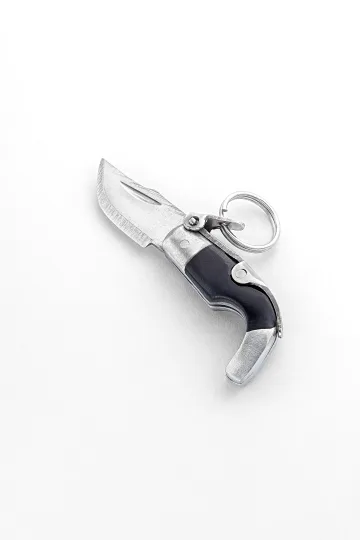
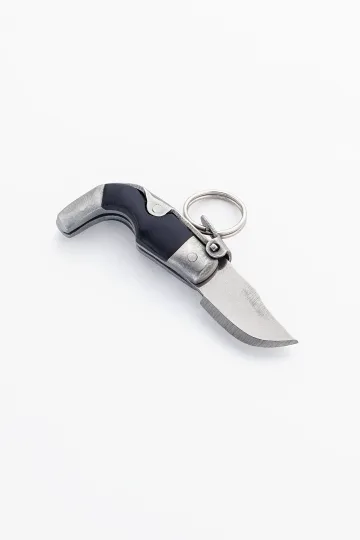
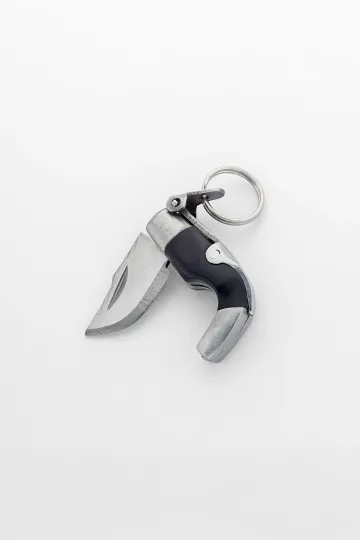
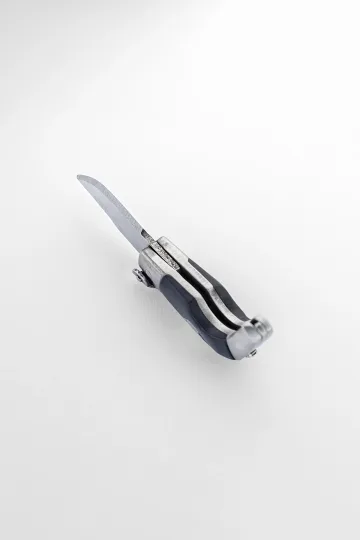
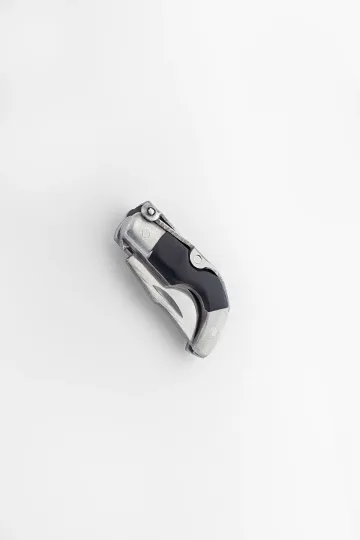
CAPAORA mini knife pendant
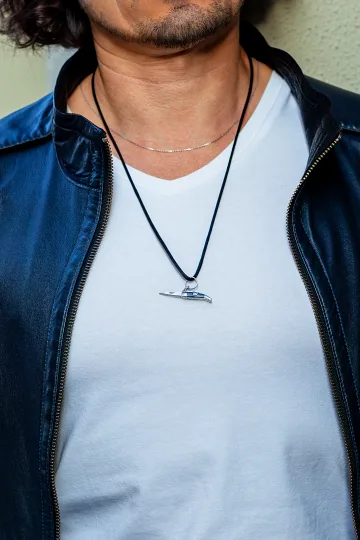
The 18th-century Spanish navaja in miniature: 40 mm of stainless steel, a real folding mechanism and a Palanquilla lock that clicks. An affordable gift to remember.
Authentic · Ships from Spain · 14-day returns
How to choose without ruining the surprise
Choosing couple jewellery comes with a unique challenge: by definition, two people need to love it, but ideally only one person knows about it before the reveal. Here's how to navigate that.
The art of hints and browsing together
The easiest approach is the "accidental" browse. Pull up a jewellery website on your phone, leave it open, and let your partner wander over. "Hey, look at these, which one would you pick?" You're not proposing a purchase. You're just having a casual conversation. But you're also gathering intelligence.
Pay attention to what they point at first, what they linger on, what they say "that's nice" about versus "oh wow, I love that." The difference between polite approval and genuine excitement is obvious if you're watching for it.
Another approach: notice what they already wear. If every piece in their collection is gold-toned and delicate, you know the direction. If they mix metals and wear chunky pieces, you know to go bolder. The existing collection is a roadmap.
Size considerations that save the day
If you're choosing rings, size matters enormously. A ring that doesn't fit goes from romantic gesture to awkward exchange, and the surprise is lost either way. If you can't discreetly borrow one of their existing rings to check the size, our ring size guide has other methods.
For pendants and necklaces, size is less critical but chain length matters. Most people have a preferred chain length. Some like choker-length, others prefer longer chains that sit lower. Again, look at what they already wear. Match the length of their most-worn necklace and you'll be in the right territory.
Bracelets fall somewhere in between. They need to fit, but there's more forgiveness in bracelet sizing than ring sizing.
When in doubt, choose the pendant
If you're genuinely unsure about your partner's preferences and you can't gather information without raising suspicion, a pendant is the safest bet. No sizing required. Universal chain lengths work for most people. Pendants layer well with existing jewellery, so you're not asking them to replace anything. You're adding to what they already have.
The pendant also carries a practical advantage for couple sets: both people can wear pendants regardless of their jewellery habits. Not everyone wears rings daily. Not everyone likes bracelets. But a pendant on a chain works for almost anyone.
Leave your email, we'll send your discount code. No spam, unsubscribe anytime.
The code arrives by email, valid on your first order.
Beyond romantic couples
Here's where couple jewellery expands into something bigger. The concept of two connected pieces doesn't have to stay within romantic relationships. Some of the most meaningful pairings happen between people whose connection is different, but no less powerful.
Best friends
The best friend connection is one of the longest-running traditions in matching jewellery. But modern friendship pieces have evolved well past the split-heart necklaces and "BFF" charms. Today, friends choose complementary symbols that reflect their specific dynamic.
Two friends who are opposites in personality? Sun and moon, obviously. Two friends who've supported each other through everything? Tree of life pieces, representing the deep roots of their bond. Two friends who are always on adventures together? Compass pendants, pointing each other in the right direction.
The beauty of friend couple jewellery is that there's zero pressure. No one's going to overanalyse the symbolism or wonder what it means for the relationship. It's pure appreciation, expressed through matching metal.
Siblings
Sibling bonds are complicated, lifelong, and often taken for granted. Matching jewellery between siblings acts as a quiet acknowledgement: we share something nobody else in the world shares. The same parents, the same childhood, the same foundational experiences. We might be very different people now, but we started from the same place.
Tree of life pieces work beautifully for siblings because the metaphor is literal: same roots, different branches. Heart pendants work too, particularly for sisters who want to honour their closeness. For siblings who are less overtly sentimental, matching pieces from the same collection let them acknowledge the bond without making a big declaration about it.
Parent and child
A parent and child sharing connected jewellery is one of the most emotionally loaded pairings possible. The parent wears one piece. The child wears the other. The message is simple and enormous at the same time: I am yours, and you are mine.
This pairing hits hardest when the child is grown. An adult child giving their parent a matching pendant, especially a tree of life piece, which explicitly symbolises the family connection, carries a weight that's hard to replicate with any other gift. It says: everything you gave me, I carry it. And here's proof.
For parent-child pairings, the tree of life symbol is almost unbeatable. But heart pairings and lock pairings work too, depending on the specific relationship dynamic.
Styling couple jewellery: together and apart
Once you have your couple pieces, the question becomes how to actually wear them. And the answer depends on whether you're side by side or miles apart.
Wearing together: coordination without costume
When you're together and both wearing your couple pieces, the instinct might be to make them visible and obvious. Resist that instinct. The most stylish couple jewellery sits naturally within each person's overall look, not as a spotlight-hogging centrepiece.
If you both have pendants, let them fall at their natural length and don't adjust your outfits to showcase them. The best couple jewellery looks are the ones that seem unintentional, like two people who happen to have great taste and happen to have pieces that relate to each other. The "happen to" is the point. Effortlessness reads as confident.
That said, there's nothing wrong with a deliberate reveal moment. Date night, anniversary dinner, a special event: pulling out your matching pieces together can be a moment of private connection in a public setting. The key is choosing when to be visible and when to let the pieces do their quiet work.
Wearing apart: the personal layer
When you're wearing your couple piece without your partner present, it becomes something different. It's not a couple statement anymore. It's a personal piece that happens to carry a private meaning.
This is where layering becomes your friend. Stack your couple pendant with other necklaces. Wear your couple ring alongside other rings. Integrate it into your daily jewellery rotation so it feels like part of your style, no longer reading as a single-purpose relationship token. The best couple jewellery doesn't demand to be the only piece you wear. It plays well with others.
For practical layering tips, check our jewellery layering guide. It covers chain lengths, mixing metals, and combining different types of pieces.
Metal mixing and personal style
Here's a question that comes up a lot with couple jewellery: what if you and your partner prefer different metals? One person loves gold, the other lives in silver. Does the couple set need to be the same metal?
No. And honestly, different metals can make the pairing more interesting. A gold sun pendant paired with a silver moon pendant reinforces the complementary energy. They're different, like you are, but they belong together. Matching doesn't mean identical. It means connected.
The same logic applies to size and style. One person might wear their pendant on a chunky chain, the other on a delicate one. One person might choose a larger version of the symbol, the other a smaller one. These differences don't weaken the connection. They honour the fact that you're two separate people who chose to link your stories.
Materials for paired jewellery
Paired jewellery gets worn for a long time. Sometimes literally decades. The choice of metal determines whether the piece keeps its meaning or falls apart in two years, which is particularly painful when the piece is symbolic.
Sterling silver 925
The default for most paired jewellery sold today. Sterling silver is 92.5 percent silver, 7.5 percent other metals (usually copper). It's hypoallergenic for most wearers, takes engraving beautifully, and ages gracefully with a patina that polishes off in minutes. Suitable for almost every paired format: half hearts, key and lock, puzzles, yin and yang. The one downside is tarnish, but tarnish is cosmetic and reversible. See our silver 925 guide and the hallmark meanings reference.
Solid gold, 14K and 18K
For serious paired sets meant as heirlooms: matched wedding bands, premium pendants, family sets. Gold doesn't tarnish, doesn't need maintenance, and lasts for generations. The right choice when the piece is genuinely meant to be worn for years. For a fifteenth-anniversary gift to a spouse, this is the correct material. See our carat and gold guide.
Stainless steel 316L
Surgical grade stainless steel is essentially indestructible under normal use. It doesn't tarnish, doesn't react with skin for most wearers, survives showers and pools, and takes a beating. The right pick for active couples, teenagers, and anyone who works with their hands. The visual downside is that steel has a cooler, harder tone than silver. It's not the material for delicate romantic pieces, but it's excellent for bold modern designs.
PVD coating and gold plating
PVD (physical vapour deposition) is a process where a thin layer of metal, typically gold-toned titanium nitride, is bonded to a steel base through a vacuum plasma process. It looks like gold and costs a fraction. Unlike traditional plating, PVD doesn't flake off quickly. On normal daily wear, a PVD gold coating lasts years rather than months. Compare PVD to traditional plating in our gold plating guide.
If one wearer has a nickel allergy, the whole paired set should be hypoallergenic: nickel-free sterling silver, surgical steel, or titanium. The pair needs to be symmetrical by material. See our nickel allergy guide.
Send a friend a discount code, they save on their first order.
Engravings: what to put on paired jewellery
Engraving turns a stock pendant into a unique one. Without it, paired jewellery is just two similar objects. With it, the set is yours specifically. Engraving has settled into a handful of classic formats.
Names and initials
The most direct option. One wearer's name on one piece, the other's on the other. Or both names split across both pieces, so each wearer carries both. Initials are the subtler choice: two or three letters in a clean font, small enough to be private. Particularly useful on paired rings, where there's no room for full names. See our initials and monograms guide.
Dates
A first meeting, a first date, a wedding, the birth of a child. Dates work in DD.MM.YYYY format or in Roman numerals (a fashionable choice for weddings). A date is softer than a name: the digits mean nothing to strangers, but everything to the two people who know what they reference.
Coordinates
Latitude and longitude of a specific place. The cafe, the park, the church, the hospital, the bridge. Downside: the place might disappear over the years. Upside: emotional precision that borders on poetic. Engraving coordinates needs accuracy to at least three decimal places to pinpoint an actual corner rather than a neighbourhood.
Quotes and song lyrics
A line from a book, film, or song that matters to both wearers. Often split between the two pieces: half the line on one pendant, half on the other, complete only when held together. Keep it short. Six to eight words read best on a normal pendant. Avoid quotes that have become generic through overuse on mass-market jewellery.
Font and placement
Font is the quiet half of any engraving. Cursive reads romantic, sans serif reads modern, serif reads traditional. For paired pieces, both halves need to be the same font at the same size. Different fonts break the pairing. Placement is either front (visible to others) or back (private, only for the wearer). Most people choose the back: engraving is an intimate message, it doesn't need to be public. Full breakdown in our engraving guide.
Buying it as a gift? Each one arrives ready to give.
 A branded Zevira box and a little card come with every order.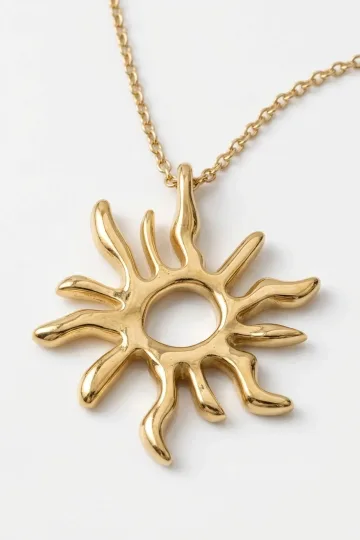




Frequently asked questions
Is couple jewellery appropriate for new relationships?
It depends on the weight of the piece. A pair of casual, fun pendants a few months into a relationship is sweet and low-pressure. A matching set of rings with deep symbolic meaning after three dates might feel premature. Match the significance of the jewellery to the stage of the relationship. Start light. You can always upgrade the symbolism as the bond deepens.
What if my partner doesn't usually wear jewellery?
Start with something minimal and easy to wear. A thin chain with a small pendant, or a simple band ring. Many people who "don't wear jewellery" simply haven't found a piece that feels right for them. Couple jewellery can be the gateway. The meaning behind it gives them a reason to wear it, even if they've never been a jewellery person before. Our men's jewellery guide has more ideas for partners who are new to wearing pieces.
Can couple jewellery work for more than two people?
Absolutely. Friend groups, families, and teams have all adopted the concept. A set of three sisters might each wear a different piece from the same collection. A group of four friends might choose the four elements or four seasons as their connected symbols. The couple format is the most common, but the concept scales.
Should we buy the pieces together or should one person surprise the other?
Both approaches work, and each has its advantages. Buying together means both people get exactly what they want: no sizing issues, no style mismatches, no returns. The surprise approach carries more emotional weight but requires more research and comes with more risk. A good compromise: one person suggests the concept, and you shop together but for each other, revealing your choices simultaneously.
What symbols work for couples who aren't into romantic imagery?
Plenty. Nature-based pairs like mountain and wave, tree and river, sun and rain work for couples who connect through the outdoors. Abstract geometric pairs (triangle and circle, straight line and spiral) work for minimalist-minded couples. Even matching pieces without any symbolism at all (same collection, different designs) can function as couple jewellery if the intention is there.
How do I know what metal to choose for my partner?
Look at what they already wear. If their existing jewellery is all silver-toned, choose silver. If it's warm gold, choose gold. If they mix metals freely, you have more flexibility. When in doubt, gold-plated pieces are a safe bet for most people. The warm tone feels inherently gift-like and works across a wide range of skin tones.
Is it weird to wear couple jewellery after a breakup?
Not necessarily. Some people remove it immediately. Others keep wearing it because the piece has become part of their identity, separate from the relationship that created it. A star pendant might have started as a couple piece, but over time it became your pendant, worn for your own reasons. There's no rule. Do what feels right.
Can I propose with couple jewellery instead of a ring?
It's unconventional but it's been done, and done beautifully. A pair of complementary pendants presented together ("this one's yours, this one's mine") can carry the same weight as a traditional ring proposal, especially for couples who aren't ring people. The important thing is the intention behind the gesture, not the specific form it takes.
What happens to paired jewellery after a breakup?
That depends entirely on you. Some keep the piece as a memory of a relationship that mattered at the time. Some put it in a drawer and stop wearing it. Some give it back. Some have a jeweller melt or rework two halves into a single solid pendant, so the object continues to exist but in a different form. Some just keep wearing the half as a piece they happen to like. There is no rule.
What if I lose my half?
Order a replacement if the design is still in production. Many paired jewellery makers keep designs available for years specifically because replacements are needed. If the original engraving is unique, it can usually be reproduced. The replacement isn't the same object as the lost one, but the pair is restored.
Is paired jewellery appropriate for men?
Yes, with adjustments to the format. Hearts and rose gold rarely land. What works: key and lock, coordinates, puzzle pieces, matching leather or steel bracelets, simple bar pendants with engraving, plain couple rings. Any shape without an obvious decorative tone reads fine on men. The whole historical origin of paired tokens, from Greek symbola to Mizpah pendants for soldiers, was largely masculine.
Silver and gold jewellery, wedding bands, symbolic pendants, paired sets.
Wear the symbol, don't just read about it. These are in stock:




Your symbol, your connection
There's no formula for couple jewellery. No algorithm that takes your relationship type and spits out the perfect matching set. That's not how meaning works. Meaning comes from the specific combination of who you are, who they are, and what the two of you have built together.
Maybe you're the couple who wants identical pieces because you've always been a unit. Maybe you're the couple who wants opposite symbols because your differences are what make you strong. Maybe you're not a romantic couple at all. Maybe you're siblings, or best friends, or a parent and child who share a bond that deserves its own symbol.
Whatever the connection looks like, the act of choosing jewellery together (or for each other) makes it tangible. It takes something that lives in the space between two people and gives it weight, shape, metal, and a chain to hang from.
Think back to that couple from the beginning of this article, the ones who found the compass and the star. They didn't plan to buy matching jewellery that day. They weren't even looking. But they recognised something when they saw it. Two pieces that belonged together, the way they belonged together.
That recognition is the whole point. Not the metal. Not the symbol. The moment when you see two things side by side and think: yeah. That's us.
If you're ready to explore symbols and their deeper meanings, our complete guide to jewellery symbols covers everything from celestial motifs to protective talismans. And for more gift inspiration, our gifts catalogue and men's jewellery guide can help point you in the right direction.
About Zevira
Zevira makes jewellery in the artisan tradition of Albacete, Spain. Paired pieces come naturally to us: every item is made one at a time, so two pendants can be put together as a deliberate pair rather than pulled off a shelf at random, and matched by symbol or metal if you want them to be.
Here's what you can find with us for paired stories:
- Complementary symbol pairs: sun and moon, compass and star, lock and key
- Half pendants and split designs that come together to form a whole
- Paired rings and wedding bands in silver and gold
- Tree of life pendants for parent and child, siblings, and close friends
- Clean pieces ready for coordinates, dates, and initials, made for personal engraving
- Hypoallergenic options if one of you is sensitive to nickel
Every piece can be personalised with engraving, with the option of personal engraving. Sterling silver 925 and 14 to 18K gold.