How to Measure Your Ring Size at Home: The Complete Guide
You are standing in front of a jewellery website, ring picked out, finger hovering over "Add to Cart." Then the dropdown appears: size 6? 7? 17mm? 52 EU? And you realise you have no idea what size your finger is.
This is the moment where most people guess. And guessing is how you end up with a ring that either cuts off circulation or slides into the kitchen drain. A ring that fits properly should slide over the knuckle with slight resistance and sit comfortably at the base of the finger. Not tight. Not loose. Just there.
Here is how to get it right, at home, without a jeweller, without expensive tools, and without guessing.
What Ring Size Actually Means
Ring size is the internal diameter of the band, measured in millimetres. Every sizing system in the world, US, UK, EU, Japanese, is just a different way of expressing that diameter.
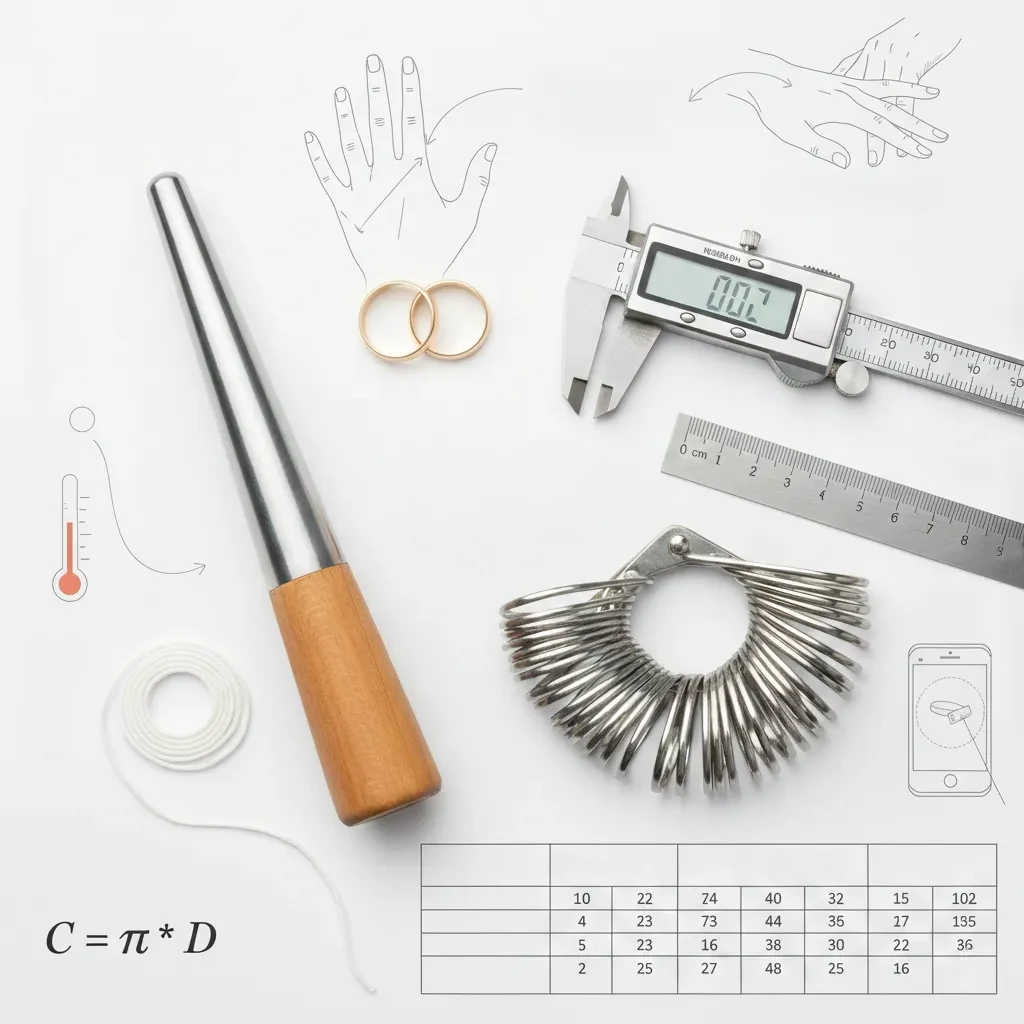
In the US and Canada, sizes run on a numerical scale from roughly 3 to 16, with half and quarter sizes. A US size 7 has an internal diameter of about 17.3 mm. In the UK and Australia, the system is alphabetical: A through Z, then Z+1 and beyond. In continental Europe, the size IS the circumference in millimetres: a size 52 means 52 mm around the inside. Japan uses its own numbered system, starting from 1.
The universal truth: if you know your internal diameter in millimetres, you can convert to any system in the world. That number is your safety net when buying from international brands, small makers on Etsy, or anyone who does not use your local system.
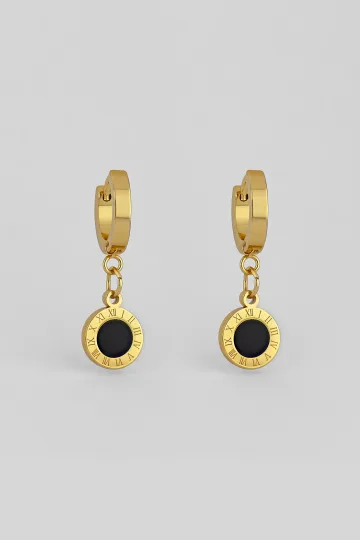
Wear the symbol, don't just read about it. These are in stock:



A Short History of Measuring Fingers
Ring sizing feels like a solved problem now, a chart and a dropdown menu. For most of human history it was nothing of the kind. The story of how we arrived at standard sizes explains why the systems are still so inconsistent between countries.
The ancient world: every ring made to measure
Before standardised sizes existed there was only one method, and it was the good one. The maker took the customer's finger, wrapped it in a thread or a strip of soft metal, and forged the band around that measurement. Nothing was mass produced, so nothing needed a size label. A ring belonged to a finger the way a key belongs to a lock.
The consequence is visible in museum collections. Ancient rings come in wildly varied diameters, with no clustering around convenient round numbers. Each one is a portrait of a particular hand.
Ancient Egypt: reed, papyrus and the scribe's habit
Egyptian goldsmiths measured with strips of reed or papyrus, marking the overlap with a scratch and keeping the strip on file. Surviving workshop material suggests that measurements were recorded alongside the commission, which makes the Egyptian bench one of the first places where a person's ring size existed as written data rather than as a piece of string.
The practical trick from that era still works: a strip of stiff plant fibre behaves almost exactly like the paper strip method in this article, because it does not stretch and it has a little width to it, which mimics the width of a real band.
Viking rings: when size barely mattered
Norse metalwork took the opposite approach. Many Viking-age rings were open spirals or coiled wire, deliberately adjustable, and some functioned as portable silver rather than as jewellery: you wore your money and cut a piece off when you needed to pay. A spiral ring fits any finger badly and every finger well enough, which was the point.
If you have ever wondered why an adjustable wrap ring feels like a compromise, that is because it is one, and it is a compromise a thousand years old.
Japan: precision treated as a philosophy
Japanese workshops developed their own numbered system, which begins at 1 and climbs in small increments, so a Japanese size chart has more steps across the same range of fingers than an American one. That granularity is not an accident. It reflects a tradition in which a close fit was considered part of the craft rather than an optional extra.
Seventeenth century Japanese practice, by trade accounts, involved measuring the customer's finger at more than one point in the day. Anyone who has measured a finger in the morning and again after dinner knows they were right.
India: the finger, the metal and the planet
In parts of Indian tradition, the choice of finger and the choice of metal are tied to astrological practice, which means a ring may be commissioned for a specific finger regardless of what would be comfortable elsewhere on the hand. A stone set for one purpose sits on the index finger, another on the little finger, and each of those fingers has a different circumference.
That has a very practical modern consequence: if you are buying a ring for a specific finger for reasons of custom or belief, measure that finger, not the one everybody else measures.
Medieval guilds and the first standards
The move toward standardisation came with the guilds. Once a workshop had apprentices, stock and a reputation to defend, it needed a shared vocabulary for size, and sets of trial rings appeared: graduated loops, often turned from bone or horn, that a customer tried in sequence until one fitted. Those sets are the direct ancestor of the plastic ring sizer that arrives in the post today.
Bone was used because it is stable, cheap and easy to turn on a simple lathe. Metal sets came later, once wire drawing made consistent diameters straightforward.
The Industrial Revolution and the birth of sizing systems
Mass production broke the old model entirely. A workshop turning out hundreds of identical bands cannot measure every finger, so it needs a scale, and by the nineteenth century each major manufacturing country had invented one. Britain went alphabetical. The United States went numerical. Continental Europe took the sensible route and used the circumference in millimetres as the size itself.
Nobody coordinated. That is the entire explanation for why your ring size is a letter in Manchester, a number in Chicago and a different number in Milan, and why the conversion table in this article exists at all.
How Britain ended up with letters
The British alphabetical scale was formalised by the trade in the nineteenth century and has stayed remarkably stable since, which is why a Victorian ring measured on a modern British gauge still gives a sensible letter. The scale runs from A upward in half-size steps, and because letters carry no arithmetic meaning, a British size tells you nothing about the millimetres unless you look it up.
That is the weakness of the system and also its charm. A British jeweller quoting size N is quoting a piece of trade shorthand that has outlived the empire that spread it to Australia, New Zealand, Ireland and South Africa, all of which still use the same letters today.
It clears the knuckle with one honest tug, then holds still. A ring that spins into your soup is a bad measurement, not bad luck.
How to Choose a Ring for Your Size and Hand
A ring is chosen not only by size but by its shape against the hand. Here is what actually helps you land a ring that sits right and suits your hand, sorted by case.
How do I know the size is right? The right fit is checked by feel, not by a number in a chart. The ring clears the knuckle with a slight effort and, at the base of the finger, neither slides off nor cuts in. If it passes the knuckle far too freely, it will float and spin at the base. If it drags on the way off and leaves a deep groove, the size is too small. I recommend going by that sensation.
Does band width change the size? It does, more than you would think. A wide band meets the finger over a larger area and sits tighter than a thin one at the same diameter. For a wide ring I suggest going half a size looser, or by evening it starts to press. A thin band you take true to size.
The finger shifts through the day, how do I allow for that? A finger is not a fixed value: with heat and toward evening it swells a little, in the cold it narrows. I suggest measuring in the evening, at room temperature, when the finger is at its usual volume. Then the ring stays comfortable in the daytime and in the heat, not only in the minute you tried it on.
How does ring shape work with hand shape? Here I look at the whole hand. On narrow, long fingers I recommend thin to medium bands; they do not argue with the hand. On a large hand I choose wider rings with a bolder shape, since a tiny one gets lost. If the knuckle is clearly wider than the base, I suggest a comfort fit with a rounded inner side: it clears the knuckle without floating at the base.
A thin ring or a bold one, which to pick? It depends on how often you wear it. A thin, smooth ring I recommend for every day: it does not get in the way at the wheel, at the keyboard or under a glove. A large stone or a wide signet I suggest as an accent for going out, taken slightly snug so it does not spin under its own weight. Many people keep both for different occasions.

Turn on your camera, pick earrings, a pendant or a ring, and see the piece on yourself in real time.
Switch items in one tap.
Everything runs in your browser: no photo or video is ever uploaded.
The British Letter System: What J, L, N and P Actually Mean
If you are buying in the UK, this is the system you will be quoted, and it is the one most likely to trip you up when you order from abroad. Worth ten minutes of your attention.
How the letter scale works
British sizes run alphabetically from A at the very small end through to Z, with half sizes written as a letter plus a fraction symbol: L½ sits between L and M. Beyond Z the scale continues as Z+1, Z+2 and so on for the largest fingers.
Each full letter step is roughly 0.4 mm of internal diameter, and each half-letter step is roughly 0.2 mm. That is a fine gradation, finer than the whole-number European system, which is why British sizing feels precise on the hand even though the letters look arbitrary on paper.
The letters you will meet most often
Four letters cover the majority of British fingers, so learn these and you can read almost any UK listing at a glance.
J is a small women's size, about 15.5 mm inside diameter, roughly a US 4.75 and a European 49. Common on delicate stacking rings and on the little finger.
L is around 16.1 mm, a US 5.75, European 51. This and the next letter up sit at the centre of the British women's range.
N is about 16.9 mm, a US 6.5, European 53. If a British shop keeps one size of a women's band in stock, it is usually this one.
P is roughly 17.7 mm, a US 7.5, European 55. The upper end of the common women's range and the lower end of the men's.
Men's British sizes cluster from around S to Z, with T and U doing most of the work. A British T is about 19.4 mm, a US 9.5 and a European 61.
Reading a letter size against millimetres
The conversion is not something you can calculate in your head, because letters are not numbers. Use the table further down this article, or memorise the two anchors that matter to you: your own letter and its millimetre value.
Write that millimetre value down somewhere you will find it again. A letter is only useful in countries that use letters. A diameter in millimetres is useful everywhere on earth, and it is the number you should quote when ordering from a European or American maker who has never seen a British gauge.
Half sizes, and what happens past Z
British half sizes are genuinely available, not a marketing flourish, and any high street jeweller will have a gauge that includes them. If you measure between two full letters, the half is worth asking for, especially on a plain narrow band where a quarter of a millimetre is the difference between a ring that spins and one that sits.
Past Z the scale continues with Z+1, Z+2 and occasionally further. These are ordered rather than stocked, and they are common for thumb rings, which need a larger diameter than most people expect. A thumb frequently measures three or four letters above the ring finger on the same hand.
How to Measure at Home: Four Methods
Method 1: The String or Paper Strip
The classic approach, and the most accurate if done carefully.
You need: a piece of non-stretchy string, a thin strip of paper (about 1 cm wide), a ruler, and a pen.
Steps:
- Wrap the string or paper strip around the base of your finger. Not too tight, not too loose. You want it snug but comfortable, the way a ring should feel.
- Mark where the string or paper overlaps. Use a pen dot, not a mental note.
- Lay the string or paper flat against a ruler. Measure the length from the end to the mark. This is your finger circumference.
- Divide by 3.14 (pi). The result is your internal diameter.
Example: your measurement is 54.4 mm. Divide by 3.14. You get 17.3 mm. That is a US size 7, a UK size O, an EU size 54, and a Japanese size 14.
Common mistakes with this method:
- Using stretchy material. Elastic, yarn, or a rubber band will give a smaller measurement because they compress.
- Pulling too tight. You want snug, not tourniquet. The string should move a little when you wiggle it.
- Measuring flat skin only. The string needs to pass over the knuckle too, because that is how the ring goes on. If your knuckle is significantly wider than the base of your finger, measure both and pick the average.
Method 2: The Existing Ring
If you already own a ring that fits well, this is the fastest method.
You need: a ring that fits the correct finger, and a ruler with millimetre markings.
Steps:
- Place the ring flat on a table.
- Measure the internal diameter (the widest point across the inside of the circle) in millimetres.
- That number is your ring size in mm. Use the conversion chart below.
The trap: make sure you measure the inside, not the outside. The difference (wall thickness) can throw the size off by a full size or more. And make sure the ring actually fits. A ring you have not worn in five years may not reflect your current size.
Method 3: The Printable Ring Sizer
Many jewellery brands offer a PDF ring sizer that you print at home. It usually looks like a strip of paper with markings, or a series of circles.
Critical step: when you print, make sure scaling is set to 100% (not "fit to page"). Printers love to scale down, and if the printout is even 3% smaller, every measurement will be off. Check: most sizers include a calibration line (e.g., "this line should be exactly 10 cm"). Measure it. If it is not 10 cm, reprint.
Method 4: The Caliper (the method jewellers use every day but don't tell you about)
You could drag your sleeping partner to a jewellery shop and try rings on their finger directly. The size would be perfect. But there are certain logistical and legal complications.
There is a simpler option. It costs less than two cups of coffee. And if you only read one section of this entire article, make it this one. Seriously. You can skip the rest. Every other method is a compromise for people who cannot be bothered to visit a hardware store.
The caliper.
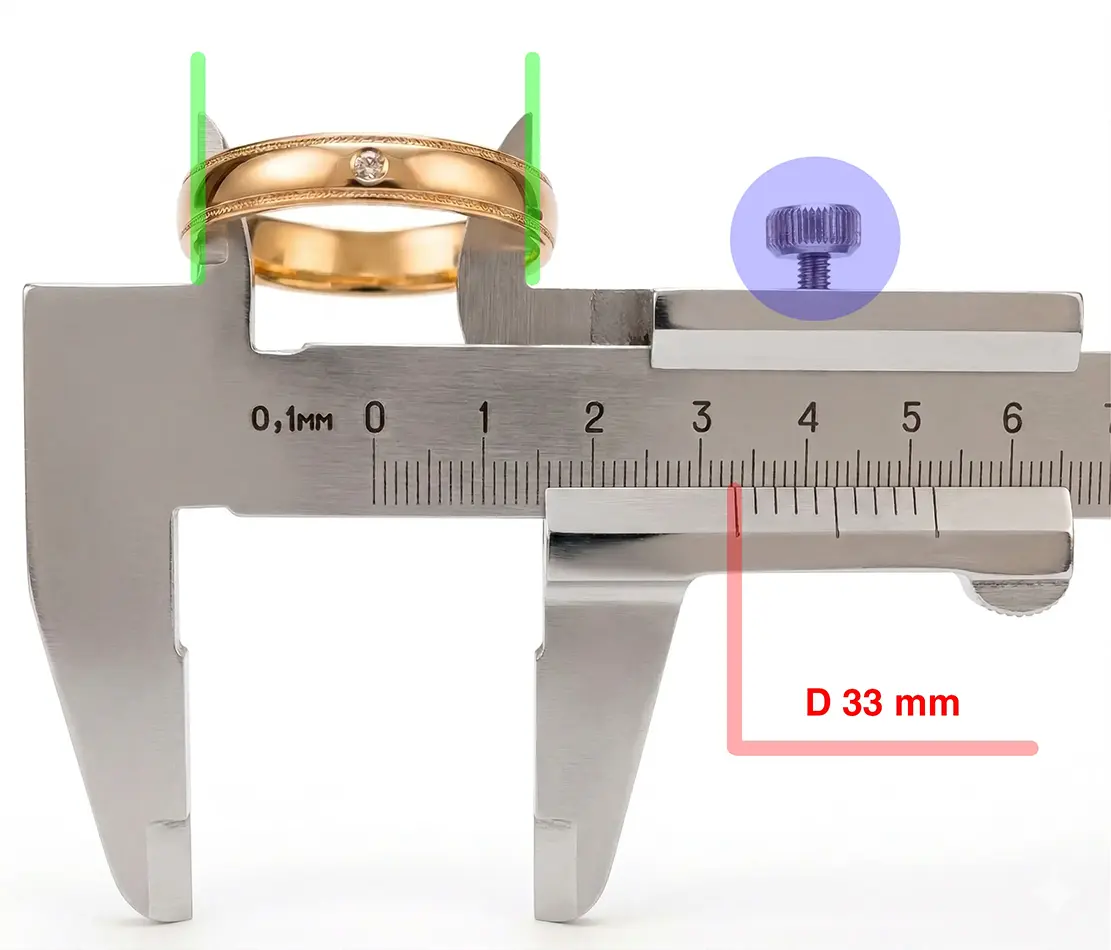
In the photo:
1. Green: the inside jaws. You insert them into the ring and spread them until they touch the walls.
2. Red: the diameter in millimetres. This is your ring size.
3. Blue: the locking screw. Tighten it after measuring. You now have an exact replica of your partner's ring in your hand. You can walk straight into a jewellery shop and hold it against rings on display.
Important: photograph the scale with your phone immediately after measuring. If you accidentally bump the slider, the setting is lost. The photo preserves your size forever.
Why don't they tell you? Not because it is secret. It simply is not in their interest. The jewellery shop offers you "free ring sizing." Sounds like a service. In practice it is a way to get you into the shop. You walk in "just to measure" and suddenly there are display cases, the salesperson is smiling, the lighting is beautiful, and you are trying on something you did not come for. Free sizing is marketing, not charity.
Online shops offer plastic sizers, printable templates, apps. Those work too. But all these methods have a margin of error, and when the ring does not fit, you order an exchange, pay return shipping, wait. The shop does not mind: you are already a customer, and the second order is a second touchpoint.
A caliper makes you independent. You know your size to a tenth of a millimetre. You do not need a shop, an app, or a printer. That is why nobody advertises this method. It eliminates an entire chain that others profit from.
How to measure ring size with a caliper: step by step
"Caliper" sounds like something from an engineering lab. It is actually just a sliding ruler. Two small jaws spread inside an opening, touch the walls, and show the size on a scale. That is it. No magic, no engineering degree needed. Spread, read the number, done.
If you have ever opened an umbrella, you can handle this. Seriously. One part moves. Forward and back. That is the entire mechanism.
Step 1: Look at the caliper and do not panic.
It looks like a ruler that grew horns. At the bottom: two large "horns" (for measuring the outside, we do not need those). At the top: two small "horns" pointing upward. Those small ones are ours. They fit inside a ring.
In the middle is a slider. Move it right and the jaws spread apart. Move it left and they come together. On the ruler there are millimetre markings. Move the slider, look at the markings, read the number. Like a normal ruler, except the ruler adjusts itself to the object.
There is a small screw on the slider. Tighten it and the slider stays put. This is the "pause button." Remember it.
Step 2: Find a ring that fits you perfectly.
Do not grab one from the jewellery box that you have not worn in five years. Fingers change. Lost weight, gained weight, different climate, pregnancy passed. You need a ring that right now sits on the correct finger the way it should: passes over the knuckle with slight resistance and sits comfortably at the base.
If you do not have such a ring, no problem. Borrow one from a friend, a parent, anyone whose finger is roughly your size. Or measure the finger directly (see below).
Step 3: Insert the inside jaws into the ring.
Slide the slider all the way to the left so the small jaws close. Insert them into the ring. Now slowly slide the slider to the right. The jaws will spread until they press against the inside walls of the ring.
Do not force it. Do not try to stretch the ring. The jaws should simply touch the walls. Gently. Like petting a cat that might bite.
For extra accuracy, rotate the ring 90 degrees and measure again. Rings are not always perfectly round, especially if worn for years.
Step 4: Read the number.
Look at the ruler. Where the slider stopped, that is your size. You see the mark at "17" and the slider is a little further right? Then it is more than 17. How much more? Look at the fine lines on the slider itself (the vernier scale). If the line marked "3" on the slider aligns with any line on the main ruler, it is 17.3 mm.
17.3 mm is your ring size. Plug it into the converter above and you get: US 7, EU 54, UK N.
Did not get it the first time? Normal. Pick up the caliper and slide the slider back and forth while watching the scale. In a minute it will all make sense. This is one of those skills that is easier to try than to explain.
Step 5: Hit "pause" and go to the shop.
Remember the screw? Tighten it. The slider is locked. The jaws are set exactly to your size. Put the caliper in your pocket. It is light, it fits.
Walk into the jewellery shop. Pull it out. Hold the jaws up to rings on display, insert them inside. If they go in with slight resistance, the ring will fit your finger. You do not even need to try it on. You are carrying the exact dimensions of your finger in your pocket.
Step 6 (if you have no ring): Measure the finger directly.
Works without a ring too. Take the large bottom jaws (not the top ones) and gently clamp them around the finger at the base. Squeeze until you feel light pressure. Not until it hurts. Like a ring hugging the finger.
Read the number. Add a couple of tenths of a millimetre for "air" (finger is soft, ring is not). Done.
How to secretly find ring size for a gift
The most common question when buying a ring as a gift. You want to surprise someone, but you need to know their finger size without giving yourself away. The caliper solves this in thirty seconds.
Scenario 1: they have a ring. Wait for the moment they take it off. Before a shower, before bed, while cooking. Grab the ring, insert the inside jaws, spread to the walls, note the number, put the ring back. Done. No string around sleeping fingers. No awkward questions. No risk.
Scenario 2: they have no rings at all. Ask a friend or their mother. "Hey, I need to find out the ring size for (name), can you figure it out casually?" Friends tend to love these missions.
Scenario 3: desperate times. While they sleep, carefully wrap a string around their finger. Or try your own ring on their finger and note how far it goes. Unreliable, but better than guessing.
Tip: if you are choosing a ring size for a gift and you are not sure, go half a size up. Sizing a ring down is almost always easier and cheaper than sizing it up.
The caliper vs the cost of getting the size wrong
A caliper costs less than two cups of coffee. One purchase. Works for a lifetime.
Wrong ring size: return shipping (already more expensive than the caliper), waiting two to three weeks for an exchange, losing the moment if it was a birthday gift or, worse, a proposal. Or the ring ends up in a drawer for months because "I should really exchange it" but you never get around to it. Then you forget. Then it gathers dust. Then it turns up three years later during a move.
The ratio is not even close. The caliper pays for itself on the first ring.
Which caliper to buy for ring measurement
A standard mechanical one. Stainless steel or plastic, for rings it does not matter. Digital ones with an LCD screen work too but cost noticeably more, and the battery has a habit of dying exactly when you need the tool. A mechanical one needs no battery and works forever. Literally forever. Your grandchildren will use it.
Where to buy: any hardware store, any DIY shop, any marketplace. It is sold everywhere that sells screwdrivers and tape measures. Say "caliper" and they will understand you in any hardware store anywhere in the world.
Brand does not matter. For measuring rings you do not need micrometre precision. The cheapest caliper on the shelf will do the job perfectly. This is one of those rare cases where the budget option works exactly as well as the professional one.
The caliper after the ring: what else it is good for
You buy it for the ring. Then you discover you use it once a month for everything.
Measuring a pipe diameter before going to the hardware store, so you do not buy three adapters by guesswork. Checking bolt size when you need a nut and cannot tell M6 from M8 by eye. Measuring the thickness of a board, a pane of glass, a piece of leather. Finding out whether the new curtain rod fits the old bracket. Checking whether the phone case thickness matches what the website says.
A caliper is one of those tools where every time you pull it out of the drawer, you think: "how did I ever manage without this." Takes up no space, does not break, does not run out of battery. Just works. Every time.
Method 5: The Coin or Washer Method
A quick sanity check rather than a primary method.
Find a coin or washer that fits snugly over your finger. Measure its inner diameter. Compare to a size chart. This works for confirming a measurement but is not precise enough on its own.
Four More Ways to Find Your Size
The five methods above cover most people. These four are worth knowing because each solves a problem the others do not.
The five-wrap method, for perfectionists
Instead of wrapping the paper strip once, wrap it five times around the base of the finger, keeping the coils tight against each other and the tension even. Mark the end, unwind, measure the total length, divide by five.
The point is error reduction. Any single wrap can be a fraction too tight or too slack; averaging five wraps cancels most of that out. It is the closest a paper strip gets to laboratory accuracy, and it takes an extra thirty seconds.
Mobile apps
Several apps measure ring size by asking you to place an existing ring on the screen and scale an on-screen circle to match it, or by using a bank card as a calibration reference. Screen scaling is the weak point: two phones with different pixel densities can give different answers unless the app calibrates properly.
Treat an app as a cross-check, never as the only measurement. If the app agrees with your paper strip to within a quarter size, you can order with confidence. If it disagrees by a full size, trust the physical measurement.
The modelling clay impression
A surprisingly good trick when the ring belongs to someone else and cannot leave the room. Press the ring flat into a slab of plasticine or modelling clay so it leaves a clean circular impression, then measure the impression with a ruler or a caliper.
Because you are measuring an imprint rather than the ring, you need to read the inner edge of the mark, not the outer. Done carefully it is accurate to a few tenths of a millimetre, and the ring goes straight back where it was found.
Professional sizing at the counter
The gold standard remains a set of steel trial rings on a jeweller's counter. Steel loops in graduated sizes, tried one after another until one clears the knuckle with the right resistance and sits properly at the base.
Two things to ask for while you are there. First, ask to try the width you intend to buy, because a 2 mm trial ring tells you very little about how an 8 mm band will feel. Second, ask them to check both the knuckle and the base rather than just handing you the loop that looks right. A good counter will do both without being asked.
Statistics: What the Average Actually Looks Like
Averages are a sanity check, not a substitute for measuring. If your reading lands far outside these ranges, remeasure before you order.
Women
Slight build, up to around 160 cm and a light frame: the ring finger typically falls between 15.0 and 16.5 mm inside diameter. The most common single value is around 16.0 mm, a US 5 to 6, a British J to L.
Medium build, roughly 160 to 170 cm: between 16.5 and 18.0 mm, clustering at 17.0 to 17.5 mm, a US 6.5 to 7.5, a British N to P. This is the single busiest band of the entire range and the reason most shops stock it.
Larger build, 170 cm and above: between 18.0 and 19.5 mm, most often around 18.5 mm, a US 8 to 9, a British Q to R.
Men
Medium build, roughly 170 to 180 cm: the ring finger usually falls between 18.5 and 20.5 mm, clustering around 19.5 mm, which is a US 9 to 10 and a British S to T.
Larger build, 180 cm and above: between 21.0 and 23.0 mm, most often around 22.0 mm, a US 11 to 12.5, a British W to Z. Manual trades push the upper end of this range further than desk work does.
Why the averages mislead
Build correlates with finger size loosely, not reliably. A slight person can carry a size 18 finger and a large person a 19, because bone width, joint size and occupation all interfere with the pattern.
The averages have exactly one legitimate use: if you must buy blind for a gift with no information whatsoever, they give you the least bad guess, and you pair that guess with an exchange policy. For anything else, measure.
When to Measure (This Matters More Than You Think)
Your fingers change size throughout the day, across seasons, and in response to various conditions. Measuring at the wrong time can throw you off by a full size.
Time of day. Fingers are thinnest in the morning (cooler, less blood flow) and thickest in the evening (warmer, more blood flow, you have been active). The ideal time to measure is mid-afternoon. Your fingers are warm but not swollen.
Temperature. Cold shrinks fingers, heat expands them. If you measured during a cold snap in January, the ring may feel tight in July. If you measured after a hot bath, it may feel loose on a cool morning.
Exercise. After a workout, fingers swell from increased blood flow. Do not measure immediately after the gym.
Alcohol and salt. Both cause water retention, which swells fingers. The morning after a salty dinner and wine is the worst time to measure.
Hormonal changes. Fingers can swell during menstruation, pregnancy, and menopause. During pregnancy, many women go up 1 to 2 full sizes, especially in the third trimester. This is temporary but significant. If buying a ring during pregnancy, consider waiting, or sizing for the current moment with the understanding that it may need resizing later.
Medication. Some blood pressure medications, anti-inflammatories, and hormonal treatments affect fluid retention and finger size. If you have recently started a new medication and your rings feel different, that is likely the cause.
The golden rule: measure at least twice, on two different days, at similar times. If the measurements differ, take the larger one. It is easier and cheaper to make a ring smaller than to stretch it larger.
Your Finger Is Not a Cylinder: The Physiology of Size
A ring is a rigid circle. A finger is a soft, warm, plumbed structure that changes volume all day long. Almost every sizing complaint traces back to that mismatch rather than to a mistake at the bench.
Temperature: your fingers are a thermometer
Blood vessels near the skin narrow in the cold and widen in the heat, and finger volume follows. The swing between a hand that has been outside on a January morning in Yorkshire and the same hand after twenty minutes indoors is easily half a size, sometimes more in people with naturally cold extremities.
The practical rule: measure at ordinary room temperature, around twenty degrees, with hands that have been indoors for at least fifteen minutes. Not straight in from the cold, not straight out of a hot bath.
Time of day: the morning finger and the evening finger
Overnight, fluid redistributes while you lie flat, so fingers can be slightly puffy on waking, then slim down through the morning and gradually swell again through the afternoon as you use your hands and stay upright. For most people the smallest reading of the day comes mid-morning and the largest comes late evening.
Measure in the late afternoon or evening. A ring sized to an evening finger will feel comfortable in the morning. A ring sized to a morning finger will feel like a tourniquet by nine at night.
Salt, alcohol and what you ate last night
Sodium holds water in the tissues, and the hands show it early. A takeaway curry, a bag of crisps, a salty restaurant meal or a few drinks can all add measurable volume to the fingers by the next morning. It is not imagination and it is not weight gain, it is fluid.
If your rings feel tight the morning after a big evening out, that is temporary and it will settle within a day or two. Do not size a ring on that hand, and do not order a replacement in a panic.
Sweat chemistry and the ring that suddenly grips
A dry finger and a damp finger behave completely differently inside a band. Sweat adds friction rather than volume, so a ring that slides off easily in winter can feel stubbornly stuck on a humid August afternoon even though the finger has barely changed diameter.
There is a knock-on effect too: soap, hand cream and skin cells build up under a band and effectively shrink the internal space. A ring that has grown tight over months is often just a ring that needs cleaning.
Altitude and cabin pressure
Air pressure affects tissue fluid, and the effect on fingers is real if modest. Time spent well above two thousand metres tends to produce mild swelling in the hands until the body adjusts, which is why walkers in the Alps or the Highlands sometimes find a band biting on day two of a trip.
Aircraft cabins are pressurised to something like the altitude of a mountain village, which is why fingers swell on long flights. The section on travel further down covers what to do about it.
Stress, and why your hands shrink under pressure
Adrenaline shunts blood away from the extremities toward the core and the large muscles. That is why hands go cold and slightly slimmer during a stressful meeting, a job interview or a difficult phone call, and why a ring can feel loose at exactly the moment you least want it to slip.
It is a poor moment to judge fit. If you are testing a ring, do it on an ordinary calm evening, not on a day that has been unpleasant.
The knuckle factor
For a large minority of people the knuckle is the real constraint. The ring has to pass a joint that may be one, two or even three sizes wider than the base of the finger, and once past it, the ring is loose where it actually sits.
Measure both places. If the difference is under half a size, split it and take the larger. If it is a full size or more, you are a candidate for sizing beads, a hinged shank or a comfort fit profile, all of which the resizing section covers.
The two hands are not the same
Your dominant hand is usually a quarter to half a size larger than the other, because the muscles and connective tissue are more developed and it takes more daily punishment. Right-handed people find their right ring finger reads bigger; left-handed people find the opposite.
This matters most for wedding bands, which in Britain sit on the left hand, and for signet rings, which traditionally sit on the left little finger. Measure the exact finger on the exact hand where the ring will live.
Weight, Age and Occupation: The Slow Changes
The daily fluctuations above are noise around an average. These are the changes that move the average itself, and they are the reason a ring bought at twenty-five may not fit at forty-five.
Losing weight
Fingers lose fat like everywhere else, though usually later than the waist and the face. A loss of ten kilograms typically drops the ring finger by half a size to a full size, and a larger loss can move it further. The change is gradual, so people often notice only when a ring starts spinning or disappears in the shower.
If you are actively losing weight, delay expensive rings or choose a metal that resizes easily. There is no sense paying for a perfect fit that will be wrong in six months.
Gaining weight
The same thing in reverse, but with a sharper edge, because a ring that has become too small is a practical problem rather than an inconvenience. Fingers can gain volume faster than they lose it, and a band that was comfortable can start leaving a groove within a season.
The warning sign to take seriously: if you have to work a ring off, it is already too small. Deal with it while it still comes off, not after.
Age
Fingers tend to broaden slightly with age. Joint changes, reduced skin elasticity and a lifetime of use all push in the same direction, and it is common for people in their fifties and sixties to find that the wedding band from their twenties no longer clears the knuckle.
This is entirely normal, it is not a failure of the ring, and it is the single most common reason British jewellers see a wedding band come in for resizing.
Your job and your hands
Occupation shapes hands more than most people expect. Manual trades, climbing, gardening, cooking and anything involving repeated gripping all thicken the fingers and the knuckles over years. Office work does the opposite: less loading, less development, a slimmer finger for the same body size.
The practical point is not to guess a partner's size from their build. A slight person who lays bricks may need a larger ring than a heavier person who works at a desk.
The Physics of Metal: Does a Ring Actually Expand?
This comes up constantly, usually as a defence of a ring that is too small. The short answer is that the metal is not the variable. The finger is.
Thermal expansion, and why it is irrelevant
Gold does expand with heat, and the figure is easy to look up: the coefficient is small enough that across the range of temperatures a human being can tolerate, a wedding band changes by well under a hundredth of a millimetre. That is far below the threshold of anything you can feel.
So when a ring feels tighter on a hot day, the metal has expanded by an amount too small to matter and the finger has expanded by an amount that matters a great deal. Blaming the metal is comforting and wrong.
Deformation from wear
Over years, a ring does change shape, but through mechanical deformation rather than thermal expansion. Daily knocks, gripping, carrying bags and leaning on the hand slowly push a round band toward a slight oval, and a thin band deforms faster than a thick one.
An ovalised ring often feels tighter across one axis and looser across the other, and it will read inconsistently on a caliper depending on where you measure. A jeweller can round it again on a mandrel in a couple of minutes, which frequently solves a "my ring shrank" complaint for the cost of a coffee.
Platinum and the softness paradox
Platinum has a reputation for being the toughest choice, and in terms of durability it earns it, because platinum displaces rather than sheds metal when scratched. A platinum band keeps its mass for decades where gold slowly wears away.
The paradox is that platinum is also relatively soft in the sense that it moves under pressure, so a platinum band can go out of round more readily than you would expect from something so hard-wearing. It is also markedly more demanding to resize, requiring higher temperatures and different technique, which is why a platinum resize costs several times what the same job costs in gold.
International Size Conversion Table
| Circumference (mm) | Diameter (mm) | Diameter (cm) | US/Canada | UK/Australia | EU | Japan |
|---|---|---|---|---|---|---|
| 44.2 | 14.1 | 1.41 | 3 | F | 44 | 4 |
| 46.1 | 14.7 | 1.47 | 3.5 | G½ | 46 | 5 |
| 47.8 | 15.2 | 1.52 | 4 | H | 48 | 7 |
| 49.3 | 15.7 | 1.57 | 5 | J½ | 49 | 9 |
| 50.6 | 16.1 | 1.61 | 5.5 | K½ | 51 | 10 |
| 51.9 | 16.5 | 1.65 | 6 | L½ | 52 | 12 |
| 53.1 | 16.9 | 1.69 | 6.5 | M½ | 53 | 13 |
| 54.4 | 17.3 | 1.73 | 7 | O | 54 | 14 |
| 55.7 | 17.7 | 1.77 | 7.5 | P | 56 | 15 |
| 57.0 | 18.1 | 1.81 | 8 | Q | 57 | 16 |
| 58.3 | 18.5 | 1.85 | 8.5 | Q½ | 58 | 17 |
| 59.5 | 19.0 | 1.90 | 9 | R½ | 59 | 18 |
| 60.8 | 19.4 | 1.94 | 9.5 | S½ | 61 | 19 |
| 62.1 | 19.8 | 1.98 | 10 | T½ | 62 | 20 |
| 63.4 | 20.2 | 2.02 | 10.5 | U½ | 63 | 22 |
| 64.6 | 20.6 | 2.06 | 11 | V½ | 65 | 23 |
| 65.9 | 21.0 | 2.10 | 11.5 | W½ | 66 | 24 |
| 67.2 | 21.4 | 2.14 | 12 | Y | 67 | 25 |
| 68.5 | 21.8 | 2.18 | 12.5 | Z | 68 | 26 |
| 69.7 | 22.2 | 2.22 | 13 | Z+1 | 70 | 27 |
Quick mm to cm conversions
- 16.5mm = 1.65cm (US 6, EU 52), most common women's size
- 17.3mm = 1.73cm (US 7, EU 54)
- 18.1mm = 1.81cm (US 8, EU 57)
- 19.0mm = 1.90cm (US 9, EU 59), most common men's size
- 19.8mm = 1.98cm (US 10, EU 62)
- 20.6mm = 2.06cm (US 11, EU 65)
Note on half and quarter sizes. Not every maker offers half sizes, and quarter sizes are rare outside the US. If you fall between two sizes, the advice depends on the band width (see below).
Upload a photo of your pet, someone you love, or an object. We'll build a 3D model and hand-cast it in pewter.



Sizing by Finger: They Are Not All the Same
Each finger is a different size, and not just by a little. Your ring finger and middle finger on the same hand can differ by 1 to 2 full sizes. Your dominant hand is typically half a size larger than the other.
Ring finger (left). The traditional wedding band finger. For most women, US 5 to 7. For most men, US 9 to 11. But "most" is not "all." Measure.
Index finger. Typically 0.5 to 1 size larger than the ring finger. Index finger rings (a popular choice for men's first ring) need to account for this.
Middle finger. The largest. Usually 0.5 to 1 size larger than the index. A statement ring on the middle finger will need a noticeably different size than the same ring on the ring finger.
Pinky. The smallest. Often 2 to 3 sizes smaller than the ring finger. Pinky rings (signet rings, for example) are their own measurement entirely.
Thumb. Larger than the middle finger. Thumb rings are a specific style, and sizing them is essential because the thumb joint is much wider than the base.
The point: do not assume that knowing your ring finger size means you know all your sizes. Measure each finger you plan to wear a ring on.
Which Hand, Which Finger: A Cultural Map
Where a ring goes is not a neutral decision, and it changes which finger you should be measuring.
Wedding bands
In Britain, Ireland, France, Italy and much of the English-speaking world, the wedding band sits on the fourth finger of the left hand. In Germany, Austria, Poland, Spain, Russia, Greece and parts of northern Europe it goes on the right. Some traditions move it from one hand to the other at the ceremony, so the engagement ring and the wedding band end up on different hands.
None of this is decoration for the purposes of sizing. The right and left ring fingers differ by a quarter to half a size in most people, so if your tradition puts the band on the right hand, measuring the left will give you a ring that is slightly wrong from the first day.
The other fingers
Index rings sit half to a full size above the ring finger. Middle fingers are usually the largest of the four, another half size or so above the index. The little finger, home of the signet ring in British tradition, typically runs two to three sizes below the ring finger. The thumb is larger than all of them and often needs a size several letters up the British scale.
Signet rings deserve a note of their own. Worn on the little finger of the left hand in the British convention, they carry a flat or oval face that is heavy relative to the band, which means they rotate if the fit is even slightly generous. Signets are sized snug on purpose.
Measure the finger you will actually wear it on
This sounds obvious and it is the most common cause of a returned ring. People measure the finger that is convenient, or the one they already know, and then order for a different one.
If you plan to move a ring between fingers depending on the outfit, size it for the smaller of the two and accept that on the larger finger it will not go on. There is no size that fits both, because the difference between adjacent fingers is bigger than the tolerance of a well-made ring.
Fingers Are Not Round, and Neither Are Rings
Every sizing chart in existence assumes a circle. Neither the finger nor, after a few years of wear, the ring is one.
Fingers are oval in cross-section
A finger is wider side to side than it is front to back, typically by a noticeable margin at the base. A round ring therefore contacts the finger firmly at two points and leaves small gaps at the other two, which is why a technically correct size can still feel odd, and why the same size feels different on two people with the same circumference.
This is also why a circumference measurement is more reliable than a diameter measurement taken across a finger with a caliper. A tape or strip follows the actual outline. A caliper across a soft oval measures whichever axis you happened to catch.
Comfort fit and the inward curve
A comfort fit band is domed on the inside, so only the centre line of the band touches the skin and the edges curve away. The effect on the hand is considerable: less surface contact, less friction over the knuckle, and no sharp edge digging in when the finger swells slightly at the end of the day.
The trade-off is that a comfort fit interior takes up space, so a comfort fit ring in a given size has slightly less usable room than a flat interior in the same size. Most makers account for this and most people find comfort fit runs about a quarter size small. Ask before ordering, and on wide bands order the comfort fit anyway. It is worth the quarter size.
D-profile, flat, court and the rest
The cross-section of the band has a name and a personality. A D-profile is flat inside and rounded outside, the traditional British wedding band shape. A court profile is rounded on both faces, the most comfortable option for wide bands and the standard recommendation for a first ring. A flat profile is flat on both faces, crisp and modern to look at, and the least forgiving on the skin. A halo or bevelled profile has flat faces with cut edges, which reads as sharper and more contemporary.
The profile changes the perceived size more than most buyers expect. The same 17.3 mm interior in a flat profile and a court profile will feel like two different rings on the same finger, and only one of them will still feel right at midnight.
Rings With Stones: A Special Case
A stone changes the physics of the ring, and it changes the sizing advice with it.
Weight, balance and rotation
A set stone puts mass on one side of the band, and gravity does the rest. A solitaire that is even slightly loose will rotate until the stone hangs under the finger, which looks wrong and exposes the setting to knocks against every doorframe and desk edge you pass.
Stone-set rings are therefore sized a touch snugger than plain bands. Not tight, but with no play at all at the base of the finger. If you are between sizes on a ring with a raised stone, take the smaller one, unless the knuckle forbids it.
Setting height and the knuckle
A high claw setting sits well above the finger and catches on everything: pockets, gloves, hair, jumpers. It also changes how the ring passes the knuckle, because the setting's shoulders add bulk exactly where the band needs to flex past the joint.
If your knuckle is much wider than your finger base, a low bezel or a flush setting will be far less trouble than a tall claw setting. This is a shape decision as much as a size decision.
Halo, cluster and eternity rings
A halo of small stones around a centre stone widens the head of the ring considerably, and a cluster does the same. The band still needs to clear the knuckle, so a wide head does not change the size, but it does change how the ring feels when you close your hand, and it will press against the neighbouring finger if the fit is loose enough to let it tilt.
Eternity rings, with stones all the way round, are the strictest case in the whole article, because they cannot be resized at all in most constructions. Everything you can do to get the size right must be done before ordering, and that means three separate measurements on three separate days.


Silicone Rings: When Metal Will Not Do
Silicone bands began as safety equipment for electricians and people working around machinery, where a metal ring on a hand is a genuine hazard, and they have since become ordinary wear for anyone whose day is hard on jewellery.
When to consider one
Anyone working with their hands around moving machinery, live electrics or heavy loads has a practical reason: a metal ring conducts, catches and does not give way, while a silicone band tears free under load. Climbers, gym users, medical staff, new parents and anyone who swims regularly use them for the same reason.
A silicone band is also a reasonable stand-in during pregnancy, during a course of treatment that causes swelling, or during a period of weight change, so the real ring stays in its box until the finger settles.
Sizing a silicone ring
Silicone stretches, which makes people assume size does not matter. It matters more, not less: a band that is too large is exactly as prone to sliding off as any other, and a band that is too small will roll at the edges and trap moisture against the skin.
Take your normal measurement and order that size, then check the width. Silicone bands are often made wide, and the wide band rule applies here too, so if you sit between sizes on a broad silicone band, go up. Most makers price them low enough that ordering two adjacent sizes to compare is a sensible move, which is not something you can say about gold.
Slim Bands vs. Wide Bands: Different Sizing Rules
Why thin bands feel larger
Thin rings (under 2 mm wide) have less surface area touching your skin, so they feel looser than their size suggests. If you are between sizes, say a 6.5 and a 6.75, go for the smaller size on a thin band. Otherwise, the ring will spin on your finger, and if it has a stone or design element, it will constantly rotate to the wrong position.
The wide band rule
Wide rings (6 mm and above) cover more skin and feel significantly tighter than a thin ring of the same size. This is because more metal is in contact with your finger, creating more friction and less room for the skin to breathe.
The rule of thumb: if you wear a size 9 in a thin band, you will likely need a 9.5 or even a 10 for a wide wedding band. Go up half a size for bands 4 to 6 mm wide. Go up a full size for bands 8 mm and wider.
Comfort fit vs. standard fit
"Comfort fit" means the inside of the band is slightly domed (convex) rather than flat. This makes a substantial difference in how the ring feels, especially for wide bands.
A comfort fit ring slides over the knuckle more easily because the domed interior reduces the contact area. It also feels less "bitey" at the end of the day when fingers swell slightly. For wide bands (6 mm and above), comfort fit is strongly recommended. The difference in daily wearability is noticeable.
Standard fit (flat interior) sits tighter and more flush against the skin. Some people prefer the secure feeling. But for a first ring, especially a wide one, comfort fit is the safer choice.
Special Cases
Eternity bands
Because stones go all the way around, eternity bands are nearly impossible to resize. The metal between the stones is too thin to cut and rejoin without dislodging settings. You must be certain before ordering. Measure on three different days. If the measurements vary, pick the most comfortable one (usually the largest).
Gold vs. platinum resizing
Gold (yellow, white, rose) is relatively soft and a jeweller can resize it up or down by 1 to 2 sizes without major difficulty. Platinum is much harder to work with. Resizing platinum requires laser welding and specialised equipment, and it costs significantly more. If ordering platinum, be extra precise.
Engraved rings
A deep engraving does not change the official size, but it creates texture on the inside of the band. This extra friction makes the ring feel slightly tighter, sometimes noticeably so. If you plan to engrave the inside of a ring, consider going up a quarter size.
Arthritis and knuckle issues
If your knuckles are significantly larger than the base of your finger (common with arthritis), standard sizing creates a dilemma: a ring that fits over the knuckle is loose at the base, and a ring that fits the base will not go over the knuckle.
Solutions: a hinged ring (with a small hinge that opens to pass the knuckle), a ring with sizing beads (small balls soldered inside that grip the base), or a ring with a spring insert. A jeweller can add these features to most rings.
Stacking rings
If you plan to wear multiple thin rings on the same finger, each ring should be your exact size or a quarter size up. Stacking adds bulk, and three thin rings together create friction against each other. They need a tiny bit of extra room.
Customer reviews
Zevira is a real jewellery shop. Genuine payments, deliveries and customer thank-yous.
🥰🥰🥰 gracias
Ok, ¡gracias! 🙂
Buying a Ring Online Without Trying It On
Online shopping removes the ability to try before you buy, which makes sizing critical. Here is how to get it right.
Step 1: measure. Use the string method or existing ring method above. Measure twice, different days.
Step 2: check the listing for internal diameter in mm. Ignore "S/M/L" labels. Ignore sizes without units. The only number that matters across all brands and countries is the internal diameter in millimetres.
Step 3: check the return/resize policy. Good jewellery brands offer free resizing on first purchase or free returns for size exchange. If the brand offers neither, that is a red flag. A company confident in its sizing will let you exchange.
Step 4: read reviews for sizing notes. Other buyers often mention whether a ring runs large or small. "Runs small, size up" is valuable information.
Step 5: when in doubt, go up. A ring that is slightly too large can be sized down or worn with a ring adjuster (a small silicone insert that tightens the fit). A ring that is too small cannot be forced on and risks getting stuck.
Ring adjusters: a temporary fix
If a ring is half a size too large, a ring adjuster (also called a ring guard or ring sizer) is a cheap fix. It is a small piece of clear silicone or metal that clips onto the inside of the band, reducing the internal diameter. Costs nearly nothing, available everywhere, and invisible when worn. Not a permanent solution, but perfect for the interim while you decide whether to resize.
Ten Mistakes That Ruin a Home Measurement
Nearly every wrongly sized ring comes from one of these ten, and most of them take seconds to avoid once you know they exist.
Measuring first thing in the morning
Fingers are at their least representative on waking, either slightly puffy from lying flat or unusually slim once that settles. Either way you are measuring a state the finger holds for one hour of the day. Measure in the late afternoon or the evening instead.
Measuring cold fingers
Cold constricts blood vessels and your measurement will be too small, sometimes by a full size in people with poor circulation. Wait until your hands have been at room temperature for fifteen minutes, or run them under warm water for half a minute and dry them thoroughly.
Measuring the wrong finger
The ring finger of the left hand and the ring finger of the right differ. The index differs from the middle by more. A measurement taken on whichever finger was convenient is a measurement of the wrong thing. Decide where the ring will live, then measure exactly there.
Forgetting the knuckle
The base of your finger and the knuckle can differ by a full size or more. The ring needs to pass over the knuckle to reach the base, so if you size only for the base, it may simply not go on. Measure both and reconcile them before ordering.
Using elastic thread
Elastic, wool and anything with give will stretch as you wrap it and compress into the skin as you pull, producing a reading well under the truth. Use a paper strip, dental floss or a piece of non-stretchy cord. Nothing that springs back.
Wrapping too tightly
The strip should sit the way a ring sits: snug, with a whisper of movement when you wiggle it. Pulled tight, it bites into soft tissue and gives you a size that will be genuinely uncomfortable to wear. A tourniquet is not a fitting.
Using a too-wide strip of paper
A wide strip wraps unevenly, buckles at the edges and adds bulk. Use a strip no wider than about 1 cm. That width also does you a favour, because it approximates a real band and accounts for the way the band itself takes up room over the knuckle.
Printing a sizer at the wrong scale
Printable sizers fail more often than any other method, and always for the same reason: the printer scaled the page. Set scaling to 100% rather than "fit to page", then measure the calibration line on the printout before you trust a single number on it.
Measuring a deformed ring
An old ring that has gone oval reads differently depending on where you place the caliper, and neither reading is its original size. Turn the ring ninety degrees and measure again. If the two figures differ by more than a tenth or two, take it to a jeweller to be trued before using it as a reference.
Ignoring the width of the ring you are buying
A 2 mm band and a 10 mm band in the same listed size will feel completely different. The wide one will feel a full size smaller on the finger. Always adjust for the width of the actual ring you intend to order, not the width of the ring you measured with.
Measuring only once
One measurement is a data point. Two measurements on two days is a range. Three measurements gives you confidence, and if they read 17.0, 17.3 and 17.5, your size is the middle value. The effort is five minutes spread across three evenings.
Rounding down when unsure
When in doubt on a plain or wide band, round up. A ring that is slightly loose is wearable and easy to make smaller. A ring that is slightly tight is uncomfortable, hard to make larger, and will end up in a drawer within a month.
Weight Changes and Life Events
Your ring size is not fixed for life. Here is what changes it.
Weight gain/loss. Fingers gain and lose fat just like the rest of the body. A significant weight change (10 kg or more) can shift ring size by 0.5 to 1.5 sizes. If you are actively gaining or losing weight, hold off on expensive rings, or choose a style that is easy to resize.
Pregnancy. Swelling typically begins in the second trimester and peaks in the third. Most women go up 1 to 2 sizes. Post-pregnancy, fingers usually return to their original size within 3 to 6 months, but not always. Some women find their post-pregnancy size is permanently half a size larger.
Ageing. Fingers tend to get slightly larger with age due to joint changes and reduced skin elasticity. A ring that fit perfectly at 25 may feel tight at 55.
Climate relocation. Moving from a cold to a hot climate (or vice versa) can change your effective size. Heat and humidity swell fingers. If you relocate from London to Dubai, your rings may feel tighter.
Resizing: What Can Be Done and What Cannot
Resizing is a normal workshop job, not a repair and not an admission of failure. Roughly speaking, a wedding band gets resized once or twice in the lifetime of its owner, and nobody thinks less of it.
Rings that resize easily
Plain bands and shanks in gold, silver, brass and palladium are straightforward. The jeweller cuts the shank at the bottom, either removes a sliver to make it smaller or inserts a matching piece to make it larger, solders the joint, rounds the ring on a mandrel and polishes the seam away. Done well, the join is invisible.
The usual working range is one to two sizes in either direction. Beyond that the proportions of the ring start to suffer: sizing up too far thins the shank, sizing down too far leaves the head oversized for the band.
Rings that resize with difficulty, or not at all
Eternity bands with stones all the way round have no plain metal to cut. Rings with channel-set or pavé stones running down the shoulders can sometimes be worked on, but the settings must be loosened and reset, and the cost climbs sharply.
Titanium, tungsten carbide, ceramic, and most stainless steel are outside the scope of ordinary resizing. Tungsten and ceramic will shatter before they bend. Titanium can technically be worked by a specialist with the right equipment, but almost no high street workshop will take it on. For these materials, the size must be right at purchase.
Platinum resizes, but at higher temperatures with different solder and more finishing work, so the bill is a different order of magnitude to the same job in nine carat gold.
Time, cost and the practical limits
A straightforward gold resize is a day or two of workshop time in most British shops, sometimes same day if the workshop is on the premises rather than sent away. Add time if the ring needs stones checked, rhodium replating on white gold, or a full polish.
Two things to establish before handing the ring over. First, whether the work is done in-house or posted to a trade workshop, because that changes both the timescale and the insurance question. Second, whether resizing affects any guarantee on the ring, which it sometimes does if the work is done outside the original maker's own workshop.
The hallmark, and what happens when the shank is cut
This is the part specific to Britain and it catches people out. Precious metal articles sold in the UK above the exemption weights must carry a hallmark struck by an Assay Office, and the four UK offices are London, Birmingham, Sheffield and Edinburgh. The mark sits on the inside of the shank, which is exactly where a jeweller cuts to resize.
If the resize removes or damages the hallmark, the ring can no longer be described and sold as hallmarked precious metal until it is re-marked. In practice a good workshop plans the cut to preserve the marks, or arranges for the piece to be re-submitted afterwards. A significant alteration to an article can also require re-hallmarking in its own right.
None of this stops you resizing a ring you intend to keep and wear. It matters when the ring may be sold or valued later, and it is worth asking the jeweller how they intend to handle the marks before work starts. On an antique ring, an intact set of marks is part of the object's history and its value, and a careless resize erases both.
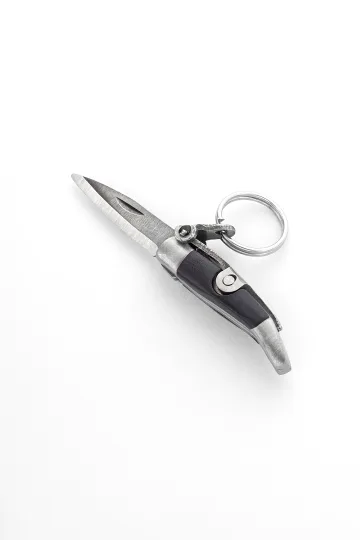
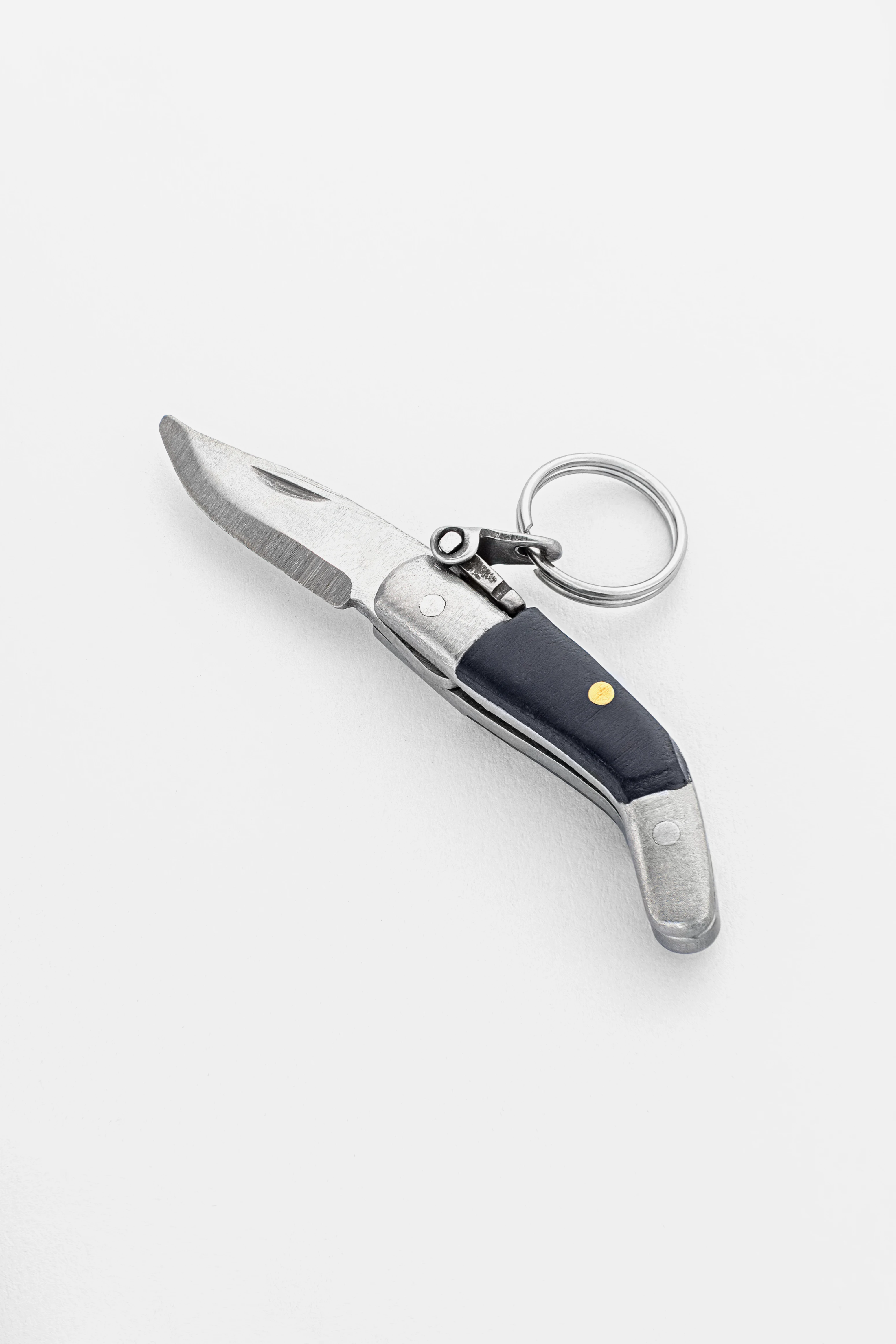
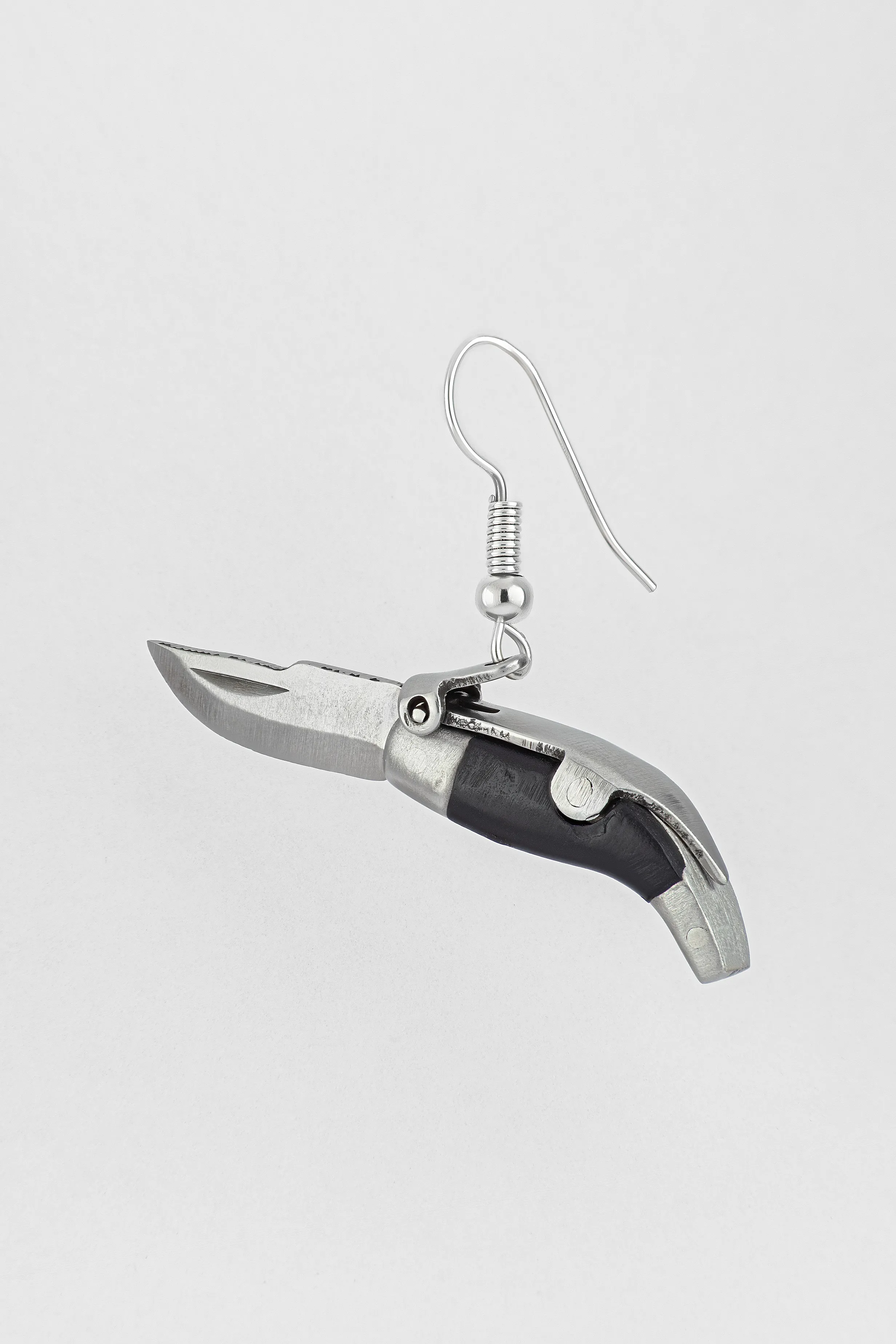
CAPAORA mini knife pendant
The 18th-century Spanish navaja in miniature: 40 mm of stainless steel, a real folding mechanism and a Palanquilla lock that clicks. An affordable gift to remember.
Authentic · Ships from Spain · 14-day returns
When to Size Up and When to Size Down
Almost everyone lands between two sizes at some point. Here is how to decide, rather than flipping a coin.
Size up if
The band is 6 mm wide or wider. The interior is a flat profile rather than comfort fit. Your knuckle is noticeably wider than the base of your finger. You are measuring in winter, in a cold room, or on a hand that has been outdoors. You intend to have the inside engraved with raised lettering. You live somewhere hot and humid, or you are about to move somewhere hot and humid. You are buying a plain band that can be sized down later without difficulty.
Size down if
The band is under 3 mm wide. The ring carries a raised stone or an asymmetric feature that will rotate if there is any play. It is a signet ring, which must not spin. You are measuring in the evening after a salty meal, a long flight or a hot day, and you suspect the reading is inflated. Your knuckle and base are almost the same, which means nothing will stop the ring travelling.
What a correct fit actually is
The ring meets clear resistance at the knuckle going on, and rather more coming off, but it never has to be forced or worked past the joint. At the base it turns with mild effort and does not swing freely when you shake your hand downward.
The real test is time. Put it on, do something else for an hour, and then notice whether you are aware of it. A correctly sized ring disappears from your attention within fifteen minutes and stays gone. Anything you keep noticing is the wrong size, whichever direction it is wrong in.
Ring Size and the Metal It Is Made From
The metal does not change the arithmetic of sizing, but it changes everything about your margin for error.
Gold at different carats
Nine carat gold, the British high street standard, is harder and springier than eighteen carat because there is less gold and more alloy in it. It holds its shape well and resists deformation, and it resizes cleanly. Eighteen carat is softer, warmer in colour, and slightly more prone to going oval over years of wear.
For sizing purposes the difference is marginal. For long-term shape, a thin 18 carat band in daily use will need truing sooner than the same band in 9 carat.
Sterling silver
Sterling is soft and forgiving, which is why it is the friendliest metal to resize and the least stable in shape. A thin silver band worn daily will ovalise faster than any gold equivalent, and it will occasionally need rounding.
That softness has an upside for anyone unsure of their size. A silver ring can go up or down more than once without complaint, so it is a sensible material for a first ring or for a finger that is still changing.
Stainless steel and titanium
Both are hard, light and inexpensive relative to precious metals, and both resist scratching in a way gold never will. Both are also effectively unsizeable in an ordinary workshop.
The compensation is that replacement rather than alteration is a realistic strategy at this price level. If you sit between sizes in steel, ordering both and returning one is a legitimate approach that would be absurd in platinum.
Tungsten carbide and ceramic
The hardest options on the shelf and the least forgiving. Neither can be resized, neither can be bent, and both will fracture under enough force rather than deform.
That fracturing is also the emergency exit: a hospital removes a tungsten ring by cracking it with grips rather than cutting it, which works but is not a pleasant fifteen minutes. If you work somewhere your hand might swell suddenly, weigh that up before choosing an indestructible band.
Palladium and platinum
Palladium is light, naturally white, hypoallergenic and resizes reasonably well, which makes it a quietly sensible choice for anyone who wants a white metal without rhodium plating to maintain.
Platinum is dense, durable, and the most expensive metal on this list to alter. Get platinum right the first time. Measure three times, buy the comfort fit, and if you are between sizes on a plain platinum band, take the larger one, because sizing down is the cheaper of the two operations.
Situations That Change the Rules
Some fingers do not follow the standard advice, and pretending otherwise leads to rings that are never worn.
Pregnancy
Swelling usually begins in the second trimester and peaks in the third, and one to two sizes is typical. Some women find rings come off comfortably until quite late and then become impossible within a fortnight.
The safe approach is to remove rings before they become tight rather than after, and to wear the band on a chain or use an inexpensive silicone stand-in until the hands settle. Most fingers return to their previous size within three to six months, though a permanent shift of half a size is common after a first child.
Arthritis and enlarged joints
When the knuckle is much wider than the finger base, no single circle fits both. The workshop answers are a hinged shank that opens to pass the joint, sizing beads soldered inside the band to grip the base, or a spring insert that flexes as the ring goes over the knuckle.
A jeweller can add beads to most plain rings quickly and cheaply, and it is by far the most common fix. A hinge is a bigger job, but it is the only real answer when the joint difference is two sizes or more.
Hands that work
Bricklayers, chefs, nurses, mechanics, gardeners and climbers all put their hands through cycles of swelling and compression that a desk worker never experiences. A ring sized on a rest day can be genuinely painful by the middle of a shift.
If your work does this to your hands, size for the working hand, not the resting one, and consider a silicone band for shifts and the real ring for everything else. That is not a compromise, it is how most people in those trades actually manage it.
A ring that will not come off
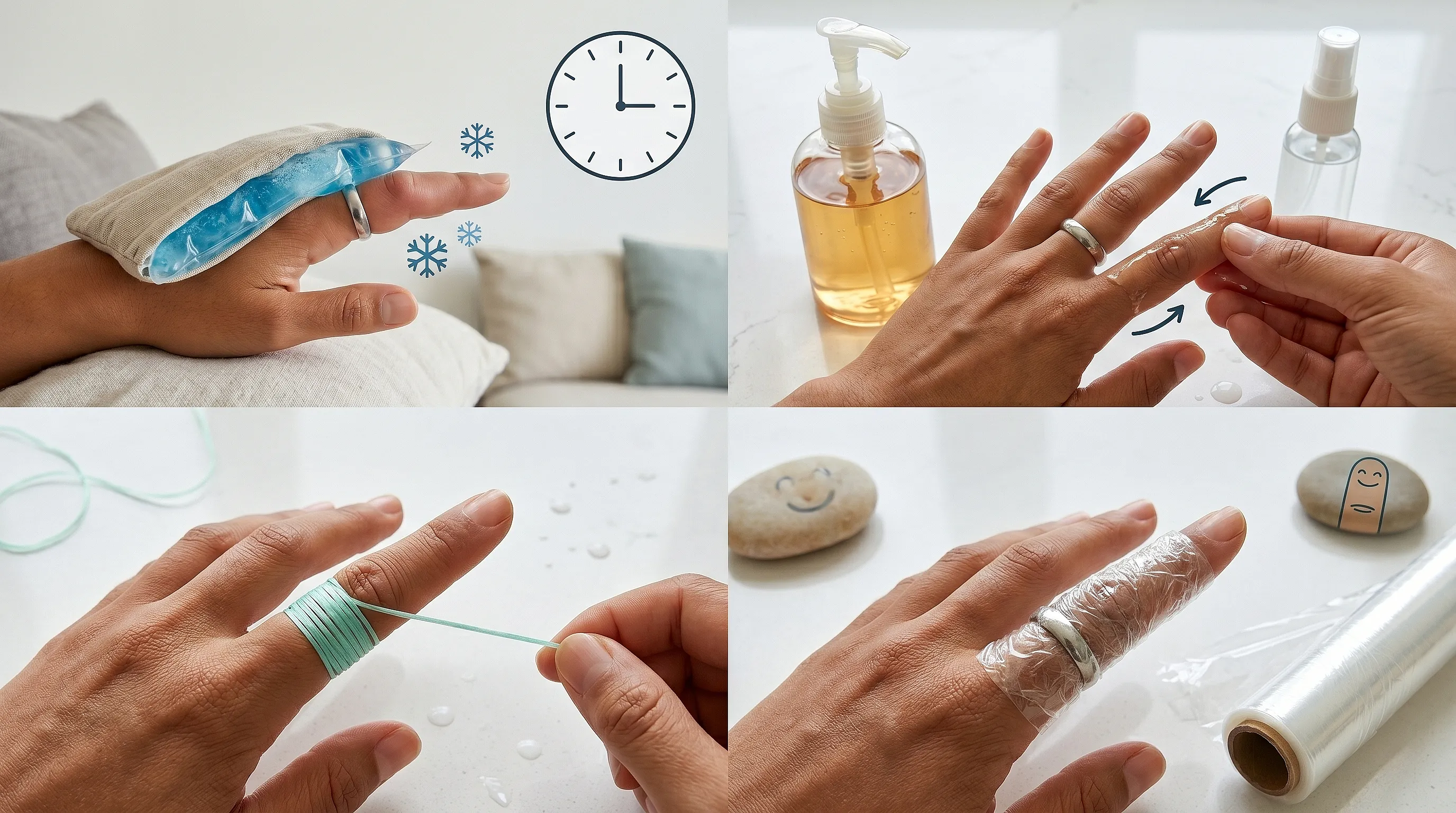
First, do not panic and do not keep pulling, because the friction and the swelling both get worse. Raise the hand above your head for a few minutes to let fluid drain, then cool the finger under cold water.
Then lubricate generously with soap, hand cream or cooking oil and work the ring off with a twisting motion rather than a straight pull. If that fails, the dental floss trick works remarkably well: wind floss tightly around the finger from the ring upward to compress the swelling, then unwind from the ring end and the ring travels with it.
If the finger is discoloured, numb or badly swollen, stop and go to a minor injuries unit or an emergency department. Ring cutters take about a minute, they do not hurt, and a cut ring can be soldered back together for a modest sum. A damaged finger cannot.
Rings and Health: When to Take It Seriously
Most ring problems are cosmetic. A few are not, and they are worth recognising early.
Constriction and the swollen finger
A ring that is too tight restricts blood and lymph flow, which causes more swelling, which makes the ring tighter. That loop can escalate over hours. The signs to act on are a colour change below the ring, pins and needles, numbness or a groove that stays deeply indented long after the ring comes off.
Any of those means the ring comes off now, by whatever method works, including a trip to have it cut. There is no sentimental value that outranks a finger.
Dermatitis under the band
Redness, itching and flaking skin under a ring usually has one of two causes. Either soap and moisture are trapped against the skin, which is a cleaning problem, or the metal itself is causing an allergic reaction, most often to nickel.
Nickel release from jewellery in contact with the skin is limited under EU rules within the REACH framework, and the UK operates equivalent restrictions, so reputable modern jewellery is far less likely to cause trouble than an older or unregulated piece. If a ring reliably produces a rash and cleaning does not fix it, the metal is the culprit. Surgical grade steel, titanium, palladium and higher carat golds are the usual alternatives.
When the finger genuinely grows
Sometimes it is not the ring. Persistent, progressive swelling in the fingers can accompany joint disease, thyroid conditions, kidney or heart problems, or a reaction to medication, and if both hands are affected and the change does not settle overnight, that is worth mentioning to a doctor rather than to a jeweller.
The practical version: a ring that becomes tight over a season is normal life. A ring that becomes tight over a fortnight, on both hands, with no obvious explanation, is a symptom.
Measuring for Someone Else (Gift Buying)
Buying a ring as a gift means you cannot ask the recipient to measure themselves. Options:
Borrow an existing ring. While they are asleep or out, take a ring they wear on the correct finger. Trace it on paper, measure the internal diameter, return it before they notice. The oldest trick in the book, and it works.
Ask a friend or sibling. Someone close to them may know, especially if they have recently bought jewellery together.
Use a ring sizer app. Several apps let you place a ring on the screen and match it to a size. Accuracy is moderate, but better than guessing.
Buy adjustable or resizable. Some rings are designed to be adjustable. Others come with a free resize guarantee. For a surprise gift, these are the safest options.
The decoy. Give them a ring sizer (a set of metal loops in different sizes) as a "fun" thing to try. Casual. Non-suspicious. Then note the size when they mention it.
More on choosing rings as gifts in the jewellery gift guide.
Men's Rings: Special Considerations
Men's hands tend to be broader, and knuckles tend to be more pronounced. This has specific consequences for sizing.
The knuckle problem. Many men have knuckles significantly wider than the finger base. A ring that fits over the knuckle is loose at the base. A ring that fits the base will not go over the knuckle. Solutions include comfort fit rings (the domed interior helps), rings with sizing beads (small balls soldered inside that grip the base), or rings with spring inserts. A jeweller can add these features to most designs.
Wide band preferences. Men often gravitate toward wider bands (8 to 12 mm). At this width, the "go up a full size" rule is almost always correct. A man who wears a size 10 in a thin band may need an 11 or even 11.5 in a 10 mm wide ring. The difference is substantial and worth testing before buying.
Material and resizing. Stainless steel and titanium rings are virtually impossible to resize. The size must be right at purchase. Gold and silver rings can be adjusted by a jeweller. For men buying their first ring who are unsure of their size, choosing a resizable material is the smarter move. Alternatively, a pendant rather than a ring makes a great first piece of jewellery for men because it eliminates the sizing question entirely.
Tungsten and ceramic. These materials cannot be resized at all. They will crack or shatter before they bend. If you are buying tungsten or ceramic, measure with extreme precision. The upside is that these materials are very affordable, so if you get the size wrong, replacing the ring is less painful financially than with gold or platinum.
Buying a Ring Abroad: A Country by Country Guide
Holiday purchases and international orders are where sizing systems collide. Take your diameter in millimetres with you and none of this can go wrong.
Buying in the United Kingdom
Expect letters. A shop will size you on a British gauge and quote something like N or T½, and unless you ask, nobody will mention millimetres at all. Ask for the metric equivalent and write it down.
Also worth knowing: anything sold as gold, silver, platinum or palladium above the exemption weights carries a UK hallmark, and the sponsor's mark, fineness and Assay Office mark are struck inside the shank. Look at them before you buy, because they are also what a jeweller has to protect when resizing later.
Buying in Spain
Spanish shops mostly use the European millimetre system, so the size is simply the circumference: 54 means 54 mm around the inside. Some smaller workshops still quote an older internal scale that counts from 1 upward, so confirm which one you are being given.
Spanish jewellers are generally happy to size on the spot, and adjustment of a plain band is a routine same-week job in most towns.
Buying in Italy
Italy uses the European circumference system, and Italian gold work runs to thinner, lighter bands than the British norm, which changes the sizing advice. A thin Italian band should be ordered true to size rather than rounded up.
Italian shops are also more likely to stock wide ranges of half millimetres, so if you sit between two sizes, ask rather than assuming you have to compromise.
Buying in France
French sizes are circumference-based like the rest of continental Europe, occasionally written with a suffix that indicates the internal measurement standard being used. Confirm the number is a circumference in millimetres and everything else follows.
France also has its own hallmarking tradition with distinct marks, so an antique French ring will not carry a British Assay Office mark and does not need to.
Buying in the United States
Numbers from about 3 to 16, with half sizes universal and quarter sizes available from many makers. A US 7 is 17.3 mm. American shops rarely quote millimetres, so again, get the metric figure and record it.
American sizing is the most granular of the numeric systems in common use, which is genuinely useful if you fall between sizes, and worth taking advantage of when ordering from a US maker.
Buying in Japan
Japan uses its own numbered scale that runs from 1 upward in fine increments, so a Japanese number looks nothing like a European one for the same finger. A Japanese 14 is around 17.3 mm, the same as a US 7.
Japanese workshops tend to size precisely and to finish rings beautifully on the inside, which makes the fit feel slightly different even at an identical diameter.
Buying in India
Indian shops commonly use a numbered scale of their own alongside the US system, and larger retailers will quote both. Gold purity is quoted in carats and the pieces are frequently high carat, which means softer metal and a band that will need truing sooner.
If a ring is being commissioned for a particular finger for astrological reasons, measure that finger specifically. It will not be the same as the ring finger.
The rule that works everywhere
One number travels: the internal diameter in millimetres, or its twin, the circumference in millimetres. Keep both on your phone, in a note you can find, along with the finger and hand they belong to.
With that note, you can buy a ring in any shop on earth, in any system, without a chart and without a conversation you cannot follow.
The Seasonal Calendar of Ring Size
If you keep one ring for years, you will feel the year go past through it. Knowing the pattern stops you from over-reacting to it.
Winter
The tightest fingers of the year, and the loosest rings. Cold constricts the vessels, so a band that fits in July can slide alarmingly in January, particularly outdoors and particularly on a hand that has been carrying shopping.
Winter is when rings are lost. Gloves come off, the ring comes with them, and it lands in the snow or the footwell. Take it off deliberately and put it in a pocket with a zip rather than trusting the fit.
Spring
The most representative season, and the best time to measure. Temperatures are moderate, humidity is unremarkable, and fingers sit close to their true average.
If you are commissioning a ring that cannot be resized, an eternity band or something in titanium, take your measurements in spring or autumn rather than at either extreme.
Summer
The loosest fingers and the tightest rings. Heat and humidity swell the hands, and a band that was comfortable all winter will start to leave a groove by mid-afternoon in August.
This is normal and it is not a sizing error. If the ring is comfortable for nine months and snug for three, the size is correct. If it is uncomfortable for six months, it is not.
Autumn
The mirror of spring: a settled, moderate period that gives honest readings, and the season when most people notice that their summer swelling has gone and their ring has started to move again.
Autumn is a sensible time for the annual check. Put the ring on, note how it sits, and if it has drifted a full size from where it was a year ago, that is worth a trip to the jeweller rather than a shrug.
Rings and Desk Work
Eight hours at a keyboard is a specific kind of load on a hand, and it exposes sizing problems that nothing else does.
The keyboard test
Type for ten minutes with the ring on. A band that is slightly too large will click against the keys and slide toward the knuckle every time you lift the hand. A band that is slightly too small will start to feel warm and present within a quarter of an hour.
Typing keeps the hands raised and mildly active, which is a fair simulation of an ordinary working day. It is a better test than standing still and admiring the ring.
The mouse hand
The hand on the mouse rests in one position for hours with the fingers slightly curled, which compresses the base of the ring finger and puts steady pressure on the underside of the band. Deep, persistent grooves on that hand and not the other usually mean the ring is a fraction tight rather than that anything is wrong.
Flat profile bands are worse for this than court profiles, because the edge presses into the finger web on either side.
What to do about it
Court profile, correct size, and take it off if you spend the day writing. Most people who wear a ring at a desk end up with a small dish on the desk for exactly that reason.
If you take it off at work, decide where it lives on day one and never deviate. Rings put down absent-mindedly are rings that get swept into a bin.
Rings and Playing an Instrument
Musicians have the strictest ring requirements of anyone, and they generally solve them by not wearing one while playing.
Strings and fretted instruments
A ring on the fretting hand is out of the question: it changes the geometry of the fingers against the fingerboard and it will damage the neck. On the picking or bowing hand it is more tolerable, though anything with a raised stone will eventually catch a string.
If you play seriously, the ring lives on the other hand or on a chain during practice.
Keyboards
A plain narrow band is usually workable at the keyboard, since the fingers stay flat and the ring does not contact the keys. Anything wide or raised interferes with the fourth and fifth fingers, which are the weakest and least forgiving.
Pianists who wear rings almost always wear thin ones, and almost always on the right hand rather than the left.
What players actually do
The common solution is a chain. The ring goes round the neck for the duration and back on the finger afterward, which is also the standard answer for surgeons, potters, mechanics and anyone else whose hands are the tool.
That habit has a sizing consequence worth noting: a ring worn intermittently is worn on a finger whose size you have stopped monitoring. Check the fit twice a year rather than assuming.
Ring Size and Your Phone
The phone in your pocket is both a sizing tool and a sizing hazard.
Measuring apps and what they can do
An app that asks you to lay a ring on the screen and match an on-screen circle can be accurate if it calibrates properly, usually by asking you to size a bank card first, since card dimensions are standardised worldwide. Without that calibration step, the result depends on your screen and is not trustworthy.
Photograph your caliper scale or your measured paper strip instead. A photograph of a real measurement beats a simulated one every time.
Screens, cases and scratches
A ring on the hand that holds the phone will meet the screen edge and the case constantly. Hard stones and sharp settings scratch aluminium and coated glass, and the ring itself picks up marks along the underside where it rests against the case.
Nothing to do with sizing, but a ring that spins because it is too large will present its stone to the phone far more often than one that sits still.
Where the size note should live
Write your measurement in your phone as a note titled with the finger and the hand rather than as a bare number. "Left ring finger, 17.3 mm, US 7, UK N, EU 54, measured evening" is a note that will still make sense in three years.
Add the date. Fingers change, and a measurement without a date is a measurement you cannot judge.
Rings and Sleep
Should you sleep in a ring at all
Most people do, and for a correctly sized plain band it is harmless. Fingers are at their least swollen overnight, so the ring is looser rather than tighter, which is why rings turn up in the bedding rather than stuck on the hand.
Rings with claw settings are the exception. They snag on bedding and hair, and the claws bend over years of it. Take those off.
The sleeping hand method
The gift-buyer's oldest technique: while the other person sleeps, lay a strip of paper or a length of thread around the finger, mark it and remove it. It works, and it is genuinely risky, because the wrapping sensation wakes people.
Do it on the hand that is on top, work slowly, and abandon the attempt at the first movement rather than pressing on. There are easier methods earlier in this article.
The outline on paper
Safer and almost as good: take a ring they already own while it is off the finger, place it on paper and draw round the inside edge with a sharp pencil held vertical. Measure the circle you have drawn.
Held at an angle the pencil adds half a millimetre, so keep it upright and take the reading from the inside of the pencil line rather than the middle of it.
Wearing More Than One Ring
Stacking changes the sizing rules, because the rings interact with each other rather than only with the finger.
Two rings on one finger
Two bands on the same finger occupy more length along the finger than one, so they sit across a wider slice of it, including the part that tapers toward the knuckle. The upper ring therefore needs to be very slightly larger than the lower one, or it will bind.
The practical version: size the lower ring true, and take the upper one a quarter size up if the maker offers quarters. Buying both at the same size and hoping is how people end up with one ring that spins.
Rings on neighbouring fingers
Two rings side by side press against each other every time you close your hand, and if either has a raised setting, that contact wears both. It also makes both fingers feel tighter than the numbers suggest, because there is no gap for the skin to move into.
If you wear rings on adjacent fingers routinely, size the pair a fraction generous rather than snug, and choose low profiles on at least one of them.
Building a stack that works
A stack of three or four thin bands behaves like one wide band, which means the wide band rule applies to the group even though each ring is narrow. Order the stack a half size up from your plain narrow band size and the whole set will clear the knuckle together.
Mixed metals in a stack wear each other. Softer silver against harder steel will show marks on the silver within a year, which is worth accepting deliberately rather than discovering later.
What Proper Fit Feels Like
Reading about ring sizes is useful, but nothing replaces understanding what a good fit actually feels like on your finger. Here is what to look for.
A properly fitting ring should slide over the knuckle with slight resistance. Not a fight, but not effortless either. You want to feel it passing the knuckle. This resistance is what keeps the ring from flying off when you wave your hand, wash dishes, or shake someone's hand vigorously.
At the base of the finger, the ring should sit comfortably without leaving a deep indentation in the skin. You should be able to twist it with mild effort. It should not spin freely (that means it is too large), and it should not require force to turn (too tight).
Here is the reality check: if the ring is comfortable in the morning but feels slightly snug by evening, that is the correct size. Fingers fluctuate throughout the day. A good ring is a compromise that works perfectly 80% of the time and acceptably the rest.
If the ring is too tight, the skin bulges over the edges, the finger turns red, and after you remove it, the indentation takes minutes to fade. That is too small. Do not convince yourself it will "stretch." Metal does not stretch with wear the way shoes do.
If the ring is too big, it nearly flies off during vigorous hand-washing or enthusiastic handshakes. If it has a stone or design element, it constantly rotates so the feature faces your palm. That is too big. A ring adjuster can help temporarily, but it is not a permanent fix.
The European Millimetre System
In continental Europe, the sizing system is refreshingly straightforward: the ring size IS the internal circumference in millimetres. If your finger measures 54 mm around, your size is 54. No letters, no fractions, no conversion needed.
This system has one enormous advantage: it is objective and internationally understood. When a jeweller in London, a goldsmith in Vienna, or an online shop in Barcelona reads "54 mm circumference," everyone knows exactly what is meant. No lookup table required.
The formula connecting diameter and circumference is simple: diameter times pi (3.14) equals circumference. Going the other direction: circumference divided by 3.14 equals diameter. This is the only mathematics you need. A size 54 ring has an internal diameter of about 17.2 mm. A size 60 has a diameter of about 19.1 mm.
If you are ordering from a European brand and they list sizes as numbers in the 44-70 range, those are circumference measurements in millimetres. This is the same system used in Germany, Austria, Switzerland, France, Spain, Italy, and most of the rest of continental Europe. It is the most logical sizing system in the world, and it is worth knowing even if your country uses a different one.
Technical Details from the Jeweller's Bench
Understanding a few technical points helps you make better decisions, especially when buying online or choosing between materials.
Ring profile shapes. The cross-section of a ring band comes in several profiles, and each feels different on the finger. D-shaped (flat inside, domed outside) is the traditional standard. Court (domed inside and outside, also called comfort fit) is easier to put on and more comfortable for wide bands. Flat (flat inside and outside) sits flush and looks modern but can feel sharp-edged. Half-round (slightly domed inside and outside) splits the difference. The profile affects how the ring feels on your finger as much as the size does.
Wall thickness. Thicker walls make a ring feel more substantial and last longer, but they also effectively reduce the internal space. Two rings with the same listed internal diameter but different wall thicknesses will feel different. Thinner walls feel airier. Thicker walls feel more secure. Neither is better, but being aware of the difference prevents surprise.
Tungsten and ceramic. These materials cannot be resized. Period. They are also too hard to cut off in an emergency the way gold or silver can be. If your finger swells (injury, allergic reaction), a tungsten ring becomes a genuine medical problem. Hospitals can crack tungsten rings with vice-grip pliers, but it is not a pleasant experience. Something to consider before choosing an indestructible material for daily wear.
Titanium. Lightweight, hypoallergenic, and extremely durable, but also nearly impossible to resize. The good news is that titanium is affordable enough that buying a replacement in a different size is not financially devastating. The bad news is that if you want a specific engraved or custom titanium ring, getting the size wrong means starting over from scratch.
Stainless steel. The default material for many modern jewellery pieces, including Zevira's collection. Cannot be easily resized by a traditional jeweller, but the price point makes replacement practical. If you are between sizes, it is worth ordering two and keeping the one that fits better.
Leave your email, we'll send your discount code. No spam, unsubscribe anytime.
The code arrives by email, valid on your first order.
Six Myths About Ring Sizes
"Your shoe size tells you your ring size"
There is no relationship. Foot length is driven by skeletal proportions that have nothing to do with the circumference of a finger, and the correlation across any real population is close to nothing.
The myth survives because it produces a plausible-sounding number, and a plausible-sounding number is exactly what a nervous gift buyer wants to hear.
"A ring should slip on easily"
A ring that slips on easily slips off just as easily, usually into a sink, a lake or a pile of leaves. Correct fit involves noticeable resistance at the knuckle in both directions.
The test is not how it goes on. It is whether it stays on when you shake your hand hard with your fingers pointing down.
"You can work out the size from a photo of the hand"
You cannot, not reliably. Without a reference object of known size in the same plane as the hand, at the same distance, a photograph carries no absolute scale at all, and hands photograph at wildly different apparent sizes.
Put a coin against the finger in the photo and you have something. Without one, you have a guess dressed up as a method.
"Men's and women's sizes are different systems"
They are the same system and the same millimetres. A 17.3 mm interior is a US 7 and a British N whether the wearer is a man or a woman.
What differs is the typical range, and even that overlaps heavily in the middle. Plenty of women wear what a shop would file as a men's size and the other way round.
"White gold sits differently from yellow"
At the same measured diameter, no. White gold is yellow gold with a different alloy mix and usually a rhodium plating, and neither changes the internal dimension.
What can change the feel is the plating itself, which is a few microns thick and makes the interior very slightly smoother when new. That is a difference in sensation, not in size.
"Sizes are more accurate in expensive shops"
The gauge on the counter of a small independent jeweller is the same standard as the gauge in the grandest showroom. What differs is the time the person behind the counter is willing to spend with you.
A patient assistant who checks the knuckle and the base and lets you try the actual band width you intend to buy is worth more than any amount of marble and lighting.
Superstitions and Ring Size
Every culture that wears rings has attached beliefs to them, and several of those beliefs are specifically about fit. They are worth knowing, if only so you can recognise them when someone repeats one at you.
"The ring will tell you its size"
A romantic idea with no mechanism behind it: that the right ring simply fits, and if it does not fit, it was not meant for you. It is a lovely thought and a poor purchasing strategy.
The kernel of truth is that a correctly sized ring does feel unremarkable within minutes, which people then interpret as recognition. It is not recognition, it is good measurement.
"A dropped wedding ring means trouble"
Widespread across Europe: dropping the ring during the ceremony is read as an omen. In practice, dropped rings at weddings are usually a sizing problem, since nervous hands are cold hands and cold fingers are slim ones.
If you are getting married in a cold church in February, that is a genuine reason to check the fit rather than a reason to consult an oracle.
"A wedding ring must never come off"
A durable belief, and one that causes real harm. Rings need to come off for cleaning, for work with the hands, for medical procedures and any time the finger swells.
The tradition is about constancy rather than about literal adhesion, and every jeweller has a story about someone who let a ring become dangerously tight because of it.
"A couple's ring sizes should match"
They almost never do, and there is no reason they should. The point of matching wedding bands is the design, the metal and the finish, not the number stamped inside.
Any competent maker will produce the same design in two different sizes without a murmur, and adjust the width if one partner's hand suits a narrower band.
"Which hand does the engagement ring go on after the wedding?"
Custom varies and nothing is compulsory. Some move the engagement ring to the right hand for the ceremony and back afterward so the band sits closest to the heart. Some wear both stacked on the left. Some retire the engagement ring to occasional wear.
The sizing point matters more than the etiquette: worn stacked, the two rings behave as one wide band, and the pair may need a quarter size more room than either would alone.
Rings for Particular Occasions
The engagement ring
Usually the most sizing-sensitive purchase anyone makes, because it is a surprise, it has a stone, and it is expected to fit on the day. Size it snug enough that a raised setting will not rotate, and buy from somewhere that offers a resize after the fact.
If you are guessing, guess up rather than down. A ring that will not go on at all in front of an audience is a worse outcome than one that is slightly loose for a fortnight.
The wedding band
Worn every day for decades, which makes comfort the dominant criterion. Court profile, correct width for the hand, and a metal that can be resized twice over a lifetime without drama.
Get married in winter and the band will feel different by July. That is expected. Choose the size that works in an ordinary room at an ordinary temperature rather than the size that felt perfect on a cold morning.
The signet ring
Traditionally on the little finger of the left hand in Britain, and traditionally sized tight, because a signet has a heavy face and will rotate to hang under the finger if there is any play at all.
The little finger is also the finger whose knuckle is closest in size to its base, so a snug fit is achievable there in a way it often is not on the ring finger.
The spinner ring
A band with an outer sleeve that rotates freely around a fixed inner shank. The inner shank determines the size, so measure and order exactly as you would for a plain band of the same total width.
Spinners are usually wide once you count both layers, so apply the wide band rule and go up a half size. They are also heavier than they look, which makes fit more noticeable.
The midi ring
Worn above the knuckle on the middle phalanx rather than at the base, which is a different measurement entirely, typically two to four sizes smaller than the same finger's base.
The middle phalanx has almost no taper, so a midi ring that fits will stay put, and one that is a fraction large will travel down to the knuckle constantly and drive you mad.
The thumb ring
Almost always larger than people guess, frequently several letters above the ring finger on the British scale. The thumb joint is also wide relative to the base, so comfort fit earns its keep here.
Thumb rings take more mechanical abuse than any other finger's ring, because the thumb does the gripping. Choose a robust width and a hard-wearing metal.
Size and Engraving
Raised lettering
Engraving that leaves the letters standing proud of the surface reduces the internal diameter measurably, on the order of a tenth or two of a millimetre, and it adds texture that the finger notices.
If you are on the boundary between two sizes and you intend raised interior lettering, take the quarter size up. There is no way to reverse the decision afterwards without removing the engraving.
Deep cut engraving
Traditional hand engraving cuts into the metal rather than raising it, so the internal diameter is unchanged. What changes is the surface: the cut edges can feel slightly grippy against the skin, particularly when the finger is damp.
A good engraver softens the edges of the cuts during finishing, which removes the effect entirely. Ask whether that is part of the job.
Laser engraving
The shallowest of the three and the least consequential for fit. Laser marking barely penetrates the surface, so it changes neither the diameter nor the feel, which is why it has become the default for date and initial marking inside wedding bands.
The trade-off is depth of character. Hand engraving looks like the work of a person, laser marking looks like the work of a machine, and the choice is aesthetic rather than practical.
The Psychology of Fit: Why Slightly Snug Beats Slightly Loose
Given a choice between a ring that is a fraction tight and one that is a fraction loose, most people instinctively choose loose, on the grounds that loose is comfortable. That instinct is wrong, and it is worth understanding why.
A ring that is slightly loose is a low-grade anxiety you carry all day. You check it. You feel it move when you wash your hands. You touch it in your pocket to confirm it is still there. Every gesture with the hand pointing down is a small risk assessment, and the risk is real, because loose rings are the ones that vanish.
A ring that is a fraction snug announces itself for a week and then stops. The finger adapts, the ring settles into a position, and after that you do not think about it. The one exception is the ring that leaves a deep groove or turns the fingertip pale, which is not snug, it is too small, and it needs dealing with rather than tolerating.
There is a further asymmetry that decides the argument. Making a ring smaller is a routine job on any plain shank. Making one larger is more work, and past a certain point it thins the metal or requires new material to be let in. When in doubt, in other words, the metal is on the side of snug.
A Historical Blunder: Napoleon and Josephine
The story goes that when Bonaparte proposed to Josephine de Beauharnais in 1796, he commissioned a ring without knowing the exact size of her finger, and the result was slightly loose. His answer, according to the version most often repeated, was to have the jeweller set two small stones facing each other inside the band, a sapphire and a ruby, which filled some of the interior space and gave the ring a symbolic reading at the same time.
Whether that detail is history or the invention of romantic biographers, the engineering is sound and jewellers still use the principle. A small anchor of metal soldered to the inside of a shank, or a pair of sizing beads placed at the sides, reduces the effective diameter by a quarter to half a size without touching the outside of the ring at all.
It is the cheapest fix in the trade for a band that is a fraction generous, it is completely reversible, and it takes a workshop about ten minutes. If your ring is very slightly loose, ask about beads before you ask about a full resize.
Quick Answers on Measuring and Converting
How to know your ring size at home without a ring sizer
Two home methods hold up well. First, wrap a thin strip of paper or a piece of non stretchy string around the base of the finger, mark where it meets, lay it flat on a ruler and read the length in millimetres. That figure is the circumference; match it to the circumference column in the table. Second, and more precise, take a ring that already fits that finger and measure its inside diameter across the middle, wall to wall. An inside diameter of 16.5 mm is a US 6; 17.3 mm is a US 7. Measure in the evening and, if you land between two, take the larger reading.
Millimetres to centimetres: what 16.5 mm is in cm
Going from millimetres to centimetres just means dividing by 10. So 16.5 mm is 1.65 cm, and 17.3 mm is 1.73 cm. Keep two numbers apart: the inside diameter (the width across the ring) and the circumference (the distance around the finger). Most size charts list the diameter, so a 16.5 mm diameter is a US 6. If you measured around the finger instead, 54 mm of circumference is 5.4 cm, and that 5.4 cm maps to a US 7. Divide a circumference by 3.14 to get the diameter, or multiply a diameter by 3.14 to get the circumference.
Converting cm around your finger to a ring size
If you measured around the finger with string and have centimetres, multiply by 10 to get the circumference in millimetres, then read it off the table. A 5.5 cm wrap is 55 mm, close to a US 7.5. Six centimetres is 60 mm, around US 9.5. Six and a half is 65 mm, near US 11, and 7 cm is 70 mm, a large US 13. When you sit between two sizes on a plain band, round up: sizing a ring down is simpler and cheaper than stretching it up.
What a 54 mm circumference ring size is
A finger that measures 54 mm around has an inside diameter of about 17.3 mm, which is a US 7. In the European millimetre system that is simply size 54, because those countries use the circumference in millimetres as the size number itself. This is one of the most common women's sizes. If your paper strip reads exactly 54 mm, order the US 7 with confidence; if it falls between 54 and 55 mm and the band is wide, step up to the next size so it still clears the knuckle.
What is the average men's ring size?
For men the usual range runs from about US 8 to US 13, with US 10 to 11 the most common for the ring finger. That is roughly a 19.8 to 20.6 mm inside diameter, or 62 to 65 mm around. Slim fingers or a pinky can sit lower, near US 8. If you measure a man's finger and get something much smaller, check you are measuring the right finger and doing it in the evening, since a cold or morning finger can read a size or two under its true value.
Is a 3 mm ring band too thin?
No, 3 mm is a medium, versatile width rather than a thin band. Genuinely delicate rings start below 2 mm, the territory of fine stacking rings. At 3 mm you get enough presence for daily wear without bulk, and it suits a simple engagement ring or a wedding band equally well. For sizing, a 3 mm band is ordered at your true size with nothing added. Only from about 6 mm upward does it help to go half a size larger, because a wide band covers more skin and feels tighter at the same diameter.
Rings and Sport
Every sport treats a ring differently, and several of them are the reason people stop wearing one.
The gym
Free weights are the worst case in ordinary life. A bar or dumbbell handle pressing a ring against the finger bone bends the band, dents it, and in the worst case causes a serious degloving injury if the ring catches on a rack as a weight drops.
Take rings off for weights. If you refuse to, at least take them off for anything involving a bar, and expect a plain band to go oval within a year regardless.
Swimming
Cold water shrinks fingers fast, and chlorinated or salt water adds lubrication. A ring that is secure on dry land can leave the finger in a swimming pool without you noticing for several lengths.
Sea water is worse, because the loss is permanent. If you swim in the sea on holiday, the ring stays in the hotel safe. This is the single most common way rings are lost abroad.
Combat sports
Impossible with a ring on, and every club will tell you the same. A ring inside a glove presses into the finger under every impact, and a ring on an ungloved hand is a weapon and a hazard in equal measure.
Grappling is worse than striking: fingers get caught in fabric, and a ring turns a bent finger into a broken one.
Climbing
Climbers do not wear rings, and the reason is specific and grim. A ring catching on a hold or a bolt while the body drops is the classic mechanism for a degloving injury, and it happens to experienced people.
Silicone bands exist largely because of this sport and the trades that share the same risk. If you want to wear something while climbing, wear one of those.
Yoga
Low risk of injury, high risk of nuisance. Weight-bearing on the hands presses the ring into the mat and into the neighbouring fingers, and anything with a raised setting is uncomfortable in any pose that loads the palm.
A thin, flat, low profile band is workable. Anything else comes off at the door.
Running and cycling
Distance running swells the hands noticeably, which is why runners often finish with rings biting when they started loose. It resolves within an hour of stopping.
Cycling puts sustained pressure on the base of the fingers through the bars, and the vibration works a ring against the skin for hours. Long distance cyclists frequently develop numbness in the hands anyway, and a snug ring makes that worse rather than causing it.
Ring Size and Travel
High altitude
Above roughly two thousand metres, fluid shifts and mild swelling in the hands are common for the first day or two until the body adjusts. Walkers in the Alps, the Pyrenees or the Scottish hills notice it as a band that suddenly grips.
It passes. If a ring is uncomfortable on day one of a trip, take it off and put it back on at the end of the week rather than deciding your size has changed.
Hot countries
Heat and humidity produce the largest predictable change in finger size that most people ever experience. A week somewhere tropical can move a hand a full size, and it will still be there on the flight home.
Plan for it. If you are travelling somewhere hot, either leave a snug ring at home or accept that it lives on a chain for the fortnight.
Long flights
Cabin pressure and immobility swell the hands and feet on any flight over a few hours, and the effect compounds with dehydration and the salt in aircraft food. Rings that fit on departure can be tight on arrival.
Drink water, move the hands, and if a ring is already close to the limit, take it off before boarding rather than after it has become difficult.
Dry climates
The opposite problem. Very dry air, aggressive air conditioning and desert conditions dehydrate the tissues, fingers slim down, and a ring that was secure begins to move.
Combine that with sunscreen or hand cream and you have the standard holiday ring loss: a slim, slippery finger and a ring that vanishes on the first swim or the first walk on the beach.
Living With a Ring Over Years
Nothing about a ring is static. Over a decade, both the ring and the finger change, and they change toward each other.
The ring settles
A newly made ring in a soft high carat gold will conform very slightly to the finger over the first few weeks of daily wear, moving toward the oval cross-section of the finger rather than staying perfectly round.
This is why a ring can feel marginally more comfortable at a month than on day one, and it is also why a ring you have worn for years feels wrong on any other finger.
The finger adapts
Skin and soft tissue remodel around anything that presses on them consistently. A ring worn every day for a decade leaves a permanent slight indentation, visible for days after the ring comes off, and the finger effectively holds a groove sized to that band.
That groove is why a long-worn ring is often easier to put back on than a brand new one of identical size.
The ring loses metal
Every year of wear removes a little metal from the outside of the band, and over decades a thin band can lose a noticeable fraction of its thickness. Silver goes fastest, then higher carat gold, then nine carat, and platinum barely at all because it displaces rather than sheds.
A wedding band worn for forty years is a thinner object than it was on the day it was bought. That is not damage, it is a record.
The shank changes shape
Wear concentrates on the underside of the band, where it meets the palm and takes the load of every grip. Over time that section thins faster than the top, and the ring goes both oval and unevenly thick.
A jeweller can build the shank back up with new metal, a job called shanking, and it is completely routine on an old wedding band. Ask about it before the thin section fails rather than afterwards.
The practical takeaway
Have a ring you wear daily checked every few years: shape, shank thickness, and, if there are stones, the settings. Ten minutes across a counter prevents the two things that actually destroy rings, a shank that finally cracks and a claw that finally lets go.
If the fit has drifted a full size in either direction over that period, that is normal life rather than a fault, and resizing is the answer.
The Five Ways People Actually Lose Rings
Winter and gloves
The classic. The ring comes off with the glove, drops into the snow, the footwell or the lining, and is gone. Cold fingers are slim fingers, so the ring was already loose before the glove touched it.
Pull gloves off by the fingertips one at a time rather than dragging them from the wrist, and check the glove before putting it away.
The sea and sunscreen
Cold water, a slippery hand and a wave. The ring is on the seabed within a second and nobody has ever found one that way. Sunscreen and after-sun make it worse by removing what friction remains.
The rule that works: rings do not go in the sea. Not on the hand, not in a beach bag, not in a shoe on the sand.
Washing up
Soap and warm water on a hand that goes into a sink full of dishes, and the ring slides off into the water without being felt. Then the water goes down the drain and the ring goes with it.
Some are recovered from the trap under the sink. Many are not, because by the time anyone notices, the water has run for a while.
The gym
Rings come off for lifting and are put down on a bench, a windowsill or the top of a locker. They are then left there. The ring was not lost while training, it was lost while getting changed.
If a ring comes off at the gym, it goes in a zipped pocket of the bag every time, in the same pocket, with no exceptions.
Travel and unfamiliar surroundings
Hotel bathrooms, unfamiliar bedside tables, airport security trays, aircraft seat pockets. The mechanism is always the same: a ring taken off in a place with no established home for it.
The fix is a habit rather than a fitting. One small pouch that travels with you, and the ring goes in the pouch whenever it is not on the finger.
An Experiment: Watch Your Own Finger Change
If you want to stop taking any of this on faith, spend a day measuring. It is the fastest way to understand why a single measurement is worthless.
What you need
A paper strip about a centimetre wide, a ruler with millimetre markings, a pen, and a piece of paper to record the results. A caliper if you have one, though the strip is enough.
Nothing else, and about two minutes per reading.
What to do
Measure the same finger on the same hand at six points across one day: on waking, mid-morning, after lunch, late afternoon, after a hot shower, and last thing at night. Use the same wrapping tension each time, which is the hardest part and the reason to use a strip rather than string.
Write down the time, the reading and anything unusual: a cold walk, a salty meal, a workout, a stressful hour. Repeat on a second day if you can, ideally one with different weather.
What to expect
Most people see a spread of half a size to a full size across the day, with the smallest reading in the morning or after time outdoors in the cold, and the largest in the evening or after heat.
The number you want for ordering is the late afternoon or evening figure, because a ring sized to it will be comfortable at every other point on your own chart. That is the entire lesson, and now you have measured it yourself rather than reading it here.
FAQ
My ring fits in winter but is tight in summer. Is it the wrong size? No. Fingers expand with heat and humidity. If it is comfortable for 9 months of the year, the size is right. For the hot months, you can either accept the tightness or switch to a slightly larger ring.
Is it possible to resize any ring? Most gold, silver, and brass rings can be resized by 1 to 2 sizes up or down. Eternity bands, titanium, tungsten, and ceramic rings usually cannot be resized. Stainless steel is difficult to resize. Check before buying.
Does a dirty ring fit tighter? Yes. Buildup of soap, lotion, and dead skin under the band can effectively reduce the internal diameter by 0.2 to 0.3 of a size. Clean your rings regularly, and they will feel more comfortable.
How tight should a ring be? It should resist slightly when passing over the knuckle (so it does not fly off when you wave your hand) but sit comfortably at the base without leaving a deep indentation. You should be able to twist it on your finger with mild effort.
My ring spins constantly. Is it too big? If a ring spins (rotates around the finger), it is too large, or the design is top-heavy. For rings with stones or asymmetric designs, a snug fit is essential. For plain bands, slight spinning is normal and not a problem.
Is there a difference between men's and women's sizing? No. The sizing systems are universal. A US size 7 is 17.3 mm regardless of gender. The difference is in typical ranges: women tend to wear US 4 to 8, men US 8 to 13. But these are averages, not rules.
Can I measure my ring size with my phone? Several apps claim to measure ring size using the phone screen or camera. They work as a rough estimate but should not replace physical measurement. Use them as a sanity check, not a primary method.
What if I am exactly between two sizes? For thin bands (under 3 mm), go down. For wide bands (over 5 mm), go up. For standard width (3 to 5 mm), go up. It is almost always easier and cheaper to size a ring down than to size it up.
Quick Conversions
People search for these every day. Here are the direct answers.
17.3 mm in ring size: US 7, EU 54, UK N. The most popular women's ring size worldwide.
18.1 mm in ring size: US 8, EU 56.5, UK P. The crossover point between typical women's and men's sizes.
19.8 mm in ring size: US 10, EU 61.5, UK T. A common men's ring size.
56 mm circumference in ring size: Divide by pi (3.14) = 17.8 mm diameter. That is US 7.5, EU 55, UK O.
58 mm circumference in ring size: 58 / 3.14 = 18.5 mm. US 8.5, EU 58, UK Q.
7 cm (70 mm) circumference in ring size: 70 / 3.14 = 22.3 mm. US 13, EU 69, UK Z. Very large.
5.5 cm (55 mm) circumference in ring size: 55 / 3.14 = 17.5 mm. US 7, EU 55, UK O.
Ring size 52 in US: A European 52 means 52 mm circumference = 16.6 mm diameter = US 6, UK L.
Ring size 54 in US: EU 54 = 17.2 mm = US 7, UK N.
Zevira Ring Sizes
All Zevira rings are available in standard EU sizes. Our most popular ring models:
- The Protective Eye Ring, available in EU 52-60
- The Sun and Moon Tarot Ring, available in EU 50-58
- Spiritual Love Ring, available in EU 50-58
If you are unsure about your size, use the converter above to find your EU size, or contact us on WhatsApp and we will help you choose.
Silver and gold jewellery, wedding bands, symbolic pendants, paired sets.
The 5 Most Common Sizing Mistakes
1. Measuring in the morning. Fingers are thinnest when you wake up. By afternoon they are up to half a size larger. Measure between 2 PM and 6 PM for the most representative result.
2. Measuring cold fingers. Cold shrinks blood vessels. Run your hands under warm water for 30 seconds before measuring. You want your fingers at their normal, warm state.
3. Forgetting the knuckle. Your ring has to pass over the knuckle every time you put it on. If your knuckle is wider than the base of your finger (common), measure both and aim for the middle.
4. Using a stretched string. Elastic, yarn, or old string stretches. Use paper strip or dental floss. Anything that does not give.
5. Measuring once. Measure three times on three different days at the same time of day. If you get 17.0, 17.3, and 17.5, your size is 17.3 (the middle). One measurement is a guess. Three is data.
Send a friend a discount code, they save on their first order.
Children's Rings: A World of Their Own
Sizing a ring for a child is a different problem, because the target moves faster than the ring can be adjusted.
How fast they grow
A child's fingers change measurably year on year, and through growth spurts the change can be visible over a few months. A ring bought to fit at eight will not fit at ten, and buying deliberately large produces a ring that is lost rather than grown into.
The honest approach is to treat a child's ring as a piece for now, in an inexpensive metal, with the expectation of replacing it rather than resizing it.
Practical advice
Measure the finger the same way you would an adult's, with a narrow paper strip, and buy true to size rather than generous. Choose a plain, low profile band with nothing that projects, and choose a metal that will not react with skin.
Adjustable wrap styles are worth considering here in a way they are not for adults, because the whole point is to accommodate change.
Safety
Two real hazards. A ring that becomes too tight on a growing finger can restrict circulation before anyone notices, so check the fit every few months rather than annually. And a small ring is a choking hazard for younger siblings, which is a reason to keep it on the finger or in a box rather than loose in a bedroom.
Nickel sensitivity often shows up first in childhood, which is an argument for sterling silver, titanium or higher carat gold rather than unbranded costume metal.
Ring Size and New Technology
Three-dimensional finger scanning
Some workshops now scan the finger optically and build a ring around the actual geometry rather than around a circle. The result accounts for the oval cross-section and for the taper toward the knuckle, which no standard size can.
It is not yet common on the high street, and for a plain band it solves a problem most people do not have. For someone with a difficult knuckle it is genuinely useful.
Printed try-on rings
The most practical piece of new technology in this whole field. A maker prints a resin copy of the exact ring, in the exact width and profile, in two or three candidate sizes, and posts them out. You try the real shape on the real finger before any metal is cut.
For anything unsizeable, an eternity band or a titanium ring, this is worth insisting on if the maker offers it.
Adjustable and mechanical shanks
Rings with a sprung interior, a hinged shank or a small mechanism that expands over the knuckle and closes at the base. Once a specialist item for arthritic hands, now available on ordinary bands from several makers.
The trade-off is complexity. A mechanism can fail, and it makes the interior of the ring harder to clean. For a hand that genuinely needs it, that is an easy trade.
Sizing in the Age of Online Shopping
Virtual try-on
Augmented reality tools that place a ring image over a video of your hand are good at answering "does this suit me" and useless at answering "will this fit me". They have no absolute scale, and the ring is rendered at whatever size looks plausible.
Use them for style. Never for size.
Home try-on kits
A set of sizing rings, or in better versions a set of resin copies of the actual design, posted out before the order is placed. This is the closest an online purchase gets to standing at a counter.
Check whether the kit includes the width you intend to buy. A set of narrow plastic loops tells you very little about an eight millimetre band.
The exchange guarantee
The single most important line in any online jewellery listing, and the one most people skip. A maker who is confident in their sizing will exchange for a different size without argument, and will often resize once for free.
If a listing offers neither a resize nor an exchange on a ring that cannot be resized, that is the moment to close the tab.
How the Trade Handles Sizing
Manufacturing tolerance
Rings are made to a tolerance, not to a perfect number. A well-made band will be within about a tenth of a millimetre of its nominal internal diameter, which is imperceptible. Cheaper mass production runs wider, and a quarter of a millimetre is the difference between comfortable and irritating.
This is one reason two rings labelled the same size from different makers can feel different on the same finger.
Handmade against mass production
A ring made individually is sized on a mandrel to the number you gave, checked, and finished. A ring made in a run is cast from a mould cut for a particular size, and casting shrinkage has to be predicted in the mould rather than corrected afterwards.
Neither is inherently better. The individually made ring is more likely to be exactly the size stated; the production ring is more likely to be consistent with the last one of the same model.
Resizing as an ordinary service
Every high street jeweller with a workshop resizes rings, and most that lack one send work out to a trade workshop. It is bread and butter work, it is quick on plain shanks, and there is no need to be sheepish about asking.
The only thing to establish in advance is whether your particular ring is one of the ones that cannot be done, and this article's material section tells you which those are.
Odd Facts and Curiosities
The largest sizes
British scales run past Z into Z+1, Z+2 and beyond, and workshops will make larger still to order. Thumb rings and rings for very large hands routinely sit in that territory, which surprises people who assume Z is the end of the alphabet in every sense.
The smallest sizes
At the bottom end, the scale runs down toward diameters under twelve millimetres, sizes that in practice belong to children's rings, midi rings and rings made for the little finger. Antique mourning and posy rings often measure startlingly small, because hands in general were smaller and because many were made for young women.
Rings as evidence
Forensic work has long treated jewellery as an identifier, because a ring carries maker's marks, hallmarks, engraving, and a size that corresponds to a particular hand. In more than one historical identification, an inscription inside a band did the work that no other evidence could.
One size fits all
Occasionally advertised, never true. Adjustable and wrap designs come closest, and what they actually deliver is a ring that fits a range of fingers imperfectly. Genuine fit is a specific number, and the whole trade exists because of it.
Twenty Things Worth Knowing About Ring Size
- Morning and evening readings on the same finger can differ by a full size.
- The dominant hand runs a quarter to half a size larger than the other.
- A finger is oval in cross-section, not round.
- Fingers can swell at altitude and settle again once you acclimatise.
- Stress narrows the vessels and slims the fingers within minutes.
- A salty meal the night before is enough to change the reading.
- Thermal expansion of a gold band across everyday temperatures is under a hundredth of a millimetre.
- The average wedding band is resized once or twice in its owner's lifetime.
- Medieval sizing sets were often turned from bone.
- Japanese workshops were measuring fingers more than once a day in the seventeenth century.
- Silicone rings were adopted first by people working around electricity and machinery.
- A soft high carat band conforms slightly to the finger within the first few weeks.
- The single most common women's size in Britain sits around 16.9 mm.
- The single most common men's size sits around 19.5 mm.
- The middle and ring fingers on the same hand differ by half a millimetre to a full millimetre.
- Left and right ring fingers differ by a quarter to half a millimetre.
- Losing ten kilograms typically drops the ring finger by half a size to a full size.
- Pregnancy commonly adds one to two sizes at its peak.
- Nobody has ever counted the wedding bands lost down kitchen drains, and the number is not small.
- A correctly sized ring stops registering in your awareness within fifteen minutes of going on.
A Ring on a Chain
Wearing a ring round the neck is not a defeat. It is the standard answer for surgeons, mechanics, climbers, musicians, new parents and anyone going through a season when the finger is not cooperating, and it has been done for as long as chains have existed.
Practical points. Choose a chain rated to carry the weight, because a heavy signet on a fine chain will eventually part it at the clasp. Check that the ring passes over the clasp mechanism without catching. And be aware that a ring worn against the chest picks up sweat and skin oils differently from one on the finger, so it wants cleaning more often, not less.
The sizing consequence is the one people forget. A ring on a chain is a ring you are no longer monitoring. Try it on the finger every few months, because the finger keeps changing while the ring is away, and the day you want to wear it properly is a poor day to discover that it no longer fits.
Buying it as a gift? Each one arrives ready to give.
 A branded Zevira box and a little card come with every order.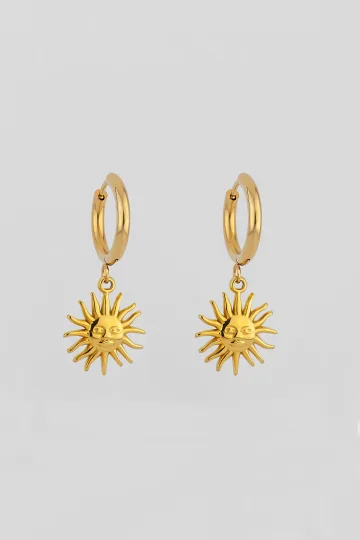
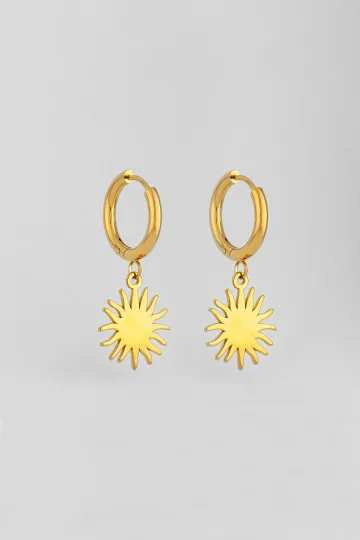
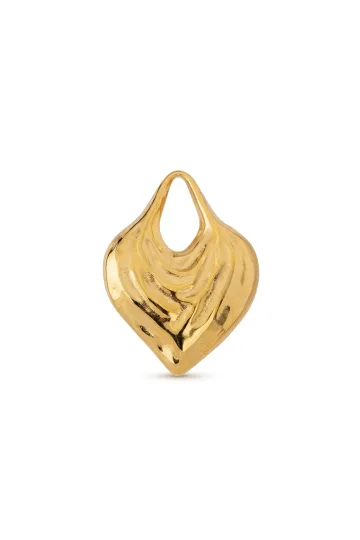


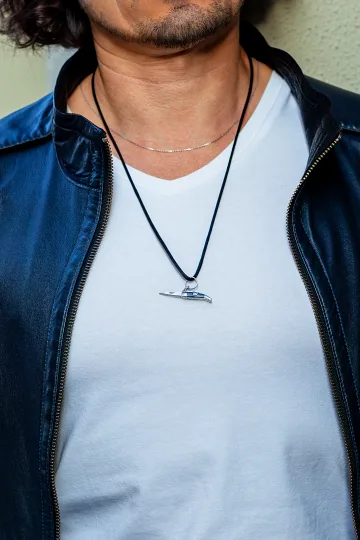
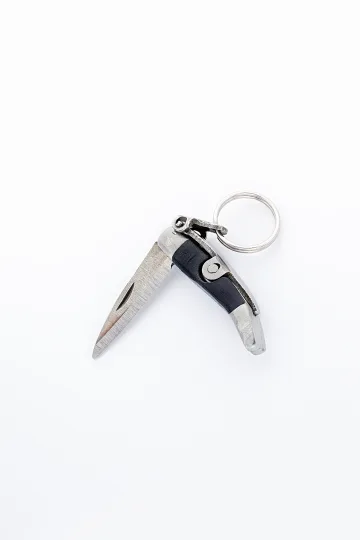


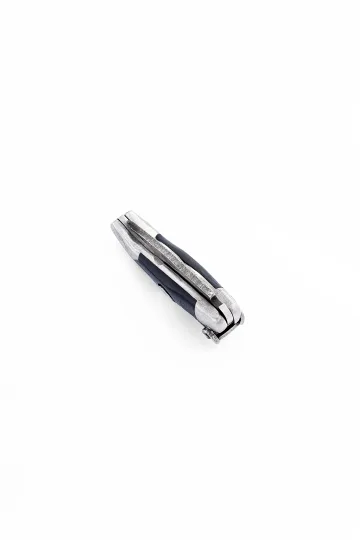

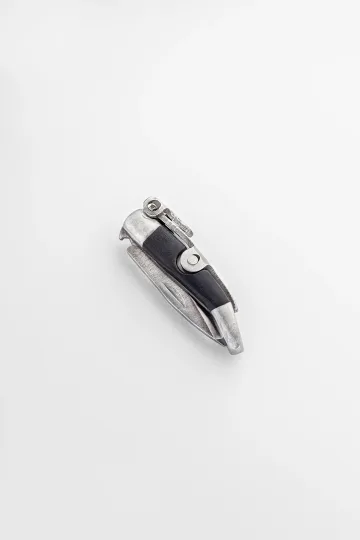

How Often to Re-measure
For an adult with a stable weight and a stable routine, once every two or three years is plenty, and the sensible trigger is not the calendar but a change: significant weight movement in either direction, pregnancy, a move to a different climate, a new job that uses the hands, a new medication that affects fluid retention, or simply the observation that a familiar ring has started to move.
The measurement takes five minutes with a paper strip. Do it in the evening, at room temperature, on the finger that matters, and write the result down with the date next to it.
Anyone in their fifties and beyond might reasonably do it annually, because joint changes accumulate quietly and a wedding band that no longer clears the knuckle is easier to deal with before it becomes impossible to remove.
Storing a Ring
Rings are lost at home more often than anywhere else, and almost always in the same way: put down somewhere temporary, forgotten, and swept away.
The fix is a single designated place. One dish, one box, one pouch, used every time without exception. The habit matters more than the container. A ring that always goes in the same dish is a ring that is never lost, and a ring that goes wherever is convenient is a ring on borrowed time.
Storage also affects fit indirectly. Rings kept loose together in a box scratch each other, and a soft silver band stored against harder steel picks up marks and slowly deforms. Separate compartments or small soft pouches solve it. For anything with stones, store it where the setting cannot be knocked, since a bent claw is a lost stone waiting to happen.
Size and Hygiene
A ring is a shelf. Soap, hand cream, skin cells and moisture collect underneath it, and over months that layer measurably reduces the internal space. A great many complaints of "my ring has shrunk" are solved with warm water, a drop of washing-up liquid and a soft brush.
The other half of the problem is the skin under the band, which stays damp and does not get scrubbed. Trapped moisture under a ring causes more irritation than metal allergy does, and the pattern gives it away: a ring that itches after washing up rather than after wearing.
Clean the ring monthly, dry the finger properly after washing your hands, and take the ring off before anything that will pack material underneath it: bread dough, garden soil, engine work. Hard water areas, which cover a large part of southern and eastern England, leave limescale deposits on the inside of a band faster than soft water regions do, and that is another quiet contributor to a ring that feels tighter than it did.
Rings and Metal Detectors
Airport security is the everyday version, and the answer is straightforward: a plain gold, silver or platinum band almost never triggers a walk-through detector, because precious metals are poor at the conductivity and mass combination the detectors look for. Steel, titanium and tungsten are more likely to be noticed, particularly in a wide band.
Hand-held wands are more sensitive, so a ring may be picked up on a secondary check even when the archway ignored it. Nothing is required of you beyond showing it.
The other side of the story is the detectorist. Lost rings are found, sometimes years later, in gardens, on beaches above the tideline and in fields, and clubs across Britain regularly reunite rings with their owners through the inscription inside. If you have lost one on land rather than in water, it is worth reporting locally rather than assuming it has gone forever.
Wear the symbol, don't just read about it. These are in stock:

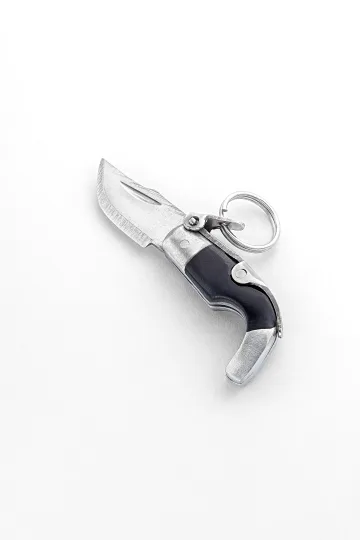
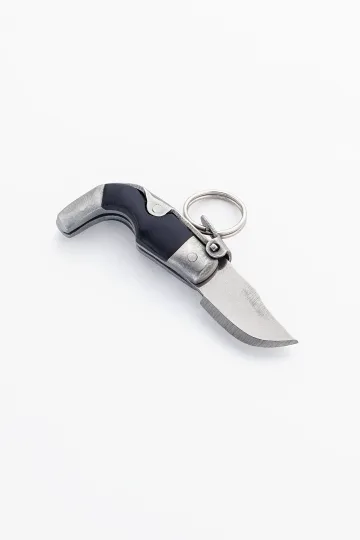
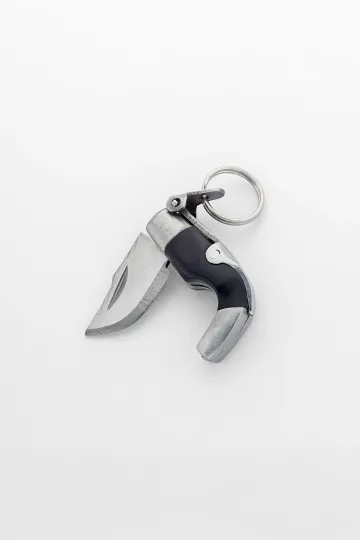
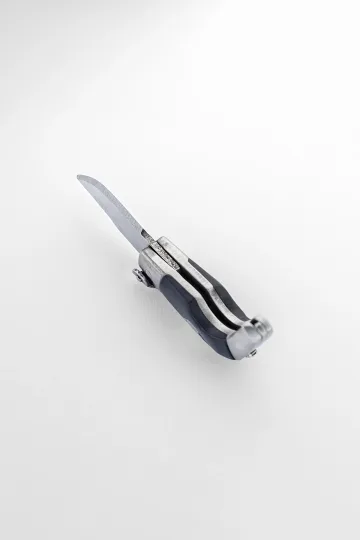
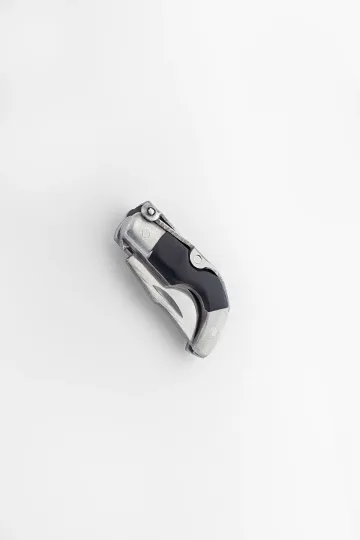
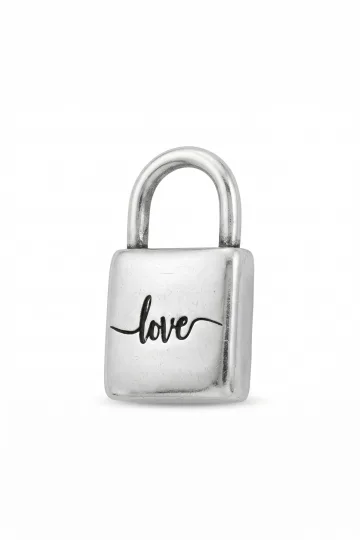
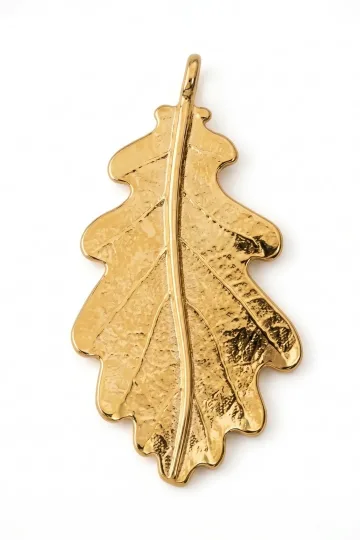
Rings and Insurance
Contents policies commonly cover jewellery up to a limit per item, and anything above that limit needs to be specified individually. A wedding and engagement pair frequently exceeds the single item limit even on a policy that looks generous, and the gap is discovered at exactly the wrong moment.
Photograph rings from several angles, keep the receipt and any valuation, and note the size, the metal, the hallmark and any inscription. That last detail is what identifies a specific ring rather than a similar one, and it is what makes a recovered ring returnable to you.
Cover away from home is a separate question on most policies, and it is the one that matters on holiday, which is where rings are lost. Check it before travelling rather than after.
Size and Inheritance
An inherited ring almost never fits, and that is the most common reason a family piece sits in a drawer for decades doing nothing.
The options are resizing, which is straightforward on a plain shank and delicate on an old one, or wearing it on a different finger, or wearing it on a chain. Before resizing anything old, get it looked at by someone who works with antique pieces, because a cut through a shank can destroy hallmarks, an inscription, or a repair that is itself part of the object's history.
There is a good middle path. Have the ring cleaned, checked and made safe, wear it for occasions at whatever finger it fits, and leave the metal alone. A ring that survives intact is worth more to the next generation than one adjusted to a hand that will not be there in fifty years.
When Not to Wear a Ring at All
There are situations where the correct size is no size. Any work with rotating machinery, any live electrical work, any weight training with bars, any climbing, and any grappling sport. In each case the mechanism of injury is the same: the ring catches, the hand does not, and the finger takes the difference.
Medical settings add their own rules. Rings come off for surgery, for imaging, and for anything where swelling is expected, and staff will ask. Kitchens and food handling generally require them off or covered, both for hygiene and because a ring is an excellent place for bacteria to shelter.
The domestic version is less dramatic and more common. Take rings off for bread making, for gardening, for anything involving bleach or strong cleaners, and for applying sunscreen, which is the single most reliable way to make a finger slippery enough to lose one.
Ring Size and Prosthetics
A prosthetic hand can wear a ring, and many people want to, for exactly the reasons anyone wears one. The sizing is different because the finger does not change through the day, does not swell in heat, and does not resist a ring passing over a knuckle.
That makes it easier in one sense and harder in another: there is no friction holding the ring in place, so a band sized by conventional rules will simply fall off. Rings for prosthetic fingers are usually made to a snug interference fit, or fixed in place, and a prosthetist rather than a jeweller is often the right first conversation.
For a partial hand or a finger with altered anatomy after injury, the ordinary advice applies with more care: measure both the narrowest and widest points, favour comfort fit profiles, and treat sizing beads and hinged shanks as normal tools rather than special measures.
Wear the symbol, don't just read about it. These are in stock:
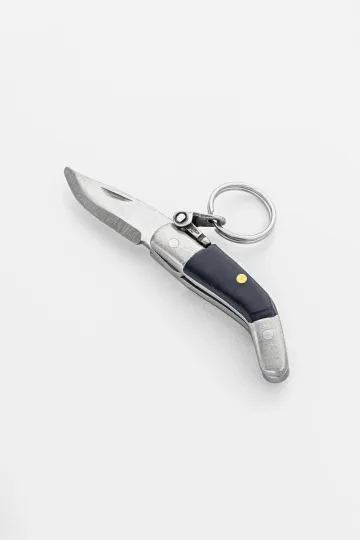

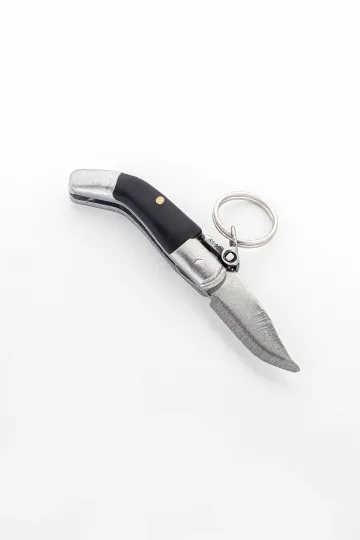
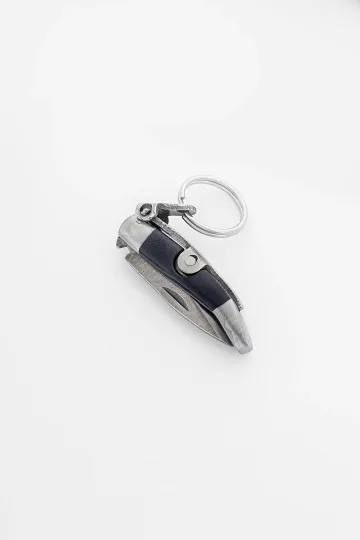


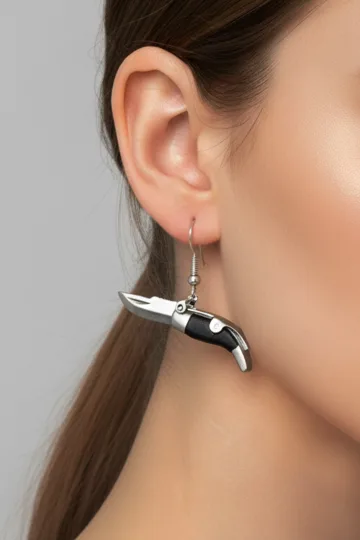
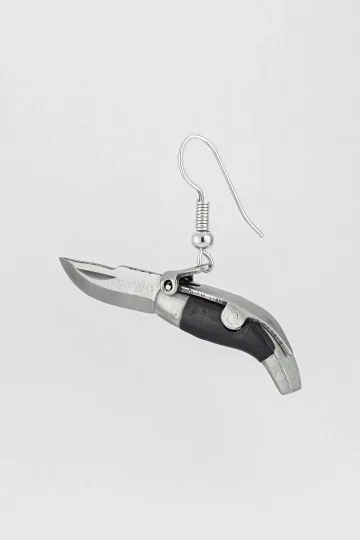


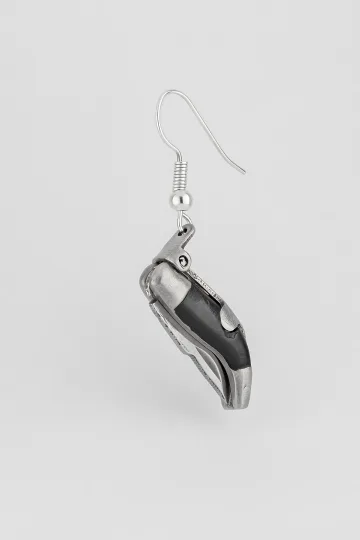

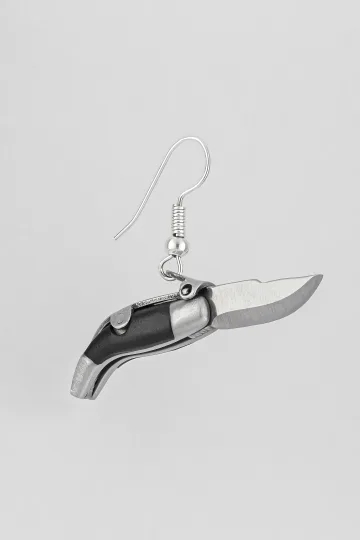

Size and Ring Tattoos
A tattooed band around the finger has become a common alternative for people whose work forbids jewellery, and it has an obvious appeal: nothing to lose, nothing to catch, no size to get wrong.
Two honest caveats. Finger tattoos fade faster and blur more than tattoos anywhere else, because the skin renews quickly and the hands take constant friction, so touch-ups are part of the arrangement rather than a failure. And the finger continues to change size, which means a band tattooed on a slim finger at twenty-five sits on a broader one at fifty and the line distorts accordingly.
Some people wear both, a tattoo underneath and a metal ring over it for occasions. That works, and it does not change the sizing advice for the metal one at all.
The Short Version, for People Who Skipped to the End
Measure in the evening, at ordinary room temperature, on the exact finger of the exact hand where the ring will live. Not after the gym, not after a salty dinner, not on a cold morning, not on a bad day.
Use two different methods and compare them. If they disagree by more than a quarter of a millimetre, measure again on a different evening.
Add half a size for a band 6 mm or wider, and a full size for 8 mm and above. Take a snug fit on anything with a stone, and take the larger reading on anything that cannot be resized.
Check the exchange and resizing policy before ordering, not after. And remember what you are aiming for: a ring you stop noticing. If it presses, if it spins, if you keep checking that it is still there, the size is wrong, and it is a fixable problem rather than something to live with.
The Fridge-Door Checklist
Two short lists worth keeping somewhere you will see them.
Before you order
Measured in the evening, at room temperature, on the correct finger of the correct hand. Measured at least twice, on separate days. Knuckle checked as well as the base. Band width of the actual ring taken into account. Metal checked for whether it can be resized later. Return or exchange policy read. Measurement written down in millimetres, with the date.
Is the ring sitting right?
It meets clear resistance at the knuckle going on. It comes off with effort but without a struggle. It turns at the base with mild effort and does not spin freely. It does not swing off when you shake your hand downward with the fingers pointing at the floor. The skin does not bulge over the edges. Any indentation fades within a minute or two of taking it off. And after fifteen minutes on the hand, you have stopped thinking about it.
If every line on that second list is true, the size is correct and nothing in this article needs to worry you further.
Final Recommendations
Measure properly once and the whole subject goes away. Write the number down in millimetres, note the finger and the hand and the date, and keep it where you can find it, because that single figure converts to every sizing system on earth and outlives every chart you will ever bookmark.
When you are between sizes, let the ring decide. Narrow and plain, take the smaller. Wide, stone-set or unsizeable, take the larger and give yourself room to be wrong. When the ring cannot be altered afterwards, spend the extra evening measuring rather than the extra fortnight posting it back.
And treat a ring as something that lives on a hand rather than in a chart. Fingers change with the season, the day, the decade and the work you do with them, and a ring that has drifted is not a mistake, it is simply a ring that has been worn.
About Zevira
Zevira works in the metalworking tradition of Albacete in Spain, a region with a long history of fine steel and silver. Size is treated as a stage of the work rather than a line on a product page: the diameter is checked after forging, after soldering and after polishing, with a final check on a ring gauge.
What you will find with us on the subject of ring size:
- Rings in sterling silver and 14 to 18 carat gold across the full range of sizes, from narrow bands to wide ones.
- Adjustment to your finger as part of the order rather than as a paid repair.
- Help finding the size for a surprise gift, when measuring the finger directly is out of the question.
- Comfort fit profiles with a rounded interior, for anyone whose knuckle is wider than the base of the finger.
- Smooth bands with nothing projecting, for daily wear and for hands that spend the day at a keyboard.
- Paired and wedding bands sized separately for each partner.
Personal engraving is available. Sterling silver and 14 to 18 carat gold.