Turtle Jewellery: Meaning of Longevity and Wisdom
The tortoise is one of the oldest animals alive on Earth. Palaeontologists trace its lineage back roughly two hundred and seventy-five million years, which means tortoises were already ancient when the dinosaurs went extinct, and they were already ancient again when Homo sapiens first chipped flint beside the Thames. When a creature with that kind of biological history becomes a symbol, it almost inevitably gathers the ideas of slow time, deep endurance, and long life. It is not a coincidence that dozens of unconnected cultures across the globe have independently attached meanings of wisdom, protection, and cosmic stability to the same cold-blooded reptile.
The geographic spread of this symbolism is genuinely striking. In China, the Dark Warrior Xuanwu, one of the Four Symbols of the cardinal directions, takes the form of a tortoise entwined with a serpent. In India, Kurma the tortoise is the second avatar of Vishnu, who dived to the ocean floor and supported Mount Mandara on his shell during the churning that produced the drink of immortality. Among the Lenape, Haudenosaunee, and Cherokee peoples of North America, the entire continent is known as Turtle Island because the world itself rests on the Great Turtle's back. In Polynesia, the sea turtle honu is an ancestor spirit and a navigator's guide. In ancient Greece, Hermes famously fashioned the first lyre from a tortoise shell while still an infant, and Aesop gave the English-speaking world its definitive story about patience.
For jewellery design, that range of meaning is a rare asset. The tortoise almost never reads as aggressive. Lions, eagles, dragons, and wolves all carry power through predation. The tortoise carries power through endurance and through the fact that it carries its home on its back wherever it goes. That register is uncommon in the language of ornament, and it appeals to people who are tired of conspicuous symbols and looking for something quieter.
In Britain specifically, the tortoise and hare story is deeply embedded in childhood and in the moral vocabulary of adult life. The tortoise that wins the race not through speed but through steady application resonates in a culture that has always respected long craft and patience. The Galapagos tortoise arrived in the British imagination through Darwin's voyage on HMS Beagle in 1835, and the scientific wonder of a creature that might live two centuries has never entirely left. British marine biology has long taken the leatherback and loggerhead sea turtles migrating through Atlantic waters seriously, and the conservation movement here has added a new layer of meaning to turtle jewellery: wearing it can also say something about caring for species that face real extinction pressure.
This article examines the turtle as a jewellery motif. There will be no claims that a turtle pendant grounds your energy or attracts longevity. There will be honest discussion of the cultures where the symbol developed, the visual traditions that jewellers draw on, the materials used today, and why real tortoiseshell has been entirely absent from jewellery since the 1970s. The context matters because buying with understanding is better than buying blind, and because several sea turtle species remain critically endangered under CITES Appendix I.
Turtle Jewellery: What to Choose
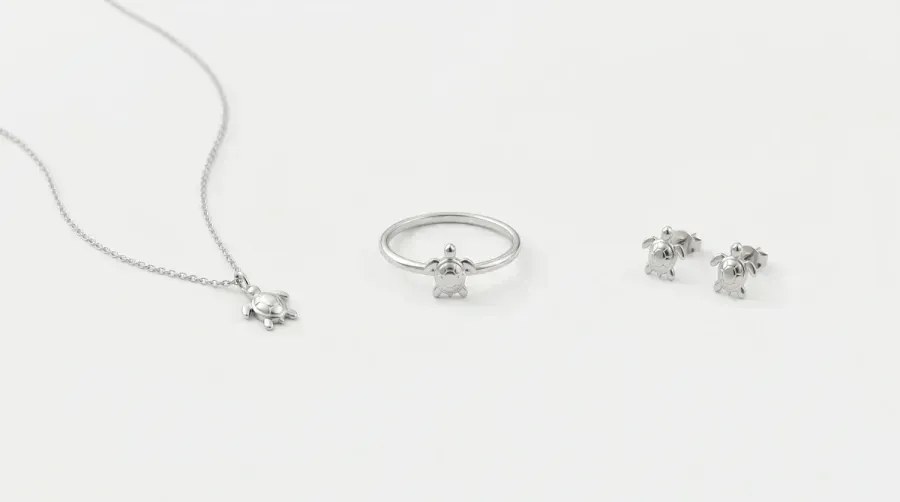
The Zevira turtle range is built around the recognisable silhouette but offers several different formats, because the same turtle reads differently depending on design and context. All pieces are made in 925 sterling silver, sometimes with enamel, sometimes with gold plating, sometimes with semi-precious stone inlays.
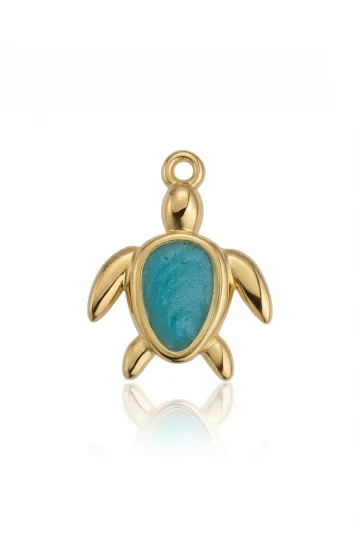
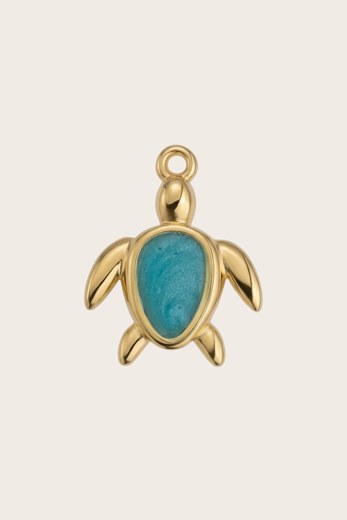
Pendants showing the turtle from above with a detailed shell are the core format. The animal is presented in top-down view, head slightly forward, legs spread to the sides, the shell occupying the central space and covered with a pattern of scutes. Depending on the series, this pattern is rendered in engraving, enamel in greens and ochres, or small stone inlays arranged in the scute pattern. Pendant size is typically two to three centimetres, chain length forty-five to fifty centimetres, so the piece sits just below the collarbone.
Wear the symbol, don't just read about it. These are in stock:

Stud earrings with a miniature turtle work as a quiet everyday motif. The silhouette is simplified to the immediately recognisable, size around eight to ten millimetres. These can be worn daily without drawing particular attention but remain a considered choice.
Charm pendants for bracelets repeat the same motifs in a compact size. A turtle charm can sit alongside other symbolic charms on a link bracelet, marine, family, or commemorative, and the format suits a gradually built personal story worn on the wrist.
Rings with a relief turtle on the face are classic signet-style pieces where the flat top surface carries an engraved or relief turtle, sometimes with oxidising for contrast. Worn on the index or middle finger, the ring is close and readable by the wearer without announcing itself to a room.
Bracelets with multiple linked turtles are a rarer but beautiful format. The turtles are connected by thin links and travel along the wrist in a chain. One series uses four, another seven, depending on bracelet length. This suits people who like repeated motifs and a fluid silhouette.
Men's format on a leather cord pairs a heavier silver turtle pendant with a simple leather cord in place of a chain. The aesthetic is close to maritime or explorer, pairs well with natural-fabric clothing, and the silhouette is usually larger than the women's pendants, three and a half to four centimetres, with more pronounced relief on the shell.
Children's pieces are made from 925 silver with a hypoallergenic coating, no sharp edges, and shorter chains. The turtle in this series is stylised almost to cartoon, with a large head and large feet. Parents often choose this as a first piece of jewellery for a child, particularly if the family has a connection to the sea or to nature.
Large brooches for coats and jackets, four to five centimetres, turn the turtle from an everyday accent into a visible element of an outfit. The brooch format allows more surface detail, and the shell is worked more carefully than in smaller pieces.
Paired pendants exist in two versions. The first for a couple: two identical turtle silhouettes, one slightly larger, with individual engraving on the reverse. The second for friends or a parent and child: a mother turtle with a hatchling, split across two separate pieces. The logic is close to paired jewellery with split hearts or key and lock but works on a biological family narrative rather than a romantic metaphor.
Types of Turtles in Jewellery
The turtle silhouette is deceptively simple. On closer examination, several distinct visual traditions run in parallel through jewellery design, and choosing between them is choosing between different cultural registers.
The sea turtle with long flipper arms is more streamlined and flatter than a land tortoise. The shell is elongated, the limbs are wide flippers, the tail is short. This is the most familiar oceanic silhouette, associated primarily with tropical waters: the Caribbean, Hawaii, the Great Barrier Reef, the Canaries and the Azores from a British perspective. In jewellery, the sea turtle is usually shown from above or from the side with flippers spread as if gliding through water. It pairs well with mother of pearl, turquoise, and other marine stones.
The land tortoise has short columnar legs and a high domed shell. The silhouette is compact, solid, and domestic in feel. The land tortoise registers a calmer narrative: not a journey across an ocean but patient movement through a garden. Several Mediterranean species, including Testudo hermanni and Testudo graeca, have long been part of the visual folklore of southern Europe, and in Britain the tortoise is a familiar garden and childhood companion.
The stylised top-down view with a detailed scute pattern is a decorative approach in which biology gives way to graphic design. The shell occupies almost the entire composition, with legs, head, and tail reading around the perimeter. This silhouette works well for round pendants and medallions.
The geometric version with hexagonal scutes turns the turtle into something almost mathematical. The shell becomes a pattern of hexagons, recalling a honeycomb or crystal lattice. This format appeals to those whose aesthetic is contemporary minimalism rather than ethnic reference.
The Polynesian-influenced design with characteristic ridge lines and wave elements comes from the Hawaiian and Maori visual tradition. The shell carries concentric patterns, the limbs have sharp outlines, the tail is pointed. These pieces sit naturally alongside other motifs from a marine collection.
The symbolic turtle with thirteen scute sections references Native American cosmology. Thirteen corresponds to the number of full moons in a year in the traditional lunar calendars of many North American peoples, and the thirteen scutes on a real turtle's back became the basis for a lunar calendar among the Lenape and Haudenosaunee. This format works strictly in an ethnographic register and is not suited to neutral everyday wear.
Mother turtle with a hatchling is the warmest format. An adult turtle is shown alongside one or more young, often as a paired pendant or brooch. This narrative reads as a family symbol and is appropriate as a gift for a mother, grandmother, or at the birth of a child.
The Xuanwu stylisation with a serpent coiled around the shell reads quite differently from all other formats. Here the turtle is always paired with a snake, and the composition is more complex. This is a masculine and martial register, historically linked to the northern guardian of China.
A turtle belongs in silver with earthy enamel. A gilded shell screams gift shop, and I won't hear otherwise.
What to Wear the Turtle With
The turtle is a quiet motif, and that is the challenge: building a look around it is more interesting than building one around a loud symbol. Here is what I suggest to clients when they bring in a pendant or brooch with a shell.
How do I wear a turtle every day? For daytime I recommend a pendant two to three centimetres on a forty-five to fifty centimetre chain over a plain jumper or a linen shirt. I suggest echoing the earthy enamels, olive, ochre, brown, with a natural fabric palette: sand, grey-green, deep blue. I keep the turtle away from busy prints, since a quiet shell gets lost in the noise.
Is a turtle right for the office? Yes, if you keep it small. I choose stud earrings of eight to ten millimetres or a small pendant under a closed collar and build a monochrome by metal: silver with silver, a gilded shell with warm details. A smooth ring beside a turtle signet reads as pulled together, without clutter.
How do I put an evening look together? For evening I suggest a gilded silhouette or a turtle set with shell-shaped stones, peridot, malachite, labradorite, on a bare shoulder, on silk or velvet. I take the length into layers: a short base chain plus a longer one with the shell add depth. For an anniversary I choose a larger pendant or brooch and leave it one clean space.
Sea or land turtle for the season? In summer I put together a sea turtle with mother of pearl or turquoise on a leather cord over linen, with woven bracelets and pale fabric. I recommend the land tortoise as the all-season choice: its brown tones settle onto tweed, suede and wool and work all year.
Who does the turtle suit? Those who love quiet, considered things and a natural aesthetic rather than show. One rule that never fails: do not mix the turtle with predatory symbolism, and do not hang more than one meaningful motif in a look, or the voice of the shell is drowned out.

Turn on your camera, pick earrings, a pendant or a ring, and see the piece on yourself in real time.
Switch items in one tap.
Everything runs in your browser: no photo or video is ever uploaded.
Customer reviews
Zevira is a real jewellery shop. Genuine payments, deliveries and customer thank-yous.
🥰🥰🥰 gracias

Ok, ¡gracias! 🙂

History of the Turtle as a Symbol
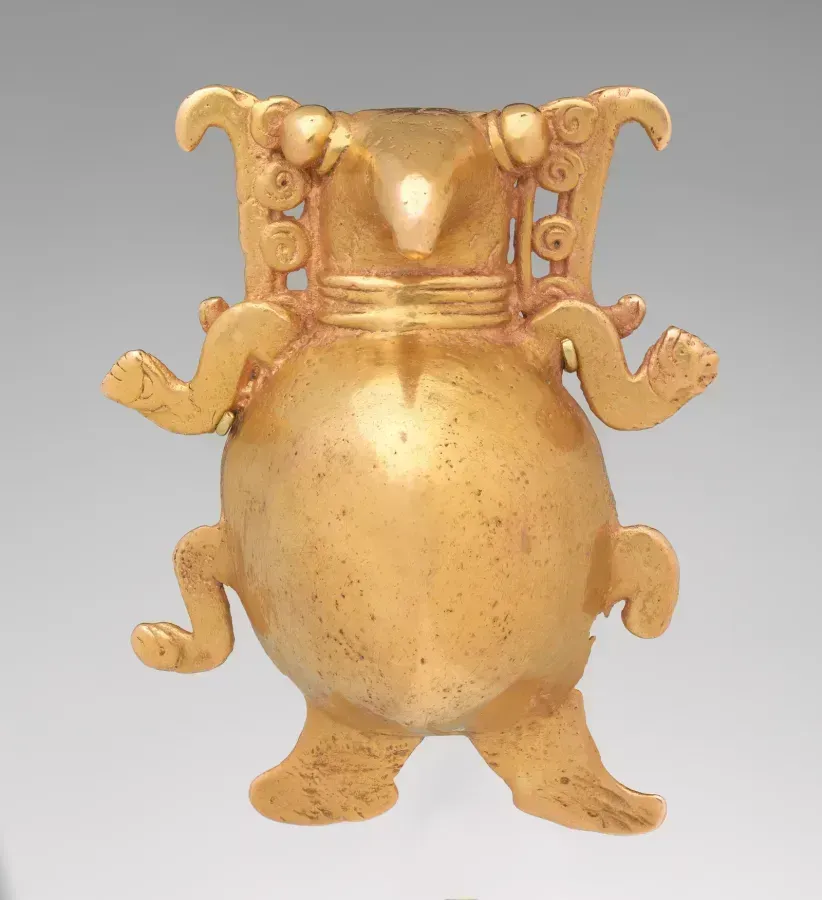
Palaeontologically, turtles appeared in the Late Triassic, roughly two hundred and twenty-five to two hundred and seventy-five million years ago, and their basic body plan has changed very little since. This makes them among the oldest surviving groups of reptiles, and that biological antiquity alone creates powerful ground for a longevity symbol. People intuitively sensed the age of the lineage long before palaeontology confirmed it.
The earliest written evidence of the turtle as a cultural symbol comes from China in the second and first millennia BCE. The legendary Xuanwu, the Dark Warrior, appears in texts from the Zhou period already described as one of the Four Symbols of the cardinal directions. Xuanwu guards the north, winter, and deep waters, and his symbolic companion, the serpent, coils around the turtle's shell. The image reads almost like a heraldic device. Xuanwu is also associated with longevity, with the element of water, and with the dark half of the year.
The turtle shell had a remarkable additional use in ancient China. Oracle bone divination, jiaguwen, literally "bones and shells," is one of the oldest known writing systems. A carefully prepared shell had a question inscribed on it, was then heated, and the cracks that formed were read by diviners. The characters carved beside the cracks became the earliest form of Chinese script, and most modern Chinese characters descend genetically from those Shang dynasty divination marks. The turtle shell therefore stands at the very origin of writing in one of the world's oldest civilisations.
In the Hindu tradition, Kurma, the second of Vishnu's ten avatars, appears in the Bhagavata Purana and in the Mahabharata. When the gods and demons needed to churn the cosmic ocean to produce the nectar of immortality, they used Mount Mandara as a churning rod. But the mountain began to sink into the ocean, and Vishnu took the form of a giant turtle and placed his shell beneath it as a support. From this story came the widespread Indian idea of the turtle as the literal foundation of the world.
Among the Lenape, Haudenosaunee, Huron, Cherokee, and many other peoples of eastern North America, the cosmological centre is the Great Turtle. According to the creation account, when the first woman fell from the sky, the animals gathered to save her. A muskrat brought mud up from the ocean floor, and this was placed on the Great Turtle's back. The earth expanded until it became an entire continent, and this is why North America is called Turtle Island among these peoples to this day. The name is used actively in contemporary indigenous politics, literature, and environmental writing.
In Polynesia, the sea turtle honu was revered as an ancestor spirit and as a guide for long-distance voyagers. Wood and bone carvings, traditional tattoos, and carved canoe prows frequently incorporated a stylised turtle with concentric patterns on the shell. Among Hawaiians, honu is connected to the goddess Kailua and is regarded as a guardian of coastal waters.
In ancient Greek mythology, the infant Hermes caught a tortoise on Mount Cyllene, killed it, stretched strings across its shell, and fashioned the first lyre. This story is told in the Homeric Hymn to Hermes and accounts for the origin of the musical instrument through the sacrifice of an ancient animal. The tortoise was thus linked to music and, by extension, to poetry. Separately, Aesop wrote the fable of the tortoise and the hare, in which the patient tortoise overtakes the overconfident hare. That fable has been told and retold for two and a half thousand years and has become one of the foundational stories of European moral thought.
In West African folklore, particularly among the Yoruba and Igbo peoples, the tortoise is a trickster figure, a cousin of the spider Anansi of the Ashanti. The tortoise is slow but clever, wins contests through wit rather than strength, and is often rewarded for its ingenuity. This register differs markedly from East Asian reverence: instead of a wise elder, we have a quick mind that can outmanoeuvre more powerful opponents.
Medieval Europe incorporated the tortoise into heraldry as a symbol of steadiness, patience, and long service. It appears in the coats of arms of families with long diplomatic or military traditions. In emblem books of the sixteenth and seventeenth centuries, the tortoise accompanies Latin mottoes such as "festina lente" (make haste slowly), and it was from this emblem tradition that Baroque and Neoclassical tortoise jewellery later emerged.
The nineteenth century brought a naturalist's interest. Expeditions returned living giant tortoises from tropical seas, zoological gardens received Galapagos giants, and the turtle became associated with scientific exploration and natural history. The young Charles Darwin encountered the tortoises of the Galapagos Islands during the Beagle voyage of 1835, and one of those animals, a tortoise named Harriet, reportedly lived until 2006 at an Australian zoo, dying aged approximately one hundred and seventy-five years. For British audiences, that connection between Darwin, the Galapagos, and observable extreme longevity gave the turtle symbol a particularly concrete scientific grounding.
This same period also saw a damaging exploitation. Tortoiseshell from the hawksbill sea turtle was widely used in Victorian jewellery and decorative objects: combs, spectacle frames, snuffboxes, decorative inlays. The industrial scale of harvesting nearly drove the species to extinction. By the 1970s the CITES convention (1977) had placed the hawksbill in Appendix I, and the trade in tortoiseshell was banned internationally. No reputable jeweller uses real tortoiseshell today.
Upload a photo of your pet, someone you love, or an object. We'll build a 3D model and hand-cast it in pewter.

The Turtle in World Cultures
China: Xuanwu and Longevity
The Chinese reading of the turtle centres on longevity. The character gui refers to both the turtle and, metaphorically, to someone of great age and wisdom. The turtle is one of the Four Symbols alongside the Azure Dragon of the East, the Vermilion Bird of the South, and the White Tiger of the West, occupying the northern direction as Xuanwu, the Dark Warrior. Xuanwu is shown entwined with a serpent, and this pairing symbolises the unity of two forces and the balance of opposing principles. In Daoist tradition, the turtle is associated with the water element, with winter, and with the longevity of the emperor. Stone turtle sculptures known as bixi were placed at the base of memorial stelae in imperial palaces, their shells bearing the weight of inscribed stone: a direct echo of the idea of the turtle as the support of the world.
India: Kurma and the Churning of the Ocean
The Hindu Kurma, the second of Vishnu's ten avatars, is one of the cosmologically grandest turtle symbols anywhere. His story, told in the Bhagavata Purana, describes how Vishnu took the form of a giant turtle to provide a stable base for Mount Mandara during the churning of the cosmic ocean. From that churning came amrita, the nectar of immortality, and also the goddess Lakshmi and many other treasures. In Indian iconography, Kurma is often shown as a turtle with Vishnu's human torso emerging from the shell. In jewellery, the direct iconographic form is rare outside South Asia, but simpler turtle stylisations with ornamental shells do appear in southern Indian silverwork.
Native America: Turtle Island
Among the Lenape, Haudenosaunee, Huron, Cherokee, and many other eastern North American peoples, the Great Turtle is the cosmological foundation. It is on her back that the continent grew, and so the whole landmass is called Turtle Island. This image is connected to the maternal principle of the earth, to the stability of the land, and to the female line of descent. Among several nations, the turtle also serves as one of the signs in the traditional month system: the thirteen larger scutes on a real turtle's back correspond to the thirteen full moons of the year. In contemporary indigenous culture, Turtle Island is an active political term used in literature, art, and environmental movements.
Polynesia and Hawaii: Honu
The sea turtle honu among Hawaiians and other Polynesian peoples belongs to the class of aumakua, ancestor spirits taking animal form. Meeting a honu in the water was taken as a sign of the closeness of one's ancestors and as a blessing for the voyage ahead. Long-distance navigators watched turtle migration routes as one set of ocean bearings. In traditional tattooing, honu occupies a prominent place, and the stylised silhouette with concentric shell patterns became part of a wider pan-Polynesian visual vocabulary. Among the Maori, a related but distinct turtle figure connects to the ancestor Tuangahuru.
West Africa: The Trickster
Among the Yoruba, Igbo, and other West African peoples, the tortoise is a clever character appearing in many stories as a cousin of the spider Anansi. It is slow but intelligent, winning contests not by force but by guile. In one Yoruba tale, the tortoise gathers all the wisdom of the world into a gourd to hide it from others, but while trying to climb a tree it drops the gourd and wisdom scatters across the earth, becoming accessible to all. This story explains why wisdom is distributed among people and why no single person can command all of it. The register differs sharply from East Asian reverence, and West African tortoise imagery in contemporary jewellery tends to appear in artist-made pieces alongside other Ashanti-referenced motifs.
Ancient Greece: The Lyre and the Fable
Greek tradition gave the turtle two principal narratives. The first is the Homeric Hymn to Hermes, in which the infant god catches a tortoise on Mount Cyllene and fashions the first lyre from its shell, stretching strings of sheep gut across it. The second is Aesop's fable of the tortoise and the hare, in which methodical slowness defeats overconfident speed. That fable, at roughly two and a half thousand years old and still in every primary school reading list, has given the English language a proverbial figure for the value of patience.
European Heraldry and the Renaissance
In medieval and Renaissance Europe, the tortoise entered the heraldic vocabulary as a symbol of steadiness, patience, and endurance. It appears in the arms of families with long diplomatic or military histories. The emblem books of the sixteenth and seventeenth centuries paired the tortoise with the motto "festina lente" (make haste slowly), and this tradition fed directly into the Baroque and Neoclassical decorative arts.
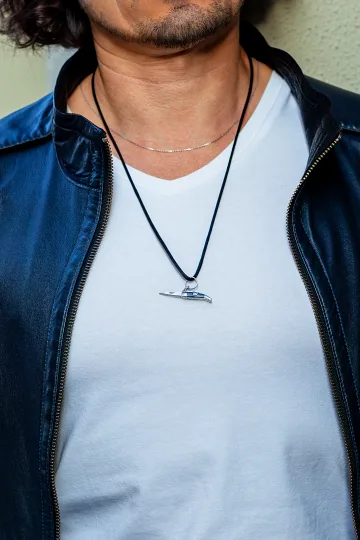
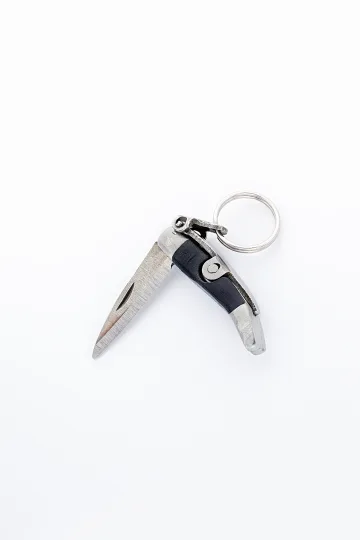
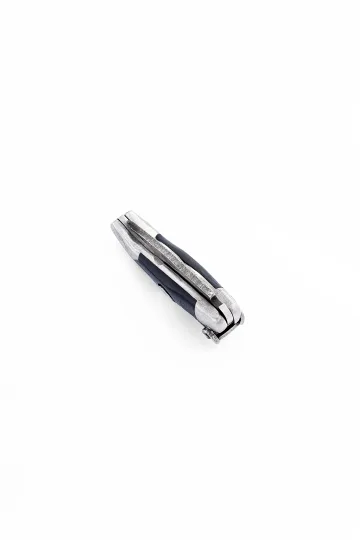
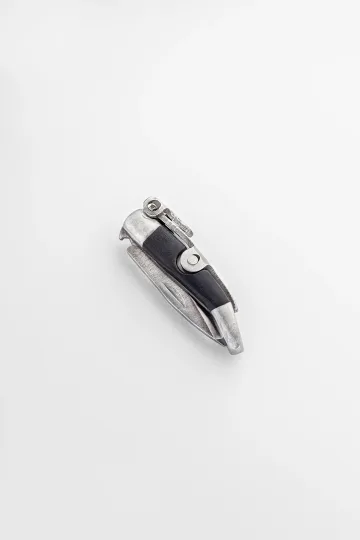
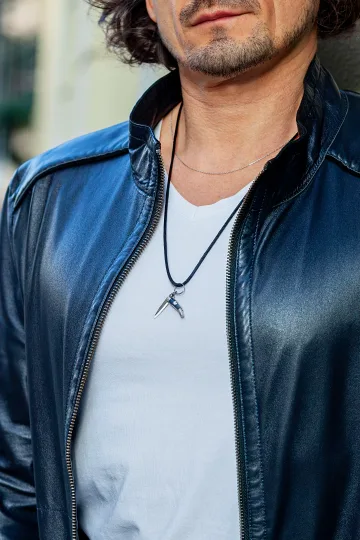
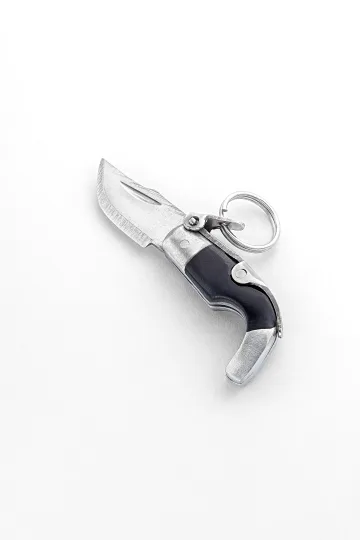
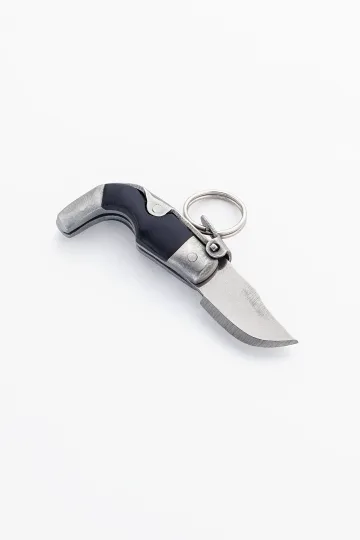
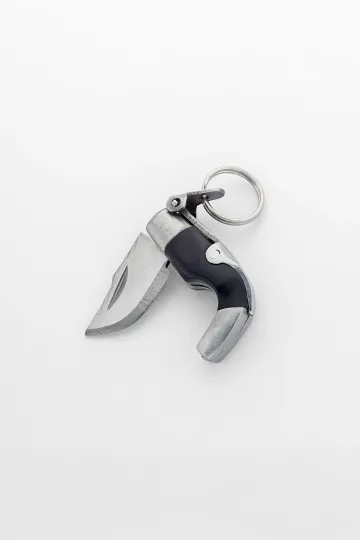
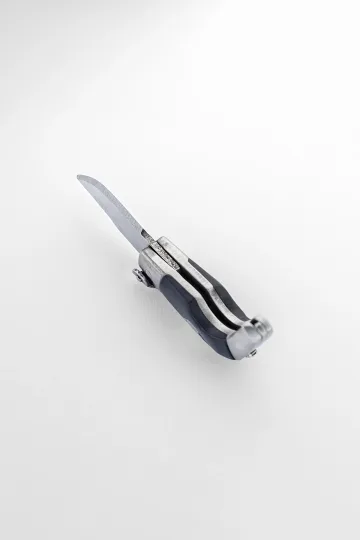
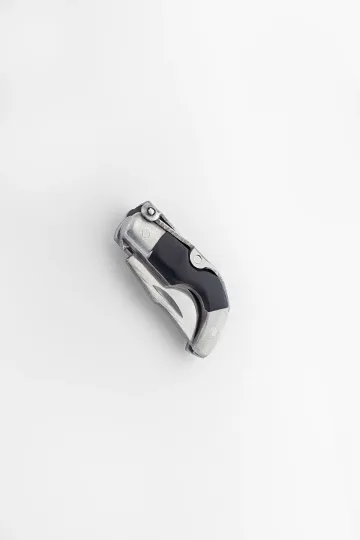
CAPAORA mini knife pendant
The 18th-century Spanish navaja in miniature: 40 mm of stainless steel, a real folding mechanism and a Palanquilla lock that clicks. An affordable gift to remember.
Authentic · Ships from Spain · 14-day returns
What the Turtle Symbolises
Longevity is the first and most universal reading, and it rests on actual biology. A Galapagos tortoise associated with Darwin's 1835 Beagle voyage, known as Harriet, reportedly lived to approximately one hundred and seventy-five years. Large land tortoise species regularly exceed one hundred and fifty years. This biological fact gives the cultural symbol a firm foundation: the turtle is not a mythically long-lived creature but an actually long-lived one. The difference matters.
Wisdom through experience follows naturally from long life. In cultures that respect old age, a long-lived animal almost automatically acquires the rank of elder. The Chinese and Indian traditions read the turtle this way. Aesop's fable adds a dimension of methodical, unhurried work that defeats hasty speed.
Steadiness and slowness are the next level. The turtle moves slowly, and this is its strength. In a world that relentlessly accelerates, turtle pace becomes a conscious choice. Wearing a turtle can symbolically declare that you value the slow, that you are willing to work on long projects, that you do not chase instant results.
Protection in the case of the turtle has a literal biological basis: the shell is armour and home at once, and the turtle always carries its house. From this grows the idea of self-sufficiency. The turtle does not run for shelter; the shelter is already on its back. Symbolically, this means the capacity to be self-contained, to manage external pressure through inner structure rather than through flight.
The cosmic foundation, the idea of the turtle supporting the world, appears in both Hindu and Native American traditions. Kurma supports Mount Mandara; the Great Turtle supports Turtle Island. In both cases the turtle is the ground on which the visible world stands. In jewellery, this level of meaning operates indirectly: no pendant claims a cosmological function, but knowing the tradition adds depth.
The maternal earth principle is a specifically North American nuance. The Great Turtle of the Lenape is not only a support but a mother-earth, the fertile base of all living things. In that register, the turtle becomes a symbol of lineage, family, and the maternal line. A gift for a mother or grandmother in this register is particularly fitting.
One important note: everything listed here is cultural meaning, not magical property. The turtle does not "bring" longevity, "attract" luck, or "protect" against misfortune. The person wearing it chooses a relationship with those values. This is a choice of symbol, not the purchase of an amulet. That distinction is honest towards both the buyer and the tradition.
Materials and Techniques
Contemporary turtle jewellery works exclusively in metals and synthetic materials, and this is a matter of principle. Real hawksbill tortoiseshell has been absent from jewellery since the 1970s. Trade in products from the hawksbill sea turtle (Eretmochelys imbricata) has been banned under CITES Appendix I since 1977, and any piece containing real tortoiseshell today is either antique pre-ban stock or an illegal item. Zevira uses only silver, gold, and modern synthetic materials.
Sterling silver 925 is the principal metal in the range. It takes shell detailing well, accepts engraving and oxidising, and with proper care serves for decades. Combined with enamel, silver can faithfully render the natural colouring of a turtle, from the olive-green of a sea turtle to the ochre-brown of a Mediterranean land tortoise.
Enamel on the shell is one of the main expressive techniques. The scute sections are filled with transparent or matte enamel in shades of green, brown, ochre, black, and grey. Some series use a gradient, others a single flat tone, others a two-tone combination that imitates real texture. Enamel is applied in several layers, each fired separately.
Small stones inlaid as individual scutes represent the more expensive format. Each scute section is replaced with a small stone: peridot gives a vivid green, malachite gives a deep green with veining, agate gives brown and ochre tones, labradorite gives blue-grey iridescence. This kind of shell is almost always presented in the top-down view so the scute pattern reads clearly.
Oxidising is used to deepen recesses and bring out surface texture. Silver at the joins between scutes darkens, and the shell pattern becomes legible through contrast. This technique works well without enamel when a monochrome, graphic turtle is wanted.
Fine engraving marks the joins between scutes, lines on the head, and the pattern on the flippers. In lower price series this is done mechanically; in higher series it is done by hand, and the difference is visible to the naked eye. Hand engraving has a slight irregularity that gives a piece character.
Mother of pearl is used in the marine series for the underside inlay or for accent elements. It gives a nacreous sheen close to the natural lustre of a sea turtle's plastron. The honu series often incorporates mother of pearl elements.
Gold and gold plating suit the formal register. A gold-plated turtle works for evening wear, dressed occasions, and as a gift for a significant birthday or anniversary. Full gold pieces are available as bespoke commissions in 585 or 750.
Filigree elements appear in pieces styled after Art Nouveau. The shell or mount is decorated with fine silver or gold-plated wires arranged in organic plant patterns. This is the most decorative of the formats and sits closest to vintage or period-room aesthetics.
Leave your email, we'll send your discount code. No spam, unsubscribe anytime.
The code arrives by email, valid on your first order.
How to Wear the Turtle
Everyday wear is usually built around a pendant of two to three centimetres on a chain of forty-five to fifty centimetres. A turtle at that length sits just below the collarbones, stays legible under the collar of a shirt or a jumper, and does not get in the way during active work. With plain clothes in natural textures, linen, cotton and wool, the turtle works particularly well, because the earthy tones of the enamel echo the natural palette of the cloth. This is the one motif in the animal repertoire that improves as the fabric around it gets simpler.
Stud earrings with a miniature turtle are close to background jewellery. They are appropriate in an office, in meetings, on a flight, and they can be worn alongside other earrings, especially if something marine or botanical is already in the set. At eight to ten millimetres they are light enough to leave in overnight without noticing them, which is why they tend to become the pair people reach for by default.
A large brooch of four to five centimetres wants dense cloth: a wool coat, a tweed jacket, a denim jacket, the shoulder of a heavy cardigan. It needs one clean space on the garment and sits badly next to a busy print. A finely patterned fabric is the worst ground of all, because the small repeating marks compete directly with the segmented shell and the eye cannot settle on either.
The summer marine register goes with light clothing in pale shades, with woven accessories, with linen shirts and canvas. A sea turtle with mother of pearl or turquoise looks especially at home in that palette. If the holiday was spent by the sea, a sea turtle pendant works afterwards as a quiet travel diary, one that can be worn on a wet Tuesday in February without any explanation.
The land tortoise is the all-season format. Its brown and ochre enamels settle onto an autumn and winter palette, onto wool and tweed, onto suede and leather. It suits city clothes and country clothes equally, which is unusual for a figurative motif and is the main reason the tortoise outsells the sea turtle outside the summer months.
Ethnic combinations with Indian or Polynesian motifs work on one condition: they must not become a costume. A pendant styled after a honu looks right with plain clothing and one supporting accent, a woven bracelet, say, or a leather cord. Pairing that pendant with an imitation of national dress is a failure of taste that strips the piece of its own voice and turns a serious symbol into a prop.
The amulet format on a leather cord is usually worn against the skin or over a plain T-shirt. It is a direct, unfussy register, close to a maritime or outdoor aesthetic. The pendant here is larger than usual, three and a half to four centimetres, and it becomes the main visual event of the look, which means everything else should stay quiet.
Combining several symbols is possible but wants care. The turtle lives comfortably in one composition with other natural motifs: the dolphin, the whale and the elephant all read alongside it without conflict. It combines less easily with predatory symbolism, where an aggressive image simply drowns out the turtle's quieter register.
A note on climate and metal. In a damp British winter a silver shell darkens faster in the recesses between the segments than on the flat of the back, and that uneven patina is not a fault; it is what gives a cast turtle its depth. Most owners polish only the raised areas and leave the shadows alone. Enamel is more delicate: a brooch pinned and unpinned every day chips at the edges within a season, so a piece that lives on one coat outlasts one that travels between several.
Silver, gold, sea and land turtle pendants, Xuanwu, honu. Rings, earrings, brooches, paired sets.
Who It Suits
Older people find the turtle almost ideal as a symbol. It works as a mark of respect for age, as a token of accumulated experience, and as a wish for long life. A gift for a sixtieth or seventieth birthday, or for a pearl or golden wedding anniversary, reads clearly and needs no explanation. For this occasion, the land tortoise with its high domed shell, associated with a settled, domestic register, works particularly well.
People who value unhurried work find the turtle closest to their own rhythm. Scientists, archivists, conservators, translators, editors, physicians who work in geriatrics, restorers of objects or buildings: in other words, every profession where results come through years of patient work rather than through a sprint, find their own pace reflected in this symbol. The piece becomes a quiet declaration of that rhythm without requiring it to be spoken aloud.
Parents and grandmothers find the turtle fitting through the Native American reading of the Great Turtle as a maternal earth figure. A gift at the birth of a child, for Mother's Day, or for the older matriarch of a family operates warmly in this register. The mother turtle with hatchling format becomes in that context a literal family symbol.
Marine biologists and environmental scientists, particularly those working on sea turtle conservation, read a honu or sea turtle pendant as a professional emblem. A turtle around the neck of a researcher studying hawksbill or Ridley populations is not an accidental accessory but a working badge. For such buyers, it matters that Zevira uses no animal-derived materials.
Travellers returning from Polynesia, Hawaii, the Caribbean, the Canary Islands, or the Mediterranean often find a turtle pendant an emotional souvenir: they met a honu while snorkelling, or watched a loggerhead off a Spanish coast, and the jewellery carries that memory quietly into daily life.
Those with a serious interest in Chinese or Indian culture, or who study or practise those traditions, are drawn to the turtle through Xuanwu or Kurma. In that case the format of the piece is chosen according to the cultural register: a Chinese or Indian stylisation. Wearing such a pendant is most meaningful for someone who genuinely understands what lies behind it.
Anniversary gifts work almost automatically. A turtle and a long union are a natural pairing. A paired pendant of two turtle silhouettes for a silver or golden wedding anniversary fits well, alongside the logic discussed in the article on paired jewellery.
A turtle is not well suited to those looking for a fast, bold, "loud" symbol. The turtle is always about the slow, and using it as a status statement would miss the tone entirely. For the loud register, there is the dragon, the lion, the eagle. The turtle remains in its own range and sounds best there.
Send a friend a discount code, they save on their first order.
Frequently Asked Questions
Do all turtles really live a long time? Generally yes, but with qualifications. Large land species, especially Galapagos and Aldabra tortoises, regularly live one hundred and fifty to two hundred and fifty years. Medium-sized land tortoises live around seventy to one hundred years. Sea turtles typically live thirty to sixty years, though some individuals reach eighty. Small freshwater species live twenty to forty years. The record is most reliably documented for the Galapagos tortoise Harriet, connected to Darwin's Beagle voyage, who reportedly lived approximately one hundred and seventy-five years. Turtles are genuinely long-lived as a group, and the symbolic reading rests on real numbers.
Is silver turtle jewellery safe for people with allergies? Sterling silver 925 is hypoallergenic in the great majority of cases, with the exception of rare individual sensitivities to the trace copper in the alloy. Shell patterning in contemporary pieces is reproduced in enamel, engraving, or stone inlays, not in any real organic material. There is no animal-origin substance in any Zevira piece, so allergy to biological proteins is not a concern. If a known silver sensitivity exists, a gold-plated version can be ordered.
What is the difference between real tortoiseshell and silver in jewellery? Real tortoiseshell is a keratin material taken from the scutes on the outer surface of the hawksbill sea turtle (Eretmochelys imbricata). Until the mid-twentieth century it was used in combs, spectacle frames, cigarette holders, and decorative inlays. Industrial-scale harvesting nearly destroyed the species. Since the CITES convention of 1977, trade in hawksbill products has been internationally banned, and the species is listed on Appendix I, the most protective category. Contemporary jewellers use only metals and synthetic materials. Real tortoiseshell antiques cannot legally be exported across most international borders without special permits.
Is the turtle connected to any zodiac sign? In the Chinese twelve-animal zodiac the turtle does not appear, but Xuanwu corresponds to the north, winter, and the water element, which in the traditional system is associated with particular seasons and hours. In the Lenape and Haudenosaunee traditional month calendars, the turtle corresponds to a sign falling roughly in late May and early June. In Western astrology the turtle is not directly linked to a zodiac sign but is emblematically placed near Saturn, the planet of time and patience.
Is it true the turtle "grounds" people and relieves anxiety? This is a cultural belief, not a clinically demonstrated one. No clinical research establishes that wearing a specific symbol affects anxiety levels. That said, meditatively wearing a calm symbol can have a real psychological effect through self-suggestion and associative connection: a person who puts on a turtle as a reminder to slow down is more likely to slow down consciously. This is not magic but a well-understood psychological mechanism of how symbols work. The distinction between "the amulet works" and "I work with my attention through the amulet" is important, and only the second of these is something one can say honestly.
Does a turtle suit men? Entirely, and particularly in two formats. The land tortoise with its high domed shell reads as gender-neutral and looks well on a man's chest on a leather cord or a heavy chain. Xuanwu with the entwined serpent is historically a masculine military symbol: it served as the emblem of Chinese armies on northern campaigns, and in contemporary men's jewellery it functions as a sign of northern guardianship and inner stability. Men's turtle pendants are typically larger than women's, three and a half to four centimetres, with more pronounced relief.
About Zevira
Zevira is a Spanish jewellery brand from Albacete. The turtle and Xuanwu range is one section of the catalogue. Current availability and full details are in the catalogue.
Buying it as a gift? Each one arrives ready to give.
 A branded Zevira box and a little card come with every order.





Conclusion
The turtle is one of the very few symbols that promises nothing and hurries nowhere. It does not guarantee wealth, does not radiate energy, does not protect against misfortune. It reminds you of the slow, and that alone is a sufficient reason to wear it on your neck or wrist. In a culture that demands instant results, that kind of reminder is genuinely rare, and it turns out to be worth more than it first appears.
To wear a turtle is to quietly accept that steadiness matters more than sparkle, that the long matters more than the vivid, that the shell you always carry is better than someone else's house on display. That is not magic and not a promise. It is a quiet statement about your own pace, made in silver and enamel, and it acts not on the people around you but on yourself. That conversation, repeated every day in the mirror, tends over time to change considerably more than any loud amulet ever managed.