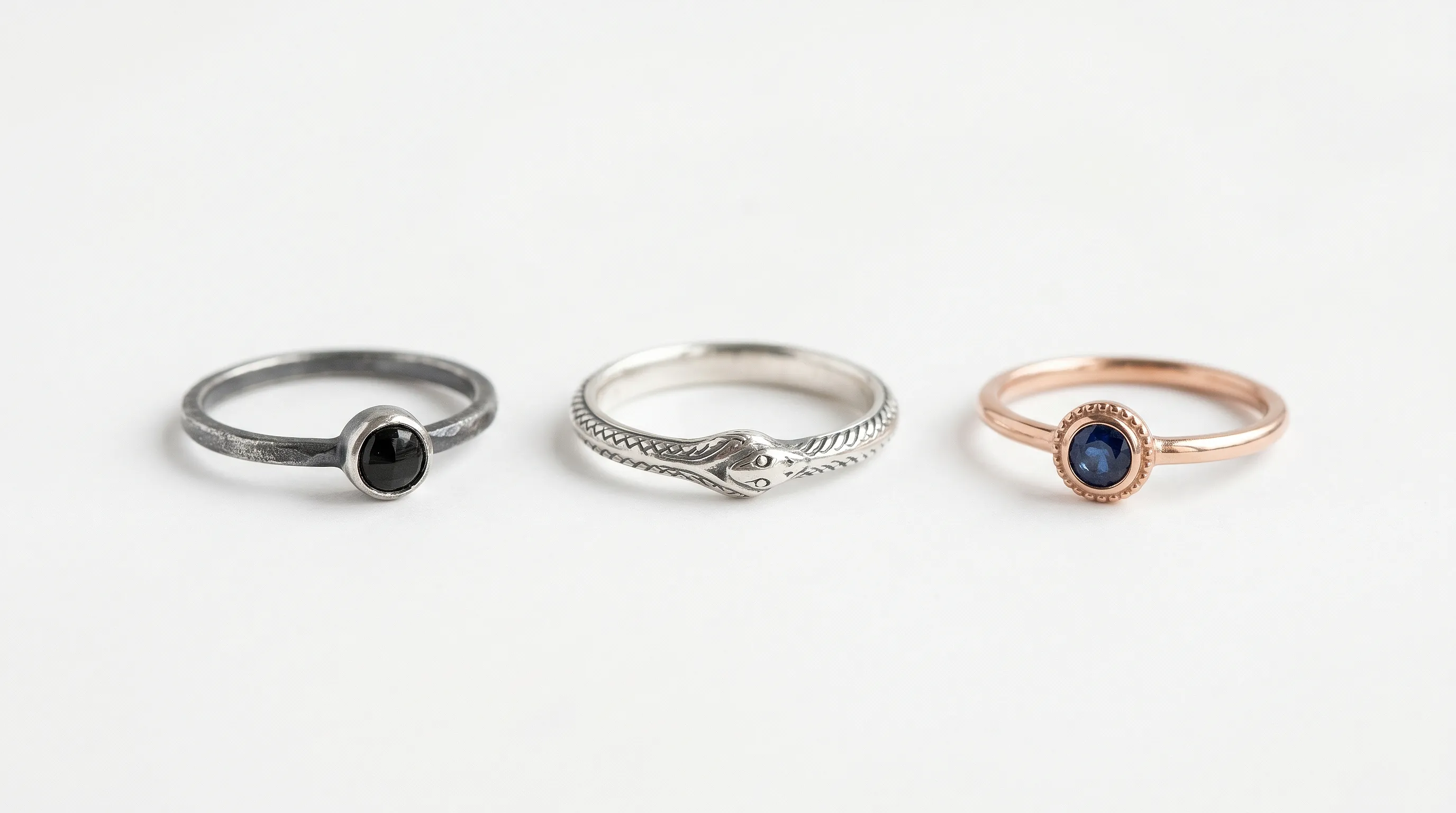
Paired Jewellery: Matching Halves, Key and Lock, Puzzles, Yin and Yang
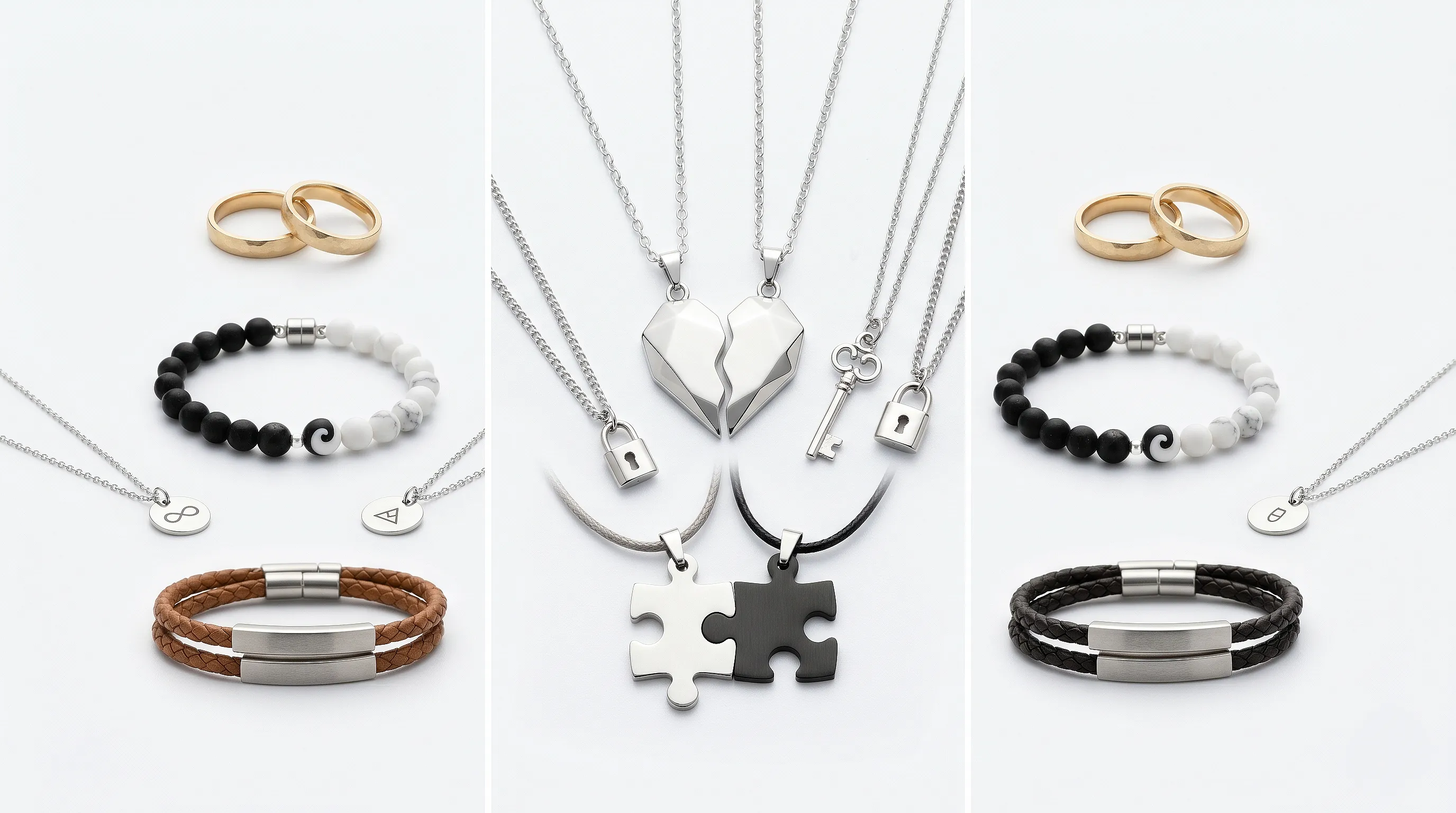
Paired Jewellery: Matching Halves, Key and Lock, Puzzles, Yin and Yang
Two small objects, one old idea
In a dusty showcase in the Museum of Archaeology in Athens sits a piece of terracotta broken cleanly in half. It is not an accident. Twenty-five centuries ago, a man in Piraeus and a friend in Miletus walked away from the same hearth carrying one half each. If either of them, or their grandchildren, ever turned up at the other's door, all they had to do was fit the two halves back together. The match proved everything: kinship, debt, friendship, safe passage. The Greeks called this a symbolon. It is the root of the word "symbol." The idea that a single object, split in two, can carry more meaning than a hundred letters is older than democracy, older than the alphabet we still use, older than almost anything you own.
Paired jewellery is the direct descendant of that broken piece of clay. A half heart on a silver chain. A small key whose teeth fit a tiny padlock hanging around someone else's neck. Two puzzle pieces that only lock with each other. A pendant with a single line of coordinates pointing to the corner where two people met. The metals are newer, the designs are cleaner, but the logic has not changed in three thousand years. One object. Two people. The piece is incomplete without the other half, and so, in some small way, are you.
This guide covers the whole field. What paired jewellery looks like today, who wears it and for what reasons, how to choose a set that will actually last, and the long history behind every design. It is written for people buying a set for a partner, for two best friends splitting a pendant before one of them moves countries, for mothers and daughters, for siblings, and for anyone who wants to understand why a small metal half on a chain carries so much weight.
Types of paired jewellery
Half hearts
The classic. A heart cut down the middle, usually with a jagged break rather than a clean line, so the two halves only fit together in one specific way. Often engraved with "BEST" on one side and "FRIENDS" on the other, or with two names. The break line is the point. A clean cut would work on any two halves. A jagged cut means these two pieces, and only these two, complete each other.
Half heart pendants exploded in popularity in the 1990s, largely through shopping mall kiosks in the United States and UK, but the design itself is much older. Victorian lockets sometimes opened to reveal two linked halves of a split heart inside. Nineteenth century Mizpah pendants, which we will cover in the history section, often took the same form. The 1990s version stripped away the religious framing and gave the design to ten year olds with pocket money, which is why it feels casual, even though it carries a very old idea.
Modern half heart sets come as pairs on two separate chains, ready to give as a gift. Some brands produce three-way splits for triple best friend sets. Others combine the split heart with an extra detail, a star engraved across the break, or a small stone set at the join, so the pair reads as decorative even when worn alone.
Key and lock
Two pendants, one shaped as a small ornate key and the other as a padlock. When held together, the key fits the lock. Romantic symbolism is obvious: you hold the key to my heart. Practical symbolism is quieter: we belong together, and we say so without saying anything.
Key and lock pairs work particularly well for romantic couples because the two shapes are visibly different. A half heart pair assumes the wearers are equals, halves of the same whole. Key and lock allows for complementarity. The key is movement, initiative, unlocking. The lock is containment, memory, keeping. Neither is more important. They just do different things.
Historically, the key and lock design has deep roots in Renaissance and Victorian jewellery. Lovers in the seventeenth century sometimes exchanged working miniature padlocks with keys, the lock worn by one partner, the key by the other. Engagement customs in parts of rural Germany into the twentieth century involved giving a padlock engraved with initials, which the bride then wore until the wedding. The modern pendant version is a polished echo of all that.
Puzzle pieces
A single shape, usually a heart, star, circle, or simple abstract form, cut into two interlocking puzzle pieces. Each person wears one piece. Held together, they click into place visually, though the metal is not actually notched like a cardboard jigsaw.
Puzzle pendants lean slightly more playful than half hearts. The shape is modern, the idea is that two people are pieces of a larger image and they only make sense together. Popular for couples but also for parent and child sets, and occasionally for three-piece sibling groups where a central piece is joined by two side pieces.
The puzzle concept also appears in rings. Stackable ring sets where two or three thin bands fit together to form one thicker pattern give couples and families a way to carry the same symbolism on the hand rather than the neck. Each ring reads as a simple band alone and as part of a larger design together.
Yin and yang
Two teardrop-shaped halves that form a circle. One dark, one light, each containing a small dot of the opposite colour. The symbol itself is Chinese, specifically Daoist, and represents the interdependence of opposites. Light and dark, hot and cold, active and receptive. Neither is good or bad. Each contains a seed of the other. Balance emerges from the interaction.
As paired jewellery, the yin yang pendant is cut along its natural split. One partner wears the dark half, the other wears the light. The design is older than almost any other in this guide, with the modern form stabilising in China around the Song dynasty, though the underlying concept goes back much further. Read more about the philosophy behind the shape in our yin yang meaning guide.
Yin and yang works best for pairs who think of themselves as complementary rather than identical. Two people who balance each other out. The loud one and the quiet one. The planner and the improviser. The yin yang pair says: we are different, and that is the point.
Sun and moon
Two pendants, one shaped as a sun with rays, one shaped as a crescent moon, often with a small star. Each can have its own character, the sun bold and radiant, the moon thin and elegant. Together, they form a celestial pair.
The symbolism is less philosophical than yin and yang and more romantic. You are my sun, I am your moon. The sun lights the day, the moon lights the night, but they share the same sky. Sun and moon paired jewellery became particularly popular in the late 2010s as celestial motifs returned to mainstream design. For the longer story of celestial symbols in jewellery, see our sun, moon, and stars guide and the moon phases meaning guide.
Sun and moon also appears in couple ring sets, with one ring stamped with a sun motif and the other with a moon, both worn on the ring finger or on a chain.
Coordinate necklaces
A long, thin bar pendant engraved with geographic coordinates. Latitude on one line, longitude on the other. Each pendant carries the coordinates of a place that matters: the corner where a couple first met, the hospital where a child was born, the town where two friends grew up before one of them moved away. A matching pair can carry the same coordinates, or each pendant can carry the coordinates of a different but shared location.
Coordinate pendants are popular precisely because they look like nothing to outsiders. A glance reveals only numbers. Only the wearer, and the person who chose the numbers with them, knows what those numbers mean. It is jewellery with a built in private language.
The format works well on slim gold or silver bars, engraved in small sans serif type. Some designers add a tiny heart or star at the point on the bar that corresponds roughly to the latitude. Others keep it purely numerical.
Matching bracelets
Not necessarily split, but visibly a pair. Two bracelets in the same design, sometimes with complementary details. A popular format is the "red thread of fate" style bracelet pair, where two simple bracelets share a single decorative element or a single engraved word split across both. Another format is two identical chain bracelets with a single charm on each, the charms designed to read as a pair.
Matching bracelets work well for people who do not want jewellery that is obviously paired from across a room, but who still want a connection. A stranger sees a nice simple bracelet. The other person sees the twin of theirs and knows exactly what it means.
For practical information on different bracelet formats, see our bracelet types guide.
Couple rings
Plain bands or thin patterned bands designed as a pair. Often one in a slightly masculine width, one in a slightly feminine width, though many modern sets drop that distinction and produce two bands of identical width but different engraving. Some couple ring sets feature an inscription split across the two bands, so the full phrase only reads when both rings are held together.
Couple rings occupy the space between a casual friendship token and a formal engagement. They say: we are serious, without saying: we are engaged. For the formal end of that spectrum, see our engagement ring guide and the detailed wedding band guide.
Medieval echoes: gimmel rings
Historically interesting rather than currently mainstream, but worth a mention. The gimmel ring was a European medieval and Renaissance design where two or three thin bands fit together to form one ring. Each band could be worn separately by the engaged couple, then joined on the bride's finger during the wedding ceremony. The word gimmel comes from the Latin gemellus, meaning twin.
Modern stacking ring sets are a distant descendant of the gimmel. A handful of contemporary jewellers still produce proper gimmel-style engagement sets, usually by special order. The symbolism is beautiful: two separate bands, each complete on its own, that fit together permanently at the moment of union.





Who wears paired pieces
Romantic couples
The largest category by volume. Half heart pendants, key and lock pairs, coordinate necklaces with the place of a first date, matching rings with a split inscription. Paired jewellery for couples sits below engagement rings in formal weight but above generic gifts. It marks a relationship as serious without requiring a proposal.
Younger couples often prefer pendant pairs, because they are worn under clothing and read as private rather than public commitment. Older couples gravitate toward matching rings or subtle bracelet pairs. Long-distance couples, including partners separated by study, work, or military service, strongly favour coordinate pendants and yin yang sets, because the meaning is carried regardless of physical distance.
For more ideas on jewellery gifts between partners, see our gift for girlfriend guide and gift for boyfriend and husband guide.
Best friends
Paired jewellery started as a friendship category in many countries, long before it was adopted by couples. The half heart "best friends" pendant is almost synonymous with middle school and high school friendship in many cultures, but adult best friend pairs are a huge quiet market. Two women in their thirties wearing matching thin bracelets, a guy and his lifelong friend each wearing one half of a simple bar pendant, three friends from university with three pieces of a puzzle.
Best friend paired jewellery tends to be more playful in design than couple jewellery. Animals, stars, charms, colour contrasts. The tone is warmth rather than romance. The message is: we are family that we chose.
Mothers and daughters
A major and growing segment. Matching bracelets with a shared engraving, a split heart divided between mother and daughter, a small charm replicated on two chains. Mother-daughter paired jewellery often marks specific moments, the daughter's sixteenth birthday, a graduation, a move away from home, a wedding.
The format usually favours slightly higher quality metal than best friend sets, because these pieces are meant to be kept long term. Solid sterling silver or 14 carat gold are common choices. For gift ideas specifically for mothers, see our gift for mom guide.
Siblings
A quieter category, but one that has grown as adult siblings increasingly live in different countries. Three piece puzzle sets for three siblings. Matching pendants with each sibling's birth month, with a small stone representing each. Brothers sometimes favour simpler bar pendants or keychain halves rather than neck pieces, often in steel or darker metal. Sisters often prefer layered chains with matching small charms.
Sibling paired jewellery works well as a collective gift from parents, given at a significant shared moment, such as a parent's milestone birthday or a family reunion. Each sibling then carries the set forward on their own timeline.
Married pairs
Distinct from engaged couples, married pairs often look for second layer jewellery that complements the wedding band rather than replacing it. A coordinate pendant with the wedding location. A key and lock set given on a major anniversary. A split inscription engraved on two thin rings worn on the right hand, with the actual wedding rings staying on the left.
For anniversary specific gifts, including which materials traditionally correspond to which years, see our anniversary gift jewellery guide.
Long-distance friends and family
Paired jewellery was essentially invented for people who live far apart. The whole original function of the Greek symbolon was that two friends could identify each other, or each other's descendants, after decades of separation. Modern long-distance pairs carry the same logic. Every time the wearer looks at the pendant, the other person, wherever they are, feels closer.
This category includes international family members, friends separated by study abroad, couples apart for work, and adult children living far from their parents. The jewellery often gets worn every day without ceremony, which is the point. It is less a gift and more a permanent small reminder.
People buying for themselves
A less obvious but real segment. Someone buys a matching set and keeps both pieces, wearing one at a time depending on mood, or layering both together. Split pendants worn together on one chain read as a complete heart, a complete lock, a complete sun and moon, signalling self-completeness rather than division. This interpretation has grown as more people reclaim symbolism for personal rather than relational meaning.
Materials: silver, gold, steel, and coatings
Sterling silver 925
The default for most paired jewellery sold today. Sterling silver is 92.5 percent silver, 7.5 percent other metals, usually copper. It is hypoallergenic for most people, takes engraving beautifully, and ages gracefully with a patina that can be polished off or left alone depending on taste. For the full breakdown of what the 925 hallmark means, see our silver 925 guide and the complete hallmark meanings reference.
Sterling silver is the right choice for paired jewellery intended to be worn daily over many years. It does tarnish over time, especially if stored in a humid bathroom or worn while swimming in chlorinated water, but tarnish is cosmetic and reversible. A polishing cloth and ten minutes fix most cases. See our guide on how to restore tarnished jewellery for specifics.
Solid gold, 14K and 18K
For paired jewellery intended as a long-term heirloom, solid gold is the correct material. Fourteen carat gold is 58.5 percent gold, durable enough for daily wear, and slightly more affordable than eighteen carat. Eighteen carat gold is 75 percent gold, with a richer colour and a softer feel, but it is more vulnerable to scratches on rings and bracelets worn every day.
For pendants, both work well. The weight of a solid gold pendant is a practical downside on very thin chains, so solid gold paired pendants tend to be slim bar shapes or small hearts rather than large statement pieces. For couple rings meant to be worn daily, fourteen carat gold tends to be the more practical choice. For pendants kept under clothing and worn constantly, either works.
Solid gold also handles engraving well, with crisper detail on higher carats. Gold is softer than steel, which means the engraving lines are sharper and easier to read. For more on gold purity and what those numbers mean, see our carat and gold guide.
Stainless steel 316L
The most practical material for daily wear paired jewellery. Surgical grade stainless steel is essentially indestructible on the timescales of normal use. It does not tarnish, does not react with skin for the vast majority of wearers, does not require polishing, and does not bend under normal stress.
Steel is a popular choice for masculine halves in paired sets, for key and lock pairs where one piece is meant to be worn on a key ring rather than a chain, and for anyone who works with their hands and needs jewellery that can take a beating. The visual downside is that steel has a slightly cooler, harder look than silver. It is not the material for romantic delicate pieces, but it is excellent for bold modern designs.
PVD coating
PVD stands for physical vapour deposition. It is a process where a thin layer of metal, typically gold-toned titanium nitride, is bonded to a base metal like steel through a vacuum plasma process. The result looks like gold but costs a fraction. Unlike traditional gold plating, PVD does not flake or wear off quickly. On normal daily wear, a PVD gold coating lasts years rather than months.
PVD is a smart choice for paired jewellery where the wearers want a gold look without the gold price, especially for best friend sets, mother-daughter sets for younger recipients, and couple sets as a first step before a more serious metal upgrade. Compare PVD to traditional plating in our gold plating guide.
Nickel and allergies
A real concern for paired jewellery, especially cheap sets sold at mall kiosks. Nickel is a common alloy in low-grade jewellery and a common cause of contact dermatitis. Paired jewellery worn daily, often under clothing and in contact with sweat, is a particularly bad candidate for nickel-containing alloys.
Look for jewellery explicitly marked as nickel free, or stick to sterling silver, solid gold 14 carat or higher, stainless steel 316L, or titanium. For the full breakdown of which metals cause reactions and which do not, see our nickel allergy guide.
A real history of paired jewellery
Greek symbola: the origin of the word
Around the sixth century BCE, Greek city states developed a custom that would eventually become the word symbol itself. Two people, often guest friends or business partners bound by xenia, the sacred obligation of hospitality, would break an object together. A piece of pottery, a bone, a small tablet of wood or clay. Each kept half.
The Greek word for this broken object was symbolon, literally "something thrown together." If one of the two parties, or their children, ever appeared at the other's door, they presented their half. The pieces fit or they did not. Matching halves proved identity and re-activated the ancestral bond. The original holders might be long dead. The symbolon remained.
This practice is the literal root of the modern word "symbol" in English, French, Spanish, and most European languages. A symbol, etymologically, is a broken thing that fits with its counterpart. When you wear one half of a paired pendant, you are participating in the oldest meaning of that word.
Roman tessera hospitalis
The Romans inherited and expanded the Greek custom. A tessera hospitalis was a small token, often a thin piece of bronze or bone, broken in half and exchanged between two parties to seal a bond of hospitality or alliance. Archaeological examples survive from across the Roman world, with inscriptions on one half that continue on the other.
Tesserae were sometimes shaped like animals, heads, or abstract forms. The break was always irregular enough that counterfeiting was practically impossible. You could not forge the exact pattern of a jagged break without the other half to match. Romans used these tokens between families, between client cities and Rome itself, between army units, and between merchants.
Some Roman tesserae were strung on cords and worn as pendants, which makes them the direct ancestors of modern paired jewellery. The logic is identical: a split object carried by two people, authenticated by the way the halves fit together, representing a bond that outlasts daily contact.
Medieval gimmel rings
Jumping forward to medieval Europe, the gimmel ring formalised paired jewellery into engagement and wedding customs. Gimmel comes from gemellus, the Latin word for twin. A gimmel ring consists of two, sometimes three, interlocking bands that separate and rejoin as one piece.
From roughly the twelfth to the seventeenth century, betrothed couples in parts of Europe exchanged gimmel rings. Each partner wore one band during the engagement. At the wedding, the bands were joined onto the bride's finger as a single ring. Some gimmel rings featured clasped hands or a heart at the join, visible only when the pieces were united.
The gimmel ring carries enormous symbolic weight. Two separate complete objects that become one. Neither is reduced by joining. Both are part of something larger. This is the template for almost every paired ring set sold today.
Victorian Mizpah pendants
The most important chapter in the history of paired jewellery in the English-speaking world is the Mizpah pendant, popular from roughly 1860 to 1910 in Britain and America. Mizpah is a Hebrew word meaning watchtower, and it appears in the Book of Genesis, chapter 31, verse 49. The verse reads: "The Lord watch between me and thee, when we are absent one from another."
In its original context in Genesis, the verse is spoken between Laban and Jacob as they part ways, having built a pile of stones to mark the boundary of their agreement. The phrase became a benediction used when two people had to separate, and by the Victorian era it was engraved on pendants, brooches, and rings exchanged between lovers, family members, and friends facing long separations.
Mizpah jewellery often took the form of a gold pendant split into two halves, with the Hebrew word engraved across the break so that the full word only formed when the halves were held together. Other versions featured clasped hands, the kind of design that appears on Claddagh rings from the same period. The design emphasised connection across distance, explicitly acknowledging absence rather than pretending it did not exist.
Mizpah pendants were given to emigrants leaving for America or Australia, to soldiers shipping out to India or South Africa, to children leaving home for boarding school. They remained popular through the First World War, when enormous numbers of British soldiers received Mizpah pieces from their families. After the Second World War, the design faded from mainstream taste, though antique Mizpah jewellery remains highly sought after by collectors and is still made on special order.
The Mizpah is the spiritual ancestor of the modern half heart pendant. Both carry the same logic: the piece is incomplete without its match, and the match is with you, always, even when the person is not.
Twentieth century: from sentiment to mall kiosks
Paired jewellery became a mass market product in the second half of the twentieth century. American shopping mall kiosks in the 1980s and 1990s popularised the half heart "best friends" pendant as an inexpensive gift for teenagers. The format was cheap, accessible, available in any mall in the country, and crucially, it did not require any ceremony to give.
This was the moment paired jewellery became casual. For centuries it had been serious business. Greek oaths, Roman legal tokens, medieval betrothals, Victorian partings of a lifetime. The 1990s half heart, in stainless steel or cheap plated brass, made the idea accessible to ten year olds with allowance money.
The cheap version has its own dignity. A half heart given between two middle school best friends is continuous with the Greek symbolon, even if the material is nothing and the ceremony is nonexistent. The logic holds. Two people, one object split between them. That is paired jewellery, from Piraeus to the shopping mall.
Present day: custom engraving and personalisation
The contemporary era of paired jewellery began roughly in the 2010s with the widespread availability of laser engraving. Suddenly any pendant could carry a name, date, set of coordinates, lyric, or short quote. Paired jewellery shifted from mass-produced identical sets to pieces that were genuinely customised for the specific relationship.
This is where we are now. A half heart engraved with two names on two halves. A coordinate pendant marking a specific corner in a specific city. A key and lock with initials cut into each. A yin and yang with a short phrase split across the two halves. Personalisation is the defining feature of the current generation of paired jewellery, and it makes each set genuinely unique rather than symbolically unique.
How to choose paired jewellery
Match the design to the relationship
Not every paired design works for every pair. A half heart pendant for a romantic couple in their thirties can feel juvenile. A key and lock set between two brothers can feel strange. The design carries implicit meaning, and choosing the right type matters more than choosing the right material.
For romantic couples, key and lock, coordinate pendants, split inscription rings, and yin and yang all work well. Half hearts work for younger couples or for a specifically nostalgic gesture. For best friends, half hearts, puzzle pieces, and matching charm bracelets fit the tone. For mother and daughter, simple matching bracelets or a split heart with elegant engraving. For siblings, puzzle pieces, coordinate pendants, or matching simple charms. For long distance pairs of any relationship, coordinate pendants or Mizpah-style split designs with a shared inscription.
Match the material to the wearer
Think about the actual lifestyle of both people who will wear the piece. If one wearer works with their hands, lifts weights, or spends time outdoors, the set needs to be durable. Stainless steel or solid gold rather than sterling silver. If one wearer has sensitive skin, avoid cheap plated alloys and check for nickel content. If the set will be worn in water daily, including showering and swimming, solid gold or steel is the safe choice. See our jewellery and water guide for specifics.
If only one of the two wearers has a metal preference, that preference should probably win. The other wearer will get used to a different metal, but an allergic reaction or a piece that discolours quickly is not something you get used to.
Consider the length and placement
For paired necklaces, chain length matters. The piece should sit somewhere comfortable and visible under daily clothing. For women, a 45 to 50 centimetre chain works for most necklines and sits at the collarbone. For men, 50 to 60 centimetres sits lower on the sternum, which is typically more comfortable for paired pendant pieces worn under shirts. See our detailed chain length guide for more.
For paired rings, both wearers need proper sizing. A ring that does not fit will end up in a drawer within weeks. If one partner does not know their own ring size, see our ring size chart and guide. A ring that is slightly too loose can be resized. A ring that is drastically the wrong size is a bigger problem.
Consider how the piece reads alone
Paired jewellery is worn alone much more often than it is worn together. Most of the time, the wearer is going about their day without the other person physically present. A good paired design reads as a complete piece on its own, not obviously incomplete.
A clean half heart with a jagged edge can look slightly incomplete, which is sometimes the point. A puzzle piece on its own can look abstract and interesting. A coordinate pendant works perfectly alone because the numbers are a closed system. A yin and yang half looks beautiful as a single drop-shaped pendant.
Before buying, imagine the piece worn daily as a solo pendant. If it looks good, buy it. If it looks like a broken thing on a chain, reconsider. The goal is a piece that is meaningful as a half and attractive as a whole.
Budget intentionally
Paired jewellery, because it is split between two people, essentially costs twice what a single piece does. A full set of quality materials adds up. This is where many people compromise on material and regret it two years later when the plating wears off or the sterling silver tarnishes irreparably because it was actually plated base metal.
A set in real sterling silver or stainless steel 316L sits in the price range of a nice dinner for two. A set in solid 14 carat gold sits in the range of a weekend away. The jump from silver to solid gold is significant, but the piece becomes an heirloom rather than a five year accessory. Think about time horizon, not just day one price. For minimalist pieces that last, see our minimalist jewellery guide.
Engravings and personalisation
Names and initials
The most common engraving on paired jewellery. Each piece carries the name or initial of the other wearer, or both names split across the two halves. A is engraved on B's pendant. B is engraved on A's pendant. The asymmetry is the point. You are wearing the other person, carried over your heart.
Initials are the more subtle option. Two or three letters in a clean serif or sans serif font, small enough to be private. Names are bolder, more committed, and more likely to cause awkwardness in the event of a very public break up, though sentimental enough to absorb almost any situation.
Dates
A specific date engraved on each piece. The date of a first meeting, a first date, an anniversary, a child's birth, a shared trip, a lost loved one's birthday. Dates are compact, meaningful only to the people who know them, and age well. A date does not go out of style the way a name might.
Common date formats in English-speaking markets include numerical DD.MM.YYYY, written out "the tenth of June," or simply the month and year. For international couples, consider that date formats vary by country, and a numerical date can be read ambiguously. If the date matters, consider spelling the month out.
Coordinates
Latitude and longitude of a specific location. The corner where two people met. The hospital where a child was born. The village where two friends grew up. The cemetery where a shared relative is buried. Coordinates are private, elegant on slim bar pendants, and carry enormous specific meaning to those who know the referent.
Engraving coordinates requires care. Lines of longitude and latitude need to be accurate to at least three decimal places to pinpoint an actual corner rather than a general neighbourhood. Most online coordinate lookups via mapping services provide this precision. Engrave both numbers on one line with a comma between, or split them across two lines for better legibility.
Song lyrics or quotes
A short line from a song, poem, book, or film that means something specific to the two wearers. Splits across the pieces work beautifully here, half the line on one pendant, half on the other, complete only when the pair is held together.
Keep the quote short. Anything beyond ten or twelve words looks cramped on normal pendant sizes. A full verse needs a larger pendant or a longer bar, and even then the effect is busy rather than elegant. A single line, ideally six to eight words, reads best.
Avoid quotes that have become truly generic through overuse. Phrases that appear on ten thousand pendants lose their specificity. The goal is personal, which means private, which means something that has meaning to you rather than something that has meaning to the marketing department of a greeting card company.
Font choice
Most paired jewellery engraving comes in a limited set of fonts. Block serif for a traditional look. Clean sans serif for a modern look. Italic cursive for something more romantic. Handwritten script for something personal, especially when the engraving is meant to reproduce one of the wearer's actual handwriting.
Block serif is the safest choice. It reads well at small sizes, ages gracefully, and does not feel dated. Sans serif is second safest and appropriate for modern minimal designs. Cursive and handwriting should be reserved for short engravings. Long text in cursive at a small size is very hard to read.
Private symbols
Some couples and families develop their own shorthand. A specific doodle. A stylised letter that only the two of them recognise. A tiny symbol from a shared memory. Engraving a private symbol on both pieces of a paired set makes the jewellery completely opaque to strangers while carrying enormous meaning to the wearers. This works particularly well for people who do not want outsiders to read their jewellery at all.
Symbolism: bond, belonging, complementarity
Bond
The most basic layer of meaning in paired jewellery is the simple assertion of connection. Two people exist. A physical object splits their relationship into wearable form. The bond is acknowledged every time either person sees their pendant or feels it under their shirt.
This is older than romance. Greek symbola sealed friendships between adult men. Roman tesserae authenticated alliances between cities. The oldest function of paired jewellery has nothing to do with love in the modern sentimental sense. It is about mutual recognition, obligation, and ongoing relationship.
Belonging
A second layer of meaning shifts the emphasis. Paired jewellery says not just "we are connected" but "I belong with this person." The subject position is different. Wearing a half heart, you are identifying yourself as the half whose other half is out there somewhere. You are publicly declaring your incompleteness in a specific way, filled in only by the specific person holding the matching half.
This is the romantic evolution of the idea. It shows up most strongly in half heart and puzzle piece designs. Less strongly in yin yang and sun and moon, which emphasise balance rather than completion.
Complementarity
Yin and yang, sun and moon, and key and lock all carry a third layer. Not identical halves, but complementary opposites. Two wearers who are different in specific ways, and whose difference is the point of their relationship. The dark half is not missing a light half to become whole. The dark half is whole, and is in meaningful tension and balance with the whole light half.
Complementarity is the more mature version of paired symbolism. It does not require either wearer to see themselves as incomplete. It celebrates difference as a generative feature rather than a problem to be solved. For relationships that last, this tends to be the more useful frame than pure fusion.
Promise
Paired jewellery also functions as a promise. The act of splitting a piece between two people creates an implicit commitment: I will keep my half, you will keep yours, and the fact that the halves still exist means the promise still stands. Physical evidence of an emotional state.
Promises in paired jewellery are usually unspoken. There is no ceremony, no oath, no contract. The object itself carries the commitment. This is why losing a piece of paired jewellery often feels worse than losing a more expensive standalone piece. What is lost is not just metal. It is the physical proof of something unspoken.
Reminder at a distance
For long distance pairs, the final layer of meaning is straightforward and practical. The piece is a reminder. When the other person is far away, the pendant is close. When you cannot hear their voice, you can feel the cool metal against your skin. When you cannot remember exactly how they look today, you have a physical object that represents them.
This function is the Mizpah function. The watchtower watches between us when we are absent one from another. The piece is not a replacement for the person. It is proof that the person still exists, somewhere, in a matching state, and the relationship continues whether the two of you are in the same room or on different continents.
FAQ
Is it okay to wear one half of a paired set alone? Yes, and this is how paired jewellery is worn most of the time. The whole point of the design is that each wearer keeps a piece with them daily. Wearing the pendant alone is the normal mode. The matching moment, when both halves come together, is rare and meaningful precisely because it is rare.
What happens to paired jewellery after a breakup or falling out? That depends entirely on the people involved. Some keep the piece as a memory of a relationship that mattered at the time, even if it ended. Some put the piece in a drawer and stop wearing it. Some give the piece back. Some continue wearing the half indefinitely as a piece they simply like, regardless of the original reason. There is no right answer. The piece belongs to you now, and the history belongs to you too.
How do I secretly find out my partner's ring size for a surprise couple ring set? The best approach is to borrow an existing ring they already wear on the correct finger and trace it on paper, or take it briefly to a jeweller for measurement. A ring sizer printed from a guide can also work if you have access to their ring collection when they are not around. If all else fails, ask a close friend or family member who has discussed ring sizes with them. For more detail, see our ring size chart and guide.
Is paired jewellery durable enough for daily wear? It depends on the material. Stainless steel 316L is essentially indestructible under daily wear. Solid 14 carat and 18 carat gold are excellent for daily wear, with minor scratches developing over years. Sterling silver 925 is durable but tarnishes over time and requires occasional polishing. Gold plated or low-quality alloy pieces do not survive daily wear well and should be reserved for occasional or light use.
Should paired jewellery be the same metal on both halves? Not necessarily. Some pairs deliberately choose different metals that still complement visually. A silver half and a gold half can read beautifully together, especially in yin yang or sun and moon designs where the difference is part of the symbolism. A key in steel and a lock in gold-toned PVD can look intentional. The only rule is that cheap alloys on one half can spoil an expensive metal on the other, so if one wearer is getting solid gold, the other should get at least sterling silver, not plated base metal.
Can three or more people share a paired design? Yes. Three way splits exist for sibling trios, three best friends, and parent-and-two-children sets. The design becomes more complex, with each piece representing roughly a third of a larger image. Hearts splitting into three are uncommon but produced by some jewellers. Puzzle sets with three or four pieces are easier to design and more visually clear. Coordinate pendants work well for any number of people sharing a location.
Can paired jewellery be an engagement symbol? It can function as a promise ring or pre-engagement marker, but traditionally an engagement ring is a single piece given to one person rather than a pair. Gimmel rings are the historical exception and remain a beautiful engagement option for couples who want something literally paired. For a full engagement ring discussion, see our engagement ring guide.
How do I take care of paired jewellery? Care depends on the material. Sterling silver needs occasional polishing and should be stored in a dry airtight container when not worn. Solid gold needs almost no maintenance beyond occasional cleaning with warm water and mild soap. Steel is essentially maintenance-free. For all paired jewellery, avoid wearing the pieces in swimming pools because chlorine damages most metals and some stones. See our jewellery cleaning guide for step by step methods.
What if I lose my half? Order a replacement if the design is still available from the original maker. Many paired jewellery makers keep designs in production for years specifically because replacements are needed. If the original design is gone, consider commissioning a custom piece that captures the same idea. The goal is to maintain the pair, not to preserve a specific object. If replacement is not possible and the other person still wears theirs, the remaining wearer becomes the keeper of the pair, which is a valid outcome in its own right.
Is paired jewellery appropriate for men? Absolutely. Masculine paired designs include simple bar pendants with split inscriptions, coordinate pendants, key and lock sets in steel, matching leather cord bracelets, and stackable matching rings. The design language for male-oriented paired jewellery favours geometric clean shapes, darker metals, and subtle engraving. The whole historical origin of paired tokens, from Greek symbola to Mizpah pendants for soldiers, was largely masculine.
Can I design custom paired jewellery? Many independent jewellers, including Zevira, offer custom paired work. This usually involves collaborating on a design concept, selecting material, specifying engraving content and font, and producing the pieces to order. The process takes longer than buying stock designs but produces something genuinely unique to the relationship. Custom work makes the most sense when the standard designs do not fit the specific meaning you want to carry.
About Zevira
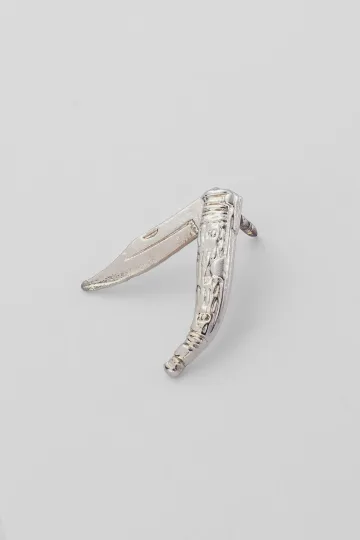
Zevira is an independent jewellery brand based in Albacete, Spain. Albacete sits in the heart of La Mancha, a region with a centuries-old metalworking tradition most famous for the Albacete knife, the navaja, produced in the same city since the sixteenth century. The silversmiths and metalworkers who ground knife blades for generations also worked in the softer metals, and the craft traditions overlap more than most people realise.
Zevira operates in that lineage. Our paired jewellery is designed in Albacete, produced in sterling silver 925, solid 14 carat and 18 carat gold, and stainless steel 316L. Every paired set we sell is made to fit together properly, with matching engraving fonts and consistent finish on both halves.
Custom engraving is offered on nearly every paired design. Names, dates, coordinates, short inscriptions, and private symbols are all supported. Lead times for engraved paired sets typically run two to three weeks, which includes time for the engraving proof to be approved before the piece is finished.
We keep paired sets in stock across all major categories: half hearts in silver and gold, key and lock pairs, puzzle pendants, yin and yang halves, sun and moon pairs, coordinate bars, matching bracelets, and stackable couple rings. For anything outside the standard range, custom commission is available. The brand is small enough that a real person replies to custom inquiries, which matters when the piece is going to mean something to someone.
Zevira jewellery ships worldwide. Paired sets are packaged in two separate boxes by default, so each half can be given independently if the occasion calls for it, or combined into one presentation for joint giving.
Conclusion
Paired jewellery is one of the oldest ideas in human history rendered in metal. A single object split between two people, carrying a bond across distance and time. Greek symbola, Roman tesserae, medieval gimmel rings, Victorian Mizpah pendants, twentieth century best friend halves, and modern coordinate necklaces all sit on the same line.
The specific designs change with fashion. The underlying logic does not. One object. Two people. The piece is meaningful on its own and more meaningful together. That is what paired jewellery has always been. That is what it still is when you clip a small half heart around your own neck and mail the other half to someone living two thousand kilometres away. The Greeks would recognise exactly what you were doing. So would your grandmother, if she owned a Mizpah pendant. The form has endured because the need it meets is permanent.
Choose the design that matches the relationship. Choose the material that will last as long as you need it to last. Engrave something that only the two of you understand. Wear your half daily, and trust that somewhere the other half is being worn too. That is the entire instruction manual.
The rest takes care of itself.