Jewellery Gift for Mum: How to Choose Without Getting It Wrong
The quick answer
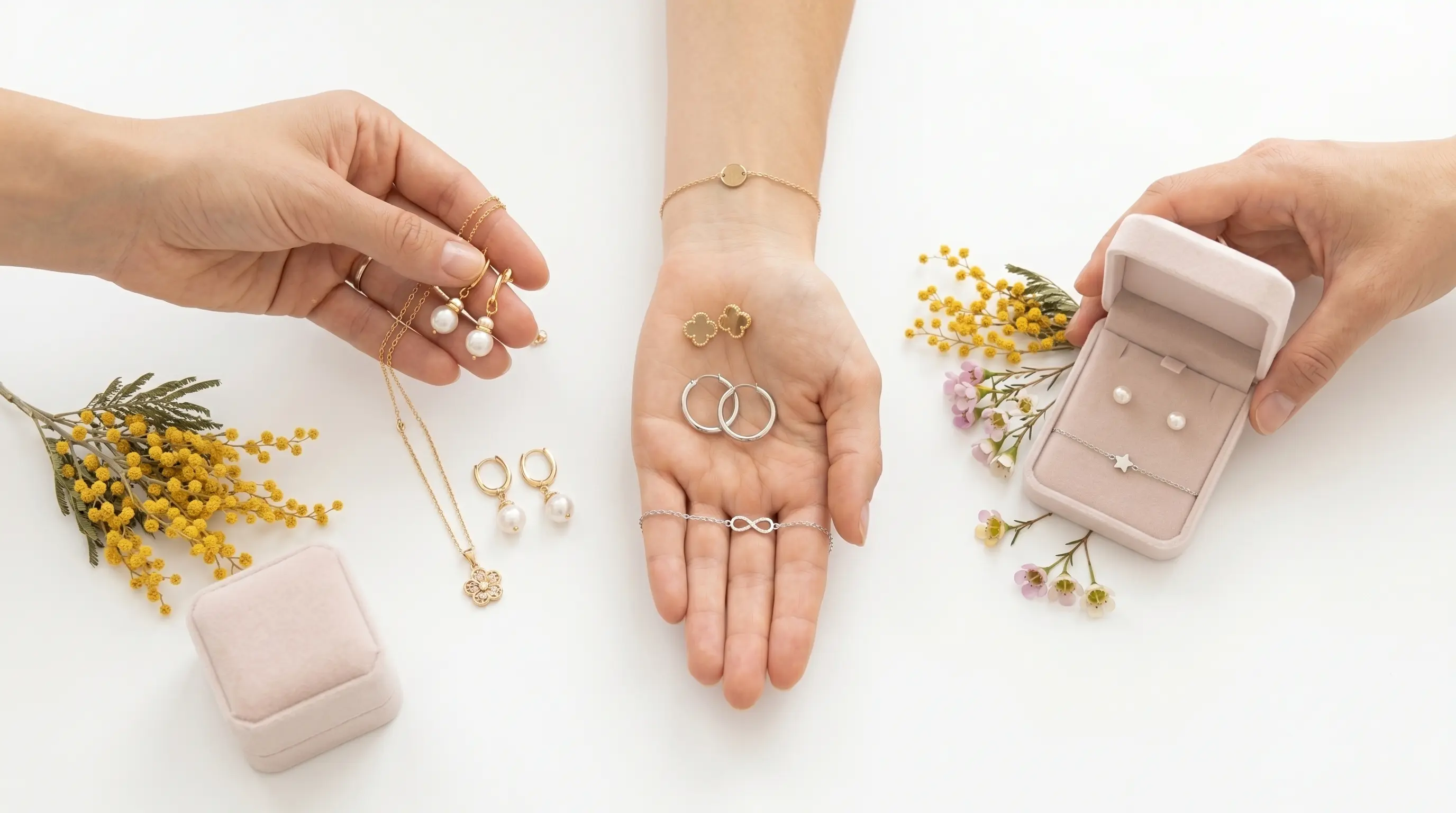
A small pendant on a mid-length chain (42-48 cm) in the metal colour your mum already wears. If you do not know what she wears, go with silver-toned stainless steel. If you are not sure whether her ears are pierced, skip earrings and stick with the pendant. If you do not know her ring size, do not buy a ring.
That is the safe choice. It works 90% of the time. Now here is the detailed version for the other 10%, and for making the safe choice feel personal.
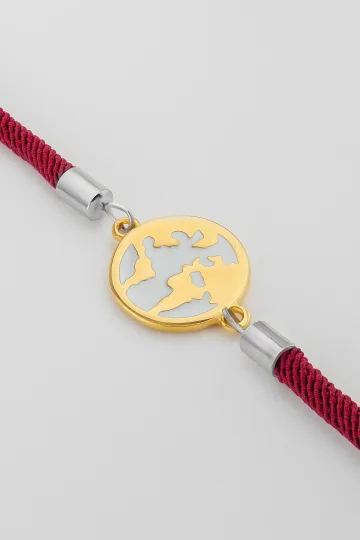
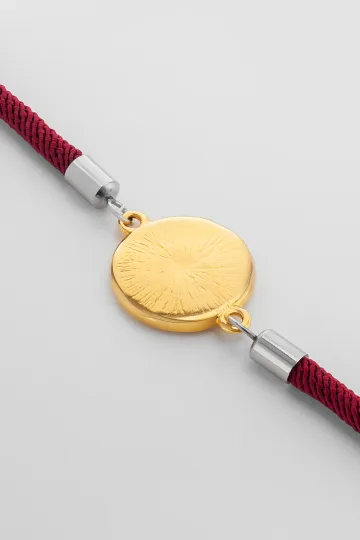
Wear the symbol, don't just read about it. These are in stock:


Step one: observation
Before you open any catalogue, look. Literally. Look at your mum the next time you see her.
What is she wearing right now? Not at Christmas dinner. Not at a wedding. On an ordinary Tuesday. That is her real style. If she is wearing a thin gold chain and small studs, she is a minimalist. If she has three rings, a bracelet, and chandelier earrings, she is a maximalist. If she is wearing nothing: she is someone who needs a very carefully chosen first piece.
What metal? All silver-toned? Do not buy gold. All gold-toned? Do not buy silver. Mixes both? Freedom of choice. More about matching metals to skin tone in our metal and skin tone guide.
Are her ears pierced? Seems obvious, but people forget. If you are not sure, do not risk earrings. A pendant is safer.
What does she wear on her hands? Rings? Bracelets? A watch? If her hands are bare, a ring or bracelet might feel unfamiliar. If she wears a watch and a ring, a bracelet on the other wrist might fit in well.
Phone check. Scroll through recent photos of your mum on your phone. Look at what she is wearing around her neck, on her ears, on her wrists. Three or four photos will tell you more than an hour of guessing.
The gift Mom actually wears turns up on a Tuesday under a jumper, not once a year out of the safe. Give her something for the skin, and keep the diamond brick for yourself.
How to wear the jewellery you gift Mom
A gift lands twice as well when it slips into her real wardrobe instead of gathering dust in a box. I have styled mothers for shoots and family occasions as often as models, and here is what I keep in mind before the piece is even bought.
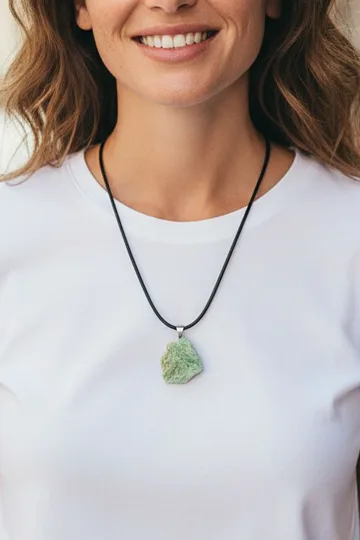
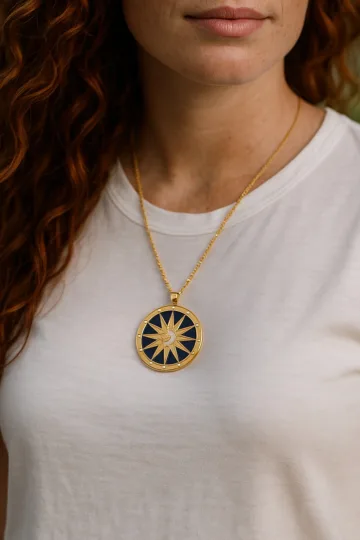
What will she wear a pendant with every day? I recommend a fine chain and a small pendant over a knit, a turtleneck or a shirt. A light top lifts the metal, a dark one turns the pendant into the accent. With a round neckline I go a touch shorter so the pendant rests on the fabric instead of hiding under the collar.
Which metal suits her skin tone? For a warm undertone I suggest gold and rose gold, for a cool one silver and white metal. When in doubt, look at what she has worn for years: that metal already flatters her. Mixing metals is only for mums who already do it with confidence.
What chain length never lets you down? For a blind gift I choose 45 cm: it works with almost any neckline and needs no inside knowledge of her taste. A V-neck carries a mid-length pendant that echoes the line of the neckline. Under a closed top I go shorter so the pendant reads at the collarbone.
One accent or layers? If she likes calm looks, I suggest one considered piece on a clean chain. If she is drawn to layers, I take two chains of different lengths in one metal family, one shorter, one lower. Bracelets stack two or three thin ones, and I keep rings to one per hand.
How do you build an evening look? For going out I add shine: drop earrings with a dark dress, or a pendant over plain fabric that catches the light. Bare shoulders push the earrings forward and leave the neck free. A closed top does the opposite, the accent goes to a longer chain.

Turn on your camera, pick earrings, a pendant or a ring, and see the piece on yourself in real time.
Switch items in one tap.
Everything runs in your browser: no photo or video is ever uploaded.
Step two: the occasion
The occasion determines the emotional weight of the gift. Not the price, the significance.
Mother's Day
The most obvious and most crowded occasion. Everyone gives something to mum, and mums know it. Personalisation works here: a pendant with her initial, a bracelet with a birthstone, an engraving with a date. Not just "a pretty thing" but "this thing is about you."
The infinity symbol is a popular Mother's Day choice. "Infinite love" is direct, but effective. The tree of life also works beautifully: family roots, branches growing, life expanding.
Birthday
More personal than Mother's Day. Here you can follow your mum's taste rather than the symbolism of motherhood. A birthstone pendant is a classic. More in our birthstones by month guide.
Milestone birthday (50, 60, 70)
A round number deserves something with weight. Not necessarily expensive, but significant. This is the gift that becomes "that pendant from my children." A matching set (earrings plus pendant) or one piece that feels like an investment in her next decade.
"Just because"
The most valuable occasion of all. A gift without a reason says "I was thinking about you when I did not have to be." No symbolism needed. No personalisation required. Just a beautiful thing that she will like.
First grandchild
A category of its own. Mum has become a grandmother. A tree of life pendant (the family is growing). A charm with the grandchild's birthstone. An engraving with the name. The emotional potential is enormous.
Retirement
The end of one chapter, the beginning of another. A piece that marks the transition. Something she can wear every day in her new routine: not office jewellery, but life jewellery. A pendant she puts on with her morning coffee instead of her work lanyard.
What to give: by jewellery type
Pendant on a chain: the safest choice
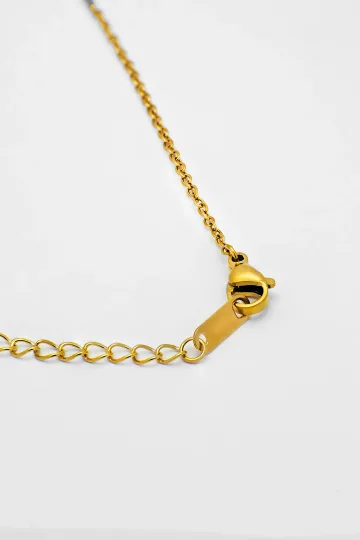
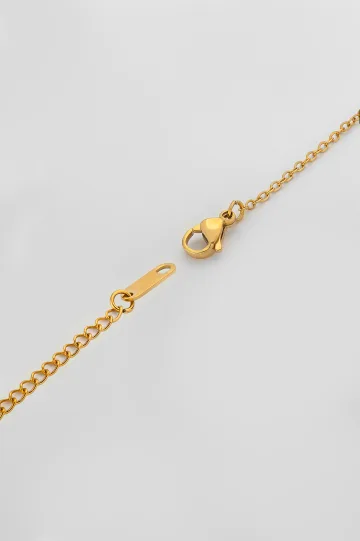
Why: no size needed (unlike a ring). No pierced ears needed (unlike earrings). No wrist measurement needed (unlike a bracelet). The chain adjusts with an extender. The pendant is visible but not aggressive.
Which pendant. Symbolic: infinity, tree of life, heart, nazar (if mum is superstitious or from a culture where it is customary). Or abstract: a geometric shape, a star, a drop.
Chain length. 42-48 cm (princess length) is universal. Works with any neckline. If unsure, go with 45 cm. More in our chain length guide.
Earrings: if you know for certain her ears are pierced
Studs are the safest earring choice. Small, lightweight, suitable for everyday wear. Drops are for mums who already wear earrings and are open to something more noticeable.
Do not give heavy chandeliers to a mum who normally wears small studs. It is like giving a motorcycle to someone who rides a bicycle. Technically both have two wheels, but it is a different level of commitment.
More in our earring types guide.
Bracelet: for mums who already wear something on their wrist
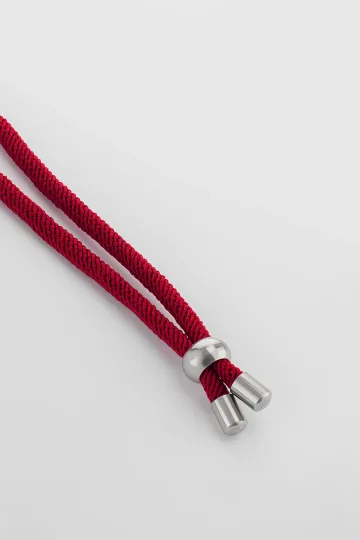
A thin chain with a small element. Or a bangle, if she wears rigid bracelets. Size is the only problem: you need to know her wrist circumference. If you do not, choose a sliding knot bracelet (one size fits all wrists).
More in our bracelet types guide.
Ring: only if you know the size
A ring without knowing the size is a lottery. If you guess right, delight. If you guess wrong, an awkward trip to the jeweller the next day. If you want to give a ring but do not know the size, borrow one of her rings (one she does not wear daily) and take it to a shop or measure it using our ring size guide.
Jewellery that says "Mom"
Personalising with a name or the word "Mom" changes how the gift lands. A blank pendant is just a pretty thing. A pendant that says "Mom", or carries the children's names, instantly reads as "this is about you, and it was made for you." She understands you did not grab the first thing off the shelf, you chose something that speaks of her. These pieces are easy to wear every day and need no explanation.
A "Mom" pendant
The most common request in this category. The word "Mom" or the children's names go on the front or the back of the pendant by engraving. It sits in the neckline, shows over a knit or a shirt, and stays a warm accent near the heart on an ordinary day, not only on special occasions. If she does not like anything large, choose a small pendant with fine engraving: the word reads up close but does not shout from across the room.
A "Mom" bracelet
For mums who wear something on the wrist rather than the neck. The word "Mom" is engraved on a flat bar link, or spelled out in letter beads on a thin cord or chain. An engraved bracelet suits anyone at a keyboard or behind a wheel all day: the word catches her own eye, not only other people's. Size is the only concern here: if you do not know her wrist circumference, choose a sliding knot style that fits any wrist.
A "Mom" bar tag (engraved plate)
The modern, understated form of personalisation. A bar or rectangular tag gives a clean surface for the word "Mom", the children's names stacked in a column, or a meaningful date. The shape is spare and geometric, so this pendant fits even a minimalist wardrobe where a figured heart would feel out of place. Several tags on one chain (a name for each child) turn the piece into a small family record. To push the idea further, the same tag can be made as a matching one for a daughter, see the mother-daughter matching section below.
Upload a photo of your pet, someone you love, or an object. We'll build a 3D model and hand-cast it in pewter.




Gift by mum's style archetype
Classic style
Mum in classic mode: wears pearls or simple gold earrings, dresses in neutral tones, values order and restraint. Every piece of jewellery should "know its place": not shout, not attract unnecessary attention.
What to give. Pearl studs or a single pearl pendant. A thin chain with a small charm (heart, letter, stone). Silver or gold earrings without excess detail. Everything that fits the formula "quality without volume."
What to avoid. Large pendants with bold symbolism. Enamel pieces with unconventional designs. Layered chains. Anything that would make a classic mum feel "not herself."
Bohemian style
Boho mum: loves ethnic design, natural materials, layering. Wears multiple pieces at once. Probably already has a collection from her travels: beads from India, a bracelet from Bali, earrings from a market.
What to give. A symbolic pendant: lotus, tree of life, dreamcatcher, moon phases. A beaded bracelet with natural stones. Drop earrings or rings with nature motifs. She will appreciate the story behind the symbol: tell her what it means.
What to avoid. Geometric minimalism. Strict studs. Anything "sterile" or "corporate."
Minimalist style
Minimalist mum: one ring, one pair of earrings, maybe a thin bracelet. Never wears more than two pieces. Everything thin, subtle, "like a second skin."
What to give. A thin chain with a miniature pendant (5-8 mm). Studs 3-5 mm. A slim bangle. A thread ring. Everything as pared-back as possible. More in our minimalist jewellery guide.
What to avoid. Anything large, bright, or multi-element. For a minimalist, "more" is not "better": it is "worse."
Statement style
Maximalist mum: rings on several fingers, stacked bracelets, statement earrings, pendant over a polo neck. Likes things visible, audible, and memorable.
What to give. Bold drop earrings. A large symbolic pendant. A charm bracelet. A set of thin rings for stacking. She wears "statements" and loves them.
What to avoid. Anything too small, too quiet, too "safe." She will appreciate the gesture but never wear it.
Customer reviews
Zevira is a real jewellery shop. Genuine payments, deliveries and customer thank-yous.
🥰🥰🥰 gracias

Ok, ¡gracias! 🙂

Gift by mum's age (milestones)
Mum turns 40
She knows her style by now. Do not try to change it. Give her a better version of what she already loves. If she wears thin chains, give a higher-quality thin chain. If she wears studs, give studs with a better stone.
Mum turns 50
Half a century. This is the gift that gets worn to every dinner, every event, every photograph for the next decade. Choose something timeless. Nothing trendy, because trends change. A pendant she can wear at 50 and still love at 60. Sterling silver or stainless steel that will not tarnish.
Mum turns 60
Sixty is often the age where mums declutter. They have too much. They want less. One perfect thing is better than three decent things. A single pendant with meaning will outlast a set of three "nice enough" pieces.
Mum turns 70
Practical considerations matter more now. Light earrings (heavy ones tire the lobes). Clasps that are easy to open (arthritic fingers struggle with small clasps). Chains that are visible (eyesight may be weaker). A magnetic clasp instead of a lobster clasp. A pendant large enough to see clearly.
These are not limitations. They are design considerations. A pendant that is easy to put on, comfortable to wear, and visible without reading glasses is thoughtful. It says "I understand you as you are now, not as you were."
Gifts for step-mums and mothers-in-law
Delicate territory
Trickier territory. The relationship is different, and the gift must navigate it carefully. A step-mum is not a replacement mother, and a mother-in-law is not your partner's mum transferred to you. Each of those roles has its own borders, and the gift does better when it respects them than when it tries to argue with them. The rule of thumb is simple: warmth in the material and the making, restraint in the wording.
Step-mum. If the relationship is warm: treat it like a biological mum. If it is more formal: lean toward universal symbols (infinity, heart) rather than deeply personal ones (birthstones, engravings). Let the gift say "I appreciate you" without overstepping.
Mother-in-law. Safety first. Nothing that could be misread. Nothing too intimate (no birthstones, no "mum" engravings unless she has explicitly said she considers you her child). A beautiful pendant in a neutral style. A pair of classic studs. Something that says "I thought about you and chose well" without saying "I am trying too hard."
The metal question. If you do not know what metal she wears, ask your partner. Your partner grew up watching their mum get dressed. They know.





Cultural differences in gifting jewellery to mothers
Mediterranean (Spain, Italy, Greece)
In Mediterranean cultures, gold is the default for mothers. Silver is considered "lesser." A gold pendant (or gold-plated, if the budget requires) carries cultural weight that silver does not. Mother's Day is deeply tied to family gatherings and church, and the gift is often presented at a family meal.
The symbolism tends toward protective: nazar, cornicello, hamsa. Mediterranean mothers appreciate jewellery that protects the family, not just decorates it.
Northern Europe (UK, Germany, Scandinavia)
Understated is key. A subtle pendant, small studs, nothing that screams. The gift should complement, not compete. Nordic and British mothers tend to prefer silver or steel over gold. The gesture matters more than the display.
Mother's Day in the UK (Mothering Sunday, fourth Sunday of Lent) comes earlier than in the US and most of Europe. Plan accordingly.
East Asia (China, Japan, Korea)
Jade holds special significance in Chinese culture (protection, prosperity). Pearls are highly valued across East Asian gift-giving. Gold is associated with wealth and prosperity. Gifting jewellery to a mother in East Asian culture carries a layer of respect and filial piety that is more formal than in Western contexts.
In Japan, minimalism reigns. One small, perfectly crafted piece will be appreciated more than an elaborate set.
South Asia (India, Pakistan)
Gold jewellery for mothers is not just tradition. It is cultural infrastructure. In India, gold gifted to a mother is both personal and financial (gold is a form of savings). The weight of gold matters as much as the design. Silver is for everyday; gold is for significance.
Americas
In the US and Canada, Mother's Day (second Sunday of May) is the biggest jewellery-buying occasion of the year after Christmas. Heart pendants, infinity symbols, and birthstone pieces dominate. Personalisation (name, date, initial) is highly popular.
In Latin America, "Dia de la Madre" carries enormous cultural weight. Flowers and jewellery together are the standard combination. The celebration is often multigenerational, with grandmothers, mothers, and daughters celebrating together.
The return and exchange question
This is uncomfortable but necessary. What if she does not like it?
If you bought from a shop with a return policy: keep the receipt. Give the gift. If she seems hesitant or says "it is lovely but...", offer: "We can exchange it for something you like better. The important thing is that you enjoy wearing it." This is not a failure. It is maturity.
If you bought online: check the return window before purchasing. Most online jewellery shops offer 14-30 days. Some extend this around Mother's Day and Christmas.
The psychology of exchange. Some mums will never exchange a gift, even if they dislike it, because they do not want to "hurt your feelings." If you suspect this is your mum, shop together. "Mum, I want to get you something you will actually wear. Let us choose together." That is not lazy. That is respectful.
CAPAORA mini knife pendant
The 18th-century Spanish navaja in miniature: 40 mm of stainless steel, a real folding mechanism and a Palanquilla lock that clicks. An affordable gift to remember.
Authentic · Ships from Spain · 14-day returns
Long-distance gifting
If you live far from mum (different city, different country), the logistics of the gift matter as much as the gift itself.
Delivery timing. Order early. Shipping delays are real, especially around Mother's Day when every jewellery shop is under pressure. A gift that arrives a day late is a gift that says "I forgot and rushed."
Unboxing by phone. Schedule a video call for when she opens it. The reaction is part of the gift. If she opens it alone at the kitchen table, the emotional impact is halved. If she opens it while you are watching on screen, narrating why you chose it: that is a moment.
The note, again. Even more important for long-distance. The physical note in the box bridges the physical gap. Handwrite it. Post it separately if you must. The note must exist on paper, not as a text message.
What the gift says about the giver
A gift is a message before it is an object. Jewellery given to a mother says "I love you," and it also says something about the person who chose it. None of these levels is better than the others, and a plain gesture chosen honestly beats an elaborate one chosen out of duty.
A pendant with her birthstone. It says: I know when your birthday is, and I spent time working out which stone goes with it. Attention level: high.
A simple heart pendant. It says: I love you. Direct, unfussy, and it works. Attention level: middling, in that nothing about it is personalised, but nobody ever accused it of insincerity.
Earrings and a pendant from the same collection. It says: I thought about how these would look together on you. Attention level: very high. What she notices is less the set itself than the fact that somebody stood in front of a display and thought "that goes with that."
An engraved pendant. It says: this was made for you and nobody else has one like it. Attention level: as high as it goes. Engraving is a form of personalisation nothing else quite matches, which is also why it is the one thing you cannot return.
Leave your email, we'll send your discount code. No spam, unsubscribe anytime.
The code arrives by email, valid on your first order.
Mother-daughter matching jewellery
Why it works
A growing trend, and for good reason. Matching pieces (same pendant, same bracelet, same symbol) worn by mother and daughter create a visible bond.
Psychologically the mechanism is straightforward. A matching piece makes an invisible line between two people physical. She touches the pendant during a meeting and knows her daughter is wearing the same one somewhere else. The daughter turns the bracelet on her wrist in a lecture theatre and thinks of home. An object that two people share does a job that a phone call cannot quite do, because it sits there quietly all day and asks nothing of either of them.
The options
What works. Identical pendants on chains of different lengths (mum's chain might be longer than daughter's). Same symbol but different sizes. Same metal, same style, personalised differently (mum's initial on one, daughter's on the other).
What does not. Literally identical pieces in identical sizes. This works for sisters but can feel odd between a 25-year-old and a 55-year-old. Similar but not identical is the sweet spot.
When to give. Mother's Day (each gives the other the matching piece). Daughter's engagement (mum gives the matching piece as a blessing). Mum's milestone birthday. Or simply "I saw these and thought of us."
The emotional weight of matching jewellery is disproportionate to its cost. Two simple pendants on two chains are not expensive. But the message ("we match, we belong, we are connected") is priceless.
What NOT to give
Nothing cheap-looking. An affordable piece of stainless steel jewellery that looks expensive is fine. A cheap piece of plastic that looks like plastic is insulting. The price does not matter. The perception of quality does.
Nothing too young. If mum is 60, do not give her a choker with butterflies. Respect her age and style. Classics (pendant, studs, slim bangle) work at any age.
Nothing that requires explanation. "It is a Scandinavian rune meaning...": if mum is not interested in Norse mythology, she will not appreciate it. Give symbols your mum will understand without an instruction manual.
Nothing that hints at age. A "grandmother pendant" is a bad idea unless she specifically asked for one. She is a grandmother, but she does not want to be reminded of it by her jewellery. Give beautiful things, not life-stage markers.
Gift by mum's star sign
A star sign is not science, but it makes a decent starting point when you are stuck. Not because Sagittarians genuinely prefer turquoise, but because most mums know their sign and its stone, and being given "your" stone is a small pleasure that costs the giver nothing but a minute of thought.
Fire signs (Aries, Leo, Sagittarius)
Mums with fire signs tend to read as energetic and warm, and they are rarely frightened of a piece that gets noticed. What suits: larger earrings, pendants with presence, warm metals such as gold and rose gold. Stones: ruby or red garnet for Aries, tiger's eye or peridot for Leo, topaz or turquoise for Sagittarius.
Earth signs (Taurus, Virgo, Capricorn)
Practical, and inclined to value one good thing over three mediocre ones. What suits: well-made classics, sterling silver, decent gold plating, nothing shouting. Stones: emerald or green agate for Taurus, sapphire or another blue stone for Virgo, garnet or onyx for Capricorn.
Air signs (Gemini, Libra, Aquarius)
Fond of variety, alert to how things look, quite happy to change their style twice in a decade. What suits: current pieces that sit comfortably in what she is wearing now, or a small set of two or three things so there is something to swap between. Stones: agate or citrine for Gemini, opal or rose quartz for Libra, amethyst for Aquarius.
Water signs (Cancer, Scorpio, Pisces)
Emotional in the useful sense, drawn to depth and meaning. For these mums the symbolism matters more than the form. A pendant with a moon for Cancer, a scorpion or a phoenix for Scorpio, fish or waves for Pisces. Stones: moonstone for Cancer, topaz or aquamarine for Scorpio, amethyst or aquamarine for Pisces.
An important caveat
The zodiac is a prompt, not an instruction. If your Aries mum has spent forty years avoiding red, do not hand her a ruby because a chart said so. Watching what she actually wears beats any horoscope, and if the two disagree, the wardrobe wins.
The note
Write one. Three sentences, handwritten. "Happy [occasion]. I chose this because [reason]. Love, [name]."
That is it. Mums keep handwritten notes longer than they keep jewellery. The pendant might go in a box one day. The note goes in a drawer and stays there for decades. Do not skip it.
Gift from children of different ages
From a young child (with help from the other parent)
The gesture matters, not the object. Mum knows a five-year-old did not choose a pendant alone. But if the card says "Mummy, I chose a star for you because you shine," mum will cry, and it will be the most valuable pendant in her collection, even if it costs less than two coffees.
From a teenager
Small budget, big desire to impress. A stainless steel pendant with a symbol that mum relates to. Or studs. A teenager's gift works through thought, not price. "I noticed you always wear silver, so I chose this." That sentence is worth more than any metal.
From an adult child
More serious now. An adult child knows mum's taste, can find out her size, can choose a matching set. And mum's expectations (secretly) are higher. Not because she is materialistic, but because a gift from an adult child is a signal: "I know you."
Joint gift from several children
Pool resources and you can afford more. A sterling silver set (earrings plus pendant), a quality bracelet, a personalised piece with engraving. One good gift from three children is better than three mediocre ones from each separately.
The logistics: agree on a budget, assign one person to choose (ideally the one who knows mum's style best), split the cost. Include all names on the card. If one child cannot contribute financially, they write the note. The note is free and often matters most.
From a child who lives far away
The gift carries extra weight because the distance makes it feel deliberate. You did not grab something at the local shop. You chose it, ordered it, had it shipped. That effort is visible and meaningful.
Include a note that acknowledges the distance: "I wish I could give this to you in person. Until I can, wear it and think of me." That transforms a postal delivery into an emotional bridge.
Schedule a video call for the moment she opens it. Watch her reaction. React to her reaction. The physical distance between you shrinks to the width of a screen, and the pendant on her neck closes the gap entirely.
Packaging and presentation
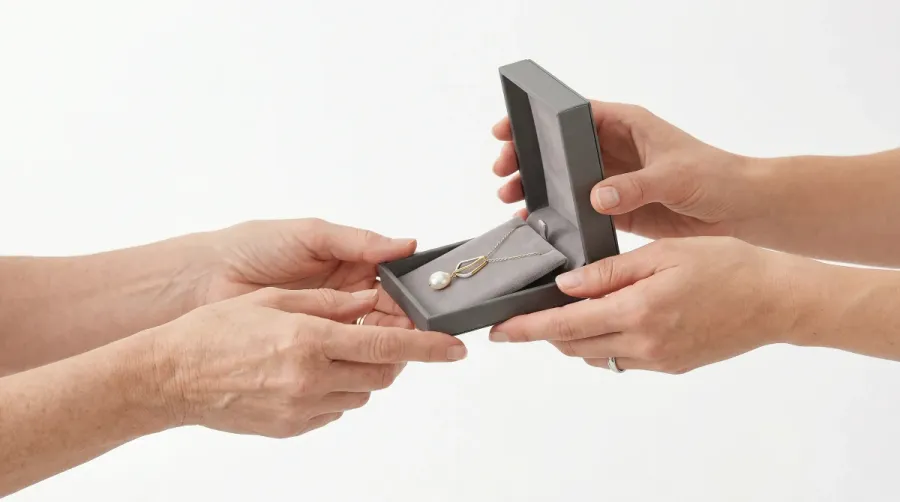
The minimum. A pouch or box. Any decent jewellery comes in packaging. Do not throw it away.
Do not wrap it in a giant box. Jewellery in a small box inside a medium box inside a large box is exhausting, not entertaining. Small object, small package. Elegance in simplicity.
Timing. Give it in a quiet moment. Not at a crowded restaurant, not in front of twenty relatives. Mums need a moment to actually look at it, try it on, and react without performing for an audience. Unless she is the performing type: in which case, go public.
A gift for the mum who has everything
Some mums seem fully equipped. They have what they need, they buy what they want, and any present risks becoming one more thing in a drawer. Two approaches tend to survive contact with that kind of mother.
Approach one: replace the everyday piece
Look at what she wears daily. Earrings? They are almost certainly not new. A pendant? She has probably had it for years, and the chain has probably thinned at the back where it rubs. Offer an update: "I noticed you wear these every day, so here is a newer version of the same idea." It is not a replacement, since she can keep wearing the old ones for as long as she likes, and the value sits in the noticing rather than in the object. Half of what makes this work is that it proves you looked.
Approach two: an outing instead of an object
Instead of a finished gift, go and choose together. "Come on, let us find you something you actually like." For a mum who already has everything, the choosing is the present: an afternoon, a few shops, an opinion asked for and taken seriously. Time together plus something she picked herself is a combination that is hard to beat, and it removes the guessing entirely.
Send a friend a discount code, they save on their first order.
The psychology of giving: why mums cry over pendants
Tears over a present are neither weakness nor performance. They are a physiological response to an emotional peak, and jewellery triggers it more reliably than most other categories of gift.
The reason is that jewellery carries an unspoken sentence: you are lovely. When a mother hears that from her own child, what registers is that the child sees her. Not the mother as a function, the one who fed everybody and drove to fixtures on wet Saturday mornings and sat through the homework, but the mother as a person. A woman who deserves a beautiful thing that belongs to her alone.
There is a practical layer under the emotional one. A great many mothers quietly stop buying themselves jewellery once they have children. Not because the wish goes away, but because the household budget acquires other priorities and stays that way for a decade or two. Ten, twenty, thirty years with no new earrings. And then a grown child hands over a pendant with a note attached. The reaction is not really about the pendant.
If she cries, nothing has gone wrong. Those are not unhappy tears. That is contentment arriving in liquid form, and it is one of the few reviews a gift can get that cannot be faked.
Common mistakes and how to avoid them
Mistake: choosing by your own taste
You like a big sculptural earring. Your mother has worn small studs since 1994. You buy the big sculptural earring. She says "how lovely," puts it in the box, and the box goes in the drawer. Familiar?
The fix. Before you buy, picture the three pieces she actually wears most often. Buy something in that style, that scale, that metal. Not a lookalike, but something from the same category of thing, so it can join the rotation instead of sitting outside it.
Mistake: buying it because it was in the sale
"There was seventy per cent off a set of earrings and I could not resist." Discounted sets are usually not the thing anyone would have chosen at full attention, and they are discounted precisely because people were not choosing them. Mothers work this out quickly, even when they are far too polite to mention it. The January sales and the late November discount weekend are excellent for restocking your own wardrobe and poor for deciding what somebody else will treasure.
The fix. One thing chosen deliberately does more than a bundle chosen because the label was red. If the budget is tight, go smaller in size rather than lower in intent: a small well-made piece reads as considered, a large cheap one reads as filler.
Mistake: giving it too late
A present that turns up a week after Mothering Sunday has lost most of its effect. She has already been through the day of quietly wondering, and even a very good gift arrives with a faint aftertaste of having been forgotten. In Britain this trips people up more often than it should, because Mothering Sunday moves with Lent and lands in March rather than on a fixed date, so the reminder you set last year is no use this year.
The fix. Order early and set the reminder a fortnight ahead, keeping in mind that Royal Mail and every courier are at their worst in the week before. If the parcel is delayed, ring her on the day itself and say the present is on its way but you were thinking of her. Words on the right day matter more than a box on the wrong one.
Mistake: forgetting the introverted mother
Not every mother wants to show a present to her friends, photograph it, or discuss it over lunch. Plenty of them are private people who value quiet things kept for themselves. A pendant that disappears under a jumper. A ring only she sees properly. An engraving on the inside of the band rather than the outside.
The fix. If she is not the demonstrative type, give private jewellery, the kind that only its owner really registers. For that mother it will mean considerably more than a statement necklace chosen for a woman with a different temperament entirely.
Buying it as a gift? Each one arrives ready to give.
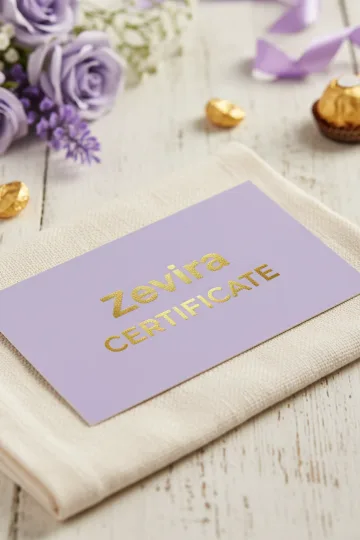
 A branded Zevira box and a little card come with every order.






When mum gives her daughter jewellery
This guide is about giving to a mother, but the traffic runs both ways and the return journey is worth a paragraph.
Passing jewellery from mother to daughter is one of the strongest traditions the craft has. Grandmother's ring, your mother's earrings, a family locket: these things carry emotional rather than material weight. What they say is that you are a continuation, and that this particular beautiful object is yours now.
If your mother has given you a piece, wear it. Even if it is not your style. At least sometimes, at least to the family occasions. Seeing her own jewellery on her daughter is one of the deeper pleasures available to her, and it has nothing to do with fashion. It is about continuity.
And if you want to complement what she gave you with something contemporary in the same register, you have just found the idea for the gift going the other way. The circle closes.
Checklist before you buy
Before you tap "pay" or reach the till, run down the list:
- I know which metal she wears (silver-coloured, gold-coloured, both)
- I know whether her ears are pierced (if I am buying earrings)
- I know her ring size (if I am buying a ring)
- The piece matches her style rather than mine
- The symbolism makes sense to her without a lecture, or I am happy to give the lecture
- I have checked the returns policy, and I know that under UK consumer rules an online order can normally be sent back within fourteen days while an engraved or personalised piece cannot
- There is a note, or I will write one before I hand it over
- The packaging is decent (a box, a pouch, something that is not a jiffy bag)
If everything is ticked, buy it with a clear conscience. If something is not, spend another five minutes on it. Five minutes of preparation is usually the whole distance between a gift that is fine and a gift she remembers.
Wear the symbol, don't just read about it. These are in stock:
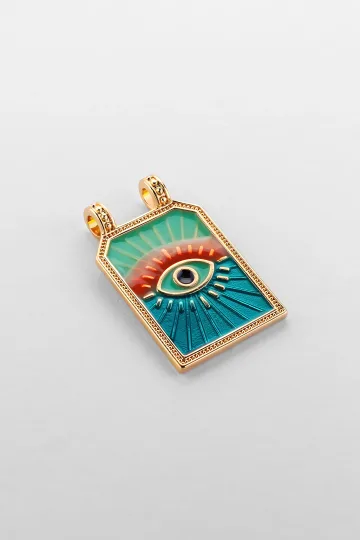
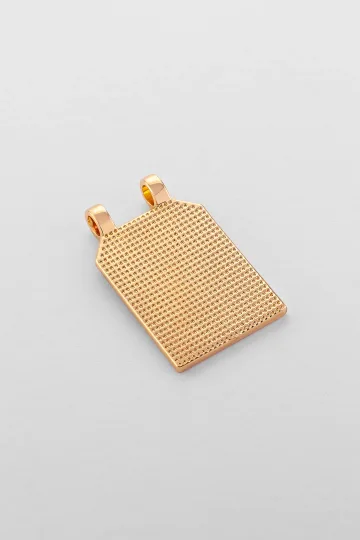

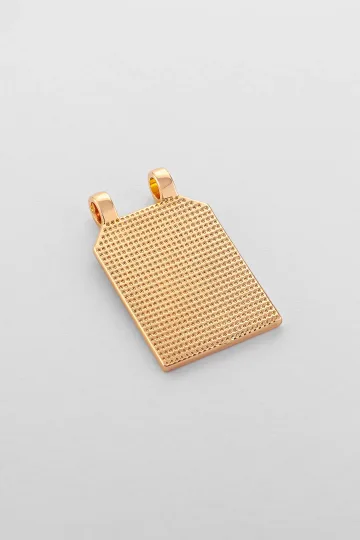
FAQ
What if mum says "I do not want anything"? That means "I do not want anything expensive or complicated." It does not mean "I would not be touched by a small, thoughtful gesture." A modest pendant with a handwritten note is perfect.
What metal is best for mum? The one she already wears. If she wears nothing, go silver-toned (stainless steel or sterling silver). It is more neutral and suits more wardrobes.
Should I give gold plating? If mum loves gold tones but the budget is limited, yes. Just be aware the plating wears over time. More in our gold plating guide.
Can I give symbolic jewellery if mum is not spiritual? Yes, if the symbol is not religious. Infinity, tree of life, star, heart are secular symbols. Cross or hamsa, that depends on mum.
Set or single piece? One good piece is better than a mediocre set. A set only if the budget allows quality for every piece.
What if mum does not wear jewellery at all? A thin pendant on a fine chain. The least intrusive option. If she does not wear it, nothing lost (low cost). If she does, it is the beginning of a collection. Some people do not wear jewellery because nobody ever gave them the right piece.
Surprise or choose together? If you know mum's taste, surprise. If you are unsure, "Mum, I want to give you jewellery, shall we choose together?" is also lovely. Some mums prefer choosing themselves. That is not killing the romance. It is respecting her taste.
What about allergies? If mum has sensitive skin, choose stainless steel 316L or titanium. Both are hypoallergenic. Avoid nickel-containing alloys. More in our nickel allergy guide.
What if mum is hard to shop for in general? Jewellery is often the solution for "impossible to shop for" people. You cannot buy the wrong size (pendants). You cannot buy the wrong colour (metal matches skin tone, not wardrobe). You cannot buy something she already has (every pendant is different). And you cannot buy something she does not need, because nobody needs jewellery, which is precisely why it works as a gift.
Should I buy from a high street shop or online? High street: you can see and touch the piece before buying, and returns are simpler. Online: wider selection, often better prices, and you can shop without mum accidentally seeing the bag. For a first-time jewellery gift, online is fine if the shop has good photos, clear sizing information, and a return policy.
What if I have absolutely no idea what she would like? Ask her best friend. Ask your other parent. Ask her sister. Someone in her circle knows her taste, and they will be delighted to help. "I want to get mum something she will actually wear, what does she like?" is a question that makes everyone involved feel good.
Is it odd to give mum jewellery every year? Not if you vary it. A pendant one year, earrings the next, a bracelet the year after. Over time, you are building her a collection. Each piece marks a year, a memory, a chapter. By the time she has five or six pieces from you, the collection tells a story of your relationship.
Can I engrave something funny? Depends entirely on your mum. If she has a sense of humour about these things, then yes, absolutely. "World's okayest mum" on the back of a pendant will either make her laugh for years or offend her permanently. Know your audience. When in doubt, sincerity beats humour.
Best gift for a mum who has everything? Something with meaning, not material value. A pendant with coordinates of where the family home is. An engraving with a date that matters to her. A symbol that connects to a shared memory. When people have everything, meaning is the only currency left.
Silver and gold jewellery, wedding bands, symbolic pendants, paired sets.
The bottom line
Jewellery for mum is not about price or trends. It is about "I noticed what you like" and "I thought about you." A pendant chosen with her in mind works better than a diamond chosen in panic.
Observe. Choose according to her style, not yours. And write the note.
Mums keep notes longer than jewellery. That three-sentence card you thought was insignificant? She will read it on a random Tuesday, five years from now, and smile. The pendant is the gift. The note is the memory.
And here is the thing nobody tells you about buying jewellery for mum: she does not care about the pendant. Not really. She cares that you thought about her. That you noticed what she wears. That you took time out of your life to choose something for hers.
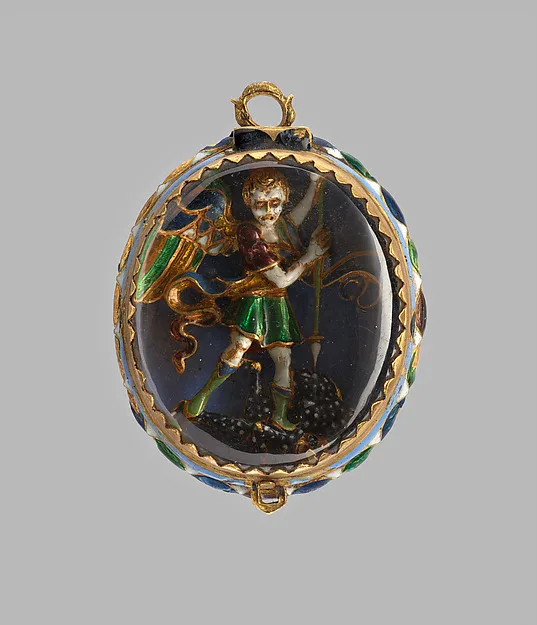
The pendant is proof of the thought. The thought is the gift. And for a mum, knowing that her child thinks about her (even briefly, even casually, even while scrolling through a jewellery catalogue on their phone during a lunch break) is worth more than any metal on earth.
So choose something. Anything. Write the note. Give it to her. And watch her face.
That face is the real gift. And it is yours.
About Zevira
Zevira makes jewellery in the artisan tradition of Albacete, Spain. Gifts for mum are one of the categories we get asked about most. A pendant engraved with children's names, matching mother-daughter bracelets, a ring set with the grandchildren's birthstones: these are the pieces that get handed back down through generations.
What you can find here for mum:
- Pendants engraved with your children's names
- Lockets that hold a photo or a lock of hair
- Mother-daughter matching pieces in the same style
- Classic pearl studs and pendants
- Birthstones in a clean, minimalist setting
Every piece can be personalised with engraving by a craftsperson, with the option to add a personal engraving. We work with sterling silver 925 and 14-18K gold.