Jewellery on Holiday: What to Pack, How to Carry It and What to Avoid
The Suitcase Is Sorted, the Jewellery Is an Afterthought
Clothes get folded according to a list. Passports get triple-checked. Chargers get tucked into the side pocket. But jewellery? Jewellery usually gets tossed into a toiletry bag five minutes before the taxi arrives, tangles itself around a mascara tube, scratches against keys and vanishes somewhere between Heathrow Terminal 5 and the hotel bathroom.
The result is predictable: a chain tied in a knot that takes twenty minutes to unpick, an earring lost in a rucksack pocket, a ring turned green from sun cream, and a favourite pendant left at home because it felt "too risky to bring." And instead of accessories that complete your holiday photos, your neck stays bare.
This guide is about travelling with jewellery without knots, losses or green fingers. Practical advice. No fluff.
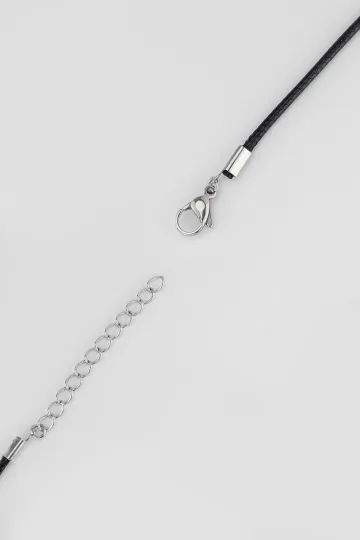
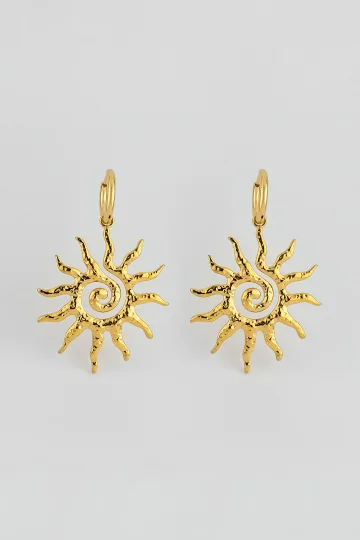
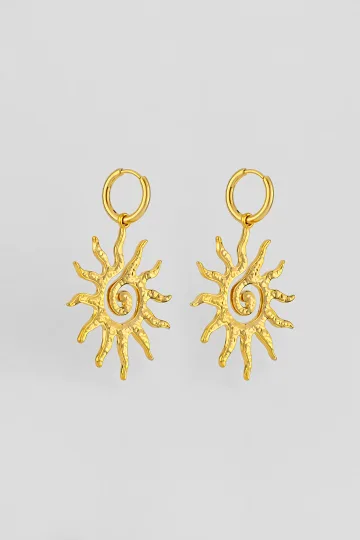
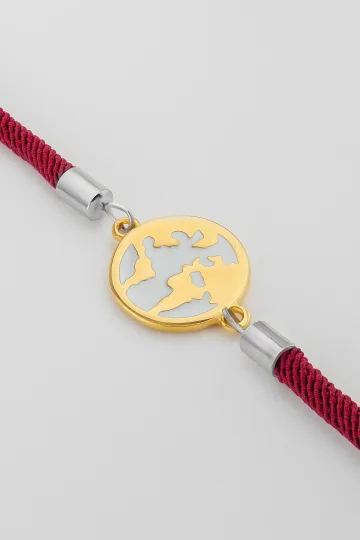
Wear the symbol, don't just read about it. These are in stock:



What to Bring: The Rule of Three
Not fifteen pieces for every possible occasion. Three. Five at most.
Piece 1: A versatile pendant. A small symbolic pendant on a 42-48 cm chain. Works with a swimsuit, with a dinner dress, with a T-shirt on a walking tour. One pendant covers every situation. More on choosing one: minimalist jewellery guide.
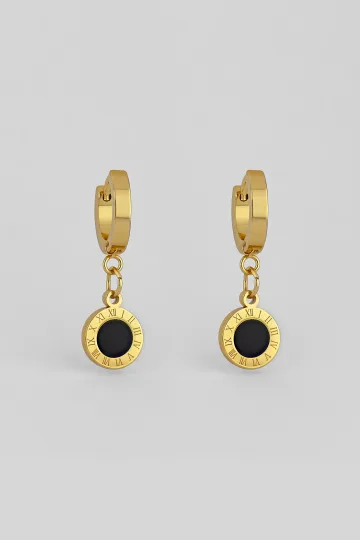
Piece 2: Earrings. One pair. Studs for a beach holiday (they won't snag, won't fall off in the water). Small drops for a city break (they add definition to your face in photographs). More detail: earring types guide.
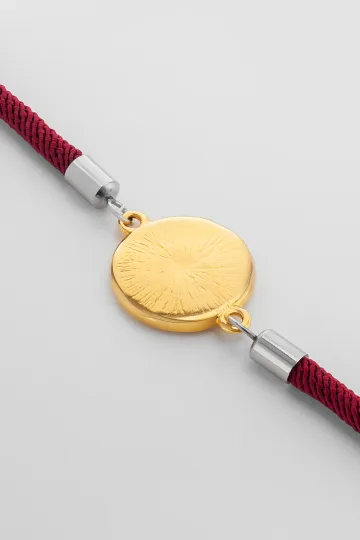
Piece 3: A ring or a bracelet. One. Not a stack. One piece for your hands. A ring if you're a ring person. A bracelet if you're a bracelet person. Not both.
Three pieces fit inside a small pouch, weigh less than your phone and cover 95% of situations: beach, restaurant, sightseeing, evening drinks, photos you'll actually keep.
Steel goes to the sea, not your gold plating. It peels by Wednesday, and you'll have earned it.
What to wear travel jewellery with
When I pack a look for a client's trip, the brief is simple: three pieces have to cover the whole suitcase. Here is what actually works on the road, sorted by situation.
What do you suggest for everyday by the sea? I recommend one steel pendant on a 42 to 48 cm chain over linen, cotton or a swimsuit. A light top lifts the metal and a tan does the rest. Under a bare shoulder or a V-neck the pendant lands dead centre, its best position. Studs in the ears add neatness without arguing with the pendant.
And when it is a day tour and an evening restaurant? Here I choose the principle of promotion. By day the pendant works as the single accent; in the evening I take it off and bring mid-length drop earrings forward. Day and evening are split not by quantity but by what you move to the front.
How do I build a city look? Under a closed top, a shirt and a jacket I suggest a shorter chain so the pendant sits at the collarbones and the earrings stay small. One smooth ring on the hand finishes it. The rule is simple: one accent, everything else stays quiet.
Can I mix metals on a trip? Carefully. One tone across the whole look reads tidier and forgives a rushed hotel mirror. Two thin layered chains suit the city, but on the beach they tangle, so save them for the evening.
Who is this approach for? Anyone who travels light and would rather not think about jewellery every morning. Two parting tips: keep the chain length matched to the necklines you actually packed, and choose the metal for the climate, not the mood. Then a look comes together in a minute.

Turn on your camera, pick earrings, a pendant or a ring, and see the piece on yourself in real time.
Switch items in one tap.
Everything runs in your browser: no photo or video is ever uploaded.
Materials for Travel
316L Stainless Steel: the King of Travel Jewellery
Does not tarnish from humidity. Does not react with sweat. Does not care about seawater. Does not care about chlorinated pools. Does not care about sun cream. Requires zero maintenance. You can put it on at home and not take it off until you walk back through your front door.
If there were a perfect travel metal, it would be 316L. More on metal choices: metal comparison guide.
Sterling Silver (925): With Caveats
Silver tarnishes from humidity, seawater and sweat. In a tropical climate, a silver chain can darken in a couple of days. Not the end of the world (it cleans up), but fiddling with polish on holiday is nobody's idea of fun.
If you're bringing silver, wear it on dry days, remove it before the beach and the pool. Or accept the dark patina as a style choice.
Gold Plating: the Worst Travel Companion
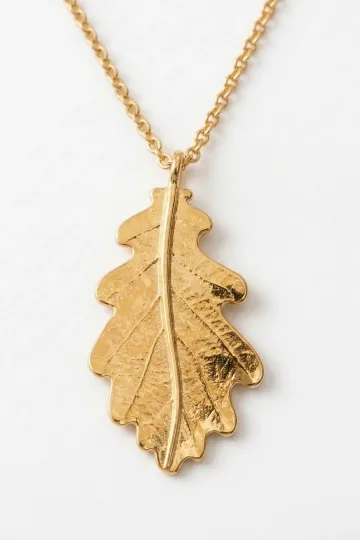
Sweat + sun cream + seawater + constant wear = accelerated deterioration of the coating. A week's holiday can strip gold plating faster than six months at home. If you'd rather not return with a peeling pendant, leave the plated pieces behind. More on this: how long does gold plating last.
Leather: Limited
A leather bracelet for a city break is fine. On the beach, no. Salt water and sand destroy leather. If it gets wet, dry it at room temperature. Never in direct sunlight, never with a hairdryer (heat warps leather).
Beads on Elastic: Risky
Elastic weakens from heat, water and salt. A beaded bracelet that holds together perfectly at home can snap at the worst possible moment on holiday. If you bring one, accept the risk.
Storing Jewellery on the Move: Systems That Work
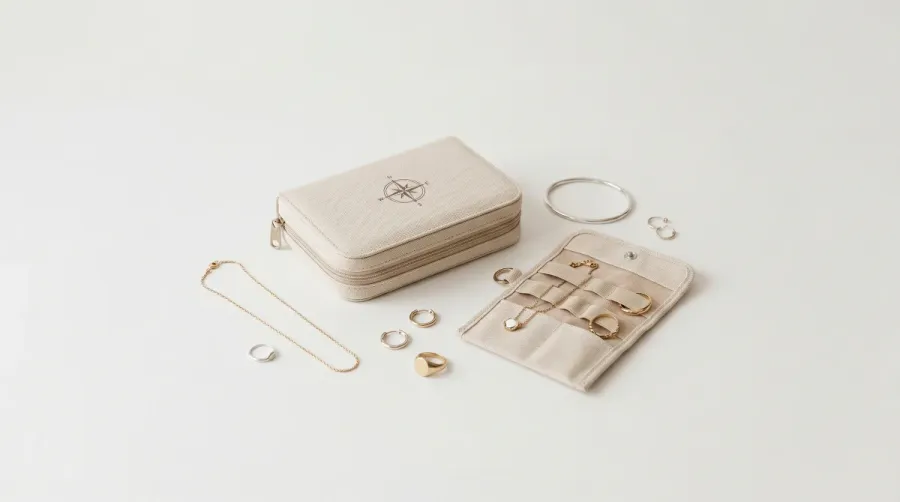
Pouches With Compartments
The simplest and best solution. A small fabric or leather pouch with several internal pockets. Each piece in its own section. Nothing tangles, nothing scratches. Costs less than lunch, saves your nerves for the entire trip.
Never throw loose jewellery into one pocket. Metal scratches metal. Chains intertwine. Earrings lose their partner. After three days in a rucksack pocket, your collection becomes a tangled knot of metal.
The Straw Trick for Chains
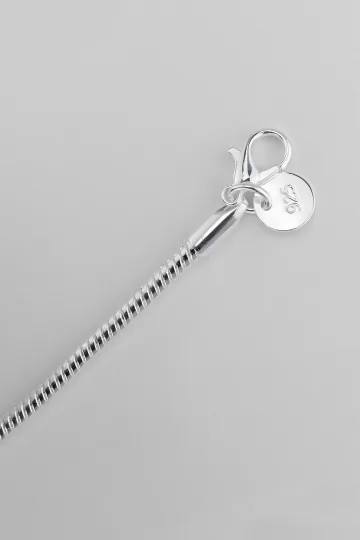
If you don't have a pouch, grab a drinking straw. Unfasten the chain, thread it through the straw, refasten the clasp. The chain physically cannot tangle because the straw prevents links from twisting. Works for any fine chain. Does not work for thick chains or bracelets.
A Pill Organiser
Unexpected, but effective. A plastic pill box with seven compartments (one for each day of the week). Each compartment holds one piece. The rigid case protects against knocks. The clear lid lets you see everything. Compact, lightweight, costs almost nothing.
A Contact Lens Case
For stud earrings. Each pair in its own compartment. The lid screws shut, nothing falls out. Fits in a jeans pocket.
What Not to Do
Do not wrap jewellery in a tissue. Housekeeping will throw the tissue away. Do not put pieces in a clothing pocket that goes into the wash. Do not leave them in an open rucksack compartment on the beach. Do not pin them to clothing (the pin will open at the worst moment).
Jewellery and Sun Cream
A separate topic, because sun cream is the number one killer of jewellery coatings on holiday.
Sun cream contains zinc oxide, titanium dioxide, avobenzone and other chemical filters. All of them react with metals.
What happens. Cream contacts the jewellery, the chemical compounds attack the coating (gold plating, rhodium), and the finish dulls, clouds or peels. On silver, cream accelerates tarnish. On stainless steel, it leaves a whitish residue that washes off easily.
The rule. Apply cream first, wait 10-15 minutes for it to absorb, then put on your jewellery. Not the other way round. Cream on jewellery equals a chemical assault.
If cream gets on a piece. Rinse it with clean water as quickly as possible. The longer the contact, the greater the damage. For stainless steel, this is hardly an issue. For gold plating, every minute counts.
Spray vs cream. Spray is worse: it disperses into the air and coats everything, including jewellery you've already put on. Cream at least goes where your hands put it.
Customer reviews
Zevira is a real jewellery shop. Genuine payments, deliveries and customer thank-yous.
🥰🥰🥰 gracias

Ok, ¡gracias! 🙂

Jewellery and Salt Water: the Details
The sea is not simply "water." It's a solution with 35 grams of salt per litre, plus microorganisms, algae and mineral particles. It's a chemically aggressive environment.
316L stainless steel. Handles it. The "L" in 316L and the molybdenum content exist precisely for salt water resistance. Marine equipment is made from 316L. Your pendant will survive a week in the Mediterranean without blinking.
Sterling silver (925). Rapid tarnish. Silver reacts with chlorides in seawater, producing silver chloride: a dark coating. One swim and your silver chain will darken. Cleanable, yes. But why create the problem.
Gold (solid). Resilient. Gold does not react with seawater. But gold is soft, and sand can scratch it. Fine scratches on an 18K ring after a week at the beach are a real possibility.
Gold plating. Seawater penetrates micro-cracks in the coating and attacks the base metal underneath. The result: bubbling, peeling, spotting. One swim may not kill it. Daily swims over a week almost certainly will.
Pearls. Absolutely not. Pearls are organic (calcium carbonate). Salt water, sun and cosmetics destroy the nacre layer. Pearls and beaches do not mix.
Upload a photo of your pet, someone you love, or an object. We'll build a 3D model and hand-cast it in pewter.




How to Transport Jewellery
Flying
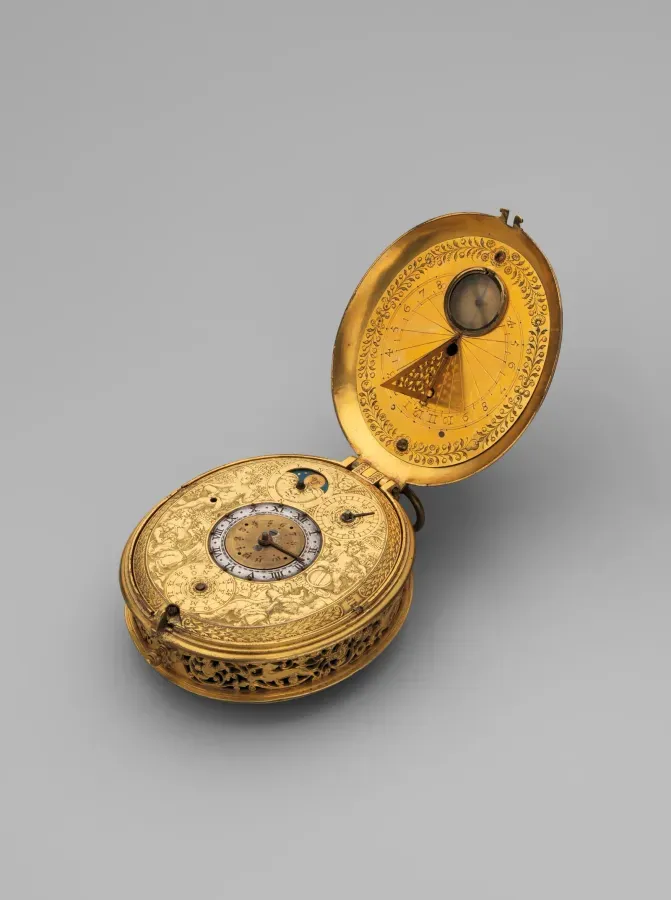
Hand luggage, not hold luggage. Always. Jewellery flies with you, not in the cargo hold. Hold luggage goes missing (about 0.5% of flights), gets opened (rare but it happens) and gets thrown around by baggage handlers. A small pouch in your carry-on takes up no space and stays with you.
Metal detectors. Jewellery on your body may or may not trigger the alarm. It depends on the amount of metal and the sensitivity of the particular scanner. One pendant and a ring usually pass. Ten bracelets probably won't. If you'd rather not remove anything, no problem: you'll simply get a brief pat-down with a handheld scanner. Thirty seconds at most.
British travel tip. If you're flying from Heathrow, Gatwick or Manchester with valuable pieces, photograph them before you leave. If anything gets lost or stolen, the photograph simplifies the insurance claim and the police report. British travel insurance policies typically cover personal valuables if they're listed in advance, so check your policy wording before you go.
At the Hotel
The safe. If the room has a safe, use it. Not for a basic steel pendant, but for anything with sentimental or real value. Housekeeping staff are overwhelmingly honest, but why tempt fate.
Not on the sink ledge. The classic loss point. You remove a ring before a shower, put it on the edge of the basin, forget it the next morning and check out. Build the habit: off your hand, straight into the pouch, pouch straight into your bag.
Not on the balcony. Wind + small objects + height = an earring landing on someone else's balcony three floors below.
In Hostels or Shared Accommodation
On you. The best safe is your own body. Put your jewellery on in the morning, don't take it off until the evening. Stainless steel allows this easily. Silver and gold: not always (showers, beach).
Hidden pocket. A small pouch in a concealed rucksack pocket, not in an open compartment. Not because everyone steals, but because what's visible can tempt.
Jewellery and Activities
Beach
Yes: steel chain, steel ring, steel studs. Everything that handles water, salt and sand without complaint.
No: silver (will tarnish), gold plating (will peel), drop earrings (will get lost in the waves), fine chains (will tangle in wet hair), beaded bracelets (will snap from sand).
The ring tip. If a ring fits loosely, do not wear it in the water. Cold water shrinks your fingers, and the ring can slide off. Searching for a ring on the seabed is a full-day activity, usually fruitless.
More detail: can you swim in jewellery.
Mountains and Trekking
Minimum. One ring or one pendant. Nothing dangling (it will catch on a branch or a rucksack strap). Nothing valuable (if it falls into a ravine, it's gone). Stainless steel or titanium: both shrug off sweat, temperature swings and humidity.
City Sightseeing
Maximum freedom. A city is the safest environment for jewellery. No water, no extremes, the option to change at the hotel. Wear what you like, but remember: pickpockets exist in tourist zones. Earrings on hooks that slip off easily are a potential target. Studs are more secure.
Major British tourist destinations like Barcelona, Rome and Paris have well-documented pickpocket activity. Earring theft from ears is rare but not unheard of in crowded metro stations. Keep it simple.
Cruises
A specific situation: daytime beach + evening restaurant. You need two sets. Steel minimum for the day, something more interesting for the evening. Cabins are small, and things get lost in them surprisingly easily. A pouch with a fixed spot is your salvation.
Cruises have dress-code evenings (formal night, elegant evening). For those, one pair of "smart" earrings and a pendant will cover you. More on this: jewellery and dress code.
Diving and Snorkelling
Remove everything. A ring can slide off your finger in cold water and sink. An earring can snag on a mask. A chain can tangle in snorkelling equipment. Underwater, jewellery is not decoration. It's a hazard.
The one exception: a dive watch. But that's a tool, not jewellery.
Surfing, Kayaking and Water Sports
Same rules as diving. Remove everything. Salt water, physical exertion, impact of waves, contact with equipment. No material is immune to being lost in the surf. And no piece of jewellery is worth the risk of catching on a board leash.
Cycling
Rings and bracelets interfere with handlebar grip. Drop earrings swing beneath a helmet. A pendant on a long chain can catch on the handlebars. For cycling: studs plus a pendant on a short chain (tucked inside your top). Or nothing at all.
Spa and Hammam
Remove everything before spa treatments. Oils, scrubs, clay, hot steam: all attack metal and stones. Particularly dangerous: essential oils (they dissolve some coatings), chlorinated jacuzzi water (lethal for gold plating), hot steam (thermal shock for enamel).





Buying Jewellery Abroad
A separate topic. Half of tourist jewellery is overpriced rubbish. The other half is unique finds you cannot buy at home.
Where to Buy
Workshops and ateliers. The best option. You see where and how something was made. You can talk to the maker. The price is usually fair because there are no middlemen.
Branded shops with a receipt. If you have a receipt with an address and contact details, you can return or exchange. No receipt puts you in a grey area.
Bazaars and markets. Romantic but risky. "Silver" might be silver-plated brass. "Handmade" might have arrived in a container from another country. If you can't tell metals apart, a bazaar is not the place for jewellery purchases.
How to Avoid Being Caught Out
Magnet test. Silver and gold are not magnetic. If the seller claims something is silver and a fridge magnet sticks to it, it is not silver.
Weight test. Silver and gold are heavy. If a "silver" bracelet feels as light as plastic, it is not silver.
Price test. If a silver ring costs less than a coffee in a local cafe, it is not silver. Metal has a commodity price, and nobody sells below raw material cost.
Hallmarks. 925 (silver), 750 (18K gold), 585 (14K gold). No hallmark does not automatically mean a fake (small workshops don't always hallmark), but no hallmark combined with a bazaar price is a red flag.
More on checking silver: how to tell real silver.
Customs and Declarations
Post-Brexit Rules for British Travellers
If you're returning to the UK from outside the country, you can bring in personal goods up to a value of 390 pounds without paying duty or VAT. This applies to items you purchased abroad. Jewellery you owned before the trip and wore as personal accessories does not need declaring and does not count towards this allowance. The key word is "personal": ten identical rings in retail packaging will raise questions.
Entering the EU
For British travellers entering the EU, there is a personal allowance for goods purchased outside the EU, and it is noticeably more generous if you arrive by air than if you cross by land or sea. Check the current figure on the customs website of the country you are entering, since it gets revised from time to time. Above that threshold, you'll pay customs duty (typically 2.5% for jewellery) plus the VAT rate of the destination country. Since Brexit, the UK is treated as a third country by EU customs, so anything you buy in the UK and bring into the EU beyond the allowance is subject to these rules.
Duty-Free Shopping
Duty-free shops at airports sell without local taxes, but this does not exempt you from the destination country's import limits. A necklace bought in duty-free at Heathrow is still counted against the EU's personal allowance if you're flying to Spain.
Proof of Ownership
If you're travelling with expensive jewellery (inherited pieces, engagement rings, valuable items), carry a receipt or valuation certificate. This protects you from accusations of undeclared imports: "This is mine, here's the receipt from the UK, I didn't buy it in this country." A photograph with a date stamp serves as secondary evidence.
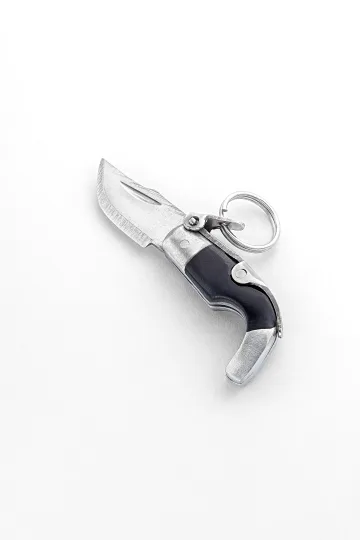
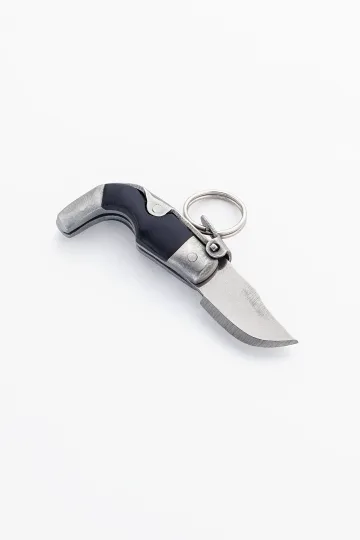
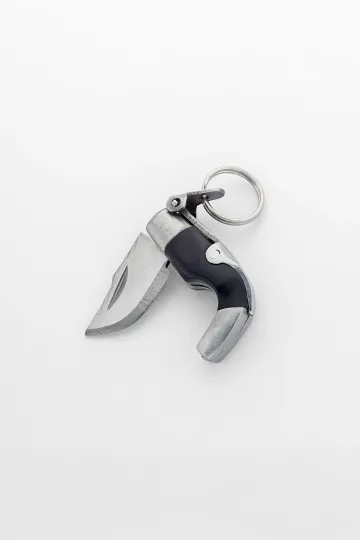
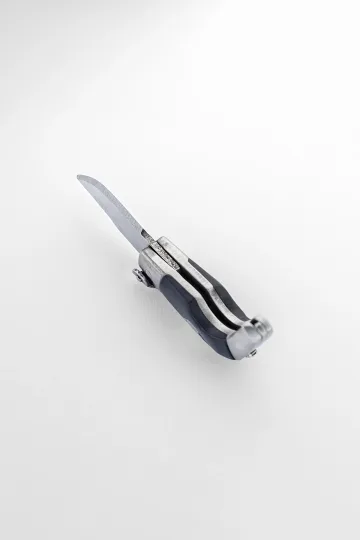
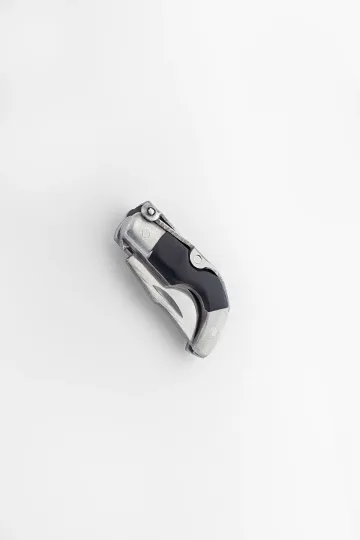
CAPAORA mini knife pendant
The 18th-century Spanish navaja in miniature: 40 mm of stainless steel, a real folding mechanism and a Palanquilla lock that clicks. An affordable gift to remember.
Authentic · Ships from Spain · 14-day returns
Insurance
For everyday stainless steel jewellery, insurance isn't necessary, because replacement cost is minimal. For valuable items (gold, diamonds, antiques, family heirlooms), it's worth checking whether your travel insurance covers personal valuables.
British travel insurance specifics. Most standard UK travel insurance policies have a single-item limit for valuables (often 250-500 pounds per item). If you're travelling with pieces worth more than that, you'll need to either declare them as specified items or take out a separate valuable items policy. Some home insurance policies cover jewellery worldwide: check before buying additional travel cover.
Photograph + jeweller's valuation + receipt = the complete package for an insurance claim. Without these documents, proving the value of a lost piece is practically impossible.
Jewellery in Holiday Photos
Half the value of jewellery on holiday is how it looks in photographs. Holiday photos last forever, and jewellery in them becomes part of the memory.
What Looks Good in Photos
Contrast. A silver-toned pendant on tanned skin creates contrast that cameras capture beautifully. A gold tone on pale skin at the start of a holiday also works. Matching metal and skin tone (gold pendant on deeply tanned skin) tends to merge.
Symbolic pendants. In a travel photo, a symbolic pendant creates a story. A compass against a mountain pass. A nazar with Istanbul behind it. Not accident, but visual storytelling.
Medium-length earrings. In portrait shots (and you take a lot of those on holiday: "take my photo in front of this") drop earrings add expressiveness to your face. Studs often disappear on camera. Long chandelier earrings distract from the background.
What Looks Poor in Photos
Very shiny surfaces. Polished metal in bright sunlight creates glare spots in photos. Phone cameras struggle with a bright patch next to a face. Matt and satin finishes photograph better in sunshine.
Fine details. Thin engraving, tiny stones, intricate patterns: phone cameras don't capture them. In photos, they become a blurred spot. Large, clean shapes read much better.
Too much at once. Three chains, a bracelet and earrings in a beach photo equals visual chaos. One focal point reads clearly. Five get lost.
Social Media Tip
If holiday photos matter to you (and in 2026, they matter to most), choose one "photogenic" piece. A pendant with a symbol connected to your destination. Or simply beautiful earrings that catch the light. One piece, consciously chosen for photos, is worth ten random ones.
Leave your email, we'll send your discount code. No spam, unsubscribe anytime.
The code arrives by email, valid on your first order.
Losses: How to Minimise and What to Do
Statistics
Holidays are peak time for jewellery losses. Unfamiliar surroundings, rushing, distractions, drinks, changing hotels, new routines. According to insurance industry estimates, jewellery ranks in the top five most commonly lost items on holiday (after chargers, sunglasses, earphones and books).
Where Things Get Lost
Hotel room. Basin, bedside table, bathroom shelf. Removed before a shower: forgotten at checkout.
Beach. Ring in the sand, earring in the water, bracelet under a towel.
Airport. Removed before security: left in the tray. Or placed in a jacket pocket, jacket goes through the scanner, ring rolls out.
Restaurant. Removed a ring to wash hands: left it on the basin.
How to Minimise Losses
One place. Designate one specific spot for your jewellery during the trip. A pouch in a specific bag pocket. Not the rucksack pocket, not the bedside table, not the shelf: one place. Always.
The "pouch check" ritual. Before leaving the room, before checking out: check the pouch. Everything there? Good. Something missing? Search now, not three countries later.
Photograph. Photograph your jewellery before the trip. If something goes missing, you have an image for the police report, the insurance claim or for finding a replacement.
If You Lose Something
At the hotel. Call reception. Housekeeping staff hand in found items (in reputable hotels). The sooner you call, the better your chances.
On the beach. If a ring is in the sand, hire or borrow a metal detector (popular beaches often have them). If it's in the water, mask and snorkel if the depth allows. If it's deep: say goodbye.
At the airport. Go to lost property. British airports retain found items for 30-90 days depending on the airport authority. Heathrow has an online lost property reporting system.
Destination-Specific Advice
Tropics (Thailand, Bali, Mexico)
Humidity 80-100%, heat, sweat, salt water, sun cream constantly. Stainless steel only. Silver will tarnish in two days. Gold plating won't last the holiday.
European Cities
Any jewellery is fine. Moderate climate, urban activities. The only consideration is pickpockets in tourist hotspots (Barcelona's La Rambla, Rome's Termini area, Paris Metro). Don't display pieces whose loss would ruin your holiday.
Winter Resorts (Skiing, Mountains)
Minimal metal against skin. Metal in freezing temperatures burns (earrings at minus 20 degrees are unpleasant). A pendant under clothing is fine. For earrings, stick to small studs, not long drops (they'll catch on a helmet or balaclava). Be careful with rings (cold shrinks fingers; a ring can fly off when removing a glove).
Camping and Wilderness
No jewellery. Seriously. A ring catches on rope. An earring catches on a branch. A chain catches on a rucksack. In the wilderness, metal on your body is a hindrance, not decoration. Exception: a wedding ring, if it's part of your identity.
Middle East and Conservative Countries
In some countries (Saudi Arabia, Iran, UAE outside tourist zones), there are cultural expectations around jewellery. Men's earrings may attract unwanted attention. Religious symbols (crosses, Stars of David) are better worn concealed or removed. Expensive jewellery on display invites unwelcome interest.
This doesn't mean "don't bring anything." It means "be aware." A thin bracelet and small studs are fine everywhere.
Japan and South Korea
Minimalist cultures. Bulky, flashy jewellery looks out of place in the context of Japanese and Korean style. One or two delicate pieces fit perfectly. Minimalism is the native aesthetic here. More on this: minimalist jewellery guide.
India
A country where jewellery is never too much. In India, gold is not luxury but norm. Layered chains, bracelet stacks, large earrings: you'll fit right in. But: cheap pieces that look expensive can draw unwanted attention in non-tourist areas.
Extended Checklist Before Your Trip
One week before:
- Check clasps on all pieces you're planning to bring (open and close each one five times)
- Clean your jewellery (soapy water + soft cloth)
- Check that rings slide off easily (if your finger swells in heat, it will be worse on holiday)
- Photograph each piece close-up (for insurance and in case of loss)
On departure day:
- All jewellery in the pouch, pouch in hand luggage
- Receipts for valuable items with you (photos of receipts on your phone work too)
- Remove tight-fitting rings before flying (cabin pressure causes fingers to swell)
On arrival:
- Choose one spot in the room for the jewellery pouch (and don't change it)
- Check the room safe (if available)
- Assess the climate and adjust: if tropical humidity, silver stays in the pouch
What Experienced Travellers Actually Pack: Real Examples
Theory is useful, but here's what people who travel frequently and have done for years actually do.
Business traveller (50+ flights per year). One steel pendant on a 45 cm chain: never removes it, not even at security. One plain steel ring. No earrings. Everything goes on Monday morning and stays on until Friday. Zero effort, zero losses.
Travel photographer/blogger. Three pairs of earrings (studs for daytime, drops for evening, statement pair for "content" shots). Two pendants (symbolic for "mood" shots, larger one for close-ups). Everything in stainless steel. Stored in a rigid toiletry case with compartments. Chooses jewellery to match location: compass against a seascape, nazar eye in Istanbul.
Couple on a beach holiday. Her: studs + thin bracelet + pendant, all stainless steel, never removed for the entire trip. Him: wedding ring on a chain around his neck (so it doesn't get lost in the water), nothing else. One shared pouch for both: small, in the beach bag.
Backpacker on a six-month trip. One steel ring. That's it. No earrings (they get lost), no chains (they tangle), no bracelets (they catch on rucksack straps). One ring on one finger for six months. And it works.
The pattern: the more experienced the traveller, the fewer pieces they bring. Beginners pack a jewellery box, veterans pack one pouch. Maximalism gives way to minimalism after the first lost earring.
Jewellery and Extreme Climates
Extreme Heat (40 Degrees and Above)
Desert, Arabian summer, Indian summer. Metal heats up in direct sun. A steel bracelet on your wrist at 45 degrees will reach a temperature that's uncomfortable against skin after half an hour. Not dangerous, but unpleasant. Dark metal (black PVD) heats faster than light metal.
Tip: in extreme heat, wear jewellery under clothing (pendant under your shirt) or remove it when spending extended time in direct sun.
Sweat in intense heat is constant. Even stainless steel develops a salt film. Rinse with water at the end of the day.
Extreme Cold (Minus 20 and Below)
Metal in freezing conditions conducts heat away from your skin. Earrings at minus 25 are painful. A pendant on bare skin at minus 30 can cause frostbite within minutes. Everything goes under clothing. For earrings, only small studs, and even those are uncomfortable.
Rings: cold shrinks fingers. A ring that fits perfectly in summer can slide off in winter. Be careful when removing gloves, because the ring leaves with the glove and disappears into the snow. A classic winter loss.
High Humidity (Tropics, Monsoon Season)
Humidity at 90-100% is like a constant invisible shower. Metal is coated in a moisture film around the clock. Silver tarnishes within days. Brass turns green. Leather grows mould. Stainless steel is the only material that survives tropical humidity without consequences.
Salty Sea Breeze
Coastal towns (even without a beach) have salt-laden air. Microscopic salt particles settle on metal and accelerate oxidation. Not as fast as immersion in the sea, but over a week in a coastal town, silver will noticeably darken.
Send a friend a discount code, they save on their first order.
Jewellery and Travel Photography: Practical Techniques
Photos from a trip are what remain after the tan fades and the souvenirs gather dust. Jewellery in those photos can be either an invisible detail or an element that makes the shot. The difference comes down to a few simple techniques.
Golden hour. Photographers use this term for the first hour after sunrise and the last hour before sunset. The light is soft, warm, angled. Metal at this time doesn't produce harsh glare (as it does in midday sun) but glows gently. A silver-toned pendant picks up a golden cast. A gold tone literally catches fire. If you want beautiful jewellery photos, shoot during golden hour, not at noon.
Pendant angles. A pendant shows best when the camera is at chest level or slightly below. The classic overhead selfie (arm stretched above) hides the pendant behind your chin. Ask someone to photograph you at eye level or slightly below and the pendant will be fully visible.
Earring angles. Profile or three-quarter view (face turned 30-45 degrees from the camera). Straight-on, earrings disappear behind your face. In profile, they read clearly against sky, water or architecture.
Backgrounds. Contrast matters. Silver-toned metal against turquoise water works. Against grey pavement, it vanishes. Gold tone against greenery (jungle, parks) works. Against a beige wall, it merges. Choose a background that contrasts with the metal colour.
Hands in frame. Rings and bracelets are easier to photograph than pendants. Rest your hand on a railing with a city view behind it. Hold a coffee cup with the sea beyond. Turn a map on a cafe table. The ring in such a shot becomes a natural accent, not a pose.
Long Trips (One Month or More)
A different situation. Not a week's holiday but a long journey, digital nomadism or a relocation.
The Base Set
For long trips, the rule of three expands to the rule of five:
- Daily pendant: stainless steel, never removed at all
- Stud earrings: small, stainless steel, for every day
- Ring: one, stainless steel, snug fit
- "Evening" earrings: drops or something more interesting, for restaurants and events
- Bracelet: a thin chain, for variety
Five pieces for a month and beyond. More than that is unnecessary. If the trip lasts three months, the same five. Six months, the same five.
Maintenance on the Road
After a month without care, even stainless steel accumulates residue from sweat, cream and dust. Once a week: warm water + a drop of soap + a soft cloth. Two minutes. That's all.
Silver in the tropics without care will tarnish within a month, guaranteed. If you're taking silver on a long trip, pack a small polishing cloth (weighs nothing, costs almost nothing, saves your jewellery).
Replacing Pieces on the Road
If something gets lost or breaks, buying a replacement is easier than feeling sorry about it. A steel pendant in any city in the world costs about the same as lunch. It's a travel consumable, not an investment. Lost it, bought a new one, moved on.
Valuable and sentimental pieces should not go on long trips. At all. A wedding ring is the only exception, and even then: some travellers replace it with a cheap steel version for the journey. The original waits at home, safe.
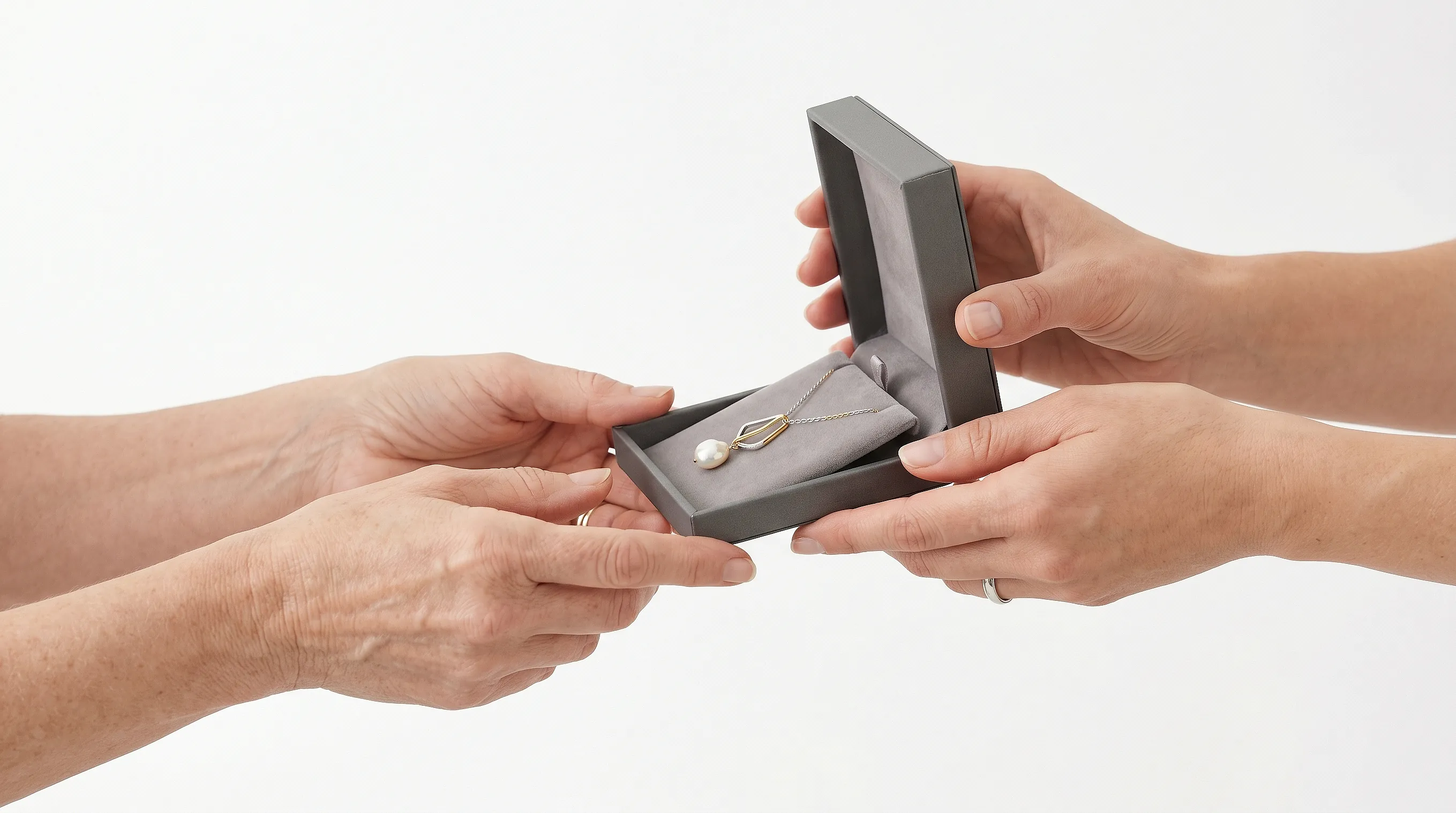
Buying it as a gift? Each one arrives ready to give.
 A branded Zevira box and a little card come with every order.


Pre-Trip Checklist
- Selected 3-5 pieces (no more)
- Checked the material (stainless steel for beach, anything for city)
- Photographed all jewellery
- Prepared a pouch with compartments
- Rings fit snugly (won't slip off in water)
- Clasps work (tested each one)
- Gold plating left at home (if heading to the coast)
- Valuable items listed on insurance policy (if applicable)
- Receipts for valuable pieces packed (in case of customs)
FAQ
Can you fly wearing jewellery? Yes. Most jewellery does not trigger the detector. If it does, the additional screening takes thirty seconds. You don't have to remove anything in advance, but if you want to speed things up, put your metal in the tray along with your watch and belt.
How do you untangle a chain that knotted in your suitcase? A drop of olive oil on the knot. Two needles or toothpicks. Work on a flat, well-lit surface. Don't pull, loosen. Patience. Ten minutes usually sorts an average knot. More on this: how to untangle a chain.
Should you bring expensive jewellery on holiday? Depends on the destination and the format. A five-star hotel in Europe with a room safe? You can. A backpacking trip through Southeast Asia with shared dormitories? Better not. Practical rule: if losing a particular piece would ruin your holiday, leave it at home. The holiday is worth more than the pendant.
How do you clean jewellery on holiday without specialist products? A soft cloth + warm water + a drop of hotel shampoo. Available in any hotel anywhere. For stainless steel, even that is overkill. Wipe with a towel and you're done. For silver, toothpaste (a mild abrasive) works in a pinch, but a polishing cloth is better if you brought one.
What if a ring gets stuck on your finger in the heat? Cold water from the minibar + liquid soap from the bathroom. Hold your hand above your head for five minutes. More detail: how to remove a stuck ring.
Can you swim in jewellery? 316L stainless steel: yes, in any water. Silver: best not (tarnishes from chlorine and salt). Gold plating: absolutely not (the coating won't survive). Leather: no (swells and warps). Beads on elastic: no (elastic weakens from water and salt). More detail: jewellery and water guide.
How do you transport earrings without losing one? Thread both earrings through the holes of a button. Fasten the backs on the other side. Button with earrings goes into the pouch. They won't separate or get lost individually.
Do you need to declare a wedding ring at customs? No. Personal jewellery worn on your body is not declared in any country. Customs is only interested in items that look like goods for resale (new, in packaging, in quantity).
Can you post jewellery home from abroad? Technically yes, but it's risky. International post does not guarantee delivery of small valuable items. If you're sending, use a courier service with tracking and insurance, not standard post. Royal Mail International Tracked is a minimum; a private courier like DHL or FedEx is better for anything valuable.
What if jewellery bought abroad turns out to be fake? If you have a receipt with shop contact details, get in touch and request a refund. If there's no receipt (bazaar, street trader), accept the lesson and move on. More on checking: how to tell real silver.
Silver and gold jewellery, wedding bands, symbolic pendants, paired sets.
Wear the symbol, don't just read about it. These are in stock:











The Bottom Line
Jewellery on holiday is about balance: "want to look good in photos" versus "don't want to lose or damage anything." Three pieces in stainless steel in a small pouch is the solution that works for 90% of trips. Put them on, forget about them, enjoy.
Leave the gold plating, the family heirlooms and the collection of twenty bracelets at home. Bring one pendant, one pair of earrings and one ring. That's enough to feel like yourself at any point on the globe.
About Zevira
Zevira makes jewellery in the artisan tradition of Albacete, Spain. We know exactly what a traveller needs: one ring, one pendant, one pair of earrings that will survive the plane, the sea and the hotel. Our core pieces are built from 316L stainless steel and silver, designed for precisely that kind of life on the move.
Here's what you'll find with us for the road:
- 316L stainless steel that won't rust in the sea and won't react with sun cream
- Compact "pendant plus chain plus earrings" sets in matching styles
- Pendants on rubber cords for the beach
- Spare clasps and straw-style organisers for storing chains
- Plain stoneless rings you won't be heartbroken to lose
Every piece can be personalised with engraving by one of our makers, with personal engraving available on request. We work in 925 silver and 14-18K gold.