Ring Stuck on Your Finger: How to Remove It Without Panic or Cutting
First: do not panic
Your finger is swollen, the ring will not budge, your heart is racing. Familiar feeling. This is one of the most common jewellery problems, and in 95% of cases it is solved at home, without a jeweller, without an ambulance and without cutting the ring.
The causes are mundane: heat (fingers swell in warm weather), salty food (fluid retention), morning swelling (you put the ring on last night and your finger is thicker this morning), pregnancy, weight gain or simply a ring that was a tight fit from the start.
Here are five proven methods, from gentle to more aggressive. Start with the first and move on only if it does not work.
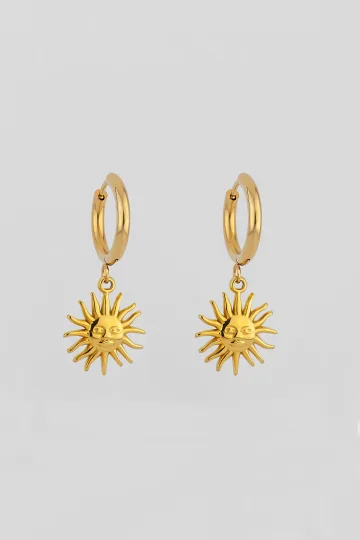
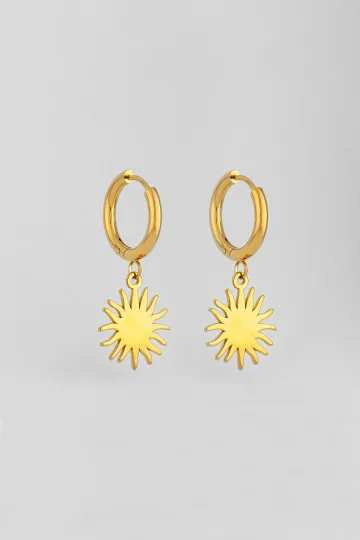
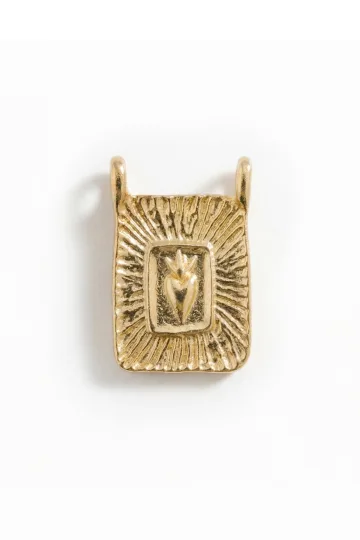
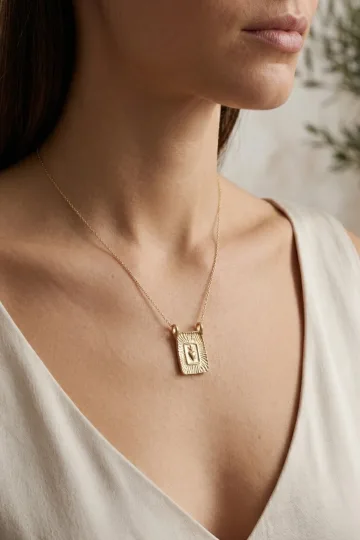
Wear the symbol, don't just read about it. These are in stock:



Method 1: Cold + elevation
The simplest and often sufficient.
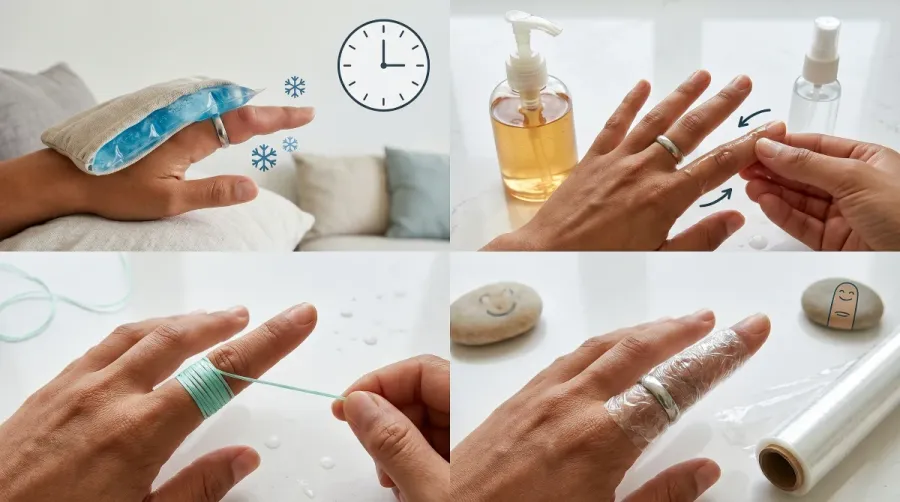
Step 1. Raise your hand above heart level. Put it on your head, raise it in the air, lean on a wardrobe. Gravity draws fluid away from the fingers. Wait 5-10 minutes.
Step 2. Lower your hand into a bowl of cold water (not ice-cold: just cold from the tap). Cold constricts blood vessels and reduces swelling. 3-5 minutes.
Step 3. Try to remove the ring. Slowly, twisting, not pulling. If it moves, continue. If not, move to Method 2.
Why it works. Most cases of stuck rings are caused by mild swelling. Cold plus gravity remove the swelling, and the ring passes over the knuckle again.
British weather advantage. If you are reading this in autumn or winter, step outside for a few minutes. British weather between October and April is essentially a free finger-shrinking service. The cold constricts blood vessels faster than anything in your medicine cabinet.
A ring earns its place by coming off clean. Strangling your finger for vanity is a rookie move, and I won't hear otherwise.
How to choose and wear rings so they never get stuck
Hundreds of rings have passed through my hands on shoots and fittings, and almost every removal problem is settled at the choosing stage. Here is what I recommend to clients when a ring has to look right and still come off without a drama.
Which ring would you recommend for easy removal? I recommend a comfort-fit band, the kind with a rounded inner profile. It clears the knuckle more easily than a flat band and forgives a little swelling. Medium width, a smooth inside, no sharp edges. That ring sits snug yet slides off in one calm motion.
How do you suggest wearing several rings at once? I suggest building a stack from different widths: one wide band as the base, a couple of thin ones beside it. Keep the tightest, knuckle-hugging ring for calm days, and on hot days or flights reach for the one that comes off freely. You can mix metals, but hold one temperature, all warm or all cool, so the stack reads as deliberate.
Wide band or thin band? A wide band looks more substantial, but at the same size number it sits tighter and catches the knuckle harder. If you lean toward wide, I recommend going half a size to a full size up from what you take in a thin band. A thin band forgives a finger that changes and is easier day to day.
Which metal suits my skin? For a warm undertone I suggest gold and warm steel; for a cool one, silver and white alloys. If in doubt, hold the ring against your wrist in daylight: the right metal makes the skin look fresher, the wrong one adds grey. A matte finish wears more quietly than a high polish and shows fewer scratches.
How do I know the size is right? A correct ring clears the knuckle with slight resistance and does not fly off if you shake your hand. If you have to soap the finger for an ordinary removal, the ring is too small. I recommend measuring in the middle of the day, not after sport and not after a salty dinner.

Turn on your camera, pick earrings, a pendant or a ring, and see the piece on yourself in real time.
Switch items in one tap.
Everything runs in your browser: no photo or video is ever uploaded.
Method 2: Soap or oil
What will do. Washing-up liquid, liquid hand soap, olive oil, coconut oil, petroleum jelly, hand lotion, shampoo. Anything slippery.
How to do it. Apply generously around the ring and on the finger above the ring (towards the knuckle). Twist the ring, working it towards the fingertip. Do not pull straight: twist.
Extra trick. Apply the lubricant, then use dental floss or thin ribbon: slide one end under the ring from the fingertip side, pull it through, and pull on the floss while simultaneously twisting the ring. The floss acts as a tiny winch.
Why it works. Friction is the main enemy. Remove friction and the ring slides along the finger instead of gripping the skin.
Method 3: Thread wrap
The classic method taught to A&E doctors.
What you need. Thin strong thread (dental floss, thin sewing thread, nylon fishing line). About a metre in length.
Step 1. Thread one end under the ring (from the palm side towards the fingertip). You can use a needle or thin tweezers to push the thread through. About 10-15 cm should stick out on the palm side.
Step 2. With the long end, wrap the finger tightly from the ring towards the fingertip. Each wrap sits snugly against the previous one, no gaps. Wrap the entire area up to and slightly past the knuckle. Tight, but not until the finger turns blue.
Step 3. Take the short end (on the palm side) and begin unwinding the thread. As you unwind, the thread pushes the ring towards the fingertip, and the wrapping compresses the finger, making it thinner. The ring rides along the thread as if on rails.
Step 4. Continue unwinding. The ring slowly moves past the knuckle. Done.
Why it works. The wrapping temporarily compresses the soft tissue of the finger, reducing its diameter. The ring rides the thread like a guide rail.
Warning. Do not leave the wrapping on for more than 5 minutes. If it does not work, unwrap, let the finger rest, try again.
Method 4: Cling film
Unexpected but effective.
Step 1. Cut a strip from a thin plastic bag (cling film works too). About 3 cm wide.
Step 2. Slide the strip under the ring (like the thread in Method 3, but wider). Pull it through so the plastic covers the finger from the ring to the fingertip.
Step 3. Pull the plastic tightly around the finger. It compresses the soft tissue and creates a slippery surface simultaneously.
Step 4. Twist the ring along the plastic. Sliding plus compression equals the ring comes off.
Method 5: Glass cleaner
Yes, seriously. This is a real method used by jewellers.
Glass cleaner contains surfactants and, in some formulations, ammonia, which simultaneously reduces swelling and lowers friction. Spray under the ring and around it, wait a minute, twist.
Do not use if there are cuts or cracked skin on the finger, because the solution will sting.
Customer reviews
Zevira is a real jewellery shop. Genuine payments, deliveries and customer thank-yous.
🥰🥰🥰 gracias

Ok, ¡gracias! 🙂

When to see a doctor
Immediately if:
- The finger is turning blue or white. Blood circulation is compromised. This is no longer about the jewellery. This is about the finger. In the UK, call 999 or go to your nearest A&E department. For non-emergency advice, call 111.
- Severe pain. Not discomfort: pain. There may be an injury or fracture causing the swelling.
- The finger continues to swell. The ring is becoming a tourniquet. Every minute makes it worse.
- None of the methods worked. If you have spent 30 minutes on all the methods and nothing: see a doctor.
In A&E, they have a special tool called a ring cutter. It cuts the ring, not the finger. The procedure takes 30 seconds and is painless. The ring can then be soldered back together by a jeweller.
Do not try to cut the ring yourself. Wire cutters, pliers, angle grinders: all can injure the finger. A ring cutter is designed so the blade does not touch the skin. Household tools are not.
Why fingers swell: the anatomy of the problem
To understand why a ring gets stuck, you need to understand what happens inside the finger. It is not simply "the finger got bigger." There is a whole system working against you.
A finger is bone wrapped in tendons, ligaments, blood vessels and skin. Between the bone and the skin are soft tissues containing fluid. When there is more fluid than usual, the finger increases in volume. That is swelling.
Where the extra fluid comes from. The body retains water for many reasons. Salty food: sodium holds water in tissues, and fingers swell first because they have no muscles to "squeeze" the fluid back out. Heat makes blood vessels expand, blood flows to the extremities, and interstitial fluid accumulates. Hormonal changes do it too: menstrual cycle, pregnancy, menopause. Prolonged hanging of arms downward (long flight, sleeping with arms down) lets gravity do its work.
The knuckle is the main barrier. In most people, the base of the finger is thinner than the knuckle (proximal interphalangeal joint). A ring that fits perfectly on the finger must pass over the knuckle. When the finger swells, the knuckle swells first: that is where the joint is, the joint capsule, ligaments, and everything puffs up. The ring is trapped: below it is the snug base of the finger, above it is the swollen knuckle.
Tendons complicate things. Along the back of the finger run the extensor tendons, and along the palm side run the flexor tendons. When you bend your finger to remove a ring, the tendons tense and increase the finger's diameter at the knuckle. This is why a ring is easier to remove with a straight finger, not a bent one (even though instinct says otherwise).
Pregnancy and rings: trimester by trimester
Pregnancy is one of the most common causes of stuck rings. And it is not a one-off event: swelling builds gradually over months.
First trimester. Usually fine. There is almost no swelling, fingers stay the same. Many women do not even think about their rings at this stage.
Second trimester. Blood volume increases by 30-50%. The body begins to retain fluid. Fingers become slightly fuller, especially by evening. A ring that used to spin freely begins to fit tightly. This is the moment to make a decision: remove it or take the risk.
Third trimester. Swelling can be significant. Especially in warm weather. Morning fingers can be a full size or more larger than before pregnancy. If the ring was not removed in the second trimester, in the third it can genuinely get stuck. A&E staff report that pregnant women with stuck rings are one of their most frequent cases.
Advice. Remove your rings while they still come off. Do not wait for the moment when cutting is needed. Hang your wedding ring on a chain and wear it around your neck: the symbol is in place, the finger is safe. After delivery, swelling usually subsides within a few weeks, and the ring can return to the finger.
Upload a photo of your pet, someone you love, or an object. We'll build a 3D model and hand-cast it in pewter.




Arthritis and rings: when joints work against you
Arthritis is inflammation of the joints, and the fingers are often affected first. With rheumatoid arthritis, joints swell, deform, and knuckles become significantly larger than the base of the finger. The ring is in a bind: it sits loosely on the finger but will not pass over the knuckle.
For people with arthritis, special solutions exist: rings with a hinge mechanism (open from the side, put on, close), adjustable rings, transformer rings. Another option is to increase the ring size so it passes over the knuckle and add silicone inserts inside to keep it from sliding around on the finger base.
If you have arthritis and a ring is already stuck, do not try to be heroic. An inflamed joint is sensitive, and aggressive removal methods can trigger a flare-up. Better to visit a jeweller with a ring cutter than endure a week of pain.
Ring avulsion: why silicone rings exist
This is a serious topic that needs to be known. Ring avulsion is an injury where a ring catches on something (a fence, machinery, the edge of a table) and tears the soft tissue of the finger. In severe cases, it strips the skin and tissue from the finger entirely, like removing a glove. This is called degloving.
It sounds like a nightmare, and it is. The American TV presenter Jimmy Fallon nearly lost his finger when his ring caught on the edge of a table as he fell. Thousands of people sustain such injuries annually in workplaces, gyms and construction sites.
This is precisely why silicone rings were invented. Silicone breaks under load and does not cause injury. If you work with your hands (mechanic, electrician, builder, athlete), wear a silicone ring at work and a metal one when you are out. Or simply remove your ring before any physical work.
In many workplaces, rings are banned by health and safety regulations. This is not overcaution. It is experience paid for with other people's fingers.








The emergency room and rings: a view from A&E
In A&E, stuck rings are routine. Doctors and nurses see them regularly, especially in summer and during the festive season (a new engagement ring, and the finger has swollen from excitement and champagne).
The standard protocol: first they try the thread method (the wrap technique), then the ring cutter. A ring cutter is a small instrument with a circular blade and a protective plate that slides between the ring and the finger. The blade cuts the ring from above; the plate protects the skin. The entire operation takes less than a minute.
For thick rings made of tungsten or titanium, a standard ring cutter will not work, because these metals are too hard. Tungsten can be cracked with special vice-grips (it is brittle, even though hard). Titanium is cut with a diamond disc. Both take slightly longer, but the finger is safe.
The history of the ring cutter. The first ring cutters appeared in the 19th century: they were hand tools with fine-toothed saw blades. Modern ones are mechanical or electric, with a rotating disc. The principle has not changed in a century and a half: cut the ring, not the finger.
When to resize versus when to stop wearing
Fingers change throughout life. Weight, age, health, hormones all affect size. The question: when can a sizing problem be solved, and when is it time to accept that this ring is no longer yours?
Weight gain. If you have gained 5-10 kg, your fingers have become thicker, and the ring fits tightly, this is normally resolved by increasing the size by 0.5-1. A jeweller can stretch silver or gold in an hour. Stainless steel cannot be stretched, but you can order the same design in a larger size.
Seasonal changes. In summer, fingers are half a size to a full size larger than in winter. If the ring fits perfectly in winter but comes off with difficulty in summer, that is not a reason to change the size. It is a reason to remember to remove the ring in hot weather.
Age. With age, joints enlarge (osteoarthritis, thickening of the joint capsule). Fingers do not necessarily get thicker, but knuckles become larger. The difference between the finger base and the knuckle grows. The ring either wobbles on the finger (if sized for the knuckle) or will not pass over the knuckle (if sized for the base). Hinged rings or rings with sizing inserts help here.
When to stop. If the ring causes numbness, tingling, constant discomfort, restricts finger bending or leaves deep indentations in the skin, wearing it is harmful. Not "uncomfortable but bearable": physically damaging. The ring is restricting blood circulation, and wearing it constantly like that can cause chronic problems.
Prevention by profession
Different professions, different risks. Here are specific recommendations.
Healthcare workers (nurses, doctors). Constantly washing hands, putting on and removing gloves. Rings interfere with hygiene and tear gloves. Many NHS trusts restrict or ban rings for infection control. If you wear one, keep it narrow, smooth, without stones. Remove before your shift, put on after. Alternative: a silicone ring for shifts, your regular ring off-duty.
Chefs and food production. Under food hygiene regulations in England and Wales, rings in kitchen environments are generally prohibited (bacteria collect under the ring). The exception in some workplaces is a smooth wedding band. If you wear one, remove before working with dough, mince or any sticky ingredients. Dough under a ring equals a stuck ring.
Mechanics, fitters, builders. Ring plus rotating machinery equals ring avulsion. This is not an exaggeration; it is statistics. Remove rings before working with equipment. Always. No exceptions. If you cannot bear a bare finger, a silicone ring is the answer.
Office workers. Seemingly safe. But: hands swell from prolonged sitting at a computer (blood pools), air conditioning dries the skin (making the ring harder to remove without lubrication), stress causes fluid retention. Tip: periodically remove and replace the ring throughout the day: this is both a check and prevention.
Athletes. CrossFit, weightlifting, climbing, martial arts: rings must be removed. Load on the hands plus sweat plus swelling from physical activity equals a problem. The ring can deform from a barbell. Or get stuck after training when hands have swollen from exertion.
Leave your email, we'll send your discount code. No spam, unsubscribe anytime.
The code arrives by email, valid on your first order.
Travel and rings: specific problems
When travelling, rings get stuck more often than at home. Unfamiliar climate, salty food, alcohol, dehydration on flights, heat: everything works against you.
Air travel. Cabin pressure is lower than at ground level. The body swells slightly during flight. Fingers too. A ring that comes off normally at home can fit very tightly after an eight-hour flight. Tip: remove the ring before departure and put it on after arriving and resting.
Beach holidays. Sun, heat, salty food, alcohol: everything causes fluid retention. Plus cold water constricts fingers, and the ring can slip off into the sea. A paradox: on land the finger swells and the ring gets stuck; in water the finger shrinks and the ring is lost. Tip: at the beach, leave the ring in the hotel room.
Mountain hiking. At altitude, hands swell from hypoxia and physical exertion. A ring that was fine at base camp can become a problem at 3,000 metres. Experienced walkers in the Lake District, the Scottish Highlands or the Alps know to check their rings after significant elevation gain.
Size adjusters and ring guards
If the ring wobbles on your finger but you do not want to resize (or cannot, as with stainless steel and titanium), solutions exist.
Silicone inserts. Transparent silicone tubes that slip onto the lower part of the ring. Increase the tightness of fit by half a size to a full size. Invisible, comfortable, cost very little. Downside: over time they collect dirt, need replacing.
Adjustable guards. A metal spring that attaches inside the ring. Adds friction and reduces the internal diameter. More durable than silicone but can be awkward if you frequently remove the ring.
Adjustable rings. Some rings are designed with a built-in adjustment: a gap at the back that allows squeezing or expanding. Convenient for people with changing finger sizes (pregnancy, arthritis, seasonal fluctuations).
CAPAORA mini knife pendant
The 18th-century Spanish navaja in miniature: 40 mm of stainless steel, a real folding mechanism and a Palanquilla lock that clicks. An affordable gift to remember.
Authentic · Ships from Spain · 14-day returns
The psychology of the wedding ring
A separate topic that goes beyond jewellery, but too important to skip.
A wedding ring is not just jewellery. For many people, it is a symbol they physically do not want to remove. "I cannot take off my wedding ring" is not only a physical problem but an emotional one. People tolerate discomfort, tolerate indentations in the skin, tolerate restricted movement, because removing the ring feels like a symbolic act.
But a ring is a thing. An important, meaningful thing, but a thing. If it is causing pain or threatening the health of the finger, it needs to come off. The symbol of a marriage is not in the metal. It is between the people. A ring on a chain around the neck is the same symbol. A ring in a jewellery box while the finger recovers is the same symbol. A ring that was cut by a ring cutter and then soldered back together is the same symbol, only with a story.
If you had to cut your wedding ring, do not see it as a bad omen. See it as a story you will tell in ten years: "They had to cut my ring at A&E, and then a jeweller repaired it, and now it is even more interesting because it has a seam, like a scar that makes something unique."
Medical identification rings
Medical ID rings exist. They are rings engraved with medical information: allergies, chronic conditions, blood type, emergency contact. Such rings should stay on the finger at all times, since it is a matter of safety.
For medical rings, correct sizing is especially important. Not too tight (it will get stuck when swelling occurs), not too loose (it will fall off). And the material should be stainless steel or titanium, which do not cause reactions and do not come off accidentally.
If a medical ring is stuck, do not tolerate it and do not postpone a solution. Transfer the information to a bracelet or a card and have the ring cut. Medical information on a stuck ring is useless if the finger is in danger.
How to prevent it in future
The right size
The main cause of stuck rings is a ring that was too tight to begin with. A properly fitted ring comes off with slight resistance at the knuckle but without real effort. If you need soap to remove the ring under normal conditions, the ring is too small.
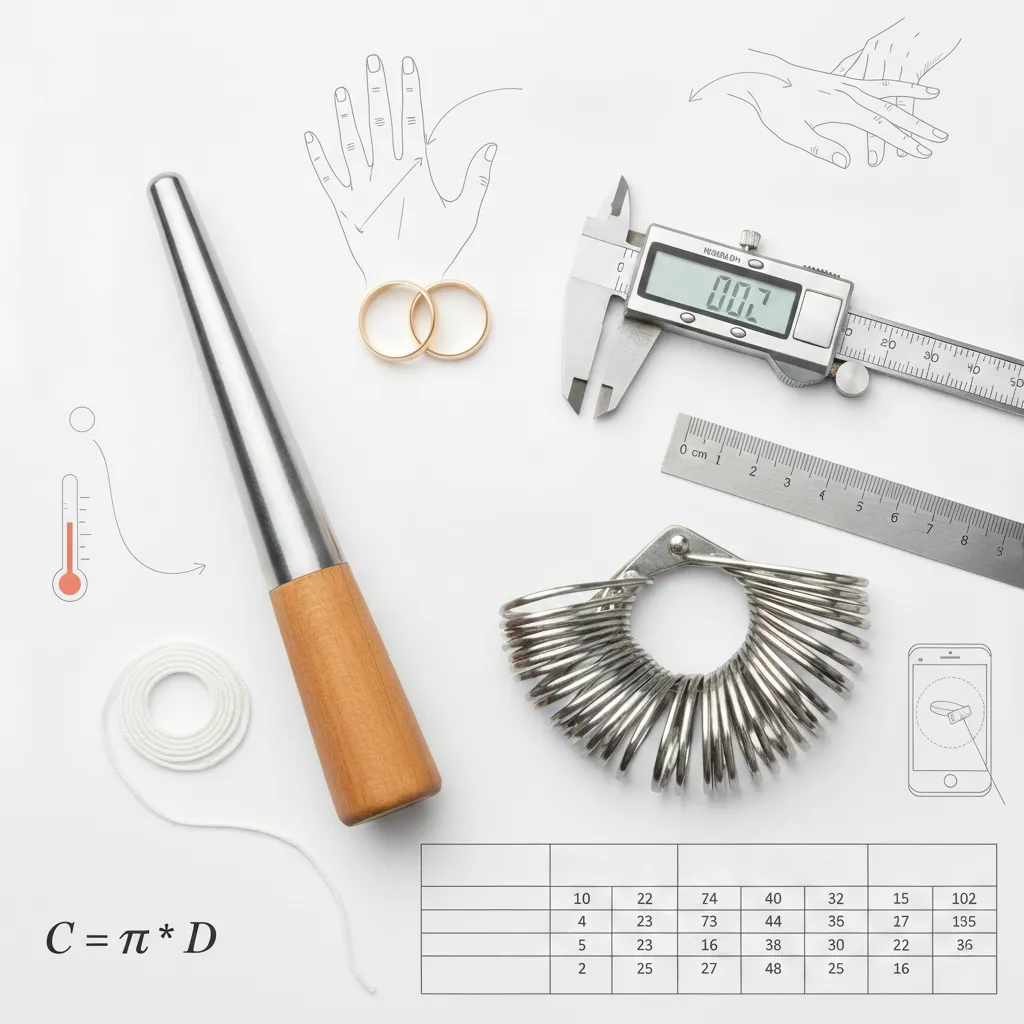
Measure your size in the middle of the day (fingers are thicker in the morning, thinner in the evening). Not after the gym, not after salty food, not in hot weather. More in the ring size guide.
Remove in advance
If you know your fingers will swell (hot day, flight, salty food, alcohol, pregnancy), remove the ring before it gets stuck. Prevention is easier than cure.
Wide bands equal a larger size
Wide rings (6 mm and above) fit more tightly than narrow ones at the same diameter. If your size is L for a narrow ring (2-3 mm), for a wide one (6 mm and above) go up by half a size or a full size.
Account for the knuckle
Some people have knuckles significantly wider than the finger base. A ring that fits perfectly on the finger may not pass over the knuckle. For such fingers, adjustable rings or hinged designs exist.
How ring size changes with age, weight and season
Ring size is not a constant. It is a variable that depends on a dozen factors. The better you understand these factors, the less often you will find yourself in a "ring stuck" situation.
Age-related changes
With age, fingers generally become larger. This is not necessarily related to weight. Joints thicken from natural cartilage wear (osteoarthritis), subcutaneous fat redistributes, ligaments lose elasticity. By 60, a person may wear a ring two sizes larger than at 25. This is normal. Rings given at a wedding in the early twenties often require enlarging or replacement by fifty.
The reverse also happens: after 70-75, some people lose weight, muscle mass decreases, and fingers become thinner. The ring starts to wobble and can slip off at the most unexpected moment.
Weight fluctuations
The relationship between body weight and finger size is direct but not proportional. The first 5-7 kg of weight gain may have no effect on fingers whatsoever. The next 10 kg, however, are noticeable. When losing weight, fingers "slim down" among the first places, so you may notice the ring is loose before your trousers are.
Seasonal fluctuations
Summer versus winter: the difference can be half a size or a full size. Heat expands blood vessels; cold constricts them. If you buy a ring in summer, in winter it may wobble. If in winter, in summer it may be tight. The ideal: buy the ring in between seasons (spring or autumn), at room temperature, in the middle of the day.
In Britain, the temperature swings between a July heatwave and a January frost can be dramatic. A ring bought during a 30-degree August bank holiday weekend may feel loose by November. Keep this in mind.
Time of day
In the morning, fingers are usually thicker (at night the body is horizontal, fluid does not drain from the hands). By midday, the size stabilises. By evening, after a whole day of activity, fingers can swell again, especially if the day was warm or you walked a lot. The best time to measure size is between 11am and 3pm.
Food and drink
Salty food retains water, so fingers swell 2-4 hours after a salty dinner. Alcohol acts in two ways: first it expands blood vessels (fingers swell), then it dehydrates (fingers "deflate"). Caffeine generally reduces swelling (diuretic effect). After fish and chips with extra salt and a few pints in the evening, your fingers the next morning will be noticeably thicker than usual.
Physical activity
After a heavy workout, fingers temporarily swell from increased blood flow. Within an hour or two, they return to normal. After prolonged running (marathon, half-marathon), hands can be swollen all day. Experienced runners in the London Marathon or the Great North Run remove their rings before the race.
Hormonal cycle
For women, finger size fluctuates during the menstrual cycle. In the second half of the cycle (luteal phase), fluid retention increases and fingers swell slightly. Before menstruation, swelling can peak. After menstruation, it is at its lowest. The difference is small (a quarter of a size), but if the ring is already borderline, that is enough for it to get stuck.
Unusual situations: what to do if...
A ring is stuck on two fingers
Happens with children and teenagers who experiment. Two fingers in a ring is easier to get in than to get out. Method: generous lubrication (soap) plus twisting the ring plus spreading the fingers apart (this reduces the combined diameter). If that does not help, see a doctor.
A ring is stuck somewhere other than a finger
Yes, it happens. Small children put rings on everything. A ring on a toe, on an ear, or in completely unexpected places. The principle is the same: lubrication, cold, raise above heart level (if anatomically possible). If it will not come off, call 999.
Two rings stuck at the same time
Remove one at a time, starting with the one closest to the fingertip. Do not try to remove both at once, because that only worsens the swelling.
A ring stuck after an insect bite or sting
An allergic reaction to a bite can cause localised swelling that develops quickly. If the finger has swollen from a sting and the ring is stuck, take an antihistamine (to reduce swelling), apply cold and try the standard methods. If swelling is increasing rapidly, see a doctor, because this could be a severe allergic reaction. In the UK, if there are signs of anaphylaxis (difficulty breathing, facial swelling), call 999 immediately.
A ring stuck during panic
Stress and panic worsen swelling (blood pressure rises, blood rushes to the extremities). The more you worry, the more the finger swells, the tighter the ring sits. A vicious circle. Solution: stop, breathe, calm down. Raise your hand. Wait five minutes. Try again, calmly. Panic is enemy number one.
Send a friend a discount code, they save on their first order.
Ring materials and removal difficulty
Not all rings behave the same way once a finger swells.
Thin rings (1-2 mm). Easier to remove because the contact area with skin is minimal. The soap method usually solves the problem.
Wide rings (6 mm and above). Harder to remove. A wide ring contacts more finger surface area, creates more friction, and is harder to twist. For wide rings, the thread wrap method works best.
Textured rings. Rings with texture (hammered finish, engraving, patterns) grip the skin more than smooth ones. Generous lubrication is essential.
Rings with stones. Stones in prong settings can scratch adjacent fingers when you try to remove the ring. Be careful and do not use thread near stones: the thread can catch on a prong.
Tungsten and ceramic. These materials do not bend and cannot be cut with a standard ring cutter. But they are brittle. A tungsten ring can be cracked with special vice-grips: it will break into pieces without injuring the finger. Ceramic also cracks but requires care.
Saving a ring after cutting
If it came to the ring cutter, the ring is not lost. A jeweller can:
- Solder. For silver and gold: a standard procedure. There will be a seam, but with good work it is barely noticeable.
- Add an insert. If the ring has become too small, the jeweller inserts an additional piece of metal, increasing the size.
- Recast. If the ring is badly damaged, the metal can be remelted and a new ring made.
For 316L stainless steel, repair is more complex (stainless steel does not solder well). But it is possible through laser welding with an experienced craftsperson.
Industry rules and common sense
In some industries, wearing rings is regulated not just by common sense but by formal rules.
Food industry. HACCP regulations in the UK and across Europe directly prohibit jewellery on hands in food preparation zones. The reason is twofold: hygiene (bacteria under the ring) and safety (the ring could fall into the product). Some standards make an exception for a smooth wedding band without stones, but the trend is toward a complete ban. The Food Standards Agency in England and Food Standards Scotland enforce these rules.
Electrical work. A metal ring is a conductor. In high-voltage environments, this is a direct threat to life. Even in low-voltage situations (computer repair, electronics), a metal ring can cause a short circuit if it touches contacts. Experienced electricians never wear rings at work.
Healthcare. Beyond surgeons (who have long been banned from wearing rings), restrictions extend to nurses, laboratory technicians and dental practitioners. Gloves go on and come off dozens of times per shift, and a ring under a glove means discomfort, risk of tearing the glove and a breach of sterility. NHS infection prevention guidelines address this specifically.
Sport. In contact sports (wrestling, boxing, basketball, rugby), rings are prohibited by competition rules. Metal on a finger during contact with another athlete means injury for both. In the gym there is no formal ban, but common sense suggests: barbell plus ring equals deformed ring or injured finger.
Alternatives: if you cannot wear a regular ring
If your profession or lifestyle does not allow wearing a metal ring constantly, but you want a symbol on your finger, here are alternatives.
Silicone rings. Soft, light, safe. Break under load, do not conduct electricity, do not harbour bacteria (easily washed). Ideal for sport, manufacturing, healthcare. Available in dozens of colours and styles, including metal imitation. Cost very little, last a year or two, then replaced.
Ring tattoo. Radical but increasingly popular. A tattoo on the ring finger is a permanent symbol that cannot be lost, forgotten or stuck. Downsides: painful (skin on fingers is thin and sensitive), fades faster than on other body parts, and requires touch-ups every 3-5 years.
Ring on a chain. If you cannot wear a ring on your finger, hang it on a chain around your neck. The symbol is with you, the finger is free. Many soldiers, doctors and athletes do this. Choose a sturdy stainless steel chain that can handle the weight of the ring and will not break.
FAQ
The ring got stuck because of the heat. Will it resolve itself when it cools down? Often yes. If the ring got stuck on a hot day and the finger is not turning blue, go into a cool room, wait 20-30 minutes. Fingers "deflate" in the cool.
Can I sleep with a stuck ring? If the finger is a normal colour and not painful, yes, the night can wait. Morning swelling may worsen the situation, so try to remove it straight after waking, before the fingers swell (or raise your hand on a pillow before sleeping).
A ring is stuck on a child. What to do? The same methods, but gentler. Cold plus soap is usually sufficient. If the child is crying and pulling their hand away, do not struggle. See a doctor. Children's fingers are small, and a ring cutter will remove it in seconds.
Can I increase the ring size so it never gets stuck again? Silver and gold, yes: a jeweller will stretch it by 0.5 to 1 size. Stainless steel is more difficult and not always possible. Titanium, no, it cannot be stretched.
My wedding ring is stuck. Can it be cut? It can and should be, if the finger is in danger. The ring is repairable. The finger is not.
A ring is stuck on a swollen finger after an injury. What to do? Straight to A&E. If the finger has swollen from an injury (impact, fracture), swelling will continue to increase. The ring will become a tourniquet. This is an emergency.
What is the NHS advice for a stuck ring? The NHS 111 service can advise over the phone. If there are signs of compromised circulation (colour change, numbness, increasing pain), they will direct you to A&E. Most A&E departments in England, Wales, Scotland and Northern Ireland have ring cutters available.
Silver and gold jewellery, wedding bands, symbolic pendants, paired sets.
Buying it as a gift? Each one arrives ready to give.
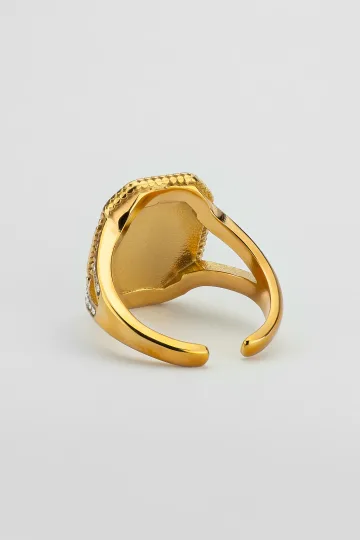
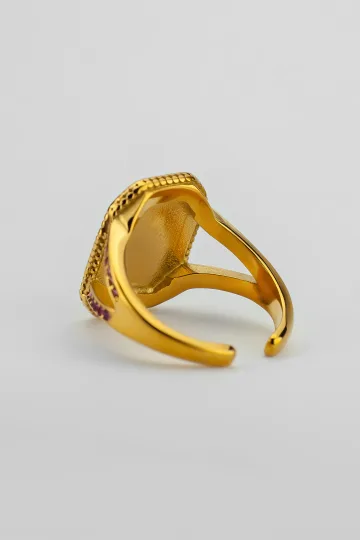
 A branded Zevira box and a little card come with every order.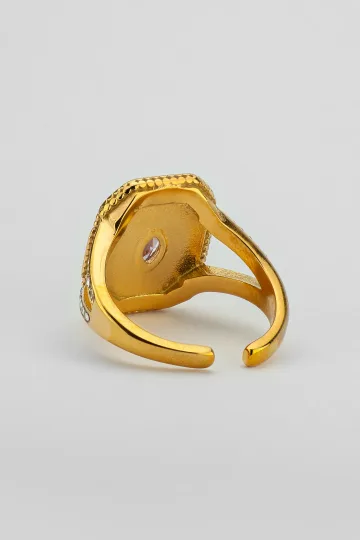















The bottom line
A stuck ring is not a catastrophe. In most cases, cold water, soap and calm are enough. The key is not to yank, not to panic and not to tolerate pain. If the finger is changing colour, see a doctor immediately. If it simply will not come off, try the methods in order, give the finger a rest between attempts.
And yes, after you remove it, measure your size again. Fingers change.
About Zevira
Zevira makes jewellery in the artisan tradition of Albacete, Spain. We run into the "the ring will not come off" situation often enough to know one thing: the right size and the right band shape head the problem off before it ever happens.
What you will find with us:
- Rings with a comfort-fit band that slide off more easily than flat ones
- Accurate sizing through our own guide
- A resizing service for a ring you have already bought
- Silicone duplicates for sport and hands-on work
- Rings on a chain, for anyone whose fingers no longer take a regular band
Every piece can be personalised with engraving by a craftsperson, with personal engraving available. We work in 925 silver and 14-18K gold.