Ring Finger Meaning: What Each Finger Symbolises When You Wear a Ring
Introduction
A friend of mine was at a bar in Istanbul when she noticed the man sitting next to her. He had a thick, worn ring on his thumb. Not a wedding band, not a class ring. Just a chunky piece of metal on his thumb. She could not help it. "What is that ring about?" she asked. He looked down at his hand as if he had forgotten it was there. "My grandfather's," he said. "He wore it on his thumb because in Turkey that means you are your own man. Nobody owns you."
That conversation stuck with her for years. And it stuck with me when she told me, because most of us never really think about it. We put rings on our fingers based on habit or whatever feels comfortable. But for thousands of years, every finger had a specific meaning. Where you placed a ring told people something about you: your status, your beliefs, your relationships, even your profession.
This is not ancient history either. These traditions are alive. In some countries, wearing a ring on the wrong finger can cause genuine confusion. In others, it sends a very specific message that you may not have intended. So whether you are picking out a ring for yourself or wondering why someone wears theirs on a particular finger, here is the full picture.
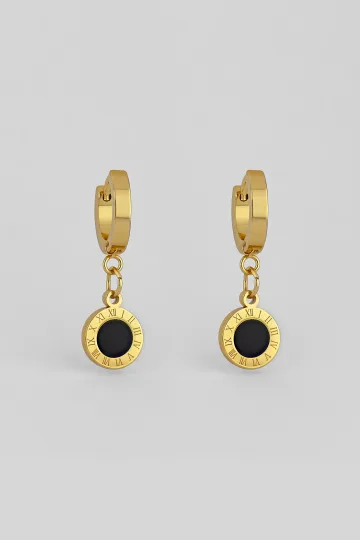
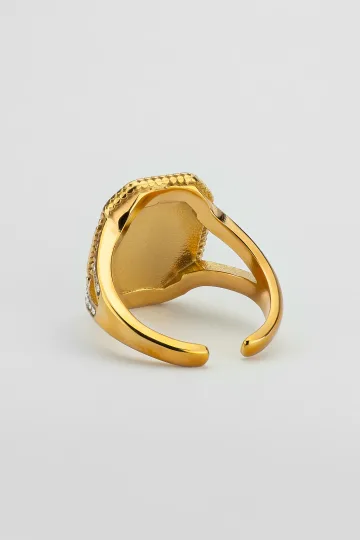
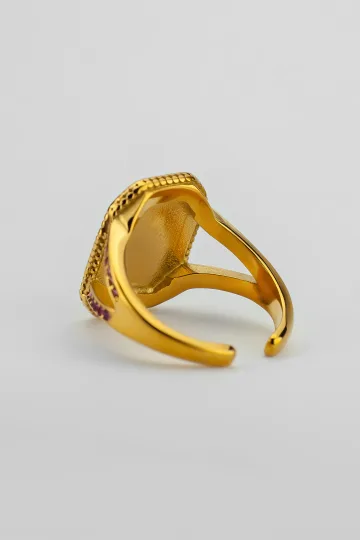
Wear the symbol, don't just read about it. These are in stock:




A quick note before we start
Every finger on your hand carries its own symbolism, and these meanings shift depending on where you are in the world. What we are covering here is the combined picture, the threads that connect Roman traditions, Eastern European customs, Asian palmistry, and modern Western fashion. Some of these meanings overlap. Some contradict each other. That is what makes it interesting.
One more thing: none of this is absolute law. If you like how a ring looks on your middle finger, wear it on your middle finger. Symbolism is a lens, not a rulebook.
A signet belongs on the pinky. On the ring finger it lies about a marriage that never happened, and that is bad form.
How to wear rings
Over years of building looks, my clients' hands have passed through hundreds of rings. Here is what actually works, sorted by occasion and by finger.
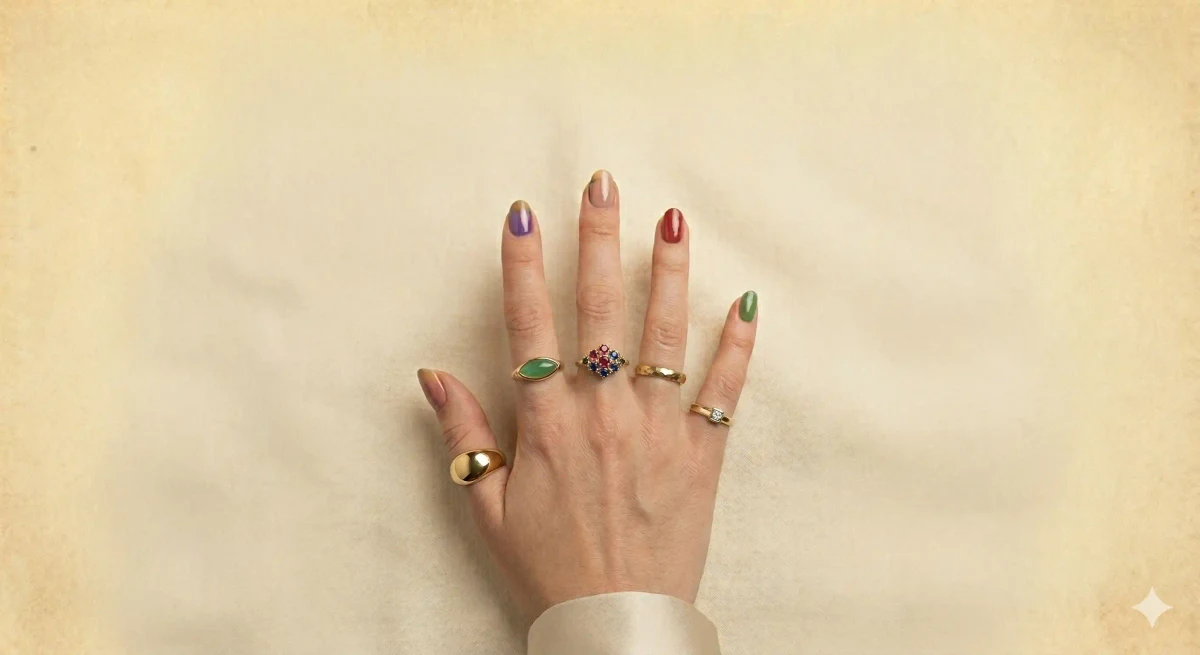
What do I recommend for every day? For daily wear I suggest thin bands or midi rings on the index or middle finger. They do not catch on fabric and sit calmly with knitwear, denim, a loose shirt. One accent on a strong finger pulls the hand together without crowding it. If the sleeve is long and heavy, the midi version wins: the ring reads better on the hand than at the base of the finger.
Is it right for the office? I recommend restraint: matte silver or yellow gold with no large stones, one finger, at most a tidy stack of two thin bands. A signet on the pinky looks composed under a rolled shirtsleeve and a watch. Cool skin tones suit silvery metals, warm tones suit yellow and rose gold, but treat that as a guide, not a law.
How do I build an evening look? For evening I choose volume. A substantial ring on the thumb or index finger with an open neckline works as the single accent, and a pair of earrings is enough beside it. Dark stones (onyx, sapphire) on the middle finger hold a formal look, warm ones (citrine, ruby, garnet) bring silk and deep velvet to life.
Which finger takes which ring? Heavy rings and large stones I recommend on the strong fingers: thumb, index and middle carry weight with ease. The ring finger and pinky are thinner, so I suggest delicate pieces there. A wide band sits more evenly on a long phalanx, a narrow one looks better on a short finger. The middle finger, the longest, takes the widest piece without losing proportion.
A stack or a single ring? If you love maximalism, I suggest rings across several fingers in one metal. If you lean minimal, I choose one expressive ring and bare fingers beside it. When I build a stack, I mix textures rather than sizes and keep to an odd number: three read livelier than two. The point is that the placement should look chosen, not accidental.
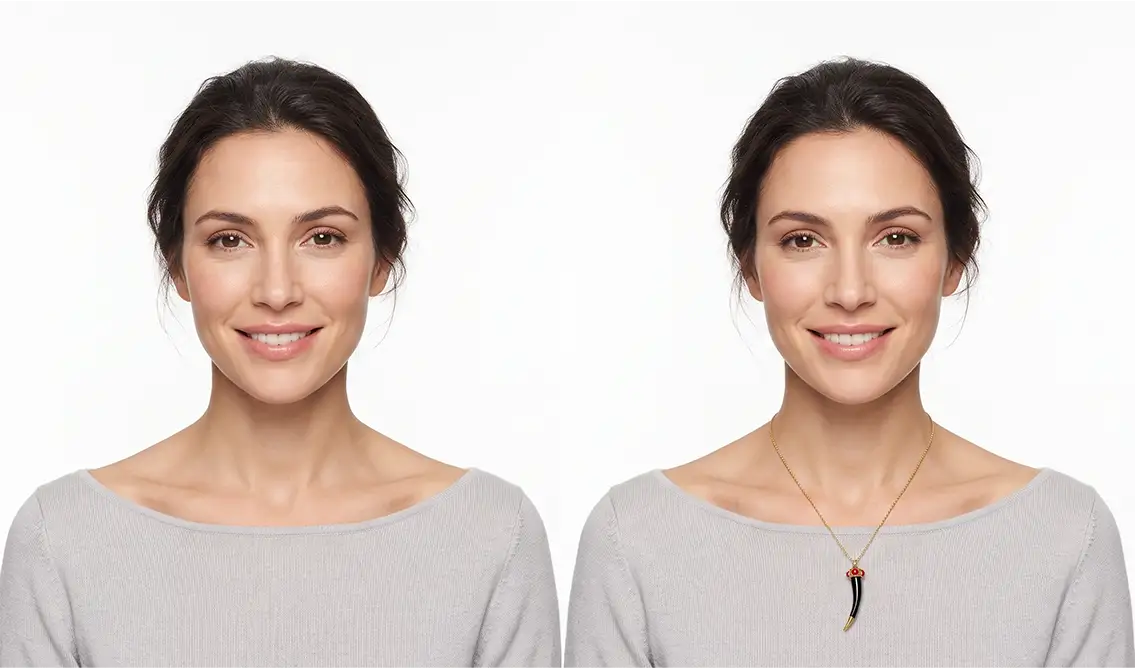
Turn on your camera, pick earrings, a pendant or a ring, and see the piece on yourself in real time.
Switch items in one tap.
Everything runs in your browser: no photo or video is ever uploaded.
Thumb rings: willpower, independence, and status
The thumb stands apart from the other fingers. Literally. It opposes them, works independently, and without it, your hand loses most of its grip. That physical reality has shaped its symbolism for millennia.
Ancient roots
In Ancient Rome, a thumb ring was a sign of wealth and influence. Senators and high-ranking military officers wore them as status markers. The Latin phrase "pollice verso" (turned thumb) is connected to gladiatorial combat. The emperor's thumb decided life or death. Whether or not the "thumbs up, thumbs down" story is historically accurate, it embedded the thumb with ideas of power and decisive authority.
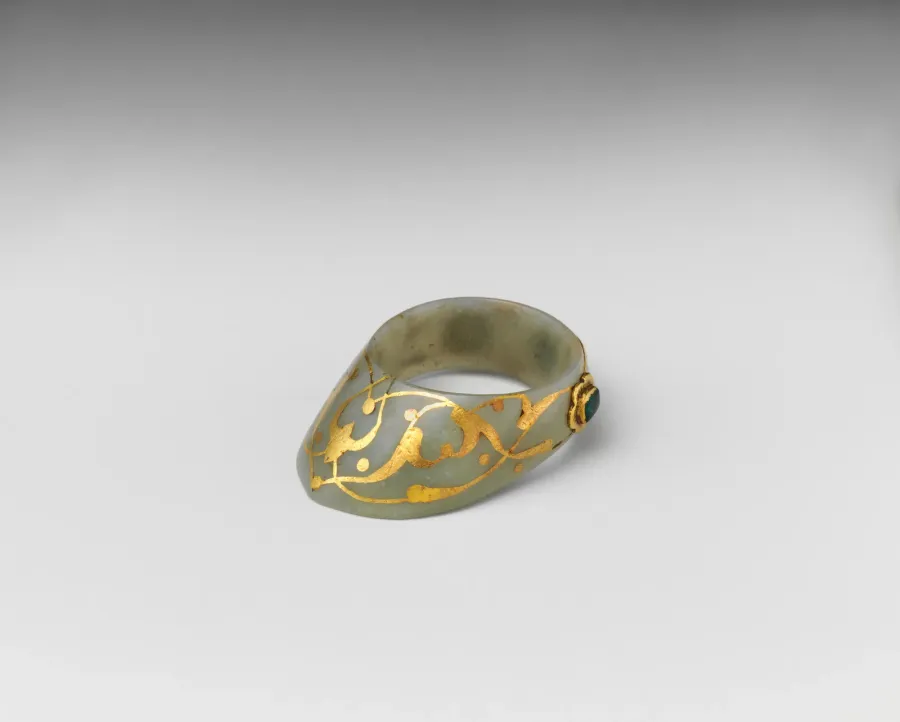
In Ottoman Turkey, thumb rings served a practical purpose first. Archers wore thick rings (called zihgir) on their thumbs to protect the skin when drawing a bowstring. Over time, these archer's rings became status symbols on their own. The finer the material, the higher your rank. A jade thumb ring was a mark of royalty.
In Chinese culture, the thumb ring also carried connotations of power. Qing dynasty officials wore jade thumb rings as indicators of their standing. The practice was so common that artisans developed an entire craft around carving and polishing these small cylinders of stone.
What it signals today
Modern thumb rings are associated with:
- Independence and willpower: you do not follow the crowd
- Self-confidence: a bold placement that draws attention
- Creative thinking: artists, musicians, and designers gravitate toward thumb rings
- Openness: in some circles, a thumb ring signals open-mindedness about identity and lifestyle
The thumb is one of the few fingers where there is virtually no risk of sending the wrong message. It is not associated with marriage, engagement, or any formal commitment. It is a "free" finger, which is exactly why independent-minded people like it.
Astrology and gemstones
Depending on the tradition, the thumb is linked to either Mars or Venus. Mars gives it associations with courage, drive, and physical energy. Venus adds a layer of beauty and desire. If you follow astrological jewellery practices, rubies and garnets (Mars stones) or emeralds (Venus stones) are considered especially powerful on the thumb.
People who naturally gravitate toward thumb rings often share certain personality traits: decisiveness, a strong sense of self, and a tendency to go against convention. Think of it this way: nobody accidentally wears a thumb ring. It is always a choice.
Celebrity and historical references
Winston Churchill was known for wearing a signet-style ring on his thumb in some photographs. In contemporary fashion, modern pop musicians have repeatedly been spotted with thumb rings, contributing to their popularity among younger audiences. Actors and athletes have all been photographed wearing thumb rings on red carpets and in daily life.
Styling notes
Thumb rings tend to be wider and chunkier than rings worn on other fingers. Thin bands can feel lost on the thumb. If you are stacking rings across multiple fingers, the thumb ring works as an anchor, something bold that grounds the whole look.
Customer reviews
Zevira is a real jewellery shop. Genuine payments, deliveries and customer thank-yous.
🥰🥰🥰 gracias
Ok, ¡gracias! 🙂
Index finger rings: authority, ambition, leadership
Point at something. Go on, actually point right now. You used your index finger. This is the finger of direction, of instruction, of "pay attention to this." That energy carries over into its symbolism.
The king's finger
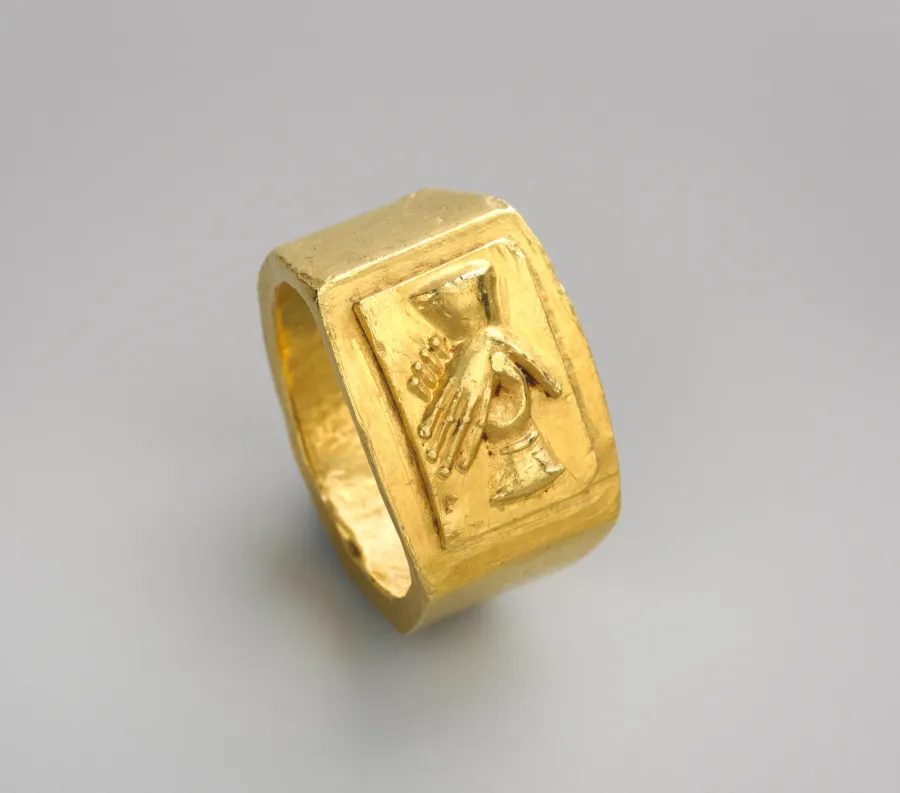
For centuries, the index finger was the power finger. Kings, popes, and nobility wore their most important rings here, specifically signet rings used to seal documents with wax. When a king pressed his ring into hot wax, he was stamping his authority onto the page. The ring was not just jewellery. It was a tool of governance.
In Jewish tradition, the wedding ring is placed on the index finger during the ceremony (though it is usually moved to the ring finger afterward). The reasoning is that the index finger is the most visible, the most prominent. The act of placing the ring there is a public declaration.
In many royal portraits from the 15th through 18th centuries, you will notice rings on the index finger. Henry VIII was frequently painted with gem-encrusted rings on his pointers. It was a deliberate display of authority and wealth.
What it signals today
- Ambition and drive: you are someone who takes charge
- Self-assurance: the index finger is visible and prominent, so wearing a ring there shows you are not shy about being seen
- Leadership: historically tied to those who give orders, not take them
- Personal statement: this finger draws the eye naturally, making it ideal for a ring you want people to notice
The index finger is an excellent choice for a statement piece. Because it sits next to the thumb (another "strong" finger), rings here feel grounded rather than delicate.
Astrology and gemstones
The index finger is ruled by Jupiter, the planet of expansion, luck, wisdom, and generosity. Jupiter is the largest planet in our solar system, and its energy is equally big. Wearing a ring on the index finger is thought to amplify confidence, attract opportunity, and support leadership qualities.
The gemstones traditionally associated with Jupiter include amethyst, lapis lazuli, and yellow sapphire. In Vedic astrology (Jyotish), a yellow sapphire ring on the index finger is one of the most commonly recommended remedies for strengthening Jupiter in your birth chart.
Celebrity and historical references
Beyond Henry VIII, Napoleon was known for wearing a ring on his index finger in several portraits. Queen Elizabeth I wore elaborate rings on her index fingers as symbols of her sovereign power. In modern times, various pop and R&B artists have been seen sporting index finger rings as part of their signature looks. Hip-hop musicians have helped normalise bold index finger rings in men's fashion.
A practical detail
The index finger is one of the most-used fingers in daily life. You type with it, point with it, use touchscreens with it. So if you choose a ring for this finger, consider whether it will get in the way. Low-profile designs tend to work better for everyday wear than tall, protruding settings.
Middle finger rings: balance, responsibility, Saturn
The middle finger sits at the centre of your hand. It is the longest finger, flanked by two on each side. Balanced. Grounded. And in the tradition of palmistry, it is linked to Saturn, the planet of discipline, structure, and responsibility.
Saturn's influence
In palmistry and astrological jewellery traditions, each finger corresponds to a planet:
- Thumb: Mars or Venus (depending on the tradition)
- Index finger: Jupiter
- Middle finger: Saturn
- Ring finger: Sun (Apollo)
- Pinky: Mercury
Saturn is the taskmaster. It represents hard work, boundaries, law, and time. Wearing a ring on the middle finger is thought to bring balance and remind the wearer of their responsibilities. It is not flashy or romantic. It is solid.
In Western culture, the middle finger does not have strong traditional associations with specific types of rings. No culture puts wedding rings here. No tradition demands class rings on this finger. That makes it a blank canvas, which is actually quite liberating.
What it signals today
- Balance and stability: centred on the hand, centred in life
- Individuality: because few traditions dictate what goes here, choosing this finger is a personal statement
- Structure and discipline: Saturn's influence, for those who care about planetary associations
- Bold style: a ring on the longest finger is hard to miss
Gemstone associations
Saturn's stones include onyx, obsidian, and blue sapphire. If you are drawn to darker, weightier gemstones, the middle finger is their natural home according to astrological jewellery traditions. In Vedic practice, a blue sapphire on the middle finger is one of the most potent (and most cautiously recommended) planetary remedies.
People who prefer the middle finger for their rings tend to be practical, self-reliant, and somewhat introspective. They are less interested in what their ring "says" and more interested in how it feels on their hand.
The "statement" factor
Because the middle finger is less loaded with cultural meaning, it has become popular as a pure fashion choice. People who want to wear a ring that is purely about design (no symbolism, no hidden meaning, just aesthetics) often choose the middle finger. It is the finger that says "I wear this because I like it."
That said, be aware that in some contexts, prominently displaying the middle finger (ring or not) can carry other connotations. The gesture is well-known worldwide. But a ring on the middle finger is not that gesture, and nobody will confuse the two.
Upload a photo of your pet, someone you love, or an object. We'll build a 3D model and hand-cast it in pewter.



Ring finger: love, creativity, and the Sun
This is the finger most people think of first when someone says "ring." And for good reason. The ring finger has accumulated more symbolism, more tradition, and more emotional weight than any other digit on your hand.
The vena amoris myth
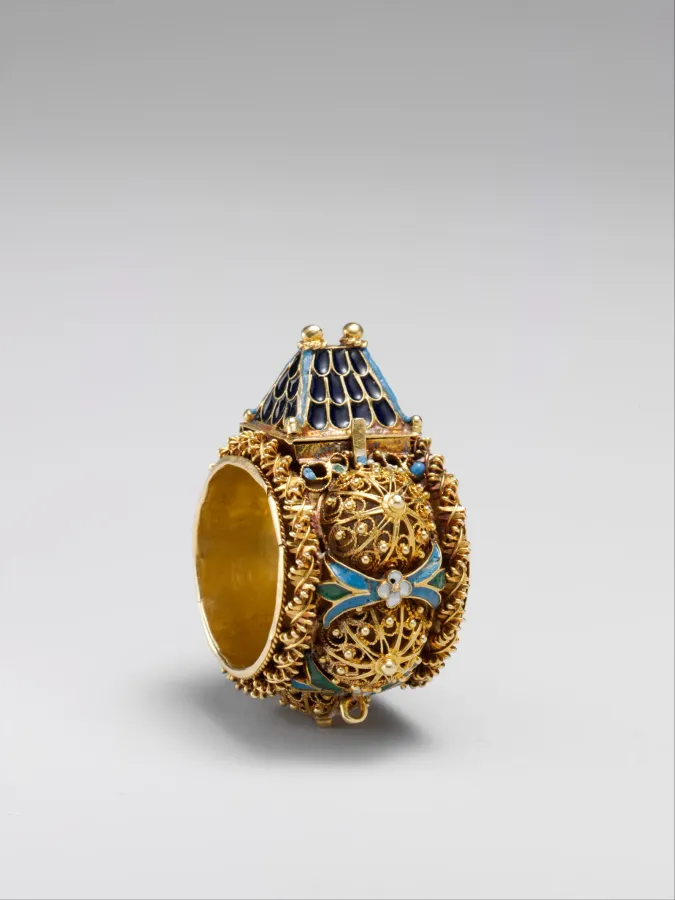
The ancient Romans believed that a vein ran directly from the fourth finger of the left hand to the heart. They called it the "vena amoris," the vein of love. This belief is why, according to tradition, the wedding ring goes on this particular finger: it creates a direct connection between the ring and the heart.
Is it anatomically true? No. Modern anatomy has confirmed that there is no single vein connecting the ring finger to the heart. All fingers have similar venous structures. But the myth is beautiful, and it has been powerful enough to shape wedding traditions across dozens of cultures for over two thousand years. Sometimes the story matters more than the science.
The ancient Egyptians may have started this tradition even before the Romans. Egyptian hieroglyphics depict rings being exchanged between partners, and some scholars believe they placed them on the same finger for similar reasons.
Left vs right hand: traditions by country
Here is where it gets interesting. Not everyone agrees on which hand the wedding ring belongs on.
Left hand (ring finger):
- United States, United Kingdom, Canada, Australia
- France, Italy, Portugal
- Most of Latin America
- Japan (modern practice)
Right hand (ring finger):
- Russia, Ukraine, Belarus
- Germany, Austria, Poland
- Norway, Denmark
- India (in many traditions)
- Greece, Serbia, Bulgaria
The split is partly religious. Catholic tradition historically favoured the left hand, while Orthodox Christian tradition placed the ring on the right. But it is also cultural. In some countries, the right hand is considered the "active" or "correct" hand (the word "right" literally means "correct" in many languages).
In some countries, including Germany and the Netherlands, the engagement ring goes on the left hand and the wedding ring moves to the right after the ceremony. Other cultures stack both on the same finger.
The Sun connection
In palmistry, the ring finger is linked to Apollo, the Sun god. This associates the finger with:
- Creativity: artistic expression and beauty
- Romance and love: not just marital love, but passion in general
- Optimism and warmth: the Sun's qualities
- Success and fame: Apollo was also the god of achievement
Musicians, artists, and people in creative fields sometimes wear non-wedding rings on this finger as a nod to its creative associations. A ring here that is clearly not a wedding band sends a different message entirely: one of artistic identity rather than romantic commitment.
Gemstone associations
The Sun's stones include citrine, golden topaz, and ruby (which overlaps with Mars). In Indian tradition, wearing a ruby on the ring finger is believed to strengthen the Sun's influence in your birth chart, bringing clarity, confidence, and creative success. In Western crystal healing circles, rose quartz on the ring finger is popular for attracting and strengthening romantic love.
Interestingly, diamonds, the most common engagement ring stone, do not have a strong planetary association in traditional astrology. Their popularity for engagement rings comes more from marketing (the famous 1947 diamond marketing campaign "A Diamond is Forever") than from any ancient tradition linking diamonds to love or the ring finger.



Pinky finger rings: communication, intuition, Mercury
The smallest finger carries surprisingly big symbolism. The pinky is linked to Mercury, the planet of communication, commerce, and cunning. Throughout history, this finger has been a favourite of diplomats, writers, and people who make their living through persuasion.
Signet rings and secret messages
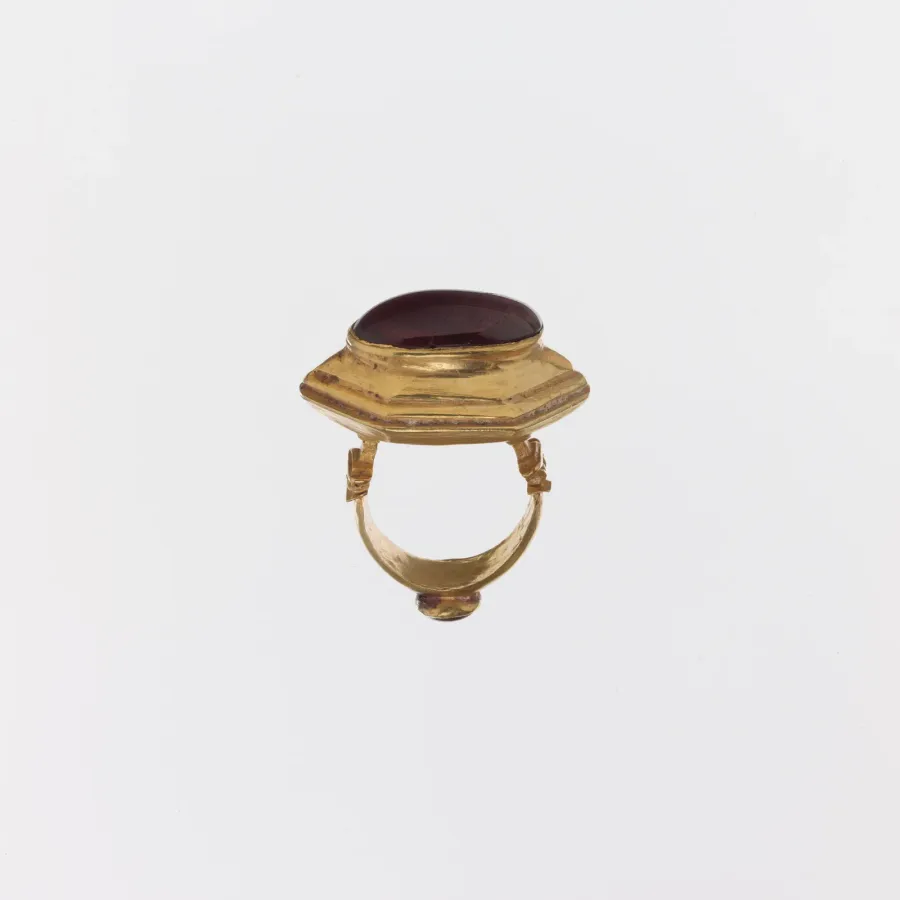
In Victorian England, both men and women wore pinky rings as a sign of social status. Men, in particular, would wear signet rings on their pinkies, often stacking the signet with a wedding band on the same finger. This was not just fashion. The signet ring was functional, used to seal letters with a personalised wax impression.
The practice of wearing signet rings on the pinky continued among British and American elites well into the 20th century. Ivy League graduates, Wall Street financiers, and old-money families maintained the tradition as a subtle class marker. You did not need to announce your background. Your pinky ring did it for you.
The mafia connection
In popular culture, the pinky ring has a strong association with organised crime. Italian-American mafia films cemented this image. The boss always had a pinky ring. This association is partly rooted in reality. In the Italian-American community, a pinky ring signalled success and influence. But it was not exclusive to criminals. Businessmen, politicians, and entertainers wore them too.
The mafia connection has given the pinky ring a slightly edgy reputation, which is exactly why some people like it. It carries a hint of power, a touch of "do not mess with me."
What it signals today
- Communication skills: Mercury's domain
- Intelligence and quick thinking: also Mercury
- Professional success: a nod to the signet ring tradition
- Self-expression: the pinky is a finger of personality, not obligation
- Intuition: in some traditions, connected to psychic ability
The pinky is also notable for what it does not mean. In most Western cultures, a pinky ring has no connection to marital status. This makes it a safe choice if you want to wear a ring without anyone assuming you are married or engaged.
Gemstones and personality
Mercury's stones include citrine, peridot, and green tourmaline. These are typically lighter, brighter stones, which matches the communicative, quick energy of the pinky finger. Emerald is also sometimes linked to Mercury in Western traditions.
People who habitually wear pinky rings tend to be articulate, socially aware, and often have a sharp sense of humour. They notice details that others miss. Whether that is Mercury's influence or just the type of person drawn to this finger, well, that is a matter of perspective.
Cultural note
In some parts of the world, a ring on the pinky finger of a man's left hand can indicate that he is not interested in being approached by women. This meaning is not universal, but it exists in certain circles, particularly in North America and parts of Europe.
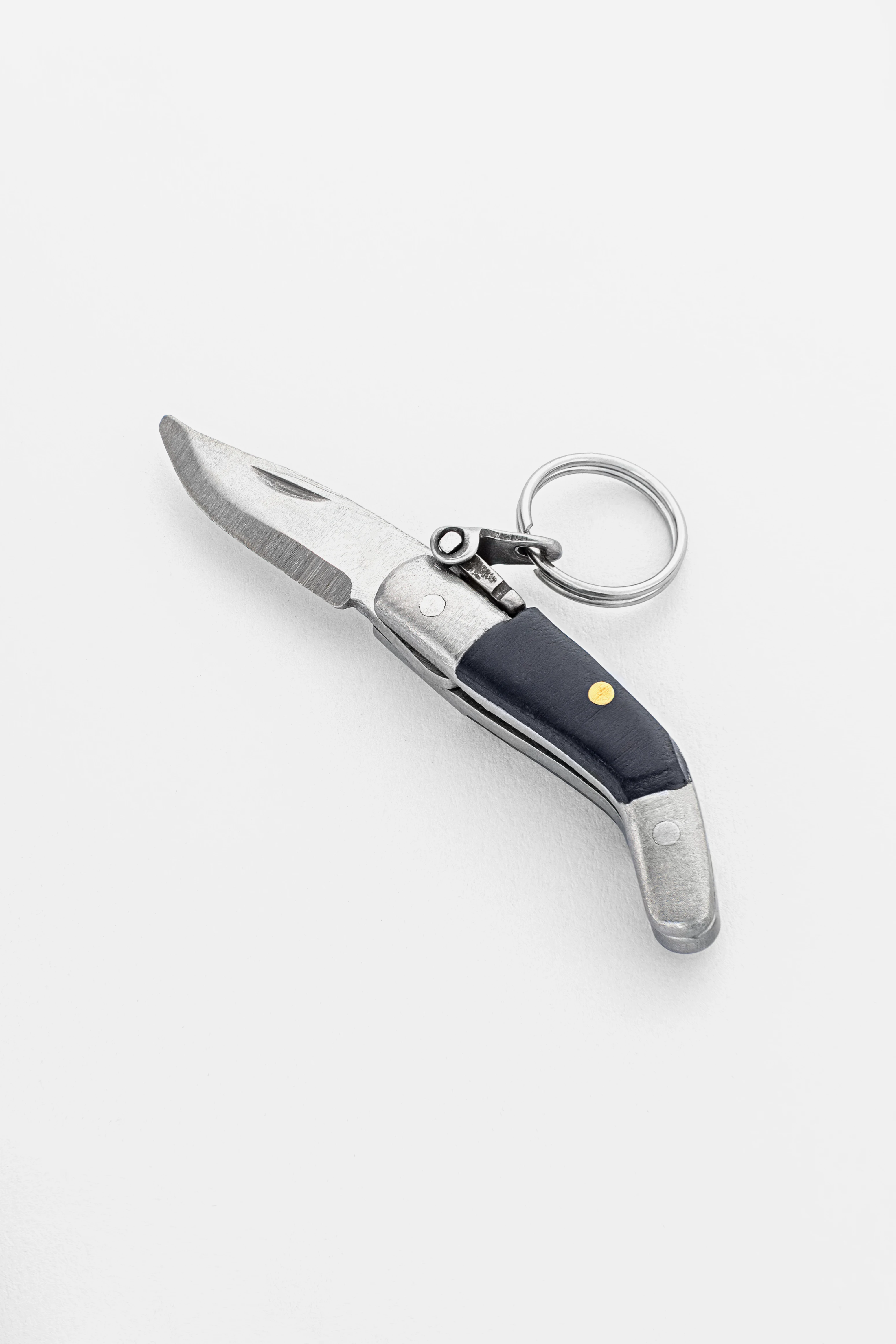
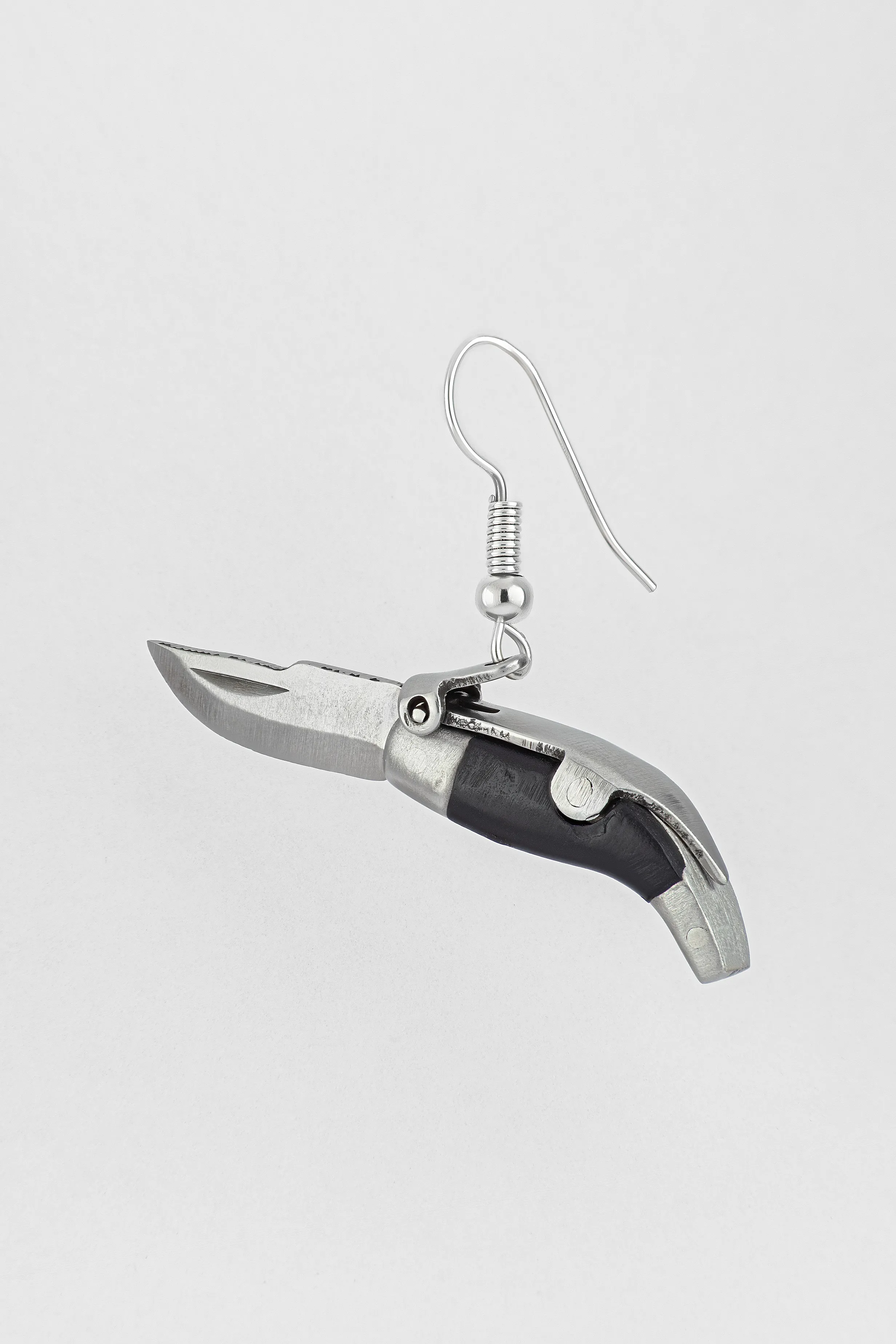
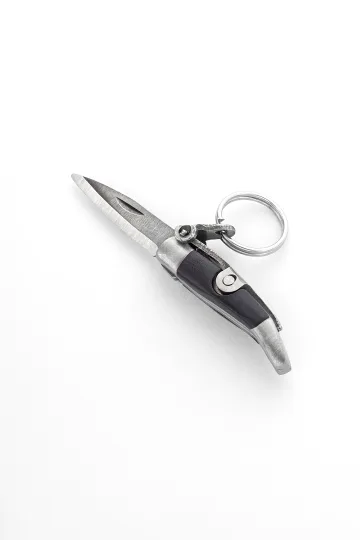
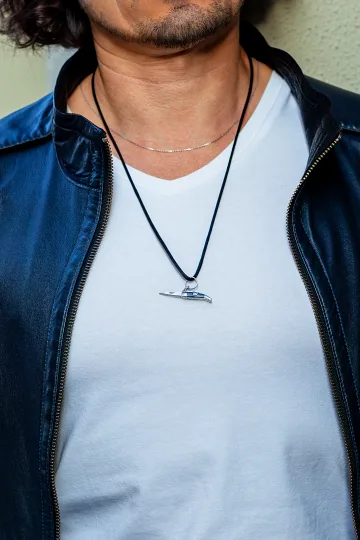
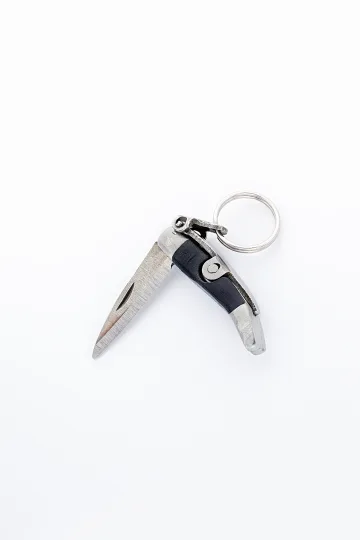
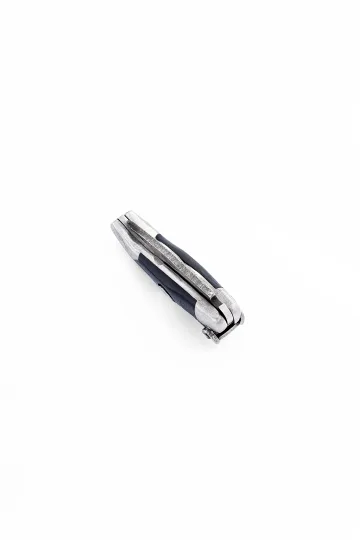
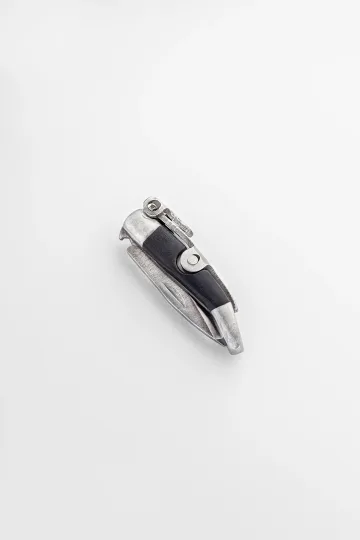
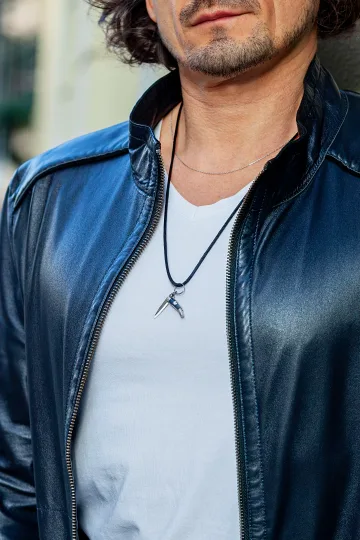
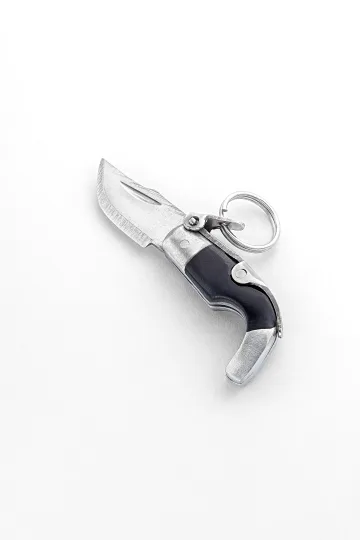
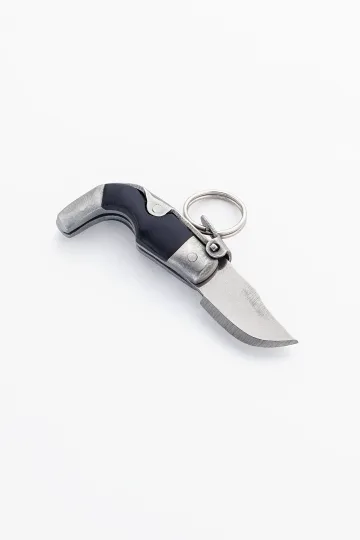
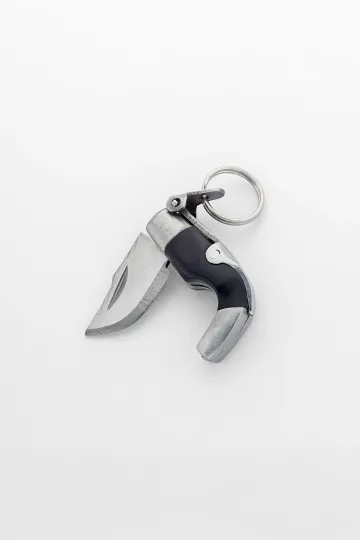
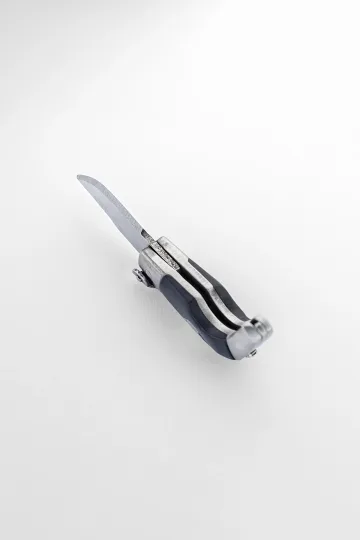
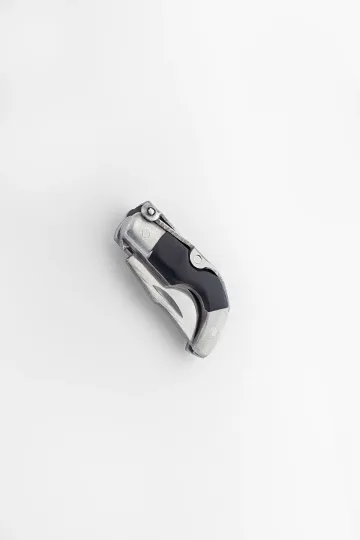
CAPAORA mini knife pendant
The 18th-century Spanish navaja in miniature: 40 mm of stainless steel, a real folding mechanism and a Palanquilla lock that clicks. An affordable gift to remember.
Authentic · Ships from Spain · 14-day returns
Left hand vs right hand: what is the difference?
We have touched on this with the ring finger, but the left-right distinction applies to every finger. In many symbolic traditions, each hand carries its own energy.
Left hand: receiving
The left hand is traditionally associated with:
- Receiving energy: taking in from the world around you
- Your inner world: beliefs, personal values, private self
- Character traits you were born with: your natural disposition
- Passivity and intuition: the contemplative side
In palmistry, the left hand represents what you were given at birth: your potential, your inherent personality. Rings on the left hand are thought to influence your inner self.
Right hand: projecting
The right hand is associated with:
- Projecting energy: putting yourself out into the world
- Your public self: how others see you
- Conscious choices and actions: what you do deliberately
- Activity and logic: the practical side
The right hand represents what you do with what you were given. Rings here are about the image you project and the role you play in public life.
How this plays out practically
Consider someone wearing the same ring on the same finger, but on different hands:
Ring finger, left hand: almost universally read as "married" or "engaged" in Western countries
Ring finger, right hand: could mean married (in Eastern European and some other traditions), or could simply be a fashion choice in Western countries
Index finger, left hand: personal conviction, inner authority
Index finger, right hand: outward leadership, wanting to influence others
Pinky, left hand: personal expression, inner intuition
Pinky, right hand: public persona, professional identity
Of course, most people do not think about any of this when they put on a ring in the morning. But if you are someone who cares about symbolic alignment, the left-right distinction adds another layer of meaning to explore.
For left-handed people
Here is a practical question that symbolic traditions usually ignore: what if you are left-handed? If your dominant hand is your left, does the "projecting" energy shift? Some modern interpretations say yes: your dominant hand is your projecting hand, regardless of whether it is left or right. Others stick with the traditional model. There is no definitive answer, which means you get to decide.
Wearing multiple rings: what combinations say about you
Wearing a single ring is a statement. Wearing several is a whole conversation. But there are some unwritten rules and associations worth knowing.
The balance question
Jewellery stylists often recommend balancing rings across both hands rather than loading up one side. Five rings on your right hand and none on your left can feel lopsided, both visually and symbolically (you are all projection, no reception).
That said, rules are made to be questioned. Some people deliberately stack multiple rings on one hand for visual impact. If it looks intentional, it works.
Odd vs even numbers
In Russian and Eastern European tradition, even numbers of flowers are for funerals and odd numbers are for celebrations. Some people extend this logic to rings: odd numbers (1, 3, 5) are considered more dynamic and positive, while even numbers (2, 4) are more stable and balanced.
In Western fashion, there is no strong tradition around odd vs even. But designers and stylists tend to favour odd numbers for aesthetic reasons. Three rings creates a more interesting visual rhythm than two or four.
What stacking says about you
- Multiple thin bands on one finger: deliberate, curated, detail-oriented
- Rings on every finger: expressive, maximalist, confident (or overwhelming, depending on execution)
- Matching rings on both hands: symmetry-loving, orderly
- Mismatched rings: creative, spontaneous, eclectic
- One ring per hand: balanced, intentional, less is more
Finger combinations
Certain finger combinations have their own vibe:
- Thumb + pinky: independent thinker with strong communication skills (bookending the hand)
- Index + ring finger: ambition meets creativity, leadership meets heart
- Middle + ring finger: structure supporting passion, practical romantic
- Ring finger + pinky: love and self-expression, emotional and communicative
These are not hard rules. They are patterns that people have noticed and assigned meaning to over time. Take them as inspiration, not instruction.
Leave your email, we'll send your discount code. No spam, unsubscribe anytime.
The code arrives by email, valid on your first order.
Ring stacking on the same finger
Stacking multiple rings on a single finger has gone from niche trend to mainstream practice. But it is not just about piling on metal. There is an art to it, and, predictably, there is symbolism too.
Double and triple stacking
Two rings on the same finger often represent duality. Think of it as two sides of yourself: logical and creative, public and private, grounded and adventurous. Three rings tend to symbolise completeness: past, present, future or mind, body, spirit. These are not rigid interpretations, but they are the associations people tend to make when they see stacked rings.
Practically speaking, stacking works best with thinner bands. Two chunky rings on one finger will feel crowded and uncomfortable. Mix textures instead of sizes. A smooth band next to a textured one creates visual interest without bulk.
Midi rings
Midi rings sit above the knuckle, between the first and second joint of the finger. They became popular in the early 2010s and have stayed relevant because they add complexity without commitment. A midi ring on the ring finger, for example, does not carry the same "married" signal as a ring worn below the knuckle.
Midi rings are also a clever way to wear rings on fingers that might be too thin for a full-size ring at the base. They work especially well on the index and middle fingers.
What stacking combinations mean
- Wedding band + eternity band: love that grows over time
- Two contrasting metals on one finger: embracing contradictions
- A stack that builds over years (adding one ring per milestone): life story on a finger
- Matching stacks on both ring fingers: symmetry and balance in relationships
Rings in different professions
Beyond personal style and tradition, some professions have deep-rooted ring customs that most people outside those fields never hear about.
The engineer's iron ring
In Canada, engineers receive an Iron Ring (or Ritual of the Calling of an Engineer ring) during a private ceremony after graduating. The ring, traditionally worn on the pinky of the working hand, is meant to remind the engineer of their professional obligations and the humility required in their work. The ceremony was inspired by the Quebec Bridge collapse of 1907, a disaster caused by engineering errors. It is one of the most meaningful professional rings in the world.
In the United States, a similar tradition exists called the Order of the Engineer, using a stainless steel ring.
Medical professionals
Doctors, surgeons, and nurses often avoid rings for hygiene reasons. Rings can harbour bacteria and interfere with gloves. But outside the operating room, physicians in some traditions wear rings on specific fingers to signal specialisation or seniority. In academic medicine, a doctoral ring (similar to a class ring) is common in Scandinavian countries.
Military rings
Class rings and regiment rings have a long history in military culture. West Point graduates, for instance, receive their class rings in a formal ceremony. The ring is typically worn on the ring finger of the right hand. Marine Corps rings, Air Force rings, and Navy rings follow similar traditions. These rings serve as lifelong identifiers of service and shared experience.
Clergy and religious orders
Bishops in the Catholic Church wear an episcopal ring, traditionally on the ring finger of the right hand. Nuns and monks in some orders receive a ring upon taking their vows, symbolising their "marriage" to their faith. The Pope's Ring of the Fisherman is perhaps the most famous religious ring. It is destroyed after each Pope's death, making each one unique to its wearer.
Academia
Doctoral rings exist in several European countries. In Sweden and Finland, receiving a doctoral ring during the graduation ceremony is a centuries-old tradition. The ring is specific to the university and the faculty, and wearing it signals not just academic achievement but belonging to a scholarly community.
Couple rings and commitment traditions
The world of couple rings extends far beyond the simple engagement-wedding sequence that most people know. Different cultures have developed their own ring traditions for relationships at every stage.
Promise rings
Promise rings emerged as a way for couples not yet ready for engagement to signal their commitment. They are most popular in the US and South Korea, where matching promise rings (often called "couple rings" or "커플링" in Korean) are a huge cultural phenomenon. In South Korea, couples often buy matching rings at the 100-day anniversary mark.
Most people wear promise rings on the left ring finger (if not yet engaged) or the right ring finger. There are no rules, though. Some wear them on a chain around the neck if they want to keep the commitment private.
Claddagh rings
The Claddagh ring from Ireland is one of the most elegant ring-based communication systems ever designed. The ring features two hands holding a heart topped with a crown. How you wear it sends a specific message:
- Right hand, heart facing outward: single and looking
- Right hand, heart facing inward: in a relationship
- Left hand, heart facing outward: engaged
- Left hand, heart facing inward: married
That is four different relationship statuses communicated by a single ring, depending on hand and orientation. Not many pieces of jewellery can do that.
Engagement and wedding ring customs worldwide
- In Brazil, couples exchange plain bands at engagement, then switch to the other hand at the wedding
- In Sweden, some couples use three rings: engagement, wedding, and motherhood (given after the first child)
- In India, toe rings (bichiya) are a traditional marker of married status for women, alongside finger rings
- In Argentina, both partners wear engagement rings, not just the woman
- In some Nigerian traditions, the groom's family selects and presents the ring
Matching rings for couples
Beyond the formal traditions, many modern couples choose matching rings that they wear daily, not as engagement or wedding bands, but simply as a visible connection. These might be identical designs, complementary halves, or rings with shared inscriptions that only make sense as a pair.
Men's rings: traditions, modern style, and cultural differences
Men wearing rings is nothing new. But the conversation around men's rings has shifted significantly in the past two decades, and the boundaries of what is considered acceptable keep expanding.
Historical context
For most of recorded history, men wore more rings than women. Egyptian pharaohs, Roman senators, Medieval knights, Renaissance princes: rings were tools of authority, identity, and alliance. The idea that rings are "feminine" is extremely recent and limited to certain Western cultures in the mid-20th century. Even then, exceptions were everywhere: class rings, wedding bands, signet rings, and fraternity rings were all socially accepted for men throughout that supposedly ring-averse period.
Signet ring traditions
The signet ring is arguably the most traditionally masculine ring type. Originally functional (used to stamp a personal seal in wax), it evolved into a symbol of family lineage, institutional membership, and personal identity. In Britain, the signet ring is traditionally worn on the pinky of the non-dominant hand. The engraving faces inward when worn by the owner (readable only by the wearer) and outward when inherited (displaying the family crest publicly).
In France, signet rings ("chevalières") remain deeply tied to family heritage. Owning one without a legitimate family connection is considered a serious social misstep in traditional circles.
Thumb rings in hip-hop culture
Hip-hop culture embraced oversized rings in the 1980s and 1990s, with thumb rings becoming a particular favourite. Run-DMC, Tupac, and later an entire generation of hip-hop artists helped establish bold, maximalist ring-wearing as a standard part of men's fashion. What started as a symbol of success and street credibility has influenced mainstream men's jewellery worldwide.
What is acceptable where
Cultural tolerance for men's rings varies dramatically:
- Scandinavia and Northern Europe: minimalist rings are common and unremarkable
- Middle East: men frequently wear rings, especially on the right hand. Silver rings with agate or turquoise are traditional in many Arab countries
- South Korea and Japan: men's rings (including fashion rings on multiple fingers) are completely normalised
- United States and UK: rapidly expanding acceptance, especially in urban areas and younger demographics
- Southern Europe: family signet rings and single statement pieces are traditional for men
- India: astrological rings for men are extremely common, prescribed by astrologers for specific fingers
Send a friend a discount code, they save on their first order.
Ring materials and finger choice
Not all rings feel the same on every finger. The physical characteristics of different materials interact with the anatomy of each finger in ways that affect both comfort and appearance.
Weight considerations
Heavier metals and larger stones work better on stronger fingers: the thumb, index, and middle finger can handle more weight comfortably. The ring finger and pinky are thinner and more sensitive. A heavy ring on the pinky can feel awkward and may shift around more than you want.
If you prefer substantial, weighty rings but want to wear them on smaller fingers, look for designs that distribute weight evenly rather than concentrating it in a single stone or element.
Width and finger anatomy
Wide bands suit fingers with longer phalanges (finger segments). If your fingers are short relative to their width, very wide rings can make them look stubbier. On the flip side, very thin bands on thick fingers can look like they are about to snap. Proportion matters more than any specific measurement.
The middle finger, being the longest, can accommodate the widest bands without looking disproportionate. The pinky does best with narrower, more delicate pieces.
Comfort for daily wear
Consider what you do with your hands every day. If you work at a keyboard, rings on the index and middle fingers are most likely to get in the way. If you do physical work, wider bands on the ring finger or thumb tend to stay in place better than thin ones that can twist and pinch.
Temperature also affects ring fit. Metal expands and contracts with heat and cold. If you live in a climate with big temperature swings, a ring that fits perfectly in summer might feel loose in winter.
Buying it as a gift? Each one arrives ready to give.
 A branded Zevira box and a little card come with every order.




Frequently asked questions
Which finger is the engagement ring finger? In most Western countries (US, UK, France, Australia), the engagement ring goes on the left ring finger. In Germany, Russia, Norway, and many Eastern European countries, it goes on the right ring finger. Some traditions move the ring from one hand to the other after the wedding ceremony.
Can men wear rings on any finger? Absolutely. There is no finger that is off-limits for men. Historically, men wore rings on every finger, from signet rings on the pinky to archer's rings on the thumb. The idea that men should only wear a wedding band is a very recent (and very Western) notion. In many cultures, men wear more rings than women.
What does a black ring mean? A black ring can mean different things depending on context and placement. On the middle finger of the right hand, a black ring is sometimes associated with the asexual community as a symbol of ace identity. In fashion, black rings simply signal a preference for darker, edgier aesthetics. There is no single universal meaning.
What does it mean when someone wears a ring on their right ring finger? It depends on the country. In Russia, Germany, India, and many other cultures, a ring on the right ring finger means the person is married. In the US and UK, a ring on the right ring finger is usually just a fashion choice or could indicate a promise ring, a family heirloom, or personal significance.
Is there a finger for a promise ring? Promise rings are most commonly worn on the left ring finger (if the couple is not yet engaged) or on the right ring finger (to distinguish it from an engagement ring). Some people wear them on the middle finger or even on a chain around the neck. There is no strict tradition. It is a relatively modern concept.
Does it matter if a ring is too tight or too loose? Beyond comfort, some symbolic traditions say that a tight ring "locks in" energy while a loose ring lets energy flow freely. Practically speaking, you want a ring that stays on without cutting off circulation. Check our ring size guide if you are unsure about sizing.
What does wearing a ring on each finger say about your personality? Thumb: independent and strong-willed. Index: ambitious and confident. Middle: balanced and responsible. Ring finger: romantic and creative. Pinky: communicative and intuitive. These are generalisations from palmistry traditions, not personality tests. But they are fun to think about.
Should I match my ring metal to my skin tone? This is more of a style question than a symbolism one. Cool skin tones (pinkish undertones) generally pair well with silver-toned metals, while warm skin tones (golden undertones) look great with gold-toned metals. But honestly, wear whatever you like. The "rules" of colour matching are guidelines, not laws.
What finger should a promise ring go on? Most commonly, the left ring finger (if you are not engaged yet) or the right ring finger (to avoid confusion with an engagement ring). Some people prefer the middle finger or even a chain around the neck. There is no established tradition here. Promise rings are a relatively modern concept, so the placement is really up to you and your partner.
Why do some people wear rings on every finger? Wearing rings on all fingers is a maximalist style statement that has roots in both historical aristocracy and modern fashion. Some people do it for visual impact. Others assign personal meaning to each ring. In Indian culture, wearing multiple rings is connected to astrological practice: each finger corresponds to a planet, and the right gemstone on the right finger is believed to balance planetary energies.
What does wearing two rings on one finger mean? It depends on the combination. Two bands on the ring finger often represent engagement and marriage (or marriage and eternity). On other fingers, double rings usually signal a deliberate stacking choice, often marking a milestone or combining two pieces with different personal significance. In some traditions, two rings on one finger represent balance between opposing forces.
Can I wear a ring on my wedding finger if I am not married? You can wear a ring on any finger you like. But be aware that in most Western countries, a ring on the left ring finger will be read as a signal that you are taken. If you are comfortable with that assumption (or do not mind correcting people), go for it. Some single people deliberately wear rings on this finger to avoid unwanted attention. A separate case is moving the ring to the right hand or to a different finger after a divorce. The full set of options is laid out in our article on the divorce ring, meaning, trend and what to do with the old wedding ring.
What is the best finger for an astrological ring? Each finger corresponds to a planet in astrological traditions: thumb (Mars/Venus), index (Jupiter), middle (Saturn), ring finger (Sun/Apollo), pinky (Mercury). The "best" finger depends on which planetary energy you want to enhance. An astrologer can recommend a specific finger and gemstone based on your birth chart. Even if you do not follow astrology closely, the associations can be a fun way to choose ring placement.
Silver and gold jewellery, wedding bands, symbolic pendants, paired sets.
Conclusion
Every ring tells a story. Sometimes that story is deeply personal: a wedding, a family heirloom, a promise. Other times it is purely aesthetic, because you liked the design and it fit your finger. Both are valid.
What is fascinating is how consistent these finger meanings have been across time and geography. The thumb as a symbol of independence shows up in Roman, Turkish, and Chinese traditions independently. The ring finger's connection to love appears in Egyptian, Roman, and Indian cultures without any obvious line of influence between them. These are not arbitrary assignments. They reflect something real about how humans experience their own hands.
Whether you put thought into your ring placement or just go with what feels right, your fingers are telling a story. Now you know what that story says.
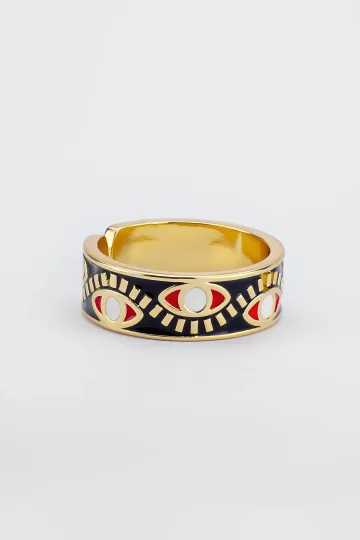
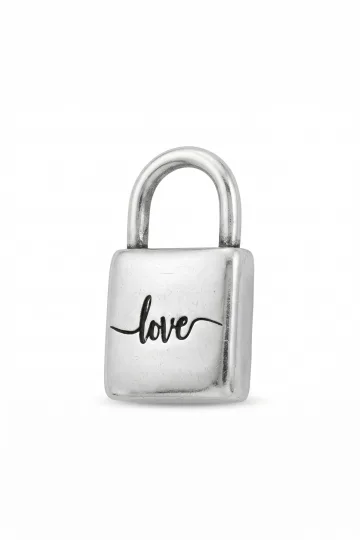
If you are curious about the symbolic meanings behind specific ring designs, explore our collection of symbolic jewellery or read more about love symbols in jewellery and mystic eye symbols.
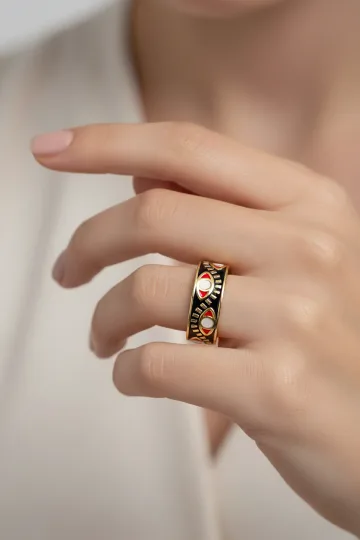
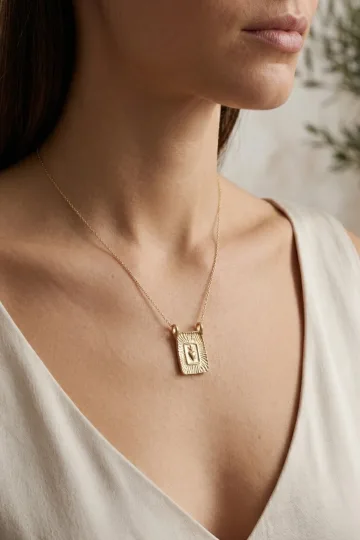
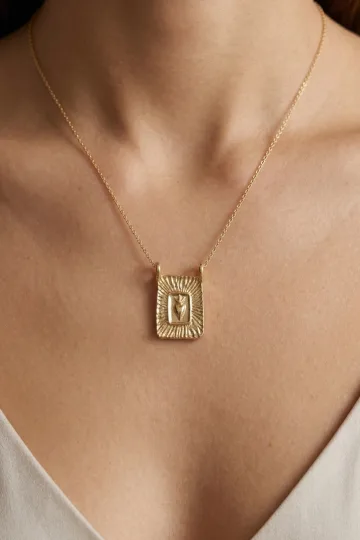
Wear the symbol, don't just read about it. These are in stock:

About Zevira
Zevira makes jewellery in the artisan tradition of Albacete, Spain. A ring carries meaning both through where it sits on your hand and through how it is made, and we build pieces meant to become a personal mark you keep.
Here is what you can find with us in rings:
- signet rings for the pinky and index finger, with the option to engrave them
- slim bands for stacking, plus midi rings
- couple rings and sets for relationships at any stage
- symbolic rings: the eye, the heart, sun and moon, protective marks
- wide, chunky rings for the thumb and a strong hand
Every piece can be personalised with engraving by a craftsperson, with personal engraving available. Sterling silver 925 and 14-18K gold.