Jewellery Restoration Guide: What Can Be Saved and How
Introduction: Gold Outlasts Generations
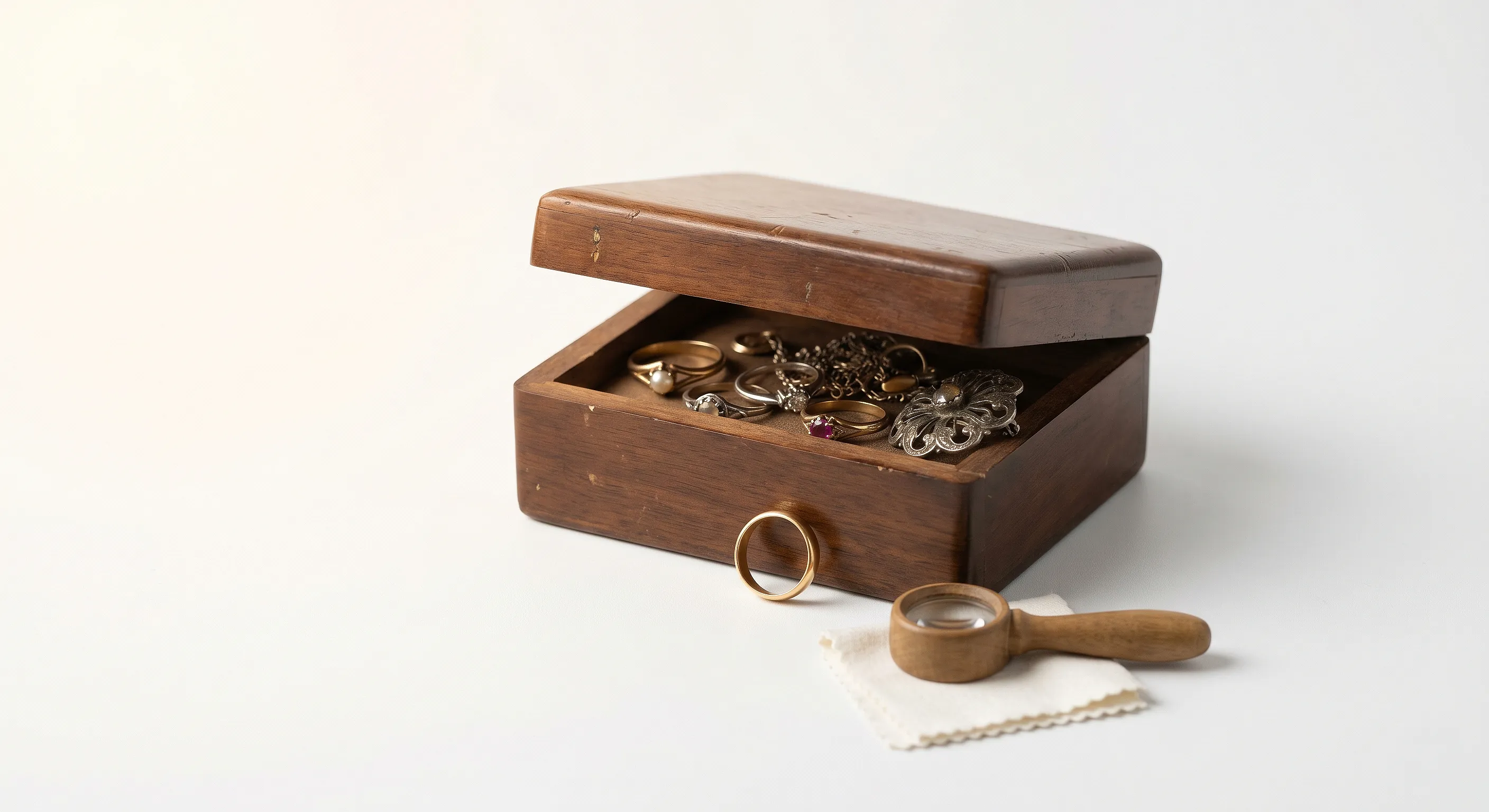
You open your grandmother's jewellery box. Inside: a worn wedding band with a hairline crack, a heavy brooch with darkened enamel, a broken chain, a pendant missing its stone. All of it sitting untouched for decades. Can any of it be brought back?
Almost always, yes. A skilled jeweller can restore a piece that looks beyond saving. It costs less than most people assume, and it matters more than buying new, because an old piece carries history that no shop can replicate. Before sending pieces off, the wider question of what to actually do with grandma's jewellery box is worth thinking through, since not every piece needs restoring and not every restored piece needs to be worn.
This guide covers what is realistically restorable, what is not, the different types of work available, and when restoration makes sense.
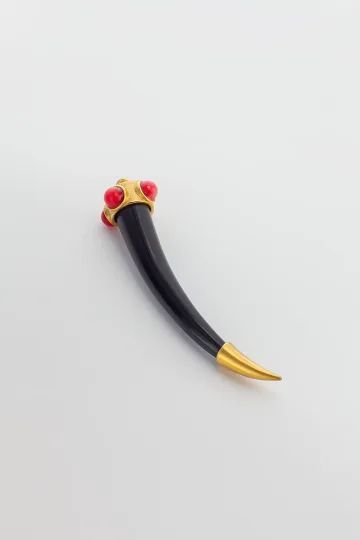
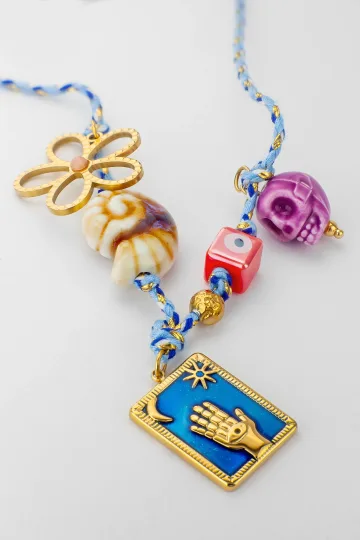
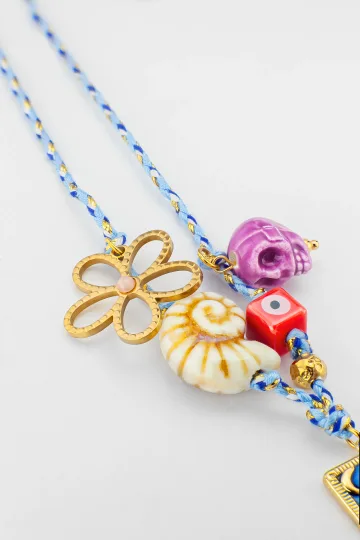
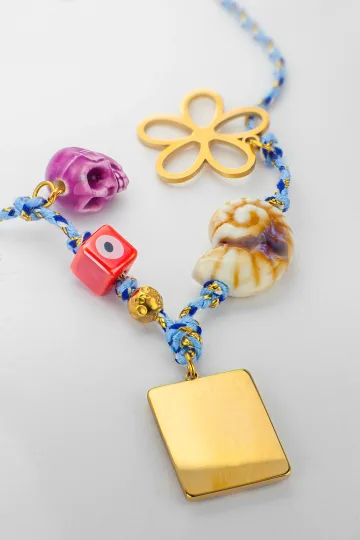
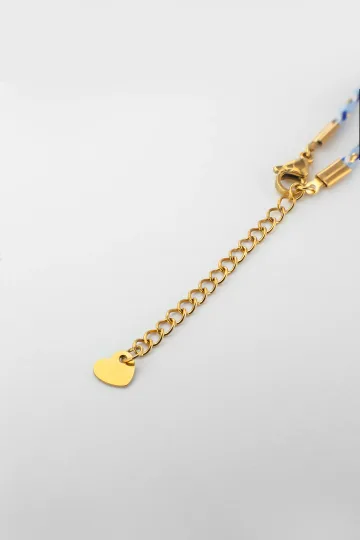
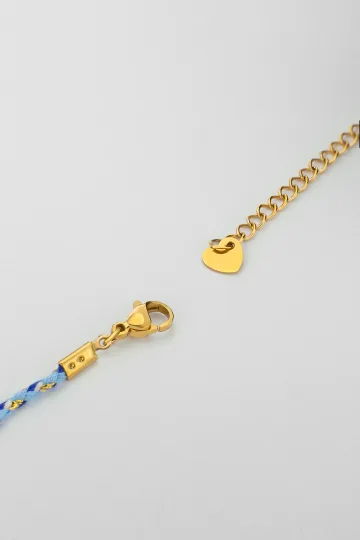
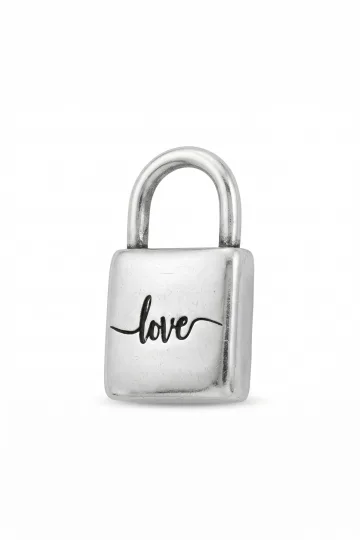
Wear the symbol, don't just read about it. These are in stock:



Restoration, Repair, and Cleaning: What Is the Difference?
These three words get used interchangeably, but they describe different scopes of work, and understanding the difference helps you have a clearer conversation with a jeweller.
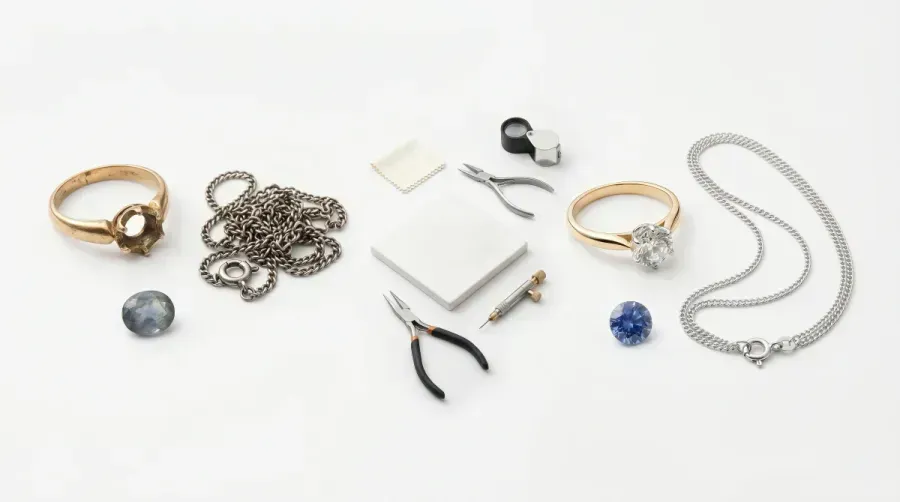
Cleaning removes surface contamination: accumulated lotion, perspiration, dust, mild tarnish. It does not change anything structural. Most cleaning can be done at home for everyday pieces. For fine pieces, a jeweller uses an ultrasonic bath and a polishing cloth. Cleaning is maintenance, not restoration.
Repair addresses a specific, discrete failure: a broken link, a snapped post, a missing clasp. The piece had a function and lost it. Repair restores the function, leaving the rest of the piece untouched. Most repairs are straightforward and inexpensive.
Restoration is a broader intervention. It may include multiple repairs, surface work, replating, setting work, or structural rebuilding. Restoration aims to bring a piece back to a usable, wearable condition overall, rather than fixing a single point of failure. For antique pieces, restoration also involves decisions about how far to intervene and what to preserve rather than replace.
Knowing which category your piece needs helps you set realistic expectations before you walk through a jeweller's door.
Grandmother's brooch belongs on the lapel, not in a velvet box under lock. Heirlooms are worn, not guarded.
How to Wear a Restored Piece
Over the years plenty of restored pieces have passed through my hands: grandmothers' brooches, rings resized for a different finger, chains rebuilt link by link. Here is what actually works once a piece with a history steps into a look.
What do I wear a family ring with every day? I recommend a calm, plain background: cream knitwear, a white shirt, grey cashmere. Against smooth cloth with no pattern the texture of old metal and the maker's hand show clearly, instead of competing with print. A restored ring or a fine chain reads richest that way. For the office I suggest keeping it restrained: one noticeable piece, minimal jangle, findings in a single metal tone.
Which neckline suits a restored pendant? A grandmother's pendant on a longer chain sits well in a boat neck or a soft V, where it has room to rest on the fabric instead of hiding under a collar. Under a high closed neck I choose a shorter chain so the pendant stays in view. A small pendant I place higher; a larger one I let drop into the open zone near the collarbone.
How do I show off an antique brooch? Do not shut a great-grandmother's brooch away in a box. On a lapel, at the shoulder of a coat, at the waist of a dress, it can hold a whole look together. I choose a smooth plain fabric in a deep colour so the metal and the stone do not drown in a pattern. The quieter the outfit, the louder a piece with a story speaks.
Can I mix restored vintage with new jewellery? Carefully. Vintage happily keeps company with vintage and with warm yellow gold, while cool rhodium-plated silver clashes in tone next to old gilding. I recommend keeping every piece at the same metal temperature. If you want to wear several at once, I choose different chain lengths so they do not tangle and each one reads on its own.
Where do I wear a restored piece in the evening? For an evening out I choose the most expressive option: coloured-stone earrings under a smooth dark dress, a heavy bracelet made from a grandfather's watch chain on a bare wrist, a larger pendant in an open neckline. Hair up frees the neck and shoulders for a bold piece. For a genuinely valuable antique I pick everything else by the rule of silence: nothing beside it should pull attention away.

Turn on your camera, pick earrings, a pendant or a ring, and see the piece on yourself in real time.
Switch items in one tap.
Everything runs in your browser: no photo or video is ever uploaded.
Types of Restoration Work: What a Jeweller Actually Does
Before discussing specific breakages, it helps to understand the toolkit. Restoration is not a single technique but a range of specialised processes.
Replating: Gold and Rhodium
Electroplating deposits a thin layer of metal onto the surface of a piece using an electrochemical process. A worn silver ring can be rhodium-plated to restore its white, reflective finish. Worn gold plating is renewed with a fresh layer of yellow or rose gold. Plating typically holds for one to three years under normal wear, after which the process can be repeated. This is a standard part of the life cycle of plated pieces.
The thickness of the new layer matters. A very thin application, under one micron, wears away within months. A proper application of two microns or more lasts considerably longer. For pieces worn intensively, jewellers can apply up to three or four microns. A good jeweller will tell you what to expect from a replating before you commit.
Stone Replacement: Finding and Setting
A lost stone is one of the most common problems. The jeweller sources a matching stone by shape, colour, and size, then sets it in the existing mount. Modern stones such as diamonds, cubic zirconias, and synthetic rubies and emeralds are straightforward to replace. Antique stones with unusual cuts are more difficult and may require sourcing from specialist suppliers.
If the original stone is gone but the mount is intact, the jeweller can measure the mount to determine what size and cut was originally there. That measurement is usually sufficient to source a close match.
Prong Rebuilding: Keeping the Stone Secure
Prongs, the metal claws or tabs that grip a stone, wear down, bend, and break over time. A jeweller tightens existing prongs or builds up new ones. This is one of the most important preventive repairs: a loose stone in a pavé setting or a classic four-prong mount can fall out unnoticed, and a missing stone leads to further loss in pavé work.
The jeweller can either reinforce existing prongs by adding metal through soldering, or rebuild them from scratch. Full rebuilding is more expensive but leaves the piece more structurally sound. For pieces with distinctive original prong shapes, a careful craftsperson will match the profile of the original.
Checking prongs every year or two on rings worn daily costs almost nothing compared to losing a stone and having to source a replacement.
Chain Repair: From Simple to Complex
A single broken link takes minutes to fix. A chain with multiple damaged sections takes longer. The jeweller solders links or inserts new ones matched to the size and style of the weave.
Fine chains, such as Venetian or snake-link styles, are harder to repair than simple cable chains because the join is more visible. A skilful jeweller makes the join practically invisible. Chains that have become kinked and distorted may need more extensive work to be wearable again.
Clasp Replacement: Function and Appearance
The clasp is the most mechanically stressed element of any necklace or bracelet. It operates every day, endures repeated mechanical action, and eventually fails. Replacing a standard lobster clasp or spring ring is simple. Specialist closures, screw-ball fastenings, antique box clasps, and magnetic systems require sourcing or commissioning.
When replacing a clasp on an antique piece, the new clasp should be appropriate to the period of the piece. A modern toggle clasp on an Edwardian chain looks wrong and reduces the piece's coherence. A good jeweller will discuss options before fitting anything.
Ring Resizing
The jeweller cuts the band, adds metal to enlarge or removes metal to reduce, then solders and smooths the join. Yellow gold and sterling silver resize readily. Rings with stones set around the full band or with engraved decoration on the shank require more care: the pattern must be restored and the stones must not be disturbed.
Resizing more than two or three sizes in a single session puts stress on the metal. A better approach for large size changes is to do it in stages. Some ring designs cannot be resized meaningfully at all: very narrow bands, tension settings, and rings with a full eternity stone arrangement require a different solution.
Stone Resetting: A New Mount for an Old Stone
Sometimes the stone is intact but the mount is too damaged or too dated to wear. The stone is carefully extracted and set into a new mounting. A family diamond can take a contemporary setting while the stone itself remains.
This is technically restoration but functionally closer to creating a new piece. The stone carries the continuity of the original; the setting is new. Many families use this route when an inherited piece has a beautiful stone in a mount that no longer suits anyone's taste.
Enamel Patching
This is specialised work requiring an enameller rather than a general jeweller. The damaged area is cleaned, fresh enamel is applied, fired at high temperature, and polished. Colour matching to original enamel is close but rarely exact: compounds changed across different periods.
For Art Nouveau and Edwardian enamel work, finding a craftsperson with the right skills is harder than for gold or silver work. The Crafts Council and the Society of Designer Craftsmen maintain listings of specialists in the UK.
Welding and Patching
A crack or hole in the metal is addressed by welding or fitting a patch of matching metal. The area is then finished and polished. In skilled hands the join becomes invisible.
For platinum pieces, welding requires different equipment and higher temperatures than for gold. Not every jeweller works in platinum; for valuable platinum pieces, seek a craftsperson who specifically works with the material.
Thinned Shanks
A ring worn daily for many years can develop a shank worn thin from the inside, the part that rubs against adjacent fingers. This is a specific type of wear. The jeweller plates or solders additional metal onto the inside of the shank to restore its thickness. This is invisible when worn and significantly extends the life of the piece.
What Typically Needs Restoring
A Broken Chain Link
The most common repair. The chain snapped and needs joining.
The fix: a jeweller solders the link or inserts a new one. Cost: budget segment, roughly the price of a coffee. Turnaround: 1-2 days. A quality solder joint is invisible.
A Lost Clasp
The fastening fell off or was lost.
The fix: fit a replacement clasp. Budget segment, plus the cost of the clasp if a special one is required. Turnaround: 1 day.
A Loose Stone
The stone sits crooked or rocks in its setting and may fall out.
The fix: the jeweller tightens the prongs or claws holding the stone. Budget segment. Turnaround: 1-2 days. If the stone is already gone, that is a separate conversation.
A Missing Stone
The stone has fallen out and been lost.
The fix: source a matching stone and set it. Cost varies considerably depending on the stone.
Worn Gold Plating
The plating has worn through and the base metal is showing.
The fix: replating by electro-deposition of a new gold layer. Mid segment depending on the size of the piece. Turnaround: 3-7 days. Plating typically holds 1-3 years with normal wear.
A Broken Earring Post
The post has snapped off.
The fix: the jeweller welds on a new post. Cost: budget segment, roughly a couple of coffees. Turnaround: 1-3 days.
Ring Resizing
The ring is now too tight or too loose.
The fix: cut the band, add or remove metal, solder and finish. Cost: budget segment. Turnaround: 1-3 days.
Polishing and Rebrightening
The piece has lost its lustre and carries fine scratches.
The fix: ultrasonic cleaning followed by polishing. Cost: budget segment. Turnaround: 1 day.
Enamel Restoration
A section of enamel has chipped or flaked.
The fix: an enameller fills the area with fresh enamel and fires it. Cost: mid segment. Turnaround: 1-2 weeks.
Deep Scratches and Dents
The fix: the jeweller works the metal back and polishes. Cost: budget to mid segment. Turnaround: 2-5 days.
A Hole or Split in the Metal
The fix: welding or patching. Cost: budget segment. Turnaround: 2-5 days.
Thinned Shank
The fix: solder or plate new metal onto the inside of the band to restore thickness. Cost: budget to mid segment. Turnaround: 2-5 days.
Common Problems: A Closer Look
Worn Prongs
Prong wear is one of the most common causes of stone loss. In a ring worn daily, the prongs rub against surfaces continuously. Over years they thin, flatten, or snap. This happens gradually, which is why it often goes unnoticed until a stone is already loose or gone.
The warning signs: a stone that feels different, catches on fabric, or sits slightly off-centre. Any of those sensations means the prongs need checking. A jeweller can assess them in a few minutes without tools by looking closely. Prevention costs far less than replacing a lost stone.
Tarnish and Surface Darkening
Silver tarnishes through oxidation with air and moisture. The sulphur compounds in the atmosphere, accelerated by humidity, skin contact, and chemical exposure, cause silver to darken over time. This is normal, not damage. A jeweller uses polishing compounds and ultrasonic cleaning to remove heavy tarnish. Gentle home maintenance with a proper silver cloth keeps it from building up.
Gold does not tarnish in the same way, but gold alloys of lower karatage, particularly 9-carat and 14-carat gold, can develop a slight surface dulling over years. This responds to polishing. 18-carat gold holds its surface well over long periods of normal wear.
Broken Clasps and Clasps That No Longer Catch
A clasp that no longer catches securely is a danger to the piece. The spring mechanism in lobster clasps and spring rings weakens over time, especially with daily use. A clasp that slips open unexpectedly is not a minor inconvenience: it means the necklace or bracelet can fall off without warning.
Replacement is the correct solution rather than trying to bend or force the existing mechanism. A new clasp costs little and restores full security.
Dents and Distortion
Bangles and cuffs are prone to denting if struck against hard surfaces. Thin-gauge pieces are especially vulnerable. A jeweller uses forming tools and mandrels to work the metal back to its original shape. If the piece has decorative surface work, the craftsperson takes extra care not to damage that finish during shaping.
Lost or Damaged Stones in Pavé Settings
Pavé settings hold many small stones set close together, with the metal worked around them to create a continuous surface. They look beautiful but are structurally interdependent: each stone is held partly by the metal between it and its neighbours. When one stone falls out, the surrounding metal weakens and the adjacent stones become loose in turn.
Repairing a pavé setting after losing one stone is straightforward. Waiting until three or four are gone turns a simple repair into a complex reconstruction. Address it immediately.
Customer reviews
Zevira is a real jewellery shop. Genuine payments, deliveries and customer thank-yous.
🥰🥰🥰 gracias

Ok, ¡gracias! 🙂

What Can Be Restored vs What Cannot
Restores Well
Solid metal pieces in gold, sterling silver, or platinum. These can be soldered, polished, and resized multiple times across decades. A solid gold ring may go through several restorations across several generations.
Pieces with individually set stones. A single stone can be tightened, replaced, or transferred to a new mounting.
Chains with standard weaves. Link repair is routine work for any competent jeweller.
Plain-band rings without full stone settings. Resizing presents no significant difficulties.
Possible With Caveats
Plated pieces. The plating can be renewed, but renewal is always temporary. After four or five replating cycles the underlying metal remains what it always was. There is a point at which the exercise loses meaning.
Rings with stones set around the full band. Resizing is technically achievable but involves disassembling part of the setting. The cost and risk are higher.
Fine filigree or very thin pieces. These require a jeweller experienced specifically in delicate constructions.
Not Possible or Not Advisable
A cracked natural stone. A fractured diamond or split emerald cannot be repaired. Replacement is the only option.
Missing sections of metal. If pieces of the ring or setting have been lost, a new element must be made or a new piece commissioned.
Metal thinned beyond usefulness by wear. Gold worn paper-thin over sixty years cannot be restored to strength. Some life extension is possible but the piece will not become structurally sound.
Antique pieces using lost techniques. Certain historical enamel types and gilding processes from the sixteenth to eighteenth centuries cannot be reproduced with full fidelity today.
Antique pieces of significant historical value. Here the logic reverses: intervention reduces authenticity and value. A brooch with a documented maker's mark should not be polished to a mirror finish; that removes evidence of age and reduces its status as an antique object.
Restoring Antique Jewellery: A Different Ethics
Antique pieces are not simply old objects. They are records of a time, a maker, and often a specific life. Working with them requires a different standard of practice.
Preserve the Patina
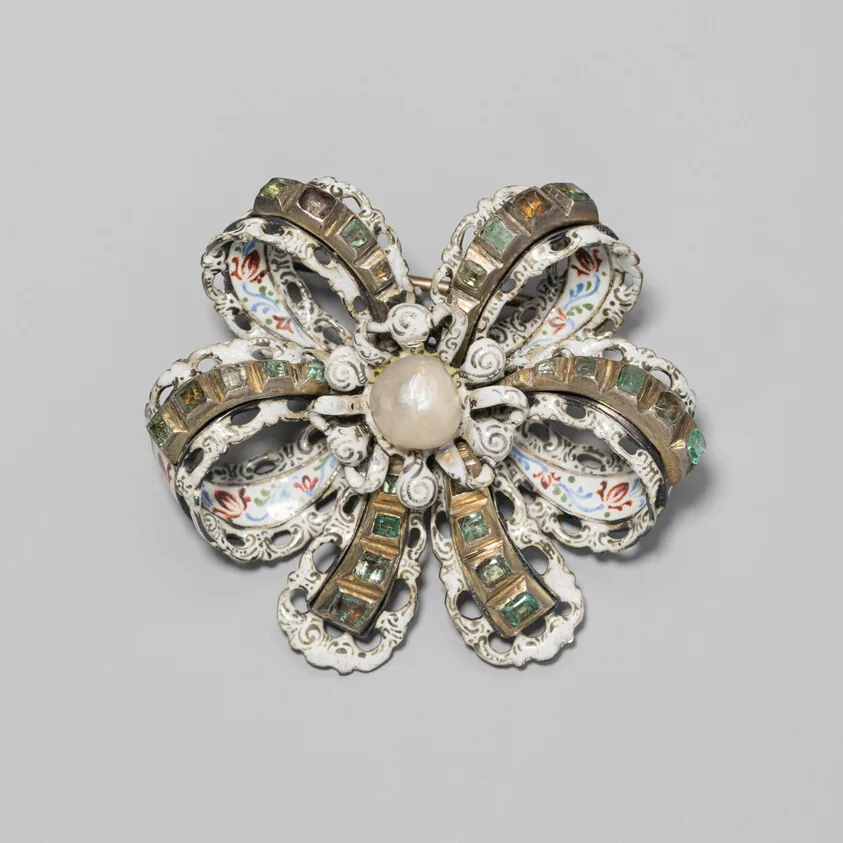
Patina is not dirt and not a defect. It is the natural development of the metal surface over time: the darkened recesses of aged silver, the warmth of gold worn over decades. Patina authenticates the age of a piece and contributes to its value. A skilled restorer distinguishes between patina worth preserving and surface contamination that can safely be removed.
Polishing a century-old piece to a mirror finish destroys something that cannot be recovered. It is not an improvement; it is a subtraction.
Preserve the Hallmark
British hallmarks are some of the most precisely regulated in the world. The assay offices in London (Goldsmiths' Company), Birmingham, Edinburgh, and Sheffield have been hallmarking since the medieval period. A hallmark records the metal, the maker, the year, and the assay office. It is irreplaceable. Resizing must be done on the opposite side from the hallmark; if that is not possible, the jeweller must advise the owner before touching the piece.
Minimum Intervention
The guiding principle of conservation-grade restoration: do exactly what is needed to restore function, nothing beyond. Fix the broken clasp. Do not polish the piece to a new-jewellery finish. Do not add missing decorative elements that were not part of the original.
This is harder than it sounds. There is always an impulse to improve. A good antique restorer resists it.
Reversibility
Any intervention on a valuable antique piece should ideally be reversible: solder with compatible alloys, materials that can be removed without damaging the original. What a restorer adds today should not make future work harder or impossible. This is a professional standard, not a legal requirement, but it distinguishes serious restorers from those who improvise.
Documentation
A responsible restorer photographs the piece before and after, and provides a written description of every intervention. This record supports insurance claims, future valuations, and the ongoing history of the object. For a piece that will be passed down again, that documentation is part of its story.
Like for Like Materials
If the original earring is 14-carat yellow gold, the replacement post must be 14-carat yellow gold. Substituting modern steel or white gold is not restoration; it is alteration. The material must match.
Upload a photo of your pet, someone you love, or an object. We'll build a 3D model and hand-cast it in pewter.




Family Heirlooms: What Is Possible
A family piece presents a particular kind of challenge, where technical work meets personal history.
A Brooch Converted to a Pendant
This is one of the most common requests. A brooch has sentimental value but no one wears brooches any longer. A jeweller adds a small bail or loop at the top, leaving everything else untouched. The brooch is preserved; it can now be worn on a chain.
The reverse is also possible: remove the pin mechanism and convert a pendant to a brooch, or split a large brooch into two earrings. These conversions are low-risk and reversible.
A Grandmother's Ring Resized for a Grandchild
The ring was worn for decades and holds enormous meaning, but it no longer fits. Resizing is standard work. The ring remains the same piece on the right finger.
If the ring has interior engraving that would be damaged by cutting, a good jeweller finds the right place to make the cut and restores any detail that is affected.
The Watch Chain Becomes a Bracelet
A grandfather's gold watch chain is often a substantial, well-made piece with strong visual character. Converting it to a bracelet requires adjusting the length slightly and fitting a contemporary clasp. The result is a fully wearable piece carrying direct continuity with whoever wore it.
Remelting With Stone Retention
If the design has aged in a way that makes the piece unwearable, the gold can be remelted and a new piece made, retaining the original stones. This is transformation rather than restoration in the strict sense, but a family stone remains in the family.
This is a significant step and should be considered only after other options have been explored. Once remelted, the original form is gone. But for a piece that would otherwise stay permanently in a drawer, it can mean a stone gets worn again.
When to Go Immediately
Some damage requires prompt attention; delay makes things worse:
- A broken clasp on a valuable piece: wearing it risks losing the piece entirely.
- A missing stone in a pavé setting: one lost pavé stone weakens the surrounding settings. More losses follow quickly.
- A cracked area near a hallmark: the crack needs to be stopped before the stamp is compromised.
- A visibly loose large stone: do not wait for it to fall out.
Where to Have It Done
A Local Master Jeweller
For standard work: polishing, clasp replacement, resizing. Any competent independent jeweller handles this. In London, Hatton Garden has a high density of independent workshop jewellers with broad restoration experience. The Birmingham Jewellery Quarter has a similar tradition, with workshops that have traded for generations. Edinburgh has its own quarter near the Royal Mile.
How to find one: maps and search, read the reviews carefully, favour those who have been trading for years.
What matters: ask to see examples of repair work, get a written quote before handing anything over, ask about the guarantee. Reputable jewellers typically offer one to three months on their work.
Specialist Restoration Studios
For complex work: enamel, antique pieces, unusual techniques. The Conservation Register, maintained by the Icon organisation, is a reliable resource for finding accredited conservators and restorers in the UK. Antique dealers are also a useful referral network.
The Original Maker
If the piece comes from a recognisable workshop, their official service can often handle repairs at a set rate. More expensive, but with full accountability.
Not at Home
The impulse to glue something at home is understandable. Resist it:
- Household adhesive does not hold reliably on jewellery
- Adhesive in joints cannot be fully removed and makes professional repair more difficult
- A professional repair after a DIY attempt costs more than going to a professional first
Insurance After Restoration
If a piece has been significantly altered or restored, a new appraisal is advisable for insurance purposes. A well-executed restoration can maintain or increase value; poor work can reduce it.
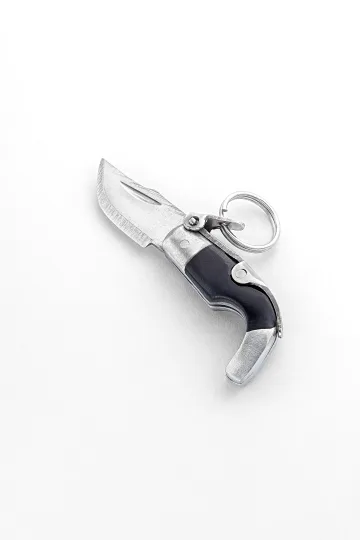
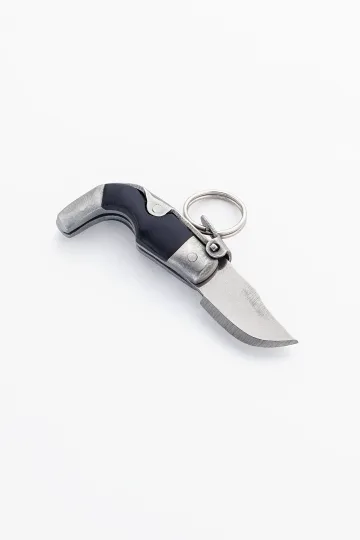
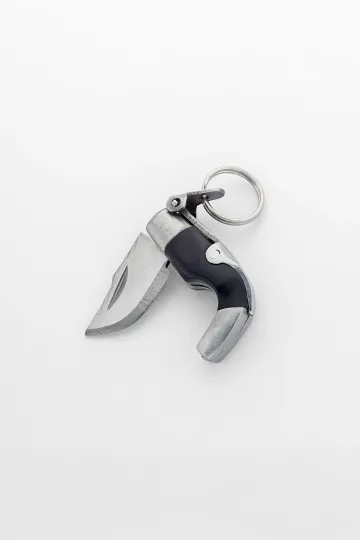
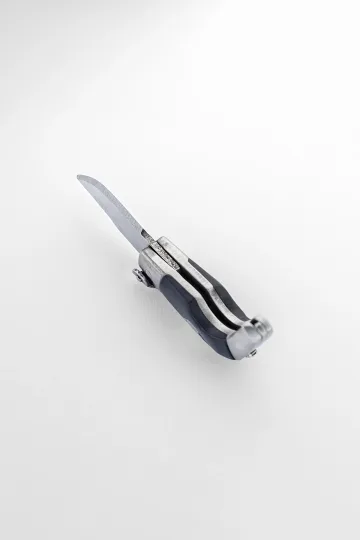
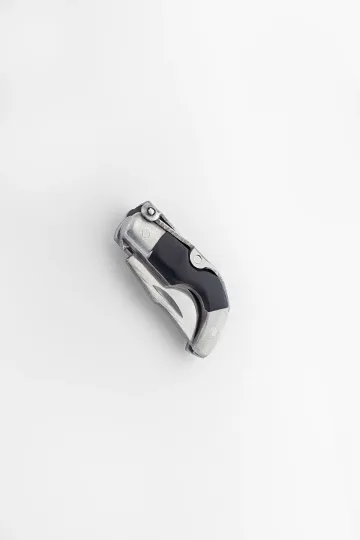
CAPAORA mini knife pendant
The 18th-century Spanish navaja in miniature: 40 mm of stainless steel, a real folding mechanism and a Palanquilla lock that clicks. An affordable gift to remember.
Authentic · Ships from Spain · 14-day returns
How to Choose a Jeweller for Restoration
Choosing a jeweller for restoration work is different from buying jewellery. You are trusting them with something that cannot be replaced, and the quality of the work has lasting consequences.
Ask for examples. Any jeweller who does restoration work regularly has photographs of repairs they have completed. If they cannot produce them, go elsewhere.
Get a written quote before work starts. This is standard practice for any professional. The quote should describe what will be done, what materials will be used, and what the cost will be. It does not need to be a legal document, but it should be clear enough that there is no ambiguity when you collect the piece.
Discuss expectations explicitly. There is a significant difference between "restore it to wearable condition" and "make it look new." Both are legitimate goals but they require different approaches. Make sure the jeweller understands which one you are asking for.
Ask about guarantees. A craftsperson who stands behind their work will offer a guarantee, typically one to three months for soldering, stone setting, and clasp replacement. If they refuse to discuss guarantees, take note.
Be cautious with pieces that have high sentimental value. If the piece is irreplaceable in emotional terms, consider leaving it with a jeweller only once you are confident in them. There is no obligation to leave anything before you are ready.
Ask whether your piece needs a specialist. A general jeweller can handle most standard repairs. Enamel work, antique pieces from specific periods, platinum work, and museum-grade restoration all require specialists. An honest jeweller will tell you when something is outside their skill set.
DIY vs Professional: Where the Line Falls
Safe to Do at Home
- Polishing silver with a proper silver cloth. This is maintenance, not restoration. A jewellery-grade silver cloth removes light tarnish without abrasion. Safe for most silver pieces without fine engraving or delicate surface work.
- Gentle cleaning with warm soapy water. Warm water, a small amount of washing-up liquid, a soft toothbrush. Suitable for gold and silver without porous stones. Not suitable for pearl, turquoise, coral, or opal.
- Proper storage. Prevention is more effective than repair.
Never at Home
- Glueing broken pieces. Adhesive in a mount joint cannot be fully removed and severely compromises professional repair.
- Attempting to re-tighten prongs by hand. Without the proper tool, the prong breaks rather than bends.
- Cleaning antique stones with household products. Many historic stones are highly sensitive to chemical exposure.
- Straightening bent pieces by force. Metal fatigued by repeated bending will crack.
- Using bleach or harsh household cleaners near jewellery. Even brief exposure to chlorine-based products can damage gold alloys, destroy solder joints, and permanently mark stones.
Leave your email, we'll send your discount code. No spam, unsubscribe anytime.
The code arrives by email, valid on your first order.
What Restoration Costs: Thinking in Segments
Talking about restoration costs in concrete figures is misleading because the range is too wide. A better framework is to think in segments relative to familiar everyday costs.
Budget work (link repair, clasp replacement, simple polish, earring post): this sits in the range of a coffee to a casual restaurant meal. It is accessible, quick, and almost always worth doing regardless of the piece's monetary value.
Mid-range work (resizing, replating, stone replacement with a common stone, prong rebuilding, straightening a bent piece): this sits in the range of a restaurant meal to a day's wages. For a piece made of quality materials or with sentimental weight, this is usually economically straightforward to justify.
Premium work (enamel repair, replacing unusual or large stones, complex antique restoration, full structural rebuilding): this can represent several days' wages or more. This level of cost is justified when the piece has clear monetary value, when it is irreplaceable in personal terms, or both.
When the math says skip it: simple costume jewellery where the cost of restoration exceeds the cost of replacement, or a piece in genuinely poor material condition where work would only extend its life briefly.
The emotional factor is real. Many people choose restoration even when it does not make economic sense in a narrow comparison, because the alternative is not "buy a similar piece." It is "never have that piece." That reasoning is sound.
Preserving Patina vs Refinishing: A Decision Worth Making Deliberately
Every restoration involves a decision about how to treat the surface of the piece. This choice often gets made by default because the owner does not think to ask. It is worth making deliberately.
Patina is the surface character accumulated over years: the gentle dulling of gold, the graduated darkening in the recesses of engraved silver, the softened edges of an old cast design. It tells the history of how the piece was used and by whom. A restorer who preserves it is treating the object as a historical artefact.
Refinishing means bringing the surface back to something approaching its original state: polishing away the surface markings, replating worn areas, sharpening engraving. A restorer who refinishes is treating the object primarily as a wearable piece.
Neither approach is wrong. They suit different situations. For a piece with significant age or historical interest, preservation is usually the right call. For a piece that is primarily worn and appreciated as jewellery, refinishing makes it more enjoyable to wear daily.
The problem arises when a piece that warrants preservation gets refinished through inattention. It takes a few minutes to discuss with a jeweller and it cannot be undone. Ask the question explicitly before leaving the piece.
Caring for a Restored Piece
Once a piece has been restored, protecting the result matters.
Each piece stored separately. Metal scratches metal. A single compartment box without dividers destroys a fresh polish within weeks.
Soft materials only. Velvet, cotton flannel, or soft silk. Synthetic materials can trap moisture.
Away from moisture and chemicals. A bathroom cabinet is the worst place to store jewellery. Perfume, hairspray, nail varnish, and hand cream all accelerate the wear of surface finishes.
Silver in anti-tarnish pouches. Zip-close pouches with anti-oxidant lining significantly slow the tarnishing of silver pieces.
Put jewellery on last, take it off first. Fragrance, hairspray, and skin products should all be dry before jewellery goes on. This is the single most effective daily habit for extending the life of any surface finish, whether on a freshly restored piece or a new one.
Check prongs on rings worn daily. Every year or so, have a jeweller look at any ring worn continuously. Prong wear is invisible to the wearer until a stone moves. This takes a few minutes and costs nothing at most workshops.
When Is a Piece Worth Restoring? A Practical Framework
The question comes up constantly: is it worth restoring this particular piece? There is no universal answer, but there are useful ways to think through it.
Start with the material. A piece made of solid gold, sterling silver, or platinum has intrinsic value in the metal regardless of condition. Restoration makes financial sense almost automatically because the cost of work is typically small relative to the value of the material. A piece in base metal or plated with a worn surface presents a different calculation.
Then consider the emotional weight. An inherited piece, a piece with specific personal history, a piece that was given at a significant moment: these carry value that does not appear on any appraisal. That value is real, even if it cannot be quantified. Many people restore pieces that a strict cost-benefit analysis would say skip, because the alternative is not "buy a similar piece": it is "lose this specific object forever."
Then assess the condition honestly. Some pieces are far gone. A shank worn to paper thickness, a stone cracked through the depth, a clasp mechanism too corroded to replace without rebuilding the whole piece: these represent situations where restoration is possible but the result may still be fragile. An honest jeweller will tell you when a piece can be made presentable but not durable. That is useful information.
Finally consider what the piece will be used for. A piece restored and worn regularly justifies a higher investment than a piece going back into a box. If the goal is to wear it, it is worth making it properly wearable. If the goal is preservation rather than wear, minimum intervention at minimum cost makes more sense.
Send a friend a discount code, they save on their first order.
Understanding Metal Behaviour in Restoration
Most people think of jewellery metal as static, but it behaves in specific ways that matter for restoration. Understanding this helps you know what to expect.
Gold work-hardens. When gold is bent, flexed, or struck repeatedly, the crystal structure of the metal changes and it becomes more rigid. This is why a thin shank worn over decades becomes brittle rather than staying soft. The jeweller can anneal the metal, heating it and allowing it to cool slowly, which restores softness. This is a routine part of many restoration procedures.
Sterling silver is more reactive than gold. It tarnishes faster, responds more visibly to changes in humidity and atmospheric conditions, and can develop pitting if stored in contact with reactive materials. The high copper content of sterling, which gives it workability, also makes it more chemically active than fine silver or platinum.
Platinum is exceptional in restoration. It is dense, does not tarnish, does not work-harden significantly, and solder joints in platinum are stronger than in gold. The limitation is practical: most jewellers do not work in platinum, and those who do charge more because the material and the techniques are different. For valuable platinum pieces, the extra cost of finding the right specialist is justified.
Solder alloys must match the parent metal. A gold ring must be soldered with a gold solder of appropriate karatage. Using the wrong solder creates a visible join and introduces a different metal into the piece. This sounds basic but it is a point of failure in poor-quality restoration work.
The Difference Between Restoration and Conservation
These two words mean different things in professional practice, and understanding the distinction matters for antique pieces.
Restoration aims to return a piece to a functional, wearable state. It may involve replacing missing parts, refinishing surfaces, and rebuilding elements that have failed. The goal is usability.
Conservation aims to stabilise a piece in its current state and prevent further deterioration without changing its appearance or replacing missing elements. It is the appropriate approach for pieces of significant historical value: museum pieces, documented antiques, objects of record. Conservation treats the piece as a primary source. It does not attempt to make it usable in the conventional sense.
Most family jewellery falls into the restoration category rather than conservation. But pieces with documented provenance, maker's marks, or connection to historical figures before the mid-twentieth century warrant a conservation approach or at least a consultation with a conservator before any work is done.
The distinction is not academic. A brooch with a documented connection to a historical figure, or a piece from a documented workshop, or an article with clear period characteristics that authenticate its date of manufacture: these are candidates for conservation, not routine restoration. Applying restoration methods to them reduces their historical and monetary value.
Materials in Focus: What Holds Up and What Does Not
Gold (solid, 14-18 carat): holds up extremely well across generations. Accepts soldering, polishing, and resizing repeatedly. The higher the karatage, the softer the metal and the more workable it is for repair, but also the less scratch-resistant. 18-carat gold is standard for fine jewellery in Europe and restores beautifully. 9-carat gold is harder, more scratch-resistant, but less pleasant to work with for a goldsmith.
Sterling silver (925): excellent for restoration. Accepts soldering easily, polishes well, tarnish is reversible. The limitation is that it scratches more readily than gold and requires more frequent polishing if worn daily.
Platinum: the best performer across time. Dense, non-reactive, and solder joints in platinum are structurally stronger than in gold. The only drawbacks are the cost of finding a skilled platinum worker and the fact that it can develop a surface haze over years that responds to polishing.
Gold-plated base metal: the plating is renewable but the base is what it is. Brass, copper alloys, and white metal can be replated indefinitely, but each replating only delays the inevitable. For pieces with genuine sentimental value, repeated replating is a valid approach. For pieces without that value, there comes a point where the exercise is not worth pursuing.
Vermeil (gold-plated sterling silver): better than plated base metal because the underlying silver has intrinsic value and can be polished independently of the plating. Vermeil can be replated and also worn without the plating if the silver underneath is of good quality.
Rolled gold and gold-filled: these have a thicker gold layer than standard plating, mechanically bonded rather than electrodeposited. They wear longer before the gold layer is breached, but once breached the base shows through. Replating rolled gold and gold-filled pieces is technically possible but the results vary.
Enamel: one of the most technically demanding materials in restoration. Vitreous enamel, the type used in most antique jewellery, is fired glass fused to metal. It can chip, crack, and flake, and repairing it requires matching colour, composition, and firing temperature. The older the enamel, the harder the match. Cloisonné, champlevé, guilloché, plique-à-jour: each technique has its own restoration challenges and requires a craftsperson who has worked specifically in that area.
Natural pearls and organic materials: pearls, coral, amber, jet, and ivory are organic materials with different restoration requirements from metal. They react to chemicals, humidity changes, and physical contact differently from inorganic materials. Pearl restringing is routine. Surface damage to pearls is not repairable in the way that metal surface damage is. Coral that has been bleached or chemically altered cannot be restored to its original colour. These materials need careful handling and specialist advice.
Frequently Asked Questions
How do I tell if my old piece is actually gold?
Look for a hallmark. Inside a ring or on the reverse of a pendant you will usually find a stamp: "375" (9-carat), "585" (14-carat), "750" (18-carat). In the UK, items over a certain weight are legally required to carry an assay office hallmark. No stamp may indicate plating or an unmarked import. A jeweller can assess it in minutes.
Can a piece be restored without the original paperwork?
Yes. A jeweller will assess the material and condition directly. Paperwork helps if available but is not required.
How long does restoration take?
Anything from an hour for a simple polish to a month for complex antique work. Most repairs fall within 1-2 weeks.
Does restoration weaken a piece?
Good restoration does not, and often strengthens it. Poor work, bad solder, wrong alloy, can weaken a piece. This is why choosing a skilled jeweller matters.
Can a wedding ring be restored after a divorce?
Technically yes. Emotionally that is your decision. Many people have the gold remelted into a different piece entirely: a pendant, earrings. That is both restoration and transformation.
Is the price fixed in advance?
Usually not entirely. It depends on what the jeweller finds when they look closely. A good jeweller assesses first, quotes, and lets you decide before any work starts.
What if the work is done badly?
Reputable studios guarantee their work. Agree the terms, including what happens if you are not satisfied, before you hand anything over.
Can silver be restored?
Yes, and silver is particularly good for restoration work. It is more workable than gold, easier to solder and polish, and the cost of the work is generally lower.
If a stone is missing, can an exact match be found?
An exact match is rare, especially for coloured stones. A close match is nearly always possible. Modern stones such as diamonds and cubic zirconias are straightforward to match. Antique stones are more difficult.
Will the hallmark survive resizing?
With careful work, yes. If the resize affects the area where the hallmark sits, there may be some distortion. A good jeweller will note this before starting.
Is a new appraisal needed after restoration?
If the piece is insured or has been significantly altered, yes. A new appraisal gives an accurate current value.
How many times can a piece be restored?
Solid gold and silver pieces can sustain multiple restorations across several generations. Plated pieces decline gradually with each replating cycle; after five or six rounds the economics and the results both diminish.
What is the difference between a repair guarantee and a piece guarantee?
A repair guarantee covers the specific work done: the solder joint, the replaced clasp, the tightened prong. It does not cover the whole piece. If the prong they tightened loosens again within the guarantee period, that is the jeweller's responsibility. If something else fails, it is not. Understand this distinction before leaving any piece for work.
Can I bring in a piece with no idea what is wrong?
Yes. A good jeweller can assess a piece and tell you what needs attention. You do not need to diagnose the problem yourself before visiting.
Buying it as a gift? Each one arrives ready to give.
 A branded Zevira box and a little card come with every order.










Conclusion
An old piece of jewellery can almost always be brought back. Do it if the piece means something to you, whether in monetary or personal terms. The cost is usually reasonable, mid segment covers most standard repairs, and the outcome can be remarkable.
A well-made piece of jewellery survives several generations, passing through several restorations along the way. That is not a sign of poor quality. It is a sign that someone kept it.
Silver, gold, wedding rings, symbolic pieces, paired sets.
About Zevira
Zevira makes jewellery in the artisan tradition of Albacete, Spain. We regularly work on inherited pieces and older items: repairing breaks, replacing damaged links, resoldering stone settings, polishing and refinishing.
What we can do with a family piece:
- Repair a broken chain or replace a clasp
- Resize a ring to fit today
- Replace a lost or damaged stone
- Polish out deep scratches
- Restore darkened silver to a bright finish
- Electroplate worn gold plating
- Rework an outdated design without losing the sentimental detail
Every piece can be personalised with engraving by a craftsperson, with the option of personal engraving. We work in sterling silver and 14-18 carat gold.