Stainless Steel Jewellery: Urban Style With Character
Steel That Holds Its Character
The alloy your chain is made from was not invented by jewellers. It came from a gunsmith hunting for a metal that could line rifle barrels. Today the 316L grade of stainless steel is called surgical: it goes into implants, scalpels and watch cases that fear neither water nor sweat. On a piece of jewellery it does not tarnish, rarely triggers an allergy, and costs about the same as a couple of cinema tickets. From that plain foundation grew a whole style: a heavy curb chain, a pendant with a hard-edged symbol, a bracelet of black stone. Cold, composed, with none of the sweetness.
The style is easy to recognise and easy to assemble, but it has its own rules. Below we break down what it is built from, why steel pushed silver out of this niche, which symbols actually work, how to put the look together without slipping into a cheap finish, and who it suits. Along the way we explain how a cold metal ended up with such a hot history.
Wear the symbol, don't just read about it. These are in stock:


















What This Style Is
In short, it is an urban aesthetic on a steel base. Three pillars hold it up: the metal itself, either cold-bright or matte in texture; natural stone playing the accent; and a graphic symbol with attitude. No scattering of tiny diamonds, no delicate sprigs. The language is different here: straight lines, weight, the contrast of matte against polished, dark stone.
The style grew out of the men's costume jewellery of the 2000s and 2010s, but there is no reason to fence it off on one side. A heavy chain and a stone pendant work just as well on anyone drawn to this aesthetic of strength and restraint. What matters here is not the wearer's gender but the mood: composure, minimal decoration, a reliance on form and material rather than the sparkle of stones.
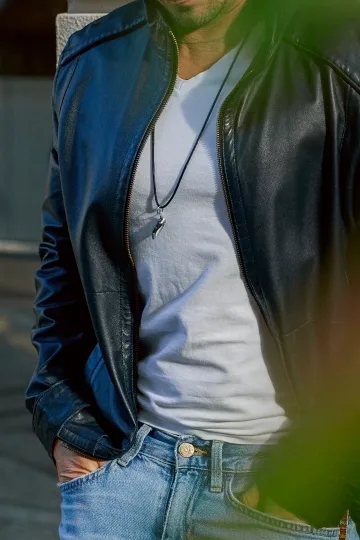
A heavy steel chain belongs over a leather jacket, not under a collar. Wear a suit and you tuck it away. No debate.
How to Wear Steel Jewellery
Over years on set the steel kit has been through dozens of looks with me, from a biker jacket to a sharp coat. Here is what actually holds a look, sorted by occasion.
How do I build a base everyday look? I recommend starting with one chain in a medium weave and one accent. A curb or rolo on the chest over a grey tee or a dark jumper works without a hitch. A light top lifts the metal, a dark one makes the chain the accent. I keep the ring and bracelet quieter so they do not fight for attention.
How do I wear a massive chain without overloading? A heavy weave like a Cuban or a Bismarck I suggest wearing empty, with no pendant: it stands on its own. Everything else I take almost to zero, at most a narrow steel bracelet. One loud piece with silence around it reads stronger than five pendants at once.
Which stone gets along with steel? I choose black onyx and tiger's eye: both sit in the cool tone of the metal without a quarrel. Onyx holds a strict, graphic line, tiger's eye brings warmth when the steel chill in a look is too much. A stone bracelet in the same palette as the chain looks whole.
Can I mix steel with gold? I would not, not in one look; the tones argue and the piece starts to look accidental. If you want warmth, I give it with a stone, not a second metal. Steel pairs calmly with itself, and that is the safer ground.
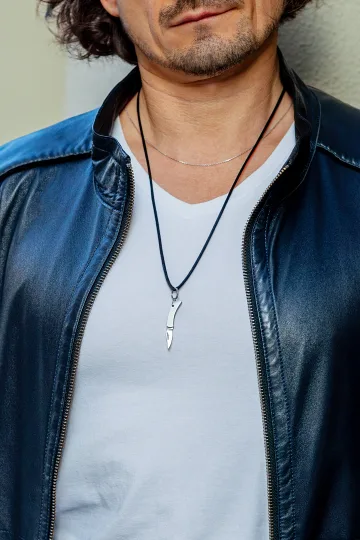
How do I match the length to the neckline? A short chain at the throat gets lost, so for a round neck I recommend a medium length with the pendant on the chest. For a V-neck I go a touch shorter so the pendant lands in the open zone. A steel ring barely resizes, so I take the size precisely; it is easy to miss here.

Turn on your camera, pick earrings, a pendant or a ring, and see the piece on yourself in real time.
Switch items in one tap.
Everything runs in your browser: no photo or video is ever uploaded.
Why Steel
Silver and gold have all but lost this niche to steel, and there are reasons. The 316L stainless grade, the surgical one, takes everything ordinary jewellery dislikes: water, sweat, the gym, daily wear without ever taking it off.
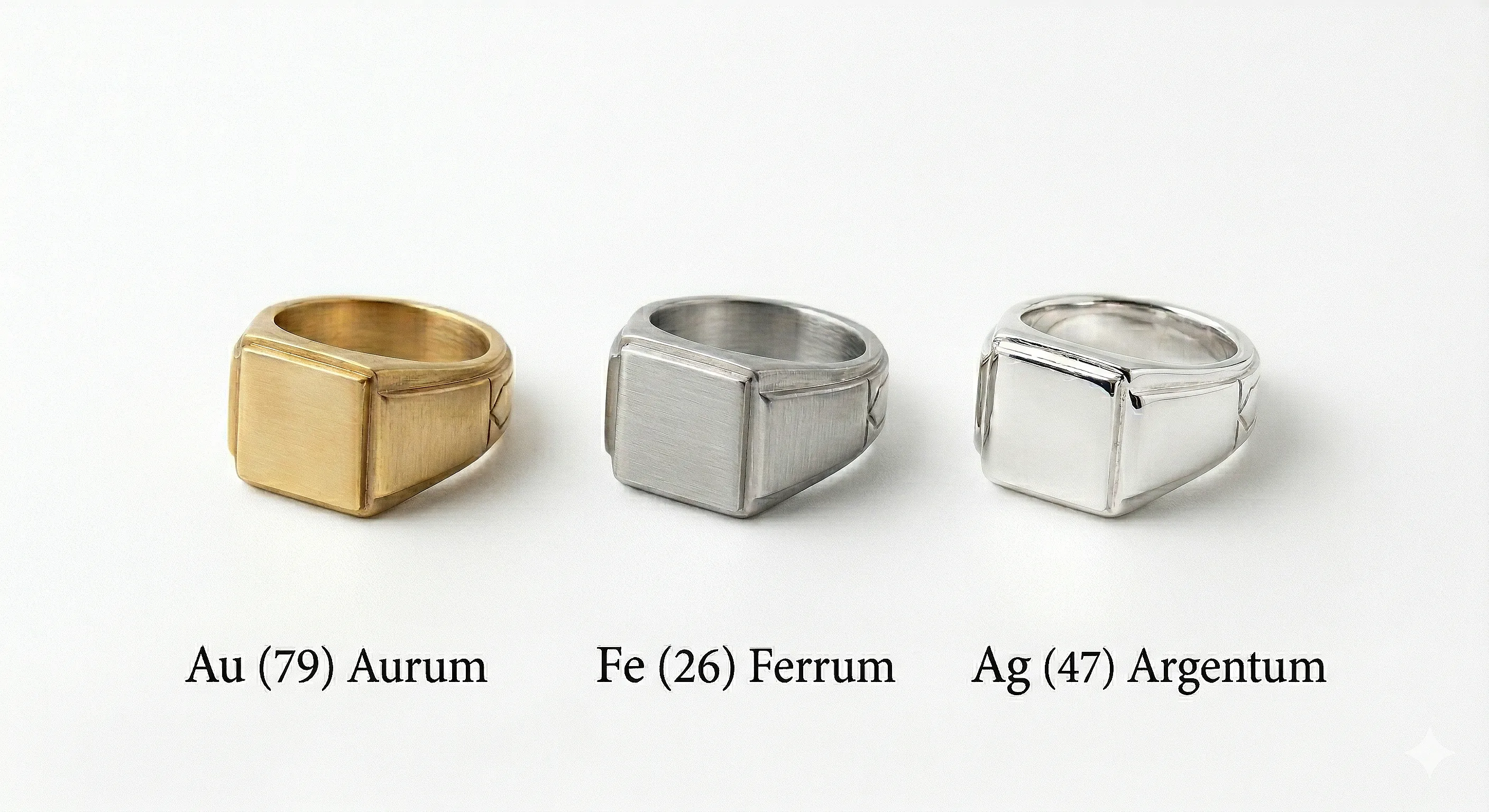
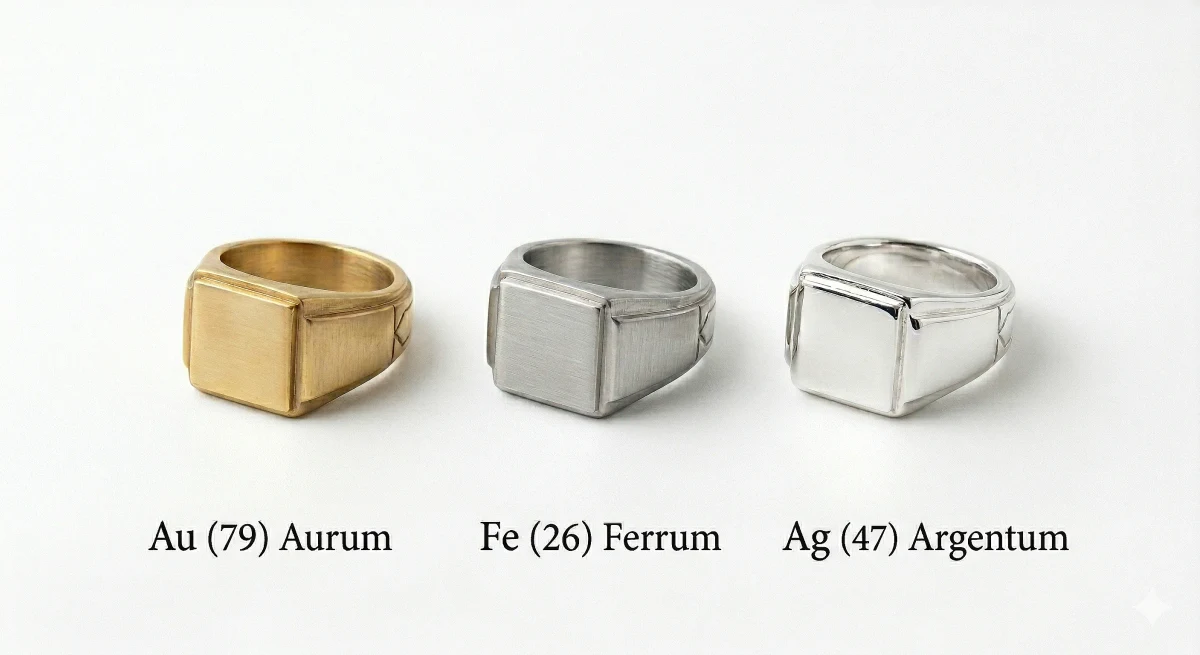
It does not tarnish and needs no cleaning, unlike silver, which dulls on a schedule. It rarely causes an allergy, because the 316L grade carries very little carbon and the free nickel that travels with it. It is tough, hard to scratch and hard to bend. And it is inexpensive, so a large steel piece stays in the budget bracket, while the same volume in silver or gold would cost many times more. A full comparison of the three metals, with their pros and cons, sits in a separate breakdown of steel, silver and brass.
Steel has a flip side too. You cannot recast it or solder it back together as easily as silver, and a ring made from it can barely be resized. But for a style where the piece is worn hard and worn every day, that is an honest trade.
Properties of Steel: Why It Does Not Rust, and What It Fears
To wear steel wisely it helps to understand how it works. No formulas, just the point.
Why Steel Does Not Rust
The whole secret is chromium. Stainless steel holds at least a tenth of it by weight, and in air the chromium forms a vanishingly thin invisible film of oxide on the surface, the so-called passive layer. That film keeps oxygen and moisture away from the iron underneath, and if you scratch it, it seals itself again at once. Ordinary iron rusts straight through because it has no such self-healing armour. The 316L grade adds molybdenum on top of that, which takes the punishment of salt water and sweat, so 316L is called both surgical and marine steel.
Allergy and Skin
Irritation from metal almost always comes from nickel. In 316L steel the nickel is locked tightly into the alloy, and the letter L means lowered carbon; together they cut the release of free nickel to a minimum. That is why steel rarely provokes a reaction even on sensitive skin, and why it is used for implants that live inside the body for years. If your skin is very fussy, look specifically for the 316L marking rather than nameless steel.
Hardness, Weight, and Why a Ring Is Not Resized
Steel is noticeably harder than silver and gold: it resists scratching, bending and denting, and holds its shape under the roughest daily wear. The flip side of that hardness is that steel barely yields to a jeweller's adjustment: a ring cannot be stretched or squeezed, and a broken link cannot be soldered as easily as a silver one. So the ring size is pinned down precisely up front. Steel carries real weight, and that honest heft in the hand is part of the style.
What Steel Fears
Stainless is hardy but not invulnerable. Long contact with concentrated chlorine, household bleach and, less often, pool water, along with strong acids, can leave pitted spots on steel, called pitting. Abrasives, sand, a stiff brush, toothpaste, scratch both polish and matte surfaces. And a black PVD coating fears not water but friction: on the edges of a ring and the links of a chain it wears thin over time. Quality 316L takes sea water in its stride.
What You Can Do With Steel and How to Care for It
You can do almost everything steel is chosen for: get it wet, take it into the shower and the gym, swim in the sea, leave it on overnight. Care is minimal: wipe it with a soft cloth, and if it gets dirty, wash it in warm water with a mild soap and a soft brush. There is no need for anti-tarnish cleaning like silver, no special products. Abrasive pastes and harsh chemicals are best avoided, especially if the steel carries a black coating.
Customer reviews
Zevira is a real jewellery shop. Genuine payments, deliveries and customer thank-yous.
🥰🥰🥰 gracias

Ok, ¡gracias! 🙂

Coatings and Finish on Steel
Bare steel is only the starting point. The colour and character of a piece come down to two layers: a coating that changes the colour of the metal, and a surface treatment that changes how it throws back the light. The two are often confused, though they are different things.
Black PVD Coating
The most popular colour of the style after plain steel. Black comes from PVD coating: in a vacuum a vanishingly thin film is deposited onto the metal (for a deep black it is usually titanium nitride with carbon, or similar compounds). It reads as an even graphite-black, matte or with a faint sheen. The coating is thin, fractions of a micron, and what it fears is not water but friction: on the edges of a ring, the faces of a clasp and the links of a chain the black wears down over time to the bright steel beneath. On a smooth, protected surface it lasts for years. Abrasives and harsh chemicals speed the wear.
Gold and Rose PVD
The same method colours steel into yellow and rose gold. This is not electroplated gilding but the same vacuum coating, so the layer is denser and lasts longer than cheap plating. Yellow PVD gives a warm golden tone, rose a soft copper-pink. It is more durable than black, because a worn pale patch does not contrast as sharply with the coating and the wear shows less. It fears the same things: strong friction and abrasives. For everyday wear it is an honest stand-in for real gold, by look.
Blue Bluing
Blue and blue-violet on steel come either from coating or from heat bluing, where the metal is heated and a thin oxide film grows on the surface, playing with colour like an oil slick or the temper colours on a knife blade. A deep, saturated blue looks rich and unusual, and breaks out of the black-and-steel palette. The heat film is thinner than PVD and more prone to scratching, so a blue piece is kept a touch more carefully away from hard friction.
Polish
A mirror finish. The surface is buffed to a shine and works like a small mirror, catching highlights and reading as the most expensive-looking steel. The flip side: polish shows fine scratches and fingerprints most clearly. Steel does not fear deep damage, but the mesh of micro-scratches from daily wear is visible. Refreshed with a polishing cloth.
Matte and Sandblast
An even, non-shiny surface. It comes from sandblasting, where a stream of fine abrasive hits the metal and turns it uniformly matte, slightly rough to the light. Matte kills highlights, looks restrained and technical, and, conveniently, hides small scratches better than polish. A sharp point of impact will leave a shiny nick, but on the whole matte lives more quietly than a mirror.
Brushed
A surface with a fine directional grain, as if combed one way with a brush. Brushed sits between mirror and matte: it glints softly, along the grain, and gives a noble, muted shine. The finish is loved because it masks the marks of wear: new scratches get lost in the pattern of the grain. Refreshing a brushed finish is harder, since it needs the right grain rather than plain buffing.
Blackened Recesses
A trick where not the whole piece but only the hollows of the relief are filled with dark, to bring out the design. Engraving, lettering or texture is blackened, while the raised faces are left bright and polished. The result is contrast: the design reads clearly, like a shadow in the grooves. On relief pendants and rings this gives depth and volume. The dark sits in the recesses, where friction is least, so it lasts better than a solid black coating.
Upload a photo of your pet, someone you love, or an object. We'll build a 3D model and hand-cast it in pewter.




Where This Style Came From
Steel in jewellery is a young thing, and its birth has an exact date. On 13 August 1913 the metallurgist Harry Brearley in Sheffield smelted, in an electric furnace, an alloy that did not rust. He was after something else entirely: arms factories needed a metal for rifle barrels that would not burn out from the inside with firing. Brearley did not save the barrels, but he noticed that the rejected samples with a high chromium content did not take on rust. He first called his alloy simply "rustless," and the words stainless steel were suggested by a local cutler: the first knives from the new steel were made in Sheffield by the summer of 1914.
Before that, gold and silver had held the status for centuries, while steel was reckoned the stuff of tools and machines. The turn in jewellery came later, when watchmakers were the first to value its durability: a steel watch case feared neither water nor wear. From the watch to the bracelet was a single step.
The style truly took off in the 2000s and 2010s, riding the fashion for large accessories. Steel gave what silver could not: a piece you noticed at an affordable price, one you were not afraid to wear every day and never take off. A heavy chain, a massive bracelet, a stone pendant stopped being luxury and became part of the everyday look. Alongside it came the fashion for natural stone in bracelets, and the very pairing of steel and onyx that we see today took shape. This style grew not from the jewellery tradition but from the street and from sport, and in that lies its honesty: it is about wearability and character, not the display case.
Natural Stone in Steel Jewellery
Here the stone works not as a precious gem but as texture and colour. So it is not diamonds that go in but dense, opaque stones with character. Each has its own history, sometimes older than the word "jeweller" itself.
Onyx and black agate. A deep matte or mirror black. The flagship stone of the style: it pulls the look together and sits well in a bracelet of round beads. Black onyx was carved back in antiquity: Greeks and Romans cut cameos and seals from it and from related sardonyx, slicing through the upper layer of the stone down to the contrasting one below. That is how they drew portraits and scenes from a dark mineral, which then served as the owner's personal signature in wax.
Hematite. Heavy, with a metallic grey-steel sheen, as if it were made of metal itself. Its name is bloody in the literal sense: it comes from the Greek haima, "blood," because a stone that looks black leaves a bright red trace as powder or on a scratch. Hematite rhymes perfectly with steel and gives that cold, technical look.
Tiger's eye. A warm exception in a cold palette. Golden-brown, with a shimmer running like a wave inside the stone. That shimmer is called chatoyancy, the cat's-eye effect, and it comes from the build of the stone: the finest parallel fibres run through it, reflecting light in a narrow band and making it slide as the stone is turned. The word itself comes from the French chatoyer, "to shimmer like a cat's eye." Tiger's eye goes into crosses and pendants when you want to add a little warmth and depth.
Lava and matte stone. A porous black volcanic stone, rough to the eye. Loved for its brutal texture and for the way it pairs with steel in bracelets. This is set basalt lava, and the pores in it are real, left by gas bubbles as the flow cooled.
Blue stone: sodalite and lapis lazuli. A deep blue, sometimes with white veins and golden flecks. This is the stone of the style's marine lean: it softens the cold of steel and gives colour without breaking the severity. Lapis lazuli was prized as far back as ancient Egypt, and later it was ground into ultramarine, the most expensive blue pigment of the old masters. In a steel bracelet it adds just enough colour to keep the piece from looking wholly monochrome.
Most often the stone appears in two formats: set into a pendant, for example a cross with a plate of tiger's eye, or as a stone bracelet on elastic or cable, where steel elements sit as spacers between the beads.
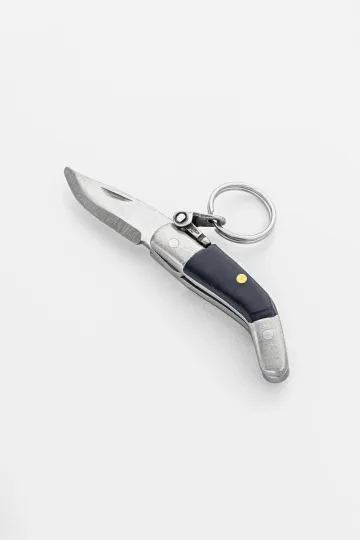
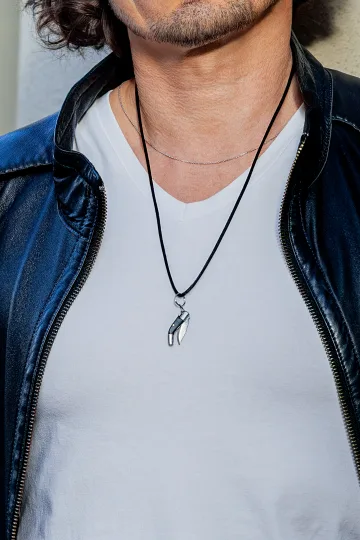
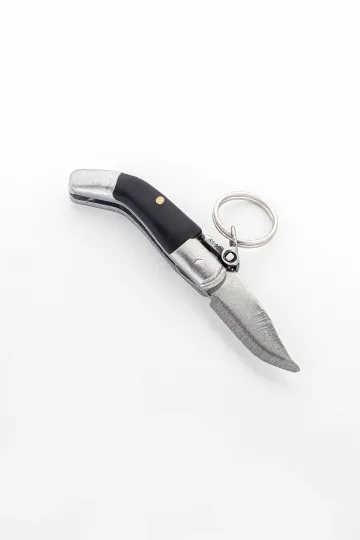
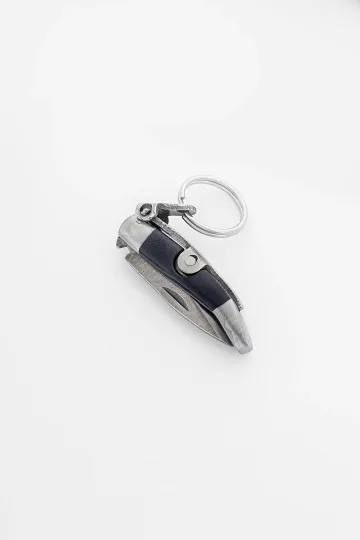
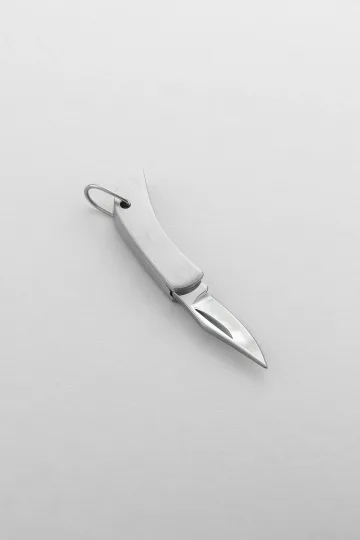
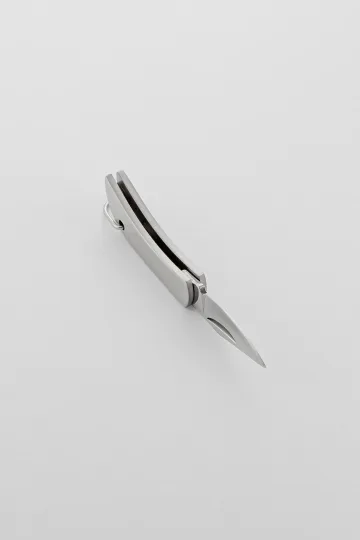
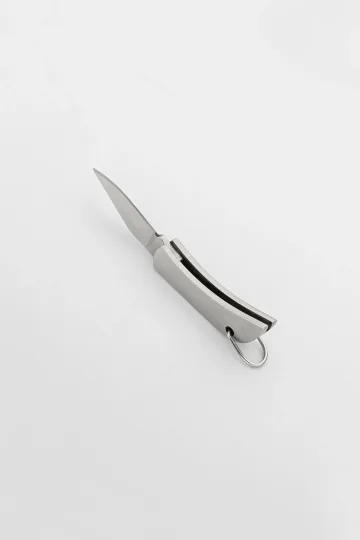
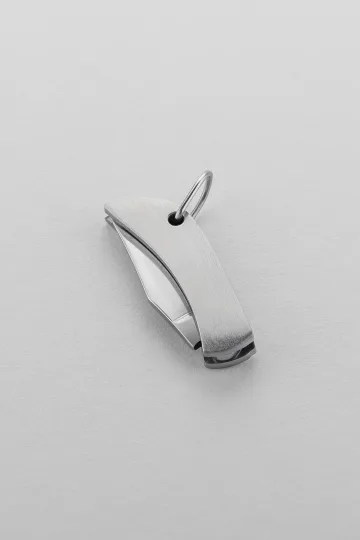
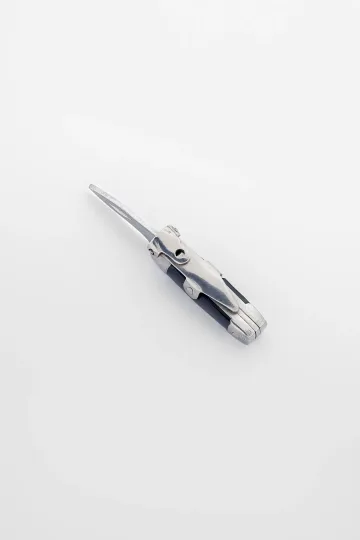
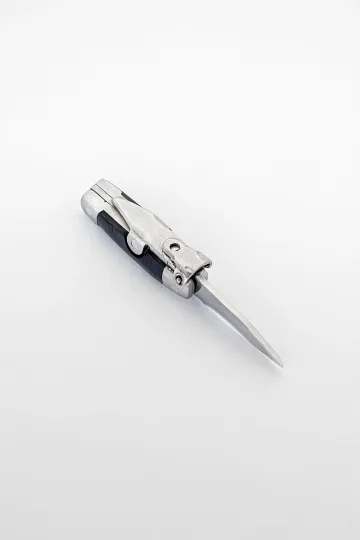
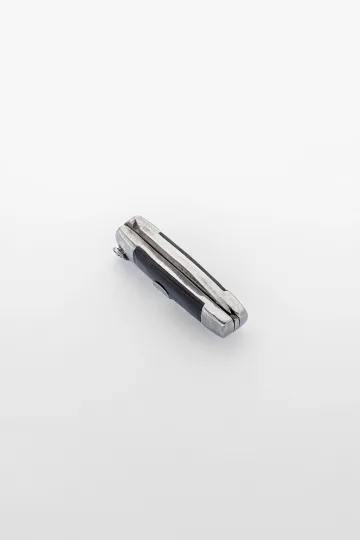
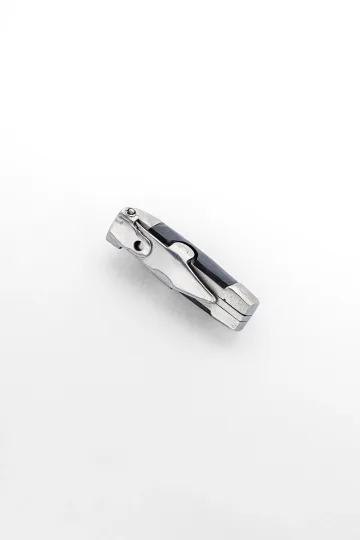
CAPAORA mini knife pendant
The 18th-century Spanish navaja in miniature: 40 mm of stainless steel, a real folding mechanism and a Palanquilla lock that clicks. An affordable gift to remember.
Authentic · Ships from Spain · 14-day returns
Symbols of the Urban Style
The symbol is the third pillar of the style, and it almost always carries an idea of strength, protection or path. There are no random cute motifs here. Each sign below works in its own way and lands with its own character.
Cross
The most common symbol of the style. Here it is large, graphic, often with a plate of stone at the centre and not a drop of sweetness. It carries two layers at once: the religious, as a symbol of faith, and the broader one, as a sign of support, of a crossing point and of protection. A Latin cross with an extended lower arm reads strict and graphic; an equal-armed one looks calmer and more abstract. It lands for anyone who wants a clear, recognisable anchor in the look, with no extra decoding. There is a separate breakdown of the cross necklace and its meanings.
Arrowhead and Arrow
A sharp, directed shape. The arrow reads as a vector: a target, forward motion, the resolve not to turn aside. Among many peoples the arrowhead was also a charm, because the point turns trouble away. In steel graphics the arrow looks spare and dynamic, without the aggression of a blade. It lands for anyone who values the idea of a path and of one's own will. The full meaning is covered in the article on the arrow.
Wave
A stylised sea wave in the spirit of a Japanese woodblock print. The image goes straight back to "The Great Wave off Kanagawa" by Katsushika Hokusai, a print of around 1831 that became one of the most reproduced images in the world. The wave stands for the elements, the force of nature and the knack of staying afloat in any storm. The sign is softer than the cross and the arrow; there is fluidity in it, so it lands for anyone closer to water and quiet strength than to weaponed severity. It and the other water signs are covered in the guide to ocean symbols.
Anchor
A sign of support and loyalty. The anchor holds a ship in place through any storm, so for centuries it has meant hope, steadfastness and "I will not be torn from my place, whatever comes." Among early Christians it was a hidden cross, a disguised symbol. In the steel style the anchor reads as calm assurance and a love of the marine theme. It lands for anyone to whom constancy and a solid foundation matter.
Compass
A sign of direction and of choosing a course. The compass stands for the search for one's own path, fidelity to one's bearings and the knack of not getting lost. A compass rose with four or eight points looks graphic and composed, and sits well in a round medallion. It lands for travellers at heart and for anyone who values the idea of "go your own way."
Ship's Wheel
The wheel of a ship's helm. A sign close to the compass, but with a different accent: the compass shows the course, while the wheel gives control over the motion. It is about keeping the helm of your own life in your own hands. A strong marine symbol for anyone used to making their own decisions.
Bit
The part of a horse's harness by which the rider steers the animal. A rare but expressive sign: it is about controlled strength, discipline and command over power rather than its suppression. The bit lands for anyone who values restraint and self-mastery, the idea of tamed energy.
Blade and Edge
A sharp, distinctive motif on the edge of weaponed aesthetics. The blade reads as resolve, protection and readiness to fight back, without literal aggression. The "sharpest" sign in the palette of the style, it asks for confidence and suits anyone drawn to a direct, uncompromising delivery. Blade-shaped pendants are a topic of their own, covered in the guide to knife pendants, and the clearest steel example is the CAPAORA knife pendant with its folding mini blade.
If you are pulled toward the darker, gothic side, with skulls and heavy symbolism, that is a neighbouring style, and we have a separate piece on gothic jewellery.
Types of Pieces
The style rests on a few basic formats, and putting a look together from them is not hard.
Chain. The base of bases. Most often it is a curb chain, a dense flat weave, or a large link. Steel allows a massive chain that in silver would be heavy and dear. Worn both bare and with a pendant.
Medallion pendant. A round or rectangular plate with a relief symbol, a wave, a compass rose, an engraving. A piece in its own right, hung on that same curb chain.
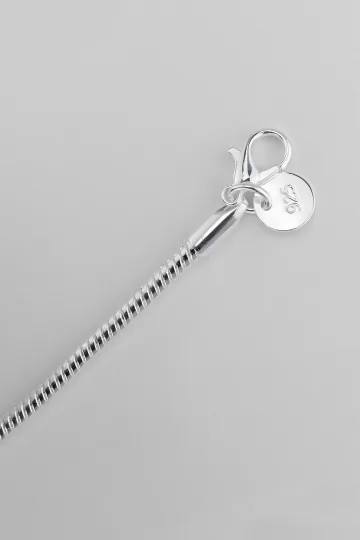
Stone bracelet. Beads of onyx, hematite or lava on a sturdy base, sometimes with steel spacers and a branded logo disc. The most popular summer and everyday format of the style.
Steel bracelet and cuff. A rigid or flexible steel bracelet, sometimes a cable with a screw clasp in the marine spirit. Worn alone or paired with a stone bracelet on the same wrist.
Ring. Wide, heavy, often with a matte centre and polished edges or with a black ceramic insert. Steel rings are barely resized, so the size is taken precisely.
Earrings. Minimalist: a stud, a small hoop, a tiny cross. In this style earrings are usually restrained and do not argue with a large pendant.
Leave your email, we'll send your discount code. No spam, unsubscribe anytime.
The code arrives by email, valid on your first order.
Types of Steel Chain Weaves
The chain is the backbone of the style, and the weave decides how it reads. Steel allows massive weaves that in silver would come out too heavy and too dear.
Curb. Flat, tightly fitted links. The most common weave of the style: the chain lies in an even ribbon, looks brutal and holds a pendant well. If in doubt, take a curb.
Figaro. An alternation of long and short links with a recognisable rhythm. A touch dressier than curb, but still weighty.
Bismarck. A complex, dense weave of interlinked rings, heavy and rich to the eye. Named after the German chancellor Otto von Bismarck, a symbol of strength and power in the nineteenth century. The chief showpiece weave, worn bare without a pendant, because it is self-sufficient.
Anchor and cobra. The anchor weave comes from marine chain, links with a bar across, and reads as a sign of the sea and of strength. Cobra is a dense square weave with a smooth surface, strict and modern.
Venetian (box). A chain of square links, thin and neat. This is the option for minimalism and for a pendant, when the chain should be an unobtrusive support rather than the hero.
Cuban. A heavy variety of curb: large, tightly fitted oval links lying in a solid ribbon. This is the very weave that hip-hop turned into a symbol of success. The loudest and weightiest in the palette, worn bare and speaking for itself.
Rolo (belcher). Simple round or slightly flattened links of equal size, joined end to end. A calm, universal weave with no fancy pattern. It holds a pendant well and does not pull attention onto itself, so it suits both minimalism and a large pendant.
Rope. Links twisted in a spiral, and the chain looks like a tightly wound rope with a spiralled relief. It glints richly and plays in the light off the helical edge. A dense, dressy weave that looks good even bare.
Foxtail. A dense weave of a double row of slanted links, giving a smooth flat ribbon with a herringbone pattern. It lies like a soft ribbon, looks heavy and dear, and reads strict and modern. Close to cobra in character, but with a more pronounced pattern.
The more massive the weave, the more self-sufficient the chain and the less it needs a pendant. Thin weaves, by contrast, ask for one.
Neighbouring Styles: Where Steel Has Its Kin
The steel urban style is not alone; it has close neighbours, and understanding the borders helps you avoid mixing the incompatible.
The biker style is the closest relative: the same heavy chains and skulls, but more aggression, more leather and weaponed symbolism. Military adds to steel the imitation dog tags, the khaki colour, the compass and anchor as signs of service and path. The marine style takes the same steel but softens it with rope weaves, the ship's wheel, the anchor and blue stone, coming out fresher and calmer. Minimalism, by contrast, drops the stone and the symbol altogether, leaving the clean form of steel, a thin chain and a smooth ring.
Gothic stands apart: there too is dark metal and skulls, but the mood is gloomier and more theatrical, with crosses, bats, heavy baroque carving. If that is where you are pulled, that is already gothic jewellery, a neighbouring style with its own rules. Understanding these borders is useful when building a look: steel with a marine lean and steel with a gothic lean are different stories, and mixing them in one set is best avoided.
Jewellery of Power Through the Ages

The steel style is young, but the very idea of jewellery as a sign of strength and status is ancient. People have worn it for thousands of years, and today's chain is the last link in a very long one.
Pharaohs wore broad chest collars that read off your rank. In Rome a citizen wore a signet ring: the impression in wax stood in for a signature, and the ring itself was a mark of class, since not everyone had the right to gold. In the Middle Ages a massive chain of office was worn over the clothing, and by it the court knew at once who stood before them and of what rank. Soldiers wore signs on the chest for centuries, and an order's star is also a piece of jewellery that speaks of a person without words.
The idea that jewellery is "not done" for a man is in fact young and short-lived: it was born in the strict bourgeois age of the nineteenth century and lasted less than a century. By the end of the twentieth, rock, hip-hop and the street had already put the heavy chain back in its place. The steel style inherits exactly that long tradition: jewellery as a sign of character and strength, not shine for the sake of shine.
Steel in Subcultures
The steel chain and the heavy bracelet truly became the code of several subcultures, and each added its own meaning.
Rock and heavy metal in the seventies and eighties made metal a literal part of the look: chains, spikes, crosses, skulls. Here steel meant rebellion and strength, and its coldness and cheapness were a plus, not a minus.
Bikers wore chains, skulls and wings as signs of the freedom of the road and of brotherhood. For them metal is about the road, speed and risk.
Hip-hop turned the massive chain into a symbol of success: a thick Cuban weave, and the larger it was, the louder the statement "I made it." Steel made this look affordable to anyone, not only to those who could afford gold.
The navy and the army gave their own layer: dog tags, the anchor, the compass, cable bracelets with a screw clasp in the spirit of ship's rigging. Here metal is about service, path and belonging.
Today's urban style took a little from each of those scenes, so a single steel chain can sound like rock, like the sea, or like the street, depending on what it is worn with.
Send a friend a discount code, they save on their first order.
How to Tell Good Steel From Cheap
Not all steel is alike, and the difference is not obvious at first glance. The key word is the grade. Good jewellery is made from 316L steel, also called surgical: it has little free nickel, does not rust and does not irritate skin. Cheap mass goods often come from 201 steel or nameless metal: it is heavier in its nickel content, and over time it can give spots and irritation.
What to look at. A 316L or Stainless Steel 316 marking is a good sign. Even, clean seams and a neat solder of the pendant to its bail speak of quality. An even colour with no yellowish streaks on the polish is also a plus. What should put you on guard: a sticky cheap coating that gives itself away with a strange shade, and too light a weight on a piece that ought to be massive. Black on steel usually comes from PVD coating, a technology born in industry and the space sector: in a vacuum a vanishingly thin layer of vaporised material is deposited onto the metal. A good coating lasts for years, a cheap one comes off in months.
Who It Suits and How to Gift It
The style suits anyone who loves restrained, weighty things and cannot stand fuss. It is an aesthetic of strength and minimalism, and it works well on people with a direct, calm character, regardless of gender. It will not land for those who love the delicate, the colourful and the sparkling: for them it will feel too cold and too strict.
As a gift, a steel piece is doubly convenient: it does not tarnish, needs no care and rarely causes an allergy, so it is hard to miss. If you are choosing jewellery as a gift and are unsure of the format, look into the general guide to jewellery gifts, which covers how to hit a person's character.
Steel: Facts That Surprise
The cold metal your chain is made from hides more history than it seems. A few verified facts that change the way you see a plain steel piece.
Stainless steel was discovered by accident, in a search for weapons. Harry Brearley in Sheffield was hunting for an alloy for rifle barrels that would not burn out from firing. On 13 August 1913 he smelted a steel with a high chromium content, noticed that the rejected samples did not rust, and so was born the material that today carries a whole style of jewellery.
Your steel is used for what is implanted in the body. The 316L grade is called surgical for a reason: by medical standards it goes into bone plates, screws and other implants. The letter L means lowered carbon, and that is exactly what answers for the resistance to corrosion and the calm on skin.
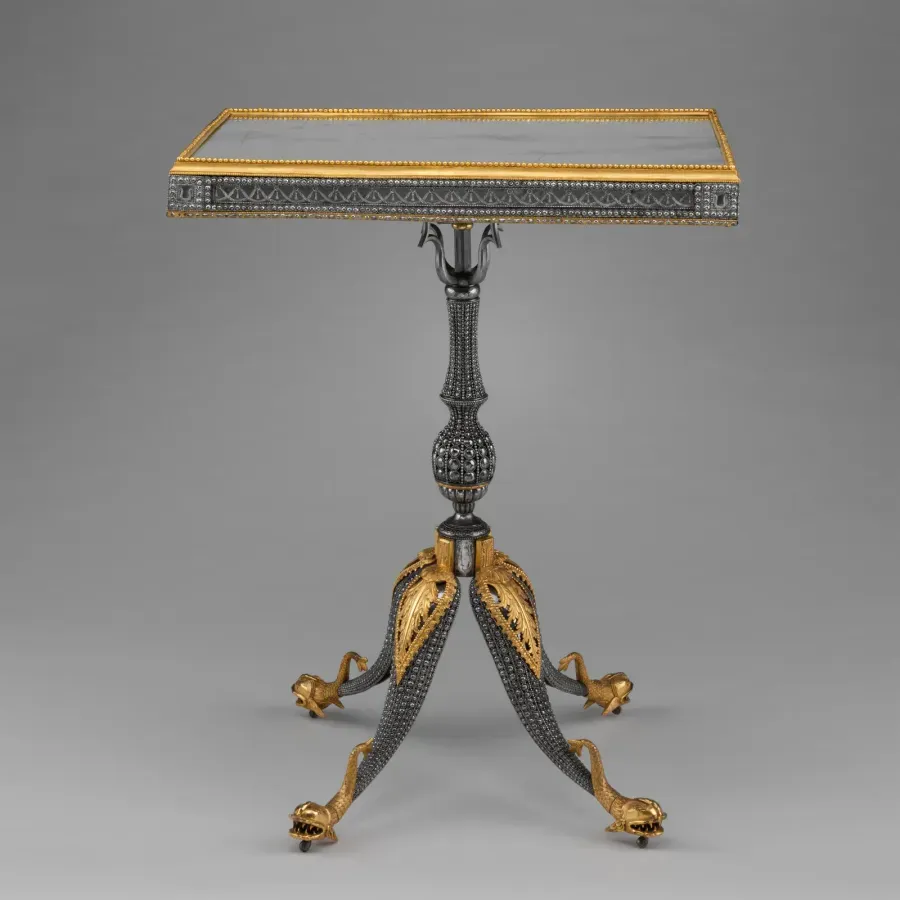
Two hundred years before the urban style, iron was already a fashionable metal. In Prussia at the start of the nineteenth century, when the country was at war with Napoleon, people were called on to hand over gold jewellery for the war effort. In return they were given cast iron, inscribed "Gold gab ich für Eisen," "I gave gold for iron." Black Berlin iron became a sign of patriotism: to wear gold was shameful, to wear iron honourable.
Hematite was named after blood. The name comes from the Greek word for "blood." The stone looks black or grey-steel, but grind it to powder or draw it across a rough surface, and it gives a bright red trace. The ancients saw blood in this and credited the stone with strength.
The shimmer of tiger's eye is optics, not magic. The golden wave that slides inside the stone as it turns is called the cat's-eye effect. Inside tiger's eye run the finest parallel fibres, and they reflect light in a narrow band. The name of the effect itself comes from the French for "to shimmer like a cat's eye."
Black onyx was the social network of antiquity. From onyx and sardonyx, in Greece and Rome, cameos and seals were carved, slicing the dark upper layer down to the pale one beneath. Such a seal in wax was a personal signature and a mark of status long before the stone ended up in a steel bracelet.
The black colour of steel came from the space sector. PVD coating, which colours steel black, was not devised for jewellery. The technology was honed in industry and in space, to harden cutting tools and parts. In a vacuum a vanishingly thin film is deposited onto the surface, and it lasts for years rather than rubbing off in a season.
The letter L in the name can be read on any scalpel. The L in the 316L grade is short for low carbon. Less carbon means less risk of corrosion along the seams after welding, which is why 316L goes into surgical instruments and equipment that is sterilised again and again. The same logic works on jewellery: less carbon means calmer skin and resistance to sweat.
The blue colour on steel is the same temper as on a knife blade. The rainbow blue-violet streaks that appear on steel when heated are what metallurgists call temper colours. It is a vanishingly thin oxide film, and its thickness sets the colour: thinner gives straw, thicker gives blue and violet. By these colours smiths judged the hardening temperature of a blade by eye for centuries. The same effect is now made deliberately on jewellery.
The sailors' blue stone once cost more than gold. Ultramarine, the rich blue pigment of the old masters, was ground from lapis lazuli, that same blue stone of the style's marine lean. The stone was brought from distant Afghan mines, and the pigment came out so expensive that it was used only for the most important things, most often the robe of the Madonna. Today the same blue lives quietly in a steel bracelet.
Bismarck was named after the chancellor, not the other way round. The dense interlinked weave took the name of Otto von Bismarck, the "iron chancellor" who unified Germany in the nineteenth century. He earned the nickname "iron" for his hard politics, and a heavy chain, ungiving to the eye, turned out to match the reputation. So a politician's name became the name of a weave worn bare, because it is self-sufficient.
Buying it as a gift? Each one arrives ready to give.
 A branded Zevira box and a little card come with every order.



Frequently Asked Questions
Does stainless steel rust? Quality 316L steel does not rust in ordinary life: you can get it wet, wear it to the gym and leave it on overnight. That is why it pushed silver out of everyday costume jewellery. Cheap nameless steel can give spots over time, but that does not apply to a good grade.
Does steel tarnish like silver? No. That is its main advantage over silver. Steel does not oxidise in air and needs no cleaning with special products. A wipe with a cloth is enough and the shine returns. The black colour on steel holds thanks to PVD coating, and on a good piece it serves for years.
Is steel costume jewellery suitable for sensitive skin? In most cases yes. The 316L grade is called surgical precisely because it has little free nickel and rarely causes a reaction; it is even used for implants. If your skin is very sensitive, it is worth making sure the 316L grade is stated rather than nameless steel.
Can you wear steel with silver or gold? With steel it is simpler to stick to one metal, the look comes out more whole. Steel and silver side by side look calm, both being cold. Yellow gold, though, often argues with steel by tone, and if you want warmth, it is better to add it with a warm stone like tiger's eye rather than a second metal.
Which stone should I choose for a steel piece? It depends on the mood. Black onyx gives a classic strict look, hematite with its steel sheen heightens the technical feel, tiger's eye adds warmth and depth, lava gives a rough texture. For a bracelet, onyx or hematite is taken more often; for a pendant inset, tiger's eye.
Will the black coating wear off? Over time, on edges and in places of strong friction, black PVD can wear down to the bright steel beneath, which is normal for any coating. On smooth, protected areas a good coating lasts for years. To make it last, steer clear of abrasives and harsh chemicals and do not rub a black piece with a stiff brush. Gold and rose PVD lasts longer than black, because the worn spot is less noticeable.
How does polish differ from matte and brushed? Polish is a mirror: it glints brightly, but on it scratches and prints show most. Matte is an even, non-shiny surface that kills highlights and hides the marks of wear better. Brushed sits between them: a soft shine along a fine grain, with scratches lost in the pattern. The choice here is about taste and about how ready you are to see the small marks of daily wear.
Is this only a men's style? No. Historically it grew out of men's costume jewellery, but the aesthetic of steel with stone reads more widely. A large chain, a stone bracelet and a graphic pendant suit anyone drawn to this composed, minimalist strength. The difference is more often in size and in how the look is built than in the style itself.
Steel, silver, gold, symbolism, pendants, stone bracelets, chains.
About Zevira
Zevira is a Spanish jewellery brand from Albacete. Steel jewellery with natural stone and graphic symbolism is one of the catalogue categories. We love pieces with character and an honest material, not empty shine. Current pieces and details are in the catalogue.