Steel Jewellery for Summer: Why People Choose It and How to Wear It
A scene on the beach
Mid-July. A friend comes back from two weeks on the Mediterranean. Her bag smells of sun cream, her swimsuit has faded a little from the salt, but the thin chain on her neck and the ring on her finger look exactly as they did the morning she flew out. No stains, no tarnish, no rusty film. She never took them off once. Not in the sea, not in the pool, not under an outdoor shower.
This is not magic. It is surgical steel 316L.
Summer reveals the difference between materials better than any lab test. Silver darkens from sweat and chlorine. Electroplated gold cracks after the first week near water. Brass turns green by the third day. Steel stays steel. Not because it is cheaper or simpler, but because its chemistry is different: a passive oxide layer on the surface protects the metal better than any coating.
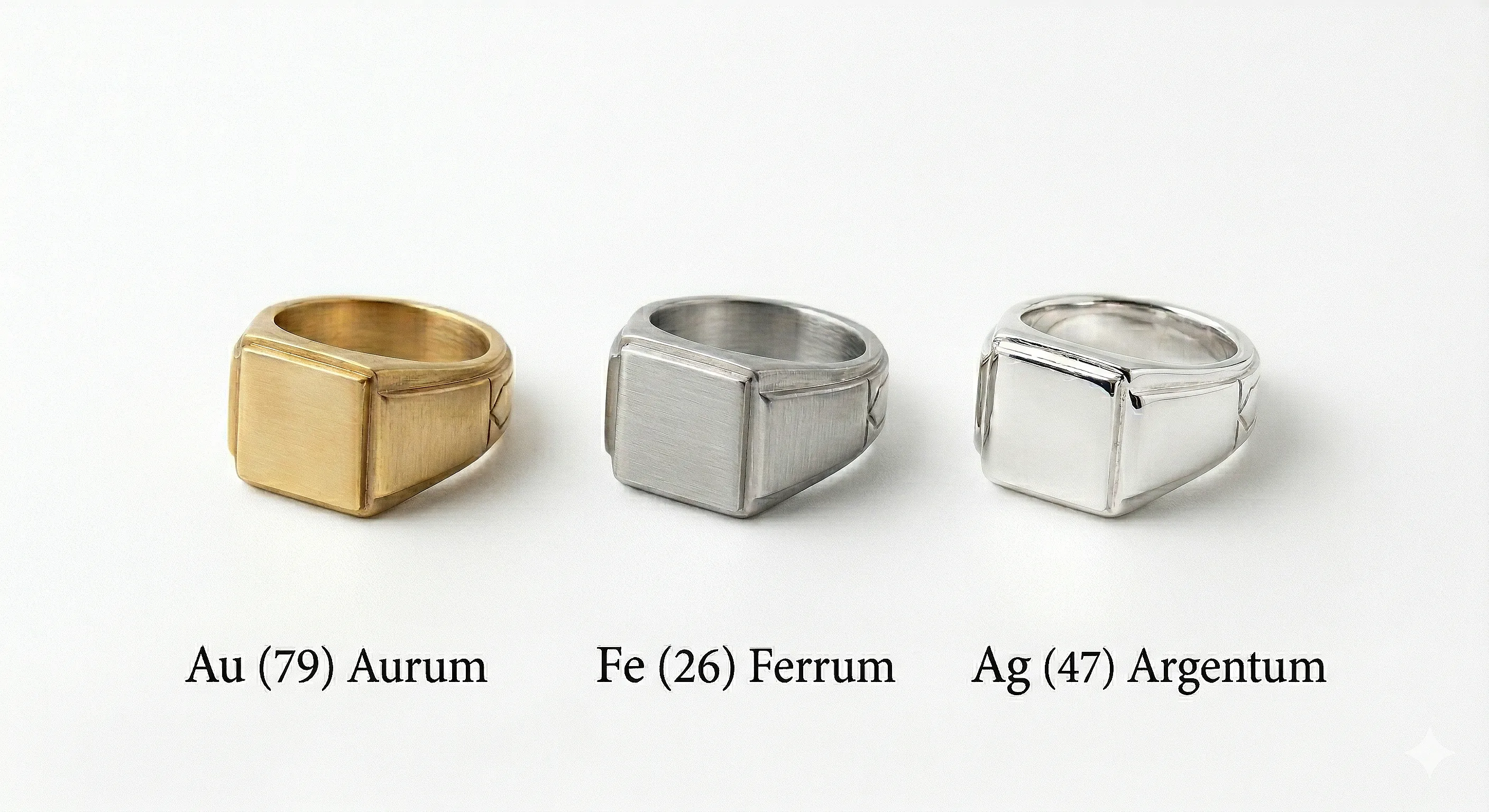
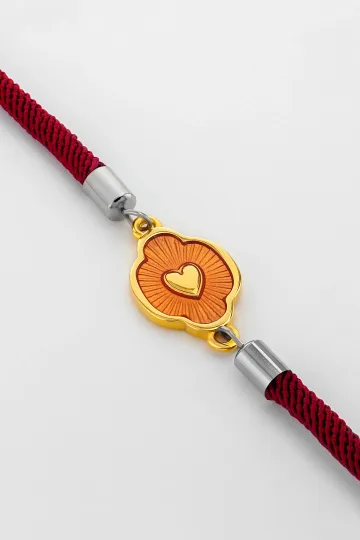
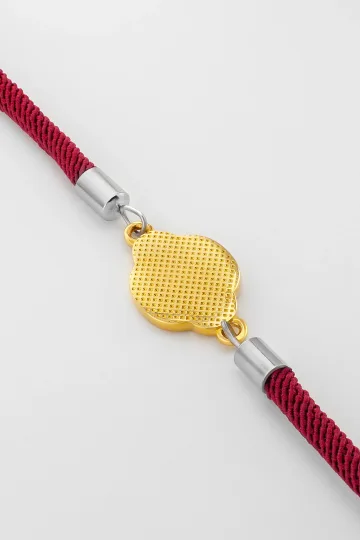
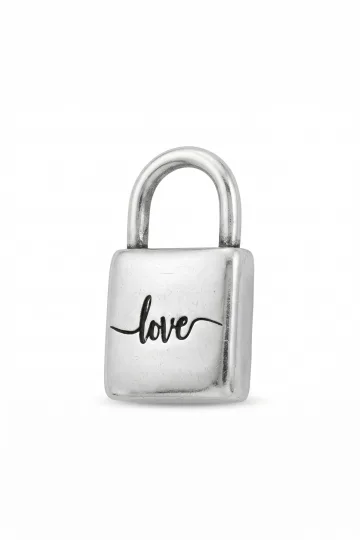
Wear the symbol, don't just read about it. These are in stock:
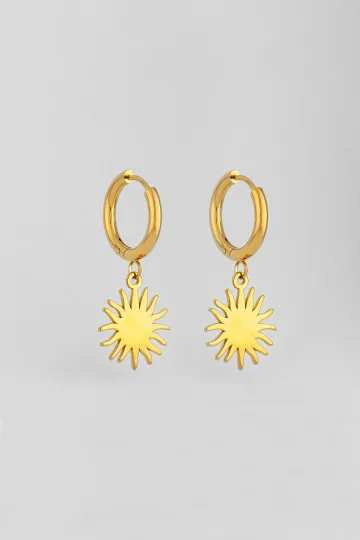
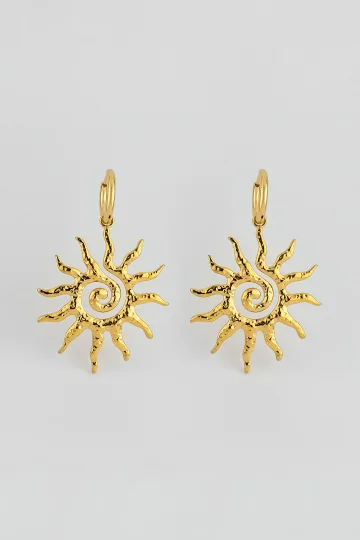
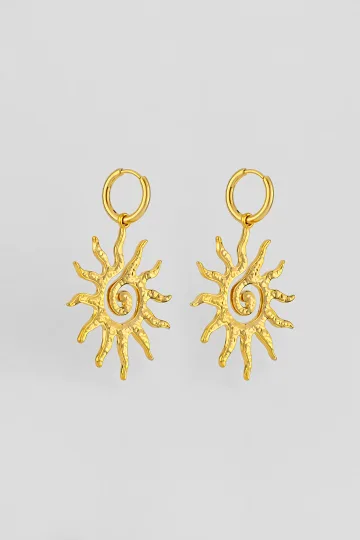


Jewellery has a different job in summer than in winter. In the cold months it hides under clothes, barely seen, never touching water or strong sun. In summer a piece sits on bare skin most of the day: in water, under sun, under a layer of cream, under sweat. It is visible. And it has to survive all of that without losing its look.
That is exactly why the choice of material in summer deserves a conscious decision rather than habit. And it is why 316L steel became the first choice for people who want jewellery, not the chore of looking after jewellery.
A telling detail: in the souvenir and beach shops of seaside resorts, the share of steel pieces in the overall range is noticeably higher than in city jewellers. Resort sellers know what people heading to the sea actually buy. They want something practical. Silver is on sale there too, but steel bracelets, hoops and anklets usually outnumber it several times over.
This article is about why steel jewellery has earned a firm place in the wardrobe of people who move a lot, take holidays and want their jewellery to work rather than ask for care.
What surgical steel 316L actually is
Surgical steel 316L is a stainless austenitic steel with a precisely defined composition. The number 316 marks the grade of the alloy. The letter L (for low carbon) means the carbon content does not exceed 0.03%, which lowers the risk of intergranular corrosion.
Composition by the main elements:
- Iron: the base (around 62%)
- Chromium: 16 to 18 percent
- Nickel: 10 to 14 percent
- Molybdenum: 2 to 3 percent
- Carbon: no more than 0.03%
It is the molybdenum that sets grade 316 apart from the cheaper 304: it builds an extra barrier against pitting corrosion in chloride environments. Put simply, in sea water and in a chlorinated pool, 316L holds firm where 304 would already start to react.
When chromium meets oxygen it forms a thin passive layer of chromium oxide, just a few nanometres thick. This layer is self-healing: scratch it, and it reforms in the presence of oxygen. It is not a coating you can scrape off. It is a property of the metal itself.
In medicine, 316L is used for surgical instruments, implants, orthopaedic constructions and body piercing. The ASTM F139 standard governs the requirements for this grade of steel in medical devices. Jewellery made from 316L meets the same biocompatibility standard.
A point about the name matters here. The terms "medical steel", "surgical steel" and "316L stainless steel" are often used as synonyms in a jewellery context. On a label or product description you should look specifically for the numbers 316L or 316LVM: that is a defined grade with a defined composition. The words "surgical" and "medical" on their own, without a grade, are not standardised trade terms and can refer to different alloys.
The austenitic structure of 316L deserves a line of its own. Austenite is a crystalline structure of iron that forms at a certain alloy composition with nickel. It is precisely that austenitic structure that makes 316L non-magnetic, corrosion-resistant and biocompatible all at once. Martensitic stainless steels (the 420 series, for example) do not rust either, but they are magnetic and far less biocompatible for jewellery use.
A steel hoop dives into the sea and comes out grinning. Silver just sulks and tarnishes on the sand, so leave it at home.
What to wear steel jewellery with in summer
Over seasons by the water, steel chains, hoops and anklets have passed through dozens of looks on my sets. Here is what actually holds a look together at the sea, rather than giving up by lunchtime.
What should I wear on an ordinary beach day? With linen, a strappy sundress or a swimsuit I recommend a thin chain of 40 to 45 cm in an open neckline, medium hoops and a steel anklet. The rule is simple: one noticeable piece plus a couple of very thin ones. A handful all at once turns a beach look into a flea market.
And what do I choose for the office in the heat? When shoulders are bare but the dress code holds, I suggest a geometric pendant on a short chain and neat studs. I choose matte steel over polished: it reads more soberly and does not flash under meeting-room lights. One bracelet, narrow, no charms.
How do I build an evening look? For dinner by the water and a walk after sunset I choose contrast: gold PVD on tanned skin gives a warm gleam that looks costlier in the evening than cold silver. Long earrings lengthen the silhouette, a large hoop adds character. For a deep neckline I recommend either a long chain or a short one at the throat, but never both at once.
Can I mix metals and layers? Yes, and I do it on purpose. Two or three chains of different lengths and weaves make a soft layered effect without clutter. I pair silvery steel and gold PVD only with a strict proportion: one warm accent, the rest cool. A stack of two or three thin rings on one hand looks more current than a single massive one.
Who does steel suit, and what should I look at? It suits anyone who likes clean lines and does not want to fuss over upkeep. Against tanned skin I suggest neutral polished steel or warm PVD: cold silver on a strong tan looks pale. And match the length to the neckline in advance, not the other way round: the chain should sit in the open area rather than vanish under fabric.
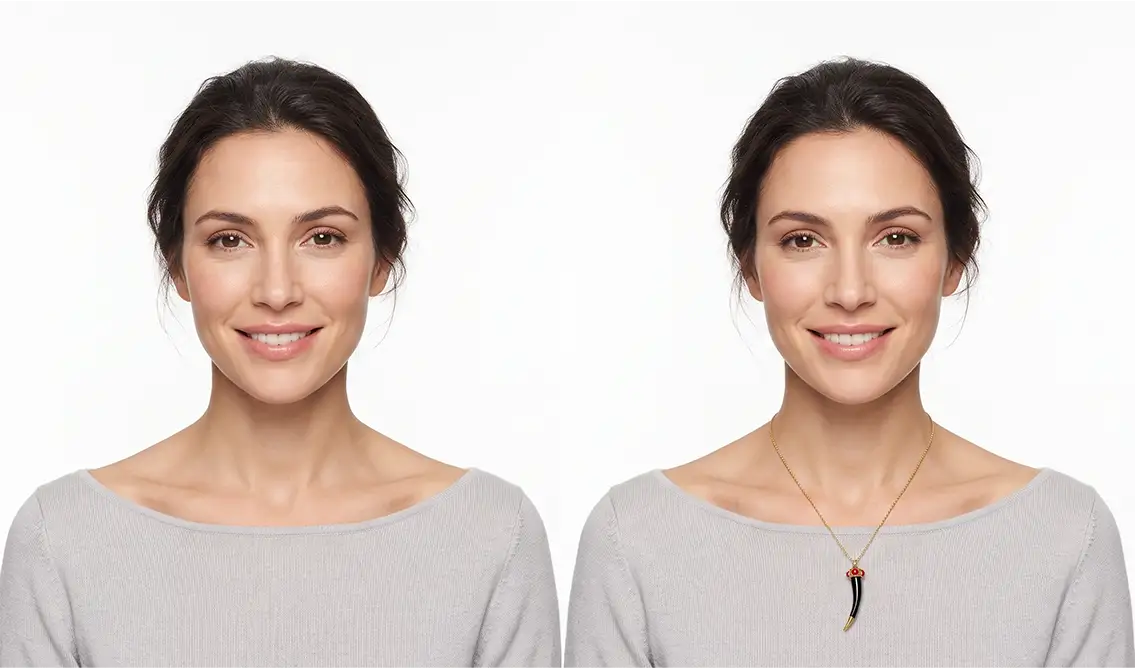
Turn on your camera, pick earrings, a pendant or a ring, and see the piece on yourself in real time.
Switch items in one tap.
Everything runs in your browser: no photo or video is ever uploaded.
316L versus 304 versus 904L versus 316LVM
Different grades of stainless steel behave differently, and that difference decides a lot when you are choosing jewellery.
316L is the standard for jewellery and piercing. It offers the best balance of corrosion resistance, biocompatibility and price. This is the grade used in most quality pieces on the market.
304 (or 18/8) is the common stainless steel used for cutlery, sinks and railings. It contains 18% chromium and 8% nickel, but no molybdenum. In fresh water it holds up perfectly; in sea water and chlorinated environments it eventually develops pitting. For jewellery it is fine for everyday wear away from water, but in a seaside summer it loses to 316L.
904L is a super-austenitic steel with higher chromium (19 to 23%), nickel (23 to 28%) and molybdenum (4 to 5%), plus added copper. It is more corrosion-resistant than 316L, polishes to a mirror shine more easily, and costs two to four times more. It is used mainly in watchmaking. In jewellery it is rare because of the high cost of working it.
316LVM is 316L produced by vacuum melting. It is cleaner, with a minimum of non-metallic inclusions. It is used in high-precision medical implants and premium piercing. For most jewellery the difference from ordinary 316L is negligible in practice.
The conclusion is simple: 316L is the right choice for summer jewellery. 904L is better on paper, but the gap only shows in extreme conditions, while the price is much higher.
There is also a difference between coated and uncoated stainless steel. Some makers use grade 304 as a base for a PVD coating and sell such pieces as "stainless steel with PVD". Technically that is honest. But if the PVD layer wears through to the base somewhere and that base meets sea water, 304 will pit faster than 316L. If maximum reliability matters to you, ask about the grade of the base metal as well as the presence of a coating when you buy.
Steel versus 925 silver: chemistry in water, sweat and cream
This comparison matters because silver was long treated as the standard in mid-range jewellery. But silver has chemical weak spots that show up especially in summer.
925 silver contains 92.5% pure silver and 7.5% alloy, usually copper. That copper is the source of most problems, and the same copper explains why brass behaves even worse in water than silver: if you are curious about how brass, steel and silver behave on the skin and in water compared with one another, that piece breaks the trio down metal by metal.
Chlorine in a pool reacts with the copper in 925 silver and forms copper chloride, a greenish film. At the same time, chlorine oxidises the silver surface itself. The result after a few days in the pool: a darkened piece with uneven blotches.
Sea salt acts differently: sodium chloride speeds up the oxidation of silver, especially in the presence of UV. That is why silver jewellery darkens faster on the beach than at home.
Sweat contains salts, urea and weak organic acids. With prolonged contact they form a dark film of silver sulphide, the very black layer you have to rub off with a polishing cloth. It happens most quickly in the heat, when perspiration increases.
Sun cream and its chemical filters (avobenzone, oxybenzone) react with the silver surface and speed up its darkening.
316L steel barely reacts to any of this. There is no copper in the mix. No sulphide reaction. The passive chromium oxide layer is chemically inert towards chlorides, sulphates, the organic acids in sweat and the components of creams. A steel piece can stay on in the sea, in the pool, in the gym and in the shower: it will remain the same.
For summer wear with an active lifestyle, steel is more practical than silver. Silver is magnificent in an evening setting, worn indoors, as a material for finely worked jewellery. But on the beach silver loses to steel on every chemical measure.
It is rarely mentioned: with constant immersion in sea water, 925 silver begins to form silver chloride (AgCl), a whitish or yellowish film. The reaction is chemically reversible, but removing it needs professional cleaning or special reagents. A polishing cloth does not help here. 316L steel forms no such compounds with chlorides.
For those who want to wear silver after all, there is a rhodium-plated option. Rhodium is one of the platinum metals, hard and corrosion-resistant. Rhodium-plated silver holds up better in water. But rhodium plating is also electroplating: a thin layer that wears away over time. Steel in this comparison gets by without coatings and lasts longer.
For more on how different metals behave in water, read the article can you wear jewellery in the shower, pool and sea.
Steel versus gold plating: what PVD coating is
Gold plating on jewellery comes in different forms, and the difference lies in the technology.
Electroplated gold is a thin layer of gold or its alloy applied by an electrochemical method. The thickness is 0.1 to 1.5 microns for most jewellery. This kind of plating is sensitive to friction, chlorine, salt and alkaline environments. In summer, with active wear, it starts to rub off on the high points of a ring, on clasps, on the edges of chain links, after roughly a few weeks. Under the plating there is often brass or a zinc alloy, which give a green or black film once exposed.
PVD coating (Physical Vapour Deposition) is a fundamentally different technology. It is physical deposition from a vapour inside a vacuum chamber. Atoms of metal or metal nitride literally bond to the surface at a molecular level and form a coating 1 to 5 microns thick. The adhesion is far higher than with electroplating, and the hardness of the coating is comparable to ceramic.
PVD coating on steel produces gold, rose-gold, black (titanium nitride) and other colours without weakening the base. Such a coating holds up far longer in contact with water, sun and sweat than electroplating. It does not react to UV: the colour in the coating comes not from paint but from the physical structure of the nitride layer.
The limit of PVD is abrasive friction. If you constantly rub a piece against hard surfaces, the coating gradually wears at the points of contact. In ordinary wear, summer included, that is not a problem.
A detailed breakdown of PVD and a comparison with electroplated gold is in the article what PVD coating is and how it differs from gold plating.
Customer reviews
Zevira is a real jewellery shop. Genuine payments, deliveries and customer thank-yous.
🥰🥰🥰 gracias
Ok, ¡gracias! 🙂
Steel versus titanium and niobium
For people with serious metal sensitivity, the conversation about jewellery often comes down to these three materials.
Titanium is an entirely hypoallergenic material. It contains no nickel at all. It is used in military aviation, orthopaedics and implants. It is light, strong and resistant to corrosion in sea water. Its weak point: it is harder to work, with fewer options for shapes and finishes. In a jewellery context it appears mostly in premium piercing and in clean, understated men's pieces.
Niobium is a rare metal with almost zero allergic potential. It is softer than titanium and anodises well into bright colours. It is used in piercing and in specialist jewellery workshops. Niobium pieces are harder to find.
316L steel contains nickel, which could in theory be a problem for people with a nickel allergy. In practice, the nickel within the alloy matrix is not released in dangerous amounts: the diffusion rate on skin contact is about 0.01 µg/cm² per week, many times below the threshold set by European regulators.
The verdict: for most people 316L is safe. For people with a confirmed nickel allergy, titanium is more reliable. Niobium is ideal for those who want coloured jewellery without any risk at all.
One more option people sometimes weigh up: 18-carat gold (750). It is inert and hypoallergenic, but soft. On the beach, gold scratches against sand and stones far faster than steel. For an active summer holiday that is a weak point. 14-carat gold (585) contains alloys that may react to chlorine and salt with certain alloy compositions. To be honest, for the beach season steel is more practical even compared with gold, if the priority is function rather than the status of the metal.
Why steel is ideal for the beach, pool, gym and shower
Let us take each scenario.
Beach and sea water. Sea water is 3.5% salt, plus iodides, sulphates and organic impurities. For most metals this is an aggressive environment. 316L, with its molybdenum barrier against pitting, handles it better than the competition. No darkening, no stains. A rinse in fresh water after a swim is all it needs.
Pool and chlorine. Chlorine in pools is present at 1 to 3 mg/l. For silver and some alloys that is enough for a visible reaction with daily swimming. 316L practically does not react to such chlorine levels at all.
Gym and sweat. Sweat during intense exercise has a pH of 4.5 to 7 and contains salts, ammonium and lactate. Steel is inert to these. You can wear the jewellery through a workout without consequences.
Shower and shampoo. A soapy environment is alkaline (pH 8 to 10). Silver gradually reacts in alkali. Steel is stable across the full pH range of 3 to 11 at everyday concentrations.
Sun cream. Chemical filters contain organic molecules and sometimes alcohols. They have practically no effect on steel.
Hot spring, thermal spa. Water in thermal springs often contains sulphur, sulphates and bicarbonates. Silver darkens in such water instantly, in a single visit. 316L steel stays stable even in these conditions. If a holiday includes a visit to thermal baths, steel is the only sensible choice among the available metals.
Snorkelling and diving. At shallow depths (up to 30 metres) water pressure does not affect jewellery, but salinity and immersion time are at their highest. Steel pieces with a clicker clasp hold securely. Earrings with a fish-hook fitting or an open ring can come undone with vigorous movement in water. Choose designs with a fixed clasp.
The overall conclusion: steel jewellery does not need to come off in any summer scenario. That does not mean you can never take it off, but it does mean steel does not punish you for forgetting.
For more on storing jewellery and how it behaves on the beach, read the article jewellery for the beach: what will not break.
Upload a photo of your pet, someone you love, or an object. We'll build a 3D model and hand-cast it in pewter.



Allergy: how hypoallergenic 316L steel really is
Nickel is the most common metal allergen. According to dermatological studies, between 10 and 20% of women and around 1 to 2% of men in Europe react to nickel. So the nickel-in-steel question comes up often.
The facts:
316L steel contains 10 to 14% nickel by mass. That is not a small share. However, the nickel in the steel alloy is in a bound state within the crystal lattice. The free nickel ion that actually causes the allergy is released from the surface of 316L in a negligible amount.
European regulation EN 1811:2023 sets a nickel release limit for jewellery: no more than 0.5 µg/cm² per week for items in contact with pierced skin (piercing), and no more than 1.0 µg/cm² per week for other jewellery. Certified 316L steel releases around 0.01 µg/cm² per week: fifty times below the piercing limit.
ASTM F139 is the American standard for implantable surgical 316L steel items. Steel to this standard is used in surgical implants that stay in the body for years.
In practice: Most people with nickel sensitivity wear certified 316L jewellery without trouble. A reaction is possible in people with very high sensitivity, especially around piercings or with prolonged contact on damp skin. If you know you react sharply to nickel, titanium or niobium is the better choice.
In summer an allergic reaction to metal shows up faster and more strongly. The skin under the piece is damp with sweat, the pores are open in the heat. That speeds up any interaction between skin and metal ions. If you have never tested your sensitivity to nickel, summer is a good time to do it: wear a steel piece for a week and watch. Redness, itching or a rash under the piece is a signal to see a dermatologist.
For everyone else, 316L is a safe and practical material.
A detailed breakdown of nickel allergy and how to test your own sensitivity is in the article nickel allergy in jewellery.
Types of summer steel jewellery
Summer brings specific demands to jewellery. Minimal detail, maximum durability, and a piece that reads well against tanned skin.
Chains. Anchor, curb, Venetian, Singapore, cable. All of them work well in steel. Anchor and curb are the strongest: their wide links do not twist or tear with active movement in water. For summer the ideal is a medium thickness of 2 to 4 mm: noticeable enough, yet not heavy.
Bracelets. Rigid bangles in steel do not bend or break against the sea floor or the edge of a pool. Woven steel bracelets with a magnetic clasp are handy for quick removal. Anchor bracelets rhyme thematically with the sea.
Rings. Simple wide steel rings keep their shape. Flat, smooth ones catch debris and seaweed less often. For the beach, rings with no stones or with stones in a closed setting are ideal.
Hoop earrings. A classic of the beach season. Steel hoops 20 to 40 mm in diameter with a clicker clasp hold securely and do not open in water. No risk of losing an earring in the sea.
Pendants. Geometric shapes: disc, rectangle, triangle. Sea symbols: anchor, wave, shell. Each of these summer motifs carries its own meaning in jewellery, and a pendant with one is worn for more than its shape. Minimalist pendants on a short chain (40 to 45 cm) look good against a neckline.
Anklets. A steel anklet is something people often buy specifically for summer. No need to take it off on the beach. It does not darken from sea water. It pairs well with tanned skin. Before a trip to the sea it helps to know in advance which jewellery will survive the beach and which will break or get lost in the sand and water, so you do not pack the wrong things.
Steel piercing jewellery. Spiral, clicker, segment ring. 316L is the standard material for piercing. In summer good steel matters especially for ear, nose and navel piercings: chlorine and salt do not irritate a healing piercing with the right material. If the piercing is fresh, it is worth looking separately at how sea salt affects jewellery and healing piercings, because the rules for an unhealed channel are stricter than for ordinary jewellery.
Charm bracelets and stoppers. A steel base for a charm bracelet is a good solution: it does not change colour, does not oxidise and serves as a backdrop for colourful charms. The charms are also best chosen in steel or with enamel, so the bracelet keeps a single look all season.
Minimalist studs. Small steel stud earrings often stay in the ears around the clock. In summer that is especially convenient: no need to remove them before the pool or the sea. Small studs with a steel post hold more securely than fragile earrings with thin hoops that can deform during physical activity.



PVD coatings: do they survive the sea
Gold, rose-gold and black PVD coatings on steel are not a thin layer of dye but a nitride or carbide film. Titanium nitride (TiN) is golden. Chromium nitride (CrN) is silvery grey. Titanium carbonitride (TiCN) is black or dark grey.
These coatings:
- Do not react to UV. The colour comes from structure, not pigment.
- Resist sea water in ordinary wear.
- Have a Vickers hardness of 1500 to 3000 HV, compared with 200 to 300 HV for ordinary stainless steel.
- Are 1 to 5 microns thick, but adhere far better than electroplating.
The weak spots of PVD in summer conditions: friction against sharp surfaces (the edges of stones, metal grilles), heavy abrasion (sand under friction). Normal wear in water does no harm to PVD at all.
If a PVD ring is constantly rubbed against a surface, scuffs will appear at the contact points within a year or two. That is not degradation from water or salt, it is mechanical wear. For most jewellery, with careful wear, a PVD coating lasts several years.
Coloured IP (Ion Plating) is essentially a relative of PVD with minor technological differences. In practice, for the consumer, the difference between IP and PVD in a jewellery context is insignificant.
Steel for matching pieces
Summer is traditionally the season for buying matching jewellery: couples, sisters, best friends on holiday. Steel works better than most alternatives here, for several reasons.
Identical appearance. Steel does not oxidise or darken unevenly. Two identical rings or bracelets look the same after a month of wear, rather than tarnishing to different degrees, as happens with silver.
Versatility on different skin. Steel looks the same on fair and on tanned skin. Matching pieces do not lose their visual connection at different tan levels.
Practical symmetry. Both people wear the piece equally actively: in the sea, in the shower, at training. Steel removes any need to agree on who takes theirs off and who does not.
Affordability for pairs. Steel is roughly three to five times cheaper than silver at comparable sizes and finishes. Matching steel bracelets or rings are available across price tiers.
Leave your email, we'll send your discount code. No spam, unsubscribe anytime.
The code arrives by email, valid on your first order.
Steel and magnetism: important for MRI
This is a practically important question that is rarely discussed.
Austenitic 316L steel is non-magnetic (non-ferromagnetic). That means in its as-delivered state it is not drawn to a permanent magnet. During an MRI scan a strong magnetic field interacts with metal objects. Ferromagnetic metals can move in an MRI field, which is dangerous.
316L is weakly paramagnetic: in theory, in a very strong field (3 Tesla and above) a minimal interaction arises. In practice most MRI specialists class items of 316L and 304 stainless steel as conditionally safe, that is, compatible with MRI under standard protocols.
An important nuance: if the metal has undergone cold working (deformation), a small amount of magnetic martensite can appear in the structure. High-quality 316L jewellery usually goes through heat treatment to remove this effect.
For reference: titanium is entirely non-magnetic and is considered MRI-compatible without reservation. If you have MRI scans often for medical reasons, it is worth checking with the radiologist before the procedure.
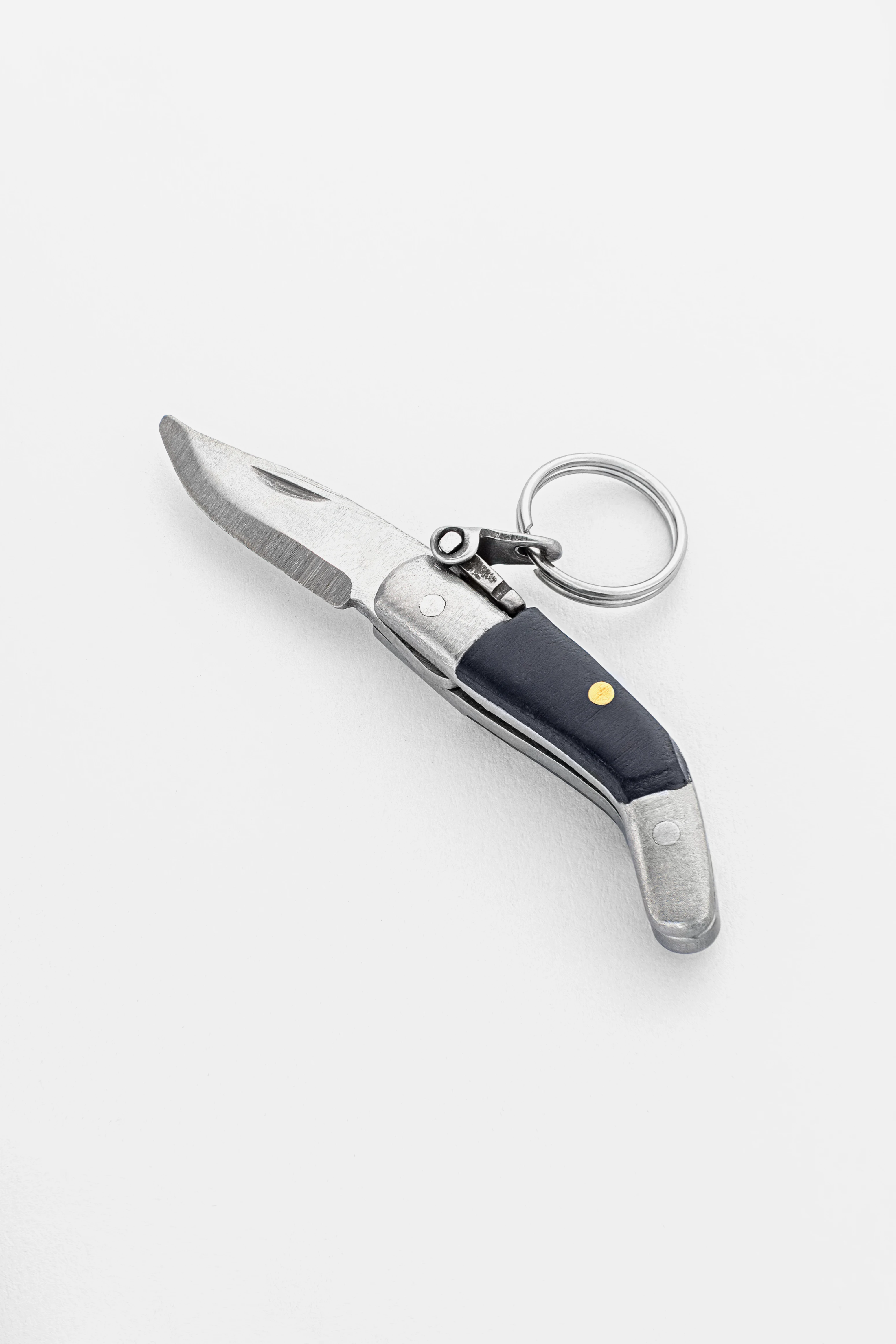
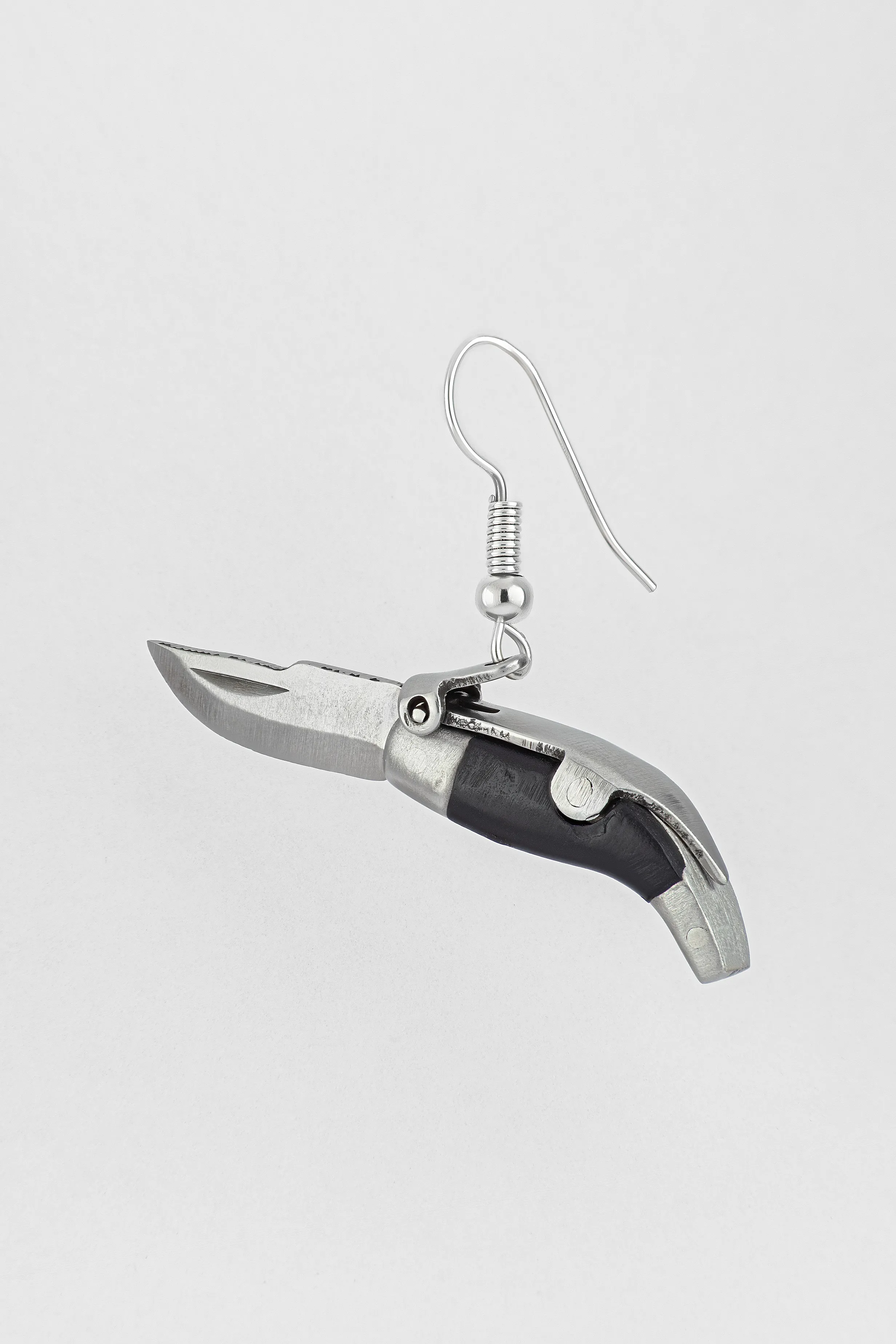
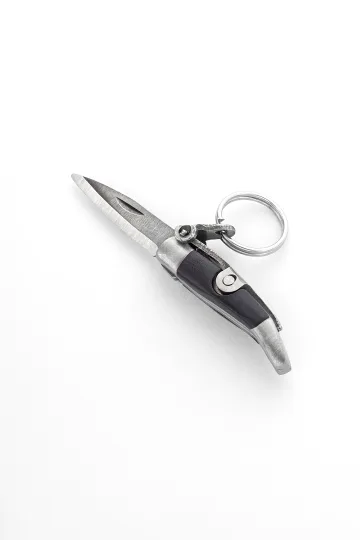
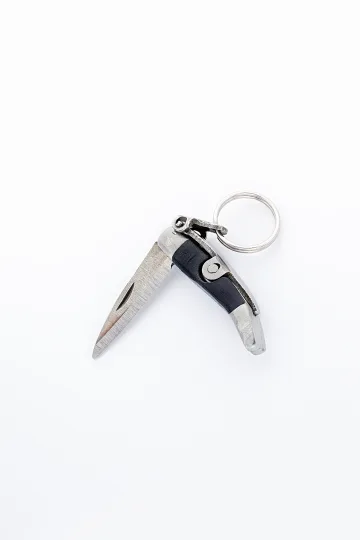
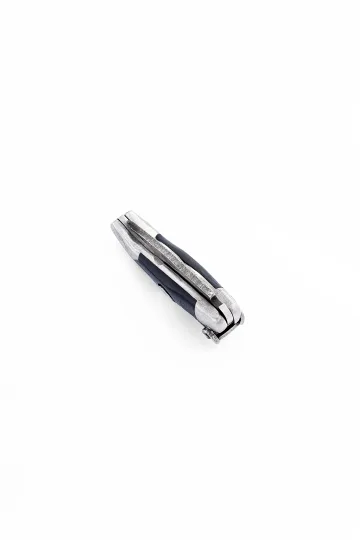
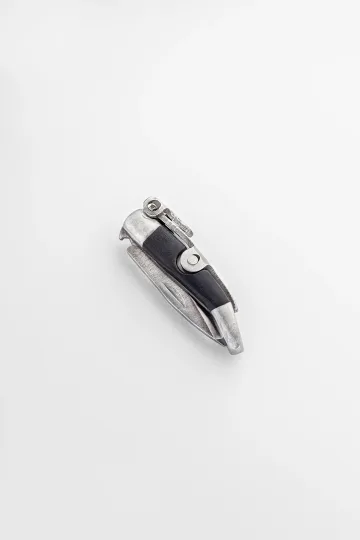
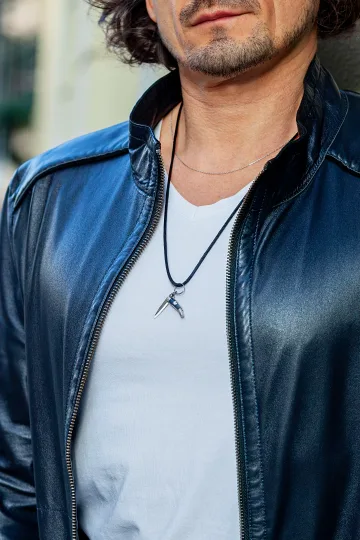
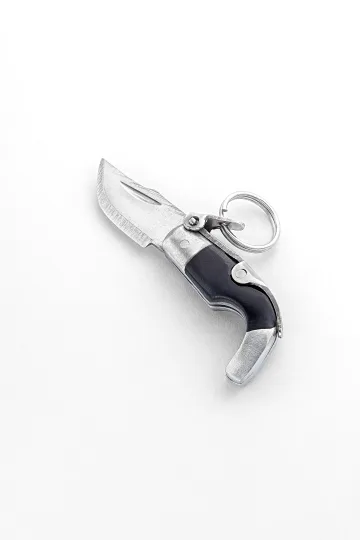
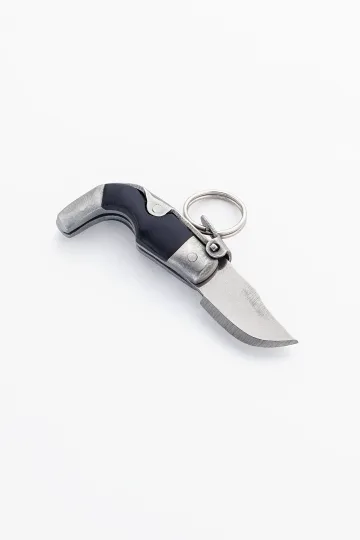
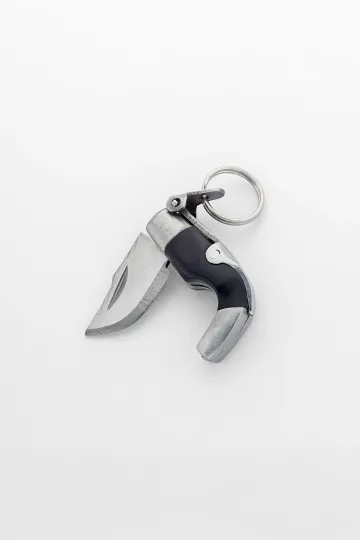
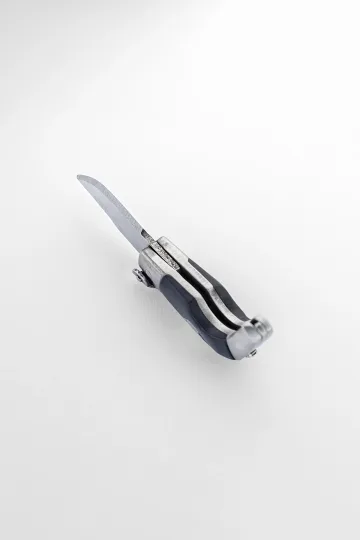
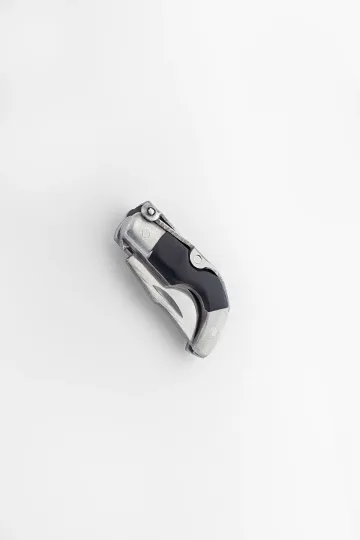
CAPAORA mini knife pendant
The 18th-century Spanish navaja in miniature: 40 mm of stainless steel, a real folding mechanism and a Palanquilla lock that clicks. An affordable gift to remember.
Authentic · Ships from Spain · 14-day returns
Storing steel jewellery in a holiday bag
A holiday is a specific environment: jewellery travels in a bag alongside creams, in a wash bag or a rucksack pocket. A few practical rules.
A separate pocket or fabric pouch. Steel is hard and scratches softer metals. Storing a steel ring loose with a gold ring is a bad idea: gold is soft and will pick up a scratch.
Clasps on a neutral surface. Lobster clasps and earring posts are best stored fastened. On the move, undone clasps often tangle and get lost.
Steel does not fear holiday temperatures. In a hot climate, jewellery in soft metals can deform (though this is rare at everyday temperatures). Steel is immune to this.
Chains are best stored separately. This is about convenience rather than safety: steel chains do not break from tangling, but untangling a thin chain on the beach is no fun.
Care: it does not get simpler
Looking after steel jewellery comes down literally to three actions:
Warm water and ordinary soap. Hold the piece in soapy water, rub it with a soft cloth or a soft-bristled toothbrush. Rinse with fresh water.
Dry it. Leave it in the open air or pat it with a soft cloth. Moisture under a clasp or in chain links does not harm steel, but it is better to dry before storing.
Store dry. Moisture in a closed container could in theory create conditions for pitting corrosion over very long storage. In practice this is not relevant for 316L, but keeping jewellery dry is a good habit anyway.
What you should not do: special stainless-steel cleaning products, ultrasonic baths (harmless but unnecessary), polishing pastes (they can remove PVD coating). Steel jewellery needs no professional cleaning. That is a significant part of its value.
When steel is not the right choice
An honest conversation about a material includes its limits too.
Formal and evening jewellery. Steel looks modern and technical, but in the context of a strict dress code or a formal event it loses to gold, platinum or finely worked silver. Stones in a steel setting also look different from those in gold: gold gives a warmer optical backdrop for diamonds and coloured stones.
Pieces with fine cutwork and intricate filigree. Steel is a hard material, harder to bend into complex shapes without losing precision. The finest openwork in steel is technologically harder and less common than in silver or gold.
Antiqued, patinated pieces. Deliberate darkening or an aged look is historically used with silver (oxidising) and copper. Steel does not take a natural patina and is hard to age artificially with a convincing result.
Engraved pieces. Engraving on steel is technically possible but needs laser equipment or special tools. Hand engraving on steel is rare.
Knowing these limits helps you choose the right material for a specific job, rather than hunt for a universal solution where there is none.
A working strategy for a summer jewellery wardrobe: everyday and beach pieces in steel, evening and formal ones in silver or gold. The two materials solve different problems. Buying both is sensible, not excessive.
Steel as a man's first real piece of jewellery
The male audience for jewellery is growing. Among young men, steel bracelets, chains and rings hold a noticeable place precisely because steel as a material feels natural in a masculine context.
No ambiguity about care. A man who has never worn jewellery will not wonder whether to take a ring off in the shower, how to clean it, whether it will tarnish. The answer is simple: wear it, leave it on, wash it with soap once a week.
Aesthetics. Matte steel, a brushed surface, geometric shapes suit a restrained masculine style better than shiny silver or openly decorative jewellery. A heavy steel chain speaks a different visual language from a thin silver one.
In practice. Men more often forget to take jewellery off before sport, work or repairs. Steel withstands that. Silver or gold plating does not.
The season. In summer a man's piece should be simple and strong. A steel chain or bracelet is the thing that goes into the sea and comes back the same.
Send a friend a discount code, they save on their first order.
Steel as a gift: a safe bet
Giving jewellery to someone you do not know well is risky. Metal allergy, size, taste. 316L steel removes the first of those risks: it is hypoallergenic for most people.
For a gift to a colleague, a new friend or someone you do not know much about, a steel bracelet or chain is a safe choice on several counts. It will not cause an allergy in most people. It needs no care. It will not lose its look quickly. It will suit summer.
For a gift to a child or teenager, steel is especially fitting. Teenage jewellery is often worn constantly, not removed in the shower or at training. Steel survives that regime without darkening and without any need to explain the rules of care.
A breakdown of which metals are best for matching and gift jewellery is in the article brass, steel, silver: a comparison for jewellery.
Style: steel is no substitute for silver
You sometimes hear: "Steel is for people who cannot afford silver." That is a mistaken idea, formed in a certain era, and it does not match what is happening in jewellery now.
925 silver is a soft precious metal with centuries of jewellery history. 316L steel is a technical material of the twentieth century that found its place in architecture, medicine, watchmaking and jewellery. These are different materials with different properties and different contexts. Neither is worse than the other. One replaces the other in some situations and yields to it in others.
Steel is chosen by people who value function and a modern aesthetic. Minimalism, precise shapes, durability without upkeep. This is not a compromise. It is a choice based on understanding the material. How to bring out that character in an outfit is broken down in the style guide for stainless steel jewellery.
When jewellery designers work with steel, they work with a material that has character of its own: matte or polished, warm from PVD or neutral. Not an imitation of a costlier metal. Its own aesthetic.
In this context, what steel pairs with stylistically matters too. A summer look is usually minimal detail, bare skin, natural fabrics. Steel works naturally with that: a thin chain or hoops do not compete with the look, they complete it. No clutter. The piece is in place, does its job, and asks for no special treatment.
In summer, when a piece has to be with you in water, in heat, on a trip, steel is a conscious choice. Silver stays at home.
For more on how steel relates to sea water and piercing, read the article sea salt, jewellery and piercing.
The comparison of steel and silver in the context of beach jewellery is broken down in detail in the article jewellery for the beach: the full guide.
FAQ
Can you leave steel jewellery in the sea all day?
Yes. Sea water does not damage 316L over ordinary contact times. After a swim it is best to rinse the piece in fresh water and dry it. That extends its life and prevents salt residue building up on the surface.
Does steel darken from a tan and sun cream?
No. 316L steel does not darken or stain from UV, the organic filters in creams or mineral components. A slight white residue from cream is possible; it washes off easily with soap and water.
How long does a PVD coating last with active summer wear?
With normal wear, without intense friction against abrasive surfaces, two to five years. Chlorine, salt and UV barely affect a nitride coating. Mechanical abrasion against hard surfaces does.
Is there a difference between "medical steel" and "surgical steel" on a label?
In essence no: both terms refer to 316L or 316LVM steel. In practice it is worth looking for the 316L or 316LVM marking rather than relying only on the words "medical" or "surgical", which are not standardised trade terms.
Can a steel piece cause an allergy in the heat, when there is more sweat?
In theory sweat slightly speeds up the diffusion of nickel ions, but with 316L the amounts still stay many times below the threshold. For people without a confirmed nickel allergy there is no risk. If the skin starts to redden under a steel piece in the heat, it is worth seeing a dermatologist and testing for a nickel reaction.
How do you tell real 316L from cheap steel?
The most practical method: a magnet. Real 316L is not drawn to a permanent magnet. If a piece is strongly attracted, it is probably not austenitic stainless steel. A more reliable method: buying from makers who state the material certificate.
Is steel jewellery suitable for piercing?
316L is the standard material for an initial piercing in most studios. For people with heightened sensitivity, or for piercing during healing, 316LVM or implant-grade titanium G23 is recommended.
Can you wear steel jewellery in a sauna?
A sauna is a different load: high temperature (up to 90 degrees and above), humidity, the swing when you step out into the air. 316L steel physically withstands such temperatures without structural change. The question is comfort: metal heats up and can burn the skin at high temperatures. Taking jewellery off before a steam room or sauna is convenient on practical grounds, though not necessary for the sake of the material.
Does 316L steel rust over time?
Under normal wear, no. 316L is a stainless steel precisely because the chromium passive layer protects the iron from oxidation. In theory, with very long exposure to an aggressive environment (acid, concentrated chlorine) and a damaged surface, pitting is possible. In practice, in everyday life this does not happen with ordinary wear.
Will the difference between 316L and silver show on tanned skin?
Yes. Polished 925 silver gives a cold white shine. Polished steel also gives a cold shine, but a slightly more neutral one, less "expensive" looking. With a matte finish the difference is even less noticeable. On tanned skin both materials look flattering: the contrast of metal against dark skin works in both cases. Gold-toned PVD on steel against a tan gives a warm contrast that many prefer to cold silver.
How to choose steel jewellery: a practical checklist
There is a lot of steel jewellery on the market. To choose well, check a few parameters.
Material marking. Look for 316L or 316LVM in the description. If it says only "stainless steel" or "medical steel" without numbers, ask the seller for the grade. A quality maker always knows it and states it.
The clasp and its reliability. For an active summer, clicker, lobster and screw-hinge clasps work. Spring rings in bracelets and fish-hook fittings in earrings can come undone with active movement in water. Check the clasp before buying: it should open and close with a noticeable effort, not wobble loosely.
PVD versus electroplating. If you want a coloured coating, ask about the technology. A PVD coating is described as physical deposition, titanium nitride, chromium nitride. Electroplated coating on steel also exists, and it is far less durable. Sometimes makers do not distinguish the two in marketing copy, so a direct question about the coating technology is justified.
The weight of the piece. Steel is denser than silver and aluminium. The density of steel is about 7.9 g/cm³, compared with silver at 10.5 g/cm³ and aluminium at 2.7 g/cm³. A heavy steel chain or a wide bracelet can be uncomfortable for long wear in the heat. For summer it is better to choose pieces of reasonable weight: thin links rather than large, a bracelet width up to 10 to 12 mm.
The finish. A matte surface hides small scratches better than a polished one. Polished steel looks more striking but needs more careful handling. For active holidays a matte or combined (matte plus polished) finish is more practical.
Metal compatibility when worn together. If you wear several pieces of different metals at once, a galvanic pair between steel and gold is theoretically possible during long contact in salt water. In practice, with ordinary wear, this is a negligible effect that causes no visible damage. Rings of different metals on adjacent fingers or chains of different materials on the neck create no problems in the normal conditions of a summer holiday.
Price as a quality cue. Good steel jewellery costs more than many expect. If the price seems suspiciously low, the base is probably not 316L but a cheap zinc alloy or 201 steel. Quality 316L with a good finish and a reliable clasp costs comparably to mid-range silver, sometimes more. That is normal: here the price reflects the working and the quality of the material.
Buying it as a gift? Each one arrives ready to give.
 A branded Zevira box and a little card come with every order.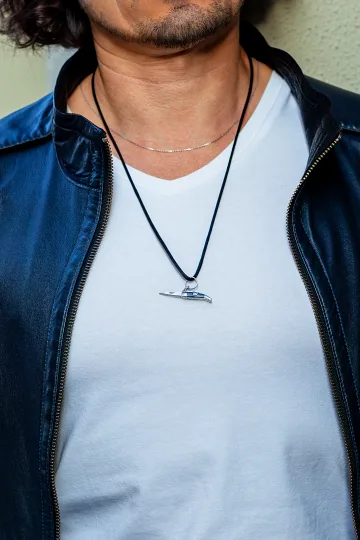




Conclusion
Steel jewellery entered the summer wardrobe not as a compromise but as a conscious choice. A material that does not react to the sea, chlorine, sweat and sun cream. That keeps its shape and colour without special care. That comes in a wide range of styles, from matte minimalism to golden PVD with a marine theme.
316L is the steel used in surgery and in watchmaking. In jewellery it works on the same principles: a reliable matrix, an inert surface, a long service life.
Choosing summer jewellery is a choice made once. A quality steel piece does not need replacing after a season. It comes back from every holiday in the same state it left in. After three years it looks the same as on day one. That is no small virtue for something you wear every day.
If you want to know more about how different metals behave on the beach, read the full guide jewellery for the beach: what will not break.
In summer you take with you what asks for no constant attention or care. Steel jewellery works exactly like that: reliable, with no surprises.
If you want to know more about how silver behaves in sea water and why that is a separate topic for piercing, read the article sea salt and silver: what really happens.
Chains, bracelets, hoops, anklets and rings that stay with you in the sea, the pool and the shower without tarnishing.
About Zevira
Zevira makes jewellery in the artisan tradition of Albacete, Spain. Summer pieces for water and active holidays are exactly the job steel suits perfectly, which is why our range includes a line of pieces you wear without taking off.
What you can find with us for summer:
- 316L steel chains of medium thickness, comfortable for constant wear
- Hoop and stud earrings with a secure fitting that do not get lost in water
- Bracelets and anklets that do not darken from sea water and sweat
- Rings of simple shapes for the beach and pool
- Pieces with PVD coating in gold, rose-gold and black
- Matching pieces that look the same after a season
Every piece can be personalised with engraving, with the option of personal engraving. 925 silver and 14 to 18K gold.