Sea Salt and Jewellery: the Harm and the Help
When a holiday turned your bracelet dark
End of the first week on the coast. The silver bracelet you slipped on at the airport without a second thought now looks thirty years old. Black streaks along the links, a dull haze where there used to be a mirror shine, and strange whitish deposits clogging the clasp. You did nothing on purpose. You swam, you lay on the sand, you waded into the water a few times a day. Sometimes you forgot to wipe the bracelet dry straight after a dip. You left it on your wrist at noon under direct sun, drying along with your skin.
This is not a manufacturing fault, and it is not cheap metal. This is chemistry, running on a schedule that ignores the price tag on the piece.
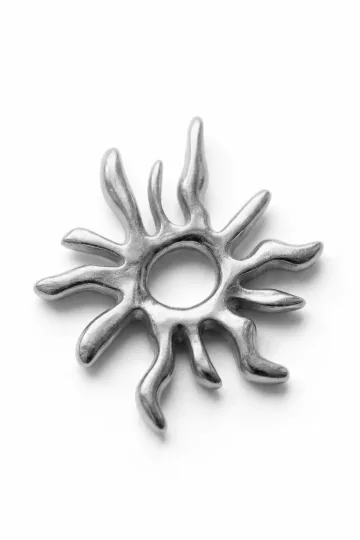
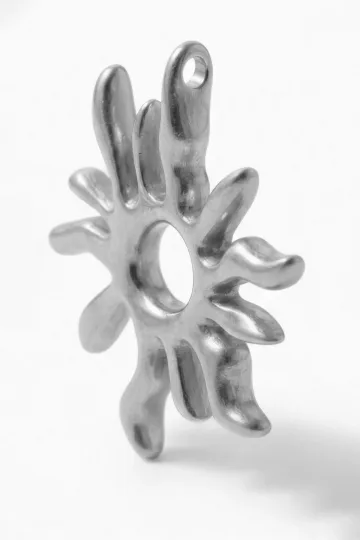
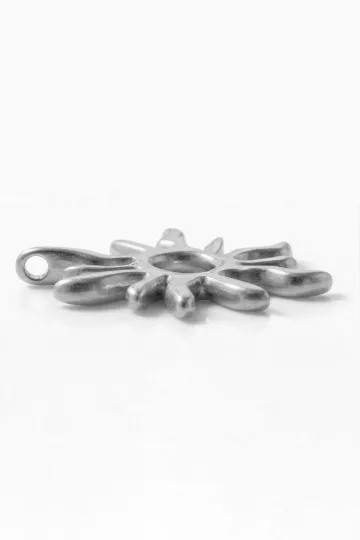
Wear the symbol, don't just read about it. These are in stock:



Seawater is built differently from river water, tap water, or even the chlorinated water in a pool. Its make-up is more complex: sodium chloride plus magnesium salts, sulphates, bromides, biological matter, microorganisms, and a suspension of mineral particles. All of it attacks metal more aggressively than most people expect. And yet the very same sea salt, purified and strictly measured, is the baseline tool piercers reach for when caring for a fresh piercing. The same chloride ion, the same physical principles, but the concentration, the sterility, and the context flip the result completely.
Let us walk through both stories: why the sea destroys jewellery, and why a controlled saline solution has long been the piercer's standby for aftercare. Once you grasp the chemistry, you care for your pieces with precision instead of guesswork. Everything that touches piercing healing here is not medical advice: for any question about caring for a piercing, speak to your own piercer or a doctor.
The chemistry of seawater and silver
The Mediterranean holds roughly 3.8 g of salt per 100 ml of water. Pacific waters near the equator are comparable. The Atlantic off European shores is slightly less salty, around 3.5 g. The Red Sea, almost enclosed and evaporating faster than rivers can refill it, sits at 4.1 to 4.2 g per 100 ml, which makes it one of the saltiest open seas on the planet. For comparison: human tears contain about 0.9 g, the same as the saline you buy at the chemist. In other words, seawater is four times saltier than the fluids inside your own body.
The main destroyer of silver in seawater is the chloride ion. It reacts directly with the surface layer of the metal:
Ag + Cl⁻ → AgCl (silver chloride)
Silver chloride is insoluble in water. It forms a white or grey-white powdery film right on the surface of the metal. This is the layer that gives the early dullness and the first darkening you notice after just a few swims. In light, silver chloride darkens further, because it breaks down and releases metallic silver as a dark powder. This is the same principle behind the photochemistry of old silver-based film: light triggers the reduction of the silver ion.
In parallel, copper does its own damage inside silver alloys. In sterling (925), copper makes up 7.5 percent of the mix. It reacts with the dissolved sulphates that are always present in seawater at a concentration of around 2.7 g per litre. The product is copper sulphide (CuS), in shades from yellow-brown to coal black. The speed of this reaction climbs sharply once the water passes 25 degrees, which explains the special haste of darkening in warm seas: the Aegean, the Red Sea, and the Arabian Sea are far harder on silver than the Baltic or the Atlantic coast of Norway.
The third factor is oxygen. Seawater is saturated with dissolved oxygen, especially near the surface and in the surf line. Silver oxidises slowly on its own, but in the presence of chlorides and sulphates the oxidation rate jumps by several orders of magnitude. The surf zone is particularly busy: constant churning keeps fresh oxygen flowing to the metal surface.
The fourth factor is temperature. Chemical reactions run faster in hot water. If you swim in the Red Sea or the Maldives, where summer water can reach 30 degrees, a single day of darkening matches what a cool sea would manage in a week. That is exactly why a piece that sailed calmly through a Baltic holiday can look catastrophic after five days in Cyprus.
The fifth factor is mechanics. Suspended sand and the surf act as an abrasive. Scratches on the metal expose a fresh layer with no protective oxide film, and the reactions reach deeper. Clasps and hinged joints take a double hit: mechanical wear plus salt corrosion speeds up metal fatigue and can lead to breakage exactly where the material is thin and bends repeatedly.
The sixth factor, less often discussed, is evaporation. When you step out of the sea and the piece dries in the sun, the water evaporates but the salt stays behind. A salt concentrate forms on the metal, far more aggressive than the original seawater. Crystallising salt physically expands inside cracks and pores, acting like a wedge. This is one reason the rule "rinse straight after the sea" matters more than it seems: most of the harm happens not during the swim, but during the drying.
Pearls have no business in the sea. Salt eats the nacre in a week, and the sea gets the blame.
What to wear jewellery with at the beach
Years of shoots by the water taught me one rule: at the sea, lightness wins over a pile of metal. Here is what actually works, by occasion.
What do you recommend for active swimming? For active swimming, snorkelling and surfing I suggest steel 316L or titanium only: they survive salt and surf without darkening. I choose plain shapes with no stones and few clasps, and swap thin chains for solid links that will not snag or wear in the water. Everything dressy stays on shore, until dinner.
And for a quiet day by the water? For a daytime look with a swimsuit and a linen shirt I recommend a thin steel or silver chain at the throat and a pair of small hearts in the ears. By day several lengths sit well at once: a short chain plus a longer one over the chest. It holds as long as each piece is thin and does not fight the fabric.
How do you build an evening look? Under a light dress with bare shoulders I suggest the vertical: a pendant on a mid-length chain draws the eye down and lengthens the line. To an open neckline I choose longer earrings; they bring it to life when the hair is up. One accent larger than the rest, the rest kept quiet.
What about dinner at the hotel? For a special outing I recommend gold or rhodium-plated silver: they catch warm evening light more softly than steel. Pearl and turquoise suit an occasion like this, but I put them on after the sea, on dry skin. Salt is no friend to them.
How do you match the metal to a tan? I read the tan like this: warm skin favours yellow metal and warm stones (citrine, garnet, coral), while fair, cool skin takes steel, white gold and cool stones more truly. Mixing metals is fine, but I keep one leading so the look reads as a whole.

Turn on your camera, pick earrings, a pendant or a ring, and see the piece on yourself in real time.
Switch items in one tap.
Everything runs in your browser: no photo or video is ever uploaded.
What happens to different alloys
Not every metal behaves the same way. The rules differ for each material, and a mistake about "safe or not" costs you a piece.
Sterling silver 925. Reacts quickly. It contains copper, which doubles the corrosion: copper reacts with sulphates itself, and as the more reactive metal in the pair it also drives the corrosion of the silver. In warm seawater, noticeable darkening starts within a few hours of repeated dips. The mechanism is twofold: AgCl on the surface and CuS deeper down. Partly reversible with timely cleaning.
Silver 800. Worse still, because the copper content is higher: around 20 percent. Silver of this grade turns up in old family heirlooms, mid-century costume jewellery, and some European workshop pieces. Best not to wear it in the sea at all: the reaction will be more intense and recovery harder.
14-carat gold. Around 58.5 percent pure gold, the rest copper, silver, or other alloying metals. Corrodes noticeably slower than silver, but chlorides gradually attack the copper component. Rose gold is especially vulnerable because of its high copper share, which is what gives it the pink tone. After a few weeks of regular swimming, rose gold often shows dark spots in scratches and at solder joints. White gold contains palladium or nickel as a whitener and stands up to seawater better than rose gold of the same grade.
18-carat gold. 75 percent gold. Considerably more stable. For most 18k alloys the risk from a single swim is minimal. But wearing it in the sea systematically without care will show after a few seasons: solder joints darken, thin chains weaken where links join.
Rhodium plating. Rhodium is inert to seawater, halogens, and most acids. The problem is not the rhodium itself but the plating: it is thin, from 0.5 to 3 microns. On bends, clasps, and in scratches, rhodium wears away faster. The sea speeds this wear through the mechanics of the surf and the abrasion of suspended particles. Once the rhodium is gone, the exposed base starts to corrode. On a silver base that means darkening; on copper or brass it means a greenish film.
316L stainless steel. A chromium passivating oxide film makes this steel exceptionally resistant to seawater. Under normal use, 316L shows no noticeable reaction in the sea even over long wear. It is the gold standard for holiday jewellery and for piercings in general.
904L steel. An even more corrosion-resistant composition, with added molybdenum and higher chromium. Rarer and pricier, but it beats 316L for chloride resistance. The watch industry has long used it for the cases of dive watches for exactly this reason.
Titanium. Biocompatible, corrosion-resistant, light. The oxide film on titanium is even tougher than on steel. It reacts to seawater less than 316L. It is the standard material for fresh piercings for precisely this reason: inert to body fluids, saline solutions, and antiseptics.
Coatings and their fate in the sea
The difference between a "jewellery" piece and a "waterproof" one often comes down to what sits underneath the coating.
Gold plating (electroplated gold, usually 0.5 to 2.5 microns). The gold itself is barely touched by the sea. But the thin layer is mechanically damaged by waves and sand, and underneath it is usually brass or bronze. Brass in seawater releases copper and zinc ions, forms a greenish film, and darkens fast. Gold plating over a brass base and the sea are a poor match. Gold plating on stainless steel or titanium behaves far better: even if the coating wears through somewhere, the base does not react.
PVD coating (physical vapour deposition in a vacuum). Far more mechanically robust than electroplating: adhesion at the molecular level, thickness from 2 to 8 microns. On a stainless base, PVD coating loses almost nothing of its look in the sea under normal use. Gold, black, silvery PVD on steel: all real options for beach jewellery that looks fine but behaves like an engineering part.
Oxidised silver (deliberate blackening). A decorative layer of silver sulphide. The irony is that seawater itself provokes the formation of silver sulphide. In a sense the sea keeps blackening the piece, but uncontrolled and uneven: the pattern loses its sharpness, the contrasting bright areas dull, and the dark areas deepen in unpredictable places.
Hot enamel (fired above 700 degrees). Effectively glass. Seawater barely troubles it as long as there are no chips or cracks. The only real risk is thermal stress from the alternation of hot sand and cold waves, which can provoke microcracks in the glass layer over a few seasons.
Cold enamel (polymer). More vulnerable to mechanical force. Salt gets into cracks and microchips, and on crystallising it works like a wedge, widening the damage.
Leather and textile. Leather cords and woven inserts swell and warp in seawater. On drying, the stiffness disrupts the structure: after a few swims the leather cracks and the weave loses its shape. Sea salt crystallises inside the fibres as it evaporates, breaking the structure from within. A bracelet like that ages several years in a single week at the sea.
Customer reviews
Zevira is a real jewellery shop. Genuine payments, deliveries and customer thank-yous.
🥰🥰🥰 gracias
Ok, ¡gracias! 🙂
Stones that seawater destroys
Some settings are vulnerable in themselves, regardless of the metal around them. Knowing this list spares you unpleasant surprises.
Pearl. Made of calcium carbonate in the form of aragonite, layered around a nucleus. Seawater itself is mildly alkaline (pH 8.1), which is technically safe for calcium carbonate. But contact with skin sweat (pH 4.5 to 5.5), sunscreen, and acidic food residue creates a locally acidic environment. Acid dissolves the aragonite layer by layer. A pearl loses its nacre gradually, and the process is irreversible. Never wear pearls on the beach: not cultured, not natural, not freshwater.
Turquoise. A porous phosphate mineral. The pores soak up seawater, salt crystallises inside the structure as it evaporates, and the stone breaks down from within. On top of that, turquoise reacts to skin oils, sunscreen, and chlorine. The blue dulls, greenish patches appear. In untreated (unstabilised) turquoise the process runs faster.
Opal. Holds up to 21 percent water in its structure as hydrated silica. Sharp temperature swings, hot sand against a cold wave, build stress inside the stone and lead to cracking. The process is called crazing. Opal doublets and triplets, composite pieces with glue layers, delaminate as water gets into the adhesive. Opal is expensive and at the same time one of the most water-sensitive stones there is.
Malachite. A copper carbonate mineral. Sensitive to acids and concentrated salt solutions. It loses its polish gradually, the surface turning matte and rough. With prolonged seawater contact, surface breakdown begins.
Coral. Calcium carbonate, like pearl, but in a protein matrix. It seems logical that coral would be at home in the sea, since that is where it grew. But jewellery coral is polished and worked, and seawater wears away that polish over time, leaving the surface dull and rough. Pink and red coral are especially sensitive to any shift in pH.
Porous minerals of medium hardness: larimar, amazonite, chrysocolla, howlite. Seawater is destructive to all of them. If a piece has beads in a neutral or blue-green colour that you cannot identify by eye, better to take it off at the beach.
Stones safe in the sea: diamond, sapphire, ruby, spinel, blue topaz, citrine, garnet. Hard (7.5 and above on the Mohs scale), non-porous, resistant to salt solutions. The risk from swimming with such stones is minimal, though mechanical damage from suspended grit and the abrasive churn of the surf is always real: any stone can be scratched by quartz sand (hardness 7).
Upload a photo of your pet, someone you love, or an object. We'll build a 3D model and hand-cast it in pewter.



Piercings in the sea: when not to, and when to be careful
Here seawater shifts from a factor of harm to a factor of ambiguity. Among pierced people one myth holds firm: the sea heals wounds. This is a half-truth, pulled out of context and dangerous for it.
Seawater contains roughly 3.5 percent salts, which in sodium chloride concentration is comparable to saline. Seawater does have a mild osmotic and antibacterial effect. That is why small scrapes from shells and coral in the sea often do not become inflamed the way the same cuts would in a dirty urban setting. But you cannot equate the sea with sterile saline for one fundamental reason: the sea is alive with bacteria.
Warm seawater hosts a range of microorganisms, and their concentration is higher at crowded beaches and near urban infrastructure. For an unhealed piercing, which is essentially an open wound, contact with such water is an extra risk. Cartilage piercings (helix, tragus, conch, daith) bear irritation especially slowly and poorly: cartilage has a poorer blood supply and takes longer to recover.
This is not cause for panic, but it is not a topic to leave to guesswork either. If the piercing is fresh, it is better to consult your own piercer or a doctor about swimming and any worrying symptoms, rather than to take your cue from articles online.
Water pollution at popular beaches is higher than in remote spots. The more people swim, and the closer the urban sewage infrastructure, the higher the bacterial load. It is exactly at popular resort beaches in peak season that pathogen concentration in the water hits its maximum.
A practical rule from professional piercers:
Do not let a fresh piercing (under 8 weeks for a lobe, under 6 months for cartilage) into the sea without protection. No compromises. If a trip is unavoidable soon after the piercing, use a waterproof dressing such as Tegaderm or 3M Nexcare Waterproof over the piercing before every swim. After leaving the water, remove the dressing, rinse the piercing with sterile saline, and dry it.
Healed piercings (after the channel has fully formed) can go into the sea. After coming back from the beach, rinse the piercing with clean water and saline, then dry.
How the sea differs from a pool
The answer is not obvious. It seems as though the sea and a chlorinated pool carry similar risks. But the mechanisms differ, and so do the consequences for jewellery and piercings.
Chlorine in a pool. Acts as an oxidiser. It affects silver through the formation of silver chlorides, much like seawater. The chlorine concentration in a pool is regulated, usually 1 to 3 mg per litre. Chlorine is aggressive towards brass, bronze, and gold plating on a non-ferrous base. Towards 316L and titanium it is practically neutral. The main chlorine risk for a piercing is that it over-dries the skin around the channel, disrupts the protective lipid barrier, and at high concentration can irritate a healing channel.
Salt in the sea. Works through crystallisation on evaporation and through direct chemical reaction with metals. Especially dangerous for porous stones and textile inserts. For piercings, seawater is worse than a pool precisely because of the biological load: bacteria, algae, suspended organic matter.
A saltwater pool. Some hotels and water parks use chlorination by electrolysis of sea salt. Salt is added to the water, and an electrolyser converts it into chlorine. The salt content of such a pool is low (3 to 4 g per litre against 35 g per litre in the sea), and a standard amount of chlorine is produced. For jewellery this is gentler than the sea, but the chlorine is still present and still affects brass bases.
The upshot: for jewellery the sea is more aggressive than a pool because of high salt concentration, abrasive surf, and biological load. For a fresh piercing the sea is more dangerous because of pathogenic bacteria. For a healed piercing with an allergic component, a pool can be worse because of the irritating effect of chlorine on sensitive skin.



Sea salt as an ally: saline solution for piercing healing
Now for the other side. The very same sodium chloride, applied correctly, has been the core tool of piercing aftercare for several decades.
Why piercers settle on a solution at 0.9 percent rather than plain water is usually explained by a few reasons. What follows is a general account of the logic, not medical advice and not a guide to action.
Gentle cleansing. A solution at a concentration close to body fluid helps to wash away dried discharge (piercers call it "crusties") more gently than plain tap water. That is why rinsing under the tap and saline care are not treated as the same thing in the piercing world.
Lowering the microbial load. A salty environment is less comfortable for many microorganisms than fresh water. This is not sterilisation, only a way to reduce the number of microbes around the piercing.
Softening the crusts. The solution softens the dried discharge around the jewellery so it can be removed without tearing it off mechanically. Picking crusts off dry is considered rough and undesirable.
An important clarification. Since the mid-2010s the Association of Professional Piercers (APP) has officially recommended only sterile 0.9 percent NaCl saline as the tool for piercing aftercare. The APP no longer recommends homemade saline from table or sea salt as the primary method. The reason is specific: concentration is hard to hold accurately at home, household water is not sterile, and an error on the high side (a touch more salt than needed) over-dries the piercing tissue and slows healing.
If sterile pharmacy saline is unavailable, homemade saline from non-iodised sea salt is better than nothing. But it is a fallback, not the recommended first choice.
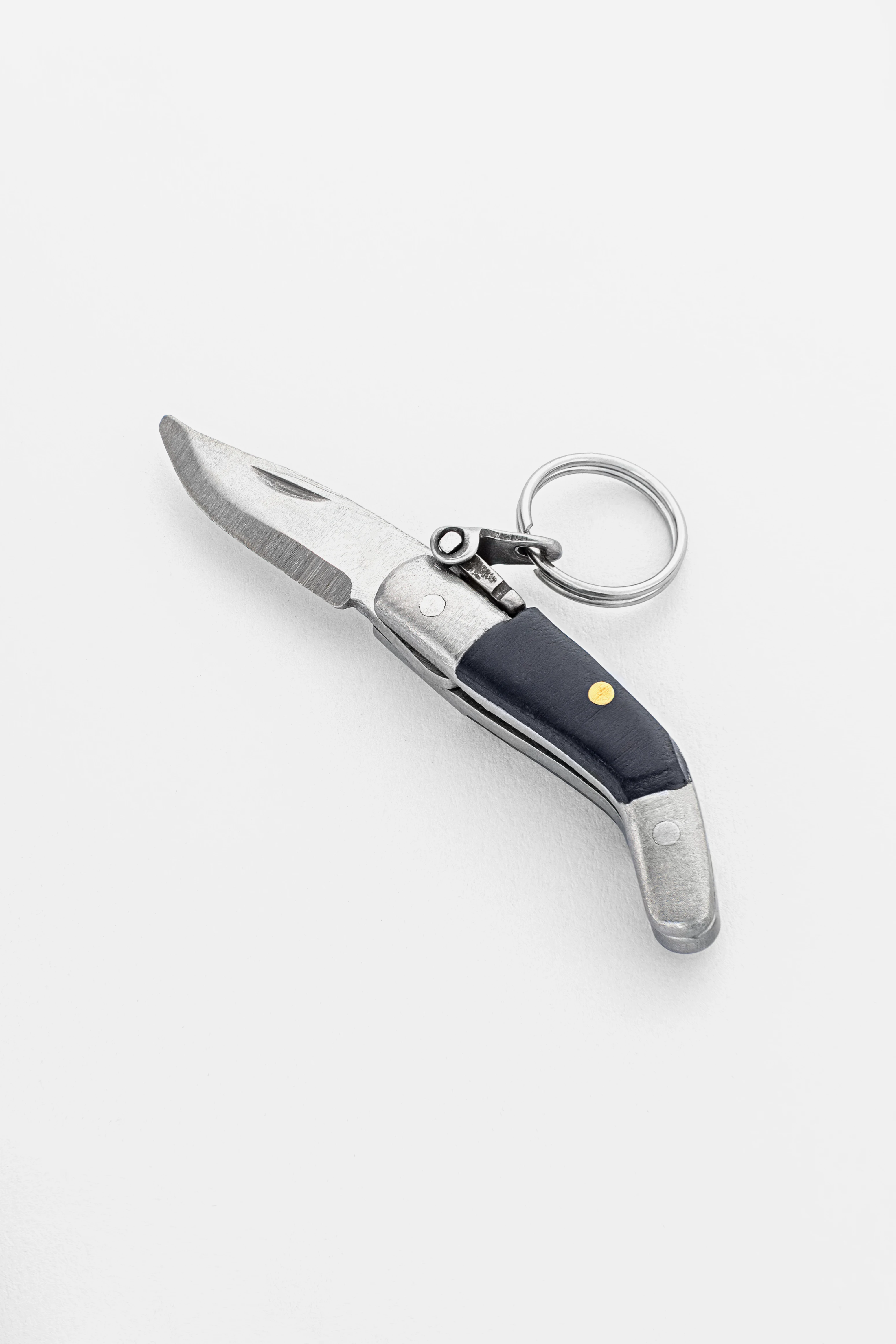
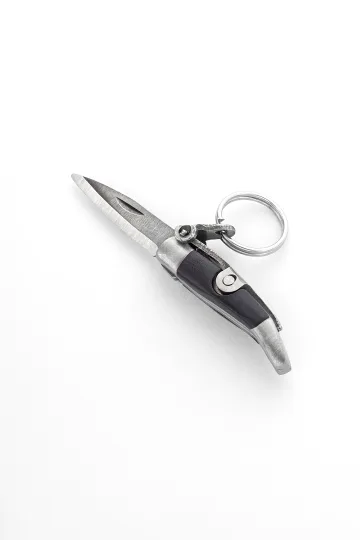
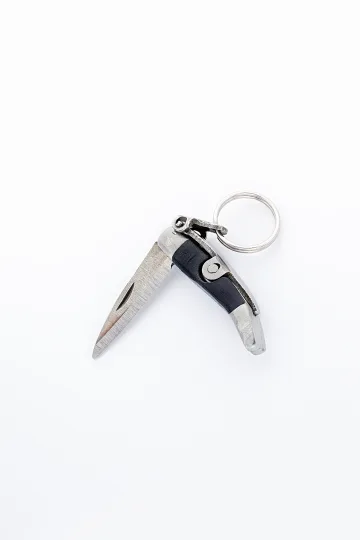
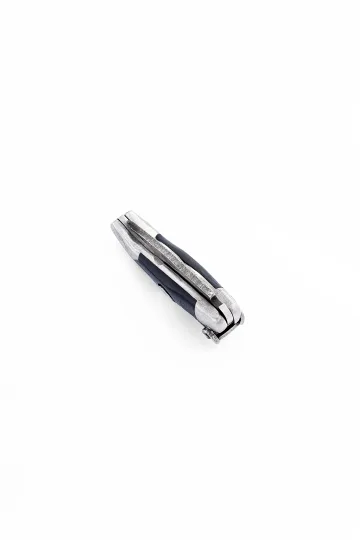
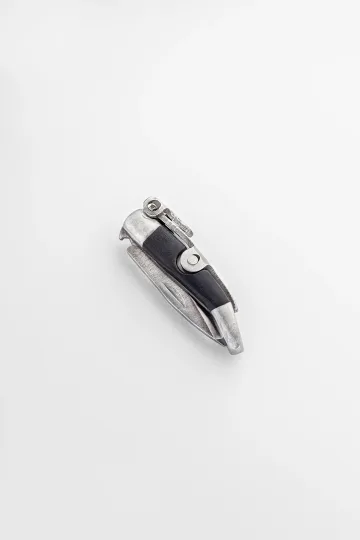
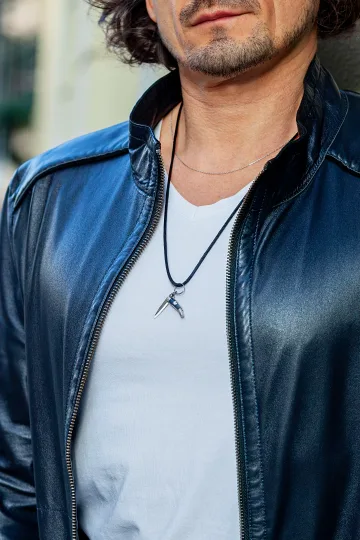
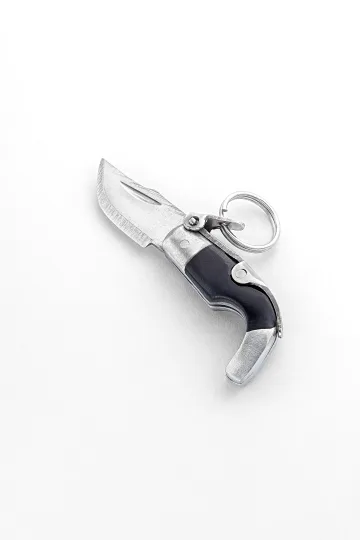
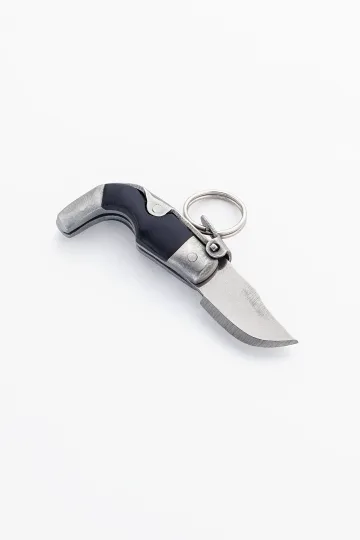
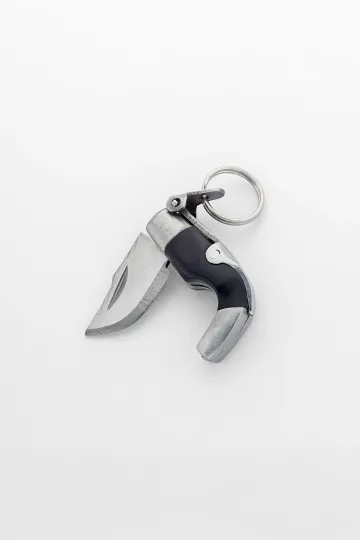
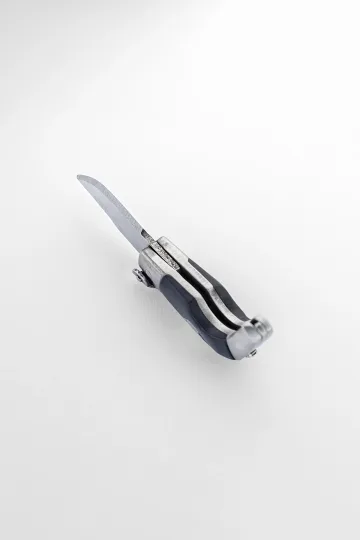
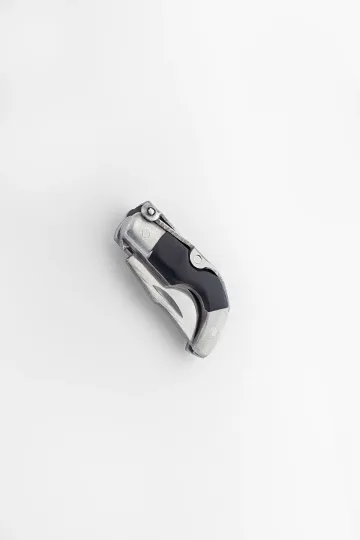
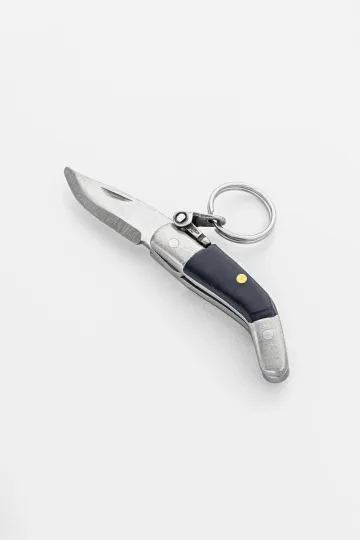
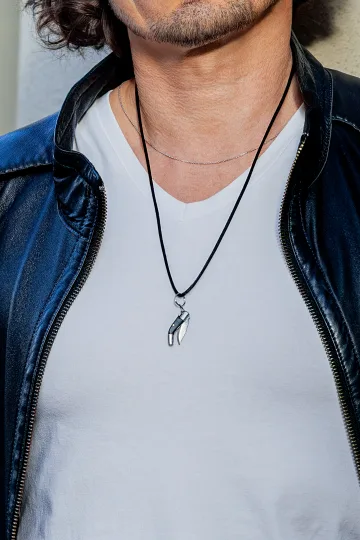
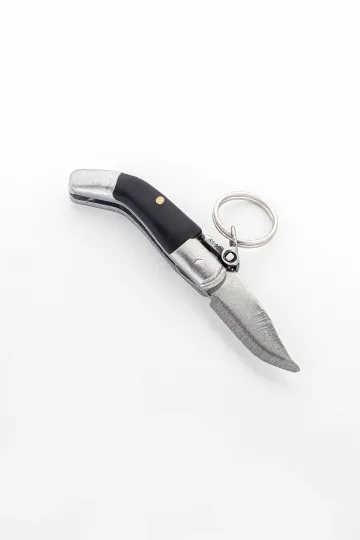
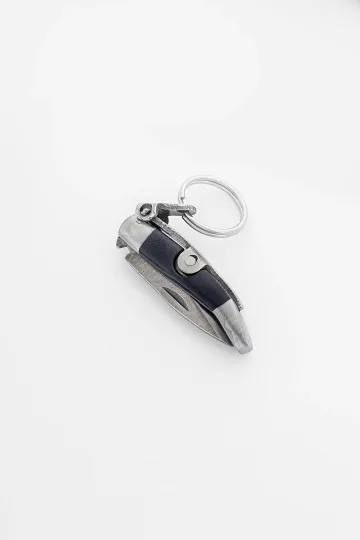
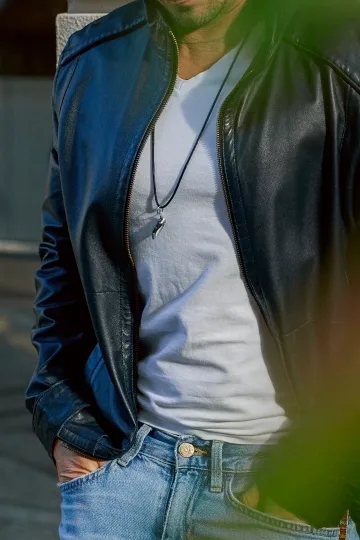
CAPAORA mini knife pendant
The 18th-century Spanish navaja in miniature: 40 mm of stainless steel, a real folding mechanism and a Palanquilla lock that clicks. An affordable gift to remember.
Authentic · Ships from Spain · 14-day returns
Saline solution and piercing care: general principles
This is not an instruction and not medical advice, only an explanation of why piercers use saline solution at all. The exact care routine, frequency, and make-up are always set by the piercer who did the piercing, or a doctor, for your specific case. What follows is the general logic, no more.
The basis of care in most piercer recommendations is sterile 0.9 percent NaCl saline from the pharmacy, not a homemade solution. The reason is predictability: pharmacy saline has a verified concentration and guaranteed sterility, whereas home preparation depends on the accuracy of the salt dose and the cleanliness of the water. If self-care does come up, choosing a ready-made sterile solution removes several risks at once.
The point of saline is gentle cleansing: it helps soften the dried discharge around the jewellery so it does not have to be torn off mechanically. Too high a salt concentration does more harm here by over-drying the tissue, so the idea that "more salt is better" does not hold.
By common piercer recommendations, care is kept regular but moderate: over-frequent cleansing hinders healing as much as neglect does. Again, the exact frequency is worth checking with your own specialist.
What is usually advised against in self-care of a piercing: aggressive antiseptics such as hydrogen peroxide and alcohol, along with scented soaps, oils, and creams inside the channel. All of these can hinder healing and irritate the tissue. If you have doubts about a particular product, better to ask a piercer or doctor than to experiment.
Shop saline versus homemade
The difference is fundamental, and worth understanding once rather than rediscovering at every new piercing.
Sterile saline from the pharmacy: precise 0.9 percent concentration, verified under laboratory conditions. Sterile: it has been autoclaved or filtered through 0.22 micron membranes. In ampoules it contains no preservatives. Predictable: the maker guarantees the composition. Suitable for newborns and post-operative care, which puts it head and shoulders above home preparation on safety standards.
Homemade solution: the concentration is hard to repeat, teaspoons vary in volume, salt varies in density. Household water contains chlorine, fluoride, and microorganisms, even after boiling. If the salt is iodised, the iodine slows healing and irritates the piercing. There is a risk of introducing extra infection through the water or the vessel.
The conclusion is simple: sterile saline is cheaper than complications. It costs little, on the order of a small everyday expense. Complications with a piercing, on the other hand, can drag on for a long time and require a visit to a doctor, often with the need to remove the jewellery and let the channel close. Treating any such problem belongs to a specialist, not to self-care.
Leave your email, we'll send your discount code. No spam, unsubscribe anytime.
The code arrives by email, valid on your first order.
What to do straight after the sea with your jewellery
Seawater does not destroy jewellery instantly. The main harm comes not during the swim but afterwards: when the salty water evaporates, the salt crystallises on the metal surface and in the pores of stones. You need to act in the first 20 to 30 minutes after leaving the water.
Step one: rinse in clean water. A stream from the tap or a bottle of drinking water. The goal is to wash off the salt before it crystallises. Pay special attention to clasps, locks, chain links at their joints, solder points, the backs of stones, and the cavities under them. That is where salt lingers and concentrates as it evaporates.
Step two: blot, do not rub. A soft cloth with no abrasive: cotton or microfibre. No textured paper towels, which scratch soft metals and coatings. Dry it fully, including the inner cavities. Moisture under a clasp or in a closed setting keeps the corrosion going even after the surface looks obviously dry.
Step three: inspect. Check the clasp for strength: seawater speeds up metal fatigue in hinged joints. Look at the stones to see whether they have loosened in their settings. Check the metal surfaces for new dark spots that were not there before.
Step four: full drying before storage. Do not put a wet or barely dry piece into a box, especially a closed one. Moisture and an enclosed space create a concentrated corrosive environment. In an unventilated box a damp piece can darken more overnight than it would in two hours at the sea.
What to take off at the beach, and what you can leave on
A practical split that spares you surprises and saves your jewellery.
Take off without fail:
Pearls in any form: necklaces, earrings, rings with a pearl, bracelets with pearl strands. Seawater destroys nacre.
Pieces with opal, turquoise, malachite, coral, amazonite, chrysocolla, or howlite. Porous minerals soak up salt.
Gold-plated pieces on a brass or bronze base. They tarnish fast and cannot be restored without re-plating.
Leather and textile pieces.
A fresh piercing without a protective waterproof dressing. Anything healing for under 8 weeks for a lobe and under 6 months for cartilage.
Costly rings with small stones in open prong settings: the surf can loosen the hold.
You can leave on:
316L and 904L stainless steel, titanium. High seawater resistance with normal care after a swim.
PVD coating on a steel base. Holds up well in normal swimming.
Hard, non-porous stones in closed bezel settings: diamond, sapphire, ruby, spinel, topaz.
Sterling silver 925 and gold of any grade, on one condition: rinse straight after the sea, do not leave it salty for hours.
Healed piercings in steel or titanium jewellery. Rinse with saline after a swim.
Stainless steel: why piercings are made of it
A word on steel on its own, because it is the most common question when choosing the first piece of jewellery for a piercing.
316L: surgical steel, with 16 to 18 percent chromium, 10 to 14 percent nickel, 2 to 3 percent molybdenum. Chromium instantly forms an oxide film in air and water that self-heals after minor mechanical damage. Molybdenum raises resistance specifically to chlorides: this is no accidental addition, molybdenum was included deliberately for marine and medical applications. That is exactly why 316L keeps its look in the sea, in a pool, and in daily contact with sweat.
The limitation of 316L is nickel. The 10 to 14 percent nickel content triggers contact dermatitis in 10 to 15 percent of people. For a fresh piercing this is critical: inflamed tissue is more permeable to metal ions than healed tissue. With a known nickel allergy the choice is firmly ASTM F136 titanium.
904L contains even more nickel, so despite its superb corrosion resistance it is not suitable for a nickel allergy.
Implant titanium ASTM F136. No nickel. Biocompatible at the level of medical implants. Hypoallergenic. For a first piercing on sensitive skin or with a known allergy this is the best choice. In the sea it behaves exemplarily: titanium oxide does not react with chlorides.
Niobium. A rare metal close in properties to titanium. It turns up in jewellery from specialist makers. Hypoallergenic, seawater-resistant. It differs from titanium in lacking the characteristic bluish cast in its natural colour.
Sunscreen, tanning, and jewellery
On the beach, jewellery is in contact with both seawater and the chemicals you put on your skin. This is a separate factor often overlooked.
Sunscreens and sprays contain organic filters (avobenzone, octinoxate, oxybenzone) and mineral filters (zinc oxide, titanium dioxide). The organic filters are chemically neutral towards most metals. But many formulas also carry emollients, preservatives, and fragrances that react with the silver surface and cause extra darkening. The tell-tale sign: a dark line or patch on silver exactly in the shape of the skin contact where the cream was applied.
Mineral filters, zinc oxide and titanium dioxide, as white particles settle into engraving, textured surfaces, and porous stones. They are not hard to wash off mechanically, but if a piece sits in a box for a few days with particles still lodged in it, they can work into the surface.
The practical order: apply sunscreen, wait for it to absorb into the skin, then put on your jewellery. After the beach, rinse the pieces in clean water as usual. This reduces contact with the chemicals and prolongs the look of the coatings.
An extra factor: after-sun products and self-tanning creams. They contain dihydroxyacetone (DHA), which reacts with skin amino acids to form a dark pigment. On silver, DHA leaves noticeable yellow-brown spots. If you use self-tanner, better to take the jewellery off while applying it and let the skin colour fully develop.
Send a friend a discount code, they save on their first order.
Restoring silver that darkened after the sea
Darkened silver does not always mean irreversible damage. Most cases after the sea are a surface build-up of silver sulphide and silver chloride, chemically reversible with timely action. The detailed breakdown of why a piece darkens and how to bring back its shine works for everyday tarnish away from the sea too.
The baking soda and foil bath. The gentlest and most reliable of the home methods. A bowl lined with cooking foil, shiny side up. Hot water, around 70 to 80 degrees, not boiling. A tablespoon of ordinary baking soda per 250 ml of water. The piece is placed so it touches the foil. An electrochemical reaction takes place: silver ions from the oxide layer move back onto the metal surface. The visible effect comes in 5 to 10 minutes: the bracelet or chain lightens before your eyes. Not suitable for pieces with pearl, turquoise, or opal: heat and soda are dangerous for these materials.
Specialist polishing cloths. Impregnated with mild polishing compounds. Handy for flat surfaces, less effective on chains and three-dimensional forms.
Ultrasonic cleaning. Most effective for complex pieces: it removes darkening, trapped salt, and deposits at the joints of chain links. Not suitable for pearl, opal, or emerald: ultrasound breaks up inclusions and delaminates the structure of delicate stones.
Professional polishing at a jeweller. If the darkening is deep, with pitting (point-like depressions in the metal), home methods will lift the surface colour but not fix the structural damage. A jeweller polishes the surface, physically removing the damaged layer. This is not an endless resource: with each polish the piece gets a little thinner.
Beach jewellery: choosing for a specific holiday
The ideal set for a beach holiday looks different from your everyday one, and that is fine. If you want to put together a kit that survives salt water and sand, it is worth looking separately at which beach jewellery will not break under the surf and repeated swims.
For active swimming, surfing, snorkelling, diving: 316L stainless steel or PVD on a steel base. No stones, or hard stones in closed gel-free settings. As few clasps and moving parts as possible: hinged mechanisms wear out fast in seawater. Swap thin chains for wider ones or solid pieces with no moving links.
For a beach holiday without active swimming: sterling silver 925 and gold are acceptable on the condition of a daily rinse in clean water after the beach. Simple forms with no closed cavities or deep grooves where salt collects.
For walks by the water without swimming: any jewellery is reasonable, but pieces with pearl and porous stones are worth taking off while you stand by the surf or walk on wet sand.
For a holiday with a piercing: leave steel or titanium jewellery in the piercings. Healed piercings need no care in the sea, a rinse after a swim is enough. New piercings: a waterproof dressing during the swim and saline afterwards.
Buying it as a gift? Each one arrives ready to give.
 A branded Zevira box and a little card come with every order.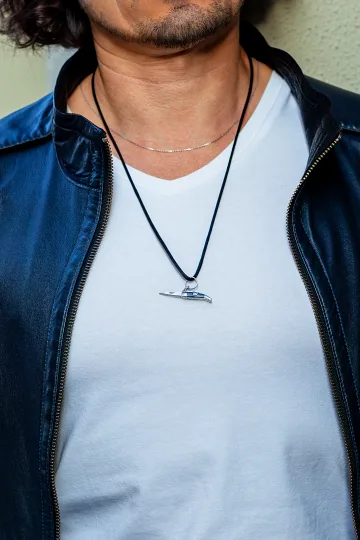




FAQ
Can you swim in the sea with a silver chain?
Technically yes. In practice, sterling 925 will start to darken, especially with repeated dips in warm water. If you rinse the chain in clean water straight after each swim, the darkening stays under control. If the chain has delicate inserts or is costly, better to leave it in the room and wear a steel or titanium alternative.
Why did the silver darken in a day while the gold did not?
Silver contains copper (7.5 percent in the 925 grade), which reacts with the sulphates in seawater and forms a dark sulphide. Gold is chemically more inert than silver and copper in this context. Rose gold, though, also contains copper for its colour, and with heavy swimming it darkens too, just more slowly. White and yellow 18k gold are considerably more resistant.
Is seawater sterile? People say wounds heal faster in the sea.
No. Seawater is not sterile and contains a range of microorganisms. The feeling of "cleansing" is largely down to the effect of the salt, but that is not sterilisation. A fresh piercing is essentially an open wound, so swimming with it is better discussed with your own piercer or a doctor, even though salt is part of the saline used for piercings.
How often should you do saline care for a piercing?
That is a question for the piercer who did the work: they set the exact routine individually. The general principle that piercers cite is to keep care moderate: over-frequent cleansing hinders healing as much as too little, and can cause irritation that is easy to mistake for a sign of trouble. This is not medical advice, only a general account of the logic.
How is sea salt for piercings different from ordinary table salt?
Non-iodised sea salt with no additives contains only sodium chloride with trace amounts of magnesium salts. Iodised table salt contains iodine, which inhibits tissue healing and irritates the piercing. Table salt may also contain anti-caking agents. For a saline solution you want non-iodised sea salt with no additives. But sterile pharmacy saline beats any homemade solution: precise concentration and guaranteed sterility.
A silver ring on my finger turned greenish underneath in the sea. Is that normal?
The greenish tint on the skin under the ring is a reaction of copper with the skin, sped up by seawater. The sea leaches copper ions from the surface layer of the alloy; they settle on the skin and form green copper chloride or oxide. It is not a health risk and washes off with soap and water. The same mechanism works in ordinary life with no sea at all: the breakdown of why skin goes green from jewellery and how to fix it helps you understand which alloys do this most often. The ring itself loses the copper from its surface layer, which over the long term leads to a colour change and a weakening of the metal at solder joints.
When can you go into the sea with a new piercing?
For a lobe piercing: not before 6 to 8 weeks, in the absence of inflammation. For a cartilage piercing (helix, tragus, conch, daith): not before 4 to 6 months. If a swim is unavoidable sooner, use a waterproof dressing and rinse immediately with sterile saline after. Every case is individual: the piercer who did the work gives recommendations for your specific piercing type and your own healing speed.
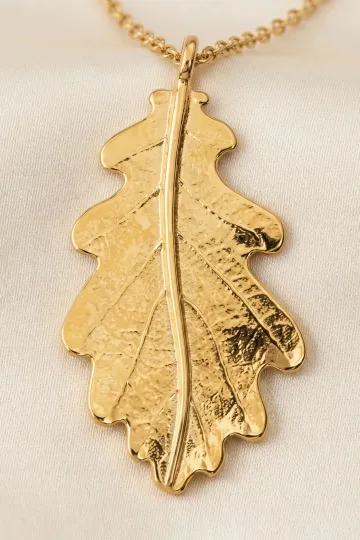
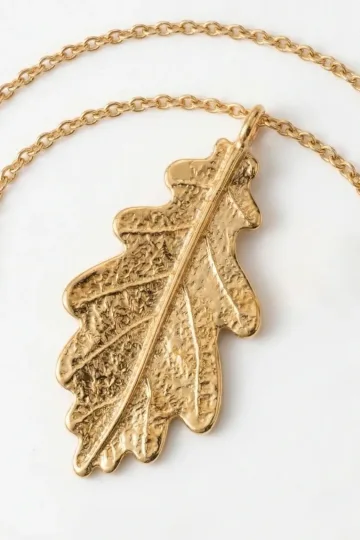
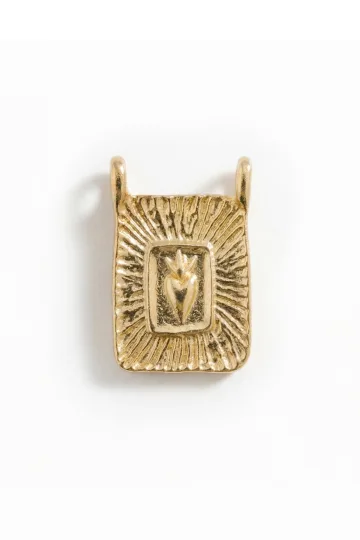
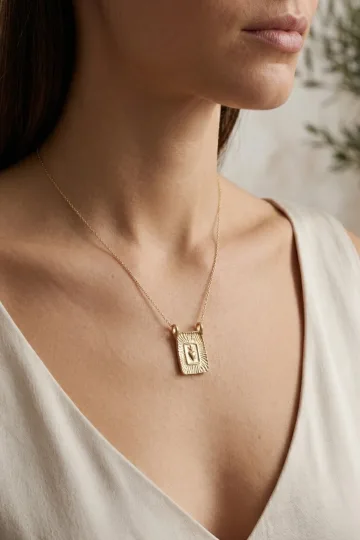
Wear the symbol, don't just read about it. These are in stock:

Conclusion
Sea salt behaves in very different ways depending on concentration, sterility, and context. In the open sea it catalyses the corrosion of metals, breaks down porous stones, and carries a bacterial load for open piercings. In a pharmacy bottle at 0.9 percent it becomes a tool without which sensible piercing care is impossible.
The rules that work: take off delicate pieces before swimming, rinse the rest straight after leaving the water, do not wet a fresh piercing in the sea without a protective dressing, use sterile saline rather than homemade. Nothing complicated. It is simply precise knowledge of exactly what you are dealing with.
Silver that darkened after the sea can be restored. Trouble with an inflamed piercing drags on far longer and is sorted out by a specialist. A pearl that lost its nacre in seawater cannot be brought back.
Steel and titanium jewellery for the beach and for piercings, sterling silver 925 and gold for everyday wear, handmade with engraving.
About Zevira
Zevira makes jewellery in the artisan tradition of Albacete, Spain. The theme of the sea and of care is close to us directly: we match materials to real wear, including by the water, so that a piece survives a holiday rather than ageing in a week.
What you can find with us on the subject of the beach and piercings:
- Jewellery in 316L stainless steel, resistant to seawater and chlorine
- Titanium models for sensitive skin and healing piercings
- Earrings, pendants, and rings with hard, non-porous stones in protected settings
- Sterling silver 925 and gold for everyday wear with clear care after the sea
- Simple forms with no extra moving links where salt would collect
- Pieces for personal engraving as a gift for a holiday or an important date
Every piece can be personalised with engraving by a maker, with the option of personal engraving. Sterling silver 925 and 14 to 18K gold.