Summer jewellery: what the symbols of summer mean, from ice cream to flamingos
Summer you can wear
In eighteenth-century Europe a single pineapple cost about a servant's monthly wages, and people did not eat it; they rented it. Hosts borrowed the exotic fruit from a supplier for one evening, set it on the table as a centrepiece, and returned it in the morning, after which it was passed on again until it began to spoil. Only then was it finally sold to someone who could afford to eat a status object whole. Today a pineapple charm costs next to nothing, yet the meaning behind it (welcome, warmth, hospitality) has stayed the same. Almost every summer symbol works like this: light and cheerful on the surface, with a surprisingly old lining underneath.
Summer in jewellery is a language of its own. Ice cream, watermelon, palm tree, flamingo, sunglasses, cocktail: each sign carries a holiday mood, and many of them hide a deeper layer. Below we go through what they mean, where they came from, what they are made of, how to wear them, and how to build a whole summer look out of them rather than a random handful of cheerful trinkets.
Wear the symbol, don't just read about it. These are in stock:






Where summer symbols come from
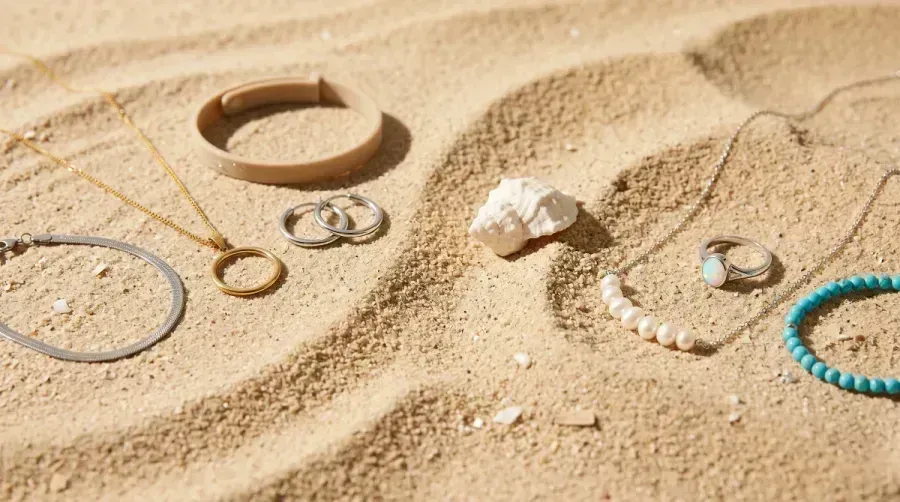
Seasonal jewellery is not an invention of recent years. People have always marked the time of year by what they wore: deep-toned stones in winter, light materials and bright motifs in summer. A light summer pendant is a small way to stretch the holiday out, to keep a piece of the sea and the sun close once the holiday itself is over.
Most summer symbols come from two sources. The first is the nature of the south: fruit, tropical plants, birds. The second is the ritual of rest itself: ice cream, sunglasses, a hat, a cocktail, the objects we only reach for on holiday. That is why summer jewellery almost always reads as joy and a pause, as a sign that a person knows how to relax and does not take themselves too seriously. It is an honest, warm signal, and that is its strength.
The fashion for souvenir jewellery played its own part. Charm bracelets were known in antiquity: similar strings of amulets were worn in Egypt and by the Romans, and in the nineteenth century Queen Victoria loved such a bracelet, collecting tiny lockets and hearts on a chain. But it became a mass habit in the middle of the twentieth century, when travel suddenly grew cheaper after the war and reached beyond the rich. Charms were then sold as souvenirs from trips: a palm tree from one resort, a shell from another, a small landmark from a third. The bracelet turned into a personal map of routes, and that is where the habit of wearing summer as a collection of small symbols, rather than one piece, comes from. That logic is alive today, only with more formats: pendants, earrings, chains of different lengths.
A flamingo wants bare shoulders and a tan, not a December parka. Summer lives on skin, not on wool. Take the hint.
How to wear summer symbols
After years on summer shoots I have run these motifs through dozens of looks, and here is what actually works, by occasion.
One symbol or a whole cluster? Both work, differently. I recommend a single symbol on a thin chain when you want a quiet accent: a palm or a sun carries the look on its own. If you lean toward a collection, I suggest gathering several pendants on one chain or on a charm bracelet, where each sign is a separate trip. For the logic of layering there is a separate guide.
Which metal lights up summer? For a warm summer note I choose gold or gold plating: it lifts the sun, the palm and the pineapple. I suggest silver for the sea and ethnic motifs, next to turquoise and a shell. Keep bright enamel to one palette, or the look scatters into a pile of trinkets.
What background should they sit on? Summer symbols love bare skin and light fabric: a linen shirt, a sundress, tanned shoulders. A small sign gets lost on a busy tropical print, so I advise a calm backdrop. A dark solid top works too: gold and enamel read as an accent on it.
Is this only for teenagers, or adults too? Adults too, it is a question of execution. For a teenage version I choose it bright and large, with juicy enamel. For a grown-up look I recommend a thin gold palm, a small sun, a clean monstera leaf with no sweetness. The meaning is the same, the volume is lower.
Can you wear them beyond summer? Yes, and I often advise it. A small gold palm or sun on a thin chain sits well all year and works as a warm reminder of the holidays in December. Bright enamel motifs like a watermelon or a flamingo I keep seasonal, from spring to autumn, though there is no strict rule.

Turn on your camera, pick earrings, a pendant or a ring, and see the piece on yourself in real time.
Switch items in one tap.
Everything runs in your browser: no photo or video is ever uploaded.
Summer fruit: watermelon, pineapple, lemon, cherry
Fruit motifs are the heart of the summer theme. They are bright, instantly recognisable, and almost everyone ties them to a specific memory.
Watermelon: a memory of picnics
Watermelon looks like the embodiment of the modern picnic, yet it has thousands of years of history behind it. Its wild ancestors grew in Africa, and in ancient Egypt watermelons were cultivated so long ago that their seeds and drawings turn up in tombs more than four thousand years old: the fruit was placed with the dead as a supply of water and food for the journey. Back then watermelon was small and bitter, and it took centuries of selection to bring it to sweet red flesh. In jewellery it is built from contrasting colours, green rind and red flesh, often with black seed stones or enamel flecks. There is almost no ancient mythology behind it; its meaning is simple and warm: ease, rest, good spirits. That is exactly why it is such a popular summer gift, especially for teenagers.
Pineapple: hospitality and a new home
The pineapple has the richest history of the summer fruits. Columbus brought it to Europe after coming across it on his second voyage to the Caribbean, and across the ocean it instantly became a marvel: growing it in a cold climate was nearly impossible, and shipping it across the Atlantic was slow and expensive. A single fruit cost as much as a month's wages, so it was not eaten but displayed: rented for a reception, set at the centre of the table, and returned to the supplier. Pineapples were carved on gates, furniture and tableware as a wish of "welcome", and the fashion even reached architecture. In jewellery the meaning has survived: a pineapple is given for a housewarming and as a warm sign of hospitality. The spiky crown on top makes the silhouette stylish and graphic.
Lemon: sunny optimism
The lemon is concentrated sun and freshness. It most likely came from the foothills of Asia, and Arab traders spread it around the Mediterranean about a thousand years ago, after which it grew into the image of southern terraces and the rocky slopes of Amalfi and Sicily. Its yellow colour and tart energy read as optimism and a way of looking at life without gloom. A lemon sprig with a pair of fruit and a leaf has become a fashion motif of its own, a nod to Mediterranean summer. It is an easy way to add colour and good spirits to a look.
Orange: southern abundance
The orange is warmer and sweeter than the lemon, a sign of southern abundance, celebration and warmth. The sweet orange we know today reached Europe later than the lemon, and for a long time it was such a luxury that wealthy courts built special glazed galleries, orangeries, for a few trees in tubs. The very word "orangery" was born from the orange. The juicy orange fruit sits well in enamel and gives a look a saturated colour. If the lemon is about freshness and energy, the orange is about generosity and sunny sweetness, and people choose it when they want warmth rather than coolness.
Cherry: play and a pair
Two cherries on one stem are a playful, slightly cheeky sign. The pairing of the berries hints at "two of us", so the cherry often reads as a symbol of a couple or close friendship. The motif itself is light and flirtatious, chosen when you want a summer mood and a smile rather than deep meaning. The cherry has a rich cultural past: the Romans prized it so much that, by tradition, the general Lucullus brought the cherry tree to Italy from a campaign on the Black Sea as a spoil of war, and from there it spread across Europe. In Japanese culture, though, the word "cherry" calls to mind not the berry but the sakura blossom, which became a symbol of fleeting beauty; in summer jewellery, however, it is the cheerful ripe twin-berry that rules.
Strawberry: sweetness and flirtation
The strawberry is the earliest summer berry, and in jewellery it reads as sweetness, tenderness and a touch of flirtation. The familiar large garden strawberry is actually quite young: it was bred in Europe only in the eighteenth century, by accidentally crossing two wild American species, and before that people ate small wild woodland strawberries. Its red colour and recognisable shape with tiny seed dots sit well in enamel. A strawberry pendant is chosen when you want a bright, slightly playful summer note in a warm palette.
Peach: warmth and tenderness
The peach, with its soft blush, is about warmth, softness and southern abundance. The peach does not come from Persia, as the name suggests, but from China, where the fruit was a symbol of longevity and immortality for thousands of years: peaches were offered to the gods, and carved peaches are still given to older people on their birthday as a wish for long life. It is a calmer, more grown-up motif than the bright strawberry, closer to gardens and an unhurried summer. The velvety side of a peach is beautifully rendered with a soft enamel gradient or pink mother-of-pearl.
Customer reviews
Zevira is a real jewellery shop. Genuine payments, deliveries and customer thank-yous.
🥰🥰🥰 gracias

Ok, ¡gracias! 🙂

Sweets and drinks: ice cream and the cocktail
If fruit is the nature of summer, ice cream and the cocktail are its rituals. These symbols are about pleasure and a pause, about knowing how to stop and enjoy a small thing.
Ice cream cone: carefree joy
The ice cream cone is a sign of pure, almost childlike joy, and the cone itself has a precise moment of fame. The waffle cone made its name at the World's Fair in St. Louis in 1904: as the story goes, an ice cream seller ran out of paper cups, and a neighbour in the row was selling thin waffles, so he rolled a waffle into a cone to help out a colleague. For the first time the treat could be eaten on the move, with no spoon and no dish, and the cone instantly became a summer hit. There is no ancient symbolism behind it, and that is its charm: it speaks honestly of good spirits and an easy attitude to life. The "creamy" part is often made of pink mother-of-pearl or bright enamel. It is the perfect summer gift with no subtext, simply to bring a smile.
Ice lolly: retro and cheek
The ice lolly on a stick is a more retro, slightly cheekier relative of the cone, a wave to summers in childhood and kiosks by the sea. The ice lolly itself, by a popular story, appeared by accident: a teenager in early twentieth-century America left a glass of soda with a stirring stick out in the cold, and in the morning pulled out a ready fruit ice by the stick. It is made in juicy enamel, sometimes with a "bite" out of the side. People choose the lolly when they want not tenderness but a cheerful, slightly mischievous summer note.
Cocktail: celebration and rest
A glass with a tiny umbrella and a fruit slice is a symbol of holiday and celebration, an evening by the water, rest without rush. The paper umbrella in the glass, the detail without which a cocktail does not read as a resort drink, comes from the tropical fashion of the mid-twentieth century, when Hawaiian and Polynesian style venues decorated drinks with tiny umbrellas and picks to sell not just alcohol but a slice of the tropics. It is worth separating two different meanings of "cocktail" in jewellery here. The first is the motif itself, a small glass pendant. The second is the cocktail ring, a large, striking ring with a big stone, which came into fashion during Prohibition, when women openly ordered banned drinks and just as openly showed off a bold ring. Both are about celebration, but they are different things and should not be confused.
Holiday gear: sunglasses, flip-flops, hat
A separate group of summer symbols are the objects we only reach for on holiday. They read instantly as "holiday" precisely because they have no place in ordinary life.
Sunglasses
Sunglasses look like an invention of the fashionable twentieth century, but the very first "glasses" against the sun were made by the peoples of the North thousands of years ago. The Inuit and other Arctic hunters carved dense shields from bone, wood or walrus tusk with a narrow slit over both eyes: these slit goggles guarded not against brightness but against snow blindness, cutting out almost all the dazzling glare from snow and ice. The familiar dark lenses as protection against ultraviolet came much later. In jewellery a small sunglasses pendant reads as "I'm on holiday" and adds lightness to a look. It is one of the most urban summer symbols: it is about the ability to switch off and relax, not necessarily by the sea.
Flip-flops and beach sandals
Flip-flops are the most direct sign of sea and sand. The shape of the shoe, with a strap between the toes, is ancient: similar sandals were worn in ancient Egypt and Japan, and rubber flip-flops became the summer footwear of the whole world in the mid-twentieth century, largely thanks to the Japanese zori that spread to beaches around the planet after the war. They have no place in ordinary life, so a flip-flop pendant says "summer, beach, barefoot" at once. People often take them as a souvenir of a specific trip or give them to someone who lives for the holiday ahead.
Straw hat
The straw hat is a sign of the unhurried south: terraces, the sea, the evening sun. The most famous summer hat, the panama, has a funny mix-up in its name: it was woven in Ecuador and called a "panama" simply because it was first sold in bulk through Panama, with fame arriving after a US president was photographed in one at the construction of the Panama Canal. It reads soft and relaxed, an image of holiday ease. A hat pendant is for those who see summer as style and warm days rather than sport.
Suitcase
The suitcase, especially a vintage one, is a pure symbol of travel and the anticipation of the road. Curiously, the wheeled suitcase, without which an airport is unthinkable today, was invented remarkably late: the first patent for a suitcase on wheels appeared only in the early seventies, and the handy telescopic handle was added closer to the end of the century. Before that, heavy suitcases were simply carried by hand, and the journey was literally heavier. A suitcase pendant is given before a big trip or collected as a memory of one.
Aeroplane
A little aeroplane is a sign of the flight, far-off countries and the dream of the road. The mass "by plane" holiday is itself a fairly recent thing: until the middle of the twentieth century flying was a luxury for the few, and only jet airliners made far-off countries available to ordinary holidaymakers, turning the plane into a symbol of the holiday rather than a business event. It is about the moment of takeoff and the anticipation of something new. The aeroplane is loved by those for whom the holiday begins at the boarding stairs, and it is often given before a trip as a warm wish of safe travels.
Beach umbrella
The striped beach umbrella is a sign of lazy, unhurried rest, the kind where there is nowhere to rush. The sun umbrella is older than the rain umbrella: in ancient Egypt, Assyria and China, servants held a parasol over a noble figure, and shade from the sun was a privilege, a mark of high standing. A tan back then gave away a poor person working in the field, while pale skin was prized; only in the twentieth century did fashion flip, making a tan a sign of leisure. The beach umbrella reads as shade, a pause, the right to do nothing. The motif is rare and therefore fresh, chosen by those who value calm and slow days by the water over activity.
Upload a photo of your pet, someone you love, or an object. We'll build a 3D model and hand-cast it in pewter.




Active holiday: surf, water and the road
A separate group of symbols is about summer in motion, for those who are not content to lie on the sand. They speak not of calm but of adventure.
Surfboard
The surfboard is a symbol of freedom and the knack of catching the moment. Surfing is not a beach pastime of the last few decades but an ancient art of Polynesia: in Hawaii, riding a wave was part of the culture centuries before Europeans, owned by ordinary people and chiefs alike, with the nobility keeping their own huge boards, and the wave itself was held to be an almost sacred force. As a pendant the board speaks of a love of the ocean and active rest, of a character that seeks the wave, not the shade. The silhouette is clean and recognisable, easy to stylise. It is a sign of those for whom summer means sport and adrenaline.
Snorkel mask
A snorkel or diving mask is about the underwater world and curiosity. People have tried to look beneath the surface for thousands of years: pearl and sponge divers went deep on a single breath, and the first "goggles" for diving were made from polished tortoise shell in antiquity. The familiar mask with glass and a snorkel is already a twentieth-century invention. This symbol is chosen by those drawn to what is hidden below: lovers of the sea and dreamers of warm water. In jewellery the mask reads as a sign of exploration and a pull toward depth, both literal and figurative.
Swimming goggles
Swimming goggles are a more sporting relative of the mask, a sign of the pool, laps and discipline. If the mask is about contemplating the underwater world, the goggles are about motion and effort. Curiously, goggles arrived late in swimming: as recently as the middle of the twentieth century swimmers competed without them and suffered from chlorine, and closed goggles only became common in the sport by the seventies, noticeably changing long-distance swims. They are chosen by those for whom water means sport and summer is unthinkable without a swim.
Life ring
The striped life ring is a retro nautical sign with a double meaning. On one hand it is a light resort motif in the spirit of old postcards; on the other it is a symbol of support and rescue, of someone who will always come to help. The ring itself has a serious pedigree too: the white-and-red colouring is no accident, that contrast is the most visible on water, and it has been kept for centuries as the standard for rescue gear on ships. That is why such a pendant is sometimes given as a warm sign of "I'm here if you need me".
Camper and the road
The house on wheels, the trailer, the camper van is a symbol of travel without a plan and the freedom of the road. The idea of a home on wheels for leisure is older than the car: the first living wagons were horse-drawn, made for circus performers and lovers of a nomadic life, and the van became a mass summer symbol in the mid-twentieth century along with the fashion for road trips and that famous compact minibus that carried whole groups to the coast. It is about summer as a route you choose yourself, about nights under the stars and motion for the sake of motion. The motif pairs well with the company of an aeroplane and a suitcase.
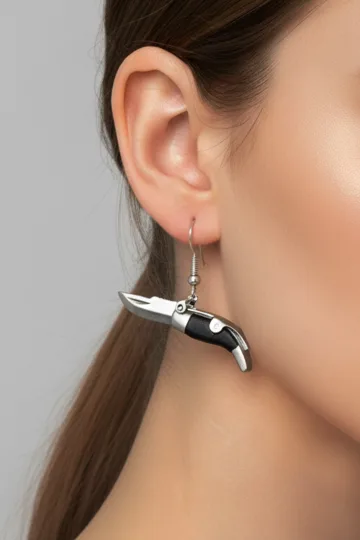
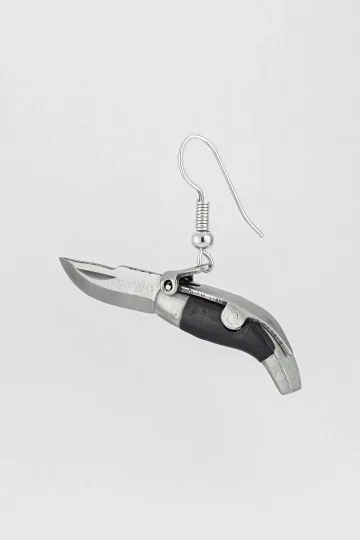
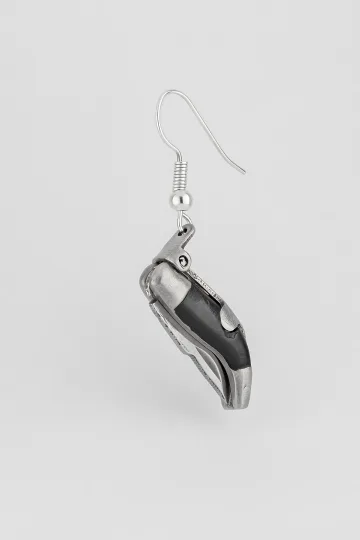
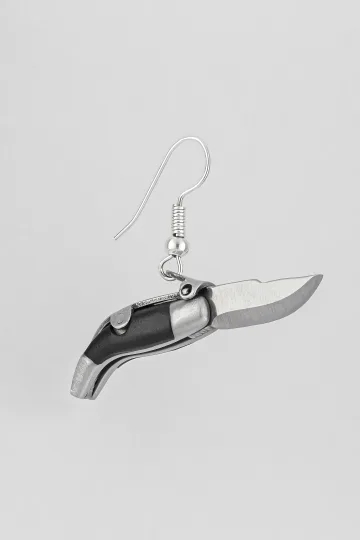
CAPAORA mini knife pendant
The 18th-century Spanish navaja in miniature: 40 mm of stainless steel, a real folding mechanism and a Palanquilla lock that clicks. An affordable gift to remember.
Authentic · Ships from Spain · 14-day returns
Tropics: palm, flamingo, monstera
The tropical group is the most recognisable summer code. Over recent years these motifs have become almost a synonym for leisure and southern style.
Palm tree
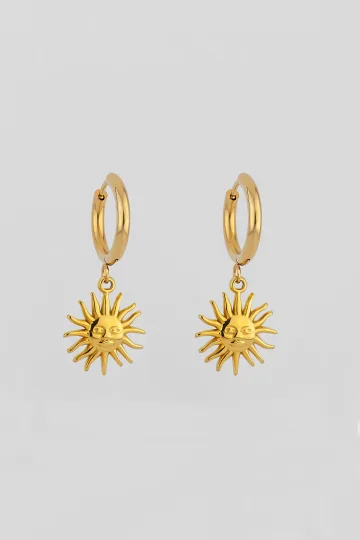
The palm is a sign of holiday, warmth and relaxation, but its original meaning was solemn. In antiquity the palm branch meant victory: it was handed to triumphant generals and champions of the games, which is where the phrase "to bear the palm" comes from, and later the branch became a symbol of peace and triumph. Today only the silhouette is left of that gravity, and it reads as pure rest. It is clean and looks good even at the smallest size, so the palm is often taken as a thin gold everyday pendant that quietly recalls the sea. It is one of the most versatile summer symbols, at home on the beach and in the city alike.
Flamingo
The pink flamingo became an icon of summer largely thanks to the plastic lawn ornament. It was designed by the American Don Featherstone in 1957: a cheap pink plastic bird on wire legs that scattered across suburban lawns and turned into a symbol of carefree leisure, kitsch and good spirits all at once. The pink colour of real flamingos is not innate: the birds are born grey and turn pink from the pigments in the small crustaceans and algae they eat. In jewellery the flamingo is lightness, brightness and a little playful chic, and the pink enamel makes the pendant cheerful and easy to spot.
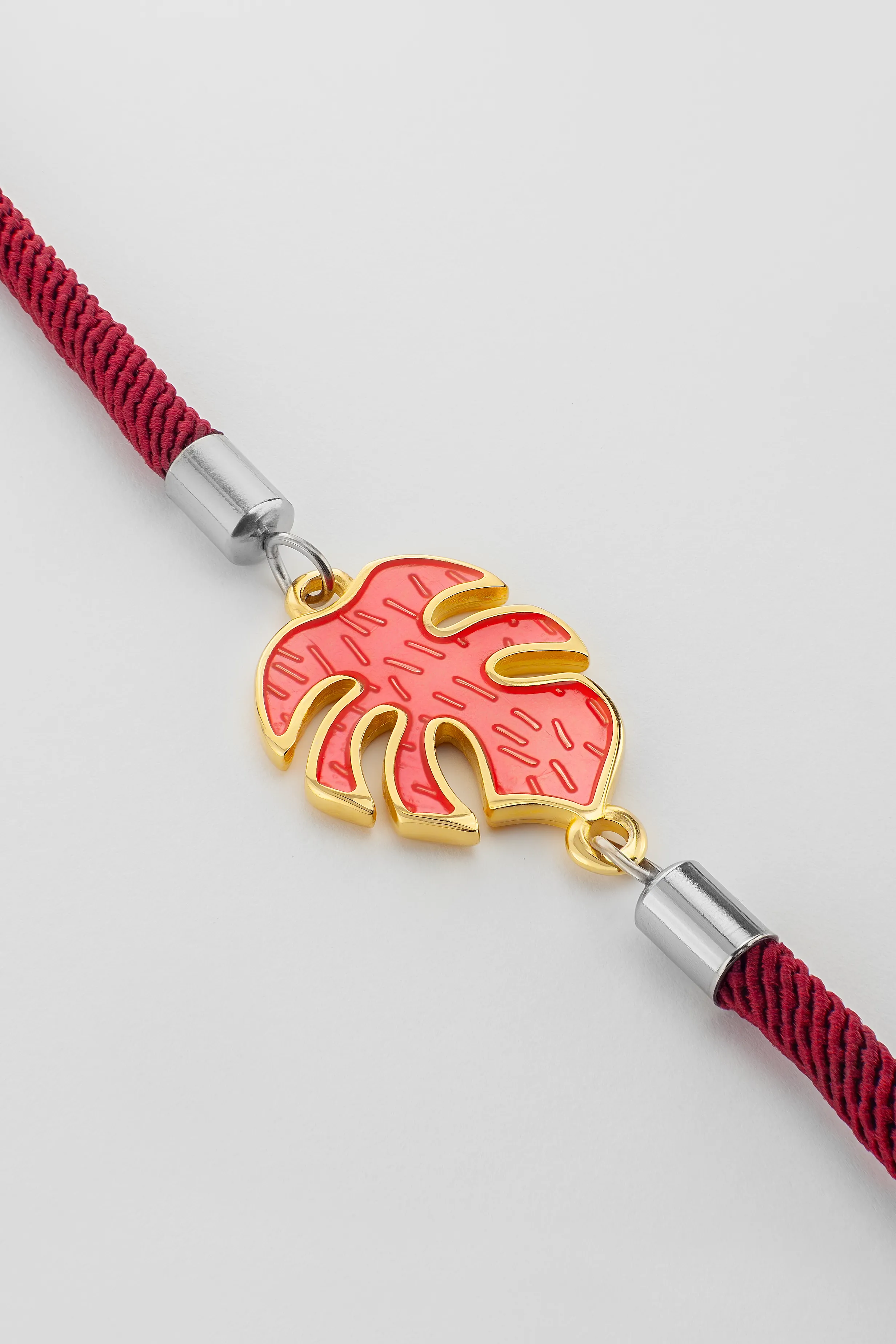
Monstera leaf
The monstera leaf, with its carved splits, is a more modern, almost designer motif that nods to botany and tropical greenery. The holes in the leaves have a working explanation: they let a plant on the lower tiers of the jungle pass more light through and ride out tropical downpours without breaking under the torrents. The motif works well in large earrings and pendants and looks fresh, without sweetness. The monstera is taken by those who prefer a stylish rather than a souvenir-resort view of the tropics.
Sun and sky in summer
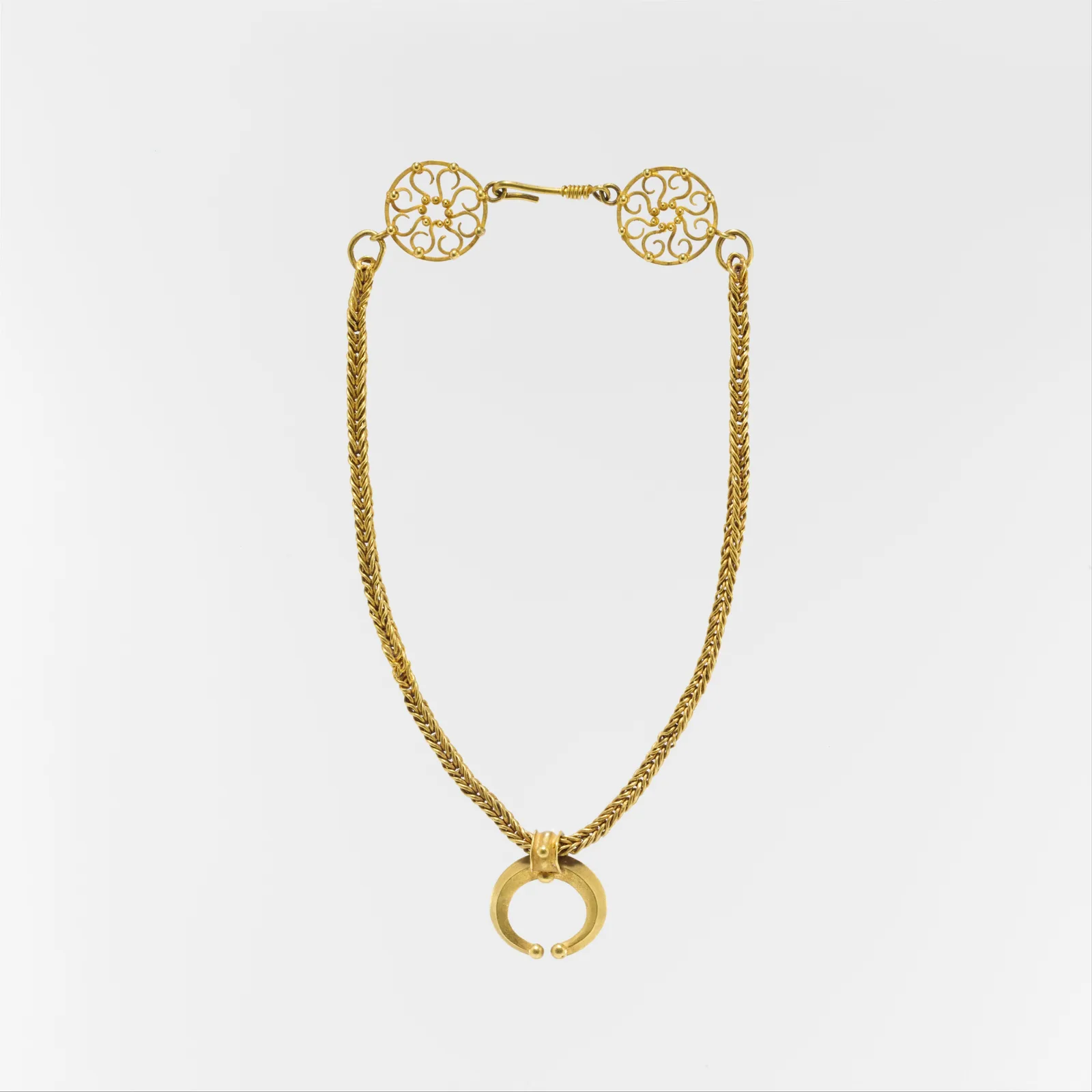
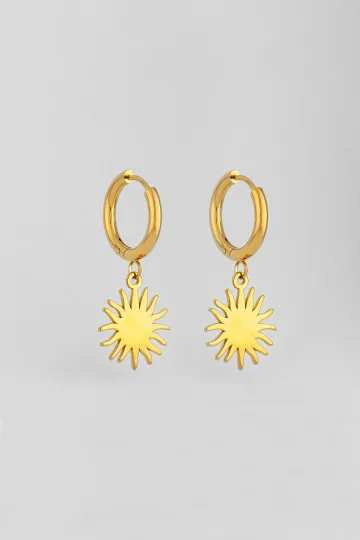
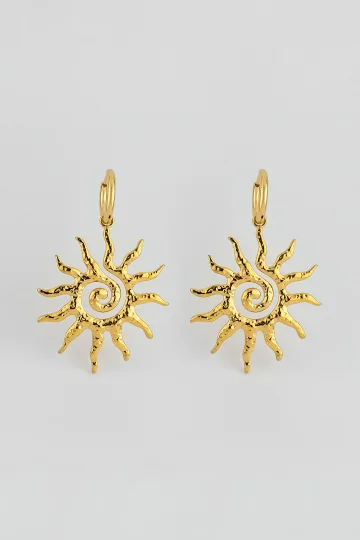
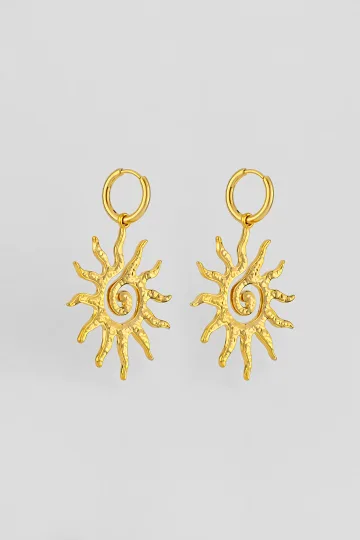
The sun is perhaps the main summer sign: warmth, energy, life. In summer jewellery it is made radiant and golden, sometimes with a face in the old style. But the sun has a long, independent history paired with the moon, and we cover it in detail in a separate piece on the sun and the moon in jewellery. In the summer theme the sun works as a warm accent and gathers the other symbols around itself.
Leave your email, we'll send your discount code. No spam, unsubscribe anytime.
The code arrives by email, valid on your first order.
The sea theme: where to look next
The sea is half of summer, but marine symbols deserve their own conversation, and we already have it. To keep this guide from sprawling, we deliberately keep it about land and holiday life, and hand the marine part to dedicated articles.
If the sea is what calls you, see the general overview of ocean symbols in jewellery, which gathers the shell, anchor, star and wave. Individual characters have their own articles: the dolphin as a symbol of joy and friendliness, the scallop shell with its pilgrim history, red coral as an ancient Mediterranean talisman. The starfish, seahorse and crab also live in those pieces. So a summer capsule is easy to round out with marine motifs without repeating yourself.
Materials of summer jewellery: what to choose
Summer dictates its own palette and its own materials. Colour and lightness rule here, not strict expense. But behind the cheerful look of a summer pendant stand quite specific materials, and each has its own character: one gives a juicy colour, another a soft glow, a third a warm shine. Let us go through, in order, what summer jewellery is made of, where each material is strong and what it fears. This helps you choose a piece that will outlast the season rather than wear away by August.
Hot enamel
Hot enamel is the classic enamel, the very material that gives a summer pendant its clean, juicy colour. It is essentially coloured glass: a powdered glass is laid on metal and fired in a kiln at around eight hundred degrees, the powder melts and fuses permanently with the base. The technique is ancient; the Celts and Byzantine masters already decorated work with coloured enamel. The strength of hot enamel is durability: the glazed surface is hard, does not fade in the sun, is not afraid of water and keeps its brightness for years. Its weakness is brittleness of a different kind: like any glass, a hard knock against stone or tile can chip or crack hot enamel. It fears sharp blows and falls onto something hard, but it has nothing to fear from sun, sea water or sunscreen.
Cold enamel
Cold enamel is not glass but coloured resin (epoxy or acrylic) poured into cells and cured without firing. Hence the name: there is no high temperature in the process. It is loved for being cheaper and easier to work with, allowing any shade and fine gradients, which is why many bright summer pendants are made this way. But in durability cold enamel falls noticeably short of hot. The resin is softer than glass, can dull or yellow over time, dislikes long sun, hot water and solvents, and clouds from perfume and alcohol. In short: hot enamel is stronger and longer-lasting, cold is brighter in palette and more affordable but needs gentle handling. You can tell them apart by touch: hot enamel is cold and crisp like glass, cold enamel is slightly warm and soft like plastic.
Mother-of-pearl
Mother-of-pearl goes into the "creamy" and white parts of summer motifs: the scoop of ice cream, a petal, a little cloud, the body of a shell. It is the inner iridescent lining of a shell, with which the mollusc builds its protective layer, the same material from which a pearl is born. Its strength is a soft, living glow with a faint shimmer that no enamel or stone can give, and at the same time it does not shout, reading light and summery. The weakness of mother-of-pearl is that it is organic and soft: it fears acids, perfume, creams and household chemicals, which dull it, dislikes long sun and dry heat, can delaminate and scratches against metal and abrasives. It tolerates sea and chlorinated water poorly, so a mother-of-pearl pendant is best taken off at the beach and the pool.
Gold plating and its durability
A warm golden colour amplifies the sunny note, which is why palms, suns and pineapples are especially often made golden. Most often this is not solid gold but plating: a thin layer of gold over silver or another metal. Durability here is all about the thickness of the layer. Cheap thin plating wears off fast; over a season of active wear the base can show through at the edges and points of friction. Thick plating, applied by electroplating in a dense layer (sometimes called "vermeil" when the gold sits on silver), lasts for years and survives ordinary summer wear without loss. The enemy of any plating is not water itself but friction and aggressive chemistry: sea salt, pool chlorine, perfume, cream and sweat speed up the wear of the coating. So it makes sense to take a plated pendant off before the sea, the shower and applying cosmetics, and the warm colour will last a long time.
Light summer stones
Summer has its own palette of stones, light and clear, in contrast to the deep tones of winter. Here are four that go most often into summer jewellery, and what is worth knowing about them.
Aquamarine is water and sky itself, clear blue and cool. Its name translates from Latin as "sea water", and sailors once held it to be a charm on a voyage. It is a variety of beryl, a fairly hard and durable stone that takes water and wear calmly, but it dislikes long, bright sun: it can fade the blue colour, so in summer it is best kept out of direct rays in the worst heat.
Peridot, also called olivine, gives a juicy spring-green note and serves as the stone of August, so summer birthday people love it especially. The most unusual peridot actually arrived on meteorites. It is a stone of medium hardness, takes water well, but fears acids and sharp temperature changes and scratches a little more easily than aquamarine, so it is best kept away from harder stones in the same box.
Citrine is sun caught in stone, a warm honeyed and golden-yellow shine, a variety of quartz. It is inexpensive, hard and fairly low-maintenance, holding water and wear well. Its only weakness is the same as many yellow stones: long, hot sun can pale the shade, so spending a whole day sunbathing in it is not advised.
Turquoise points to the sea and southern style, to ethnic looks and relaxed rest. It is the most temperamental stone of the four: porous and soft, it greedily soaks up everything, and from water, perfume, cream, oil and sweat it darkens and greens, changing colour forever. Turquoise must not get wet, let alone go to the sea or the pool with you; it is wiped only with a dry cloth. But with gentle handling it serves for decades.
Caring for summer jewellery
Summer means beach, water, sun, cream and perfume, and almost all of it is hostile to delicate materials. The good news is that the rules of care are simple and come down to one principle: jewellery goes on last and comes off first. Below we go through what you can and cannot do by material and by each summer situation.
Enamel, mother-of-pearl and plating in water
Hot enamel is not afraid of water and survives both the shower and a swim; only knocks against the pool edge or tile are dangerous to it. Cold enamel tolerates water worse: hot water and long soaking can cloud the resin, so it is best taken off in the shower and a hot bath. Mother-of-pearl and plating dislike water as a rule. Sea salt and pool chlorine dull mother-of-pearl and speed the wear of gilding, so these pieces come off before the sea, the pool and the shower. If you did go in, rinse the piece in clean fresh water at home and dry it with a soft cloth; do not leave salt and chlorine to dry on the surface.
Sun, cream and perfume
Direct hot sun harms not the metal but the colour: cold enamel can fade and yellow, and light stones like aquamarine, citrine and turquoise can pale from long rays. Hot enamel and plating do not fear the sun. Cream, lotion and tanning oil are a separate trouble: they clog under stones and into the relief of the enamel, leave a film, dull plating and seep into porous turquoise and mother-of-pearl. Perfume and spray, for the same reason, go on before jewellery, not over it: alcohol clouds cold enamel and mother-of-pearl. The rule is one and always works: cream, make-up and perfume first, let them soak in, and only then put on the jewellery.
Storage and the beach
After a beach day wipe the jewellery with a soft dry cloth; sand is an abrasive and scratches enamel, mother-of-pearl and soft stones alike. Store summer pieces separately, in a pouch or compartment, so they do not rub against each other: a hard stone easily scratches a neighbouring enamel or turquoise. And do not take to the beach itself anything you would hate to lose or ruin: salt, sand and sun do more to a delicate pendant in one active day than a month of city wear. Exactly which pieces will calmly survive sea, sun and sand, and which are better left at home, we cover in detail in a separate article on which jewellery will not break at the beach.
Stone by birth month
We covered light summer stones above, but they have another logic of choice too, by birth month. Peridot is the stone of August, aquamarine is fixed to March, citrine is often tied to November, and moonstone and pearl to June. If you want a summer pendant to be not only pretty but personal, choose the stone for the month of the person it is meant for. Moonstone and pearl also give that soft, glow-without-shine and pair well with marine motifs. The full list with history and meanings is in the general overview of birthstones by month.
Send a friend a discount code, they save on their first order.
Summer: facts that surprise
Before you assemble a summer capsule, a couple of curious details about the symbols themselves and about summer. All of them are verifiable and sit well in conversation when you give such a pendant.
The pink flamingo on the lawn is younger than it seems, and it has a specific author. The plastic ornament was designed by Don Featherstone in 1957, and it entered the culture so firmly that it was even marked with a tongue-in-cheek award; real flamingos, meanwhile, turn pink not on their own but from food, and in captivity without special feed they go grey again.
The waffle cone made its name at the World's Fair in St. Louis in 1904. The same fair, by tradition, gave the world several street treats that are handy to eat on the move, and that is when ice cream finally became summer street food rather than a dessert at the table.
The pineapple was for centuries a status prop rather than food. In eighteenth-century Europe a single fruit cost as much as a solid wage, so hosts rented it for one evening for a striking table, and the real flesh went only to the richest, once the fruit had begun to spoil.
The first sunglasses in history have nothing to do with the beach. They were carved from bone and wood by Arctic hunters: a dense shield with a narrow slit guarded the eyes not from heat but from snow blindness, cutting out the dazzling glare of snow and ice.
The watermelon is older than almost all "modern" summer pleasures. It was grown in the Nile valley thousands of years ago and placed in tombs as a supply of water for the journey to the afterlife, and it became sweet and red only after many centuries of selection, having started out pale and bitter.
A tan was once a sign of poverty, not of leisure. Until the twentieth century pale skin was prized, the shade of a parasol was a privilege of the nobility, and the beach umbrella read as a mark of status, the right not to work in the sun.
The charm bracelet as a souvenir of trips is a phenomenon of the mid-twentieth century. The idea of a string of amulets is ancient, known as far back as Egypt, but it was the post-war tourist boom that turned the charm into a small trophy of travel, brought home from each new place.
Who it suits and how to build a summer capsule
Summer symbols suit those who love light, unpretentious jewellery and are not afraid of a smile in their look. It is a great gift for a teenager, for someone before a trip, for the person who lives for the holiday all year round.
If you want not a single pendant but a whole theme, put together a small summer capsule. Take one anchor symbol, say a palm or a sun, as the lead, add a couple of supporting ones, a fruit and a marine motif, and keep everything in one metal. Such a capsule works like a small collection: the pieces go together, they can be worn together or apart, and it is a pleasure to add a new symbol from every trip. That is the most alive way to wear summer, not as a random trinket but as a growing personal story.
Frequently asked questions
What do summer jewellery pieces symbolise? Most often they read as joy, rest and a light attitude to life. Some symbols have a deeper layer too: the pineapple is hospitality and a new home, the lemon sunny optimism, the cherry a hint of a couple, the palm and flamingo holiday and the tropics. But many summer motifs, ice cream or sunglasses for example, carry no ancient mythology, and their meaning is simple and honest: good spirits.
Which summer symbol should I give? It depends on the person. Before a trip, the aeroplane, the suitcase or the palm work well. For a housewarming, the pineapple as a sign of hospitality. For a teenager, cheerful ice cream, watermelon or cherry. For someone who loves the sea, a marine motif like a shell or a dolphin. If in doubt, take the sun or the palm: almost everyone likes them and they combine easily with other symbols.
Can summer jewellery be worn outside summer? Yes, and many do. A small gold palm or sun on a thin chain looks at home all year round and works as a warm reminder of the holiday in the middle of winter. Bright enamel motifs like a watermelon or a flamingo are more seasonal, usually worn from spring to autumn, but there is no strict rule.
What is summer jewellery made of, and does it fear water? Most often it is silver or plating with bright enamel, mother-of-pearl and light stones. Enamel and most stones take water calmly, while thin plating and organics like pearl are best protected at the beach. If you plan to keep the jewellery on in the sea and the pool, look into our separate piece on beach jewellery.
Why is a summer capsule better than separate pendants? A capsule is several symbols in one style and metal that go together. It is convenient to wear both together and in turn, and a pleasure to add a new sign from each trip. A separate, random pendant lives on its own, while a capsule builds into a personal story of summer and looks whole rather than scattered.
Do summer symbols suit adults, or are they only for teenagers? They suit everyone. The difference is in the execution. Teenage versions are bright, large, with juicy enamel. The grown-up summer theme is more often a thin gold palm, a small sun, a clean monstera leaf, a lemon sprig. The meaning is the same, lightness and rest, but the tone is more restrained.
Where do I start building a summer capsule? Take one anchor symbol that is closest to you, most often a palm or a sun, and make it the lead. Then add one or two supporting signs in the same metal: a fruit for colour, a marine motif for depth. Hold a common palette and do not grab everything at once. A capsule is good because it grows gradually, and adding a new symbol from each trip is more rewarding than buying a dozen pendants in one go.
Does summer jewellery look cheap? It depends on the execution, not on the theme. Neat enamel with clean colour, even soldering and good findings look expensive even in the most cheerful motif. What looks cheap is carelessness: a smudged design, crooked edges, dull plating. If you want restraint, take thin golden symbols without enamel, a clean palm or sun; they read calm and grown-up.
Silver, gold, enamel, symbolism, marine and summer motifs, matching sets.
Buying it as a gift? Each one arrives ready to give.
 A branded Zevira box and a little card come with every order.















About Zevira
Zevira is a Spanish jewellery brand from Albacete. Light summer motifs, marine symbols and enamel pendants are one of the catalogue's categories. We like jewellery with a clear meaning and good spirits, not empty decoration. For current pieces and details, see the catalogue.